BEEF 2 animal agri
---
see pork
see inflation monopoly price gouging
see animal rights/peta
poultry
promoted to primary 3/15
see meat slaughterhouse
significant GHG, water contam, evil PR firms
SLAPP Kochs major CAFO
Includes pork, see also Tyson and poultry, see also dairy
note that beef production uses huge amount of fresh water, uses a great deal of public land, pollutes surface water with nitrates that lead to dead zones in ocean, and cow produce large quantity ofmethane, GHG 22x CO2
also connects to animal rights Oprah SLAPP suit
SEE MAN MALE ~ AGENDA 2030 WEF EAT BUGS LAB
aha:consolidation eg ibp tyson smithfield
-=-=
-=-=
-=-=
AN 10 26
Trump may have destroyed America's beef industry: report
-=-=
-=-=
an 8 26
When U.S. President Donald Trump threatened Canada with new 50 percent tariffs on Canadian autos and steel on Monday, Prime Minister Mark Carney responded by revealing retaliatory tariffs against the United States. Liberal economist Paul Krugman is warning that no good can come from a trade war with Canada, but liberals aren't the only ones who are criticizing Trump's economic policies. According to The Hill, Trump is getting a strong pushback from conservative Republican senators.
Journalist Alexander Bolton, reporting for The Hill, explains, "President Trump is headed for a clash with Senate Republicans over his decision to pause tariffs on beef imports while ratcheting up tariffs on key Canadian goods. Trump's plan to exempt 300,000 tons of product for ground beef from out-of-quota tariffs to address Americans' concerns about high food prices while simultaneously threatening Canada with 50 percent tariffs on imports that could impact auto and housing prices has sparked a furious response from GOP senators across the party's political spectrum."
One of the Republican senators who is speaking is Sen. Thom Tillis (R-North Carolina).
Tillis said of Trump's trade and economic policies, "I think it's a mistake. It's what happens when he has advisers trying to micromanage things. They're skating where the puck is versus where it needs to be. If you think that providing subsidized beef for some period of time is going to make farmers happy and prices go down on (a) systemic basis, you're wrong. It doesn't happen. Every time the government micromanages the economy, consumers suffer."
On X, formerly Twitter, Sen. Jerry Moran (R-Kansas) wrote, "Importing beef below market prices will only put further downward pressure on the livestock sector, endangering what has been a bright spot in a struggling agriculture industry. I urge President Trump to halt this action, listen to ranchers and let the free markets work."
Sen. Susan Collins (R-Maine) described Trump's tariffs threat against Canada as "a mistake," telling News Center Maine, "We produce a lot in Maine — our blueberries, our potatoes, our lobster, our lumber — that is processed across the border. If it comes back with a huge tariff on it, perhaps as much as 50 percent, that increases the cost of eating, building homes and (merchandising) our best-known products."
Senate Republican Whip John Barrasso (R-Wyoming) tweeted, "Americans want US beef on the table – not foreign imports. Wyoming ranchers produce the highest quality beef in the world. Our ranchers don't ask for special treatment. They simply want a fair marketplace. It needs to be easier – not harder – for Wyoming ranchers to feed America. I will continue to fight for policies that strengthen Wyoming beef producers and invest in the American cattle herd."
On X, Sen. Tom Cotton (R-Arkansas) posted, "Beef prices are too high for a simple reason: Our cattle herd is too small. Imported beef below market prices will only put more pressure on our cattlemen. I have advised the President against this ill-advised action in the past and I now urge him to reconsider. We need to support our cattlemen, grow the herd, and let the market work."
-=-=
mizz welch yt says argentine toxic china refused
an 8 26
President Donald Trump set American ranchers ablaze with his recent decision to import foreign beef.
The Cattlemen's Association released a statement about Trump's decision, saying that they were "disappointed" with the move.
"While America’s cattle producers share the goal of keeping groceries affordable for consumers, flooding the market with government-subsidized, below-market beef is not the way to rebuild the American cattle herd," CEO Colin Woodall said.
"Cattle markets have already turned sharply lower this morning, to the detriment of farmers and ranchers. This is a critical time of year for cattle producers, as we approach the season where they are making decisions regarding their herds. Cattle farmers and ranchers are responding to strong market signals and historically high demand, and we are already working to rebuild after years of ongoing drought, high input costs and other challenges that have reduced U.S. cattle numbers. Today's announcement and other market interventions throw cold water on the prospect of herd expansion and sacrifices long-term stability for short term messaging," Woodall added.
Cattlemen's Association President Justin Tupper made it clear to MS NOW, "You don't put America first by putting US cattle producers last.
Speaking to the press on Tuesday, Agriculture Secretary Brooke Rollins refused to say where the new beef will come from.
Commentator Aaron Parnas questioned this detail, wondering "how is the Secretary of Agriculture not willing to talk about where Americans are getting their beef from?"
"The Trump administration refusing to tell us where beef is coming from should convince everyone not to buy it or eat it," Nebraska activist Jamie Bonkiewicz said.
"Insane ... They’re buying disgusting beef on the cheap to pawn off on the American people and won’t even tell us where it’s coming from," the influencer account Wu Tang is for the Children said.
Podcaster and activist Joanne Carducci similarly questioned, "Why won’t they tell us where this beef is coming from?"
Congressional candidate Fred Wellman pointed out that it's "literally" Rollins' "job to be 'privy' to this information."
The pro-democracy group of conservatives, Republicans Against Trump, commented on the White House's oft-repeated slogan that it's "the most transparent administration in history."
The New Republic's Greg Sargent posted on X, "The U.S. Secretary of Agriculture is not privy to talk about 300,000 metric tons of food that, according to the president, is right now making its way to the dinner tables of countless ordinary Americans? Isn't she curious about this? Didn't she ask Trump for clarification of it?"
Tennis star turned commentator and Trump critic Martina Navratilova thinks Rollins is being disingenuous with Americans. "You mean you won’t tell, right Brooke? Lying liars," she wrote on X.
One commentator urged Americans to get to know their local butcher so that folks will know where it's coming from.
After another USDA recall was announced, historian Kevin M. Kruse commented on BlueSky, "Sure seems like a cascading series of contaminated food making Americans sick should be a massive scandal for the USDA and Secretary Brooke Rollins."
---
TARGET BC HE IS DEM STRONG IN STATE BETO ALMOST TIPPED CALLS OUT GOP RT ON BEING BAD XIANS
AMAZING OVER THE TOP BILE FROM PAXTON SPEECH WIN PRIMARY -->
“Weird,” “vegan,” and “effeminate”: Right-wing media are attacking James Talarico based on lies and vibes
Right-wing pundits have resorted to calling Talarico disparaging nicknames like “Tofu Talarico,” “Tala-freak-o,” and “Beta O’Rourke”
Written by Gideon Taaffe & Sage Hodil
Research contributions from Jane Lee
Published 05/28/26
Right-wing media are lobbing attacks at Texas Democratic Senate nominee James Talarico, resorting to playground insults and seeking to define him as “unlikable,” “gay,” and “against meat.”
- ## James Talarico has been under attack from high profile Republicans over false claims and misrepresentations of his beliefs since winning the Democratic nomination for Senate
- Following Talarico’s Democratic primary win earlier this year, right-wing media attacked his faith as a Presbyterian seminarian.MAGA pundits called Talarico and his discussions of Christianity “blasphemous,” “demonic,” and “completely insane.” Media Matters, [3/5/26]
- President Donald Trump has also attacked Talarico, falsely claiming he was a vegan.Trump told reporters, “I mean, this guy is bad news. His masking from relatively recently. And he's a vegan. He's a vegan. All of a sudden he's not a vegan.” The claim stems from a 2022 clip from Talarico’s campaign for state House in which he said he was running a “non-meat” campaign by buying vegan products at campaign events. Talarico has repeatedly denied being a vegan and has posted evidence of him eating a turkey leg. USA Today, [5/15/26; CNN, 5/25/26]
- Republicans have also baselessly insinuated that Talarico is a pedophile or transgender.An official Republican social media account posted a photo of Talarico with the caption, “Hide your kids.” Additionally, White House Deputy Chief of Staff Stephen Miller claimed, referring to Talarico, “The Democrats made history in Texas by nominating their first transgender senate candidate.” Bluesky, [5/21/26; Them, 5/27/26]
- ## Right-wing media are falsely claiming Talarico is a vegan and mocking him as “weird”
- War Roomhost Steve Bannon said Talarico “is a vegan who plays with dolls.” Real America’s Voice, *War Room*, [5/27/26]
- The Charlie Kirk Showhost Andrew Kolvet listed off nicknames for Talarico including “Tofu Talarico,” “Tala-freak-o,” and “soy boy.”Kolvet also said Talarico is “objectively very weird.” Real America’s Voice, *The Charlie Kirk Show*, [5/27/26]
- Podcaster Tim Pool called Talarico a “vegan, woke, weird sex guy.”YouTube, Timcast, [5/27/26]
- Right-wing radio host Scott Jennings attacked Talarico, saying, “Today, perhaps he has committed the most unforgivable sin that a candidate can commit in Texas: He has come out against meat.” Jennings then played the clip from 2022 of Talarico talking about his “non-meat” campaign and stated, “I don’t know a single male, in fact, who talks this way.” Salem News Channel, *The Scott Jennings Show*, [3/18/26]
- Fox & Friendsco-host Lawrence Jones attacked Talarico for being a vegan in Texas, saying, “The brisket capital of the world. Right. Unelectable.”Jones continued, “That's just like going to Texas and saying get rid of all the Whataburgers. It doesn't work. And, you know, if you want him at the top of the ticket, go for it.” Fox News, *Fox & Friends*, [3/20/26]
- Fox News anchor Dana Perino said onThe Fivethat Talarico is “against meat.”Fox News host Greg Gutfeld reacted to Talarico wearing a mask in 2022, saying, “He may not eat meat but he doesn't have any balls, that's for sure. What a pathetic individual.” Fox News, *The Five*, [3/19/26]
- Podcast host Megyn Kelly called Talarico “weird and unlikable.”SiriusXM, *The Megyn Kelly Show*, [5/20/26]
- OnThe Ingraham Angle, Fox News contributor Ben Domenech said, “James Talarico is, quite frankly, a gigantic weirdo and believes insane things.”Fox News,*The Ingraham Angle*, [5/26/26]
- Newsmax host Rob Finnerty claimed, “James Talarico is insane, and I mean that literally.” Newsmax, *Finnerty*, [5/26/26]
- Jennings said of Talarico, “Democrats down there have nominated one of the biggest weirdos in America.” Salem Radio Network, *The Scott Jennings Show*, [5/26/26]
- While discussing Democrats’ nomination of Talarico in Texas, Fox News host Charlie Hurt said Democrats are “doing everything they can to pick the weirdest people.”Hurt stated, “Don't nominate weird candidates to represent your party. That's all you have to do. And it's like they're doing everything they can to pick the weirdest people.” Fox News, *Hannity*, [3/23/26]
- ## Right-wing media have questioned Talarico’s masculinity and sexuality
- Daily Wire host Ben Shapiro said, “Talarico is the slightly more gay Pete Buttigieg.”The Daily Wire,*The Ben Shapiro Show*, [5/20/26]
- Megyn Kelly said Talarico reminds her of “a little boy with an unusually mismatched deep voice.” She continued, “When you just listen to him, like the people listening to this on SiriusXM or on podcast, I think you would picture a much larger, more manly man. Then you see this guy, and it's like, don't you have, like, to get back to school for your PE class? Look at him. He's just like — he looks like — he needs to wear a tie too, and he's one of those politicians who should be praying that he goes prematurely gray just to be taken a little bit more seriously.” SiriusXM, *The Megyn Kelly Show*, [5/27/26]
- On Fox News, podcaster Benny Johnson said Democrats have “given up on masculinity” and called Talarico an “effeminate, estrogenetic, catty, and totally embarrassing” candidate.Johnson also referred to Talarico as “Beta O’Rourke” and ranted: “This guy is the Dylan Mulvaney Bud Light ad of political campaigns. Clearly Michelle Obama has more testosterone than Talarico. James Talarico is a guy who could be played by Elliot Page in a new Christopher Nolan movie, or a Subaru ad.” Fox News,*Jesse Watters Primetime*, [5/28/26]
- Newsmax host Carl Higbie referred to Talarico as “low T” and said he has “weird perverted” rhetoric regarding trans kids.Reacting to a clip in which Talarico said he loves trans children, Higbie lashed out: “You pervert. You disgusting, child mutilating freakshow of a human being.” Newsmax,*Carl Higbie Frontline*, [5/25/26]
- OnThe Five, co-host Jesse Watters said “Tala-freak-o” looks “prepubescent” before joking, “Yes, a gay vegan is definitely going to win in Texas.”Fox contributor Lisa Kennedy Montgomery called Talarico a “baby lotion soft child” and a “beta male,” saying he looks “prepubescent” and that he “put the semen in seminarian.” Fox News, *The Five*, [5/27/26]
---
---
tc an 7 26
The 2026 midterms are here, and negative campaign messaging is flooding screens across the U.S. In Texas’ Senate race, Republican Attorney General Ken Paxton’s comments about Democratic Texas Rep. James Talarico have gone viral.
Rather than simply suggesting Talarico is weak on border security or inflation economics, Paxton’s campaign has taken a different rhetorical approach. To quote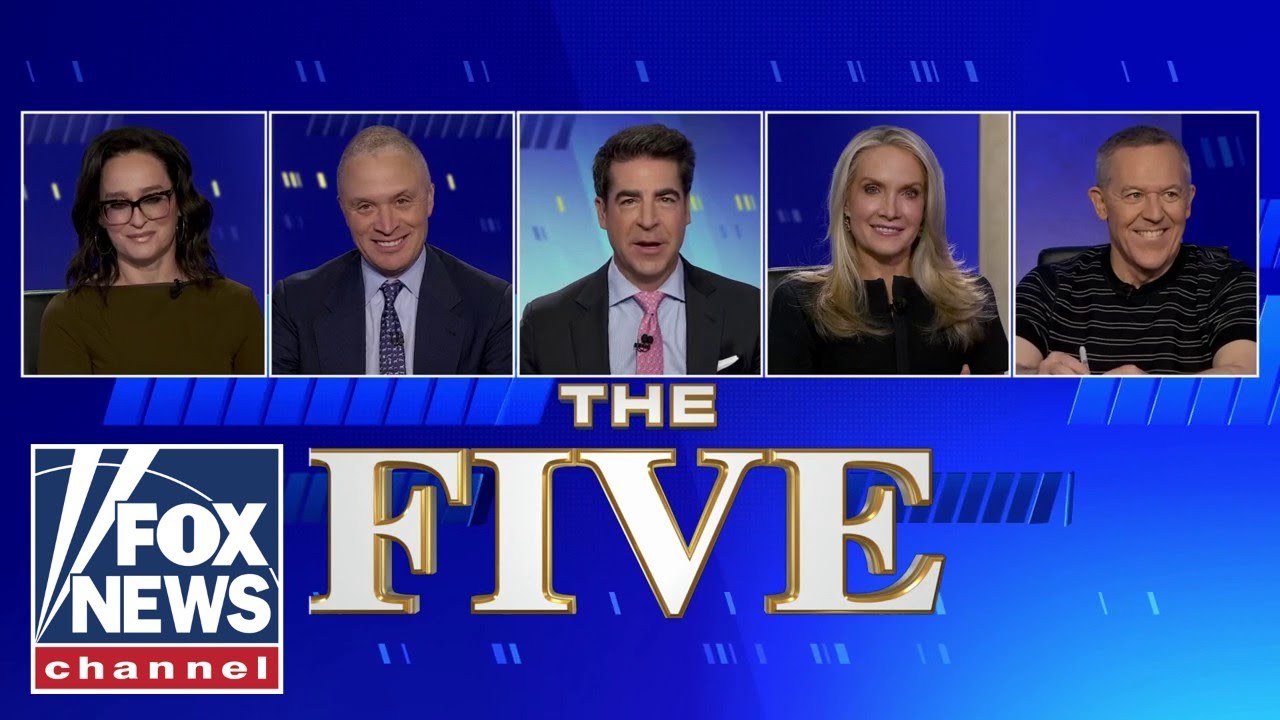 , “The major factor in this race … is whether Tala-freak-o is a vegan.”
Though Talarico maintains he is not vegan, Paxton has referred to his opponent as “Tofu Talarico.”
Paxton and Watters aren’t the only ones making these dietary accusations.
Earlier this year, after Talarico ordered a potato, egg and cheese taco from a restaurant in Austin, Texas Gov. Greg Abbott posted to his campaign social platform X account: “Homie is not beating the vegetarian allegations.”
Texas Sen. Ted Cruz joked that if a soy latte could speak, “that would be Democrat James Talarico.” Even President Donald Trump has chimed in: “He’s a vegan in Texas, and you can’t get elected as a vegan in Texas.”
Again, Talarico denies being a secret vegetarian or vegan. “I’m an eighth-generation Texan,”. “I’ve been eating barbecue since before Ken Paxton’s first indictment.”
The accusations likely stem from a 2022 appearance with the Texas Humane Legislation Network when Talarico suggested Americans reduce their meat consumption for climate reasons. His girlfriend follows a plant-based diet. Nonetheless, Talarico says that his campaign “runs on barbecue.”
As communication scholars who study the symbolic roles of meat and meat-eating in political communication, we see the construction of “Tofu Talarico” not as a one-off political jab but as part of a more sophisticated rhetorical strategy by which politicians appeal to voters.
Attacks on Talarico show how, across American politics, what people eat is a metaphoric marker of who they are, from political affiliation to regional belonging and cultural values. Eating meat – or not – plays a huge role in the political process, and accusations of meat avoidance, regardless of whether they’re true, can be a potent rhetorical weapon.
From left, former President Barack Obama, Texas Democratic Senate candidate Rep. James Talarico and Texas Democratic gubernatorial candidate Gina Hinojosa visit the Taco Joint in Austin in May 2026. Talarico’s order – potato, egg and cheese tacos – drew ridicule from Republicans, feeding vegetarian and vegan attack lines that he denies. AP Photo/Joel Angel Juarez, Pool
Meat, metaphor and political communication
Communication scholarship shows that metaphors, when a word or phrase denoting one object or idea is used in place of another, are more than literary decoration; they shape the way we perceive reality, acting as part of a “conceptual system” that enables snap judgments and decision-making.
As mental shortcuts, or heuristic devices, metaphors are common in political communication. They’re a means to “see something in terms of something else.”
For example, in the case of Paxton and Talarico, allegations of vegetarianism and veganism are not about Talarico’s nutritional profile or even his environmental ethics. Here, “vegan” and its analogues metaphorically stand in for weakness and nonconformity, whereas “meat” and its affiliates stand in for strength, traditionalism and the stereotypical Texan way.
This usage is consistent with what food politics researchers call the “sexual politics” of meat, wherein meat imagery is often used in displays of traditional masculinity. This is evident in other jabs levied at Talarico. For example, Watters linked Talarico’s diet to his sexual orientation, joking on Fox News that Talarico was a “gay vegan” with a fake girlfriend.
Dietary demographics and election modeling
Dietary preference also links to key political demographics. For example, political scientists have explored whether the concept of a Republican vegan is an oxymoron due to the deep entrenchment of meat-eating and meat production in primarily conservative regions.
Overwhelmingly, vegans tend to be women, young and liberal. Across all political identifications, being male and white correlates with higher meat consumption.
Even the choice of where to purchase meat can be an electoral measure. Political journalist Dave Wasserman has suggested that the 2012 election was a contest between “well-educated, Democratic-trending Whole Foods markets and down-home, Republican-trending Cracker Barrel outposts.”
Meatless political appeals
The “meatless” have long been framed as social and political threats, levied in discussions of whether they should be politically elevated or subordinated. Historically, Western norms during the 19th and 20th centuries held that to not eat meat is odd at best, and suspicious at worst.
In the late 1800s, colonialism in Asia was partially justified on the grounds that Asian men were but “effeminate rice eaters” who, according to 19th-century neurologist James Leonard Corning, lacked “the intellectual vigor of flesh-eating men.”
Negative appeals to veganism again flourished in 2019 after Democratic Representative Alexandria Ocasio-Cortez’s “Green New Deal,” a resolution proposing to combat climate change. Conservative senators like Joni Ernst and Marsha Blackburn attacked the environmentally progressive initiative as a “war on meat,” posing an existential threat to meat eaters and cattle farmers. Notably, the Green New Deal did not contain meat mandates. In the Green New Deal discussion, though, this hypothetical meat ban effectively functioned as metaphorical shortcut for progressive political overreach.
This demarcation is not confined to one political party. In a Democratic primary debate in 2019, New Jersey Senator Cory Booker – a vegan since 2014 – was asked by a debate moderator if, as president, he would demand Americans follow his diet. Booker, surprised by the personal question, said no. He did not win the nomination.
More meat, less elite
Meat, or lack thereof, has gathered more significance in the second Trump presidency via Health and Human Services Secretary Robert F. Kennedy Jr.’s Make America Healthy Again initiative. Kennedy, who touts his “carnivore diet,” says he “only (eats) meat or fermented foods.” He has even modified the food pyramid – the Department of Agriculture’s visual nutrition guide – shifting red meat from a food to be consumed sparingly to a high dietary priority.
Meanwhile, multiple Republican-leaning states have banned cell-cultured meat, or meat produced in a lab, for not being “real” and, so, being dangerous. After signing a ban on cultured meat, Florida Governor Ron DeSantis declared that the bill represented a battle against the global elite and its “authoritarian goals.”
Secretary of Agriculture Brooke Rollins speaks at a Department of Health and Human Services event in January 2026. The Trump administration announced new dietary guidelines emphasizing proteins. Anna Moneymaker/Getty Images
2026 and beyond
While the beef between Paxton and Talarico will likely resolve after the 2026 midterms, appeals to meat, meat eaters and meat-eating in U.S. political communication will not.
As available meat substitutes increase, economic burdens on ranchers rise and debates over the meat industry’s impact on climate change intensify, we expect meat’s culture war cachet to surge too.
“Tofu Talarico” is just one of what will be numerous examples of meat symbolizing what the future of the country, its leaders and its citizens should be.
S. Marek Muller, Associate Professor of Communication Studies, Texas State University and David Rooney, Associate Professor of Practice, University of Wyoming
This article is republished from The Conversation under a Creative Commons license. Read the original article.
---
:{---
Right-wing media’s “war on meat” paves the way for Trump administration to blame climate policies for rising beef prices
Special ProgramsClimate & Energy
Written by Ilana Berger
Published 12/18/25
Right-wing media's longstanding claims of a Democratic “war on meat" have given Agriculture Secretary Brooke Rollins cover to blame rising beef prices on Democrats and climate policy — even as cattle ranchers themselves point to climate-driven drought as one factor contributing to small herd sizes and voice their opposition to the administration’s plans to import Argentine beef.
On December 8, Rollins told Fox Business host Larry Kudlow, “The cost of ground beef is actually coming down, so we’ve started now the trajectory down. But let’s be very clear: To rebuild the lowest beef herd in 75 years … will take a little bit of time. You think about the last administration. They had a war on American agriculture. They thought that cows created climate change. They didn't want big herds, and the cost of inputs were skyrocketing.”
She made similar claims prior to this appearance at least five separate times on Fox Business’ Mornings with Maria, Fox News’ Fox & Friends, and CNN’s The Situation Room.
Right-wing media have long tried to pit ranchers and farmers against environmentalists and those attempting to mitigate the environmental impacts of agriculture, including falsely claiming Democratic leaders and the Inflation Reduction Act (which they often called the “Green New Deal”) would ban meat.
- ## The IRA offered only incentives to reduce methane from ranching, and ranchers and industry experts say prolonged drought, high input costs, and inflation are driving high beef prices
- The Inflation Reduction Act included a program aimed at reducing methane emissions, but it included only “voluntary, incentive-based approaches” for farmers and ranchers.In 2023, the Biden administration announced the Methane Emissions Reduction Action Plan, which included plans to mitigate methane emissions. The only elements of the action plan targeting agricultural methane emissions were “voluntary, incentive-based approaches,” even though the sector is responsible for an estimated 37% of human-caused emissions globally, and about 10.5% in the U.S. According to Sentient Media, these incentives might have had the potential to “increase emissions from the sector.” Vox, [8/16/22; Reuters, 1/11/22; Sentient Media,9/28/23; The White House, 11/2/21, 12/23; Environmental Protection Agency 12/2/2; U.S. Department of Agriculture, 11/5/24]
- Severe drought and changing weather patterns have contributed to shrinking U.S. cattle herds. According to Investigate Midwest, climate change-driven weather volatility has “made relying on typical weather patterns and grazing conditions difficult for the nation’s beef producers." That means ranchers must transport feed from farther away, increasing costs. They are also forced to wean calves earlier so heifers expend less energy feeding calves and require fewer nutrients. Some farmers have even had to cull their herds. Bloomberg, [1/31/25; Investigate Midwest, 3/13/24; South Dakota State University Extension, 3/21/25; Grain Journal, 6/12/25]
- Several ranchers and cattle industry players told Fox News that prolonged drought is tightening livestock supply and hurting their bottom lines.Various cattle ranchers told Fox News and Fox News Digital that drought helped herd sizes hit a historic low and said that it was contributing to “the ongoing decline of the industry.” In 2023, a Florida-based rancher also told Fox News that extreme drought was part of the problem because it was “increasing our production costs” and it would “have a long-term effect on our bottom line.” Fox News Digital, [11/24/25; Fox News,Fox & Friends Weekend, 10/25/25; Fox News, Fox & Friends, 4/12/23]
- Inflation, high interest rates, and Trump’s tariffs are impacting ranchers. ABC News reported in October that amid rising inflation, beef prices were soaring, noting also that “tariffs modestly contributed to the uptick in overall inflation.” A report from the American Farm Bureau Federation also found that inflation and interest rates were “driving up costs for farmers.” The report noted: “When the Fed increased rates, they dramatically increased the cost of borrowing money across the economy. This has happened at a time when farmers and ranchers rely more heavily on credit due to the growing gap between commodity prices and input costs.” ABC News, [10/24/25; American Farm Bureau Federation, 8/26/25]
- ## For years, right-wing media have labeled climate policies and other Democrat supported initiatives as a “war on meat”
- In 2019, right-wing media falsely said the Green New Deal would ban meat and that it was “bad news or cows."Fox host Brian Kilmeade said that the Green New Deal would be “bad news for cows,” adding, “Time to slaughter all of them quickly because of their propensity for gas.” Climate skeptic Marc Morano told Kilmeade the same day, “We're told we need to do all of this, from banning meat, to airline getting rid of the combustion, internal combustion engine, all to save from us from a climate emergency.” Fox News, *Fox & Friends*, [2/8/19, 2/8/19; Fox News Primetime, 8/9/21]
- In 2021, Fox News spread a fake story that then-President Joe Biden wanted to ban hamburgers. The administration did not call for an end to meat consumption. But on Fox News @ Night, anchor Shannon Bream asked viewers, “Could new climate impact plans limit you to just one burger a month?” She later added, “About the burger thing, I'm not going to comply with that.” On Fox News’ America Reports with John Roberts, Fox’s “straight news” program, chyrons included, “Bye-bye burgers under Biden’s climate plan,” as well as “Study: 90% of red meat out with Biden climate plan,” and “Biden’s climate plan burns all-you-can-eat burgers.” Media Matters, [4/26/21]
- In 2022, right-wing media used farmer protests in the Netherlands over plans to cut nitrogen pollution to fearmonger about a globalist conspiracy to trample freedoms, including eating meat. The Guardian, [11/16/23; Media Matters; 7/8/22, 7/15/22, 11/8/22]
- Frequent Fox News guest and Tennessee dairy farmer Stephanie Nash has appeared on several segments across right-wing programs, telling hosts that the “Green New Deal” and Biden’s “energy climate change initiative” would lead to “empty shelves” and that the Biden administration was targeting farmers.Nash told hosts that “Americans should be prepared for food shortages” because “the Green New Deal … is an attack on family farmers and ranchers,” and that “climate change has always been a hoax for the agriculture industry, they continue to blame agriculture for global warming and change of our planet. … I think this is just an excuse to continue to blame agriculture, to continue to let our farmers struggle around this country.” She also said that the administration was “trying to push agriculture out of the United States, pushing this plant-based food.” As recently as this October, Nash said on Fox Business, “Everybody knows that we’ve been bringing in more imports than ever the last two years, and that’s thanks to the Green New Deal. … Trump is trying to fix that and bring back American agriculture.” Fox Business, *Varney & Co.*, [8/10/22, 10/3/25; Fox News,Fox & Friends, 8/5/22; Newsmax, Rob Schmit Tonight, 7/6/22; Fox Business, Cavuto: Coast to Coast, 8/10/22;]
- Fox Business host Jackie DeAngelis said that “what happened to Big Oil … same thing is going to happen to the farmers.”DeAngelis argued that “more regulations make it harder for those companies to increase supply” and that “food costs will continue to rise.” Fox Business, *Cavuto: Coast to Coast*, [8/10/22]
- A 2024 Fox Business interview with a cattle rancher pushed the narrative that “global sustainability initiatives could cause millions of people to starve.” Host Dagen McDowell told Texas and Colorado-based cattle rancher Shad Sullivan that “the climate crusading wack jobs want to destroy us, our life, and your livelihood." Sullivan told the hosts that “they've all teamed up in this anti-meat rhetoric that you see sweeping across the globe, to get control of the people. And that's all it amounts to, is total control.” [Fox Business,The Bottom Line, 2/15/24]
- Right-wing media falsely claimed that Kamala Harris wanted to “get rid of” red meat. Fox contributor Jason Chaffetz, for instance, made the claim on three different segments, saying, “She wants to get rid of meat.” Former Fox & Friends Weekend co-host and current Secretary of Defense Pete Hegseth also translated Harris’ support for changing the dietary guidelines to “get rid of red meat.” Media Matters, [8/6/24]
- In an interview with Rollins, Fox News host Brian Kilmeade blamed “craziness around climate change” for “a shortage of shrinking cattle” herd sizes. Kilmeade claimed that this was because of “the methane from the cows they thought was killing the ozone.” Rollins agreed that Democrats have “waged war” against cattle ranchers. Fox News, Fox & Friends, [11/24/25]
mma
//
12/17/25 4:22 PM EST
12/17/25 12:16 PM EST
- ### Fox found its culprit for high grocery prices following Democratic election victories — Joe Biden
12/17/25
---
They think climate change should govern all of our lives: Victor Davis Hanson
Victor Davis Hanson discusses how the U.N. wants to call for Americans to reduce meat intake on ‘Hannity.’
LIST NUTRIENTS BA GAS STOVE RO RQANCH BUT APT, MASS TRANSIT NOT CAR; CATTLE CONTRIB NO EVID; BICULT ELITES, NEVER D OWHAT THEY MAKE US DO EG KAMALA; PROT? BOOST IMMUNE ~ COVID; WHO LIED ABOUT COVID HANITY PARIS, X PAY NOTHING...
They think climate change should govern all of our lives: Victor Davis Hanson | Fox News Video
BK THE END OF EVERYTHING
IRAQ IRAN NOT DEMOCR
---
Fox News figures called price gouging investigations “communist.” Network figures are now praising Trump for proposing the same thing for meatpackers.
Written by Zachary Pleat
Published 11/10/25 mma
Multiple Fox hosts are joining President Donald Trump in blaming large meatpacking corporations for soaring beef prices, supporting his call for an investigation into the companies for price gouging even though the network dismissed former Democratic presidential nominee and Vice President Kamala Harris’ call to address these concerns by empowering investigations into price gouging as “communist,” “Soviet-style price control,” and “old school socialism.”
Additionally, Fox is supportive of Trump’s tariff and mass deportation policies that are contributing to higher beef prices.
Fox hosts support Trump calling for investigating of meatpacking companies over “price manipulation” amid soaring beef prices
- Trump: “I have asked the DOJ to immediately begin an investigation into the Meat Packing Companies who are driving up the price of Beef through Illicit Collusion, Price Fixing, and Price Manipulation.” In a Truth Social post, Trump wrote: “We will always protect our American Ranchers, and they are being blamed for what is being done by Majority Foreign Owned Meat Packers, who artificially inflate prices, and jeopardize the security of our Nation’s food supply. Action must be taken immediately to protect Consumers, combat Illegal Monopolies, and ensure these Corporations are not criminally profiting at the expense of the American People. I am asking the DOJ to act expeditiously.” Truth Social, [11/7/25]
- Fox Business host Dagen McDowell: “This is a huge problem in terms of the costs that are passed on to the American people by the oligopoly of meatpackers.” Her guest, Sen. Mike Rounds (R-SD), effusively thanked Trump for his announcement. Fox Business, *The Bottom Line*, [11/7/25]
- Fox & Friends Weekendco-host Griff Jenkins: “The president has a point. There are four meatpackers that dominate 85% of the beef market, and that’s why he’s leaning into it.” Co-host Rachel Campos-Duffy added: “Clearly, there might be a monopoly situation there, and that's why the DOJ and the Agriculture Department are looking into this.” Co-host Charles Hurt said that these four meatpacking corporations “have gotten in trouble in the past and been pursued in the past for price rigging among themselves, which is obviously illegal. And that's what President Trump wants his Department of Justice to look into.” Fox News, *Fox & Friends Weekend*, [11/8/25]
- Fox & Friends Weekendlater asked Trump Agriculture Secretary Brooke Rollins to “address what the president’s talking about — possible collusion or monopolies among the meatpackers.” During the interview, Rollins claimed that Trump’s announcement was about affordability and suggested that “we’ve got a national security issue on our hands” because of the meatpacking industry consolidation, adding: “If you can’t feed yourself, you’re not secure as a nation.” Fox News, *Fox & Friends Weekend*, [11/8/25]
- OnThe Big Weekend Show, Fox host Tomi Lahren interviewed a Republican senator about a question “that’s very close to my heart as a South Dakotan,” asking about Trump directing the DOJ “to start investigating meatpackers over high prices and accusations of collision, price-fixing, and price manipulation.” During the interview, Sen. Markwayne Mullin (R-OK) claimed Trump’s “entire goal was is to lower the price on our consumers’ table.” Fox News, *The Big Weekend Show*, [11/8/25]
- Fox & Friends Weekendalso interviewed a cattle rancher about Trump’s announcement, and he said meatpacking corporations “can manipulate that market pretty easily.” Fox News, *Fox & Friends Weekend*, [11/9/25]
- ## Fox derided the idea of investigating price gouging as “communist” “price controls” when it was proposed by VP Kamala Harris
- In August 2024, the Harris campaign detailed her plan to “advance the first-ever federal ban on price gouging on food and groceries,” citing the need for “independent meat processors to compete with the handful dominating the industry.” A press release on the proposal also stated that the regulatory and legal authority to investigate and enforce the new anti-price gouging rules would rest with “the FTC and state attorneys general.” Harris-Walz campaign press release, [8/16/24 via Popular Information; Twitter/X, 8/15/24]
- Fox host Sean Hannity warned against Harris “go[ing] the route of weaponizing the DOJ to go after food companies” while displaying a graphic that showed her with the caption: “The best I can do is communism.” Hannity also compared Harris’ plan to the Soviet Union. Fox News, *Hannity*, [8/15/24]
- Fox host Rachel Campos-Duffy: Harris’ “plan apparently involves a Soviet-style price control to stop inflation” and “blam[ing] corporate greed.” Campos-Duffy then aired video of Trump criticizing Harris’ plan, in which he said: “Kamala is reportedly proposing communist price controls. … If they worked, I’d go along with it too. But they don’t work, they actually have the exact opposite impact and effect.” Fox News, *Jesse Watters Primetime*, [8/15/24]
- Fox contributor Jason Chaffetz: Harris’ plan to ban corporate price gouging in the food industry “is what the communists would do, what socialists would do.” Chaffetz continued: “And that is the government’s going to come in and solve this. The government is going to dictate what prices are going to be. Is there anything more scary to the entrepreneurs in the business community than the government controlling your prices? Her solution for inflation and fixing the economy is for the government to take over? I don't think this is going to fly. I don't think it's going to come over very well. It’s never worked. That's not who we are as a country.” Fox News, *America Reports*, [8/15/24]
- Then-Fox contributor and Trump Transportation Secretary Sean Duffy decried Harris’ “set of commie policies”: “When she’s talking about price-gouging, the real policy prescription for that is price-fixing. They want to go old school socialism, fix prices.” Fox Business host Dagen McDowell said, “You will have bare shelves, so ‘Make America the Soviet Union’ should be the slogan there.” Fox News, *The Faulkner Focus*, [8/15/24]
- After a Democratic senator defended Harris’ policy by citing “consolidation, say, of the meatpacking industry where you only have four industries in the country,” Fox anchor John Roberts responded: “There are a lot of economists … who say this idea of price controls is just a silly idea.” Fox News, *America Reports*, [8/21/24]
- ## Trump policies supported by Fox are also contributing to higher beef prices
- Former director of economics at Yale’s Budget Lab Ernie Tedeschi: “The effective tariff rate on imported beef has risen from 4.2% in July 2024, and 2.3% as recently as January, to 10.7% this past July.” He added: “(There's more than tariffs going on with beef prices, e.g. droughts, but tariffs are an upward factor).” Twitter/X, [10/17/25]
- Director of Arkansas Center for Research in Economics Jeremy Horpedahl: “There are a number of factors driving beef prices higher, some of which are outside Trump's control (e.g., droughts). But one thing that is under his control? Tariffs. Such as the 76.4% tariff on Brazilian beef.” Twitter/X, [10/16/25]
- Fox has defended Trump’s tariffs and dismissed their contribution to increased prices. As economists this summer explained how Trump’s tariffs were beginning to show up in inflation data, Fox Business hosts Maria Bartiromo and Jackie DeAngelis, along with guest Art Laffer, denied any tariff impact on prices. Meanwhile, inflation as measured by the Consumer Price Index re-accelerated following Trump’s Fox-endorsed “Liberation Day” tariffs first announced in April. Media Matters, [7/15/25, 8/12/25, 4/1/25; U.S. Bureau of Labor Statistics via Federal Reserve Bank of St. Louis, accessed 11/5/25; CBS News, 4/9/25]
- Trump’s Labor Department says his mass deportation policies have resulted in “significant disruptions to production costs and threatening the stability of domestic food production and prices for U.S consumers.” Additionally, an opinion piece from Phil Kafarakis, CEO of the Food Away from Home Association stated: “The U.S. livestock and meat sectors are staring down a labor crisis. As federal immigration officials prepare to deport more than one million undocumented workers, meatpackers, dairies, poultry processors and cattle operations are bracing for severe workforce disruption. The impact will not be theoretical. It will show up on the line, in the barn and on the shelf.” He added: “The numbers speak for themselves. According to USDA data, undocumented laborers make up 42% of the total U.S. farm workforce. In meat and poultry processing, estimates run as high as 50% of frontline staff. That translates to as many as 270,000 workers who currently handle everything from live animal intake to cutting, trimming, packing and sanitation. Lose those workers and output slows immediately. Some facilities may shut down entirely, causing scarcity and likely increasing prices consumers will have to pay.” The American Prospect, [10/8/25; The Beef Site, 9/16/25]
- The Trump administration has launched raids at meatpacking plants to arrest immigrant workers and revoked legal protections that resulted in hundreds of meatpacking workers losing their jobs. These have included a June raid at a meat producer facility in Nebraska that left only 30% of its staff on the job, more than 200 workers at a JBS facility in Iowa losing their jobs due to their immigration protections being terminated, and hundreds more who lost their meatpacking jobs in an Illinois city for the same reason. Reuters, [6/12/25; NBC News, 7/30/25; Investigate Midwest, 9/3/25]
- Fox has also embraced Trump’s mass deportation agenda. Trump administration “border czar” Tom Homan has, as of early August, appeared nearly 100 times on Fox News and Fox Business this year, including softball interviews that glossed over the inhumane aspect of the Trump administration’s mass deportation policies and segments that supported the administration’s framing of immigrants as violent, a framing that is quite false. Media Matters, [8/7/25, 8/8/25]
// mma
11/06/25 11:10 AM EST
11/03/25 3:22 PM EST
11/07/25
---
---
an 8 25
Many rural Coloradans, especially in agricultural communities, feel looked down on by their urban counterparts. One cattle rancher I spoke to put it plainly. “It’s an attitude … we are the idiots … we are the dumb farmers … we don’t really matter.”
The sentiment is also portrayed in popular culture such as the hit TV show “Yellowstone.”
“It’s the one constant in life. You build something worth having, someone’s gonna try to take it,” says patriarch John Dutton. He was facing repeated threats by developers from “the city” to annex his land for a luxury hotel and resort development.
As a policy scholar, I’ve talked to and interviewed many dozens of people in rural areas in Colorado. I’ve also read hundreds of newspaper articles and watched hundreds of hours of legislative testimony that capture the sentiment of rural people being left behind, left out and snubbed by their urban counterparts.
Recently, I studied the divide between rural and urban Coloradans by looking at their responses to four statewide policies. A designated day to forgo eating meat, two political appointees and the ongoing wolf reintroduction.
These policies, while specific to Colorado, are symptoms of something larger. Namely, an ever-urbanizing, globalized world that rural, agricultural citizens feel is leaving them behind.
‘MeatOut’ or misstep?
My expertise doesn’t just come from my research – I’ve lived it.
I grew up in a rural community in Elbert County, Colorado, about an hour- and-a-half southeast of Denver.
In early 2021, Gov. Jared Polis declared via proclamation that March 20 would be a “MeatOut Day.” For health and environmental reasons, Colorado residents were encouraged to forgo meat for a single day.
Supported by the Farm Animal Rights Movement, MeatOuts have been promoted across the U.S. since the 1980s. Typically, gubernatorial proclamations, of which hundreds are passed each year and are completely ceremonial and devoid of any long-term formal policy implications, go largely unnoticed. And in Denver, Colorado’s metropolitan center, this one did too.
Not so in rural Colorado.
My neighbors in Elbert County promptly responded with outrage, flying banners and flags declaring their support for agriculture and a carnivorous diet.
One rancher from Nathrop painted a stack of hay bales to say, “Eat Beef Everyday.”
Communities all over the state, and even in neighboring states, responded with “MeatIns,” where they gathered to eat meat and celebrate agriculture and the rural way of life. They also coupled these events with fundraisers, for various causes, for which hundreds of thousands of dollars were raised across the state. While Polis backed off the MeatOut after 2021, Denver Mayor Mike Johnston has, just this year, supported a similar “Eat Less Meat” campaign, prompting similar rural outrage.
Did I mention there are nearly 36,000 cattle in Elbert County? This is relatively typical of a rural Colorado county, particularly on the Plains.
In Colorado, 2.7 million cattle are raised annually, with a value of US$4.5 billion. The industry is consistently the top agricultural commodity and the second-largest contributor to Colorado’s GDP, at about $7.7 billion per year.
In early March 2021, Polis declared March 22 “Colorado Livestock Proud Day,” in response to the backlash.
Other policies
This came on the heels of several policies supported by Polis prior to the MeatOut controversy that critics considered anti-agriculture.
In 2020, he appointed Ellen Kessler, a vegan and animal rights activist, to the State Veterinary Board. Kessler criticized 4-H programs, designed to educate youth on agriculture and conservation, on her social media, insisting they “don’t teach children that animal lives matter.” Kessler resigned in March 2022, just days before she was cited for 13 counts of animal cruelty. More recently, in May 2025, Polis appointed Nicole Rosmarino to head the State Land Board. Rosmarino has ties to groups that oppose traditional agricultural practices, historically a key component of Colorado State Land Board operations.
Then came wolf reintroduction, passed by urban voters by just under 57,000 votes in the 2020 general election and supported by the governor. Those in support advocated for a return to natural biodiversity; wolves were hunted to extinction in the 1940s.
Rural residents voted decidedly against the initiative. Despite much legislative and grassroots action to oppose it, wolves were reintroduced in December 2023 in various areas along the Western Slope, in close proximity to many ranches. Several cattle have since been killed by wolves. Ever since, rural interests have been working to overturn wolf reintroduction on the 2026 ballot.
An American mess
Rural residents in Colorado have told me they feel excluded. This is not new or exclusive to Colorado, but a story as old as America itself.
University of Wisconsin political scientist Katherine J. Cramer wrote about this rural exclusion in Wisconsin, calling it “rural resentment.” Berkeley sociologist Arlie Russell Hochschild called it “stolen pride.” In their book, Tom Schaller, a political scientist at the University of Maryland, and Paul Waldman, a longtime journalist, characterize it as “white rural rage.”
It’s a dynamic that descends from slavery. Isabel Wilkerson, in her book “Caste: The Origins of Our Discontents,” demonstrates that while Black Americans have historically been relegated to the bottom of the hierarchy of an American caste system, poor white people are strategically positioned just above them but below white Americans of higher socioeconomic status. As Wilkerson explains, this is a durable system sustained by norms, laws and cultural expectations that feel “natural.” But they are entirely constructed and designed by the American upper class to intentionally exploit resentment of working-class white people.
The result is what sociologist Michael M. Bell calls a “spatial patriarchy” that characterizes rural America as dumb, incapable, racist, poor and degraded as “white trash.”
This spatial patriarchy is as old as industrialization and urbanization. One of the first policy iterations was rural school consolidation during the turn of the 20th century, designed to modernize schools and make them more efficient. Urban policymakers were influenced by eugenics and the assumption that rural schools “were populated by cognitively deficient children whose parents had not been smart enough or fortunate enough to leave the decaying countryside,” according to sociologist Alex DeYoung.
So, states around the country consolidated schools, the lifeblood of rural communities. Where a school closed, the town often died, as in small towns, schools are not just socioeconomic hubs but centers of cultural and social cohesion.
Environmental impact
The same concept – that urban policymakers know better than rural Americans – is manifest in the modern environmental movement. Like with the MeatOut, rural communities also distrust environmental policies that, in their view, intentionally target a rural way of life. Rural communities take the position that they’ve been made to bear the brunt of the transformations of the global economy for generations, including those that deal with energy and the environment.
For example, environmentalists frequently call for lowering meat consumption and enacting livestock taxes to lower global greenhouse gas emissions.
But, there’s a huge, untapped potential for environmental policies that use language consistent with rural attitudes and values, such as ideas about conservation and land stewardship. Political scientists Richard H. Foster and Mark K. McBeth explain, “Rural residents perceive, probably correctly, that environmental ‘outsiders’ are perfectly willing to sacrifice local economic well-being and traditional ways of life on the altar of global environmental concerns.” They instead suggest “emphasizing saving resources for future generations” so that rural communities may continue to thrive.
The Food and Agriculture Organization of the United Nations attribute between 18% to 24% of greenhouse gas emissions to agriculture, while the International Panel on Climate Change places the estimate closer to 10%. However, agricultural producers point out that, while they may be responsible for that 10%, just 100 companies, such as BP and ExxonMobil, have produced 70% of all emissions. Agricultural producers say policies such as livestock taxes would disproportionately impact small-scale farmers and intensify rural inequality.
Rural communities have the distinct feeling that urban America doesn’t care whether they fail or flourish. Nearly 70% of rural voters supported Trump in the 2024 presidential election. He won 93% of rural counties. Rural Americans feel left behind, and for them, Trump might be their last hope.
Kayla Gabehart, Assistant Professor of Environmental Policy, *Michigan Technological University
This article is republished from The Conversation under a Creative Commons license. Read the original article.
---
also meatpacking essential workers covid
trump got some calls from agribiz cronies but 180 in days
an 7 25
One day after appearing in front of the U.S. Department of Agriculture to tell reporters there will be “no amnesty” for undocumented farm workers while insisting adults on Medicaid could replace them, U.S. Secretary of Agriculture Brooke Rollins faced sharp criticism for having no “concrete” plan to meet what she declared is the Trump administration’s goal of an entirely “legal” U.S. farm worker workforce.
“It sounds like you don’t yet have a concrete proposal to deal with farmers who rely on undocumented workers, am I right?” a Fox News Business host asked (video below).
“Well, no, we are working on it. We’re working on a concrete proposal,” Secretary Rollins insisted.
READ MORE: ‘Secretary Chaos’: Hegseth Running ‘Absolute Clown Show’ Critics Say, Amid Calls to Resign
“You’re working on it but that’s not a concrete proposal,” the host sharply charged.
“Well, no, the president has been very, very clear. We need to make sure that the food supply is safe,” Rollins said, before insisting that “ultimately, we have to move toward a 100% legal workforce, and that’s what this president stands for, and that’s what we’re doing.”
“The mass deportations will continue, but the president has been very clear that we have to make sure we’re not compromising our food supply at the same time,” Rollins said before declaring that “Congress has to fix it,” and U.S. Secretary of Labor Lori Chavez-DeRemer “is on it.”
“The border has to be secure and there will be no amnesty,” Rollins added, before the host again pointed out the administration has no plan yet.
READ MORE: Trump Claims ‘Tremendous Power’ to Run ‘Places’ Like DC and NYC
“It’s not easy, but I don’t think it’s fair to say there is a concrete proposal when you’re still working out details to try to deal with the needs of farmers who need a lot of these undocumented workers and at the same time not providing an amnesty.”
Watch the video below or at this link.
---
...
4.5 Fear of a ‘‘green agenda’’
Another frequent conspiracy theory narrative positions climate policies and green technology
as a means of oppression by a tyrannical elite. I summarize all social, political, economic, and
technological pro-environmental measures as the “green agenda.” This discourse appears to be
most concerned with specific notions of freedom, such as the freedom to drive a gasoline-
powered car or the freedom to eat meat. Believers view pro-environment policies and
technologies as a means of government overreach. This is sometimes incorporated into a
broader conspiratorial belief in which these measures are a set of tools used by a malevolent.
evil group to work toward their goal of world domination. This framework considers LED
lights a tool for spying on civilians, electric cars a means to control people’s mobility, and
carbon footprint calculators a pretense for tracking individuals’ every move.
Many of these videos either directly mentioned or indirectly referred to components of the
“Great Reset” conspiracy, a narrative which emerged from “The Great Reset” initiative, an
economic recovery plan created by the World Economic Forum (WEF) to reduce global
inequality and advance environmental initiatives in response to the COVID-19 pandemic. The
“Great Reset” is not so much a singular conspiracy narrative as an umbrella term for a loose
grouping of conspiracy theories, sometimes described as a “conspiracy smoothie” (Klein,
2020). However, the core theme is that Klaus Schwab and the WEF are acting as a
Machiavellian hidden hand, using the pandemic and climate change as an excuse to advance
their interests and potentially implement a tyrannical global regime. While “Great Reset” may
not be explicitly referred to in each of these narratives, it serves as a unifying theme under
which many of these conspiracy narratives exist.
Figure 13: A TikTok user films the sun shining through clouds as evidence of a geoengineering conspiracy.
29
The video depicted in Figure 14 offers an imagined future scenario in which criticizing the
government results in citizens losing access to their electric vehicles. Here, green technology
serves as a support mechanism for an oppressive regime.
The TikTok, which is composed of blocks of text sequentially shown over a cityscape
background and instrumental music, reads:
The year is 2030.
You try to start your electric vehicle but…
you recently questioned the new government mandates.
Your car won’t start for 48hrs.
Your social credit score isn’t high enough now.
The government has frozen your bank account.
You’re no longer the ideal citizen of the new world order.
Your freedoms are now ‘limited.’
Maybe next time… you will just comply.
Look how far complying has gotten you.
If you just comply you will get your freedoms back.
They promised us that after 2 weeks to flatten the curve.
They don’t have any reason to lie to us…. Right?
Figure 14: Great Reset video paints image of a near future in which EVs are a means of punishing civilians for dissent.
30
Several of the videos in the data set were concerned with loss of freedom with regard to eating
meat. In this sense, the green agenda threatens individuals’ perception of choice over the food
they eat. A video of internet personality Andrew Tate also featured a future scenario in which
green policy is used as a means for control. Tate says:
You can’t drive your car past 8 p.m. anymore because of the environment. You can’t
eat meat anymore because of the environment. Stay home. Eat the bugs. Be a slave. Be
a slave. Be a slave.
Another video referred to the conspiracy theory of “climate lockdowns,” a narrative which
emerged in response to COVID-19 lockdowns. According to this conspiracy theory,
governments will implement further lockdowns, supposedly to reduce greenhouse gas
emissions.
If the whole pandemic narrative is not what some of the evil powers that be are looking
for it to become, they will begin to cause ... and I'm going to say this again ... I've been
saying this for months, but there's going to be climate change. Now this sounds wild,
but listen to me ... lockdowns. You're going to see some of this begin to unfold, and you
say "climate change lockdowns?" Yep, I think that they'll begin to say all the urgency
Figure 15: Internet personality Andrew Tate claims that "You can't eat meat anymore because of the environment."
31
of the greenhouse gases and all the things that are happening are so severe that we
need to do this for the good of humanity.
While this genre of climate change conspiracy theory does not overtly deny the existence of
climate change, it considers climate policy to be a veiled attempt to implement oppressive
governmental regimes.
4.6 Supply control
Another prominent theme within this data set was an anxiety surrounding access to basic needs
like food, water, and electricity. This discourse featured food shortages, water shortages, and
power outages. Rather than depicting these problems as the results of a global market impacted
by climate, politics, economics, or technologies, this discourse considers these events
intentional. They are viewed as a means through which the powerful elite attempt to exert
control over the populace. These conspiracy theories offer alternative explanations for
ramifications of climate interacting with societY...
---
---
8 24 mma
on August 15, Democratic presidential nominee Vice President Kamala Harris began outlining her economic agenda, which includes fighting excessive prices by enacting a federal ban on price gouging.
Most states already have some kind of law banning price gouging in at least some circumstances, but Harris’ new proposal would create the first ever federal ban on price gouging on groceries and empower the Federal Trade Commission to enforce these new consumer protections.
Yet Fox News and others in the media reacted by falsely mischaracterizing Harris’ proposal as setting price controls, denying that price gouging exists in the food industry, and ranting about communism.
- ## Harris’ plan specifically mentions anti-monopoly actions and enhanced authority for the FTC and state attorneys general to combat price fixing, not price controls
- Bloomberg White House reporter Josh Wingrove posted a Harris campaign email previewing her plan that makes no mention of price controls. What the announcement did mention was “authority for the FTC and state attorneys general to investigate and impose harsh penalties” on corporations engaging in price gouging, “resources for the federal government to identify and take on price-fixing and other anti-competitive practices” in the food industry, and support for small businesses to break into the food industry to take on monopolies. Twitter/X, [8/15/24]
- Washington Post economics reporter Jeff Stein posted another Harris campaign announcement that cited state price gouging laws and laid out plans to grant more authority to the FTC and state attorneys general and increase competition in the food industry. There was no mention of price controls. Twitter/X, [8/15/24]
- In a press release, the Harris-Walz campaign detailed its price gouging initiative to empower regulators and state attorneys general and to tackle predatory price gouging. In an August 16 press release fully detailing the Harris-Walz campaign’s broader economic agenda, the campaign reiterated that, if elected, Harris will work to “advance the first-ever federal ban on price gouging on food and groceries,” stipulating that these policies would be aimed at “big corporations” that “unfairly exploit consumers” and that the regulatory and legal authority to investigate and enforce the new anti-price gouging rules would rest with “the FTC and state attorneys general.” Harris-Walz campaign press release, [8/16/24 via Popular Information]
- Axios: Price controls are “just not how anti-price gouging policies work in the U.S.” Axios markets correspondent Emily Peck wrote that “critics are conflating the idea with Soviet-style price controls, and calling the plan ‘Kamunism.’” She explained that there’s been “wild speculation about what the plan could mean, including opinion pieces expressing fears that retailers won't be able to, say, set the price of a gallon of milk, and that it would lead to widespread shortages, black markets and hoarding,” but that “that's just not how anti-price gouging policies work in the U.S.,” pointing to a federal draft bill that “largely mirrors state laws” but is limited to larger companies “with at least $100 million in revenue.” Axios, [8/20/24]
- Nobel prize-winning economist Paul Krugman: “Kind of amazing how much of the commentariat went into a tizzy over Harris calling for price controls, when she did no such thing.” Twitter/X, [8/18/24]
- Economic writer Matthew Yglesias: “After all the tweets, I'm pretty sure Harris did not in fact propose price controls on groceries — just kind of vaguely said that antitrust enforcement is good (it is good).” Twitter/X, [8/16/24]
- ## Right-wing media falsely mischaracterized Harris’ proposal as setting price controls
- Multiple Fox News headlines claimed Harris’ proposal was a “price control” plan. An August 16 Fox News article critical of Harris was headlined “Dave Ramsey explains why Kamala Harris' price control plan will not curb inflation: ‘It's not sustainable.’” Several Fox headlines on August 17 labeled Harris’ plan as a “price control plan” or “price control proposal,” and another parroted Donald Trump’s accusation that Harris was pursuing “Soviet style” policies. Fox News, [8/16/24, 8/17/24, 8/17/24, 8/17/24]
- National Review: “Kamala Harris’s Price-Control Plan Is an Attempt to Rewrite History.” National Review Senior Editor Charles C.W. Cooke quoted from a New York Times article describing earlier Biden administration efforts “to target corporate consolidation and price gouging, including attempts to stoke more competition in the meat industry and the Federal Trade Commission’s lawsuit this year that seeks to block the merger of two large grocery retailers, Kroger and Albertsons.” None of that constitutes a “price-control plan.” National Review, [8/15/24]
- Washington Examiner: “Kamala Harris’s inflation ‘solution’: Nixon’s price controls and Trump’s tax policy.” Washington Examiner commentary writer Tiana Lowe Doescher claimed that Harris is “taking the tried and failed doctrine of price controls” from former President Richard Nixon. Washington Examiner, [8/16/24]
- Washington Free Beacon: “Kamala Harris Finally Has an Economic Plan: Price Controls on Food.” The Free Beacon referred to the plan as a “price control scheme.” Washington Free Beacon, [8/15/24]
- Fox host Dana Perino cited The Washington Post’s editorial board referring to Harris’ plan as a “gimmick” and called her plan “price controls.” The Post editorial likened Harris’ plan to “President Richard M. Nixon’s failed price controls from the 1970s.” Fox News, *America’s Newsroom*, [8/19/24; The Washington Post, 8/16/24]
* ## An FTC investigation revealed price gouging by major supermarket chains, and there have been many cases of price fixing in the food industry
- In March, the FTC released a report on grocery supply chain disruptions during the pandemic, which found that some supermarket corporations “seem to have used rising costs as an opportunity to further raise prices to increase their profits, which remain elevated today.” FTC chair Lina Khan said, “The FTC’s report examining U.S. grocery supply chains finds that dominant firms used this moment to come out ahead at the expense of their competitors and the communities they serve.” Federal Trade Commission, [3/21/24, 3/21/24]
- The Washington Post stated in early February that “the White House Council of Economic Advisers also found in a new report that grocery store profit margins remain higher than their pre-pandemic levels.” The Washington Post, [2/2/24]
- Former Labor Secretary Robert Reich: Consolidation in the food industry allows major corporations “to coordinate prices instead of compete on the basis of lower prices.” Reich explained: “Food prices remain high because there’s little to no competition across the entire food supply chain. This has allowed big corporations to engage in a price gouging free-for-all.” Robert Reich, [8/13/24]
- Reuters: Meat-packing company JBS “agreed to pay $25 million to commercial beef purchasers that accused the meat-packing company of conspiring with industry rivals to restrict market supply in order to keep prices artificially high.” Reuters, [4/17/23]
- Large pork corporations have paid multiple settlements totaling nearly $200 million for price-fixing schemes in recent years. Meat + Poultry magazine reported in July that “in the last few years, JBS USA and Smithfield Foods, other large pork processing companies in the United States, have reached settlements on other direct-purchaser pork pricing cases. In 2022, JBS USA reached a $20 million settlement, and Smithfield reached an $83 million settlement. The next year, Smithfield agreed to a $75 million settlement.” The Minnesota Star Tribune reported in April that “Hormel Foods will pay more than $11 million to settle class-action lawsuits alleging the company worked with other pork producers to illegally fix prices and overcharge customers.” Meat + Poultry, [7/9/24; The Minnesota Star Tribune, 4/11/24]
- Reuters: Chicken suppliers have paid out at least $284 million in multiple price-fixing lawsuits. Reuters reported that “consumers, direct purchasers of chicken and commercial plaintiffs such as restaurants and grocery stores in the coordinated cases accused” large chicken suppliers “of conspiring for years to keep prices artificially high by curbing production and sharing nonpublic data about supply and demand.” Reuters reported that “among some of the food distributors’ earlier settlements, Tyson agreed in 2021 to pay $80 million to the direct purchaser plaintiffs. Pilgrim’s Pride that year settled for $75 million. In 2023, Koch resolved claims against it for $47.5 million, and House of Raeford Farms paid $27.5 million.” Reuters, [3/1/24]
- Tuna company StarKist settled a canned tuna price fixing lawsuit in June. StarKist previously pleaded guilty to “charges of colluding to fix the price of canned tuna from late 2011 to late 2013.” Just Food, [6/27/24]
- A federal jury ordered egg producers to pay over $17 million in an antitrust case over price fixing dating back to the 2000s. The Associated Press reported that “the jury found that the egg suppliers exported eggs abroad to reduce the overall supply in the domestic market, as well as limited the number of chickens through means including cage space, early slaughter and flock reduction” to artificially raise the price of eggs. The Associated Press, [12/1/23]
- ## Fox denied that price gouging even exists in the food industry
- Fox business host Larry Kudlow claimed there is no evidence that corporations, especially food companies, engage in price gouging. Fox Business host Larry Kudlow criticized Harris’ then-upcoming speech, accusing her of “basically going to bash businesses” and claiming “there is no evidence of corporate price gouging.” Kudlow added: “The rate of return, the margins are very modest across the board. In fact, food price margins from grocery stores and food companies actually declined in July, and I don't know what they did in June. But that’s an old charge. It’s just what people on the left always blame, business.” Fox News, *America’s Newsroom*, [8/14/24]
- Fox & Friends co-host Brian Kilmeade said: “Their profit margin is so low. … Supermarkets are having trouble making ends meet. So they’re not the problem.” Kilmeade also defended these corporations, arguing that, “if Kamala Harris is going to run on, ‘I prosecuted corporations for price gouging,’” Republicans should defend corporations. Fox News, *Fox & Friends*, [8/14/24]
- Fox contributor Jason Chaffetz: “By the way, if you are in the grocery business, that is one of the tightest margin businesses that there is. Don't think that those are the people causing the problem.” Fox News, *America Reports*, [8/15/24]
- Fox & Friends co-host Ainsley Earhardt: “When she says my solution is to go after the price gougers — you’re going to go after grocery stores? Their margins are so low, they’re not making a lot of money.” Guest co-host Will Cain added: “The average margin for a business in America is 8.5%. That’s how much profit they’re making. The grocery business is making 1.2%.” Fox News, *Fox & Friends*, [8/16/24]
- ## Most states have some kind of law banning price gouging, and Republicans have taken legal action against price gouging
- The National Conference of State Legislatures has documented that “Thirty-seven states, Guam, Puerto Rico, the U.S. Virgin Islands and the District of Columbia have statutes or regulations that defining price gouging during a time of disaster or emergency.” The NCSL’s explanation continued: “In most states, price gouging is set as a violation of unfair or deceptive trade practices law. Most of these laws provide for civil penalties, as enforced by the state attorney general, while some state laws also enforce criminal penalties for price gouging violations.” National Conference of State Legislatures, [3/10/22]
- Former President Donald Trump used executive authority to ban price gouging of medical supplies during the COVID-19 pandemic. In March 2020, Reuters reported: “President Donald Trump signed an executive order on Monday to prevent hoarding and price gouging of crucial medical supplies needed to fight the deadly coronavirus, while Attorney General William Barr announced that the Justice Department has already launched hoarding investigations to carry out the order.” Reuters, [3/24/20]
- GOP-led states, including Texas and Florida, have sued corporations for price gouging in recent years, showing that such actions are common. Opposition researcher Tyson Brody made several posts on X (formerly Twitter) showing press releases from Texas Attorney General Ken Paxton announcing price gouging lawsuits, including against a food company. He also posted a news headline about Florida Attorney General Ashley Moody warning against price gouging during the recent hurricane season. Twitter/X, [8/16/24, 8/16/24, 8/16/24, 8/16/24]
- Multiple GOP senators asked the Justice Department “to investigate continued allegations of (“meat packer”) price fixing within the cattle market” in 2020. In their letter, Sens. Michael Rounds (R-SD), Kevin Cramer (R-ND), Steve Daines (R-MT), and John Hoeven (R-ND) cited the fact that “the four largest meat packing companies control approximately 80 percent of the beef processing in the United States,” and asked, “Does this concentration of market power amongst the four large packers create an unfair oligopoly in contradiction with U.S. Antitrust law?” The senators also cited a 20% price increase for “processed boxed beef” to show their concern. United States Senate, [3/19/20]
- ## Right-wing media called Harris’ plan “communism” and other such nonsense
- Fox contributor Jason Chaffetz: “Her first new policy to implement is what the communists would do, what socialists would do.”Chaffetz continued: “And that is the government’s going to come in and solve this. The government is going to dictate what prices are going to be. Is there anything more scary to the entrepreneurs in the business community than the government controlling your prices? Her solution for inflation and fixing the economy is for the government to take over? I don't think this is going to fly. I don't think it's going to come over very well. It’s never worked. That's not who we are as a country.” Fox News, *America Reports*, [8/15/24]
- Fox contributor Sean Duffy: This is a “set of commie policies. … They want to go old school socialism, fix prices.” Fox Business anchor Dagen McDowell said, “You will have bare shelves, so ‘Make America the Soviet Union’ should be the slogan there.” Fox News, *The Faulkner Focus*, [8/15/24]
{ Fox guest Kevin O’Leary: “It's been tried before in countries like the Soviet Union, North Korea, Cuba. Doesn't work. So obviously that's not going to happen.” Fox News, *The Story*, [8/15/24]}:
- Fox host Sean Hannity: “The best Kamala could come up with is, what? Marxism, socialism, statism — I don't know, basically communism.” Hannity also compared Harris’ plan to the Soviet Union. Fox News, *Hannity*, [8/15/24]
- Fox host Rachel Campos-Duffy: “The plan apparently involves a Soviet-style price control to stop inflation. … Socialism is never the answer.” She added: “This is always the plan of every tin-pot communist dictator. After they destroy the economy, the next step is always price control.” Fox News, *Jesse Watters Primetime*, [8/15/24]
- Fox host Laura Ingraham portrayed Harris as “Comrade Kamala” during a monologue bashing her policy proposal. Fox News, *The Ingraham Angle*, [8/16/24]
- Turning Point USA founder Charlie Kirk: “Communism is not coming to America. It’s already here.” Twitter/X, [8/15/24]
* Conspiracy theorist Alex Jones: “This has always been the plan. You will eat the bugs! Kamala Harris’ Proposed Price Controls May Lead to ‘Communism, Mass Starvation, End of America.’” Twitter/X, [8/18/24]
- A Fox report cited Washington Post opinion columnist Catherine Rampell, who falsely claimed that Harris proposed price controls that make her appear “communist.” Rampell’s column is titled, “When your opponent calls you ‘communist,’ maybe don’t propose price controls.” Fox News, *Your World with Neil Cavuto*, [8/16/24; The Washington Post, 8/15/24]
related
08/15/24 11:20 AM EDT
08/20/24 4:33 PM EDT
08/02/24
===
desantis-signs-floridas-ban-on-lab-grown-meat
U.S. Meat Lobby Celebrates ‘Positive Outcome’ of COP28
an ah 11 22
When the results of 2022 midterms came in on Election Night, one saw some patterns emerging. Democrats were performing much better than expected, and many of the Republicans who were defeating Democrats in statewide races in swing states tended to be traditional conservatives rather far-right hyper-MAGA conspiracy theorists.
Hyper-MAGA, ultra-Trumpian candidates, in fact, lost key gubernatorial races in Pennsylvania, Arizona, Wisconsin and Michigan, while many of the GOP governors who were reelected — Ohio’s Mike DeWine, Georgia’s Brian Kemp, New Hampshire’s Chris Sununu — were more traditional conservatives. One saw some ticket splitting in New Hampshire; Sununu was reelected by around 15 percent, while far-right MAGA conspiracy theorist Don Bolduc lost to incumbent Democratic Sen. Maggie Hasan by 9 percent.
DeWine and Sununu are often slammed as RINOs (Republicans In Name Only) by the MAGA crowd, but unlike Arizona’s Kari Lake, Michigan’s Tudor Dixon or Pennsylvania’s Doug Mastriano — Republican gubernatorial nominees who ran on ultra-MAGA platforms — they won. Conservative Washington Post opinion columnist Henry Olsen had a blunt comment in his November 22 column: “College-educated voters just aren’t into MAGA.”
But “weird” Republicans, The New Republic’s Graham Gallagher emphasizes in an article published on November 25, aren’t going away. In fact, they have achieved more and more prominence in the GOP and are making their presence felt in some right-wing think tanks such as the Claremont Institute.
“The ascendant weird right will likely struggle to sell its deeply anti-patriotic vision to many voters,” Gallagher explains. “In these segments of the mostly young, online-influenced American right, the optimistic vision espoused by Ronald Reagan’s ‘morning in America’ has been discarded. The elite educated right has moved even beyond the overt pessimism of Donald Trump’s ‘American carnage’ — now, disgust with equitable citizenship, personal liberty, and democratic self-governance is commonplace. Fed by an endless outrage cycle and a motivated and well-resourced donor class willing to pour money into increasingly reactionary think tanks like the avowedly anti-democratic Claremont Institute, right-wing thinkers and activists have begun to identify the foundational pillars of the United States itself with immorality and adopted a new fascination with medieval Catholicism and imported European extremisms.”
Gallagher points to “the right-wing embrace of (Russian President Vladimir) Putin” and former Rep. Allen West’s obsession with the Medieval Knights Templar as examples of how “bizarre” the “online weird right” can be. Others include beliefs that“real men don’t eat soybeans, seed oils are dangerous, meat substitutes will turn men into women and…. the best diet is all-meat.” And Gallagher cites some specific examples of how “weird” MAGA candidates could be in the 2022 midterms.
“Blake Masters and J.D. Vance — two Republican candidates for Senate funded in part by tech billionaire and new-right linchpin Peter Thiel — have embraced new-right ideas and actively courted the ‘weird right,’” Gallagher observes. “Vance has questioned whether women should leave violent marriages; Masters has praised domestic terrorist Theodore Kaczynski’s infamous manifesto, argued against legal access to contraception, and openly said that democracy is a smokescreen for the masses ‘stealing certain kinds of goods and redistributing them as they see fit.’ Americans on balance like democracy; legal contraception is almost universally popular; and Kaczynski’s unpopularity is so widely assumed that pollsters rarely ask about him. Masters, perhaps unsurprisingly, lost his bid to unseat Mark Kelly, and Vance badly underperformed in his blood-red home state.”
an the conv 10 22
no lnx vid?
Supreme Court to hear arguments challenging a California law requiring humane animal treatment
David Favre and The Conversation October 04, 2022
Should Californians be able to require higher welfare standards for farm animals that are raised in other states if products from those animals are to be sold in California? The U.S. Supreme Court will confront that question when it hears oral argument in National Pork Producers Council v. Ross on Oct. 11, 2022.
Pork producers are challenging a law that California voters adopted in 2018 via ballot initiative with over 63% approval. It set new conditions for raising hogs, veal calves and egg-laying chickens, whose meat or eggs are sold in California. The state represents about 15% of the U.S. pork market.
At most commercial hog farms, pregnant sows are kept in “gestation crates” that measure 2 feet by 7 feet – enough room for the animals to sit, stand and lie down, but not enough to turn around. California’s law requires that each sow must have at least 24 square feet of floor space – nearly double the amount that most now get. It does not require farmers to raise free-range pigs, just to provide more square feet when they keep hogs in buildings.
Pork farmers say gestation crates keep pregnant sows from fighting, but animal welfare advocates call the devices inhumane.
The National Pork Producers Council argues that this requirement imposes heavy compliance costs on farmers across the U.S., since large hog farms may house thousands of sows and that it restricts interstate commerce. The Constitution’s commerce clause delegates authority to regulate interstate commerce to the federal government. In a series of cases over the past 50 years, the Supreme Court has made clear that it will strike down any state law that seeks to control commerce in another state or give preference to in-state commerce.
Farmers and animal welfare advocates understand that if California wins, states with the most progressive animal welfare policies – primarily West Coast and Northeast states – will be able to effectively set national standards for the well-being of many agricultural animals, including chickens, dairy and cattle. Conceivably, California might also be able to require basic conditions for human labor, such as minimum wage standards, associated with products sold in California.
Nine other states have already adopted laws requiring pork producers to phase out gestation crates. Massachusetts’s law would also apply to retail sales of pork raised elsewhere, like California’s, but its enforcement is on hold pending the Supreme Court’s ruling in the California case.
States control farm animal welfare
The main federal law that regulates living conditions for animals is the Animal Welfare Act, which was signed into law in 1966. Among other things, it requires the Department of Agriculture to adopt humane regulations for the keeping of animals that are exhibited in zoos and circuses or sold as pets. However, farm animals are explicitly exempted from the definition of “animal.”
While the federal government is mute on farm animal welfare, each state clearly has the power to regulate this issue within its borders. For example, in recent years, nine states have outlawed housing egg-laying chickens in “battery cages” that have been the industry standard for decades. These wire enclosures are so small that the birds cannot spread their wings.
Since many states still permit battery cages, egg-laying chickens’ quality of life depends on the state in which they reside.
Shelves lined with small wire cages, each holding multiple chickens.
Chickens in battery cages on an Iowa poultry farm.
It is also clear that the state of California has no power to adopt laws that are binding on the farmers of other states. This case falls between those two points – here’s how:
California’s market power
The California law says that if producers want to sell pork in California, they must raise pigs under conditions that comply with the state’s regulations. Farmers do not have to meet these standards unless they want to sell in California. The same requirement is applied to producers located in California and those based elsewhere, so the law does not directly discriminate between states in a way that would constitute a clear commerce clause violation.
Producers of eggs and veal who sell in California are on track to implement new space requirements for their animals under the law. In my view, however, much of the pork industry appears to be in denial. Instead of working out how to comply, the National Pork Producers Council wants the courts to set the California law aside.
Even as this case moves forward, however, major producers including Hormel and Tyson have said they will be able to comply with the California standard. Niman Ranch, a network of family farmers and ranchers who raise livestock humanely and sustainably, has filed an amicus brief with the Supreme Court supporting California.
Admittedly, pork farmers have invested millions of dollars in their existing facilities, and the system efficiently produces huge quantities of cheap pork. But Californians have taken the position that this output comes at an ethically unacceptable cost to animals in the system.
Weighing ethics against compliance costs
In considering this case, the Supreme Court will confront two questions. First, does California’s requirement constitute a burden on interstate commerce? A U.S. District Court in California held that the answer was no, and the U.S. 9th Circuit Court of Appeals affirmed this ruling.
There is no magical formula for what constitutes a burden on interstate commerce, so it is impossible to know in advance what the Supreme Court will say about this point of the case. The present court has not addressed this issue.
If the court should decide that the California law does restrict interstate commerce, it then must consider whether the measure meets the “Pike test,” which was set forth in the 1970 ruling Pike v. Bruce Church, Inc.. In this case, the court held that a state law that “regulates even-handedly” must be upheld unless the burden that the law imposes on interstate commerce “is clearly excessive in relation to the putative local benefits.” Put another way, is Californians’ social interest in better welfare for pigs substantially outweighed by the economic cost to producers?
In another 2010 ruling, United States v. Stevens, the court acknowledged that “the prohibition of animal cruelty itself has a long history in American law, starting with the early settlement of the Colonies.” However, the court concluded that depictions of animal cruelty – the plaintiff had been convicted for producing and distributing dogfighting videos – qualified as protected speech under the First Amendment and that this protection outweighed society’s interest in promoting animal welfare.
This video from the Rodale Institute, a nonprofit that conducts research, training and consumer education on organic agriculture, compares raising pigs on pasture to the large-scale confined model that dominates the pork industry.
Is a national standard in the cards?
Many animal welfare questions involve striking this kind of balance between ethical positions and economic consequences in a political context. It is like mixing oil and water, which makes predictions difficult.
The biggest unknown is what views the newest Supreme Court justices will bring to this case. Only four current justices – John Roberts, Clarence Thomas, Samuel Alito and Sonia Sotomayor – were members of the court when it ruled on the Stevens case in 2010. Will today’s court support California’s right to regulate products sold within its borders, or meat corporations’ economic arguments? How many justices will see farm animal welfare as an important public concern?
I expect that the court will uphold the California law – and that if this happens, within five years livestock producers will be proposing national legislation setting uniform welfare standards for farm animals. It is impossible to predict now whether a national law would improve animal welfare or adopt existing poor welfare practices.The Conversation
David Favre, Professor of Law at Michigan State University College of Law, Michigan State University
This article is republished from The Conversation under a Creative Commons license. Read the original article.
https://www.mediamatters.org/candace-owens/candace-owens-suggests-bill-gates-using-mosquitoes-make-people-allergic-beef
newsweek buries the lede? it works
prince Charles Mocked For Backing 'Crazy' Climate Change Face Mask For Cows
BY JAMES CRAWFORD-SMITH ON 4/28/22
SHARE
NEWS
ROYAL FAMILY
PRINCE CHARLES
ENVIRONMENT
CLIMATE CHANGE
Prince Charles has been mocked for backing a climate change initiative that would see a proportion of methane emitted by cows converted into CO2 and water vapor via special catalytic converter fitted masks.
The initiative pioneered by startup Zelp, founded by Francisco Norris, has been awarded the Terra Carta Design Lab award which forms part of Charles' Sustainable Markets Initiative.
The award, which is open to students and alumni of Britain's Royal College of Art, was given to four recipients by the prince at a special event during which the winners spoke with him about their projects.
In a speech given at the event also marking International Design Day reported by The Telegraph, Charles told attendees: "I can't tell you how proud I am to be associated with the Royal College of Art, particularly as a result of seeing the remarkable ideas presented by many of the alumni and existing students.
"May I say that it is critical because of the urgency we face in terms of the crisis confronting us in all directions and just how important is what their ideas represent in terms of finding solutions rapidly.
"I can only hope as a result of this and drawing more attention to what you are doing that we will have a better chance of winning this battle in shorter time. I can only wish you every possible success. Many congratulations."
Prince Charles Three Counties Show 2007
Prince Charles' backing of a methane reducing wearable mask for cows has provoked criticism after being called "ridiculous" and "crazy". Photographed inspecting a Hereford bull at the Malvern Show, June 15, 2007.
The attention drawn to at least one of the initiatives however may not be the kind the prince was hoping to achieve as he has received criticism over the out-there cow mask project.
Broadcaster Sophie Corcoran took to Twitter to voice her disbelief over the project writing: "Prince Charles backs a face mask device for cows that catches Methane emissions in order to stop climate change.
"Climate change Facemasks for cows. What world are we in? this guy is out [our] next king."
Prince Charles backs a face mask device for cows that catches Methane emissions in order to stop climate change.
Climate change Facemasks for cows. What world are we in? this guy is out next king ♀️
— Sophie Corcoran (@sophielouisecc) April 28, 2022
TalkTV host Mike Graham told his viewers that the idea was "ridiculous" and "crazy".
"Apparently [the masks] are going to stop them burping," Graham said of the initiative, "or at least when they do burp then the methane that emits through their mouths is not going to contaminate the atmosphere."
"I mean this bloke wants to be the next king of the United Kingdom, Great Britain and Northern Ireland," he continued. "I mean are you serious? Prince Charles?"
Graham was not alone in his criticism of the initiative as he spoke to journalist Ross Clark who said, "I feel rather sorry for the cow. Animals don't tend to like wearing stuff on their faces if they can help it and I should think the first thing they are going to try and do is scrape that thing off on a fence post and the fields will be left full of plastic masks."
Cows have "got to be able to eat and breathe," Ross added, stating that "when methane's emitting from the mouth you can't sort of cover the whole thing which is why this device has only really claimed to capture 60 percent of the methane emitted through a cow's mouth and nothing out the rear end."
This is not the first time Prince Charles has come under criticism for his environmental beliefs and initiatives. As early as the 1980s rumors that he would talk to plants began to circulate which he later confirmed in the 2011 television documentary Highgrove: When Alan Met Prince Charles, with broadcaster Alan Titchmarsh.
"I happily talk to the plants and the trees," the prince said, and "listen to them...I think it's crucial."
He also voiced his bewilderment at the criticism he faced as a result being labeled "Potty this and potty that and looney this and looney that," over the years for his gardening and environmental practices.
READ MORE
Prince Charles Says "Our Children Are Judging Us" on Climate Change
Prince Charles 'Desperate' for Throne, Won't Step Aside for Will—Tina Brown
Harry's Carbon Pledge Pressures Royals After Queen Omits Him From Speech]
In a 2020 Twitter post from the Clarence House official account, it was revealed that in addition to chatting with the trees he occasionally gives them a friendly hand-shake. It read:
"Working with the Woodland Trust, @BBCCountryfile are supplying trees for viewers to plant at UK sites as part of a special ballot, or through their free tree packs scheme.
"Did you know that after HRH plants a tree, he often gives a branch a friendly shake to wish it well?"
Charles has been an impassioned speaker against climate change and in favor of greenhouse gas reducing initiatives for over two decades. He has become one of the leading global figures in the fight against climate change speaking at the COP26 summit in 2021 in front of world leaders.
The cause is seconded by the prince's two sons Prince Harry and Prince William, the latter of whom started his own environmental prize, the Earthshot Prize last year.
It has not been all jokes and criticism at the expense of Zelp's cow masks however, and the company has found a partner in ABP, the U.K's largest beef processor, which plans to implement the initiative.
An ABP spokesperson told The Telegraph that, "We have been working with the team at Zelp over several years in supporting development of the technology and are currently piloting the latest units on our demonstration farm in Shropshire."
In addition to the wearable methane reducing cow masks, the winners of the 2022 Terra Carta Design Lab Award included a recyclable and chemical free outdoor performance textile, a recycled food waste seed pod initiative to promote plant restoration and a tech-start up initiative to monitor wear on car tires.
:{Prince Charles mocked for backing "crazy" climate change face mask for cows:(style="margin:0px;padding:0px;border:0px;font-style:inherit;font-variant:inherit;font-weight:inherit;font-stretch:inherit;vertical-align:top;display:inline-block;max-width:100%;overflow:hidden;text-overflow:ellipsis;white-space:nowrap"):}:
Apr 28, 2022Prince Charles' backing of a methane reducing wearable mask for cows has provoked criticism after being called "ridiculous" and "crazy". Photographed inspecting a Hereford bull at the Malvern Show ...
[8 22 cpac rant about hot dog and hamburger bubs gone?!]
aha meat is manly, murrican, GND will steal your july 4 cheeseburgers and hot dogs, tyranny!
https://www.alternet.org/2022/07/marjorie-taylor-greene-krabby-patties/
navy eat bugs
ggl
no lnx
INSANE: NYT Essay Praised Sky-High Inflation Because It’ll Make Our Diets Climate-Conscious
Joseph Vazquez
June 9th, 2022
The New York Times had the gall to publish an essay that tried to paint skyrocketing consumer prices as a good thing because it will make Americans’ diets more eco-friendly.
:{
}:
Journalist Annaliese Griffin praised in a June 2 write-up for The Times how “Inflation has the potential to drive welcome change for the planet if Americans think differently about the way they eat.”Griffin spun the skyrocketing prices of meat, poultry, fish and eggs as a positive because they’re allegedly pushing Americans into vegan and vegetarian diets.
While ironically admitting that “hunger and food insecurity are a very real problem in the United States and globally,” she still spun that “middle- and upper-class Americans still have more choices at the grocery store than perhaps any food shoppers in history.” This is what happens when the left attempts a hot take: babbling nonsense.
Griffin even mourned that climate change in itself wasn’t doing enough to spur change in people’s eating habits. “Climate change has motivated some to eat less resource-intensive meat and more vegetables, grains and legumes, but this movement has not reached the scale necessary to bring needed change — yet.” Looks like inflation, according to Griffin’s bizarre logic, may do the trick and bring the “needed change” she clamored for in her essay.
But it got worse.
Griffin continued fawning over how “[i]nflation resulting from the cost of fuel and feed, coupled with supply chain slowdowns, may make meat substitutes more affordable relative to traditional, factory-farmed meats.”
But Griffin couldn’t stop. She went as far as spinning the atrocious 1970s stagflation era as a case study on the benefits of an inflation-plagued economy: “The 1970s brought us brown rice, granola, exciting vegetables like eggplant and zucchini, and every conceivable way to prepare a lentil.”
Climate Depot founder Marc Morano slammed Griffin’s absurd argument in exclusive comments to MRC Business: “The New York Times seems bent on updating Gordon Gekko's phrase from the 1987 film Wall Street: Chaos, for lack of a better word, is GOOD,” Morano wrote “Climate activists in academia, the Biden admin. and the media seem tothink the more humans suffer, the more the planet will benefit.”
Morano noted Griffin’s argument “is more evidence that economic calamity, debt, inflation, supply chain issues, and skyrocketing meat and energy costs are not the unintended consequences of the climate agenda.” In Morano’s view, the skyrocketing costs of necessities such as meat are “the INTENDED consequences,” as he noted, “Chaos conditions the public to accept more centralized control of their lives.”
Morano was on point.
Griffin continued, trying to convince readers to set their eyes on the “culinary legacy” the near-40-year-high inflation crisis will bring to America's dietary habits: “Freed from having meat in every meal and with a world of recipes at our fingertips, what will the delicious culinary legacy of this inflationary period be?”
Conservatives are under attack. Contact The New York Times at 1-800-698-4637 and demand it quit publishing content that tries to spin the 40-year-high inflation crisis as a positive development.
Joe Biden
Marc Morano
Business
New York Times
Global Warming
Pollution
Environment
https://www.alternet.org/**2022/05**/trump-administration-meat-industry-covid/
former President Donald Trump's administration colluded with top-level meatpacking industry executives to exploit the COVID-19 pandemic in order to drive up prices and downplay the severity of the emergency, according to an exhaustive investigation released on Thursday by the United States House Select Oversight Subcommittee on the Coronavirus Crisis.
Representative Jim Clyburn (D-South Carolina), the House Majority Whip and chairman of the Subcommittee, said in a statement that "the shameful conduct of corporate executives pursuing profit at any cost during a crisis and government officials eager to do their bidding regardless of resulting harm to the public must never be repeated."
The probe began last year and uncovered a spider web of corruption and flagrant disregard for human life involving American corporate titans and individuals in the highest ranks of the federal government.
Officials at the Department of Agriculture – including Secretary Sonny Purdue and Under Secretary for Food Safety Mindy Brashears – "collaborated" with corporate bigwigs to prioritize profits and production over the safety of employees and the public despite being fully aware of the hazards.
"Infections and deaths among workers for five of the largest meatpacking companies—Tyson Foods, Inc. (Tyson), JBS USA Holdings, Inc. (JBS), Smithfield Foods (Smithfield), Cargill, Inc. (Cargill), and National Beef Packing Company LLC (National Beef)—were significantly higher than previously estimated, with over 59,000 workers for these companies being infected with the coronavirus andat least 269 dying," the report states.
The powerful cadre also "engaged in a concerted effort with Trump Administration political officials to insulate themselves from coronavirus-related oversight," it explains.
In one instance, the chief executive officers of the conglomerates told Purdue on a phone call that their workers “should not be entitled to unemployment benefitsif they are otherwise able to work through the pandemic” and cautioned against “creat[ing] an incentive, much less a path, for food industry workers to choose unemployment overproducing food.”
In that same conversation, they "implicitly acknowledged how dangerous plants were, asking for liability protection against lawsuits if workers were infected on the job."
There was also an aggressive campaign to skirt "pesky" local, state, and federal regulations that would have kept workers and their products safe and healthy.
"Companies lobbied the White House to make clear that—despite concerns by state and local health departments—meatpacking companies should not have to address coronavirus risks if it would impact productivity," the investigation revealed.
Alarmingly, the CEOs managed to successfully lobby Trump to draft and sign an executive order in April of 2020 that "would insulate meatpacking companies from oversight by state and local health departments and provide legal protection against lawsuits for worker illnesses and deaths."
The edict led to Trump "invoking the Defense Production Act to ensure meatpacking plants 'continue operations.'"
Shortly thereafter, records handed over to the Subcommittee show that "meatpacking industry representatives and companies—Smithfield and Tyson in particular—engaged in constant communications with Trump appointees at USDA, the National Economic Council, and the White House, including calls between Smithfield CEO Ken Sullivan and White House Chief of Staff Mark Meadows; a joint call with Sullivan, Meadows, and Tyson CEO Noel White;a call between White and Vice President Pence’s Chief of Staff Marc Short; and a call from Meadows to White asking if White would be willing to meet with President Trump."
Trump subsequently "held a call with officers of the meatpacking companies who had lobbied for it on the morning the order was issued."
After Trump granted their wish, an effort was undertaken between the administration and the industry to "coordinate closely on messaging concerning the order and its effects, apparently hoping to generate positive press coverage" for the ex-commander in chief.
Worker fatalities, meanwhile, were swept under the rug.
In a particularly egregious example, an outbreak at Foster Farms in Livingston,California that infected "at least" 392 workers and killed eight in August of 2020 prompted the company to "intimidate" the Merced County Department of Public Health from shutting down the plant.
"Foster Farms attempts to obfuscate the death count by labeling fatalities as 'resolutions,'" investigators learned. "MCPH officials told the Select Subcommittee that an unidentified person on the call from either Foster Farms or USDA said these cases could be considered 'toe tag resolutions,' referring to the toe tag that is often put on a corpse at the morgue. MCPH said that Brashears asked this individual to 'stop' and said they would 'talk about this separately.'"
Operations at Foster Farms in Livingston were eventually temporarily suspended on August 31st.
2 22 an jon s salon
White House is reportedly split on why American consumers are facing record inflation, with numerous officials apparently reticent to blame corporate greed despite remarks made by executives indicating that Corporate America is raising prices higher than it needs to.
According to The Washington Post, congressional testimony of asenior administration official was reportedly altered in recent weeks to omit claims linking inflation to monopoly power.The subtle move underscores the apparent tensions between officials in the White House around how to balance sound political messaging with what some see as hard economic realities.
"It's been the war of the 'track changes' inside the administration over how much the White House can lean in on the extent to which competition and greed are driving inflation," one official told the Post. ("Track changes" refers to a feature built into Microsoft Word that allows users to see who made what edits to a shareable document.)
In recent weeks, Democratic politicians and progressive groups have condemned Corporate America's role in driving inflation, which reached 7% by the end of 2021 – the largest 12-month increase since 1982.
"Giant corporations are making record profits by increasing prices, and CEOs are saying the quiet part out loud: they're happy to help drive inflation," Warren tweeted on Monday. "American families pay higher prices and corporate executives get fatter bonuses."
Warren highlighted remarks made by several executives at food and grocery companies like Kroger, Tyson, Procter & Gamble, who have openly crowed about inflation being good for business despite consumers feeling squeezed. According to the Bureau of Labor Statistics, the prices ofmeat, poultry, fish and eggs collectively shot up by 12.5% throughout last year. Meanwhile, meatpackers' profit margins skyrocketed by 300% during the pandemic, according to Reuters.
In recent months, the White House has made commitments to cracking down on meat producers, particularly when it comes to price-fixing. Back in September, Biden announced a broad vowed to heighten enforcement of antitrust laws and improve transparency in labeling.
Still, the administration has come short of blaming Big Business as the chief culprit for inflation on the whole.
"I think they've tried to be honest about the economic situation, and I, for one, appreciate that," liberal economist Dean Baker told the Post. "They have to make a political call about whether that's the right decision, but I think it's best for them to be honest and I think they've done that."
Officials in the Council of Economic Advisers have reportedly advised that financial opportunism only accounts for one component of the recent price increase, the Post reported. But according to a joint missive penned by American Economic Liberties Project and the Groundwork Collaborative, corporate consolidation costs the average American household $5,000 annually.
"There is now overwhelming evidence that large corporations with significant market power are exploiting the broader supply chain crisis to raise prices," the letter stated, "even when no bottleneck or shortage seems to exist."
1 22
Meat and masculinity: Why some men just can’t stomach plant-based food
selective focus photography of man holding eaten burger
Photo by Oliver Sjöström on Unsplash
The Conversation January 27, 2022
Meat alternatives are suddenly everywhere, from burger joints to supermarket shelves to restaurant-grade food.
One problem? For men, in particular, there is often a visceral attachment to slaughter-derived meat. This could pose a stumbling block for an industry worth an estimated $A9.4 billion globally in 2020 and seeing significant growth, with grocery sales in Australia up by 46% in 2020.
Our new research is based on interviews with 36 men who recently went to vegan restaurants in Sydney and tried a plant-based burger. We found none of these men, who usually eat animal meat four to five times a week or more, were likely to include plant-based alternatives in their diets permanently.
But why? That’s the interesting part. Many of our interviewees made a strong link between animal meat and their own masculinity. “I don’t want to end up with my friends laughing at me over a plant-based burger,” one said. Another told us plant-based burgers were “ruining [his] reputation as a man”. A third said he felt guilty choosing plant-based burgers: “I was feeling I was sacrificing my manhood, my masculinity. It’s even worse when you are kind of forced to do it as everyone around is doing it. There is no other option.”
Why do some men react so strongly to meat alternatives?
We interviewed men aged 18-40, as these are the generations most likely to embrace flexitarianism (meat-reduction) and include more plant-based foods. That’s why it was surprising to see the strength of their negativity.
We believe two psychological responses are at work:
The men we interviewed saw the idea of a vegan-only menu as a blow to their freedom to choose, regardless of whether they enjoyed the burger. They were determined to restore their freedom. This is in line with the idea of psychological reactance, which suggests people will react very strongly to perceived loss of freedoms
on the other hand, the men we interviewed wanted to impress or please their girlfriends or partners who had taken them to the restaurant. This is linked to impression management theory, which describes how we strive to be in control of how others see us. Earlier research has shown men, in particular, can buy into eating larger and unhealthy meals as part of impression management. Our interviewees had to juggle how their partner saw them as well as how their friends and other men would see their choices.
Plant-based burgers are hitting the mainstream – but are they meaty enough for some men?
What happens when these two theories collide? You get themes emerging like these:
focusing on the novelty of a vegan restaurant. One 18 year old told us: “You don’t need to be a vegan to go and try a veggie burger. I am not a vegan, but everyone is talking about [these burgers]. I am not even kidding, they are so popular.” A 29 year old said: “We used to go out and eat steaks and burgers in pubs and steakhouses […] now we are mingling with the veggie burger eaters. Strange world!”
protecting masculinity through food choice. A 22 year old told us: “Friends nowadays can trace you everywhere. I don’t want to end up with my friends laughing at me over a plant-based burger,” while a 19 year old said he had to “guard what [my girlfriend] is saying in front of my male friends. I think she is smart enough and understands the implications of this. We do have a vegan friend, and everybody is constantly fooling him and it’s very annoying to think that I can get in his place with my vegetarian burger”
scepticism over the taste of the plant-based burgers. One 32 year old told us it was “tasteless for me […] not even close to real meat. You could have it once but that’s it”
concerns over the health of plant-based burgers. A 21 year old told us plant-based burgers were not better for health compared to meat. “They are ultra-processed imitations,” he said.
Why does this matter?
The emergence of this new industry is a clear response to urgent calls to change our current food systems due to the heavy environmental footprint of animals bred for meat, destruction of pristine habitat to create more fields, as well as animal welfare concerns. Our reliance on meat also affects our health, both on an individual and population level. New alternatives to animal-sourced meat represent the start of the transition to more sustainable food choices.
Clearing land for meat animals is a major source of biodiversity and wilderness loss.
Unfortunately, plant-based alternatives can only help us tackle our overlapping environmental crises of climate change, extinctions, wilderness loss and pollution if people actually want to eat them in preference to animal muscle. This may mean improving the ingredients used in some alternative products and reducing the processing to boost how healthy they are.
Forcing people to abandon animal meat is a non-starter, given how strongly we react to perceived loss of freedoms. That means we need to go after the psychological reasons some men, in particular, have such a strong attachment to animal meat.
How can we do that? Social marketing would be a good start, given the successes of previous common-good campaigns around making tobacco use less popular, uptake of sunscreen and COVID vaccinations.
Our study shows any marketing messages to encourage men to take up plant-based alternatives will need to be tailored very carefully. These could include:
describing plant-based foods as a deliberate choice to make to improve nutrition, reduce health risks and improve the environment. This approach would be likely to suppress the reactance backlash
presenting new forms of male identity focused on food to describe a masculinity centred around caring for themselves and for wilderness to create a positive impression management.
Even with reluctant or avoidant eaters, the plant-based sector is still expected to grow strongly, adding $3 billion to the Australian economy by 2030.
Just imagine if we could bring everyone along – even self-described carnivores.The Conversation
Dora Marinova, Professor of Sustainability, Curtin University; Christopher Bryant, Research associate, University of Bath, and Diana Bogueva, Team Manager/ Adjunct Postdoctoral Fellow, University of Sydney
This article is republished from The Conversation under a Creative Commons license. Read the original article.
loki crit an 1121
The impact of agriculture on climate change is significant. According to the Environmental Protection Agency (EPA), the agriculture sector is responsible for 10 percent of the total U.S. greenhouse gas emissions, after transportation (29 percent), electricity production (25 percent), industry (23 percent), and commercial and residential usage (13 percent).However, according to Peter Lehner, managing attorney for EarthJustice, a nonprofit environmental law firm, the EPA estimate is "almost certainly significantly quite low."
Lehner argues that most analyses exclude five unique sources of emissions from the farming sector: soil carbon (carbon released during the disturbance of soil), lost sequestration (carbon that would still be sequestered in the ground had that land not been converted into farmland), input footprints (carbon footprint for products used in agriculture, like the manufacturing of fertilizer), difficult measurements (it is harder to measure the carbon emissions of biological systems like agriculture than it is to measure the emissions of other industries that are not biological, like transportation), and potent gases (like methane and nitrous oxide).
Regarding that last source: Focusing on carbon dioxide as the main greenhouse gas often ignores powerful planet-warming gases that are emitted by agriculture and that are even more potent than carbon dioxide. Methane, which is emitted by the burps and farts of ruminants like cows and sheep, has up to 86 times more global warming potential over a 20-year period than carbon dioxide (and also impacts public health, particularly in frontline communities). Nitrous oxide, a byproduct of fertilizer runoff, has 300 times more warming potential than carbon dioxide (and also harms plants and animals).
"Most other studies, including by the [United Nations (UN)] and others, say that agriculture contributes much closer to 15 or 20 percent or more of world greenhouse gas emissions," Lehner points out.
Disappointingly, agriculture was not a central topic of discussion at COP26, the international climate summit that recently concluded in Glasgow, Scotland. "Despite [the] huge impact to ecological systems and climate," writes Suzannah Gerber, a nutrition scientist and fellow of the National Institute of Food and Agriculture—a research agency within the U.S. Department of Agriculture—"specific high-level talks about agriculture comprised less than 5 percent of all official negotiations and less than 10 percent of side events, favoring the less controversial topic of renewable energy."
And while renewable energy supporters cheered the fact that the Glasgow Climate Pact is the first UN climate agreement to explicitly mention "coal" and "fossil fuels"—something that the fossil fuel industry fought hard against in previous summits, and that China and India managed to water down in the current agreement—the pact makes no mention of the words "agriculture" or "food."
Meat Is Murder—for Animals and the Environment
Forests continue to be clear-cut to make room for farms, such as factory farms—which supply humans' appetite for meat—and plantations that produce the world's most used vegetable oil: palm oil. And while deforestation and methane emissions were main topics at COP26 (resulting in pledges to reduce both), agriculture—which is intimately linked to deforestation and land-use change—was relegated to a sideline topic. "Unlike forest, finance and transport—that got the feted 'title of a day' at … [COP26]—agriculture was taken up as part of 'Nature Day' on a Saturday," reported Richard Mahapatra for Down to Earth. "Outside the venue, thousands protested against a gamut of things, including step-motherly treatment to food systems that have been a major source of greenhouse gas… emissions."
Within agriculture, producing meat is the main climate problem: Plant-based foods account for 29 percent of the global food production greenhouse gas emissions, while animal-based food accounts for almost twice as much—57 percent—with beef being the main contributor. "Every bite of burger boosts harmful greenhouse gases," said the United Nations Environment Program (UNEP). "Research shows that if cows were a nation, they would be the world's third-largest greenhouse gas emitter," according to UNEP. "As humans, meat production is one of the most destructive ways in which we leave our footprint on the planet."
And many, many more human footprints are on the way. By 2050, the human population is expected to reach a staggering 9.9 billion people. (Today, there are 7.7 billion people on the planet; just 50 years ago, the global population was less than half that number.) To ensure global food security in 2050, the Food and Agriculture Organization (FAO) said that food production must increase by 60 percent.
A More Sustainable Future Is Plant-Powered
Animal-based agriculture is ultimately a poor way to feed a skyrocketing human population. "Farming animals is notoriously inefficient and wasteful when compared to growing plants to feed humans directly, with the end result that 'livestock' animals take drastically more food from the global food supply than they provide," writes Ashley Capps, a researcher specializing in farmed animal welfare for A Well-Fed World, an international food security organization advocating for the transition to plant-based agriculture.
"This is because in order to eat farmed animals, we have to grow the crops necessary to feed them, which amounts to vastly more crops than it would take to feed humans directly," writes Capps. "To give one example, it takes 25 pounds of grain to yield just one pound of beef—while crops such as soy and lentils produce, pound for pound, as much protein as beef, and sometimes more."
Switching to plant-based agriculture would help prevent food shortages, hunger and even famine at a time when climate change is creating food insecurity across the globe. Patricia Espinosa, executive secretary of the UN Framework Convention on Climate Change, had warned during the Saudi Green Initiative Forum on October 24 that failure to stem the climate crisis "would mean less food, so probably a crisis in food security."
A Well-Fed World points out that "[c]limate change is a hunger risk multiplier, with 20 percent more people projected to be at risk of hunger by 2050 due to extreme weather events. Unfortunately, the world's most food insecure populations are also those disproportionately harmed by climate-related events, including increased heat waves, droughts, hurricanes, tsunamis and flooding."
Climate, Conflict and COVID-19: A Perfect Storm
"A perfect storm of conflict, climate crises, the effects of the COVID-19 pandemic and rising costs for reaching people in need is causing a seismic hunger crisis," warns the World Food Program, the food assistance branch of the UN. The agency has recently launched a public appeal to the world's billionaires to donate $6.6 billion to save 42 million people across 43 countries from famine.
"Concurrently replacing all animal-based items in the U.S. diet with plant-based alternatives will add enough food to feed, in full, 350 million additional people, well above the expected benefits of eliminating all supply chain food waste," according to a 2018 study by an international team of researchers published in the journal Proceedings of National Academy of Sciences of the United States of America. The authors note that the results of their study "highlight the importance of dietary shifts to improving food availability and security."
The dietary shift from meat to plants is something that UNEP has underscored as a way to combat climate change and increase the efficiency of our food system. In their Emissions Gap Report 2021, the agency noted that—in addition to switching from the combustion of natural gas to renewables—"behavioral changes such as reduced consumption of cattle-based foods and reduced food waste and loss" present a significant opportunity to reduce methane emissions. "[F]ast methane action, as opposed to slower or delayed action, can contribute greatly to reducing midterm (2050) temperatures," the report states.
COP26's Missed Opportunity
In many ways, this behavioral change is already underway, as veganism is on the rise. "It can be difficult to get an accurate picture of how many vegans there are in the U.S., but one survey found a 300 percent increase in vegans between 2004 and 2019, amounting to about 3 percent of the total population or nearly 10 million people," notes Sentient Media, a nonprofit animal rights journalism organization. Still, even though there has been a steady increase in plant-based diets, meat consumption is hitting record levels, aided by carnivores in low- and middle-income countries where incomes are on the rise, like India and China.
Considering the growing interest in plant-based eating, the COP26 negotiators missed an opportunity to make dietary and agricultural changes a main thrust of the global climate solution. "Without positions and main messages from COP26 leadership, the need to address the climate change contributions from diet will not be able to gain ground," writes Gerber. In the UN-managed "Blue Zone" at the Glasgow Science Center, for example, while COP26 attendees were presented with mainly animal-based food choices, only 38 percent of the menu was plant-based, as opposed to the earlier promise of ensuring "50 percent plant-based offerings within the Blue Zone."
In order to limit global warming to 1.5 degrees Celsius above preindustrial levels (which will help avoid the worst impacts of climate change), the world must achieve net zero emissions by 2050. To meet this goal, the COP26 organizers listed four distinct strategies: accelerate the phase-out of coal; curtail deforestation; speed up the switch to electric vehicles, and encourage investment in renewables.
They would have done well to add a fifth: transition the world to a plant-based diet.
https://www.desmog.com/2021/07/18/investigation-meat-industry-greenwash-climatewash/
https://insideclimatenews.org/news/02042021/meat-dairy-lobby-climate-action/
Top U.S. meat and dairy companies, along with livestock and agricultural lobbying groups, have spent millions campaigning against climate action and sowing doubt about the links between animal agriculture and climate change, according to new research from New York University.
The study, published this week in the journal Climatic Change, also said the world’s biggest meat and dairy companies aren’t doing enough to curb their greenhouse gas emissions, with only a handful making pledges to reach net-zero emissions by 2050.
“These companies are some of the world’s biggest contributors to climate change,” said Oliver Lazarus, one of the study’s three authors, now a doctoral student at Harvard University. “They’ve spent a considerable amount of time and money downplaying the link between animal agriculture and climate change."
the research, which builds on data first published in 2017 and 2018 by the advocacy group GRAIN and the Institute for Agriculture and Trade Policy (IATP), is the first peer-reviewed study to document the individual carbon footprints of meat and dairy companies.
The authors found that, as of last summer, only four of the 35 companies—Dairy Farmers of America, Nestlé, Danish Crown and Danone—had pledged to reach net-zero emissions by 2050.
JBS, Cargill, Hormel, Fonterra and Smithfield had not. China-based Smithfield has since pledged to be carbon-negative by 2030 and Brazil-based JBS, the world’s largest meat processor, announced last week that it would reach net-zero by 2040. A spokeswoman for Hormel said the company was “on a path to zero” and plans to set a target for greenhouse gas reductions by 2023.
These commitments, the authors say, are short on specifics or focus on carbon dioxide reductions, while the bulk of emissions from animal agriculture comes from methane, an especially potent greenhouse gas. In some cases, the companies’ commitments don’t address emissions from their whole supply chain.
JBS, for example, has said in public statements that it does not assess land-use change—a major source of agricultural greenhouse gases—from third-party suppliers. These are emissions, the company said in 2019, “over which the Company has no responsibility or indirect responsibility.”
Overall, animal agriculture is responsible for more than 14 percent of global greenhouse gas emissions. According to calculations by GRAIN and IATP, the five largest livestock-based producers—JBS, Tyson, Cargill, Dairy Farmers of America (DFA) and Fonterra—emitted more greenhouse gases than ExxonMobil. The NYU researchers said they’re not aware of more recent and accessible company-level data, although a 2020 report from IATP found that emissions from individual dairy companies climbed in the years since the GRAIN assessment.
Recent reports, including from the Intergovernmental Panel on Climate Change, have found that cutting emissions from agriculture is critical for controlling runaway climate change. But the new research found that only seven of the 16 countries where the largest livestock producers are based mention animal agriculture in their plans to meet the targets of the Paris climate agreement.
While the Paris agreement focuses on individual country’s emissions—and their potential to reduce them—the authors of the new report looked at how these companies’ future emissions compared to the emissions reductions pledges of their home countries. They determined that emissions produced by Switzerland-based Nestlé, the world’s largest food company, and New Zealand-based dairy giant, Fonterra, were so high that they would eclipse their respective home country’s emissions pledges, in effect consuming the entirety of those countries’ emissions budgets. Denmark-based Arla, the largest producer of dairy products in Scandinavia, will account for 60 percent of Denmark’s total emissions.
“Those meat and dairy emissions would actually completely wipe out the emissions (those countries) say they’re going to be emitting according to their Paris agreement pledges,” said Jennifer Jacquet, an associate professor in NYU’s Department of Environmental Studies and one of the authors.
In taking this approach, the authors say, they’re assigning responsibility for greenhouse gas emissions to countries on a corporate basis.
“The Paris agreement suggests that Brazil is responsible for what happens in Brazil. What we said was: What if Brazil was responsible for JBS or China for Smithfield?” Jacquet said.
The authors said they were following the pattern of seminal studies on the fossil fuel industry, whichcalculated historic emissions from individual companies and then assigned responsibility to those companies.
“Essentially what we’re trying to do is build out the climate responsibility of meat and dairy producers,” Jacquet said.
A spokeswoman for Fonterra said its carbon footprint was “46% lower than other major milk producers” and that the company was “actively working on tools and technologies to reduce emissions and help New Zealand reach its climate change commitments.”
Filling a Research Gap
The next goal of the study, Jacquet said, was to examine how these companies and their lobbying groups have fought climate regulation in Congress and before the Environmental Protection Agency, and to analyze how they’ve shaped a narrative around animal agriculture’s role in climate change.
The authors calculated that U.S. agribusiness, which includes meat and dairy companies and also other agricultural companies, spent $750 million on national political candidates from 2000 to 2020. The U.S. energy sector, by comparison, spent $1 billion.
The same agribusinesses spent $2.5 billion on lobbying from 2000 and 2019, compared to $6.2 billion by energy and natural resource companies.
The authors said these companies also spent their lobbying money on issues beyond climate change, including the Farm Bill and farm subsidies. But, they wrote, “it is often difficult to disentangle the two as policy decisions on crop incentives, land-use, and animal production methods have large implications for the extent and intensity of the animal agriculture sector’s emissions.”
The report also looked at the contributions of individual companies. Exxon spent roughly $17 million on political campaigns and more than $240 million on lobbying during the 20 years studied. In the same time frame, Tyson gave $3.2 million to political campaigns. But relative to each company’s revenue, Tyson spent double what Exxon spent on political campaigns and 33 percent more on lobbying.
Industry lobby groups—the National Cattlemen’s Beef Association, the National Pork Producers Council, the North American Meat Institute, the National Chicken Council, the International Dairy Foods Association and the American Farm Bureau Federation, along with its state members—spent nearly $200 million, much of it lobbying against climate and environmental regulations, from 2000 to 2019, the authors found.
A spokesperson for the National Pork Producers Council said the organization voted against a cap-and-trade bill specifically because it “would have converted massive amounts of cropland to forest” at a time when pork producers were already struggling to gain access to feed.
The National Cattlemen’s Beef Association and the North American Meat Institute (NAMI), the new study said, published or funded research downplaying the emissions from livestock production, often pointing to the low percentage relative to overall U.S. emissions.
Sarah Little, a spokeswoman for NAMI, said the report referenced outdated documents. “NAMI members are at the forefront of research and innovation to strengthen meat’s contributions and ambitious commitments to healthy diets and protecting our environment. The U.S. meat sector has dramatically reduced its impact on the environment in recent decades, including by reducing greenhouse gas (GHG) emissions…. This study was already outdated the day it was researched.”
The nine U.S.-based companies covered in the report emitted 6 percent of overall U.S. emissions, the study found, but emitted about 350 million metric tons of carbon dioxide. That’s on the same scale as Brazil, which has the highest carbon footprint from animal agriculture and where the top four livestock companies emitted about 380 million metric tons of the greenhouse gas annually. But that amounts to about 28 percent of that country’s emissions.
“The US industry really leans on Brazil’s terrible carbon footprint to compare to its own,” Jacquet said, but domestic agriculture is “high in terms of absolute emissions.”
The report also notes that the U.S. companies’ emissions totals presented in the study don’t include those connected to production outside of the U.S.
The authors pointed out in an interview that there’s been ample academic research into the fossil fuel industry’s attempts to influence public discourse, but that a similar body of research into the agriculture industry’s efforts has not yet emerged. That could largely be attributed, they said, to the fact that very little agricultural research is done outside of industry-influenced universities or by independent researchers.
“It’s not surprising that they’re this active in shaping climate discourse,” Lazarus said, referring to the livestock companies. “What we’re trying to do is show the extent to which that has largely been ignored.”
Georgina Gustin
GG
https://theintercept.com/2020/10/10/new-documents-reveal-how-the-animal-agriculture-industry-surveils-and-punishes-critics/
ANIMAL AGRICULTURE INDUSTRY GROUPS defending factory farms engage incampaigns of surveillance, reputation destruction, and other forms of retaliation against industry critics and animal rights activists, documents obtained through aFOIA request from the U.S. Department of Agriculture reveal. That the USDA possesses these emails and other documents demonstrates the federal government’s knowledge of, if not participation in, these industry campaigns.
These documents detail ongoing monitoring of the social media of news outlets, including The Intercept,which report critically on factory farms. They reveal private surveillance activities aimed at animal rights groups and their members. They include discussions of how to create a climate of intimidation for activists who work against industry abuses, including by photographing the activists and publishing the photos online. And they describe a coordinated ostracization campaign that specifically targets veterinarians who criticize industry practices, out of concern that veterinarians are uniquely well-positioned to persuasively and powerfully denounce industry abuses.
One of the industry groups central to these activities is the Animal Agriculture Alliance, which represents factory farms and other animal agriculture companies — or, as they playfully put it, they work for corporations “involved in getting food from the farm to our forks!” The groupboasts that one of its prime functions is “Monitoring Activism,” by which they mean: “We identify emerging threats and provide insightful resources on animal rights and other activist groups by attending their events, monitoring traditional and social media and engaging our national network."
[ Agriculture Alliance website]
- Indeed, the Alliance frequently monitors and infiltrates conferences of industry critics and activists, then provides reports to their corporate members on what was discussed. As The Intercept previously noted when reporting on**felony charges**brought against animal rights activists with Direct Action Everywhere, or DxE, for peaceful filming and symbolic animal rescues inside one Utah farm that supplies Whole Foods and another owned by Smithfield — an action that showed how wildly at odds with reality is the bucolic branding of those farms — the Animal Agriculture Alliance issued a statement denouncing the activists for (ironically) harming their animals and urging law enforcement and “policymakers” to intervene on behalf of the industry against the activists.
In the emails obtained by the FOIA request, the Alliance and its allies frequently encourage their members to alert the FBI and Department of Homeland Security regarding actions by activists. In response to a project by DxE to create a map tracking factory farms, Lyle Orwig — chair of the agricultural company Charleston/Orwig, Inc. and a member of the Alliance board — proposed the retaliatory step of “taking photos of every DXE [sic] member” and posting them to the internet while accusing them of being “opposed to feeding the hungry.”...
[pigs suffocate covid surplus, she objected]
What alarmed Dr. Heath most was the emergence online of anonymous flyers which contained a “BEWARE” warning at the top, along with her photo and a string of accusations, some of which were false, that claimedshe harbors “an agenda that doesn’t include anything positive for our profession” and “expresses fondness” for “domestic terrorist organizations.” It warned that even allowing her access to the social media pages of veterinarians could be dangerous, and thus urged that she be blocked from all online forums, personal profiles, and social media groups....
==
==
2030 peak
https://www.ecowatch.com/peak-meat-2030-2641590357.html
==
Hormel, Kellogg’s Getting Into the Plant-Based Meat Business
==
Beef Comes Under Fire for Its Impact on the Climate, the Livestock Industry Fights Back BY: GEORGINA GUSTIN In at least two states this year, the beef and dairy industries successfully beat back government food initiatives linking livestock to global warming. |
| Read More |
==
ew 919
sustainable food policy which ends red meat meals has improved student diets and boosted a university catering service's profits.
The University of Cambridge in England, one of the richest and most famous universities in the world, has ended red meat meals in its outlets.
Beef and lamb are off the menu in its cafes and canteens, to educate staff and students about how to change their diets so as to help avoid dangerous climate change.
At the same time, the university says the decision will go a long way to reducing the carbon footprint of the University Catering Service (UCS) and cutting the amount of land needed to feed the students and administrators.
In a report on its decision to cut out red meat, known also as ruminant meat, the university says it has also greatly improved the variety of meals in its restaurants, particularly of vegetarian and vegan alternatives.
This has lowered the amount of land the UCS needs to grow food by over a quarter and its carbon footprint by over a third, while at the same time increasing profits.
The change of policy by catering managers has also meant that, over the last 12 months, the catering staff have lowered food waste from the university's canteens and eliminated unsustainably harvested fish from their menus.
Andrew Balmford, Cambridge's professor of conservation science, said: "It is hard to imagine any other interventions that could yield such dramatic benefits in so short a span of time."...
==
ew 619
The Scary New Math of Factory Farm Waste
==
==
How factory farms could trigger a antibiotic crisis — and what we can do to stop it
:{:(style="box-sizing:border-box;outline:none;margin:0px;padding:0px"):}:Christy Spees / Independent Media Institute
==
Remember 'Pink Slime'? It Can Now Be Marketed as 'Ground Beef'
ew 818
Missouri Becomes First State to Regulate the Word 'Meat'
==
http://newsenter.org/lubbock/2018/05/05/253811-trump-selects-texas-tech-prof-for-usda-under-secretary-job.html
On his 470th day in the Oval Office, President Donald J. Trump Friday announced his intention to nominate Dr. Mindy Brashears as the U.S. Department of Agricultures (USDAs) next Under Secretary for Food Safety. It will be many more days before the Texan food safety expert takes office.
Brashears, who was an expert witness in the BPI v. ABC trial last summer is a professor of food safety and public health who is also director of the International Center for Food Industry Excellence at Texas Tech University.
Zippy Duvall, president of the American Farm Bureau Federation, also had positive things to say about Brashears appointment. “Consumers deserve to have confidence that their food is safe and that sound science is used to ensure they have access to the most wholesome products. That is why President Trump’s selection of Dr. Mindy Brashears as Under Secretary for Food Safety is welcome news to America’s farmers and ranchers. Her extensive and innovative track record of improving food safety standards is an excellent fit at USDA, where food safety remains a core part of the agency’s mission, and always a priority for farmers and ranchers,” Duvall said.
The departments top job over food safety, which Secretary of Agriculture Sonny Perdue says is at the core of USDAs mission has been vacant for the past 1,604 days. And it will remain vacant until Dr. Brashears nomination is confirmed by the U.S. Senate.
Brashears is a professor of food safety and public health and the director of the International Center for Food Industry Excellence at Texas Tech University. Brashears’ research program focuses on improving food safety standards to make an impact on public health. In a statement, USDA noted that her highly acclaimed work evaluates interventions in pre-harvest and post-harvest environments and on the emergence of antimicrobial drug resistance in animal feeding systems. These efforts have resulted in commercialization of a pre-harvest feed additive that can reduce Escherichia coli and salmonella in cattle.
Brashears selected for food safety post
USDA unconfirmed nominations ahead of hers include Stephen Alexander Vader as general counsel, Naomi C. Hart as assistant secretary for civil rights, and James E. Hubbard as Under Secretary for natural resources and environment.
Perdue Friday pressed the U.S. Senate to take up all our nominations as quickly as possible.
Food safety is at the core of USDAs mission, because it directly affects the health and well-being of millions of Americans every day. President Trump has made an excellent choice in Dr. Mindy Brashears, and I am excited to have her join the team. Dr. Brashears has spent decades finding ways to improve food safety standards through innovation, invention, and leadership on research missions across the globe. I look forward to her bringing that wealth of expertise and track record of results here to USDA.
Government-wide, the Trump Administration is currently waiting for Senate confirmation on at least 124 additional nominations. According to the Washington Post/Partnership for Public Services tracking of the top 600 executive positions requiring Senate confirmation, only half are nominated and confirmed.
U.S. Secretary of Agriculture Sonny Perdue applauded President Donald J. Trumps recent selection of Mindy Brashears to be the U.S. Department of Agricultures Under Secretary for Food Safety. After the announcement, Perdue issued the following statement:
The average time to confirm a Trump nominee is taking a historic 84 days. That means if Brashears wins confirmation, its unlikely she will take over until late summer or early fall at the earliest.
“Consumers deserve to have confidence that their food is safe and that sound science is used to ensure they have access to the most wholesome products. That is why President Trump’s selection of Dr. Mindy Brashears as Under Secretary for Food Safety is welcome news to America’s farmers and ranchers. Her extensive and innovative track record of improving food safety standards is an excellent fit at USDA, where food safety remains a core part of the agency’s mission, and always a priority for farmers and ranchers.”
Secretary Perdue Applauds President Trumps Selection for USDAs Under Secretary for Food Safety
Generally speaking, Senate Democrats cannot defeat Trump nominees, but they can and do use a bag of procedural tricks to delay them from getting to the necessary floor votes. Secret holds can be placed on a nominee by individual Senators and the minority party can demand 30 hours debate ahead of any nominees floor vote.
The following statement regarding the appointment of Dr. Mindy Brashears as Under Secretary for Food Safety at the Agriculture Department may be attributed to American Farm Bureau Federation President Zippy Duvall.
Once the White House sends over the formal nomination for Brashears to serve as Under Secretary for Food Safety to the Senate, it’s certain to be assigned to the Senate Committee on Agriculture, Nutrition & Forestry.
USDA works to increase ag exports
The appointment of Ken Barbic as USDAs assistant secretary for congressional relations was the most recent to clear the Ag committee and get a favorable floor vote. It took 103 days.
Background: Dr. Brashears is a Professor of Food Safety and Public Health and the Director of the International Center for Food Industry Excellence at Texas Tech University. Dr. Brashears’ research program focuses on improving food safety standards to make an impact on public health. Her highly acclaimed work evaluates interventions in pre- and post-harvest environments and on the emergence of antimicrobial drug resistance in animal feeding systems. These efforts have resulted in commercialization of a pre-harvest feed additive that can reduce E. coli and Salmonella in cattle. She also leads international research teams to Mexico, Central and South America to improve food safety and security and to set up sustainable agriculture systems in impoverished areas. She is past-Chair of the National Alliance for Food Safety and Security and of the USDA multi-state research group.
While Food Safety News last October alone reported that Brashears was one of two candidates for Under Secretary for Food Safety under serious consideration by the White House, she was last in the news during the June 2017 BPI-ABC trial.
“Food safety is at the core of USDA’s mission, because it directly affects the health and well-being of millions of Americans every day. President Trump has made an excellent choice in Dr. Mindy Brashears, and I am excited to have her join the team. Dr. Brashears has spent decades finding ways to improve food safety standards through innovation, invention, and leadership on research missions across the globe. I look forward to her bringing that wealth of expertise and track record of results here to USDA.
Her testimony, including a cross-examination that turned combative, likely contributed to the decision by Disney-owned ABC News to reach a settlement favorable to South Dakota-based BPI. The undisclosed settlement ended a state jury trial tasked with deciding whether ABC News had defamed BPI by repeatedly calling its lean finely textured beef product pink slime.
U.S. Secretary of Agriculture Sonny Perdue today applauded President Donald J. Trump’s selection of Dr. Mindy Brashears to be the U.S. Department of Agriculture’s (USDA) Under Secretary for Food Safety. After the announcement, Secretary Perdue issued the following statement:
Brashears testified with her smile and Texas twang at trial for BPI as one of the nations top beef safety experts. She said BPIs textured beef product was definitely meat and definitely beef and not pink slime.
Dr. Brashears is a Professor of Food Safety and Public Health and the Director of the International Center for Food Industry Excellence at Texas Tech University. Dr. Brashears research program focuses on improving food safety standards to make an impact on public health. Her highly acclaimed work evaluates interventions in pre- and post-harvest environments and on the emergence of antimicrobial drug resistance in animal feeding systems. These efforts have resulted in commercialization of a pre-harvest feed additive that can reduce E. coli and Salmonella in cattle. She also leads international research teams to Mexico, Central and South America to improve food safety and security and to set up sustainable agriculture systems in impoverished areas. She is past-Chair of the National Alliance for Food Safety and Security and of the USDA multi-state research group.
Her cross-examination by ABCs attorneys from the prominent Williams & Connolly law firm in Washington D.C. was tough and spirited, but Brashears was still left smiling. Disney financial statements later indicatedABCs legal settlement with BPI was at least $177 million.
Food safety is at the core of USDAs mission, because it directly affects the health and well-being of millions of Americans every day. President Trump has made an excellent choice in Dr. Mindy Brashears, and I am excited to have her join the team. Dr. Brashears has spent decades finding ways to improve food safety standards through innovation, invention, and leadership on research missions across the globe. I look forward to her bringing that wealth of expertise and track record of results here to USDA.
Her highly acclaimed work evaluates interventions in pre- and post-harvest environments and on the emergence of antimicrobial drug resistance in animal feeding systems. These efforts have resulted in the commercialization of a pre-harvest feed additive that can reduce E. coli and Salmonella in cattle, Secretary Perdues statement said.
(Washington, D.C., May 4, 2018) – U.S. Secretary of Agriculture Sonny Perdue today applauded President Donald J. Trumps selection of Dr. Mindy Brashears to be the U.S. Department of Agricultures (USDA) Under Secretary for Food Safety. After the announcement, Secretary Perdue issued the following statement:
In addition to her research, Brashears has led international research teams to Mexico, Central and South America to improve food safety and security and to set up sustainable agriculture systems in impoverished areas.
Dec. 13, 2013, was the last day Dr. Elizabeth Hagen served as USDAs Under Secretary for Food Safety. She was nominated in 2010 by President Obama and quickly confirmed by the U.S. Senate.
“Her work evaluates interventions in pre- and post-harvest environments and on the emergence of antimicrobial drug resistance in animal feeding systems and has resulted in the commercialization of a pre-harvest feed additive that can reduce E. coli and Salmonella in cattle,” according to the release. She is also a past chair of the National Alliance for Food Safety and Security and of the USDA multi-state research group.
A-J Media Mindy Brashears, a professor of food microbiology and food safety in Texas Techs College of Agricultural Sciences & Natural Resources, has been selected by President Donald Trump as the new under secretary for food safety in the U.S. Department of Agriculture.
Brashears appeared as an expert witness last year for Beef Products Inc., helping the Sioux City, Iowa, food company negotiate a multimillion settlement from ABC News. The company had sued ABC, alleging it had been disparaged by the news organization when it described a beef product as “pink slime.” Brashears told the jury that BPI’s lean finely textured beef is meat, is beef, is nutritious and is entirely safe to eat.
Secretary of Agriculture Sonny Perdue said in a statement issued Friday morning that food safety is at the core of the USDAs mission, because it directly affects the health and well-being of millions of Americans every day.
A rose to … the U.S. Department of Agriculture, which this week highlighted USDAs success and continuing commitment to expanding trade and increasing rural prosperity through ag exports. We encourage leaders at USDA to continue talking up ag trade. The message about the importance of trade to rural America and the nations economy cannot be understated, but it can be undermined with threats of tariffs and suspicious comments about multinational trade agreements.
“President Trump has made an excellent choice in Dr. Mindy Brashears, and I am excited to have her join the team. Dr. Brashears has spent decades finding ways to improve food safety standards through innovation, invention and leadership on research missions across the globe. I look forward to her bringing that wealth of expertise and track record of results here to USDA,” Perdue said.
According to a bio on Texas Techs website, Brashears is not only a professor in classes such as food microbiology and food safety, but she also serves as the director of the International Center for Food Industry Excellence at Tech. Her research has focused on interventions in pre- and post-harvest environments and on the emergence of antimicrobial drug resistance. Her interests are primarily in meat and poultry products, with some work on spinach. Her work has resulted in the commercialization of pre-harvest feed additives that reduce E. coli and Salmonella in cattle.
Perdue said there are still qualified people in addition to Brashears awaiting confirmation to fill key roles at USDA, and urged the Senate to take up all of the nominations as quickly as possible.
==
plant base vs new law
https://www.alternet.org/food/how-reinventing-burger-might-just-flip-way-americans-eat-0
==
ecowatch 5/18 missouri law that soy not meat
==
http://www.alternet.org/personal-health/dont-worry-about-new-alabama-mad-cow-says-cdc-facts-suggest-otherwise
Don't worry, eat your hamburger. That's what the CDC is saying as another "mad cow" was foundin Alabama in July. The cow suffered from an "atypical" version of Mad Cow (BSE), says the CDC, which occurs spontaneously and cannot harm humans. Sounds good until you read that the atypical assertion is merely a CDC "theory" and the agency admits "transmission through feed or the environment cannot be ruled out."
There is a reason government officials are quick to defend the safety of the U.S. beef supply. Within hours of thefirst mad cow discovered in the U.S. in 2003, China, Mexico, Russia, Brazil, South Africa, Hong Kong, Japan, Singapore, Taiwan, Malaysia, South Korea and 90 other countries banned U.S. beef. Ninety-eight percent of the $3 billion overseas beef market vanished. It has taken 14 years for the U.S. to re-establish its beef exports and other beef-exporting countries have had similar woes. If an atypical version of BSE that threatened no one didn't exist, governments might want to invent one. In fact, the research behind the atypical theory is primarily floated by government ag departments.
In addition to losing exports, before atypical BSE was described, beef producers were forced to quarantine their ranches, search for tainted food sources and detain herdmates and offspring in a BSE outbreak. They lost huge amounts of money. The debut of atypical BSE means they can just say "these things happen," and keep doing business.
Mainstream media sources are cooperatively repeating the government statement that, "the Alabama cow was not slaughtered, never entered the food supply and presents no risk to human health in the United States or anywhere else." But food reporters who have covered BSE since 2003 remember that the same thing was said about the first U.S. BSE cow until both the San Francisco Chronicle and the LA Times reported otherwise....
http://www.ecowatch.com/epa-factory-farm-report-pollution-2355997089.html
Court Orders EPA to Close Loophole, Factory Farms Required to Report Toxic Pollution
The DC Circuit Court ordered the U.S. Environmental Protection Agency (EPA) Tuesday to close a loophole that has allowed hazardous substances released into the environment by concentrated animal feeding operations (CAFOs) to go unreported.
"We applaud the DC Circuit Court's clear decision to enforce this vital environmental safeguard to protect public safety," said Earthjustice attorney Jonathan Smith, who helped argue the case before the court.
...
==
==
Germany Bans Meat at Official Functions to 'Set a Good Example for Climate Protection'
Eating less meat is essential to curbing climate change, which is why ... :{READ MORE:(style="-webkit-padding-start:0px"):}:
==
The country's last wild bison are in the crosshairs of MCA 81-2-120, a state law that puts the Montana Department of Livestock in charge of the migratory species.
"The unfounded threats and discredited fears of brucellosis do not justify Montana Department of Livestock management of Montana's one and only wild buffalo population," said Buffalo Field Campaign media coordinator Stephany Seay.
http://www.ecowatch.com/yellowstone-slaughter-bison-2252475573.html
U.S.
FEB 18, 11:44 AM EST
BUSINESS
Food Labeling Laws Could Be Undermined By First Amendment Court Challenge
BY CONNOR ADAMS SHEETS @CONNORASHEETS ON 05/20/14 AT 12:24 PM
The meat processing industry’s drive to overturn revised country-of-origin labeling (COOL) laws continued Monday, when the full U.S. Court of Appeals for the D.C. Circuit considered the industry’s argument that the regulations violate free speech laws.
If the court sides with the meat industry, the fallout could have far-reaching consequences, as it would potentially undermine a wide range of labeling laws, particularly COOL regulations, which require companies to disclose where their products and ingredients are produced and manufactured through the display of packaging labels. Most American consumers are familiar with common COOL labels like "Made in China" or "product of the United States" from everything from sneakers to frozen hamburger patties, even if they are not aware of how exactly they are regulated.
The meat industry made its case during Monday’s en banc review -- an uncommon type of proceeding conducted before all 11 judges on the court rather than the typical three-judge panel -- that the COOL laws as revised in 2013 infringe on companies’ First Amendment rights by compelling speech.
An upcoming court decision could undermine a whole host of food labeling laws that serve to inform consumers about the origins of what they eat.
Chief Judge Merrick Garland said that in order to decide that First Amendment rights were being violated under the regulations, the court would “have to strike down at least half a dozen statutes on the books since the 1930s,” according to Politico. He also pointed out that many products far beyond the scope of the meat industry, including the razor he shaved with Monday morning, are required to display COOL labels, Politico reported.
As such, a decision by the court that the COOL labels infringe on companies’ free speech rights could mean changes for industries that rest far beyond the food realm.
A three-judge panel of the court handed down a decision on March 28 suggesting that the en banc hearing on just the First Amendment issues be held at a future date, but otherwise affirming a district court’s decision not to allow a preliminary injunction against the 2013 COOL laws. The case is known as American Meat Institute vs. U.S. Department of Agriculture.
“We suggest that the full court hear this case en banc to resolve for the circuit whether, under Zauderer, government interests in addition to correcting deception can sustain a commercial speech mandate that compels firms to disclose purely factual and non-controversial information,” the three-judge panel wrote in the March 28 decision.
The National Farmers Union and other American farmers’ and food production industry groups like the U.S. Cattlemen’s Association and the Consumer Federation of America continue to support the laws, which provide clarity about food origins.
“The information required by the regulation to be provided is factual and noncontroversial,” NFU President Roger Johnson said, according to the Ohio’s Country Journal agricultural publication. “I am hopeful that the full Circuit will affirm the panel’s prior decision and continue to deny the preliminary injunction requested by appellants.”
But the American Meat Institute has consistently argued that the laws will have serious negative impacts on the meat industry.
Related Stories
Vermont Becomes First State To Mandate GMO Labeling
Pro-GMO Bill Could Repeal Rules To Label GMOs In Food
“It is incomprehensible that USDA would finalize a controversial rule that stands to harm American agriculture, when comments on the proposal made clear how deeply and negatively it will impact U.S. meat companies and livestock producers,” AMI Senior Vice President of Regulatory Affairs and General Counsel Mark Dopp said last year. “This rubber stamping of the proposal begs the question of the integrity of the process: many people spoke, but no one at USDA listened.”
Food labeling is a major issue in food and agriculture circles, as food safety advocates and right-to-know groups have gone head-to-head with food manufacturers and industry groups over whether foods containing GMOs should be labeled, as well as what exactly labels like “natural” or “organic” should really mean.
The GMO labeling debate has made headlines in recent months, particularly in Vermont, where Gov. Peter Shumlin signed the nation’s first unconditional mandatory GMO labeling bill into law on May 8.
The Vermont law is the first in the nation to require a state to begin labeling foods that contain genetically modified ingredients no matter how other states' lawmakers decide to address the issue. Connecticut and Maine had already passed GMO labeling laws, but the launch of their labeling regimes does not begin unless other states pass similar bills.
==
http://www.sourcewatch.org/index.php/National_Cattlemen%27s_Beef_Association
The National Cattlemen's Beef Association (NCBA) is the main trade association and lobbying group for the U.S. cattle industry. It lobbies, channels political contributions, advertises, and engages in public relations on behalf of its members. According to the NCBA, its mission is to "increase profit opportunities for cattle and beef producers by enhancing the business climate and building consumer demand." ^[1]^ Members include ranchers as well as auctions, dairy operators, foodservice operators, packers, processors, and retailers.[2]
Contents
- 1 NCBA & factory farming
- 2 NCBA & mad cow disease
- 3 Ad boycott against Air America Radio
- 4 Political contributions
- 5 Public relations
- 6 Lobbying
- 7 Personnel
- 8 Contact
- 9 Articles & sources
NCBA & factory farming
On the average, Americans eat approximately 8 ounces of meat per day (about twice the global average). The U.S. slaughters approximately 15% of the world's total (for 5% of the world's population). However, global demand has also multiplied in recent years due to rising affluence and Confined animal Feeding Operations (CAFO)s or factory farms. These "animal factories" consume vast amounts of energy, generate pollution and environmental damage. They require increasing amounts of corn, soy and grains which has led to wide spread destruction of rain forests. ^[3]^ Organizations that support CAFO's include the NCBA. ^[4]^ According to NCBA spokesperson Tamara Thies:
"If we want to grow food on this planet, there are going to be environmental effects. We do believe we’re doing a good job environmentally, and there are lots of conservation measures we have put in place through the U.S. Department of Agriculture (USDA). Our greenhouse gas emissions are decreasing as well."
She argues that operations of 1,000 cattle or more are not allowed to discharge manure. However, according to the Center for Science in the Public Interest (CSPI), manure still escapes and there are sometimes massive spills. For example, a 2005 spill into New York’s Black River and a 1995 spill into North Carolina’s New River Basin. "Dead zones" in the Gulf of Mexico and the Chesapeake Bay have also been attributed to massive waste manure run-offs; which are often stored in lagoons for treatment. Factory farming also causes health and environmental damage due to the massive use of antibiotics, pesticides and artificial hormones entering our food and water supply. ^[5]^
See also meat & dairy industry, sections 3 through 5.
Hormones
According to the NCBA, more than 90% of US beef cattle receive hormone implants and in larger feedlots, the figure is 100%. ^[6]^ U.S. beef cattle are routinely implanted with sex hormones, including Zeranol, trenbolone acetate, progesterone, testosterone, and/or estradiol to accelerate growth and increase size. [7]
See also animals raised & hunted for food.
Since 1995, the European Union (EU) has prohibited the treatment of any farm animals with sex hormones, which includes a ban on hormone treated meat from the U.S. and Canada. ^[8]^
See also EU, section 9.
NCBA & mad cow disease
In a December of 2000 the NCBA described government and industry efforts to safeguard the American public from mad cow disease as "swift", "decisive" and "aggressive". ^[9]^ In 2003, the USDA added "diligent, vigilant and strong."[10] However, the world's authority on these diseases disagrees. Dr. Stanley Prusiner is the scientist who won the Nobel Prize in Medicine for his discovery of prions, the infectious agents thought to cause bovine spongiform encephalopathy (BSE), or mad cow disease.The word Dr. Prusiner uses to describe the efforts of the U.S. government and the cattle industry is "terrible".[11] In 1996, in response to the revelation that young people in Britain were dying from variant Creutzfeldt-Jakob Disease (vCJD); the human equivalent of mad cow disease, the World Health Organization (WHO) issued seven recommendations. ^[12]^ Numbers 5-7 were recommendations for further research; however 1-4 were concrete recommendations. The United States continues to violate all four guide lines; number one being to stop feeding animals to other animals. ^[13]^
See also & section 5 on BSE/CJD crisis management & meat & dairy industry, section 4.
Oprah Winfrey law suit
The NCBA took Oprah Winfrey to court about comments made on her show.
See also Oprah Winfrey and mad cows.
Ad boycott against Air America Radio
The NCBA refused to advertise on the progressive Air America Radio. In October 2006, around 90 companies and organizations, including NCBA, told ABC Radio Networks that they did not want their ads to play on radio stations that carried Air America Radio. ^[14], [15], [16]^
Political contributions
The NCBA gave $$220,358 to federal candidates in the 2010 election through its political action committee - 34% to Democrats and 66% to Republicans.[17]
According to NCBA's website:
"Election years give industry groups an opportunity to flex their political muscle in campaigns and at Washington fundraisers. With Election 2008 in full swing, cattlemen need to be engaged. Control of the White House – as well as key Congressional control – is up for grabs."[18]
Public relations
BSE/CJD crisis management
NCBA hire the PR firm Burson-Marsteller to deal with BSE/CJD issues. According to a press release entitled 'Protecting Consumer Confidence in U.S. Beef: An issues management success':
"Careful and comprehensive planning reduced the negative impact on the cattle industry resulting from the diagnosis of Bovine Spongiform Encephalopathy (BSE, also known as mad cow disease ) in a Canadian cow imported to the United States. On behalf of America's Beef Producers and their Checkoff program, the NCBA staff and Burson-Marsteller, state organizations and producer leaders successfully maintained consumer confidence. Prompt action made it clear to consumers in this country and around the world that U.S. beef is safe and that the American government and cattle producers are dedicated to keeping it that way."
The campaign won a PRWeek Award for the 'Crisis/Issues Management Campaign of the Year' category in 2005.[19]
Lobbying
The NCBA spent $286,706 for lobbying in 2010. $40,000 went to one outside lobbying firms with the remainder being spent using in-house lobbyists. ^[20]^
NCBA lobbyists have included:
- Tamara Thies (2003-2010)
- Colin Woodall (2004-2011)
- Jeff Eisenberg (2003-2010)
- Dustin Van Liew (2008-2011)[21]
NCBA is a member of the Meat Promotion Coalition.
Personnel
- Andy Groseta - President
- Gary Voogt - President-Elect
- Steve Foglesong - Vice President
- Bill Donald - Policy Division Chairman
- Eric Smith - Policy Division Vice-Chairman
- Alan Albright - NCBA Federation Division Chairman
- J.D. Alexander - NCBA Federation Division Vice-Chairman
- Chandler Keys - VP, Government Affairs[22]
Contact
NCBA Denver
9110 East Nichols Avenue
Suite 300
Centennial, Colorado 80112
Phone: (303) 694-0305
Fax: (303) 694-2851
Articles & sources
SourceWatch articles
- Alisa Harrison
- American Meat Institute
- Best Food Nation
- Burson-Marsteller
- Center for Food Integrity (supporter of front group)
- Crisis management
- Energy Stewardship Alliance (supporter of front group)
- Mad cow disease
- Mad cow PR campaigns (U.S.)
- Meat & Dairy industry
- Oprah Winfrey and mad cows
- Processed food industry
- SLAPP
- U.S. Government's War on Animals
- War on Animals
- William G. Myers III
- World Health Organization
References
- :{Jump up:(style="user-select:none;top:-99999px;clip:rect(1px 1px 1px 1px);overflow:hidden;position:absolute !important;padding:0px !important;border:0px !important;height:1px !important;width:1px !important"):}:↑ Home page, National Cattlemen's Beef Association, accessed June 2008.
- :{Jump up:(style="user-select:none;top:-99999px;clip:rect(1px 1px 1px 1px);overflow:hidden;position:absolute !important;padding:0px !important;border:0px !important;height:1px !important;width:1px !important"):}:↑ National Cattlemen's Beef Association Profile, Hoovers, accessed June 2008
- :{Jump up:(style="user-select:none;top:-99999px;clip:rect(1px 1px 1px 1px);overflow:hidden;position:absolute !important;padding:0px !important;border:0px !important;height:1px !important;width:1px !important"):}:↑ Mark Bittman Rethinking the Meat-Guzzler, New York Times, January 2008
- :{Jump up:(style="user-select:none;top:-99999px;clip:rect(1px 1px 1px 1px);overflow:hidden;position:absolute !important;padding:0px !important;border:0px !important;height:1px !important;width:1px !important"):}:↑ John Robbins Old McDonald had a Factory, Celsias.com, accessed September 2011
- :{Jump up:(style="user-select:none;top:-99999px;clip:rect(1px 1px 1px 1px);overflow:hidden;position:absolute !important;padding:0px !important;border:0px !important;height:1px !important;width:1px !important"):}:↑ Brian Colleran Think Before You Eat The Widespread Effects of Factory-Farmed Meat, e-magazine.com, accessed January 2009
- :{Jump up:(style="user-select:none;top:-99999px;clip:rect(1px 1px 1px 1px);overflow:hidden;position:absolute !important;padding:0px !important;border:0px !important;height:1px !important;width:1px !important"):}:↑ Fact Sheet, NCBA, June 1998
- :{Jump up:(style="user-select:none;top:-99999px;clip:rect(1px 1px 1px 1px);overflow:hidden;position:absolute !important;padding:0px !important;border:0px !important;height:1px !important;width:1px !important"):}:↑ Lynn Truong The Cost of Meat—The Public Health Argument, Wisebread, May 2007
- :{Jump up:(style="user-select:none;top:-99999px;clip:rect(1px 1px 1px 1px);overflow:hidden;position:absolute !important;padding:0px !important;border:0px !important;height:1px !important;width:1px !important"):}:↑ Peter Montague The Bad Seed, Environmental Research Foundation, September 1999
- :{Jump up:(style="user-select:none;top:-99999px;clip:rect(1px 1px 1px 1px);overflow:hidden;position:absolute !important;padding:0px !important;border:0px !important;height:1px !important;width:1px !important"):}:↑ "Mad Cow Disease Not a Problem in the U.S.", NCBA, News release, December 6, 2000.
- :{Jump up:(style="user-select:none;top:-99999px;clip:rect(1px 1px 1px 1px);overflow:hidden;position:absolute !important;padding:0px !important;border:0px !important;height:1px !important;width:1px !important"):}:↑ Release No. 0012.03, U.S. Department of Agriculture, 15 January 2003, Release No. 0166.03 20, USDA, May 2003
- :{Jump up:(style="user-select:none;top:-99999px;clip:rect(1px 1px 1px 1px);overflow:hidden;position:absolute !important;padding:0px !important;border:0px !important;height:1px !important;width:1px !important"):}:↑ Angie Coiro Mad Cow Disease in Canada, KQED, May 23, 2003
- :{Jump up:(style="user-select:none;top:-99999px;clip:rect(1px 1px 1px 1px);overflow:hidden;position:absolute !important;padding:0px !important;border:0px !important;height:1px !important;width:1px !important"):}:↑ Consultation on Public Health Issues Related to Bovine Spongiform Encephalopathy and the Emergence of a New Variant of Creutzfeldt-Jakob Disease, World Health Organization, MMWR 45 (14); 295-6, 303, April 1996
- :{Jump up:(style="user-select:none;top:-99999px;clip:rect(1px 1px 1px 1px);overflow:hidden;position:absolute !important;padding:0px !important;border:0px !important;height:1px !important;width:1px !important"):}:↑ Michael Greger, M.D. U.S. Violates World Health Organization Guidelines for Mad Cow Disease: A Comparison of North American and European Safeguards, Organic Consumers Association, June 2003.
- :{Jump up:(style="user-select:none;top:-99999px;clip:rect(1px 1px 1px 1px);overflow:hidden;position:absolute !important;padding:0px !important;border:0px !important;height:1px !important;width:1px !important"):}:↑ Marc Fisher, "Air America, in the Throes of Victory?", Washington Post, December 10, 2006.
- :{Jump up:(style="user-select:none;top:-99999px;clip:rect(1px 1px 1px 1px);overflow:hidden;position:absolute !important;padding:0px !important;border:0px !important;height:1px !important;width:1px !important"):}:↑ "Air America on Ad Blacklist?", FAIR, October 31, 2006.
- :{Jump up:(style="user-select:none;top:-99999px;clip:rect(1px 1px 1px 1px);overflow:hidden;position:absolute !important;padding:0px !important;border:0px !important;height:1px !important;width:1px !important"):}:↑ "Air America Blackout", FAIR.org/ABC memo, October 25, 2006
- :{Jump up:(style="user-select:none;top:-99999px;clip:rect(1px 1px 1px 1px);overflow:hidden;position:absolute !important;padding:0px !important;border:0px !important;height:1px !important;width:1px !important"):}:↑ 2010 PAC Summary Data, Open Secrets, accessed September 2011
- :{Jump up:(style="user-select:none;top:-99999px;clip:rect(1px 1px 1px 1px);overflow:hidden;position:absolute !important;padding:0px !important;border:0px !important;height:1px !important;width:1px !important"):}:↑ PAC, NCBA, accessed June 2008
- :{Jump up:(style="user-select:none;top:-99999px;clip:rect(1px 1px 1px 1px);overflow:hidden;position:absolute !important;padding:0px !important;border:0px !important;height:1px !important;width:1px !important"):}:↑ Protecting Consumer Confidence in U.S. Beef: An issues management success, Burson-Marsteller Newsroom, Press Releases Archive, accessed September 2011
- :{Jump up:(style="user-select:none;top:-99999px;clip:rect(1px 1px 1px 1px);overflow:hidden;position:absolute !important;padding:0px !important;border:0px !important;height:1px !important;width:1px !important"):}:↑ National Cattlemen's Beef Association lobbying expenses, Open Secrets, accessed September 2011
- :{Jump up:(style="user-select:none;top:-99999px;clip:rect(1px 1px 1px 1px);overflow:hidden;position:absolute !important;padding:0px !important;border:0px !important;height:1px !important;width:1px !important"):}:↑ Lobbying Disclosure Act Database search, accessed September 11, 2011.
- :{Jump up:(style="user-select:none;top:-99999px;clip:rect(1px 1px 1px 1px);overflow:hidden;position:absolute !important;padding:0px !important;border:0px !important;height:1px !important;width:1px !important"):}:↑ Officers, NCBA, accessed June 2008
External articles
- Joshua Brockman, "What's the Beef with U.S. Beef?", National Public Radio, June 12, 2008
- John Stauber Food Flack Nation Attacks Journalist Eric Schlosser, PRWatch.com, May 11, 2006
- Diane Farsetta A Bumper Crop of Government-Produced "News": The USDA's Broadcast Media and Technology Center, PR Watch, April 2005
- Food industry
- Industry lobby groups
- Industry-funded organizations
- Mad cow disease
- Trade associations
- United States
- Health
- Animal commerce
- Global warming
==
https://en.wikipedia.org/wiki/National_Cattlemen's_Beef_Association
The National Cattlemen's Beef Association (NCBA) is a trade association and lobbying group for beef producers in the United States.[1]
The NCBA operates the Cattle Industry Annual Convention & Trade Show and Cattle Industry Summer Conference.
Contents
[hide]
- :{1:(style="display:table-cell;padding-left:0px;padding-right:0.5em"):}::{Advertising campaign:(style="display:table-cell"):}:
- :{2:(style="display:table-cell;padding-left:0px;padding-right:0.5em"):}::{Legislation:(style="display:table-cell"):}:
- :{3:(style="display:table-cell;padding-left:0px;padding-right:0.5em"):}::{Financial background:(style="display:table-cell"):}:
- :{4:(style="display:table-cell;padding-left:0px;padding-right:0.5em"):}::{See also:(style="display:table-cell"):}:
- :{5:(style="display:table-cell;padding-left:0px;padding-right:0.5em"):}::{References:(style="display:table-cell"):}:
- :{6:(style="display:table-cell;padding-left:0px;padding-right:0.5em"):}::{External links:(style="display:table-cell"):}:
Advertising campaign
The NCBA is the group responsible for the ad campaign run in the U.S. using the slogan "Beef. It's What's For Dinner" Music from the ballet Rodeo by Aaron Copland is used in the radio and television commercials. On January 21, 2008, Matthew McConaughey became the current spokesman of the organization, having taken over from Sam Elliott and the late Jim Davis and Robert Mitchum.
Legislation
The NCBA supported the Farmers Undertake Environmental Land Stewardship Act, a bill that would require the Environmental Protection Agency (EPA) to modify the Spill Prevention, Control, and Countermeasure (SPCC) rule, which regulates oil discharges into navigable waters and adjoining shorelines.[2] The rule requires certain farmers to develop an oil spill prevention plan that is certified by a professional engineer and may require them to make infrastructure changes.[2] According to supporters, this bill would "ease the burden placed on farmers and ranchers" by making it easier for smaller farms to self-certify and raising the level of storage capacity under which farms are exempted.[3] The NCBA's president said that they were "pleased" that the "bill will keep many of our producers from having to undertake excess costs as a result of the EPA's overregulation."[3]
The NCBA supported the Water Rights Protection Act, a bill that would prevent federal agencies from requiring certain entities to relinquish their water rights to the United States in order to use public lands.[4][5]
Financial background
The National Cattlemen's Beef Association is funded partially by membership dues and partially through the Beef Checkoff which imposes a mandatory assessment each time a head of cattle is sold[6] This tax, which was authorized by Congress in the Beef Promotion and Research Act of 1985, brings in around $85 million a year, of which the NCBA receives roughly $55 million.[7] The constitutionality of the mandatory assessment was called into question with the hearing of the Supreme Court of the United States case Johanns v. Livestock Marketing Assn.,[8] in which the justices ruled in favor of the tax in a 6–3 decision.
See also
References
- :{Jump up:(style="user-select:none;top:-99999px;clip:rect(1px 1px 1px 1px);overflow:hidden;position:absolute !important;padding:0px !important;border:0px !important;height:1px !important;width:1px !important"):}:^ Nestle, Marion (2013). Food Politics. Oakland: University of California Press. p. 142. ISBN 978-0-520-25403-9.
- ^ :{Jump up to::(style="user-select:none;top:-99999px;clip:rect(1px 1px 1px 1px);overflow:hidden;position:absolute !important;padding:0px !important;border:0px !important;height:1px !important;width:1px !important"):}:^a b(https://en.wikipedia.org/wiki/National_Cattlemen's_Beef_Association#cite_ref-cbo311_2-1) "H.R. 311 - CBO". Congressional Budget Office. Retrieved March 10, 2014.
- ^ :{Jump up to::(style="user-select:none;top:-99999px;clip:rect(1px 1px 1px 1px);overflow:hidden;position:absolute !important;padding:0px !important;border:0px !important;height:1px !important;width:1px !important"):}:^a b(https://en.wikipedia.org/wiki/National_Cattlemen's_Beef_Association#cite_ref-HighPlainsJ1_3-1) "Committee passes legislation to ease burden of SPCC program". High Plains Journal. December 23, 2013. Retrieved March 11, 2014.
- :{Jump up:(style="user-select:none;top:-99999px;clip:rect(1px 1px 1px 1px);overflow:hidden;position:absolute !important;padding:0px !important;border:0px !important;height:1px !important;width:1px !important"):}:^ "H.R. 3189 - CBO". Congressional Budget Office. Retrieved March 11, 2014.
- :{Jump up:(style="user-select:none;top:-99999px;clip:rect(1px 1px 1px 1px);overflow:hidden;position:absolute !important;padding:0px !important;border:0px !important;height:1px !important;width:1px !important"):}:^ "Urge Congress to Support of the Water Rights Protection Act". National Cattlemen's Beef Association. Retrieved March 12, 2014.
- :{Jump up:(style="user-select:none;top:-99999px;clip:rect(1px 1px 1px 1px);overflow:hidden;position:absolute !important;padding:0px !important;border:0px !important;height:1px !important;width:1px !important"):}:^ "1 All About The Beef Checkoff". Web.archive.org. 2007-09-28. Archived from the original on 2007-09-28. Retrieved 2010-12-14.
- :{Jump up:(style="user-select:none;top:-99999px;clip:rect(1px 1px 1px 1px);overflow:hidden;position:absolute !important;padding:0px !important;border:0px !important;height:1px !important;width:1px !important"):}:^ "A Serious Beef with the National Cattlemen's Beef Association". Multinationalmonitor.org. Retrieved 2010-12-14.
- :{Jump up:(style="user-select:none;top:-99999px;clip:rect(1px 1px 1px 1px);overflow:hidden;position:absolute !important;padding:0px !important;border:0px !important;height:1px !important;width:1px !important"):}:^ "Johanns v. Livestock Marketing Association". Oyez.org. Retrieved 2010-12-14.
External links
==
aha unexpected ripple effects
Billions of Gallons of Animal Waste From Factory Farms Poses Health Risks in Wake of Hurricane Matthew see climate change and Food and Water 10/16.
==
meat up 5%
http://www.alternet.org/food/americans-are-gorging-meat-amounts-not-seen-decades
==
Antibiotic use went up last year. Should we be freaking out? 12/15. See Food.
==
[http://www.huffingtonpost.com/entry/meat-consumption-demand-factory-farms_565379a1e4b0879a5b0c082e If We’re Going To End Factory Farms, We Need To Eat Way Less Meat]: Meat consumption is down after decades of growth, but the U.S. still eats more of it than any other country. 12/15.
==
Republican War on Vegetables
Experts say to cut down on meat for the sake of our health and the environment. Republicans react like 3-year-olds.
By Lindsay Abrams / Salon June 26, 2015
http://www.alternet.org/news-amp-politics/republican-war-vegetables
New recommendations released earlier this year by the Dietary Guidelines Advisory Committee (DGAC), an independent group of doctors and nutritionists, say we should cut down on meat for the sake of our health and the environment. In response, congressional Republicans are throwing a temper tantrum.
But because “you can’t make us eat more fruits and vegetables” sounds kind of petulant, they’re pretending their objections are all about the science.
The report, which informs the Dietary Guidelines for Americans that are updated every five years, found that “a diet higher in plant-based foods, such as vegetables, fruits, whole grains, legumes, nuts, and seeds, and lower in calories and animal-based foods is more health promoting and is associated with less environmental impact than is the current U.S. diet.” This is the first time the sustainability of our dietary choices has been taken into consideration by the DGAC; according to the report, it is “essential to ensure a healthy food supply will be available for future generations.”
Yet the move has predictably been met with hostility, particularly on the part of the meat industry, which accused the recommendations of being “flawed” and “nonsensical.”
Republicans agree. This past Wednesday, the House approved two spending bills that would completely alter the way the government is permitted to adapt the DGAC’s evidence-based recommendations. They do so by raising that standard of evidence: the agencies that form the Dietary Guidelines, they say, can only rely on the very strongest science in these matters. The DGAC rates its evidence on a three-level scale — “strong,” “moderate” and “limited” — and the science supporting a plant-based diet was deemed “moderate”: too low, by the bills’ standards, to be relevant.
The bills are, in effect, a giant roadblock to progress pushed through under the guise of reasonability. That’s because the term “strong,” as defined by the DGAC, is an extremely difficult ideal to obtain — it’s only when a large number of studies are able to reach near-uniform conclusions that any piece of evidence will be granted that classification. According to the nonprofit Center for Science in the Public Interest, straightforward health advice included in past guidelines, like “try to spend less time sitting in front of the T.V.” and “eat less fast food,” would fail to quality under the new standards House Republicans are demanding. This new directive to “eat more fruits and vegetables,” for that matter, also seems pretty common-sensical.
“Research evolves and we expect it to change,”panel chairman Barbara Millen told the Associated Press in defense of recommendations that rely on “moderate” evidence. “That doesn’t negate the importance of a large body of consistent data that may have limitations of a certain kind.”
The riders, along with a similar bill passed last week by a Senate subcommittee, also require that the guidelines “shall be limited in scope to only matters of diet and nutrient intake” — that excludes consideration of whether one’s diet is actively harming the environment, as well as policy recommendations for how the dietary and fitness advice should be implemented. But hey, at least our hamburgers would be safe.
Just what is it that has Republicans crying, “Let them eat steak?” It’s likely, in part, a Ron Swanson-style attempt to preserve the “classic” American meat and potatoes diet. Surely, it is apiece with a pattern of redefining nutrition to fit an agenda that extends back to Reagan’s infamous (only somewhat apocryphal) “ketchup is a vegetable” controversy. And as Ariana Eunjung Cha writes at the Washington Post,it’s probably not a coincidence that the majority of the meat industry’s political contributions go to the GOP.It’s safe to say the outcry isn’t actually about the science, because as anyone who’s following the climate change “debate” knows well, Republicans are happy to reject even the most rigorous of scientific evidence when it challenges their ideology.
But the argument for why we should consider cutting down on meat in favor of plants has become more and more convincing, and it defies a number of food myths that vegetarians (ahem) are constantly having to answer for: most prominently, the idea that you can’t get enough protein without meat. In a recent talk held at the Monterey Bay Aquarium’s Sustainable Foods Institute, Stanford University scientist Christopher Gardner and food systems consultant Arlin Wasserman destroyed that misconception: Plant-based foods, they told a somewhat surprised audience (of food and nutrition folks, no less), are more than capable of meeting human requirements for the essential amino acids. When put on the spot, that same audience was at a loss as to how much protein the average American requires per day — the Recommended Daily Allowance (RDA) is about 50 grams. Yet we consume, on average, twice that amount: a full 50 grams of unnecessary excess that aside from being unhealthy is hastening climate change and contributing to a whole host of other environmental problems.
It’s well-known by now that meat, as a food source, is inefficient. But what was most shocking about Gardner and Wasserman’s presentation was just how big of an impact cutting down on meat — not, crucially, cutting it out altogether — could have. If Americans started sticking to the RDA of protein — more than enough to meet their needs — andthey sourced 25 percent of that protein from plants, they said, the equivalent savings in carbon dioxide emissions would constitute 27 percent of the U.S.’s greenhouse gas reduction goal. It would be, to put it another way, the equivalent of “turning off the U.K.”
That’s an astounding benefit, even if it isn’t one that’s likely to resonate with Republican leadership. But when anyone fights this hard against something this simple, it’s worth asking whose interests they’re really trying to protect.
Lindsay Abrams is a staff writer at Salon, reporting on all things sustainable. Follow her on Twitter @readingirl, email labrams@salon.com
==
proposal has prompted an outcry from the meat lobby, which has argued that the Obama administration is going too far in efforts to guide what Americans eat. "Hands off my hot dog," is the rallying cry of the North American Meat Institute's Change.org petition.
Now Congressional Republicans are pushing back with two bills that would make the government consider only nutrition and diet when considering the advisory committee's advice. While the proposed legislation doesn't address the meat issue directly, it changes the threshold for the science that the departments of Agriculture and Health and Human Services should use when they issue their official recommendations at the end of this year.
Let's be clear: The bills say the recommendations should be supported by only the strongest science. The plant-based diet advice from the committee is based on "moderate" evidence. The Senate version was approved by a subcommittee last week, and the House version was approved by the appropriations committee on Wednesday.
Rep. Robert Aderhold (R-Ala.) told the Associated Press that the goal of the legislation "should not be to 'dumb down' the standards but instead increase the science certainty of each guideline."
It isn't a coincidence that individuals and political action committees associated with big meat companies including Tyson Foods and Smithfield Foods tend to give most of their contributions to Republicans. "The industry is a strong supporter of the GOP, and has given the party more than three-quarters of the $10 million of its contributions made since the 1990 election cycle," according to Center for Responsive Politics Opensecrets.org project.
ref wapo 6/15
==
Some of America's biggest welfare ranchers:
David and Charles Koch (Koch Industries)
The brothers hold a half-dozen grazing permits on public land in Montana to go with its 300,000-acre Matador Ranch there. The brothers are tied for fourth place on Forbes 2014 400 Richest People in America list (net worth: $ 42 billion each). The Koch family ($ 89 billion) is #2 on Forbes Richest Families list; Koch Industries is #2 on Forbes America's Largest Private Companies list, ($ 115 billion in sales).
J.R. Simplot Corp.
The largest U.S. public lands ranching entity (with an estimated 2 to 3 million acres of allotments in CA, ID, NV, OR and UT) is #63 on Forbes 2014 list of America's Largest Private Companies ($ 5.8 billion in sales). In 2014, the family was #29 on Forbes list of America’s Richest Families (net worth: $ 8 billion).
Bruce McCaw (McCaw Cellular)
McCaw was #382 on Forbes 400 list of America’s Richest People in 2005 (net worth: $ 925 million). Through his 9 sprawling ranches, he controls a significant number of public grazing leases in ID and possibly NV. One of them (Camas Creek ranch) includes 272,000 acres of Federal grazing allotments in Idaho's Camas Prairie. Grazing permitted to his other ranches could easily double or triple that to a million acres or more.
Barrick Gold
The Canadian mining company is one of the two largest public lands ranchers in NV, ranking 771st on Forbes Global 2000 list of the World’s Biggest Public Companies in 2014, (sales: $ 12.56 billion). Like many other large public lands ranchers, Barrick buys ranches to secure water rights.
Southern Nevada Water Authority (SNWA)
The supplier of drinking water to Las Vegas is a large NV public lands rancher with an estimated 1 million acres of public grazing allotments. Like Barrick Gold, it, buys up private ranches to gain their water rights.
W. Barron Hilton (Hilton Hotels)
The hotel heir dropped off Forbes Billionaires list (ranked #459 in 2011) as well as its list of the 400 Richest Americans (#144 in 2010), with a net worth of $ 2.5 billion. He died in 2013.
Though records are hard to pin down, Hilton's heirs inherited a ranching operation in the CA-NV border area, which has been known to have vast public lands grazing allotments permitted to it.
Mary Hewlett-Jaffe (Hewlett-Packard)
Jaffe holds the largest BLM public lands grazing permit in central ID and is among the top 15 public lands ranchers in the state (estimated at under 200,000 acres that are said to be in extremely degraded condition, according to sources).
James Barta (Sav-Rx.com)
Barta is not on any Forbes rich lists, but owns one of the largest cattle ranching operations in the U.S., according to his attorneys. Barta holds grazing permits to nearly 900,000 acres of public grazing allotments in connection with two properties: White Horse Ranch (in OR) and Soldier Meadows (in NV). Barta may have additional NV grazing leases through two other ranches in NV, according to Jon Marvel, founder of Western Watersheds Project.
T. Wright Dickinson
Though not on any Forbes list, the Dickinson family is a large public lands rancher, with grazing permits estimated at more than a half million acres of CO, UT and WY public lands under its LLC, Vermillion Ranches. Dickinson is a former County commissioner and proponent of county efforts to gain control of federal lands, according to the Denver Post.
Stan Kroenke (Kroenke Group) & Ann Walton Kroenke (Walmart)
With just two of his ranches (in MT and WY) totaling 664,000 acres (not including public grazing allotments), Kroenke is one of the ten top land owners in the U.S. In 2014, he ranked #89 on Forbes list of the 400 Richest Americans, #247 on its Billionaires list, and #5 on its list of Richest American Sports Team Owners (net worth: $ 5.8 billion). His wife, Ann Walton Kroenke (net worth: $ 5.6 billion), was #261 on Forbes Billionaires list and #11 on its list of America’s Richest Women.
Family of Robert Earl Holding (Sinclair Oil and hotels)
Forbes ranks the family #87 on its 2014 list of America’s Richest Families (net worth: $ 2.7 billion). With 400,000 acres of land, the family is the 19th largest private land owner in the US, according to the 2014 Land Report 100. This includes land that Forbes reported “may be the largest ranching operation in the Rocky Mountains.” Public grazing leases are associated with some of the family’s WY and possibly MT holdings, according to Jon Marvel, founder of Western Watersheds.
Ted Turner
He's the second largest U.S. land owner (2 million acres in 6 states), is estimated to hold grazing leases in MT and NM (estimated at as much as 300,000 acres), and owns the world's largest bison herd. Forbes ranked him #296 on its 2014 list of the 400 Richest Americans and #818 on its global Billionaires list (net worth: $ 2.2 billion).
==
ALEC’s corporate members and funders have included a number of agriculture interests, including Archer Daniels Midland (ADM), Cargill, and DuPont, as well as industry organizations like the National Pork Producers Council, theIllinois Corn Marketing Board, and the Illinois Soybean Association. Cargill is the nation’s second largest beef processor, third largest turkey processor, and fourth largest pork processor. In three other areas, flour milling, soybean crushing, and production of animal feed, ADM joins Cargill asthe biggest in the industry. Chemical giant DuPont is one of the world’s largest makers of numerous pesticides, and in 1999, it purchased seed giant Pioneer Hi-Bred, the world’s top seller of corn seeds, including genetically engineered seeds.
Unlike the corporations, the National Pork Producers Council (NPPC) is actually led by farmers … and lobbyists for multinational pork processors, like Don Butler, past president of NPPC and lobbyist for Smithfield Foods, the largest pork processor in the world. The farmers who lead NPPC tend to own farms similar to that of NPPC president Doug Wolf. Wolf’s farm produces 24,000 hogs per year – and it also has a beef feedlot and 1,200 acres of corn, soy, and alfalfa.
Perhaps the most surprising “agribusiness” donor to ALEC is the most powerful of all: Koch Industries. It turns out that an early part of the Koch empire was the Matador Cattle Company, founded in 1952. To this day, Koch Agriculture Company retains Matador Cattle Company, which has about 15,000 cattle. However, in the 1990′s, Koch Beef Company was the nation’s 10th largest cattle feeder, with feedlots that held up to 165,000 cattle. Koch bought a new feedlot in 1996 and, among other things, decided to expand its capacity by adding 20,000 more cows. The neighbors did not think that was a good idea:
Some businesses and farm owners expressed concerns over the health of their employees, some of whom would be housed within 300 feet of Koch’s cattle pens. Other neighbors cited concerns over the potential for groundwater pollution, the amount of dirt, insects, and odors added to the area contributing to health problems, a decrease in the quality of life for nearby residents, and the possible devaluation of land.
Koch overcame their objections with the ruling of a friendly regulator in Texas, winning the right to expand. With all these corporate interests in limiting regulation of factory farming, thank goodness their pals at ALEC approved a model version of a Right to Farm bill in 1996!
Why Corporations Care About Laws For Farmers
==
mojo
Should the new Dietary Guidelines—the advice the federal government issues every five years on what constitutes a healthy diet—include recommendations about what makes for a healthy planet? The meat industry sure doesn't think so.
The industry started flipping out when it saw some of the language in the Dietary Guidelines Advisory Committee's February report: "Consistent evidence indicates that, in general, a dietary pattern that is higher in plant-based foods...and lower in animal-based foods is more health promoting and is associated with a lesser environmental impact (GHG emissions and energy, land, and water use) than is the current average US diet."
Big Meat takes issue with two main things:
1) That the committee's scientists dared to comment on environmental sustainability issues in a nutrition report.
2) That the report said (elsewhere) that a healthy diet should be lower in red and processed meats.
The North American Meat Institute, a massive trade association, retaliated this week with a "Hands Off My Hot Dog" petition on Change.org, a flurry of tweets aboutsaving the Ruben sandwich, and this short film, starring plastic-wrapped packages of raw beef:...
But the video does not try to refute the notion that meat's environmental footprint is cause for concern—the UN argues, for instance, that livestock produce 14.5 percent of global greenhouse gas emissions. The Dietary Guidelines' committee points out that producing one calorie of beef requires 18 times as much fuel as producing one calorie of grain.
It's no coincidence that the committee chose to flag the carbon footprint of our food: The guidelines are ultimately about people's relationship with food, and the deterioration of the environment's health is a blow to our food security. "Meeting current and future food needs," the committee notes, will depend on changing the way people eat and developing agricultural and production practices "that reduce environmental impacts and conserve resources."
==
TOWNSHIPS FIGHT BACK
IN 2001 SEVERAL TOWNSHIPS IN PENNSYLVANIA PASSED ORDINANCES FORBIDDING CORPORATIONS FROM OWNING OR CONTROLLING FARMS IN THEIR COMMUNITIES. “THEY CHOSE TO GO THAT ROUTE INSTEAD OF THE REGULATORY ROUTE,” SAID ATTORNEY THOMAS LINZEY OF THE COMMUNITY ENVIRONMENTAL LEGAL DEFENSE FUND (CELDF). “IF WE JUST GOT A REGULATION PASSED ABOUT, FOR EXAMPLE, ODOR FROM FACTORY FARMS, THEN THE ENTIRE DEBATE FROM THEN ON WOULD BE ABOUT ODOR. BUT WHAT WE WANT TO CHALLENGE IS THE RIGHT FOR THESE HUGE CORPORATE FARMING OPERATIONS TO EXIST IN OUR COMMUNITIES IN THE FIRST PLACE.”[3]
IN DECEMBER 2001, GENE MELLOTT, THE SECRETARY FOR THOMPSON TOWNSHIP, PENNSYLVANIA, TOLD ME THAT HIS TOWNSHIP HAD ADOPTED SEVERAL SUCH ORDINANCES, INCLUDING “AN ORDINANCE FORBIDDING CONFINED ANIMAL-FEEDING OPERATIONS FROM BEING OWNED AND OPERATED BY A CORPORATION” AND “ONE THAT DEALS WITH CORPORATIONS WHO HAVE A PREVIOUS HISTORY OF VIOLATIONS, DENYING THEM ACCESS TO STARTING UP AN ANIMAL-FEEDING OPERATION.”
MELLOTT NOTED AT THE TIME OF OUR INTERVIEW THAT ONE FARMER WAS ACTUALLY GOING THROUGH THE PROCESSES SPECIFIED BY THE ORDINANCE, COOPERATING WITH THE TOWNSHIP, PRIOR TO OPENING A NEW ANIMAL-FEEDING OPERATION.
OTHER TOWNSHIPS WEREN’T SO LUCKY, THOUGH, MELLOTT SAID. “IN ONE TOWNSHIP THE AGRIBIZ CORPORATIONS THREATENED TO SUE THE DIRECTORS OF THE TOWNSHIP, BOTH AS DIRECTORS AND PERSONALLY. THEY DIDN’T HAVE THE PERSONAL FUNDS TO FIGHT THAT, SO THEY DECIDED NOT TO PASS THE ORDINANCE.”[4]
IASKED LINZEY HOW A CORPORATION COULD SUE A TOWNSHIP OFFICIAL FOR PROPOSING LEGISLATION, AND HE SAID, “THEY ALLEGE THAT THE TOWNSHIP OFFICIALS ARE PLANNING TO INFRINGE ON THEIR CIVIL RIGHTS.”
“CIVIL RIGHTS?”
“YES, CIVIL RIGHTS. BECAUSE THEY CLAIM THEY’RE PERSONS, JUST LIKE THE TOWNSHIP OFFICIALS, SO THEY CAN SUE THEM, PERSON TO PERSON, SO TO SPEAK. THAT ALSO IMMEDIATELY THROWS IT INTO FEDERAL COURT, WHERE THE LOCAL OFFICIALS WILL HAVE TO PAY MORE FOR DEFENSE AND WON’T HAVE THE EASY SUPPORT OF THEIR LOCAL COMMUNITY.”[5]
IF CORPORATIONS WEREN’T PERSONS, THEY COULDN’T USE SUCH FORMS OF HARASSMENT TO PREVENT LOCAL OFFICIALS FROM TRYING TO PROTECT THEIR CITIZENS FROM WHAT MAY BE UNPLEASANT CORPORATE NEIGHBORS.
==
n 2001, for example - the first year that OMB compiled the "hit list" - it received nominations covering 71 federal regulations. Forty-four of these nominations were submitted by the Mercatus Center at George Mason University, a conservative think tank funded by many of the same industries that are directly regulated by the targeted rules. Of the 71 submissions, OMB ranked 23 as "high priority" on the basis of brief, skeletal statements (often no more than a page) submitted by Mercatus and other industry groups. Thirteen of the 23 rules on the "hit list" were environmental regulations, including such important promulgations as the Forest Service's roadless area conservation rule and EPA's rule strengthening the standard for arsenic in drinking water. EPA's rule regulating water pollution from Concentrated Animal Feeding Operations (CAFOs) also made it onto the list, just one month after representatives of the agriculture industry met with top-level OMB officials. Despite repeated requests from the Center for Progressive Reform and OMB Watch, however, OMB has never disclosed the criteria by which it selects rules for inclusion on the "hit list."
wendy gramm on bd IBP
==
SIOUX FALLS, S.D. (AP) — A federal judge on Wednesday moved a South Dakota beef processing company's defamation lawsuit against ABC News back to state court.
Beef Products Inc. sued American Broadcasting Companies Inc. and ABC News Inc. for defamation in September over its coverage of a meat product the company calls lean, finely textured beef but that critics dubbed "pink slime." The meat processor claims the network damaged the company by misleading consumers into believing the product is unhealthy and unsafe. BPI is seeking $1.2 billion in damages.
On Wednesday, U.S. District Judge Karen Schreier ordered the case back to the circuit court in Union County.
Erik Connolly, a lawyer for BPI, said the company is looking forward to presenting its case.
"We originally filed the case in state court because that was the proper jurisdiction," Connolly said in an email. "The Court's decision confirms we were correct."
Lawyers for ABC wanted the suit moved to federal district court in South Dakota because it said the parties involved are all from different states. A lawyer for the broadcasting company did not immediately respond to a request for comment.
In order for the federal court to take a case under the concept of diversity jurisdiction, none of the defendants must hold citizenship in the same state where any plaintiff holds citizenship.
Protecting Factory Farming from Regulation
One of the lesser publicized ventures of Koch Industries was its large-scale confined animal feed operations (CAFOs). At one point,Koch Beef Company was one of the largest cattle feeders in the U.S. When it sought to increase one of its already huge operations by 20,000 head of cattle, workers living a few hundred feet away expressed concerns for their health, and neighbors complained about an exponential increase in smell from Koch’s CAFO. But Koch persuaded friendly state regulators that the neighbors' concerns lacked “technical merit”-- although it ultimately divested the feed lots, while maintaining its Matador Cattle Company and grazing operations near Yellowstone National Park, along with other agricultural operations.
Is ALEC interested in protecting CAFOs? You bet. One of its bills,the**“Right to Farm Act,**” would bar any lawsuits by neighbors claiming nuisance from any activities that are typical in farming, including industrial agriculture. If this bill passed, it would likely benefit ALEC's agribusinesses members.
==
http://grist.org/news/meat-industry-doesnt-want-to-tell-you-where-your-meat-comes-from/
Meat industry doesn’t want to tell you where your meat comes from
By John Upton
Industry groups are suing the U.S. government because they don’t want to have to tell you the origins of your meat.
Multinational meat medley, anybody?
The U.S. Department of Agriculture implemented new rules in May that require packages of meat to be sold with labels that identify the country in which the animal was born, raised, and slaughtered. The rules also outlaw the mixing of cuts of meat from different countries in the same package. That pleased food-safety advocates, environmentalists, and some farmers.
But it angered large meat importers and producers and grocery chains. On Tuesday, some of those groups announced they were suing to have the rules overturned. From the AP:
The American Meat Institute, a trade group for packers, processors, and suppliers, and seven other groups said segregating the meat is not part of the law Congress passed and the USDA is overstepping its authority. They also claim the rule will be costly to implement and that it offers no food safety or public health benefit.
“Segregating and tracking animals according to the countries where production steps occurred and detailing that information on a label may be a bureaucrat’s paperwork fantasy, but the labels that result will serve only to confuse consumers, raise the prices they pay, and put some producers and meat and poultry companies out of business in the process,” Mark Dopp, an AMI executive, said in a statement.
The USDA says the country of original labeling, known as COOL, will help consumers make informed decisions about the food they buy. …
Other advocates of the new rule say segregating meat will help if a food safety issue develops.
So enjoy knowing where your grocery-story beef comes from, while you can. It might soon return to being mystery meat.
orig AP:
The USDA estimates the labeling change will cost somewhere between $53.1 million and $192.1 million to put in place. The National Grocers Association said it expected it to cost at least $100 million as companies buy new signs, labels and labeling machines.
The lawsuit, filed by groups that include cattle and pork associations in the U.S. and Canada, claims the rule violates the U.S. Constitution. The lawsuit also alleges the rule violates the 2008 farm bill because the requirement is much broader than the law intended.
New Jersey Gov. Chris Christie (R) prides himself on his record of fighting pork in the state legislature. But he's never taken that mandate as literally as he did Thursday, when he vetoed a bill that would have banned the use of gestation crates on pig farms in New Jersey.
The bill, S. 1921, passed the state Assembly by a vote of 60 to 5 and the state Senate by a vote of 29 to 4 in May, with both Democrats and Republicans supporting the effort to prohibit farmers from using any confinement method that would prevent pigs from turning around or laying down. A poll taken in the state showed that 89 percent of voters were in favor of Christie signing the measure into law [pdf].
The bill's passage was hailed by animal rights groups, such as the Humane Society of the United States, as an important symbolic victory for their movement. Though major buyers, such as McDonald's and Smithfield Foods, have recently announced plans to stop buying pork from farmers that use gestation crates, 83 percent of American pigs still spend some time in them, and their use remains legal in 41 states, including all the major pork-producing states. Recent efforts to pass such legislation in four other states have failed, though a bill remains on the table in Massachusetts.
But agricultural interest groups have been pressuring Christie's office to veto the bill for the past six weeks. They argued that gestation crates are not only the cheapest method of raising sows, but also the best for their health, because they allow the farmer total control over the animals' upbringing. And on Thursday, Christie sided with the hog farmers.
In his statement on the decision [pdf], he noted that "neither the American Veterinary Medical Association nor the American Association of Swine Veterinarians advocates" banning the use of gestation crates, and suggested that the legislature continue to take its cues on animal welfare from the state's Department of Agriculture, which opposed the bill.
The National Pork Producer's Council applauded Christie's veto. "It's important that these things are defeated, because we don't need outside groups telling farmers how to raise their animals," spokesman Mark Warner told The Huffington Post.
It's unclear what practical impact the veto will have on animal welfare, if any. New Jersey is among the smallest hog-farming states in the country, with just 700 pigs residing in the Garden State [pdf]. Still, animal rights advocates were unequivocal in their denunciation of Christie's veto.
"From our perspective, even one gestation crate is too many," said ASPCA attorney Debora Bresch, who lobbied for the bill in New Jersey.
"It seems odd that anyone would want to be on the side of such a barbaric practice," added Bruce Friedrich, senior advocacy director at Farm Sanctuary. "When you compare badly on animal welfare with Smithfield and McDonald's, you might want to reconsider your position."
Friedrich chalked Christie's rejection of the gestation crate ban up to his busy schedule. "My suspicion is that the governor didn't fully consider the issue. He's had an awful lot on his plate recently," he said.
Though the pork lobby was among the groups that allegedly encouraged Christie to veto the bill, New Jersey pig farmers aren't necessarily thrilled about it.
Michael Clampffer of Mosefund Farm is one of the biggest hog farmers in the state; he raises 150 heritage breed pigs on 15 acres of land in Sussex County. He has never used a gestation crate and says he never would. "It's inhumane," he explained. "It's not good for the animals. They like to be outdoors, rooting around in the mud and basking in the sun."
He worries that the continued legality of gestation crates in New Jersey could make it hard to market his pork.
"This is one of the big black marks in people's minds about pork, that the animals aren't raised well," he said. "This bill could have changed that in New Jersey. Vetoing it strikes me as detrimental to the movement of eating local and sustainable."
Yet Warner, of the National Pork Producer's Council, insisted that the veto is an important deterrent to future efforts to ban gestation crates in larger pork-producing states, such as Iowa. He said that discontinuing the use of gestation crates would require farmers to dedicate more space and labor to each sow, increasing the cost of pork.
And that, he said, is a central motive of groups like the Humane Society: "That's part of their goal -- to reduce the amount of meat we eat."
==
1980 coors etc spearheaded Sagebrush Rebellion (corp and rw) turned ctt into pol
power 25 RR: I am a S rebel" Heritage shadow cabinet, 2k pp Mandate for Change
became blueprint (Coors in kitchen cab). Coors picked assoc Anne Gorsuch for epa;
hubby cattle baron to head BLM, tho had declared to shut it 25
pork WU from goon followed rfk2, threatened rfk2
leopold ctr for family farm attended rfk2 talk on water, got funding cut 85%
small farmers build hog house to spc, own only the shit; Missouri and Illin
illegal to foto fac farml 13 states veggie libel laws 71
Am Farm Bur lobby front
Fed judge said animal fac needed water permit like any other fac; JG called mtg w/
ind and Mercatus bd member was partn in McGuire Woods LLP, in the suit. Merc
wrote plan, sent to epa ok'd by ex Farm Bur Adam Sharp --> build hog house to spc,
own only the shit; they make almost no $, so no one to sue when pollute w. shit;
write own shit mgmt plan w/ no public; even weak rules weakend more, shit
relgated to states; only tool for small fartmers ~ int' corp gone 74 ~TJ vision.
epa sci govt reprisals for dioxin sludgefertilizer 87 dept of agr superbugs from
hog farms ordered not to publish or talk; resigned.
--
cafo killed billion fish 1991 in NCaro; after Hurr Floyd kiled 30k hogs? and spread sludge, epa cleaning up, than b2 granted immun from CWA, CAA and superfund in ret for small # to vol mon
http://www.sourcewatch.org/index.php/Meat_%26_dairy_industry
http://www.sourcewatch.org/index.php/Smithfield_Foods
AlterNet [1] / By Martha Rosenberg [2]
6 Horrifying Things About Pork Everyone Should Know
June 5, 2013 |
You know things are bad in the pork industry when the whistleblowers aren't animal rights activists, but the government itself. In May, the US Department of Agriculture's (USDA) Office of the Inspector General exposed extreme sanitation and humane violations in 30 US swine slaughterhouses it visited and in records of 600 other US plants slaughtering pigs. [3]
"During FYs 2008 to 2011, FSIS [Food Safety and Inspection Service, the regulatory agency within USDA] issued 44,128 noncompliance records (NRs) to 616 plants; only 28 plants were suspended, even though some plants repeated violations as egregious as fecal matter on previously cleaned carcasses," says the Office of the Inspector General report. "In one plant, flies hovered over an area where blood was being collected to be sold for human consumption" (for products like blood sausage and blood soup). Twenty-two of the 28 plants that were actually suspended were allow to "continue to operate within a short period--some as little as one day after suspension," says the report. There's a deterrent for you.
This is not the first time the USDA Office of the Inspector General has sounded the safety alarm about the meat supply. A 2010 report warned that farmers were feeding drug-laced milk, banned for human consumption, to calves. [4]"When the calves are slaughtered, the drug residue from the feed or milk remains in their meat, which is then sold to consumers." Two years earlier, an OIG report warned that USDA officials "believed the sanitizer spray was sufficient" to kill the prions that spread Mad Cow disease. [5] Prions are not inactivated by cooking, heat, autoclaves, ammonia, bleach, hydrogen peroxide, alcohol, phenol, lye, formaldehyde, or radiation!
The OIG swine report comes as US regulators consider the proposed acquisition of 87-year-old, Virginia-based Smithfield foods by Shuanghui International. If approved, the $4.7 billion deal would be the biggest takeover of any US firm, not just a food company, by a Chinese company [6]. Some worry Smithfield will suffer from China's scandal-ridden food climate in which thousands of pig carcasses were recently seen in a river that supplies Shanghai's drinking water and rat meat was billed as lamb. [7](And don't forget the US pet dogs killed from tainted Chinese dog food in 2007.) [8] But others say the US hog industry has managed to eliminate all wholesomeness, purity, ethics and animal welfare without China's help.
Here are some of its worst features.
1. Diseased Animals
You don't have to be a mathematician to conclude that if a plant slaughters 19,000 pigs a day, the line moves pretty fast. OIG officials write that "Inspectors are required to check 'the head, tail, tongue, thymus gland, and all viscera of each animal slaughtered . . . [and to] observe and palpate the mesenteric lymph nodes' as well as 'grasp, turn, and observe both sides of the kidneys' to find parasites, inflammation, swelling, or masses that might indicate disease."
But some inspectors are sleeping on the job, says the report. Two inspectors who failed to palpate kidneys and lymph nodes said they were "distracted," a third had a "history of performance issues," according to the plant and a fourth was "new." Another risk is a new plan called HACCP Inspection Models Project that stresses microbiological tests on a sampling of carcasses rather than visual checks on all animals. (HACCP has been called a gift to industry from regulators.) "We question whether this is a better measure for food safety," says the report because it can't catch "tuberculosis nodules embedded within the lymph nodes, parasites within the intestine, and inflamed or degenerated organs that are unusually sticky to the touch or excessively firm." Yum.
2. Filth
When it comes to filth,The Jungle, the turn-of-the-century muckraking novel about Chicago slaughterhouses that drove the first meat safety laws, is still the law of the land. One slaughter plant visited by OIG officials received repeat citations for violations like "fecal contamination on a hog after the final trim," "grease smears" or "black colored liquid substance" on processed meat; and 43 repeat violations for "pest control problems, such as cockroaches on the kill floor."
At a different plant, an inspector "observed yellow fibrous fecal material on the left hind foot of one carcass" which had "moved past the plant's quality control employees without being detected." At still another plant, an inspector neglected to mark a tray of viscera "inedible" that had been contaminated "when a plant employee cut through the rectum while removing the viscera for inspection." What are slaughterhouse conditions like when OIG inspectors are not present, the reports asks repeatedly, since their presence was well known to plant managers during their visits.
3. Environmental Blight
In 2006, Rolling Stone magazine ran an exposé about Smithfield hog operations with a photo of a mountain of dead, pink pigs, that many still remember. [9] The liquid in the infamous "holding ponds" of manure on hog farms is not brown, wrote author Jeff Tietz-- it is actually pink thanks to the "interactions between the bacteria and blood and afterbirths and stillborn piglets and urine and excrement and chemicals and drugs." To alleviate swelling lagoons, workers sometimes "spray the waste on surrounding fields, which results in what the industry daintily refers to as ‘overapplication.’ This can turn hundreds of acres--thousands of football fields--into shallow mud puddles of pig shit. Tree branches drip with pig shit," wrote Tietz.
In 2004, the Chicago Tribune’s Andrew Martin reported similar sanitation horrors at the HKY Farm in Bloomfield, Nebraska. [10] "Dozens of dead piglets are dumped in piles or encased in pools of manure beneath the floor, having drowned there after falling through a hole," he wrote. "Dead hogs remain in their cages, discarded and stiff in walkways or rotting in pens as other pigs gnaw at their carcasses."
4. Drugs: Not On the Label, But In the Meat
Veterinary drugs given to animals on factory farms whether antibiotics, antiparasite and fungal drugs, vaccines, heavy metals and additives in feed (to impart color to meat) or growth promoters do not appear on labels. But one drug used in 45 percent of US pigs since 1999 to promote leanness is especially worrisome. Unlike most veterinary drugs which have to be withdrawn before slaughter, ractopamine is begun in the days before slaughter and never withdrawn. [11]
Three years after ractopamine's approval, the FDA accused its manufacturer Elanco, Eli Lilly’s animal subsidiary, of withholding information about "safety and effectiveness" and "adverse animal drug experiences." Elanco, said the FDA in a 14-page warning letter, failed to report furious farmers phoning the company about "dying animals," "downer pigs," animals "down and shaking," "hyperactivity," and "vomiting after eating feed with Paylean [ractopamine]."
In 2009, the European Food Safety Authority (EFSA) termed ractopamine a cardiac stimulator capable of causing undue stress and health risks in animals. [12] The journal Talanta said there was, "potential hazard for human and animal health." And a report from Ottawa’s Bureau of Veterinary Drugs says that rats fed ractopamine developed a constellation of birth defects like cleft palate, protruding tongue, short limbs, missing digits, open eyelids, and enlarged heart.
5. Strange Scientific Phenomena
In the US hog industry, animals live under such unnatural conditions and are treated with so many drugs, scientific phenomenon are developing that actually baffle scientists. In 2007 and 2008, 24 workers at Quality Pork Producers (QPP) in Austin, Minnesota, Indiana Packers Corp. in Delphi, Indiana and Hormel Foods Corp. in Fremont, Nebraska came down with a mysterious autoimmune disease doctors dubbed Progressive Inflammatory Neuropathy or PIN [13]. All employees had jobs using compressed air to turn hog brains into a slurry for the overseas food markets and were exposed toaerosolized brains. [13]PIN caused tingling and numbness of the limbs and progressive weakness sometimes leading to wheelchairs, hospitalization and paralysis. Some PIN patients stabilized or improved but others didn't. One worker improved after a period of rehabilitation, reported a medical journal but "a few months after returning to work developed the polyradicular pattern experienced by other workers," and relapsed.
Meanwhile, in the last few years, a foam-like "gray bubbly substance" has appeared on top of hog manure in factory size hog farms, reportsMother Jones [14]and has caused at least six explosions and a fire that took many animals' lives. Scientists cannot explain the foam, which grows to a thickness of up to four feet and pulsates with apparent microbial activity. It sounds like something that would be grown in a test tube--except that the test tube is the size of a factory farm.
6. Cruel Slaughter
You can't talk about slaughterhouses without talking about cruelty. The Humane Methods of Slaughter Act of 1958 was passed to prevent excessive cruelty to animals and requires that they be made insensitive to pain before being "shackled, hoisted, thrown, cast or cut." Whether or not an animal is properly stunned and insensible to pain is easy to determine, writes Temple Grandin, the animal expert in her"Animal Welfare and Humane Slaughter guidelines. [15]" A properly stunned animal will not vocalize, kick, flop its head, exhibit rhythmic breathing or blink and if it does, it needs to be restunned, says Grandin. Of course whistleblower and newspapers reports often show that stunning is a detail lost in cut rate production.
And so does the May OIG report. "An inspector observed an attempt to stun a hog with a captive bolt gun," it reads. "It appeared to misfire and became lodged in the hog’s skull. The hog remained conscious and aware while the plant sent for another gun, which was about 2 minutes away. The second gun also appeared to misfire causing the hog to squeal, but it remained conscious and aware. The hog then managed to dislodge the first gun from its skull. Ultimately, a portable electric stunner had to be used to successfully render the hog unconscious." The incident was one of several violations of the Humane Methods of Slaughter Act described in the OIG report. The plant was not suspended.
See more stories tagged with:
pork [16],
bacon [17],
hog industry [18]
Source URL: http://www.alternet.org/food/bacon-hog-farm
Links:
[1] http://www.alternet.org
[2] http://www.alternet.org/authors/martha-rosenberg
[3] http://www.usda.gov/oig/webdocs/24601-0001-41.pdf
[4] http://www.usda.gov/oig/webdocs/24601-08-KC.pdf
[5] http://www.usda.gov/oig/webdocs/24601-07-KC.pdf
[6] http://dealbook.nytimes.com/2013/05/29/smithfield-to-be-sold-to-shuanghui-group-of-china/
[7] http://www.bbc.co.uk/news/magazine-22467484
[8] http://usatoday30.usatoday.com/money/industries/2007-04-26-pet-food-china_N.htm
[9] http://www.globalresearch.ca/pork-s-dirty-secret-the-nation-s-top-hog-producer-is-also-one-of-america-s-worst-polluters/13479
[10] http://articles.chicagotribune.com/2004-03-24/news/0403240261_1_large-hog-farms-pig-feed-manure
[11] http://www.alternet.org/story/145503/why_has_the_fda_allowed_a_drug_marked_'not_safe_for_use_in_humans'_to_be_fed_to_livestock_right_before_slaughter
[12] http://www.opednews.com/articles/Who-Says-It-s-Not-Safe-US-by-Martha-Rosenberg-121211-703.html
[13] http://www.counterpunch.org/2009/02/11/don-t-breathe-the-meat/
[14] http://www.motherjones.com/tom-philpott/2013/05/menace-manure-foam-still-haunting-huge-hog-farms
[15] http://www.grandin.com/references/humane.slaughter.html
[16] http://www.alternet.org/tags/pork
[17] http://www.alternet.org/tags/bacon
[18] http://www.alternet.org/tags/hog-industry
[19] http://www.alternet.org/%2Bnew_src%2B
water:
Environmental Issues > Water Main Page > All Water Documents
Facts about Pollution from Livestock Farms
Giant livestock farms, which can house hundreds of thousands of pigs, chickens, or cows, produce vast amounts of manure, often generating the waste equivalent of a small city. A problem of this nature and scale is tough to imagine, and pollution from livestock farms seriously threatens humans, fish and ecosystems. Below are facts and statistics that tell the story.
Livestock pollution and public health
- California officials identify agriculture, including cows, as the major source of nitrate pollution in more than 100,000 square miles of polluted groundwater.
- In 1996 the Centers for Disease Control established a link between spontaneous abortions and high nitrate levels in Indiana drinking water wells located close to feedlots.
- High levels of nitrates in drinking water also increase the risk of methemoglobinemia, or "blue-baby syndrome," which can kill infants.
- Animal waste contains disease-causing pathogens, such as Salmonella, E. coli, Cryptosporidium, and fecal coliform, which can be 10 to 100 times more concentrated than in human waste. More than 40 diseases can be transferred to humans through manure.
- Manure from dairy cows is thought to have contributed to the disastrous Cryptosporidium contamination of Milwaukee's drinking water in 1993, which killed more than 100 people, made 400,000 sick and resulted in $37 million in lost wages and productivity.
- In this country, roughly 29 million pounds of antibiotics -- about 80 percent of the nation's antibiotics use in total -- are added to animal feed every year, mainly to speed livestock growth. This widespread use of antibiotics on animals contributes to the rise of resistant bacteria, making it harder to treat human illnesses.
- Large hog farms emit hydrogen sulfide, a gas that most often causes flu-like symptoms in humans, but at high concentrations can lead to brain damage. In 1998, the National Institute of Health reported that 19 people died as a result of hydrogen sulfide emissions from manure pits.
Livestock pollution and water pollution
- Huge open-air waste lagoons, often as big as several football fields, are prone to leaks and spills. In 1995 an eight-acre hog-waste lagoon in North Carolina burst, spilling 25 million gallons of manure into the New River. The spill killed about 10 million fish and closed 364,000 acres of coastal wetlands to shellfishing.
- In 2011, an Illinois hog farm spilled 200,000 gallons of manure into a creek, killing over 110,000 fish.
- In 2012, a California dairy left over 50 manure covered cow carcasses rotting around its property and polluting nearby waters.
- When Hurricane Floyd hit North Carolina in 1999, at least five manure lagoons burst and approximately 47 lagoons were completely flooded.
- Runoff of chicken and hog waste from factory farms in Maryland and North Carolina is believed to have contributed to outbreaks of Pfiesteria piscicida, killing millions of fish and causing skin irritation, short-term memory loss and other cognitive problems in local people.
- Nutrients in animal waste cause algal blooms, which use up oxygen in the water, contributing to a "dead zone" in the Gulf of Mexico where there's not enough oxygen to support aquatic life. The dead zone fluctuates in size each year, extending a record 8,500 square miles during the summer of 2002 and stretching over 7,700 square miles during the summer of 2010.
- Ammonia, a toxic form of nitrogen released in gas form during waste disposal, can be carried more than 300 miles through the air before being dumped back onto the ground or into the water, where it causes algal blooms and fish kills.
The growth of factory farms
- From 1980 to 2011, the number of hog operations in the U.S. dropped from 666,000 to roughly 69,000, yet the number of hogs sold remains almost the same.
- About 70% of U.S. beef cattle come from farms with at least 5,000 head of cattle.
- Ten large companies produce more than 90 percent of the nation's poultry.
Related NRDC Webpages:
Pollution from Giant Livestock Farms Threatens Public Health
NRDC Report: Cesspools of Shame: How Factory Farm Lagoons and Sprayfields Threaten Environmental and Public Health
last revised 2/21/2013
First Ag-Gag, Now the Name Game
Posted: 05/01/2013 5:30 pm
Industrialized animal agribusiness is facing a crisis, and its leaders, having failed to accept that factory farming practices are actually at the root of the problem, are frantically looking in every direction for quick fixes. While they procrastinate, they are only digging a deeper hole for themselves.
Stunned by repeated whistleblowing exposés revealing inhumane treatment of animals throughout the meat, egg and dairy industries, big ag lobbyists are working to enact "ag-gag" laws criminalizing these undercover investigations. In short, they're working to prevent Americans from finding out about animal abuse, rather than working to prevent the abuse. They may not be literally shooting the messenger, but they do want to imprison her.
Similarly, a new and revealing column by pork industry veteranLinden Olsonunashamedly advises fellow producers to simply change the way they talk about their most abusive practices, rather than changing the practices themselves.
For example, a standard pork industry practice is to lock breeding pigs -- 500-pound, social, intelligent animals -- inside two-foot-wide cages where they're immobilized, unable even to turn around for nearly their entire lives. Nine states have outlawed these cages and more than 50 of the world's largest food companies are in the process of banning them from their pork supply chains. But rather than encourage producers to embrace animal welfare reforms, such as using higher-welfare practices already utilized by many family farmers, Olson's recommendation is simply to stop calling the cages "gestation crates" -- which they've been called for decades -- and start referring to them as "individual maternity pens." Here again, we see agribusiness fail to understand the root of its crisis.
According to Olson, it's not just extreme confinement practices that need an extreme makeover: The industry "harvests" animals rather than slaughters them; animals are "neutered," rather than castrated without pain relief; and confinement barns in which animals never set foot on a blade of grass are really just "environmentally controlled housing."
Olson will likely find a sympathetic ear at the U.S. Farmers and Ranchers Alliance. In a survey it commissioned, pollsters found that the ag industry's go-to messages just aren't resonating with consumers. Rather than discussing what factory farming actually does to animals, the pollster simply "advised not going into a lot of detail about current practices when talking to consumers as it may generate more concern than necessary."
How much concern is "necessary," though, when billions of chickens, pigs, turkeys and other animals are raised in systems so inhumane, merely discussing it makes people uncomfortable enough that Orwellian euphemisms like "individual maternity pens" and "harvest" are being pushed as so-called solutions? How much concern is "necessary" when standard meat industry practices are so abusive that your industry wants to make it a crime simply to photograph them?
Big Ag is trying to do everything it can to keep Americans in the dark about how it abuses animals. Whether through ag-gag laws to prevent videos of animal abuse from surfacing or through playing the name game, this is an industry that knows it has a lot to hide.
After all, "one of the best things modern animal agriculture has going for it is that most people...haven't a clue how animals are raised and processed," wrote an editor of the Journal of Animal Science in an animal agriculture textbook. He aptly concluded, "For modern animal agriculture, the less the consumer knows about what's happening before the meat hits the plate, the better."
==
http://grist.org/news/manufacturers-of-pink-slime-sue-abc-for-reporting-on-pink-slime/
South Dakota’s evocatively named Beef Products Inc., incorporated makers of beef products, is suing ABC News for economic damage wrought by the network’s use of the term “pink slime” to describe the slimy, pink filler material that BPI once proudly ginned up. Earlier this year, BPI announced that it was halting production of the horrifying concoction, largely because people find the concept of finely mushed animal parts treated with ammonia to be unappealing. Or, as BPI sees it, because of ABC.
The company filed its lawsuit in a South Dakota state court seeking at least $1.2 billion in damages under a state law that gives agricultural companies the ability to sue when their products are criticized.
opposition to worker safety, w/ Kraft
In 1998, television talk-show host Oprah Winfrey and one of her guests, Howard Lyman, were involved in a lawsuit surrounding the Texas version of a food libel law known as the False Disparagement of Perishable Food Products Act of 1995, for a 1996 episode of her show in which the two made disparaging comments about beef in relation to the mad cow scare. Although they were not the first people to be sued using this type of legal action, this case created a media sensation and is the example most people associate with food libel litigation.
These laws vary significantly from state to state, but food libel laws typically allow a food manufacturer or processor to sue a person or group who makes disparaging comments about their food products. In some states these laws also establish different standards of proof than are used in traditional American libel lawsuits, including the practice of placing the burden of proof on the party being sued.[4]
In a normal U.S. libel suit, the plaintiff must prove that the defendant is deliberately and knowingly spreading false information. Under the Texas food disparagement law under which Winfrey and Lyman were sued, the plaintiffs — in this case, beef feedlot operator Paul Engler and the company Cactus Feeders — had to convince the jury that Lyman's statements on Winfrey's show were not "based on reasonable and reliable scientific inquiry, facts, or data."[5] As a basis for the damages sought in the lawsuit, the plaintiffs noted that cattle futures dropped 10 percent the day after the episode, and that beef prices fell from 62 cents to 55 cents per pound.[6] Engler's attorneys argued that the rancher lost $6.7 million, and the plaintiffs sought to recoup total losses of more than $12 million.[7]
The jury in the case found that the statements by Winfrey and Lyman did not constitute libel against the cattlemen.[8] However, Winfrey no longer speaks publicly on the issue, going so far as to decline to make videotapes of the original interview available to enquiring journalists.[9]
==
http://www.sourcewatch.org/index.php/American_Meat_Institute
The American Meat Institute (AMI) is national trade association and lobbying group which represents "companies that process 70 percent of U.S. meat and poultry and their suppliers throughout America." On its website AMI states that it "keeps its fingers on the pulse of legislation, regulation and media activity that impacts the meat and poultry industry and provides rapid updates and analyses to its members to help them stay informed." [1]
Contents[hide] |
Personnel
Executive Committee Members (accessed September 2005)
Jim Anderson Marlen Research Corporation
- Rich Armstrong Sara Lee Food & Beverage
- Van Ayvazian Boar's Head Provision Co., Inc.
- Bill Barnette, III Greenwood Packing Plant
- Tony Bayat CFS North America, Inc.
- Greg Benedict Rosen Meat Group, Inc.
- Greg Benedict Rosen Meat Group, Inc.
- Dane Bernard Keystone Foods, L.L.C.
- Ed Bleka Quantum Foods, Inc.
- Dick Bond Tyson Foods, Inc. (Treasurer)
- J. Patrick Boyle American Meat Institute (President & CEO)
- Bill Brennan Iowa Lamb Corporation
- Rod Brenneman Seaboard Farms, Inc.
- Reed Brown Brown Packing Company
- Bill Buckner Cargill, Inc./Cargill Meat Solutions Corp. (Vice Chairman)
- John Butts Land O'Frost, Inc.
- Tony Catelli Catelli Brothers, Inc.
- Phil Clemens Hatfield Quality Meats
- Ivo Cozzini Cozzini, Inc.
- Doug Curtis, Curtis Packing Company
- Henry Davis Greater Omaha Packing Co., Inc.
- Tom Davis Specialty Foods Group, Inc.
- Tim Day Bar-S Foods Co.
- Michel Defenbau, Multivac, Inc.
- Lou Eni Dietz & Watson, Inc.
- Bill Fielding Creekstone Farms Premium Beef, LLC
- Tom Fillippo, Devault Foods
- A. J. Follenweider Swissland Packing Company
- Jeff Freirich Julian Freirich Co.
- Neil Genshaft Fresh Mark, Inc.
- John Griffin Griffin Industries, Inc.
- Joel Johnson Hormel Foods Corporation
- Philip Jones Jones Dairy Farm
- Gus Juengling, III Prestige Meat & Foods, Inc.
- Bob Kessler, Jr. Kessler's, Inc.
- Carl Kuehne American Foods Group
- Chris Kunzler, III Kunzler & Company
- Tom Leidy, Leidy's Inc.
- Neal Leonard, L & H Packing Company
- Joe Luter, III, Smithfield Foods, Inc.
- Bo Manly Premium Standard Farms, Inc. (Vice Chairman)
- Chris Mason, AEW THURNE Inc.
- David McDonald OSI Industries, LLC
- Ira Mendelson Murry's, Inc.
- John Miller National Beef Packing Company, LLC
- David Miniat Ed Miniat, Inc. (Secretary)
- Tom Neese, Jr. Neese Country Sausage, Inc.
- Ed Nelson Indiana Packers Corporation
- Stewart Owens, Bob Evans Farms, Inc. (Immediate Past Chairman)
- Larry Odom Odom's Tennessee Pride Sausage, Inc.
- John Oedzes Brown Packing Co., Inc./Dutch Valley Veal
- Stewart Prosser Cryovac Division, Sealed Air Corp.
- Allen Purnell F.B. Purnell Sausage Company, Inc.
- Robert Rebholtz President and CEO Agri Beef Company
- Roger Reiser Robert Reiser & Co., Inc.
- Tom Routh J.H. Routh Packing Company
- Mike Rozanno Plumrose USA
- Bill Rupp Cargill Meat Solutions/Excel Corporation
- T.J. Russell Cloverdale Foods Company
- Rick Searer Kraft Foods Global, Inc.
- Alan Simon, Omaha Steaks International, Inc.
- Lackey Stephens R.L. Zeigler Co., Inc.
- Dwight Stiehl Rose Packing Company
- Launa Stayer-Maloney Johnsonville Sausage
- Dick Veale Harland M. Braun Co./Braun Export
- Dennis D. Vignieri Kenosha Beef International, Ltd.
- Norb Woodhams Pierre Foods, Inc.
- Fritz Usinger Fred Usinger, Inc.
Public Affairs staff
- Janet Riley Senior Vice President Public Affairs and Professional Development
- David Ray Vice President Public Affairs
- Marie E. DeLucia Director Education and Professional Development
Contact
AMI - American Meat Institute
1150 Connecticut Avenue, NW, 12th floor
Washington, DC 20036
Phone: 202-587-4200
Fax: 202-587-4300
Web: http://www.meatami.com/
Articles & sources
SourceWatch resources
- dioxin in US beef
- mad cow disease
- processed food industry
- Meat & Dairy industry
- Meat Promotion Coalition
- War on Animals
- U.S. Government's War on Animals
External links
- John Stauber, Food Flack Nation Attacks Journalist Eric Schlosser, PRWatch.com, May 11, 2006
Categories: Animal commerce | Industry lobby groups | Industry-funded organizations | Food industry | Agriculture | United States
Meat & dairy industry focuses on U.S. based, global animal agribusiness and its impact on trade, health and the environment. For government subsidies, see also U.S. Government's War on Animals. For animal rights and welfare issues, see also animals raised & hunted for food.
Overview
Americans eat approximately 8 ounces of meat per day (about twice the global average). The U.S. slaughters approximately 10 billion animals a year or over 15% of the world's total (for 5% of the population). However, global demand has also multiplied in recent years due to rising affluence and Confined animal Feeding Operations (CAFO)s or factory farms. These "animal factories" consume vast amounts of energy, generate pollution and environmental damage. They require increasing amounts of corn, soy and grains which has led to wide spread destruction of rain forests. ^[1]^
Between 1940 and 2007, the average amount of milk produced per cow rose from 2 to 10 tons per year. ^[2]^ In 2006, the U.S. dairy industry produced over 20 billion gallons of milk. ^[3]^ With the rise of technology at the end of the 19th century, dairy production from a regional to a nationwide industry. ^[4], [5]^ The need for such for an increase in milk production has been questioned, since the dairy industry has been overproducing for 60 years. Between the years 1986 and 1987, dairy farmers were paid over 1.3 billion dollars to slaughter their cows. 144 dairy producers received over one million apiece to refrain from dairy farming for five years (one California producer received 20 million dollars). However, according to the General Accounting Office (GAO), "Total milk production did not decrease because nonparticipating farmers increased their production". ^[6]^
Advertising & media
Fox News kills Monsanto rBGH milk story. - Steve Wilson & Jane Akre - September 2006
Got milk? & milk mustache ad campaigns
The Got Milk? ad campaign was created in 1993 by Goodby, Silverstein & Partners for the California Milk Processor Board, following a 20 year slump in sales. The slogan has been licensed to dairy boards across the United States since 1995. Got milk? has also been licensed to a range of consumer goods; including toys, teen apparel and kitchenware. ^[7]^ Goodby, Silverstein & Partners is a subsidiary of the Omnicom Group, the world's third largest advertising conglomerate.
One such dairy board is Dairy Management Inc., whose former campaigns include Milk. It does a body good. Heading up the DMI effort is Jeanne Sowa, a registered dietitian. Ms. Sowa previously worked for the National Cattlemen's Beef Association (NCBA) and was the coordinator of the Beef. It's what's for dinner ad campaign. Her DMI advertising budget is $106 million annually, which includes $42.4 million for milk and 18 million for cheese advertising. In contrast to Got Milk?, which is primarily marketed to children, the Milk Mustache campaign is aimed at young mothers and twenty-somethings. "What is a registered dietitian doing in charge of a $106 million dollar campaign to promote a product which causes a variety of health problems?" Dairy producers and affiliated companies spent $216 million on national advertising in 1996 (not including regional and local media outlets). ^[8]^
USDA, HHS's product promotion & conflicts of interest
Got milk? was licensed to the National Milk Processor Board (MilkPEP) in 1998 to use in their celebrity print ads. ^[9], [10]^ This board was established by the U.S. Department of Agriculture's (USDA) Fluid Milk Promotion Act of 1990, to promote increased demands for fluid milk products. ^[11]^
The milk mustache campaign ^[12]^ began in 1996 with a budget of $110 million, which increased to $190 million in 1998. The force behind the campaign is National Milk Processor Board (Fluid Board) which is administered by the USDA. While the USDA does incur some administrative costs, these are supposed to be reimbursed by industry. The promotional activity consists of generic advertising and a smaller amount funneled into "research and educational activities". Ads have featured the Secretary of Department of Health and Human Services (HHS), Donna Shalala and even President Clinton in major magazines. According to an HHS spokesperson defending the ad against consumer groups, "no money was accepted and no ethics rules were breached". However, the same government agency charged with educating Americans about healthy eating is also promoting industry interests. It was considered a coup for the industry for the highest ranking government health official to endorse their product for free. In 1996, the USDA Economic Research Service reported that generic advertising raised fluid milk sales by approximately one billion pounds (4.4 %) between September of 1993 and August of 1994. ^[13]^
The milk police
In the fall of 1996, award-winning investigative journalists Steve Wilson and Jane Akre were hired by WTVT in Tampa, Florida to produce a series on rBGH. After over a year's work and three days before the series was scheduled to air, Fox News executives received the first of two letters from Monsanto's lawyers. According to the letters, Monsanto would suffer "enormous damage" if the series ran. The second letter warned of "dire consequences" of the series was aired as it stood. (How Monsanto knew what was in the series, remains a mystery.) WTVT had been advertising the series aggressively, but canceled it at the last moment. According to Florida Court records, Fox's lawyers then attempted to water down the series, twice offering to pay the journalists to leave the station and keep quiet about what had been done to their work. The reporters refused and filed a lawsuit against WTVT on April 2, 1998.
The lawsuit charged that WTVT violated its license from the Federal Communications Commission (FCC), by demanding that the journalists include known falsehoods in the rBGH series. They also charged that WTVT violated Florida's whistle blower law. On three separate occasions, Fox attempted to have the case summarily dismissed. However, after a five-week trial and six hours of deliberation ending on August 18, 2000, the jury unanimously determined that Fox "acted intentionally and deliberately to falsify or distort the plaintiffs' news reporting on BGH." They also found that Jane's threat to blow the whistle on Fox to the FCC, was the sole reason for their termination. She was awarded $425,000 in damages. On February 14, 2003, after six rejections by three different judges, Fox finally managed to win an appeal. ^[14], [15]^
Top meat, dairy & egg companies & purchasers
Tyson Foods became the world's largest poultry and red meat provider after buying Iowa Beef Processors, Inc. (IBP) in 2001. ^[16]^ Tyson controls 27% of all meat and poultry sales in the U.S. One out of every four pounds of chicken, beef and pork consumed in the U.S. is a Tyson product. ^[17]^ Smithfield Foods is the world's largest pork producer. Smithfield is the largest pig farming operation in the U.S. and a major producer abroad. Smithfield controls 26% of the U.S. pork market, raising 14 million pigs at it's facilities and killing 27 million of the 60 million that went to slaughter in 2006. ^[18]^ Cargill is the second largest meat processing company in the U.S., after Tyson Foods. It is the second largest supplier of animal feed in the world. ^[19]^
Willmar Poultry Company is the largest turkey producer in the U.S. It produces over 45 million turkey poults (young birds) annually at its two hatcheries in Minnesota. The Willmar hatchery is the largest turkey hatchery in the industry and delivers over 600,000 poults weekly to customers. ^[20]^ Cal-Maine Foods is the largest egg producer in the U.S. In fiscal 2009, Cal-Maine sold approximately 778 million dozen shell eggs, representing approximately 18% of domestic shell egg consumption. The company's approximately 27 million laying hens and 6 million pullets and breeders is the largest concentration of chickens in the U.S.[21]
Nestle is the world's leading producer of dairy products.[22] Dean Foods is the leading producer of fluid milk and dairy products in the United States and the second largest dairy company in the world. Dean Foods is second only to Nestle in terms of global dairy sales. ^[23]^
McDonalds is largest purchaser of beef and the second largest purchaser of poultry in the U.S. ^[24]^
Organizations that support CAFOs
Organizations that support CAFOs include member organizations of the Animal Industry Foundation; the American Veal Association, National Cattlemen's Beef Association, National Chicken Council, National Milk Producers Council, National Pork Producers Council, National Turkey Federation, United Egg Producers, U.S. Poultry and Egg Association and the American Feed Industry Association. ^[25]^ Also member organizations of the American Meat Institute, the Meat Promotion Coalition, the American Farm Bureau Federation and the National Dairy Council. Other industry-funded organizations which support CAFO's include the American Veterinary Medical Association (AVMA), the National Animal Interest Alliance (NAIA) and the Animal Welfare Council (AWC). See also processed food industry.
CAFOs, meat processing & health issues
CAFOs, food safety & Salmonella: HSUS Iowa investigation. - 2010
Working in & living near animal factories

Sows in gestation crates
As many as 70 % of workers on CAFOs experience acute bronchitis and 25% contract chronic bronchitis. In one study, a number of other respiratory ailments were linked to working in indoor swine facilities for two hours a day over a period of six years. Some gases produced are fatal in high concentrations. In the U.S., at least 12 cases were documented over five years of workers dying from asphyxiation in manure pits.[26]
Residents of communities near hog farms also have increased respiratory problems. Studies have also shown a higher incidence of fatigue, depression and mood disturbances. A study in a Utah town found a four fold increase in diarrhea related hospitalizations and a three fold increase in respiratory related hospitalizations over a five years. During this time an industrial hog farm was constructed and started operating. Minnesota's Pollution Control Agency documented hydrogen sulfide concentrations in excess of World Health Organization (WHO) maximum exposure standards in areas near hog facilities. A 2006 study for two rural Iowa elementary schools, found a significant increase in asthma in children attending school near the CAFO.[27]
Food borne illnesses

Sow chained inside gestation crate
Due to factory farm and slaughterhouse methods; there are risks of food borne illness in virtually all U.S. meats, dairy products and eggs. There are currently no requirements for testing for food borne illnesses due to lobbying by the meat and dairy industries. Cows are raised in huge feed lots the size of cities and become smeared with fecal matter and other filth. Slaughterhouse workers are under pressure to work at an ever increasing pace, sometimes being forced to kill and gut as many as 330 animals an hour. ^[28]^
E. Coli bacteria can be found in up to 50% of U.S. cattle carcasses. ^[29]^ It has been estimated that 70% of of store brought chickens contain harmful bacteria. ^[30]^ and 90% of turkeys. ^[31]^
Campylobacter is the leading cause of food-borne illness in the U.S. with the primary source being contaminated chicken flesh. Chicken warehouses may contain 50,000 birds. Antibiotics also make them vulnerable to disease as strains of bacteria become resistant. Approximately 5,000 people a day contract Campylobacter food poisoning every day in the U.S. Chickens in the U.S. are frequently infected with Salmonella, unlike European countries where livestock are treated more humanely and given more space, resulting in better health and fewer pathogens. According to Mitchell Cohen, M.D. of the Centers for Disease Control (CDC), there are outbreaks of Salmonella related to almost every animal product, including poultry, beef, pork, eggs and dairy products.
Instead of addressing and correcting factory farm conditions which encourage disease, the U.S. meat industry uses irradiation or nuclear radiation to kill pathogens. ^[32]^
Antibiotics & hormones

Cows on rBGH
In 2001, the Union of Concerned Scientists (UCS) announced that antibiotics in factory farms account for the overwhelming majority of all antibiotic use in the country. Dr. Margaret Mellon, is author of the UCS's report on anti-biotic use in livestock and the director of their food and environment program. According to Dr. Mellon, her group "did not oppose using antibiotics to treat sick animals, but that it did oppose their use for promoting growth or preventing infections in healthy animals." According her report, U.S. livestock producers use about 24.6 million pounds of antibiotics annually for "nontherapeutic" purposes (growth promotion and disease prevention) as opposed to treatment of disease. The nontherapeutic total includes about 10.3 million pounds in hogs, 10.5 million pounds in poultry and 3.7 million pounds in cattle. By contrast, humans use approximately 3 millions pounds of antibiotics annually in the U.S. Figures from the report showed much higher figures for animals and much smaller figures for humans, than industry generated reports. ^[33]^ The UCS reports that antibiotics administered to livestock are approximately eight times the amount administered to people for illnesses. ^[34]^
Over 90% of beef cattle in the U.S. receive hormones and in larger feedlots the figure is 100%, according to the NCBA. ^[35]^ The Food and Drug Administration (FDA) approved the use of recombinant bovine growth hormone (rbGH) being injected into cows on February 4th, 1994. Both Europe and Canada turned down Monsanto's application for rBGH approval. Developed and manufactured by Monsanto, this genetically engineered hormone forces cows to artificially increase milk production by 10 to 15 %. ^[36]^ Monsanto spent approximately half a billion dollars on a hormone to increase milk production (for an already glutted, taxpayer-subsidized market). Additionally, Posilac creates additional Growth Factor One (IGF-1) in milk (a growth hormone which is identical in cows and humans). IGF-1 is considered to be a fuel cell for cancer growth and has been identified in the rapid growth cancer. ^[37]^ Additionally, cows injected with rBGH also have a 25% increase in udder infections and a 50% increase in lameness. ^[38]^ Cows do not adapt well to high milk yields or their high grain diets. Metabolic disorders and infertility problems are also common. ^[39]According to Dr. Michael Hanson of the Consumers Union of the U.S., there is strong scientific evidence to support potential health hazards of rBGH and a case for labeling dairy products that contain rBGH. ^[40]^ See also FDA.
EU ban on hormones & imports from U.S./Canada

Veal farming
Since 1995, the European Union (EU) has prohibited the treatment of any farm animals with sex hormones, which includes a ban on hormone treated meat from the U.S. and Canada. The U.S. asserts that that hormone-treated meat is safe because "sex hormones only promote human cancers in hormone-sensitive tissues, such as the female breast and uterus". According to the U.S. there is a "threshold" for acceptable levels of hormones and U.S. agriculture is well regulated so as not to exceed them. ^[41]However, according to a 136 page report compiled by an EU scientific committee, ^[42]^ hormones are carcenogenic due to interference with DNA. Therefore, there is no safe threshold (except zero). ^[43]^ See also EU.
Waste products fed to farm animals
The FDA finally banned the practice of feeding cow meat and bone meal back to cows in 1997 (after the Mad cow disease epidemic in Great Britain). However, dried poultry waste and sewage sludge are routinely fed to cattle. Pigs and chickens are still routinely fed the bones, brains, meat scraps, feathers, and feces of their own species. Furthermore, tens of millions of shelter animals are also picked up by rendering plants. Thus commercial meat, dairy, and egg products often come from animals whose diet included the ground up remains of cats and dogs, including the euthanasia drugs injected into their bodies. ^[44]^ 40 billion pounds a year of slaughterhouse wastes (blood, bone, viscera) and euthanized cats and dogs from veterinarians and animal shelters, are rendered annually into livestock feed. ^[45]^ Moreover, the FDA has been using inaccurate, incomplete, and unreliable data to track and oversee feed ban compliance. ^[46], [47]^

Hens in battery cages
Mad cow disease
In 1996, in response to the revelation that young people in Britain were dying from variant Creutzfeldt-Jakob Disease (vCJD), the human equivalent of Mad cow disease, the World Health Organization (WHO) issued seven recommendations. ^[48]^ Numbers 5-7 were recommendations for further research and 1-4 were concrete recommendations. The United States continues to violate all four guide lines; number one being to stop feeding animals to other other. ^[49]^ See also WHO.
High risk meat products
In December of 2003 on NBC Today, USDA Secretary Ann M. Veneman insisted:
"all scientific evidence would show, based upon what we know about this disease, that muscle cuts -- that is, the meat of the animal itself -- should not cause any risk to human health." ^[50]^
However, according to a 2002 report from the GAO, products such as beef stock, beef extract and beef flavoring are frequently made from boiled skeletal remains (including the vertebral column) of the carcass. ^[51]^ Spinal cord contamination may also be found in hot dogs, hamburgers, pizza toppings and taco fillings. ^[52]^ According to a 2002 USDA survey of high risk meat products, approximately 35% contained central nervous system tissues. ^[53],[54]^

Hens in battery cages
Avian flu & leucosis (chicken cancer)
According to a United Nations (UN) report, avian flu can be traced to filthy, crowded, disease ridden factory farm conditions. ^[55]^ It has been estimated that in some chicken flocks; 90% are infected with chicken cancer (leukosis). ^[56]^
Swine flu & pneumonia in factory farmed pigs
Due to dust, irritating fumes, toxic gases and bacteria build up in over crowded warehouses, most factory farmed pigs have respiratory distress (which also effects workers). Seventy to 80 % of U.S. pigs have pneumonia at the time of slaughter. Water routinely given to U.S. pigs is liquid wastes draining from manure pits. ^[57]^ See also Swine flu & Smithfield Foods.
International (outsourcing & Swine flu)
See also Smithfield Foods, section 6.
Independent reports
A report released on November 19, 2006 by the UN's Food & Agriculture Organization (FAO) entitled Live Stock's Long Shadow, determined that livestock generates 18% of greenhouse gas (GHG) emissions; more than all transportation (cars, trucks, ships and planes) combined. It was also found to be a major source of environmental damage.
"Livestock now use 30% of the earth’s entire land surface, mostly permanent pasture but also including 33% of the global arable land used to producing feed for livestock, the report notes. As forests are cleared to create new pastures, it is a major driver of deforestation, especially in Latin America where, for example, some 70% of former forests in the Amazon have been turned over to grazing." ^[58]^
However, according to a November 2009 report by the World Watch Institute, the environmental impact of animal agriculture has been vastly underestimated. In fact, it accounts for 51% of GHG emissions world wide or at least 32.6 billion tons of carbon dioxide per year. ^[59]^
Organizations which have conducted and/or compiled independent studies and reports on health and environmental dangers of CAFO's include the Pew Charitable Trust[60], the Center for Science in the Public Interest (CSPI) ^[61]^ the Sierra Club ^[62], the Breast Cancer Fund ^[63]^ the Union of Concerned Scientists. ^[64], and the Humane Society of the United States (compilation of 13 studies: 2006 - 2010).[65]
Independent documentaries include, A River of Waste: The Hazardous Truth About Factory Farms, released in July of 2009. ^[66]^
Synopsis
For a synopsis of referenced data concerning the ecological and practical aspects of global animal agriculture, such as world food supply, see also Facts on Animal Farming and the Environment. ^[67]^
Animal products & health issues
See also animal products & health issues.
Political contributions
The food industry gave congress over 41 million in campaign contributions in a recent ten year period, with over a third going to Senate and House agricultural committee members. During the same period, meat and poultry industries contributed over 9 million; the National Restaurant Association contributed over 3.1 million; the NCBA contributed over $1.4 million and McDonald's contributed almost 1.7 million dollars. ^[68]^
Articles & resources
SourceWatch articles
- American Farm Bureau Federation
- Biotechnology
- Department of Health and Human Services
- Eli Lilly
- Environmental Protection Agency
- Global Warming
- Physicians Committee for Responsible Medicine
- Policy Directions Inc.
- Processed food industry
- Rockefeller Foundation
- Sierra Club
- U.S. Department of Agriculture
- U.S. Food and Drug Administration
- Weston A. Price Foundation
References
- ↑ Mark Bittman Rethinking the Meat-Guzzler, New York Times, January 2008
- ↑ Ag 101: Dairy Production, Environmental Protection Agency, accessed January 2009
- ↑ Fact & Figures, Dairy Farming Today, 2009
- ↑ Background of Dairy Production in the U.S., EPA, accessed January 2009
- ↑ The Issues: Dairy, Sustainable Table, September 2008
- ↑ James Bovard Our Next Criminal Class: Milk Bootleggers, Cato Institute, June 1991
- ↑ Got Milk?, Americola, accessed February 2009
- ↑ Michele Simon Dairy Industry Propaganda: Tale of Two Mega-Campaigns, Vegan.com, April 1999
- ↑ Got Milk?, Americola, accessed February 2009
- ↑ Douglas B. Holt, Professor of Marketing, Oxford Got Milk?, Advertising Educational Foundation, 2002
- ↑ USDA Seeks Nominations for National Fluid Milk Board, U.S. Department of Agriculture, Agricultural Marketing Service, Release No. 177-08, September 2008
- ↑ Drink Well, Live Well, Whymilk.com, 2009
- ↑ Michele Simon Dairy Industry Propaganda: Tale of Two Mega-Campaigns, Vegan.com, April 1999
- ↑ Sightings: Reporters Fired For Telling The Truth About RGBH Milk Hormone, Rachel's Environment & Health Weekly/Rense, April 1998
- ↑ Jury Overturned Verdict on Legal Technicality, BGH Bulletin, accessed January 2011
- ↑ Donald John Tyson, Forbes, 400 Richest Americans, accessed February 2009
- ↑ Tyson Foods: Overview, United Food & Commercial Workers Union, accessed May 2009
- ↑ Merritt Clifton Smithfield & Maple Leaf Farms will phase out gestation crates, Animal People News, March 2007
- ↑ Steve Hannaford Oligopoly Brief: Cargill, Oligopoly Watch, updated September 2007
- ↑ Welcome to Willmar Poultry, Willmar Poultry Company, accessed December 2010
- ↑ About Cal-Maine Foods, Cal-Maine Foods, accessed December 2010
- ↑ Nestlé SA, Company analytics, 2009
- ↑ Know Your Dairy Giants: Dean Foods, Family Farm Defenders, March 2005
- ↑ John Robbins Old McDonald Had a Factory: Did Somebody Say McLibel?, Celsias.com, October 2007
- ↑ John Robbins Old McDonald had a Factory, Celsias.com, accessed February 2009
- ↑ Effects on Workers, Sustainable Table, accessed April 2010
- ↑ Effects on Communities, Sustainable Table, accessed April 2010
- ↑ Lynn Truong The Cost of Meat—The Public Health Argument, Wisebread, May 2007
- ↑ 991147 Deadly E. Coli Bug May Affect Half of Cattle, Meat Industry Internet News, November 1999
- ↑ Consumer Reports Finds 71 Percent of Store-Bought Chicken Contains Harmful Bacteria, Consumer Reports, February 1998
- ↑ Hazardous Is Your Turkey, Center for Science in the Public Interest, November 1998
- ↑ Lynn Truong The Cost of Meat—The Public Health Argument, Wisebread, May 2007
- ↑ Denise Grady Scientists See Higher Use Of Antibiotics on Farms, New York Times, January 2001
- ↑ Brian Colleran Think Before You Eat The Widespread Effects of Factory-Farmed Meat, e-magazine.com, accessed January 2009
- ↑ Fact Sheet, National Cattlemen's Beef Association, June 1998
- ↑ What Is rBGH & rBST?, Sustainable Table, accessed January 2009
- ↑ Dave Rietz Dangers of Milk and Dairy Products: The Facts, Rense.com, July 2002
- ↑ rBGH/rBST, Center for Food Safety, accessed January 2009
- ↑ How does drinking milk hurt cows?, Veganoutreach, accessed January 2009
- ↑ Dr. Michael Hanson rBGH & Monsanto's Recent IntimidationTactics, Organic Consumers Association, February 2003
- ↑ Peter Montague The Bad Seed, Rachel's Environment & Health Weekly, #666, September 1999
- ↑ Opinion of the Scientific Committee on Veterinary Measures Relating to Public Health; Assessment of Potential Risks to Human Health from Hormone Residues in Bovine Meat and Meat Products, European Commission, April 1999
- ↑ Michael Balter Scientific Cross-Claims Fly in Continuing Beef War, Science, May 1999, Vol 284, pgs. 1453-1455
- ↑ Lynn Truong The Cost of Meat—The Public Health Argument, Wisebread, May 2007
- ↑ Michael Satchell, Stephen J. Hedges and Linda Kulman The Next Bad Beef Scandal?, U.S. News & World Report, August 1997
- ↑ Mad Cow Disease: Improvements in the Animal Feed Ban and Other Regulatory Areas Would Strengthen U.S. Prevention Efforts., U.S. General Accounting Office Congressional Report, January 2002
- ↑ Michael Greger, M.D. USDA Misleading American Public about Beef Safety, Organic Consumers Association, December 2003
- ↑ Consultation on Public Health Issues Related to Bovine Spongiform Encephalopathy and the Emergence of a New Variant of Creutzfeldt-Jakob Disease, World Health Organization, MMWR 45 (14); 295-6, 303, April 1996
- ↑ Michael Greger, M.D. U.S. Violates World Health Organization Guidelines for Mad Cow Disease: A Comparison of North American and European Safeguards, Organic Consumers Association, June 2003
- ↑ US Confident Food Supply Safe Following Mad Cow Announcement, Voice of America, December 2003
- ↑ Mad Cow Disease: Improvements in the Animal Feed Ban and Other Regulatory Areas Would Strengthen U.S. Prevention Efforts, GAO-02-183, GAO, Report to Congressional Requesters January 2002
- ↑ , Health and Consumer Groups Urge USDA to Keep Cattle Spinal Cord Tissue Out of Processed Meat, Center for Science in the Public Interest, August 2001
- ↑ USDA Begins Sampling Program for Advanced Meat Recovery Systems, USDA, Food Safety and Inspection Service, News Release, March 2002
- ↑ Michael Greger, M.D. USDA Misleading American Public about Beef Safety, Organic Consumers Association, December 2003
- ↑ Haider Rizvi Factory Farms Fueling Avian Flu, Say Researchers, United Nations, One World US, February 2007
- ↑ John Robbins Ask John, The Food Revolution, 2001, ISBN 1573247022
- ↑ Eli Lilly & Flanco Products Co., reported in The Dangers of Factory Farming, Humane Farming Association, 02.06.27:14 & 02.06.27:15
- ↑ Livestock a major threat to environment: Remedies urgently needed, United Nations, FAO Newsroom, Rome, November 2006.
- ↑ Robert Goodland, Jeff Anhang Live Stock and Climate Change: What if the key actors in climate change are...cows, pigs, and chickens?, World Watch Magazine, November/December 2009
- ↑ Industrial Farming & Human Health, Pew Charitable Trust, 2008
- ↑ Six Arguments for a Greener Diet, Eating Green, CSPI, August 2006
- ↑ The CAFO Papers: Animal Factories Using Closed-Door Meetings with Bush Administration to Evade Environmental Laws, Sierra Club, Press Room, pg 1-2, May - October 2003
- ↑ Sandra Steingraber Girl, You'll Be a Woman Too Soon: Ecologist Sandra Steingraber explores the eco-causes of early puberty, Breast Cancer Fund, 2007
- ↑ Hogging It!: Estimates of Antimicrobial Abuse in Livestock, Union of Concerned Scientists, Food & Agriculture, January 2001
- ↑ Cage Confinement of Laying Hens Increases Salmonella Risk: The thirteen studies published in the last five years comparing Salmonella rates in cage and cage-free egg facilities, Humane Society of the United States, November 2010
- ↑ Paul Shapiro, Don McCorkell A River of Waste: Exposing the hazards of industrial animal agribusiness, HSUS, August 2009
- ↑ Facts on Animal Farming and the Environment, onegreenplanet.org, November 21, 2010
- ↑ Michele Simon The Politics of Meat and Dairy: How Big Business Influences Government Policy and Our Food Choices, Earthsave News, Fall 1998
External articles
- Mark Bittman Banned from the Barn, New York Times, July 2011
- Factory Farm Mergers, Nader.org, December 2000
Categories: Climate change | Water | Energy | Global corporations | Food industry | Food | Biotechnology | Mad cow disease | Health | Environment | Global warming | Animal commerce | Agriculture | Cancer | International | Pharmaceutical industry | Diseases