EVANGELICAL 2
7/17 age of trump, see main see prosperity, steward
lost 1/31/19 see bak
see mega church 3
---
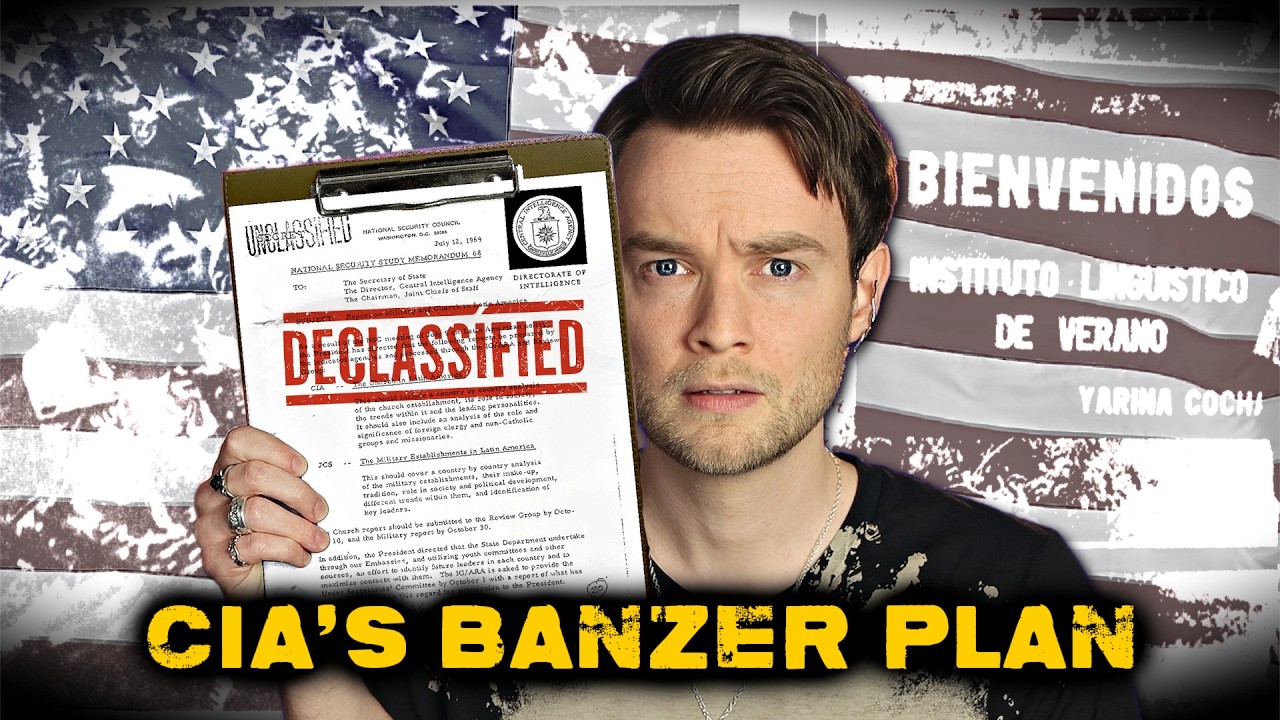
Evangelical Christianity Is Literally a PSYOP

576,460 views Jan 31, 2026
US intelligence agencies have conducted a long-term psychological operation promoting Evangelical Protestantism.
Go to https://ground.news/skeptic to get all sides of every story. Subscribe through my link to save 40% off unlimited access.
Liberation Theology is absolutely based. My interview with Colten: [ • Our Evangelical Christian Universities Wer...](https://www.youtube.com/watch?v=-2KI50nB7cs)
...
1:41
1 minute, 41 seconds
theology responds to such criticism with just one question. What part have you played in the effective and integral liberation of the oppressed? In El
1:50
1 minute, 50 seconds
Salvador, thinkers like John Sabrino and Ignasio Aakuria related the suffering of the poor to the passion of Christ directly and the sin of oppressors to
1:59
1 minute, 59 seconds
the sins for which he was crucified. The crucified people, that is the poor, are the historical continuation of Yahweh's
2:06
2 minutes, 6 seconds
servant whom the sin of the world continues to deprive of his human face.
2:11
2 minutes, 11 seconds
The powerful of this world continue to strip them of everything to snatch everything from them even their lives
2:18
2 minutes, 18 seconds
especially their lives. Jesus takes a very different approach to each group.
2:22
2 minutes, 22 seconds
He offers salvation to all and makes demands of all but in a very different way. He directly demands a radical conversion of the oppressor, an act of
2:30
2 minutes, 30 seconds
cessation from oppressing. For these the coming of the kingdom is above all a radical need to stop being oppressors.
2:39
2 minutes, 39 seconds
These theologians did not invent liberation theology from above. They put into words what Christian-based communities were discovering for
2:47
2 minutes, 47 seconds
themselves as they studied scripture in the shadow of military dictatorships, land monopolies, and US-backed elites.
2:54
2 minutes, 54 seconds
These communities did not just pray together. They examined the conditions of their lives. They asked why their societies were structured to benefit a
3:02
3 minutes, 2 seconds
small ruling class and what it meant that Jesus identified with the poor.
3:08
3 minutes, 8 seconds
Liberation theology took those questions seriously and treated them as a call to collective action, offering ordinary
3:16
3 minutes, 16 seconds
people tools to interpret their own oppression and to organize for land reform, workers rights, literacy, and
3:23
3 minutes, 23 seconds
democracy. You might see the problem with this. for the wealthy, the greedy,
3:27
3 minutes, 27 seconds
the powerful, aka the US empire. This movement encouraged those who suffered most under the existing political order
3:35
3 minutes, 35 seconds
to demand they be treated with basic respect. By the late 1960s, US intelligence assessments characterized
3:43
3 minutes, 43 seconds
progressive Catholic clergy as an increasingly disruptive force whose work threatened established political order
3:49
3 minutes, 49 seconds
in Latin America. A 1969 CIA memorandum warned that liberationoriented priests,
3:55
3 minutes, 55 seconds
sermons, and writings have already aroused the concern of conservative church officials and military leaders and predicted some clergy may be driven
4:04
4 minutes, 4 seconds
into alignment with leftist political groups. By 1971, President Nixon identified the deterioration of the
4:11
4 minutes, 11 seconds
attitude of the Catholic Church as the single most important event in Latin America over the previous decade,
4:18
4 minutes, 18 seconds
worrying that priests were now standing with the peasants and workers against the oligarchs and the armies. Yes, he
4:27
4 minutes, 27 seconds
actually said that the 1980 Santa Fe document prepared for the incoming Reagan administration declared that liberation theology represented Marxist
4:36
4 minutes, 36 seconds
Leninist forces using the church as a political weapon against private property and productive capitalism and
4:43
4 minutes, 43 seconds
called for US foreign policy to mount a counterattack on and not merely react against liberation theology. The US did
4:53
4 minutes, 53 seconds
use direct violence to manage its problem, and we'll talk about that. But with liberation theologies proponents having some protection from the Vatican,
5:02
5 minutes, 2 seconds
the US couldn't just take out everyone it disliked, at least. So, it chose an
5:10
5 minutes, 10 seconds
additional approach to liberation theology. It would dilute, replace, and counterprogram it. How might it do this?
5:18
5 minutes, 18 seconds
As a 1969 report by Republican politician and eventual vice president Nelson Rockefeller said, since the
5:25
5 minutes, 25 seconds
Catholic Church in Latin America raises the consciousness of the people, the US should give support to fundamentalist Christian groups. As I'm filming this,
...
14:22
14 minutes, 22 seconds
and which of these things I'm saying are are my actual words. All right, you've been warned. If SIL linguists were zealous, as they often were, the
14:29
14 minutes, 29 seconds
teachers imposed an evangelical order as a condition for the schooling and other material advantages they introduced.
14:35
14 minutes, 35 seconds
Where necessary, the teacher pastors concentrated dispersed populations around the schools, which tended to produce ecological and social
14:44
14 minutes, 44 seconds
instability. For decades, SEL told the Peruvian government that it would reconcile jungle Indians to colonization, that is to the loss of
14:52
14 minutes, 52 seconds
most of their land. According to Yaandrand, Sil has helped the Aguana face a new highway and colonization by one, anchoring them around the bilingual
15:02
15 minutes, 2 seconds
schools so that they not abandon choice land and flee into the hills as the elders initially advised. Two,
15:08
15 minutes, 8 seconds
convincing the teachers of the highways benefits through new trade opportunities. And three, by giving the Agorana a feeling for progress in the
15:15
15 minutes, 15 seconds
accumulation of material goods. As that last quote indicated, missionaries also introduced foreign trade goods, clothes,
15:22
15 minutes, 22 seconds
medicines, vehicles, building materials,
15:25
15 minutes, 25 seconds
and along with them a capitalist market economy and materialist consumerrist culture to indigenous people. This meant
15:33
15 minutes, 33 seconds
to break indigenous traditions of reciprocity as well as their community's self-reliance. Since control over trade
15:40
15 minutes, 40 seconds
goods, medicine, and schooling is so basic to missionary work, it is tempting to dismiss it as a coercive economic transaction, one which simply alienates
15:49
15 minutes, 49 seconds
native people from their culture and induces them to accept exploitation in the image of the suffering Jesus. In the
15:56
15 minutes, 56 seconds
marginal situation, Sil therefore enslaves native people to the trade good. Considerable economic power is
16:03
16 minutes, 3 seconds
concentrated in the teacher who becomes the agent of trade good dependency and is placed under pressure to break with
16:10
16 minutes, 10 seconds
the tradition of reciprocity. The population is more likely to require concentration around the school and the evangelical order becomes a condition
16:19
16 minutes, 19 seconds
attached to the trade good. SIL's own aviation service, Jungle Aviation and Radio Service, or JARS, also
16:26
16 minutes, 26 seconds
occasionally transported state officials in regions where leftist guerilla movements operated. JARS pilots were not
16:34
16 minutes, 34 seconds
CIA assets, per se, but they did operate in regions otherwise inaccessible to government forces, and their cooperation was certainly mutually beneficial.
16:45
16 minutes, 45 seconds
Finally, as if all that's not enough,
16:47
16 minutes, 47 seconds
SIL missionaries actively helped oil companies and the USbacked Ecuadorian government force indigenous people in
16:55
16 minutes, 55 seconds
Ecuador into reservations. The evangelicals under the strategic leadership of the more politically sophisticated SIL supported the oil
17:03
17 minutes, 3 seconds
companies and an ethnocidal Ecuadorian government policy of encouraging highland homesteaders that's referring to the missionaries to stake out parcels of land along oil company access roads.
17:15
17 minutes, 15 seconds
After consultation with the Ecuadorian military, Aka converts flying above the remaining band of uncontacted kin in SIL
17:22
17 minutes, 22 seconds
helicopters operating on Texico fuel were urged to put down their arms and join their evangelized kin at Rachel
17:30
17 minutes, 30 seconds
Saints Reserva Village. In similar frontier conditions, the American missionaries grandfathers had pacified the American West and placed the Indians
17:39
17 minutes, 39 seconds
on reservations. Now their grandchildren in the service of the same 19th century god proposed reservos for the shiwara
17:48
17 minutes, 48 seconds
and the aas. Imagine Ecuadorian native reservos a legal entity administered in
17:54
17 minutes, 54 seconds
effect by sil missionaries evangelical protestants and dictatorships under USbacked military dictatorships across
18:03
18 minutes, 3 seconds
Latin America. Progressive Catholics faced serious persecution alongside the people with which they organized. In
18:10
18 minutes, 10 seconds
1975, not long after Nixon's ruminations about Catholicism, Bolivia's Hugo Banzer, with advice from his Nazi
18:17
18 minutes, 17 seconds
security chief, Klaus Barbie urged his interior ministry to draw up a plan against liberation theology. Para worked
18:25
18 minutes, 25 seconds
closely with the CIA to draw up what would be known as the Banzer plan, which was a direct attack on liberation
18:32
18 minutes, 32 seconds
theology. Bolivian intelligence joined by the CIA and by the intelligence services of 10 other Latin American countries began to compile dossas on
18:41
18 minutes, 41 seconds
liberation theologists to plant communist literature in churches to shut down any progressive church publication and to arrest and expel foreign priests
18:50
18 minutes, 50 seconds
and nuns who believed in liberation theology. Things are about to get even heavier somehow in this video. So,
18:58
18 minutes, 58 seconds
content warning for a discussion of genocide and torture, like even a little bit more explicitly than we've already
19:04
19 minutes, 4 seconds
discussed. Uh, Eric, let's find a time stamp where people can skip to um after
19:13
19 minutes, 13 seconds
that specific discussion is over. Under Brazil's military dictatorship, which the US financially supported at an
19:20
19 minutes, 20 seconds
unprecedented rate at that time, the state sought to assimilate and eliminate the indigenous people in order to
19:26
19 minutes, 26 seconds
develop the Amazon. Some Catholic clergy advocated for the rights of indigenous people. So, Brazil's generals also
19:34
19 minutes, 34 seconds
railed against the church, even kidnapping and torturing church representatives. The regime killed at least 8,350
19:44
19 minutes, 44 seconds
indigenous people during the dictatorship. According to Brazil's National Truth Commission, in 1980s El Salvador, where 2026 USbacked
19:53
19 minutes, 53 seconds
concentration camps are currently located, groups of US-trained army and national guardsmen sexually abused and
20:00
20 minutes
murdered Catholic nuns and priests. In Chile and across Latin America, dictator Austo Pinish's government and its allies, all backed by the USA at the
20:09
20 minutes, 9 seconds
time, carried out Operation Condor, a project which killed an estimated 50,000 civilians, disappeared 30,000 who were
20:19
20 minutes, 19 seconds
all presumed dead, and imprisoned 400,000 for being suspected communist
20:25
20 minutes, 25 seconds
sympathizers. Many thousands of these civilians were likely tortured. The United States provided the funding and
20:34
20 minutes, 34 seconds
inspiration for this project and the CIA specifically instructed Latin American security forces in methods of torture
20:43
20 minutes, 43 seconds
and bomb construction. While all of this was happening, evangelical Protestant leaders supported these dictatorships and they received some love in return.
20:54
20 minutes, 54 seconds
In December 1974, Chilean General Pinocha personally attended the dedication of the Hotbee Pentecostal Methodist Church Cathedral in Santiago,
21:02
21 minutes, 2 seconds
marking the first time a Chilean head of state had ever attended a Protestant service. 2 days earlier, approximately
21:10
21 minutes, 10 seconds
2500 evangelicals had gathered to publicly pledge their support for the Huta and denounce Chile's international
21:18
21 minutes, 18 seconds
critics. By September 1975, the Methodist Pentecostal Church had assumed the Catholic Church's traditional role
21:26
21 minutes, 26 seconds
of hosting the annual Tedum service, a patriotic ceremony attended by Pinocha and other government leaders. Billy
21:33
21 minutes, 33 seconds
Graham, who we were all raised to rever in evangelical churches, coordinated directly with Latin American military dictatorships. Between 1962 and 1974,
21:44
21 minutes, 44 seconds
Graham personally met with Brazil's dictator Ernesto Geel and other authoritarian rulers. He praised Chile's
21:51
21 minutes, 51 seconds
Augusto Pinochet as a great Christian leader. And then there is Ephraim Rios
21:58
21 minutes, 58 seconds
Mont. Eric, can you please record yourself saying this dude's name with the utmost disrespect?
22:06
22 minutes, 6 seconds
Yeah, Spanish names can be difficult sometimes. Um, I can help. Uh, here is how you pronounce that.
22:22
22 minutes, 22 seconds
Hope that helps. Thank you. If there was a single moment when evangelical Christianity and US counterinsurgency
22:30
22 minutes, 30 seconds
fully merged, it was this period in Guatemalan history. Rios Mont was a general who took power in a 1982
22:37
22 minutes, 37 seconds
military coup. He was a born-again Pentecostal and a member of an American affiliated charismatic church. His
22:44
22 minutes, 44 seconds
weekly national TV addresses sounded like sermons mixing Bible verses with calls for obedience to God and the
22:52
22 minutes, 52 seconds
state. His government carried out one of the worst genocides in modern Latin American history against the Maya and
23:00
23 minutes
the US financially and spiritually supported him. Good old Ronald Reagan praised Mont as a man of great integrity.
23:09
23 minutes, 9 seconds
I know that President Rios Mont is a man of great personal integrity and commitment.
23:14
23 minutes, 14 seconds
Jerry Fwell openly supported him. Pat Robertson interviewed the dictator on his TV show, The 700 Club. Ephraim Rios Mont who was uh the president there.
23:26
23 minutes, 26 seconds
He's a terrific guy. He was with the Elver Verbo Church and um they had a a a marvelous government. Christian
23:33
23 minutes, 33 seconds
evangelist Luis Pau told Christianity Today in 1983, "It's great to have a Christian president as a model. The hand of God appears to be upon him."
23:44
23 minutes, 44 seconds
Meanwhile, remember Catholic priests who supported indigenous rights were being assassinated, disappeared, and tortured along with countless other civilians.
23:54
23 minutes, 54 seconds
Rios Mont's rule was the logical end of a decadesl long project. Replace politically engaged Catholicism with a
24:03
24 minutes, 3 seconds
politically compliant Protestantism so that the structures of inequality remained untouched.
24:10
24 minutes, 10 seconds
Even today, evangelical Protestants in Latin America overwhelmingly support the same kinds of politicians which evangelical Protestants in the US support, authoritarian right-wingers.
...
---
aha 2 important factor in trump gop slude into crazytown
aha: abortion turned xian anti-gubmint; in 80's RR grifter televangelists had TV programs/stations; Rove courted (organized) for Bush 43; now drollinger cabinet and GOTV network (AI/digital tracking?); scary overlap with militias?! patriot prayer ~ stay at home order , boogaloo
old ppl and xian vote in primaries, thus leverage, flank, enforcer
putin cozied up to? thus US xians gave him pass on collusion, plus if true delegitimatizes trump, who delivers anti-abortion judge and SCOTUS w/ mcconnell
https://www.alternet.org/2020/05/why-religious-freedom-stokes-coronavirus-protests-in-the-u-s/
...
==
https://www.alternet.org/2020/12/trump-evangelicals-2649541067/
alexh
Christian Right is in mourning over President Donald Trump being voted out of office. Pat Robertson, the far-right evangelical who founded the Christian Broadcasting Network, has declared that the inauguration of President-elect Joe Biden on January 20, 2021 must be prevented, saying, "We will not give up this great country. And Satan, you cannot have it." But the irony is that the incoming president is much more religious than Trump, who has demonstrated how little he knows about Christianity and the Bible.
Although Trump was raised Presbyterian, religion was never a high priority in his life. But when he ran for president in 2016, Trump realized that the Christian Right was a prominent voting bloc in the GOP and went out of his way to pander to the far-right White evangelicals he had no connection to in the past. The Trump of the 1980s, 1990s and 2000s was more of a Blue Dog Democrat than a GOP culture warrior, and he spent a lot more time in casinos than in churches.
Journalist Ed Kilgore, in an article published by New York Magazine on December 17, notes Trump's history of butchering Biblical references during his speeches.
Kilgore explains, "Before Donald Trump became the very favorite politician of White conservative evangelicals, he was regularly a figure of sport for displaying exceptional ignorance in all matters religious. A particularly rich example of his clumsiness occurred when he was campaigning at evangelical stronghold Liberty University early in 2016 and tried to quote a Bible verse that was very familiar to the audience, since it's etched on several buildings there."
Kilgore adds that there were many other "religious gaffes Trump committed while stumping for votes" in 2016.
"On another occasion along the campaign trail," Kilgore recalls, "Trump was asked about his favorite line of scripture. He delivered a word salad for a while and finally tried to recall 'an eye for an eye,' not the sort of thing Christians of any variety consider normative for the faith of the Prince of Peace…... Just prior to the Iowa caucuses, Trump was in a Council Bluffs church when a plate came down the pews with communion bread on it. The billionaire misidentified it as a collection plate and put a couple of bills on it."
Kilgore also notes that in 2017, Trump met with two Presbyterian minsters and was surprised to learn that they didn't consider themselves evangelicals but rather, described themselves as "Mainline Protestants."
Of course, anyone with even a basic knowledge of Christianity realizes that Presbyterians aren't evangelicals any more than Episcopalians or Lutherans — two other examples of Mainline Protestants — are evangelicals. And there's no way that either Biden, a devout Catholic, or former President Barack Obama, a Mainline Protestant, would have made that mistake or confused a communion plate with a collection plate. Unlike Trump, Biden and Obama both have a long history of being churchgoing Christians and obviously have an extensive knowledge of the Bible.
[twt]
if Pat Robertson were to sit down with Biden or Obama, they could have an in-depth conversation about scripture. Yet Robertson, like much of the Christian Right, adores Trump while hating Biden and Obama — which underscores the deeply tribalist nature of the Christian Right.
The Christian Right has long been a hate movement, and it is as much about White nationalism and far-right identity politics as it is about Protestant fundamentalism. The late Rev. Jerry Falwell, Sr., founder of Liberty University and co-founder of the Moral Majority, was a notorious segregationist during the 1950s and 1960s, when he vigorously defended Jim Crow laws in the pulpit and argued that the Rev. Martin Luther King, Jr. was a not a true Christian because of his anti-segregation views. During the 1980s, Falwell defended the racist apartheid regime in South African and encouraged Christians to buy krugerrands to support it.
The late Republican Sen. Barry Goldwater, known for being an arch-conservative in his day, was vehemently critical of Falwell and the Christian Right during the 1980s — describing them as dangerous fanatics and warning that the GOP was making a huge mistake by allying itself with that movement. But many Republicans ignored Goldwater, much to the GOP's detriment.
To the Christian Right and far-right White evangelicals, the fact that Biden and Obama are more religious than Trump is irrelevant. Robertson, the Family Research Council's Tony Perkins, James Dobson (founder of Focus on the Family) and other evangelical Trump supporters are extreme tribalists, and they view Trump as part of their tribe — which is why Trump got a pass when, according to his former personal attorney Michael Cohen, he had extramarital affairs with a porn star (Stormy Daniels) and a Playboy model (Karen McDougal) and paid them hush money to keep quiet.
Trump repeatedly attacked Biden as anti-Christian during his 2020 presidential campaign. But in 2017, Trump didn't even know the difference between Presbyterians and evangelicals.
The Christian Right will miss Trump dearly when he leaves off on January 20, 2021. And no matter how much Biden goes to church or accurately quotes the Bible, it won't matter to the far-right evangelical extremists who value White identity politics above all else.
FROM YOUR SITE ARTICLES
- Why Do Evangelicals Worship Trump? The Answer Should Be ... ›
- 'increasingly desperate' evangelicals make in backing Trump ›
- Evangelical pastor explains why nobody understands Trump voters ... ›
- Evangelicals' stronghold on American politics may be over -- thanks ... ›
- A neuroscientist explains why Christian evangelicals are hardwired ... ›
RELATED ARTICLES AROUND THE WEB
- Trump's election support from evangelicals shows we're the biggest ... ›
- What's next for American evangelicals after Trump leaves office? ›
- Why White Evangelical Voters Love Donald Trump : Code Switch ... ›
==
1219 schism on djt?
https://www.alternet.org/2019/12/white-evangelicals-still-view-support-for-trump-as-spiritual-warfare-against-the-demonic-forces-pushing-for-his-impeachment
no lnx
White evangelicals still view support for Trump as ‘spiritual warfare’ against the ‘demonic forces’ pushing for his impeachment
Written by Alex Henderson December 23, 2019
Although President Donald Trump has plenty of critics in Christianity — some Catholics, some Mainline Protestants — he is still quite popular among far-right white evangelical fundamentalists. So when Mark Galli, the retiring editor-in-chief of the evangelical Christianity Today, wrote a scathing anti-Trump op-ed last week, many of Trump’s white evangelical supporters were furious — including Franklin Graham, son of the late Christianity Today founder Billy Graham.And journalist Ed Kilgore, in a December 23 article for New York Magazine, stresses that Trump’s critics shouldn’t think white evangelical support for him is softening — they still view Trump as their champion.
White evangelical support for Trump, Kilgore observes, goes beyond Trump putting so many far-right judges on the federal judiciary: as they see it, fighting Trump’s impeachment and getting him reelected in 2020 is a form of spiritual warfare.
“Many Christian Right leaders and members of their flocks view political battles involving Trump as spiritual warfare between holy and demonic forces, with the crude, self-idolizing and heathenish POTUS treated as unquestionably the champion of the Prince of Peace,” Kilgore explains.
Kilgore points to a December 19 article by Sarah Posner for Type Investigations as having some of the best reporting in recent days on the amount of unwavering support Trump still enjoys among far-right white evangelicals.
Posner reported, “Trump’s evangelical base is a sprawling, interconnected network of political advocacy groups, megachurches, White House advisers, televangelists and prayer warriors. It also includes a formidable, data-driven get-out-the-vote operation.”
Posner’s article cites some of the well-known Christian Right extremists who remain committed to helping Trump win a second term in 2020, and they range from the Faith and Freedom Coalition’s Ralph Reed to the Family Research Council’s Tony Perkins. Another is Jim Bakker.
According to Posner, “Inside this ecosystem, impeachment is, at best, a partisan sideshow concocted by Democrats to distract the public from Trump’s many important accomplishments. At worst, it is a satanic scheme to upend God’s plan for America — which was to install Trump in office in order to ensure the nation is governed by Christians who espouse ‘biblical’ values.”
One of Trump’s top allies in his Christian Right outreach, Kilgore observes, isFlorida-based evangelist Paula White — who preaches an ideology called the Prosperity Gospel. In contrast to all the Catholics and Mainline Protestants who equate greed, materialism and avarice with sinfulness, the Prosperity Gospel associates a fat bank account with being a good Christian and poverty with moral failings.So when Republicans go out of their way to hurt the poor, proponents of the Prosperity Gospel see that as righteous Christian behavior.
Kilgore warns, “No, these people are not going to abandon Donald Trump. They are now so complicit in his presidency that to question him is to condemn themselves to a judgement too terrible to contemplate.”
==
==
AN 419
Taylor University is one of America’s oldest, private, evangelical colleges. In 2017 the Indiana-based university was ranked first among 94 midwestern schools. Its motto, “Lux et Fides,” means, “Light and Faith.”
But it is **Vice President Mike Pence**‘s undying faith in President Donald Trump that has led the 2019 graduating class to demand the school rescind its invitation to Pence to deliver the commencement address. “Inviting Vice President Mike Pence to Taylor University makes our alumni, faculty, staff and current students complicit in the Trump Administration’s policies, which we believe are not consistent with an ethic of love,” the students and thier supporters say via a Change.org petition, as Newsweek reports.
In just a few hours the petition has earned hundreds of signatures.
Many might think, given Pence was the governor of Indiana – where Taylor University is located – that the invitation might not cause concern.
They would be wrong.Here’s a sampling from some of those who signed the petition, explaining why: “I’m a husband of a Taylor alum and suggest that if Taylor is looking for a Hossier Christian politician for the commencement they might consider inviting Pete Buttigieg.” “Shame on you. He’s not a Christian, and any university that invites him to speak has no institutional commitment to fact or Truth.” “If Mike Pence thinks that RFRA was a good ‘Christian’ direction for the state and nation, then he is missing the point of Christianity. Now he is trying to do it nationally. He is the wrong person to deliver your commencement speech. Perhaps Pete Buttigieg would have a more appropriate message for your graduates.”
....
==
https://www.alternet.org/2019/03/how-case-for-christ-author-lee-strobel-fabricated-his-best-selling-story/
https://www.alternet.org/2019/03/christian-charity-gave-more-than-50-million-to-hate-groups/
TheNational Christian Foundation is America’s eighth largest public charity, but it doesn’t build houses, educate children, feed the hungry, or provide other goods or services one might commonly associate with a charity. It’s also not a household name like the Red Cross, but that doesn’t prevent it from having vast influence. According to a new investigation from Sludge, the far-right, evangelical NCF “has donated $56.1 million on behalf of its clients to 23 nonprofits identified by the Southern Poverty Law Center as hate groups.”
These nonprofits include multiple anti-LGBT, anti-Muslim and anti-immigrant hate groups. In fact, as reporter Alex Kotch points out, Inside Philanthropy has said that NCF “is probably the single biggest source of money fueling the pro-life and anti-LGBT movements over the past 15 years.”
In addition to not being a direct service charity, the NCF is also not a conventional foundation that a wealthy donor uses as a vehicle to grow and then give away their money to multiple other charities over time. Instead, it’s a donor-advised fund, offering its Christian donors “expert guidance and creative giving solutions,” Kotch writes.
Helaine Olen, writing in The Atlantic, calls these donor-advised funds a “waiting room for charitable donations,” in which anyone, not only the wealthy, can place money into the fund, let it grow, and then have it distribute the money gradually to organizations of the donor’s choice.
According to Kotch, these funds allow their clients “immediate tax breaks on donations.”
They also give individual donors who pay into the fund anonymity. While Sludge was able to use publicly available tax findings to determine which organizations NCF funded, the names of the fund’s donors stay hidden.
The biggest recipient of NCF funds, according to Sludge’s investigation, is Alliance Defending Freedom, a network of lawyers, who, Kotch writes, “have supported criminalizing homosexuality, sterilizing transgender people, and claimed that gay men are pedophiles.”
Kotch continues:
Alliance Defending Freedom took in $49.2 million from NCF from 2015-17. ADF received $46.3 million in contributions and grants during the 2016 fiscal year (from July 1, 2015, to June 30, 2016). It got $16.8 million from NCF in the calendar year of 2015, meaning that, if these years were aligned, NCF’s donations would have represented over one-third of ADF’s annual contributions.
The Family Research Council, which the Southern Poverty Law Center says “often makes false claims about the LGBT community based on discredited research and junk science,” including linking homosexuality to pedophilia, is another frequent beneficiary of NCF funds. Sludge found it received $5.3 million from 2015 to 2017.
While anti-LGBT organizations are the primary recipients of NCF’s funds, anti-Muslim and anti-immigrant organizations also benefit:
Anti-Muslim groups ACT for America ($98,000), American Freedom Law Center ($40,000),David Horowitz Freedom Center ($40,000), and Virginia Christian Alliance ($3,600) have received thousands from NCF since mid-2014, and anti-immigrant nonprofits American Border Patrol ($100) and The Remembrance Project ($2,500) also got NCF funding.
Donor-advised funds, in general, are not required to have policies addressing hate groups. As Kotch explains, “these giant funds absolve themselves of any responsibility, saying that as long as the Internal Revenue Service has granted 501(c)(3) status to an organization, it’s fair game.”
At least one expert Sludge spoke to believes funds like NCF are funding hate groups intentionally, and could, if they chose, deny a client’s request to fund them.
Aaron Dorfman, president and CEO of the National Committee for Responsive Philanthropy, told Sludge, “With the dramatic escalation of violence and intimidation by white nationalists and right-wing extremists, it’s way past due for sponsors of donor-advised funds to cut off any dollars flowing to hate groups.” And, he continued, “they have every right to exercise discretion by refusing a donor’s request to fund a hate group.”
NCF did not respond to Sludge’s requests for comment. Read the entire article here.
==
andy szasz
https://journals.sagepub.com/doi/abs/10.1177/0096340215599789
Why conservative Christians don’t believe in climate change
.entryAuthor" data-author-container-selector=".NLM_contrib-group">
Bernard Daley Zaleha, Andrew Szasz
First Published September 1, 2015 Research Article
https://doi.org/10.1177/0096340215599789
| Article information :{:(style="background-image:url("):}: |
American Christians have become increasingly polarized on issues of climate change and environmental regulation. In recent years, mainline Protestant denominations and the Roman Catholic Church have made explicit declarations of support for global climate action. Prominent Southern Baptists and other evangelical Protestants, on the other hand, have issued statements that are strikingly similar to the talking points of secular climate skeptics, and have attempted to stamp out “green” efforts within their own ranks. An analysis of resolutions and campaigns by evangelicals over the past 40 years shows that anti-environmentalism within conservative Christianity stems from fears that “stewardship” of God’s creation is drifting toward neo-pagan nature worship, and from apocalyptic beliefs about “end times” that make it pointless to worry about global warming. As the climate crisis deepens, the moral authority of Christian leaders and organizations may play a decisive role in swaying public policy toward (or away from) action to mitigate global warming.
KeywordsChristians, climate change, evangelicals, Southern Baptists, stewardship
2013 book
How the World's Religions are Responding to Climate Change: Social ...
edited by Robin Globus Veldman, Andrew Szasz, Randolph Haluza-DeLay
It’s all about the apocalypse: The disturbing reason behind the right wing’s pro-Israel obsessionCody Fenwick
==
see fear/ phobia
https://www.alternet.org/2019/01/evangelical-historian-explains-how-christians-came-put-trump-ahead-jesus/
John Fea is an evangelical Christian and a historian. When Donald Trump was elected with 81 percent of the self-described white evangelical vote, Fea was both stunned and surprised. “As a historian studying religion and politics, I should have seen this coming,” he notes. Yet he did not. Which was why Fea ended up writing his new book, “Believe Me: The Evangelical Road to Donald Trump.”
On its own terms, the book clearly succeeds in making sense for Fea and others like him, with potential for reaching wavering Trump supporters as well. He identifies and lucidly explores three fundamental flaws in evangelical thinking that have led them to embrace a leader who is wholly unfit by their own once-cherished moral standards, in pursuit of ends they cannot possibly achieve — restoring 1950s America via government action. In a key passage, Fea explains:
For too long, white evangelical Christians have engaged in public life through a strategy defined by the politics of fear, the pursuit of worldly power, and nostalgia for a national past that may never have existed in the first place. Fear. Power. Nostalgia. These ideas are at the heart of this book, and I believe they best explain the 81 percent.
Fear is Fea’s central concern, and the one most directly at odds with the Bible. “The Bible teaches that Christians are to fear God – and only God,” Fea writes. “All other forms of fear reflect a lack of faith, of failure to place one’s trust completely in the providential God who has promised to work all things out for good for those who love him.”
That’s a specific reference to Romans 8:28: “And we know that in all things God works for the good of those who love him, who have been called according to his purpose.” But this teaching seems lost on those who shout about God the loudest and the most, and it’s far from clear how Fea’s book can help change that. What it can perhaps do is help make sense of the evangelical majority for others, like Fea, who are in the minority within that world and already inclined toward finding another path.
“Despite God’s commands to trust him in times of despair, evangelicals have always been very fearful people,” he notes, “and they have built their understanding of political engagement around the anxiety they have felt amid times of social and cultural change.”
Fear is the subject of the first three chapters of “Believe Me.” They’re presented in reverse historical order — first come the 2016 primaries, then the shaping of the Christian-right playbook from the 1970s to the present, then a selective, episodic overview from colonial times to the modern era. The fourth chapter, dealing with power, examines the role of the “court evangelicals” who have come to support Trump, while his chapter exploring nostalgia examines its centrality in Trump’s fatally vague promise to “Make America Great Again.”
Fea’s first chapter is especially riveting for the light it sheds on how evangelicals came to support Trump when they had so many other superficially better-looking options to choose from. He argues convincingly that other GOP candidates did a superior job of courting evangelical voters by traditional means, after eight years of Obama had brought more change than they could handle — Marco Rubio with an impressive advisory council, Mike Huckabee with a track record and issue positions, Ben Carson with an appealing personal story, but most of all Ted Cruz, who “turned fear-mongering into an art form,” which should have trumped everyone else, especially given his father’s history as a popular apocalyptic preacher.
But collectively, Fea writes, they succeeded too well.
Between the summer of 2015 and start of the primary season in early 2016, they were able to diagnose the crisis that the United States was facing in a way that brought great anxiety and concern to American evangelicals. But their strategy backfired. … The evangelical candidates stoked fears of a world they seemed unfit to train. Desperate times call for a strongman, and if a strongman was needed, only Donald Trump would fit the bill.
It’s a powerful, convincing explanation — though incomplete, as I’ll return to below. But Fea is not content just reflecting on what has been. “I want to explore alternatives to the fear, the search for power, and in nostalgia,” Fea writes. “How do we reconcile the white evangelical politics of fear with the scriptural command to ‘fear not’?” he asks.
“What would it take to replace fear with Christian hope?” The answer he at least prepares the way for comes from an unlikely source — the black church, as reflected in the history, spirit, and legacy of the civil rights movement, which he turns to in the book’s concluding chapter. They model a contrasting triad of hope, humility and history that Fea highlights as providing a powerful alternative model, a road not taken by white evangelicals.
But because the preceding five chapters have been so insular, concerned with the white evangelical world, this solution has the feeling of deus ex machina. Fea himself provides no model for what it might mean or how it might work, until his seemingly belated epiphany. It’s an effective cri de coeur, though as serious sociological and theological critique, much less so. Toward the book’s end, he writes:
How might hope, humility, and history inform the way we white American evangelicals think about politics and other forms of public engagement? I hope that what I’ve written here might spur conversations and initiatives born out of possible answers to this question.
Yet for the white evangelical community as a whole to arrive where Fea wishes, it will have to confront its own dark shadows that Fea only lightly touches on — most crucially, all the centuries of unspeakable evil they’ve projected onto others, in pursuit of imagining themselves pure. For those outside that community, the definitional issue of race stands out for how gingerly Fea treats it, downplaying even Trump’s crucial conservative reinvention via birtherism. This is, after all, a book about white identity politics, one that skirts the most difficult aspects of that identity’s formation.
Most dramatically, as historian Seth Dowland noted in a recent critical essay for Christian Century, “American evangelicalism and the politics of whiteness,” the Civil War radically reshaped American religious identity. “The center of evangelicalism did not — could not — hold,” he writes. “The sectional crisis and Civil War divided American Protestants regionally and racially into three groups: northern white Protestants, southern white Protestants, and black Protestants. … The near-absence of black believers in white churches was the condition for the development of a distinctly white evangelicalism.”
Like Fea, Dowland admits that his own work didn’t prepare him for the rise of Trump, but he has adjusted his thinking more fundamentally:
What most distinguishes white American evangelicals from other Christians, other religious groups, and nonbelievers is not theology but politics. More than anything else, identifying as an evangelical in the United States denotes certain attitudes about American politics and usually indicates a white racial identity. It’s not that theology isn’t important to white evangelicals; it’s just not the primary thing that distinguishes them from other religious groups.
Fea’s book is about that theology, or rather about how fear, power and nostalgia underlie its faults and distortions. “Believe Me” is extremely compelling in that regard. But it is also cut off from the wider sweep of political history, from which white evangelicals have sought to distance themselves. Race is a submerged subject here, which only emerges distinctively toward the end. Yet, race remains such a central subject, so highly charged, that it’s difficult to fault Fea’s approach — save for his lack of attention to the role of white evangelicals in the abolitionist movement, and subsequent chapters of anti-racist struggle. There are committed anti-racist white evangelicals to this day, whose perspectives, unfortunately, Fea fails to register.
Earlier, I said that Fea’s explanation of Trump’s strong white evangelical support was incomplete. This is true in at least two ways. First, it leaves out the question how Trump became a credible option in the first place, due to his lead role in promoting birtherism, which was equal parts flat-out racism and tinfoil-hat conspiracy theory. Fea makes no mention of Trump’s 2011 flirtation with running against Obama, which the then-president undercut by releasing his long-form birth certificate, after Trump had spent months building up toward a paranoid crescendo.
Nor does Fea discuss how Republican doubts about Obama’s citizenship actually *increased* by early 2012, despite that documentary proof. Neither Trump’s means of making himself a credible option nor evangelicals’ means of disregarding unwanted evidence receive the attention they deserve. Birtherism is hardly a lone example of fantastical, conspiratorial thinking in the annals of American evangelical or racist history — a theme whose absence should be noted.
More broadly, Trump’s omnipresent conspiracy theories meshed with long-standing evangelical responses to modernism and denigrations of professional expertise — which Christopher Douglas at Religion Dispatches has described accurately as “The Religious Origins of Fake News and ‘Alternative Facts’” — as well as older traditions of confabulation and fear, tracing back to colonial America.
As I discussed here in December 2015, conflicts with Native Americans gave rise to America’s first popular literary genre, the captivity narrative, which the influential Cotton Mather used to connect all his perceived enemies together — including “captivity by specters,” in cases of witchcraft — a master conspiracy-theory prototype. “The Puritans’ captivity fears were in some sense a matter of ‘envious reversal,’” I wrote, “a switching of roles of victim and aggressor. It was, after all, the Puritans who were capturing the Native Americans’ whole world, the entire continent on which they lived.”
These represent darker aspects of American history that Fea mostly downplays in his book, even though his third chapter ably discusses a range of fear-infused episodes since colonial times, while the fifth chapter pointedly highlights how Trump tends to suggest that America was greatest during some of the darkest periods of our history. What’s missing is an analysis of how these things reflect a cultivated set of beliefs and cultural practices that repeatedly produce similar responses.
Fea recognizes repeating patterns, but only vaguely. “Despite God’s commands to trust him in times of despair, evangelicals have always been very fearful people,” he notes, “and they have built their understanding of political engagement around the anxiety they have felt amid times of social and cultural change.” That connection between fear, change and political power-seeking is the crux of Fea’s critique, but it never becomes systematic. True to his evangelical roots, Fea seems far more comfortable expressing this in terms of individual failings, even as he clearly wants to press for more supportive broader norms.
Two sets of examples from his exploration of power are instructive. The first concerns its problematic nature, the second, his overview of who the “court evangelists” are. As Fea describes, the problem with the pursuit of power is both that it distracts from the primary concern of saving souls (“Mixing horse manure and ice cream,” a Baptist saying goes, “doesn’t do much to the manure, but it sure does ruin the ice cream”) and that it fails in what it purportedly sets out to achieve. What’s more, he notes, this view has been repeatedly endorsed by those who’ve learned the hard way. The examples are individually telling, but the movement as a whole never seems to learn — nor does Fea draw any comprehensive lessons.
First came Billy Graham, who Fea notes, “was the official spokesperson for American evangelicalism for more than five decades.” After 1968, “Graham’s relationship with Richard Nixon brought him closer to the world of presidential politics than he had ever been before,” but that ultimately proved disastrous when Nixon’s profanity-laced White House tapes were released — making Graham “physically sick” — after which Nixon resigned in disgrace. “Years later, Graham admitted that his relationship with the disgraced former president had ‘muffled those inner monitors that had warned me for years to stay out of partisan politics.’”
But while Graham may have learned a lesson, he couldn’t stop others from making similar mistakes. “Journalist Cal Thomas and evangelical pastor Ed Dobson were two of the Moral Majority’s most important staff members,” Fea notes, “But in 1999, Dobson and Thomas reflect soberly on their experience with Falwell and the Moral Majority in their book Blinded by Might: Can the Religious Right Save America?‘ They concluded that the answer to the subtitle’s question was a definite ‘no.'” They didn’t abandon their views, but they “were forced to admit that the strategy they forged in the 1980s had failed.”
Finally, he cites the example of David Kuo, an evangelical political operative and speechwriter who served in George W. Bush’s Office of Faith-Based and Neighborhood Partnerships. “Very early in his tenure at the White House Kuo realized that political power and Christian compassion seemed to not mix very well. His efforts at the office of faith-based and neighborhood partnerships were largely ignored unless they were an immediate benefit to Bush’s political fortunes.” His book of regrets was titled, “Tempting Faith: An Inside Story of Political Seduction.”
The fact that all these individual experiences have not had more of a systemic impact ought to be a matter of major concern for Fea. It underscores how white evangelicals’ individualistic outlook severely limits their capacity to learn wider lessons — a problem, he should note, that has not affected black evangelicals in the same way.
Fea’s overview of the “court evangelists” suffers from a similar analytical shortfall. He divides them into three camps: The old Christian right, preachers of the “prosperity gospel,” and those Fea identifies as “Independent Network Charismatics.” The first includes prominent names such as James Dobson and Jerry Falwell Jr., but Fea focuses attention on Robert Jeffers, a Dallas preacher less well known outside evangelical circles, whom Fea once debated on NPR’s “Interfaith Voices.”
During that exchange, Jeffers said, “Look, the godly principle here is that governments have one responsibility, and that is Romans 13 [which] says to avenge evildoers. God gives government the power of the sword, of capital punishment, of executing wrong-doers.” Fea notes what a dramatic shift this marks from Jeffers’ pre-Trump position. That specific example makes his argument concrete, but adds little in the way of broader understanding.
Regarding the prosperity gospel, Fea cites the work of historian Kate Bowler, writing, “Prosperity preachers teach that faith in God combined with positive thinking and an optimistic attitude will ultimately lead to monetary wealth, good health, and victory over the difficult circumstances of life.” His broader background descriptions are adequate, but his focus on one figure, Paula White, who has a long history with Trump, is not fleshed out much.
Fea mentions but does not elaborate on Trump’s youthful experience hearing sermons from Norman Vincent Peale, author of “The Power of Positive Thinking,” and never delves into how Trump’s own business practices have reflected the influence of such figures, such as this 2011 New York magazine story about Trump’s multi-level vitamin marketing scheme. The prosperity gospel is the utmost in individualism, while at the same time relying on a powerful and persuasive social environment, which Fea’s analysis does not include.
Then there are the Independent Network Charismatics — apparently this is the new evangelical term for what used to be called the New Apostolic Reformation movement. Sarah Palin was the first nationally prominent Republican to be associated with this movement, which primarily comes out of Pentecostalism, but has a long history of being branded as heretical or even pagan, going back to its post-World War II origins in the “Latter Rain” movement. Their profound theological break with 500 years of orthodox Protestantism — proclaiming themselves “prophets” and “apostles” with authority directly from God — does not make a ripple in Fea’s account.
In short, Fea’s individualist focus truncates his analysis repeatedly throughout his book, despite his clear understanding and concern for the importance of community. This does not detract from his stated intention in writing the book, to “spur conversations and initiatives born out of possible answers” to an important question: “How might hope, humility, and history inform the way we white American evangelicals think about politics and other forms of public engagement?” It merely underscores how much broader those conversations must be in order to bear fruit.
A conservative Christian running for Wisconsin Supreme Court just said he thinks homosexuality equates to ‘bestiality’
==
AN Trump, fresh off an embarrassing loss on the shutdown and his wall to Speaker Nancy Pelosi, is turning his attention from the Southern border to an entirely different topic: religion.The President, desperate to shore up his rapidly dropping polling numbers, kicked off the week with a tweet aimed at the only segment of his base that is still sticking by him: Christian Evangelicals.
“Numerous states introducing Bible Literacy classes, giving students the option of studying the Bible,” Trump tweeted. “Starting to make a turn back? Great!”