brooks, David
===
pop sociology passed off as profundity?
proto incub wfb intern, hoover wash tines moonie wsj murdoch
hillman fdn oil steel
-=-=
-=-=
I want to read you a passage from a recent piece by David Brooks of the Atlantic and a sensibly serious and sober-minded political commentator.
0:08
8 seconds
Quote, "The left really did purge conservatives from universities and other cultural power centers. The left really did valorize a meritocratic cast
0:17
17 seconds
system that privileges the children of the affluent and screwed the working class. The left really did pontificate to their unenlightened moral inferiors
0:24
24 seconds
and everything from gender to the environment. The left really did create a stifling orthodoxy that stamped out the scent. If you tell half the country
0:32
32 seconds
that their voices don't matter, then the voiceless are going to flip over the table. I read this three or four times
0:40
40 seconds
in kind of a slack jaw wonder because none of that is true. All of that is made up.
0:50
50 seconds
It's false. It didn't happen.
AN 8 26
Lately, I have been thinking about Pat Robertson. Yes, the very same. The late televangelist used to accuse America of falling away from the straight and narrow when there was a natural disaster. Hurricanes, tornadoes, floods – these were God's punishment, he said. For what? Well, whatever Robertson didn't like, but gay men preoccupied his attention. I guess God wouldn't punish America if they were back in the closet. Or something like that.
I have been thinking about Robertson's style of rhetoric in light of the recent discourse over "woke 1." There appears to be an established elite consensus that Donald Trump and the politics he represents were a natural and legitimate reaction to it. Noah Berlatsky called this the "white supremacy consensus." Victor Ray put that in historical context: "The end of Reconstruction and the rise of Jim Crow depended upon the exact type of elite consensus that non-white folks had gone too far in calling for equality, that we are living through. It does not bode well for the future, even if the GOP is routed in the next couple of elections."
What does this have to do with Pat Robertson?
The pundits have completely lost the plot YT
Consider Jamelle Bouie's contribution to the "woke 1" discourse. In a new video, the Times columnist reminded us what "woke 1" was about: "a material response to real conditions, from police violence to rampant inequality to sexual abuse and misconduct." Yes, he said, some of that was silly, but "put this in perspective and recognize that in this moment, the obsession with wokeness that seems to monopolize the thoughts of America's commentary class is utter decadence, a prime example of the total lack of moral seriousness from many of the people who presume to explain the world to ordinary Americans" (my italics).
Importantly, the evidence of decadence is the fact that the "white supremacy consensus" is based on make-believe. Bouie points to a piece by David Brooks, "an ostensibly serious and sober-minded political commentator," who asserted that "the left really did" purge universities of conservatives, elevate a "caste system that privileged the children of the affluent and screwed the working class," and create "a stifling orthodoxy that stamped out dissent." Brooks says these things really did happen when they really did not. Yet lacking an empirical basis does not matter. What matters is that such claims are shared by privileged white men like him, men for whom decadence is not a moral failing but a mark of status.
But elite decadence isn't the only thing reminding me of Pat Robertson.
So is elite impunity.
Last week, I told you about Philip Bump's reporting on the decline in the prosecution of white-collar crimes since the Financial Panic of 2007-2008. From that point onward, men like Elon Musk went from being merely rich to being very obscenely rich. Bump said his wealth grew by 60 times. Musk is symbolic. Over the last two decades, oligarchs have committed great crimes to produce great fortunes. Sixteen people in America are worth nearly $4 trillion. That has never happened before. They own our media. They own our tech platforms. They own all of one political party, some of the other. And they are trying to own our money.
Indeed, crypto currencies might be the perfect marriage of elite decadence and elite impunity. There is "no legitimate use" for them, according to Paul Krugman. "They’ve had 18 years to come up with one," he said in June. "They keep throwing things up like 'an inflation hedge' or 'source of stability.' Every one of them has turned out to be baseless. The only real use for crypto is tax evasion, money laundering and crime. It’s the preferred mechanism of choice for global terrorists, sex traffickers, and rogue nations like North Korea and Iran."
And let's not forget for the American president. For one thing, it hides bribery by elites. For another, it scams the little people. Charlie Bilello reported today that the value of Trump's meme coin is down -98 percent while his wife's is down -99 percent. “Everybody’s profiting," Trump said in July when he defended his family's $1.4 billion in crypto earnings. It's "perhaps the most blatant example of corruption in the history of American politics," Bilello said. Yet the entire "Epstein class," as Jon Ossoff might say, either approves of crypto or is silent.
Where we are right now is arguably the culmination of two decades of elite impunity and elite decadence. During that time, the very obscenely rich looted the republic, depleted our institutions and weakened our foundations, perhaps irreversibly. Musk is prone to saying that civilization is tempting suicide by allowing immigrants to take over. He's right about suicide, but wrong about immigrants. The threat is men like him who are bent on reshaping society so they never face the consequences of their choices. Their implicit goal isn't just to play God but be God, and there's no price they won't pay. But instead of bravely and humbly fighting this blasphemy, and instead of examining recent history to deduce the conditions from which it arose, the David Brookses of the world have decided to craft fables about "wokeness" that are, as Jamelle Bouie said, "made-up," "false" and "never happened."
Which brings me back to Pat Robertson. I think the late conservative Christian broadcaster and presidential candidate was wrong. Marginalized people are no sin, nor were hurricanes, tornadoes and floods the consequence of recognizing the inherent worth and dignity of all people. I say that, because I believe that's what God wants us to do. Democracy, freedom, equality, inclusion – these are the straight and narrow. All else is falling away from God.
But perhaps Pat Robertson was right, too. Our nation has lost its way. Multiracial democracy has given way to autocratic evil. Prosperity has given way to sickness, meanness, impoverishment and death. A cancer has spread through the body politic, yet we still tolerate the blasphemy of billionaires and the decadence of elite pundits who defend their obscenity.
Maybe God is punishing America.
And the worst is yet to come.
-=-=
---
NYT columnist David Brooks didn't mean any of it
New York Times columnist David Brooks sits next to Sergey Brin, the co-founder of Google, in this image from the U.S. Justice Department’s file of late financier Jeffrey Epstein, released by the House Oversight Committee Democrats in Washington, D.C., U.S., on December 18, 2025. House Oversight Committee Democrats/Handout
:{John Stoehr December 24, 2025
David Brooks, the conservative columnist who is beloved by liberals, wrote last month that the Democrats make too much of the Epstein story. He said they’re acting as conspiratorially as the Republicans.
Brooks said he was “especially startled” to see leading progressives characterizing all elites as part of “the Epstein class.” If he were a Democrat, he said, he’d be focused on “the truth”: “the elites didn’t betray you, but they did ignore you. They didn’t mean to harm you.”
Brooks went on to say: “If I were a Democratic politician … I’d add that America can’t get itself back on track if the culture is awash in distrust, cynicism, catastrophizing lies and conspiracymongering. No governing majority will ever form if we’re locked in a permanent class war.”
Sounds noble, but he didn’t mean any of it.
Last week, it was discovered that David Brooks had palled around with Jeffrey Epstein. Pictures of him were part of a trove released by the Democrats on the House Oversight Committee. It was deduced that they were taken at a 2011 “billionaires dinner.” A 2019 report by Buzzfeed identified Brooks, among others, along with Epstein, who had pleaded guilty to soliciting a minor for sex just three years prior.
Buzzfeed: “In 2011, after Epstein had been released from a Florida jail, it was an exclusive gathering, dominated by tech industry leadership. A gallery of photos taken at the event by Nathan Myhrvold, formerly Microsoft’s chief technology officer, named 20 guests, including just one media representative: New York Times columnist David Brooks.”
While defending Brooks, the Times inadvertently confirmed Epstein's presence at the dinner. “Mr. Brooks had no contact with [Epstein] before or after his single attendance at a widely-attended dinner.”
Sure, but Brooks knew Epstein was there. If he didn’t know about his crimes, which is doubtful, he still chose to write a column warning the Democrats against waging “permanent class war” without disclosing his non-trivial association with the namesake of “the Epstein class.”
It’s bad faith, up and down.
“I think that's what we get when (very) wealthy people are shaping opinion,” said Denny Carter, publisher of Bad Faith Times, a newsletter. “We can never really know the depths of their conflicts of interest, whether it's covering for a known pedophile ringleader or promoting a cause or politician or company that will benefit them financially.”
In 2023, Denny wrote a piece highlighting the importance of bad faith, which is to say, if you don’t put it at the center of your thinking about rightwing politics, you’re going to be very, very confused. He wrote:
“Republicans today support women’s sports (if it means barring trans folks from participating). They love a member of the Kennedy family. They’re skeptical of Big Pharma. They hate banks. None of it – not a single part of it – makes any sense unless you understand bad faith.”
They never mean what they say.
Denny brought my attention to that two-year-old piece by reposting it. I immediately thought of Brooks. Scolding the Democrats about demonizing “the Epstein class” while fraternizing with “the Epstein class” (it was a “billionaires dinner,” for Christ’s sake) – that’s the kind of behavior you might expect from a man who’s ready to betray you.
“You see these op-eds about supporting the fossil fuel industry and continuing to accelerate climate collapse in the guise of electoral advice for Democrats without having any idea if the writer means what they're saying or has some financial stake in promoting Big Oil and its various subsidiaries,” Denny told me in a brief interview. “You assume good faith among these writers and influencers at your own peril.”
In a 2023 piece you recently reposted, you said the world is upside down. The right loves Russia. The left hates Russia. This is confusing for those of us who remember 20 years ago. What happened?
This one, I think, is pretty straightforward. The right despised the collectivism inherent in Soviet ideology and the left was curious about how it might look in action. The fall of the USSR (eventually) led to a totalitarian fascist Russian state ruled by a vicious dictator who used religion and "traditional values" as a weapon against his many enemies, or anyone who dared promote democracy in Russia.
Listen to Putin and you'll hear a Republican babbling about “woke” this and “woke” that and positioning himself as the last barrier between so-called traditional society and some kind of far-left hellscape.
It's the same script every modern fascist leader uses, and it appeals very much to Republican lawmakers and their voters. You sometimes read stories about Americans fleeing to Russia to escape the “woke” scourge, only to deeply regret it. That's always funny or tragic, depending on how you look at it.
You say bad faith explains the upside-downness, but you also suggest the center has not held -- that social fragmentation brought us here. You even cite David Bowie. How did you come to that insight?
I've been a Bowie superfan for a while now, and like a lot of folks who spend too much time online, I've seen the viral clip of Bowie explaining the world-changing potential of the internet way back in 1999.
He was right on a few levels, but most of all he identified the internet's potential for destroying any sense of commonly held reality. Here we are today, a quarter century later, trying to operate in a political world in which there are a handful of different realities at any one time.
A traitorous right-wing mob tried to overthrow the US government in 2021. We all saw the footage. We all know what happened. Yet there are tens of millions of Americans who believe January 6 did not happen or was in fact a walking tour of the US Capitol.
We can't even agree that there was a coup attempt orchestrated by the outgoing president because social media took that event, broke it into a million pieces, and allowed bad actors to piece it back together to fit a politically convenient narrative. I wrote about it here.
You suggest that simply telling the truth won't fix things. Why?
I don't mean to sound cynical but if we've learned anything over the past decade of small-d democratic backsliding, it's that the truth doesn't mean anything anymore because of the societal fragmentation created by social media. There is no truth. We can choose our own adventure now because our phones will confirm our priors about what happened and why.
Pro-democracy folks in the US can't rely on facts and figures to win the day. They won't. The Harris campaign reached a highwater mark in August 2024 when they were ignoring facts and figures and coasting on vibes. It was a heady time because it seemed like Democrats had finally learned their lesson: good-faith “Leslie Knope” politics [facts will win the day] has no place in the modern world, if it ever did.
The right has a gigantic media complex and it's getting bigger. Twitter, CBS News and soon perhaps CNN -- all are right-coded or soon could be. Are you seeing recognition among liberals and leftists that this imbalance is unsustainable? If so, what's the plan?
Look, there are plenty of pro-democracy folks in the world with more money than they could spend in 50 lifetimes. A little bit of that money could go a long way in establishing pro-democracy media outlets that operate as propaganda outlets for the kind of liberalism that has been washed away by the right's capture of the media. Democracy needs to be sold to Americans just as fascism was sold to them, first in the seedy corners of the internet, then on Elon Musk's hub for international fascism, then in mainstream outlets run by people cooking their brains daily on Musk's site.
I'm not sure of a specific plan. I'm just a blogger. But people are awash in fascist propaganda 24 hours a day on every major social media site. It has ruined a lot of relationships and radicalized Americans who spent most of their lives ignoring politics as the domain of nerds.
There has to be a flood of pro-democracy messaging in the media and that can't happen without billions being invested in a massive network of outlets that can effectively push back on the right's unreality.
I wrote about the selling of democracy here.
The meaning of "elites" is central to the fascist project. As defined by David Brooks, they are educated liberal-ish people who drive Teslas, or used to. With an affordability crisis underway, liberals and leftists have a chance to redefine "elites" for the long haul. Thoughts?
I think engaging the right on the meaning of "elites" is probably a road to nowhere. They will label as "elite" anyone who has ever read a book or graduated from college. I would say the left can and should point out the vast gulf between real populism and fake right-wing populism. Media outlets, of course, have conflated these two because the media assumes everyone in politics is operating in pristine good faith.
But pointing out that Zohran Mamdani and Alexandria Ocasio-Cortez are real populists while Trump and his lackeys talk a big populist game while selling the country for parts to their golf buddies and business associates could offer people real insight into what it means to be on the side of the working person. Barack Obama has toyed with the idea of rejecting Trump as a populist; I think every pro-democracy American needs to push back harder on that label because it's disingenuous and a powerful tool for fascist politicians who have nothing if they don't have at least some working-class support.
---
AN 10 25
David Brooks’ recent column in the New York Times, “Why I Am Not A Liberal,” claims that giving people money has failed as an anti-poverty solution because poor people lack the right culture and character.
Here we go again. Brooks’ characterization of poverty isn’t new—it’s an American tradition. It’s the same tired tropes I’ve been hearing since I was a kid and my family relied on CalFresh and MediCal to get by. We relied on government aid not because my parents were lazy, or that they didn’t want to work, but because they were working and it still wasn’t enough.
Let’s be clear: Poverty is a lack of cash, not character. It persists because policy solutions are piecemeal and exploitation is ongoing. Brooks claims that “we are pretty good at transferring money to the poor,” and then cites the increased government spending on welfare programs as proof that they haven’t worked. But according to the Center on Budget and Policy Priorities, for every dollar budgeted for Temporary Assistance for Needy Families (TANF) in 2020, poor families directly received an average of just 22 cents. As Matthew Desmond, author of Poverty, By America, explains, “The American welfare state is a leaky bucket.”
The goal should be simple: Get more of the money we spend on fighting poverty into the hands of people who actually need it. Guaranteed income does precisely that, providing direct cash to people with minimal administrative overhead. And it works. Research from more than 20 academic studies has found that guaranteed income increases financial resilience, improves food and housing stability, and gives families more time together. Not a single pilot has shown decreased employment among recipients of guaranteed income, and the vast majority of pilots have shown increased rates of full-time employment.
If we are serious about weaving America back together, then we need policies that provide stability and dignity, not arguments that fray the fabric further.
This game of blaming poor people for their outcomes has always been rooted in racism. By Brooks’ logic, white families must have the purest culture, since they have amassed the most wealth. That claim is not just wrong—it’s absurd. He even pines for the left to embrace old neocons like Democrat Daniel Patrick Moynihan—the same person who released the 1965 “Moynihan Report,” under President Lyndon B. Johnson, which blamed the problems facing Black Americans as more deeply rooted in “ghetto culture” than in discrimination, exclusion, and lack of opportunity.
David Brooks calls himself a cultural determinist, suggesting that poverty persists because people lack the “traditional values” that enable success. But this view misunderstands how poverty actually works in America. For most families, poverty is not a lifelong condition—it is a temporary spell, a risk that far too many Americans face after a layoff, a medical bill, or a family crisis. To reduce this reality to some imagined permanent underclass devoid of the right culture is both inaccurate and unfair.
What’s more, it runs counter to Brooks’ own work. In 2018, he founded Weave: The Social Fabric Project at the Aspen Institute to rebuild trust and strengthen communities through belonging and human connection. Yet when he turns to poverty, he abandons that spirit of unity—portraying families who are struggling not as neighbors working to get back on their feet, but as deficient in values. If we are serious about weaving America back together, then we need policies that provide stability and dignity, not arguments that fray the fabric further.
The toxic attitudes of Brooks and others toward poor people are the problem. Direct cash works because it fundamentally trusts people to solve their own problems. Guaranteed income expands liberty. It is the infrastructure of freedom—a floor sturdy enough to make every other solution possible.
*Sukhi Samra is the executive director at Mayors for a Guaranteed Income.
arc JORDAN PETERSON 6 25? OK NOT AN ASSHOLE
TRANSCRIPT: transcript-how-the-elite-rigged-society-and-why-its-falling-apart-david-brooks
XIAN 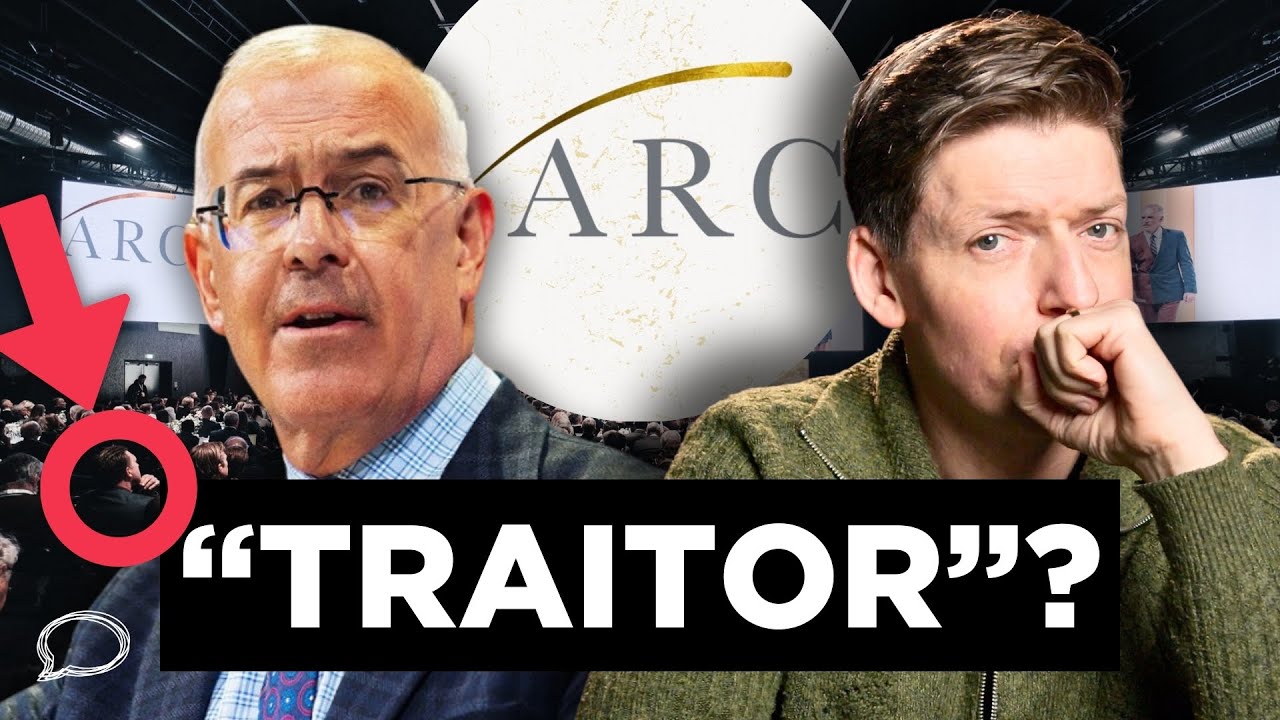
---
AN 6 25 ROBT R
Last week, I mentioned conservative columnist David Brooks’s call for a “comprehensive national civic uprising” against Trump, which Brooks described as “one coordinated mass movement.”
I wondered what shape that mass movement could take and asked whether, for example, it might be a general strike.
One person who got back to me was my old friend Sam Brown.
Sam knows something about mass movements. He was one of the chief organizers of the Moratorium to End the Vietnam War, on October 15, 1969.
When Richard Nixon took office on January 20, 1969, about 34,000 Americans had already been killed fighting in Vietnam — and an untold number of Vietnamese. During Nixon’s first year in office, from January 1969 to January 1970, roughly 10,000 additional Americans were killed there.
Sam reminds me that the idea for the moratorium started out as a call for a general strike. Sam (who previously had worked on Eugene McCarthy’s 1968 presidential campaign) changed the concept from general strike to a “moratorium.”
The moratorium was a huge success. Millions participated throughout the world. (Bill Clinton and I, then graduate students at Oxford, joined in the demonstration in London — which later became an issue when Clinton ran for president.)
The moratorium was followed a month later, on November 15, 1969, by a large Moratorium March in Washington, D.C.
It was the first time the anti-Vietnam War movement reached the level of a full-fledged mass movement. Many credit it with hastening the end of that horrendous war. (Interestingly, research shows that nonviolent protests “have never failed to bring about change” when they involve at least 3.5 percent of the public.)
Why did Sam change it from a general strike to a moratorium? He says he wanted protests to take place in communities rather than on university campuses so that “the heartland folks felt it belonged to them.”
Sam also thought that the best way to pressure Nixon was to ensure the movement had a “respectable” face in order to win the support of the largest number of Americans, many of whom did not much like either the hippie counterculture or the New Left movement. At the time, Nixon’s opponents were easily dismissed as “nattering nabobs of negativism,” or, in Trump-speak, as “whiners and losers.”
Sam’s view is that those of us who oppose Trump will similarly be dismissed until clearly identifiable Trump voters join with us. And, as then, the people who agree with us but don’t express themselves or participate need an easy on-ramp to do so.
In Sam’s view, “strike” has an overtone of militancy, which isn’t an easy place for people in the middle to go. Furthermore, “strike” doesn’t resonate with a small business person or a farmer or most of rural America. (Sam’s favorite visual for the demonstration would be Lincoln and Des Moines immobilized by tractor-driving farmers.)
Sam thinks we need an action that can grow and morph with time into a national movement — and one with which people newly opposed to Trump can identify.
So what’s the best word to describe this? Sam doesn’t think “moratorium” is right this time around, but we still need a neutral, mainstream descriptor that can incite a huge demonstration involving millions of people, that leads to an even larger one.
Ideas, anyone?
What would be the overall strategy? Sam believes it should be locally based, with a range of entry points and a broad set of supporters. (Sam and the Vietnam Moratorium Committee sought the support of groups like the Civil Rights Movement, churches, university faculties, unions, business leaders, and politicians.)
He points out that modern means of communication makes something like this radically easier to organize. The additional good news is that Trump has pissed off nearly everyone, even those who won’t yet admit it.
But Sam believes we need to find a way to gain the support of conservative opinion leaders like David Brooks. This takes some time and a great deal of thoughtful networking.
What do you think?
NOW READ:Breathing is now a political act — thanks to the GOP
---
---
an 4 25
Over the years, conservative journalist David Brooks hasn't been shy about criticizing liberal and progressive ideas — including those he regards as "cultural Marxism." But Brooks is also an outspoken critic of President Donald Trump and the MAGA movement, which he believes has been terrible for conservatism.
In an article published by The Atlantic on April 7, Brooks describes two competing trends on the right: conservatives focused on ideas, and "reactionaries" whose top priority is offending the left. And he laments that thanks to Trumpism, the latter is prevailing on the right.
"The pathetic thing is that I didn’t see this coming even though I’ve been living around these people my whole adult life," Brooks explains. "I joined the conservative movement in the 1980s, when I worked in turn at National Review, The Washington Times, and The Wall Street Journal editorial page. There were two kinds of people in our movement back then: the conservatives and the reactionaries. We conservatives earnestly read Milton Friedman, James Burnham, Whittaker Chambers, and Edmund Burke. The reactionaries just wanted to shock the left."
READ MORE:'Really scary': Experts sound alarm on new GOP threat to military and other mail-in voters
Brooks continues, "We conservatives oriented our lives around writing for intellectual magazines; the reactionaries were attracted to TV and radio. We were on the political right but had many liberal friends; they had contempt for anyone not on the anti-establishment right. They were not pro-conservative — they were anti-left. I have come to appreciate that this is an important difference."
"Faux populists" in the MAGA movement, Brooks argues, "lust for worldly power" — even if they "ostentatiously identify as Christians."
"Trumpian nihilism has eviscerated conservatism," Brooks laments. "The people in this administration are not conservatives. They are the opposite of conservatives. Conservatives once believed in steady but incremental reform; Elon Musk believes in rash and instantaneous disruption. Conservatives once believed that moral norms restrain and civilize us, habituating us to virtue; Trumpism trashes moral norms in every direction, riding forward on a tide of adultery, abuse, cruelty, immaturity, grift, and corruption."
Brooks adds, "Conservatives once believed in constitutional government and the Madisonian separation of powers; Trump bulldozes checks and balances, declaiming on social media, 'He who saves his Country does not violate any Law.'"
READ MORE:'Efficiency at its finest': Critics slam Trump for firing 'backbone' of wildfire fighting
According to Brooks, the writing of author George Orwell is "a useful guide to what we’re witnessing" during Trump's second term.
Brooks writes, "(Orwell) understood that it is possible for people to seek power without having any vision of the good…. If there is an underlying philosophy driving Trump, it is this: Morality is for suckers. The strong do what they want and the weak suffer what they must. This is the logic of bullies everywhere."
---
hmmn
an 3 25
In the 2024, voters who helped put Donald Trump back in the White House ranged from hardcore MAGA Republicans to swing voters and independents — some of them 2020 Joe Biden voters — who blamed the Biden Administration for inflation. The economy was a major concern of Biden-to-Trump voters, and the term "buyer's remorse" is being used in connection with swing voters and independents who now regret voting for Trump and are worried about steep new tariffs or possible cuts to Social Security.
But diehard MAGA voters have no regrets about voting for Trump. In a conversation published by the New York Times' opinion section on March 21, four conservative columnists — David Brooks, David French, Bret Stephens and Ross Douthat — lay out some reasons why those voters continue to be diehard Trump supporters.
The writers aren't promoting Trump's policies during the conversation — French, in fact, is very much a Never Trump conservative — but rather, are explaining the president's unending appeal to his hardcore MAGA base.
READ MORE:Trump official urging Fox viewers to buy Tesla stock decried as 'abuse of power'
Brooks cited **:{"brokenism" as a key reason for their support. The columnist describes "brokenism" as "the idea that everything is broken and we just need to burn it all down."}:
Brooks told his Times colleagues, "Personally, I think some things are broken and some things are OK, but most of my Trump-supporting friends are brokenists. They get this from media consumption."
French, who is a scathing critic of Trump but also has major complaints about the left, interjected, "In addition to the brokenism that David talks about, there's a strong undercurrent of raw animosity in our politics. Republicans and Democrats have very negative views of each other, and many Republicans, sadly, want their opponents to suffer. They're actually happy to see people lose their jobs or to see nonprofits lose funding if those people are perceived as part of the 'deep state' or RINOs. So, yes, Republicans want a disruptive president, but who's being disrupted really matters — and if it's the government or institutions that many Republicans believe are hostile to them, then Republicans are just fine with the pain."
French added, "Many Republicans dislike foreign aid. Or loathe elite universities. Or hate big liberal law firms. Students and professors at elite universities have a long track record of targeting the free speech rights of their conservative colleagues, and Republicans are rationalizing their own constitutional violations as fighting fire with fire."
READ MORE:'Clear and present danger': Experts alarmed at 'insanity' of Musk getting secret war plans
According to Brooks, diehard MAGA voters enjoy seeing him target institutions they feel excluded from.
Brooks told French, Douthat and Stephens, "I'd offer up one more word for consideration: 'exclusion.' Progressives really have spent the last few decades excluding conservative and working-class voices from a lot of institutions. Trump has gone after these institutions big time — the universities, the Department of Education, the State Department. Of course, the MAGA crowd feels justified revenge."
Douthat alluded to the fact that Trump's strongest support continues to be within the MAGA movement.
Douthat told his colleagues, "First, I would stress that Trump is not terribly popular, and undoubtedly will become less so if the stock market trends down and recession fears mount. He has a commanding position within his party, but even at his apotheosis, his approval ratings barely got over 50 percent. Second, Americans lived through the first Trump term, when sky-is-falling rhetoric was commonplace, but the average American did not experience a crisis until COVID hit."
READ MORE:Sabotaging Social Security: Behind the leaked memo to cut agency staff and critical services
*Read the full New York Times article at this link (subscription required).
===
COMM DR
Has Donald Trump’s victory on November 5 turned the New York Times’ most prominent and popular conservative columnist David Brooks into a “Bernie bro?” To read his “morning-after” piece—“Voters to Elites: Do You See Me Now?”—might well make you think so.
Responding to the polls showing that more working-class voters in all their diversity had voted for the Trump/Vance ticket than for that of Harris/Walz, Brooks proffered nothing less than an historical class-analysis of what had led them to turn from the “Party of the People” to the party of a billionaire real-estate mogul and his Make America Great Again politics.
In fact, even before Sanders himself issued a post-election attack on the Democratic Establishment stating that “It should come as no great surprise that a Democratic Party which has abandoned working class people would find that the working class has abandoned them,” Brooks charged the Democrats with having failed to fulfill their primary political responsibility.
“The Democratic Party has one job: to combat inequality," wrote Brooks. "Here was a great chasm of inequality right before their noses and somehow many Democrats didn’t see it.” And he then went on to declare: “I’m a moderate. I like it when Democratic candidates run to the center. But I have to confess that Harris did that pretty effectively and it didn’t work. Maybe the Democrats have to embrace a Bernie Sanders-style disruption—something that will make people like me feel uncomfortable.”
So, has Brooks joined the Left—and if so, why should we care?
I have always taken Brooks seriously, going all the way back to his years writing for The Weekly Standard, the neo-conservative magazine published by Rupert Murdoch and edited by Bill Kristol. Brooks originally caught my attention because he was posing questions about the “purpose and promise of America” that I sincerely believed needed addressing, but which my left comrades— in contrast to past progressives and radicals from Thomas Paine to Martin Luther King Jr.—were failing to ask, if not outright scorning them.
For all of his talk about class inequality, and as much as he has come to see the light on what the Democrats should have been doing and, presumably, should be doing if they/we ever get it together and win back the White House and Congress, he still doesn’t really get what led us here...
At the same time, I never failed to recognize that as much as Brooks was asking the right questions—most notably in “A Return to National Greatness” (1997); “What is America For?” (2014) and “What are We Supposed to Do (about the growing class divide and the impending nomination of Trump)? (2016)—he was consistently offering the wrong answers. As I wrote in response to the second of those pieces: “(How could the conservative Brooks effectively answer that question?) How could he possibly appreciate and write informatively of America’s purpose and promise—the promise inscribed in our historical memory and imagination by Paine’s Common Sense, Jefferson’s Declaration, the Founders’ Preamble to the Constitution and Bill of Rights, Lincoln’s Gettysburg Address, FDR’s Four Freedoms, and King’s ‘I Have a Dream’ speech? How could he appreciate the promise that inspired not just a revolutionary war, but also generations of Americans to struggle to expand both the “We” in “We the People” and the democratic process through which “the people” can genuinely govern themselves?”
Brooks, unlike his own comrades on the right, had never been completely oblivious to questions of class. But he never wrote the kind of piece that he did on November 6 of this year—a populist class analysis and narrative that clearly holds the nation’s elites accountable for Trump’s victories in both 2016 and 2020. The very title of the column signals Brooks new sympathies. While he definitely has no affection or admiration for Trump and the MAGA crowd, he takes seriously the working-class voters who lined up with them on Election Day.
Notably, he does not dismiss them as simply “deplorables,” as so many liberals have done ever since 2016. “There will be some on the left,” he writes, “who will say Trump won because of the inherent racism, sexism and authoritarianism of the American people. Apparently, those people love losing and want to do it again and again and again…. The rest of us need to look at this result with humility. American voters are not always wise, but they are generally sensible, and they have something to teach us.”
As Brooks tells it, the past 40 years of American history, which he dubs the “information age,” saw the emergence of a post-industrial class structure, a society divided into two classes, that is, a governing class of highly educated university graduates and a lower class of the less educated, in essence, the working class. In this order, “those of us in the educated class decided, with some justification, that the post-industrial economy would be built by people like ourselves, so we tailored social policies [trade policy, immigration policy, education policy, environmental policy, and technology policy] to meet our needs.” And while “we” benefited, the less educated definitely did not. They have endured, he points out, not only lower incomes, less financial security, and fewer social and cultural opportunities, but also less healthy and shorter lives. Making this social order all the more oppressive, he says, the educated class has looked down upon and lorded it over those beneath them: “That great sucking sound you heard was the redistribution of respect.”
Inevitably, the “chasms” created “led to a loss of faith, a loss of trust, a sense of betrayal” on the part of the working class.
He acknowledges that the Democratic Party was not insensible to inequality. But it “focused on racial inequality, gender inequality, and L.G.B.T.Q. inequality,” not class inequality. And he states, as “the left veered toward identitarian performance art,” Donald Trump “jumped into the class war with both feet...” and put together what the “Democratic Party once tried to build – a multiracial working-class majority.”
Of course, Brooks notes that “the Biden administration tried to woo the working class with subsidies and stimulus.” But he observes: “there is no economic solution to what is primarily a crisis of respect.”
With those words Brooks himself answers the question posed at the outset: Has Donald Trump’s victory on November 5 turned the New York Times most prominent and popular conservative columnist David Brooks into a “Bernie bro?”For all of his expressed populist sympathies and sensibilities, Brooks is not one of us. Sure, respect matters—it matters deeply. But it wasn’t the lack of respect that brought about the class divide and the injustices endured by working people.
For all of his talk about class inequality, and as much as he has come to see the light on what the Democrats should have been doing and, presumably, should be doing if they/we ever get it together and win back the White House and Congress, he still doesn’t really get what led us here and what we need to do not only to begin to find our way out of the political abyss into which we have fallen, but also go on to lead Americans to truly transcend the ever intensifying crisis of democracy that we will surely continue to confront.
So, Brooks is not one of us. But neither is he the conservative he long had been...
In short, Brooks’ narrative ignores the real class war from above waged these past 50 years by corporate bosses, Republican conservatives, and yes, Democratic neoliberals—a class war against the democratic rights secured and the progressive achievements accomplished during what historian Arthur Schlesinger, Jr. called the “Long Age of Roosevelt” from the 1930s to the early 1970s. That “great sucking sound” to which Brooks refers was not simply sucking up and redistributing respect upwards to an educated class. Even more so, it was sucking up the wealth that working people were producing and redistributing it up to multimillionaires and billionaires.
Brooks says, “The Democrats obviously have to do some major rethinking.” That’s putting it mildly. To save the Democratic Party and redeem the nation from the grip of billionaires and reactionaries, and the serious threat of outright Fascism, the Democrats are going to have to not only join with the Labor Movement in favor of articulating a progressive and social-democratic vision and agenda that polls repeatedly show the great majority of Americans truly want. They will also have to stop promising to fight for the people and, by their own actions, start encouraging the fight in the people.
Okay. So, Brooks is not one of us. But neither is he the conservative he long had been (fascists can do that to you). Thus, he can be an important ally in the struggle to defend and enhance democracy. From his perch at the Times, he speaks to not only conservatives, but also to moderate Democrats, without whom we cannot transform the Democratic Party and start taking back America.
So, David, welcome to the left, sort of.
===
llustration by The Atlantic
How the Ivy League Broke America
The meritocracy isn’t working. We need something new.
*By David Brooks
November 14, 2024
Listen to more stories on hark
*This article was featured in the One Story to Read Today newsletter. Sign up for it here.
Every coherent society has a social ideal—an image of what the superior person looks like. In America, from the late 19th century until sometime in the 1950s, the superior person was the Well-Bred Man. Such a man was born into one of the old WASP families that dominated the elite social circles on Fifth Avenue, in New York City; the Main Line, outside Philadelphia; Beacon Hill, in Boston. He was molded at a prep school like Groton or Choate, and came of age at Harvard, Yale, or Princeton. In those days, you didn’t have to be brilliant or hardworking to get into Harvard, but it really helped if you were “clubbable”—good-looking, athletic, graceful, casually elegant, Episcopalian, and white. It really helped, too, if your dad had gone there.
[the December 2024 Issue
Check out more from this issue and find your next story to read.
Once on campus, studying was frowned upon. Those who cared about academics—the “grinds”—were social outcasts. But students competed ferociously to get into the elite social clubs: Ivy at Princeton, Skull and Bones at Yale, the Porcellian at Harvard. These clubs provided the well-placed few with the connections that would help them ascend to white-shoe law firms, to prestigious banks, to the State Department, perhaps even to the White House. (From 1901 to 1921, every American president went to Harvard, Yale, or Princeton.) People living according to this social ideal valued not academic accomplishment but refined manners, prudent judgment, and the habit of command. This was the age of social privilege.
And then a small group of college administrators decided to blow it all up. The most important of them was James Conant, the president of Harvard from 1933 to 1953. Conant looked around and concluded that American democracy was being undermined by a “hereditary aristocracy of wealth.” American capitalism, he argued, was turning into “industrial feudalism,” in which a few ultrarich families had too much corporate power. Conant did not believe the United States could rise to the challenges of the 20th century if it was led by the heirs of a few incestuously interconnected Mayflower families.
So Conant and others set out to get rid of admissions criteria based on bloodlines and breeding and replace them with criteria centered on brainpower. His system was predicated on the idea that the highest human trait is intelligence, and that intelligence is revealed through academic achievement.
By shifting admissions criteria in this way, he hoped to realize Thomas Jefferson’s dream of a natural aristocracy of talent, culling the smartest people from all ranks of society. Conant wanted to create a nation with more social mobility and less class conflict. He presided during a time, roughly the middle third of the 20th century, when people had lavish faith in social-engineering projects and central planning—in using scientific means to, say, run the Soviet economy, or build new cities like Brasília, or construct a system of efficiency-maximizing roadways that would have cut through Greenwich Village.
When universities like Harvard shifted their definition of ability, large segments of society adjusted to meet that definition. The effect was transformative.
In trying to construct a society that maximized talent, Conant and his peers were governed by the common assumptions of the era: Intelligence, that highest human trait, can be measured by standardized tests and the ability to do well in school from ages 15 to 18. Universities should serve as society’s primary sorting system, segregating the smart from the not smart. Intelligence is randomly distributed across the population, so sorting by intelligence will yield a broad-based leadership class.
Intelligence is innate, so rich families won’t be able to buy their kids higher grades. As Conant put it, “At least half of higher education, I believe, is a matter of selecting, sorting, and classifying students.” By reimagining college-admissions criteria, Conant hoped to spark a social and cultural revolution. The age of the Well-Bred Man was vanishing. The age of the Cognitive Elite was here.
At first, Conant’s record did not match his rhetoric. He couldn’t afford to offend the rich families who supplied Harvard with its endowment. In 1951, 18 years into his presidency, the university was still accepting 94 percent of its legacy applicants. When Jews with high grades and test scores began to flood in, Harvard limited the number of applicants it would consider from New Jersey and parts of New York—places that had a lot of Jews.
But eventually Conant’s vision triumphed and helped comprehensively refashion American life. If you control the choke points of social mobility, then you control the nation’s culture. And if you change the criteria for admission at places such as Harvard, Yale, and Princeton, then you change the nation’s social ideal.
When universities like Harvard shifted their definition of ability, large segments of society adjusted to meet that definition. The effect was transformative, as though someone had turned on a powerful magnet and filaments across wide swaths of the culture suddenly snapped to attention in the same direction.
Recommended Reading
Going Beyond the Edge of Reason in Season Two
Hauser & Wirth
Status markers changed. In 1967, the sociologist Daniel Bell noted that the leadership in the emerging social order was coming from “the intellectual institutions.” “Social prestige and social status,” he foresaw, “will be rooted in the intellectual and scientific communities.”
Family life changed as parents tried to produce the sort of children who could get into selective colleges. Over time, America developed two entirely different approaches to parenting. Working-class parents still practice what the sociologist Annette Lareau, in her book *Unequal Childhoods*, called “natural growth” parenting. They let kids be kids, allowing them to wander and explore.
College-educated parents, in contrast, practice “concerted cultivation,” ferrying their kids from one supervised skill-building, résumé-enhancing activity to another. It turns out that if you put parents in a highly competitive status race, they will go completely bonkers trying to hone their kids into little avatars of success.
Elementary and high schools changed too. The time dedicated to recess, art, and shop class was reduced, in part so students could spend more of their day enduring volleys of standardized tests and Advanced Placement classes. Today, even middle-school students have been so thoroughly assessed that they know whether the adults have deemed them smart or not. The good test-takers get funneled into the meritocratic pressure cooker; the bad test-takers learn, by about age 9 or 10, that society does not value them the same way. (Too often, this eventually leads them to simply check out from school and society.)
By 11th grade, the high-IQ students and their parents have spent so many years immersed in the college-admissions game that they, like 18th-century aristocrats evaluating which family has the most noble line, are able to make all sorts of fine distinctions about which universities have the most prestige: Princeton is better than Cornell; Williams is better than Colby. Universities came to realize that the more people they reject, the more their cachet soars. Some of these rejection academies run marketing campaigns to lure more and more applicants—and then brag about turning away 96 percent of them.
America’s opportunity structure changed as well. It’s gotten harder to secure a good job if you lack a college degree, especially an elite college degree. When I started in journalism, in the 1980s, older working-class reporters still roamed the newsroom. Today, journalism is a profession reserved almost exclusively for college grads, especially elite ones.
A 2018 study found that more than 50 percent of the staff writers at The New York Times and The Wall Street Journal had attended one of the 34 most elite universities or colleges in the nation. A broader study, published in Nature this year, looked at high achievers across a range of professions—lawyers, artists, scientists, business and political leaders—and found the same phenomenon: 54 percent had attended the same 34 elite institutions. The entire upper-middle-class job market now looks, as the writer Michael Lind has put it, like a candelabrum: “Those who manage to squeeze through the stem of a few prestigious colleges and universities,” Lind writes, “can then branch out to fill leadership positions in almost every vocation.”
When Lauren Rivera, a sociologist at Northwestern, studied how elite firms in finance, consulting, and law select employees, she found that recruiters are obsessed with college prestige, typically identifying three to five “core” universities where they will do most of their recruiting—perhaps Harvard, Yale, Princeton, Stanford, and MIT. Then they identify five to 15 additional schools—the likes of Amherst, Pomona, and Berkeley—from which they will more passively accept applications. The résumés of students from other schools will almost certainly never even get read.
“Number one people go to number one schools” is how one lawyer explained her firm’s recruiting principle to Rivera. That’s it, in a sentence: Conant’s dream of universities as the engines of social and economic segregation has been realized.
Did We Get a Better Elite?
Conant’s reforms should have led to an American golden age. The old WASP aristocracy had been dethroned. A more just society was being built. Some of the fruits of this revolution arepretty great. Over the past 50 years, the American leadership class has grown smarter and more diverse. Classic achiever types such as Hillary Clinton, Barack Obama, Jamie Dimon, Ketanji Brown Jackson, Lin-Manuel Miranda, Pete Buttigieg, Julián Castro, Sundar Pichai, Jeff Bezos, and Indra Nooyi have been funneled through prestigious schools and now occupy key posts in American life.
The share of well-educated Americans has risen, and the amount of bigotry—against women, Black people, the LGBTQ community—has declined. Researchers at the University of Chicago and Stanford measured America’s economic growth per person from 1960 to 2010 and concluded that up to two-fifths of America’s increased prosperity during that time can be explained by better identification and allocation of talent.
From the May 1946 issue: America remakes the university
And yet it’s not obvious that we have produced either a better leadership class or a healthier relationship between our society and its elites. Generations of young geniuses were given the most lavish education in the history of the world, and then decided to take their talents to finance and consulting. For instance, Princeton’s unofficial motto is “In the nation’s service and the service of humanity”—and yet every year, about a fifth of its graduating class decidesto serve humanity by going into banking or consulting or some other well-remunerated finance job.
Would we necessarily say that government, civic life, the media, or high finance work better now than in the mid-20th century? We can scorn the smug WASP blue bloods from Groton and Choate—and certainly their era’s retrograde views of race and gender—but their leadership helped produce the Progressive movement, the New Deal, victory in World War II, the Marshall Plan, NATO, and the postwar Pax Americana. After the meritocrats took over in the 1960s, we got quagmires in Vietnam and Afghanistan, needless carnage in Iraq, the 2008 financial crisis, the toxic rise of social media, and our current age of political dysfunction.
Today, 59 percent of Americans believe that our country is in decline, 69 percent believe that the “political and economic elite don’t care about hard-working people,” 63 percent think experts don’t understand their lives, and 66 percent believe that America “needs a strong leader to take the country back from the rich and powerful.” In short, under the leadership of our current meritocratic class, trust in institutions has plummeted to the point where, three times since 2016, a large mass of voters has shoved a big middle finger in the elites’ faces by voting for Donald Trump.
The Six Sins of the Meritocracy
I’ve spent much of my adult life attending or teaching at elite universities. They are impressive institutions filled with impressive people. But they remain stuck in the apparatus that Conant and his peers put in place before 1950. In fact, all of us are trapped in this vast sorting system. Parents can’t unilaterally disarm, lest their children get surpassed by the children of the tiger mom down the street. Teachers can’t teach what they love, because the system is built around teaching to standardized tests.
Students can’t focus on the academic subjects they’re passionate about, because the gods of the grade point average demand that they get straight A’s. Even being a well-rounded kid with multiple interests can be self-defeating, because admissions officers are seeking the proverbial “spiky” kids—the ones who stand out for having cultivated some highly distinct skill or identity. All of this militates against a childhood full of curiosity and exploration.
Most admissions officers at elite universities genuinely want to see each candidate as a whole person. They genuinely want to build a campus with a diverse community and a strong learning environment. But they, like the rest of us, are enmeshed in the mechanism that segregates not by what we personally admire, but by what the system, typified by the U.S. News & World Reportcollege rankings, demands. (In one survey, 87 percent of admissions officers and high-school college counselors said the U.S. News rankings force schools to take measures that are “counterproductive” to their educational mission.)
In other words, we’re all trapped in a system that was built on a series of ideological assumptions that were accepted 70 or 80 years ago but that now look shaky or just plain wrong. The six deadly sins of the meritocracy have become pretty obvious.
1. The system overrates intelligence.Conant’s sorting mechanism was based primarily on intelligence, a quality that can ostensibly be measured by IQ tests or other standardized metrics. Under the social regime that Conant pioneered, as the historian Nathaniel Comfort has put it, “IQ became a measure not of what you do, but of who you are—a score for one’s inherent worth as a person.” Today’s elite school admissions officers might want to look at the whole person—but they won’t read your beautiful essay if you don’t pass the first threshold of great intelligence, as measured by high grades and sparkling SAT or ACT scores.
Intelligence is important. Social scientists looking at large populations of people consistently find that high IQ correlates with greater academic achievement in school and higher incomes in adulthood. The Study of Mathematically Precocious Youth, based at Vanderbilt, found that high SAT scores at 12 or 13 correlate with the number of doctorates earned and patents issued. Many elite colleges that had dropped standardized testing as an application requirement are now mandating it again, precisely because the scores do provide admissions officers with a reliable measure of the intellectual abilities that correlate with academic performance and with achievement later in life.
But intelligence is less important than Conant and his peers believed. Two people with identical IQ scores can vary widely in their life outcomes. If you rely on intelligence as the central proxy for ability, you will miss 70 percent of what you want to know about a person. You will also leach some of the humanity from the society in which you live.
Starting in the 1920s, the psychologist Lewis Terman and his colleagues at Stanford tracked roughly 1,500 high-IQ kids through life. The Termites, as the research subjects were known, did well in school settings. The group earned 97 Ph.D.s, 55 M.D.s, and 92 law degrees. But as the decades went on, no transcendent geniuses emerged from the group. These brilliant young people grew up to have perfectly respectable jobs as doctors, lawyers, and professors, but there weren’t any transformational figures, no world changers or Nobel Prize winners. The whiz kids didn’t grow up to become whiz adults. As the science journalist Joel Shurkin, who has written a book on the Terman study, concluded, “Whatever it was the IQ test was measuring, it was not creativity.”
Similarly, in a 2019 paper, the Vanderbilt researchers looked at 677 people whose SAT scores at age 13 were in the top 1 percent. The researchers estimated that 12 percent of these adolescents had gone on to achieve “eminence” in their careers by age 50. That’s a significant percentage. But that means 88 percent did not achieve eminence. (The researchers defined eminence as reaching the pinnacle of a field—becoming a full professor at a major research university, a CEO of a Fortune 500 company, a leader in biomedicine, a prestigious judge, an award-winning writer, and the like.)
The bottom line is that if you give somebody a standardized test when they are 13 or 18, you will learn something important about them, but not necessarily whether they will flourish in life, nor necessarily whether they will contribute usefully to society’s greater good. Intelligence is not the same as effectiveness. The cognitive psychologist Keith E. Stanovich coined the term *dysrationalia* in part to describe the phenomenon of smart people making dumb or irrational decisions. Being smart doesn’t mean that you’re willing to try on alternative viewpoints, or that you’re comfortable with uncertainty, or that you can recognize your own mistakes. It doesn’t mean you have insight into your own biases. In fact, one thing that high-IQ people might genuinely be better at than other people is convincing themselves that their own false views are true.
2. Success in school is not the same thing as success in life.University administrators in the Conant mold assumed that people who could earn high grades would continue to excel later in their career.
But school is not like the rest of life. Success in school is about jumping through the hoops that adults put in front of you; success in life can involve charting your own course. In school, a lot of success is individual: How do I stand out? In life, most success is team-based: How can we work together? Grades reveal who is persistent, self-disciplined, and compliant—but they don’t reveal much about emotional intelligence, relationship skills, passion, leadership ability, creativity, or courage.
In short, the meritocratic system is built on a series of non sequiturs. We train and segregate people by ability in one setting, and then launch them into very different settings. “The evidence is clear,” the University of Pennsylvania organizational psychologist Adam Grant has written. “Academic excellence is not a strong predictor of career excellence. Across industries, research shows that the correlation between grades and job performance is modest in the first year after college and trivial within a handful of years.”
For that reason, Google and other companies no longer look at the grade point average of job applicants. Students who got into higher-ranking colleges, which demand high secondary-school GPAs, are not substantially more effective after they graduate. In one study of 28,000 young students, those attending higher-ranking universities did only slightly better on consulting projects than those attending lower-ranked universities. Grant notes that this would mean, for instance, that a Yale student would have been only about 1.9 percent more proficient than a student from Cleveland State when measured by the quality of their work. The Yale student would also have been more likely to be a jerk: The researchers found that students from higher-ranking colleges and universities, while nominally more effective than other students, were more likely to pay “insufficient attention to interpersonal relationships,” and in some instances to be “less friendly,” “more prone to conflict,” and “less likely to identify with their team.”
Also, we have now, for better or worse, entered the Age of Artificial Intelligence. AI is already good at regurgitating information from a lecture. AI is already good at standardized tests. AI can already write papers that would get A’s at Harvard. If you’re hiring the students who are good at those things, you’re hiring people whose talents might soon be obsolete.
3. The game is rigged. The meritocracy was supposed to sort people by innate ability. But what it really does is sort people according to how rich their parents are. As the meritocracy has matured, affluent parents have invested massively in their children so they can win in the college-admissions arms race. The gap between what rich parents and even middle-class parents spend—let’s call it the wealth surplus—is huge. According to the Yale Law professor Daniel Markovits, the author of *The Meritocracy Trap*, if the typical family in the top 1 percent of earners were to take that surplus—all the excess money they spend, beyond what a middle-class family spends, on their child’s education in the form of private-school tuition, extracurricular activities, SAT-prep courses, private tutors, and so forth—and simply invest it in the markets, it would be worth $10 million or more as a conventional inheritance. But such is the perceived status value of a fancy college pedigree that rich families believe they’ll be better able to transmit elite standing to their kids by spending that money on education.
The system is rigged: Students from families in the top 1 percent of earners were 77 times more likely to attend an Ivy League–level school than students from families making $30,000 a year or less. Many elite schools draw more students from the top 1 percent than the bottom 60.
The children of the affluent have advantages every step of the way. A 3-year-old who grows up with parents making more than $100,000 a year is about twice as likely to attend preschool as a 3-year-old with parents who make less than $60,000. By eighth grade, children from affluent families are performing four grade levels higher than children from poor families, a gap that has widened by 40 to 50 percent in recent decades. According to College Board data from this year, by the time students apply to college, children from families making more than $118,000 a year score 171 points higher on their SATs than students from families making $72,000 to $90,000 a year, and 265 points higher than children from families making less than $56,000. As Markovits has noted, the academic gap between the rich and the poor is larger than the academic gap between white and Black students in the final days of Jim Crow.
From the September 2019 issue: Daniel Markovits on how life became an endless, terrible competition
Conant tried to build a world in which colleges weren’t just for the children of the affluent. But today’s elite schools are mostly for the children of the affluent. In 1985, according to the writer William Deresiewicz, 46 percent of the students at the most selective 250 colleges came from the top quarter of the income distribution. By 2000, it was 55 percent. By 2006 (based on a slightly smaller sample), it was 67 percent. Research findings by the Harvard economist Raj Chetty and others put this even more starkly: In a 2017 paper, they reported that students from families in the top 1 percent of earners were 77 times more likely to attend an Ivy League–level school than students who came from families making $30,000 a year or less. Many elite schools draw more students from the top 1 percent of earners than from the bottom 60 percent.
In some ways, we’ve just reestablished the old hierarchy rooted in wealth and social status—only the new elites possess greater hubris, because they believe that their status has been won by hard work and talent rather than by birth. The sense that they “deserve” their success for having earned it can make them feel more entitled to the fruits of it, and less called to the spirit of noblesse oblige.
Those early administrators dreamed that talent, as they defined it, would be randomly scattered across the population. But talent is rarely purely innate. Talent and even effort cannot, as the UCLA Law School professor Joseph Fishkin has observed, “be isolated from circumstances of birth.”
4. The meritocracy has created an American caste system. After decades of cognitive segregation, a chasm divides the well educated from the less well educated.
The average high-school graduate will earn about $1 million less over their lifetime than the average four-year-college graduate. The average person without a four-year college degree lives about eight years less than the average four-year-college grad. Thirty-five percent of high-school graduates are obese, compared with 27 percent of four-year-college grads. High-school grads are much less likely to get married, and women with high-school degrees are about twice as likely to divorce within 10 years of marrying as women with college degrees. Nearly 60 percent of births to women with a high-school degree or less happen out of wedlock; that’s roughly five times higher than the rate for women with at least a bachelor’s degree. The opioid death rate for those with a high-school degree is about 10 times higher than for those with at least a bachelor’s degree.
The most significant gap may be social. According to an American Enterprise Institute study, nearly a quarter of people with a high-school degree or less say they have no close friends, whereas only 10 percent of those with college degrees or more say that. Those whose education doesn’t extend past high school spend less time in public spaces, less time in hobby groups and sports leagues. They’re less likely to host friends and family in their home.
The advantages of elite higher education compound over the generations. Affluent, well-educated parents marry each other and confer their advantages on their kids, who then go to fancy colleges and marry people like themselves. As in all caste societies, the segregation benefits the segregators. And as in all caste societies, the inequalities involve inequalities not just of wealth but of status and respect.
Read: The growing college-degree wealth gap
The whole meritocracy is a system of segregation. Segregate your family into a fancy school district. If you’re a valedictorian in Ohio, don’t go to Ohio State; go to one of the coastal elite schools where all the smart rich kids are.
It should be noted that this segregation by education tends to overlap with and contribute to segregation by race, a problem that is only deepening after affirmative action’s demise. Black people constitute about 14 percent of the U.S. population but only 9 percent of Princeton’s current freshman class, according to the school’s self-reported numbers, and only 3 percent of Amherst’s and 4.7 percent of Tufts’s, according to federal reporting guidelines. (Princeton has declined to reveal what that number would be based on those federal guidelines.) In the year after the Supreme Court ended affirmative action, MIT says that the number of Black people in its freshman class dropped from 15 percent to 5 percent.
For the past 50 years or so, the cognitive elite has been withdrawing from engagement with the rest of American society. Since about 1974, as the Harvard sociologist Theda Skocpol has noted, college-educated Americans have been leaving organizations, such as the Elks Lodge and the Kiwanis Club, where they might rub shoulders with non-educated-class people, and instead have been joining groups, such as the Sierra Club and the ACLU, that are dominated by highly educated folks like themselves.
“We now have a single route into a single dominant cognitive class,” the journalist David Goodhart has written. And because members of the educated class dominate media and culture, they possess the power of consecration, the power to determine what gets admired and what gets ignored or disdained. Goodhart notes further that over the past two decades, it’s been as though “an enormous social vacuum cleaner has sucked up status from manual occupations, even skilled ones,” and reallocated that status to white-collar jobs, even low-level ones, in “prosperous metropolitan centers and university towns.” This has had terrible social and political consequences.
5. The meritocracy has damaged the psyches of the American elite.The meritocracy is a gigantic system of extrinsic rewards. Its gatekeepers—educators, corporate recruiters, and workplace supervisors—impose a series of assessments and hurdles upon the young. Students are trained to be good hurdle-clearers. We shower them with approval or disapproval depending on how they measure up on any given day. Childhood and adolescence are thus lived within an elaborate system of conditional love. Students learn to ride an emotional roller coaster—congratulating themselves for clearing a hurdle one day and demoralized by their failure the next. This leads to an existential fragility: If you don’t keep succeeding by somebody else’s metrics, your self-worth crumbles.
Some young people get overwhelmed by the pressure and simply drop out. Others learn to become shrewd players of the game, interested only in doing what’s necessary to get good grades. People raised in this sorting system tend to become risk-averse, consumed by the fear that a single failure will send them tumbling out of the race.
At the core of the game is the assumption that the essence of life fulfillment is career success. The system has become so instrumentalized—How can this help me succeed?—that deeper questions about meaning or purpose are off the table, questions like: How do I become a generous human being? How do I lead a life of meaning? How do I build good character?
6. The meritocracy has provoked a populist backlash that is tearing society apart. Teachers behave differently toward students they regard as smart. Years of research has shown that they smile and nod more at those kids, offer them more feedback, allow them more time to ask questions. Students who have been treated as smart since elementary school may go off to private colleges that spend up to $350,000 per student per year. Meanwhile many of the less gifted students, who quickly perceive that teachers don’t value them the same way, will end up at community colleges that may spend only $17,000 per pupil per year. By adulthood, the highly educated and the less educated work in different professions, live in different neighborhoods, and have different cultural and social values.
From the April 2021 issue: Private schools have become truly obscene
Many people who have lost the meritocratic race have developed contempt for the entire system, and for the people it elevates. This has reshaped national politics. Today, the most significant political divide is along educational lines: Less educated people vote Republican, and more educated people vote Democratic. In 1960, John F. Kennedy lost the white college-educated vote by two to one and rode to the White House on the backs of the working class. In 2020, Joe Biden lost the white working-class vote by two to one and rode to the White House on the backs of the college-educated.
Wherever the Information Age economy showers money and power onto educated urban elites, populist leaders have arisen to rally the less educated: not just Donald Trump in America but Marine Le Pen in France, Viktor Orbán in Hungary, Recep Tayyip Erdoğan in Turkey, Nicolás Maduro in Venezuela. These leaders understand that working-class people resent the know-it-all professional class, with their fancy degrees, more than they do billionaire real-estate magnates or rich entrepreneurs. Populist leaders worldwide traffic in crude exaggerations, gross generalizations, and bald-faced lies, all aimed at telling the educated class, in effect:Screw you and the epistemic regime you rode in on.
When income level is the most important division in a society, politics is a struggle over how to redistribute money. When a society is more divided by education, politics becomes a war over values and culture. In country after country, people differ by education level on immigration, gender issues, the role of religion in the public square, national sovereignty, diversity, and whether you can trust experts to recommend a vaccine.
Read: Why Americans are so polarized: education and evolution
As working-class voters have shifted to the right, progressivism has become an entry badge to the elite. To cite just one example, a study of opinion pieces in *The Harvard Crimson* found that they became three and a half times more progressive from 2001 to 2023. By 2023, 65 percent of seniors at Harvard, the richest school in the world, identified as progressive or very progressive.
James Conant and his colleagues dreamed of building a world with a lot of class-mixing and relative social comity; we ended up with a world of rigid caste lines and pervasive cultural and political war. Conant dreamed of a nation ruled by brilliant leaders. We ended up with President Trump.
How to Replace the Current Meritocracy
From time to time, someone, usually on the progressive left, will suggest that we dismantle the meritocracy altogether. Any sorting system, they argue, is inherently elitist and unjust. We should get rid of selective admissions. We should get rid of the system that divides elite from non-elite. All students should be treated equally and all schools should have equal resources.
I appreciate that impulse. But the fact is that every human society throughout history has been hierarchical. (If anything, that’s been especially true for those societies, such as Soviet Russia and Maoist China, that professed to be free of class hierarchy.) What determines a society’s health is not the existence of an elite, but the effectiveness of the elite, and whether the relationship between the elites and everybody else is mutually respectful.
And although the current system may overvalue IQ, we do still need to find and train the people best equipped to be nuclear physicists and medical researchers. If the American meritocracy fails to identify the greatest young geniuses and educate them at places such as Caltech and MIT, China—whose meritocracy has for thousands of years been using standardized tests to cull the brightest of the bright—could outpace us in chip manufacturing, artificial intelligence, and military technology, among other fields. And for all the American education system’s flaws, our elite universities are doing pioneering research, generating tremendous advances in fields such as biotech, launching bright students into the world, and driving much of the American economy. Our top universities remain the envy of the world.
The challenge is not to end the meritocracy; it’s to humanize and improve it. A number of recent developments make this even more urgent—while perhaps also making the present moment politically ripe for broad reform.
First, the Supreme Court’s ending of affirmative action constrained colleges’ ability to bring in students from less advantaged backgrounds. Under affirmative action, admissions officers had the freedom to shift some weight from a narrow evaluation of test scores to a broader assessment of other qualities—for instance, the sheer drive a kid had to possess in order to accomplish what they did against great odds. If colleges still want to compose racially diverse classes, and bring in kids from certain underrepresented backgrounds, they will have to find new ways to do that.
Second, as noted, much of what the existing cognitive elite do can already be done as well as or better by AI—so shouldn’t colleges be thinking about how to find and train the kind of creative people we need not just to shape and constrain AI, but to do what AI (at least as of now) cannot?
Third, the recent uproar over Gaza protests and anti-Semitism on campus has led to the defenestration of multiple Ivy League presidents, and caused a public-relations crisis, perhaps even lasting brand damage, at many elite universities. Some big donors are withholding funds. Republicans in Congress are seizing the opportunity to escalate their war on higher education. Now would be a good time for college faculty and administrators to revisit first principles in service of building a convincing case for the value that their institutions provide to America.
Fourth, the ongoing birth dearth is causing many schools to struggle with enrollment shortfalls. This demographic decline will require some colleges not just to rebrand themselves, but to reinvent themselves in creative ways if they are to remain financially afloat. In a reformed meritocracy, perhaps colleges now struggling with declining enrollments might develop their own distinctive niches in the ecosystem, their own distinctive ways of defining and nurturing talent. This in turn could help give rise to an educational ecosystem in which colleges are not all arrayed within a single status hierarchy, with Harvard, Yale, and Princeton on top and everyone else below. If we could get to the point where being snobby about going to Stanford seems as ridiculous as being snobby about your great-grandmother’s membership in the Daughters of the American Revolution, this would transform not just college admissions but American childhood.
The crucial first step is to change how we define merit. The history of the meritocracy is the history of different definitions of ability. But how do we come up with a definition of ability that is better and more capacious than the one Conant left us? We can start by noting the flaws at the core of his definition. He and his peers were working at a time when people were optimistic that the rational application of knowledge in areas such as statistics, economics, psychology, management theory, and engineering could solve social problems. They admired technicians who valued quantification, objectification, optimization, efficiency.
They had great faith in raw brainpower and naturally adopted a rationalist view of humans: Reason is separate from emotions. Economists and political scientists of the era gravitated toward models that were based on the idea that you could view people as perfectly rational actors maximizing their utility, and accurately predict their behavior based on that.
Social engineers with this mindset can seem impressively empirical. But over the course of the 20th century, the rationalist planning schemes—the public-housing projects in America’s cities, the central economic planning in the Soviet Union—consistently failed. And they failed for the same reason: The rationalists assumed that whatever can’t be counted and measured doesn’t matter. But it does. Rationalist schemes fail because life is too complex for their quantification methods.
In *Seeing Like a State: How Certain Schemes to Improve the Human Condition Have Failed*, James C. Scott, the late political scientist and anthropologist, describes a 19th-century German effort to improve the nation’s lumber industry. To make forests amenable to scientific quantification, planners had to redefine what forestmeant. Trees became timber, and everything not a tree was designated as underbrush—useless stuff that got in the way when workers tried to efficiently harvest the timber.
The German rationalists reorganized the forests, planting new trees in neat rows and clearing away all the underbrush. At first, everything seemed to go well. But as the Germans discovered too late, the trees needed the underbrush to thrive. Without the organic messiness that the rationalists had deemed superfluous, the trees’ nutrient cycle got out of whack. They began ailing. A new word entered the German language—Waldsterben, or “forest death.”
By focusing on only those parts of the forest that seemed instrumental to their uses, the planners failed to see the forest accurately. In trying to standardize and control the growth process, the planners murdered the trees.
The modern meritocracy misunderstands human beings the same way the German rationalists misunderstood trees. To make people legible to the sorting system, researchers draw a distinction between what they call “cognitive” and “noncognitive” skills. Cognitive skills are the “hard” ones that can be easily measured, such as IQ and scores on an algebra test. Noncognitive skills are fuzzier, harder-to-quantify things, such as emotional flexibility, grit, social agility, and moral qualities.
But of course all mental actions are cognitive. What this categorization method reveals is how little the rationalists care about the abilities that lie beyond IQ. The modern meritocracy treats the noncognitive realm the way the German planners treated the underbrush; it discounts it. But the putatively “noncognitive” skills can be more important than cognitive ones. Having a fast mental processor upstairs is great, but other traits may do more to determine how much you are going to contribute to society: Do you try hard? Can you build relationships? Are you curious? Are you trustworthy? How do you perform under pressure?
The meritocracy as currently constituted seems to want you to be self-centered and manipulative. We put students in competitive classrooms, where the guiding questions are “How am I measuring up?” and “Where am I on the curve?”
The importance of noncognitive traits shows up everywhere. Chetty, the Harvard economist, wanted to understand the effect that good teachers have on their pupils. He and his colleagues discovered that what may most differentiate good teachers is not necessarily their ability to produce higher math and reading scores. Rather, what the good teachers seem to impart most effectively are “soft skills”—how to get along with others, how to stay on task. In fact, the researchers found that these soft skills, when measured in the fourth grade, are 2.4 times more important than math and reading scores in predicting a student’s future income.
The organizational-leadership expert Mark Murphy discovered something similar when he studied why people get fired. In *Hiring for Attitude*, he reports that only 11 percent of the people who failed at their jobs—that is, were fired or got a bad performance review—did so because of insufficient technical competence. For the other 89 percent, the failures were due to social or moral traits that affected their job performance—sour temperament, uncoachability, low motivation, selfishness. They failed because they lacked the right noncognitive skills.
Murphy’s study tracked 20,000 new hires and found that 46 percent of them failed within 18 months. Given how painful and expensive it is for an organization to replace people, this is a cataclysmic result. Why aren’t firms better at spotting the right people? Why do we have such a distorted and incomplete view of what constitutes human ability?
The Humanist Turn
In reconceiving the meritocracy, we need to take more account of these noncognitive traits. Our definition of ability shouldn’t be narrowly restricted to who can ace intelligence tests at age 18. We need to stop treating people as brains on a stick and pay more attention to what motivates people: What does this person care about, and how driven are they to get good at it? We shouldn’t just be looking for skillful teenage test-takers; we want people with enough intrinsic desire to learn and grow all the days of their life. Leslie Valiant, a computer-science professor at Harvard who has studied human cognition for years, has written that “notions like smartness and intelligence are almost like nonsense,” and that what matters more for civilizational progress is “educability,” the ability to learn from experience.
If I were given the keys to the meritocracy, I’d redefine merit around four crucial qualities.
Curiosity. Kids are born curious. One observational study that followed four children between the ages of 14 months and 5 years found that they made an average of 107 inquiries an hour. Little kids ask tons of questions. Then they go to school, and the meritocracy does its best to stamp out their curiosity. In research for her book *The Hungry Mind*, the psychologist Susan Engel found that in kindergarten, students expressed curiosity only 2.4 times every two hours of class time. By fifth grade, that was down to 0.48 times.
What happened? Although teachers like the idea of curiosity, our current system doesn’t allow it to blossom. A typical school wants its students to score well on standardized tests, which in turn causes the school to encourage teachers to march through a certain volume of content in each class period. If a student asks a question because she is curious about something, she threatens to take the class off course. Teachers learn to squelch such questions so the class can stay on task. In short, our current meritocracy discourages inquiry in favor of simply shoveling content with the goal of improving test scores. And when children have lost their curiosity by age 11, Engel believes, they tend to remain incurious for the rest of their life.
...
===
https://ilsr.org/sanding-down-the-rough-edges-of-capitalism-is-not-enough/
morris
The catalyst for a recent column by David Brooks was a speech delivered by his New York Times colleague Anand Giridharadas at the Aspen Action Forum. (Giridharadas writes the Letter from America column for the Global Edition of the Times) Giridharadas the “Aspen Consensus” that the wealthy and powerful, the benefactors of the Aspen Institute, could be asked to “do more good” but not to “do less harm”. He challenged his well-to-do, well-intentioned audience not to settle for making “an unjust and unpalatable system a little more digestible” and confront the “underlying system” that has created massive inequality and injustice. In short, he bluntly urged his audience to be “traitors to our class.”
Giridharadas received a standing ovation.
Brooks was collegially horrified, particularly by what he saw as Giridharadas’ inevitable embrace of government being “more heavily involved.”
“The coming debate about capitalism will be between those who want to restructure the underlying system and those who want to help people take advantage of its rough intensity,” Brooks insists. “It will be between people who think you need strong government to defeat oligarchy and those who think you need open competition.”
I prefer the word “savagery” to “rough intensity” but congratulate Brooks for conceding that we do have an oligarchy. And I prefer to use the verb governing rather than the noun government. Brooks description of government conjures up a stifling, bumbling bureaucracy whose interventions usually do far more harm than good. But the debate is not about how to grow a bureaucracy but how to exercise collective authority to change rules that enable and encourage a system that, in Giridharadas’ words, generates “extreme winners and extreme losers.”
Brooks’ refusal to support government as a key tool in restraining and eventually eliminating an oligarchy is disingenuous. For he knows that government has been the key tool enabling and encouraging the massive concentration of wealth and power.
The modern corporation, for example, may be the most enduring and extensive of all government interventions. In the 17th century, governments created a fictitious creature: the limited liability corporation. Investors could amass unlimited personal wealth but if the business failed or was engaged in criminal acts the investors were liable for no more than the amount they had invested. In the 19th century governments endowed corporations with unlimited life and charters so broad they could engage in all forms of commerce. In the 20th century courts bestowed on corporations personhood and in the 21st: century allowed these artificial persons to spend unlimited amounts of money to influence elections.
To my knowledge David Brooks has yet to rail against this most enduring and heavy-handed of all interventions by government.
Or consider another government intervention: ever-longer patents. Economist Dean Baker has repeatedly pointed out how drug companies particularly benefit from patents. In a 2004 report he estimated the higher profits and prices resulting from these patents costs consumers over $100 billion a year. In 2011 prescription drugs accounted for 17 percent of all health care spending, and in 2014 continued to increase faster than overall medical spending. A central issue in the new trade agreement is the U.S. government’s insistence that the world adopt our costly drug patent system.
Adding insult to injury, the government also handsomely subsidizes drug research. Baker notes, “At present, the quantity of publicly supported or subsidized research in the United States is approximately equal to the amount of research supported through the patent system.” Moreover the public money underwrites the first and riskiest research stages, leaving the companies to invest in the less risky testing stages. Baker reviews four strategies that would eliminate the need for patenting most drugs and would spur innovation while dramatically reducing the cost of drugs.
CITIZENS UNITED
In 2010 and again in 2014 the U.S. Supreme Court overturned the clear will of the people and allowed obscenely wealthy individuals and giant corporations to contribute unlimited sums to influence elections and referenda, that is, to influence the design of the rules under which they will operate. David Brooks did not oppose these decisions. Indeed he railed against the “political mythology of the political class” that tries to convince us that money matters. Please. The New York Times reports that 400 families have made 50 percent of all contributions to this point in the election cycle. A significantly higher percentage of Republican contributions come from the super rich.
I recommend we stop using the term “contributions” to describe the campaign spending of oligarchs and start using the term they themselves often use: “investments”. The very rich invest to change the rules in their favor. And they expect, and often receive, a remarkably high return on their investment.
We make the rules and the rules make us. The father of capitalism, Adam Smith, was concerned about the impact of an unrestrained capitalism on our moral compass. “This disposition to admire, and almost to worship, the rich and the powerful, and to despise, or, at least, to neglect persons of poor and mean condition (is)…the great and most universal cause of the corruption of our moral sentiments.”
Today we have established one set of rules for the rich and powerful and another set for those of poor and mean condition.
Consider the mundane but ubiquitous way we treat traffic offenses. In the United States rich and poor alike pay the same fine for the same violation. For the wealthy, the fine is a trivial inconvenience, which may be one reason why the wealthy tend to disregard traffic laws more than the rest of us. For the poor, however, a traffic ticket can constitute a significant financial burden, resulting in escalating debt, jail time and as we have discovered, if one is African American, loss of life.
European and especially Nordic countries approach the design of penalties differently. They believe all traffic offenders should feel similar financial pain. That has led Finland, for example, to determine traffic fines (as well as fines for shoplifting and violating securities-exchange laws) based on earnings. Finns estimate the amount of after tax money an offender earns in a day and then divide that in half. The resulting number becomes the basis for the fine. The severity of the offense determines the number of days of income the offender loses. Go about 15 mph over the speed limit and you lose 12 days; go 25 mph over and you lose 22-days. One Nokia executive was fined the equivalent of $103,000 for going 45 in a 30 mile per hour speed zone.
Or consider U.S. bankruptcy laws. Corporations can declare bankruptcy, reduce their debts and stay in business. But let an American student try to reduce a stifling college debt or a foreclosed homeowner his or her mortgage through bankruptcy and they will find themselves thwarted by acts of Congress written by the rich and powerful.
Brooks does appear supportive of exercising collective authority to sand down the rough edges of capitalism. He favors “a little redistribution to fund things like early childhood education, child and family leave, better community colleges.” But he fears that “the next wave of thinking implies that it is not enough to simply give people access to capitalism and provide them with a safety net. The underlying system has to be reconfigured. This is a bigger debate.”
The operative word here is “limited”. What Brooks considers a safety net is laughable. The United States lacks what most civilized countries view as key components of a genuine safety net: universal health care; universal preschool; unemployment insurance that offers a long term livable income; mandatory paid maternity leave and sick leave; four to six weeks of mandatory paid vacations.
Building a genuinely safe safety net would require government to tackle the issue of inequality head on. Corporations and wealthy individuals should be prevented from avoiding hundreds of billions of dollars in taxes by parking their money in tax havens abroad. Investment income should not be taxed at lower rates than wage income. And government should vigorously enforce anti-trust laws with an eye toward breaking up concentrations of corporate power that corrupt and upend the political process. And no candidate for the Supreme Court who supports its recent decisions on campaign spending should pass muster.
More than half a century ago President John F. Kennedy warned the rich and powerful in Latin America, “Those who make peaceful revolution impossible will make violent revolution inevitable.” The rich and powerful in the United States would do well to heed his admonition.
Despite David Brooks’ entreaties, we have moved beyond the stage in which we continue to debate whether to soften the blows of capitalism or tackle the underlying system. The question now is whether we can peacefully change the system given that in the last 40 years the game has been rigged in favor of those who handsomely benefit from it.
For at least the last generation government has been a true friend of the oligarchs. Can we make it a friend of the people?
===
2020
What David Brooks gets wrong about Bernie Sanders

Vox
https://www.vox.com › policy-and-politics › bernie-san...](https://www.vox.com/policy-and-politics/2020/2/28/21157634/bernie-sanders-2020-david-brooks-liberalism)
Feb 28, 2020 — The New York Times columnist is an exemplar of the baseless centrist freakout about Sanders's supposed authoritarianism.
http://www.alternet.org/news-amp-politics/david-brooks-pro-oligarch-worldview
===
===
---
on joy reid supports DEI?!
david brooks
we have entered a new political era. For the past 40 years or so, we lived in the information age. Those of us in the educated class decided, with some justification, that the postindustrial economy would be built by people like ourselves, so we tailored social policies to meet our needs.
Our education policy pushed people toward the course we followed — four-year colleges so that they would be qualified for the “jobs of the future.” Meanwhile, vocational training withered. We embraced a free trade policy that moved industrial jobs to low-cost countries overseas so that we could focus our energies on knowledge economy enterprises run by people with advanced degrees. The financial and consulting sector mushroomed while manufacturing employment shriveled.
Geography was deemed unimportant — if capital and high-skill labor wanted to cluster in Austin, San Francisco and Washington, it didn’t really matter what happened to all those other communities left behind. Immigration policies gave highly educated people access to low-wage labor while less-skilled workers faced new competition. We shifted toward green technologies favored by people who work in pixels, and we disfavored people in manufacturing and transportation whose livelihoods depend on fossil fuels.
That great sucking sound you heard was the redistribution of respect. People who climbed the academic ladder were feted with accolades, while those who didn’t were rendered invisible. The situation was particularly hard on boys. By high school two-thirds of the students in the top 10 percent of the class are girls, while about two-thirds of the students in the bottom decile are boys. Schools are not set up for male success; that has lifelong personal, and now national, consequences.
Society worked as a vast segregation system, elevating the academically gifted above everybody else. Before long, the diploma divide became the most important chasm in American life. High school graduates die nine years sooner than college-educated people. They die of opioid overdoses at six times the rate. They marry less and divorce more and are more likely to have a child out of wedlock. They are more likely to be obese. A recent American Enterprise Institute study found that 24 percent of people who graduated from high school at most have no close friends. They are less likely than college grads to visit public spaces or join community groups and sports leagues. They don’t speak in the right social justice jargon or hold the sort of luxury beliefs that are markers of public virtue.
The chasms led to a loss of faith, a loss of trust, a sense of betrayal. Nine days before the elections, I visited a Christian nationalist church in Tennessee. The service was illuminated by genuine faith, it is true, but also a corrosive atmosphere of bitterness, aggression, betrayal. As the pastor went on about the Judases who seek to destroy us, the phrase “dark world” popped into my head — an image of a people who perceive themselves to be living under constant threat and in a culture of extreme distrust. These people, and many other Americans, weren’t interested in the politics of joy that Kamala Harris and the other law school grads were offering.
The Democratic Party has one job: to combat inequality. Here was a great chasm of inequality right before their noses and somehow many Democrats didn’t see it. Many on the left focused on racial inequality, gender inequality and L.G.B.T.Q. inequality. I guess it’s hard to focus on class inequality when you went to a college with a multibillion-dollar endowment and do environmental greenwashing and diversity seminars for a major corporation. Donald Trump is a monstrous narcissist, but there’s something off about an educated class that looks in the mirror of society and sees only itself.
As the left veered toward identitarian performance art, Donald Trump jumped into the class war with both feet. His Queens-born resentment of the Manhattan elites dovetailed magically with the class animosity being felt by rural people across the country. His message was simple: These people have betrayed you, and they are morons to boot.
In 2024, he built the very thing the Democratic Party once tried to build — a multiracial, working-class majority. His support surged among Black and Hispanic workers. He recorded astonishing gains in places like New Jersey, the Bronx, Chicago, Dallas and Houston. According to the NBC exit polls, he won a third of voters of color. He’s the first Republican to win a majority of the votes in 20 years.
The Democrats obviously have to do some major rethinking. The Biden administration tried to woo the working class with subsidies and stimulus, but there is no economic solution to what is primarily a crisis of respect.
There will be some on the left who will say Trump won because of the inherent racism, sexism and authoritarianism of the American people. Apparently, those people love losing and want to do it again and again and again.
The rest of us need to look at this result with humility. American voters are not always wise, but they are generally sensible, and they have something to teach us. My initial thought is that I have to re-examine my own priors. I’m a moderate. I like it when Democratic candidates run to the center. But I have to confess that Harris did that pretty effectively and it didn’t work. Maybe the Democrats have to embrace a Bernie Sanders-style disruption — something that will make people like me feel uncomfortable.
Can the Democratic Party do this? Can the party of the universities, the affluent suburbs and the hipster urban cores do this? Well, Donald Trump hijacked a corporate party, which hardly seemed like a vehicle for proletarian revolt, and did exactly that. Those of us who condescend to Trump should feel humbled — he did something none of us could do.
But we are entering a period of white water. Trump is a sower of chaos, not fascism. Over the next few years, a plague of disorder will descend upon America, and maybe the world, shaking everything loose. If you hate polarization, just wait until we experience global disorder. But in chaos there’s opportunity for a new society and a new response to the Trumpian political, economic and psychological assault. These are the times that try people’s souls, and we’ll see what we are made of.
---
see leo
Many of the connections happen at Teneo’s annual retreat, which brings together hundreds of members and their spouses, plus allies including politicians like Texas Sen. Ted Cruz and DeSantis as well as business leaders and prominent academics. Speakers at past Teneo retreats have included luminaries spanning politics, culture, business and the law: New York Times columnistDavid Brooks, federal judge Trevor McFadden, Blackwater founder Erik Prince, “Woke, Inc.” author and 2024 presidential candidate Vivek Ramaswamy, former Trump cabinet official and 2024 presidential hopeful Nikki Haley, ultrawealthy donors and activists Dick and Betsy DeVos, and Chick-fil-A board chair Dan Cathy.}:}:
===
an 1 23
Although the New York Times’ opinion section is famous for its liberal columnists — including Michelle Goldberg, Jamelle Bouie and economic Paul Krugman — it has had some well-known conservative columnists as well. Two of them are Bret Stephens and David Brooks, neither of whom are happy with the direction that the Trumpified Republican Party has taken in recent years.
In an opinion piece published in the Q&A format on January 11, Stephens and Brooks discuss the GOP’s dysfunction and “path to authoritarianism.” The GOP, they lament, has abandoned traditional Reagan conservatism and taken a radical, anti-intellectual turn. And the conservative columnists cite some of the precursors to Trumpism.
Brooks told Stephens, “My thinking about the GOP goes back to a brunch I had with Laura Ingraham and Dinesh D’Souza in the ’80s that helps me see, in retrospect, that people in my circle were pro-conservative, while Ingraham and D’Souza and people in their circle were anti-left. We wanted to champion Edmund Burke and Adam Smith and a Reaganite foreign policy. They wanted to rock the establishment. That turned out to be a consequential difference because almost all the people in my circle back then — like David Frum and Robert Kagan — ended up, decades later, Never Trumpers, and almost all the people in their circle became Trumpers or went bonkers.”
READ MORE:'**He’s never been weaker': Conservatives 'rage at Trump' over red tsunami that never materialized**
Brooks went on to describe President Ronald Reagan, Jack Kemp and Sen. John McCain as Republican “internationalists” of the 1980s and 1990s who were “cosmopolitan” and “believers in the value of immigration” — all the things that “populist” MAGA Republicans are not.
“Then the establishment got discredited: Iraq War, financial crisis, the ossifying of the meritocracy, the widening values gap between metro elites and everybody else,” Brooks told Stephens. “And suddenly, all the people I regarded as fringe and wackadoodle — Pat Buchanan, Donald Trump, anybody who ran CPAC — rose up on the wave of populist fury. Everybody likes a story in which the little guy rises up to take on the establishment, but in this case, the little guys rode in on a wave of know-nothingism, mendacity, an apocalyptic mindset, and authoritarianism.”
:{Brooks went on to say that while he had been a big admirer of McCain and voted for him in 2000’s GOP presidential primary, he ended up voting for Barack Obama in the 2008 presidential election after McCain decided to make then-Alaska Gov. Sarah Palin his running mate.}:
Stephens told Brooks, “There have been previous Republican presidents who rode to office on waves of populist discontent, particularly Richard Nixon and Ronald Reagan. But as presidents, they channeled the discontent into serious programs and also turned their backs on the ugly fringes of the right. Nixon created the Environmental Protection Agency and expanded the Equal Employment Opportunity Commission. Reagan established a working relationship with Democratic House leaders to pass tax reform and gave amnesty to millions of illegal immigrants.”
READ MORE:['Been to this party too many times': Rick Wilson predicts GOP will nominate Donald Trump in 2024
Brooks asked Stephens where the “old core of the conservative movement” can “go” when the GOP has become “Matt Gaetz’s clown show.” And Stephens responded, “When people get on a bad path, whether it’s drinking or gambling or political or religious fanaticism, they tend to follow it all the way to the bottom — at which point, they either die or have that proverbial moment of clarity.”
READ MORE:['Better late than never': Former GOP insider offers 'DeSantis fangirls' some 'Never Trump' advice
===
https://www.alternet.org/2020/05/ralph-nader-here-is-trumps-top-betrayal/
...Devastating critics like Dana Milbank, Republican Michael Gerson, Eugene Robinson, Margaret Sullivan, and conservative Max Boot of the Washington Post, or Charles Blow, Paul Krugman, David Brooks, Maureen Dowd and Nicholas Kristof of the New York Times have cogently taken Trump apart on very serious matters since 2017, yet they leave their readers without the obvious conclusion -Trump has to go. A clear daily peril to innocent Americans “I’m in total control”, why not try bleach, etc. The country cannot wait until January 2021 – assuming dictatorial Donald and his determined GOP don’t criminally suppress enough votes to postpone Trump’s departure until January 2025....
==
===
seems like he's gotten a bit better in trump era on pbs commentary but:
https://www.alternet.org/2020/02/how-a-popular-columnist-justifies-opposing-bernie-sanders-with-insane-logic-and-fairy-tales/
no lnx
How a popular columnist justifies opposing Bernie Sanders with insane logic and fairy tales
Written by Martin Longman /Washington Monthly February 28, 2020
I think maybe David Brooks needs a little more editorial oversight. Consider his latest column in the New York Times. He begins by telling us that he needs to make a choice.
A few months ago, I wrote a column saying I would vote for Elizabeth Warren over Donald Trump. I may not agree with some of her policies, but culture is more important than politics. She does not spread moral rot the way Trump does.
Now I have to decide if I’d support Bernie Sanders over Trump.
And then he ends the piece by saying that he refuses to make a choice:
I’ll cast my lot with democratic liberalism. The system needs reform. But I just can’t pull the lever for either of the two populisms threatening to tear it down.
That’s a pretty fundamental flaw. Faced with a decision between Trump and Sanders, Brooks decides to punt. The reason is that he doesn’t see either of them as defenders of democratic liberalism, which is really just a term of art that means the American Establishment.
To make his case against Sanders, he engages in his own form of extremism. Right out of the box, he brings forth the specter of Soviet Russian totalitarianism.
We all start from personal experience. I covered the Soviet Union in its final decrepit years. The Soviet and allied regimes had already slaughtered 20 million people through things like mass executions and intentional famines. Those regimes were slave states. They enslaved whole peoples and took away the right to say what they wanted, live where they wanted and harvest the fruits of their labor.
And yet every day we find more old quotes from Sanders apologizing for this sort of slave regime, whether in the Soviet Union, Cuba or Nicaragua. He excused the Nicaraguan communists when they took away the civil liberties of their citizens. He’s still making excuses for Castro.
To sympathize with these revolutions in the 1920s was acceptable, given their original high ideals. To do so after the Hitler-Stalin pact, or in the 1950s, is appalling. To do so in the 1980s is morally unfathomable.
It takes a certain amount of historical revisionism to write the history of the Cold War is such a simplistic manner. Brooks doesn’t talk about the 1954 American-sponsored coup d’etat in Guatemala that removed a leftist government, set off a 36-year civil war, and cost 200,000 people their lives. He doesn’t talk about the 1973 American-sponsored coup d’etat in Chile that removed a leftist government and replaced it with a right-wing dictatorship that killed, tortured, or imprisoned over 40,000 people for strictly political reasons. Brooks says nothing about American complicity in Operation Condor.
In 1975, six South American military dictatorships conspired to concoct a secret plan to eliminate their left-wing opponents. Not only would the intelligence services of Argentina, Bolivia, Brazil, Chile, Paraguay, and Uruguay trade information with each other and kidnap, disappear and kill their own domestic foes, they would also cooperate in identifying and killing exiles from partner countries who had taken refuge elsewhere.
By the time Operation Condor ended in the early 1980s, as many as 60,000 people may have been killed.
He doesn’t even ponder whether or not the CIA’s relentless drive to overthrow or assassinate Fidel Castro may have contributed to Cuba’s tyrannical approach to dissent and security. You don’t have to have any sympathy for communism to understand that criticism of America’s approach to Latin America during the Cold War was often based in a defense of liberal democracy and self-determination rather than a decision to side with the Soviets. In any case, left-leaning governments there had no monopoly on violence and America’s best allies had little to no commitment to human rights. That was certainly the case in Nicaragua, which is why President Carter forced Anastasio Somoza Debayle out of power in 1979, citing his human rights abuses.
Brooks may or may not actually believe in his fairy tale version of the Cold War, but it’s quite evident what really bugs him about Sanders.
Traditional liberalism traces its intellectual roots to John Stuart Mill, John Locke, the Social Gospel movement and the New Deal. This liberalism believes in gaining power the traditional way: building coalitions, working within the constitutional system and crafting the sort of compromises you need in a complex, pluralistic society.
This is why liberals like Hubert Humphrey, Ted Kennedy, and Elizabeth Warren were and are such effective senators. They worked within the system, negotiated and practiced the art of politics.
Populists like Sanders speak as if the whole system is irredeemably corrupt. Sanders was a useless House member and has been a marginal senator because he doesn’t operate within this system or believe in this theory of change.
I think Sanders’ record as a legislator in the House and Senate is quite a bit better than “useless,” although I’d tend to agree that his effectiveness as a senator has been limited. He’s made his contributions here and there, notably on veterans’ issues and the Affordable Care Act, but he hasn’t worked well enough with others to be in the same category as Hubert Humphrey and Teddy Kennedy. But Brooks isn’t bothered by Sanders’ relative lack of effectiveness. He is bothered by the way Sanders talks about the system as “irredeemably corrupt.”
If Sanders thought the system was truly irredeemable, however, he wouldn’t be running for president and promising to redeem it. The problem for Brooks is that he doesn’t want to see any redemption through “revolutionary mass mobilization,” and he fears that Sanders would “rule by majoritarian domination.” It’s unclear how he thinks that would happen given the power granted to the minority in the Senate and Sanders’ opposition to removing the legislative filibuster. That’s the kind of establishmentarianism that Brooks normally celebrates, but it’s Elizabeth Warren who is championing filibuster reform.
Yet, Brooks would vote for Warren over Trump and not for Sanders. This must be in part because he sees Sanders as cruel, bitter and vindictive. It’s a wonder he doesn’t think Bernie has horns:
Liberalism celebrates certain values: reasonableness, conversation, compassion, tolerance, intellectual humility and optimism. Liberalism is horrified by cruelty. Sanders’s leadership style embodies the populist values, which are different: rage, bitter and relentless polarization, a demand for ideological purity among your friends and incessant hatred for your supposed foes.
This is just an uncharitable caricature of Sanders and his movement which fails precisely because it refuses to examine the positive motives behind the rhetoric. In the context of the 2020 election, it’s really an extreme form of both-siderism where Trump’s xenophobia is equated with Sanders disdain for billionaires.
Brooks complains that “Sanders masquerades as something less revolutionary than he really is,” which is possibly true, but also less relevant than the fact that he’ll never be able to enact 99 percent of his agenda because Brooks’ cherished system will never allow it.
It takes a certain amount of insanity to see Sanders as an equal threat to liberal values as the current occupant of the White House. If Brooks can’t choose between them, maybe he can just take the rest of this election cycle off.
===
anti commie and semit together at last:
https://www.alternet.org/2019/06/how-the-media-is-legitimizing-a-century-old-nazi-trope/
no lnx
How the media is legitimizing a century-old Nazi trope
written by Ari Paul / Truthdig June 7, 2019
Since the election of Donald Trump, Brexit and the rise and re-election of other far-right governments around the globe, “cultural Marxism” has become a well-known nationalist buzzword, alongside “globalism.”
When Norwegian right-winger Anders Breivik invoked “cultural Marxism” as the reason for his 77-person killing spree in 2011, many observers placed the notion in the same category as the killer—the fringe. But since the election of Donald Trump, Brexit and the rise and re-election of other far-right governments around the globe, “cultural Marxism” has become a well-known nationalist buzzword, alongside “globalism”: Brazilian President Jair Bolsonaro denounces it, and the media empire of former White House advisor Steve Bannon revolved around fighting it.
The phrase is seeping into mainstream media discourse, a far cry from its former days as an extremist catch phrase, and it’s creating a dangerous situation with an ominous historical context.
Doing his usual shtick of a more refined version of Abe Simpson,columnist David Brooks (New York Times, 11/26/19) lamented that today’s youths “tend to have been influenced by the cultural Marxism that is now the lingua franca in the elite academy,” giving them a “clash of oppressed and oppressor groups” worldview. Also in the Times, contributor Molly Worthen (4/20/19) quoted the phrase “cultural Marxism”—not approvingly, but not explaining what it meant, either, just offering it as an example of what “conservatives” were complaining about. A Times story in 2017 (8/11/17) about a former White House aide reported that the aide believed “globalists” would “impose cultural Marxism in the United States”—again, without defining for the layperson what that might mean.
The Washington Post (like other newspapers) invoked the phrase in its reports on Bolsonaro’s rise to power last year, and even on the hipster styles of the new wave of American white nationalists: In November 2016, the Post (11/30/16) reported that the style of shaved sides with long hair combed back is “worn by men who feel their whiteness has been infringed upon by the ‘cultural Marxism’ of the Americas.” And opinion-haver Andrew Sullivan took to New York (2/9/18) to denounce “cultural Marxists” for inspiring social justice movements on campuses.
What does cultural Marxism mean for the far right? In the modern iteration, in spaces like Breitbart or Infowars, it is the belief that a failure by communists to topple capitalism through worker revolt has led to a “Plan B” to destroy Western society from the inside. By tearing down the gender binary, de-centering Christianity values, championing the weak over the privileged and creating a multicultural society, revolutionaries have unanchored traditional Western order. Everything from gay rights to Muslim immigration is, in the language of the far right, part of a plot to finish the job that radical worker organizing could not.
Suffice it to say, this is a most paranoid fantasy. Most Marxists don’t speak in these terms, and people who do advocate for immigration, multiculturalism or secularism do so out of a certain regard for human and civil rights. But the far right still obsesses that this is a historical cultural struggle.
Like others on the right, the National Review (8/9/18) saw proof of the plot in the Frankfurt School, whichwas born out of a psychological need to explain why communism had failed to take root, initially in Germany but more broadly in the West. The answer that Herbert Marcuse,Theodor Adorno, Max Horkheimer and others settled on—after borrowing some ideas from Freud and Nietzsche—was that the structure of capitalist society (which they perversely and ludicrously equated with fascism) was even more totalitarian than they had realized. In other words, communism couldn’t take root because fascism already had.
It’s far from a cultural grappling with the Frankfurt School’s actual ideas, which live mostly in academia. As Spencer Sunshine, an associate fellow at Political Research Associates, points out, the focus on the Frankfurt School by the right serves to highlight its inherent Jewishness. “A piece stands in for the whole,” he said.
This isn’t one of those “yeah, it could be interpreted as antisemitic” things—it’s straight from Nazi ideology, with just enough cosmetic changes to make it acceptable for the modern right. “Cultural Bolshevism” was the term used by Nazi critics of modernist art, which they believed to be rooted in Jewish decadence and thereby, according to Nazi logic, connected to the communist specter. As Dominic Green (Spectator USA, 3/28/19) wrote in a conservative critique of conservatives’ complaints about “cultural Marxism”: “For the Nazis, the Frankfurter School and its vaguely Jewish exponents fell under the rubric of Kulturbolshewismus, ‘Cultural Bolshevism.’”
It came into the American sector through paleoconservative writers William S. Lind and Paul Weyrich, who in a series of articles recrafted the Nazi idea of “cultural Marxism” as a scare tactic for the American right. “These guys were all Jewish,” Lind told a Holocaust denial conference in 2002; Lind would be later be cited as a prominent influence on Trump’s nationalist agenda.
As Sunshine noted:
It is deeply disturbing that it is used by mainstream conservatives when it’s clearly antisemitic…. They attribute it to all these things, anything from Black Bloc to Hillary Clinton, any kind of social liberalism.
It’s not too surprising that the nationalistic right still clings onto such fascist anachronisms; it’s clearly helping them at the voting booth, from the United States to Europe to Brazil. It’s an important mobilizing call for the far right, depicting things like immigration and secularism not simply as liberal values, but as far-left revolutionary tools.
What should be shocking is the cavalier way some traditional media, like the Times and the Post, are allowing it to live on their pages. Brooks rebrands cultural Marxism as mere political correctness, giving the Nazi-inspired phrase legitimacy for the American right. It is dropped in or quoted in other stories—some of them lighthearted, like the fashion cues of the alt-right—without describing how fringe this notion is. It’s akin to letting conspiracy theories about chem trails or vaccines get unearned space in mainstream press.
And it’s not as if the Times doesn’t know this. In 2018, Columbia University historian Samuel Moyn wrote in a Times blog post (11/13/18):
That “cultural Marxism” is a crude slander, referring to something that does not exist, unfortunately does not mean actual people are not being set up to pay the price, as scapegoats to appease a rising sense of anger and anxiety. And for that reason, “cultural Marxism” is not only a sad diversion from framing legitimate grievances, but also a dangerous lure in an increasingly unhinged moment.
Newspapers should be responsible with such phrases, and it’s easy to do that. It is common—and good practice—for mainstream journalists to avoid imprecise phrases like “pro-life,” and instead call the position “anti-abortion.” Reuters has tight rules for using the word “terrorist,” because the label is too often thrown around. For those with strong feelings about terrorism, it might have seemed insensitive, but for the sake of straight reporting, it was necessary. Brooks shouldn’t have used “cultural Marxism,” not because he should be censored, but because what he meant was “political correctness” and not (we hope) a century-old antisemitic trope.
It would be sensible, when the term is invoked by far-right extremists, to provide readers with a definition of the phrase and its origin. And unless it is invoked in a quote, writers like Brooks should be encouraged not to use it all. “They should define it as an antisemitic conspiracy theory with no basis in fact,” Sunshine said of mainstream news editors.
Failure to do that, as places like the Times and Post are guilty of, has bitter consequences. “It is legitimizing the use of that framework, and therefore it’s coded antisemitism,” Sunshine said.
==
==
Brooks' Latest NYT Column Bashing Democrats Exposes the Hollow Core of Centrist Political Commentary
By Cody Fenwick, AlterNet
No matter what they do, Brooks has to attack the Democrats. READ MORE»
==
wiki
David Brooks (born August 11, 1961)[1] is an American conservative[2][3] political and cultural commentator who writes for The New York Times.[4] He worked as an editorial writer and film reviewer for the Washington Times;[1] a reporter and later op-ed editor forThe Wall Street Journal;[5] a senior editor at The Weekly Standard from its inception; a contributing editor at Newsweek and The Atlantic Monthly; and as a commentator onNational Public Radio. He is now a columnist for The New York Times and commentator on the PBS NewsHour.[1]
Contents
- 1 Background
- 2 Personal life
- 3 Political views
- 4 Social views
- 5 Sidney Awards
- 6 Partial bibliography
- 7 See also
- 8 References
- 9 External links
Background
Brooks was born in Toronto, Ontario – his father was an American citizen living in Canada at the time – and spent his early years in the middle-income Stuyvesant Town housing development in downtown New York City. His father taught English literature at New York University, while his mother studied nineteenth-century British history at Columbia. As a young child, Brooks attended the Grace Church School, an independent Episcopal primary school in Greenwich Village. When he was 12, his family moved to Philadelphia. He graduated from Radnor High School in 1979. In 1983 Brooks graduated from the University of Chicago with a degree in history.[1] His senior thesis was on popular science writer Robert Ardrey, best known for his 1966 book espousing "hard" primitivism, The Territorial Imperative: A Personal Inquiry Into the Animal Origins of Property and Nations. Brooks is Jewish, but has not been particularly observant.[6][7][8]
As an undergraduate, Brooks frequently contributed reviews and satirical pieces to campus publications. In his senior year, he wrote a spoof of the life-style of wealthy conservative William F. Buckley, Jr., who was scheduled to speak at the university: "In the afternoons he is in the habit of going into crowded rooms and making everybody else feel inferior. The evenings are reserved for extended bouts of name-dropping."[9] To his piece, Brooks appended the note: “Some would say I’m envious of Mr. Buckley. But if truth be known, I just want a job and have a peculiar way of asking. So how about it, Billy? Can you spare a dime?” When Buckley arrived to give his talk, he asked whether Brooks was in the lecture audience and offered to give him a job.[10]
Upon graduation, Brooks became a police reporter for the City News Bureau of Chicago, a wire service owned jointly by the Chicago Tribune and Chicago Sun Times.[11] He says that his experience on Chicago's crime beat had a conservatizing influence on him[12] In 1984, mindful of the offer he had previously received from William F. Buckley, Brooks applied and was accepted as an intern on Buckley's National Review. According to Christopher Beam, the internship included an all-access pass to the affluent life style that Brooks had previously mocked, including yachting expeditions; Bach concerts; dinners at Buckley’s Park Avenue apartment and villa in Stamford, Connecticut; and a constant stream of writers, politicians, and celebrities.
Brooks was an outsider in more ways than his relative inexperience. National Review was a Catholic magazine, and Brooks is not Catholic. Sam Tanenhaus later reported in The New Republic that Buckley might have eventually named Brooks his successor if it hadn’t been for his being Jewish. “If true, it would be upsetting,” Brooks says.[13]
After his internship with Buckley ended, Brooks spent some time at the conservative Hoover Institute at Stanford University and then got a job writing movie reviews for the Washington Times. In 1986, Brooks was hired by the Wall Street Journal, where he worked first as an editor of the book review section, enlisting William Kristol to review Allan Bloom's The Closing of the American Mind, which catapulted that book to national prominence. He also filled in for five months as a movie critic. From 1990–94, The Wall Street Journal posted Brooks as an op-ed columnist to Brussels, from whence he covered Russia (making numerous trips to Moscow); the Middle East; South Africa; and European affairs. On his return, Brooks joined the neo-conservative Weekly Standard when it was launched in 1994–95. In 1996, he edited an anthology, Backward and Upward: The New Conservative Writing.[5][14]
In 2000, Brooks published a book of cultural commentary entitled Bobos in Paradise: The New Upper Class and How They Got There to considerable acclaim. The book, a paean to consumerism, argued that the new managerial or "new upper class" represents a marriage between the liberal idealism of the 1960s and the self-interest of the 1980s. 2024 now with hipsters
According to a 2010 article in New York Magazine written by Christopher Beam, New York Times editorial-page editor Gail Collins called Brooks in 2003 and invited him to lunch.
Collins was looking for a conservative to replace outgoing columnist William Safire, but one who understood how liberals think. “I was looking for the kind of conservative writer that wouldn’t make our readers shriek and throw the paper out the window,” says Collins. “He was perfect.” Brooks started writing in September 2003. “The first six months were miserable,” Brooks says. “I’d never been hated on a mass scale before.”[13]
In 2004, Brooks' book On Paradise Drive: How We Live Now (And Always Have) in the Future Tense was published as a sequel to his 2000 best seller, Bobos in Paradise, but it was not as well received as its predecessor. Brooks is also the volume editor of The Best American Essays (publication date Oct. 2, 2012). Brooks also authored *The Social Animal: The Hidden Sources of Love, Character and Achievement*.[15] The book was excerpted in The New Yorker magazine in January 2011[16] and received mixed reviews upon its full publication, by Random House, in March of that year.[17][18][19][20][21][22][23] The book has been a commercial success, reaching the #3 spot on the Publishers Weekly best-sellers list for non-fiction in April 2011.[24]
Brooks was a visiting professor of public policy at Duke University's Terry Sanford Institute of Public Policy, and taught an undergraduate seminar there in the fall of 2006.[25] In 2013, he taught a course at Yale University on philosophical humility.[26]
Personal life
Brooks met his ex-wife, the former Jane Hughes, while both were students at the University of Chicago. She converted to Judaism ^[27]and changed her given name to Sarah.[28] In 2012, Brooks and his wife moved from their home in Bethesda, Maryland, to the Cleveland Park neighborhood of Northwest Washington, D.C., where they purchased a home.[29] Brooks said during a February 2015 interview withBrian Lamb that he and his wife are divorced.[30]
According to The Jewish Journal of Greater Los Angeles, in a September 2014 interview with the Hebrew-language newspaper Haaretz, Brooks revealed that his oldest son serves in the [Israel Defense Force](https://en.wikipedia.org/wiki/Israel_Defense_Forces "Israel Defense Forces")s.[31]
Political views
Brooks describes himself as having originally been a liberal before, as he put it, "coming to my senses." He recounts that a turning point in his thinking came while he was still an undergraduate, during a televised debate with free-market economist [Milton Friedman](https://en.wikipedia.org/wiki/Milton_Friedman "Milton Friedman"). As Brooks describes it, "[It] was essentially me making a point, and he making a two-sentence rebuttal which totally devastated my point. That didn’t immediately turn me into a conservative, but ....”[34]Ottawa Citizen conservative commentator David Warren has identified Brooks as a "sophisticated pundit" one of "those Republicans who want to 'engage with' the liberal agenda."[32]
When asked what he thinks of charges that he's "not a real conservative" or "squishy," Brooks has said that, "if you define conservative by support for the Republican candidate or the belief that tax cuts are the correct answer to all problems, I guess I don’t fit that agenda.
But I do think that I’m part of a longstanding conservative tradition that has to do with Edmund Burke ... and Alexander Hamilton." In the same interview with Howard Kurtz in September, 2012, Brooks talked about being criticized from the conservative side, saying, "If it’s from a loon, I don’t mind it. I get a kick out of it. If it’s Michelle Malkin attacking, I don’t mind it." With respect to whether he was "the liberals' favorite conservative" Brooks said he "didn't care," stating that "I don’t mind liberals praising me, but when it’s the really partisan liberals, you get an avalanche of love, it’s like uhhh, I gotta rethink this."[33]
Before the 2003 invasion of Iraq, Brooks argued forcefully for American military intervention, echoing the belief of commentators and political figures that American and British forces would be welcomed as liberators.[35] ^[36]^ In the spring of 2004, some of his opinion pieces suggested that he had tempered his earlier optimism about the war.[citation ^needed]
Brooks' public writing about the U.S. wars in Afghanistan and Iraq is in line with the opinions of his neoconservatives former colleagues on the Weekly Standard, as pointed out by Glenn Greenwald.[37] His dismissal of the conviction of Scooter Libby as being "a farce" and having "no significance"[38] was derided by political blogger Andrew Sullivan.[39]
On August 10, 2006, Brooks wrote a column for The New York Times entitled "Party No. 3". The column proposed the idea of the McCain-Lieberman Party, or the fictional representation of the fictional moderate majority in America.[40]
Brooks has long been a supporter of John McCain; however, he disliked McCain's 2008 running mate, Sarah Palin, calling her a "cancer" on the Republican Party.[41] He has referred to her as a "joke," unlikely ever to win the Republican nomination.[42] But he later admitted during a C-SPAN interview that he had gone too far in his previous "cancer" comments about Palin, which he regretted, and simply stated he was not a fan of her values.[43]
In a March, 2007, article published in The New York Times titled "No U-Turns",[44] Brooks explained that the Republican Party must distance itself from the minimal-government conservative principles that had arisen during the Barry Goldwater and Ronald Reaganeras. He claims that these core concepts had served their purposes and should no longer be embraced by Republicans in order to win elections, which he considers the most important purpose of a political party designed to serve the political class.[vague]
Brooks has frequently expressed admiration for President Barack Obama. In an August, 2009, profile of Brooks, The New Republicdescribes his first encounter with Obama, in the spring of 2005: "Usually when I talk to senators, while they may know a policy area better than me, they generally don’t know political philosophy better than me. I got the sense he knew both better than me. [...] I remember distinctly an image of--we were sitting on his couches, and I was looking at his pant leg and his perfectly creased pant, and I’m thinking, a) he’s going to be president and b) he’ll be a very good president.”[45] Two days after Obama’s second autobiography, The Audacity of Hope, hit bookstores, Brooks published a column in The New York Times, titled "Run, Barack, Run", urging the Chicago politician to run for president.[46] However, in December, 2011, during a CSPAN interview, Brooks' expressed a more tempered opinion of Obama's presidency, giving Obama only a "B-" rating, and saying that Obama's chances of re-election would be less than 50-50 if elections were held at that time.[43]
In writing for The New York Times in January, 2010, Brooks described Israel as "an astonishing success story".[47] He wrote that "Jews are a famously accomplished group," who, because they were "forced to give up farming in the Middle Ages... have been living off their wits ever since".[47] In Brooks' view, "Israel’s technological success is the fruition of the Zionist dream. The country was not founded so stray settlers could sit among thousands of angry Palestinians in Hebron. It was founded so Jews would have a safe place to come together and create things for the world."[47]
Social views
Brooks opposes what he sees as self-destructive behavior, such as the prevalence of teenage sex and divorce. His view is that "sex is more explicit everywhere barring real life. As the entertainment media have become more sex-saturated, American teenagers have become more sexually abstemious" by "waiting longer to have sex...[and] having fewer partners." He sees the culture war as nearly over, because "today's young people...seem happy with the frankness of the left and the wholesomeness of the right." As a result, he is optimistic about the United States' social stability, which he considers to be "in the middle of an amazing moment of improvement and repair."[48]
As early as 2003, Brooks wrote favorably of same-sex marriage, pointing out that marriage is a traditional conservative value. Rather than opposing it, he wrote: "We should insist on gay marriage. We should regard it as scandalous that two people could claim to love each other and not want to sanctify their love with marriage and fidelity.... It's going to be up to conservatives to make the important, moral case for marriage, including gay marriage."[49]
Brooks also takes a moderate position on abortion, which he thinks should be legal, but with parental consent for minors, during the first four or five months, and illegal afterward, except in extremely rare circumstances. (New York Times, April 22, 2002)[50]
On the legalization of drugs, he has expressed opposition to the liberalization of marijuana, advocating that it encourages morally reprovable behaviour. Brooks stated he smoked it in his youth, but quit after feeling highly embarrassed during a class presentation under the influence.[51]
Brooks' writing on sociology has been criticised for relying on stereotyping and misleading information. Sasha Issenberg, writing forPhiladelphia magazine, fact-checked Bobos in Paradise, concluding that many of its comments about middle America were inaccurate or the exact reverse of the truth.[52] He reported Brooks as insisting that the book was not intended to be factual but to report his impressions of what he believed an area to be like: "He laughed...'[The book was] partially tongue-in-cheek'...I went through some of the other instances where he made declarations that appeared insupportable. He accused me of being 'too pedantic,' of “taking all of this too literally,' of 'taking a joke and distorting it.' 'That's totally unethical', he said." Brooks later said the article made him feel that "I suck...I can’t remember what I said but my mother told me I was extremely stupid.”[53] Michael Kinsley argued that Brooks was guilty of "fearless generalizing... Brooks does not let the sociology get in the way of the shtick, and he wields a mean shoehorn when he needs the theory to fit the joke."[54]
Sidney Awards
This article is about the Sidney Awards given each December by David Brooks. For the award presented by the Hillman Foundation, see The Sidney Award.
In 2004 Brooks created an award to honor the best political and cultural journalism of the year. Named for philosopher Sidney Hook and originally called "The Hookies," the honor was renamed "The Sidney Awards" in 2005. The awards are presented each December.[55]
hillman fdn funds brooks bs award
[### Sidney Hook Award Introduction by Barry R. Gross

National Association of Scholars
https://www.nas.org › academic-questions › sidney_hoo...](https://www.nas.org/academic-questions/8/2/sidney_hook_award_introduction)
- Understanding Anti-Semitism from a Neglected Film and Novel. A little known 1940 film starring Margaret Sullavan, Jimmy Stewart, and Frank Morgan is perhaps ...
[### 'Coddling of the American Mind' Wins David Brooks' ...

FIRE | Foundation for Individual Rights and Expression
https://www.thefire.org › news › coddling-american-mi...](https://www.thefire.org/news/coddling-american-mind-wins-david-brooks-sidney-award)
Dec 18, 2015 — New York Times columnist David Brooks has chosen “The Coddling of the American Mind” as a winner of his annual Sidney Awards.
Partial bibliography
- Editor, Backward and Upward: The New Conservative Writing (Vintage, 1996) 0-6797-6654-5
- Bobos in Paradise: The New Upper Class and How They Got There (2000) ISBN 0-684-85377-9
- On Paradise Drive: How We Live Now (And Always Have) in the Future Tense (2004) ISBN 0-7432-2738-7
- The Social Animal: The Hidden Sources of Love, Character, and Achievement (2011) ISBN 978-1-4000-6760-2
- The Road toCharacter (Random House, 2015) ISBN 978-0-8129-9325-7
See also
- Co-commentator on NPR: E. J. Dionne.
- Co-commentator on the PBS Newshour: Mark Shields
---