Moyers
often covers climate, political corruption, civil society
---
AMY DN REMEMBRANCE DIED JUL
---
https://www.youtube.com/watch?v=cqBFXwdY8Ac
DN 2012
The United States of ALEC: Bill Moyers on the Corporate-Legislative Body Writing Our Laws 2 of 2
---
negin
Polluter-Friendly Scientists May Soon Join a Key EPA Advisory Panel
Scott Pruitt's EPA may soon replace its scientific advisers with advocates for industry interests.
BY Elliott Negin | September 26, 2017
Polluter-Friendly Scientists May Soon Join a Key EPA Advisory Panel
A third of the Environmental Protection Agency’s Science Advisory Board, an influential panel that reviews the science the agency uses in formulating safeguards, could be succeeded by climate science-denying, polluter-friendly replacements when their terms expire at the end of this month.
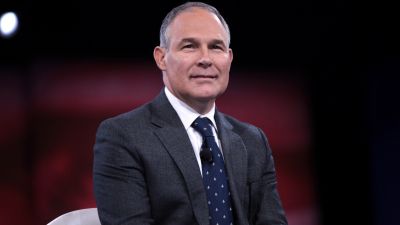
Scott Pruitt Will Make America Great Again — For Polluters
BY Bill Moyers | January 31, 2017
The board, which has been in existence for nearly 40 years, is traditionally populated by bona fide scientists from academia, government and industry who volunteer to serve three-year terms. This time around, as first reported by *E&E News, at least a dozen of the 132 candidates vying for one of the 15 open seats reject mainstream climate science. But that’s not all. There are at least 10 other equally inappropriate candidates on the list, and not all of them are scientists, despite the fact that it’s supposed to be a panel of *science advisers.
Among the 12 climate science deniers are Weather Channel co-founder Joseph D’Aleo, who wrongly claims global warming is due to natural oceanic, solar and volcanic cycles; and former Peabody Energy science director Craig Idso, now chairman of his family’s Center for the Study of Carbon Dioxide and Global Change, who insists “there is no compelling reason to believe that the rise in [average earth] temperature was caused by the rise in carbon dioxide.” D’Aleo, Idso and six of the other climate-fact-challenged candidates are affiliated with the fossil fuel industry-funded Heartland Institute, which has a long history of misrepresenting science.
The other 10 unsuitable candidates consistently side with industry when it comes to protecting the public from toxic hazards, regardless of the scientific evidence, and falsely accuse the EPA of being unscientific to try to undermine its credibility.
Soot Makes You Live Longer
One of the 10, toxicologist Michael Honeycutt, failed to secure a seat on the EPA’s seven-member Clean Air Scientific Advisory Committee when he was nominated for one last fall — with good reason. Over the last decade, Honeycutt, who heads the toxicology division of the Texas Commission on Environmental Quality, rolled back the state’s relatively weak protections for 45 toxic chemicals, including arsenic, benzene, formaldehyde and hexavalent chromium, the carcinogen that made Erin Brockovich a household name.
[
Who is Watching Out for the EPA?
BY BillMoyers.com Staff | June 27, 2017
Honeycutt also has attacked EPA rules for ground-level ozone (smog), which aggravates lung diseases, and particulate matter (PM) (soot), which has been linked to lung cancer, cardiovascular damage, reproductive problems and premature death. In October 2014, Honeycutt argued that there would be “little to no public health benefit from lowering the current [ozone] standard” because “most people spend more than 90 percent of their time indoors” and “systems such as air conditioning remove it from indoor air.” And despite the overwhelming scientific evidence directly linking fine soot particles to premature death, Honeycutt testified before Congress in June 2012 that “some studies even suggest PM makes you live longer.”
Better Living Through Chemistry
Another industry-friendly nominee, Kimberly White, is senior director of chemical products at the American Chemistry Council (ACC), the country’s largest chemical manufacturing trade association. Representing the interests of 155 corporate members, including chemical companies Dow, DuPont and Olin; pharmaceutical firms Bayer, Eli Lilly and Merck; and petrochemical conglomerates BP, ExxonMobil and Shell, the ACC has delayed, weakened and blocked science-based health, environmental and workplace protections at the state, national and even international levels.
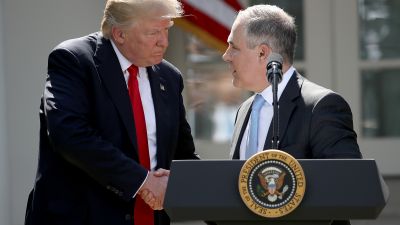
Trump EPA Dismisses the People in Charge of Scientific Integrity
BY Ben Adler | June 22, 2017
For example, the ACC has lobbied against establishing federal rules on silica dust exposure and disclosing the chemicals used in hydraulic fracturing. It has been instrumental in limiting community access to information about local chemical plants. And it has played a key role in quashing government efforts to regulate bisphenol A (BPA), an endocrine-disrupting chemical used in plastics and can linings; flame retardants, which have been linked to birth defects and cancer; and formaldehyde, a known carcinogen. White downplayed formaldehyde’s risks in a September 2016 blog on the ACC website.
The ACC also lobbies to weaken existing environmental safeguards. In written testimony for a House Science, Space and Technology Committee hearing last February, for example, White charged that the EPA uses irrelevant or outdated data and procedures when drafting new regulations.
Who Needs a Cleaner Environment?
Finally, three of the pro-polluter candidates are economists with a distinct corporate tilt: Richard Belzer, whose clients include the American Chemistry Council and ExxonMobil Biomedical Sciences; Tony Cox, whose clients include the America Petroleum Institute, Chemical Manufacturers Association and Monsanto; and John D. Graham, dean of Indiana University’s School of Public and Environmental Affairs, who is currently doing contract work for the Alliance of Automobile Manufacturers on fuel economy standards and the libertarian Searle Freedom Trust on regulatory “reform.” All three emphasize the cost to industry to reduce pollution, discount scientific evidence of the risk of exposure, and ignore the benefits of a cleaner environment.
Despite Threats to Kids’ Health, EPA Delays Rule on Pollutants](https://billmoyers.com/story/tweeting-epa-suggests-letting-oil-gas-companies-poison-kids-two-years/)
BY John Light | June 14, 2017
Perhaps the best known is Graham, who ran the Office of Management and Budget’s (OMB) Office of Information and Regulatory Affairs (OIRA) for five years during the George W. Bush administration. His appointment to that position was hotly contested because in his previous job, directing the Harvard Center for Risk Analysis, he routinely understated the dangers of products manufactured by the center’s corporate sponsors by using questionable cost-benefit analyses.
As predicted, Graham applied that same simplistic, industry-friendly calculus at OIRA, which oversees all government rulemaking, and at the tail end of his tenure in 2006, he unsuccessfully attempted to standardize risk assessments across all federal agencies. Public interest groups and the scientific community, spearheaded by the American Association for the Advancement of Science, came out in full force against the idea, and a National Research Council (NRC) committee unanimously rejected it as “fundamentally flawed.”
“Economists like Graham are frustrated because the EPA has been conservative about risk,” said Center for Progressive Reform co-founder Rena Steinzor, who wrote a stinging indictment of Graham’s government-wide proposal in a May 2006 issue of Inside EPA’s Risk Policy Report. “The EPA gives more margin to safety. That drives economists crazy. They think it leads to over-protection. But there are not many examples of chemicals that turn out to be less harmful than we thought.”
Foxes Advising the Foxes in the Henhouse?
Putting climate science deniers and industry apologists on the EPA Science Advisory Board (SAB) would not only undercut the panel’s legitimacy, it also would provide cover for the corporate shills now in key positions at the agency, starting with Administrator Scott Pruitt, who has the final say on who is selected, and Nancy Beck, a deputy assistant administrator who most recently worked for the American Chemistry Council, and before that, for Graham at OMB.
“The Science Advisory Board has been providing independent advice to the EPA for decades, ensuring that the agency uses the best science to protect public health and the environment,” said Genna Reed, a policy analyst at the Union of Concerned Scientists. “SAB members have always been eminent scientists who are committed to the often-challenging public service of working through complex scientific topics to help guide EPA decision-making. They are the EPA’s scientific compass. The agency’s mission to safeguard our air and water will be further compromised if Administrator Pruitt winds up selecting these unacceptable candidates.”
TOPICS: Environment
TAGS: advisory, air pollution, american chemistry council, climate change, climate change denial, environmental protection agency, scott pruitt
---
cruz and josh h jostle for trump 2.0 prez gig:
https://www.alternet.org/2021/01/trump-enablers/
generic; 2 tx papers call for resignation?
---
see baptist
BILL MOYERS: Southern Baptists had long believed in the inerrancy of the Bible, that the Bible is literally God's word. But my generation of Baptists were discovering historical criticism of the Bible and began to change the denomination. And what Paige Patterson and Paul Pressler did was to alarm the Baptists who still believed in the literal meaning of the Bible and said, “They're going to take it away from you if you're not careful." And so they were able to drive the moderate leaders out of the Southern Baptist Convention and replace them with literalist, fundamentalist pastors from churches around the country, including some very large churches. And before we knew it, the Southern Baptist Convention had become a radically conservative Republican denomination.
ANNE NELSON: Yeah, and I see that as tragic, because it divides families, it divides communities. It changes the nature of spirituality in these communities. But then you see those tactics, which are all about power, right? And they're replicated in the Republican Party. Same thing happens. You drive out the moderates, you defeat the moderates, and you replace them with ideologues or card-carrying members of the movement. And I think we can look at Amy Coney Barrett as another iteration of the same thing. What you're doing is weeding out the moderate and liberal judges and replacing them with people who will march to this beat. And traditionally, that's not been the principle for our court. People could say, “The courts need to have some kind of standard that's open to all Americans," not something that's driving a particular minority ideology. So, for me, that's the glaring danger that's facing our democracy.
BILL MOYERS: And you sum up the Council for National Policy as, “An elite club of high-powered fundamentalists, oligarchs, and their allies, deploying a media empire to flood the country with propaganda, bankrolling handpicked colleges to promote extremist Libertarian ideas, and to groom up and coming politicians," and I would say judges, “to advance its cause." And you say this is all aimed at the very heart of democracy.
Moyers & co. break down the 3 reasons GOP leaders are letting Trump 'poison the political process'
==
==
There's a potential for blood in the streets': Here's what 2 top election lawyers think of Trump's lawsuits
November 15, 2020
ANNOUNCER: Welcome to Moyers on Democracy. President Trump still will not admit he lost. He tweets and repeats the lie that the election was a fraud, the vote rigged, the election stolen. There are fewer than ten weeks before he must leave office, but he refuses to
leading media expert tells Bill Moyers why presidents lie — and breaks down the biggest offenders
Bill Moyers September 17, 2020
ANNOUNCER: Welcome to Moyers on Democracy. Want to know why presidents lie – and which one is the worst? You’ve come to the right place. The prolific Eric Alterman is…
trump’s political henchmen are corrupting the administration to keep Americans in the dark
Heather Cox Richardson / BillMoyers.comSeptember 13, 2020
September 12, 2020 Last night, at about 10:30, reporter Dan Diamond posted another blockbuster story in Politico. Political appointees at the Department of Health and Human Services have been altering the weekly…
==
https://www.alternet.org/2020/06/the-die-is-cast-can-the-republic-be-saved/
==
https://www.alternet.org/2020/06/bill-moyers-its-happening-before-our-very-eyes/
At 98, historian Bernard Weisberger has seen it all. Born in 1922, he grew up watching newsreels of Benito Mussolini and Adolf Hitler as they rose to power in Europe. He vividly remembers Mussolini posturing to crowds from his balcony in Rome, chin outthrust, right arm extended. Nor has he forgotten Der Fuehrer’s raspy voice on radio, interrupted by cheers of “Heil Hitler,” full of menace even without pictures.
Fascist bullies and threats anger Bernie, and when America went to war to confront them, he interrupted his study of history to help make history by joining the army. He yearned to be an aviator but his eyesight was too poor. So he took a special course in Japanese at Columbia University and was sent as a translator to the China-Burma-India theater where Japanese warlords were out to conquer Asia. Bernie remembers them, too.
In time, we became colleagues on a series of broadcasts about the 20th century. As we compared the leadership of Franklin D. Roosevelt and Adolf Hitler in an episode titled The President and the Dictator, Bernie kept reminding the team that the most cunning demagogues “are never more than a few steps from becoming dictators.” Not surprisingly, the subject came up again when Trump was elected. No, we didn’t think he was Hitler, or the Republicans Nazis, but both of us acknowledged a deep unease over the vulnerabilities of democracy, which had led to Trump’s election in the first place. Inspired by Bernie and unnerved by Trump, I decided to take a deeper look at democracy under stress and began reading what is now more than a dozen books on Europe in the 1930s. The most recent is a compelling and chilling account of Hitler’s First Hundred Days, by the historian Peter Fritzsche – a familiar story revisited by the author with fresh verve and insight.
Hitler was a master of manipulation, using propaganda, violence, intimidation, showmanship, and spectacle — and above all, fear. By demonizing “the other” – Jews, social democrats and communists – Hitler won the hearts and minds of the masses, consolidating his power, and turning Germany into a one-party Nazi state.
i had just finished the book when I received a short email from Bernie, who had been watching on television the events following the killing of George Floyd by police in Minneapolis. He wrote, “All this open talk by Trump of dominance is pretty undisguised fascism. He’s inciting chaos to set the stage for the strong man to ‘rescue’ the nation.”
There was no doubt who would be Superman riding to America’s rescue. When Trump promised to end what he called “American carnage” – a crisis of “poverty in our inner cities, rusted-out factories scattered like tombstones across the landscape of our nation, crime and gangs and drugs” — he did not ask for our help. He did not ask that we put our faith in each other or in our democratic values or even in God. Donald J. Trump would be our savior, the new Messiah — because “I alone can fix it.”
Bernie’s note triggered a recollection, sending me across the room to retrieve from a file drawer an essay written two years ago in The New York Review of Books by the American legal scholar Cass Sunstein. Reviewing three new books about ordinary Germans and the Nazi regime, he concluded: “With our system of checks and balances, full-blown authoritarianism is unlikely to happen here.”
I had admired Sunstein’s work for years and found reassuring his judgment that the rule of law would check a would-be tyrant. But many found that assurance disquieting. One dissenter was Norman Ravitch, emeritus professor of history at the University of California, Riverside. Responding to Sunstein, he wrote: “The normal concern of people of all sorts with their daily lives, family, work, leisure, and so on indicates that only those in certain areas of work and life could possibly notice the slow but relentless advance of authoritarian and totalitarian policies by the government. The Nazis knew how to appeal to people who did not have the ideological concerns but only normal human concerns. They knew how to conceal their real goals and how to make passive individuals active supporters.”
So does Trump. He understands that most Americans are concerned with little more than the economy, health care and jobs. They respond positively to politicians who promise action on these priorities, whether or not they know if those promises will ever be fulfilled. Ravitch pointed out that like Hitler and like Mussolini, Trump knows how to appeal to a variety of concerns with promises that can be both attractive and contradictory. Because no population is educated enough, sensitive enough, or ethical enough to see through the deception, “the danger is very great indeed. It may in fact be one of the chief weaknesses of democracy that democracy can lead to tyranny just as well or perhaps even more than other political systems.”
Two years have passed since that exchange between scholars, and in those two years Trump has doubled down. This president is no friend of democracy.
He has declared himself above the law, preached insurrection by encouraging armed supporters to “liberate” states from the governance of duly elected officials, told police not to be “too nice” while doing their job, and gloated over the ability of the Secret Service to turn “vicious dogs” and “ominous weapons” loose on demonstrators — to “come down on them hard” if they get too “frisky.
He has politicized the Department of Justice while remaking the judiciary in his image.
He has stifled investigations into his administration’s corruption, fired officials charged with holding federal agencies accountable to the public, and rewarded his donors and cronies with government contracts, subsidies, deregulations, and tax breaks.
He has maligned and mocked the disadvantaged, the disabled, and people of color.
He has sought to politicize the military, including in his entourage the secretary of defense and the chairman of the Joint Chiefs (dressed in combat fatigues), as his orderlies unleashed chemical fumes on peaceful protesters – all so that the president could use them as stage props in a photo op, holding up a Bible in front of a historic church, just to make a dandy ad for his re-election campaign.
He has purged his own party of independent thinkers and turned it into a spineless, mindless cult while demonizing the opposition.
He has purloined religion for state and political ends.
He has desecrated the most revered symbols of Christian faith by converting them to partisan brands.
He has recruited religious zealots for jobs in his administration, rewarding with government favors the electoral loyalty of their followers.
He has relentlessly attacked mainstream media as purveyors of “fake news” and “enemies of the people” while collaborating with a sycophantic right- wing media – including the Murdoch family’s Fox News — to flood the country with lies and propaganda.
He has maneuvered the morally hollow founder of Facebook, Mark Zuckerberg, into compromising the integrity of the most powerful media giant in the country by infusing it with partisan bias.
And because truth is the foe he most fears, he has banned it from his administration and his lips.
Yes, Bernie, you are right: the man in the White House has taken all the necessary steps toward achieving the despot’s dream of dominance.
Can it happen here?
It is happening here.
Democracy in America has been a series of narrow escapes. We may be running out of luck, and no one is coming to save us. For that, we have only ourselves.
==
https://www.alternet.org/2020/05/stealing-americas-democracy-one-vote-at-a-time/
bill moyers
...pvy setting can't see vid ]
voter Suppression in North Carolina | 'Slay the Dragon (2020) from BillMoyers.com on Vimeo]
in this clip, journalists Vann Newkirk, Ari Berman and others explain how, in 2013, the North Carolina legislature quickly and systematically began rolling back almost every provision that had been passed in the previous 20 years aimed at registering more voters in the state, and particularly African American voters. And it’s not just North Carolina. Across the country, 25 states have passed restrictive voting laws since 2010.
Bill Moyers talked with journalist Dave Daley earlier this year about gerrymandering and the 2020 election.
BILL MOYERS: You describe the United States as a country covered with, quote, “democracy deserts.” What’s a democracy desert?
DAVID DALEY: We talked about supermarket deserts sometimes, you know, places in which it’s really hard to find fresh food. What we are seeing across this nation is an outbreak of democracy deserts as well. Places where it is very, very difficult to ensure that you will have free and fair access to the ballot box or that a majority of citizens are able to translate their votes into a majority of seats.
What you see as you look around the country are blue states, largely coastal states, that are making it easier for people to vote. You see things like automatic voting registration taking hold or expanding days of early voting, [and] making it possible to register online. All of these things that make it simpler and easier for people to vote. None of which, by the way, are partisan. All of these reforms are deeply nonpartisan and the academic studies make it clear that they do not help voters of either party.
What we are seeing is an outbreak of democracy deserts. Places where it is difficult to ensure that you will have free and fair access to the ballot box .
And then you see all of these red states which are going the exact opposite direction. You see voter ID bills. You see toxic, extreme partisan gerrymandering. You see racial gerrymandering. You see purges of voter rolls, 16 to 18 million Americans knocked off of voting rolls in the last two years alone. You see precincts being closed, especially in minority neighborhoods. You see days of early voting being taken away and often those days of early voting are exactly the days that state legislatures know that minority voters are most likely to go to the polls.
You see all of these new voter ID requirements and that they have specifically chosen the forms of voter ID that they believe young and minority voters are least likely to have. I was able to obtain the files, tens of thousands of documents of Thomas Hofeller, the master Republican gerrymandering operative of the last 40 or 50 years after he died. And as I went through his files, and looked at his draft maps that he drew in North Carolina, he had on his computer the addresses of every single college-age voter in North Carolina along with whether or not they had a driver’s license. Because he knew that if they didn’t have a driver’s license they wouldn’t be able to vote. And he drew his districts knowing this. He drew these districts completely aware of who would and would not be able to vote.
https://www.alternet.org/2020/04/bill-moyers-and-former-chief-inspector-general-of-tarp-break-down-the-unquestionable-scandal-brewing-in-governments-massive-corporate-bailout/
no lnx long
Bill Moyers and former chief inspector general of TARP break down the ‘unquestionable’ scandal brewing in government’s massive corporate bailout
Written by Bill Moyers April 5, 2020
Announcer: How do you prevent two trillion dollars from being contaminated by corruption? You ask a man who can’t be corrupted – a straight arrow who has already stood up to some of the most powerful people on Wall Street and in Washington.
His name is Neil Barofsky, and he’s Bill Moyers guest on this edition of Moyers on Democracy. Welcome.
As a young federal attorney and prosecutor Neil Barofsky had sent crooked financiers to jail and brought Columbia drug dealers to justice.When overreaching and greedy bankers almost brought the American economy down a dozen years ago, Congress raced to the rescue with a bailout of over $750 billion dollars, known as the Troubled Asset Relief Program. As its watchdog, President George W. Bush tapped Neil Barofsky to be TARP’s chief inspector general, its top cop, with a mandate to flush out waste, fraud and abuse.
He would soon be recognized “as one of the most impressive political officials in Washington.” This week Bill Moyers asked him to recollect his experience with TARP and how he would safeguard the two trillion dollar government program passed last week by Congress to rescue an economy crippled from the coronavirus.
...
Bill Moyers: It’s hard to believe that a decade ago, the government spent more than $1 trillion to bail out companies and stimulate the economy. And that you had a front-line role and a front-row seat at the time after George W. Bush, President Bush appointed you. You were the special investigator tracking that money as it was being spent. Remind our readers and listeners why we needed a special investigator 10 years ago, and exactly what you did.
Neil Barofsky: Well, I think it was [that] Congress sort of understood that when they were going to be pushing out so much money over such a short period of time — and back then it was to the banks, right? The money was going to the very institutions that had caused the massive financial crisis that we were all living and breathing and experiencing back in 2008 — that it would be a good idea to have someone there to keep an eye on the money [and] to be an advocate for the taxpayers, whose money was being expended. And so they created this office, the Office of the Special Inspector General, for the Troubled Asset Relief Program. And that mouthful—
Bill Moyers: Wow.
Neil Barofsky: —produced one of the great acronyms of government, SIGTARP, which was my office, to keep an eye on the money. And we did that. Congress created this office to do it in two ways. One was a transparency or reporting function. We did audits of the government programs. Kept track of what was going on in the policies, and reported that out to the American people and to Congress.
And the other side was law enforcement. We were like a mini FBI for the TARP, policing the program, deterring would-be criminals from trying to apply and steal government money — and investigating and referring for prosecution, those who did. And they certainly did. At least, they tried. And our job was to catch them, and make sure that they went to jail.
Bill Moyers: I have this image of you in my mind, the sheriff making sure the stagecoach carrying the money from the treasury to the bank didn’t get hijacked.
Neil Barofsky: That is a much more romantic vision—
Bill Moyers: Is that fair?
Neil Barofsky: —of my job. A much more romantic vision of my job. Think more of… “The Office,” I would say, on the reruns on Netflix, is probably a more apt description of sitting behind a desk and pushing a lot of papers and relying on just a truly wonderfully talented team of investigators who actually wore the guns and the badges, and went out there and did these investigations. I was more of the bureaucrat than the sheriff—
Bill Moyers: From a pretty mediocre office in the basement of the Treasury, if I remember correctly. And you had a very small staff, given the challenge you were facing.
Neil Barofsky: Yeah. Well, one of the things about the statute is they created the office from scratch, which means I was the first employee. So we had no office space. We had no employees. I was employee number one. And so when we first started, they put me in a basement corner of the Treasury Department in that beautiful sort of amazing building right on Pennsylvania Avenue, right next to the White House.
Although one couldn’t see the White House from my subterranean spot. And it also had a terrible smell to it that I will never forget, and later [I] found out it was because it was actually over an open sewage pipe that was right under the office.
But more concerning was just trying to get up to speed as hundreds of billions of dollars were flying out the door with no staff, and trying to staff up and do all that at once was a dramatic experience, to put it mildly. And certainly one I will never forget.
Bill Moyers: Your job was to see that this massive corporate bailout would be managed in such a way that it would accomplish its mission. And remind us of what that mission was.
Neil Barofsky: When it was described to the American people, and when it ultimately passed Congress — and if you may recall, the first time the legislation that enabled the TARP to exist, it failed in Congress. And eventually, it was passed. And I think one of the reasons why it failed was as originally envisioned, it was really all about helping Wall Street.
And a number of members of Congress didn’t like that, and weren’t supportive of that. And so it came back to the administration, and [they] said that this would help Main Street as well as Wall Street. And the two big promises that were made were 1) that yes, banks would receive this money. But they would do so in order to increase lending.
Because if you may remember, credit had just come to a standstill at that time. And so the idea of injecting this money would increase lending to make sure that the wheels of capitalism could keep turning. And the second promise was to help struggling homeowners.
Because as, you may recall, a foreclosure tsunami was sweeping across the country. And because of the predatory practices of the banks, and other financial institutions in the lead-up to the crisis, millions of Americans were in homes with mortgages that they couldn’t afford and didn’t understand. And one of the real demands was that this incredible outpouring of taxpayer assistance helped them too, the victims of the financial crisis, who were losing their homes, their hopes and their dreams, by the millions.
Bill Moyers: Were those two goals accomplished — to jumpstart bank lending, and to protect homeowners from foreclosure?
Neil Barofsky: Sadly, no. The crisis was averted. And that’s a good thing. And lending restarted, which was a good thing. But the goal of increasing lending, of giving an opportunity for Main Street businesses to get the capital that they needed, and the credit they needed, that never really happened.
I think in part because but it wasn’t really that strong of an effort within the Treasury Department to keep an eye towards increasing lending, towards helping Main Street. When we suggested that conditions be imposed on the funds to make sure that the money was used by the banks in order to increase lending, we were shot down.
When we suggested that it at least be incentivized, that there be favorable interest payments on the loans and the type of preferred stock that was being acquired by the Treasury Department to give the banks an incentive to increase lending, that too was shot down.
And you never saw that increase in lending that was promised. And as far as the homeowners, that was even more devastating. Because there was so much money that was made available to help struggling homeowners. Hundreds of billions of dollars that could have been used to help those who were losing their homes and saw their lives devastated.
And the Treasury Department simply refused to deploy that money.
And the decision was made quite frankly to let them rot. And what was rolled out was an ineffective program that in many cases made it worse for some of those struggling homeowners than if they had never entered the program at all. Because it encouraged predatory practices by the banks.
And the thing that underlined the failure of both of these policies was the same. The concern was never really about helping homeowners or helping small businesses. It was only about saving the banks for the sake of saving the banks. And so when the Treasury Secretary was confronted by now-Senator Elizabeth Warren, then the head of one of my sister oversight agencies, about the failed housing programs, he [Treasury Secretary Tim Geithner] explained in very plain words that the point of this program was, and I quote, “To foam the runway for the banks.”
In other words, too many foreclosures too quickly could be devastating to the banks’ balance sheets — [and] could send them back for additional bailouts — and that was what they were concerned about, not the taxpayer, not the people who were supposed to be helped.
And when you divorce policy goals with the actual policies as they’re carried out, you’re not going to achieve the important policy goals that serve as the justification for trillion dollar bailouts. And that’s what we saw then. And that’s what I hope we don’t see now.
Bill Moyers: So you were within Treasury. Yet, the Treasury Department made deals, as I understand it, with major financial institutions, and simply did not tell you about them. That was wrong, wasn’t it?
Neil Barofsky: Yeah, there was an obligation of transparency, really for anything that touched on any of the TARP funds. And so there was a need to be able to disclose to us all of the necessary information that we would need to fulfill our goal of providing transparency to Congress and [to] the American people.
And at times, Treasury failed to live up to that standard. And we had to do what we needed to do to make sure we got that information. And usually, that was relying on assistance from Congress. The pressure and oversight of Congress would often move Treasury in those instances when we wouldn’t be able to get the information that we needed.
Bill Moyers: You felt a lot of pressure — I still think your book Bailout is one of the most important to read.Tell my audience where that pressure came from, and what were you to do in response to it?
Neil Barofsky: Well, first of all, thank you for the kind comments about the book. The pressures came from a lot of different directions. I mean, I was, looking back on it now, relatively young. I was in my late 30s.
I’d just gotten married. I was just starting a family. And, you know, I was told in no uncertain terms that because of my approach, and because of my willingness to be as critical as I believed was necessary when fulfilling my job of people in the Treasury Department or at the White House, that I was putting my future in jeopardy.
That my ability to get a job, or make a living on the other side of this assignment, which was by its very nature, was a temporary one — that it would be really hard for me. That there would be repercussions. And on the other hand, I was told that if I played ball, if I changed my tone, was a little bit nicer and kinder, all sorts of really good things could happen to me.
I could be a federal judge, or maybe a U.S. attorney or something like that. You know, dream jobs for any young lawyer. And so that was definitely a form of pressure. And, you know, you’re independent. But as an inspector general, you serve at the pleasure of the president. And you know, the specter of being fired from your job, particularly when, like me, you spend your entire career in government service. And didn’t necessarily have the largest amount of savings when starting a new family. Those were definitely real pressures that you feel, as any human being would in a job like that.
Bill Moyers: So President Bush appointed you in the last year of his administration, as the economy fell apart, the banks were crashing. And you then served under President Obama when he came in. Was the pressure greater from the Bush people than it was from the Obama people?
Neil Barofsky: I think the overall feel of everything really didn’t change that much. I think when I was there, I would sort of remember circling January 20, 2009 on the calendar because I thought, “Okay, once we get past the Bush administration and the Obama administration people come in, this is gonna be completely different. Everything’s going to change. There’s gonna be more of a focus on worrying about the Main Street, and people who are supposed to benefit.”
And, of course, when that day came and went, very little had changed. Some of the personnel stayed the same. But even the new people who came in running the program really had that same philosophy as those in the Bush administration of prioritizing saving the banks over everything else.
And there was a thin-skinned-ness, for sure, among that Treasury Department, that any type of criticism, constructive or otherwise, was not viewed favorably, and was viewed as being political and not necessarily motivated by a desire to serve the job, or to make the programs better.
Bill Moyers: Well, why were they pressuring you? What were you doing that they wanted you to cease?
Neil Barofsky: I think they didn’t appreciate the fact that although I was appointed by President Bush, a Republican, I was and am and have been a lifelong Democrat. And I think that the notion that someone who is a Democrat would be critical of a Democratic administration, reeked of a type of disloyalty.
And Washington is a very political town, Bill, as you know better than anyone. And what I think was hard for people to understand was that I didn’t have a political job. It wasn’t my job to go softer on one administration or harsher on another administration because they happened to be within the same political party that I was.
And I think that that really weighed on people, and felt like it was an act of disloyalty. And that if I’m criticizing a Democratic president, that must mean I’m carrying water for the Republicans. And, of course, it couldn’t be any farther from the truth.
I was not politically motivated in any way. And I believe that by being critical of the Democrats or the administration, I was trying to get them to be better. And when you think about where we are today, and you think about the election of 2016, can you imagine how different our political landscape might look right now if the Obama administration took hundreds of billions of dollars and supported that wide part of the Rust Belt that ultimately left the Democratic party in 2016?
By saving those people, keeping them in their homes, beating against the perception that the priority was for Wall Street, and not for Main Street. So I felt like what I was doing was just to help and advocate for [the] American people. And I think that if the administration had listened a little bit more closely and a little bit more carefully, we could be in a different situation right now, politically.
Bill Moyers: You wrote in your book Bailout that you found yourself in a duplicitous world. In what sense was it duplicitous?
Neil Barofsky: I think one of the interesting things of Washington for someone who had not previously been there was the comfort and frequency with which people lie to one another. It is not something that I had experienced. And I had spent eight years as a prosecutor prosecuting fraud cases and narcotics cases.
And the lies were almost like a currency in Washington. People would lie to you, and, I mean, people within the government would lie to you. And you would know they were lying. And they would know that you knew they were lying.
And they would lie nonetheless, as this is just the normal way people communicate with each other. And I guess it was a somewhat — I mean, I would hate to describe myself as being naïve. Because, you know, I’d spent eight years in the trenches with some truly horrific human beings, and fraudsters who committed billions of dollars of fraud.
But I’d not seen anything like it, where just the presumption level of dishonesty, that really permeated the town. And so it took me a little bit to realize it, and to realize that government officials who were presidentially appointed, and you ask them for information, and they give you information, where they tell you something, and they’re not telling you the truth.
And you almost have to, at least include in your calculus the possibility that somebody’s lying to you all the time. And it was early on when I think I suddenly realized it, when I was told that Elizabeth Warren, who as I mentioned before, was running another oversight agency.
It was before she was a senator, of course, the congressional oversight panel. I was told about all the terrible things that she was saying about me. And at first I was taken aback. And then I realized that there’s no way that could possibly be true. It made absolutely no sense. And I called Elizabeth.
And we started collaborating together. But it was a light-bulb moment when I realized that there’s just nothing people won’t say if they think they can gain advantage from it. And it’s a very strange way to operate when you’re not used to it.
Bill Moyers: Have you seen any evidence that Washington has changed in the last 10 years for the better?
Neil Barofsky: The currency of dishonesty has gotten, if anything, has gotten worse. I think that this whole concept of fake news, and having everyone being entitled to their own set of facts is not something that we experienced.
I mean, ultimately if we were lied to, and could prove that something was a lie, it was generally accepted that okay, this is the truth. And this is a lie. In this environment, people are caught lying, and they just insist they’re telling the truth. And one media outlet or another will confirm that something that’s demonstrably untrue is, in fact, the truth.
And everyone goes into their different tribes and their different areas. And they just battle. And you know, as a lawyer and someone who spent some period of their career in the Department of Justice, which was always about the pursuit of truth, and then at my time at SIGTARP when I tried to do the exact same thing, it’s — that level of abandonment of the concept of the truth is different.
It is different. They lied then. They lied now. That hasn’t changed. But the way those lies are perceived, and how people have their alternate realities, I think that’s very different, and very scary as we go into this next crisis.
Bill Moyers: So what do you think are the chances that this new and even more expensive stimulus enacted by Congress last week will achieve its goals?
Neil Barofsky: Well there are a bunch of different programs that are within this legislation. And some of the goals are relatively simple to discern. Cutting checks of $1,200 each to each taxpayer — you know, who’s making less than $79,000.
That’s a pretty clear goal. I mean, the goal is to get cash in people’s pockets so they can continue to eat and pay their rent and survive. You know, expanding unemployment, again, that is a discernible goal, and a very admirable one, right?
People are losing their jobs. We’re gonna have historic unemployment very soon if we don’t already have it. And getting people relief is just so vitally important. And so for those goals, I think there’s a straight line between what the policy is, what the implementation is, and what will happen. It’s pretty straightforward.
I think as you get more and more disconnected from direct help to individuals to filtering that money through corporations and tax breaks and other types of mechanisms, it becomes a little bit less clear whether or not the connection between the money that is spent — and the achievement of the goal of helping workers, if that’s in fact what our stated goals are. And so—
Bill Moyers: My understanding is that it’s supposed to enable corporations to preserve the jobs of the people who work for them until we get this disease under control.
Neil Barofsky: But the general idea of it is we’re gonna take$350 billion. We’re gonna give it to small businesses. And we’re gonna tell them as long as you don’t fire anyone for a period of time, for eight weeks, you get to keep all the money, right?
And so that’s a pretty clear line between getting small businesses the money they need to keep employees on staff, and there’s some holes in the legislation and I hope and pray that the small business administration will plug those holes.
But then you have the $500 billion program being run by the Treasury Department and the Federal Reserve. And there, again, you have more of a disconnect between the money and how it’s going to be deployed, and its impact it’s going to have on payrolls.
For a lot of that money, there isn’t that direct link. There aren’t necessarily those conditions that link the support with keeping payrolls high. And so there, it’s much more of a let’s put the money out there, and hope that everyone keeps their payrolls the same.
And so when you’re doing that, obviously, when you don’t have those connections, and you don’t have that same assurance, that there’s an economic incentive for the company to be receiving the money to achieve the policy goal, well, that kinda brings us back to where we are in 2008.
And it didn’t work then.And I do worry about whether it’s going to work now. But again, we also don’t know all the rules and the regulations and the guidelines that’s going to accompany these bills. But the fact that Congress really didn’t insist on the strings attached to a lot of this money that I think we originally had been told they would, is a cause of concern.
That those policy goals may not be reached. And then there are other provisions which seem even further afield, tax breaks — net operating loss provisions money for the real estate industry, which just looks like traditional corporate tax breaks, which frankly have not historically been shown to necessarily have an impact on payrolls.
Bill Moyers: Doesn’t this new bailout, include a provision which allows the Fed to meet in secret with no records kept? I mean what the hell is that about?
Neil Barofsky: It’s not encouraging, Bill. It is not encouraging. To put it mildly. And I see that. But the results should still be posted and made available to the American people. Good governance says you keep records, and you keep detailed documents.
And again, maybe this is me going back to 2008 and just being naïve. But having spent a lot of time working with the Federal Reserve, I found that many of the people there, and many of the people I dealt with, not all to be clear, but many of them, and I would say the overwhelming majority, were trying to do the right thing, and wanted to do the right thing. I sort of maintain hope that they will do the right thing with this.
Bill Moyers: Are the people who won the first time gonna win the second time?
Neil Barofsky: There’ll be different sets of winners and losers. The big financial institutions who were obviously the biggest winners of the last bailout, they’re gonna win again. They always win. That’s kinda the way our system is organized.
Perhaps not as dramatically as last time. Because remember, last time, they caused the crisis. They would have failed, gone bankrupt, but for the government intervention. And they were restored to record-breaking profitability within a relatively short period of time because of the way the bailouts were structured, getting them bigger and even more powerful than they were going in.
So they won before. They’re gonna win again. They’re gonna be well paid for their services in helping to administer this bailout. There are provisions that are very helpful for them, including bringing back some crisis era bailout programs that will go right to their bottom line, for sure.
So they will win again. But the other winners — it’s gonna be a wider swath of winners.
Last time you had the very institutions that caused the problems receiving the money. And a lot of the companies that are gonna receive bailout money here or stimulus money, if you wanna call it that, it’s through no fault of their own. They didn’t create the virus. They didn’t subject themselves to the virus. This is just a global pandemic.
But there will be companies that are safe because of it. And so to that extent, they’re the winners. And then there’s companies that are just gonna make lots of profits that is just a result of some of the wheeling and dealing of Congress. When you look at some of the extraordinary corporate tax breaks that are being extended by this bill, particularly in the real estate industry, those are just gonna be winners, right. We just have to hope that it’s not the same set of losers as last time, which is the American people who were supposed to be helped.
Bill Moyers: Listen to these headlines I brought with me. Washington Post: “Coronavirus stimulus package spurs a lobbying gold rush.” The Guardian: “Washington lobbyists in frenzied battle to secure billion dollar Coronavirus bailouts.” The Wall Street Journal: “Lawmakers pack federal stimulus bill with pet provisions.” New York Times: “Fine print of stimulus bill contains special deals for industries.” I mean, that happened after the first bailout, right? And it’s happening all over again.
Neil Barofsky: And we unfortunately, we should not be surprised. Right? I mean one of the realities of our system is that corporate America has a large influence on how these bills play out. And, again, we saw it maybe on miniature last time because it was really one industry that was part of this process.
And now, when you have something as far-reaching as this, it is the entire lobbying industry and pet projects and the things that don’t seem to quite fit with the rest of the bill that are in here, and to me, that’s where it would come back to my old role of oversight and why it’s so important.
Because when you have something as sprawling and ill-defined as some of these programs, there’s very, very little guidance and guidelines as to who that money is going to and how it’s going to be spent, and what the conditions are. Oversight and transparency just becomes so much more important, in order to keep the process as level and fair as possible.
Bill Moyers: Whereas the first bailout involved one industry, banking. And here, there’s a vast number of potential recipients of the money. How real is the danger that, rather than preserve jobs, the money will flow right through the company and the companies into the pockets of shareholders?
Neil Barofsky: I mean, one of the important things to remember is that for a large, large chunk of this money — particularly that that’s being controlled by Treasury, for the overwhelming majority of that money — there are no provisions that the Treasury Secretary can’t waive if he chooses to do so, that would keep companies from engaging in stock buy-backs or dividends or other distribution of money directly to shareholders.
And so without those types of restrictions, that is very much a possibility, and it is very much reality of the way this is structured.
You must have unrelenting transparency and sunshine being shined on the decision-making process, the terms and performance of these programs. It is of vital importance that there’s at least the risk of disclosure as a deterrent, in framing these programs, to keeping them from straying from the stated policy goal into a form of giant corporate welfare.
Bill Moyers: Given the huge amount of money, and the short time until the election in November, isn’t political fraud a real possibility? Couldn’t a lot of this money be a kind of slush fund for the president and the Secretary of the Treasury and their minions to send it where it could do their party the most good?
Neil Barofsky: And in this bill that real possibility is one that again, coming back to the oversight, is so important. Because this is where, you know, to quote Justice Brandeis, “Sunlight is the best disinfectant.” This is why the application criteria for lending needs to be objective and transparent. The processes have to be politically blind.
And there has to be someone overseeing this process to make sure that, however the selection processes are run, that they’re being done in a consistent and fair and balanced way. Because in the darkness, that is where the ability to misdirect funds away from where they’re going to have the biggest impact, which is what you want, to a way that has the biggest impact for a particular individual or political party, or particular favored industry, which we don’t want. Right? That defeats the whole purpose of the expenditure of this money that’s not being used to achieve a policy goal of keeping people in their jobs.
And it is only with transparency, and only with oversight. Because look, Washington is a transactional town. It always has been. It is an incredible corrupting influence that exists, that has always existed, and probably always will exist. And it is naïve to think that it won’t happen if there’s not some other counter-weighing balance. And that’s where you need to have transparency and oversight as this constant reminder that, “Hey, if you do this, if you follow that inclination and do something that’s not in the best interest of the program, we’re gonna put it on the website. We’re gonna publicize it. Everyone’s gonna know. And that political opportunity you have is going to turn it into a liability.”
And that’s how you keep people honest. And that’s why transparency is so important.And in some ways, for the, sort of the next-rung-level-down officials, the assistant secretaries who, you know, who are political appointees that are taking these jobs because they wanna make a difference and do it right, it is a giant blessing to them. Because it helps shield them from the political process.
I remember when we were doing audits related to Congressional influence on decision-making process. And, you know, we found, perhaps not surprisingly, that many members of Congress called many decision-makers at Treasury and said, “Hey, we want the bank in our district to get money,” irrespective of whether that bank should have gotten money or should not have gotten money.
And one of the things that we were able to help and protect those officials was [by] saying, “Look. If you give money to these people, to these banks that don’t deserve it, it’s gonna be exposed. And that’s not gonna do you any favors. It’s also not gonna do that congressman any favors.”
And so transparency is something that just really benefits the entire system and process, and is really a necessary component of oversight. And so we’re gonna have to really keep a close eye on this as we go forward.
Bill Moyers: Mitch McConnell and Senate Republicans did not want oversight of the stimulus. They didn’t even want to require companies to spend the money on keeping their workers working.
They wanted the Secretary of the Treasury, Steven Mnuchin, to be free to choose who gets the money and who doesn’t. And to keep his choices from the public for six months. McConnell then tried to weaken a strong oversight proposal. Finally, as we saw, both sides compromised, and the bill was passed with, you know, amazing bipartisan support.
Yet, when the president signed the bill last week, the only people he had in the Oval Office with him were Republican members of Congress and the Secretary of the Treasury, all, by the way, white Republican men. Now, what do you take from that? As a moment of bipartisan triumph, the first time in years this happened in Washington, the only people who get invited to celebrate with the president in the Oval Office are Republicans?
Neil Barofsky: I think it is a reflection of where we are today as a country. We’re at a moment of such crisis. It is a time to come together. And I know that sounds hackneyed and it sounds like something in a fortune cookie. But it is true.
It is a moment to come together, where we come together as a country and fight this pernicious evil, the virus.
And that’s not the time you want to sow seeds of division and rewarding your friends and punishing your enemies. This is a time for reaching out. And I think it’s gonna potentially really hamstring our ability to recover. But I guess that is what Washington is today. And that’s what—
Bill Moyers: Yeah.
Neil Barofsky: —it’s been for the last couple of years. And you know, I maintain hope in a lot of different ways, that policymakers and decisionmakers, you know, can look past their biases and do what’s right for the American people. And I maintain that hope.
Bill Moyers: I’m sure you noticed that Congress actually borrowed ideas and even language concerning the inspector general’s office from the first bailout bill, to include it in the bailout bill we’re talking about.
The language about the new inspector general is supposed to monitor how the Treasury Department extends loans and loan guarantees to businesses. And the new legislation requires the new inspector general to notify Congress immediately if the White House doesn’t cooperate fully with an audit or investigation. That is familiar to you, right?
Neil Barofsky: Very familiar. That is, word for word, one of the provisions that I relied upon so much at SIGTARP.
And that’s, I mean, the important thing there is that is not an option. Right? That is an obligation. It’s a statutory direction. And frankly, it is an incredibly important tool. For me it was an incredibly important tool. Because, as an inspector general, you don’t have any real way to compel other parts of the government to cooperate with you.
If it’s a third party, you can send a subpoena, you could bring them to court, you can get a court order, and you can force them to provide you with information. But within government, all you have is good faith. You ask for the information and you hope that they provide it.
And the one remedy that Congress provided me, and provided this new inspector general, is the duty, the obligation, the requirement, to let Congress know that, “Hey, I can’t do my job, I can’t fulfill these things that you told me I have to do to report on to you and to the American people, because this area of Treasury, or this area of the Federal Reserve, or this area of the White House, is refusing to provide information.”
And it’s a powerful tool. Because I will say that the mere, I wouldn’t say threat, but when I would advise another agency that was refusing to provide us information, that I would have no choice but to disclose this to Congress, was pretty powerful in moving people and getting people to cooperate. Because Congress cared. Congress was invested. And they could make a pretty big deal if they felt like the inspector general was being obstructed. And so it’s a key provision to insure compliance within the government.
Bill Moyers: So listen to this headline from The Washington Post, quote: “Trump takes immediate step to try to curb the new inspector general’s autonomy.”
In fact, earlier in the week, when reporters asked Trump about oversight of the lending programs, the president replied, “I’ll be the oversight.” Then later the White House issued a statement saying the inspector general will be subject to the president’s supervision. What went through your mind when you heard that?
Neil Barofsky: “I will be the oversight,” I thought, that was President Trump’s id taking over. But that’s not how you want it. And that’s not how it works.
It could strip one of the most important tools that an inspector general has in obtaining information. And information is the currency of success for oversight. You can’t have transparency if you have an inspector general who can’t get information.
And so if, in fact, that statement is breathed into life and results in the inspector general being shut down from informing Congress about necessary information, including obstruction of its efforts to gather information, that could be potentially devastating to oversight.
It reminded me that, look, I did work under the oversight of the president, first Bush, and Obama.
Technically I reported to them, although I never had a conversation with either one. But they had the ultimate supervisory authority over me. And that is that they could fire me at will.
If you were going to be an inspector general, and you were going to operate within highly publicized, highly controversial, high profile programs, every day you have to go to work prepared to be fired, if you’re gonna do your job the right way. You just have to take that fear and that reality and you gotta put it on a shelf in the morning, and leave it there. And then you could pick it up on your way back home. And you look at your baby, and you look at your apartment, and think — then you can worry about it. But during those hours when you’re in that office, you can’t think about it.
And so this is very chilling. And it has a potential of really frustrating independence. But at the end of the day, a lot of it is gonna depend on this inspector general and how they see their obligations going forward.
Bill Moyers: But at the same time, Neil, the new law gives the Treasury Department broad discretion over how to disperse these billions upon billions of dollars. And the fellow running Treasury, Steven Mnuchin, has been implicated in so many scandals. I wouldn’t want him in the same room with my kid’s piggy bank.
During his confirmation he failed to disclose to the Senate Finance Committee nearly $100 million in assets. He didn’t tell them about his role as a director of an investment fund in the Cayman Islands, where very rich people send their money to be laundered. He lied to Congress about foreclosure misconduct activity by a bank he managed. He reportedly misled Congress about a deal the Treasury Department struck with a Russian oligarch close to Vladimir Putin.
This is the man President Trump wants to hand out billions of dollars to corporations and to Wall Street, a guy up to his neck in various conflicts of interest, self-dealing, and ethics lapses. All you have to do is read David Dayen’s book Chain of Title— to see how he chronicles the way– Mnuchin got fabulously– rich while hundreds of thousands lost their homes. What does that do to your optimism about the potential success of this bailout?
Neil Barofsky: Well, I would say David’s book is a fantastic book. So I agree with you on that. Look I mean, for any chance of this to succeed, right, there just has to be this relentless transparency and oversight. We need to have oversight bodies — the inspector general, the Congressional Oversight Commission, Congress itself, has to be on top of these issues, and has to bring transparency.
And, you know, at the end of the day, it is Congress that gave this Treasury Secretary the wide discretion that he now has. And that was a political decision, a compromise that was made. And the ramifications of that are going to be felt any time. And it’s not even a criticism of specifically of Mnuchin.
Any time you give any individual that much authority and that much discretion, it’s fraught with danger. And here, it is particularly fraught with danger, given all the things we’ve discussed up until now — even putting aside the Treasury Secretary’s background, chances are, notwithstanding my optimism, that there’s going to be scandal involved in this bailout. It is unquestionable. There is going to be fraud that is going to be committed in this bailout. There are going to be individuals who are unjustly rewarded, and others who should have been saved and rescued, who will be left on the side to rot.
Those are all realities. And so what we’re really talking about is limiting how much of that occurs. And that’s where transparency and oversight can play such an important role. And yes, there are real problems with this bill. And yes, there are problems with the signing statement.
But at least there is going to be an inspector general and there is gonna be an oversight commission. And we just have to keep our fingers crossed and our prayers alight that the right people get these jobs, that they have the steel in their spine that is gonna be required for them to fulfill their duties to the American taxpayer and we can limit some of the inevitable downsides of any type of intervention of the size and scale of this one.
Bill Moyers: So what does Congress do if the president refuses to cooperate on the oversight of these billions of dollars. How would you advise Congress to undertake stringent oversight?
Neil Barofsky: Well, what Congress would need to do is just to escalate the issue, and make it a very public issue. I mean, we are in a campaign year. And although I know that the tribalization of American politics is something that’s very real and we see it every day, but this upcoming election is going to come down to most likely a handful of independent voters and a handful states.
And for those voters, the idea that any president or administration is standing in the way of providing information for the public to understand what is going on with hundreds of billions of taxpayer dollars is not a political winner for any president.
I think that’s sort of what we’re left with, right, is that congressional oversight is ultimately a form of political compulsion.
There’s no winning formula of publicly blocking information from an inspector general. The reality is that information is probably going to come to the surface.
Or refusal to provide that information will supply its own narrative. I think that’s what Congress needs to do though is to be relentless about it and be very, very supportive of the inspector general and the need to obtain that information.
And if Congress doesn’t do that and doesn’t escalate the issues, then nothing will happen. And that will be on Congress. But if the president makes that move, then Congress needs to respond in kind and ultimately we’re gonna have a judgment on this and a bunch of other issues come November.
Bill Moyers: Of course the president will nominate the new inspector general. And the Republican Senate will confirm or not. It’s an even bigger job than it was 10 years ago. So I wonder, would you take the job if you were offered it now?
Neil Barofsky: It’s obviously something that you would think about very strongly. You know, my initial reaction would be hell no.
But then I kinda remember what my reaction was the first time I was asked back in 2008. And my first reaction was, hell no.
This is an extraordinarily difficult job. And it is not right now in its current format set up to succeed. The budget is too small.
There is a lack of hiring flexibility which is gonna make it almost impossible to staff up in a very short period of time with the type of qualified people that you need to endeavor on something so significant and so large.
There’s questions about whether this inspector general is gonna have the type of bipartisan congressional support that I did and that I enjoyed, which made my job possible. And I don’t know in this political environment if that’s something that still can exist. Although I deeply hope so.
Bill Moyers: So that we can see what needs to be done, let me ask you, if you did take it, what would be the first things you do to keep this rescue and stimulus bill fair and honest?
Neil Barofsky: Well, first thing is you have to have immediate meetings with the policymakers who are pushing this thing through. And be prepared to make a series of rapid recommendations to bring transparency and fairness to the process. And in something like this, process really matters.
And I think what this inspector general needs to be prepared to do is to immediately get an understanding of the process and make recommendations to make it more transparent and give it the best chance of being a truly fair and objective process, not one that’s distorted by politics, lobbyists or any other outside influence.
Bill Moyers: So how would you achieve transparency?
Neil Barofsky: It goes back to something that we discussed a little bit earlier. For policymakers who are going to be making those types of decisions in the future: You may think that those decisions are gonna be shielded from public discourse for now, but sooner or later these things are going to come to the surface. And you’re going to be judged and you’re going to be held accountable for your decisions. And if you’re making decisions in the darkness you should really think twice about whether or not these are the exact same type of decisions that you would be making when the sunlight is shining on you.
And that’s what’s so important about these oversight functions is that deterrent, that reminder that my decisions are going to be reviewed.
I remember one time, Bill, like it was yesterday, I was talking to one of the officials who was running TARP. We were talking about a report I did and he was complaining to me that my tone was too harsh and why did I have to do it in a certain way. And I said to him — it was, Herb Allison was his name — and I said, “Herb, you gotta remember, I’m not in the room with you when you’re making these decisions. I’m not there. The only way I get to give you my voice is through these reports. And so that next time you have these conversations I’m there.” And I remember Herb turned to me and he said, “You don’t think you’re there? You don’t think your voice is heard? Your voice is the loudest voice in those meetings whether you’re physically there or not.”
Bill Moyers: You wrote some scathing reports, did you not?
Neil Barofsky: I would say that we wrote some very accurate reports that have been characterized as scathing. But we did not pull punches. We did not sugarcoat it. We said what we believed and found to be true, because we thought it was important.
And it’s important for members of Congress to have seen those reports, and exert their influence and pressure to bring more transparency. And it was important for the American people to know exactly what was going on with their money.
Bill Moyers: Where did you get the steel in your spine?
Neil Barofsky: I think, Bill, it’s because I never really wanted this job. I never — it was not my dream to get some high-profile job in Washington. I was a prosecutor. I loved that job. It was the only job I ever really wanted was to be a federal prosecutor.
It is something I did for eight years. I wasn’t looking to change jobs. I wasn’t looking to move.
I wasn’t looking for a career in Washington. I always knew that we’d move back to New York as soon as that job was over. And so the worst they ever could do to me is fire me. That was the worst that could happen. If you’re gonna take a job like this, you have to be willing to get fired. It just has to be something that’s in your bones because you truly serve at the pleasure of the president.
And part of your job may be to cause that president great displeasure. That’s part of the MO. And now I’m not saying it makes it easy. But you have to be prepared to do that. If you’re going to do what Congress has asked you to do and what you take that oath of office, which Hank Paulson administered to me with my hand on his family Bible.
You know, if you’re gonna fulfill that, you gotta be willing to suffer the consequences. And so it weighed on me. It was significant to me. But ultimately it would’ve weighed on me more if I had violated my oath by putting my own personal job security over that oath.
Bill Moyers: Neil, thank you very much. I’ve enjoyed this conversation. Best wishes to you and your family.
Neil Barofsky: Thank you, Bill. Take care.
Bill Moyers: You too.
Neil Barofsky: Bye.
==
==
https://www.alternet.org/2020/03/bill-moyers-and-dahlia-lithwick-break-down-how-the-courts-have-proven-they-have-trumps-back/
no lnx
Bill Moyers and Dahlia Lithwick break down how the courts have proven they have Trump’s back
President Donald J. Trump, Judge Brett M. Kavanaugh and Anthony M. Kennedy, retired Associate Justice of the Supreme Court of the United States, walk together Monday, Oct. 8, 2018, to the East Room of the White House in Washington, D.C. (Official White House Photo by Joyce N. Boghosian)
Written by Bill Moyers / BillMoyers.Com March 24, 2020
Dahlia Lithwick: Hi there.
Bill Moyers: Greetings, Dahlia. How are you?
Dahlia Lithwick: Hi, how are you? I’m okay.
Bill Moyers: No fever, coughing or sneezing?
Dahlia Lithwick: Coughing and sneezing, but no fever and none of the other alarm bells, so I’m just sitting tight.
Bill Moyers: I appreciate your joining me.
Dahlia Lithwick: Of course.
Bill Moyers: I guess you won’t be hanging out at the Supreme Court anytime soon, right?
Dahlia Lithwick: No. No, they’re not hanging out there either, so. It’s really unprecedented to just scuttle arguments. Justice Ginsberg is 87, so I think it is for the best. But it is really extraordinary times that we are living through.
Bill Moyers: Yeah, I remember something you said, “If ever there was a time for the American legal profession to put down its yellow pads and stand up for the rule of law, it’s today—”
Dahlia Lithwick: Yeah, after Donald Trump was elected, I felt so strongly that lawyers were gonna be the bulwark, that it was clear that he was gonna be assailing the rule of law, and then I really believed that lawyers were going to find lines that couldn’t be crossed.
And that the United States was a country that was built on the proposition that there is no king, and that you have nothing if you don’t have the rule of law. I mean, I think I really believed all that. And who are the gladiators in that fight if not the lawyers?
I did expect that lawyers would be on the front lines. And I watched the day of the travel ban a week after the inauguration — it was the lawyers who ran out to the airports. It was the lawyers who parked themselves at the baggage claims [and] held up signs that said, “I’m just a tax attorney, but I’m here to help you get into the country–” I mean, I really thought that was setting a precedent wherein the lawyers were always gonna be the first ones out. And I’m not sure that materialized the way I expected.
Bill Moyers: If lawyers are failing us, where are we?
Dahlia Lithwick: I think there are so many component pieces of that. I think that you can look at the Mueller Report and the ways in which the findings of that report were distorted by Donald Trump’s own attorney general to imply that nothing had gone wrong.
I think you can look at declarations of emergency at the border last year, where no emergency existed, just to get funding that Congress had already said they were declining to offer. The travel ban itself. One after another, actions taken that really pushed the boundaries of what the executive branch can do.
And just the sort of dispiriting ways in which the Justice Department has doubled down on pressing some of those truly lawless actions, and so we saw Bill Barr at the highest levels of the Justice Department interfere with the Roger Stone sentencing.
This was unprecedented. Nobody had ever seen the president by tweet say, “Maybe we should change the sentence,” and have Bill Barr and very, very senior members of the Justice Department intervene — where line prosecutors had been working on this case for years. And I think we saw on that day, we saw four DOJ (Department of Justice) lawyers walk away from the case, one from the Justice Department, rather than be involved in that prosecution anymore.
..see lithwick
==
https://www.alternet.org/2020/03/losing-reality-bill-moyers-asks-robert-jay-lifton-if-we-can-get-the-truth-back/
no lnx
Losing Reality: Bill Moyers asks Robert Jay Lifton if we can get the truth back
Written by Bill Moyers March 14, 2020
ANNOUNCER: Welcome to a conversation between Bill Moyers and psychiatrist and author Robert Jay Lifton. The distinguished scholar is now 93. His memoir Witness to an Extreme Century reflects on seminal work exploring the experience of Hiroshima survivors,?Hitler’s Nazi doctors, the trauma of Vietnam veterans and the violent Japanese religious cult that pumped Sarin gas into Tokyo’s subways.
After helping to establish a new field in medicine, he has spent his adult life helping us understand the effect on human behavior of people who arbitrarily create truth and then resist fiercely any who question that truth.?His new book is Losing Reality, published by New Press.?Here’s Bill Moyers…
BILL MOYERS: This being the Trump era, we find ourselves once again engulfed in two realities. There’s the reality of a spiraling global challenge from coronavirus, and there’s the ALTERNATE reality created by the president and his political and propaganda empire. They are spreading a virus of their own, lulling true believers into complacent ignorance with lies and misinformation.
Even as the Centers for Disease Control urged us to prepare for “significant disruption”, President Trump told us not to worry — the disease, nudged along by a miracle, will disappear. It’s all a hoax anyway, he said of the outbreak – perpetrated by Democrats and media. His White House chief of staff agreed, telling the public that the relentless news coverage is aimed at bringing the president down. A junior Trump even speculated that his father’s enemies hope the virus does come to this country and“ kills millions of Americans” thus ending his father’s winning streak. But leave it to Rush Limbaugh to come up with the most malevolent and suicidal lie of all – that the coronavirus is just “the common cold” – really nothing more than a Democratic talking point.
Over at Rupert Murdoch’s Fox News, the usual chorus of well-trained sycophants chimed in with the party line orchestrated by the president’s alter ego, Sean Hannity. Trump’s opponents, said Hannity, “are rooting for corona to wreak havoc in the United States.” Meanwhile, the President assigned the Vice President to be the commissar of censorship over government scientists and public health officials to make sure they hew to the official line, that is the White House view of reality. The Vice President promptly called them to a prayer meeting.
Dual realities. One exists in fact, in the world as it is. The other created by the President himself, to distract us from the truth. To make sense of this, I read Robert Jay Lifton’s new book Losing Reality and went by to talk to the distinguished scholar and psychiatrist at his apartment in New York City.
Bill Moyers: Losing Reality, when I first saw that title, I scratched my head. How do you lose reality?
Robert Jay Lifton: You lose it by creating falsehood and structuring that falsehood into a claim of reality. In terms of what we’re faced with, it’s Trump, but not only Trump, it’s people around him and associated with him. There is a kind of created reality. It’s what I call solipsistic reality, which simply means what is in your mind, what your sense of self needs and seeks, rather than what is based on the reasonable criteria for evidence. So that kind of solipsistic reality replaces what we would traditionally look at as reality. And that’s a dangerous moment.
Bill Moyers: What’s changed when reality is lost? What’s different?
Robert Jay Lifton: When reality is lost, it’s really impossible for democratic institutions to function. In fact, reality is never entirely lost. And the existence of institutions that depend upon a relation to reality is still hopeful. They’re being battered. But they’ve not been destroyed or eliminated.
Bill Moyers: Give me an example.
Robert Jay Lifton: Well, right now there’s a world epidemic, or even pandemic, that’s threatening us. A big issue has to do with health care, which has been ignored or nearly destroyed by right-wing Trumpists to the best that they could do that.
This is a truth of danger that we face which we must express. And the kinds of health care that we require are hard truths that can’t be falsified. And that’s why, despite all the lies, one must constantly counter them with truth and not wait for the lies to put forward truths.
And sometimes it gets weary to constantly expose lies and constantly reiterate truth. But one has to do that because that’s what a lawful society and a democracy require.
Right now, for instance, we’re in the middle of an attack — on the entire nature of the Justice Department, a major institution, for a law-bound society. There’s dreadful violation of their ordinary standards. And yet, there are struggles within the organization, from outside the organization, from people still working there, from people who have worked there in the past. The struggle is over resorting to law as opposed to personal authoritarianism. But it’s also a struggle over what is real, over what is true, over what we can depend upon. And that struggle is endless. And it’s become at the same time acute during the Trump era.
Bill Moyers: Just the other day, the president issued a slew of pardons for criminals who had committed serious financial and political crimes. And they were all mostly, men, white and privileged. What does that say to you about reality in America?
Robert Jay Lifton: They were not only mostly male, white and privileged. They were corrupt. That was a common feature. It parallels the corruption around Trump and in Trump. And his pardoning them is a negation of standards of corruption in favor of and acceptance and welcoming of them. And that too is playing with reality. When you pardon those among the most corrupt, you’re denying their corruption or accepting the corruption as part of the norm, what I call malignant normality. The two are almost the same. And preparing for further actions, further pardonings of corrupt people surrounding the administration.
Bill Moyers: Have we ever encountered a public figure who so consistently reversed truth and falsehood on such a vast scale?
Robert Jay Lifton: No. I think Trump is very unusual. The way he functions and evaluates reality only from the standpoint of the self and its needs. That’s the way that psychotic patients usually behave. We say they have a break with reality.
I don’t think Trump is psychotic. He’s, in fact, very talented at media manipulation and has some shrewd political sense that he employs. But the extremity of the solipsism and his paranoia and of his claim to being a messiah is so extreme in a person who is not psychotic, is what makes him so extraordinary and dangerous.
Bill Moyers: Over many years, you have studied people who claim ownership of the minds of others. You call them mental predators. Who are we talking about?
Robert Jay Lifton: Usually when we talk about those who seek ownership of reality and ownership of others’ minds, we’re talking about extremists, people who engage in what I call ideological totalism. That’s all or none belief systems, which claim absolute truth and absolute virtue.
And they’re often very complicated ideologies.
Trump would, at first glance, seem to be almost the opposite of them. He doesn’t have a systemic ideology. He has no ideology, really. It’s very changeable, the ideas he puts forward. But what he has in common with them is the claim to ownership of reality.
Bill Moyers: How do you own reality?
Robert Jay Lifton: You can’t. It’s a kind of fantasy and goal. One can never own reality. But the mental predators seek to own it. And they create all kinds of difficulty and pain and even violence in connection with that claim.
It isn’t new with Trump. People have sought to own reality from religious sources or political extremism. But with Trump, it’s a kind of simple or simplistic solipsistic endeavor. It’s ongoing. He has no other way of function. And in that sense, under him, our country is running on falsehood and unreality.
Bill Moyers: So what happens to the truth when an individual or a group claim to own reality?
Robert Jay Lifton: The truth doesn’t quite go away. It just becomes harder to connect with, or a little more unclear.And when we look at what’s been going on recently, first, the impeachment hearings and the impeachment itself. And then the trial, or so-called trial in the Senate. These were, of course, about Trump’s transgressions, his high crimes and misdemeanors for which impeachment became appropriate.
But they were also about reality, holding to reality, confronting falsehood and lies. And that struggle with reality is very much ongoing. And very much with us. And I tend to suspect that it may be Trump’s most lasting legacy in the difficulty we have coping with it and transcending it.
Bill Moyers: So reality in this case is what Donald Trump did, actually did, and what he says he did or didn’t do. And that’s the counter reality that he has created with the help of the Republican party, right?
Robert Jay Lifton: Yes. Well, people always ask me do I think that Trump believes in his falsehoods. And I say that the question assumes something about belief that may not be entirely true, that it’s definite and fixed. Belief is a form of behavior and it can change. It’s a form of adaptability.
So when you take some of Trump’s falsehoods, for instance, the primal falsehood of Barack Obama not being born in this country. He didn’t make that up. He got it from somewhere else. But he embraced it more than anybody else. Used it as a political lever for national presidential election.
And in that sense, we can say he was using it as a means of manipulation, consciously manipulating in relation to it. And that’s just plain old lying. But over time, one can suspect that he came in one side of his mind to partially believe it.
You know, you can’t really be effective as a conman unless you come to believe in your falsehoods. And that happens. And we see that in Trump.
Bill Moyers: Doesn’t that explain a lot about American history? We’ve been hospitable for conmen from the very beginning. And that becomes woven into the web of Americanism, what’s great about America, including our ability to fool each other.
Robert Jay Lifton: Yes, that’s all too true. And there are powerful strains in American society that feed the process we’re discussing. Yes, the conman. Many great American novelists have written about the conman at the heart of their novel. Beyond the conman, there are the nativists and Know-Nothing groups. And also the paranoid tendency — all these have affected the people around Trump.
And, of course, they long predated Trump. That’s why people can be confused about who’s responsible for all this. Some say it’s only Trump and it’s his psyche. Well, that’s not true because we have these trends in American society.
Others say Trump is of no account. It’s all American society. That’s not true either. There’s something sui generis about Trump. He contributes a lot of this with his solipsism. And also with his grandiose paranoia and angry and vitriolic impulses toward revenge toward anyone who doesn’t follow his falsehoods. So one has to see this kind of balance or imbalance or equilibrium involving Trump and these large and pervasive tendencies in American society that predated him and feed him.
Bill Moyers: You say he has Trumpistas, I would call them — one of the most powerful beingFox News and talk radio.
When a politically powerful individual is invested by the owner of a particular reality, say, Rupert Murdoch and his family, with a mandate to spread an alternative reality, he has a head start, doesn’t he?
Robert Jay Lifton: Yes. And that’s a terrible factor in all this.
I’ve also watched Fox News and now there are other places — Trumpist captivity of of more local outlets, recreated newspapers and radio stations. And these places live on falsehood. When just the latest conspiracy idea: The coronavirus was created intentionally by the Chinese communists to spread around the world in order to destroy their enemies.
Bill Moyers: Yeah, this is the rumor.
Robert Jay Lifton: This is the—
Bill Moyers: conspiracy theory.
Robert Jay Lifton: The latest conspiracy theory.
I listened to Fox News a little bit and, sure enough, their host was saying, “Well, how do you know they didn’t? Oh, you’re sticking up for China if you don’t believe it.” So what begins as wild conspiracism becomes repeated and reinforced by a very powerful medium and people who give it what seems like legitimation. That’s dreadful. And it very much contributes to what we’re calling losing reality.
Bill Moyers: What do they gain from it? What does Fox, including the owners of it, what do they gain from promoting such a widespread delusion?
Robert Jay Lifton: They don’t see it as a widespread delusion — the proponents any more than Trump does — because there’s been a process of delegitimation of the opposition. That’s really important. And—
Bill Moyers: What do you mean by that?
Robert Jay Lifton: Well, political theorists have begun to talk about it, in which they mean there no longer is a loyal opposition. There no longer are shared commitments to the national or international wellbeing.
You must defeat Democrats as the enemy. Not the loyal opposition, but the tarnished, evil enemy.And that takes precedence over anything else. Those who sponsor Fox News would have that kind of rationale. The delegitimation of the opposition, at least it’s more recent expression, is maybe several decades old.
And it’s devastating.
Bill Moyers: Yes, I’ve been around long enough to remember that Richard Nixon turned Democrats not into an adversary to be defeated at the polls, but an enemy to be destroyed in political warfare. And Newt Gingrich, who is probably the single most responsible individual for what is happening today, for changing the ground rules of politics to make it total war.
Robert Jay Lifton: Yes, from Gingrich rendering politics total warfare and when you make it absolute, win-lose and delegitimate the opposition, you’re moving toward some kind of authoritarian state. And there was that tendency in right-wing Republicanism before Trump which could join forces with Trump in this dangerous way. And could animate, could inspire those who back up or support Fox News and other outlets that profess only an absolute win-lose position.
Bill Moyers: And one of their achievements was to change the meaning of words and they simply twisted the meaning of language.
Robert Jay Lifton: Yes, what I called loading the language. Loading the language really means speaking in God words or devil words. And reducing large issues to what I call the thought terminating clichés. And that’s very much a characteristic of delegitimation. The language becomes so loaded that there’s no other way of thinking than those who are assuming authoritarian control and delegitimating the opponents.
Bill Moyers: So, are you saying that what’s happening to us now somehow fits the pattern of the totalistic ideologies that have consumed your life?
Robert Jay Lifton: I’m not saying that we are headed inevitably for an authoritarian society or Nazi-like society. What I am saying is that there are parallels. And they’re dangerous. You know, the Nazis didn’t do away with the major institutions of Germany.
They Nazified them. They had a term called gleichschaltung which simply meant reconstructing, reordering, re-gearing. They got rid of those who were unreliable, not reliable Nazis, [and] replaced them with reliable Nazis. And the institutions became sources of Nazi concepts and Nazi behavior.
Trump and his people are trying to do similar things with our institutions. Not do away with them, but Trumpize them. By removing, if possible, those with independent thought — and those who adhere to traditional realities — on the one hand, and replacing them with those who are willing to support his solipsistic reality on the other.
It doesn’t fully work. But it’s enormously confusing and harmful. It doesn’t fully work partly because, unlike Germany, we have had more substantive institutions of a Democratic kind. It doesn’t always feel that way. But they’ve been around for some time. And they’ve been law centered.
The Germany of Weimar, preceding Hitler, lacked such institutions of that kind. And in that sense, was more vulnerable to that kind of gleichschaltung or shift of gears in institutions. Trump is nonetheless, and his followers, attacking our institutions, weakening them.
There are times like now where our own institutions seem weakened and seem as if they’ll collapse under Trump and his followers’ attacks. But they don’t collapse that easily. We’ve seen that now in the struggle around the Justice Department. We’ve seen it in the Congress with the House of Representatives, which has been an enormous force in combating Trump.
And we’ve seen it among the common people in the various polls that show American people still believe in the rule of law and in the institutions that uphold that rule. Now, that doesn’t automatically guarantee that we’ll be successful.
Bill Moyers: You remind me of how much I felt the atmosphere had changed after I watched those patriotic public servants — the diplomats — who testified to what had happened in Ukraine, Yovanovitch and the others…
TESTIMONY FROM CONGRESS AUDIO
compared to how we all felt when we watched Cohen and Manafort and the others who paraded up there to tell their seamy stories. Do you believe that can happen, that people can be recharged by truth?
Robert Jay Lifton: When we watched these courageous civil servants testify at some personal risk and listened to them, we not only felt that justice was being served, we felt reality was being served. Here were people who had experiences of being attacked by Trump or his minions, and had witnessed harmful behavior that really betrayed our country. And they told about it in simple, honest words. We felt during those experiences of testimony a return to reality. That was the individual feeling that accompanied the larger sense of witnessing justice, rather than phony and false versions of what went on.
And it’s a struggle now through the whole society. The falsifications and conspiracism that we now live by in our society are not embraced by the majority of people as far as we far as can tell, but are embraced by enough people to worry us profoundly. And there’s every expectation that the majority here will hold. Meaning will cling to elements of truth, of reality and of institutional autonomy, which are crucial for a democracy to function. But nothing is guaranteed.
Bill Moyers: What do you think the Trumpsters are after?
Robert Jay Lifton: With Trump, there is no systemic or consistent ideology. But there is a narrative. And the narrative is that America was once great, it got into the hands of the wrong people, weak people. It then declined because it was taken advantage of. And now, “I will make America great again because I AM strong. I am chosen. And I can save America.”
So it’s a kind of purification. It’s a claim on the part of one man that has the — I don’t know if one would use the word “pure” — but he has the capacity because of his, yes, pure genius and pure capacity for being a savior, to rescue this country, make it great again. It’s a kind of purity of a single authoritarian person who claims to have nobility and claims that he alone and no one else can save the country. And by implication, the world. It’s pure megalomania.
Bill Moyers: I remember somewhere you told a story about meeting Adolf Hitler’s brilliant architect, Albert Speer, who built the Germany — physically, materially, aesthetically — that Hitler wanted.
Robert Jay Lifton: Yes. I interviewed Albert Speer, Hitler’s architect, four times. Each time for a couple of hours, and I learned a lot about the Nazi movement from him. What he told me was that he was a graduate student in architecture in the ’30s when everybody was hopeless. There was no future. The economy had gone bad.
Nobody could imagine anything good happening to them in the future. And Hitler came. Hitler had two speeches. He had his vulgar, street speech. And then he has his relatively intellectual speech which he gave at universities. And in that latter speech he said, “I now can unify Germany. We will then all be strong again and have a positive future.”
And when he said, “Germany can be strong again,” that meant not only militarily, which, of course, was very important because they had to renounce the Versailles Treaty and other things, but also people could feel themselves psychically strong.
Speer said he was mesmerized by this speech. It was what William James described as an experience of religious conversion in the purest form. And he (Speer) eventually became disillusioned.
Bill Moyers: But he joined the Nazi party first, didn’t he?
Robert Jay Lifton: Oh, he joined the Nazi party. And he served Hitler. And he was very close to Hitler and hee made a point of getting to see Hitler in his bunker, making a very dangerous trip at the end of the war in order to say goodbye to him. He hadn’t divested himself of this love for the Fuhrer, of the man who became a cult-like master or guru to him.
Bill Moyers: And by listening to that one speech he was himself lifted out of his despair and sense of hopelessness about the future and marched triumphantly into that future, only to see his country destroyed.
Robert Jay Lifton: Hitler was saying Hitler could make Germany great again. And Hitler could make individual Germans feel strong and great again. That’s— and we hear echoes in Trump – and we hear this in any intense political movement and a version of it in religious movements too.
And one is impressed by the parallel with Trump. Doesn’t mean that Trump is a Nazi.
Bill Moyers: No.
Robert Jay Lifton: He’s not. He doesn’t have enough ideology to be a Nazi, or the people around him. I’m not saying that any of them are Nazis. I’m saying that they embrace an authoritarian vision of rendering their country strong again and claim that only they can fulfill this vision.
He becomes for many people, a combination mafia don and cult guru as well as political leader. So I say he’s cult-like. I don’t claim that the whole thing is just a cult and that’s all. Rather, there are strongly cult-like patterns. You can see it and hear it in the chanting back and forth, which is almost religious-like.
TRUMP RALLY: We’ll build a wall. Who will pay for the wall?
There’s a holding out of the phrase and then a response from the religious community so to speak. And also in more recent terminology of Trump as the chosen one. He’s used that term himself.
And some of the more evangelical people around him have used it with full biblical sourcing. He’s the chosen one. You know, I remember one Nazi doctor I interviewed who came from a middle class family, academic people. And at first, they were disdainful of Hitler because he seemed so crude.
He said, “And then, we talked it over and we thought, well, maybe he’s the right man because he is so crude.” There was a sense maybe he was chosen. Maybe history has chosen him, just as people around Trump and Trump himself say, “Maybe God has chosen Trump.” All the more so because he’s so crude and different from other leaders. And that’s really another parallel.
Bill Moyers: One of President Trump’s cabinet members, Rick Perry, claimed that Trump was chosen by God to lead America. And there’s a common belief among the many of the conservative fundamentalists Christians you were just referring to – Billy Graham’s son Franklin said, “I think God was behind the last election.”
Robert Jay Lifton: Yes, that’s right. And the president has referred to himself as the chosen one. And, this is saviour talk. This is the kind of messianism that has a religious root. And I think you’ll agree that intense and sometimes fanatical evangelical thought has a lot to do with right-wing thinking in the United States.
And this would be parallel with that. This would be consistent with that. So that some of the people in Trump’s cabinet, including Pompeo, are intense evangelicals, and see Trump as carrying out the greater good. And with that perspective, the Democrats — who are seen as more secular — are the ultimate evil who must be destroyed, defeated.
And in this way, Trump, despite being probably the last man on earth to claim genuine religious involvement, nonetheless can be seen as chosen in a kind of indirect or hidden way. Chosen by God to carry out theology purposes.
Bill Moyers: I want to play for you, Robert, a recording of the televangelist Paula White, who is Trump’s spiritual advisor. And also heads his evangelical council of advisors.
The first recording you will hear, she’s speaking in tongues, which means a language she can’t herself understand. Here she is.
Bill Moyers: President Trump’s spiritual advisor, Paula White, who prayed at his inauguration. Here she is using her alleged spiritual authority to defend the president against what she calls demonic opponents.
Paula White: We declare every demonic network to be scattered right now. We declare right now that there is a hedge of protection over our president. We deal with every demonic attack against him, against his mantle, against his purpose, against his position as he stands in position as president.
Bill Moyers: So she is saying that they’re throwing up a wall of protection to protect the president from demonic opposition. In other words, she and Christian right wingers like her are aiding and abetting the delegitimation of all opposition, right?
Robert Jay Lifton: Yes. That’s right. They’re giving religious authority, that is God-given authority. They’re claiming God-given authority to protect the president and attack his opponents. That’s totalistic or what I call cultist.
And that’s again evidence that Trump didn’t create all of this. He stepped into it and intensified and recast it. But the roots are deep in American society. And particularly, we shouldn’t make the mistake of just saying, “Oh, we have the two sides and each can be intense and over-intense or fanatical.” This problem comes from the right wing — it isn’t that the left-wing people have never been guilty of taking advantage of dubious approaches to reality.
But this wave of losing reality is specifically right wing. This wave of delegitimation of opposition. This authoritarian wave of claiming absolute truth and absolute virtue is particularly right wing and we should recognize that.
Bill Moyers: So what is Trump doing when he hands the Presidential Medal of Freedom to one of the biggest liars ever to thrive on duplicity and venality? And, of course, I’m talking about Rush Limbaugh.
Robert Jay Lifton: Trump is being consistent. He’s following his consistency to the end, so to speak. I mean, Rush Limbaugh being given the Medal of Freedom is, I don’t know what to call it. It’s more than egregious. It borders on the comic. But it is consistent with Trump’s claim to values. Why does Rush Limbaugh get the Medal of Freedom? He gets the Medal because he’s been loyal to Trump. He’s mouthed Trump’s falsehoods.
He’s furthered them with his own originality. He’s been completely corrupt and among the leadership in thought of those who follow the Trumpist/cultist line. So it makes full sense for Trump, within Trump’s malignant normality, to give the Medal of Freedom to Rush Limbaugh.
Bill Moyers: So what’s the ultimate danger, what you call extreme assaults on reality, by a man who holds the most powerful office in the world and is surrounded by sycophants in government, culture, the media, who echo and imitate his mendacity?
Robert Jay Lifton: Well, when the president of such a country lives on and attempts to coerce the rest of us to live on falsehood and lies, it’s dangerous to us and dangerous to the world. My argument is we’re not wired to go down with Trump. There’s nothing in our neurophysiology or brain structure that says we must destroy ourselves as a species.
And there’s nothing either that says we will certainly adapt and live together in harmony. We’re capable of either, according to our wiring. It’s up to us.
When I did my study of Nazi doctors and completed it — and it was a very difficult study — my friends would say something like this, “It’s okay. Now you’ve been exposed to the Nazi doctors. So what do you think of human beings now?”
And they expected me to say, “Not very much.” But instead, I said what I just said now. “We’re capable of going either way.” That’s what I believe. And that’s why I think that the efforts we make individually, and especially collectively, are crucial to the outcome.
Reality fatigue is inseparable from democracy fatigue. And that’s one thing we can’t allow ourselves.
Bill Moyers: But don’t you sense some reality fatigue in the country?
Robert Jay Lifton: I sense lots of reality fatigue and I feel it like everybody else at times. What reality fatigue is a kind of tiredness, a sense of being overwhelmed by the stream of lies and falsehoods. And having doubts that one can reverse that stream or stand up to them.
So yes, how can we not feel reality fatigue? But how can we not also feel it’s a luxury? We don’t allow ourselves reality fatigue, because reality fatigue is inseparable from democracy fatigue.
And that’s one thing we can’t allow ourselves.
My sense is that Trump’s increasingly more egregious and wild and solipsistic and paranoid behavior, which people describe as feeling free to do whatever he wants, and he’s got some of that. But is also an expression of increasing anxiety and could well be part of his end game. His end game possibly in losing the next election or in some other way.
That doesn’t mean it’s guaranteed. And it doesn’t mean that, if it is his end game, it won’t be painful and dangerous. But there is reason to feel that the society is struggling to mobilize its forces, and is not totally beholden to Fox News or those right-wing intellectuals or followers and their embrace of Trump and Trump’s destructiveness.
Bill Moyers: You think we can get the truth back?
Robert Jay Lifton: It’s hard. I think one of our great problems is that we don’t make enough use of the freedom to protest that we still possess and can maintain.
There is still in the society a recognition of great importance, of truth, and of the malignant nature of the normality that we’re being subjected to. And we have to take advantage of, embrace, that continuing recognition without any prior assumption that it’s easy or that we can win without difficulty.
Bill Moyers: When a few weeks ago I first heard you talk about your book, you sent me home to reread the speeches of Vaclav Havel, who enunciated, you said that night, the great principle of those revolutions that overthrew communist suppression – the Velvet Revolution back in, what was it? 1989?
Robert Jay Lifton: That’s right.
Bill Moyers: He called it “living in truth.” Living in truth. What do you take that to mean?
Robert Jay Lifton: It was a powerful message. Living in truth meant for Havel, and for some other Eastern European protest leaders, it meant countering the falsehoods which the oppressors depend upon by living in truth. Telling the truth. Living your own lives with each other in truth.
When I visited Prague not too long after the Velvet Revolution, I met with people who had totally changed in relation to that successful overthrow of the oppressors.
And I met one part-time ne’er do well musician not responsible to anything, when suddenly he found himself in charge of a protest newsletter, which he had to keep secret and distribute to people. And he did so with complete dedication and responsibility, showing tendencies he never knew he possessed.
I found others like that as well. So, we do possess these capacities as human beings, sometimes without our being aware of them. And what I’m describing, of course, is not just a matter of individual behavior it’s collective behavior, which it was all the way for Havel.
We need this. And we are capable of embracing it to a greater sense than we’ve realized. So all this has no guarantee. But it does have considerable possibility.
Bill Moyers: I think you referred to it as the power of the powerless. “Living in truth, takes place at the level of human consciousness and conscience, the existential level.”
Robert Jay Lifton: Yeah. Yeah. That was Havel. In that sense, there’s a power to truth. There’s a power of life or death in truth. And he was right.
Bill Moyers: And I remember what I think is also one of your favorite quotes from Henry David Thoreau. “Rather than love, money and fame, give me truth.”
Robert Jay Lifton: Absolutely.
Bill Moyers: Thank you Robert.
Robert Jay Lifton: Thank you, Bill.
ANNOUNCER: Thank you for listening to Moyers on Democracy
That was Bill Moyers and Robert Jay Lifton
Until next time….read an excerpt of Lifton’s new book Losing Reality at Billmoyers.com. Check it out.
Postscript from Robert Jay Lifton
The coronavirus creates a new level of pressure on Trump in his reality struggles. The spread of this pandemic arouses primal anxieties in all of us that have to do with the vulnerability of our bodies and the threat of mortality. Even under ordinary conditions these are powerful concerns, as reflected in the importance of healthcare as a political issue.
The widespread death anxiety created by the present pandemic cannot be appeased by grandiose claims of perfect control over a minimized outbreak. When experiencing anxiety about medical mortality, we turn mainly to physicians, and they are frequently at odds with Trump’s version of denial and control. Trump has made uneasy compromises with medical views, but his erratic handling of the pandemic and his empty assurances about the economy do not inspire trust.
We then get a vicious circle of rejection of Trump’s false claims, leading to his increased anxiety and grandiosity, resulting in further mistrust of the population, etc. We can expect additional fantasy and ever more bitter attacks of those who question it.
==
https://www.alternet.org/2020/02/bill-moyers-joseph-campbell-would-want-us-to-seek-an-america-that-transcends-this-putrid-moment-of-trumpism
no lnx
Bill Moyers: Joseph Campbell would want us to seek ‘an America that transcends this putrid moment’ of Trumpism
Written by Bill Moyers February 15, 2020
A Facebook member responded to our recent post Bill Moyers and Steve Harper on Lawyers, Liars and Trump on Trial with a question:
Though I doubt that Bill Moyers will answer this question in person, I’d like to know what he thinks Joseph Campbell would have to say about this “moment.”
Bill Moyers responds:
I don’t know what in particular Joseph Campbell would say about our situation today. But I can imagine him lamenting, as he did when we talked some thirty 30 years ago, our failure “to admit within ourselves the carnivorous, lecherous fever that is endemic to human nature.” Malevolent greed was on the loose then – it was the mid-1980s as Wall Street’s Gordon Gekko popularized the mantra that “Greed is good” — and the disease was infectious. So I am sure he would not be inclined to place all the blame for the vulgarity and decadence of today on a single individual, no matter how venal, but would say that one conspicuous culprit is the symptom, not the cause, of our discontent.
He would likely be sad now, as he was then, over the weaponizing of religion. He told me, “My notion of the real horror today is what you see in Beirut [then a battleground of religious conflict]. There you have the three great Western religions, Judaism, Christianity and Islam, and because the three of them have different names for the same biblical god, they can’t get on together. They are stuck with their metaphor and don’t realize its reference. They haven’t allowed the closed circle that surrounds them to open. Instead, each insists, ‘We are the chosen group; we have the Truth.’“
Joe believed that we need “myths that will identify the individual not with the local group but with the planet.” Remember, the atmosphere was already warming, but the threat preoccupied mostly scientists. And Joe was looking ahead: “The only myth that is going to be worth thinking about in the immediate future is one that is talking about the planet…and everybody on it. And what it will have to deal with will be exactly what all myths have dealt with—the maturation of the individual, from dependency through adulthood, through maturity, and then to the exit; and then how to relate to this society and how to relate this society to the world of nature and the cosmos.”
AHA: MYTH IS METAPHOR PLUS STORY --> POV = BASIS FOR DECISIONS/ACTION
He described this “as the ground of what the future myth is to be: the eye of reason, not of my religious community; the eye of reason, not my linguistic community. But a philosophy for the planet.” I am sure he would be appalled at the failure of our political class to prepare for saving not an elite or privileged group – not this group, that group, or the other group, but the earth and all those living on it. “This might be the symbol, really, for the new mythology to come. That is the country we are going to be celebrating. And those are the people that we are one with.”
He would, I am sure, deplore the cult of power and personality that has hypnotized American politics. He thought “the power impulse” had been the fundamental impulse in European history, and that it had come to pervade religion in America and thus society, thanks to media and mass consumption. So he would most likely be calling on us to consider the images of myth as “reflections of the spiritual potentialities of every one of us. Through contemplating these, we evoke their powers in our own lives….and live not essentially for ourselves.”
He told me the story that if he were around he might be telling everyone today, of the troubled woman who came to the Indian sage Ramakrishna, confessing “O Master, I do not find that I can love God.” And Ramakrishna asked, “Is there nothing then, that you love?” To this she answered, “My little nephew.”And he replied:, “There is your love and service to God, in your love and service to that child.’”For Joe, this was “the high message of religion, ‘Inasmuch as you have done it unto one of the least of these….” He would likely be calling us back to the deeper spiritual truth which he found common to the human spirit, liberating us (“You shall know the truth and the truth shall set you free”) from grandiosity and aggressive behavior. “If you would save the world,” he told me, “change the metaphor.” By that, he meant look for the image of yourself and your society that gives you life, breadth, and depth, and suggests membership in a community – an America worth perpetuating, one that transcends this putrid “moment.”
Thanks for your inquiry.
Bill Moyers
==
an 220
Lawyers, liars and Trump on trial: Bill Moyers details how the GOP cover-up puts America on extremely dangerous ground
Bill Moyers, Steven Harper / BillMoyers.com
Bill Moyers talks with Steve Harper about the twists and turns of the Ukraine story, the impeachment and if a society dies with too many lies.
===
https://www.alternet.org/2019/11/news-legend-bill-moyers-calls-on-pbs-to-televise-the-trump-impeachment-hearings-in-full-page-nyts-ad/
==
- What if reporters covered the climate crisis like Edward R. Murrow covered the start of World War II?" That was the question from Bill Moyers as Columbia Journalism Review and The Nation launched a new program to increase coverage of climate change.
- The Trump administration moved to silence the head of the CDC's climate and health program -- but he is fighting back.
- Sen. Sheldon Whitehouse took to the Senate floor and called for better media coverage of the climate crisis: "I have noticed this trend so I’ve begun keeping an eye on the Sunday shows’ coverage this year. Each month I look at how many substantive segments on climate change each show runs. It’s not good. In April, for instance, there were only two substantive segments on climate change across all five shows. They have basically become Sunday morning political gossip columns."
==
_{http://billmoyers.com/story/the-conservative-playbook-for-keeping-dark-money-dark/
}_
_{===
}_
eg http://billmoyers.com/episode/full-show-distracted-from-democracy/
BILL MOYERS: "The infotainment narrative of life in America," you call.
MARTY KAPLAN: Yes. The tragedy of journalism now is that it is demand driven. And when you ask people what they want, we're like one of those rats that have a lever to push and cocaine comes out. And once that happens one time, they'll stay there till they die, until more of the drug appears. We can't help loving lurid stories and suspense and the kind of sex and violence which the news is now made up of.
BILL MOYERS: But you go on beyond the infotainment story. You say, "Our spirits have been sickened by the toxins baked into our political system." Powerful sentence. "Our spirits have been sickened by the toxins baked into our political system."
MARTY KAPLAN: The control of our democracy by money is shocking and deserves the same kind of response to corruption that it got in Brazil. And instead, we have become used to it. We don't see a way around it. There are voices, there are people like Larry Lessig that are trying to change the campaign finance system, the way media plays into that. But they are voices in the wilderness.
And we, the public, have wised up and decided either not to pay attention at all, or the media have decided not to force us to pay attention. And if we do pay attention, you can't live with the knowledge that our democracy is now so corrupt that it is unchangeable.
BILL MOYERS: So, if it is true as you say, that, “Our tax code is the least progressive in the industrial world,” that we've witnessed “The most massive transfer of wealth in history,” which is “Destroying our middle class,” that “Tuition is increasingly unaffordable, and retirement increasingly unavailable,” that “The banks that sold trillions of dollars of Americans' worth have not only gone unpunished; they're still at it,” why are we not at the barricades?
MARTY KAPLAN: I suspect among your viewers, there were people who are outraged and want to be at the barricades. The problem is that we have been taught to be helpless and jaded rather than to feel that we are empowered and can make a difference--
BILL MOYERS: Taught by whom? By those of us who report the news of bad things happening?
MARTY KAPLAN: Well, the stuff that is being reported on the news tends not to be the kind of stuff that we need to know about in order to be outraged. Climate change is one of the great tests of journalism.
There was "The New York Times" headline about the first time that carbon dioxide in the atmosphere reached 400 parts per million. Which "The Times" said that carbon dioxide had reached a level not seen in “millions of years.”
BILL MOYERS: Yeah.
MARTY KAPLAN: My jaw fell. You would think that that would cause a worldwide stir. And instead, it was a one-day story, onto the next thing.
BILL MOYERS: As you know, President Obama recently made a major speech in which he announced a new plan to tackle climate change. All three cable networks turned to the president's speech, but then they cut away from it well before it was intended to end. Fox News cut away saying the remarks could be streamed online, and then they turned to a guest critical of the president.
PRESIDENT BARACK OBAMA: The planet is warming, and human activity is contributing to it.
MEGYN KELLY on Fox News: But that is not the full story. We’re going to stream the remainder of the President’s remarks live on foxnews.com and in the meantime we’ll be, we’re joined now with some reaction. Chris Horner is the senior fellow and the Center for Energy and Environment at the Competitive Enterprise Institute, and the author of the book, "Red Hot Lies."
BILL MOYERS: Fox's host, Megyn Kelly wondered aloud about whether the country even needed to tackle the problem. And CNN's Wolf Blitzer cut in soon after--
WOLF BLITZER on CNN Newsroom: Alright, so the president making a major, major address on climate change. I want to bring in Jim Acosta, and the president has got some important news he’s about to release--
BILL MOYERS: --and then Wolf continued to talk over the president's remarks. What do you make of that?
MARTY KAPLAN: The meta message is more interesting to journalism than the message itself. People--
BILL MOYERS: Meta message?
MARTY KAPLAN: The meta message is, here's grist for combat between different factions. How is it going to play out? Rather than the message, which is, here's what's happening to our climate, here's what we have to do to prevent it. That stuff risks being boring. But combat is never boring. What they don't know how to do is to talk about, well, what are our options here, America? How do we mitigate the effects of climate change?
Instead, they're refighting all these old battles. And that kind of combat is what they can do. The Sunday talk shows did something else, which is to completely ignore it. I mean, they probably had John McCain and Lindsey Graham on for the 27th time each, instead of dealing with what was the most important speech about climate change ever given by a sitting president.
BILL MOYERS: And ThinkProgress, the progressive website published an info-graphic, which pointed out that, as you say, Sunday's news shows ignored Obama's climate plan, late-night comedy shows picked up the slack. "The Daily Show" gave three minutes and 29 seconds to the president, "The Late Show" gave one minute, 33 seconds, "The Tonight Show" gave one minute and two seconds. "Meet the Press?" Zero seconds. Fox News? Zero seconds. ABC "This Week"? Zero seconds. "Face the Nation?" Zero seconds. "State of the Union" on CNN, zero seconds.
MARTY KAPLAN: Yeah, but I bet they kept us informed about the phony IRS scandal. They have stuff which they think pushes the buttons that makes people emotional and angry. And they just find climate change as snooze. They find guns a snooze. Look at what happened with Sandy Hook. Look at what happened with Hurricane Sandy and climate change. We are capable of turning away because we get bored with one thing and need the next....ILL MOYERS: As you know, there's a debate going on over journalism in America. The Pew Research Center recently wrote bleakly about the future of journalism.
The other side of it, Marty, is that some people are saying these are the “glory days” of journalism, because there's so much information out there online, if you have access. And you yourself recently wrote, and I’m quoting, “the best journalism in the world, from plenty of sources, is available online, often for no cents a day, and we can access it in video and audio as well, and from anywhere at any time.” So where do you come down?
MARTY KAPLAN: And as long as you are a critical thinker. As long as you could sort the stuff that's reliable from the crud. As long as you understand that people who propagate information have interests. And so you could understand that, you know, this incredibly popular website is also the mouthpiece for this party. To be able to do that requires exposure to enough quality journalism so that you learn to tell the difference between the stuff that's being hawked in the bazaar that is intriguing and probably only partly accurate, between that and stuff which, where the facts are verified. We have had instance after instance in the last several months of stories in which it's the pressure to be first, to say something before anyone else has completely overridden the pressure to check is it accurate and valid.
And this is happening to the prestige outlets. They are not taking the time, because they have this bizarre notion that being first in the world of journalism, when microseconds count, it's like being a micro trader on Wall Street, that you're going to make or lose zillions by having those bragging rights. And in fact, the next day, they buy full-page ads in "The New York Times" saying, we were first to get this. They don't buy an ad when they say, we were first and wrong.
BILL MOYERS: Come back to cable for a moment. Because as you know, the three major cable outlets, MSNBC, Fox News, and CNN have been giving a lot of attention to the Trayvon Martin story--...
BILL MOYERS: You've been following the debate between Glenn Greenwald who broke the Edward Snowden story and NBC’s David Gregory, who asked, well, let's listen to what David Gregory asked Glenn Greenwald on "Meet the Press."
DAVID GREGORY on Meet the Press: To the extent that you have aided and abetted Snowden, even in his current movements, why shouldn't you, Mr. Greenwald, be charged with a crime?
GLENN GREENWALD on Meet the Press: I think it's pretty extraordinary that anybody who would call themself a journalist would publicly muse about whether or not other journalists should be charged with felonies. The assumption in your question, David, is completely without evidence, the idea I've aided and abetted him in any way.
The scandal that arose in Washington before our stories began was about the fact that the Obama administration is trying to criminalize investigative journalism by going through the emails and phone records of AP reporters, accusing a Fox News journalist of the theory you just embraced, being a co-conspirator with felonies, in felonies for working with sources.
If you want to embrace that theory, it means every investigative journalist in the United States who works with their sources, who receives classified information is a criminal. And it's precisely those theories and precisely that climate that has become so menacing in the United States. It's why "The New Yorker's" Jane Mayer said investigative reporting has come to a "standstill," her word, as a result of the theories that you just referenced....
BILL MOYERS: It does seem to me that the First Amendment guarantees us the right to draw a conclusion on the evidence, from the evidence that we have gathered.
MARTY KAPLAN: Yeah, and unfortunately, the, especially the right has learned to game the system and to say, no, no, journalism is not that. Journalism is, “We report, you decide." The phony slogan of Fox News. So giving people alleged evidence and letting them draw alleged conclusions is in the interest of people who want to throw sand in your face and work the ref so that they are softened up and afraid to say, here is the conclusion.
BILL MOYERS: So your point about the Trayvon Martin trial, about Paula Deen, whom we haven't even discussed about what you call the race, crime, and porn axis in tabloid news, cable news, your point is that it distracts us from and drives out attention to the problems that will take us down if we don't tackle them?
MARTY KAPLAN: Watch the birdie over here, not the corruption over there. That's what circuses are about, is to distract us and make us happy while we're being distracted. The challenge is not only to give us the information that we should be paying attention to and to do it in a way which keeps our attention, the challenge is also what do we as citizens do with that. And I think there is an aspect of journalism which is afraid of taking that extra step and empowering citizens or covering the citizens who have empowered themselves to try to make a difference.
BILL MOYERS: So when we do that, Marty, we run into what you wrote about recently, “Informed Citizen Disorder,” ICD. Now for the benefit of my viewers who haven't read this, tell me what you mean by “Informed Citizen Disorder.”
MARTY KAPLAN: Ever since I was in junior high school, I was taught that to be a good citizen meant you needed to know what was going on in your country and in your world. You should read the paper, you should pay attention to the news, that's part of your responsibility of being an American.
And the problem, especially in recent years, is the more informed I am, the more despondent I am, because day after day, there is news which drives me crazy and I want to see the public rise up in outrage and say, no, you can't do that, banks. You can't do that, corporations. You can't do that polluters, you have to stop and pay attention to the laws, or we're going to change the laws.
That every time that doesn't happen, and I keep learning each day the same thing, something bad happened and nothing was done about it, that's the news. The more that that's the case, the sadder one is when you consume all that news. So it, the, all the incentives are perverse. The way to be happy, to avoid this despondency is to be oblivious to it all, to live in Aldous Huxley's "Brave New World."
...MARTY KAPLAN: I have children. I have to be an optimist. The globe has children. We have to be optimists. There is no choice. What is the alternative? If you are a pessimist, well, the most you can do, I suppose, is medicate yourself with the latest blockbuster and some sugar, salt, and fat that's being marketed to you. The only responsible thing that you can do is say that individuals can make a difference and I will try, we will try, to make that.
_{===
}_
http://www.sourcewatch.org/index.php/Bill_D._Moyers
Bill D. Moyers "born June 5, 1934 is an American journalist and public commentator.
"He was born in Hugo, Oklahoma and was raised in Texas. Moyers began his journalism career at age 16 as a cub reporter at the Marshall News Messenger in Marshall, Texas. He and his wife, Judith Davidson Moyers, have three grown children.
"During his 30 years in the media Moyers has received numerous awards for excellence, including the prestigious "Gold Baton" from the Alfred I. duPont Columbia University Award, and more than 30 Emmy Awards from the National Academy of Television Arts and Sciences. Two of his public television series, "Creativity" and "A Walk Through the 20th Century" were named the outstanding informational series by the Academy of Arts and Sciences. In 1991, Moyers was elected a Fellow of the American Academy of Arts and Sciences.
"Moyers retired from television in December, 2004 at age 70.“ [1]
"For twelve years Moyers was a Trustee of the Rockefeller Foundation and now serves as President of The Schumann Center for Media and Democracy." [1]
- Trustee, Open Society Institute
- Advisory Board, Center for Investigative Reporting
- Schumann Center for Media and Democracy
- Winner of the 1996 National Endowment for the Humanities: National Humanities Medal [2]
- Recipient of the 2004 Center for Health and the Global Environment Global Environmental Citizen Award
His daughter is Suzanne Moyers and his son is John Moyers.
{Contents}\{ [hide] } |
Resources and articles
Related Sourcewatch
References
- ↑ Experts, independentintervention, accessed October 15, 2009.
- ↑ National Humanities Medal, National Endowment for the Humanities, accessed August 30, 2007.
External links
- ”Biography”, Accessed January 2007.
===
moyers played rough, created 1st mudslinging unit?! 436 Moynihan, and some orhr admin ppl (lbj liked it) EH Hunt placed spies in RNC 437 (lbj called ike to offer VN trip before BG did, oops)
_{
}_
3 books on lbj inc non dare call it treason, but libel bar high, prove malicious intent 478 perlstein?
_{
}_
_{
}_
===