Poster Boy
4/17 cat
see evil, villains
see uber node (not done)
this applies to representative members of important category/roles, maybe easy to overlook?
sorta morphing to todo topics for book
erik o'keefe: poster boy? faded a bit with kochs, lie low on John Doe wisc? but convention?!
===
API doh mofo, evil pending 820, poster boy 9/20 on 1968 SRI, 1998 smoking gun , soon and baliunas paper jrnl 2003 --> 3rd fork B2 180
===
steven law hub poster boy? the McConnell Mafia rides againon drug prices 420
bannon declares war on moore/strange
===---
https://theintercept.com/2020/04/14/one-nation-pfizer-lobbyist-drug-prices/
one NATION, ONE of the dark-money groups spending the most to back Republican candidates for Senate, added a former Pfizer lobbyist and U.S. Chamber of Commerce board member to its board of directors at the end of 2019. One Nation has spent $1.7 million already this year on ads praising the efforts of Republican senators, including the push for lower drug prices, a cause both Pfizer and the Chamber have lobbied against.
:{
}:
The group is part of the network of conservative fundraisers — under the “Crossroads” umbrella — launched by Karl Rove and Ed Gillespie after the Supreme Court’s 2010 decision in Citizens United. Former staffers for Crossroads GPS, the 501(c)(4) wing of Rove and Gillespie’s Super PAC, American Crossroads, started One Nation in 2015 after a yearslong fight with the Internal Revenue Service for tax-exempt status. Crossroads eventually received that status in 2016. Although the group has been relatively dormant since 2014, it maintains fundraising efforts and ended 2019 with $35.5 million cash on hand.
Ken W. Cole,who has long worked in government relations for companies like General Motors and Honeywell, as well as the pharmaceutical giant Pfizer, joined the board of One Nation last year. The group listed Cole as a director on its latest annual report, filed to the Virginia State Corporation Commission in March, but he’s not yet listed publicly on its website.
Cole lobbied on behalf of Pfizer as senior vice president of government relations from 2010 to February 2018, on issues including drug pricing and drug shortages. Pfizer has placed the blame for high drug prices on health care providers and insurers, while it has fought recent legislative efforts aimed at reducing drug prices. Since at least 2014, Cole has also served on the board for the Chamber of Commerce, which has similarly opposed legislative efforts to cut drug costs or allow the government to fine companies for inflating prices.
Pfizer and the Chamber of Commercehave collectively spent just under $1 billion on lobbying over the last decade, with Pfizer typically spending around $10 million each year, and the Chamber spending more than $60 million. In recent years, that included efforts to kill legislation aimed at lowering the cost of prescription drug prices, including a bipartisan prescription drug-pricing bill put forward last September by Iowa Republican Sen. Chuck Grassley and Oregon Democratic Sen. Ron Wyden. President Donald Trump has praised the bill and earlier this year called on Congress to pass legislation to address rising drug costs. The Senate bill, which Grassley has accused Senate Majority Leader Mitch McConnell of sabotaging, remains deadlocked, while a companion bill in the House, which Pfizer and the Chamber also lobbied against, passed last year. The Chamber, meanwhile, supported a separate drug-pricing bill from Idaho Republican Sen. Mike Crapo, saying that it “would help reduce drug prices without resorting to destructive price controls,” citing “inflation cap penalties” in the Grassley-Wyden bill and “government negotiation provisions” in the House bill.
Cole is currently the CEO and managing director of Cactus Consulting LLC, a firm registered in January 2019 in the District of Columbia, with principal offices based in Florida.
One Nation defended its board appointment of Cole, claiming that his work for Pfizer was not a conflict since he left the company early last year. “Ken has been a respected leader in a variety of different companies and industries. After he retired, we sought him out for his breadth of management experience and judgment,”One Nation President Steven Lawsaid in a statement to The Intercept. “Our boards provide guidance on macro issues like financial controls, budgets, compensation and management policies. They do not direct day-to-day activities.”
Law, the CEO of Crossroads GPS, American Crossroads, Senate Leadership Fund, and One Nation, is also a former chief of staff to McConnell and a former legal officer for the Chamber of Commerce.
AS A 501(C)(4) GROUP, One Nation is not required to disclose its donors, but voluntary disclosures from a number of interest groups shed light on its funds. The dark-money group received major contributions of $1 million in 2016 and 2017 from Andeavor, an oil company bought in 2018 by an Ohio petroleum conglomerate. In 2018, One Nation also received $50,000 from the American Petroleum Institute, and another $50,000 from the Real Estate Roundtable in 2017.
**One Nation**is the single largest group contributing to the Senate Leadership Fund, the McConnell-aligned Super PAC backing Republican Senate candidates. It’s the political action committee’s second-largest donor overall this cycle, after Blackstone CEO Stephen Schwarzman. It has also contributed to conservative groups working on policy issues like abortion and gun rights, like the National Rifle Association and the Susan B. Anthony List:{, an anti-abortion group. The group has spent more than$1 million already this year backing Maine Sen. Susan Collins, including } :{ in}:January:{, }:February:{, and }:March:{ highlighting “Collins’ effort to lower the price of insulin.” Democrats note that Collins — like almost every other Republican — }:voted repeatedly against:{ the }:Affordable Care Act:{ and closing the Medicare Part D coverage gap. Collins has taken }:$431,604:{ from the pharmaceutical industry throughout her career. }:
Collins, whose chances of securing a fifth term became less certain after her vote to confirm Supreme Court Justice Brett Kavanaugh in 2018 and increased criticism over her stance on abortion rights, is facing a challenge from Maine House Speaker Sara Gideon, backed by the Democratic Senatorial Campaign Committee, and Betsy Sweet, backed by Justice Democrats. In the wake of Collins’s vote to confirm Kavanaugh, activist Ady Barkan helped raise more than $4 million to support whoever wins the state’s Democratic primary in July.
In addition to Collins, One Nation is backing Iowa Sen. Joni Ernst:{and started running }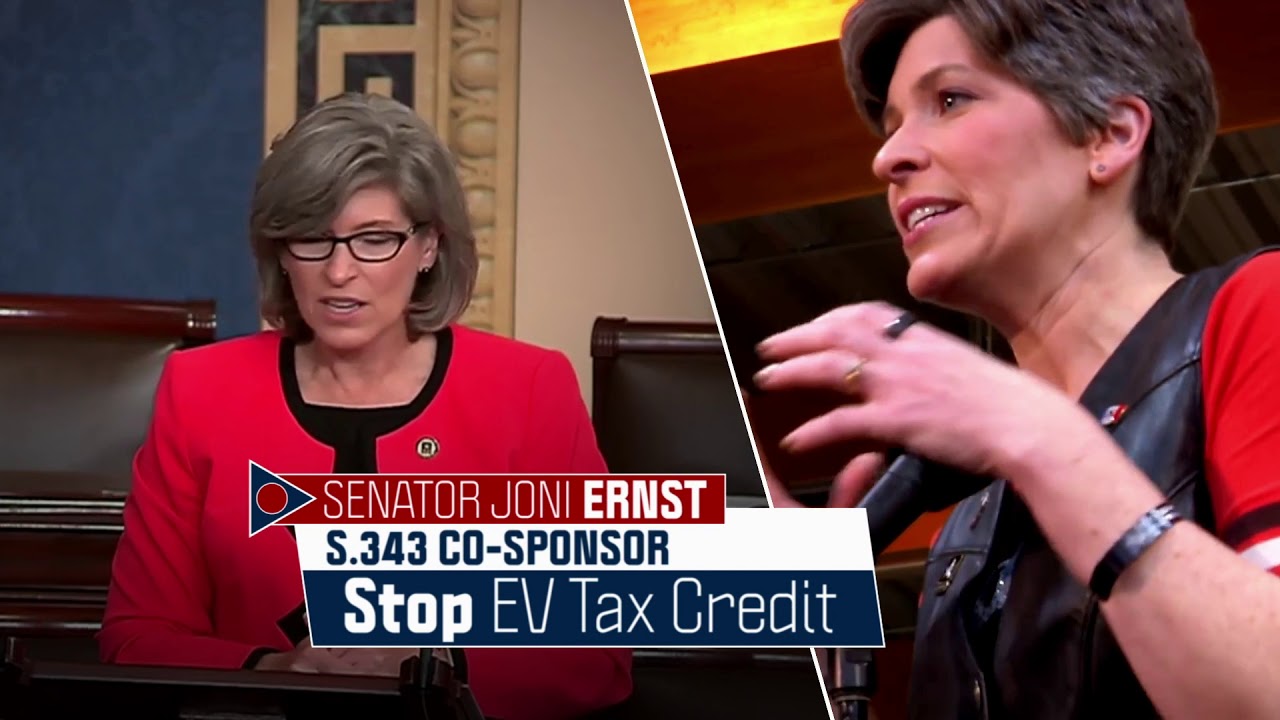 :{ supporting her last year.}: On March 18, One Nation announced another $970,000:{ in television, radio, and digital ads praising Ernst as a champion for lower drug prices. Ernst said she supported, but did not sponsor, the Wyden-Grassley bill that Pfizer and the Chamber lobbied against, but voted against a 2017 }:bill:{ that would have allowed the U.S. to import cheaper drugs from Canada. }:
Ernst in 2018 co-sponsored a Republican-led bill as part of a party effort to assuage fears among its base after its successful repeal of parts of the Affordable Care Act. Republicans said the bill would protect people with preexisting conditions, but it would still have allowed insurers to discriminate against patients for other reasons, or sell policies that don’t cover other medical problems, HuffPost reported.
Critics say it’s unsettling, if not unsurprising, that a McConnell-aligned dark-money group would add a former pharmaceutical lobbyist to its board while running ads celebrating Republican senators for pushing lower drug prices, a cause McConnell himself has stymied in Congress.
“One Nation’s mission is to make sure that Republicans hold their majority in the Senate. They are going to craft their message around that,” said Robert Maguire, research director at Citizens for Responsibility and Ethics in Washington. “It does not mean that One Nation has staked out that policy. They think that voters in Maine want to hear that.”
==
1119 API evil, poster as trade gp buffer #1? big w/ 5 amigos zinke, wheeler etc, rival of CoC
==
OIRA DQA new version? see risk asses
https://www.alternet.org/scott-pruitt-burying-his-radical-pro-polluter-agenda-under-oceans-boring-legalese
Despite being weighed down by increasingly ridiculous corruption scandals, EPA head Scott Pruitt has never slowed down in his efforts to cripple the actual work of the agency Donald Trump handed over to him to destroy. Last week, as most of the media focused on admittedly hilarious scandals regarding Pruitt using government resources to get nice mattresses, fancy lotions and gourmet meals, Pruitt quietly moved to start redefining how the EPA handles the cost-benefit calculations the agency uses to determine what kinds of regulations it imposes on polluting industries.
"Many have complained that the previous administration inflated the benefits and underestimated the costs of its regulations through questionable cost-benefit analysis," Pruitt said in a press release. This failed to note that Pruitt himself was one of the main complainers, during his repeated efforts to sue the EPA while serving as Oklahoma's attorney general.
The agency announced an advance notice of proposed rule-making on Thursday, which is the first step towards rewriting standards the agency has used to determine the value of new regulations for years. The advance notice is written in dry legalese, the sort of thing that doesn't play as well as a story about moisturizer-hunting. But hidden inside all that dense language is the prospect of seriously gutting the EPA's ability to do the work necessary to protect public health
"It’s clearly a precursor to scaling back the way EPA quantifies and monetizes the benefits of its rules and safeguards," John Walke, director of federal clean air, climate, and energy programs at the Natural Resources Defense Council, told Salon.
"How EPA weighs and calculates the costs and benefits of any particular action has significant regulatory implications," explained Melanie Benesh, the legislative attorney for Environmental Working Group. “To the extent that you’re changing that the way the agency has to do that, and if you’re increasing the burden on the agency to justify actions they’re taking to protect the environment and public health, that’s potentially very significant.”
While the concept of "cost-benefit" can be complex in its details, the general concept is simple enough: EPA weighs the costs of a regulation to the industry versus the health and environmental protective benefits to the public. The latter is generally measured in lives saved and reductions in negative effects from pollution, including emergency-room visits, missed work days and other such costs.
As such, the calculus really should be understood more as a question of industry costs vs. public costs,and Pruitt's evident interest in moving as much cost as possible from industry to the shoulders of the taxpayers.
"Those costs are going to occur one way or another," Walke said. "Either industry is going to get away with not cleaning up its own pollution and forcing those costs upon the public in the most hazardous and dangerous ways possible to human health, or the costs are going to be internalized by the company.”
As Oklahoma attorney general, Pruitt sued to block the**mercury**rule, arguing, in part, that these kinds of ancillary benefits should not count towards the benefit bottom line. He lost that challenge, as he typically did with these actions against the Obama-era EPA. Now he's trying to get his bogus legal challenge turned into an EPA regulation of its own.Currently, the EPA's definition of "benefits" includes not just the most direct benefits of a regulation, but also what are considered indirect or ancillary benefits. For instance, one recent regulation, which the advance notice directly cites, directly addressed measures to reduce mercury emissions from power plants. Since the devices that plants must install to reduce mercury emissions also reduce other forms of pollution that cause health problems and deaths, the EPA included those reductions in the benefits column as well when calculating the worth of the regulation.
Walke suspects Pruitt might have even grander plans for reducing what the EPA is allowed to consider a public health benefit, by making it difficult for EPA officials to include. what's called the "social cost of carbon" — i.e., the damage done by global warming to human health and wellbeing.
“Carbon pollution is a different sort of beast," Walke explained. "It’s not like particulate matter is causing direct lung harm when CO2 is emitted.”
Instead, EPA officials currently measure the benefits of carbon reduction through indirect methods. For instance, reducing carbon emissions by a certain amount is assumed to slow global warming, leading to fewer floods, droughts and other catastrophic weather events related to climate change. But industry apologists and conservative pundits have insisted that this sort of broad assessment of the damage of pollution is cheating and want the EPA to be stingier in what it considers a benefit, even if the so-called secondary effects of pollution and environmental degradation cause real damage to real people.
As Vivek Wadhwa and Mark Muro argued in the Washington Post in December 2016, "Far from being a prohibitive drag on economic growth, decarbonization, or making the way that we get energy less dependent on burning fossil fuels that release carbon emissions, has gone hand-in-hand with output growth in most of the United States, according to research by the Brookings Institution."What makes this entire situation even more distressing is that many experts believe the current cost-benefit analysis of the EPA, even under Obama, was already exaggerating the economic costs of regulation.
Other expert analyses show similar results. While there are certainly industry costs to environmental regulation, they are not merely offset by public health benefits. Its even true that regulation often leads to job creation and economic innovation that helps stimulate the economy.
By putting even more emphasis on direct industry costs and minimizing the agency's ability to look at the big picture, Benesh said, Pruitt is "taking an existing problem and making it worse."
"We hear a lot about the everyday things, like there’s a new scandal, but those will go away," she added. But these kinds of "fundamental shifts" in how the EPA does its work "could take years to undo, if they’re undone at all
==
==
omg change how rules are made
https://www.ecowatch.com/epa-nancy-beck-chemical-safety-2389388927.html
By Melanie Benesh
The Trump administration just appointed a chemical industry bigwig to a high-level chemical safety position at the U.S. Environmental Protection Agency (EPA) as deputy assistant administrator of the Office of Chemical Safety and Pollution Prevention.
You read that right. Nancy Beck is coming to the EPA straight from the American Chemistry Council (ACC), the powerful lobby whose members include Dow Chemical, DuPont, Monsanto, ExxonMobil Chemical, Chevron Phillips Chemical and Bayer.Now she'll be making decisions as the deputy assistant administrator of the EPA department whose stated mission is to "protect you, your family, and the environment from potential risks from pesticides and toxic chemicals."
Here's three things to know about Nancy Beck:
1. She has helped craft the chemical industry's political agenda for years.
==
rohrabacher
===
matt t says greenspan prediction record terrible (pundit zombie pension plan); ayn rand groupie, paul ryan ...
===
evil spawn hybrid VC and intel
CIA
in Q tel?
===
staffer
steven law gps