nancy beck acc
---
Graham protege? mofo kid killer on
MERRI OK
E.P.A.’s Decision Not to Ban Chlorpyrifos
~IRIS
---

thenewlede.org
6.17.25 Bayer Meeting: Administrator Brief - thenewlede.org
Mar 6, 2026Thanks: Bayer will provide a small thanks for updating the glyphosate web page and work on MAHA. Bayer Attendees: Bill Anderson, CEO of Bayer AG Stephanie Lynn Murphy, VP Crop Science & Corporate Government Affairs Erick Lutt, Federal Affairs Director EPA Attendees: Nancy Beck (OCSPP)

publichealthpolicyjournal.com
Bayer Leverages Ties to Trump's Washington to Protect Pesticide Empire
Nancy Beck, principal deputy assistant administrator at OCSPP, was a senior director at the ACC — a lobby group representing Bayer, Dow Chemical, DuPont and other chemical manufacturers — from 2012 to 2017.
---
cbd
For Immediate Release, March 12, 2026
contact:
Nathan Donley, (971) 717-6406, ndonley@biologicaldiversity.org
New Documents: Trump EPA Administrator Met With Pesticide CEO During Push to Shield Company From Lawsuits
WASHINGTON— Environmental Protection Agency Administrator Lee Zeldin and other top officials met with Bayer’s CEO to discuss “legal/judicial issues” months before the Justice Department weighed in at the Supreme Court on the chemical company’s behalf, according to a memo and visitor logs obtained by the Center for Biological Diversity.
In December the Trump Justice Department supported Bayer’s request to the Supreme Court to consider its appeal in Monsanto v. Durnell for a shield against liability for the health harms linked to pesticides. In January the Supreme Court agreed to hear the appeal.
The memo and proposed agenda for a June 17, 2025 meeting said Bayer’s CEO also planned to thank the EPA for “its work on MAHA” and “updating the glyphosate web page,” in apparent reference to the agency withdrawing its previous support for California’s cancer warning on glyphosate labels.
“These documents show the unfettered access one of most powerful pesticide corporations in the world has to EPA’s top officials and it raises serious questions about just how far Trump’s political operatives within the EPA and the DOJ were willing to go to bat for Bayer,” said Nathan Donley, the Center’s environmental health science director. “It’s disgusting that the EPA administrator is so accessible to the pesticide industry. He almost certainly wouldn’t give the time of day to the thousands of Americans suffering from cancers linked to glyphosate and other EPA-approved pesticides.”
According to the memo, obtained through a Freedom of Information Act request, at the June meeting Bayer CEO Bill Anderson, EPA Administrator Zeldin, Principal Deputy Assistant Administrator of the chemicals office Nancy Beck, and General Counsel for the EPA Sean Donahue were set to discuss “legal/judicial issues” involving the Supreme Court. The proposed meeting agenda covered:
- “Supreme Court Action: Bayer will give an update to the Administrator on where they stand in litigation and labeling options”
- “Thanks: Bayer will provide a small thanks for updating the glyphosate web page and work on MAHA.”
The “glyphosate web page” update is likely a reference to the EPA’s decision in May 2025 to withdraw its 2022 letter stating that California was authorized to require language on pesticide labels for products containing glyphosate warning of cancer risk so long as the label also stated that the EPA did not agree with that conclusion.
An internet archive search revealed that the only change to the EPA’s glyphosate webpage during that time period was the letter withdrawal, and metadata from the withdrawal letter indicated it was updated on May 9, 2025 by staff that work under Beck at the EPA chemicals office.
Withdrawing that letter likely played a part in the Department of Justice’s decision to reverse its 2022 position that states can add warning labels on pesticides beyond what the EPA requires under federal law. The letter withdrawal was specifically cited in the Solicitor General’s brief arguing for the Supreme Court to consider Bayer’s case.
The following timeline indicates the June 17 meeting at EPA headquarters came at an important juncture leading up to the Supreme Court’s January decision to hear the glyphosate case:
- April 4, 2025: Bayer seeks Supreme Court review for glyphosate case.
- May 9, 2025: EPA updates glyphosate webpage to include link to withdrawn letter to state of California.
- June 17, 2025: Bayer meets with top EPA officials regarding legal/judicial issues; thanks EPA for updating webpage.
- June 30, 2025: Supreme Court asks the Trump solicitor general for its position on glyphosate case.
- Dec. 1, 2025: Citing the EPA’s letter withdrawing its previous support for California’s right to add pesticide warnings, the solicitor general files a brief with the Supreme Court, reversing course and supporting Bayer’s position that federal law preempts states from adding warnings on pesticide labels beyond those established by the EPA.
- Mar. 2, 2026: The solicitor general files another brief with the Supreme Court that further supports Bayer’s position. This brief was specifically supported by Sean Donahue, as evidenced by his name appearing on the brief along with members of the Office of the Solicitor General.
“The Department of Justice has completely trashed its proud tradition of independence and apolitical pursuit of justice,” said Donley. “It’s a very sad day in America when our own DOJ is actively working to deny Americans their day in court.”
---
---
AOC
XO LEGAL IMMUNITY FOR BAYER, MTG DISCUSS CT?
JULY 7 2025 VISITOR LOGS FEB 18 TRUMP XO
FOIA SR ADVISOR OF RURAL AGRIC AFFAIRS SCOTUS
UPDATE EPA WWW
RFK2 SAID ASK YOU
EPA WITHDRAW CA WARNING --> SCOTUS
---
GUK
EPA chief met with Bayer CEO over supreme court fight, agency records show
This article is more than 1 month old
Top US regulators met with Bill Anderson to discuss ‘supreme court action’ over glyphosate weed killer
[Carey Gillam]
Fri 13 Mar 2026
Top US regulators met with Bill Anderson, Bayer’s CEO, last year to discuss “litigation” issues – including “supreme court action” over its glyphosate weed killer – just months before the Trump administration took a series of steps to boost Bayer’s case at the high court, internal government records show.
The 17 June meeting, between officials at the Environmental Protection Agency (EPA), Anderson and two other top Bayer executives, came as the Germany-based company was working to quash costly US litigation brought by tens of thousands of people who allege they developed cancer from their use of the company’s glyphosate-based herbicides, such as Roundup.
At the core of those lawsuits are claims that the company failed to warn users of the risk of cancer, as shown in several research studies over many years.
One of Bayer’sstated key strategies to try to end the litigation, which has so far cost Bayerbillions of dollars in settlements and jury verdict awards, is getting the supreme court to agree with Bayer’s argument that if the EPA does not require a cancer warning on its glyphosate products, the company cannot be held liable for failing to warn of a cancer risk.
While one appellate court has sided with Bayer, multiple other courts have rejected that preemption argument, as did the US solicitor general under the Biden administration. In contrast, the Trump administration has acted to defend and promote Bayer’s position and its glyphosate herbicides.
In a statement Bayer said the meeting at the EPA was a “normal part of the regulatory process” and that the company has been “transparent about our position” regarding glyphosate litigation.
The show of administration support has largely come after that 17 June meeting, which government email communications and visitor logs confirm took place with Anderson and the other Bayer executives arriving at the EPA on the appointed day a little before 1pm.
According to a 13 June internal EPA email planning for the meeting, Bayer’s team was “going to bring up some legal/judicial issues”, and discussion topics were to include “supreme court action”.
The company would “give an update to the administrator on where they stand in litigation and labeling options”, the planning email states.
The meeting came less than two weeks ahead of a request from the Supreme Court for the Trump administration’ Justice Department to weigh in on whether or not the court should agree to hear Bayer’s case.
The EPA officials attending the meeting with Bayer were to include Lee Zeldin, the agency’s administrator, along with Nancy Beck, formerly senior director at the American Chemistry Council who is now the EPA’s principal deputy assistant administrator in the Office of Chemical Safety and Pollution Prevention.
Sean Donahue, who was confirmed last May as the EPA’s general counsel, and Turner Bridgforth, senior adviser for Office of Agriculture and Rural Affairs at the EPA, were also to attend.
“It’s becoming abundantly clear that the political appointees at the EPA are more invested in protecting pesticide company profits than the health of Americans,” said Nathan Donley, environmental health science director for the Center for Biological Diversity, which obtained the email communications in a Freedom of Information Act request and provided them to the Guardian.
“When the CEO of one of the largest companies in the world is meeting with political appointees in a US regulatory office, it shows just how much power and influence these corporations have on decisions that can have very real consequences for the health of all Americans,” he said.
“The Trump EPA seeks input from a broad range of stakeholders, including MAHA advocates, doctors, scientists, farmers, and ranchers to ensure our policies are grounded in transparent, gold-standard science, and advance the Make America Healthy Again agenda,” Brigit Hirsh, the EPA press secretary, said in a statement. The meeting with Bayer was “a standard introductory meeting” and was not a meeting to discuss pending litigation, Hirsh said. She did not explain why the planning email for the meeting specifically said litigation would be discussed.
Multiple moves supporting Bayer
Since the meeting, the Trump administration’s support for Bayer has taken many forms.
In a 1 December filing with the US supreme court, D John Sauer, the solicitor general appointed by the Trump administration in April 2025, told the court that it should take up the Bayer case, and the supreme court subsequently agreed to do so, setting a hearing for 27 April.
---
GGL 10 25 ai
An organization of terms related to recent actions involving Nancy Beck, Donald Trump, the EPA, and Lee Zeldin is provided below.
Donald Trump and Lee Zeldin
- Administration: After his 2024 election win, President Donald Trump nominated former Representative Lee Zeldin to be the Administrator of the Environmental Protection Agency (EPA).
- Confirmation: Zeldin was confirmed by the Senate and sworn into office in January 2025.
- Deregulation: The new EPA administration, under Zeldin's leadership, has focused heavily on deregulation. A major announcement was made in July 2025 regarding the formal reconsideration of the "endangerment finding," which establishes greenhouse gases as a public health threat.
Lee Zeldin and the EPA
- Policy changes: Zeldin's EPA has initiated the reversal of numerous environmental regulations finalized by the previous administration.
- Reorganization: In March 2025, Zeldin announced a plan for the "largest deregulatory announcement in U.S. history." It also included plans to cut agency jobs, reduce the EPA's budget, and eliminate the Office of Research and Development.
- Lawsuits: These actions have prompted legal challenges. In October 2025, several states and Harris County, Texas, filed lawsuits against the Trump EPA for illegally canceling a $7 billion solar energy program.
Nancy Beck and the Trump EPA
- Reappointment: Nancy Beck, who was a chemical industry executive and served in the first Trump administration, was named a senior adviser to the EPA's Office of Chemical Safety in January 2025.
- Chemical policy: Beck has indicated that the EPA plans to review and reconsider most of the chemicals regulations that were finalized under the Biden administration.
- Controversy: Critics have raised concerns about corporate influence on chemical safety regulations due to her prior work for the American Chemistry Council
---
---
REF 2 GUK
Trump order seeks to protect weedkiller at center of barrage of lawsuits | Pesticides | The Guardian
Thu 19 Feb 2026
Trump has signed an executive order protecting production of glyphosate-based herbicides, such as Roundup, which some bodies and studies have linked to cancer and which are the subject of widespread US litigation.
The president’s move, which also seeks to provide “immunity” for makers of the herbicides, was strongly criticized by health and environmental advocates including some figures in the “Make America healthy again” (Maha) coalition.
The order also protects domestic production of phosphorus, which is used in making glyphosate and other agricultural chemicals, as well as a range of other products, including some in military defense.
Ensuring “robust domestic elemental phosphorus mining and United States-based production of glyphosate-based herbicides is central to American economic and national security”, the order states.
Bayer agrees to pay $7.25bn to settle Roundup weedkiller cancer lawsuits
Read more](https://www.theguardian.com/business/2026/feb/17/bayer-proposed-settlement-roundup-cancer-lawsuits)
The 18 February order cites authority under the Defense Production Act and instructs US Department of Agriculture secretary Brooke Rollins to issue orders and regulations as “may be necessary to implement this order”.
The White House said “the threat of reduced or ceased production” of phosphorous and glyphosate herbicides “gravely endangers national security and defense, which includes food-supply security”.
Neither the executive order nor the fact sheet the White House put out accompanying the order discloses that glyphosate-based herbicides have been linked to an array of cancers and other health problems in multiple independent research studies and by cancer experts of the World Health Organization (WHO).
The move by the White House comes as Roundup maker Bayer is facing tens of thousands of lawsuits alleging the company’s glyphosate herbicides cause cancer and the company failed to warn farmers and other users of the risks.
The company, which inherited the litigation when it bought Monsanto in 2018, has already paid out billions of dollars in settlements and jury verdicts and said this week it was proposing to pay $7.25bn in a class action settlement to try to head off future lawsuits.
Bayer has said that if it cannot find relief from the litigation, it may stop making glyphosate herbicides for the US agricultural market.
“This executive order reads like it was drafted in a chemical company boardroom,” said Vani Hari, a food activist, author and one of the grass roots leaders of the Maha coalition. “Calling it ‘national defense’ while expanding protections for toxic products is a dangerous misdirection. Real national security is protecting American families, farmers, and children.”
Kelly Ryerson, another key actor in the Maha movement who has been lobbying US regulators and lawmakers for restrictions on glyphosate and other pesticides, said the move by Trump is an insult to those who have largely supported the administration because of promises that Maha issues would be taken seriously.
Robert F Kennedy Jr, who was appointed by Trump as secretary of the US Department of Health and Human Services (HHS) and who heads a Maha commission set up by the White House, has a long history of criticizing glyphosate and its maker over the health harms tied to the herbicide. Both Trump and Kennedy had pledged to address health concerns about glyphosate and other pesticides.
“The President is making a mockery of the very voters who put his administration into office,” Ryerson said. “Expanding the production of glyphosate, a pesticide derided by the Maha movement, is a commitment to perpetuating the toxic, chemical food system that has created a sick and infertile American population.”
In response to questions about the executive order, Kennedy issued a statement saying that the order “puts America first where it matters most – our defense readiness and our food supply”.
Lori Ann Burd, environmental health program director at the Center for Biological Diversity, called the executive order “a sickening love letter from Trump to the largest pesticide companies in the world.
“It’s more proof that Trump doesn’t care at all about Americans’ health,” she said. “While he’s pandering to chemical companies the rest of the country, especially those who’ve been poisoned by pesticides, is rightfully asking ‘what about us?’”
Trump’s EPA reapproves contentious weedkiller dicamba for some GM crops
Read more](https://www.theguardian.com/us-news/2026/feb/08/epa-reapproves-contentious-weedkiller-dicamba)
Trump’s order contains a clause that “confers all immunity provided for in section 707 of the Act (50 U.S.C. 4557)” and states that “domestic producers of elemental phosphorus and glyphosate-based herbicides are required to comply with this order.” The act cited states that “no person shall be held liable” for “any act” resulting from compliance with an order issued pursuant to that law.
Bayer did not respond when asked how involved the company was in Trump’s executive order. But the company issued a statement saying: “President Trump’s Executive Order reinforces the critical need for US farmers to have access to essential, domestically produced crop protection tools such as glyphosate. We will comply with this order to produce glyphosate and elemental phosphorus.”
Bayer maintains that its glyphosate herbicides do not cause cancer and has been engaged in an array of tacticsto try to lift the litigation pressure, including pressing Congress for language in the farm billand other legislation that would restrict the ability of people to sue the company for failing to warn of cancer risks if the US Environmental Protection Agency (EPA) doesn’t require such warnings.
The company has already succeeded in getting laws protecting it from lawsuits passed in two states and is pressing for more state laws. It has also asked the US supreme court to rule in its favor on the issue of federal preemption of failure-to-warn lawsuits, and the high court has set a hearing for 27 April.
This story is co-published with the New Lede, a journalism project of the Environmental Working Group}:
---
For Immediate Release, August 15, 2025
MAHA Commission Succumbs to Pesticide Industry Pressure
*Draft Report Walks Back Administration’s Promises of Bold Action on Pesticides
WASHINGTON— A much-anticipated draft action plan from the Make America Healthy Again Commission eliminated any plans for action on pesticides. This report is the follow up to the commission’s May MAHA report, which included pesticides and specifically named both glyphosate and atrazine.
The threat of any new restrictions being placed on the use of dangerous pesticides spurred a massive and successful lobbying effort by the chemical industry and commodity growers’ groups, alongside their friends in Congress and the EPA, to force the commission to back off. Instead of action, the recommendations direct the EPA and Big Ag to work together to convince the public to have confidence in pesticide review processes, which are broadly criticized for scientific inadequacy and excessive industry influence. It also encourages research into new pesticide application technologies
“Despite the administration’s promises to MAHA and the reality that using a billion pounds of pesticides in the U.S. each year is a major threat to public health, pesticide interests again prevailed in protecting their profits,” said Lori Ann Burd, environmental health director at the Center for Biological Diversity. “Big Ag’s success in steamrolling the commission’s attempt to act on pesticides is a gut punch to everyone who genuinely believed we could finally make progress on protecting children’s health from these poisons.”
More than 300 million pounds of glyphosate and 70 million pounds of atrazine are used by U.S. farmers annually. Thousands of lawsuits have been filed by cancer victims who used Roundup, which contains glyphosate. Atrazine, a powerful endocrine disruptor that contaminates the drinking water of 40 million Americans, is so toxic it is banned in more than 60 countries.
The United States allows use of 85 pesticides that have been banned or are being phased out in the European Union, China or Brazil, according to a peer-reviewed study published by the academic journal Environmental Health. Over a quarter of all agricultural pesticide use in this country includes pesticides banned in the European Union.
“The MAHA Commission is insulting the intelligence of Americans. It’s outlandish to recommend solving our pesticide woes by having the EPA and Big Ag try to convince us that the deeply flawed pesticide regulatory process is working just fine,” said Burd. “While Big Ag won this battle, the powerful grassroots movement of millions of Americans who know that these chemicals are making us sick will continue fighting to protect their families from pesticides like glyphosate and atrazine.”
Some of the strongest resistance against action on pesticides appears to have come from the administration’s political appointees in the EPA’s chemical safety office. Widespread reporting has pointed a finger at Nancy Beck, a former executive with the American Chemistry Council who, after diligently serving pesticide interests in Trump’s first administration, has been brought back as principal deputy assistant administrator overseeing the EPA’s Office of Chemical Safety. Another American Chemistry Council veteran, Lynn Ann Dekleva, is also back at the EPA, serving as deputy assistant administrator for new chemicals.
More recently, the administration appointed well-known MAHA critic and American Soybean Association lobbyist Kyle Kunkler as deputy assistant administrator for pesticides at the EPA. Just one month after Kunkler’s arrival at the EPA, the agency proposed to reapprove over-the-top use of dicamba, a highly controversial pesticide that Kunkler lobbied for extensively in his former position.
Health and Human Services Secretary Robert F. Kennedy Jr. has repeatedly stated that many of the most-used pesticides in the United States are “extraordinarily toxic,” including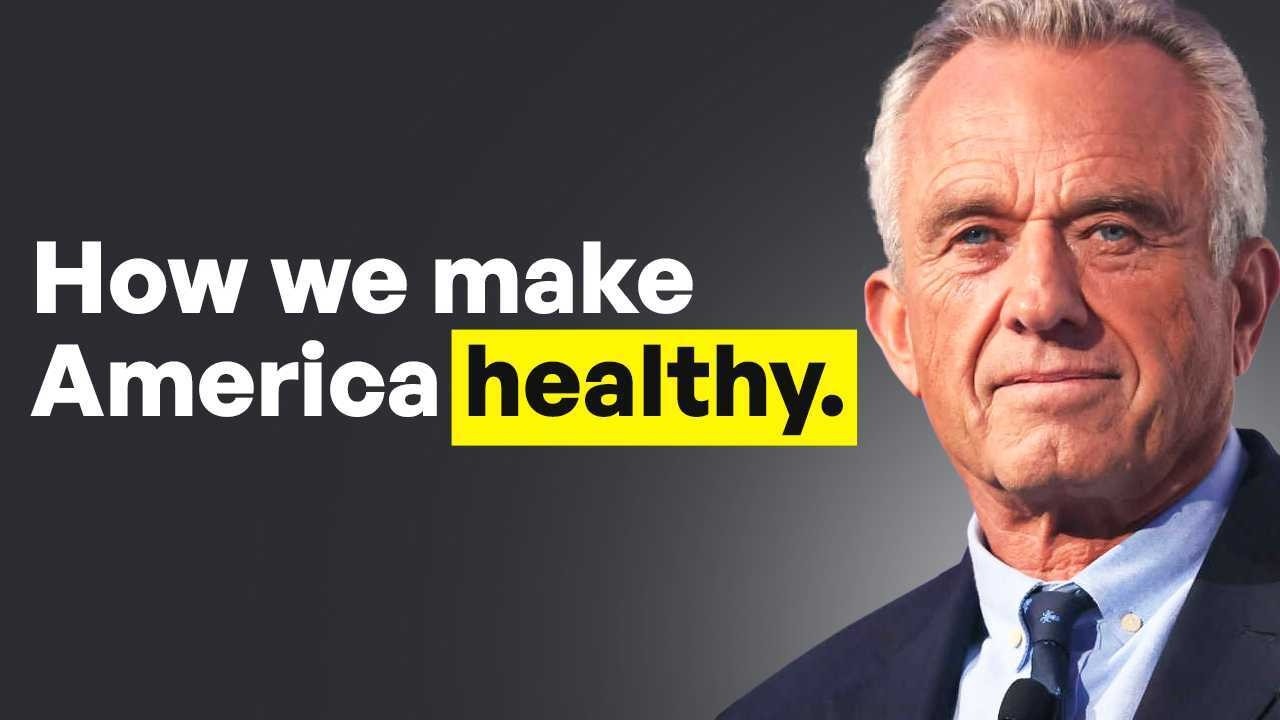 and organophosphates. He has
 that pesticides — many of which have scientifically well-documented links to cancer, infertility, obesity and developmental disorders — are significant contributors to chronic health problems faced by people across the nation.
Following his reelection Trump expressed his own concerns that the United States continues spending “billions and billions of dollars on pesticides,” compared to the European Union and yet has far worse health outcomes. He pledged that his administration would “ensure that everybody will be protected from harmful chemicals, pollutants, [and] pesticides.”
As part of that pledge, he nominated Kennedy as secretary of the Department of Health and Human Services with a mandate to “go wild on the food.” Trump stated that Kennedy is “looking into [pesticides] very seriously because maybe it's not necessary to use all of that.”
:{:{The Center for Biological Diversity is a national, nonprofit conservation organization with more than 1.8 million members and online activists dedicated to the protection of endangered species and wild places.}:
---
---
---
pesticide-use-and-cancer-risk-rise-together-across-americas-heartland
MANY PIX GFX NO LNX
Investigative / Enterprise:Health
Pesticide use and cancer risk rise together across America’s heartland
America’s farmers and farmworkers, their families and neighbors, are being diagnosed with cancer at rates higher than the national average. A growing body of research indicates that pesticides are partly to blame.
by Ben Felder, Investigate Midwest
February 18, 2026
Why you can trust Investigate Midwest
Lisa Lawler wasn’t surprised when diagnosed with breast cancer in 2025. Her mother had breast cancer and died in 2016. It seemed like cancer had become a common diagnosis for many of her neighbors and friends.
“With how many people seem to get cancer in our community, you just assume you will get it,” said Lawler, who lives in rural Hardin County, Iowa. “But no one really talks about what’s causing it.”
After 10 rounds of radiation and a surgery to remove the tumor, Lawler’s cancer was in remission. Last year, she took a test to determine if her cancer was likely genetic, meaning a high chance of recurrence, which could lead her to have her entire breast removed.
She was surprised by the results.
“The genetic test they ran for me was one that covered 81 genes that are typically related to breast cancer,” Lawler said. “After the test, they told me my cancer is likely not genetic, but likely environmental, based on these 81 genes.
“Your next thought is, then what’s in the environment that caused my cancer?”
Increasingly, pesticides are being blamed for rising cancer rates across America’s agricultural communities.
Hardin County, home to around 800 farms, has a pesticide use rate more than four times the national average and a cancer rate among the highest in the state.
Most of the 500 counties with the highest pesticide use per square mile are located in the Midwest. Sixty percent of those counties also had cancer rates higher than the national average of 460 cases per 100,000 people, according to an analysis of data from both the U.S. Geological Survey and the National Cancer Institute.
Last year, Investigate Midwest, in partnership with the University of Missouri, investigated the link between agrichemicals and cancer in Missouri, finding that many were rural communities that already lacked access to healthcare.
This story was produced as part of the Pulitzer Center’s StoryReach U.S. Fellowship.
Investigate Midwest expanded on that coverage by analyzing data across the country, along with interviewing more than 100 farmers, environmentalists, lawmakers and scientists as part of a partnership with the Pulitzer Center’s StoryReach U.S. Fellowship. The result was the picture of a nation at a crossroads in dealing with this public health crisis that has not just been ignored by state and federal health officials, but aided.
This story was also supported by the Fund for Investigative Journalism.
“Cancer is everywhere and it’s an experience that is unfortunately all too common,” said Kerri Johannsen, senior director of policy and programs at the Iowa Environmental Council, a Des Moines-based nonprofit that has been studying the state’s growing cancer rate.
Agrichemicals have helped America become a crop-producing power, increasing yields of commodity crops — such as corn and soybeans — used for food, fuel and animal feed.
Sprayed from airplanes, drones, tractors and handheld devices, these chemicals can drift through the air or run off into nearby rivers and streams.
And for decades, some farmers and pesticide users have developed neurological and respiratory issues. Thousands of lawsuits have alleged that pesticides and the companies that make them were to blame.
Kerri Johannsen, senior director of policy and programs at the Iowa Environmental Council
Pesticide manufacturers often rejected those claims while sometimes concealing research by their own employees that raised similar concerns. These companies — such as Bayer, Syngenta, Corteva and BASF — have also spent millions to lobby federal and state lawmakers for laws that would limit their legal liability and continue to allow them to sell agrichemicals.
“This is one of the most transparently reviewed products ever,” said Jessica Christiansen, the head of crop science communications for Bayer, speaking about her company’s production of Roundup, a glyphosate-based pesticide. “This product is so well studied … been on the market for over 50 years with thousands and thousands of studies. There is no linkage to cancer, there just isn’t.”
Under the Trump administration, the Environmental Protection Agency and U.S. Department of Agriculture have also hired dozens of former pesticide executives and lobbyists, some of whom have already pushed for deregulation of their industry. The Department of Health and Human Services has also altered its own reports to downplay the harm of pesticides.
Two states — North Dakota and Georgia — recently passed laws limiting their residents’ ability to sue pesticide companies, and at least a dozen other states will consider similar laws in the coming months.
“We’ve gotten to a point in the U.S. … where we’ve stopped treating pesticides as if they are dangerous tools,” said Rob Faux, who manages a small Iowa farm and has advocated against pesticide liability shield laws. “Instead, these companies tell these stories that these pesticides are completely safe and we are encouraged to use them anytime. We’ve been convinced that we must use them or we are not going to have enough food to eat.”
In Iowa, a state with heavy pesticide use — 53 million pounds last year — and the nation’s second-highest cancer rate, doctors and health officials have been sounding an alarm for years.
The state has become ground zero in the fight to limit the impact of pesticides on health and the environment. Farmers have gathered at the state Capitol to advocate for increased laws and funding to address the rising cancer rate. That advocacy likely helped defeat a bill last year that would have protected pesticide makers from some lawsuits.
I call myself a Republican, but this is not about politics; this is about money, about the almighty dollar.”
Bill Billings, a resident of Red Oak, Iowa, who was diagnosed with cancer in 2024
“I believe the groups wanting this (bill) to go through didn’t expect any substantial resistance, but there was enough resistance,” said Faux, who also works for the Pesticide Action and Agroecology Network, a nonprofit advocating for less agrichemical use.
The Iowa bill was strongly opposed by environmental and health organizations, which have traditionally been left-leaning. But there was also strong opposition from many conservative residents and farmers.
“I call myself a Republican, but this is not about politics; this is about money, about the almighty dollar,” said Bill Billings, a resident of Red Oak, Iowa, who was diagnosed with cancer in 2024.
Initially, doctors told Billings, then 61, he would likely be dead in a matter of months after discovering lymphoma in his lungs. A health enthusiast and hospital administrator, Billings had been a regular user of Roundup, the popular Bayer pesticide used on farms and residential properties.
“The cancer specialist said, very directly, (my) cancer is a result of being exposed to chemicals,” Billings said. “In my records, it literally says that I have cancer as a result of exposure to Roundup and agrochemicals.”
Billings was prescribed a five-drug regimen, along with chemotherapy. In September, he was declared cancer-free.
Last year, he hired a lawyer to file a lawsuit against Bayer.
“The irony is … Bayer Pharmaceuticals makes one of the drugs that treated my cancer,” Billings said. “It’s disturbing to find out you are in this financial circle — not only as a consumer, but as a patient.”
Bill Billings, his home, and surrounding neighborhood in Red Oak, Iowa, photographed Jan. 21, 2026. photos by Geoff Johnson, for Investigate Midwest
Research increasingly links pesticides to growing cancer risk
Cancer is a complex disease and can be caused by numerous environmental and genetic factors. Some links have been clear — such as smoking and lung cancer — while other forms can be impossible to trace back to an original cause.
But scientific research linking pesticides with certain types of cancers has been growing.
“Our findings show that the impact of pesticide use on cancer incidence may rival that of smoking,” scientists wrote in a 2024 study, which was published in Frontiers in Cancer Control and Society.
The study linked pesticides to prostate, lung, pancreas and colon cancers. Pesticides have also been associated with lymphoma and Parkinson’s disease, the study claimed.
Many doctors in agricultural communities say the link with pesticides is hard to deny.
“Iowa has a super high rate (of cancer) and when you look at all of our modifiable risk factors … tobacco, obesity, too many calories, highly processed foods, lack of physical activity, alcohol consumption, getting vaccinated for HPV, sun exposure, and so on, Iowa doesn’t really stand out dramatically at any of those,” said Dr. Richard Deming, medical director at MercyOne Cancer Center in Des Moines. “But one thing that distinguishes Iowa from other states is our environmental exposure to agricultural chemicals.”
Richard Deming, medical director at MercyOne Cancer Center in Des Moines
Deming and other health experts also point to Iowa’s high radon levels, a naturally occurring radioactive gas produced by uranium and radium.
The state also has high levels of fertilizer-derived nitrate in its water, which has been associated with increased cancer risk.
“But we use tons of ag chemicals that make it quite likely that the volume of these chemicals is contributing to what we’re seeing in Iowa in terms of the increased incidence of cancer,” Deming said.
A direct correlation can be difficult to determine, as cancer development times can range from months to decades. Overlaying cancer rates onto a map, however, highlights the nation’s top crop and vegetable growing regions, where pesticide use is highest.
The Midwestern states of Iowa, Illinois, Nebraska and Missouri — leading corn-growing states — had the highest rates, while rates were also high in California and Florida, high fruit-growing states.
Lawler, who developed breast cancer in Hardin County, grew up on her family’s 400-acre farm, where her father grew corn and used 2,4-D, a pesticide made by Dow Chemicals. She and her siblings moved out of state after high school, but Lawler returned in 2010.
Pesticides have become indispensable in farming, Lawler acknowledged, but she wishes more people would ask questions about the risks.
“We change products all the time when we learn about the health impacts,” Lawler said.
These family photos show Lisa Lawler with her mother and siblings over the years. Lawler was recently diagnosed with breast cancer; her mother later died after a cancer diagnosis. The family believes years of farm pesticide and herbicide exposure may have contributed. All photo provided by Lisa Lawler.
As lawsuits mount, Bayer pushes state laws to limit liability
In early 2022, Rodrigo Santos had just been promoted to the head of Bayer’s crop sciences division, a prestigious position within the German-based chemical company. But a global pandemic, climate change and a pending war in Ukraine were disrupting the global production and sale of crops — a direct hit to the company’s pesticide sales.
“The global food system is in crisis,” Santos wrote in a column for the World Economic Forum, going on to say that the world needed to grow more food without a significant increase in the amount of land devoted to crops.
But beyond the pandemic and war, another crisis presented an existential threat to one of the company’s top-selling products. Roundup, the glyphosate-based weed killer produced by Monsanto, which Bayer bought in 2018, had been blamed for causing cancer in thousands of lawsuits.
In 2019, a California jury ordered Bayer to pay $2 billion in one lawsuit (the amount was later reduced). Since then, more than 65,000 lawsuits have been filed against the company, according to Bayer, and the company has agreed to pay more than $12 billion in settlements.
Since purchasing Missouri-based Monsanto, Bayer’s stock price has dropped more than 90% over five years.
This investigation looks at the relationship between pesticide use and rising cancer rates across the heartland. It’s the first in a series and part of a larger reporting effort that takes time, data, and sustained work.
In recent years, Bayer executives, including Santos, openly discussed discontinuing glyphosate production. We are “evaluating all the alternatives that we have for the business,” Santos told investors last year when asked about a possible sale of its Roundup division.
But while Bayer publicly said it was reconsidering its glyphosate business, a review of lobbying disclosure statements, campaign finance records, state legislative records and other documents reveals the world’s largest pesticide company remains committed to expanding its sales.
Under the Federal Insecticide, Fungicide, and Rodenticide Act, the EPA regulates the warning labels on pesticide products. While state-level lawsuits have claimed that federal labeling is insufficient, pesticide companies, including Bayer, have argued that federal regulations should trump state laws.
Bayer, along with other corporate agriculture groups, has pushed for bills in more than a dozen states that would codify the view that federal labeling regulations are sufficient warning, effectively voiding state-level lawsuits.
Jessica Christiansen, head of crop science communications for Bayer
Christiansen, the head of crop science communications for Bayer, disputed that these laws will stop lawsuits and said courts have yet to begin interpreting those that have passed.
“Folks can still sue a company, and they should if there’s a problem,” Christiansen said. “But the litigation industry has a lot to lose with these (bills) that are out there.”
Founded by Bayer, the Modern Ag Alliance has lobbied for these bills and promoted opinion articles downplaying the health impacts of pesticides.
“If farmers lose access to crop protection products because of misguided ideological agendas, U.S. agriculture would be upended, potentially forcing many family farms to shut down and driving up food costs for every American,” said Elizabeth Burns-Thompson, executive director of the Modern Ag Alliance.
The Modern Ag Alliance has spent more than a quarter of a million dollars on state lobbying since 2024.
In Idaho, the organization spent one in four lobbyist dollars last year. In Iowa, Bayer has spent $209,750 on lobbying since 2023, double what the company spent in the previous decade.
Most of the bills came up short in 2025, but Georgia and North Dakota passed liability shields that will complicate local lawsuits.
Georgia’s Senate Bill 144, which took effect Jan. 1, received some bipartisan support but was mostly approved by the Republican majority and opposed by Democrats.
Similar bills have been filed in at least 10 states for this year’s legislative sessions.
In 2024, the Iowa bill was passed by the state Senate with a 30-to-19 vote. Ahead of a vote in the House last year, farmer and environmental groups lobbied against the bill.
The session ended without the House taking up a vote. The bill could return in 2026, but Faux, the Iowa farmer, said he also worries about it being “snuck into” another bill or budget agreement.
“I don’t think we can just assume this fight is over,” Faux said.
In other states, backlash seemed to stop liability shield bills before they got started.
Rep. Dell Kerbs, R-Oklahoma
In Oklahoma, Rep. Dell Kerbs, a Shawnee Republican, authored a pesticide liability shield bill he said was meant to end “frivolous” lawsuits against pesticide makers.
“What’s happened in our country is we have … judges that have decided they need to be in the labeling business,” Kerbs said when introducing his bill at a Feb. 11, 2025, hearing of the House agriculture committee.
State Rep. Ty Burns, another Republican, asked Kerbs why he chose to author the bill.
“I was first approached by Bayer,” Kerbs responded.
“But this is a labeling bill; it is not an immunity bill. It is just clarifying on EPA labeling regulations,” Kerbs added. “There is nothing that prevents a lawsuit from any single person. This is not giving a free pass to kill people. This simply is saying that a frivolous lawsuit to potentially pad the pocket of somebody who was not reading the label is not a justification to add that to a label through a state district court.”
But when Burns asked Kerbs about opposition to the bill, especially from many farmers, Kerbs denied receiving any complaints.
“That is hard to believe,” Burns told Kerbs, “because I have been bombarded.”
The bill was never presented to the House for a vote.
After early promises, MAHA walks back pesticide oversight
While liability shield laws have been largely advanced by Republican lawmakers, the push to further regulate pesticides has transcended partisan lines.
Both left-leaning environmental groups and conservative health movements, which have targeted agrichemicals and some vaccines, have called for reducing or eliminating the use of pesticides.
Health and Human Services Secretary Robert F. Kennedy, Jr. has been a longtime critic of pesticides. In a May 2025 report, his Make America Healthy Again commission linked pesticide overuse to children’s health issues, which drew praise from both political camps.
Health and Human Services Secretary Robert F. Kennedy Jr. makes remarks at an event announcing the MAHA (Make America Healthy Again) Commission on May 22, 2025, in the East Room of the White House. photo by Joyce N. Boghosian, The White House
George Kimbrell, co-executive director of the Center for Food Safety, which has advocated for stronger pesticide regulations, called the initial report a “baby step” forward and said he was encouraged after decades of inaction by the federal government.
“Going back my entire career, 20-plus years now of doing this work, it doesn’t matter if it’s a Democratic administration or a Republican administration, they have been beholden to and done the wishes of the pesticide industry,” Kimbrell told Investigate Midwest last year. “So, this is a unique moment where … there’s a chance that there could be some positive change in terms of responsible oversight for these toxins.”
Corporate agriculture groups heavily criticized the report, including the American Farm Bureau Federation and CropLife America, a national organization representing many large agrichemical companies, including Bayer, Corteva Agriscience and Syngenta.
Many of those groups and companies had been large financial backers of Trump. But Kennedy downplayed any concerns that the president would avoid taking a hard position against pesticide companies because of that support.
“I’ve met every president since my uncle was president, and I’ve never seen a president (like Trump), Democrat or Republican, that is willing to stand up to industry when it’s the right thing to do,” Kennedy said at a May 22, 2025, MAHA commission meeting as the president sat smiling to his right.
Three months later, Kennedy’s MAHA commission published its final report, which contained no calls to further regulate pesticides. In fact, it called for the federal government to work with large agrichemical companies to ensure public “awareness and confidence” in the EPA’s current pesticide regulations.
The U.S. Department of Health and Human Services did not respond to a request for comment from Kennedy.
MAHA-Report-The-White-House
Many of the groups that expressed optimism over the initial report were outraged over the change.
“This report is … a clear sign that Big Ag, Bayer, and the pesticide industry are firmly embedded in the White House,” said David Murphy, the founder of United We Eat and a former finance director for Kennedy’s presidential campaign.
The Trump administration has employed several pesticide executives, researchers and lobbyists at the EPA and the U.S. Department of Agriculture.
Kyle Kunker, who was a registered lobbyist for the American Soybean Association, an organization that has advocated for the legal liability shield laws at the state level, was hired last year to oversee pesticide policy at the EPA.
Three weeks later, the EPA recommended expanded use of dicamba-based herbicides, which federal courts had previously restricted. The EPA proposal was closely aligned with the position of the American Soybean Association.
In 2025, the EPA also hired Nancy Beck and Lynn Ann Dekleva, both of whom worked with the American Chemistry Council.
Last month, a coalition of MAHA supporters called for the removal of Lee Zeldin, administrator of the EPA.
Lee Zeldin, administrator of the Environmental Protection Agency, testifies during his Senate Environment and Public Works confirmation hearing on Jan. 16, 2025. photo by Tom Williams, CQ Roll Call via AP Images
Recent EPA decisions around pesticides “will inevitably lead to higher rates of chronic disease, greater medical costs, and tremendous strain on our healthcare system,” the group stated in a petition circulating online.
Several prominent MAHA influencers have joined the petition, posting anti-pesticide messages on social media under handles such as The Glyphosate Girl and the Food Babe. “The EPA is acting like the Everyone Poisoned Agency,” wrote Kelly Ryerson, on her Glyphosate Girl Instagram feed.
As the EPA advances pesticide use, the Trump administration has also asked the U.S. Supreme Court to rule that federal labeling laws invalidate state-level lawsuits.
“After careful scientific review and an assessment of hundreds of thousands of public comments, EPA has repeatedly determined that glyphosate is not likely to be carcinogenic in humans, and the agency has repeatedly approved Roundup labels that did not contain cancer warnings,” Trump’s solicitor general wrote in an amicus brief with the Supreme Court.
However, one of the studies the EPA has often cited in claiming pesticides are safe was recently retracted due to concerns about its authorship and potential conflicts of interest.
The report, published in 2000 by the scientific journal Regulatory Toxicology and Pharmacology, claimed Roundup “does not pose a health risk to humans.” The report has been the foundation for numerous other studies, court cases and policy decisions.
The journal retracted the study last year, noting that court cases had revealed that Monsanto employees had contributed to the study. “This lack of transparency raises serious ethical concerns regarding the independence and accountability of the authors of this article and the academic integrity of the carcinogenicity studies presented,” the retraction stated.
“This is just one example of how the current process of certifying these chemicals is broken in the U.S.,” said Colleen Fowle, water program director at the Iowa Environmental Council. “At the very least, we’re hoping that this (retraction) eliminates this specific research article from being cited in the future and concentrates more on independent peer-reviewed research as our basis to determine the safety of glyphosate.”
---
GGL 2 26 GLYPHO
[### EPA Backs Industry, Defending Carcinogenic Herbicide ...

NRDC
https://www.nrdc.org › bio › nrdc › epa-backs-industry...](https://www.nrdc.org/bio/nrdc/epa-backs-industry-defending-carcinogenic-herbicide-glyphosate)
Apr 30, 2019 — EPA Backs Industry, Defending Carcinogenic Herbicide Glyphosate ... Yet Another Reason Nancy Beck Should Not Run Consumer Agency. May 12 ...Read more
[### EPA Official: MAHA Report Will 'Respect Regulatory ...

DTN Progressive Farmer
https://www.dtnpf.com › columns › article › 2025/08/06](https://www.dtnpf.com/agriculture/web/ag/columns/washington-insider/article/2025/08/06/epa-official-maha-report-will)
Aug 6, 2025 — "The science is still telling us that glyphosate is safe," Beck said, and EPA will continue to say that glyphosate is safe "until the weight of ...Read more
[### MAHA Commission Succumbs to Pesticide Industry Pressure

Center for Biological Diversity
https://biologicaldiversity.org › news › press-releases](https://biologicaldiversity.org/w/news/press-releases/maha-commission-succumbs-to-pesticide-industry-pressure-2025-08-15/)
Aug 15, 2025 — Widespread reporting has pointed a finger at Nancy Beck, a former executive with the American Chemistry Council who, after diligently ...Read more
[### Does Roundup Cause Cancer? What Experts Know So Far

Texas A&M University School of Public Health
https://public-health.tamu.edu › ... › blog](https://public-health.tamu.edu/degrees/mph/blog/does-roundup-cause-cancer.html)
EPA Deputy Assistant Administrator Nancy Beck has expressed a commitment to maintaining the agency's previous stance on glyphosate, explaining, "The science ...Read more
[### MAHA Report Will 'Respect' Glyphosate Safety, EPA Official ...

Farm Policy News
https://farmpolicynews.illinois.edu › 2025/08 › maha-rep...](https://farmpolicynews.illinois.edu/2025/08/maha-report-will-respect-glyphosate-safety-epa-official-says/)
Aug 7, 2025 — However, Nancy Beck, the EPA deputy administrator in the Office of Chemical Safety and Pollution Protection, noted that EPA Administrator ...Read more
[### Pesticide use and cancer risk rise together across ...

Investigate Midwest
https://investigatemidwest.org › 2026/02/18 › pesticide-...](https://investigatemidwest.org/2026/02/18/pesticide-use-and-cancer-risk-rise-together-across-americas-heartland/)
8 days ago — In 2025, the EPA also hired Nancy Beck and Lynn Ann Dekleva, both of whom worked with the American Chemistry Council. Last month, a ...Read more
[### From Industry to E.P.A.: Lobbyist Now Oversees Pesticide ...

The New York Times
https://www.nytimes.com › 2025/10/21 › climate › fro...](https://www.nytimes.com/2025/10/21/climate/from-industry-to-epa-lobbyist-now-oversees-pesticide-rules.html)
Oct 21, 2025 — Former corporate lobbyists or executives now in leadership roles at E.P.A. include Nancy Beck and Lynn Dekleva, both former directors at the ...Read more
[### FOIA records reveal EPA leaders frequent meetings with ...

The New Lede
https://www.thenewlede.org › epa-industry-influence](https://www.thenewlede.org/2025/09/epa-industry-influence/)
Sep 18, 2025 — Notably, the industry meetings involved former industry insiders who now are in top positions at the EPA: Nancy Beck ... glyphosate and atrazine.Read more
[### MAHA Wants Action on Pesticides. It's Not Going to Get It ...

WIRED
https://www.wired.com › Science › science](https://www.wired.com/story/the-epas-closeness-to-industry-stands-in-the-way-of-it-helping-maha/)
Sep 15, 2025 — ... Roundup, a weed killer whose main ingredient is glyphosate, caused his cancer. ... Nancy Beck, pushed behind the scenes to exclude pesticides from ...Read more
[### "In the Weeds" Glyphosate News Roundup: August 19, 2025

No-Till Farmer
https://www.no-tillfarmer.com › articles › 14524-in-the-...](https://www.no-tillfarmer.com/articles/14524-in-the-weeds-glyphosate-news-roundup-august-19-2025)
Aug 19, 2025 — “Beck, a political appointee with long experience in government and the private sector, said that she could not share the contents of the report ...Read more
---
politico
Greenwire
EPA to reassess most chemical regs, Trump appointee says
:{By Ellie Borst | 08/21/2025
Top chemical safety officer Nancy Beck said restrictions on dangerous existing chemicals should “mitigate unreasonable risk, not all risk.”
Nancy Beck
Nancy Beck is the principal deputy assistant administrator for EPA's Office of Chemical Safety and Pollution Prevention. Francis Chung/POLITICO
EPA’s highest ranking chemicals official signaled plans to reconsider most of the toxics control rules finalized under the Biden administration, after many of them were spared in the Trump administration’s first deregulatory blitz.
“To meet our statutory obligations and to make sure that we’re following the law, we’re going to have to take another look at pretty much all the actions that were finalized by the last administration,” said Nancy Beck, principal deputy assistant administrator in the Office of Chemical Safety and Pollution Prevention, during an American Home Furnishings Alliance conference Wednesday afternoon.
Beck’s sweeping comments aren’t entirely surprising but offer some assurance for chemical manufacturers questioning their need to comply with the Toxic Substances Control Act rules in legal limbo.
The Trump administration has already announced plans to revamp the risk evaluation framework rule — the foundational process that guides how EPA evaluates dangerous chemicals under TSCA. That framework underpins all of the Biden-era chemical regulations now under review. The Trump administration’s revised version is currently pending review from the Office of Management and Budget.....
no lnx
Trump Stocks E.P.A. With Oil, Gas and Chemical Lobbyists
Top political appointees are already at the E.P.A. preparing to erase the agency’s climate rules and pollution controls. Many of them have tried it before.
/The New York Times
By Lisa FriedmanHiroko Tabuchi and Coral Davenport
Jan. 25, 2025
President Trump is stocking the Environmental Protection Agency with officials who have served as lawyers and lobbyists for the oil and chemical industries, many of whom worked in his first administration to weaken climate and pollution protections.
Lee Zeldin, Mr. Trump’s choice to lead the E.P.A., has little experience with environmental policy. He will be expected to hit the ground running, though, to fulfill Mr. Trump’s fire hose of orders directing the agency to cut regulations.
Mr. Zeldin’s Senate confirmation vote has not yet been scheduled but he has already marshaled more than a dozen deputies and senior advisers. The quick appointments are in contrast to Mr. Trump’s first term, when many Republicans hesitated to join the administration and internal squabbling delayed the selection of the deputy administrator as well as the chief air pollution regulator for nearly a year. Some appointees have already moved into their offices.
Top appointees include David Fotouhi, Mr. Zeldin’s second-in-command, a lawyer who recently challenged a ban on asbestos; Alex Dominguez, a former oil lobbyist who will work on automobile emissions; and Aaron Szabo, a lobbyist for both the oil and chemical industries who is expected to be the top air pollution regulator.
The division of E.P.A. that evaluates the safety of new chemicals now includes Nancy Beck, a longtime chemical-industry lobbyist, and Lynn Ann Dekleva, who has been working for the American Chemistry Council, a trade group. Both are veterans of the first Trump term.
“It’s alarming to see former industry lobbyists and attorneys who, until recently, were paid by their clients to weaken pollution standards, nominated to high-ranking positions at E.P.A. where they will have the power to undermine regulations meant to protect the public from these same industries,” said Jen Duggan, executive director of the Environmental Integrity Project, a watchdog group.
Image
An aerial view of the E.P.A. building in downtown Washington, D.C.
E.P.A.’s headquarters in Washington. Mr. Trump’s first E.P.A. had a reputation for being sloppy, leading to cases being overturned or thrown out of court.Credit...Eric Lee/The New York Times
Molly Vaseliou, an E.P.A. spokeswoman, said the agency was “putting together a leadership team composed of some of the brightest experts and legal minds” and all would “uphold E.P.A.’s mission to protect human health and the environment.”
“President Trump advanced conservation and environmental stewardship in his first term and the E.P.A. will continue this legacy in his second term,” she said.
To be deputy administrator, Mr. Fotouhi must be confirmed by the Senate. Most of the other political appointees that have been named so far, including Ms. Beck, are entering E.P.A. as advisers or other positions that do not require confirmation.
The speed in assembling the E.P.A. team isn’t the only difference between the first and second Trump terms. Regulatory attorneys say the new team has more experience. Mr. Trump’s first E.P.A. had a reputation for being sloppy, leading to dozens of cases being overturned or thrown out by the courts.
“This group is arriving with more expertise in deploying the machinery of the agency, including to unravel regulations from the prior administration,” said Kyle Danish, a partner at Van Ness Feldman, a Washington law firm that advises energy clients. “They all look like they graduated one level from what they did in the first Trump administration.”
Mr. Zeldin’s deputy, the Harvard-educated lawyer David Fotouhi, left corporate practice in 2017 to join the E.P.A. during the first Trump administration. He rose to acting general counsel and became a central figure in Mr. Trump’s efforts to weaken or delete dozens of regulations that were designed to protect air and water from pollution.
:
David Fotouhi, shown speaking during a Federalist Society event from 2022 posted on YouTube, will be Mr. Zeldin’s second-in-command.Credit...via YouTube
Mr. Fotouhi has a long record of representing polluters against the E.P.A. and other regulatory agencies. Last year, he challenged the E.P.A.’s ban of asbestos, arguing on behalf of automakers that the E.P.A. had failed to demonstrate that asbestos presented an unreasonable risk of injury. Under Mr. Biden, the United States joined 55 other countries that have banned asbestos, which is known to cause lung cancer, mesothelioma, ovarian cancer and laryngeal cancer.
Mr. Fotouhi has defended industrial plants accused by the E.P.A. of violating the Clean Air Act and toxic-chemicals rules, and helped corporations repel proposed regulations. He represented a major operator of coal-burning power plants challenging rules to prevent toxic coal ash from contaminating groundwater.
And in 2021, he represented a paper-mill company in a lawsuit brought by Maine landowners whose land was contaminated with “forever chemicals,” also known as per- and polyfluoroalkyl substances or PFAS, linked to cancer and other diseases.
“It was the typical corporate defense,” said Elizabeth Bailey, an environmental attorney who represented the plaintiffs. “Which is: You can’t prove that it’s us.”
Mr. Dominguez, the former oil lobbyist, is now a deputy assistant administrator who will serve as a point person for one of Mr. Trump’s highest priorities, canceling the largest climate regulation in history, designed by the Biden administration to cut the automobile pollution that is heating the planet. Under that rule, more than half the new passenger vehicles sold in the United States would have to be zero emissions by 2032.
Attempts during by the first Trump administration to weaken tailpipe pollution limits were mired in legal and logistical errors and delays. Mr. Dominguez, a veteran of that effort, is expected to be better prepared this time.
Between Trump administrations, Mr. Dominguez worked for the American Petroleum Institute, which represents the oil and gas industry. The group delivered a detailed wish list to Mr. Trump, topped by the rollback of the tailpipe pollution rules. Oil companies oppose the rules because the transition to electric vehicles would hurt demand for gasoline.
Abigale Tardif is returning to the E.P.A. air pollution office after serving there in the first Trump administration. She has worked as a policy analyst for Americans for Prosperity, part of the conservative network of groups founded by the billionaire industrialist Koch brothers. She has also lobbied for Marathon Petroleum Corporation and the American Fuel and Petrochemical Manufacturers, a major industry lobbying group.
Last summer, that group launched what it described as a “seven figure” campaign of advertising, phone calls and text messages against the tailpipe rule, which it falsely called “Biden’s E.P.A. car ban.”
Image
:{A woman with dark hair and glasses, dressed in a black blazer and black and white polka dot top sits at a table in a hearing room.}
:
Nancy Beck led an effort against chemical regulations in the first Trump administration.Credit...Justin T. Gellerson for The New York Times
Dr. Beck, a former senior director with the American Chemistry Council, is now a senior E.P.A. adviser on chemical safety and pollution. She led a wide-ranging pushback against chemical regulations during the first Trump administration, as well as what a subsequent investigation described as political interference in agency science and policymaking.
Dr. Beck rewrote rules that made it harder to track the health consequences of a “forever chemical” linked to cancer, and therefore to regulate it. She also helped soften limits on asbestos and methylene chloride, a harmful chemical found in paint thinners.
Dr. Dekleva, also a former senior figure at the chemical industry trade group and another veteran of the first Trump term, is returning to the E.P.A. to regulate new chemicals. She worked for more than three decades at DuPont, the chemicals giant. Recent reports by the E.P.A.’s Office of Inspector General said that, under Dr. Dekleva, employees were pushed to approve new chemicals and were retaliated against if they raised concerns.
Dr. Beck and Dr. Dekleva did not respond to requests for comment.
Mr. AARON Szabo was named as a senior adviser to the administrator but he is expected to become the agency’s top air pollution regulator, according to three people with knowledge of the decision who spoke on the condition of anonymity because they were not authorized to discuss it publicly. He has lobbied on behalf of the American Chemistry Council, the American Fuel & Petrochemical Manufacturers association and the American Petroleum Institute, records show.
Mr. Szabo also is a government veteran, having worked in the White House Office of Management and Budget and as a senior counsel for the White House Council on Environmental Quality during Mr. Trump’s first term.
“They understand the policies well, they understand the agency well, which puts them far ahead of where they were eight years ago,” said Dimitri Karakitsos, a Republican energy and chemicals lobbyist.
Lisa Friedman is a Times reporter who writes about how governments are addressing climate change and the effects of those policies on communities.
Hiroko Tabuchi covers pollution and the environment for The Times. She has been a journalist for more than 20 years in Tokyo and New York.
Coral Davenport covers energy and environment policy, with a focus on climate change, for The Times.
A version of this article appears in print on Jan. 26, 2025, Section A, Page 22 of the New York edition with the headline: Trump Fills E.P.A. Posts With Energy Lobbyists. Order Reprints |
---
omfg
:FOIA records reveal EPA leaders frequent meetings with industry lobbyists - The New Lede
https://www.thenewlede.org/2025/09/epa-industry-influence/#:~:text=EPA%20defends%20meetings,.%E2%80%9D%20%E2%80%93%20Carolyn%20Holran%2C%20EPA~)
Top regulatory officials met with agricultural and chemical industry representatives dozens of times in the first few months after President Donald Trump took office in January, government records show — meetings that were followed by a series of regulatory rollbacks and a downplaying of pesticide concerns by the administration’s “Make America Healthy Again” (MAHA) Commission.
From February to mid-May, Environmental Protection Agency (EPA) leaders accepted meetings with representatives from at least 50 industry associations and companies, including agricultural and chemical giants such as Bayer, Corteva, BASF, Dow and the agrichemical lobbying group CropLife America, as well as the American Soybean Association, the National Cotton Council and others.
The meetings also included energy giants like ExxonMobil, Phillips 66, and companies working in plastics or chemical production such as Occidental Chemical Corporation. Some scheduled meetings involved representatives from multiple companies and their legal counsel or lobbyists.
Notably, the industry meetings involved formerindustry insiders who now are in top positions at the EPA: Nancy Beck, formerly an executive at the American Chemistry Council who is now the EPA’s principal deputy assistant administrator in theOffice of Chemical Safety and Pollution Prevention, and Lynn Ann Dekleva, who previously worked at DuPont and as a lobbyist at the American Chemistry Council and is now the deputy assistant administrator of the same EPA office.
See the scheduled meetings here:
April (continued) and May Calendars
Beck worked in the first Trump administration’s EPA as well,leading efforts to remove or water down chemical regulations.
Beck’s meetings with agricultural interests included a March meeting regarding the pesticide dicamba with then-lobbyist Kyle Kunkler. In June, Kunkler joined the EPA to work alongside Dekleva and Beck.
The EPA records, obtained through a Freedom of Information Act request, show meetings with environmental and health groups were nearly absent from Beck and Dekleva’s calendars, other than meetings with the American Dental Association and the Physicians Committee for Responsible Medicine.
The records cover January through early May and only show invited attendees, not meeting minutes or issues discussed.
A MAHA makeover
Critics of the agrichemical industry said corporate influence in regulatory matters was underscored earlier this month when the Trump administration’s “Make America Healthy Again” (MAHA) Commission released its long-anticipatedreport on how to address chronic disease and clean up the food supply.
The final version was significantly more friendly to the agricultural industry thana May MAHA report that cited the health risks posed by the widely used farm chemicals glyphosate and atrazine. The September report took aim at synthetic dyes and junk food, among other things, but deleted references to glyphosate and atrazine and made no mention of pesticide exposure routes or risks.
Robert F. Kennedy Jr., Trump’s Secretary of Health and Human Services, has long railed against certain farm chemicals, calling them “poison,” but in a press conference discussing the September MAHA report,Kennedy evaded questions about the omission of pesticide dangers in the report.
Critics say the changes and omissions were seemingly in direct response to lobbying from major agricultural groups, as some sections in the report used policy languagesought by CropLife.
Additionally, the MayMAHA report blamed industry influence in the federal government for Americans’ high exposure to toxic chemicals, citing data that in 2023, about 60% of chemical-sector lobbyists had previously held federal posts.
However, the final report released this month eliminated language from the first report criticizing corporate influence over research, regulators and lawmakers as factors contributing to chronic health problems in the US.
The FOIA records show that on April 11, Beck was invited to attend weekly MAHA meetings, “to align on policy priorities and plans,” according to the meeting descriptions.
Agricultural organizationspraised the September report and the MAHA Commission’s “vision,” welcoming the report’s “strong emphasis on aligning agriculture, nutrition, and environmental sustainability to promote a healthier future for America’s children.”
But environmental health advocates had the opposite view.
“When Croplife praises the report, we know something’s wrong,” said Emily Marquez, senior scientist with the Pesticide Action & Agroecology Network (PAN).
EPA defends meetings
...Most companies did not respond to requests to comment about the meetings. A Bayer spokesman said in a statement that the company regularly meets with the EPA and other federal agencies as part of the regulatory process.
“Some of these meetings are required by law. Such interactions are not limited to registrant companies and many other groups including NGOs similarly interface with regulatory agencies,” Bayer said.
EPA spokeswoman Carolyn Holran said that questions about the number of meetings with industry groups and potential industry influence over policymaking were insulting to Beck and Dekleva.
“As EPA officials, Dr. Beck and Dr. Dekleva meet with a wide variety of stakeholders on issues within EPA’s Office of Chemical Safety and Pollution Prevention jurisdictions,” Holran said. “[They] remain committed to being led by the science and the law — unlike Biden EPA appointees with major ethical issues that were beholden to radical groups — as they work to Power the Great American Comeback.”
“As EPA officials, Dr. Beck and Dr. Dekleva meet with a wide variety of stakeholders on issues within EPA’s Office of Chemical Safety and Pollution Prevention jurisdictions.” – Carolyn Holran, EPA
The records show that on at least one occasion, Beck did skip a meeting with her former employer, the American Chemistry Council.
“I’m recused so will skip this one. Enjoy!” she wrote on March 14 to Travis Voyles, the EPA’s associate deputy administrator, who was meeting with Ryan Jackson, vice president of federal affairs with the council. That same day she had a meeting with the chemical company Balchem.
Tracey Woodruff, director of the Program on Reproductive Health and the Environment at the University of California, San Francisco, said she wasn’t surprised about Beck’s meeting schedule over the first few months. “We’re seeing unfettered industry access to all the decision-making around things like toxic chemicals and pesticides. It’s beyond anything we’ve already seen.”
In January, Woodruff and others affiliated with UCSF launched the Center to End Corporate Harm, to develop strategies to “counter the destructive influence of polluters and poisoners.”
While the calendars do not detail what was discussed in these meetings, since Trump took office, the EPA has rolled back multiple environmental regulations that industry has long railed against, includingdropping drinking water limits on four types of per- and polyfluoroalkyl (PFAS),walking back a proposal to limit water pollution from meat and poultry plants,delaying stricter emissions rules at steel and coke plants, planning toeliminate its science research arm,rescinding the basis for greenhouse gas regulations,easing regulations on farmers using insecticides, amongdozens of other planned rollbacks.
Author
Brian Bienkowski is the Managing Editor at The New Lede. He is a veteran reporter and editor, and has been awarded both local and national awards for his health and environmental reporting. He is a member of the Society of Environmental Journalists.
---
---
nrdc
early last month, the president of the United States nominated a toxicologist from the U.S. Environmental Protection Agency’s chemical-safety office to head up the U.S. Consumer Product Safety Commission (CPSC), the agency dedicated to protecting public health by making sure that the things we buy and use are free from dangerous chemicals and other hazards.
In a less dysfunctional political universe, the nomination would constitute an utterly unfrightening, and even welcome, bit of news. After all, who better than a toxicology expert with an EPA pedigree to lead the government agency that’s supposed to ensure our everyday products are safe?
Alas, that’s not the universe we occupy at the moment.
President Trump’s nominee to lead the CPSC, Nancy Beck, is no ordinary toxicologist. Prior to joining this administration’s ignominious iteration of the EPA, where she hit the ground running by rewriting chemical-safety rules to make them more business-friendly, Beck served for more than five years as senior director of the American Chemistry Council, the trade organization representing the interests of our country’s $765 billion chemical industry. The council likes to keep a relatively low profile, but if you’ve heard of it before, it’s probably because the group has spent almost 20 years doggedly trying to prevent cities from instituting bans on plastic bags.
:{:{If you’ve ever wondered what might happen if you put the former chief lobbyist for the chemical industry in charge of overseeing America’s consumer safety, we now have a big clue. While she awaits Senate confirmation for the CPSC post, Beck has been detailed to the White House Council of Economic Advisers, the group of economists and other experts who consult with the president on matters of economic policy. It was in this capacity, apparently, that she pressured the EPA—where she is still, technically, employed—to further water down an already watered-down rule regarding PFAS, a broad class of dangerous and pervasive chemicals that are found in all manner of everyday products, from nonstick pans to raincoats. }:
So good are PFAS at lingering in the environment—and the human body—that they’ve been nicknamed “forever chemicals.” Actually, they’re probably inside you right now: One study found PFAS lurking in the bloodstreams, breast milk, or tissues of 98 percent of people who were tested for them. And they’re bad news: PFAS have been linked to cancer, abnormal fetal development, and dysfunction of the liver, thyroid, and immune system.}:
According to White House documents obtained andreleased by Senator Tom Carper of Delaware, the ranking member of the Senate Committee on Environment and Public Works, Beck was the driving force behind a White House attempt to weaken the final version of an EPA rule on PFAS. She even asked the agency to carve out a special type of loophole for importers of PFAS-tainted products. Back-and-forth correspondence between the White House and the EPA reveals how the former pushed the latter to create a regulatory “safe harbor” that would significantly ease restrictions on certain imports containing highly dangerous PFAS compounds that have already been phased out of U.S. production.
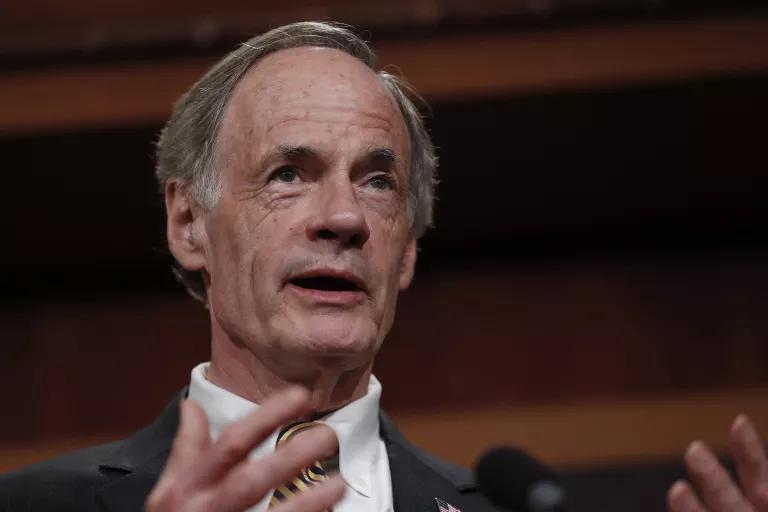
Senator Tom Carper
Last Friday, Carper wrote to EPA administrator Andrew Wheeler outlining his concerns about Beck’s unseemly intervention. In it, the senator accused Beck of seeking to “make it more difficult for EPA to use its authority under the Toxic Substances Control Act (TSCA) to protect Americans from these harmful substances,” and he urged Wheeler to “resist these efforts and ensure the final rule is as protective as was originally envisioned.” The letter details a history of similarly themed meddling by Beck, dating back to her earlier days at the EPA. Taken together, Carper’s bullet points paint the picture of someone who has been working very hard over the years to ease restrictions on PFAS by chipping away, bit by bit, at the regulatory framework surrounding these incontrovertibly toxic chemicals.
By the way, don’t get excited: It’s not as if the Andrew Wheeler–led EPA has suddenly seen the error of its industry-coddling ways and done an about-face on PFAS. The tension between Beck and the agency in this instance doesn’t reflect any real philosophical difference. While the original rule on PFAS, drafted during the Obama administration, was a good one, it was never finalized; when Congress later demanded that Trump’s EPA sew things up, the agency had no choice but to comply. That’s when Beck seized the opportunity to make the final PFAS rule as industry-friendly as possible. The documents cited in Senator Carper’s letter reveal that she hasn’t been fighting the EPA; she’s simply been nudging it along.
“Once Congress set a deadline, the agency set about writing as weak of a rule as it could possibly get away with,” says NRDC’s Daniel Rosenberg, who focuses on federal toxics policy. “So it was already a rollback. Nancy Beck just kept pressing them for more.”
This is the person that Donald Trump believes is best equipped to protect U.S. consumers from being harmed by the products they bring into their homes: a person whose last private-sector job was protecting the interests of chemical companies, and whose current job in the public sector doesn’t appear to be all that different. The only potential upside to having Nancy Beck take a job at the Consumer Product Safety Commission is that she’ll no longer be working at the EPA. But by that point, it may not matter. She’ll already have left her toxic mark.
This article was originally published on onEarth
---
ggl 10 25
[###
Chemical industry lobbyists will run chemical safety ...

The Lancet
https://www.thelancet.com › lanonc › article › fulltext](https://www.thelancet.com/journals/lanonc/article/PIIS1470-2045%2825%2900135-4/fulltext)
by B Furlow · 2025 — Another ACC lobbyist, Nancy Beck, is now a senior adviser to the EPA Office of Chemical Safety and Pollution Protection. Dekleva and Beck ...
[### Two Industry Executives Join E.P.A. to Help Oversee ...

The New York Times
https://www.nytimes.com › 2025/01/22 › climate › epa-...](https://www.nytimes.com/2025/01/22/climate/epa-chemical-industry-beck-dekleva.html)
Jan 22, 2025 — Nancy Beck and Lynn Ann Dekleva worked in the first Trump administration, where they fought chemical restrictions.
[### EPA moves to ease chemical safety reviews, citing red tape

The New Lede
https://www.thenewlede.org › epa-tsca-rollbacks](https://www.thenewlede.org/2025/09/epa-tsca-rollbacks/)
Sep 24, 2025 — The findings were based on the calendars of Nancy Beck, the EPA's principal deputy assistant administrator in the Office of Chemical Safety ...
[### The Former Lobbyists Making Key Decisions at the E.P.A.

The New York Times
https://www.nytimes.com › 2025/10/21 › climate › epa-...](https://www.nytimes.com/2025/10/21/climate/epa-former-lobbyists.html)
10 hours ago — Nancy Beck, a former executive for the American Chemistry Council, is now in a senior role within an E.P.A. division that evaluates chemical ...
Missing: ACC | Show results with: ACC
[### EPA to reassess most chemical regs, Trump appointee says

E&E News by POLITICO
https://www.eenews.net › Articles](https://www.eenews.net/articles/epa-to-reassess-most-chemical-regs-trump-appointee-says/)
Aug 21, 2025 — Top chemical safety officer Nancy Beck said restrictions on dangerous existing chemicals should “mitigate unreasonable risk, not all risk.”
[### The EPA Will Likely Gut Team That Studies Health Risks ...

WIRED
https://www.wired.com › Science › science](https://www.wired.com/story/epa-iris-health-risks-chemicals-nancy-beck/)
May 12, 2025 — While significantly slashing the agency's budget, Zeldin has said he intends to put EPA staff to work clearing the backlog of new industrial ...
[### Trump Puts Industry Insiders in Charge of EPA's Chemical ...

Holland & Knight
https://www.hklaw.com › news › intheheadlines › 2025/01](https://www.hklaw.com/en/news/intheheadlines/2025/01/trump-puts-industry-insiders-in-charge-of-epas-chemical-safety)
Jan 23, 2025 — The appointment of Nancy Beck and Lynn Dekleva to oversee chemical regulation at the US Environmental Protection Agency (EPA).
[### Nancy Beck, PhD, DABT, Principal Deputy Assistant ...

Investment Reports
https://www.investmentreports.co › interview › nancy-be...](https://www.investmentreports.co/interview/nancy-beck-1746)
Nancy Beck. PhD, DABT, Principal Deputy Assistant Administrator. EPA Office of Chemical Safety and Pollution Prevention. 17 April 2025. Share Interview.
[### EPA walks back Nancy Beck's chemical office powers

E&E News by POLITICO
https://www.eenews.net › Articles](https://www.eenews.net/articles/epa-walks-back-nancy-becks-chemical-office-powers/)
Mar 7, 2025 — Nancy Beck has returned to EPA's Office of Chemical Safety and Pollution Prevention. Francis Chung/POLITICO. Unlike other major ...
[### Trump administration actions contradict MAHA rhetoric on ...

NPR
https://www.npr.org › 2025/06/18 › nx-s1-5436960](https://www.npr.org/sections/shots-health-news/2025/06/18/nx-s1-5436960/maha-rfk-toxic-chemicals-trump-hhs-epa)
Jun 18, 2025 — The administration appointed a scientist who spent years working for the American Chemistry Council, Nancy Beck, to a prominent role at the EPA, ...
---
Nancy Beck, whom President Donald Trump selected for senior leadership positions at the EPA and White House, is directing regulatory science at Hunton Andrews Kurth, the law firm confirmed Monday.
Beck, a toxicologist who’s career has focused on regulatory policies, will work on an array of environmental policies including chemicals, a law firm spokeswoman said.
“Nancy has spent more than 20 years in various positions with the federal government helping to develop and implement federal environmental regulations,” Eric Murdock, head of Hunton Andrews Kurth’s administrative law team, said in an email. “Our clients will benefit greatly from her experience and ...
To read the full article log in.
law360
Environmental Group Of The Year: Hunton
Law360 (January 31, 2022, ) -- Hunton Andrews Kurth LLP's environmental attorneys helped win key victories for clients in front of the U.S....
---
Nancy B. Beck, PhD, DABT | Hunton Andrews Kurth LLP
Search domain huntonak.comhttps://www.huntonak.com › en › people › nancy-beck.html
beckn@HuntonAK.com Washington, DC +1 202 419 2076 direct Nancy provides industry leaders with advice related to the impact of environmental policy, including chemical regulations and compliance programs, applying her in-depth knowledge and applied public health experience as a PhD toxicologist.
Who Is Nancy Beck, and Why Shouldn't She Be in Charge of ...
Search domain nrdc.orghttps://www.nrdc.org › onearth › who-nancy-beck-and-why-shouldnt-she-be-charge-consumer-safety
prior to joining this administration's ignominious iteration of the epa, where she hit the ground running by rewriting chemical-safety rules to make them more business-friendly, beck served for...
The Toxic Horror Story of Nancy Beck - Public Citizen
Search domain citizen.orghttps://www.citizen.org › news › the-toxic-horror-story-of-nancy-beck
Nancy Beck was nothing more than a chemical industry lobbyist, actively discrediting scientific research on the harmful effects of dangerous chemical products in order to advance the organization's corporate interests.
Nancy B. Beck - Politasource
Search domain politasource.comhttps://politasource.com › administration › nancy-b-beck
Just prior to being appointed to head Chemical Safety at the EPA, Nancy Beck served as an executive at the American Chemistry Council - the chemical industry's primary trade association. Deputy Assistant Administrator at the Environmental Protection Agency Head of Consumer Product Safety Commission Apr. 28, 2017 - True to her roots, among her ...
Images for nancy beck chemical
EPA: Chemicals official cleared to weigh in on industry litigation -- Thursday, March 1, 2018 ...Nancy Beck Has Some Explaining to Do | NRDCScientists Warn Against Consumer Protection Nominee | Morning EditionKey senators oppose Nancy Beck's consumer agency nominationTrump may appoint Nancy Beck to head Consumer Product Safety Commission - The Washington PostNancy B. Beck | Politasource5 People Who Shouldn't Be in Charge of Protecting Us From Toxic Chemicals | EWGNEWSMAKER: Critics aim to derail consumer safety nominee -- Friday, June 19, 2020 -- www.eenews.netChemical Industry's Nancy Beck Tapped to Lead the Commission that Protects Consumers | NRDCTrump's Pick To Run The Consumer Product Safety Commission Has Stalled, Says Senator | HuffPost
More Images
Nancy Beck - Safer Chemicals
Search domain saferchemicals.orghttps://saferchemicals.org › tag › nancy-beck
Filed Under: Policy & Regulation Tagged With: Liz Hitchcock, Nancy Beck, Senator Capito, Senator Collins, Trump administration Minnesota bans toxic chemical TCE; EPA twiddles thumbs Minnesota is now the first state to ban the use of toxic TCE in any facility required to have a state-issued air permit.
Nancy Beck Nominated To Lead CPSC : Shots - Health News : NPR
Search domain npr.orghttps://www.npr.org › sections › health-shots › 2020 › 06 › 16 › 876309425 › scientists-warn-against-consumer-protection-nominee
Jun 16, 2020President Trump's nominee to lead the Consumer Product Safety Commission is Nancy Beck, a toxicologist who currently leads chemical and pesticide regulation at the Environmental Protection Agency....
Chemical Industry Executive Nominated to Lead Consumer ...
Search domain nytimes.comhttps://www.nytimes.com › 2020 › 03 › 03 › climate › consumer-product-safety-commission-nancy-beck.html
Mar 3, 2020By Lisa Friedman March 3, 2020 WASHINGTON — President Trump has tapped Nancy B. Beck, a former chemical industry executive, to lead the Consumer Product Safety Commission, an independent federal...
Nancy Beck Should Not Lead the CPSC - Moms Clean Air Force
Search domain momscleanairforce.orghttps://www.momscleanairforce.org › nancy-beck-should-not-lead-consumer-product-safety-commission
Nancy Beck — a former chemical industry executive — has been nominated by Trump to lead the Consumer Product Safety Commission (CPSC). The Consumer Product Safety Commission is meant to protect our families from the products we use in our everyday lives, from children's clothes and toys to baby cribs to cleaning products.
Scientists Opposing Beck CPSC Chair - NRDC
Search domain nrdc.orghttps://www.nrdc.org › sites › default › files › scientists-opposing-beck-cpsc-chair.pdf
Nancy Beck is currently detailed to the White House, where she is empowered to oversee the chemical evaluations that she was in charge of developing while serving as the political head of the EPA ...
---
https://apps.publicintegrity.org/united-states-of-petroleum/venue-of-last-resort/
no lnx many
VENUE OF LAST RESORT [pun?]
Wave of climate lawsuits threatens the future of Big Oil
Fossil-fuel interests are working to seed the courts, long viewed as apolitical
by Jie Jenny Zou, Chris Young
December 12, 2017
In early October, 22 state and federal judges hailing from Honolulu to Albany got a crash course in scientific literacy and economics.The three-day symposium was billed as a way to help the judges better scrutinize evidence used to defend government regulations.
But the all-expenses-paid event hosted by George Mason University’s Law & Economics Center in Arlington, Virginia, served another purpose: It was the first of several seminars designed to promote “skepticism” of scientific evidence among likely candidates for the 140-plus federal judgeships President Trump will fill over the next four years.
Louis Anthony “Tony” Cox Jr.
Robert Fresson
Read more about how air quality is the new frontier for climate-change skeptics long tied to API »
The lone science instructor was Louis Anthony Cox Jr., a risk analyst with deep industry ties whose recent appointment as chair of the U.S. Environmental Protection Agency’s Clean Air Scientific Advisory Committee drew condemnation in public-health circles.Since 1988, Cox has consulted for the American Petroleum Institute, a lobby group that spent millions to dispute the cancer-causing properties of benzene, an ingredient in gasoline, and is now working to discredit the science on smog-causing ozone. He’s also testified on behalf of the chemical industry and done research for tobacco giant Philip Morris.
For a $4,000 honorarium, Cox delivered two closed-door lectures at George Mason: “a primer on the scientific method,” followed by a session aimed at “understanding what science can and cannot do.” Included in his presentation were slides urging judges to be wary of EPA science on fine particles — a pollutant he has been researching for API.
The symposium included a “mandatory” dinner at Capitol Hill’s upscale Charlie Palmer Steak, whose website says it “moves the political power meetings out of the back room and into private dining spaces.” Events such as the symposium are one way Big Oil is trying to impart free-market values to judges and attorneys general as the industry gears up for legal battles on multiple fronts.
Based in George Mason’s Antonin Scalia Law School,the Law & Economics Center espouses a free-market approach to policy. A 2013 investigation by the Center for Public Integrity found that the libertarian think tank hosted more judicial conferences than any other university program in the nation, fueled by conservative and big-business donors. Over the past two years, roughly $4.5 million of $18.6 million in contributions to the Law & Economics Center came from oil and gas interests, including Koch Industries, ConocoPhillips, ExxonMobil and API, which represents more than 650 corporations.
The center claims to have trained more than 5,000 state and federal judges, including three sitting Supreme Court justices. Almost 1,000 state attorneys general and their staff attorneys have attended its programs. Its advisory board includes three judges on the U.S. Court of Appeals for the District of Columbia Circuit, widely considered the nation’s second-most powerful court and, often, the final arbiter for federal administrative law cases.
In a White House riven by discord and staff departures, judicial appointments have been a bright spot. Senate Republicans have embraced the chance to fill a glut of vacancies, helping Trump install more conservative judges and potentially transform the legal landscape for decades to come. Once confirmed, a federal judge can serve for life, presiding over an average of 500 to 600 cases a year.
A Washington trade group with 300-plus employees, APIhas spent more than $40 million to lobby Congress since 2013. But the courts have also been a focal point for API, which has spent the better part of a century helping the oil and gas industry pivot from being a prime antitrust target to being a proactive litigation force. The institute, along with other free-market trade groups, has routinely injected itself into cases in an attempt to shape policy or stall government initiatives. API officials did not grant interview requests from the Center for Public Integrity.
“Time is on industry’s side.”
With a new era of environmental deregulation under way, issues ranging from the Obama administration’s Clean Power Plan to offshore drilling in the Arctic are landing in the courts for final say. The stakes are enormous for the industry, which is simultaneously confronting a wave of lawsuits that seek billions of dollars in damages for climate-change impacts. Among the defendants areAPI members such as ExxonMobil.
Unlike government and the public, industry can afford to wait. “In many of these matters, litigation goes on decades and decades,” said Michael Gerrard, director of Columbia University’s Sabin Center for Climate Change Law. “Time is on industry’s side.”
American Petroleum Institute, et al.
Time has worked to API’s advantage. The institute was founded in 1919 amid congressional demands to nationalize the oil industry during World War I, forcing competing companies to band together for survival. In the near-century since, API has helped thwart regulations by tying them up in court.
An exterior shot of the Lenexa Federal Records Center, an annex of the National Archives and Records Administration.
Center for Land Use Interpretation (licensed CC NC-SA)
Archives at the Lenexa Federal Records Center are located 60 feet below ground in limestone caves.
NARA
Buried in limestone caves 60 feet below Lenexa, Kansas, is an esoteric slice of API history. Yellowing records at the National Archives annex there are all that remain of a 1940 lawsuit so expansive that three pages of the complaint simply list defendants — all 379 of them.
United States of America v.American Petroleum Institute,et al. alleged widescale collusion and price-fixing by 22 major oil companies and their 300-plus affiliates, which controlled a total of $9 billion in assets (the equivalent of $160 billion today). The U.S. Department of Justice charged that the industry was unlawfully consolidating — with the institute’s help — and vowed to take the antitrust case all the way to the Supreme Court.
“The industry is dominated and controlled by the 22 defendant majors who transact more than 85 percent of the total business of the industry,” the Justice Department wrote in its complaint. “Where normal competition once flourished, the rapid development of the completely integrated defendants has substantially destroyed competition.”
Read more about Big Oil's unlikely alliance with the White House ]
American Petroleum Institute, et al. never made it to trial.The case was neutered early on by 11 oil executives working closely with the White House to ensure an Allied victory in World War II. The executives — nine of whom were affiliated with defendant companies — asked the attorney general to strike from the complaint a provision that would have forced companies to divest assets such as pipelines. This, the men warned, could hamper the war effort and “becloud relationships between the government and industry.”
After languishing in the courts for years, the lawsuit was dismissed in 1951 by the Justice Department, which found it to be a logistical nightmare. Gone, too, was the government’s interest in dissolving API as a monopolistic tool of industry. This year, API wriggled out of public scrutiny once more. In yet another potentially landmark case, lawyers suing the U.S. government for inaction on climate change tried to compel the institute to turn over decades of internal records. API had joined the case to help defend the government but dropped out rather than reveal what it knew about global warming, and when.
“They're a highly sophisticated, integrated political operation,” said Bob Brulle, an environmental sociologist at Drexel University. API’s effectiveness, Brulle said, lies in its partnerships with like-minded groups such as the American Chemistry Council, the National Association of Manufacturers and the U.S. Chamber of Commerce — amplifying its message “in a very directed, coordinated way.” In 2016, the institute absorbed its only real competitor, America’s Natural Gas Alliance.
With ample resources at their disposal, groups such as API — which employs a full-time legal staff and can also tap into the legal teams of its member companies — can quickly blunt federal regulatory efforts or simply wait for the political winds to change.
On November 30, 1999, for example, representatives of more than 20 lobby groups met at the institute’s Washington, D.C., headquarters to muster opposition to an EPA plan to regulate greenhouse gases under the Clean Air Act. Leading the meeting was API lobbyist Phil Cooney. In a memo, the institute offered to coordinate on the alliance’s behalf, pushing out the message to politicians and the news media. But by 2001, the political climate had changed. Cooney had become head of environmental policy for George W. Bush’s White House, where he altered federal reports to sow doubt on climate change. Under Bush, the EPA retreated from its earlier position, claiming it didn’t have the authority to regulate greenhouse gases after all. Cooney could not be located for comment.
The issue came to a head in 2003 when 12 states sued the EPA to force its hand. Coming to the agency’s defense was the CO2 Litigation Group, a newly formed coalition of 14 trade associations — including API. The coalition represented a spectrum of fossil-fuel companies, which argued that the EPA had “oversimplified” and overstated the certainty of climate change’s effects.
The case, Massachusetts v. EPA, was decided in the states’ favor by the Supreme Court in 2007. But the matter continued to be tied up in the courts and the EPA bureaucracy, and it wasn’t until 2011 that the agency finally began regulating greenhouse gases. This gave rise to Obama’s 2015 Clean Power Plan, which targeted carbon dioxide emissions and became mired in litigation before the Trump administration marked it for extinction.
‘Irreparably harmed’
The back-and-forth of politics can be dispiriting. For that reason, James Hansen has staked his family's future — and the planet’s — on the courts. His granddaughter, Sophie Kivlehan, is one of 21 child and teenage plaintiffs in Juliana v. United States, a 2015 lawsuit that faults the government for failing to address climate change over half a century.
Dr. James Hansen, Columbia University
YouTube
Sophie Kivlehan, granddaughter of James Hansen
YouTube
“What we want is a plan — just for the government to have a plan,” said Hansen, a former NASA scientist who now directs the Earth Institute at Columbia University and is acting as a scientific expert in the case. Last year, industry groups including API became parties to the case.
It was Hansen’s congressional testimony as director of NASA’s Goddard Institute for Space Studies in the sweltering summer of 1988 that elevated global warming from simmering concern to boiling reality. With “99-percent” certainty, Hansen explained that the trend was a side effect of fossil-fuel combustion that would worsen without swift action. Months later, a group that would come to include 170 scientists from 25 countries united to confront what it called “the greatest global environmental challenge facing mankind.”
When Hansen returned to Capitol Hill in 1989, he found his testimony heavily edited by the White House Office of Management and Budget under President George H.W. Bush. The office softened his conclusions, tacked on a paragraph qualifying his findings and otherwise stirred uncertainty about man-made causes of climate change.
While many have focused on what, and when, companies such as ExxonMobil knew about climate change, Julia Olson — a lawyer with Our Children’s Trust, a legal aid group representing the Juliana plaintiffs — is making a case for government complicity.
After years of litigating environmental cases, Olson realized she was dealing with symptoms of a disease, not the disease itself. “We were just playing a game of Whac-a-mole. One new part of our fossil fuel energy system would pop up, and we’d challenge it, and then it’d pop up somewhere else.”
She turned her attention to the government, which “chooses the winners and losers” and has long abetted fossil fuels, she said, allowing the industry to drill, mine and build. “Everyone wants Exxon to be the enemy,” Olson said, but, “every administration has made that decision to perpetuate fossil fuels.”
After digging through presidential archives, her researchers found what they believe is the earliest White House reference to climate change: a 1961 letter from Sen. Clinton Anderson of New Mexico to President John F. Kennedy, recounting a meeting a day earlier at which they discussed a Fortune article warning of sea-level rise from a warming climate.
Lyndon B. Johnson was the first president to publicly acknowledge such warming. In a speech in January 1965, he described how “a steady increase in carbon dioxide from the burning of fossil fuels” was permanently altering the planet. By year’s end, his science advisory board had delivered a detailed report on the “invisible pollutant” capable of melting ice caps and raising sea levels.
Despite these early warnings, little has been done, Olson said. Since Hansen’s 1988 testimony, there have been more excessively hot years than at any other time on record. Two international accords tackling climate change have been brokered, with the United States conspicuously absent on both.
Though not named in Juliana, API , the National Association of Manufacturers and the American Fuel & Petrochemical Manufacturers quickly intervened in the lawsuit,asserting their right to protect their members’ economic interests. The move awkwardly put the fossil-fuel groups on the same side as the Obama administration.
Their involvement in Juliana was short-lived. In late February, plaintiffs filed a detailed 21-page discovery request for API alone, seeking decades of internal communications, policies and reports related to climate change. By late June, all three trade groups had exited a case they had voluntarily joined. A judge allowed them to drop out after they were unable to agree on the causes and effects of greenhouse gases. Sen. Sheldon Whitehouse, D-R.I., suspects the groups “fled to avoid having to make the disclosures.” A vocal supporter of the Juliana action, Whitehouse believes the courts will hold industry accountable. “You have a judge and you have sanctions for not telling the truth, and that is a combination that for decades the fossil fuel industry has sought to avoid like Kryptonite."
Other climate-related lawsuits have followed Juliana, which is set for trial in 2018. Last summer, three California coastal communities filed suit against 37 fossil-fuel companies, blaming their greenhouse-gas emissions for rising sea levels. In September, San Francisco and Oakland became the first major U.S. cities to sue oil companies to cover past and future flood damage. In November, a Pennsylvania lawsuit alleged that the Trump administration is using “junk science” to roll back climate policies. A lawsuit pitting Portuguese schoolchildren against 47 European nations for failing to act on climate is in the works.
George Mason University’s Law & Economics Center is located in this Arlington, Va., building.
Ron Cogswell (licensed CC BY)
‘Unwarranted and exaggerated’
WhenGregory Conkobegan organizing the October judges’ symposium at George Mason University, he wanted to ensure that participants left knowing science’s limitations. “Even good science cannot always answer the questions regulatory agencies ask,” he wrote to Louis “Tony” Cox, the risk analyst, in a May email obtained by the Center for Public Integrity through a records request. “Even the best science is not capable of yielding normative judgments about whether something is necessarily good or bad, safe or dangerous, etc."
Conko headed the Competitive Enterprise Institute — a libertarian think tank known for fostering climate-change denial — before joining Mason’s Law & Economics Center last winter. Before Conko settled on Cox to lead the seminar, Nancy Beck, a former policy director for the American Chemistry Council who is now the EPA’s top official on toxic chemicals, was a candidate, emails show. So was Michael Gough, a toxicologistwith ties to the tobacco industry and oil-backed climate-change denial groups. Conko declined requests for an interview.
“Even good science cannot always answer the questions regulatory agencies ask.”
Like Beck and Gough, Cox has championed narratives amenable to industry’s bottom line but not supported by mainstream science. In 2015, Cox said that “no detectable public health benefits” would result from a stricter EPA ozone limit. His testimony was cited in an op-ed by API President Jack Gerard, who ended the column with a warning: “Economic recovery is far from complete, and saddling the nation’s job creators with burdensome new restrictions threatens to deal another blow to the middle-class economy.”
What Gerard didn’t mention was Cox’s history with the institute, which spans decades. At the time the column was published, Cox was receiving funding from both the institute and the American Chemistry Council,which also represents petrochemical companies.
In an interview, Cox denied that industry funding influences his findings. He criticized EPA science as flawed, saying it assumes links that haven’t been proven.:
“I see a tremendous lack of clarity when agencies say there’s reason to believe X causes Y,” Cox said. “The proposition that the science is settled — ‘We don’t need to look at this’ — it’s a bad proposition.”
Cox holds a doctorate in electrical engineering and computer science and a master’s degree in operations research, which focuses on decision-making — both from MIT.
Asked about his involvement in the George Mason symposium, Cox said that “judges in particular should have a healthy skepticism, especially about claims of causality.”
Fellow risk analyst and friend Adam Finkel counts Cox among an elite few who have the credentials for risk analysis, an amalgam of health sciences, economics, policy-making and statistics. But their views on what should or shouldn’t be regulated couldn’t be further apart.
A former director of health standards programs at the U.S. Department of Labor’s Occupational Safety and Health Administration, Finkel has spent his career trying to strengthen worker protections against toxic substances. “It’s disappointing to me that someone as smart as he is can make such a stupid mistake,” Finkel, a senior fellow at the University of Pennsylvania Law School and a professor of environmental health sciences at the University of Michigan, said of Cox. “I don’t ascribe evil intent to him; he’s just lost his way.”
The weight of evidence, Finkel said, isn’t on Cox’s side. “He’s not just saying, ‘We should wait for the right answer.’ He’s saying, ‘We should be more protective of the economy than of human health.’”
==
==
https://theintercept.com/2020/01/12/cancer-trump-administration-epa-carcinogens-regulations/
the war on the war on cancer
no pix no lnx many no graf
Sharon Lerner
January 12 2020,
WHEN ANGELA RAMIREZ was 38, she felt a slight pain in her chest. At first she thought she had pulled a muscle, but when it didn’t go away, Ramirez went to her doctor, who diagnosed her with stage 2 breast cancer. A mother of three and a parent educator in a local public school in Lake County, Illinois, Ramirez had to undergo a double mastectomy, chemotherapy, radiation, and five follow-up surgeries.
Eight years since the diagnosis, her family is still recovering. Because of complications, Ramirez is awaiting several more reconstructive surgeries. Her daughter Ada, now 15, was recently diagnosed with PTSD, in part, Ramirez thinks, because she spent much of her childhood worrying that her mother wouldn’t survive. And her husband is working 80 hours a week to cover medical expenses and lost income. “Cancer changes your whole life,” she said recently.
Ramirez used to think of her ordeal as random bad luck — an inexplicable series of genetic mutations that just happened to derail her life. But that changed in 2018, after she learned that she both lived and worked near two facilities that were emitting a cancer-causing chemical called ethylene oxide.
Two years earlier, the Environmental Protection Agency released an assessment of ethylene oxide performed by a small division of the agency known as IRIS, which crunched numbers showing that exposure to ethylene oxide caused elevated rates of tumors in the brain, lungs, uterus, and lymph systems. The technical report from IRIS, which stands for the Integrated Risk Information System, changed the classification of ethylene oxide, an odorless gas used to make other chemicals and sterilize medical equipment, from probably carcinogenic to plainly carcinogenic to humans. Based in part on several studies showing that female workers exposed to ethylene oxide had higher breast cancer rates, the report calculated a safety threshold that was 30 times more sensitive than previous estimates. Combined with agency data about local emissions, the new threshold allowed the EPA Office of Air and Radiation to identify the census tracts where residents were at increased risk of cancer from breathing ethylene oxide.
As Ramirez could plainly see on the EPA’s interactive map, the cancer risk was elevated both where she lived and, even more extremely, at the office where she worked for several years before her diagnosis, which was less than a mile from one factory that emitted the carcinogenic gas and less than three miles from another. The news was like a missing puzzle piece. “I had always found it kind of strange that I was the only one in my family who ever had cancer,” said Ramirez, who had moved to the suburbs from Chicago in 2005 in part because she wanted to be closer to nature.
Ramirez still suffers from chronic back pain and weakness. But the realization that her cancer may have resulted from emissions from the local factories has caused a different kind of suffering. “Every time I open the windows I think about it now,” she said. “I’m so angry. My kids at 2nd and 3rd grade shouldn’t have had to wonder whether their mother was going to die.”
Angela Ramirez's neighborhood is seen in this photo. The neighborhood in Waukegan, Ill., is located in a census tract that is at high risk for cancer. Jan. 2, 2020. Pat Nabong for The Intercept.Construction at Medline's facility in Waukegan, Ill. is underway on Jan. 2, 2020. In May 2019, Medline submitted a proposal to build new equipment that would control air pollution, after they came under fire for emitting ethylene oxide, a gas linked to cancer. Pat Nabong for The Intercept.]
Left/Top: The Ramirez's neighborhood in Waukegan, Ill., is part of a census tract that is at high risk for cancer. Right/Bottom: Construction at Medline's facility in Waukegan, Ill. is underway on Jan. 2, 2020. In May 2019, Medline submitted a proposal to build new equipment that would control air pollution, after they came under fire for emitting ethylene oxide.Photos: Pat Nabong for The Intercept]
The chemical industry also reacted strongly to the reports on ethylene oxide. In September 2018, after the National Air Toxics Assessment pinpointed the areas affected by the chemical, the American Chemistry Council, or ACC, a trade group that represents U.S. chemical manufacturers, asked IRIS to change its assessment of ethylene oxide. Dow Chemical, the biggest producer of ethylene oxide in the country and the second biggest in the world, also disputed the EPA’s assessment.
Now, political appointees at the EPA are engaged in what appears to be an end-run around the agency’s own science. While IRIS, which is staffed by career scientists, hasn’t officially backed away from its 2016 report, theTrump EPA recently announced that it would not be calling for the level of pollution reductions IRIS laid out during the previous administration, leaving people around the country more vulnerable to the known carcinogen. And that’s only one of the changes made under the Trump administration that promise to weaken protections for Americans’ health, many of which were intended specifically to stave off cancers.
Virtually no sector of the EPA’s work has escaped reversals that will cause disease and death among the U.S. population. The agency scrapped the Clean Power Plan and a rule to improve fuel efficiency standards for cars, depriving the public of not just the climate benefits but also the improvements to air quality and health both would have brought. The EPA rejected its own science in deciding not to ban chlorpyrifos, a pesticide linked to autism and other neurodevelopmental problems in children. Dozens of other EPA rollbacks — including the gutting of the Clean Water Act, the undermining of guidelines on emissions of methane from landfills, the loosening of restrictions on toxic air pollution from industrial facilities, the disbanding of a panel on air pollution — will have dire health consequences, as will the dramatic reduction in the enforcement of environmental laws.
The erosion of these protections may leave Americans at greater risk of all kinds of health effects, including fertility issues, birth defects, and neurodevelopmental problems — all of which have been linked to chemical exposure. But among the most devastating of Trump’s legacies will be an increase in cancers.
Trump’s Cancer Gang
With the election of Donald Trump, a small and previously marginalized group of toxics apologists suddenly and unexpectedly took control over health and environmental regulations in the United States. Considered too fringe, too craven, and too fact-averse for mainstream politics, this closely connected group had long been dismissed for taking the idea of environmental deregulation well past the point of absurdity. Under Trump, the EPA has begun executing some of these extremists’ schemes to undercut the federal government’s ability to protect the public from life-threatening toxic chemicals.
Way back in 1996, a lawyer named Christopher Horner working for R.J. Reynolds Tobacco Company came up with an ambitious plan to fight back against scientific studies linking cancer to secondhand smoke. Such studies, he realized, were based on the private health data of thousands of individuals. And without that data, scientists would be unable to prove a connection between cigarette smoke and cancer. Imagine if the government required that the data used for regulations be public. If that were the case, none of the crucial private health information used by scientists would be usable. Problem solved!
Horner, who worked at the firm then called Bracewell & Giuliani, recognized that the approach had “global applicability to industry” beyond tobacco and could make it nearly impossible to regulate a wide variety of cancer-causing chemicals and pollution. Within a few years, a group funded by the Koch brothers tried to use the strategy to undermine the Clean Air Act, demanding that researchers produce their data so a pivotal study could be repeated.
That attempt to destroy air pollution protections ultimately failed, and the idea hovered on the sidelines until 2014, when a few Republican House members introduced the “Secret Science Act.” Because most members of Congress recognized the gambit as a bald attempt to subvert science — then-Sen. Barbara Boxer called it “insane,” Sen. Bernie Sanders dismissed it as “laughable” — the bill didn’t come close to becoming law that year or the next, when it was introduced again. Even in mid-2016, the only support for the idea came from the fringe.
But with the election of Donald Trump later that year, the prospects of the “secret science” scheme — and others hatched over the years to help free industry of what it saw as profit-hampering regulations — suddenly became deadly serious. Trump, who had already been dismissive of science, named Horner and others interested in undermining environmental protections to his EPA transition team and then staffed the agency with political appointees who used to work for the industries they would be regulating. In April 2018, then-EPA administrator Scott Pruitt proposed a rule based on the “secret science” plan, and Horner’s wildest dreams of dismantling environmental and health regulations were set to become reality.
Andrew Wheeler, administrator of the U.S. Environmental Protection Agency (EPA), speaks to members of the media after signing the Affordable Clean Energy Rule at EPA headquarters in Washington, D.C., U.S., on Wednesday, June 19, 2019. President Donald Trump is scaling back sweeping Obama-era curbs on greenhouse gas emissions from power plants burning coal, his biggest step yet to fulfill his campaign promise to stop a "war" on the fossil fuel. Photographer: Al Drago/Bloomberg via Getty ImagesEPA administrator Andrew Wheeler, center, speaks to members of the media at EPA headquarters in Washington, D.C., on June 19, 2019. Photo: Al Drago/Bloomberg via Getty Images]
The war on cancer was meant to help banish a disease that by 1970 had become the second-leading cause of death in the United States. The Environmental Protection Agency, created that year, was part of the government’s assault on the rising tide of cancer cases. For some contaminants, such as asbestos and chemicals used in dye-making, the link to cancer was already clear. Scientists were beginning to understand that even tiny amounts of certain chemicals could alter cells, setting off a series of mutations that grow into cancerous tumors. The hope was that the agency could counter increasing cancer rates by limiting environmental exposures.
Yet 50 years after the federal government took up arms against cancer, the disease is still the second-leading cause of death. Even though cigarette smoking, the leading cause of cancer in the 1970s, has declined sharply, the American cancer rate has actually gone up over the past 40 years. Among children, who are particularly vulnerable to environmental exposures, the cancer rate has risen dramatically, increasing nearly 50 percent since 1975.
During that time, environmental exposures have been mounting. More than 140,000 chemicals and pesticides have been introduced since 1950. Even though the vast majority have not been evaluated for safety, 5,000 of them are made in such great quantities practically everyone is exposed to them. Yet most of the government spending on cancer has remained focused on treating the disease rather than preventing cancer by limiting exposure to carcinogens, such as pesticides and other environmental contaminants.
graf:
Left/Top: Federal political contributions by members of the American Chemistry Council,including parent companies and individual employees, 2008 - 2019. Compiled for The Intercept by MapLight. Right/Bottom: Federal political lobbying expenditures by members of the American Chemistry Council, including parent companies and individual employees, 2008 - 2019. Compiled for The Intercept by MapLight.Graphics: Soohee Cho/The Intercept
Since the first major law that attempted to regulate toxic chemicals passed in 1976, chemical companies have spent billions of dollars on lobbying. The member companies of the American Chemistry Council have spent more than $1.4 billion on lobbying and $77.8 million on political contributions since 2008, according to an analysis by MapLight for this story. The ACC by itself has spent $103 million on lobbying. Though staggering, these numbers are a small fraction of the trillions generated by chemical sales over that same period.
Throughout its 50-year existence, the EPA has faced the daunting task of regulating industries that are far better resourced than the agency. But the effort to rein in powerful companies, which has been met with varying degrees of success under previous administrations, has been largely abandoned under Trump. The EPA, now headed by a former coal lobbyist and run by other former lobbyists, executives, and lawyers from polluting industries, has set about undoing health protections, some of which were specifically designed to prevent cancer.
Trump, who recently tried to take credit for a 2017 dip in cancer mortality rates and announced that he would be “curing childhood cancer very shortly,” at a rally in Cincinnati last August, presumably isn’t interested in actively causing disease and death. But his eagerness to please the polluting chemical and fossil fuel industries that support him comes at the expense of American lives.
A Mess in Texas
For ethylene oxide, the chemical that Ramirez was exposed to, the road to deregulation passes through Texas. It was there, in the summer of 2018, that regulators led by state toxicologist Michael Honeycutt began working with the producers of ethylene oxide on their own standard for the chemical.
Honeycutt, who has overseen chemical assessment for the Texas Commission on Environmental Quality since 1996, is known for his extremely industry-friendly approach to chemicals. Until this administration, Honeycutt made his name fighting the EPA, challenging the limits the agency tried to place on emissions of chemicals, particularly those released by the oil and gas industry. He has argued that particulate air pollution, which causes lung cancer and other diseases, can help people live longer. And working with his longtime colleague and fellow toxicologist Michael Dourson, Honeycutt loosened state protections on dozens of chemicals — rollbacks that were encouraged and welcomed by chemical manufacturers. Now, under Trump, Honeycutt’s Texas agency has essentially become a shadow EPA and he has assumed a national role in cancer policy.
The assessment of ethylene oxide that Honeycutt oversaw and the TCEQ released last year no doubt pleased the companies that make the chemical — not least because it appears to have been written by them. In June 2018, before issuing a new safety limit for ethylene oxide, Honeycutt and members of the TCEQ’s toxicology staff met in Austin with Joanna Klapacz, a toxicologist from Dow; Bill Gulledge, a senior director at the American Chemistry Council; and three scientists from Exponent, a consulting company paid by the ACC to help fend off regulation of the chemical, among them two toxicologists named Abby Li and M. Jane Teta. Representatives of Shell, BASF, and Balchem, which together with Dow released more than 200,000 pounds of ethylene oxide over the previous six years, joined the conversation by phone, according to emails of TCEQ staff released in response to a FOIA from the Sierra Club.
Dr. Mike Honeycutt is an Air Toxicologist for the Texas Commission on Environmental Quality, the world's second largest environmental agency. RALPH BARRERA/ AMERICAN-STATESMANTexas state toxicologist Michael Honeycutt. Photo: Ralph Barrera/Austin American-Statesman]
At the meeting, a presentation from the American Chemistry Council recommended adopting estimates of safety thresholds from a paper written by Ciriaco Valdez-Flores, a Texas-based consultant who received funding from both the ACC and the Ethylene Oxide Sterilization Association. The TCEQ had considered — and rejected — the paper in an assessment of ethylene oxide it released less than two years earlier because, it said, Valdez-Flores hadn’t captured all the cancer risk from ethylene oxide. Although an EPA summary of the 2016 IRIS report on ethylene oxide characterized its confidence in the breast cancer data as “particularly high,” and noted that the breast cancer component “is based on over 200 incident cases for which the investigators also had information on other potential breast cancer risk factors,” the Valdez-Flores paper didn’t include the breast cancer studies in its evaluation. And in a presentation to the group, Teta also argued against the inclusion of the breast cancer data.
Gulledge, who manages the ACC’s panel on ethylene oxide, emailed TCEQ toxicologist Jessica Myers after the meeting and offered to draft the assessment of the chemical for the state agency. “Thank you for hosting us this week,” Gulledge wrote. “We are working on several ‘white papers’ on the risk assessment modeling and our alternative approach that should be ready in the next month or so with the goal to have a draft risk assessment manuscript ready shortly thereafter.”
Asked about the email, Tom Flanagin, director of product communications for the American Chemistry Council, denied that the group drafted the risk assessment for the TCEQ. “Mr. Gulledge is referring to a separate, independent effort … for publication in a peer reviewed journal. TCEQ acted independently in preparing their risk assessment.” Flanagin did not explain why Gulledge would be communicating with TCEQ about a purportedly separate, independent effort. Ryan Vise, director of external relations for the TCEQ, also denied that the ACC drafted or edited the state agency’s assessment. Exponent did not respond to requests for comment.
Yet the proposed ethylene oxide standard that TCEQ released this summer included many of the elements that the ACC and its scientific consultants recommended at the Texas meeting. The state agency omitted the breast cancer studies and adopted the paper by Valdez-Flores as its key study, just as the industry scientists had recommended.
And minutes from a meeting of the Ethylene Oxide Sterilization Association held the next month also indicate that the chemical industry, led by Teta and Li, who were both at the Texas meeting, drafted the state’s assessment of the chemical. According to the minutes, first reported by the Chicago Tribune, the assessment, which would provide an alternative to the IRIS ethylene oxide value, was funded and led by the industry groups. “Jane Teta and Abby Li (Exponent) will be leading” the recasting of the assessment to the industry’s liking, the minutes explained, and “TCEQ has indicated its receptiveness to considering an alternative to the IRIS value.”
The result of this collaboration between the ethylene oxide industry and Texas was a proposed standard that was 3,500 times weaker than the IRIS threshold. The Texas number was also 50 times less protective than the standard the state had released only two years earlier. While Texas offered no scientific reason for weakening its 2017 standard, regulatory developments can help explain the oddly timed reassessment: the EPA’s recognition of ethylene oxide as a carcinogen in 2018 had led to public pressure on companies that emit the gas, which had in turn led to the industry group to ask the TCEQ to issue an alternate standard.
Just as the ACC has done, the Texas agency also attempted to justify its new number by arguing that IRIS’s calculations couldn’t be correct because the body produces some ethylene oxide on its own — an idea dismissed by scientists who are not supported by the ethylene oxide industry.
“They make a big deal of endogenous exposure and say that’s why EPA numbers can’t be meaningful,” said Jennifer Jinot, a toxicologist who worked for EPA for 26 years, 12 of which she spent working on the IRIS assessment of ethylene oxide. Jinot described the TCEQ’s focus on purportedly natural levels of the chemical as “disingenuous” and said it was just one of several tricks the state agency used to make the chemical appear safer than it actually is.
“Texas has done something completely unreasonable,” said Jinot. “They’re just low-balling the whole thing.”
In an emailed response to questions, Dow spokesperson Ashley Mendoza acknowledged that Joanna Klapacz attended the 2018 meeting at TCEQ, but noted that “she was not part of the technical presentation.” The email also said that “Dow has continued to improve our [ethylene oxide] emission reduction as part of our own sustainability goals. As science advances, our ongoing collaboration with other manufacturers and multiple agencies continues to ensure maximum human safety while delivering products consumers want and need.”
The TCEQ responded to questions for this piece with an email saying that its assessment of ethylene oxide was “on the side of the best available science.” The email also said that the more protective ethylene oxide standard, which the state agency issued in March 2017, was never intended to be permanent, but instead was “to be used until a thorough multi-year systematic review and dose-response assessment could be conducted under the extensive TCEQ toxicity factor guidelines.”
The proposed safety level could have a dramatic effect on people in Texas, where at least 27 facilities emit more than 48 tons of ethylene oxide every year. At one of these facilities, a Huntsman Petrochemical Plant in Conroe Texas, the EPA estimated the cancer risk due to the release of ethylene oxide and other chemicals to be 3,000 in a million, according to a risk assessment report the agency released in December. Nationwide, the average risk of cancer from air pollution is 32 in a million.
The Texas standard could also weaken protections for people far beyond Texas, since states often consider one another’s regulations when issuing their own. “It could mess with the legal landscape globally,” said Tracey Woodruff, a professor of obstetrics and gynecology at the University of California, San Francisco school of medicine who studies how chemical exposures affect health. “Even if other states don’t adopt Texas’ levels, they tend to average them.”
Scenes from Freeport, Texas on Wednesday, December 18th, 2019. Todd Spoth for The Intercept.Dow Chemical’s plant can be seen just beyond homes in Freeport, Texas, on Dec. 18, 2019. Photo: Todd Spoth for The Intercept]
While Honeycutt was once one of EPA’s main opponents, the Trump administration is now relying on his agency’s industry-biased assessment of ethylene oxide to guide the federal government’s approach to the carcinogen.IRIS spent years calculating its safety threshold for ethylene oxide and noted in its 2016 report that scientists have been studying the chemical’s “DNA-damaging properties” since the 1940s. Yet in early November, the EPA indicated it would not be calling for the reduction of emissions as much as the IRIS report would suggest is necessary. Instead, the EPA’s proposed rule, which it is required to finalize by March, calculated risk levels that were six to nine times weaker than those issued in 2016. An explanatory document released by EPA cited the Texas estimate as well as the request for correction from the American Chemistry Council and attributed its decision to change its safety level to “uncertainties” in the science.
The people who will be affected by the weakening of ethylene oxide protections are disproportionately poor and nonwhite, as the EPA’s own analysis shows. While the U.S. population overall is 12 percent African American, the areas with elevated cancer risks due to ethylene oxide are 21 percent African American, according to the document the agency released in November. Latinos are also at greater risk of exposure, making up 18 percent of the U.S. population and 31 percent of those living in areas with elevated cancer risk due to the chemical.
Those demographics aren’t unusual. While black and Latino people produce less pollution, people of color have a higher burden of pollution and are more likely to live near industrial facilities. Penny Dryden, who grew up near several polluting plants in the Rosegate section of Wilmington, Delaware, was for years unaware of the disparity. Dryden, 62, has had cancer three times. The first, breast cancer, was diagnosed when she was just 19. But this seemed to be a fact of life in her mostly African American neighborhood. Many of her friends and relatives as well as both of her parents had cancer.
In 2018, a facility near Dryden’s home that makes chemicals used in antifreeze and some processed foods released so much ethylene oxide into the air that the nearby Delaware Bridge had to be temporarily shut down. That was a temporary inconvenience to commuters, but for people who live within a three-mile radius of the plant — 52 percent of whom are people of color, and 31 percent of whom are below the poverty level — the chemical poses an ongoing health threat.
Although the cancers have taken a toll, Dryden still considers herself lucky. “Lots of people here have died of it, whole families, so many of my friends,” said Dryden, who has come to recognize and fight against the extra burden of both pollution and disease that are clustered in several communities of color in Delaware. And while she has no experience living in a pollution-free area, she feels certain the people making decisions that affect pollution levels around the country have no idea how it feels to live with polluted air. “The people in D.C. don’t go into communities like ours,” said Dryden. “They probably have never heard of Rosegate.”
For people like Dryden and Ramirez, who live near the facilities around the country — more than 100 — that emit the carcinogenic gas, the weakening of the ethylene oxide standard will result in even greater risks of cancer. “By undermining the way risk assessments are done, Texas has allowed these plants to put out more pollution because it’ll look like it’s safe when it’s not,” said Woodruff, the reproductive health professor. “They’re resetting the bar to allow more pollution going out into the world.”
Children will also disproportionately bear the burden of this additional pollution. As the EPA has pointed out, children may also be especially vulnerable to the mutagenic effects of ethylene oxide — as they are for other carcinogens. Simon Strong came to recognize kids’ particular vulnerability after his son, Oliver, died suddenly in June 2015. An exuberant 12-year-old who played saxophone and tended goal for his soccer team, Oliver was diagnosed with leukemia a week after he complained of his first symptom: a headache. He died just 36 hours later, leaving his parents bereft and filled with questions.
Oliver-1578521871Oliver Strong. Photo: Courtesy of Simon Strong]
“We were there with his oncologist in floods of tears, and I said, ‘What caused this?’ and she just burst out, ‘It’s the environment,’” Strong remembered recently. He had no idea what she meant and had never thought much about cancer before Oliver’s illness. But after his son’s death, Strong, a reporter turned investigator, began researching the causes of pediatric cancer. He read with dismay about the alarming numbers of soccer players, particularly goalies, who have developed cancer; about the connection between cancer and Roundup, a weed killer he had used liberally in the family’s backyard in Florida; and about several pediatric cancer clusters in his home state.
The problem, as he learned, was also worsening. While pediatric cancer rates were increasing overall, there had been a particularly large jump in the number of cases in infants and children under 5. Yet the government seemed to be doing little to understand what was causing these cancers or to prevent them.
So Strong launched a project along with the Baylor College of Medicine to collect information about the environmental exposures of children with cancer from their families. It’s work he wishes the federal government was doing. But as Strong’s urgency about the problem was growing, the Trump administration was going in the opposite direction, unraveling the little work that was being done on the issue.
Indeed, in May, the EPA decided to pull its funding for a network of centers that had researched the effects of various substances, including chemicals, on children. One of those research hubs, the Center for Integrative Research on Childhood Leukemia and the Environment at Berkeley, had found that exposure to pesticides, traffic emissions, tobacco smoke, and solvents are associated with childhood leukemia, the most common children’s cancer. Staff there were continuing to research the environmental causes of the disease and to educate parents and physicians, according to the physician and epidemiologist who directs the center, Catherine Metayer. “There is still so much work to do,” said Metayer. But the center lost the $1.5 million per year it had been receiving from the EPA and the National Institute of Environmental Health Sciences. Barring intervention from Congress, the last of its federal money will be spent by this summer. “After that, our work will have to stop,” she said.
Known Killers
The closure of the pediatric environmental health centers is only one of many backward steps we’ve taken in our decades-long battle against cancer and cancer-causing exposures. The first major one came after the EPA attempted to use the Toxic Substances Control Act to ban asbestos in 1989. The ban was exactly what the EPA and the chemicals law were created to do: protect Americans from a substance that had been known for decades to cause cancer. But after the agency began the process, asbestos mining and manufacturing companies sued. A court struck down most of the government’s ban in 1991 and, since then, the agency has been wary of taking on regulatory battles it might not win. As a result, the EPA has not regulated a single chemical under the law in the almost 30 years after the 1991 ruling.
So, while 67 countries have already banned asbestos, we’re still importing it. And last year, the Trump EPA decided — against the advice of its own scientists — to continue to allow its use.
In a statement, an EPA spokesperson wrote that the agency “along with our state partners, is covering ALL bases under our legal authority to protect people’s health from asbestos exposure.” The spokesperson went on to explain an April 2019 rule that allows the agency to restrict or prohibit the use of products containing asbestos. But she declined to say why the EPA had chosen not to ban the substance altogether, as its own scientists and attorneys had recommended.
While the continued use of asbestos has deadly consequences, causing an estimated 39,000 deaths in the U.S. each year, it is just one of the chemicals the Trump administration is now in a position to greenlight. In 2016, Congress tried to improve our abysmal record on chemicals by fixing the broken Toxic Substances Control Act. The update of the law aimed to bring about greater protections by requiring the EPA to identify and restrict the most dangerous substances.But under Trump, the opposite is happening— and the opportunity to fix chemical regulation, 40 years in the making, has instead turned into another massive step backward. The assessment process, begun in the Obama era, is being carried out by an administration that is friendlier to the chemical industry than any other administration in history.
“There is no daylight between this EPA and what the big chemical companies want,” said Daniel Rosenberg, director of the federal toxics program for the Natural Resources Defense Council, or NRDC. “Whatever the term is for government by corporation, that’s what we’ve been living under for three years.” Lots of small decisions are involved in implementing the new law, including the choice of which chemicals to assess, what sources of information about them to use, and how to quantify the risks they pose. “And these details are all essentially being worked out by companies like Dow and DuPont and Chemours,” said Rosenberg. “It’s the worst-case scenario.”
Asbestos is now one of 10 compounds the EPA began assessing in 2016 under the new law. In August, the EPA announced that it was considering assessing an additional 20 chemicals and added another five in September. How these chemicals are assessed will affect Americans’ exposure levels and ultimately their risks for a range of health outcomes.
Scenes from Freeport, Texas on Wednesday, December 18th, 2019.Todd Spoth for The Intercept.Dow Chemical’s Freeport plant is the largest chemical production facility in the western hemisphere. Photo: Todd Spoth for The Intercept]
Having the Trump administration at the helm during a once-in-a-generation reassessment of toxic pollutants is especially disastrous for the effort to protect Americans from cancer. Of the 35 chemicals the EPA is now scrutinizing under the updated TSCA, 19 are widely considered by researchers to be carcinogenic. While only a tiny exposure can set off disease, more than 135 million pounds of these carcinogens were released in this country between 2014 and 2018, according to the most recent data from the EPA. And how dangerous they are found to be may ultimately impact federal and state limits on their use.
Obama administration officials were scrupulous when they began the assessment process back in 2016. “They clearly said we have to look at all the ways people are exposed because if we ignore even a single pathway, that can result in the difference between acceptable and unacceptable risk,” said Eve Gartner, an attorney who directs the toxics program at Earthjustice. But when Trump appointees came in to replace them at the EPA, that changed. Nancy Beck, who had been trying to convince the EPA to narrow the range of exposures it considered in chemical assessments when she was director of regulatory policy for the American Chemistry Council, joined the EPA in April 2017 and remade the rule exactly as industry wanted it.
Just as the environmental advocates feared, the first of the assessments under Beck’s rule, which were released over the past several months and will likely be finalized within the coming year, have minimized the risks posed by chemicals. “We’re seeing massive exclusions of known pathways for exposure,” said Gartner. “EPA is finding that chemicals that are universally understood to present massive risk are fine.”
Environmental groups, including Earthjustice, NRDC, and the Environmental Defense Fund, sued the EPA, arguing that the agency was wrong to rule out certain pathways of chemical exposures. In November, a federal appeals court agreed with them. If the ruling stands, EPA will be forced to consider exposures to chemicals through uses that have been phased out, which will affect the assessment of asbestos, for example, andPFOA, an industrial contaminant found in drinking water, even though the chemical is no longer used in the U.S.
Excluding consideration of certain exposures is just one of the ways industry insiders at the EPA appear to be underestimating the harms of toxic substances. “The specifics vary from one chemical to another, but by ignoring certain evidence, EPA uses the risk assessment process to put its thumb on the scales and come out with a result that is weaker and less health protective than it would otherwise be,” said Richard Denison, lead senior scientist at the Environmental Defense Fund. “Each time we see one of these assessments, there are ways in which the science has been played with.”
Denison pointed to the EPA’s recent handling of a likely carcinogen called 1,4-dioxane, which is used to make other chemicals and forms spontaneously in some shampoos, cosmetics, and cleaning products. In 2013, IRIS set a safety threshold for the chemical based, in part, on studies showing that female mice exposed to it developed cancerous tumors in their livers. Yet when the EPA released its draft risk assessment of 1,4-dioxane under the new TSCA law in June, “they conveniently omitted those tumors,” said Denison. “They removed the most sensitive endpoint and as a result came up with five-fold less protective risk value.”
Another dishonest technique the EPA has used to deem chemicals safe is to change safety thresholds when chemicals don’t meet them. Although the 1963 Clean Air Act mandated that the lifetime cancer risk to an average individual should be no greater than 1 in a million, since 2008 the agency has used a much less protective risk standard for carcinogens in the air: 1 in 10,000. NRDC sued in an effort to get the EPA under George W. Bush to stick with the more protective number, but a three-judge panel that included Brett Kavanaugh ruled against the environmental group in 2008. “They gutted the law and set the course for the next two decades,” said John Walke, the NRDC attorney who argued the case. When testifying before the Senate Judiciary Committee in 2018, Kavanaugh lied about the case, describing it as one in which he’d ruled for environmentalists.
Although previous administrations have used the 1-in-a-million standard when evaluating the safety of toxic chemicals, the Trump administration recently began using the 1-in-10,000 standard, Denison said. In several recent reports issued under the updated chemicals law, including a draft assessment of the deadly paint stripper methylene chloride, the EPA inexplicably used this lower bar for determining when a cancer rate for workers is unacceptable. “It looks to me like some scientists were doing the number-crunching, and somebody came up and said, ‘Yikes, look at all this risk. How do we make it go away?’” said Denison.
The EPA insists that it “is following the legal process in TSCA, which ensures that our risk evaluations are transparent and include a robust review of the available science,” according to an emailed statement from an EPA spokesperson. The statement also said, “The draft risk evaluations released so far represent the agency’s preliminary conclusions on these chemicals. EPA goes beyond what TSCA requires by peer reviewing the risk evaluations it releases in order to increase public transparency in the risk evaluation process and receive expert feedback on the science that underlies the risk determinations. If EPA’s final risk evaluations find there are unreasonable risks associated with these chemicals, the agency will propose actions to address those risks within the timeframe required by TSCA.”
Scenes from Freeport, Texas on Wednesday, December 18th, 2019.Todd Spoth for The Intercept.Dow’s Freeport facility released more than 200 air pollutants in 2017 and has violated its permits in every quarter of the past three years, making it a high-priority violator of the Clean Air Act. Photo: Todd Spoth for The Intercept]
A Polluter’s Paradise
There may be no better place to see the consequences of the unraveling of chemical regulation than in Texas.Home to roughly two-thirds of the nation’s petrochemical industry and a fast-growing number of factories that make plastic and its feedstocks, Texas is a hub for the production of carcinogenic compounds as well as a leader in the movement to weaken regulations of them. For years, Texas has been a polluter’s paradise. As the oil, gas, and petrochemical industries have exploded throughout the state, the TCEQ’s Honeycutt has presided over an easing of restrictions on their emissions even as his staff has been reduced.
With 1.7 million new cases estimated for 2019 in the United States, cancer is a particular problem in Freeport, Texas.Rates of Hodgkin lymphoma are elevated in this small town on the Gulf Coast, as are cancers of the liver and bile duct, lung, stomach, and nasal cavity and middle ear, according to a report that the Texas Department of State Health Services quietly released in 2018.
The report makes no mention of pollution as a possible cause of the elevated number of cancer cases, yet Freeport is home to the largest chemical production facility in the western hemisphere: 12,800 acres of holding tanks, machinery, canals, deep-water ports, and pipelines, owned by Dow. Alongside it are chemical production facilities owned by other companies, including BASF, Shintech, Huntsman, and the Olin Corporation, the largest chlor-alkali producer in the world, which bought part of its Freeport manufacturing site from Dow in 2015.
Dow’s Freeport plant produces more than 40 billion pounds of chemicals and other products, including the components of much of the world’s plastics. In the process, the plant emits hundreds of toxic chemicals. The facility released more than 200 air pollutants in 2017 and has violated its permits in every quarter of the past three years, making it a high-priority violator of the Clean Air Act. Between 2015 and 2018, the complex emitted more than 3 million pounds of unpermitted air pollution on top of what it was allowed to release, according to a report by the Environmental Integrity Project.
Cancer-2-08-1578686568On-site manufacturing releases of 18 of the 19 carcinogens currently being reviewed by the EPA under the revised 2016 Toxic Substances Control Act. All data drawn from the EPA’s Toxics Release Inventory, 2014 – 2018, as reported by manufacturers. Locations include facilities within 50 miles. Data does not include releases at waste disposal/recycling facilities or on-site underground injection wells. Graphic: Soohee Cho/The Intercept]
Among the pollutants being released by Dow in Freeport are 11 carcinogens that are now being assessed or considered for assessment by the EPA under the new toxic chemicals law, according to EPA data. Of those chemicals, five have been shown to increase levels of the very cancers that are elevated in Freeport. Over the past five years, the Dow plant released more than 221,000 pounds of these five chemicals, including 1,2-dichloropropane, which causes bile duct cancer and is a probable cause of cancer of the nasal cavity and inner ear; 1,3-butadiene, which has been shown to increase rates of stomach cancers (and was recently released in an explosion at another chemical plant on the Texas coast); 1,1,2-trichloroethane and 1,1-dichloroethane, both of which have been linked to liver cancer in mice; and 1,2-dichloroethane, a probable carcinogen that has been linked to stomach, liver, and lung cancers.
But initial reports that the EPA recently released on the chemicals it’s investigating omit information that the agency has in its own databases about where and in what quantities these chemicals are produced, which companies make them, and how they’re used. As a result, most people in Freeport — and other polluted communities — do not realize that the industrial facilities near them are releasing dangerous amounts of these carcinogens. Also, because they omit this critical information, the assessments themselves may not reflect the true dangers posed by these substances.
Dow has done little to address the prevalence of cancer in the area, though the company did sponsor a “Sparkles and Spurs” fundraiser in 2018 to help buy a CT scanner for the CHI St. Luke’s Health cancer center in Brazosport, Texas, which is just a 15-minute drive from the Dow Chemical plant. Some residents call it the “Dow Cancer Center” because it was built on land donated by the giant chemical company. The evening of food, fun, and “foot stompin’” country music helped the center purchase the CT scanner, which the hospital is still using to diagnose new cancer cases.
Although they are more likely to get certain cancers, residents of Freeport — where the median household income is less than $37,000 a year — may have a difficult time getting care at the local hospital. “The Dow cancer center won’t take indigent patients,” said Melanie Oldham, a Freeport resident and physical therapist who said that she has worked with hundreds of clients in the area who have had cancer. “People who don’t have good insurance end up having to drive back and forth to either Galveston or to MD Anderson, which is an hour away.” Many of them are workers at the Dow plant, according to Oldham. “These are great jobs until you’re 50 or so,” she said. “That’s when a lot of my patients develop cancer.”
Physical therapist, Melanie Oldham, in her Freeport, Texas home, Wednesday, December 18th, 2019.Todd Spoth for The Intercept.Physical therapist Melanie Oldham at her home in Freeport, Texas, on Dec. 18, 2019. Photo: Todd Spoth for The Intercept]
Oldham pushed for years to get the state to conduct the cancer incidence study it released in 2018. The results confirmed her hunch that cancer rates in Freeport continued to exceed state and national rates. But the vindication brought no relief. “Dow could prevent a lot of these cancers,” said Oldham, “but instead it’s ‘Let’s put money into the local cancer center.’ It’s all about PR for them.”
The CHI St. Luke’s Health-Brazosport Hospital emailed a statement in response to inquiries from The Intercept saying, “CHI St. Luke’s Health is committed to serving all in our community including the poor and vulnerable. We have a consistent stewardship policy across our division that outlines our process for caring for underserved and vulnerable patients who can’t afford healthcare services.”
The Texas Department of State Health Services said it has not investigated the environmental causes of the increased number of cancer cases in Freeport. “Our protocol is to continue to monitor the situation and re-evaluate as more data becomes available,” department spokesperson Chris Van Deusen wrote in an email to The Intercept. In a separate email, Van Deusen wrote that the health department could not provide any earlier reports on cancer rates in Freeport because it doesn’t retain them after four years.
For Clarence Thompson, cancer came as no surprise. Many of the people he worked with at the Dow plant in Freeport have already died of the disease. Thompson, who was employed by a company that contracted with Dow, did pipe-fitting, welding, and machine operation at the Texas plant for more than 25 years and worked there when a cluster of brain cancer cases was identified among workers. Back then Thompson was in near constant motion, according to Eve Thompson, his wife of 43 years. “Even when he’d come in from work, he’d keep working, mow the yard, or tinker with something,” she recently recalled. “I did not marry a lazy man.”
Clarence Thompson stands outside of his Brazoria, Texas home assisted by a walking stick, on Wednesday, December 18th, 2019.Todd Spoth for The Intercept.Clarence Thompson stands outside of his home in Brazoria, Texas, assisted by a walking stick, on Dec. 18, 2019. Photo: Todd Spoth for The Intercept]
The front yard of Clarence Thompson’s home in Brazoria, Texas, Wednesday, December 18th, 2019.Todd Spoth for The Intercept.Willie Leona Willow applies lotion to her father, Clarence Thompson’s face prior to going outside, at Clarence’s home in Brazoria, Texas, Wednesday, December 18th, 2019.Todd Spoth for The Intercept.
Left/Top: The front yard of the Thompson’s home in Brazoria. Right/Bottom: Thompson's daughter, Willie Leona Willow, applies lotion to her father's face prior to going outside.Photos: Todd Spoth for The Intercept]
At 68, Thompson still wants to work, but these days he can barely walk. He has trouble remembering things and difficulty eating, and suffers from near constant pain in his lower back. At first Thompson thought his symptoms were just part of growing older. But Eve suspected that something was wrong. And when she took him to a doctor in June, he was diagnosed with multiple myeloma, a cancer of the white blood cells. In the months since, Thompson, who is almost 6 feet tall, has lost 50 pounds and has been hospitalized with several life-threatening infections. Thompson said he was exposed to several carcinogens while working at the Dow plant, including ethylene oxide and asbestos, both of which have been linked to multiple myeloma.
Yet even as his vitality is draining away, Thompson worries about the dangers that chemicals from the plant may pose both to other workers and neighbors.
Residents of Freeport are not the only people living dangerously near facilities that emit the carcinogenic chemicals now under scrutiny from the EPA. An analysis performed for this story by Material Research, an environmental data analysis company, shows that the chemicals are being released in particularly large quantities in eight hubs for the production and disposal of plastic. Among the most polluted hotspots are industrial areas in Lake Charles and Baton Rouge, Louisiana; Port Arthur and Houston, Texas; El Dorado, Arkansas; and Louisville and Calvert City, Kentucky.
Many people living in these highly polluted communities don’t know what chemicals they’re breathing, let alone the dangers they present, according to Wilma Subra, an environmental consultant who has worked in all of these hotspots. “But when you go there and say these are the chemicals and these are their known human health impacts, people start saying Oh, I have that, I have that, and I have that,” said Subra. “Most of those facilities have been there two or three generations and people are able to tell you not just what cancers they have but what cancers their parents and aunts and uncles had.”
More Leukemia, Please
While some carcinogenic chemicals that have already gone through the IRIS process are getting a more forgiving assessment through TSCA, the EPA is also refusing to release one IRIS report — on formaldehyde — even as it performs a new assessment of the chemical. Formaldehyde, used in building materials, glue insulation, and fabric, has been widely recognized as a cause of leukemia. In 2018, IRIS’s assessment of the chemical, which was expected to confirm the link to the blood cancer, was ready for “imminent release,” as then-EPA administrator Scott Pruitt told the Senate.
Formaldehyde already accounts for more than half the nationwide cancer risk from air pollution. Because it’s so widespread — more than 93 million pounds have been released in the U.S. since 2014 — and because its safety threshold is now 30 years old and evidence of its carcinogenicity has mounted during that time, updating the number IRIS calculated would likely increase the official cancer risk in many places around the country and drive up the number of census tracts where the cancer rate is officially problematic. But in April, EPA administrator Andrew Wheeler announced that the agency would not be releasing the IRIS report on the chemical, which had been in the works for more than a decade.
The IRIS assessment was one of 11 the agency withheld from publication, according to a March report from the Government Accountability Office. (In its statement, the EPA described these reports as “reduced from the IRIS workflow.”) Wheeler said that the EPA would instead assess formaldehyde through the new toxic chemicals law, thus indefinitely delaying the bad news about formaldehyde and cancer.
It’s worth noting that the Trump appointee who now heads the EPA’s Office of Research Development where IRIS assessments are produced, David Dunlap, used to work for Koch Industries. Georgia-Pacific Chemicals, a subsidiary of Koch, is one of the country’s largest producers of formaldehyde. Before working for Koch, Dunlap handled regulation for the Chlorine Institute, a trade group to which Dow and Olin belong. Dunlap also served on the ACC’s formaldehyde panel, which has disputed the link between the chemical and leukemia. Nancy Beck, the political appointee at the EPA who rewrote the rule determining how the agency would assess chemicals, also worked for the ACC. And David Fischer, the person who replaced her at the agency after she left this summer, is an ACC alum as well, having spent a decade working there on the TSCA.
Honeycutt, who gave the keynote address at the ACC’s “premier” regulatory conference in 2018, also has strong ties to the trade group. Even though he remains in Texas, Honeycutt has had an outsized impact on chemical policy beyond the state and is in close touch with EPA staff. Before the TCEQ publicly released its ethylene oxide assessment, Honeycuttsent it to Anne Idsal, a former TCEQ employee who is now running the EPA’s Air Office, which is steering the agency’s policy on ethylene oxide. A Texan with close ties to the oil and gas industry, Idsal’s father owned the ranch where Dick Cheney shot a Texas attorney while hunting quail.
Honeycutt also emailed an explanation of the assessment to Erin Chancellor, another former TCEQ employee who now heads the EPA’s regional office in Texas, telling her to “hold it close.” Texas’s top toxicologist may have written about ethylene oxide to other EPA staff and industry representatives, but the Texas agency has refused to provide some documents in response to a Sierra Club public records request specifically asking for communications between TCEQ staff and a long list of interested parties, including the American Petroleum Institute, the American Fuel & Petrochemical Manufacturers, Chevron Phillips, Exxon Mobil, Formosa, Georgia-Pacific, and Dow/DuPont. In September, after the Sierra Club pushed to get the documents the TCEQ had withheld, the attorney general of Texas ruled in its favor. In response, the TCEQ took the unusual step of suing the attorney general rather than complying with the decision. That case is now pending.
Asked about Honeycutt’s emails to Idsal and Chancellor, the TCEQ’s spokesperson wrote in an email that “TCEQ routinely interacts and share information with EPA.” His email also said that the state attorney general didn’t rule on whether certain documents “fall within exceptions to disclosure under the Texas Public Information Act” and that the only way to get him to address the question was to sue.
Meanwhile, Honeycutt is also making changes that will affect how all cancer-causing chemicals are treated throughout the country. In 2017, then-EPA administrator Scott Pruitt named Honeycutt chair of the agency’s influential Science Advisory Board. The group is supposed to provide scientific advice to the administrator, but under Trump it has been stacked with industry apologists. This summer, Honeycutt, along with fellow advisory board members from Dow Chemical, Exxon Mobil, and the American Chemistry Council, quietly began proposing profound and lasting changes to the EPA’s cancer guidelines.
Throughout the EPA’s almost 50-year history, the agency has held that there is no safe level of a carcinogen. But Honeycutt and his colleagues on the advisory board have proposed reversing that assumption. “They want to flip it so there can be safe levels of cancer-causing chemicals,” said Jen Sass, a senior scientist at NRDC, who sees the move as a ruse for allowing companies to freely release pollutants. “Their presumption is that low levels of carcinogens aren’t harmful and might even be good for you. And industry wants to define low level as whatever level you’re exposed to.”
In an emailed response to questions about the cancer guidelines, a spokesperson for the agency wrote, “The EPA is currently considering the SAB member’s individual comments as well as those provided by the public as they consider next steps for this project.”
Because the nation’s cancer guidelines are rewritten very infrequently — the most recent version was published in 2005 — Sass fears that the new ones will have an enduring impact. “Guidances like this last for decades,” she said. “I don’t know how this could be undone later.”
[A white substance resembling steam billows out of Vantage's factory in Gurnee, Ill. on Jan. 2, 2020. Vantage is one of the factories in Lake County that emits ethylene oxide, a gas known to cause cancer. Pat Nabong for The Intercept.Steam billows out of Vantage’s factory in Gurnee, Ill., on Jan. 2, 2020. Vantage is one of the factories in Lake County that emits ethylene oxide. Photo: Pat Nabong for The Intercept]
Making America Sick Again
Other hard-to-reverse plans that could result in increased cancers rates throughout the country are also quietly moving ahead. On December 31, the deregulatory dream of tobacco industry attorney Christopher Horner took another step closer to becoming national policy. While Trump was preparing to ring in the new year at Mar-a-Lago with Rudy Giuliani, Honeycutt released an analysis of the proposed secret science rule — now rebranded “Strengthening Transparency in Regulatory Science” — on behalf of the EPA’s science advisory board.The EPA now has to answer several questions the board posed in that document. Once it is finalized, the rule will have to undergo a 60-day comment period. But after that, the once pie-in-the-sky scheme is likely to become the law of the land.
If and when it does get finalized and survives the legal challenges it will certainly face, the secret science rule will be even more crippling to health-based regulations than Horner first envisioned. His original idea was to require that studies used to make regulatory decisions be reproducible — which sounds fine in theory until you understand that they are often based on confidential private health data of thousands of individuals. And an earlier version of the EPA’s proposed rule called for placing these restrictions only on certain studies. But the EPA amended the proposal last year to require that all raw data and models underlying regulatory decisions be made available for reanalysis, with exceptions possible only on the administrator’s whim.
The requirement would mean that even science that was used to guide past regulations may be up for grabs. The EPA’s 2016 ethylene oxide assessment was partially based on breast cancer incidence data that contained confidential personal information, so under the proposed secret science rule that data could be ruled illegitimate. The rule could also undercut the utility of all the data that Simon Strong is collecting in honor of his son. Because that information will be collected in accordance with standard privacy protocols, it wouldn’t be considered in regulatory decision-making.
And the EPA could be prevented from basing any regulation on studies of cancer clusters like the one near the Dow plant in Freeport, Texas. “The way you show a cluster is to go to a community and enter their confidential health information and compare that to other areas,” said Andrew Rosenberg, director of the Center for Science and Democracy at the Union of Concerned Scientists, one of dozens of groups that oppose the proposed rule. “But you wouldn’t be able to release that raw data because it’s confidential.”
The rule could render other groundbreaking science useless for protecting public health, too, such as studies showing the link between air pollution and lung cancer, between smoking and various cancers, or between the industrial contaminant PFOA and testicular and kidney cancer. The change would mark a profound shift both for the U.S. government and for the American people. “It’s saying what’s important is no longer the public interest but the industrial interest,” said Rosenberg. “Cancer is the most obvious and feared sign of ignoring public interest. And this will lead to more cancer.”
---
---
6. Pressured EPA Scientists to Drop Evaluations of Toxic Chemicals – Including Formaldehyde
The Trump EPA is undermining the work of independent scientists within the Integrated Risk Information System program, known as IRIS. The program's work is supposed to be impartial and non-political. Its scientific assessments are intended to support the work of other EPA program offices and regional offices. IRIS is a frequent target of chemical industry attacks because its independent safety assessments often don't align with industry objectives.
In 2018, the Trump EPA tried to defund the IRIS program. EPA leadership also pressured IRIS to drop critical health assessments.In March 2019, a Government Accountability Office report disclosed that EPA leadership directed agency offices to limit the number of chemicals they wanted IRIS to review, and cut in half the number of IRIS's ongoing or upcoming assessments.
One of the halted assessments was IRIS's decades-long review of formaldehyde, a widely used chemical and known human carcinogen. This is surprising because former EPA Administrator Scott Pruitt indicated to the Senate Environment and Public Works Committee in January 2018 that the report was complete and ready for release. However, answering questions for the record following a 2019 Senate hearing, EPA Administrator Andrew Wheeler said formaldehyde was "not a top priority."
Instead of releasing the IRIS study on formaldehyde to the public, the EPA has instead decided that the Office of Chemical Safety and Pollution Prevention – under the leadership of Nancy Beck – should conduct its own assessment of formaldehyde. As with TCE, this action will give the agency an opportunity to distort the science and minimize risks. Because these reviews take years, it will also significantly delay any EPA regulatory action on formaldehyde.
7. Rolled Back Clean Water Protections
see more below
==
---
https://www.ecowatch.com/trump-epa-2647067465.html
toxic 10 epa rollbacks ewg
From the beginning, the Trump administration has aggressively slashed environmental regulations. A New York Times analysis identified 100 environmental protections that have been reversed or are in the process of getting rolled back. The administration's record on chemical safety has been especially hazardous for the health of Americans, especially children.
One year into President Trump's term, EWG detailed how the Trump administration has stacked the Environmental Protection Agency with industry lawyers and lobbyists, undermined worker safety and cooked the books on chemical safety assessments. Midway through his second year, we reported how the EPA reversed a ban on a brain-damaging pesticide, delayed chemical bans and killed a rule to protect kids from toxic PCBs in schools. Last year, we reported that the EPA had rescinded safety rules at chemical plants, rubber-stamped untested new chemicals and silenced researchers.
As Trump's first term nears its end, things are even worse. Here are 10 more ways the Trump administration has continued to make life more toxic for Americans.
1. Failed to Aggressively Regulate Toxic ‘Forever Chemicals’
The toxic fluorinated chemicals known as PFAS contaminate more than 2,200 sites across the nation. Because they never break down in the environment, PFAS are often called "forever chemicals." They build up in our bodies and are linked to cancer, reproductive and developmental harms and reduced effectiveness of vaccines. Even though the EPA has known about the risks from PFAS chemicals since at least 1998, they remain virtually unregulated.
In February 2019, the EPA released a toothless PFAS "action plan" that lacked deadlines for action and failed to address the use of PFAS in everyday products, contamination from PFAS air emissions or disposal of PFAS waste, among other concerns. A year and a half later, key goals from the plan, including regulating PFAS under the Superfund law and setting drinking water standards, remain unfulfilled.
When Congress stepped in and sought to designate PFOA and PFOS – the two most notorious and well-studied PFAS – as "hazardous substances" and to set deadlines for agency action, Trump threatened a veto. Trump's EPA also weakened a rule designed to regulate PFAS in consumer products.
2. Allowed a Rocket Fuel Chemical to Stay in Drinking Water
Perchlorate is a component of rocket fuel that also frequently contaminates drinking water sources. Perchlorate can interfere with thyroid function, which can also harm childhood brain development.
Almost a decade ago, the EPA determined that these harms warranted regulation under the Safe Drinking Water Act. The agency then dragged its feet for years. In 2016, the Natural Resources Defense Council sued to force the EPA to finally set a legal limit for perchlorate in drinking water. In a court-approved consent decree, the EPA agreed to propose a standard by October 2018 and finalize it by 2019. However, the EPA sought extensions and failed to meet these deadlines.
The EPA finally proposed a drinking water standard in June 2019 but also suggested that it might not regulate perchlorate after all. A year later,the EPA withdrew its decision to regulate perchlorate in drinking water.
3. Allowed Scores of New Chemicals, Including New Toxic PFAS, Onto the Market Without Adequate Oversight
In 2016, Congress substantially changed the way new chemicals are approved under the Toxic Substances Control Act, or TSCA.
Under the old law, chemicals were frequently approved by default, often without any health and safety information. As a result, unsafe chemicals were allowed to be used for years or decades before the health and environmental hazards came to light. Inadequate oversight of new chemicals can also lead to regrettable substitution – when chemicals are finally found to be unsafe, they are often replaced by unstudied chemicals that may be just as or even more toxic.
The 2016 update was supposed to fix the new chemicals program by requiring the EPA to make an affirmative safety finding on new chemicals and restrict use if industry failed to provide sufficient safety data. Nonetheless, the Trump EPA has approved scores of new chemicals in a process that lacks transparency and contravenes the 2016 law.The EPA has also ignored known health concerns, limited its consideration of worker risks and denied requests for public files in the new chemicals program.
The EPA has also exploited loopholes in the new law to quickly approve new chemicals, including toxic PFAS. A recent investigation found that the EPA has been quietly approving new PFAS chemicals, through a provision known as the low volume exemption in the new chemicals program. As a result, the EPA is greenlighting new PFAS chemicals on an expedited basis, without public scrutiny. One PFAS, used in ski wax, was approved despite a finding that the chemical could "waterproof the lungs," resulting in severe health impacts.
Since the law was updated in 2016, the EPA has reviewed more than 3,000 new chemicals submissions. More than 1,000 of these chemicals have been approved through the low volume exemption, and since 2016, manufacturers have begun producing at least 900 new chemicals, many without adequate safety data. Environmental groups have sued the EPA over its failures to protect the public and the environment from risks from new chemicals.
4. Failed to Protect Workers From a Deadly Paint-Stripping Chemical
Methylene chloride is a highly toxic chemical used in paint strippers that is responsible for more than 60 deaths since 1980. In the final days of the Obama administration, the EPA proposed a ban on "methylene chloride for consumer and most types of commercial paint and coating removal."
After significant pressure from families who lost loved ones due to methylene chloride exposure, the Trump EPA eventually issued a final rule in 2019. However, the EPA narrowed the rule so that it would apply only to consumeruses of methylene chloride, not commercial uses. That means workers are not protected, even though a Center for Public Integrity investigation found that most deaths from methylene chloride take place at work.
A separate EPA evaluation of methylene chloride found that manufacturing, disposal and several other uses of methylene chloride pose no "unreasonable risk." Environmental groups have filed lawsuits challenging the rule and the recent evaluation.
5. Cooked the Books on the “Civil Action” Chemical
Trichloroethylene is a chemical solvent made infamous by the book and movie  ." The EPA considers it to be a known carcinogen, and it is one of the primary contaminants that sickened scores of veterans who served at Camp Lejeune, in North Carolina.
As with methylene chloride, in the final days of the Obama administration, the EPA proposed banning three uses of TCE: spot cleaning, aerosol degreasing and vapor degreasing. In December 2017, the Trump EPA shelved these proposed bans, claiming that it would study those uses in a separate ongoing risk evaluation of TCE.
However, the EPA dramatically rewrote the accepted science on TCE in the draft risk evaluation released in February. As EWG warned in 2018, the solvents industry aggressively lobbied the EPA to ignore a key 2003 study finding that TCE causes heart deformities in developing fetuses. TCE's connection with fetal heart defects was an important basis for the Obama EPA's decision to ban three uses of TCE. An independent review of the EPA's science found that "prenatal exposure to TCE can cause human cardiac defects" and that the study "remains a valid choice" for assessing risk.
The lobbyists succeeded. The EPA's draft risk evaluation questioned the study's design and minimized its significance. An investigation by Reveal News compared the draft risk evaluation with a leaked earlier draft. It found that the earlier draft had relied extensively on the 2003 study and used it as a benchmark for the risk calculations. Reveal also reported that then-EPA chemicals safety chief Nancy Beck – "the scariest Trump appointee you've never heard of"
https://www.ewg.org/planet-trump/2017/05/scariest-trump-appointee-you-ve-never-heard
– ordered that the risk evaluation be rewritten to downplay the risks of TCE. With the EPA giving significantly less weight to risks from fetal heart deformities, it's unlikely the agency will finalize the proposed bans.
6. Pressured EPA Scientists to Drop Evaluations of Toxic Chemicals – Including Formaldehyde
The Trump EPA is undermining the work of independent scientists within the Integrated Risk Information System program, known as IRIS. The program's work is supposed to be impartial and non-political. Its scientific assessments are intended to support the work of other EPA program offices and regional offices. IRIS is a frequent target of chemical industry attacks because its independent safety assessments often don't align with industry objectives.
In 2018, the Trump EPA tried to defund the IRIS program. EPA leadership also pressured IRIS to drop critical health assessments. In March 2019, a Government Accountability Office report disclosed that EPA leadership directed agency offices to limit the number of chemicals they wanted IRIS to review, and cut in half the number of IRIS's ongoing or upcoming assessments.
One of the halted assessments was IRIS's decades-long review of formaldehyde, a widely used chemical and known human carcinogen. This is surprising because former EPA Administrator Scott Pruitt indicated to the Senate Environment and Public Works Committee in January 2018 that the report was complete and ready for release. However, answering questions for the record following a 2019 Senate hearing, EPA Administrator Andrew Wheeler said formaldehyde was "not a top priority."
Instead of releasing the IRIS study on formaldehyde to the public, the EPA has instead decided that the Office of Chemical Safety and Pollution Prevention – under the leadership of Nancy Beck – should conduct its own assessment of formaldehyde. As with TCE, this action will give the agency an opportunity to distort the science and minimize risks. Because these reviews take years, it will also significantly delay any EPA regulatory action on formaldehyde.
7. Rolled Back Clean Water Protections
==
ref
https://www.ewg.org/planet-trump/2017/05/scariest-trump-appointee-you-ve-never-heard
MAY 2,2017
:{:{}:
}:
The Trump administration just appointed a chemical industry bigwig to a high-level chemical safety position at the Environmental Protection Agency as Deputy Assistant Administrator of the Office of Chemical Safety and Pollution Prevention.
You read that right. Nancy Beck is coming to the EPA straight from the American Chemistry Council, the powerful lobby whose members include Dow Chemical, DuPont, Monsanto, ExxonMobil Chemical, Chevron Phillips Chemical and Bayer among others. Now she’ll be making decisions as the Deputy Assistant Administrator of the EPA department whose stated mission is to “protect you, your family, and the environment from potential risks from pesticides and toxic chemicals.”
Here’s three things to know about Nancy Beck:
She has helped craft the chemical industry’s political agenda for years.
Before being appointed to her new position, Beck worked for the ACC as senior director for regulatory science policy in the Division of Regulatory and Technical Affairs. In that position, she helped draft the industry’s positions on chemical legislation before Congress and key regulations at the EPA and other agencies—including the major chemical reform bill that passed last year. Just last month, she testified before a House committee and advocated for EPA to adopt ACC’s scientific approach to evaluating chemical safety.
In her new position at EPA she’ll oversee the agency’s decisions on chemical safety—decisions that will directly affect your health as well as the financial interests of ACC’s member companies.
A House committee once called her out for “very disturbing” attempts to undermine EPA science.
Before joining the ACC, Beck was one of a handful of White House scientists who reviewed EPA regulations for the Office of Budget and Management —a job she started under the Bush Administration in 2002. During her tenure, that office increasingly scrutinized EPA chemical safety evaluations, resulting in significant delays.
In 2009, a report by the House Science and Technology Committee called her out by name for her efforts to rewrite and at times undermine EPA’s assessments of toxic chemicals. Specifically, the report found a Beck comment on a proposed EPA evaluation of a group of flame retardants to be “very disturbing because it represents a substantive editorial change regarding how to characterize the science.”It went on to say that her proposed changes “appear to enhance uncertainty” and that “the whole point of the exercise was to delay.”
In other words, she used her position in the executive branch to water down EPA’s conclusions about chemical safety and unduly delay finalization of risk assessments. Now she’ll be overseeing how those conclusions get drafted at the agency.
She’s been a vocal critic of EPA’s chemical safety findings, despite her own “fundamentally flawed” approach to chemical safety.
Beck has been described as a “powerful critic” of EPA’sIntegrated Risk Information System, or IRIS program, which researches chemical toxicity. IRIS assessments have traditionally played a big role in informing the rules that EPA and state governments adopt to protect people from toxic chemicals. Beck has frequently criticized the program and its conclusions, especially when they suggest the need to reduce pollution.
When Beck was a scientist in the George W. Bush administration's Office of Information and Regulatory Affairs, she helped write a controversial draft guidance that would have revamped and undermined the way EPA and other agencies evaluate chemical safety. That guidance was eventually withdrawn and significantly scaled back after the National Academy of Sciences criticized her proposed approach as “fundamentally flawed.”
In her new post, Beck will be free to ignore IRIS findings and direct her office to make chemical safety decisions based on her preferred kinds of studies and scientific methods. She could also play a role in eliminating the IRIS chemical toxicity assessments altogether—something proposed by the Trump administration in a leaked memo.
==
==
change rule-making omg OMB
https://www.ecowatch.com/epa-nancy-beck-chemical-safety-2389388927.html
By Melanie Benesh
The Trump administration just appointed a chemical industry bigwig to a high-level chemical safety position at the U.S. Environmental Protection Agency (EPA) as deputy assistant administrator of the Office of Chemical Safety and Pollution Prevention.
You read that right. Nancy Beck is coming to the EPA straight from the American Chemistry Council (ACC), the powerful lobby whose members include Dow Chemical, DuPont, Monsanto, ExxonMobil Chemical, Chevron Phillips Chemical and Bayer. Now she'll be making decisions as the deputy assistant administrator of the EPA department whose stated mission is to "protect you, your family, and the environment from potential risks from pesticides and toxic chemicals."
Here's three things to know about Nancy Beck:
1. She has helped craft the chemical industry's political agenda for years.
Before being appointed to her new position, Beck worked for the ACC as senior director for regulatory science policy in the Division of Regulatory and Technical Affairs. In that position, she helped draft the industry's positions on chemical legislation before Congress and key regulations at the EPA and other agencies—including the major chemical reform bill that passed last year. Just last month, she testified before a House committee and advocated for EPA to adopt ACC's scientific approach to evaluating chemical safety.
In her new position at EPA she'll oversee the agency's decisions on chemical safety—decisions that will directly affect your health as well as the financial interests of ACC's member companies.
2. A House committee once called her out for "very disturbing" attempts to undermine EPA science.
Before joining the ACC, Beck was one of a handful of White House scientists who reviewed EPA regulations for the Office of Budget and Management—a job she started under the Bush Administration in 2002. During her tenure, that office increasingly scrutinized EPA chemical safety evaluations, resulting in significant delays.
In 2009, a report by the House Science and Technology Committee called her out by name for her efforts to rewrite and at times undermine EPA's assessments of toxic chemicals. Specifically, the report found a Beck comment on a proposed EPA evaluation of a group of flame retardants to be "very disturbing because it represents a substantive editorial change regarding how to characterize the science." It went on to say that her proposed changes "appear to enhance uncertainty" and that "the whole point of the exercise was to delay."
In other words, she used her position in the executive branch to water down EPA's conclusions about chemical safety and unduly delay finalization of risk assessments. Now she'll be overseeing how those conclusions get drafted at the agency.
3. She's been a vocal critic of EPA's chemical safety findings, despite her own "fundamentally flawed" approach to chemical safety.
Beck has been described as a "powerful critic" of EPA's Integrated Risk Information System, or IRIS program, which researches chemical toxicity. IRIS assessments have traditionally played a big role in informing the rules that EPA and state governments adopt to protect people from toxic chemicals. Beck has frequently criticized the program and its conclusions, especially when they suggest the need to reduce pollution.
When Beck was a scientist in the George W. Bush administration's Office of Information and Regulatory Affairs, she helped write a controversial draft guidance that would have revamped and undermined the way EPA and other agencies evaluate chemical safety. That guidance was eventually withdrawn and significantly scaled back after the National Academy of Sciences criticized her proposed approach as "fundamentally flawed."
In her new post, Beck will be free to ignore IRIS findings and direct her office to make chemical safety decisions based on her preferred kinds of studies and scientific methods. She could also play a role in eliminating the IRIS chemical toxicity assessments altogether—something proposed by the Trump administration in a leaked memo.
Melanie Benesh analyzes federal food, farm and chemical law as legislative attorney for the Environmental Working Group.
==
==
many lnx
Trump administration is suppressing an Environmental Protection Agency report that warns that most Americans inhale enough formaldehyde vapor in the course of daily life to put them at risk of developing leukemia and other ailments,a current and a former agency official told POLITICO.
The warnings are contained in a draft health assessment EPA scientists completed just before Donald Trump became president, according to the officials. They said top advisers to departing Administrator Scott Pruitt are delaying its release as part of a campaign to undermine the agency’s independent research into the health risks of toxic chemicals.
Andrew Wheeler, the No. 2 official at EPA who will be the agency's new acting chief as of Monday, also has a history with the chemical. He was staff director for the Senate Environment and Public Works Committee in 2004, when his boss, then-Chairman Jim Inhofe (R-Okla.), sought to delay an earlier iteration of the formaldehyde assessment.
Formaldehyde is one of the most commonly used chemicals in the country. Americans are exposed to it through wood composites in cabinets and furniture, as well as air pollution from major refineries. The new assessment would give greater weight to warnings about the chemical's risks and could lead to stricter regulations from the EPA or class-action lawsuits targeting its manufacturers, as frequently occurs after these types of studies are released.
“They’re stonewalling every step of the way,” the current official said, accusing political appointees of interfering with the formaldehyde assessment and other reports on toxic chemicals produced by EPA’s Integrated Risk Information System. Industry has long faulted the IRISprogram, the agency’s only independent scientific division evaluating the health risks of toxic chemicals, whose assessments often form the basis for federal and state regulations.
The current official and former official requested anonymity out of fear for their jobs and the impact that speaking out could have on the IRIS program.
Interfering with the formaldehyde study is one of several steps Trump's EPA has taken to side with the businesses the agency is supposed to regulate and undermine the agency's approach to science, critics say. Public health advocates also expressed alarm after Pruitt replaced academic scientists with industry advocates on the agency’s influential science advisory boards and sought to limit the types of human health research the EPA can rely on in rulemakings.
The officials said Trump appointees have required that career officials receive their permission before beginning the required internal review of the formaldehyde study and have canceled key briefings that would have advanced it. That interference came after EPA career scientists revised the study once already last year to insulate it from political controversy, they said.
In a statement, EPA denied that the assessment was being held back.
“EPA continues to discuss this assessment with our agency program partners and have no further updates to provide at this time," EPA spokeswoman Kelsi Daniell said. “Assessments of this type are often the result of needs for particular rulemakings and undergo an extensive intra-agency and interagency process.”
But as long ago as January, Pruitt told a Senate panel that he believed the draft assessment was complete.
Five months later, it has yet to see the light of day. Meanwhile, internal documents show, a trade group representing businesses that could face new regulations and lawsuits if the study were released had frequent access to top EPA officials and pressed them to either keep it under wraps or change its findings.
“As stated in our meeting, a premature release of a draft assessment … will cause irreparable harm to the companies represented by the Panel and to the many companies and jobs that depend on the broad use of the chemical,” Kimberly Wise White, who leads the American Chemistry Council’s Formaldehyde Panel, wrote in a Jan. 26 letter to top officials at the EPA. The panel represents companies including the Koch Industries subsidiary Georgia-Pacific Chemicals LLC that could face higher costs from stricter regulations or lawsuits.
Environmentalists: Pruitt's replacement 'should scare anyone who breathes'
By ERIC WOLFF
Nearly a million jobs “depend on the use of formaldehyde,” White’s letter argued.
The holdup is attracting attention on Capitol Hill, where Democrats have already expressed alarm, arguing that the Trump administration has allowed politics to interfere in EPA’s scientific assessments of threats such as toxic pollution and climate change.
The agency must “move past politics and focus on its job of protecting human health” by releasing the formaldehyde study, Sen. Ed Markey (D-Mass.) said in a statement to POLITICO.
"Because formaldehyde can be found in everything from wood products to women’s hair straighteners, the public health risks are substantial,” Markey said. “Delaying the EPA’s latest assessment of the health risks of formaldehyde only further endangers the health of Americans."
Public health advocates have similarly expressed fears that the Trump administration has allowed EPA to be captured by the industries it regulates. The revelations about the formaldehyde study come after Pruitt removed academic scientists from the agency’s influential science advisory boards and in many cases replaced them with industry advocates, and after he proposed a policy to limit the agency's use of human health data while offering a carve-out for confidential industry studies.
“At every corner, you see the agency trying to either minimize the role of science or manipulate the role of science or just ignore the work of scientists in doing the critical work to ensure that human health and the environment is protected,” said Jennifer McPartland, a senior scientist with the Environmental Defense Fund’s health program.
POLITICO also reported in May that Trump administration officials, including EPA chief of staff Ryan Jackson, sought to delay an HHS study finding that nonstick chemicals pose health dangers at a lower level than EPA has said is safe.
Insiders anticipate few major policy changes under Wheeler, who is widely expected to continue Pruitt's deregulatory agenda and is well-versed in chemicals issues. He began his career in EPA's chemical safety office, and after leaving Inhofe's staff lobbied for several chemicals companies, including Celanese Corp., a major formaldehyde manufacturer and ICOR International, a refrigerants manufacturer that was recently acquired by Chemours Co., a DuPont spin-off. A Celanese spokesman said Wheeler worked only on the Renewable Fuels Standard for the company, although Wheeler’s disclosure forms describe his lobbying as being on the broad topic of “chemicals issues.” Wheeler is not barred from working on chemicals issues under the recusal statement he signed in May.
Decades’ of research has linked formaldehyde to nose and throat cancer and respiratory problems, and newer research has suggested the connection to leukemia — controversial conclusions that would gain significant credence if EPA formally adopts them. The new assessment affirms those links to leukemia, nose and throat cancer and other ailments, according to the current and former officials familiar with its findings.
The new assessment could lead the EPA to impose stricter regulations of chemicals refineries or wood products and could spur class-action lawsuits from cancer patients attempting to hold companies responsible for their illnesses.
The agency officials said the political aides blocking the assessment include Jackson and Richard Yamada, a former staffer for House Science Chairman Lamar Smith(R-Texas) who is now a top official in EPA’s Office of Research and Development. And they said Nancy Beck, who criticized the IRIS program in her previous job as a top chemical industry expert, is now helping to stymie the program’s assessments in her new post as head of EPA’s chemical safety office. Jackson, Yamada and Beck did not respond to requests for comment.
The EPA spokeswoman disputed the accusations and said Yamada and Jackson have, in fact, requested briefings on the assessment.
The current EPA official told POLITICO that political appointees have managed to avoid creating written evidence of their interference with the formaldehyde assessment by refusing to send emails or create other records that eventually could become public, instead using what the official described as “a children’s game of telephone."
By blocking the report at the first step of the IRIS review process, political appointees are keeping it from being reviewed by the National Academies of Sciences, an independent panel of the country's top scientists that must weigh in on all such risk assessments. EPA has already paid the academies $500,000 for that review, the highest level of scrutiny a scientific study can receive, but the work cannot start until Pruitt's aides send the study.
“If the administration was really keen on protecting public health, why wouldn’t they send this to the National Academy and give it a really good review?” the former EPA official asked. “If it survives that review, then there’s a public health problem that needs to be dealt with, and if it doesn’t survive the review, then they can point the finger at IRIS and say, ‘You’re dead.’”
How Scott Pruitt blew it
By ALEX GUILLÉN and ANDREW RESTUCCIA
The former official said there would be only one reason not to ask the country’s top experts whether they agree with the analysis: “You don’t want the answer.”
Public health advocates say the administration’s attacks on science have had especiallysignificant implications for the IRIS program. The small office of about 35 experts pores over the huge body of existing research on chemicals, including industry-backed studies aimed at proving the substances safe, to independently assess their risks. While purely scientific, the program’s reviews are looked to by regulators not just at EPA, but also in the states and around the world, often paving the way for new or more stringent regulations.
But industry has long targeted the program, arguing it uses an opaque process to decide which studies to rely on and which research to give credence to when findings conflict.
The American Chemistry Council, Beck’s former employer, spent more than $7 million last year lobbying EPA and Congresson issues including IRIS, formaldehyde and the policy to limit EPA’s use of human health research. Chemicals manufacturers, including Hexion, one of the country’s largest manufacturers of formaldehyde, have also spent tens of thousands of dollars on lobbying related to the program this year.
A National Academies panel agreed with some of industry’s criticisms of the IRIS program in a blistering review of an earlier iteration of the formaldehyde assessment that recommended major changes to how IRIS decides how much weight to give conflicting studies, although it did not attack the substance of its findings about the health effects of formaldehyde. Critics of the IRIS program have pointed to that review frequently as they have sought to kill it, including in an appropriations battle this spring. The EPA spokeswoman also pointed to that assessment in her statement. "The National Academy of Science and Congress in legislative reports have for years been highly critical of EPA’s previous assessments involving formaldehyde," she said.
But te EPA has overhauled the program since then, hiring a new director for IRIS and a new head of the National Center for Environmental Assessment, in which it is housed. The changes have received high marks from the National Academies in two more recent reviews, one in 2014 and one this past April. The latest formaldehyde assessment is expected to demonstrate further progress implementing the academies’ recommendations, potentially undermining industry critiques of the overall IRIS program if it were to be released.
Although efforts to kill EPA’s independent scientific arbiter have so far failed, EPA officials and public health advocates say the program has been significantly hobbled under an administration with close ties to the chemicals industry.
White, the top staffer for the American Chemistry Council’s Formaldehyde Panel,wrote the EPA three times between September 2017 and January 2018, urging the agency to incorporate industry-funded research that found no link between formaldehyde and leukemia, and arguing that the studies shifted the scientific consensus away from the conclusion that it does.In November, Pruitt appointed her to the agency’s influential Science Advisory Board.
Less than a week after the council's Jan. 24 meeting with EPA, Pruitt himself confirmed that the report had been complete for months. During a Senate hearing at the end of January, Markey asked Pruitt for an update on the formaldehyde assessment, saying it was his understanding “that the EPA has finalized its conclusion that formaldehyde causes leukemia and other cancers and that [the] completed new assessment is ready to be released for public review, but is being held up."
“You know, my understanding is similar to yours,” Pruitt replied, promising to follow up.
Markey reminded Pruitt of the exchange in a May 17 letter. In a response Thursday, the agency’s principal deputy assistant administrator for science, Jennifer Orme-Zavaleta, said EPA “continues to discuss the formaldehyde assessment internally and has no further updates to provide at this time."
==
---
Trmp Admin. Blocked Toxic Chemicals Study Fearing 'Public Relations Nightmare'
Officials with the White House and the U.S. Environmental Protection Agency ( EPA) tried to block a critical report on a class of toxic chemicals after a White House aide warned that a "public relations nightmare" would follow after its release, according to emails reported by POLITICO on Monday.
The Agency for Toxic Substances and Disease Registry (ATSDR)—a unit within the Department of Health and Human Services—was poised to release a report on per- and polyfluoroalkyl substances (PFAS) polluting water supplies in sites around the country, including chemical plants and military bases.
The ATSDR draft assessment on PFAS chemicals concludes that they "pose a danger to human health at a far lower level than EPA has previously said was safe." The ATSDR recommends a safety level for PFAS exposure in drinking water that's six times lower than the EPA's current recommendations.
"The public, media and Congressional reaction to these new numbers is going to be huge," the unidentified Trump aide wrote in an email obtained by the Union of Concerned Scientists through the Freedom of Information Act.
"The impact to EPA and [Department of Defense] is going to be extremely painful. We [DoD and EPA] cannot seem to get ATSDR to realize the potential public relations nightmare this is going to be."
The email from the unidentified aide was forwarded on Jan. 30 by James Herz, a political appointee who oversees environmental issues at the Office of Management and Budget (OMB).
In another email on Jan. 30, Nancy Beck, a former chemical industry lobbyist who now heads the EPA's chemical safety office, suggested that the OMB's Office of Information and Regulatory Affairs "can step up and coordinate interagency review" of the ATSDR study.
POLITICO noted that the draft study remains unpublished more than three months later.
PFAS are man-made chemicals used in products such as non-stick cookware, water-repellent clothing, stain resistant fabrics and carpets. These substances are persistent, resist degradation in the environment and can bioaccumulate, meaning their concentration in bodies can increase over time.
Exposure to PFAS is a major public health concern. According to the Environmental Working Group, the chemicals have been linked to several types of cancer, thyroid disease weakened childhood immunity and other health problems. They contaminate drinking water systems serving 16 million Americans in 33 states, including military bases and chemical-manufacturing plants nationwide.
As POLITICO pointed out, the ATSDR document could lead to significant cleanup costs at these sites. "Some of the biggest liabilities reside with the Defense Department, which used foam containing the chemicals in exercises at bases across the country. In a March report to Congress, the Defense Department listed 126 facilities where tests of nearby water supplies showed the substances exceeded the current safety guidelines," the publication reported.
In response to the revelations, Carol Shea-Porter (D-NH) sent a letter to the House Oversight and Government Reform Committee asking it to investigate and hold hearings.
"Congress must hold hearings and investigate how it is possible that the EPA, the White House, and HHS have, for months, possessed research that could have helped families understand the health impacts of their exposure to toxic chemicals, but instead, have failed to even tell anyone that this study exists at all," Shea-Porter said in astatement.
"Unlike Scott Pruitt's Pollution Protection Agency, there is still one government agency clearly trying to safeguard the public from these dangerous chemicals," said Environmental Working Group president Ken Cook in a statement. "Only Scott Pruitt and the Trump administration would consider reducing drinking water contamination for the American people to be a 'nightmare.'"
RELATED ARTICLES AROUND THE WEB
- Scott Pruitt's Sly Plan to Censor Science | NRDC ›
- Lawmakers call for probe after emails reveal Trump administration ... ›
---
==
https://www.nytimes.com/2017/10/21/us/trump-epa-chemicals-regulations.html
no link
docs
Why Has the E.P.A. Shifted on
Toxic Chemicals? An Industry
Insider Helps Call the Shots
A scientist who worked for the chemical industry now
shapes policy on hazardous chemicals. Within the
E.P.A., there is fear that public health is at risk. (At right,
a signing ceremony for new rules on toxic chemicals.)
By ERIC LIPTON OCT. 21, 2017
WASHINGTON — For years, the Environmental Protection Agency has struggled to prevent an ingredient once used in stain-resistant carpets and nonstick pans from contaminating drinking water.
The chemical, perfluorooctanoic acid, or PFOA, has been linked to kidney cancer, birth defects, immune system disorders and other serious health problems.
So scientists and administrators in the E.P.A.’s Office of Water were alarmed in late May when a top Trump administration appointee insisted upon therewriting of a rule to make it harder to track the health consequences of the chemical, and therefore regulate it.
The revision was among more than a dozen demanded by the appointee, Nancy B. Beck, after she joined the E.P.A.’s toxic chemical unit in May as a top deputy. For the previous five years, she had been an executive at the American Chemistry Council, the chemical industry’s main trade association.
The changes directed by Dr. Beck may result in an “underestimation of the potential risks to human health and the environment” caused by PFOA and other so-called legacy chemicals no longer sold on the market, the Office of Water’s top official warned in a confidential internal memo obtained by The New York Times.
Photo
Dr. Beck testifying at a Senate hearing in March. She joined the E.P.A. in May after working as an executive at the American Chemistry Council, the chemical industry’s main trade association. Credit U.S. Senate Committee Channel
The E.P.A.’s abrupt new direction on legacy chemicals is part of a broad initiative by the Trump administration to change the way the federal government evaluates health and environmental risks associated with hazardous chemicals, making it more aligned with the industry’s wishes.
RELATED COVERAGE
The E.P.A.’s Top 10 Toxic Threats, and Industry’s Pushback OCT. 21, 2017
Chemical Industry Ally Faces Critics in Bid for Top E.P.A. Post SEPT. 19, 2017
E.P.A. Chief, Rejecting Agency’s Science, Chooses Not to Ban Insecticide MARCH 29, 2017
E.P.A. Promised ‘a New Day’ for the Agriculture Industry, Documents Reveal AUG. 18, 2017
Trump Rules
Articles in this series examine the reshaping of regulations under the Trump administration.
How $225,000 Can Help Secure a Pollution Loophole at Trump’s E.P.A.
FEB 15
F.D.A. Chief Goes Against the Administration Stereotype
FEB 11
When Picking Apples on a Farm With 5,000 Rules, Watch Out for the Ladders
DEC 27
Under Trump, E.P.A. Has Slowed Actions Against Polluters, and Put Limits on Enforcement Officers
DEC 10
How Trump’s Hands-Off Approach to Policing Is Frustrating Some Chiefs
It is a cause with far-reaching consequences for consumers and chemical companies, as the E.P.A. regulates some 80,000 different chemicals, many of them highly toxic and used in workplaces, homes and everyday products. If chemicals are deemed less risky, they are less likely to be subjected to heavy oversight and restrictions.
The effort is not new, nor is the decades-long debate over how best to identify and assess risks, but the industry has not benefited from such highly placed champions in government since the Reagan administration. The cause was taken up by Dr. Beck and others in the administration of President George W. Bush, with some success, and met with resistance during the Obama administration. Now it has been aggressively revived under President Trump by an array of industry-backed political appointees and others.
Dr. Beck, who has a doctorate in environmental health, comes from a camp — firmly backed by the chemical industry — that says the government too often directs burdensome rules at what she has called “phantom risks.”
Other scientists and administrators at the E.P.A., including Wendy Cleland-Hamnett, until last month the agency’s top official overseeing pesticides and toxic chemicals, say the dangers are real and the pushback is often a tactic for deflecting accountability — and shoring up industry profits at the expense of public safety.
DOCUMENT
E.P.A.’s Decision Not to Ban Chlorpyrifos
The New York Times requested copies of email correspondence related to the March 2017 decision by the E.P.A. to reject a decade-old petition to ban chlorpyrifos, a widely used pesticide that research suggests may cause developmental delays in children exposed to it in drinking water or in farming communities. Here are those documents.
OPEN DOCUMENT
Since Mr. Trump’s election, Dr. Beck’s approach has been unabashedly ascendant, according to interviews with more than two dozen current and former E.P.A. and White House officials, confidential E.P.A. documents, and materials obtained through open-record requests.
In March, Scott Pruitt, the E.P.A. chief, overrode the recommendation of Ms. Hamnett and agency scientists to ban the commercial use of the pesticide chlorpyrifos, blamed for developmental disabilities in children.
The E.P.A.’s new leadership also pressed agency scientists to re-evaluate a plan to ban certain uses of two dangerous chemicals that have caused dozens of deaths or severe health problems: methylene chloride, which is found in paint strippers, and trichloroethylene, which removes grease from metals and is used in dry cleaning.
“It was extremely disturbing to me,” Ms. Hamnett said of the order she received to reverse the proposed pesticide ban. “The industry met with E.P.A. political appointees. And then I was asked to change the agency’s stand.”
The E.P.A. and Dr. Beck declined repeated requests to comment that included detailed lists of questions.
“No matter how much information we give you, you would never write a fair piece,” Liz Bowman, a spokeswoman for the E.P.A., said in an email. “The only thing inappropriate and biased is your continued fixation on writing elitist clickbait trying to attack qualified professionals committed to serving their country.”
Before joining the E.P.A., Ms. Bowman was a spokeswoman for the American Chemistry Council.
The conflict over how to define risk in federal regulations comes just as the E.P.A. was supposed to be fixing its backlogged and beleaguered chemical regulation program. Last year, after a decade of delays, Congress passed bipartisan legislation that would push the E.P.A. to determine whether dozens of chemicals were so dangerous that they should be banned or restricted.
THE E.P.A.’S TOP 10 TOXIC THREATS, AND INDUSTRY’S PUSHBACK
The Environmental Protection Agency published a list of toxic chemicals it would evaluate first under a new law. Here is a look at those chemicals, how they are used and their health threats.
The chemical safety law was passed after Congress and the chemical industry reached a consensus that toxic chemical threats — or at least the fear of them — were so severe that they undermined consumer confidence in products on the market.
But now the chemical industry and many of the companies that use their compounds are praising the Trump administration’s changed direction, saying new chemicals are getting faster regulatory reviews and existing chemicals will benefit from a less dogmatic approach to determining risk.
“U.S. businesses, jobs and competitiveness depend on a functioning new chemicals program,” Calvin M. Dooley, a former congressman who is president of the American Chemistry Council, said in a statement. It was issued in June after Dr. Beck, his recent employee, pushed through many industry-friendly changes in her new role at the E.P.A., including the change in tracking legacy chemicals such as PFOA.
Anne Womack Kolton, a vice president at the council, said on Wednesday that Dr. Beck’s appointment was a positive development.
:{:{}:
}:
“We, along with many others, are glad that individuals who support credible science and thorough analysis as the basis for policymaking have agreed to serve,” she said in an email. “Consistency, transparency and high quality science in the regulatory process are in everyone’s interests.”
:{:{}:
}:
The Trump administration’s shift, the industry has acknowledged, could have financial benefits. Otherwise, the industry may lose “millions of dollars and years of research invested in a chemical,” the American Chemistry Council and other groups wrote in a legal brief defending the changes Dr. Beck had engineered.
But consumer advocates and many longtime scientists, managers and administrators at the E.P.A. are alarmed by the administration’s priorities and worry that the new law’s anticipated crackdown on hazardous chemicals could be compromised.
[pix Dr. Beck, left, and Ms. Hamnett, center, who clashed over changes to new toxic chemical rules, attended a signing ceremony with Mr. Pruitt. Video by U.S. Environmental Protection Agency. Video by U.S. Environmental Protection Agency]
“You are never going to have 100 percent certainty on anything,” Ms. Hamnett said. “But when you have a chemical that evidence points to is causing fatalities, you err more on the side of taking some action, as opposed to ‘Let’s wait and spend some more time and try to get the science entirely certain,’ which it hardly ever gets to be.”
The divergent approaches and yearslong face-off between Ms. Hamnett and Dr. Beck parallel the story of the chemical industry’s quest to keep the E.P.A.’s enforcement arm at bay.
The two women, one a lawyer from New Jersey, the other a scientist from Long Island, have dedicated their lives to the issue of hazardous chemicals. Each’s expertise is respected by her peers, but their perspectives couldn’t be more dissimilar.
Ms. Hamnett, 63, spent her entire 38-year career at the E.P.A., joining the agency directly from law school as a believer in consumer and environmental protections. Dr. Beck, 51, did a fellowship at the E.P.A., but has spent most of her 29-year career elsewhere: in a testing lab at Estée Lauder, as a toxicologist in the Washington State Health Department, as a regulatory analyst in the White House and most recently with the chemical industry’s trade group.
Photo
[pix Ms. Hamnett in Falls Church, Va. Last month, she retired as the top official overseeing pesticides and toxic chemicals at the E.P.A. “I had become irrelevant,” she said about changes there under the Trump administration. Credit Jared Soares for The New York Times]
Before Mr. Trump’s election, Ms. Hamnett would have been regarded as the hands-down victor in their professional tug of war. Her decision to retire in September amounted to a surrender of sorts, a powerful acknowledgment of the two women’s reversed fortunes under the Trump administration.
:{:{}:
}:
“I had become irrelevant,” Ms. Hamnett said.
:{:{}:
}:
Her farewell party in late August was held in the wood-paneled Map Room on the first floor of the E.P.A. headquarters, the same room where Mr. Trump had signed an executive order backed by big business that called for the agency to dismantle environmental protections.
Dr. Beck was among those who spoke. She thanked Ms. Hamnett for her decades of service. “I don’t know what I am going to do without her,” she said, according to multiple people who attended the event.
Ms. Hamnett, in an interview, said she had little trouble envisioning the future under the new leadership. “It’s time for me to go,” she said. “I have done what I could do.”
‘Unreasonable Risk of Injury’
Chemical regulation was not part of the E.P.A.’s original mission. But several environmental disasters in the early 1970s prompted Congress to extend the agency’s authority.
Industrial waste, including highly toxic PCBs, led to fish kills in the Hudson River. Chemicals from flame retardants were detected in livestock in Michigan, contaminating food across the state. And residents in Niagara Falls, N.Y., first started to notice a black, oily liquid in their basements, early hints of one of the worst environmental disasters in United States history: Love Canal.
President Gerald R. Ford signed the Toxic Substances Control Act in October 1976, giving the E.P.A. the authority to ban or restrict chemicals it deemed dangerous. It was hailed as a public health breakthrough.
“For the first time, the law empowers the federal government to control and even to stop production or use of chemical substances that may present an unreasonable risk of injury to health or environment,” a federal report said.
A few years later, after graduating from George Washington University Law School in 1979, Ms. Hamnett landed at the E.P.A. She arrived fully embracing its enhanced mission.
:{:{}:
}:
She had grown up in Trenton, where the words “Trenton Makes, the World Takes” are affixed in neon to the side of a railroad bridge spanning the Delaware River.
Photo
A bridge over the Delaware River in Trenton, N.J., says, “Trenton Makes, the World Takes.” The Roebling Steel Company plant brought prosperity to the region, but also contaminated soil and groundwater with hazardous chemicals. Credit Mel Evans/Associated Press]
Her childhood memories included passing by the 200-acre Roebling Steel Company plant — named after the designer of the Brooklyn Bridge. At its peak, the plant was Trenton’s largest employer, and it helped spread prosperity to the region.
But the company was also a chronic polluter. For decades, it dumped arsenic, chromium, lead and other hazardous chemicals, contaminating soil and groundwater. Ultimately, the pollution was so pervasive that the E.P.A. declared the property a Superfund cleanup site.
It was this legacy, as well as the congressional directive to the E.P.A. to protect the public from harm, that Ms. Hamnett said guided her.
During the Bush administration, she was drawn into a contentious debate involving lead paintthat highlighted her resolve — and that of her opponents.
Few environmental hazards are as well understood as the dangers of lead in paint. Since it was first used in homes in the United States, more than a century ago, it has poisoned children. Even after it was banned in the late 1970s, it remained a threat, particularly when renovations took place in the tens of millions of homes with lead-based paint.
The E.P.A. set out to establish standards governing home renovations, and Ms. Hamnett came to the discussions with a strong perspective.
“What is the effect of exposure likely to be?” she recalled asking. “If it is likely to be a severe effect and result in a significant number of people exposed, if so, I am going to err on the side of safety.”
While the evidence was solid that lead caused learning disabilities and other problems for children, it was less definitive on whether it was also a factor in adult diseases.
To Ms. Hamnett and her colleagues, the results of multiple studies were compelling enough to establish an apparent link to cardiovascular disease in adults. They concluded in a report in 2006 that there was “stronger evidence for a relationship between lead exposure and blood pressure for adults,” citing it as a factor for aggressive safety requirements.
The home renovation industry filed protests over the “inappropriate and costly” rule with the Bush administration and Congress. Taking up its cause was a White House official with a reputation for assessing risk much differently: Dr. Beck.
Throwing ‘Sand in the Gears’
As the Bush administration took office,John D. Graham, who ran the White House office overseeing regulations, unveiled a plan to ease the government’s burden on business by reining in “the regulatory state.”
:{:{}:
}:
To that end, Mr. Graham hired scientists to review major federal regulations and make recommendations about their worthiness, something the E.P.A. itself had done over the years.
:{:{}:
}:
Dr. Beck, Mr. Graham said, was an excellent addition to his staff.
She had grown up in Oyster Bay, N.Y., an affluent suburb on Long Island, earned an undergraduate microbiology degree in 1988 from Cornell and a doctorate from the University of Washington a decade later. Her dissertation, which examined how the sedative phenobarbital impacts the metabolism of the liver, started with words still relevant to her today: “Each day the human body is confronted with many potentially toxic substances in the form of food items, medicinal products and environmental agents.”
She started her career at Estée Lauder, where she helped develop preservatives used to extend the shelf life of cosmetics, and also designed laboratory tests to determine if products caused adverse reactions when applied to skin.
...
When Mr. Graham hired her, she had been working as a science fellow at the E.P.A.’s center for environmental reviews. He described her as having “street smarts and thick skin,” someone who did not need the limelight to be effective.
“Dr. Beck is easy to underestimate,” Mr. Graham said in an email.
When the proposed lead paint rule came along in 2006, Dr. Beck, in her White House role, pressed Ms. Hamnett and others in the E.P.A. to revise the language to diminish the link to cardiovascular disease in adults, Ms. Hamnett recalled, before letting the rule go into effect.
That was one marker in Dr. Beck’s journey to redefine the way the government evaluates risk. Though they repeatedly found themselves on opposite sides, Ms. Hamnett said that, in a way, she admired Dr. Beck’s effort during those years.
She described Dr. Beck as a voracious reader of scientific studies and agency reports,diving deep into footnotes and scientific data with a rigor matched by few colleagues. She combed through thousands of comments submitted on proposed rules. And she had a habit of reading the Federal Register, the daily diary of new federal rules.
All of it made Dr. Beck an intimidating and confident adversary, Ms. Hamnett recalled. “She’s very smart and very well informed,” she said.
But there was a destructive side to that confidence, others said. In particular, Dr. Beck was seen as an enemy of scientists and risk assessors at the E.P.A., willing to challenge the validity of their studies and impose her own judgment, said Robert M. Sussman, a lawyer who represented chemical industry clients during the Bush administration and later became an E.P.A. lawyer and policy adviser under the Obama administration.
:{:{}:
}:
“Her goal was to throw sand in the gears to stop things from going forward,” said Mr. Sussman, who now is counsel to Safer Chemicals, Healthy Families, a coalition of consumer and environmental groups.
Jack Housenger, a biologist who served as the director of the E.P.A.’s pesticide program, had a more positive recollection. He said Dr. Beck asked reasonable questions about his findings related to a wood preservative used in playgrounds and outdoor decks that was being pulled from the market.
“She wanted us to present the uncertainties and ranges of risk,” said Mr. Housenger, who retired this year. “She was trying to understand the methodology.”
Paul Noe, a lawyer who worked with Dr. Beck during the Bush administration, also said her critics got her wrong.
“What you really want to do as a government is to set priorities,” he said. “If you don’t have a realistic way of distinguishing significant risks from insignificant ones, you are just going to get bogged down and waste significant resources, and that can impede public health and safety.”
One of the harshest criticisms of Dr. Beck’s tenure in the Bush White House came in 2007 from the nonpartisanNational Academy of Sciences,which examined a draft policy she helped write proposing much stricter controls over the way the government evaluates risks.
:{:{}:
}:
“The committee agrees that there is room for improvement inrisk assessment practices in the federal government,” the review said, but it described Dr. Beck’s suggestions as “oversimplified” and “fundamentally flawed.” It recommended her proposal be withdrawn.
DOCUMENT
E.P.A. and Toxic Chemical Rules
An internal struggle has broken out in the Environmental Protection Agency over how to regulate toxic chemicals. These documents tell the backstory of the tension, which emerged after the Trump administration named an industry insider as a top agency regulator.
OPEN DOCUMENT
Dr. Beck was so aggressive in second-guessing E.P.A. scientists that she became central to a special investigation by the House Committee on Science and Technology.
The committee obtained copies of her detailed emails to agency officials and accused her of slowing progress in confirming drinking-water health threats presented by chemicals like perchlorate, used in rocket fuel. “Suppression of Environmental Science by the Bush Administration’s Office of Management and Budget,” the committee wrote in 2009, before describing Dr. Beck’s actions.
The opposition became so intense that Dr. Beck’s efforts started to get shut down.
:{:{}:
}:
First, the new risk assessment policy she had proposed was formally withdrawn. Then, after Mr. Obama took office in 2009, Mr. Sussman recalled going to the White House along with Lisa P. Jackson, the new E.P.A. administrator, to ask for a commitment to curb Dr. Beck’s power.
:{:{}:
}:
“We told them that we need the White House out of the E.P.A. science program,” Mr. Sussman said. “We demanded that. And we got it.”
Continuing the Fight
During Mr. Obama’s first term, Dr. Beck left the White House for the American Chemistry Council, whose members include Dow, DuPont and dozens of other major manufacturers and chemical companies.
As the trade association’s senior regulatory scientist, she was perfectly positioned to continue her second-guessing of the E.P.A.’s science.
Now her detailed criticisms of the agency came on trade association letterhead and in presentations at agency meetings and events.
“If the same person says the same thing three times, does this create a weight of evidence?” Dr. Beck said in a presentation in 2013, essentially mocking the scientific standards at the agency.
E.P.A. records show her challenging the agency’s scientific conclusions related to arsenic (used to manufacture semiconductors), tert-Butanol (used in perfumes and as an octane booster in gasoline), and 1-bromopropane (used in dry cleaning).
Her point was often the same: Did the scientists producing work that federal regulators relied on adequately justify all of the conclusions about any risks?
“Scientists today are more prolific than ever,” she said in a November 2014 presentation, later adding that “unfortunately, many of the scientific studies we read about in the news were not quite ready for prime time.”
But at the same time, the industry was confronting a much larger existential problem.
:{:{}:
}:
E.P.A. and government-funded academic researchers were raising serious health questions about the safety of a range of chemicals, including flame retardants in furniture and plastics in water bottles and children’s toys. Consumer confidence in the industry was eroding.
:{:{}:
}:
Some state legislatures, frustrated by the E.P.A.’s slow response and facing a consumer backlash, moved to increase their own authority to investigate and act on the problems — threatening the chemical industry with an unwieldy patchwork of state rules and regulations.
Dr. Beck and other chemical industry representatives were dispatched to the E.P.A. and Congress to press for changes to the federal regulatory system that would standardize testing of the most worrisome existing chemicals and improve and accelerate the evaluation of new ones.
:{:{}:
}:
The resulting law, passed last year with Democratic and Republican support, gave both sides something they wanted. The chemical industry got pre-emption from most new state regulations, and environmentalists got assurances that new chemicals would be evaluated on health and safety risks alone, not financial considerations.
It was the most significant overhaul of the Toxic Substances Control Act since its enactment in the 1970s, and once again Ms. Hamnett was prepared to help shepherd it into place. The task was shaping up to be what she considered her final, crowning act at the E.P.A.
Ms. Hamnett was invited to the Eisenhower Executive Office Building, a part of the White House complex, to be present as Mr. Obama signed the bill into law. She was so excited that she arrived early and sneaked up to the stage to look at the papers Mr. Obama would be signing.
[Photo President Barack Obama signing a chemical safety bill in June last year. Credit Zach Gibson for The New York Times
“Protecting people and the environment for decades to come,” she said, recalling her thoughts, as she excitedly stood on the stage. “At least, that is what we planned.”
Turning the Tables
They gathered in early June around a long conference table at the E.P.A. headquarters, the sunlight shining in from Constitution Avenue. In the crowd were Dr. Beck, Ms. Hamnett and other top agency officials charged with regulating toxic chemicals, as well as environmentalists worried about last-minute changes to rules being pushed by the chemical industry.
Olga Naidenko, an immunologist specializing in children’s health, said she was struck by the head-spinning scene. Dr. Beck, who had spent years trying to influence Ms. Hamnett and others to issue rules friendly to the chemical industry, was now sitting at the conference table as a government decision maker.
“I am running the show. I am now in the chair. And it is mine,” Dr. Naidenko said, describing her impressions of Dr. Beck at the gathering.
The Obama-era leadership at the E.P.A., in its last weeks, had published drafts of two critical rules needed to start the new chemical program. The rules detailed how the agency would choose the most risky chemicals to be tested or evaluated and how the hazards should be judged.
It would be up to Mr. Pruitt, the new E.P.A. chief, and his team to complete the process in time for a June deadline, set in the legislation.
Dr. Naidenko, a staff scientist at the Environmental Working Group, was there to plead with the agency to ignore a request from the American Chemistry Council to make more than a dozen last-minute changes, some pushed by Dr. Beck while she was at the council.
Dr. Beck did not seem convinced, recalled Dr. Naidenko and one of her colleagues, Melanie Benesh, a lawyer with the same organization.
“Tell me why you are concerned. What is it about?” Ms. Benesh and Ms. Hamnett each said they recalled Dr. Beck saying.
In fact, behind the scenes, the deed was already done.
Before Dr. Beck’s arrival, representatives from the E.P.A.’s major divisions had agreed on final wording for the rules that would be sent to the White House for approval. But they were told to wait until May 1, when Dr. Beck began her job as the acting assistant administrator for chemical safety.
Dr. Beck then spent her first weeks on the job pressing agency staff to rewrite the standards to reflect, in some cases, word for word, the chemical industry’s proposed changes, three staff members involved in the effort said. They asked not to be named for fear of losing their jobs.
Dr. Beck had unusual authority to make it happen.
:{:{}:
}:
When she was hired by the Trump administration, she was granted the status of “administratively determined” position. It is an unusual classification that means she was not hired based on a competitive process — as civil servants are — and she was also not identified as a political appointee. There are only about a dozen such posts at the E.P.A., among the 15,800 agency employees, and the jobs are typically reserved for technical experts, not managers with the authority to give orders.
:{:{}:
}:
Crucially, the special status meant that Dr. Beck did not have to abide by the ethics agreement Mr. Trump adopted in January, which bars political appointees in his administration from participating for two years “in any particular matter involving specific parties that is directly and substantially related to my former employer or former clients, including regulations and contracts.”
Her written offer of employment, obtained through a Freedom of Information Act request, also made it clear that Dr. Beck’s appointment was junior enough not to require Senate confirmation, which would have almost certainly delayed her arrival at the agency and prevented her from making changes to the rules ahead of the June deadline.
None of these arrangements raised concerns with the E.P.A.’s acting general counsel, Kevin S. Minoli, who issued a ruling on her unusual employment status. Mr. Minoli saw Dr. Beck’s background as a benefit, according to a memo he wrote that was reviewed by The Times.
“You have extensive prior experience with the regulated industry’s perspective and are already familiar with (and may well have authored) A.C.C. comments now under consideration,” he wrote, referring to the American Chemistry Council.
He added that Dr. Beck’s “unique expertise, knowledge and prior experience will ensure that the agency is able to consider all perspectives, including that of the regulated industry’s major trade association.”
Photo
In a letter, an E.P.A. official addressed Dr. Beck’s ability to be involved in matters affecting her former employer.
Others at the E.P.A., however, were stunned at the free pass given to Dr. Beck.
:{:{}:
}:
“It was a clear demonstration this administration has been captured by the industry,” said Elizabeth Southerland, who served as the director of science and technology in the Office of Water until her retirement in July.
Getting Her Way
In the weeks leading up to the June deadline, Dr. Beck made clear what changes she wanted.
The conversations were polite, and Dr. Beck listened to counterarguments that Ms. Hamnett and her team made, Ms. Hamnett said. But in most cases, Dr. Beck did not back down, demanding a variety of revisions, particularly related to how the agency defined risks.
It all had a familiar ring. Ms. Hamnett and the others had fielded many of the same demands from the American Chemistry Council and from Dr. Beck herself when she worked there. Ms. Hamnett took detailed notes in spiral notepads, excerpts from which she showed The Times.
One area of contention was Dr. Beck’s insistence that the E.P.A. adopt precise definitions of terms and phrases used in imposing rules and regulations, such as“best available science” and “weight of the evidence.” ["secret sci " BS?]
The agency had repeatedly rejected the idea, most recently in January, in part because the definitions were seen as a guise for opponents to raise legal challenges.
“These terms have and will continue to evolve with changing scientific methods and innovation,” the agency said in a Jan. 17 statement in the Federal Register, three days before Mr. Trump was sworn in. “Codifying specific definitions for these phrases in this rule may inhibit the flexibility and responsiveness of the agency to quickly adapt to and implement changing science.”
Another area of dispute involved the “all uses” standard for evaluating health threats posed by chemicals. Under that standard, the E.P.A. would consider any possible use of a chemical when determining how to regulate it; Dr. Beck, like the chemical industry, wanted the E.P.A. to limit the evaluations to specific intended uses.
“There is no way we can look at thousands of uses,” Dr. Beck told Ms. Hamnett in one meeting in mid-May, according to Ms. Hamnett and her notes. “We can’t chase the last molecule.”
Photo Ms. Hamnett’s notes from meetings where changes in toxic chemical rules were discussed at the request of Dr. Beck, who had a history of second-guessing the E.P.A.’s scientists.
As the June deadline under the new law approached, Dr. Beck took control of the rewriting herself, a highly unusual step at the E.P.A., where expert Civil Service employees traditionally hold the rule-writing pen.
Ms. Hamnett said she did not try to stop Dr. Beck given she had the support of the agency’s new leadership.
Mr. Noe, the lawyer who worked with Dr. Beck during the Bush administration, was not involved in the rewriting of the new rules. But he said it was wrong to interpret Dr. Beck’s actions as pro-industry; instead, he said, she was a defender of rigorous science.
“Anyone who would question Nancy’s ability or integrity does not know her at all and just has a political ax to grind,” he said.
Ms. Hamnett’s handwritten notes, however, record increasingly urgent objections from across the agency, including from the Waste and Chemical Enforcement Division, the Office of Water and the Office of General Counsel.
“Everyone was furious,” said Ms. Southerland, the official from the Office of Water. “Nancy was just rewriting the rule herself. And it was a huge change. Everybody was stunned such a substantial change would be made literally in the last week.”
The general counsel’s objections to the substance of the changes were among the most alarming.
:{:{}:
}:
Laurel Celeste, an agency lawyer, questioned whether the last-minute changes would leave the agency’s rule-making open to legal challenges. Her objections were outlined in a memo reviewed by The Times that was marked “confidential attorney client communication. Do not release under FOIA,” referring to the Freedom of Information Act.
Federal law requires rules to be a “logical outgrowth” of the administrative record. But Dr. Beck had demanded changes that the staff had rejected, meaning that the rule contained items that “differ so greatly from the proposal that they cannot be considered to be the ‘logical outgrowth’ of the proposal and the comments,” Ms. Celeste said.
Her memo, sent by email on May 30 to Dr. Beck and more than two dozen agency scientists and staff members, also raised concerns about the preamble, an important piece of any regulation that must accurately reflect its contents.
“We are also concerned that, as currently drafted, the preamble lacks an adequate rationale for a number of final rule provisions that have changed significantly from the proposal,” Ms. Celeste wrote.
The objections were strongly worded, but they fell short of an important legal threshold — the formal filing of a “nonconcurrence” memo — that would have triggered further review of Dr. Beck’s actions. Several E.P.A. staff members said in interviews that they had been told by Mr. Pruitt’s top deputies to air their concerns in so-called concur-with-comment memos, which put objections on the record but allowed the process to move forward.
The rules, with Dr. Beck’s changes, were sent to the White House and approved by the June deadline. Mr. Pruitt assembled the team in late June for a brief ceremony to celebrate the completion of the work.
“Everybody here worked very, very hard,” Ms. Hamnett said, as Mr. Pruitt signed his name, according to a video of the ceremony posted by the E.P.A.
Photo Calvin M. Dooley, a former congressman who is president of the American Chemistry Council. In May, Dr. Beck, his recent employee, pushed through many industry-friendly changes at the E.P.A. Credit Jabin Botsford/The New York Times]
‘Not One of My Best Days’
Environmentalists were dismayed, but Ms. Hamnett emerged from the whirlwind process with some confidence that all was not lost.
While she disagreed with a number of Dr. Beck’s changes, she trusted that the E.P.A. staff would maintain its commitment to honor Congress’s intent in the 2016 legislation. That would translate into a rigorous crackdown on the most dangerous chemicals, regardless of the changes.
But her confidence in the E.P.A.’s resolve was fragile, and it had been shaken by other actions, including the order Ms. Hamnett received to reverse course on banning the pesticide chlorpyrifos.
The order came before Dr. Beck’s arrival at the agency, but Ms. Hamnett saw the industry’s fingerprints all over it. Mr. Pruitt’s chief of staff, Ryan Jackson, instructed Ms. Hamnett to ignore the recommendation of agency scientists, she said.
The scientists had called for a ban based on research suggesting the pesticide might cause developmental disabilities in children.
Photo Farm workers in a field picking berries. Chlorpyrifos, a pesticide blamed for developmental disabilities in children, is still widely used in agriculture. In March, Mr. Pruitt overrode agency scientists’ recommendation to ban it. Credit Jim Wilson/The New York Times]
To keep the pesticide on the market, under E.P.A. guidelines, the agency needed to have a “reasonable certainty” that no harm was being caused.
:{:{}:
}:
“The science and the law tell us this is the way to go,” Ms. Hamnett said of a ban.
:{:{}:
}:
But the reaction from her superiors was not about the science or the law, she said. Instead, they queried her about Dow Chemical, the pesticide’s largest manufacturer, which had been lobbying against a ban.
The clash is recorded in Ms. Hamnett notebook as well as in emails among Mr. Pruitt’s top political aides, which were obtained by The Times.
“They are trying to strong arm us,” Mr. Jackson wrote after meeting with Ms. Hamnett, who presented him with a draft petition to ban the pesticide.
Mr. Jackson, Ms. Hamnett’s notebook shows, then asked her to come up with alternatives to a ban. He asserted, her notes show, that he did not want to be “forced into a box” by the petition.
Photo Ms. Hamnett recorded Mr. Jackson’s reaction to a pesticide ban in her notebook.]
“I scared them,” Mr. Jackson wrote in an email to a colleague about his demands on Ms. Hamnett and her team.
As a possible compromise, Ms. Hamnett’s team had been talking to Dow about perhaps phasing out the pesticide instead of imposing an immediate ban. But Dow, after Mr. Trump’s election, was suddenly in no mood to compromise, Ms. Hamnett recalled. Dow did not respond to requests for comment.
She now knew, she said, that the effort to ban the pesticide had been lost, something Mr. Jackson’s emails celebrated.
“They know where this is headed,” Mr. Jackson wrote.
Just over a week later, Ms. Hamnett submitted a draft order that would deny the request for a ban.
“It was hard, very hard,” she said, worrying that the pesticide would continue to harm children of farmworkers. “That was not one of my best days.”
The episode is one reason she worries the E.P.A. will defer to the chemical industry as it begins to evaluate toxic chemicals under the standards created by the new law. She became particularly concerned because of a more recent exchange with Dr. Beck over methylene chloride, which is used in paint removers.
After more than a decade of research, the agency had concluded in January that methylene chloride was so hazardous that its use in paint removers should be banned.
Methylene chloride has been blamed in dozens of deaths, including that of a 21-year-old Tennessee man in April, who was overwhelmed by fumes as he was refinishing a bathtub.
“How is it possible that you can go to a home improvement store and buy a paint remover that can kill you?” Ms. Hamnett asked. “How can we let this happen?”
Furniture-refinishing companies and chemical manufacturers have urged the E.P.A. to focus on steps like strengthening warning labels, complaining that there are few reasonably priced alternatives.
Ms. Hamnett said Dr. Beck raised the possibility that people were not following the directions on the labels. She also suggested that only a small number of users had been injured. “Is it 1 percent?” Ms. Hamnett recalled Dr. Beck asking.
Ms. Hamnett said she was devastated by the line of questioning.
After years of successfully fending off Dr. Beck and her industry allies, the balance of power at the agency had shifted toward the industry.
Photo A postcard received by Ms. Hamnett during the early months of the Trump administration, urging her to stay the course. The sender’s information has been redacted by The New York Times.]
She had long planned to wrap up her work at the agency soon, as her husband, David, had retired three years ago. On Sept. 1, Ms. Hamnett turned in her badge and joined him.
Mr. Pruitt has selected a replacement for Ms. Hamnett: Michael L. Dourson, a toxicologist who has spent the last two decades as a consultant helping businesses fight E.P.A. restrictions on the use of potentially toxic compounds. He is already at work at the agency in a temporary post while he awaits Senate confirmation.
The American Chemistry Council, and its members, are among the top private-sector sponsors of Mr. Dourson’s research. Last year, he collaborated on a paper that was funded by the trade group. His fellow author was Dr. Beck.