moore, patrick
---
SEE Patrick moore 2 = BAK?
no merri
promoted primary 619 on longevity
819 youtube star?!
see bak
---
---
4 26
TALK: QUITE LOT OF LIBTARD MOANING
Talk:Patrick Moore (consultant) - Wikipedia
The following Wikipedia contributors may be personally or professionally connected to the subject of this article. Relevant policies and guidelines may include conflict of interest, autobiography, and neutral point of view.
- Pmoore2222 (talk · contribs) This user has contributed to the article.
- Pmooregreenspirit (talk · contribs) This user has contributed to the article.
- Greenspiritman (talk · contribs) This user has contributed to the article.
Patrick Albert Moore (born June 15, 1947) is a Canadian industry consultant, former activist and an early member and past president of Greenpeace Canada. Since leaving Greenpeace in 1986,[2] Moore has criticized the environmental movement for what he sees as scare tactics and disinformation, saying that the environmental movement "abandoned science and logic in favor of emotion and sensationalism".[3] Greenpeace has criticized Moore, calling him "a paid spokesman for the nuclear industry, the logging industry, and genetic engineering industry"[4] who "exploits long-gone ties with Greenpeace to sell himself as a speaker and pro-corporate spokesperson".[5]
:{:{Since leaving Greenpeace, Moore has frequently taken sharp public stances against a number of major environmental groups, including Greenpeace itself, on many issues including forestry,[6] nuclear energy,[7] genetically modified organisms,[8] and pesticide use.[9]}:
:{:{Moore has also denied the established consensus of the scientific community on climate change, for example by claiming that increased carbon dioxide in Earth's atmosphere is beneficial, that there is no proof that anthropogenic carbon dioxide emissions are responsible for global warming, and that even if true, increased temperature would be beneficial to life on Earth.[10]}:
These views are contradicted by the scientific consensus on the effects of global warming, which holds that climate change is expected to have a significant and irreversible negative impact on climate and weather events around the world, posing severe risks like ocean acidification and sea level rise to human society and to other organisms.[11][12][13]}:}:
Early life
Moore was born in 1947 to Bill and Beverley Moore in Port Alice, British Columbia, and raised in Winter Harbour, on Vancouver Island. He is the third generation of a British Columbian family with a long history in forestry and fishing. His father, William D. Moore, was the president of the B.C. Truck Loggers Association and past president of the Pacific Logging Congress.[14][15] Moore was educated at St. George's School,[16] then attended the University of British Columbia, where he obtained a B.Sc. in Forest Biology in 1969, and a Ph.D. in 1974. For his PhD, Moore researched heavy metal contamination in Rupert Inlet by mine tailings. He concluded that existing mechanisms had failed to prevent unacceptable pollution.[17]
Career
Greenpeace
:{:{The Don't Make a Wave Committee (DMWC) was formed in January 1970 by Dorothy and Irving Stowe, Ben Metcalfe, Marie and Jim Bohlen, Paul Cote, and Bob Hunter and incorporated in October 1970.[18] The committee had formed to plan opposition to the testing of a one megaton hydrogen bomb in 1969 by the United States Atomic Energy Commission on Amchitka Island in the Aleutians. In 1971, Moore joined the committee as a member of the crew of the Greenpeace, a chartered fishing boat originally named the Phyllis Cormack which the Committee sent across the North Pacific to draw attention to the US testing of a 5 megaton bomb planned for September of that year.[19][20]}:
As Greenpeace co-founder Bob Hunter wrote, "Moore was quickly accepted into the inner circle on the basis of his scientific background, his reputation [as an environmental activist], and his ability to inject practical, no-nonsense insights into the discussions."[21] In May 1971, Moore travelled to Alaska with Jim Bohlen, representing the DMWC at US Atomic Energy Commission hearings.[22] Moore attended DMWC meetings, and was part of the committee when its name was changed to the Greenpeace Foundation. Other committee members included committee founders Bob Hunter, Rod Marining and Ben Metcalfe.[23][24] Moore describes himself as a founding member of Greenpeace,[25] but the organization denies this claim.[5]}:
Following US President Richard Nixon's cancellation of the remaining hydrogen bomb tests planned for Amchitka Island in early 1972, Greenpeace turned its attention to French atmospheric nuclear testing at Mururoa Atoll in the South Pacific. In May 1972, Moore travelled to New York with Jim Bohlen and Marie Bohlen to lobby the key United Nations delegations from the Pacific Rim countries involved. Moore then went to Europe together with Ben Metcalfe, Dorothy Metcalfe, Lyle Thurston and Rod Marining where they received an audience with Pope Paul VI and protested at Notre-Dame de Paris cathedral. In June, they attended the first UN Conference on the Environment in Stockholm where they convinced New Zealand to propose a vote condemning French nuclear testing, which passed with a strong majority.[26]
:{:{Moore again crewed the Phyllis Cormack in 1975 during the first campaign to save whales, as Greenpeace met the Soviet whaling fleet off the coast of California. During the confrontation, film footage was caught of the Soviet whaling boat firing a harpoon over the heads of Greenpeace members in a Zodiac inflatable and into the back of a female sperm whale.[27] The film footage made the evening news the next day on all three US national networks, initiating Greenpeace's debut on the world media stage, and prompting a swift rise in public support of the charity.[28]}:
Patrick Moore and Bob Hunter appeared on Dr. Bill Wattenburg's talk radio show on KGO and appealed for a lawyer to help them incorporate a branch office in San Francisco and to manage donations. David Tussman, a young lawyer, volunteered to help Moore, Hunter, and Paul Spong set up an office at Fort Mason. The Greenpeace Foundation of America (since changed to Greenpeace USA), then became the major fundraising center for the expansion of Greenpeace worldwide.[29][30]}:
Presidency of Greenpeace Foundation in Canada
:{:{In January 1977 at the annual general meeting of the Greenpeace Foundation, Moore ran for president against Bob Hunter, eventually losing by a single vote.[31] Soon after, Hunter stepped down and Moore assumed the presidency, inheriting an organization deeply in debt.[31] Greenpeace organizations began to form throughout North America, including cities such as Toronto, Montreal, Seattle, Portland, Los Angeles, Boston, and San Francisco. Not all of these offices accepted the authority of the founding organization in Canada. Moore's presidency and governance style proved controversial.[32]}:
Moore and his chosen board in Vancouver called for two meetings to formalize his governance proposals. During this time David Tussman, together with the rest of the founders, early activists of Greenpeace, and the majority of Greenpeace staff members announced that the board of the San Francisco group intended to separate Patrick Moore's Greenpeace Foundation from the rest of the Greenpeace movement. After efforts to settle the matter failed, the Greenpeace Foundation filed a civil lawsuit in San Francisco charging that the San Francisco group was in violation of trademark and copyright by using the Greenpeace name without permission of the Greenpeace Foundation.}:
The lawsuit was settled at a meeting on October 10, 1979, in the offices of lawyer David Gibbons in Vancouver. Attending were Moore, Hunter, David McTaggart, Rex Weyler, and about six others. At this meeting it was agreed that Greenpeace International would be created. This meant that Greenpeace would remain a single organization rather than an amorphous collection of individual offices. McTaggart, who had come to represent all the other Greenpeace groups against the Greenpeace Foundation, was named chairman. Moore became president of Greenpeace Canada (the new name for Greenpeace Foundation) and a director of Greenpeace International. Other directors were appointed from the US, France, the UK, and the Netherlands. He served for nine years as president of Greenpeace Canada, as well as six years as a director of Greenpeace International.
In 1985, Moore was on board the Rainbow Warrior when it was bombed and sunk by the French governmen**t.[33]
After Greenpeace
In 1986, after leaving Greenpeace over differences in policy, Moore established Quatsino Seafarms—a family salmon farming business at his home in Winter Harbour—and became a director of the BC Salmon Farmers Association.[34] He later commented that he left Greenpeace because it "took a sharp turn to the political left" and "evolved into an organization of extremism and politically motivated agendas".[35]
From 1990 to 1994 he was a member of the British Columbia Round Table on the Environment and the Economy[36][37] and founded and chaired the B.C. Carbon Project. In 1991, he joined the board of the Forest Alliance of BC, an initiative of the CEOs of the major forest companies in British Columbia. As chair of the Sustainable Forestry Committee of the Forest Alliance he spent ten years developing the Principles of Sustainable Forestry, which were later adopted by much of the industry.[38][39] In 1991, Moore also founded Greenspirit to "promote sustainable development from a scientific environmental platform".[40] In 2002, Tom Tevlin and Trevor Figueiredo joined Moore to form the environmental consultancy company Greenspirit Strategies Ltd.
:{Moore served for four years as vice president of environment for Waterfurnace International manufacturing geothermal heat pumps.[41] In 2000, Moore published Green Spirit — Trees are the Answer, a photo-book on forests and the role they can play in solving some current environmental problems.
He also made two appearances on Penn & Teller: Bullshit! in episodes Environmental Hysteria (2003) and Endangered Species (2005).
In 2006, Moore became co-chair (with Christine Todd Whitman) of a new industry-funded initiative, the Clean and Safe Energy Coalition, which promotes increased use of nuclear energy.[42][43] In 2010, Moore was recruited to represent the Indonesian logging firm Asia Pulp & Paper (APP), a multi-national accused by activist groups of widespread and illegal rainforest clearance practices, although this is strongly disputed by Moore.[44]}:
Moore is a policy advisor on climate and energy at The Heartland Institute (a conservative and libertarian think tank).[45]
In March 2019, Donald Trump tweeted about an interview Moore gave on the Fox News program Fox & Friends, where he denied that climate change was a threat.[32] Moore also opposed Democratic Congresswoman Alexandria Ocasio-Cortez's Green New Deal, which is a resolution that aims to reduce carbon emissions and mitigate the impact of climate change in the US. Moore called Ocasio-Cortez a "twit" and suggested that global warming might be beneficial as carbon dioxide is a "building block of life".[46] In the ongoing dispute between Moore and Greenpeace, the group continued to distance itself from Moore and his claims and views, including his denial of climate change.[47][48][5]
Views
:{In 2005, Moore criticized what he said were scare tactics and disinformation employed by some within the environmental movement, saying that the environmental movement "abandoned science and logic in favor of emotion and sensationalism".[3] Moore contends that "most of the really serious [environmental] problems have been dealt with", and that the environmental movement seeks to "invent doom and gloom scenarios".[49]
He suggests they romanticize peasant life as part of an anti-industrial campaign to prevent development in less-developed countries, which he describes as "anti-human".[50][51] Moore was interviewed in the 2007 film documentary The Great Global Warming Swindle, in which he expressed similar views. In 2007 The Guardian said "he is on record advocating the felling of tropical rainforests and the planting of genetically engineered crops".[52] He has expressed his positive views of logging on the Greenspirit website.[53]}:
Energy
Moore was opposed to nuclear power in the 1970s,[54] when he "believed that nuclear energy was synonymous with nuclear holocaust"[42] and "everything nuclear was evil",[55] but has since come to be in favour of it.[42][56][57]
Moore co-chaired the Clean and Safe Energy Coalition, which was supported by the Nuclear Energy Institute, a national organization of pro-nuclear industries.[58] In 2009, as co-chair of the Coalition, he suggested that the mainstream media and the environmentalist movement are not as opposed to nuclear energy as in decades past.[58]
He argues that any realistic plan to reduce reliance on fossil fuels or greenhouse gas emissions would require increased use of nuclear energy to supply baseload power.[42][55] He has also criticized the costs and reliability of wind farms.[59]
Global climate change denial
In 2006, he disagreed with the scientific consensus on climate change in a letter to the Royal Society, arguing there was "no scientific proof" that mankind was causing global climate change[60] and believes that it "has a much better correlation with changes in solar activity than CO2 levels".[61] He has falsely claimed that the "scientific method has not been applied in such a way as to prove that carbon dioxide is causing the Earth to warm".[62]
Moore has stated that global climate change and the melting of glaciers is not necessarily a negative event because it creates more arable land and the use of forest products drives up demand for wood and spurs the planting of more trees.[63] Rather than climate change mitigation, Moore advocates adaptation to global warming.[64] This, too, is contrary to the general scientific consensus, which expects climate change to lead to some irreversible impacts.[12]
A March 2014 episode of the American program Hannity featured Moore making the statement that the Earth "has not warmed for the last 17 years" in a debate with pundit Bob Beckel. Politifact, a political fact checking website operated by the Tampa Bay Times, rated Moore's assertion "mostly false", remarking that a significant net warming over that time frame had occurred even though the spread was relatively flat as well as that Moore cherry-picked the time frame to obscure the overall heating trend.[65]
Genetically modified foods
In 2006, Moore addressed a Biotechnology Industry Organization conference in Waikiki saying, "There's no getting away from the fact that over 6 billion people wake up each day on this planet with real needs for food, energy and materials", and need genetically engineered crops to this end.[63]
Moore supports the adoption of golden rice to prevent vitamin A deficiency.[64]
Attacks on Greta Thunberg
Moore has claimed that climate change activist Greta Thunberg is "evil", described her as a "puppet" with a mental disorder, compared the individuals he alleges are controlling her to "Hitler", and accused her parents of abusing her.[66][67]
Criticism
Moore has earned his living since the early 1990s primarily by consulting for, and publicly speaking for, a wide variety of corporations and lobby groups[citation ^needed] such as the Nuclear Energy Institute.[58] Moore's work as a lobbyist has prompted criticism from environmental activists, who have accused him of acting as an advocate for many of the industries that Greenpeace was founded to counter.[39][9] His critics point out Moore's business relations with "polluters and clear-cutters" through his consultancy.[39] Monte Hummel, president of the World Wildlife Fund Canada, has claimed that Moore's book Pacific Spirit is a collection of "pseudoscience and dubious assumptions".
The writer and environmental activist George Monbiot has written critically of Moore's work with the Indonesian logging firm Asia Pulp & Paper (APP). Moore was hired as a consultant to write an environmental 'inspection report' on APP operations. According to Monbiot, Moore's company is not a monitoring firm and the consultants used were experts in public relations, not tropical ecology or Indonesian law. Monbiot has said that sections of the report were directly copied from an APP PR brochure.[44][68]
The Nuclear Information and Resource Service, an anti-nuclear group, criticized Moore, saying that his comment in 1976 that "it should be remembered that there are employed in the nuclear industry some very high-powered public relations organizations. One can no more trust them to tell the truth about nuclear power than about which brand of toothpaste will result in this apparently insoluble problem" was seen as forecasting his own future.[69] A Columbia Journalism Review editorial criticizes the press for uncritically printing "pro-nuclear songs" such as Moore's, citing his role as a paid spokesperson of the nuclear industry.[69][70]
During an interview by French investigative journalist Paul Moreira, which was first broadcast on French television station Canal+, Moore was asked about the safety of the herbicide glyphosate. Moore told Moreira that one "could drink a whole quart of it" without any harm. When Moore was challenged to drink a glass of the weedkiller, he refused, saying "I'm not an idiot" and "I'm not stupid" before ending the interview. Monsanto, the primary producers of glyphosate weedkillers under the Roundup brand, denied claims that Moore is a paid lobbyist for their company.[71][72][73] The interview came shortly after the release of a World Health Organization (WHO) report adding glyphosate to a list of probable carcinogens.[74][75]
Bibliography
- Moore, Patrick (1995) Pacific Spirit: The Forest Reborn. Terra Bella Publishers Canada. ISBN 1-896171-07-9
- Moore, Patrick (2000) Green Spirit: Trees are the Answer. Greenspirit Enterprises. ISBN 0-9686404-0-0
- Moore, Patrick (2010) Trees are the Answer, 10th Anniversary Edition. Beatty Street Publishing Inc. ISBN 978-0-9864808-0-5
- Moore, Patrick (2011) Confessions of a Greenpeace Dropout: The Making of a Sensible Environmentalist. Beatty Street Publishing Inc. ISBN 978-0-9864808-2-9
- Moore, Patrick (2021) Fake Invisible Catastrophes and Threats of Doom. Comox, BC: Ecosense Environmental Inc. ISBN 9798568595502
References
---
DUCK 4 26

Wikipedia
https://en.wikipedia.org › wiki › Patrick_Moore_(consultant)
Patrick Moore (consultant) - Wikipedia
Patrick Moore is a Canadian industry consultant and a former member and president of Greenpeace Canada. He has left Greenpeace in 1986 and has since opposed many environmental causes and policies, such as nuclear energy, genetically modified organisms, and climate change.
CO2 Coalition
https://co2coalition.org › teammember › patrick-moore
Patrick Moore - CO2 Coalition
Patrick Moore is a co-founder of Greenpeace and a leader in the environmental field for over 40 years. He is also the Chair of the CO2 Coalition, a group that challenges the mainstream climate change narrative.
Greenpeace USA
https://www.greenpeace.org › usa › greenpeace-statement-on-patric
Greenpeace Statement On Patrick Moore
Patrick Moore often misrepresents himself in the media as an environmental "expert" or even an "environmentalist," while offering anti-environmental opinions on a wide range of issues and taking a distinctly anti-environmental stance. He also exploits long-gone ties with Greenpeace to sell himself as a speaker and pro-corporate spokesperson, usually taking positions that Greenpeace ...
- :{[
BizNews.com
https://www.biznews.com › energy › climate-patrick-moore
Dr Patrick Moore: climate change realist, Greenpeace co-founder - BizNews
Dr Patrick Moore, the co-founder of Greenpeace, shares how he came to join the fledgling group that founded Greenpeace, the bold endeavours and significant victories obtained by the young organisation during its early years, and the details behind his decision to walk away from the organisation after 15 years of devoted involvement. Moore's comprehensive understanding of the geologic time ...
OpentheWord.org
https://opentheword.org › 2020 › 04 › 28 › why-i-left-greenpeace-patrick-moores-story
'Why I left Greenpeace': Patrick Moore's story - opentheword.org
Patrick Moore, one of the founders of Greenpeace, explains why he left the organization after it became politicized and anti-human. He also challenges the scientific consensus on global warming and climate change.
thornburghforum.pitt.edu
https://www.thornburghforum.pitt.edu › dr-patrick-moore
Dr. Patrick Moore | The Dick Thornburgh Forum for Law & Public Policy
Patrick Moore, Ph.D. "The Sensible Environmentalist" Co-Chair, Clean and Safe Energy Coalition Dr. Patrick Moore has been a leader in the international environmental field for over 40 years. He is a co-founder of Greenpeace and served for nine years as President of Greenpeace Canada and seven years as a Director of Greenpeace International. As the leader of many campaigns Dr. Moore was a ...
grokipedia.com
https://grokipedia.com › page › Patrick_Moore_(consultant)
Patrick Moore (consultant) - grokipedia.com
Patrick Moore (born 1947) is a Canadian ecologist and environmental consultant recognized as a co-founder of Greenpeace, where he helped lead early campaigns against nuclear testing and commercial whaling before departing in the mid-1980s over ideological shifts within the organization. With a Ph.D. in ecology earned in 1971 from the University of British Columbia, Moore served as president of ...
aclimateconversation.com
https://www.aclimateconversation.com › post › a-climate-conversation-with-patrick-moore
A Climate Conversation with Dr. Patrick Moore
Dec 6, 2024Listen to a dialogue between a pro-human scientist and a geophysicist on the topic of climate change, its causes, impacts, and solutions. Patrick Moore, a former Greenpeace leader, challenges the false narratives of scare stories and advocates for nuclear energy.
energysecurityfreedom.substack.com
https://energysecurityfreedom.substack.com › p › patrick-moore-tells-the-story-of
Patrick Moore Tells the Story of Why He Left Greenpeace and Why We Have ...
Dec 21, 2024I recently came across a video of Dr. Patrick Moore speaking at an event a few years ago. He has a PhD in Forestry and, as most readers probably know, was one of Greenpeace's early leaders. He left the organization many years ago when, against all evidence, it decided to launch a campaign
---
In Penn & Teller's first season of their documentary television show, Bullshit, Hill was interviewed and her motivations were questioned by Penn Jillette and Patrick Moore, a former founder of Greenpeace.[22]
---
rww 1 24
Former Fox host Tucker Carlson is platforming disgraced climate denier Willie Soon, an aerospace engineer known for accepting over $1 million from fossil fuel companies for writing publications he referred to as “deliverables.”
Carlson invited Soon, a former researcher at the Harvard-Smithsonian Center for Astrophysics, on his exclusive program on X (formerly Twitter) for an interview on January 9. The two amplified long-debunked hypotheses about what is causing climate change, and clips from the interview have already been viewed over 1 million times on TikTok, likely by a young audience that might not be familiar with Soon’s controversies, which came to light back in 2015.
The spread of these videos highlights TikTok’s ongoing climate misinformation problem, even as it has begun implementing a new policy banning content that “undermines well-established scientific consensus, such as denying the existence of climate change or the factors that contribute to it.”
Though experts dismissed Soon’s false claims, clips of his interview with Carlson have gained traction on TikTok, a social media platform popular with young users
- Clips of Carlson’s interview with Soon have been viewed over 1 million times on TikTok. Media Matters identified six videos that have collectively accrued more than 1.1 million views. According to a January 2023 report from Morning Consult, over 60% of Gen Z adults use TikTok at least once daily. TikTok, [1/10/24, 1/10/24, 1/10/24;1/10/24; 1/10/24, 1/10/24;Morning Consult, 1/2023]
- Climate scientists continue to highlight and debunk Soon’s disinformation.“Soon's science is based on faulty assumptions & his conclusions are invalid & that's likely why FF [fossil fuel] companies pay him," wrote Gavin Schmidt, head of NASA's Goddard Institute for Space Studies. Twitter/X, [9/10/23, 1/10/24,1/10/24]
The interview is part of a larger trend of major right-wing media outlets relying more on long-debunked climate deniers
- :{:{Discredited climate deniers like Judith Curry, Patrick Moore, Anthony Watts, and Gregory Wrightstone, who have been vocal for decades, received renewed attention in 2023 from right-wing media figures. After years of relative obscurity, these figures found a reliable home on shows like Newsmax’s Rob Schmitt Tonight, and also appeared on Fox News programs such as Jesse Watters Primetime and The Ingraham Angle. On social media, they’ve increased engagement on X. Media Matters,:(style="background-color:#e0e000ff"):}: [11/28/12, 2/17/14, 12/22/23; DeSmog, 5/15/22; StateImpact Pennsylvania, 3/27/19]}:
Willie Soon has been exposed for unethically promoting flawed science
- In 2015, a joint investigation by Greenpeace and the Climate Investigations Center found that Soon had accepted over $1.2 million in funding from fossil fuel companies for his research. Soon’s work was funded “almost entirely” by the fossil fuels industry, including Exxon Mobil, Southern Company, the American Petroleum Institute, and the Charles G. Koch Foundation. The Guardian, [2/21/15]
- Soon described his papers as “deliverables” to his corporate funders. Emails revealed that one of the country’s largest utility holding companies, Southern Company, paid Soon to publish research examining the sun’s role in driving climate change. At the time, Southern relied heavily on coal. Scientists have long recognized that solar activity cannot be responsible for the rapid warming that the planet has experienced in recent decades. The New York Times, [2/21/15; Inside Climate News, 2/21/15; NASA, accessed 1/11/24]
- The investigation also found that Soon failed to disclose his relationship with Southern Company in some of his research papers, violating ethical guidelines upheld by scientific journals. Despite accepting more than $400,000 from the company, Soon insisted he had no conflicts of interest, raising the alarm for academics and scientists. His papers, which have been published in top scientific journals, push a “range of climate-denial perspectives.” Inside Climate News, [2/21/15]
Soon has for years been a go-to source for media and lawmakers keen on protecting fossil fuel interests
- Soon and his work have been used by the GOP in their efforts to block climate action.Climate denier and former Oklahoma Sen. James Inhofe has cited Soon in press releases and on the Senate floor. In 2013, Soon testified in support of an effort to repeal Kansas’ renewable energy standard in front of state legislators, claiming that climate change isn’t a problem. DeSmog, accessed [1/11/24; Energy and Policy Institute, 8/28/15; U.S. Senate Committee on Environment & Public Works, 5/14/08, 7/29/03]
- Soon has worked with right-wing think tanks that influence climate policy. Soon has spoken at conferences hosted by the Heritage Foundation, the Texas Public Policy Institute, and the Heartland Institute. In 2014, he was awarded the “Courage in Defense of Science Award” by the climate denier organization now called CO2 Coalition. DeSmog, accessed [1/11/24, 1/12/24; Heartland Institute, accessed 1/12/24]
- Since Soon’s interview with Carlson, several well-known conspiracy theorists praised his ideas.Jimmy Corsetti, a YouTuber who has pushed the idea that a polar shift is responsible for climate change impact, and The Vigilant Fox, a figure known for spreading anti-vaccine misinformation, and many more, praised him on social media. Twitter/X, [1/9/24, 1/9/24; Media Matters, 5/24/23; Forbes, 11/26/22]
---
---
ISD
TONY HELLER A retired computer engineer turned video producer, Heller posted nearly 300 tweets to his nowsuspended account and garnered almost 30,000 interactions during COP26. Heller is commonly known by the pseudonym ‘Steven Goddard’ and formerly contributed to climate denial blog WattsUpWithThat - he has previously described global warming as “the biggest scientific fraud in history”. In addition to content on COVID-19 conspiracy theories, which led to his suspension from Twitter in mid-December 2021, Heller also pushed the debunked conspiracy that temperature records are being manipulated to justify climate action. He has been repeatedly fact-checked for such claims, including by ClimateFeedback and Politifact, but remained a key influencer online during the Glasgow summit. While Heller’s content has earned him temporary suspensions from YouTube and Twitter, previous bans were lifted and do not seem to have affected his general rhetoric - the most recent suspension from Twitter appears to be permanent, but came after he had amassed hundreds of thousands of interactions on topics including COVID-19 and climate change.
PATRICK MOORE Canadian activist Patrick Moore is another individual whose online reach has not been curbed by repeated fact-checks. He presents himself as a Greenpeace “Co-Founder”, although the organisation has strongly distanced itself from any former affiliation and Moore’s more recent stances on climate. He now oversees the CO2 Coalition. Moore self-describes as a ‘sensible environmentalist’, and achieves continually high engagement on Twitter in particular. A week before COP26 began he achieved nearly 45k likes and 16k retweets for one post, sharing a Sky News Australia segment in which the host condemned youth climate activists as “selfish, badly educated virtue-signalling little turds”. His most popular content tends to push back against ‘woke media’ who dismiss those sceptical of the climate crisis/emergency as ‘eco-traitors’.
Similar to Shellenberger and Lomborg, Moore’s success is partially dependent on branding himself a pro-climate ‘liberal’, although his content is frequently debunked or rated false by entities like ClimateFeedback, The Tyee and PolitiFact. Despite such comprehensive fact-checks, Moore’s social media presence remains unfettered and high-traction. For example, over 6000 users liked his erroneous claim that COP26 was running on diesel fuel, with nearly 3000 retweets.
An official fact-check by the COP Presidency team (commented under Moore’s post) received only 70 likes and less than 20 retweets - a stark reminder of the attention disinformation can gain in the face of verified sources. During COP26 alone, key amplifiers of Lomborg’s content included Jordan B. Peterson (2.4m followers), Rebel News journalist Ezra Levant (353k followers), and conservative Canadian politician Maxime Bernier (186k followers)
...these case studies are by no means exhaustive, but highlight a few key features of the ‘repeat offender’ cohort:
1) The network is mutually reinforcing, with many actors cross-referencing, sharing or making appearances in each other’s content. This creates an impression of consensus and ‘critical mass’ on social media, and confers false legitimacy on individuals in the wider media landscape.
2) Accounts are repeatedly fact-checked without any meaningful response from platforms. Many of the largest tech companies tout their partnership with ‘independent, third-party’ fact-checkers, certified via bodies like the International Fact Checking Network (IFCN), to identify, review and take action on questionable content. As Facebook highlights on its website, this model is intended to combat viral misinformation, with a focus on false claims that are ‘timely or trending and important to the average person’. The company also states that ‘pages, groups, accounts and websites that repeatedly share misinformation will face some restrictions, including having their distribution reduced’, among other punitive actions. Our analysts found some instances where fact-checking labels had been applied to content, or where users were directed to more reliable content hubs and sources. However, beyond this lowest-tier measure there is little evidence of any enforcement against known disinformers, even during critical moments like a global climate summit or extreme weather event.
3) Repeat offenders have often spread mis- or disinformation on multiple topics. This is most clearly observed in the number of high-traction accounts sharing misleading claims on climate and COVID-19, but encompasses a wider range of issues - from anti-vaxx sentiment and genocide denial to conspiracies such as QAnon, the Great Reset and electoral fraud. This should provide an even greater incentive for platforms to act, since an effective response against such accounts could have a ‘force multiplier’ effect and mitigate harm in multiple areas
---
---
The Wilks Brothers and PragerU
Dan and Farris Wilks aretwo of the largest funders of PragerU (AKA “Prager University”). Farris’ Thirteen Foundation gave $1 million to the foundation in 2015, while Wilks has given at least $120,000 through the Heavenly Fathers Foundation, according to publicly available 990 forms reviewed by DeSmog. [13]
PragerU, which is not an accredited academic institution, was created by conservative radio talk show host Dennis Pragerwho has “historically fought against what he describes as ‘liberal’ evils—marriage equality, feminism, and multiculturalism.” According to its 2014 annual report, PragerU was advancing with the specific goal of targeting middle school and high school children. [13]
The group’s “Environmental Science” course is dominated by climate change deniers such as Alex Epstein,Bjorn Lomborg,Patrick Moore, and Richard Lindzen.[14]
Dennis Prager has called campus rape a “gargantuan lie to get votes” and “nonsense” promoted by the “feminist left.”[15]
Stance on Climate Change
July 2013
“If [God] wants the polar caps to remain in place, then he will leave them there,” Wilks said, according to sermons reviewed by *Reuters*. [11]
---
https://www.desmogblog.com/2019/07/30/youtube-video-suggestion-algorithm-climate-science-denial-study
no lnx vid
Back in 2015, if you’d searched YouTube for information about climate change, the videos offered up might have left you with a warped sense of the state of climate science and the degree of scientific certainty that people are heating the world’s climate, a new study published in the journal Frontiers in Communication suggests.
That year was, at the time, the worst year on record for U.S. wildfires, including California’s Butte fire, which burned 900 buildings. It was the year when Pope Francis issued an encyclical urging rich countries to ward off climate change. And, for the first time in over 800,000 years, carbon dioxide levels in the atmosphere crossed 400 parts per million on average in 2015.
It was also a year when YouTube’s video recommendation algorithm — which has become central to controversies over the rise of white supremacism and far-right extremism online — served up an unusually high number of videos in response to climate-related keywords that fell outside of the scientific consensus on climate, the new study concludes.
“Searching YouTube for climate-science and climate-engineering-related terms finds fewer than half of the videos represent mainstream scientific views,” study author Dr. Joachim Allgaier, senior researcher at the RWTH Aachen University in Germany said in a statement about his findings.
“It’s alarming to find that the majority of videos propagate conspiracy theories about climate science and technology,” he added.
Misinformation researcher John Cook developed the Fact-Myth-Fallacy framework for battling myths about climate science and other topics.
Letting Nonsense Flourish
That pattern developed as YouTube rose to new heights of popularity, both in the U.S. and worldwide. Nearly three-quarters of U.S. adults, and 94 percent of 18 to 24 year-olds, report watching YouTube — and one-fifth of Americans described YouTube as “very important” for “understanding things happening in the world,” according to a November 2018 Pew Research Center study.
YouTube, where videos are generally less than 15 minutes long, relies heavily on keeping viewers watching longer with its “Up Next” sidebar — a feature responsible for over 70 percent of the time people spend on the site. That makes the selection of recommended videos, chosen by a proprietary algorithm, both important and — when it comes to factual information — very politically charged.
“The massive ‘library,’ generated by users with little editorial oversight, is bound to have untrue nonsense,” Bloomberg’s Mark Bergen explained in an April investigation into YouTube’s internal decision-making. “Instead, YouTube’s problem is that it allows the nonsense to flourish. And, in some cases, through its powerful artificial intelligence system, it even provides the fuel that lets it spread.”
YouTube’s recommendations, created by that algorithm, have had profound cultural impacts and have been cited as factors in the rise of the anti-vax movement opposing childhood vaccination, the spreading of white supremacist ideology, andeven a surge in the number of flat Earthers.
When it comes to climate change, YouTube has also amplified views that fall outside of the scientific consensus, the new research shows.
'Straightforward Conspiracy Theories'
The study examined a group of 200 YouTube videos and compared them against the scientific consensus on climate change, using the United Nations Intergovernmental Panel on Climate Change’s (IPCC) stance as a benchmark.
The 200 videos reflected the results of searching for 10 different keywords related to climate change, using the online anonymization service Tor to prevent prior views from influencing the search results. Most of the searches were conducted in 2015.
“Unexpectedly, the majority of the videos in the sample (107 videos) supports worldviews that are opposing scientific consensus views: 16 videos deny anthropogenic climate change and 91 videos in the sample propagate straightforward conspiracy theories about climate engineering and climate change,” the study concluded.
Those outside-of-the-mainstream videos attracted virtually the same number of views as the videos presenting information that was scientifically grounded, the study adds, noting that out of the roughly 34 million views attributed to those 200 videos, those supporting mainstream climate science positions racked up just 2,294 more views than those opposed.
[Screen shots of climate science denial videos on YouTube.
“The way YouTube search algorithms work is not very transparent,” Allgaier continued. “We should be aware this powerful artificial intelligence is already making decisions for us, for example, if you choose to use ‘auto-play.'”
The search terms used in the study included not only “climate,” “climate change,” and “global warming,” but also “chemtrails” and “climate hacking,” which the study described as “terms that are often used by opponents of mainstream science.”
In some cases, conspiracy theorists advised their followers to adopt scientific language to make it harder for listeners to identify them as representing fringe views, the study said.
“From their point of view this strategy also has the advantage that ‘chemtrailers’ can now jump on the bandwagon when there are actual scientific discussions and events addressing technical options of artificial climate modification or manipulation,” Allgaier wrote.
DeSmog has previously covered the ways that YouTube and its algorithm have benefitted climate science denial.
“Despite the clear errors, the video has gathered more views than any other climate science denial clip on YouTube,” Graham Readfearn reported in February, describing a PragerU video by Canadian lobbyist and fossil fuels advocate Patrick Moore that claims there has been “no significant warming trend” in this century. “A search on YouTube for the most viewed “climate change” videos has Moore’s effort ranked 13th — searching for “global warming” has it ranked 19th. But where the problems really start, are when YouTube’s 'up next' algorithm takes a guess at what you might want to watch next after seeing Moore’s video.”
Noted climate science denier Steven Goddard (a pseudonym for Tony Heller) was not pleased with YouTube's changes to fight misinformation on climate change.
YouTube has defended itself in numerous controversies surrounding its video recommendations by citing the principle of freedom of speech. It also recently said that it will also make some effort to promote more credible videos.
“Over the last year we’ve worked to better surface credible news sources across our site for people searching for news-related topics,” a YouTube spokesperson told The Guardian, “begun reducing recommendations of borderline content and videos that could misinform users in harmful ways, and introduced information panels to help give users more sources where they can fact-check information for themselves.”
---
==
2x?
pix: tucker w/ banner quote, if not for oil, all trees cut down]
What does it take to become a legitimate spokesperson on climate change science and energy policy in the eyes of President Donald Trump and partisan conservative media like Fox News and Breitbart?
If the current worshipping of non-expert and climate science denier Patrick Moore is anything to go by, the only qualification you need is the ability to call first-term Democratic congresswoman Alexandria Ocasio-Cortez a “pompous little twit” on Twitter.
No other actual expertise is, apparently, necessary. This is fortunate, because Moore has no expertise on climate science.
Since Moore attacked Ocasio-Cortez — known as AOC — and her advocacy for a “Green New Deal” in a Tweet on February 24, the Canadian has been “interviewed” on Fox News by Sean Hannity and Tucker Carlson.
After introducing Moore,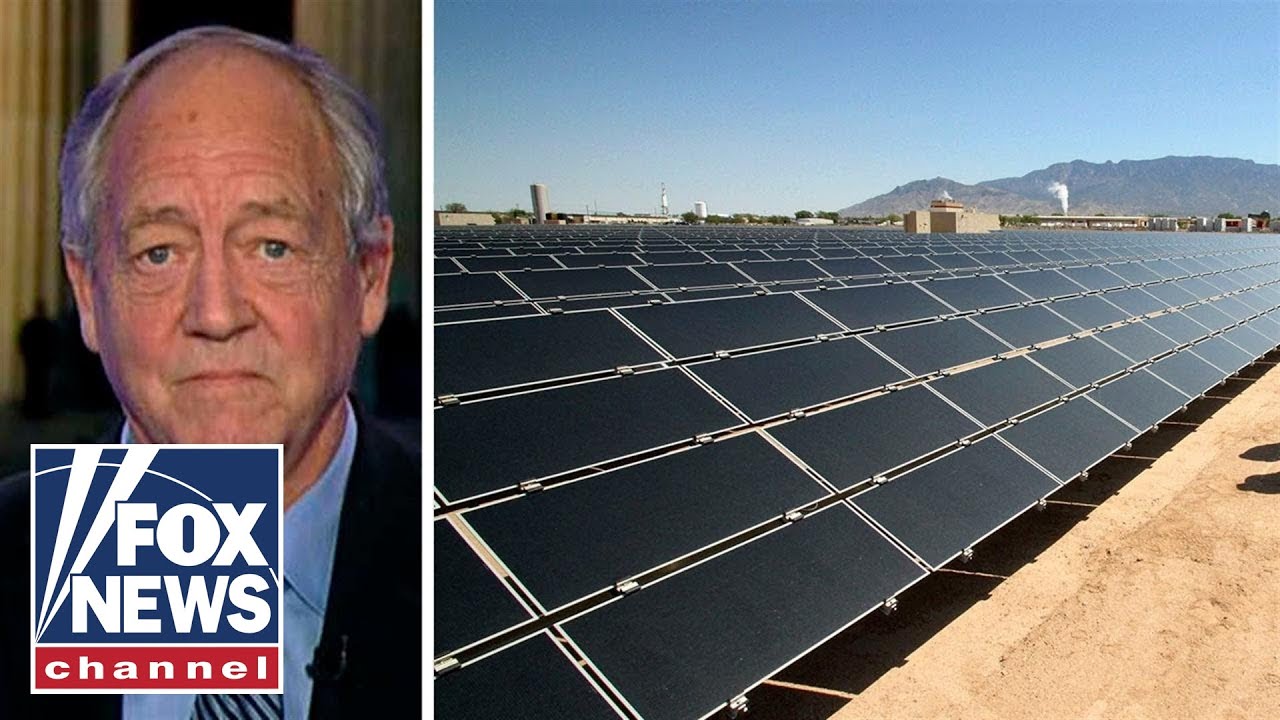 of the Canadian.
Now, President Trump is elevating Moore’s statements, thanks to yet another appearance on the Fox channel, this time on Fox and Friends. The President tweeted:[twt]
Moore has never published an independent scientific journal article on climate change and his claims are contradicted by every major national science academy in the world and all of the evidence they draw on.
Moore does have a 1972 PhD in ecology, but DeSmog could not find any scientific papers published by Moore going back at least as far as 1994. Moore has written many articles for the publications of think tanks and lobby groups.
In his Fox interview with Carlson, Moore said there would “not be any electric trucks anytime soon.” Electric trucks are being manufactured now. Volvo is about to launch its second.
A review of Moore’s past statements on climate change show he has taken contradictory positions, sometimes within weeks, on climate change.
Moore has claimed that nuclear energy is a solution to rising greenhouse gas emissions. But in other forums, he has claimed there is no evidence for human-caused climate change.
Moore’s attempts in recent days to counter suggestions that he is paid for his views by industry are contradicted by his own CV.
https://www.desmogblog.com/2019/03/12/trump-tucker-carlson-fox-breitbart-climate-science-denier-patrick-moore
---
the gift that keeps giving
https://www.desmogblog.com/2019/05/23/climate-science-deniers-marc-morano-patrick-moore-biodiversity-report
many lnx graf
First, Climate Change, Now the Global Extinction Crisis: Industry-Paid Hacks Deny Science to Congress
Read time: 5 mins
By Justin Mikulka • Thursday, May 23, 2019 - 16:18
Patrick Moore, Marc Morano, Robert Watson]
In this week’s Congressional hearing on the recent (and dire) UN Global Assessment of Biodiversity, conservation scientist Dr. Jacob Malcom did not mince words as he explained the report's startling findings that one million species are at risk of extinction.
“We are, as you have heard, losing species faster than ever in human history, tens to hundreds of times faster than the background rate of extinction,” the Defenders of Wildlife scientist told the Congressional House Water, Oceans, and Wildlife Subcommittee. “We are in the middle of the sixth mass extinction, where the last time this happened it was because an asteroid hit the planet. Today we are that asteroid.”
Such a massive loss of plants, animals, and other species would also, quite naturally, affect human life on earth. But just as they have with hearings on the climate crisis, Congressional Republicans and their witnesses used this opportunity to attack the well-documented scientific evidence of a far-reaching global threat to life. And they even used some of the same climate science deniers and tired arguments to do it.
The comprehensive report they attacked gathers even more evidence that human activities are having a significant effect on global biodiversity, just as the scientific consensus shows humans are driving rapid changes in the climate.
“The evidence is crystal clear: Nature is in trouble. Therefore we are in trouble,” Sandra Díaz, one of the co-chairs of the UN Global Assessment Report on Biodiversity and Ecosystem Services, told National Geographic.
Business as Usual With Republican Science Denial
Marc Morano isn’t a scientist but does make his money attacking scientists. From 2006 to 2009, Morano was the communications director for Senator James Inhofe (R-Okla.), who will be remembered for his stunt of throwing a snowball in Congress as he tried to discredit climate science.
Morano moved on from politics to working for organizations funded by oil companies, and he currently runs the website ClimateDepot.com, a project funded by the climate science-denying Committee for a Constructive Tomorrow (CFACT), a conservative think tank which has received funding from ExxonMobil, Chevron, and the Koch brothers.
This week, Morano wasted no time in attacking some of the actual scientists on the hearing's panel, specifically Sir Robert T. Watson, who heads the UN agency that produced the biodiversity report. These attacks on fellow witnesses resulted in hearing Chairman Jared Huffman (D-CA) twice reprimanding Morano.
Rep. Huffman had to ask that Morano “show respect for your fellow panelists.”
[vid]
However, oil industry-funded attacks on climate science, and even Robert Watson, are nothing new. In 2001 a memo to the Bush administration from Exxon lobbyist Randy Randol specifically requests that Watson be removed as head of the Intergovernmental Panel on Climate Change (IPCC), a position he held at the time.
And Morano, a notorious climate science denier, is continuing this long tradition of groups funded by Exxon attacking Watson. Exxon has donated heavily to CFACT and was also involved in the infamous “Victory Will Be Achieved” memo. This memo, assembled by Randol and the American Petroleum Institute, declared in 1998 that “Victory will be achieved when average citizens 'understand' (recognize) uncertainties in climate science.”
The other climate science denier on the witness panel this week was Dr. Patrick Moore, current head of the CO2 Coalition, an organization that grew out of a now-defunct group heavily funded by Exxon.
What did the leader of an organization called “the CO2 Coalition” have to say about carbon dioxide?
“There is no hard evidence that CO2 has anything to do with the change in temperature of the earth’s climate,” Moore told the committee.
In fact, Exxon’s own research accurately predicted the rise in CO2 and temperature which the world has been experiencing.
However, Moore not only made the claim that CO2 doesn’t contribute to atmospheric warming — a concept first demonstrated by Eunice Foote in 1856 — but also said that because humans have been increasing the levels of CO2 in the atmosphere, they were actually the “salvation of life on earth.” And while plants do use carbon dioxide, more CO2 is not necessarily good for plants.
Not everyone in the hearing seemed interested in the blatantly false statements coming from these industry-backed science deniers. Chairman Huffman noted that the efforts came from the “shadowy corners of these junior varsity think tanks.”
Solutions Amid the Attacks and Noise
Due to the format of Congressional hearings and the general GOP policy of climate science denial, these hearings typically offer very little in the way of solutions or actual debate. However, two of the panelists did speak about the threats to biodiversity and comment on solutions.
Malcom, the scientist from Defenders of Wildlife, called out the success of the U.S. Endangered Species Act.“We have forty some odd years showing that the Endangered Species Act has worked incredibly well and as we all know the American economy has continued to grow throughout that entire time,” he said.
Notably, the Trump administration currently is attempting to weaken the scope and effectiveness of the Endangered Species Act.
Perhaps the most concrete recommendation of the day came from Watson, who recommended that governments stop subsidizing industries that are causing harm to the climate and global species.
“One should get rid of many of these environmentally harmful subsidies in agriculture, energy, and transportation,” Watson told the committee.
With suggestions like these, Watson was an obvious target for industry-funded science deniers like Morano and Moore.
==
==
https://naturalresources.house.gov/subcommittees/water-oceans-and-wildlife
DEMOCRATS 519
May 22 House committee hearing on the extinction crisis devolved into a spectacle resembling a Fox News segment, thanks to two frequent Fox guests who were invited by Republicans to testify.
The House Subcommittee on Water, Oceans, and Wildlife held a hearing on the recent summary report from the United Nations that warned human activity is leading to the possible extinction of up to 1 million plant and animal species. The Democratic majority invited expert scientists as witnesses, including Robert Watson, who led the U.N. team that wrote the biodiversity report, and two of the other scientists who worked on it. The Republican minority invited two of Fox News’ favorite climate deniers, Marc Morano and Patrick Moore, who only downplayed the report's findings and cast doubt on climate science.
Morano and Moore have appeared on Fox multiple times in 2019
Morano, a notorious, polluter-backed climate denier, is a Fox News favorite, regularly invited on-air to discuss environmental topics despite the fact that he has no scientific credentials. So far in 2019, Morano has appeared on Fox News shows at least 10 times. His most recent appearances were on May 6 when he commented on the U.N. biodiversity report on two of Fox's “news”-side shows, Shepard Smith Reporting and Special Report with Bret Baier. Both shows aired footage of Morano trying to undermine the report:
MARC MORANO: This is politics, not science. The U.N. is trying to expand its base to include climate and species. They are looking for more treaties, more regulation. They have identified a problem, they've juiced it up, and they put themselves in charge of solving the problem. That's called a self-interested lobbying organization.
Morano has also appeared three times this year on President Donald Trump's favorite show, Fox & Friends: on April 30, when he claimed that carbon dioxide is not pollution; on February 12,when he called efforts to reduce climate change "medieval witchcraft"; and on February 8, when he lied about what's in the Green New Deal and called it "a big bowl of crazy."
Morano has also repeatedly appeared on Infowars, the far-right outlet run by conspiracy theorist Alex Jones. And he recently attacked a young climate activist online, which led to trolls threatening her.
Moore is another Fox News favorite who is frequently invited on the network to downplay environmental issues or to deny that climate change is happening, despite also having no background as a climate scientist and raking in money from polluting industries. So far in 2019, he has appeared on Fox News shows at least five times, all in mid-March. One notable appearance came on the March 12 episode of Fox & Friends, during which he claimed that "the whole climate crisis, as they call it, is not only fake news, it's fake science." This appearance caught the eye of another climate denier, Trump, who approvingly tweeted out a quote from Moore. Moore tries to appear credible by claiming that he was a co-founder of Greenpeace, but this is not true.
Morano and Moore made a mockery of the House hearing, and that’s exactly what Republicans wanted
The May 22 House hearing was supposed to be about the U.N.'s new extinction report, but Morano and Moore made a mockery of this occasion by accusing the scientists who wrote the report of having a political agenda and by downplaying the effects of climate change.
In his written testimony, Morano claimed that his political science background is “an ideal background for examining the latest round of UN environmental claims” and argued that the U.N. “twists and hypes and distorts science in order to push a political agenda.” During the hearing, he also wrongly the 97% scientific consensus on human-caused climate change. Subcommittee Chair Jared Huffman (D-CA) called Morano out for "trolling" climate scientists, saying he came from the "shadowy corners of these junior varsity think tanks."
In Moore’s written testimony, he called the U.N. report's findings “highly exaggerated” and made reference to the “manufactured ‘climate crisis.’” He also falsely that without rising CO2 levels, plants would be much worse off. Moore often sings the praises of pumping more CO2 into the atmosphere, despite the fact that it is definitely not good.
Morano and Moore also got more time at the hearing than the four scientists invited by the Democrats, according to Public Citizen.
Fox News has helped to put Morano and Moore in the public eye by giving them a platform to sow doubt about climate change and other serious environmental issues, and now the two men’s latest Fox-worthy rants are part of the congressional record. The vicious cycle continues.
==
==
https://www.desmogblog.com/2019/03/12/trump-tucker-carlson-fox-breitbart-climate-science-denier-patrick-moore
many lnx twts
What does it take to become a legitimate spokesperson on climate change science and energy policy in the eyes of President Donald Trump and partisan conservative media like Fox News and Breitbart?
If the current worshipping of non-expert and climate science denier Patrick Moore is anything to go by, the only qualification you need is the ability to call first-term Democratic congresswoman Alexandria Ocasio-Cortez a “pompous little twit” on Twitter.
No other actual expertise is, apparently, necessary. This is fortunate, because Moore has no expertise on climate science.
Since Moore attacked Ocasio-Cortez — known as AOC — and her advocacy for a “Green New Deal” in a Tweet on February 24, the Canadian has been “interviewed” on Fox News by Sean Hannity and Tucker Carlson.
After introducing Moore, Carlson managed to not ask a single question of the Canadian.
Now, President Trump is elevating Moore’s statements,[fdr of gp, fake news] thanks to yet another appearance on the Fox channel, this time on Fox and Friends. The President tweeted:
Moore has never published an independent scientific journal article on climate change and his claims are contradicted by every major national science academy in the world and all of the evidence they draw on.
Moore does have a 1972 PhD in ecology, but DeSmog could not find any scientific papers published by Moore going back at least as far as 1994. Moore has written many articles for the publications of think tanks and lobby groups.
In his Fox interview with Carlson, Moore said there would “not be any electric trucks anytime soon.” Electric trucks are being manufactured now. Volvo is about to launch its second.
A review of Moore’s past statements on climate change show he has taken contradictory positions, sometimes within weeks, on climate change.
Moore has claimed that nuclear energy is a solution to rising greenhouse gas emissions. But in other forums, he has claimed there is no evidence for human-caused climate change.
Moore’s attempts in recent days to counter suggestions that he is paid for his views by industry are contradicted by his own CV.
Tucker Carlson
Tucker Carlson speaking at the 2018 Student Action Summit hosted by Turning Point USA in West Palm Beach, Florida. Credit: Gage Skidmore, CC BY-SA 2.0
Contradicting Statements
In July 2018, Moore claimed that wind farms were a “wealth-destroying technology” that would “rust in place.”
But the previous year, an article uploaded to his own website (with a URL showing the year 2017) said that wind farms were “works of art compared to some of our urban environments,” were “commercially feasible,” and that “a million times more birds are killed by cats, windows, and cars than by all the windmills in the world.”
Moore claimed campaigners against forestry, hydroelectric dams, and nuclear energy were “sick” to “deprive developing nations of clean electricity, stop renewable wind energy, block a solution to global warming, and contribute to deforestation.”
In an almost identical article published around March 2005, Moore wrote that “a significant reduction in greenhouse gas emissions seems unlikely given our continued heavy reliance on fossil fuel consumption.”
Moore then quoted scientist James Lovelock saying that “Civilization is in imminent danger” and criticized environmental groups' positions against nuclear energy.
“We can agree renewable energies, such as wind, geothermal, and hydro are part of the solution,” wrote Moore.
Yet in the same month in 2005, Moore wrote in the Toronto Sun that: “The world’s climate has always been changing; it is impossible to tell if our activities are responsible for global warming.”
Career Advocacy
What appears clear is that when Moore is advocating for his favorite industries, global warming has been real. But when he’s not, issues suddenly become uncertain.
On Twitter on March 7, 2019, Moore said: “I have never worked for fossil fuel companies. I have worked with mainly with [sic] agriculture, forestry, and nuclear energy.”
He also wrote: “I have never put $$ ahead of trying to be honest and fair. I am always ready to be corrected on any matter.” He has also denied being a spokesperson for industry.
Between 2006 and 2013, Moore was the founding co-chair of the nuclear industry-funded front group Clean and Safe Energy Coalition (CASEnergy Coalition).
Fellow nuclear energy advocates have been dismayed by Moore’s anti-science views.
In March 2016, DeSmog revealed that Moore had been paid by a European coal industry-lobbying group, Euracoal, to deliver a speech, where he told attendees they should “celebrate CO2.”
The president of the forum that hosted the talk later described Moore’s contribution as among the “less rational” he had heard on global warming.
An archive of Moore’s CV up to 2001 reveals a host of industry clients.
According to the CV, other clients included the Canadian Mining Association, the Prospectors and Developers Association of Canada, Westcoast Energy and B.C. Gas, PVC manufacturer IPEX, andBHP Minerals.
Between 1992 and 1996, Moore was “retained by the Canadian Pulp and Paper Association for annual two-week tours of countries in Western Europe to brief decision-makers and opinion leaders on forestry and the environment in Canada.”
Moore is also a director for the CO2 Coalition— a climate science denial group founded by a former Exxon manager and professor emeritus Will Happer, who has been picked by Trump to head an inquiry into the national security risk of climate change.
Greenpeace Founder?
Moore’s well-known work as an advocate for industries including forestry and nuclear power have not been mentioned by his supporters at Fox or Breitbart, and his incorrect statements about climate change have gone unchallenged.
But Moore’s fans never fail to mention that he was a “former Greenpeace founder” even though he left that organization 33 years ago and that Greenpeace itself has stated many times that he was not a co-founder.
Replying to the President’s tweet, Greenpeace USA said: “Patrick Moore was not a co-founder of Greenpeace. He does not represent Greenpeace. He is a paid lobbyist, not an independent source. His statements about @AOC & the #GreenNewDeal have nothing to do with our positions.”
Former Greenpeace colleague and actual co-founder of Greenpeace International, Rex Weyler, has written: “Moore has served as a corporate public relations consultant far longer than he ever worked for Greenpeace, and he has never worked as a scientist.”
At Canadian think tank the Frontier Center for Public Policy, Moore’s biography said his values were all about “consensus building.” Moore has been chair of the think tank’s “Energy, Ecology and Prosperity Program” and has published several articles through the group.
In 2014, Moore compared students who walked out of a speech he was giving to the Taliban.
When one fellow nuclear advocate pointed out a paper Moore had written about ocean acidification had been published by a think tank he worked at and was not a recognized scientific journal, Moore said “GFY.”
Qualified?
So what are Moore’s scientific qualifications?
According to his CV, Moore completed a degree in Forest Biology at the University of British Columbia in 1969. He gained a PhD in 1972 for his thesis focusing on “The Administration of Pollution Control in B.C., A Focus on the Mining Industry.”
Despite speaking on climate change and energy policy, Moore has no qualifications in either field.
British environment journalist Peter Hadfield has looked in detail at some of Moore’s contradictions and cherry-picked science in a YouTube video.[vid]
==
https://www.desmog.co.uk/2016/03/14/coal-lobbyists-euracoal-paid-patrick-moore-dinner-climate-science-deniers-eu-officials-and-european-parliament-members
europe's coal lobby association EURACOAL paid for climate science denier Patrick Moore to speak to members of the European Parliament (MEP) and EU officials at an intimate dinner-debate last month, DeSmog UK can reveal.
As a March newsletter sent out by the European Energy Forum (EEF) details, Moore was invited as the main speaker at the dinner hosted by EURACOAL on 2 February in Strasbourg entitled “Climate Demons or Climate Gods: Coal Industry Stakes Its Future”.
An EEF press officer confirmed to DeSmog UK that coal lobbyists EURACOAL invited Moore to speak. The Canadian climate science denier is known for promoting the idea that “We should celebrate CO2 as the giver of life it is”.
EURACOAL describes itself as “the voice of coal in Europe” and acts as an umbrella group for associations and research groups across 20 countries.
When asked whether EURACOAL paid for Moore to present that evening, Brian Ricketts, secretary-general of EURACOAL, told DeSmog UK: “Yes, you are correct. EURACOAL did cover Dr. Moore’s travel expenses from Canada and the time he devoted to preparing and giving his presentation to a small group in the European Parliament.”
“Unfortunately, I cannot disclose exactly what was paid [to] Dr. Moore as that would not be very professional,” he wrote via email. “However, it reflected c.5 days’ work for preparation time and long-haul travel.”
According to Moore’s agent’s site, it seems to cost between CAD$5,000 and $7,000 (£2,631 – £3,684) to have Moore speak at an event.
Climate Ambition
The EEF, which organises events for industry stakeholders and MEPs, describes the dinner-debate on its website: “With COP21 concluded, the EU must make an important decision: to continue its high-ambition climate change agenda or to moderate its ambition. This decision will have a profound impact on the future of coal in Europe.”
However, Ricketts added that “For your information, EURACOAL gave no advice or instructions on what Dr. Moore presented or on what he said during the Q&A session – he was free to say whatever he wanted. So, for example, I don’t recall him saying anything in particular about coal and lignite.”
Among those in attendance at the February dinner were Paul Rübig, Austrian MEP and member of the EU’s committee on industry, research and energy, Eero Ailio, deputy head of coal and oil retail markets unit for the European Commission's Director-General for Energy (DG Energy), and Jo Leinen, a German MEP.
MEPs are responsible for representing their city or region to the European Union, and when necessary, lobbying the European Commission on relevant issues.
Ricketts and Roger Helmer, an MEP for the East Midlands and climate science denier, were also at the dinner. They are pictured above standing with Moore.
Ricketts made headlines at the end of last year for his post-Paris statement that the fossil fuel sector “will be hated and vilified, in the same way that slave traders were once hated and vilified”.
In a response to the Guardian article on his comments, Ricketts clarified EURACOAL's and the industry's stance on climate change: “While we do question the future potential of renewables, EURACOAL has no view on climate science. However, it is fair to say that many in the coal industry are climate sceptics.”
‘Open Discussion’
EEF states that its aim is to provide “open discussion” between MEPs, industry, and others active in the energy sector ahead of decisions taken on energy related EU legislation so as to “ensure the decisions are based on accurate information reflecting a variety of points of view.”
Among EEF's members are at least 30 MEPs and oil giants Shell, BP, ExxonMobil, and Chevron along with Centrica, Lukoil, and Statoil. Trade associations and lobby groups, including EURACOAL, are also members.
And as the EEF’s website describes, EURACOAL’s aim “is to discover the truth behind climate science”.
Moore, however, believes that humans are not to blame for global warming and is known for promoting misinformation when it comes to the science of climate change.
Recently Moore, who works at the Frontier Centre for Public Policy in Canada, appeared at the Paris climate conference with known US climate-denial groups the Heartland Institute, the Committee for a Constructive Tomorrow (CFACT), and the Competitive Enterprise Institute (CEI) to hold a ‘counter-conference’ to discourage action on climate change.
Moore also achieved fantastic notoriety after he claimed on camera in March 2015 that glyphosate – the active ingredient in Monsanto’s Roundup herbicide – is safe to drink.
Although a World Health Organization study had recently concluded that glyphosate is “probably carcinogenic,” Moore boasted to the filmmaker: “People try to commit suicide with it and fail fairly regularly.” But Moore refused to follow through on his suggestion by drinking a glass of the herbicide, saying “I'm not an idiot”.
When asked to comment on his EURACOAL presentation Moore said: “I consider DeSmog to be a hate site. So bugger off.”
This isn't the first time Moore has used offensive language against those he disagrees with. In October 2014, when Moore was speaking at Amherst College in Massachusetts, he described the students who walked out in protest as having a “Taliban mindset”.
Moore’s Presentation
Moore's EURACOAL dinner speech saw him promoting his “celebrate CO2” catchphrase. He gave the dinner guests “an unconventional interpretation of the whole climate and energy issue,” as the EEF states in its newsletter.
And as a photo from the event shows, it appears the presentation he gave that night was similar to a speech given at the climate sceptic Global Warming Policy Foundation’s (GWPF) annual lecture last October in London entitled “Should we celebrate CO2?”
Moore’s February presentation is described as having “fostered an inclusive policy discussion based on a broad scientific basis, questioning the selective use of science which, in Dr Moore’s view, has led in some cases to widely accepted myths.”
EEF’s account of the dinner states that Moore told MEPs that “there is no definitive scientific proof that human emissions are the dominant influence on climate” and that carbon dioxide in fact benefits the planet by increasing plant growth.
The myth that ‘CO2 is good for the planet’ has been trotted out by the GWPF and its members several times. DeSmog UK debunks this claim here and here.
‘Options for Thinking’
Moore’s speech was followed by a presentation from Mark van Stiphout, deputy head of unit for new energy technologies, innovation and clean coal at DG Energy.
Van Stiphout argued that “coal is still an important provider of electricity in Europe,” according to the March newsletter.
He also noted that “research and investment are being encouraged to adapt coal to the increasing need for flexibility in power generation and to develop CCS [carbon capture and storage] solutions.”
According to dinner attendee and Austrian MEP Rübig, the night’s discussion provided participants with “options for thinking”.
EU Climate Targets
The EURACOAL dinner-debate was held in advance of a meeting in Brussels on 4 March where environment ministers discussed the EU’s next steps after the COP21 climate summit.
In anticipation of this meeting, and another planned for 17-18 March, EURACOAL has urged the European Commission to implement a less ambitious climate target.
In a 15 February statement, EURACOAL President Wolfgang Ceislik said: “EURACOAL calls on President Tusk and all 28 EU leaders to reject the 40% target and to adopt a less ambitious, more realistic target that can deliver more for Europe.”
While the European Commission initially did not put forward a more ambitious climate target in line with the Paris Agreement’s aim of reducing warming to “well below” 2C, last week Europe’s chief climate negotiator, Artur Runge-Metzger, confirmed that he is open to increasing the EU’s carbon target for 2030.
This followed calls from ministers from 10 countries including the UK, Germany, France, and Luxembourg for the Commission to increase its climate ambition. However, it is unknown whether climate change will be on the agenda for this week's summit.
Photo from left to right: Ricketts, Helmer, and Moore via EEF.
no lnx
==
tppf 11/15 morano bs
Ecologist and Greenpeace founding member Dr. Patrick Moore discussed the benefits of rising carbon dioxide in the atmosphere.
“Let’s celebrate CO2!” Moore declared.
Embedded image permalink
“We know for absolute certain that carbon dioxide is the stuff of life, the foundation for life on earth,” Moore said.
“We are dealing with pure political propaganda that has nothing to do with science,” he continued.
“The deserts are greening from rising CO2,” he added.
“Co2 has provided the basis of life for at least 3.5 billion years,” Moore said.
Read more: http://www.climatedepot.com/2015/11/19/scientists-declare-un-climate-summit-goals-irrational-based-on-nonsense-leading-us-down-a-false-path/#ixzz3suxUDQTu
---
Roundup is a highly effective weed-killer that can be used during home garden maintenance, or on a massive soybean field to boost productivity. It's also been called a probable carcinogen. But according to Dr. Patrick Moore, that may not be true because "you can drink a whole quart" of the herbicide "and it won't hurt you."
Moore, an independent scientist not associated with Monsanto, recently joined French cable channel Canal+ as part of an upcoming news documentary. He advocated for the safety of glyphosate, the main ingredient in Roundup, after a recent report said the widely used chemical "probably" causes cancer.
The label, bestowed by the World Health Organization's International Agency for Research on Cancer, is the second highest risk level for possible cancer-causing agents. The "probable" category can be a bit contentious and asserts that some scientists disagree with the notion a substance causes cancer -- other agents on theWHO's list include sunshine, alcohol and wood dust.
Monsanto has fiercely tried to discredit the assessment. The company has demanded WHO retract the report, saying a growing body of scientific evidence has found glyphosate is safe when used as labeled.
Moore apparently agrees. He went so far to say that humans could even drink the chemical and be absolutely fine, and that people actually try to commit suicide with Roundup, but routinely fail due to its harmlessness.
In the middle of the interview above, a Canal+ journalist offers to go backstage to get his guest a glass of glyphosate to drink on-air, but Moore refuses and then storms off stage.
Patrick Moore: You can drink a whole quart of it and it won't hurt you.
Canal+: You want to drink some, we have some here.
PM: I'd be happy to actually. Not really, but, I know it wouldn't hurt me.
Canal+: If you say so, I have some.
PM: No, no. I'm not stupid. People try to commit suicide with it and fail regularly.
Canal+: No, no. Let's tell the truth.
PM: It's not dangerous to humans. No, it's not.
Canal+: So are you ready to drink a glass of glyphosate?
PM: No, I'm not an idiot.
Despite some reports that say Moore is a lobbyist, Monsanto told The Huffington Post in an emailed statement that he is not and has never been a paid lobbyist or employee of the company.
"Knowledgeable scientists, consumers and our farmer customers may be familiar with and confident in the safety of glyphosate, but their statements don’t make them lobbyists for our company," a spokesperson said. "Dr. Patrick Moore is one of those individuals. He agrees with the science that supports the safety of glyphosate, and is an advocate for technology and innovation. But Dr. Patrick Moore is not and never has been a paid lobbyist for Monsanto."
Moore did not immediately respond to HuffPost's request for comment.
MORE:
RoundupDr Patrick MoorePatrick MooreMonsanto RoundupMonsantoDrink RoundupGlyphosateDrink GlyphosatePatrick Moore GlyphosatePatrick Moore Roundup
http://www.huffingtonpost.com/2015/03/27/monsanto-roundup-patrick-moore_n_6956034.html
---
http://www.sourcewatch.org/index.php?title=Patrick_Moore
subsequently with Greenpeace International between 1981 and 1986. In 1991 he established a consultancy business, Greenspirit Enterprises,"focusing on environmental policy and communications in natural resources, biodiversity, energy and climate change."Moore began working for the Nuclear Energy Institute front group, the Clean and Safe Energy Coalition, in 200He has worked for the mining industry, the logging industry, PVC manufacturers, the nuclear industry and in defence of biotechnology. In October 2008, Greenpeace issued a statement distancing itself from Moore, saying he "exploits long gone ties with Greenpeace to sell himself as a speaker and pro-corporate spokesperson, usually taking positions that Greenpeace opposes." ^[2]}:
Moore describes himself as "chairman and chief scientist" of Greenspirit Strategies Ltd., a PR company that "work with many leading organizations in forestry, biotechnology, aquaculture and plastics, developing solutions in the areas of natural resources, biodiversity, energy and climate change." He is also a Board Member of NextEnergy, a Canadian energy services company.[3]
"In 1990, Dr. Moore founded and chaired the BC Carbon Project, a group that worked to develop a common understanding of climate change.
"Dr. Moore served for four years as Vice President, Environment for Waterfurnace International, a manufacturer of geothermal heat pumps for residential heating and cooling with renewable earth energy. He is now a Director of NextEnergy Solutions, the largest distributor of geothermal systems in Canada.
"As Chair of the Sustainable Forestry Committee of the Forest Alliance of BC from 1991 -2002, he led the process of developing the "Principles of Sustainable Forestry" which were adopted by a majority of the industry...
He obtained a Ph.D. in Ecology, Institute of Resource Ecology, at the University of British Columbia in 1974, and was the recipient of a Ford Foundation Fellowship (1969-1972). ^[4]
TABL
TOC
Contentshide (javascript:toggleToc%28%29)]
1 History (http://www.sourcewatch.org/index.php?title=Patrick_Moore#History)
2 On nuclear power (http://www.sourcewatch.org/index.php?title=Patrick_Moore#On_nuclear_power)
3 On pharmaceuticals in water (http://www.sourcewatch.org/index.php?title=Patrick_Moore#On_pharmaceuticals_in_water)
4 On genetic engineering (http://www.sourcewatch.org/index.php?title=Patrick_Moore#On_genetic_engineering)
5 On mining (http://www.sourcewatch.org/index.php?title=Patrick_Moore#On_mining)
6 On PVC (http://www.sourcewatch.org/index.php?title=Patrick_Moore#On_PVC)
7 Clients (http://www.sourcewatch.org/index.php?title=Patrick_Moore#Clients)
8 Contact information (http://www.sourcewatch.org/index.php?title=Patrick_Moore#Contact_information)
9 Articles and resources (http://www.sourcewatch.org/index.php?title=Patrick_Moore#Articles_and_resources)
9.1 Related SourceWatch articles (http://www.sourcewatch.org/index.php?title=Patrick_Moore#Related_SourceWatch_articles)
9.2 References (http://www.sourcewatch.org/index.php?title=Patrick_Moore#References)
9.3 External resources (http://www.sourcewatch.org/index.php?title=Patrick_Moore#External_resources)
9.4 External articles (http://www.sourcewatch.org/index.php?title=Patrick_Moore#External_articles)
9.4.1 By Patrick Moore (http://www.sourcewatch.org/index.php?title=Patrick_Moore#By_Patrick_Moore)
9.4.2 Other articles (http://www.sourcewatch.org/index.php?title=Patrick_Moore#Other_articles)
History
Patrick Moore, grew up on Vancouver Island in British Columbia, Canada where his family was involved in the fishing and logging industry. His father, Bill Moore, was past president of the B.C. Truck Loggers Association and past president of the Pacific Logging Congress.
After completing a Bachelor of Science in forest biology at the University of British Columbia and a PhD in ecology on the administration of environmental law relating to the mining industry, Moore became involved first in the Western Canada branch of the Sierra Club and later Greenpeace. His involvement in Greenpeace between 1971 and 1986 spanned roles as a campaigner in Greenpeace Canada against whaling, uranium mining, sealing, toxic waste and nuclear warships.
He was President of Greenpeace Canada between 1977 and 1986 and as Director of Greenpeace International.
From 1984 he became involved in a family business, Quatsino Seafarms Ltd, farming salmon on Vancouver Island. Until 1991 he was President of the company and between 1986 and 1989 was President of British Columbia Salmon Farmers Association.
Following claims by the United Fishermans and Allied Workers Union about pollution by the industry generally, the Vancouver Sun reported "Moore called the union's concerns 'phoney', saying that we are not causing pollution and there is no such thing as genetic pollution."(1)
In 1990, PR consultant James Hoggan (who had worked for Western Forest Products) told a meeting of forest executives that the industry was wasting millions on ineffective PR. He said he and Patrick Moore had designed a "green audit" program to sell to industry.(2)
Subsequently, Moore and two others formed Greenspirit to help business and government "incorporate the environmental agenda."(3)
In 1991, the year Moore created Greenspirit, he became a member of the Board of Directors of the timber industry created Forest Alliance of B.C. [1]
In 1991 Moore was appointed as Director of the British Columbia Forest Alliance which was described by O'Dwyer's PR Services Report, as "a Burson-Marsteller created group, bankrolled by large timber companies," which "is waging a PR war with environmentalists upset with the logging of rainforests in western Canada." (4)
Burson-Marsteller employee Gary Ley was the Executive Director of the BC Forest Alliance in 1991. Ley subsequently headed up the Vancouver office of National PR, which B-M had a stake in. National PR had the BC Forest Alliance account. Tom Tevlin, who was part of the initial Forest Alliance team and later succeeded Ley as Executive Director and then President at the Alliance, is now President and CEO of Greenspirit Strategies Ltd.
Burson-Marsteller had worked for the Argentinian junta to "improve [its] international image" and boost investment. [Joyce Nelson, interview with Harold Burson (founder of Burson Marsteller) fall 1981, New York]. B-M's work for the Argentinian government occurred at the time that 35,000 people were disappeared by death squads.
In July 1991 Moore was asked by a Canadian journalist about B-M's work for the Argentinian junta. "Forest Alliance Director, Patrick Moore, argues that Burson-Marsteller's contract was with Argentina's economic ministry and its non-political role was to encourage foreign investment," Stephen Hume wrote. "It [B-M] has a record of truth in public relations as its bottom line," Moore said, citing the company's role in the Tylenol recall. Moore went on to object to the juxtaposing the reality of state murder of political opponents with Burson-Marsteller's strategy for marketing the perception of Argentina's stability. Besides, Moore argued, "people get killed everywhere."(5)
In August 1993 Moore was part of the delegation that lobbied a US foundation, the Pew Charitable Trust, against a decision to fund British Columbian environmental groups. Following the meeting, the Chair of the BC Forest Alliance, Jack Munro, told the Vancouver Sun "we are not opposed to them giving money to environmental groups. We are opposed to money filtering into protectionists like the people protesting the Clayquot," he said.(6)
In January 1994, Moore claimed in an interview that while Greenpeace had acted within the law in all matters relating to the International Whaling Commission that they may have funded travel expenses for some delegates to the Commission. "This statement was in error," Moore wrote in a retraction several days later. (7) Download apology as a PDF document
Two months later, Moore was criticized for claims that he made that Greenpeace "blackmail" had forced the rejection of The Times of London of an ad from the BC Forest Alliance. The Times rejected Moore's claim: "The Times had not even received the art work for the ad from the alliance. ... We do not even know what this ad is supposed to look like so we can hardly be accused of censorship or bias." (8) See also these articles on Moore, from Greenpeace co-founder Paul Watson of the Sea Shepard Society.
In 2000 Moore went to the Brazilian Amazon rainforests for the filming of a documentary by Marc Morano for American Investigator. According to an interview in the New York Post, Moore dismissed concerns about the impacts of logging, mining and clearning for agriculture on the Amazonian rainforests. "All these save-the-forests arguments are based on bad science. ... They are quite simply wrong. We found that the Amazon rainforest is more than 90 percent intact. We flew over it and met all the environmental authorities. We studied satellite pictures of the entire area," he said. "They are just about the healthiest forests in the world. This stuff about them vanishing at an alarming rate is a con based on bad science ... Anyone who has been in the jungle knows that if you want to live there, you'd better take a few machetes. Otherwise, it'll take it all back," said Moore. [2]
In October 2002, Moore was a keynote lunch speaker at the "Best Practices in Communications: Wood Products and Forests," organized by the Wood Promotion Network conference in Vancouver. Moore's speech was titled "Declaration in Support of Protecting the Environment by Growing More Trees and Using More Wood." (PDF)
In October 2003 Moore endorsed the launch by the Hudson Institute's Center for Global Food Issues (CGFI) of the "Earth Friendly/Farm Friendly" Seal of Approval for the food and dairy industry. Monsanto, DuPont, Kraft/Phillip Morris, and the nuclear industry have funded the Hudson Institute think tank.
In late January 2004 Moore was the key speaker at a "teach-in" organized by Paul Driessen and hosted under the name of the Congress of Racial Equality on "eco-imperialism" at the Sheraton New York Hotel and Towers. "The environmental movement I helped found has lost its objectivity, morality and humanity ... The pain and suffering it inflicts on families in developing countries can no longer be tolerated," stated Moore.
On nuclear power
See the related SourceWatch articles Patrick Moore on Nuclear Power and Patrick Moore: Media coverage that doesn't disclose Moore's nuclear consultancy work.
On pharmaceuticals in water
In a January 20, 2009, op/ed in the Seattle Times, Moore wrote that it is "inevitable that a small amount of ingested pharmaceuticals will eventually show up at trace levels in wastewater," Greenpeace activist turned industry PR consultant Patrick Moore writes in an op/ed. "The Pharmaceutical Assessment and Transport Evaluation (PhATE) model has been developed by industry as a tool to estimate concentrates of pharmaceutical residues in surface waters. ... But some activist organizations still push for costly and unnecessary controls. In Washington, Oregon and Illinois, for example, interest groups who believe that any trace amount of any compound in wastewater must be stopped at all cost are proposing an elaborate take-back plan." At the end of the op/ed, Moore is simply identified as "an adviser to government and industry." ^[5]
Moore's colleague at Greenspirit Strategies, Tom Tevlin, told the Center for Media and Democracy that the PR firm does count pharmaceutical companies among its clients. However, Tevlin would not name them. ^[6] The PhATE model that Moore praised in his op/ed was developed by Pharmaceutical Research and Manufacturers of America, the major U.S. drug industry group. ^[7]
Moore is also sponsored by Bayer Advanced, a company that makes pesticides, as a keynote speaker at the Independent Garden Center Show in Chicago in August 2009. ^[8]
On genetic engineering
On February 22, 2004, the German conservative magazine "WELT am Sonntag" ("World on Sunday") - which is owned by the Axel-Springer media-group - published an article by Patrick Moore. [3] (As an example of the conservative pedigree of and its connections to conservative US circles The World on Sunday also publishes columns by Henry Kissinger).
In an opinion column, Moore approvingly referred to an essay by Peter Schwartz - The Anti-Industrial Revolution - published in Return of the Primitive edited by Ayn Rand. "In it, he warned that the new movement's agenda was anti-science, anti-technology, and anti-human," Moore wrote.
"Environmentalists were often able to produce arguments that sounded reasonable, while doing good deeds like saving whales and making the air and water cleaner. But now the chickens have come home to roost. The environmentalists' campaign against biotechnology in general, and genetic engineering in particular, has exposed their intellectual and moral bankruptcy. By adopting a zero-tolerance policy towards a technology with so many potential benefits for humankind and the environment, they have lived up to Schwartz's predictions. They have alienated themselves from scientists, intellectuals and internationalists," Moore claimed. [4]
In a response Greenpeace's Steve Sawyer dismissed Moore's claims as inaccurate. "If Moore applied the logic he claims is missing from the arguments of opponents of GE crops, he would realise that such crops are no more 'science' than refrigerators, nuclear weapons or washing machines. GE crops are commercial products that result from the application of one specific technology from within a much broader field of scientific inquiry. GE crops are commercial products, not science - and there are sound scientific reasons for opposing them," he wrote in an opinion column in The Age.
"Patrick Moore's attempt to characterise his proselytising on behalf of industry as 'consensus politics' stretches credulity. The reality is that the issues of environment and development are complex. Minimising human impacts on our biosphere, while promoting a basic level of equity and social justice on a global basis, is a challenge beyond anything human society has ever faced," he wrote.[5]
Moore claimed that the European Commission has given genetically engineered products a clean bill of health. "In 2001, the European Commission released the results of 81 scientific studies on genetically modified organisms conducted by more than 400 research teams at a cost of $US65 million. The studies, which covered all areas of concern, have 'not shown any new risks to human health or the environment, beyond the usual uncertainties of conventional plant breeding. Indeed, the use of more precise technology and the greater regulatory scrutiny probably make them even safer than conventional plants and foods,'" he wrote.
Steve Sawyer, from Greenpeace International disagrees. "What the EC actually did in 2001 was to identify 81 EC-funded research projects on GE organisms that were in progress. Most of these studies have not yet been published in peer-reviewed scientific literature. A more accurate assessment of the status of peer-reviewed studies on the human health risks of GE foods can be found in Pryme & Lembcke (2003)," he wrote.
"They concluded that there had been only 10 peer-reviewed 'in vivo' studies examining the possible health consequences of GE foods and feed. Only five of these were independently funded. The authors found that more scientific effort and investigation was necessary before GE foods could be considered unlikely to cause long-term human health problems," he wrote.
In particular, Moore points to the potential of "golden rice," genetically engineered to boost vitamin A levels and therefore the potential to prevent blindness. "Surely, if reasonable people saw the choice between the risk of a daffodil gene in a rice plant and the certainty of millions of blind children, they would descend on Greenpeace offices around the world and demand to have their money back," he wrote.
Sawyer argues that Moore's enthusiasm for genetically engineered rice is overly optimistic and ignores broader inequities that cause and maintain poverty. "Blindness is not caused by a lack of vitamin A in rice, just as starvation is generally not caused by a lack of food production. Malnutrition and starvation are the result of a lack of access to a balanced diet - a problem of poverty, which in turn is caused by problems of economics and politics," he wrote.
"The proponents of GE crops and foods are only too quick to promote the alleged benefits of whatever panacea happens to be the flavour of the month, often with little real understanding of the problem they are purporting to solve," he wrote.
"When those who raise questions about GE foods are lambasted for being ideological, "anti-science", or "anti-human", one has to ask why; and also why the proponents of GE foods manage to avoid being tarred with the same brush despite repeatedly overstating the benefits and systematically understating the risks, he wrote. "The reality is that golden rice is a research project. It has not undergone safety tests and its claims to solving health problems are extremely optimistic, bordering on fantastic."
On mining
At the May 2007 "New York Hard Assets Investment Conference," Moore was a keynote speaker. He told attendees, "Since my entry into the global environmental movement in 1971, mining has contributed significantly to a more sustainable world economy, and key beneficiaries of this progress are mining workers, families and communities," according to Resource Investor. [6]
Moore said that mining companies in third world countries must deal with "corruption among environmental groups and local governments compounded by yellow journalism. Greenspirit Strategies partnered with Newmont as a leader in mining sustainability to dispel such false reports," reported Resource Investor. Moore also accused "environmental extremists" of being "anti-human," "anti-science and technology," "anti-globalization," and "anti-civilization." [7]
On PVC
In December 2007, Moore slammed "anti-PVC activists" for "pushing retailers toward untested, less affordable and potentially riskier materials" with a "fear-mongering campaign." His comments came two days after "Sears Holdings Corporation, parent of the Sears and Kmart retail chain stores, said it will work to phase out use of PVC in its packaging and merchandise," reported ICIS. ^[9]
Moore's resume states that in 2001, he was "retained by IPEX, Canada’a largest manufacturer of PVC, to intervene in the environmental policy of the Toronto 2008 Olympic Bid." ^[10]
In a December 2007 press release from his Greenspirit firm, Moore was quoted as saying, "It's completely unacceptable for these activists to call PVC 'toxic' when PVC's effects on health and the environment have been investigated at every stage from manufacture through use and on to final disposal -- in all cases vinyl has been shown to be safe and environmentally sound." The release did not disclose Moore's or the firm's financial relationship with the PVC industry. ^[11]
Moore used similar language in a July 2006 letter to the San Francisco Chronicle: "Vinyl is one of the most sustainable, flexible and cost-effective materials available. Alternatives are more expensive, less versatile and often pose unknown health or environmental risks." ^[12]
Clients
Moore's clients [8] - though the list has not been updated since 2000 - have included:
- B.C. Hazardous Waste Management Corporation (1991-92);
- Moore established the B.C. Carbon Project "working to achieve a common understanding of the carbon budget and the implications of global climate change for B.C." - which received a $C145,000 grant in May 1991. Moores involvement ended in 1994;
- on retainer to the Canadian Pulp and Paper Association to tour European countries to counter advocacy by environmental groups for a boycott of British Columbian forest products (1992-96);
- Westcoast Energy and BC Gas 1993-1994 "to design a public consultation process to address greenhouse gas emissions for the natural gas sector in B.C.";
- BHP Mineralsto facilitate a round table on proposals to use the abandoned Island Copper mine as a landfill site (1993-94);
- Director and Vice-President, Environment and Government Affairs for Waterfurnace International 1995-1998 to "build awareness of the benefits of renewable earth energy technology." According to his website, Moore remains a member of the Board of Directors.
- Consultant to the National Association of Forest Industries in Australia for a national tour defending the logging of native forests (1996);
- consultant to the Canadian Mining Association and the Prospectors and Developers Association of Canada "on the role of biodiversity in environmental policy in the mining industry," (1996);
- consultant to BHP Minerals (Canada) Ltd. to author a paper on the environmental impact of submarine tailings disposal over the 23-year life of the Island Copper Mine on Vancouver Island (1996);
- speaker for numerous timber industry associations including the American Forest and Paper Association, the Council of European Paper Industries, State Forestry Associations in Texas, North Carolina, South Carolina, Georgia, New York, Maine, and Florida, the National Hardwood Lumber Association (1998-1999), and at ForestLeadership conferences [9] in 2005 [10];
- gave evidence in support of bio-technology before the New Zealand Royal Commission on Genetic Modification and undertook at tour of Southeast Asia, hosted by the International Service for Assistance with Agri-Biotech Applications. "Led seminars in Bangkok and Jakarta on the benefits of biotechnology for farmers in developing countries," Moore's website states (2000);
- speaker for groups including the Filipino Society of Foresters and the Agri-Food Canada (2000); and
- consultant to the largest manufacturer of PVC in Canada, IPEX, to "intervene in the environmental policy of the Toronto 2008 Olympic Bid." The environmental guidelines adopted for the Sydney Olympics recommended against the use of PVC wherever possible.
- Newmont [11]
Also see the related SourceWatch article Patrick Moore appearances.
Contact information
Greenspirit
4068 W. 32nd Ave
Vancouver BC
V6S 1Z6 Canada
tel: 604.221.1990 begin_of_the_skype_highlighting 604.221.1990 end_of_the_skype_highlighting
fax: 604.222.9353
E-mail: patrickmoore@greenspirit.com
Web: http://www.greenspirit.com/index.cfm
305 - 873 Beatty Street
Vancouver BC
V6B 2M6 Canada
tel: 604.681.4122 begin_of_the_skype_highlighting 604.681.4122 end_of_the_skype_highlighting
fax: 604.681.4123
E-mail: tom AT greenspiritstrategies.com
Web: http://www.greenspiritstrategies.com
Articles and resources
Related SourceWatch articles
- Christine Todd Whitman
- Clean and Safe Energy Coalition
- Greenspirit Strategies
- Nuclear Energy Institute
- Nutrients for Life Foundation
- Patrick Moore appearances
- Patrick Moore: Media coverage that doesn't disclose Moore's nuclear consultancy work
- Patrick Moore on Nuclear Power
- Vermont Energy Partnership
References
- ↑ Greenspirit, "About Greenspirit: Who is Patrick Moore?", Greenspirit website, accessed October 2008.
- ↑ Press release, "Greenpeace Statement On Patrick Moore," Greenpeace, October 10, 2008.
- ↑ "About NextEnergy: Biographies", NextEnergy website, accessed October 2008.
- ↑ Biographies, Shark Water, accessed October 20, 2009.
- ↑ Patrick Moore, "Don't flush pharmaceuticals down the drain," The Seattle Times (Washington), January 20, 2009.
- ↑ Phone conversation with Tom Tevlin of Greenspirit, Diane Farsetta, Center for Media and Democracy, January 21, 2009.
- ↑ "Issues: Pharmaceuticals in the environment," GlaxoSmithKline website, undated, accessed January 2009.
- ↑ Charles Reynolds, "Bayer Buyers Better Beware," The Ledger (Lakeland, Florida), June 18, 2009.
- ↑ Greg Holt, "Greenpeace co-founder defends PVC," ICIS, Decmeber 14, 2007.
- ↑ "About Greenspirit," Resume of Patrick Moore PhD, accessed December 2007.
- ↑ Press release, "Scientifically baseless attack on PVC could hurt consumers, resulting in use of riskier and less affordable materials," Greenspirit Strategies via CNW, December 13, 2007.
- ↑ "PVC letter, SF Chronicle," via Greenspirit website, accessed December 2007.
External resources
- Patrick Moore, Ph.D., Resume of Patrick Moore. Accessed November 3, 2003.
- "Patrick Moore to Receive Honorary Doctorate of Science", Canada News Wire, May 13, 2005. (This release has some bio background on Moore.)
- Environmental Health Fund and Public Information Network, "Patrick Moore: The Case of the 'Greenpeace Co-Founder' and His Corporate Clients" (PDF file), February 2007. (An overview of Moore's consulting work, including much detailed on SourceWatch.)
External articles
By Patrick Moore
- Patrick Moore, Letter to Don't Make a Wave Committee, March 16, 1971. (Pdf)
- Patrick Moore, "Assault on Future Generations", Greenpeace Report: 1976, pages 47-49. (Pdf)
- Patrick Moore, "Patrick Moore: from Greenpeace to Greenspirit", Checkbiotech.org, January 9, 2004.
- Patrick Moore, "The blindness of the greens", The Age, Melbourne, February 16, 2004. (This column is an abbreviated version of the following article published in The American Enterprise Institute magazine).
- Patrick Moore, "Battle for Biotech Progress", The American Enterprise, American Enterprise Institute, March 2004.
- Patrick Moore, "Color mainstream green", Seattle Post-Intelligencer, September 7, 2004.
- Patrick Moore, "Environmental movement has lost its way", Miami Herald, January 30, 2005.
- Patrick Moore, "Digging for green: Newmont responsible on environment, Greenpeace co-founder says", Rocky Mountain News, February 4, 2006.
- Patrick Moore, "Going Nuclear", Washington Post, April 16, 2006.
- Patrick Moore, "Critics protest writer's hard line on vinyl", Letter to the Editor, San Francisco Chronicle, July 15, 2006.
- Patrick Moore, "Where will province store its nuclear waste?", Toronto Star, Opinion, October 4, 2006.
- "Going Nuclear", Iceland Review, November 13, 2006.
- "Dr Patrick Moore lecture", The Age, December 16, 2006.
- Patrick Moore, "The Sensible Environmentalist: It’s Time to Boycott the Boycotts", Pallet Enterprise, January 1, 2007.
- Patrick Moore, "PBDEs not the issue in the Sound," Seattle Post-Intelligencer opinion column, January 23, 2007.
- Interview: "Questions For Environmentalist Dr. Patrick Moore," New York Resident, May 15, 2007.
- Patrick Moore, Op/ed: "An Inconvenient Fact: Despite the anti-forestry scare tactics of celebrity movies, trees are the most powerful concentrators of carbon on Earth," Vancouver Sun (Canada), August 29, 2007.
- Patrick Moore, "Listener Letters", Living on Earth, Week of November 9, 2007. (This is a phoned in response by Moore to a story featuring Vandana Shiva).
- Patrick Moore, "Nuclear power: Massachusetts is facing up to carbon choices", The Patriot Ledger, April 12, 2008.
- Patrick Moore, "Why I Left Greenpeace", Wall Street Journal, Opinion, April 22, 2008; Page A23. (Rick Hind, from Greenpeace USA, responded to Moore's op-ed. See Rick Hind, "Make America's Chemical Policy More Like Europe's", Wall Street Journal, April 28, 2008; Page A18.)
- Patrick Moore, " Greenpeace co-founder speaks out against activist attempts to politicize green building agenda", Media Release, May 22, 2008.
- Patrick Moore, "Patrick Moore: PVC is sustainable packaging", Santa Cruz Sentinal, June 22, 2008.
- Patrick Moore, "100th Anniversary of Water Chlorination", Huffington Post, September 15, 2008.
- Patrick Moore, "Waste pharmaceuticals: a new environmental threat", Seattle Times, January 20, 2009. (In this column Moore criticizes groups proposing restrictions on the disposal of pharmaceuticals and trace levels of pharmaceuticals in wastewater. He also extols the Pharmaceutical Assessment and Transport Evaluation model developed by the Pharmaceutical Research and Manufacturers of America). The bio note at the foot of Moore's column stated that "an adviser to government and industry, Patrick Moore is a co-founder and former leader of Greenpeace, and chair and chief scientist of Greenspirit Strategies Ltd. in Vancouver, Canada."
- Patrick Moore, "Don't feel guilty: Use soft toilet paper for your derriere," Vancouver Sun, March 4, 2009.
- Patrick Moore, "Renewables won't solve all our energy needs", TheStar.com, July 9, 2009.
- Patrick Moore, "Nuclear investment part of a viable energy portfolio," San Antonio Express-News (Texas), September 16, 2009.
Other articles
- (1)The Vancouver Sun, June 23, 1988
- (2)Canada News Wire, October 2, 1990.
- (3)Canadian Press Newswire, January 8, 1991.
- Bob Burton, “Sometimes the Truth Leaks Out: Failed PR Stunts 'Down Under'", PR Watch, Volume XX Number 4, fourth quarter 1997.
- "Timber group formed by B-M, battles greenies via ads", O'Dwyers PR Services Report, Volume 9 Number 6, June 1995, pages 1, 14-17.
- (5) Stephen Hume, “Forestry flacks record; defending the indefensible, The Vancouver Sun, July 22, 1991, page A9.
- (6) Stewart Bell and David Hogben, &"MacBlo says environmentalists should retract bribing accusation", The Vancouver Sun, August 18, 1993.
- Fax from Patrick Moore to Stewart McNeish, BCTV News, January 14, 1994. (See download link above).
- (8) "Forest Alliance ad not rejected; nor received&", Business Information Wire, April 7, 1994.
- "Eco-scientists deny Amazon's in danger", New York Post, May 31, 2000.
- Wood Promotion Network, "Best Practices in Communications: Wood Products and Forests", August 2002.
- "Center for Global Food Issues to Preview ‘Earth Friendly/Farm Friendly' Program: Seal of Approval Offers Farmers and Consumers More Choices", PRNewswire, October 29, 2003.
- Congress of Racial Equality, "CORE holds teach-in, demands end to “Eco-Imperialism”: Greenpeace co-founder denounces his former colleagues", Press Release, January 21, 2004.
- Steve Sawyer, "Why opposition to GE crops is based on sound science", The Age, February 23, 2004.
- Drake Bennett, "Eco-Traitor", Wired, Issue 12.03, March 2004.
- "Interviews: Patrick Moore", ForestLeadership.com, 6th August 2004.
- Dave Rosso, "Environmental activist displays new colors", The Times-Standard, March 15, 2005.
- Greenspirit Strategies Ltd, "Dr. Patrick Moore Appears Before US House Subcommittee on Energy and Resources, Speaks in Support of Nuclear Energy", Media Release, April 28, 2005.
- Dr. Patrick Moore, "Recycling industry sets goal for waste recovery", Belleville News-Democrat, July 20, 2005.
- David Falchek, "More News", Times Tribune, July 31, 2005.
- "Is America's Environmental Movement Based On Hype And Fear?", ABC-7, October 27, 2005.
- Marc Morano, "Nuclear Energy Debate Turns Radioactive at Climate Conference", CNSNews.com, December 08, 2005.
- Mathew L. Wald, "Ex-Environmental Leaders Tout Nuclear Energy", New York Times, April 25, 2006.
- Nancy Evans, "Vinyl critic fires back", Letters to the Editor, San Francisco Chronicle, July 19, 2006.
- Tyler Hamilton, "Lovins Q & A", Toronto Star, October 22, 2006.
- Philip Hopkins, "Green guru sees the good for the trees", The Age, December 16, 2006.
- Editorial, "Pick Your Poision," Brattleboro Reformer (VT), February 1, 2007.
- Abby Fox, "Public forest lands ignored as opportunity," Red Bluff Daily News (Calif.), February 9, 2007.
- Editorial, "Is California's timber climate warming up?," Redding Record Searchlight (Calif.), February 10, 2007.
- Erica Herrero-Martinez, "Fuel Fight: Patrick Moore believes in nuclear power -- to the disbelief of former Greenpeace colleagues," Wall Street Journal (sub req'd), February 12, 2007.
- Jon A. Nones, "Newmont Leads Industry in Mining Sustainability," Resource Investor, May 14, 2007.
- Tyler Hamilton, "Patrick Moore and the path to lost credibility," "Clean Break" blog (associated with the Toronto Star), May 16, 2007.
- Ann Work, "Next best thing: Students hear arguments for nuclear power," Times Record News (Wichita Falls, Texas), June 8, 2007.
- Brit Hume, "How Many Scientists Say That Mankind Is Affecting Global Warming?" Fox News, August 30, 2007.
- Shaunti Feldhahn and Andrea Cornell Sarvady, paired op/ed columns: "Is science or politics leading the global warming debate?," Atlanta Journal-Constitution (Georgia, US), October 2007.
- "True of False: Fish," CNN, March 24, 2008.
- Press release / correction, "Sustainable Fisheries Coalition Responds to Herring Alliance 'Report'," Sustainable Fisheries Coalition via PR Newswire, May 21, 2008.
- Press release, "Greenpeace co-founder speaks out against activist attempts to politicize green building agenda," Greenspirit Strategies via PR Newswire, May 22, 2008.
- Pete Chagnon, "Dissent, discussion over cause of global warming," OneNewsNow, December 31, 2008.
- "Tear down the Amazon rainforest idol: 'Save the trees' more political myth than environmental truth," WorldNetDaily, January 31, 2009.
Retrieved from "http://www.sourcewatch.org/index.php?title=Patrick_Moore"
Categories: Nuclear PR | Front groups portal | Water | Energy | Environment | Public relations professionals
====
old but omg
---
A Million Tiny Strands
By Hunter
01/16/2006 04:07:36 PM EST
The Murtha-Bashing Cybercast News Service Swarms with Pro-Exxon, Pro-Monsanto Reports, Quotes, and Commentary. Who's Paid to do What?
[Crossposted from Daily Kos]
"Facts don't really matter. In politics, perception is reality."
-- Ron Arnold, Vice President of the Center for the Defense of Free Enterprise
"We're out to kill the f**kers. We're simply trying to eliminate them. Our goal is to eliminate environmentalism once and for all."
-- Arnold in a 1992 interview. Arnold's "Wise Use" movement has been linked to right-wing militia groups.
The website Daily Kos highlighted this story from BusinessWeek's Earnon Javers on Saturday:
Asked about the payments, Fumento says, "I'm just extremely pro-biotech." He says he solicited several agribusiness companies to finance his book, which was published by Encounter Books. "I went after everybody, I've got to be honest," Fumento says of his fund-raising effort. "I told them that if I tell the truth in this book, the biotech industry is going to look really good, and you should contribute." [...]
Fumento insists that disclosure of financial transactions between op-ed columnists and the companies they cover wouldn't be practical.
So here's a stunner. A senior fellow at the Hudson Institute -- one of those right-wing think tanks founded in order to provide haven for truthiness-based, business-friendly "science" that no actual scientific or knowledgeable policy institution would touch with a sterile, non-conductive ten foot science pole -- solicited money from a biotech company in the process of writing a book that would make them "look really good". And sure enough, Monsanto "contributed" $60,000 to get the book written.
Wait... There's more! (13 comments, 4199 words in sto
but wait:
A Million Tiny Strands
By Hunter
01/16/2006 04:07:36 PM EST
The Murtha-Bashing Cybercast News Service Swarms with Pro-Exxon, Pro-Monsanto Reports, Quotes, and Commentary. Who's Paid to do What?
[Crossposted from Daily Kos]
"Facts don't really matter. In politics, perception is reality."
-- Ron Arnold, Vice President of the Center for the Defense of Free Enterprise
"We're out to kill the f**kers. We're simply trying to eliminate them. Our goal is to eliminate environmentalism once and for all."
-- Arnold in a 1992 interview. Arnold's "Wise Use" movement has been linked to right-wing militia groups.
The website Daily Kos highlighted this story from BusinessWeek's Earnon Javers on Saturday:
Asked about the payments, Fumento says, "I'm just extremely pro-biotech." He says he solicited several agribusiness companies to finance his book, which was published by Encounter Books. "I went after everybody, I've got to be honest," Fumento says of his fund-raising effort. "I told them that if I tell the truth in this book, the biotech industry is going to look really good, and you should contribute." [...]
Fumento insists that disclosure of financial transactions between op-ed columnists and the companies they cover wouldn't be practical.
So here's a stunner. A senior fellow at the Hudson Institute -- one of those right-wing think tanks founded in order to provide haven for truthiness-based, business-friendly "science" that no actual scientific or knowledgeable policy institution would touch with a sterile, non-conductive ten foot science pole -- solicited money from a biotech company in the process of writing a book that would make them "look really good". And sure enough, Monsanto "contributed" $60,000 to get the book written.
Now couple that for the moment with another big story of the day -- the CNSNews "story" by senior staff writer Marc Morano smearing Congressman and Vietnam war veteran Jack Murtha -- according to methods nearly identical to the "Swift Boat" claims against Kerry.
Why is Morano's "breaking" coverage of the story especially interesting? Because, as daria g and The Gadflyer point out, CNSNews was the first source of the Swift Boat Vet claims in the 2004 election. And who was the writer of those multiple stories, each sourced heavily from such figures as John O'Neill and Jerome Corsi?
Marc Morano. Exact same guy.
Imagine that. Anyone think maybe there's a connection between the background sources, in those two stories? Gee, I sure wonder what a perusal of Marc Morano's cell phone records would turn up, over the course of the last month or two.
Aside from a particular interest in the Swift Boat Vet claims, Morano has a long and inventive list of story ideas, including an entire article dedicated to the breathless report that right-wing uber-crackpot Lucianne Goldberg found Bill Clinton's memoirs "boring".
But among the stories Morano and others have returned to time and time again, for CNSNews, have been pro-biotech, pro-GMO, anti-environmental stories. And that's where, in light of yesterday's news on the Monsanto-paid Fumento and our particular interests in sniffing out links between stories, things get a bit interesting.
Because I mean a lot of pro-biotech and anti-environmental stories. Including, as it turns out, one hell of a lot of stories featuring quotes from Niger Innis, spokesman for the Congress of Racial Equality, and other figures which, one by one, can each be traced to either ExxonMobil and/or Monsanto-backed "nonprofits" and "think tanks".
Earlier this year, Chris Mooney in Mother Jones provided a description of what the previously significant and longstanding CORE has become. And it isn't pretty:
So why, then, does the Congress of Racial Equality (CORE), one of the nation's most storied civil rights groups, organizer of the Freedom Rides and the 1963 March on Washington, attack those who want to curb global warming? ExxonMobil, which in 2003 gave CORE $40,000 ($15,000 was earmarked for "global climate outreach"), would obviously like to avoid any appearance that its products and policies are a slow-moving assault on poor people of color. How better than to turn the accusation around? In that bit of public relations jujitsu, CORE has been most useful. To those familiar with CORE's recent history, its allegiance to ExxonMobil comes as no surprise. In 1968, Roy Innis seized control of CORE and moved the group to the far right. Innis has been accused by founder James Farmer and other black leaders of renting out CORE's historic reputation to corporations like Monsanto and ExxonMobil. (CORE even mounted a counterprotest to environmentalists picketing an ExxonMobil shareholders' meeting.) [...]
Helping CORE form these talking points is its senior policy adviser, Paul Driessen, the author of Eco-Imperialism: Green Power, Black Death, who also works with several other ExxonMobil-funded groups. At a 2004 ExxonMobil shareholders' meeting, Driessen referred to CORE as "one of America's oldest and most respected civil rights organizations" and called for greater funding for the group.
So out of curiosity, who covered that shareholders "counterprotest" for CNSNews? Hmm -- yep, Marc Morano, in a story approvingly quoting both Innis and Ron Arnold of the Center for the Defense of Free Enterprise, another "nonprofit" group receiving funding from ExxonMobil, of which Paul Driessen is also a senior advisor. Needless to say, neither group was identified by Morano as having an ExxonMobil connection to the "counterprotests".
As far as CORE itself, Jonathan Matthews detailed the new Monsanto and ExxonMobil connections to the group in an excellent article from last March that went down the list of recent CORE-based propaganda efforts:
Of course, such attempts to position biotech's soap box behind a black man's face neither began nor ended in Johannesburg. In late 1999, for instance, a street protest against genetic engineering in Washington DC was disrupted by a group of African-Americans bearing placards such as "Biotech saves children's lives." A Baptist Church from a poor neighborhood had, the New York Times revealed, been paid by Monsanto's PR firm to bus in the counter-demonstrators. But Johannesburg does seem to have been a kind of watershed. Since then, Monsanto's fake parade has really begun to hit its stride. And from US administration platforms to UN headquarters, from Capitol Hill to the European Parliament, we've been treated to a veritable minstrelsy of lobbying.
Let's pick up the trail amidst the Martin Luther King Day observances in New York City this January. That was when the Congress of Racial Equality (CORE) invited some 700 diplomats, scientists, journalists, and Gotham high-school students to come and consider the "implications and reality" of biotechnology at UN headquarters.
OK -- so who covered that pro-biotechnology "World Conference" for CNSNews? Well, in this case, none other than CORE national spokesman Niger Innis himself, along with CORE senior policy advisor Paul Driessen, in a "commentary" for the news service. Neo-conservative lobbyist and CORE senior advisor Driessen, in fact, has written at least six such pro-biotech, anti-environmental "commentaries" for CNSNews between November of this year:
Country-Club Anxieties vs Malaria Victims By Paul Driessen, November 01, 2004
Prophets, False Prophets and Profiteers By Paul Driessen, December 15, 2004
When Visions Collide By Niger Innis and Paul Driessen, January 03, 2005
Facts v. Fears on Biotechnology by Paul Driessen and Cyril Boynes, Jr., March 08, 2005
Sustainable Development = Sustained Poverty By Paul Driessen, March 21, 2005
Paul Driessen is senior policy advisor for the Congress of Racial Equality
Earth Day 2005 by Paul Driessen, April 22, 2005
As an aside, Driessen apparently started writing commentaries for CNSNews in 2004, not long after he and Innis were interviewed by CNSNews' Marc Morano in an article heavily leaning on the 'Eco-Imperialism' theme of Driessen's anti-environmental book.
Continuing on with Matthew's article:
In a talk on biotechnology at the Natural History Museum in London in May 2003, the world-renowned American botanist, Dr Peter Raven, noted CORE's strong concern about the obstruction of technological advancement. "Last month, the Congress of Racial Equality (CORE), one of America's most venerable and respected civil rights groups, confronted Greenpeace at a public event and accused it of "eco-manslaughter" through its support of international policies limiting development and the expansion of technology to the developing world's poor."
Who covered that 2003 counter-protest for CNSNews? Marc Morano, in a glowing article made up almost entirely of quotes from Innis and a CORE press release on the event.
Let's keep going:
In September 2003, CORE's national spokesman presided over a mock awards ceremony at the World Trade Organization meeting in the Mexican resort of Cancun. The ceremony included participants carrying "Save the Children" placards while the awards went to those Innis termed advocates of "lethal eco-imperialism."
Who wrote about the pro-biotech CORE event for CNSNews? Marc Morano.
Four months later CORE organised a "Teach-In" in New York entitled, "Eco-Imperialism: The global green movement's war on the developing world's poor".
---
- Drake Bennett, "Eco-Traitor", Wired, Issue 12.03, March 2004.
wired
Eco-Traitor
Three decades ago, Patrick Moore helped found Greenpeace. Today he promotes nuclear energy and genetically modified foods - and swears he's still fighting to save the planet.
By Drake Bennett
Patrick Moore has been called a sellout, traitor, parasite, and prostitute - and that's by critics exercising self-restraint. It's not hard to see why they're angry. Moore helped found Greenpeace and devoted 15 years to waging the organization's flamboyant brand of environmental warfare. He campaigned against nuclear testing, whaling, seal hunting, pesticides, supertankers, uranium mining, and toxic waste dumping. As the nonprofit's scientific spokesperson, he was widely quoted and frequently photographed, often while being taken into custody.
Then, in 1986, the PhD ecologist abruptly turned his back on the environmental movement. He didn't just retire; he joined the other side. Today, he's a mouthpiece for some of the very interests Greenpeace was founded to counter, notably the timber and plastics industries. He argues that the Amazon rain forest is doing fine, that the Three Gorges Dam is the smartest thing China could do for its energy supply, and that opposition to genetically modified foods is tantamount to mass murder.
Moore's turnabout was the biggest change of heart since Harold "Kim" Philby left Her Majesty's secret service for the Soviet Union - or was it? Moore insists that he hasn't changed a bit. His professional life, he says, has been a single-minded quest for true ecological sustainability. To his opponents, however, it adds up to little more than an ideologically bankrupt series of betrayals.
Consider the public hearing held at Boston City Hall on October 23 last year. The matter at hand was a proposal to ban the purchase of polyvinyl chloride products using city funds. An impressive array of expert witnesses testified in favor of the resolution - an Environmental Protection Agency toxicologist, a Tufts University economist, a Boston Public Health Commission official, the head of purchasing for a cancer research center. The production and incineration of PVC products, they argued, releases chemicals known as dioxins, exposure to which can lead to endocrine disorders, cancer, diabetes, infant mortality, and cognitive and developmental problems in children.
Then Patrick Moore took the floor. "It's a good thing most of the people who got up here before me weren't under oath," he began. "There is not a public benefit to be derived from a ban on PVC." The whole issue is "based on bad science and misinformation."
First of all, Moore argued, totaldioxin emissions have dropped 90 percent since 1970, to levels safely below those that cause health problems. Furthermore, dioxins are not some newfangled product of the industrial age. They've been around as long as fire. If the council wanted to make a real difference, he said, it could ban backyard burning, which spews nearly 60 times more dioxins than PVC manufacturing, or residential fireplaces, which emit 10 times more.
Throughout his presentation, Moore made barbed references to the devious forces behind the legislation, the same pack of Luddites who "hijacked a considerable portion of the environmental movement back in the mid-'80s and who have become very clever at using green language to cloak campaigns that have more to do with anti-industrialism, antiglobalization, anticorporate, all of those things which are basically political campaigns."
It was a bravura performance. When Moore returned to his seat, he was greeted with handshakes and backslaps from the folks who had paid his way: the Vinyl Institute.
For Moore, the PVC showdown was part of a larger crusade to reform environmentalism. He derides today's activists as philosophically unmoored and blindly technophobic, and he offers an alternative philosophy that not only accepts but celebrates humankind's growing ability to alter the planet. With a tip of the hat to best-selling "skeptical environmentalist" Bjørn Lomborg (and perhaps Thomas Paine), he has anointed himself the sensible environmentalist and set out to win converts. There haven't been many. So far, Moore has succeeded mostly in making himself a pariah and a cautionary tale.
Greenpeace was born in 1971 when an aging fishing boat steamed out of Vancouver, British Columbia, to disrupt an American nuclear test at the far end of the Aleutian Islands. Halfway there, the boat was intercepted by the US Coast Guard and the crew arrested. But the mission proved successful: The subsequent global show of support for the band of plucky environauts caused President Nixon to cancel the remaining tests. When the crew returned to shore, it adopted the name of the boat, Greenpeace, and turned its mediagenic activism into a global institution. By the mid-1980s, the organization had offices in 21 countries and an annual income of more than $100 million in donations and grants.
Patrick Moore was on board for that inaugural voyage, and he went on to serve as president of Greenpeace from 1977 to 1979 and as a member of the international board for seven years after that. He was a natural activist, impassioned and articulate, and his PhD from the University of British Columbia gave him a mantle of scientific legitimacy. Greenpeace veteran Rex Weyler recalls that "you could put Moore in front to talk to the media on scientific issues, and you could always rely on him. He'd get his facts straight, and he was tough as nails in any debate."
In his study in the neat, airy Vancouver home he shares with his wife, Moore keeps scrapbooks of his activist days. News clippings show him, with a cloud of tawny hair and a bandit's mustache, poring over nautical charts and shielding baby seals. Today the mustache is gone. The mane has receded to a mat of gray.
Moore won't have anything to do with Greenpeace these days, but he still gets a charge out of talking about the early campaigns. He shows me an aerial photo of a tiny raft floating in the way of a supertanker. The ship fills half the frame, like a snub-nosed sea monster. He and Weyler are on the raft, about to be arrested by the US Coast Guard. "Cool, eh?" he says with a hot-rodder's grin.
Moore was made-to-order for Greenpeace. He was raised in Winter Harbour, a village on the far northwestern tip of Vancouver Island. "It was like growing up in a dreamworld," he says. "My most memorable moments were in my boat with the motor turned off, floating over the shallow tide flats and looking down at all the marine life, or in the forest with the moss and the ferns." It's easy to see how that little wood sprite went on to study ecology and fashioned himself into an environmental shock trooper. Even today, Moore can sound druidic when talking about the natural world. He's a firm believer in James Lovelock's Gaia hypothesis, which posits that Earth is a self-regulating superorganism. He hates the word weed, he says, because "it's a value judgment about plants."
Moore's family made its living off the land. His father and grandfather were loggers, and his mother came from a clan of fishermen. Perhaps this explains why, despite his animist tendencies, his ecological attitudes are grounded in an obsessive rationalism. He's fascinated by nature's cycles, mechanisms, and systems, and he sees no reason to privilege natural systems over man-made ones.
When he was 8, one of his toys was a one-cylinder engine that he would take apart and reassemble. For his dissertation research, he built a transmissometer, a device that measures water quality. He's as likely to wax didactic about the minutiae of paper pulping ("There's more computer power in a paper mill than there is in a 747!") as about the life cycle of the moths in the eaves of his porch. Moore is equal parts tinkerer and mystic, and his environmental thinking may be an attempt to reconcile those two impulses.
Like many people who earn a living making speeches, Moore prefaces much of what he says with phrases like "my line on this is" and "as I like to put it." As he likes to put it, he left Greenpeace in 1986 because "I'd been against at least three or four things every day for 15 years, and I decided I'd like to be in favor of something for a change. Suddenly, presidents and prime ministers were talking about the environment. We had won society over to our way of looking at things. As I like to say, maybe it's time to figure out what the solutions are, rather than just focusing on problems."
[
pix Moore in 1971, on his way to protesting US atomic bomb tests.]
Moore got a glimpse of how an environmentally responsible society might function four years earlier, at the 1982 Nairobi Conference of the United Nations Environmental Program. In a presentation given by Tom Burke, then leader of Friends of the Earth UK, he first heard a phrase that was an oxymoron by Greenpeace standards: sustainable development. It was several years before the idea gained wide currency, but for Moore, "The light went on."
"When I understood sustainable development," he recalls, "I realized that the challenge was to take these new environmental values that we had forged and incorporate them into the traditional social and economic values that drive public policy. In other words, it was a job of synthesis."
Moore's new interest in sustainable development led him increasingly far afield of the rest of the environmental movement and estranged him from the organization he had helped found. Inspired by Elizabeth Mann Borgese's book Seafarm, he started a salmon farm and became head of the fledgling Salmon Farmer's Association - only to find himself pitted against Greenpeace, which blamed saltwater aquaculture for polluting the ocean.
In 1991, as his farm was going under due to a salmon glut, he joined the board of the Forest Alliance of British Columbia, a group created by the timber industry to address the accusations of environmentalists. There, he saw his role as a mediator. He proudly points to his stubborn - and ultimately successful - insistence that the industry soften its resistance to national parks and government regulation. At the same time, however, he was attacking the eco crowd, proclaiming that "clear-cuts are temporary meadows."
Moore's enemies have a simpler explanation for his conversion: revenge. After all, he left Greenpeace amid complaints about an autocratic leadership style and abrasive personality. When it became obvious that he lacked enough votes to keep his seat on the board of directors, he went off to farm fish. When that didn't work out, he joined the loggers.
And then there's money. Even 18 years after he left Greenpeace, Moore's business relationships with polluters and clear-cutters elicit disgust from his erstwhile comrades. "He'll whore himself to anything to make a buck," says Paul George, founder of the Western Canada Wildlife Committee. In an email, former Greenpeace director Paul Watson charges, "You're a corporate whore, Pat, an eco-Judas, a lowlife bottom-sucking parasite who has grown rich from sacrificing environmentalist principles for plain old money."
Moore admits he's well paid for his speaking and consulting services. He won't say how well, avowing only that his environmental consultancy, Greenspirit Strategies, has been "very successful because we know what we're talking about and give good advice." Nonetheless, he adds, he refuses to tailor his opinions to please a client. "People don't pay me to say things they've written down or made up. They pay me to tell them what I think." Furthermore, he maintains that his positions - with the exception of his take on nuclear energy (which he now favors) - have hardly changed since 1971. The rest of the movement, he says, has shifted around him.
It's possible that fat fees or wounded feelings give Moore's vehemence an edge. And it's not inconceivable that he's an out-and-out mercenary. But although his critique of latter-day environmentalism strains in a few places, it does have a larger coherence. The unifying principle is simple: "There's no getting around the fact that 6 billion people wake up every morning with a real need for food, energy, and material." It is this fact, he charges, that environmentalists fail to grasp. "Their idea is that all human activity is negative, while trees are by nature good," he says. "That's a religious interpretation, not a scientific or logical interpretation."
Moore's accusation may read like a caricature, but its outlines are readily apparent in environmentalist thinking. Bill McKibben, one of the movement's preeminent intellectuals, warned in his 1989 book The End of Nature that human beings, not through any particular action but simply by becoming the dominant force on the planet, were destroying nature, a "separate and wild province, the world apart from man to which he adapted." In effect, McKibben's argument blurs the line between man changing the planet and destroying it.
Perhaps the best evidence of Moore's integrity is his enthusiasm for genetically modified foods. He's not on the payroll of any biotech companies, yet he has become an outspoken GM advocate.
"This is where the environmental movement is dangerous," he says. "Environmentalists are against golden rice, which could prevent half a million kids from going blind every year. Taking a daffodil gene and putting it into a rice plant: Is this Armageddon?"
Even if the benefits of golden rice have been oversold - something Moore doubts - the limitations of one particular and still-experimental crop shouldn't discredit the possibilities of the entire technology. For all GM's risks, he argues, there are greater risks in failing to develop it.
For Moore, the stakes are higher, even, than a half-million blind children. "The Dark Ages are always just around the corner," he warns. "There will be future Dark Ages, and with this antiscience agenda we may be entering one right now."
I'm reminded of this flourish later, when he mentions that he tries to use his experience as an activist against the activists themselves. It's obvious he hasn't forgotten the art of rhetorical one-upmanship: No matter what environmental catastrophe keeps you awake at night, Moore can always conjure a bigger bogeyman.
While describing his childhood, Moore says something telling. His hometown was "a pristine environment, but it was an industrial environment. People were catching fish and cutting trees." This is what separates him from most environmentalists (and all linguists): the belief that there's no necessary contradiction between pristine and industrial, that development is not despoliation.
One of Moore's favorite metaphors is "gardening the earth." He's all for setting aside land as wilderness, but the rest we should not be afraid to use.
Moore, piloting a Greenpeace raft, approaches Soviet whaling ships in 1975.
"When you've got over 6 billion people, you can't just say we'll let nature do its thing," he says. "We have no choice but to garden - why don't we do it better? Why don't we do it more efficiently?"
Moore's notion of gardening encompasses plenty of things that environmentalists wouldn't object to. He's full of uplifting stories about rice farmers in California who have turned their fallow fields into shorebird sanctuaries, and cattlemen in Montana who leave dead cows for grizzlies that might otherwise eat live ones. He's a passionate advocate for the geothermal heat pump, an unfortunately obscure device that uses solar energy trapped in the ground for residential heating and cooling. But gardening also means genetically engineered trees that grow faster, resist disease, and pulp better. It means large-scale fish farming to take the pressure off wild stocks. It means the widespread use of nuclear energy to replace fossil fuels. It means a willingness to distort nature's cycles to fit human needs.
Shortly after we spoke, Moore emailed Paul Watson, a longstanding enemy of his with whom I had spoken a few weeks earlier, and reopened an old feud. Moore accused Watson of, among other things, lying to me about the details of a 1977 seal campaign involving Brigitte Bardot and falsely claiming authorship of Greenpeace's Declaration of Interdependence. The back-and-forth that followed was Vesuvian in its viciousness and stunningly petty, from Watson's end in particular. I was CC'd on the whole thing. Afterward Moore seemed a bit embarrassed.
In what may have been an effort at damage control, he forwarded me some recent posts from visitors to Greenspirit.com, his Web site. One was from a German man disillusioned with his country's Green Party. Another was from a registered Republican who was "always interested in greener ideas if they make sense" and wanted Moore's opinion on the prospects of alcohol-burning engines. A third was from a former Sierra Club development officer feeling "a little disheartened, to tell you frankly, with the environmental movement as it is today." They were examples, Moore told me, "of the kind of response I get very regularly from people who go to my Web site cold. This is a big part of what keeps me sane in this very emotionally charged environment."
The note was poignant, but its subtext was clear: Here was the prophet of moderation, cast out by his colleagues, tending a growing flock of ideological misfits. The legacy - and the curse - of Moore's Greenpeace days is that he knows how little it takes to ignite a movement. He lit that match once, more than 30 years ago. Now he's looking for a fresh spark.
Drake Bennett (drakepbennett@yahoo.com) is a writer based in Boston.
http://archive.wired.com/wired/archive/12.03/moore_pr.html
---