Sen gov jim justice
dem --> gop 2020 switched sev times
see red for ed
-=-=
-=-=
AN 10 26
Rural West Virginia town voted 76 percent for Trump — now it’s starving
BITE ASS
The Republicans' "One Big Beautiful Bill" ushered in such significant budget cuts that one rural West Virginia town is experiencing a hunger crisis.
Dunlow, West Virginia, has been hit particularly hard by cuts to two programs: the Supplemental Nutrition Assistance Program (SNAP) and federal food-purchasing cuts.
The GOP's budget bill mandated new eligibility and work-reporting requirements that have been particularly difficult in rural coal country, where jobs and training programs are scarce. While Trump claimed he'd bring back coal jobs during the 2024 campaign, he hasn't delivered. So, those who counted on those jobs are still struggling. Then Congress cut whatever safety net was left.
NBC reported Friday that approximately 24,000 West Virginians, including 8,000 children, have lost food-stamp benefits since last summer. Those are statewide figures, not counts specific to Dunlow or Matewan, but GOP Rep. Carol Miller, who covers that district, voted in support of the cuts. The state's senators, Jim Justice (R) and Shelley Moore Capito (R), also supported the legislation.
In fact, Wayne County, where Dunlow is located, voted 76 percent for President Donald Trump in 2024.
The second problem comes from the food-purchasing cuts. The GOP eliminated a $400 million program that purchased food from local farmers and put it in food banks to ensure that the needy could have access to healthy food. It also helped American farmers. The hit was twofold, hurting the food banks and farmers, who are also now suffering under tariffs and high diesel prices.
Facing Hunger told NBC News that its federal food supply has fallen by one-third. In Dunlow, that means the food pantry only has 2.5 pounds of USDA food per household in the entire month of August, said Bill Likens, who runs the pantry. A few years ago, that number was closer to 20 pounds a month.
The report noted that it isn't entirely the fault of the federal officials, however. Separate reporting by Mountain State Spotlight reported that West Virginia’s state allocation for food banks fell from $10 million annually under a previous funding to just $1.4 million in the current budget.
At a time when folks have less money for groceries because fuel costs and grocery prices have spiked, families are also losing programs designed to support them.
Speaking with residents, NBC News highlighted Washington D.C.'s distance from these kinds of communities and the struggles that they face. Dr. Mehmet Oz fumed at Molly Martinez of Gray Media's Washington News Bureau in an interview this week when she cited sweeping Medicaid spending cuts totaling $911 billion over the next 10 years. That includes $137 billion for rural America.
Now that hospitals and clinics are starting to close, the government is rushing to throw in $50 billion, but it hardly makes up for the $87 billion shortfall. The only response from the celebrity doctor was to allege the reporter was "deliberately duplicitous."
Retired school bus driver Bonnie Newsome told NBC News she remains affectionate toward Trump but admitted he has disappointed her. Without the food pantry, she said, couldn't survive.
Joanne Girvin, 73, told NBC that she has lost 20 pounds so far because she cannot afford enough food. She has started relying on eggs from backyard chickens and deer meat.
In an economically depleted region with limited jobs, significant disability and persistent child poverty, neighbors are sharing milk and redistributing pantry supplies.
White House spokesperson Anna Kelly claimed, “President Trump is strengthening SNAP for the Americans who need it by ensuring these programs are sustainable for future generations." Thanks to him, she said, they can "crack down on waste, fraud and abuse.”
===
-=-=
1 25
James Conley Justice II[2] (born April 27, 1951) is an American businessman and politician who is serving as the junior United States senator from West Virginia since 2025. A member of the Republican Party, he served as the 36th governor of West Virginia from 2017 to 2025. Justice was once a billionaire, but his net worth had declined to $513.3 million as of 2021.[3] He inherited a coal mining business from his father that included 94 companies, including the Greenbrier, a luxury resort and National Historic Landmark in White Sulphur Springs.[4]^
In 2015, Justice announced his candidacy for governor in the 2016 West Virginia gubernatorial election. Although a registered Republican before running for governor, he ran as a Democrat and defeated the Republican nominee, Bill Cole. Less than seven months after taking office, Justice switched back to the Republican Party after announcing his plans at a rally with U.S. president Donald Trump in the state. In the 2020 gubernatorial race, he was reelected over Democratic challenger Ben Salango.
On April 27, 2023, Justice announced his candidacy for the 2024 United States Senate election in West Virginia, running against incumbent Democrat Joe Manchin.[5] Manchin later announced that he would retire at the end of his term, leaving the seat open.[6] Justice became the Republican nominee on May 14, 2024, after defeating outgoing U.S. representative Alex Mooney in the primary. He defeated the Democratic nominee, former Wheeling mayor Glenn Elliott, in the general election, and becoming the first Republican to win that seat since 1956.[7]
Early life and education
James Conley Justice II was born to James Conley Justice and Edna Ruth (née Perry) Justice in Charleston, West Virginia. He grew up in Raleigh County, West Virginia, graduating from Woodrow Wilson High School in Beckley in 1969.[8][9] He enrolled at the University of Tennessee on an athletic scholarship for golf but transferred to Marshall University. At Marshall, he was a two-year captain on the Thundering Herd golf team.[10] He earned his bachelor's degree and Master of Business Administration from Marshall.[11]
Business career
After college, Justice went into the family agriculture business.[11] He founded Bluestone Farms in 1977, which now operates 50,000 acres (20,000 ha) of farmland, and is the leading producer of grain on the East Coast of the United States. During that time, he also developed Stoney Brook Plantation, a 15,000-acre hunting and fishing preserve in Monroe County. Justice is a seven-time national corn growing champion.[12]
After his father's death in 1993, Justice inherited ownership of Bluestone Industries and Bluestone Coal Corporation. In 2009, he sold some of his coal business to the Russian company Mechel for $568 million. In 2015, after a huge drop in the price of coal led Mechel to close some of the mines, he bought the business back for $5 million.[13][14] Since buying back the mine from Mechel, Justice reopened several of the mines and hired over 200 miners.[15]
Justice's mining companies have been scrutinized for alleged cases of safety violation and unpaid taxes; in 2016, NPR called him the nation's "top mine safety delinquent".[16] Justice allegedly owed millions of dollars to the government in back taxes and unpaid coal mining fees and fines.[17] Two debt-related lawsuits were settled in 2019,[18] and in 2020 mining companies Justice or his family owned agreed to pay $5 million in delinquent safety fines.[19]
According to a 2020 ProPublica investigation, Justice had paid more than $128 million in judgments and settlements over his businesses' unpaid bills.[20][21] In October 2023, a federal court ordered the U.S. Marshal to seize and sell a helicopter the company owned to pay an $8 million judgment granted to a creditor.[22]
Forbes estimated Justice's net worth at $513.3 million as of October 2021.[23][3] Justice serves as the owner or chief executive officer of over 50 companies, including the Greenbrier in White Sulphur Springs, West Virginia, which he bought for $20.5 million in 2009, preventing its bankruptcy.[13]
As of 2014, Justice owned 70 active mines in five states. His charitable activities have included $25 million for the James C. Justice National Scout Camp at Summit Bechtel Reserve, $5 million for Marshall University, and $10 million to the Cleveland Clinic.[24] Justice initiated the annual holiday gift drive "Dream Tree for Kids" that gives away more than $1 million in Christmas gifts to children in need.[25][26]
Before taking office as governor, Justice resigned from all the executive positions he held. He placed his daughter Jill in charge of the Greenbrier and his son Jay in charge of his mining and agriculture businesses. He said he would place all his assets in a blind trust, but that the process would take time because of their complexity.[27][28] During the 2020 COVID-19 pandemic, Justice and his family's businesses received between $11 million and $24 million in aid through the Paycheck Protection Program.[21] His luxury resort, the Greenbrier Hotel Corporation, received a loan of between $5 million and $10 million. The company did not promise to retain any jobs in exchange for the loan, which the Greenbrier would have to repay if it did not use at least 60% of the funds for payroll.[21]
Governor of West Virginia
Elections
2016
Main article: 2016 West Virginia gubernatorial election
In 2015, Justice declared his candidacy for governor of West Virginia in the 2016 election as a member of the Democratic Party.[13] He had been a registered member of the Republican Party until changing his registration in February 2015.[29] This was his first time running for political office.[30] Justice was endorsed by the United Mine Workers.[31]
In May 2016, Justice won the Democratic nomination for governor. He defeated Republican nominee Bill Cole in the November general election.[32][33][34]
2020
Main article: 2020 West Virginia gubernatorial election
In the general election campaign, Justice focused on his COVID-19 response, the state's budget surplus, and his work on the substance abuse crisis.[37] Several polls had him leading by a large margin over Kanawha County commissioner Ben Salango in the months preceding Election Day.[38] On November 3, 2020, he defeated Salango[37] with over 63% of the vote to Salango's 30%. With his win, he became the first West Virginian Republican gubernatorial candidate to win since Cecil Underwood in 1996 and the first GOP incumbent to win a second term since Arch A. Moore Jr. in 1972.
The United Mine Workers endorsed Salango after having endorsed Justice in 2016, but Justice was endorsed by the businessmen's association West Virginia Coal Association, which said he had "worked to protect the miners, increase coal production, and explore innovative ways to use coal for new products and downstream job opportunities".[39]
Tenure
Justice took office as governor on January 16, 2017. He is known for using colorful metaphors and digs at political opponents.[40][41]
To improve West Virginia's budget situation, he has proposed raising the state's revenue by $450 million, primarily by increasing the consumer sales tax, reinstituting the business and occupation (B & O) tax, and establishing a "rich man's" tax.[42] He also opposed plans to cut health and education spending.[43] On April 13, 2017, while vetoing a budget bill passed by the West Virginia legislature, Justice said the bill was "nothing more than a bunch of political you-know-what" and showed a prop featuring cow manure on a print copy of the bill.[44]
On August 3, 2017, Justice announced that he had rejoined the Republican Party. He made the announcement at a rally hosted by President Donald Trump in Huntington and also confirmed his support for Trump. Justice said he was returning to the GOP because he could not support Trump as a member of the Democratic Party. The announcement came as a surprise to his own staff.[45] This also made Justice the first Republican governor of West Virginia since Cecil Underwood in 2001.
[
Even after switching to the Republican Party, Justice initially supported incumbent Democrat Joe Manchin for reelection in the 2018 Senate election in West Virginia.[46] Later in the general election, Justice endorsed Republican Senate candidate Patrick Morrisey.[47] In February 2021, when asked by The New York Times whether he planned to run against Manchin, Justice said, "No, I'm really not . . . [i]f I can continue to do good stuff for West Virginia, I'm going to do it, and then probably fade off into the sunset."[48]
In 2020, Justice signed into law the Critical Infrastructure Protection Act, which created felony penalties for protests targeting oil and gas facilities. The law, which was passed with the support of Dominion Energy, the West Virginia Oil and Natural Gas Association, and the American Fuel and Petrochemical Manufacturers trade association, was described by its sponsor John Kelly as having been "requested by the natural gas industry".[49]
U.S. Senate
...
---
ymail cnd 1 25
soc media grf]
We are just days before Donald Trump becomes president of the United States, and if his cabinet confirmation hearings this week are any indication, climate denial will be an unapologetic source of pride for this upcoming administration.
During Senate questioning of Chris Wright, Trump’s pick to be energy secretary, Republicans tossed the fracking CEO softball questions and helped elevate Wright’s previous climate denial comments into badges of honor. “If you believe we can’t live without fossil fuels, you’re living in a cave,” West Virginia Sen. Jim Justice claimed before he went on to heap praise on Wright, who once said the concept of carbon pollution is “outrageous.”
Wright and Justice are pleased with their climate denial bona fides, which ultimately sows confusion about what really is happening with global warming. But DeSmog is prepared for this kind of chaos that the Trump administration will whip up to distract us from the urgency of fixing our planet, and aim to keep pointing out the lies behind the deny and delay tactics.
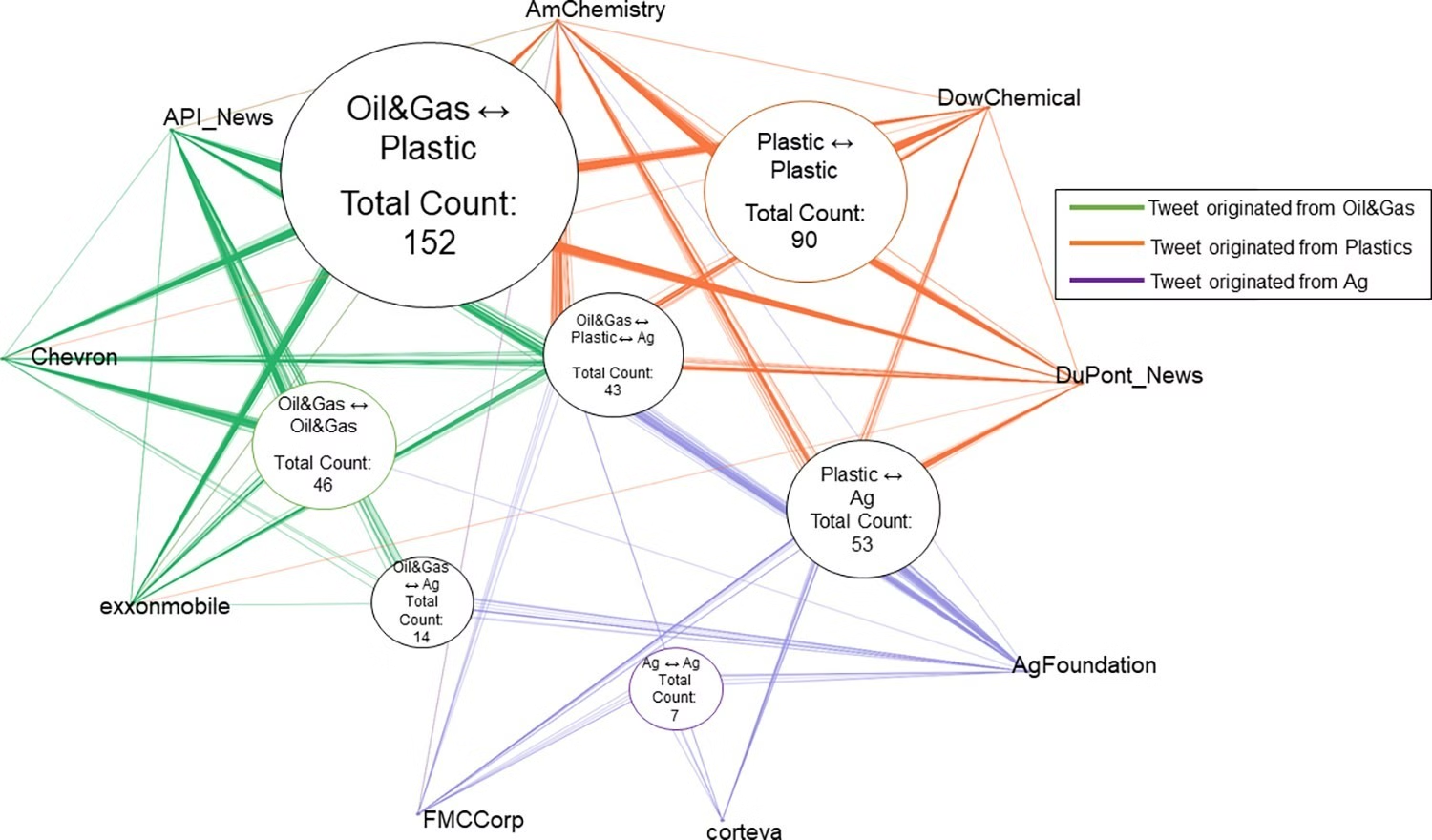
Take, for instance, a new study that DeSmog’s Sharon Kelly wrote about this week that highlights how fossil fuel companies and their allies use social media to form an echo chamber of denial on social media. Researchers found signs of “coordinated climate obstruction efforts” among oil, plastics, and agrichemical industries that downplay the critical need to transition to renewable energy.
Is this coordination intentional? Are these industries engaging in a joint enterprise to deceive consumers and the public about petrochemical products and climate change? One source said, “We may need legal discovery to answer those questions,” Kelly wrote.
DeSmog writes a lot about how fossil fuel organizations engage in climate obstruction as well as false solutions. In Europe, Norwegian oil giant Equinor retracted a claim that it stores about a million tons of carbon dioxide annually at its flagship carbon capture project after DeSmog found data showing the real figure was as little as a tenth of that amount.
Equinor had doubled down, making false claims about a false solution. Read on for more on the exclusive exposé.
---
press suppression
boing 1 23
No suggestion has been made that Amelia Ferrell Knisely, formerly with West Virginia Public Broadcasting, published anything false or libelous. And yet she was fired last month after reporting on the alleged abuse of people with disabilitiesat West Virginia's foster care and psychiatric facilities. The AP isn't shy about making clear what happened:
In a statement, Knisely said her news director told her the order came from WVPB Executive Director Butch Antolini, former communications director for Republican Gov. Jim Justice. Antolini has served as executive director since 2021, when his predecessor was ousted after Justice overhauled the agency's governing board. Justice has tried unsuccessfully to eliminate state funding for WVPB in the past and was accused of appointing partisan operatives to the board. WVPB receives around $4 million a year in state funding.
an 10 22
The Paycheck Protection Program (PPP), which was part of the CARES Act of 2020, was launched under former President Donald Trump in response to the COVID-19 pandemic and continued into the Joe Biden era. Some PPP loans were investigated by federal officials and flagged for potential fraud. But according to a Project on Government Oversight (POGO) report released on Thursday, October 6, the Trump Administration eliminated an abundance of flags during its final weeks in office.
Truthout’s Sharon Zhang reports that according to POGO’s report, Small Business Administration (SBA) officials “eliminated 2.7 million flags between December 2020 and January 2021, as the Administration was in its lame duck period.”
In an article published on October 6, Zhang notes, “Special preference was given to the largest loans, which often also went to the largest corporations. On January 16, 2021, four days before President Joe Biden’s inauguration, Trump’s SBA wiped 99 percent of special review flags — which were given out to every loan above $2 million for separate investigatory purposes.”
Zhang notes that according to POGO, the Trump Administration “appeared to have favored the very largest loan recipients.”
“Trump continually gave huge financial favors to large corporations during his time in office — and though most large corporations were exempt from receiving PPP loans, some large corporations managed to skirt the rules and receive loans anyway,” Zhang observes. “Out of the $800 billion given out in the program, flagged loans accounted for at least $189 billion. Because the vast majority of PPP loans — 95 percent — have been forgiven, it’s likely that many of these loans that had previously been flagged have been forgiven entirely.”
Zhang points out that a National Bureau of Economic Research study released in January 2022 “estimated that only between about a quarter and a third of PPP loans went to saving workers’ jobs.”
“The rest — about 66 to 77 percent — went to business owners and people like shareholders,” Zhang reports. “Many loans went directly to the rich. Several billionaires or companies owned by billionaires received loans, like Republican fundraiser Joe Farrell or Kanye West’s apparel company, valued at $3 billion. One loan, POGO found, went to a hotel owned by West Virginia Gov. Jim Justice, a Republican who is therichest man in the state and a former billionaire.”
READ MORE:White House shreds Marjorie Taylor Greene over PPP loan hypocrisy
Zhang adds, “The loan was worth $8.9 million and appeared to have been flagged eight times by the SBA. Another loan with nine flags, worth over $5 million, appears to belong to a Kentucky hospitality corporation whose annual revenue of $850 million would likely make it too large to receive a PPP loan.”
jim justice warns vaxxers line up body bags
https://www.alternet.org/2021/09/jim-justice/
Your way’s not working': CNN's Jake Tapper corners Mississippi GOP governor over state's COVID crisis
A combative Gov. Tate Reeves (R-MS) battled with "State of the Union " host Jake Tapper on Sunday morning after the CNN host pointed out the massive death toll in his state...
With one of the lowest COVID vaccination rates in the United States, West Virginia Gov. Jim Justice (R) has been fighting an uphill battle to get residents vaccinated in his state. The Republican governor has also dealt with his fair share of conspiracy theories which have also created more barriers getting residents to take the jab.
Unlike some members of his party, though, Justice — who ran for office as a Democrat before switching parties — is pushing back against Covid misinformation. On Wednesday, September 8, the governor appeared for his daily briefing where he addressed the conspiracy theories surrounding the COVID vaccine as he lambasted the bizarre ideologies.
"For God's sakes a livin', how difficult is this to understand?" Justice said during his daily briefing on Wednesday. "Why in the world do we have to come up with these crazy ideas — and they're crazy ideas — that the vaccine's got something in it and it's tracing people wherever they go?"
Justice's remarks stem from previous reports about the bizarre claim. Back in May, reports began circulating about the microchipping conspiracy which has been linked to Microsoft business magnate Bill Gates. According to BBC News, "a new YouGov poll of 1,640 people suggests that 28% of Americans believe that Bill Gates wants to use vaccines to implant microchips in people - with the figure rising to 44% among Republicans."
The publication also notes: "Rumours took hold in March when Mr. Gates said in an interview that eventually 'we will have some digital certificates' which would be used to show who'd recovered, been tested and ultimately who received a vaccine. He made no mention of microchips."
That one quote led to the rapid circulation of an article with a headline that read, "Bill Gates will use microchip implants to fight coronavirus." Conspiracy theorists claimed the so-called microchips are a way for the government to keep track of Americans.
However, according to HuffPost, Justice highlighted the one major flaw in the conspiracy theory: the government does not need microchips to know the whereabouts of Americans when the vast majority of Americans carry cell phones. "The same very people that are saying that are carrying their cellphones around," he said. "I mean, come on."
The spread of misinformation and conspiracy theories has greatly contributed to vaccine hesitancy among Americans, mostly members of the Republican party. However, the Biden administration is still working to get Americans vaccinated.
https://www.alternet.org/2020/09/this-billionaire-gop-governors-coal-company-is-poised-to-get-a-big-break-from-his-own-regulators-propublica/
west Virginia environmental regulators are proposing to reduce the fines that a coal company owned by the state’s governor could pay for water pollution violations that are the focus of a federal court case. The move comes after the company stopped paying penalties required as part of a settlement four years ago to clean up its mines across the Appalachian coalfields.
Environmental groups allege that the Red Fox Mine, a large strip-mining site in southern West Virginia owned by Gov. Jim Justice’s Bluestone Coal Corp., continues to exceed discharge limits for harmful substances. The suit could result in substantial payouts — the maximum potential federal penalties are nearly $170 million — that would go to the U.S. Treasury.
In the weeks before a trial in the case, lawyers for Bluestone filed documents detailing a draft deal worked out separately with the state’s Department of Environmental Protection. The state agency, whose administrator is appointed by Justice, has agreed to settle the violations for a fine of $125,000, according to a court filing by the environmental groups’ lawyers. (State and federal governments share the authority to enforce water pollution rules.) Lawyers for Bluestone are asking the judge to throw out the federal case, saying the state settlement and hundreds of thousands of dollars in federal fines the company already paid for the same violations should resolve the matters.
Lawyers for the Ohio Valley Environmental Coalition and other groups say the state settlement doesn’t moot their suit, and they urged a federal judge not to grant Bluestone’s request to throw out the case.They called the state action “a self-dealing administrative order” and said the proposed penalties “are insufficient to deter future violations, leaving a realistic prospect of continued noncompliance.” At best, the lawyers say, the amount paid would offset potential fines in the federal court action.
The fight to force Justice’s empire to follow pollution rules, the groups say, symbolizes the larger ongoing fight over how aggressively to regulate an industry that remains politically powerful, even as its economic influence declines.
The state’s environmental regulators are seen as friendly to coal companies, so the reduced fines are in keeping with prior actions. In one significant example from a decade ago, a $20 million federal settlement with Massey Energy revealed that West Virginia officials were not even reviewing disclosures that Massey had filed reporting thousands of water pollution violations.
“Coal companies pollute,” said Vivian Stockman, executive director of the Ohio Valley Environmental Coalition. “There seems to be little consequence to carrying on business in disregard for the law. This has been the case over decades.”
The proposed settlement is the latest in which government agencies overseen by Justice have had to regulate businesses owned by Justice, a billionaire whom Forbes has labeled the richest person in the state. He owns a vast array of businesses, including coal mines, resort hotels and agricultural interests, many of them regulated by the state agencies that report to him.
An investigation this year by ProPublica found that companies run by the governor’s family have accumulated $128 million in judgments and settlements in cases brought by vendors and other businesses and government entities over unpaid bills. Justice companies that own or are affiliated with the historic Greenbrier Resort have said in court filings that they are “near financial insolvency.”
Mike Carey, a lawyer for Bluestone Coal, called any suggestion that the company is getting preferential treatment “completely baseless.”
The court records filed in the federal case indicate that state regulators first proposed the settlement more than a year ago, and that it then included a suggested penalty of $883,000. But in its new proposal, which must face public comment before it is finalized, WVDEP proposed a $2.1 million fine, but then dropped that to $125,000. The agency noted that’s the maximum allowed under state law but did not explain why it had earlier proposed a larger amount.
While Justice’s adult children have day-to-day control over the family’s business operations, the governor continues to guide the empire. Justice has repeatedly said his role as governor poses no conflict, and he wants nothing from the state for his businesses or his family.
The last tussle over the governor’s coal mines came to a head in 2016, when weeks before Justice won that year’s general election, his company agreed to pay a $900,000 fine for past violations, penalties for future violations and millions of dollars for new pollution control measures.
The deal resolved more than 23,000 water pollution violations between 2009 and 2014 by Justice mines in West Virginia, Virginia, Tennessee, Kentucky and Alabama, then under the umbrella corporate parent, Southern Coal Corporation, according to court records filed as part of that settlement. (Southern Coal, like Bluestone, was also owned by the Justice family.)
“This settlement is designed to bring the companies into compliance with the Clean Water Act and requires actions that should prevent future violations,” Assistant Attorney General John Cruden said at the time.
But hundreds of times since that 2016 federal deal, those mines discharged more solids, iron, manganese, aluminum and other pollutants than allowed by their environmental permits, the company’s own public reports show.
Justice’s companies have paid hundreds of thousands of dollars in fines for those violations, which are fairly common and seen as a cost of doing business in the coal industry. In August 2019, the environmental groups filed suit against Bluestone, alleging excess discharges of selenium, which can be toxic to fish and other aquatic life.
State and federal agencies have somewhat overlapping authority to regulate coal industry pollution. Federal law also allows citizens to file suit over Clean Water Act violations, both to seek fines, payable to the government, and to force measures to stop further violations.
Then, this year, the Justice companies “apparently stopped paying” some of the stipulated penalties, citing the lawsuit, according to a court filing by the plaintiffs. In a May report to federal regulators, Bluestone Coal marked a list of some of those selenium violations as “in litigation payment not applied.”
A federal judge has cited that report and noted unpaid stipulated penalties for 40 selenium violations that date back to July 2018.
A spokeswoman for the Environmental Protection Agency said that the earlier settlement does not allow Bluestone to stop paying stipulated penalties, but she declined to say what action, if any, federal officials might take “because this is an active enforcement case.”
Carey said that the report indicating those fine payments were being held back because of the litigation “was an error.”
In a court filing Tuesday, Carey indicated that a $35,000 payment for some of the fines was made on Sept. 4. Carey also alleged that the environmental groups had offered during settlement negotiations to resolve their lawsuit, and give the company three years to come into compliance, if Bluestone Coal would donate $600,000 and 850 acres of land near the New River Gorge, a scenic area, to the West Virginia Land Trust, a group that tries to protect wilderness in the state.
Bluestone Coal lawyers had earlier tried to have the selenium case dismissed, arguing that it was preempted by the 2016 settlement.
But in a ruling in June, U.S. District Judge David A. Faber in Bluefield, West Virginia, declined to throw out the case, saying that the continuing violations, and Bluestone Coal’s failure to comply with a timeline for installing a treatment system, showed the need for the citizen suit. Then, in July, Faber issued a second ruling that found Bluestone liable for the selenium violations. The judge noted that Bluestone Coal could be liable for more than 3,000 days of water permit violations, which could amount to a maximum fine of $169.2 million, according to the citizen groups.
On Tuesday, Faber postponed a Sept. 23 bench trial meant to determine a remedy for the violations. Instead, he scheduled a hearing that day on Bluestone’s request to have the case thrown out.
Like his political ally President Donald Trump, Justice has been clear that he wants to curb government regulations meant to protect the environment, especially as those apply to the coal industry and other fossil energy operations.
In his first State of the State address in February 2017, Justice said that, under his administration, the state Department of Environmental Protection would stop saying “no” to business and industry. A week later, he belittled WVDEP inspectors when he told a natural gas industry group that they would have to stop showing up for work with “a tank top and flip-flops on” and looking like they “haven’t shaved in three months.”
At the WVDEP, Justice put in charge a former coal company executive and energy industry consultant, Austin Caperton. In an early speech once he took office as WVDEP secretary, Caperton said he “doesn’t trust” the science that says human activities such as burning fossil fuels are warming the planet, a position that puts him at odds with mainstream science.
As recently as 2017, the federal Office of Surface Mining Reclamation and Enforcement issued a report outlining continuing failures by the state to police water pollution by coal companies. OSMRE has said it is continuing to monitor WVDEP’s efforts to improve oversight of the coal industry.
Over the years, selenium pollution has been especially tricky for coal companies to deal with, presenting expensive and long-term treatment challenges. Violations have prompted other citizen group lawsuits like the one against Bluestone and scientific studies that warned of stream damage from the selenium discharged by mining operations.
In response to questions about Bluestone Coal and its policing of the coal industry more broadly, the WVDEP provided a statement that indicated it was considering a change in the selenium limits for the Red Fox permit that, if approved, would “resolve that component of the enforcement action for the site.”
==
billionaire governor has a habit of firing top officials in the middle of a crisis
Pro Publica August 12, 2020
In the midst of a billion-dollar road-building…
==
just saw interview bookTV 1119 gop snuck limited charters in on 3rd try during recess?
==
gov insulted teachers, jack medical premiums and require fitbit?
beat him badly with rallies (al 55 counties) and amb from other states that followed eg oklahoma
==
Teachers in West Virginia celebrated a major victory Tuesday when a contested education reform bill was blocked by House delegates, just hours into a statewide strike protesting the legislation. The bill would have legalized charter schools, which are currently not allowed in West Virginia. Teachers’ unions say they were not consulted in the drafting of the legislation and that it was retaliation for last year’s historic strike, which was credited with launching a wave of teacher walkouts in other red states. Teachers are set to continue their strike for now.
2/19 dn
==
Lawmakers Call for Ethics Reform to Deal With Billionaire Resort-Owning Governor
West Virginia legislators want Gov. Jim Justice to put The Greenbrier in a blind trust after a Charleston Gazette-Mail and ProPublica investigation. But the governor dismisses the report as “garbage.”
Welcome to the Greenbrier, the Governor-Owned Luxury Resort Filled With Conflicts of Interest
Gov. Jim Justice is West Virginia’s richest man and owns its most storied resort. When lobbyists and state agencies book there, he profits. Here’s how the governor, dubbed “Big Jim,” became West Virginia’s little Trump.
by Ken Ward Jr., The Charleston Gazette-Mail
https://www.alternet.org/2019/07/west-virginia-bets-big-on-plastics-and-the-backing-of-trumps-administration/
no lnx
West Virginia’s industrial might has faded, but as 2020 approaches, the state has two resources that could be crucial to President Donald Trump as he seeks reelection and tries to make good on his pledge of “American energy dominance” — Republican votes and abundant natural gas.
It was a stretch of rural counties along the Ohio River in West Virginia, Ohio and Pennsylvania that form the largest natural gas field in the world and helped Trump win the states in 2016.
West Virginia’s elected leaders see the vast reserves as a path to renewed political and economic relevance for the Mountain State, which they envision rivaling the Gulf Coast as a center for processing natural gas and producing plastics.
And to make that a reality, the state’s top officials have lined up behind a plan to spend as much as $10 billion to build a mammoth underground storage facility — big enough to hold the U.S. Capitol complex, or 10 million barrels of the liquid byproducts used in plastics manufacturing.
By providing a sizable and stable storehouse for ethane and other so-called gas liquids, the facility would, its proponents say, encourage the expansion of a chemical production corridor that is emerging along the upper Ohio River and would help bring thousands of jobs to a region that has seen its industrial moorings slip away over the past two generations.
The prospect of an energy jobs bonanza in a politically vital state stirred the interest of the White House. A senior Energy Department manager has been assigned to work on the project, known as the Appalachian Storage and Trading Hub. In April, the president issued an executive order on energy that encouraged “opportunities, through the federal government or otherwise, to promote economic growth of the Appalachian region, including growth of petrochemical and other industries.” And the president’s newest budget proposal includes funds to study the region’s gas-related industrial potential.
But a ProPublica examination has found that the proposed storage facility would be far larger than the region could support and that questions about its cost, its viability and its environmental risks have been overshadowed by a public relations strategy heavy on the politics of jobs and light on the economics of energy policy.
“The scale of the Appalachian hub is out of line with what industry needs or will require in the region,” said Michael Tritt, president of Lane Power and Energy Solutions, a Houston-based construction company that designs and builds energy storage caverns.
The Trump administration’s relations with China and Russia are adding to the questions about the hub. China had agreed to invest tens of billions of dollars in West Virginia’s natural gas industry but now is embroiled in a trade war with Trump. And American Ethane, a Houston-based company financed by three Russian businessmen, has signed 20-year contracts to send ethane produced in the United States to China, which could raise prices and weaken demand for the facility proposed for West Virginia.
Far from being dissuaded, state leaders, led by Sen. Joe Manchin III, are pressing forward, talking up the project and perhaps most significantly trying to secure a $1.9 billion federal loan guarantee that could attract billions of dollars in private investment.
If the hub’s developers succeed, taxpayers could be on the hook for a big piece of any failure. The federal loan guarantee sought for the hub is nearly four times as large as a guarantee awarded more than a decade ago to Solyndra, the California solar firm that collapsed in 2011. “This whole project is a gamble,” said Dustin White, project coordinator with the Ohio Valley Environmental Coalition, an environmental group in Huntington, West Virginia. “Billions of dollars could go up in smoke. We just need to stop it now.”
Banks, though, would be in line for tens of millions of dollars in finance fees. “If that project gets a federal loan guarantee, banks will be lining up 10 deep,” said James Cutler, an energy industry investor and veteran chemical plant builder from Houston. “Anybody who gets involved gets 1.5 to 2% in fees just for getting the deals together. If you have a $4 billion, $5 billion project, that’s $80 million, $100 million.”
Other big winners could be Manchin, a Democrat, and Gov. Jim Justice, a Republican. The energy, construction and labor sectors contributed $841,591 to Manchin’s 2018 election campaign. Energy, finance, construction and labor contributed $169,600 to Justice’s 2016 campaign, according to Vote Smart, which tracks election campaign financing.
In an interview, Manchin said that he is looking to Energy Secretary Rick Perry for help in “streamlining” the loan review and that he is urging the Treasury Department to invoke national security concerns to halt American Ethane’s export plans.
https://www.facingsouth.org/2019/01/court-packing-coal-country
If a pending bill passes in West Virginia, Republican Gov. Jim Justice — a billionaire former coal company executive — will appoint 82 percent of the state's appellate judiciary in just his first term. The bill, which would create a new appeals court, is likely to pass the state Senate, but the state House declined to take up a similar bill last year. West Virginia's five-member Supreme Court of Appeals, as the high court is known, is currently its only appellate court.
In the last few months, Justice has appointed replacements for three Supreme Court justices who resigned in the wake of a scandal involving lavish renovations and overspending. Two former justices face criminal charges, and another resigned in the wake of the state legislature's impeachment of the entire high court.
The impeachment trials were halted for violating the separation of powers by a substitute state Supreme Court assembled due to the justices' conflict of interest. The substitute court criticized the impeachment process as "a rush to judgment to get to a certain point without following all of the necessary rules." By that point, three seats had already been vacated. Justice appointed a majority of the court in the span of a few months.
The legislature is now considering a bill to create an Intermediate Court of Appeals, and it would allow Justice to appoint all six members of the court, which would be divided into two districts. If the bill passes, the governor will have appointed nine of the 11 judges on the state's appellate judiciary.
This radical re-shaping of West Virginia's judiciary is happening as the state's high court hears a lawsuit over noise and air pollution from fracking, as well as other oil and gas cases. A local attorney recently argued that a new appellate court isn't necessary because the state's "population is declining, new case filings are down, and the number of appeals to our Supreme Court continues to decline."
Under the two pending bills, the new court would be up and running by July 2020, a few months before Justice faces re-election. If his picks are confirmed by the state Senate, they would serve staggered terms, from six to 10 years, and could then be re-nominated.
The bill as currently written would create the first unelected judges in the history of West Virginia. The state constitution says that trial court judges and high court justices must be elected, but it doesn't include a similar requirement for an appeals court.
The West Virginia Chamber of Commerce, which spent big in 2016 to help elect Chief Justice Beth Walker, supports the creation of a new appeals court. Walkerdefeated incumbent Justice Brent Benjamin, who was elected in 2004 with the help of $3 million from coal mogul Don Blankenship.
The state Supreme Court has been a target of the Koch brothers-funded American Tort Reform Association (ATRA), which recently criticized the court for authorizing a class-action lawsuit by U-Haul customers over hidden rental fees. The ATRA lobbies for so-called "tort reform" bills that limit lawsuits, especially suits brought by the most severely injured plaintiffs. In 2018, the ATRA contributed more than $250,000 to the campaigns of two former Republican legislators whom the governor appointed to the high court. The group has also given millionsof dollars to the Republican State Leadership Committee, which runs ads to support or attack judicial candidates across the country. The ATRA supporteda previous proposal to create an intermediate appeals court.
West Virginia legislators are considering other changes to judicial elections, as well as a constitutional amendment to requireSenate confirmation for the governor's appointees to fill vacant seats. In November, voters approved a constitutional amendment giving the legislature control over the judiciary's budget, and the legislature will soon pass a budget with this new authority. Some court officials are bracing for budget cuts.
Rather than introducing bills to pack the courts, the group WV Citizens for Clean Elections is asking legislators to strengthen the state's campaign finance laws, judicial ethics rules, and the state's public financing program for judicial candidates, which allows judges to avoid relying on large campaign contributions from wealthy donors.
'Attacks on Kentucky's judges'
The push to reshape West Virginia's judiciary comes as legislators in a growing number of states are considering power grabs to gain more control over state courts. Last year, for example, Republicans in North Carolina and Pennsylvania threatened to impeach judges over rulings that they didn't like. North Carolina legislators also proposed constitutional amendments last year to give them more control over choosing judges, though voters soundly rejected the final amendment in November. The Brennan Center for Justice reports that legislatures in 18 states last year "considered at least 60 bills that would have diminished or politicized the role of the judiciary."
Those states include Kentucky, where Republican Gov. Matt Bevin referred to a unanimous ruling by the Kentucky Supreme Court last month as a "sad day for the rule of law." The ruling struck down a bill to slash pensions for state employees. When the law was passed in March 2018, thousands of teachers rallied in protest at the state capitol.
Opponents were angered by the process as well as by the law's aim. Legislators had hastily changed a short bill involving sewers into a law restructuring state pensions that was hundreds of pages long. Democratic Attorney General Andy Beshear immediately sued, arguing that legislators failed to comply with the state constitution's clear procedure for lawmaking.
...
==
https://www.motherjones.com/politics/2018/08/what-the-hell-is-going-on-in-west-virginia/
Earlier this month, Republicans in West Virginia impeached the state’s entire Supreme Court, a first in US history, over a scandal involving allegations of wasteful spending, poor administrative decisions, and criminal misconduct. Now the state’s governor, a Republican, has appointed two Republican lawmakers to temporarily serve as justices—a move he says will restore confidence to the judiciary. But Democrats are crying foul, saying the appointments are a clear political power grab aimed at stacking the bench with conservatives.
Gov. Jim Justice announced Saturday morning that state House Speaker Tim Armstead and US Rep. Evan Jenkins will serve on the state’s highest court until the midterm elections in November, when voters can elect new justices from a pool of 20 candidates. (Armstead and Jenkins are among those candidates.)They will replace Justice Robin Davis, who resigned on August 14 shortly after the House of Delegates moved to impeach the Supreme Court, and Justice Menis Ketchum, who resigned in late July shortly before he was charged with federal wire fraud.
The court’s other three justices will soon go before state lawmakers in an impeachment trial, accused of wasteful spending and failure to carry out administrative duties. If they are removed from their seats, the governor can appoint interim justices who will serve on the bench until the 2020 election. (One of them, Justice Allen Loughry, has already been suspended because he faces 25 federal charges and has been indicted on an obstruction-of-justice charge; he has pleaded not guilty.)
“We need true conservatives—this is really important—with honor and integrity to restore the trust from the blow to the stomach we’ve suffered in the last few months,” Gov. Justice said as he announced the two new appointments Saturday. Armstead has left his position in the House of Delegates, and Jenkins will resign from Congress when he takes the bench.
Jenkins is also a failed candidate for US Senate, having lost the Republican nomination to challenge Democratic Sen. Joe Manchin back in May. As my colleague Jeremy Schulman reported during the campaign, Jenkins put out racist political ads that appeared to blame West Virginia’s opioid epidemic on African Americans in cities like Baltimore, Detroit, and Chicago who he suggested were flooding his state with heroin. And his appointment to the judiciary comes despite earlier reports that he may be ineligible to serve on the state Supreme Court because of an inactive law license.
Democrats in West Virginia are outraged about the new appointments, likening the situation to a coup. “Governor Justice’s picks to fill the Supreme Court means more corruption and political positioning from Republican Leadership in West Virginia,” Belinda Biafore, chair of the state Democratic Party, said in a statement. “Not only do Armstead and Jenkins lack necessary experience, but by aligning with Justice they have proven that they are nothing more than political peas in a pod and will continue to make decisions based on politics and not people.”
The impeachment of the Supreme Court justices was approved on August 13 along party lines, with Democrats voting in opposition. (Three of the five justices were elected as Democrats.) “They’re going after everyone because it’s the balance of the court,” Delegate Mike Pushkin, a Democrat on the House Judiciary Committee, said at the time. Delegate Chad Lovejoy said that while he did not agree with the justices’ lavish spending, which included a $32,000 sofa for Loughry’s office, the budget decisions were technically legal and he believed a mass judicial impeachment was inappropriate. “It’s unprecedented in the United States that one branch of the government goes in and lops off another,” he said.
“The majority have ignored the will of the people who elected the justices of this court,” Davis, one of the justices who resigned, said. She is named in impeachment articles regarding her $500,000 office renovation and allegations that she overpaid a senior status judge and failed to hold other justices accountable. “They have erased the lines of separation between the branches of government. In fact, the majority in the legislature is positioning to impose their own party preferences.”
==
https://www.propublica.org/series/the-new-power-brokers
series: THE NEW POWER BROKERS
West Virginia’s Natural Gas Industry
Coal, long West Virginia’s most dominant industry, is ailing. Natural gas is taking over, as a powerful economic and political force. Is the state making the same mistakes again with a different fossil fuel?
eg
Coal Industry Extracted a Steep Price From West Virginia. Now Natural Gas Is Leading the State Down the Same Path.
“It’s déjà vu for the people who sat here 130 years ago and gave away our coal wealth to big out-of-state companies,” one state senator said. “That’s what we’re about to do again.”
warm Monday afternoon in late February. Thousands of teachers, public school employees and supporters rallied on the steps of West Virginia’s Capitol building, on the banks of the Kanawha River in Charleston.
Schools in all 55 counties were closed again. Teachers, cooks and janitors were in the third day of a strike. They wanted pay raises and a fix to the skyrocketing cost of their health insurance.
On the other end of the state, at a town hall meeting with teachers in Wheeling, Gov. Jim Justice tossed out a possible solution: Fund the pay raises with an increase in taxes on the state’s booming natural gas industry.
West Virginia “benefited from the extraction of coal and we benefited from the extraction of timber, but we were still dead last in everything,” said Justice, whose family made its fortune in coal. “And now we have this gas situation and we’re on fire, and we have a real opportunity again.” If the state doesn’t pass a gas-tax hike, the governor said, “we’re going to be left holding the bag again.”
But what seemed like a stunning change of direction proved to be little more than a feint. Gas industry lobbyists strongly criticized the proposal and the governor’s tax hike idea quickly faded.
West Virginia has been here before.
Sixty-five years ago, then-Gov. William Marland, the son of a mine superintendent, shocked state lawmakers by proposing a new tax on coal to upgrade schools and roads.
Marland’s proposal was soundly defeated following an onslaught of criticism. One biographer called it “political suicide.”“Let’s use this equitable source of revenue, because whether we like it or not, West Virginia’s hills will be stripped, the bowels of the earth will be mined and the refuse strewn across our valleys and our mountains in the form of burning slate dumps,” Marland told a joint session of the Legislature in February 1953.
Today, West Virginia’s headlong race into the gas rush is taking the state down the same path that it’s been on for generations with coal.
Elected officials have sided with natural gas companies on tax proposals and property rights legislation. Industry lobbyists have convinced regulators to soften new rules aimed at protecting residents and their communities from drilling damage.
In 2011, for example, then-Gov. Earl Ray Tomblin, a Democrat, and his party’s legislative leadership weakened a measure to regulate the growing industry, at the urging of gas company lobbyists. Among other changes, language was eliminated that would have given state regulators more authority to deny drilling permits that threatened water supplies and populated areas.
Supporters say the state’s actions over the past few years have positioned West Virginia to compete for growth.
“We have a regulatory body and a legislative body and an industry that are all willing to work together,” said Al Schopp, chief administrative officer for Antero Resources, the state’s biggest natural gas producer. “That makes it a good environment.”
But critics fear that West Virginia won’t fully share in the riches the industry creates and will be forced to bear the long-term environmental, health and infrastructure costs, much as it has for the now-dwindling coal industry.
...
teacher strike Kty, Az? WV and ---?
https://rewire.news/article/2018/03/12/west-virginia-teacher-strike-made/
While the pussy hat became the best-known symbol of the Women’s March in 2017, the West Virginia education strikers of 2018 had their own head gear: red bandanas and occasional bunny ears. The bandanas were a nod to labor history in West Virginia—striking miners at the Battle of Blair Mountain tied the bandanas around their necks to symbolize solidarity that spanned differences in ethnicities and languages, making them the original rednecks. But it was also a defiant gesture to Gov. Jim Justice (R), who told a crowd at a town hall at Wheeling Park High School that he could be “the town redneck, too.”
The bunny ears came after Governor Justice declared the teachers were “dumb bunnies” if they trusted other politicians rather than him.
West Virginia teachers were angry, not just about rising health care costs, but about the asinine behavior, lack of concern, and obvious contempt from their legislators.
The anger of the teachers took some of those legislators, and even union leadership, by surprise. Others say it was a long time coming and clearly visible. State Del. Mike Pushkin (D) said in a phone interview with Rewire.News that he believes it goes back to the governor’s State of the State address, when he and his newly adopted Republican Party did “a victory lap before they’d run the race.” Pushkin said Justice declared the state was in the black, but the governor hadn’t contended with, among other things, the lack of a dedicated revenue stream for the Public Employees Insurance Agency (PEIA), which covers health care for thousands of current and retired public employees and their families. ...