Common Cold
VIDEOS:



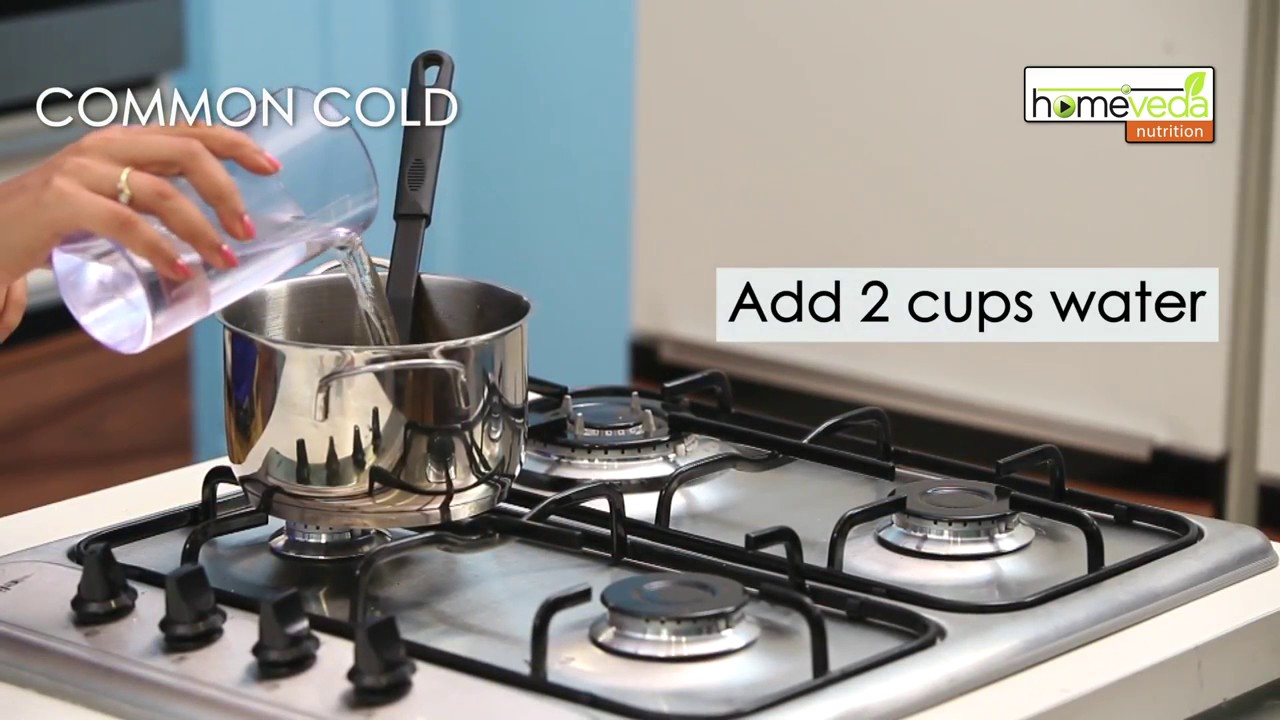
Vegetable Rice Cure
Does a Strong Immune System Make Colds Worse?
How to Kill a Cold With Zinc
Effective Cold & Flu Home Remedies
Ayurvedic Vegetable Rice Cure
FIGHT OFF COUGH AND COLD
The Common Cold Formulas in Chinese Medicine
The common cold (acute rhinitis) is a benign viral infection of the upper respiratory tract that usually occurs in the winter months. Viruses commonly involved are rhinovirus, adenovirus, influenza virus, coronavirus and parainfluenza virus. It usually begins with a sore throat, nasal congestion, sneezing with clear discharge and mild fever. After a few days, a mucopurulent discharge occurs due to secondary bacterial infection. A few days of bed rest may be necessary and full recovery usually occurs 7-10 days after onset. Complications or sequelae include acute sinusitis, sore throat, tonsillitis and otitis media.
In contrast, influenza is often a more severe respiratory infection which can result in loss of life.
Essential aspects of treatment:
- Diaphoretics and heating remedies to manage and improve febrile responses. For the most direct agents, circulatory stimulants ginger (especially fresh grated) and cinnamon taken in hot water can dramatically improve mucosal symptoms and fend off the sensation of cold. For more gentle but sustained effects, especially in children, hot teas of peppermint, boneset, catnip, yarrow, Linden flowers, and elderflower are well-established diaphoretic approaches, which in the context of a cold can exert surprisingly different effects than when consumed at other times. Pleurisy root is indicated if there are pulmonary or bronchial complications. Garlic, taken raw, may also be useful as a general and warming defensive agent. See both Pungent Warm Diaphoretics and Pungent Cool Diaphoretics
- Immune-enhancing herbs such as Echinacea root and Andrographis to help support the body’s fight against the virus. Andrographis is particularly suited to acute respiratory infections, whereas the data for Echinacea root is mixed. Note that Astragalus and tonics such as Panax ginseng are contraindicated in the acute stage of infection. Pelargonium sidoides and elderberry also have positive clinical data and may support immunity and have other relevant activities.
- Anticatarrhal herbs for upper respiratory catarrh, especially eyebright, elderflower and golden seal. Traditionally golden seal was said to be contraindicated in the acute stage of infection, so its use may be best in the later stages of the secondary bacterial infection.
- John’s wort as an antiviral treatment for influenza.
Since these are acute disorders, dosages should be high and frequent. (source, Bone & Mills)
Old time Remedy: To treat the symptoms of a common cold, begin by soaking your feet in hot water for at least three minutes – or just taking a bath. Meanwhile, soak a pair of your socks in ice water. Put the socks on your feet, cover them up with a pair of wool socks, and then go to bed. As you sleep with these horribly cold feet, the blood vessels will constrict, pushing nutrients up into your body to push out the infection.
A 2020 literature survey for herbs for colds and flu was accomplished using multiple databases including PubMed, Science Direct, ISI web of knowledge, and Google Scholar.
The most important antiviral herbs for cold and flu are Thymus vulgaris, honeysuckle flowers, Andrographis, yarrow, peppermint leaf and oil, and Calendula.
The most important expectorant herbs for flu and cold are tulsi, snake root, licorice root, clove, slippery elm root, marshmallow osha root, and sage leaf.
Immunostimulant herbs for these 2 diseases are Echinacea root, Eucalyptus, garlic, ginseng, marshmallow, slippery elm, Isatisroot, Usnea lichen, myrrh resin, and ginger root.
Other recommendations:
- What Works for the Common Cold?
- Make ginger garlic honey and cayenne syrup
- Best food for common cold
- keep warm
- eat simply
- Diffusers; ravensara, rosemary, eucalyptus, lavender, frankincense
- hot mustard & ginger packs over lungs
- cover kidneys
- fresh air & sheets
- steam & bathe
- fever; yarrow, catnip, peppermint, elder flower infused or tinctured; 2 - 3 tbsp every 15 minutes, cold on nape of neck and forehead, feet, wrists.
See also Agents for Upper Respiratory Infections
Articles/Studies
Risk Factors
- Psychological stress and susceptibility to the common cold.
- Over-the-counter cold medicine linked to dementia
- Lack of Sleep Can Quadruple Your Risk of Catching a Cold
- You May Already Know if You'll Catch a Cold
- Association of the common cold in the first trimester of pregnancy with birth defects
Prevention/Treatment
- Vitamin C for preventing and treating the common cold.
- Regular sauna bathing and the incidence of common colds.
- Changes in leucocyte ascorbic acid during the common cold
- Linden flower and the common cold
- Nature's Remedy Validated: Saline Nasal Sprays in Cold & Flu Study
- Garlic for the common cold
- Fewer Community-Acquired Colds with Daily Consumption of *Lactiplantibacillus plantarum* HEAL9 and *Lacticaseibacillus paracasei* 8700:2. A Randomized, Placebo-Controlled Clinical Trial
- Complementary and alternative medicine for prevention and treatment of the common cold
- This suggests that zinc supplementation may reduce the overall burden due to common cold among healthy adults.
- Vitamin D protects against colds and flu, finds major global study
- Anti Viral Nasal Swab for Cold and Flu Season
- Natural Remedies for the Relief of Cold and Flu Symptoms: The Evidence for Garlic, Onion, Chilli and Chocolate
- Sweet Self-Care in a Mug (Good for Scratchy Throats, Too)
- Prevent and Treat the Common Cold with Strain-Specific Probiotics
- Best Food for the Common Cold
- Supplementation with aged garlic extract improves both NK and gammadelta-T cell function and reduces the severity of cold and flu symptoms: A randomized, double-blind, placebo-controlled nutrition intervention.
- A Pelargonium Sidoides root extract is effective and safe in patients with the common cold.
- Banaba exhibits broad antiviral activity against human rhinoviruses.
- Quercetin 7-glucoside from Banaba inhibited human rhinovirus 2 replication in the initial stage of virus infection.
- Echinacea is effective in the prevention of symptoms of the rhinovirus-induced common cold.
- Echinacea alleviates or reverses virus-induced stimulation of pro-inflammatory cytokines.
- Echinacea extract modulates the production of multiple transcription factors in uninfected cells and rhinovirus-infected cells in a manner which may explain the beneficial effects of Echinacea consumption.
- Echinacea modulates chemokine and cytokine secretion in rhinovirus-infected and uninfected cells in a manner that provides support for the alleged beneficial uses of Echinacea extracts.
- Echinacea reverses virally-induced cytokine production and has antiviral activity.
- Eleutherococcus senticosus root extract exhibits antiviral activity against rhinovirus, respiractory syncytial virus and influenza A virus in cell cultures.
- Ficus religiosa L. is endowed with antiviral activity against respiratory syncytial virus and human rhinovirus in vitro.
- Gallic acid posesses anti-human rhinovirus activity.
- Garlic has antiviral activity against herpes simplex 1 and 2, parainfluenza virus type 3, vaccinia virus, vesicular stomatitis virus and human rhinovirus type 2.
- Ginger contains compounds which inhibit rhinoviral activity.
- Ginsenosides have the potential to be effective in the treatment of coxsackievirus B3, enterovirus 71, and human rhinovirus 3 infections.
- Hops contains compounds which exhibit antiviral activity against a series of DNA and RNA viruses.
- Phytocompounds within loquat inhibit rhinovirus infection
- Lycopene has a potential role in suppressing rhinovirus airway inflammation.
- Omega-3 Fatty Acids, in particular DHA, has a potential role in suppressing rhinovirus induced airway inflammation.
- Probiotic was also associated with a reduction in nasal lavage virus titre and the proportion of subjects shedding virus in nasal secretions.
- This reports the first use of vitamin C as an interventional drug to attenuate lung injury produced by viral infection.
- A combination of Euphorbium resinifera and Pulsatilla pratensis exhibit antiviral activity against respiratory syncytial virus, influenza A, human rhinovirus and herpes virus simplex 1.
- A review of the protective effects of korean red ginseng against viral infections.
- Asafoetida contains a number of compounds with potential antiviral activity against rhinovirus infection.
- Banaba exhibits broad antiviral activity against human rhinoviruses.
TCM Formulas
For early stage of common cold, with symptoms of slight fever, sore throat, nasal congestion and achiness in the upper back:
yin qiao san
LONICERA & FORSYTHIA FORMULA (Taiwan Extract Granules) YIN QIAO JIE DU WAN
yin chiao FORMULA (Golden Flower, Health Concerns, Kan, Plum Flower)
YIN QIAO JIE DU WAN (Bioessence, Herbal Times)
Formulas with similar applications:
CHAI GE JIE JI WAN (Herbal Times)
CHRYSANTHEMUM 9 (Seven Forest)
COLD AWAY (Health Concerns)
COLD SNAP (Oriental Herb Co.)
INITIAL DEFENSE (Kan)
For more severe symptoms of common cold or flu, use:
GAN MAO LING (Golden Flower, Kan, Plum Flower)
ZHONG GAN LING (Golden Flower, Kan, Plum Flower)
ILEX 15 (Seven Forest)
For symptoms of swollen glands or swollen tonsils, use:
pu ji xiao du yin wan
PU JI XIAO DU WAN (Herbal Times)
SCUTE & CIMICIFUGA COMBINATION (Taiwan Extract Granules)
UNIVERSAL BENEFIT TEAPILLS (Plum Flower)