Salieri
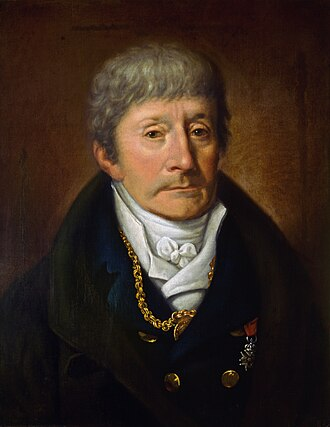
ACHIEVEMENT(S): Mozart’s rival
NICKNAME/ALIAS: None
DATE/PLACE OF BIRTH: August 18, 1750, Legnago, Republic of Venice, (Italy)
DATE AND PLACE OF DEATH/AGE AT DEATH: May 7, 1825, Vienna, Austria. Aged 74
DISCIPLINE: Composer
FIELD: Opera
LANGUAGE: Italian
EDUCATION: Legnago Public School; musical instruction under Giuseppe Simoni in Legnago, Pescetti and Pacini in Venice, Tommasi and Gassmann in Vienna.
MAJOR WORK: "Tarare"
LIFE AND TIMES:
Salieri was orphaned in 1765, and in early 1766, Giovanni Mocenigo, a Venetian nobleman and friend of his father, brought him to Venice for three months, where he studied the bass with Giovanni Pescetti, deputy music director at St Mark's, and singing with Ferdinando Pacini, a tenor at St. Mark's. That year, nearing his 16th birthday, Salieri played and sang for Florian Leopold Gassmann, the imperial court composer and music director at Vienna. Gassmann was so impressed by Salieri that he offered to take him to Vienna as his pupil.
Salieri arrived in Vienna in June of 1766. Gassmann introduced him to Emperor Joseph II, who was instantly impressed with the talented youth, and Salieri immediately began singing and playing in the emperor's chamber concerts, and later conducted and directed rehearsals during Gassmann's frequent absences. By the end of 1769, he had met German composer Gluck*, who was to become his patron and lifelong friend. Salieri's first surviving comic opera, "Le donne letterate", was staged in January, 1770, at Burgtheater in Vienna and was a moderate success.
His first major operatic achievement came 18 months later, with "Armida". After Gassmann's death, in 1774, Joseph II appointed Salieri to take Gassmann's place as court composer and conductor of the Italian opera. It one of the most important musical positions in Europe. In 1778 Salieri was named court director of music, a position he held for the next 36 years.
In the summer of 1778, Salieri received a commission from Italy, and was granted two years' leave by Joseph II. Gluck, now Salieri's good friend, had been invited to write an opera, "L'Europa riconosciuta" for the opening of La Scala, the new opera house in Milan, but had to refuse because of commitments in Paris. He asked Salieri to take his place. La Scala opened about a month later with Salieri's opera, which proved immediately popular.
From Milan, Salieri went to Venice, to compose "La scuola de' gelosi," which was first performed in Venice in December, 1778, and was hugely successful. Salieri was now becoming a celebrated composer. He moved on to Rome, where his "La partenza inaspettata" was staged in late 1779. On his return to Vienna in 1780, he wrote "Der Rauchfangkehrer (The Chimneysweep").
During his 50 years at the Viennese court, Salieri's most notable achievements included his excellent administration of the musical establishment and its archives, his concern for the welfare of the musicians, and his encouragement of the rising generation of musicians and composers. Between 1810 and 1820, he drew up the statutes of the Imperial State Conservatory in Vienna, and prepared and directed the musical program for the Congress of Vienna.
Salieri was also important as a teacher, and continued to teach even after his virtual retirement as a composer (after 1804). His pupils included Beethoven*, Schubert*, Czerny*, and Liszt*. But Salieri's greatest triumphs were at the Paris Opera, where he succeeded Gluck in 1784, though he still remained conductor at the Vienna Court Opera. His first work for Paris, "Les Danaides", opened in 1784, and achieved mild success.
His second opera, "Les Horaces", in 1786, was a failure, but his third, "Tarare", in 1787, with libretto by the playwright and musician Beaumarchais*, was his greatest operatic success. On his return to Vienna, Salieri had "Tarare" translated into Italian as: "Auxur, re 'Ormus", which was produced in a recomposed version at the Burgtheater for the occasion of Archduke Franz's marriage to the Princess of Wurttemberg in January, 1788.
It was an enormous success, with Viennese patrons preferring it to Mozart's "Don Giovanni", which was produced the following May.
Salieri has (wrongly) gained the reputation of being a jealous, malicious enemy of Mozart*. The pair knew each other well and were rivals as opera composers in Vienna in the 1780s. Salieri did not go out of his way to help Mozart, but there is little evidence to support the allegations that Salieri plotted against him. Mozart himself, in a letter written two months before he died, reported that Salieri had warmly received his "Die Zauberflote” (“The Magic Flute"). The worst allegation of all is that Salieri poisoned Mozart. Despite there being no foundation for this accusation, it was the basis of Rimsky-Korsakov's* opera " Mozart et Salieri" (1898). It was also rekindled in Peter Shaffer's 1979 play "Amadeus."
Between 1788 and 1804 he wrote 16 operas, of which three were never performed and one remained unfinished. The only international success from this late period was "Palmira, Regina di Persia", written in 1795. During the 1790s, he befriended the composer Joseph Haydn* who had movedto Vienna in 1791, and Haydn's pupil Ludwig van Beethoven who arrived in Vienna in 1794 and lived there the rest of his life. Beethoven also became a pupil of Salieri's for three years, studying counterpoint and vocal music. Beethoven dedicated "The Three Violin Sonatas, Opus 12" (1797) to him. Franz Schubert was a regular pupil of Salieri's between 1812 and 1817, and a number of Schubert's works originated as exercises for Salieri. He also dedicated several works to Salieri.
The death of Joseph II in 1790 deprived Salieri of his patron at court, and the relationship between Salieri and Joseph's successor, Leopold II, was cool. In late 1790, Salieri asked permission to resign from direction of the opera. His request was granted, with the proviso that he continue to provide one opera a year for the court theater.
Considering modern trends in music an "extravagance and confusion of styles", he chose to compose no more dramatic works after 1804, and then devoted himself to composing sacred music.
ASSESSMENT: Salieri was known as the Musical Pope of Vienna in the 1780s.
EXTRA CONNECTIONS: His librettist was once Auenbrugger*
He conducted Gluck’s music at Rousseau*’s funeral.
ONELINER: Antonio Salieri, composer and rival of Mozart
BIBLIOGRAPHY:
EB
Thayer, Alexander Wheelock, Salieri: Rival of Mozart, Kansas City, Missouri: Philharmonia of Greater Kansas City, 1989
PARENTS: Father: Antonio Salieri; Mother: ? Scacchi
SIBLINGS: Francesco, noted violinist; 2 other brothers, 2 sisters
SPOUSE: Theresia Helferstorfer
CHILDREN: 1 son, 7 daughters