Beaumarchais

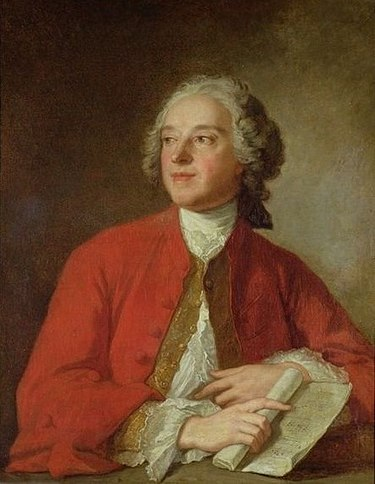
Beaumarchais, Pierre-Augustin Caron de
ONELINER: Caron de Beaumarchais, French playwright and spy
ACHIEVEMENTS: Playwright, spy
Born: 24 January 1732, Paris, France (map)
Died: 18 March 1799, Paris, France. Aged. 67 Buried in Cimetière du Père Lachaise
French
DISCIPLINE: Playwright; Spy
FIELD: Literature; Espionage
EDUCATION: Ecole d'Alfort, Paris
MAJOR WORK:
"Le Barbier de Seville" (1775, "The Barber of Seville")
"Le Mariage de Figaro"(1784, "The Marriage of Figaro")
LIFE AND TIMES:
Beaumarchais was the son of a watchmaker. He left school at thirteen to be apprenticed to his father and in 1750 was temporarily turned out of the family home for paying too much attention to music and spending too much time with his friends. He applied himself to his craft on his return and in 1753 invented an innovative escapement mechanism (animation)which was stolen by a colleague of his father's.

Beaumarchais protested to the Academy of Sciences and his claim was upheld. The publicity over this affair brought him to the attention of Louis XV who summoned him to Versailles. Beaumarchais became a favorite of the royal princesses to whom he gave lessons on the harp. His transition from artisan to court official soon followed when Mme Franquet, wife of the Clerk Controller at court, persuaded her elderly husband to sell his job to Beaumarchais.
In 1756 Franquet died, Beaumarchais married Mme Franquet. Within a year she died. Beaumarchais restored his finances by performing a favour for the financier Paris-Duverney* who repaid him by teaching him about finance and associating with him in his business deals. Beaumarchais was able to buy himself the job of Secretary to the King which automatically gave him noble status. He also bought the job of Lieutenant-General de la Varenne du Louvre which allowed him to admininster hunting laws and bought him yet more favorable introductions to high ranking nobility.
In 1768 he fell in love with and married the wealthy widow of a court official. He bought a large piece of the forest of Chinon and also began writing plays. "Eugene" was performed in 1767 and "Les Deux Amis" in 1770. In the same year, Beaumarchais was widowed again. His financial position became serious when Paris-Duverney died and Beaumarchais became involved in legal arguments with Duverney's heir which eventually landed him in prison.
He had also been stripped of his civic rights so was happy to undertake a secret mission to England for Louis XV in the hopes of having his rights reinstated. The king died was succeeded by Louis XVI before Beaumarchais could report back on the success of his mission and things looked black until the new king found he needed a discreet envoy and Beaumarchais was despatched to Austria on royal business. In the midst of these missions, he wrote the comedy "Le Barbier de Seville" ("The Barber of Seville"), performed at the Comedie-Francaise in February 1775 and a great success later inspiring an opera of the same name by Rossini* and an overture by Samuel Arnold*.
When he was in London, Beaumarchais became a supporter of the American movement for independence from Britain and wrote a series of memos to the young Louis XVI* urging French support for the rebels.
France had been humiliated by Britain at the end of the Seven Years War in 1763 and it was agreed that Beaumarchais, with state money, would found a firm that would provide cover for the supply of arms to America. In return, he was allowed to receive goods in payment from the American colonies, but no cash. It was a risky undertaking but it appealed to the dashing Beaumarchais.
Silas Deane* was sent from America to arrange the deal. Beaumarchais applied himself energetically to the American venture and set up a front organization named Hortalez and Co. to send cargoes of clothing, tents and ordnance to the colonies, eventually paying out vast sums out of his own pocket. Despite the support of Dean and Jefferson*, he was badly let down by the American Congress over payment and never recouped his losses. However, he remained involved in relations between America and France, and after open warfare between France and England was declared in 1778 he advised the finance minister Necker* on how to supply French troops in America.
Beaumarchais's efforts directly affected the outcome of the war in America:- the naval victory won by De Grasse* off Cape Henry just when Cornwallis* was counting on the supremacy of the English at sea was a major factor in the defeat of the English at Yorktown; and it was a combined French and American force which cut off Cornwallis's retreat.
In 1784 the second of his comedies concerning the character of Figaro was staged. "Le Mariage de Figaro" ("The Marriage of Figaro"), which inspired Mozart's* opera of that name, attacked aristocratic privilege and presented Figaro as the enterprising servant who easily gets the better of his hidebound aristocratic master. Beaumarchais recouped his fortunes and after marrying his long-standing mistress he began building a magnificent new house directly opposite the Bastille. The front of the house was colonnaded and boasted two hundred windows and in the grounds was a temple dedicated to Voltaire*.
In 1785, in collaboration with the Perier brothers, Beaumarchais founded the "Compagnie des Eaux de Paris" which supplied Paris with water from the Seine, an enterprise which brought him more wealth. The water-pipes were supplied from England by his water-company pipes came from>Wilkinson*.
In 1792, Beaumarchais was involved in a complicated deal with the revolutionary government over buying guns from Holland. He was arrested and it was only due to the intervention of a former mistress that he escaped the guillotine.
ASSESSMENT: Beaumarchais was a colourful character who was a prime mover in the French involvement in the war of American independence. He is remembered today the
plays which inspired operas by Rossini and Mozart 2.
EXTRA CONNECTIONS: He met Beethoven*
BIBLIOGRAPHY:
Frischauer, Paul, Beaumarchais, Adventurer in the Century of Women, Kennikat Press, London, 1935.
Sungolowsky, Joseph, Beaumarchais, Twayne Publishers, Inc., New York, 1974.
Next stop on the Mystery Tour
Father: Andre-Charles Caron
Mother: Marie-Louise Pichon
5 sisters
Spouses:
- Madeleine Franquet
- Genevieve-Madeleine Leveque
- Marie-Therese Willermaula
Children:
1 daughter: Eugenie (with Willermaula)