Stuart, Prince Charles
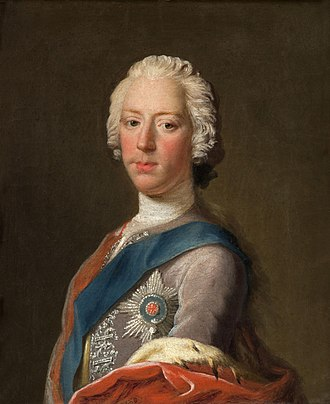
Name: Prince Charles Edward Stuart
Nickname/Alias: Bonnie Prince Charlie; The Young Pretender
Achievements: Romantic hero
Born: December 31, 1720; Rome, Italy
Died: January 31, 1788; Rome, Italy (Aged 68)
Field & Discipline: Monarchy
Language: Italian; French; English
Father: James Edward Stuart, the Old Pretender
Mother: Clementina Sobieski of Poland
Siblings: Henry (younger brother)
Spouse: Princess Louise of Stolberg-Gedern
Children: by: Clementine Walkinshaw: Charlotte
Education: Private tutors
Life & Times:
Charles's father was James Edward Stuart, the son of the Roman Catholic King James II who lost the English throne in 1688 and was exiled to the continent.
During the Jacobite (“pro-James”) rebellion of 1715, James Edward, known as the Old Pretender, landed in Scotland but the uprising failed and James returned to Italy. Five years later, Charles was born.
He was brought up as a Catholic in Rome, surrounded by his father's followers, who regarded him as the rightful heir to the English throne. In 1737 Charles was sent by his father on a tour of Italy and in Bologna, Parma, Genoa, Milan and Venice he was treated as a monarch. Charles was brave, reckless and handsome, with no prospects.
In 1739, this changed when the [life affected by] War of Jenkin's Ear* broke out between England and Spain. Then the Emperor Charles VI died and the states within his vast kingdom began quarrelling. Bavaria, Poland, France and Prussia united against Austria which was supported by England.
The Hanoverian monarchy in England wanted to protect their continental interests so English troops were sent to Europe, and English ships to the Mediterranean (to prevent the King of Naples from supporting the Spanish). While the English were deployed in Europe, there was a chance for the Jacobites to mount an invasion.
In 1743 when the English defeated French forces at Dettingen, King Louis XV was so annoyed that he agreed with to overthrow the Hanoverian dynasty in England after his agent told him that there was massive support in London for the Charles and that the Highlanders would rise to fight for the cause.
In 1744 troops began to gather at Channel ports and an invasion fleet was being assembled by the French (propaganda in support provided by [supported by] Voltaire*) at Brest and Rochefort. But within weeks French plans for the invasion of England were abandoned. Charles declared that he would land in Scotland, even if accompanied by only one footman.
On 5 July he left France in the "Du Teillay", accompanied by the "Elisabeth" loaded with mercenaries, canon and supplies. On 4 September Charles entered Perth at the head of his army. On 17th September Charles captured Edinburgh and proclaimed his father king of Scotland and England. On 21 September he defeated the English at the battle of Prestonpans and began building an administration.
On 1 November he set out for England and on December 4th reached Derby without seeing enemy forces, and caused a run on the English pound. But now the clan chiefs were having second thoughts about fighting in England and Charles was forced to retreat. On 20 December he crossed the Esk into Scotland. His men were disillusioned and large numbers of Highlanders deserted.
On 13 January 1746, the Jacobites won the battle of Falkirk Muir against a force sent from Edinburgh but at the end of the month Charles had to retreat further north. He was now being pursued by a well-equipped army led by William, Duke of Cumberland, the soldier son of King George II. They finally met on 13 April at Culloden Moor. The Scots were the larger force but they were half-starved and had been on the move for previous twenty-four hours. The Highlanders made suicidal charges wielding their claymores but were cut down first by artillery and then by the fixed bayonets of the English.
Charles escaped and spent the next two and a half months on the run in the Highlands, eventually escaping to the island of Skye with the aid of [aided by] MacDonald* who disguised him as her maidservant. Ships sent to rescue him were captured by the English but on 12 September two French vessels flying English colours arrived in Loch nam Uamh.
On 19 September Charles was taken aboard and on 29 September arrived in Brittany. The punitive measures taken by the English after the rebellion caused many of his supporters to leave the country, including the grandfather of the composer [supporter was grandfather of] Grieg*.
The Hanoverian dynasty was now safe, and an opera by [commemorated by] Gluck* celebrating the exploits of Cumberland was performed in London. At the same time, mainly thanks to the Scottish writer [inspired] Macpherson*, there was a resurgence of interest in the history and culture of the Highlands.
Charles spent the next twenty years wandering the continent becoming more disillusioned and dissolute with the years. When his father died in 1766 he settled in Italy, although the Vatican no longer recognised his claim to the English throne.
In 1772 he married. His wife had many affairs with men like the Swiss writer [wife had affair with] Bonstetten* and the marriage ended acrimoniously. Charles moved to Florence where he was joined by his illegitimate daughter Charlotte. He received many visitors such as the Scots doctor and writer, [visited by] Dr John Moore*.
According to [subject of American rumor by] Dutens* he was also offered the American throne by [maybe offered American throne by] Washington*
He drank himself to death.
Assessment: The last Stuart claimant to the English throne.
Oneliner: Prince Charles Stuart (Bonnie Prince Charlie), Pretender to the English throne.
Bibliography:
- Erickson, Carolly, Bonnie Prince Charles, Robson Books, London 1993.
Charles Edward Stuart - Wikipedia