Andersen HC
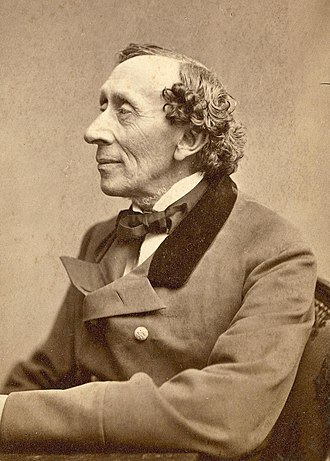
Achievements: Fairy stories
Born: April 2, 1805; Odense, Denmark
Died: August 4, 1875; Copenhagen, Denmark (Aged 70)
Field & Discipline: Literature; Writer
Language: Danish
Father: Hans Christian
Mother: Anne Marie
Siblings: None
Spouse: None
Children: None
Education: Local schools; Grammar school, Slagelse; University of Copenhagen
Major Work:
“The Little Match Girl”
“The Sleeping Princess”
“The Little Mermaid”
“The Tinder Box”
“The Snow Queen”
“The Princess and the Pea”
“The Ugly Duckling”
“The Emperor’s New Clothes”
“The Red Shoes”
Life & Times:
Andersen was born in the poorest part of Odense to a shoemaker and his uneducated, superstitious wife. Andersen had a lonely childhood and his experiences and sufferings as an adolescent directly informed the children’s stories he later wrote. When he was eleven his father died and he became an even more solitary child, convinced by his mother that his father had been taken by an ice maiden. His favorite plaything was a toy theatre and he made clothes for his puppets and wrote plays. He used to sing for neighbors and after getting a one-line part on stage when the touring company of the Royal Theatre of Copenhagen visited Odense he was determined to get a job in the theater.
At the age of fourteen, he went to Copenhagen hoping to become associated with the theatre in some way. After some unnerving experiences and thoughts of suicide Andersen eventually ended up with a singing job at the theater but was dismissed when his voice started to change. He turned to writing plays, all of which were rejected, and was saved by Jonas Collin, a government official who was one of the theatre’s directors. Collin arranged a grant which enabled Andersen to attend the grammar school at Slagelse. He endured four and half years during which he was harshly treated by the headmaster with whom he was forced to lodge. In 1827, Collins removed him and arranged private tuition which resulted in Andersen’s admisssion to Copenhaghen University.
In the same year, he published his first poem, “The Dying Child”, in a Copenhagen journal. He wrote descriptive sketches about his walks to and from his tutor’s, published under the title “Journey on Foot from Holmens Canal to the Eastern Point of Amager”. The sketches were written in a fantastical style in the manner of the German writer [influenced by] E T A Hoffman* and the book was extremely successful. Andersen then had a satirical play accepted by the theatre. He was now making friends with other students and was also friendly with the physicist [a pal of] Oersted*.
At the age of twenty-five he fell in love with the sister of a friend and was rejected. Two of the poems he wrote to the object of his love were later set to music by the Norwegian composer [poems set by] Grieg*. Soon afterward his rejection, Andersen toured in Germany for six weeks. His friends were astonished by his traveling because he was still highly strung and nervous, suffering from agoraphobia, fear of dogs, and a morbid dread of death by fire or flood.
In 1833, after another disappointing affair of the heart, he left Copenhagen for an extended period of travel. He went to Paris where he met the famous composer [met] Cherubini*, the German poet Heine and the French novelist [met] Hugo*. He then traveled on to Italy, to Naples, and saw Vesuvius erupting. He returned to Denmark in 1834 and wrote a novel entitled “The Improvisator” set in Italy. It was published in 1935 and was an international success.
Andersen was now a well-known writer. At the same time he began writing the fairy stories for which he is now famous. The first three he wrote, “The Tinder Box”, “Little Claus and Big Claus” and “The Princess and the Pea” were based on stories he had been told as a child by hop pickers and spinners. Oersted thought the stories would make him immortal but the reception he got from critics was not warm.
Between 1835 and 1842 Andersen wrote two series of children’s fairy stories, each in three parts. The famous statue of the mermaid in Copenhagen harbor refers to one of his stories, “The Little Mermaid”, about a beautiful princess from the sea who undergoes cruel torments when she exchanges her tongue and her tail for a pair of feet in order to be with the human prince she loves and to have an immortal soul.
Andersen’s novels during this period included “O.T.” (1836), “Only a Fiddler” (1837) and “A Poet’s Bazaar” (1842). The young philosopher [attacked by] Kierkegaard* fiercely attacked “Only a Fiddler” because of its ‘snivelling’ protagonist.” Andersen was still trying without much success to be a playwright and he continued to travel, visiting Sweden and Germany.
In 1843 he was in Paris again and extended his acquaintance to include the writers [met] Balzac*, [met] Lamartine*, [met] Dumas pere* [met]Dumas * and [met] de Vigny*. “The Nightingale” was published in a new volume of fairy stories which were not classed as being for children. It was written as a tribute to the Swedish singer [fell for] Jenny Lind* with whom Andersen fell in love. He spent New Year’s Eve 1846 with Lind but she cared for him only as a brother. This was his last affair of the heart.
In 1847 he visited England for the first time. He was delighted to meet [met] Dickens* who went to Ramsgate to see him off when he left the country. During the 1850’s Andersen traveled widely and was feted by royalty and endlessly invited to read his stories, of which he wrote one hundred and sixty-eight. Despite adulation from all over Europe Andersen was bitter about what he saw as lack of recognition in Denmark . Other novels included The Two Baronesses (1848), To Be or Not To Be (1857) and Lucky Peter (1870), and he endlessly wrote and re-wrote his own memoirs, “The Fairy Tale of My Life” (1855).
He was based in a hotel in Copenhagen and spent long periods visiting friends in country houses and in traveling. He once stayed several weeks with Dickens who found this rather too long. (As he grew older, Andersen was a little more at ease with his sexuality and had several affairs with young men).
On a visit to Rome in 1861 he met the poet [met] Elizabeth Barrett Browning* who was so impressed she made Andersen the hero of her last poem. In 1867 he was made an honorary citizen of Odense. Andersen kept up with new literature and he knew younger writers such as [knew] Ibsen*. He read Ibsen’s “Peer Gynt” but pronounced it wild and unwholesome. In 1875 Andersen was honored by the Danish government.
Assessment: Andersen is remembered for his fairy tales which gained him renown in his lifetime and are still popular.
Oneliner: Hans Christian Andersen, famous writer of children’s stories
Bibliography:
- Bredsdorff, Elias, Hans Christian Andersen, Souvenir Press, London, 1993.
- Wullschlager, Jackie, Hans Christian Andersen, Allen Lane, Penguin Press, London, 2000.