Condorcet
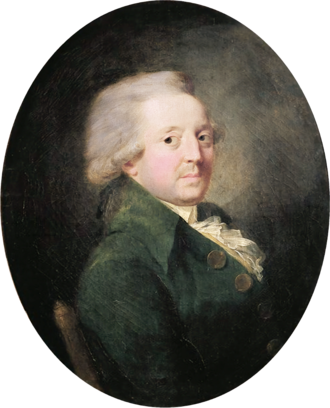
Marie-Jean-Antoine-Nicolas de Caritat, Marquis de Condorcet
Achievements: French Revolutionary leader
Born: September 17, 1743; Ribemont, France
Died: March 29, 1794; Bourg-la-Reine, France (Aged 50)
Field & Discipline: Philosophy
Language: French
Father: Antoine de Condorcet
Mother: Mademoiselle de Gaudry
Siblings: None
Spouse: Sophie de Grouchy
Children: Alexandrine
Education: Jesuit College, Rheims; College of Navarre, Paris
Major Work:
"Essay on the Application of Analysis to the Probability of Majority Decisions" (1785)
"Sketch for a Historical Picture of the Progress of the Human Mind" (1795)
Life & Times:
At fifteen Condorcet won a place at the Jesuit college in Paris where his outstanding mathematical abilities were noticed by his tutor [taught by] d'Alembert* who became a lifelong friend. Condorcet also became friends with many of the leading intellectuals of the day, particularly [a pal of] Turgot* who had progressive social ideas.
Condorcet wrote his first book, "Essay on Integral Calculus", when he was still only twenty-one. Three years later he presented a paper entitled "An Essay in Analysis" to the Academy of Sciences and in 1769 he became a member of the Academy.
In 1770 he visited [a pal of] Voltaire* with whom he became close friends and in the same year he became secretary to the Academy of Sciences. Probably influenced by Voltaire, he now branched out into literary and political arenas. He was a reformist who believed that a new order of society must be established in which Catholicism and the monarchy would yield their authority to an ethical, scientifically-based society. He believed that mathematics should be applied to economics, to build a scientific political economy and solve the problems of unemployment and poverty.
In 1775 he became scientific adviser to Turgot, who was now Controller General. In this capacity, Condorcet intitiated the printing of technical handbooks by [published] Euler* on artillery and naval science for use in military academies; he organised the testing of a machine developed by the chemist [tested desalinator of] Lavoisier* for desalinating sea water, and advised on cattle plague and a proposed nationwide system of canals.
When Turgot was dismissed in 1776 Condorcet retired from the government. During his brief period in office he had seen and disliked the workings of the bureaucracy, and in the following years he wrote numerous articles on public welfare. In them he revealed his liberal principles and concern for social justice.
He held that forced labor, and other restrictions on the workers were a violation of natural rights. He maintained that in times of famine or other disaster it was the duty of the government to assist the poor. He spoke for free trade and against slavery. His reforming political ideas were reinforced by contact with veterans of the American revolution who came to Paris, among them [influenced] Jefferson*.
In 1785 he published his "Essay on the Application of Analysis to the Probability of Majority Decisions", a notable contribution to a subject which was later developed by the mathematicians [anticipated] Laplace* and [anticipated] Poisson*. In the same year Condorcet married a young woman who was one of the beauties of her day, and who shared both his agnosticism and his reforming ideals, both of were evident in the biographies of two friends which Condorcet wrote at this time: "Life of M. Turgot (1778) and "Life of Voltaire" (1789).
Condorcet welcomed the Revolution of 1789. He was elected as the Paris representative to the Legislative Assembly, of which he became secretary. He promoted educational reform and in 1792 he drew up a plan for a state education system which formed the basis for the system which was eventually adopted. Condorcet was a republican and in August 1792 he wrote the declaration which justified the removal of [suggested removal of] Louis XVI* from the throne.
He represented the department of Aisne in the National Convention and was a member of the committee drawing up a new constitution. Condorcet was allied with the moderate revolutionary politicians, the Girondins, but it was the constitution drafted by the extremists, the Jacobins, which was accepted by the Convention. At the trial of Louis XVI, Condorcet voted against the death penalty.
As Robespierre, the Jacobin leader, consolidated his power, so Condorcet's position became dangerous. When he protested at the arrest and execution of many Girondins during The Terror a warrant was issued for his arrest. In October 1793 he went into hiding at the home of Madame Vernet in the Latin quarter of Paris where friends such as the physician [protected by] Pinel* tried to help him.
Over the next nine months, Condorcet wrote the work for which he is principally remembered, "Sketch for a Historical Picture of the Progress of the Human Mind", which later had a significant influence on the philosopher [influenced work of] Comte*. The book summed up human intellectual and social progress, recording the progress from barbarism to enlightenment.
In a final chapter, Condorcet speculated on the future in which he reasserts his belief in the indefinite perfectibility of human nature. The work is also a statement of his belief in the equality of freedom and rights for nations and individuals. His belief in education is affirmed, as is his rejection of religion and monarchy.
Having finished his book, Condorcet began worrying about the welfare of Madame Vernet if he were discovered. He decided to leave her house and wrote a farewell letter to his young daughter "Counsels of a Proscribed Man to his Daughter". On 4 April, he was warned that arrest was imminent and left Paris, ending up in the stone quarries at Clamart.
After three days in hiding, Condorcet was driven out by hunger and went into the village. He was seized by villagers and taken to the prison at Bourg-la-Reine. The next morning he was found dead in cell, from either exhaustion or from poison he had taken.
Extra Connections:
Was influenced by [influenced by] Tull*.
Influenced [influenced] O’Connor*
He knew Julie de [knew] Lespinasse*
He helped develop the [developed] metric system*.
In 1786 Condorcet married Sophie de Grouchy, who was more than twenty years his junior. Sophie, reckoned one of the most beautiful women of the day, became an accomplished salon hostess as Madame de Condorcet, and also an accomplished translator of Thomas Paine and Adam Smith.
Assessment: Condorcet was a prominent figure in the attempt to apply scientific
thinking to social policies.
Oneliner: Condorcet, French Revolutionary reformer and philosopher
Bibliography:
- Baker, Keith Michael, Condorcet, From Natural Philosophy to Social Mathematics, University of Chicago Press, Chicago and London, 1875.
- Burlingame, Anne Elizabeth, Condorcet, The Torch Bearer of the French Revolution, The Stratford Company, Boston, 1930.
Father: Antoine de Condorcet
Mother: Mademoiselle de Gaudry
Siblings: None
Spouse: Sophie de Grouchy
Children: Alexandrine