Dewar, James Sir
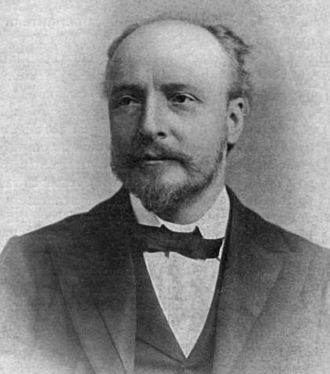
Achievements: Vacuum flask.
Born: September 20, 1842; Kincardine-on-Forth, Scotland
Died: March 27, 1923; London, England (Aged 80)
Field & Discipline: Science; Physics; Experimental Chemist; Physicist
Education: Dollar Academy, Edinburgh (1854-59); University of Edinburgh (1859-69)
Major Work: "The Liquefaction of Air and Research at Low Temperatures" (1896)
Life & Times:
In 1859 Dewar entered the University of Edinburgh, where he
studied the physical sciences under professors James David Forbes and [taught by] Lyon
Playfair*. In 1869, Dewar became lecturer in chemistry at the Royal Veterinary College, Edinburgh, but he continued to work on his investigations into the structures of various organic compounds, proposing formulas for pyridine and quinoline. In 1872, in the course of an investigation of "hydrogenium" - i.e. hydrogen absorbed in palladium – Dewar invented the [invented] vacuum flask* as an insulating container.
Dewar's flask had double walls (containing a vacuum to prevent heat loss by conduction or convection) the sides of which were covered in a reflective silver layer to reduce heat transfer by radiation. During ensuing experiments undertaken in collaboration with Peter Tait, he then found (1874) that coconut charcoal could be used as an absorbent to improve the strength of the vacuum.
In 1875 he was elected to the Jacksonian Professorship of Natural Experimental Philosophy and Chemistry at the University of Cambridge. Two years later, in 1877, Dewar was also appointed to the Fullerian Professorship at the Royal Institution in London; holding both Cambridge and London chairs until his death, from this point he carried out the majority of his research in the laboratories of the Royal Institution in London.
Also in 1877, Dewar was elected to the Royal Society, and began his important investigations of the liquefaction of gases and of cryogenic properties, in part inspired by the work of [influenced by] Cailletet* and [influenced by] Pictet*, who that same year had succeeded in liquefying oxygen and nitrogen. During the 1880s, Dewar continued this research and also began to serve as a consultant to government and industry, in 1887 being elected as president of the Society of chemical Industry. In 1888 he was appointed as a member of the government committee on explosives (where he remained until 1891), and with Sir Frederick Augustus Abel the following year he invented the smokeless propellent cordite, an explosive gelatinized mixture of nitrocellulose in nitroglycerin.
In 1891, using his invention of the vacuum-jacketed flask for storing the low-temperature liquid gases - which enabled him to preserve the very cold liquids for longer than would otherwise have been possible – Dewar was able to begin his wide-ranging investigations of the properties of matter at very low temperatures, including chemical and photographic reactivity, cohesion and strength, and phosphorescence.
Between 1892 and 1895, with [collaborated with] John A. Fleming* (the inventor of the thermionic valve), he also studied the electric and magnetic properties of metals at low temperatures, discovering that both liquid oxygen and liquid ozone are magnetic, and predicted that electrical resistance becomes negligible at extremely low temperatures (this phenomenon of superconductivity was detected by [work related to] Onnes* in 1911) and, with [collaborated with] Moissan*, liquefied (1897) and solidified (1903) fluorine.
Another major aim of Dewar's was to liquefy hydrogen. At first, during the early 1890s, Dewar relied on 'cascade' processes, in which the cooling is done in stages with different refrigerants, but from 1895 he used the [used technique of]Joule*-Thomson ([used technique of] Kelvin*) effect, where an already-chilled compressed gas is allowed to expand, which results in a lowering of temperature due to the energy used in overcoming attractive forces between the gas molecules.
Using this process, Dewar succeeded first in cooling minute amounts of hydrogen to -200C using liquid air boiling under reduced pressure, then compressing it to 200 atmospheres, and finally expanding it through a nozzle. Dewar then built a much larger liquid-air machine and succeeded in 1898 in producing liquid hydrogen in quantity. A year he later succeeded in solidifying hydrogen at a temperature of -259C.
During the early 1900s, Dewar made many attempts to liquefy helium ( the last remaining gas to be liquefied) by cooling it with liquid hydrogen, but was unsuccessful because his sample (which came from the springs at Bath in Somerset) was contaminated with neon, which froze at the low temperatures and blocked the apparatus. Helium was finally liquefied by Kamerlingh Onnes working at Leyden using Dewar's techniques in 1908.
This then allowed Dewar to achieve temperatures within a degree of absolute zero (-273C) by boiling helium at low pressure.
During the early 1900s, Dewar continued his wide-ranging investigation of matter at low temperatures, making several experiments with radium (a new element which had been discovered by Pierre and [used discovery of] Marie Curie* in 1898), first with [collaborated with] Crookes* (1903) and then with Pierre Curie (1908).
In 1905, after further extensive investigations of charcoal as an absorbent, he also discovered that its ability to absorb gases was greatly increased at -185C, and from this point he began using highly cooled charcoal in the liquefaction of gases, in the analysis of gas mixtures, and for the creation of very high vacuums in his vacuum flasks, which could now be made of metal rather than of glass (a development which later proved extremely useful to workers in atomic physics).
During World War I, Dewar's expensive cryogenic research had to be suspended, and he turned to the study of thin films and bubbles produced by the evaporation of the solvent from acetate solutions of nitrated cotton, and liquid films from soap. He investigated the conditions for the production of long-lived bubbles and of flat films of great size, the distortions in films produced by sound, and the patterns formed by the impact of air jets on films.
Extra Connections: His work related to that of rocket pioneer [influenced] Oberth* .
Assessment: A major pioneer in cryogenics
Oneliner: James Dewar, inventor of the vacuum flask
Bibliography:
- Biographical Dictionary of Physicists.
- Dictionary of National Biography.
- Dictionary of Scientific Biography.
- Encyclopedia Britannica.
- Findlay, Alexander, British Chemists, London, 1947.
Multimedia:
Patented: History of Inventions Thermos Flask: A Hot and Cold History Spotify ; [video $]
Language: English
Father: Thomas Dewar
Mother: Ann Eadie
Siblings: Several elder siblings
Spouse: Helen Rose Banks, married 1871
Children: None