Smiles, Samuel
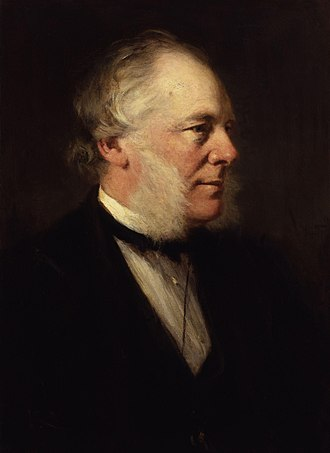
NICKNAME/ALIAS: None
DATE/PLACE OF BIRTH: 23 December 1812, at Haddington, Berwickshire, Scotland
ACHIEVEMENT(S): Self-help
DATE/PLACE/AGE AT DEATH: 16 April 1904, in London, England. Aged 91
DISCIPLINE: Writer
FIELD: Literature
LANGUAGE: English
PARENTS: Samuel Smiles (d. 1832) and Janet Wilson
SIBLINGS: 10 siblings
SPOUSE: Sarah Ann Holmes (d. 1900), married 1843
CHILDREN: Three daughters and two sons
EDUCATION: Haddington Grammar School, 1821-26; University of Edinburgh,
1829-32; University of Leiden, 1838
MAJOR WORK: 'Self Help', 1859
LIFE AND TIMES: In 1837 while a practising doctor Smile began contributing articles on parliamentary reform to the progressive and reformist newspaper the 'Leeds Times' and published at his own expense his first book: 'Physical Education, or the Nurture and
Management of Children', emphasising the importance of cleanliness, good ventilation and drainage to the lives of children, and identifying poverty as a significant and avoidable cause of disease and death.
By May 1838 Smiles decided to abandon medicine and went to Rotterdam and Leiden, where he received a further medical degree, and then took a walking tour through Holland and along the Rhine.
In September 1838 he returned to England, and made his first visit to London, where he lodged in the same boarding house as the Italian patriot Mazzini* and met, among others, the reformer Rowland Hill*.
In November 1838 he moved to Leeds to become editor of the 'Leeds Times.' During the next six years he became well-known as a full-time worker for the cause of political reform, and for his practical application of the doctrines of the utilitarian philosophers (or "philosophical radicals") Jeremy Bentham* and James Mill.
In the 'Leeds Times', Smiles openly expressed his dislike for the ruling classes and aggressively championed radical causes including support for widespread education, parliamentary reform, anti-corn law legislation (the repeal of duties on imported grain so as to import cheaper food) and factory legislation to decrease working hours and improve conditions.
During the late 1830s, a period of economic depression he briefly supported radical Chartism and in 1840 became the Secretary to the Leeds Parliamentary Reform Association but became disillusioned with the inflammatory Chartist leader O'Connor* and began to develop his ideas on "self-help."
In 1842 Smiles resigned the editorship, and spent the next three years giving public lectures and contributing political articles to various newspapers. He also wrote for Robert Owen's* 'The Union' - and working with the cooperative movement in Leeds.
In June 1840 Smiles had attended the opening of the North Midland Railway from Leeds to Derby, where he had met and impressed the great railway engineer George Stephenson*. It was through this acquaintance that in late 1845 Smiles was offered the post of assistant secretary to the Leeds and Thirsk Railway, and he remained engaged in railway administration for the next 21 years. In November 1854 he left Leeds, and moved to London as secretary to the South Eastern Railway.
During the 1840s Smiles continued to campaign for political and social reform in the press, in particular strongly supporting the campaign for the formation of state education and public libraries that resulted in the Library and Museums Act of 1850.
By 1855 he had completely abandoned his interest in parliamentary reform, and had dedicated himself to the promotion of self-help and to the writing of biographies of men who, with their great achievements based on individual effort, Smiles felt were an example to all.
In 1857 the publisher John Murray* accepted his first biography, 'The Life of George Stephenson', the inventor and founder of the railways who had died in 1848. The book was immensely popular. Smiles followed this with his best-known work: 'Self-Help, with Illustrations of Character and Conduct' (1859), which preached industry, thrift and self-improvement as opposed to political and social agitation and protest. It was an immediate success: 20,000 copies were sold in the first year alone, with over 250,000 copies having been sold by the end of the century worldwide.
Smiles also continued with his three volume: 'Lives of the Engineers' (1861-62), a pioneer study in economic history, which he followed with 'Industrial Biography: Iron Workers and Tool Makers' (1863) and in 1865 his 'Lives of Boulton* and Watt'*.
In 1868 he published a new edition of the 'Life of George Stephenson' which included a biography of his son, Robert Stephenson*, and all of these volumes were then collected in a five-volume edition of the 'Lives of the Engineers' (1874).
This was followed by, over the next two decades, a highly successful biographies of the philanthropist George Moore (1878), the engineer Nasmyth* (1885) and the porcelain manufacturer Wedgwood*(1894).
In 1866 Smiles left the South Eastern Railway to become president of the National Provident Institution. He retired from the National Provident Institution in 1871, after a stroke which paralysed him for a year, but he managed a full recovery.
Meanwhile he continued to build on the success of 'Self-Help' by producing succeeding books: 'Character' (1871), 'Thrift' (1875), 'Duty' (1880) and 'Life and Labour' (1887).
In 1871 and 1881 he toured Friesland, during the 1870s he visited Italy three times (during which he visited Garibaldi*), and in 1884 he travelled along the west coast of Norway.
However, from 1890 (when in his late seventies) Smiles' health began to fail, and he remained at home writing his autobiography. He died at his home.
ASSESSMENT: His work on self-improvement for the working classes, most notably 'Self-Help' (1859) was influential.
EXTRA CONNECTIONS: He knew Monkton Milnes*
George Bernard Shaw, in his Fabian Essays in Socialism (1889), called Smiles "that modern Plutarch".[25]
ONELINER: Samuel Smiles, author of first “self-help” books
BIBLIOGRAPHY:
EB, DNB
Jarvis, Adrian, Samuel Smiles and the Construction of Victorian Values, Stroud, Glos.: Sutton Publishing, 1997.