O'Connor, FE Chartist
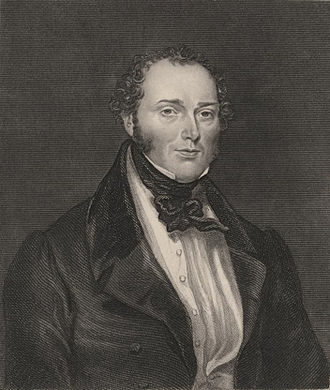
O’Connor, Feargus Edward
ACHIEVEMENTS:
Led the nineteenth-century radical Chartist movement.
DATE AND PLACE OF BIRTH: c 18 July 1796, Connorville, County Cork, Ireland
DATE AND PLACE OF DEATH AND AGE AT DEATH: 30 August 1855, London, England. Aged 59
DISCIPLINE: Politician
FIELD: Politics
LANGUAGE: English
PARENTS:
Father: Roger O’Connor
Mother: Wilhelmina Bowen
SIBLINGS:
3 brothers: Arthur, Francis Burdett, Roger
3 sisters: Mary, Harriet, Wilhelmina
SPOUSE: None
CHILDREN: No legitimate children
EDUCATION:
Portarlington Grammar School
Trinity College, Dublin
MAJOR WORK:
None
LIFE AND TIMES:
O’Connor was a radical from an early age and as a young law student supported the refusal by Irish peasants to payment of church taxes and rent. In: “A State of Ireland”, a political tract, he attacked landlords, clergy and the Irish legal profession. Fearing arrest, he fled to England and remained there for a year, during which he became familiar with English radical circles.
On his return to Ireland he farmed on his father’s estate and studied law, being called to the Irish bar in 1830. A year later, he took an active part in radical politics, attending meetings to support the British parliamentary Reform Bill.
He advocated universal suffrage, voting by ballot, and Irish independence. He also joined anti-tax demonstrations and spoke for the abolition of church taxes and the repeal of the Union with England. He defended tax rebels in the courts and continued to campaign when anti-tax meetings were declared illegal in 1832.
He had an imposing physical presence and emerged as a brilliant and charismatic orator. Standing for election for County Cork as member of the British Parliament in Westminster, he was elected with a large majority. He opposed the government’s plan to introduce a bill for the control of Ireland and criticized the Irish politician Daniel O’Connell for compromising on the issue of repeal and being willing to negotiate with the English.
In Ireland, he became well-known as a legal advisor for the poor, and in 1834 he supported the victims of the Rathcormac Massacre in which government troops had fired on a crowd protesting at tax collection. At Westminster he condemned the army officers and the clergy who had sanctioned the massacre and gained the support of the English radical press for his cause.
O’Connor was also involved in English radicalism. He spoke in Parliament for English reforms such as factory bills, the abolition of naval press-gangs and flogging, and the freedom of the press, making his mark with English radicals by savaging the government for transporting the Tolpuddle Martyrs (six trade unionists from the Dorset village of Tolpuddle were transported to Australia for administering illegal oaths to the members of the Agricultural Labourers’ Union).
Although he was re-elected in 1835, O’Connor lost his parliamentary seat due to lack of a correct property qualification and he turned to radical activity outside Parliament. He was convinced that the workers could achieve their demands if they were more organized and played a large part in founding radical associations in London, the north of England and Scotland.
The first was the Great Marylebone Radical Association (1835) whose members demanded universal voting rights, equality before the law, security of person, and freedom of speech. O’Connor’s most significant contribution was to co-ordinate the work of all the associations formed over the following months.
At the end of 1835 he toured the industrial towns of the north of England , addressing meetings on the five-point programme of the Radical Association: universal voting rights, no property qualifications for Members of Parliament, vote by ballot, annual parliaments and equal electoral districts.
O’Connor also condemned the new Poor Law and urged factory regulation. In 1836, he established a central committee of radical unions and the following year he founded the “Northern Star”, a weekly radical paper which became one of the most successful popular newspapers of its time.
In 1838, O’Connor’s five-point programme was expanded into the six points of the People’s Charter of the Working Men’s Association and its members became known as ‘Chartists’. Among those who joined the movement was detective Pinkerton*. The Charter was published in May 1838.
O’Connor was in great demand as a speaker and rapidly became the most prominent of the Chartist leaders. His rhetoric was extreme and he was identified with the group who supported physical protest in pursuit of Chartist aims.
In March 1840 O’Connor was imprisoned for seditious libel. He was released in September 1841 and continued to quarrel with more moderate radicals. Smiles*, the editor of the radical “Leeds Times” (who, like O’Connor believed in extending popular education) did not support the Chartists. Others, like William Booth*, the future founder of the Salvation Army, were inspired by O’Connor’s oratory.
In 1842 O’Connor took part in the violence which broke up a conference called to unite the Chartists with middle-class radicals, and his failure to rouse middle-class support for the Chartist movement played a large part in its failure. He opposed the anti-Corn Law League and in 1844 engaged in public debate with the League leaders John Bright and Cobden*.
O’Connor had for some years been preparing his land scheme, under which factory workers could return to the land and regain their independence, and oppressed and ill-paid agricultural labourers could farm their own land. Funds would be raised by subscription to buy land for smallholdings and these would be leased in perpetuity to families in the scheme. Tenants would be chosen by ballot from among the shareholders.
In 1845, on a trip to continental Europe to look at other small-holding systems O’Connor met Karl Marx*. After persuading the Chartists to adopt the land scheme, the Chartist Co-operative Land Company was inaugurated in 1846.
Unlike the socialist communal land schemes set up by Robert Owen* during the first part of the nineteenth century, O’Connor stipulated independent proprietorship and cultivation, believing that communism destroyed competition. Subscriptions came in from well-wishers and factory workers. Several estates were bought during 1846-7, and in 1847 O’Connor founded a journal: “The Laborer”.
The same year he was elected as a Member of Parliament for Nottingham, England (he received a congratulatory message from Marx and Engels*, who wrote for his newspaper).
In 1848, O’Connor presented the Chartist petition to the House of Commons. In June 1848 the National Land Company was examined by a House of Commons committee who found that the scheme was virtually bankrupt and no accounts had been kept. The Chartist movement collapsed and O’Connor’s mental health, which had been fragile for some time, grew worse. In 1852 he was committed to an institution. He was released into his sister’s care in and died at his sister’s home.
ASSESSMENT: O’Connor was a demagogue who was criticized by fellow radicals during his life, and since by historians, for compromising the success of the Chartist movement by his behaviour and language. The movement failed, but many Chartists were prominent in later social reforms.
EXTRA CONNECTIONS:
Influenced by Condorcet* and Robert Owen*
A follower of Swedenborg*
His elder brother Francis became a general in Simón Bolívar's army of liberation in South America.
In the Act of Parliament establishing Wheatstone’s telegraph company,, the government reserved the right to take over the resources of the ETC in times of national emergency. This it did in 1848 in response to Chartist agitation. In April 1848, the Chartists organised a large demonstration at Kennington Common and presented a petition signed by millions.[21] The government, fearing an insurrection, used its control of the ETC telegraph to disrupt Chartist communication.
ONELINER: Feargus O’Connor, 19th century political radical
BIBLIOGRAPHY:
Read, Donald and Glasgow, Eric, Feargus O’Connor, Irishman and Chartist, Edward Arnold (Publishers) Ltd., London, 1961
Epstein, James, The Lion of Freedom, Feargus O’Connor and the Chartist Movement, Croom Helm, London, 1982.