Wilkes, John
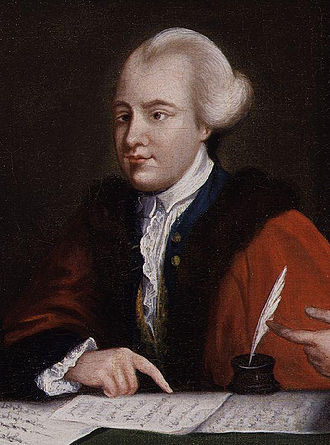
Name: John Wilkes
Achievements: Radical political journalist
Born: October 17, 1725; London, England
Died: December 26, 1797; London, England. Aged 72
Field & Discipline: Government & Politics; Politician
Language: English
Father: Israel Wilkes (1698-1761)
Mother: Sarah Heaton (1700-81)
Siblings: Israel; Heaton; Sarah; Mary
Spouse: Mary Mead (m. May 23, 1747; d. 1784)
Children: Polly (Mary; 1750-1802); John Smith (b. December 10, 1760 to
Wilkes’ housekeeper, Catherine Smith, but only acknowledged by Wilkes as a
nephew); Harriet (b. October 20, 1778 to Amelia Arnold)
Education: Hertford School (1734-40); private tutor (1740-44); University of Leiden, Holland (1744-46)
Major Work:
“The North Briton” (political newspaper)
Life & Times:
Early in 1744, went to the University of Leiden in Holland, where he was a fellow student of [fellow student with] Charles Townshend*, befriended [a pal of] d'Holbach*, polished both his education and his manners, and established a taste for womanizing and general debauchery.
On his return to England in 1746, Wilkes entered into an arranged marriage aimed at securing the social status coveted for him by his parents. On 23rd May 1747, aged 21, he married Mary Mead, ten years older. The marriage brought Wilkes a comfortable fortune and an assured status among the gentry of Buckinghamshire.
From the first, Wilkes loved sophisticated company, and in 1749 was elected Fellow of the [member of] Royal Society* and in 1754 member of the famous aristocratic dining society, the Beef Steak Club.
Around 1750 he met his “evil genius,” Thomas Potter, seven years his senior. By 1752 Wilkes had joined the notorious Hell-Fire Club, as the locals of Buckinghamshire called the “The Monks of St. Francis’ Society,” which was headed by Sir Francis Dashwood of West Wycombe Park. The club met at a house on the site of former Medmenham Abbey and its main activities were sexual orgies, drinking, and the performance of Black Masses.
In 1754, Wilkes, now nursing political ambitions, became high sheriff of Buckinghamshire and in April unsuccessfully contested the parliamentary seat of Berwick-on-Tweed.
In 1758, Wilkes’ friendship with the journalist and writer [a pal of] Smollett* enabled him to secure the release of Francis Barber, Dr Samuel Johnson's black servant, from the press-gang, but later Smollett and Wilkes were to fall out as a result of competition over political magazines.
In 1761, Wilkes, allied himself with [a supporter of] Pitt* and Lord Temple, who had both been forced to resign office over the Seven Years' War. This made him an opponent of government, a situation in which he would remain for the next two decades and which laid the foundation for his reputation as a radical.
In June 1762, Wilkes first published the weekly political newspaper, “The North Briton,” in satirical competition with Smollett's newspaper “The Briton,” and used it to campaign against the Tory ministry of Scottish [opposed] Bute*, who had been made Prime Minister effectively through the accession of the young King George III, on 25th October 1760.
Wilkes, aided by his friend the writer Charles Churchill, wrote libellous innuendoes about Bute's relations with George III's mother. Government ministers, anxious to rid themselves of so venomous a critic and encouraged by the King's personal animosity against the Wilkes, instituted immediate proceedings against him.
A general warrant was issued and Wilkes was thrown into the Tower of London, but a week later, to public delight, Lord Chief Justice Pratt ordered his release on the ground that his arrest was a breach of parliamentary privilege. Wilkes and others instituted actions for trespass against the secretary of state, the Earl of Halifax and his underlings, that led to awards of damages and established the illegality of general warrants.
In 1763, Secretary of State, Lord Sandwich planned to oust Wilkes from Parliament so that he would no longer be immune from prosecution. Wilkes left for Paris in December 1763 and was absent from a trial in February 1764, at which he was found guilty of libel, following his expulsion from the Commons the previous month.
In Paris he became a well-known figure d'Holbach's salon, where he became a firm friend of [a pal of] Diderot*. He was received at the French court. He lived with his newly-acquired Italian mistress, Gertrude Corrandini, a nineteen-year-old opera dancer. The couple travelled to Italy in January 1765 and reached Naples on February 26, where they were visited by the young [spent time with] Boswell*.
In March they made their way to Rome, where Wilkes met [on digs with] Winckelmann*, archaeologist and art historian, who took Wilkes on archaeological expeditions.
Corrandini left him in May, and Wilkes took a ship to Toulon at the end of June, spending two months in Geneva, where he met [met] Voltaire*, finally returning to Paris on September 29. He spent the next three years in Paris, making friends with, among others, the diarist [a pal of] Horace Walpole,* and continuing to hope that a change of government in England would bring friends and advancement.
Early in 1768, his debts making a longer stay in Paris unsafe, Wilkes staked everything on the hazardous chance of securing re-election to Parliament, and returned to London, determined to stand as MP for the City of London as an opponent of the government, in the name of public liberty. On March 28, he was elected as MP for Middlesex, amid a rising tide of popular anti-ministerial fervour.
His situation, however, was becoming increasingly untenable and at the end of April he gave himself up to the authorities. He was arrested on 27th April and sentenced to twenty-two months imprisonment and fines of £ 1,000 on the two charges on which he had been convicted four years earlier.
Wilkes faced expulsion from the commons for the second time, on February 3, 1769, when his friends founded a society for the “Defence of the Bill of Rights,” Wilkes’ measure to defend the printers of Parliamentary proceedings from arrest. In 1774 he was elected to the post of Lord Mayor Member of Parliament for Middlesex .
In the last years of his life, Wilkes was said to suffer severely from malnutrition, and died in London on December 29, 1797.
Extra Connections: Met historian [met] Gibbon*.
His imprisonment triggered the involvement of politician/writer [supported by] Burke*
He was opposed by Lord [opposed by] Shelburne*
He was attacked by his friend [attacked by] Hogarth*
John [prosecuted by] Montagu* was involved in his prosecution.
He knew water-colorist Paul [knew] Sandby*
Assessment: As a politician, he secured historical rights including the freedom of the press and the illegality of general warrants.
Oneliner: John Wilkes, champion of press freedom
Bibliography:
- Kronenberger, Louis, The Extraordinary Mr Wilkes, London: New English Library, 1974.
- Thomas, Peter D. G., John Wilkes: A Friend to Liberty, Oxford: Clarendon Press, 1996.