Smollett
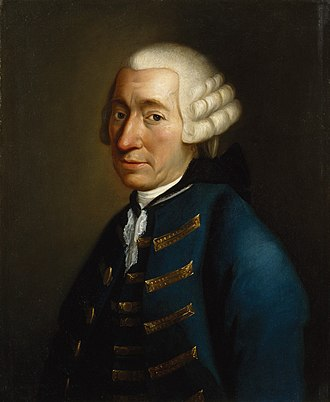
Name: Tobias George Smollett
Achievements: The picaresque novel.
Born: Baptised March 19, 1721; Dalquhurn, Dumbartonshire, Scotland
Died: September 17, 1771; Livorno, Tuscany, Italy (Aged 50)
Field & Discipline: Literature; Novelist
Language: English
Father: Archibald Smollett (d. 1723, youngest son of Sir James Smollett,
Laird of Bonhill 1648-1731)
Mother: Barbara Cunningham
Siblings: Jean; James
Spouse: Anne Lascelles (m. 1743)
Children: Elizabeth (1748-63)
Education: Dumbarton Grammar School; Glasgow University and apprenticeship to surgeons William Stirling and John Gordon, Glasgow (1736-39); MD from Mariscal College, Aberdeen (1750)
Major Work:
“The Expedition of Humphry Clinker” (1771)
Life & Times:
[schoolfellow of] Dr John Moore*, the famous physician, who knew him at school and was his earliest biographer, testified to Smollett's learning and creative abilities when a child. In 1736 he was sent to Glasgow University to study surgery and medicine and wrote his first play “The Regicide.”
In 1739 he moved to London. Although he had little luck placing his play, he passed his examinations at Barber Surgeons' Hall on 4th December 1739 and, realising a career in drama was not to be, secured an appointment as Surgeon's Second Mate on board HMS Chichester, which sailing for Jamaica on 26th October 1740 (see: War of [involved in] Jenkin’s Ear*).
Smollett witnessed the catastrophically unsuccessful attack on Cartegena, Colombia, and drew on the experience for the naval scenes in his novel, “Roderick Random,” written in 1748.
Smollett returned to London in September 1741, set up as a surgeon in premises in Downing Street, Westminster, and tried to sell “The Regidicide”sending the play to [turned down by] Rich* and Chesterfield, who passed it on to [turned down by] Garrick*, the manager at Drury Lane Theater. Both turned it down.
Smollett never forgot this humiliation and satirized Rich's popular successes in pantomime in “Reproof,” and in “Roderick Random,” caricatured Garrick as Mr Marmozet, Chesterfield as the supercilious Lord Sheerwit, and Rich as Vandal.
In 1748, published his first novel, “The Adventures of Roderick Random,” which was based on naval life and proved to be successful for a first novel. In this year, he also translated the great picaresque romance “Gil Blas” by the French author Alain-René Lesage.
The peace of Aix-la-Chapelle, in October 1748, opened France and the Continent to travel again and in September 1749, Smollett toured Flanders, Holland and France. In 1750 he obtained his M.D. from Marischal College, Aberdeen and later that year he again visited Paris and the Netherlands, with John Moore.
His travelling experiences served as inspiration for his next novel, published in February 1751: “The Adventures of Peregrine Pickle.” Smollett was now well known as a writer and entertained guests such as the authors [entertained] Dr Johnson* and [entertained] Goldsmith*, as well Garrick and surgeon [entertained] John Hunter*.
Smollett's third novel, “The Adventures of Ferdinand, Count Fathom,” was published in 1753, but it sold poorly and he was forced to borrow money. In February 1756, he became editor of “The Critical Review,” a High Tory and High Church literary magazine, and at the same time started his “Complete History of England from the Descent of Julius Caesar to the Treaty of Aix-la-Chapelle 1748.” He wrote at the rate of a century a month and began to publish weekly in 1757. This work was a great financial success and a year later, his farce “The Reprisal or, The Tars of Old England” was successfully produced at Drury Lane.
In 1758 he became what today might perhaps be called general editor of “Universal History,” fifty-eight volumes which were published between 1759 and 1766, with Smollett himself writing on France, Italy, and Germany.
At this time, Smollett's friendship with the politician [a pal of] Wilkes* enabled him to secure the release of Francis Barber, Samuel Johnson's black servant, from the press-gang. In May of the same year Smollett published an article in the “Critical Review,” libelling the reputation of Vice Admiral Sir Charle Knowles, who had served as Engineer and Surveyor during the failed expedition against Cartegena.
For this he spent three months in jail, where he drew on the experience for his next novel “The Adventures of Sir Launcelot Greaves,” in 1762, serialized in “The British Magazine,” a weekly magazine which he edited and which had been founded to support the Prime Minister, John Stuart, 3rd Earl of [supported] Bute*.
During this decade, his literary labors were considerable. He worked on a continuation of his “History of England” and edited a compilation, “The Present State of all Nations” in eight volumes in 1764. He was also responsible for a part of the translation of “The Works of [translated] Voltaire*” (thirty-nine volumes appeared in the 1760s).
In June 1766 he travelled to Bath for his health and then to Scotland, where he probably began his finest work, “The Expedition of Humphry Clinker.”
In the autumn of 1768, steadily weakening in health and seeking relief from his problems with consumption, Smollett retired with his wife to Italy, first to Lucca, then to Pisa, and ultimately to Livorno, where he rented a villa near Antignano, overlooking the sea. During the autumn of 1770, he seems to have written the bulk of Humphry Clinker, which was published on June 15th 1771, just prior to his death.
Extra Connections:
A friend of [a pal of] Lady Mary Wortley Montagu*, and surgeon [a pal of] William Hunter*
[collaborated with] Handel* wrote the music for his “Alceste”
Scottish poet [a fan was] Burns* was a fan.
Painter [illustrated by] Fuseli* illustrated his “Peregrine Pickle”
Met [met] Frederick, Prince of Wales*
In 1755 he published an English translation of Miguel de Cervantes' novel Don Quixote.
Smollett's first published work in 1746 was a poem about the Battle of Culloden entitled "The Tears of Scotland".
Assessment: Best known for picaresque novels and his accounts of the British Navy.
Oneliner: Tobias Smollett, picaresque novelist
Bibliography:
- Giddings, Robert, Tobias Smollett, London: Greenwich Exchange, 1995.