Addison, Joseph
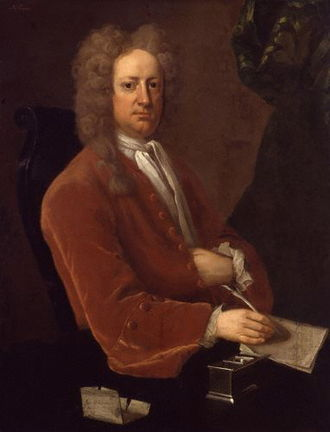
Addison, Joseph
ACHIEVEMENTS: One of the great English essayists.
NICKNAME/ALIAS: None
DATE AND PLACE OF BIRTH: May 1, 1672, Milston, Wiltshire, England
DATE/PLACE OF DEATH/AGE AT DEATH: June 17, 1719, London, England. Aged 47
DISCIPLINE: Writer
FIELD: Literature/Journalism
EDUCATION: Schools in Amesbury, Salisbury, and Lichfield; Charterhouse Foundation, London; Queen's College, Oxford
MAJOR WORK: Essays: in "The Spectator" and "The Freeholder"; Plays: "Cato", "The Drummer"
LIFE AND TIMES:
At school, Addison met the future essayist/politician Richard Steele*, who became a close friend. At Oxford, Addison's aptitude for Latin verse won him a scholarship to Magdalen College, where he became a Fellow in 1697 and spent the next two years translating the classics, teaching, and writing.
Hoping for a career in the civil service, Addison accepted a government travel grant and, in 1699, headed for Europe. One of the conditions of the grant was that he learn French and make contacts in ambassadorial circles. In Paris, he sought out French critic Boileau*, whom Addison admired for his defense of the classical tradition in literature. In 1702, he spent a year traveling through Italy as tutor to two young English aristocrats. He took a boat trip from Capri to Rome so he could follow Virgil's description of the coastal scenery. While in Italy, he wrote "Remarks on Several Parts of Italy" and a poetic "Letter from Italy". After visits to other European countries, he returned to England in 1704.
In London, Addison joined the Kit-Kat club, whose members included politicians, aristocrats, and literary men, including the playwrights William Congreve*, Vanbrugh*, and his old friend Steele. When the Duke of Marlborough defeated the French at Blenheim, Addison was asked by the Tory government to write a poem celebrating the occasion. Soon after, he was made commissioner of appeals in Customs, a job that required little work for a good salary. When the Whigs were returned to power in 1705, Addison was made Undersecretary to the Secretary of State.
During this period, Addison collaborated with Steele on a play, "The Tender Husband", and was instrumental in Steele's appointment as editor of the London "Gazette". Addison became Member of Parliament in 1708 and was made secretary to the Lord Lieutenant of Ireland. In 1709, while in Ireland, Addison began to contribute essays to Steele's new publication, "The Tatler", a periodical that commented on politics, society and culture and set standards of taste for the educated reading public. After he returned to London in the winter of 1709-1710, Addison wrote most of the essays in "The Tatler".
In 1710, when the Whigs were voted out of government, Addison found himself without a job, but not without anything to do. He plunged into the London literary scene and for a time was on excellent terms with writer Swift* until Swift defected to the Tories. Addison continued to work for "The Tatler" for another year until the publication folded. In 1711, Addison and Steele collaborated on a new periodical, "The Spectator", which came out six times a week.
Though it lasted less than two years, the publication was a resounding success, read not only in the coffee houses, clubs and assemblies, but also in schools and colleges. Over 3,000 copies were published of every issue and all 555 issues were collected into seven volumes. Addison's was the dominant voice in the periodical. One of his most famous contributions was a series of essays on Milton*'s "Paradise Lost". He also displayed a humorous side, creating the spoof characters of Captain Sentry, Sir Andrew Freeport, and Roger de Coverley, the archetypal Tory squire. Dr. Johnson*, the leading critic of the day, loved the magazine and praised the prose style.
In 1713, Addison's tragedy "Cato" was first performed at the Drury Lane theater by a cast which included actor/critic Cibber*. The prologue was written by Pope*. Numerous friends advised on the play's final draft, including Lady Mary Wortley-Montagu*. The following year, Addison revived "The Spectator" and published 80 more issues.
When Queen Anne died in 1714 and King George (a German) took over the throne, the Whigs came back to power. Addison accepted the job as secretary to the Regents who were appointed to govern until the King arrived from Hanover. After George arrived in London, Addison became a commissioner of trade and plantations at the Board of Trade. Soon after, he launched a new twice-weekly periodical, the "Freeholder," an instrument of Whig propaganda intended to counter the threat in 1715 of the rebellion by James Stuart, claimant to the throne, who was supported by many Tories. Addison's essays declared his support for a society founded on constitutional ideas.
In 1716, Addison married the dowager Countess of Warwick, with whom he had long been closely associated. In the same year, his comedy "The Drummer" was performed at Drury Lane.
ASSESSMENT: Instrumental in the development of the journalistic essay and renowned for his lucid prose
EXTRA CONNECTIONS: His play Cato a favorite with America’s Founding Fathers.
The breezy, conversational style of the essays later prompted Bishop Richard Hurd to reprove Addison for what he called an "Addisonian Termination", or preposition stranding, a grammatical construction that ends a sentence with a preposition. This is an abomination up with we will not put.
Alexander Pope in his 1735 Epistle to Dr Arbuthnot made Addison an object of derision, naming him "Atticus", and comparing him to an adder, "willing to wound, and yet afraid to strike."
ONELINER: Joseph Addison, great essayist
LANGUAGE: English
PARENTS: Lancelot Addison; Jane Gulston
SIBLINGS: Gulston; Lancelot; Dorothy; Anne
SPOUSE: Charlotte, Dowager Countess of Warwick
CHILDREN: None
BIBLIOGRAPHY: Smithers, Peter, "The Life of Joseph Addison", Clarendon Press, Oxford, 1968