Cibber
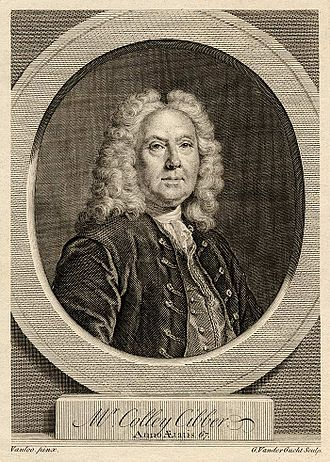
ACHIEVEMENTS: Poet Laureate.
NICKNAME/ALIAS: None.
DATE AND PLACE OF BIRTH: 6th November 1671, London, England
DATE/PLACE OF DEATH/AGE AT DEATH: 11th December 1757, London, England. Aged 86.
DISCIPLINE: Theatre manager/actor.
FIELD: Theater.
LANGUAGE: English.
EDUCATION: Free School, Grantham, Lincolnshire.
MAJOR WORK: "The Careless Husband" (1704).
LIFE AND TIMES:
Cibber played bit parts from 1691 to 1693, in which year he was called upon at the last moment to replace the actor playing Lord Touchwood in William Congreve's* play "The Double Dealer" at a command performance before the queen.
Congreve, who had singled Cibber out to be the replacement, was delighted and arranged with Rich*, the manager of Drury Lane theatre, for Cibber to be given a better salary. This enabled him to marry Katherine Shore who came from a musical family and studied with Purcell*.
After playing many minor roles, often comic, Cibber decided that if he wanted a decent part he would have to write it for himself. In 1696, he wrote "Love's Last Shift" in which he acted the part of Sir Novelty Fashion, a society fop. The play and his interpretation of the role were a success, so much so that the following year Vanbrugh* wrote "The Relapse" as a sequel to Cibber's play, elevating Sir Novelty to Lord Foppington, whom Cibber played.
In 1702 he took the leading role in Steele's* first comedy "The Funeral" and, in 1704 he wrote "The Careless Husband" which, like "Love's Last Shift", signalled a change in taste from bawdy Restoration plays, to something which also included a moral and was more sentiment. It was a marked success and is considered to be his best play.
He lived the life of a fashionable man about town, spending time in the coffee houses, visiting brothels and always increasing his list of acquaintances. At Will's coffee house, for example, he met Dryden*, the former Poet Laureate.
In 1706, Rich gained control of the Queen’s Theatre and the best actors at Drury Lane left to work there. The manager Rich had appointed wanted Cibber too, but Rich refused. When Cibber saw the depleted nature of the Drury Lane company and could get no guarantee from the penny-pinching Rich that his salary would not be reduced, he left to join the Queen’s Company.
Cibber, together with fellow actors Robert Wilks and Thomas Dogget, managed to get official permission for the Drury Lane Company to be moved to the Queen’s.
Meanwhile, a lawyer, William Collier, took over Drury Lane, but was not making a success of it. During the 1710-11 season, Cibber, Wilks and Dogget managed to arrange matters so that they took over Drury Lane and Collier moved to the Queen’s.
Back where he wanted to be, with his company of actors with him, Cibber was
delighted. The theatre prospered and its pre-eminence was demonstrated by the fact that Joseph Addison* offered them his tragedy ‘Cato’ which opened in April 1713.
In 1714, Sir Richard Steele became a partner at Drury Lane together with Cibber, Wilks and Dogget. Steele received the patent for the theatre personally but assigned equal shares to Cibber, Wilks and Barton Booth.
Through his contact with Addison, Cibber met the young poet Alexander Pope*. On Pope's recommendation, the management of the theatre accepted "Three Hours after Marriage" by Gay* in 1717. In another play, Cibber ad libbed a mocking reference to Gay's play, infuriating a group of Gay's friends known as the "Scriblerians" who included Jonathan Swift* Pope, and the Queen’s physician Arbuthnot*.
At the end of the year, "The Non-Juror", Cibber's adaptation of Moliere's "Tartuffe" was a great success with a glittering first night.
In the next season, Cibber found that the Lord Chamberlain, the Duke of Newcastle, was not as supportive as before, and they clashed. At the end of 1719 Newcastle ordered Cibber to be dismissed from the theatre as actor and manager and got him imprisoned for a short time on an unspecified charge.
Steele publicly announced his support for Cibber, the other partners refused to agree to Cibber's dismissal and the theatre was shut. Eventually the theatre reopened in January 1720, with Cibber acting in "The Careless Husband".
In 1722 the patent for the theatre at Drury Lane was restored when Walpole became Lord Chancellor of the Treasury. Cibber published a collection of ten of his plays in order to make money and was again attacked by the authorities when his play "The Refusal" was staged.
Cibber wrote "The Conscious Lovers" after Corneille's "Caesar in Egypt". It was a sumptuous production but did not do good business because it was too old-fashioned a tragedy. Cibber realised his tragedies were not popular and gave up writing.
He continued his acting career. His play, ‘The Provok'd Husband’, was subject to more barracking, but was the hit of the 1727/28 season, salving Cibber's pride when it became apparent that the heckling had been aimed at the original content and changes which he had made were applauded.
While ‘The Provok’d Husband’ was running, Rich, competitive as ever, put on John Gay's "The Beggar's Opera" which completely eclipsed it. Gay's work was a ballad opera, a new kind of work. Cibber had turned it down when Gay offered it to him, because it showed the prime minister as a highwayman and his ministry as a den of thieves and Cibber was nervous about his license. Now aged 57, Cibber fought back by putting on a ballad opera "Love in a Riddle', but this was considered to be in imitation of Gay.
In 1729, Steele died and the status of the patent for the theatre was altered. Cibber and his associates retained the theatre, but the negotiations were drawn out and there was a new theatre in Goodman's Fields, which meant increased competition. Cibber staged Fielding*’s play "Love in Several Masques" but refused his next offering. In revenge, Fielding wrote "Author's Farce," satirizing Cibber.
In 1730 Cibber was appointed Poet Laureate. Duties required he produce two poems a year, one on the king's birthday, one on New Year's Day.
His partner Wilks died in 1732 and in 1733 his other partner, Barton Booth, also died. At this point, Cibber sold his share of the patent for the theatre. Then, in 1733, his wife died. Cibber played his last regular season at the theatre though he continued to act on a freelance basis.
In 1739 he played Richard III, intending it to be his farewell performance at Drury Lane. The following year, Cibber became friendly with Samuel Richardson* when Richardson's novel ‘Pamela’ was published. In 1741, he went to see the young actor Garrick*, who had introduced the new natural acting method. That same year, aged 70, he played in "The Provok'd Wife" for one night and thereafter occasionally appeared in other plays.
On 26th February, 1745, Cibber took his final curtain at Drury Lane.
ASSESSMENT: Cibber was a popular actor and a resourceful theatre manager who fought for the theatre to be respected as part of the cultural establishment.
EXTRA CONNECTIONS: He was satirized by Hogarth*
ONELINER: Colley Cibber, 18th^ century actor and Poet Laureate
BIBLIOGRAPHY:
Koon, Helene, Colley Cibber, The University Press of Kentucky, 1986.
PARENTS: Father, Caius Gabriel Cibber, mother, Jane Colley.
SIBLINGS: 1 brother, Lewis.
SPOUSE: Katherine Shore.
CHILDREN: 2 sons, Theophilus, James, 4 daughters, Catherine, Anne, Elizabeth, Charlotte.