De Grasse
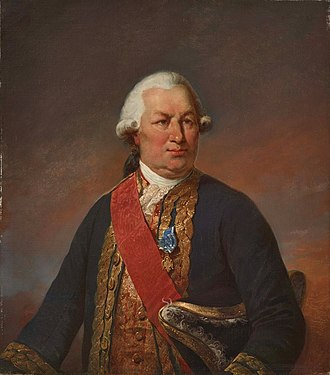
Full Name: Francois-Joseph Paul, Marquis de Grasse-Tilly and Comte de Grasse
Achievements: Blockade in Chesapeake Bay which led to the surrender of British forces at Yorktown
Born: September 13, 1722; Chateau du Bar, near Grasse, Alps-Maritimes, France.
Died: January 11, 1788; Paris, France (Aged 66)
Field & Discipline: Military; Naval Commander
Language: French
Father: Father: Francois de Grasse-Rouville
Mother: Unknown
Siblings: Unknown
Spouse: Unknown
Children: Unknown
Education: Unknown
Life & Times:
De Grasse was born into a noble family and inherited his titles. He began his career at sea in 1734 in the galleys of the Knights of Malta. In 1740 he entered the French naval service. He served throughout the War of the Austrian Succession (1840-48), in which he was wounded and captured, and in the Seven Years War (1756-63).
He was then sent to America as commander of a naval squadron. When French supporters of the American bid for independence such as the playwright [collaborated with] Beaumarchais* persuaded the French government to fight against the British in 1778, de Grasse commanded the “Robuste” against the British at the battle of Ushant in July of that year.
In 1781 he was given command of the French West Indies fleet. He distinguished himself at the battles of Dominica and St Lucia and captured Tobago in 1781. The French squadron in New England had an urgent need for money and De Grasse dispatched two of his frigates to Havana with a draft on the customs. He followed, to pick up the money, and then moved into the Bahama Channel where his fleet captured four enemy vessels while patrolling between Florida and the Bahama Islands in August 1781.
De Grasse then anchored his fleet in Chesapeake Bay. The Bay stretches about forty-five miles along the coasts of Carolina, Virginia and Maryland. Many of the numerous streams which have their outlet in the Bay are navigable by shipping, while the York River can accommodate a large fleet and the James river is deep enough for frigates.
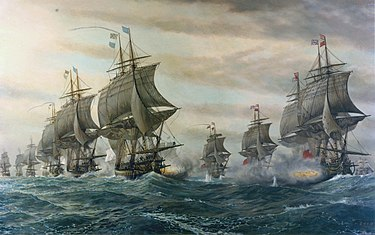
While in the Bay, De Grasse heard that the American military commander [aided] Washington* had asked for help from the French navy because the British under [fought against] Cornwallis* had made considerable progress in the southern states and also had a fleet of twenty-four ships in the neighborhood keeping his army supplied. De Grasse decided that it was up to him to come to the relief of Maryland and Virginia and according to an officer who served with him, he set about making himself master of Chesapeake Bay and then sent a message to Washington telling him he was waiting at Cape Henry to hear from him.
The French admiral Count de Barras received this information in Rhode Island and set sail with his squadron to join De Grasse. The American generals marched their armies south over the Elk River, which has its inlet in the Bay. De Grasse heard that Cornwallis had entrenched with his forces at Yorktown on the river York, and that the gun ship “Charron” and the frigate “Guadeloupe” were supplying him from the sea. The theatre of the war operation which then followed was a peninsula, about fifteen miles east to west, and four to five miles north to south, formed by the York river on the north, the James river on the south and the whole Bay on the east side.
De Grasse sent two warships to capture and blockade the York and two more ships to take control of the James. This meant that Cornwallis could not retreat through Carolina and also gave protection during the landing of some three thousand French troops who joined the French corps on land. A British force under Admiral Thomas Graves arrived in the bay on September 5 and attempted to remove de Grasse but he was outmaneuvered de Grasse and was forced to withdraw his fleet. Cornwallis had fresh supplies and no line of retreat and on 19 October he surrendered to the Americans, an action which virtually ended the war.
Grasse returned his fleet to the Caribbean. He was less fortunate in 1782 and was defeated at the Battle of St. Kitts by Admiral Hood. Shortly afterward, in April 1782, Admiral de Grasse was again defeated, and taken prisoner by Admiral Rodney at the Battle of the Saintes. He initially sailed with the British fleet to Port Royal, Jamaica but after a period of only around one week was permitted to leave on the first convoy to England. Here he was landed on Southsea beach, allegedly to much applause. In August he was granted an audience with King George III and was re-presented with his own sword, surrendered to Rodney at The Saintes.
He wrote a “Memoir justificatif” and was acquitted of any dishonorable behavior at a court martial in 1784.
However, he annoyed [banished by] Louis XVI* by making unsubstantiated charges of incompetence against some of his officers and was banished from court.
Assessment: De Grasse’s naval victory at Chesapeake Bay in 1781 precipitated the fall of Yorktown which ended British hopes for victory in the American War of Independence.
Oneliner: Count de Grasse, a key figure in the War of Independence
Bibliography:
- Tornquist, Karl Gustaf, The Naval Campaigns of Count de Grasse during the American Revolution, Swedish Colonial Society, Philadelphia, 1942.
François Joseph Paul de Grasse - Wikipedia