Cornwallis
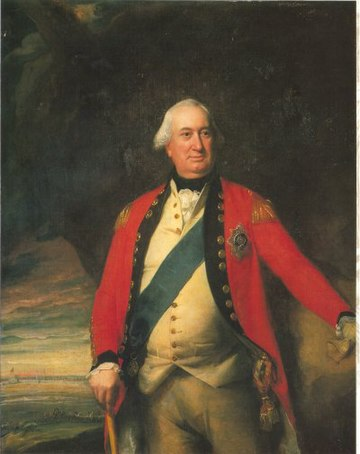
Name: Charles Cornwallis, lst Marquis and 2nd Earl Cornwallis
Achievements: Commanded British forces in American War of Independence; Viceroy of Ireland; Governor-General of India
Born: December 31, 1738; London, England
Died: October 5, 1805; Ghazipur, India (Aged 67)
Field & Discipline: Military; Government: Soldier: Administrator
Language: English
Father: Charles Cornwallis, lst Earl Cornwallis
Mother: Elizabeth Townshend
Siblings: Frederick; James; William; Charlotte Mary
Spouse: Jemima Tullekin Jones
Children: Charles; Mary
Education: Eton College, Eton; Clare College, Cambridge; Military Academy, Turin, Italy
Life & Times:
Cornwallis was born into an aristocratic landed family. At the age of eighteen, he was commissioned in the Grenadier Guards, after which he spent several months at a military academy in Turin. Several months later, he left the academy because he was eager to serve with Anglo-German forces against the French during the war which had broken out on the continent.
He saw active service in Germany from 1758 and rose to the rank of lieutenant colonel. When his father died in 1762, Cornwallis returned to England to take over his responsibilities on the family estate. He oversaw the marriage of his sisters, one of whom married the brewer [sister married] Whitbread*, and he took his seat in House of Lords.
For the next thirteen years he looked after his estate and, as a member of the House of Lords in the Westminster Parliament, held office variously as aide-de-camp to the king, circuit judge and joint vice-treasurer of Ireland. He had opposed the Stamp Act which led to the rebellion in the American colonies but when the colonists took up arms he volunteered to serve with British troops in America.
He sailed in February 1776 as major-general and reached North Carolina in May. He helped to secure a British victory at the Battle of Long Island at the end of August 1776 and then pursued [chased] Washington’s* army across New Jersey. Because he obeyed somewhat ambiguous orders from his superior officer to stop at New Brunswick, Cornwallis failed to catch up with Washington’s depleted forces after the American victory at Trenton in December of that year. The British thus lost their best chance of ending the American Revolution and Cornwallis has continued to be criticized for allowing this to happen.
In September 1777, however, he was largely responsible for the British victory at Brandywine, Pennsylvania, and at the battle of Monmouth in June 1778 he drove back the Americans.
Cornwallis spent some time back in England after his wife’s death but returned to America in 1779. After Charleston came into British forces in 1780, he took command of British forces in the south. In August 1780, he defeated an American force under Horatio Gates at Camden, South Carolina. He pursued the Americans and was expected to rout their southern troops but after British defeats at King’s Mountain in October and at Cowpens in January 1781, he marched his troops to the coast and entrenched at Yorktown, Virginia, on the river York.
The British naval commander in the West Indies, [let down by] Rodney*, failed to act in time on intelligence suggesting that a French naval force under the command of [fought] De Grasse* was about to leave the West Indies. So de Grasse arrived unhindered in Chesapeake Bay at the end of August, and cut off British retreat by sea. Cornwallis, who had also made the mistake of splitting his army between Yorktown and Gloucester across the river, was bottled up. There was a large French presence aiding the Americans, in part due to the efforts of [fought] Beaumarchais*, the French agent and playwright, who had strongly recommended French support for the American colonists.
When three thousand French regulars under the command of [fought] St-Simon* joined French troops under [fought] Lafayette*, Cornwallis was surrounded by a far superior American-French force. At the end of September Yorktown was besieged by enemy land forces using classic techniques refined by [activity related to] Vauban* a century earlier. After a storming party of Americans led by lieutenant-colonel [fought] Alexander Hamilton* on October 14, Cornwallis famously surrendered on October 19 1781, thus virtually ending the war. He was allowed an honorable surrender and on his ship to New York protected as many loyalists as possible by taking them with him.
His surrender meant that the livelihood of many loyalists in the north, such as that of [activities affected] Kunders* in Pennsylvania, lost their livelihoods and were forced out of the state. Cornwallis returned to England and in 1786 was appointed to the position of Governor-General and commander-in-chief of all British India.
During his tenure he improved the standards of behavior among the British, instituting a more refined and sober lifestyle, and made a determined , though not wholly successful, attempt effort to reform the commercial practices of the [work related to] East India Company* and to stamp out corruption and fraud among British civil servants. He also put in place new justice regulations and land settlements which in the short term only strengthened British influence by promoting the interests of friendly rulers. He personally led the British troops who achieved victory in the 3rd Mysore war. He was created Marquis in 1792 in recognition of his services in India and promoted to general the following year.
He returned to England in 1793 and was made a member of cabinet in 1795. From 1798-1801 he served as viceroy of Ireland where he defeated a rebellion abetted by French troops, and afterwards with his usual moderation managed to limit punishment to the leaders of the revolt. As in India, Cornwallis was convinced of the right of the British to rule, but he again attempted to introduce fair administration by the British.
He resigned his post in 1801 when a motion to give political rights to Roman Catholics was defeated. He was the British representative at the negotiations for the treaty of Amiens with the French in 1802.
Cornwallis returned to India as Governor-General in 1805 but died shortly after his arrival.
Extra Connections: He fought [fought] Richard Henry Lee* and [fought] Benjamin Harrison*.
During the war he requisitioned the home of [requisitioned home of] Thomas Jefferson*
In the Mysore wars, one notable military advance championed by Tipu Sultan was the use of mass attacks with rocket brigades, called cushoons, in the army. The weapons used by the cushoons sufficiently impressed the British during the Third and Fourth Mysore Wars to inspire William Congreve to develop Congreve rockets.
Assessment: Cornwallis is remembered for the surrender of British troops at Yorktown which signaled American victory in the War of Independence.
Oneliner: General Cornwallis, whose surrender ended the War of Independence
Bibliography:
- Wickwire, Franklin and Mary, Cornwallis and the War of Independence, Faber and Faber, London, 1971.
- Wickwire, Franklin and Mary, Cornwallis, The Imperial Years, University of North Carolina Press, Chapel Hill, 1980.
Father: Charles Cornwallis, lst Earl Cornwallis
Mother: Elizabeth Townshend
Siblings: Frederick; James; William; Charlotte Mary
Spouse: Jemima Tullekin Jones
Children: Charles; Mary