Cocteau
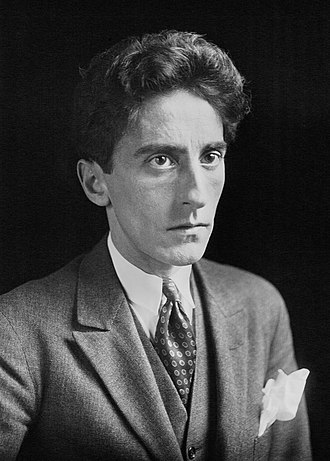
NAME: Cocteau, Clement Eugene Jean Maurice
ACHIEVEMENT(S): Famous poet, librettist, novelist, actor, film director,
and painter
NICKNAME/ALIAS: None
DATE AND PLACE OF BIRTH: July 5, 1889, Maisons-Laffitte, near Paris, France.
DATE/PLACE OF DEATH/AGE AT DEATH: October 11, 1963, Milly-la-Forêt, near Paris, France. Aged 74
DISCIPLINE: Poet, artist and filmmaker
FIELD: Literature and Art
EDUCATION: Lycee Condorcet, Paris
MAJOR WORK: "Les Enfants Terribles"; "Le Sang d'un poète (The Blood of a
Poet"); "La Belle et la Bete (Beauty and the Beast")
LIFE AND TIMES:
At age 15, having failed twice to pass his baccalaureate, he ran away to Marseilles and joined the navy. After several months, his family found him and forced him to return
to Paris. By now, he had made up his mind to become a poet, publishing his first (successful) volume "La Lampe d'Aladin (Aladdin's Lamp" ) in 1908.
Now a recognized poet, Cocteau continued writing poetry and began to frequent the salons of Paris. He published two more volumes of verse, "Le Prince frivole" (1910) and La Danse de Sophocle" (1912). During this time, he met Russian critic/impresario Sergei Diaghilev*, Russian ballet dancer Vaslav Nijinsky* and members of the Ballets Russes, as well as Russian composer Igor Stravinsky*. Diaghilev asked him to design posters for the Ballets Russes productions,
and Cocteau produced several, including one for "Le Spectre de la rose" (1911). In addition, Cocteau wrote the narrative in 1912 for Diaghilev's "Le Dieu bleu", staged in Paris.
During the First World War, Cocteau briefly served as an ambulance driver on the Belgian front and became a friend of aviator Roland Garros*, with whom he went flying on several occasions. Cocteau dedicated "Le Cap de
Bonne-Espérance (The Cape of Good Hope), an early collection of poems on aviation, to Garros.
Cocteau spent most of the War in Paris. He frequented the Montparnasse art area, where he established a lifelong friendship with Spanish painter Pablo Picasso* and hobnobbed with Italian artist Amadeo Modigliani* and writers Max Jacob and Guillaume Apollinaire*.
In 1917, he produced his most famous early work for the theater, the ballet "Parade", staged by Diaghilev, a work that brought together the music of Erik Satie*, (for whom Cocteau would be a an active champion and patron), the sets and costumes of Picasso, and the choreography of Leonide Massine*.
Among Cocteau's other theatrical collaborations were "Le Boeuf sur le toit (The Ox on the Roof"), with music by Darius Milhaud and sets by Raoul Dufy (1920) and "Les Maries de la tour Eiffel", with designs by Jean Hugo, staged
by the Ballets Suedois in 1921.
In 1918, Max Jacob introduced Cocteau to the 16-year-old future poet and novelist Raymond Radiguet. His passionate relationship with Radiguet inspired Cocteau to return to literature, and between 1920 and Radiguet's death at 20 in 1923, he produced two novels: "Thomas l'imposteur" (1923) and "Le Grand Ecart" (1923). He also completed a book of poetry "Plain-chant". Radiguet's death devastated Cocteau. He became addicted to opium and spent periods in a sanatorium. But during this period, Cocteau produced
some of his best work. In the long poem "L'Ange Heurtebise" (1925), the poet engaged in a violent combat with an angel, an image that recurred frequently in Cocteau's works.
In his play "Orphée", (1926), Cocteau presented a powerful interpretation of the classical myth, expounding on
the nature of the poet. In the same year, he exhibited drawings, objects and collages -- calling them "plastic poetry".
Cocteau's novel "Les Enfants terribles", written over three weeks in 1929, studied the destructive relationship between an adolescent brother and sister. The book was accompanied by 60 illustrations, all in Cocteau's characteristic form of outline drawing.
In 1930 he made his first film, "Le Sang d" un poete", in which he adapted surrealist dream imagery to his favored themes of life and death. In 1934, Cocteau wrote what is generally thought to be his greatest play, "La Machine infernale” (The Infernal Machine), a treatment of the Oedipus myth.
In the 1940s, Cocteau returned to filmmaking, first as a screenwriter, and then also as a director. He created two particularly poignant screen fantasies: "La Belle et la bête (Beauty and the Beast"), based on the fairytale; and "Orphée" (1950).
In 1950, Cocteau prepared the screenplay for a film of "Les Enfants Terribles." Also in 1950, Cocteau decorated the Villa Sospir in Saint-Jean-Cap-Ferrat, and began a series of important graphic works: frescoes on the City Hall in Menton, the Chapel of Saint-Pierre in Villefranche-sur-Mer, and the Church of Saint-Blaise-des-Simples in Milly-la-Forêt.
He was elected to the French Academy in 1955, and received an honorary doctorate at Oxford alongside W.H. Auden* in 1956. In the late 1950s he produced his last film, "Le Testament d'Orphee" (1960), and in 1963 began the decoration of the chapel of Notre-Dame de Jerusalem at Fréjus, but he died that same year without finishing it.
ASSESSMENT: Possessing an insatiable desire to experiment in all media, Cocteau impressed equally with his writing skills as well as his artistic skills.
EXTRA CONNECTIONS: He was published by Ford Madox Ford*
ONELINER: Jean Cocteau, modern poet and artist
BIBLIOGRAPHY:
EB
Collier’s Encyclopedia Core,
Philip, "Cocteau, Jean", in Grove Dictionary of Art and Artists, London: Macmillan, 1995
Steegmuller, Francis, " Cocteau" , London: Constable, 1986.
LANGUAGE: French
PARENTS: Georges Cocteau; ? Lecomte
SIBLINGS: Marthe; Paul
SPOUSE: None
CHILDREN: Adopted son, painter Édouard Dermit