Lespinasse
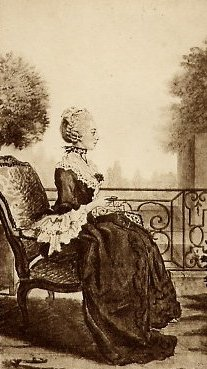
OTHER-NAME: Julie-Jeanne-Eleonore l’Espinasse
BIRTH: 18 November 1732, Lyons, France
DEATH: 23 May 1776, Paris, France
CATEGORY: The Arts
DISCIPLINE: Letters
ASSESSMENT: Her wit and beauty attracted some of the century’s great minds
LANGUAGE: France
EDUCATION: At home
ACHIEVEMENT: Her salon was a center of wit and intellectual conversation in eighteenth-century Paris
MAJOR-WORK: Letters published after her death.
PARENTS: Father unknown; mother Comtesse Julie-Claude-Hilaire d’Albon, Marquise de Saint-Forgeux and Princesse d’Yvetot
SPOUSE: None
SIBLINGS: Camille (brother) and Diane
CHILDREN: None
DETAILS:
Julie de Lespinasse was born illegitimate and brought up by her mother as an adopted child. She was educated by her mother at home, where she studied languages (Italian
and English) and much literature. In 1739 her half-sister Dianne married a neighbouring nobleman, the 44-yr-old Comte Gaspard de Vichy-Champrond, elder brother of Madame du Deffand*. There is a strong possibility that he was in fact her father, as one contemporary source claimed.
On her death in 1748, Julie’s mother divided her huge fortune between her two legitimate heirs, leaving Julie an annual pittance of 300 livres, and giving no hint of the girl’s relationship with the family. Julie was thus thrown on world at age of fifteen, with only just sufficient means to keep herself alive, a friendless, unprotected, and impoverished orphan.
It was in this state that she was invited to stay with Diane and Gaspard at Champrond, where she apparently learned of her illegitimacy and was constantly humiliated by her relatives and treated with coldness and condescension by everyone.
She was found by Madame du Deffand, who was visiting her brother Gaspard at Champrond in 1752. The great society hostess, who was suffering from growing blindness, recognized Julie’s native intelligence and compassion and suggested that the girl might live with her in Paris as a companion.
Julie arrived in Paris in May 1754. She was at first introduced simply as a girl from Mme du Deffand's province, staying with her before entering a convent, and was then allowed to charm people at Deffand's salon by her own merits.
She soon became an accepted, and later favorite, figure: intelligent and well-read, very polite and graceful, a good listener, warm and vivacious, with light, ironic wit. For ten years she and Deffand were close, but gradually, as Deffand aged she grew more ill, insomniac and despotic (and probably jealous of Julie’s social success), while Julie gained confidence and began increasingly to resent her dependent position and to feel the strain of the long hours ( she was forced to read to Deffand in the early morning)
By early 1760s, she told Deffand how "abused, humiliated, crushed" she felt by latter's wounding conduct towards her in public. A tremendous quarrel took place in April 1764, after Deffand discovered that Julie had for a long time been receiving, in her private room, a select circle of her own particular friends for clandestine conversation before they then moved on to Deffand’s own drawing-room.
Julie left and took a nearby apartment where she instantly established a salon made up of her old circle of intimates (including the mathematician d’ Alembert*, who was in love with her) and the new guests they brought, such as Turgot*, Condorcet*, and Hume*.
The whole point of Julie’s salon was talk about books, plays, politics, music, social reform, and personalities.
In autumn 1765, after a serious illness, d'Alembert took the highly unusual step of moving into the top floor rooms of Julie's apartment, so she could look after him and they could share the expense of meals, etc.
Julie’s name was by now known to the intellectual elite across Europe. In 1767, she met young, wealthy Spanish widower Don Jose, Marquis of Mora, son of the Spanish Ambassador to France. By 1769 he had fallen passionately in love with her.
This caused great strain with d'Alembert. By 1770 Julie’s relations with him had deteriorated and he had nervous breakdown. Their relationship never fully recovered. And after two years, nor did that with De Mora.
Then in 1772 Julie met love of her life, the 29-yr-old Count Jacques de Guibert, who was not handsome, but strong, intelligent, assertive, and with a magnetic personality, and was a great success in Paris society, partly because of his controversial military book, 'Essay on Tactics'. In spite of the fact that he was inconsiderate, careless, undependable and conceited, Julie was entirely captivated. They were lovers by spring 1773.
Ultimately, the affair was tragic. Their age difference, plus Guibert's restlessness and his lack of depth meant that Julie loved him more that he loved her. He also had numerous other affairs, sending Julie into paroxyms of jealousy.
She became increasingly hysterical and non-trusting of Guibert (while maintaining her salon, superb at remaining witty and vivacious in public, while secretly desperate), and they fell out many times, but always had passionate reconciliations. Julie wrote endless letters to him, and took at least one overdose of opium following a bad quarrel.
In 1775 Guibert married someone else. Julie spent the few remaining months of her life in rapidly declining health, and still in temptestuous contact with Guibert. By the end he was full of remorse and despair over her impending death, but by then she was too ill to appreciate it. She died aged 44, in the presence of the still-devoted d'Alembert.
EXTRA-CONNECTIONS: None
ONELINER: Julie de Lespinasse, 18th century French saloniste
BIBLIOGRAPHY:
EB
Royde-Smith, Naomi, The Double Heart: A Study of Julie de Lespinasse, London: Hamish Hamilton, 1931.
Jeanne Julie Éléonore de Lespinasse - Wikipedia
Research Notes:
Julie de Lespinasse was born on 18 November 1732 - mother, Comtesse
Julie-Claude-Hilaire d'Albon, Marquise de Saint-Forgeux and Princesse
d'Yvetot, gave birth to her secretly in house in poor quarter of Lyson:
child baptised following day and named Julie-Jeanne-El»onore l'Espinasse. At
time of pregnancy and birth, Comtesse d'Albon had been living apart from her
husband, Comte d'Albon, for some years: she was sole heiress of very rich,
noble and ancient Lyonnais family, and aged 16 had been married to cousin,
also sole heir of another branch of family, in order to unite the vast
d'Albon properties. In 1732, she had 2 surviving legitimate children -
daughter, Diane (aged 16), and son, Camille (aged 8) - after birth of
latter, Comte d'Alban retired to his house in Roanne, where he died many yrs
later. The countess continued to live with her 2 children either in her
chateau at Avauges or in her town house in Lyons, where she was well-known -
reason why she bore her third, illegitimate child in secret, and gave false
particulars re child in parish register: however, she then brought Julie
home with her and brought her up as an adopted child (this also believed by
child herself). Identity of JDL's father remained unknown.
JDL educated first by mother at home, where she studied languages (Italian
and English) and much literature. When she was 7 (1739) her half-sister
Dianne married neighbouring nobleman, 44-yr-old Comte Gaspard de
Vichy-Champrond, elder brother of Madame du Deffand - strong possibility
that this was in fact JDL's father (same age as mother), as one contemporary
source claimed. Whatever truth of this, in later life JDL v. bitter about
way she was brought up, and in particular against her half-brother Camille,
who was close-playmate as young children, but who turned against her after
their mother's death (in 1748), and - ironically enough if was in fact her
father - the Comte de Vichy, in whose house she lived after mother's death
and who apparently treated her cruelly: JDL called members of the d'Albon
family "tigers". Big problem stemmed from fact that Comtesse d'Albon divided
her huge fortune between her 2 legitimate heirs, and left JDL pittance of
300 livres p.a., without giving any hint of her relationship with family.
JDL thus thrown on world at age of 15, with only just sufficient means to
keep herself alive: mother had apparently not meant this to be the case -
had intended to compensate natural daughter by secret gift of large sum in
cash hidden in desk before her death, with key given to JDL: however, for
unknown reason (probably cos only 15, and therefore too young to invest
money herself), JDL gave key to her brother Camille, now a cavalry captain,
who instead of investing money for JDL simply took it for himself. (Know
this cos in her will, written 28 yrs later, JDL accused Camille of stealing
her inheritance in this way).
JDL thus left in 1748 a friendless, unprotected, and impoverished orphan,
who was from then on the object of great suspicion and hostility (even
though she never made any claim on the d'Albon estate beyond 300 livres
p.a.) by both the d'Albon and the de Vichy families - brother and sister in
particular were determined not to recognize her as kin, so didn't have to
share their fortunes. Was in this state that was invited to stay at
Champrond with Diane and Comte de Vichy - stayed there for next 4 yrs, but
was here that she apparently learned of her illegimacy and was constantly
humiliated by relatives and treated with much coldness and condescension by
everyone - was made unpaid governess of Diane's three children (who she
adored, esp eldest son Abel). This caused great depression and persecution
complex in 19-yr-old JDL - was in this state that she was found by Madame du
Deffand, who was visiting her brother Gaspard de Vichy at Champrond in 1752.
Was through her that it was arranged that instead of remaining at Champrond,
JDL would join a convent at Lyons: meanwhile, Madame du Deffand had taken a
great liking for JDL: she the great society hostess who was suffering from
encroaching blindness - had already taken on a secretary to read and write
her considerable correspondence, and now wanted also a companion - as
childless. Recognized native intelligence and sensibility in JDL, plus also
her very kind and compassionate nature, despite treatment of family, which
MDD needed in companion in her blindness. Result was that MDD suggested that
she might accompany her to Paris as companion.
JDL extremely keen, but meanwhile moved into convent in Lyons, seeing MDD
again in spring 1753. MDD had to fight against difficulties made by families
re JDL moving to Paris - both were fearful that JDL would attempt to claim
legitimacy once in society and with influential friends (as born when Count
and Countess d'Alban both still alive), and move formally forbidden by Comte
de Vichy and Camille d'Albon. Finally, in Feb 1754, JDL decided to act for
herself: wrote to her brother giving him 2 alternatives - either give her
sufficient allowance to live decently, or allow her to act as she pleased.
Brother refused allowance, so JDL now felt free to act - left convent and
travelled to Paris in May, with relations with brother entirely at an end.
Journey to Paris arranged by MDD's good friend, Cardinal de Tencin - JDL
arrived there in May 1754, aged 22. Was at first introduced simply as girl
from MDD's province staying with her before entering a convent - was then
allowed to charm people at MDD's salon by her own merits, and soon became an
accepted, and later favourite, figure: was intelligent and well-read, very
polite and graceful, good listener, warm and vivacious, with light, ironic
wit - all these qualities made her a good conversationalist, and was
befriended by MDD's oldest female friend, Madame de Luxembourg, acknowledged
grand dame of salon society - this 'made' her. MDD delighted by her
prot»g»e's success, and for long period pair was happy together - however,
appears that over the 10 yrs they were together (1754-64), as MDD aged, she
gradually grew more ill, insomniac and despotic (and probably jealous of
JDL's social success), while JDL gained confidence and began increasingly to
resent her dependent position, while also greatly strained by late hours -
forced to read to MDD in early hours of morning, cos of insomnia and fear of
being alone. MDD demanded absolute candour, loyalty and attention from JDL -
as latter approached 30 this seemed more and more irksome (wd later call
whole period "ten years of torture", but this no doubt an exaggeration) - 2
were apparently too alike, proud, over-sensitive and demanding, to live
together for any length of time.
By early 1760s, JDL told MDD how "abused, humiliated, crushed" she felt by
latter's wounding conduct towards her in public, and that all her friends
had noticed it - this probably true, for after quarrel many of their common
friends sided with JDL. Friend who took part of JDL with most ardour was the
mathematician and writer d'Alembert, who first met her in MDD's salon when
aged 37. He of similar background - illegitimate child nobles, but he
abandoned at birth by notoriously immoral Madame de Tencin, but later traced
by his father who supported him from a distance. Entered society by his own
talents, as scientist, writer and wit, and became first a friend of MDD, who
became "passionately fond" of him - during 1750s d'Alembert deeply involved
in writing for Diderot's 'Encyclopedie', but resigned from it in 1758.
During following six years, d'Alembert and MDD gradually fell out - over
variety of things, but mainly over his affection for JDL, and in 1764 on
break between the women he abandoned her forever.
Tremendous quarrel between JDL and MDD happened in April 1764 - centred on
MDD's discovery that JDL had for long time been receiving, in her private
room, a select circle of her own particular friends (incl d'Alembert) for
clandestine conversation before they then moved on to MDD's own
drawing-room. MDD felt hugely betrayed and jealous of JDL's popularity -
tremendous scene followed, and JDL left the house: at this time, JDL rather
better off than had been decade before - had been granted (through good
offices of MDD who had friends at Court) three life pensions from royal
sources, bringing her total income to about 3,500 francs, enough to live on
independently. MDD now completely bitter, as her efforts left JDL
independent, plus latter received both material and moral support from many
who had originally been her friends.
Thus, JDL took an apartment (2 floors of a house) v. near MDD's house,on
corner of rue St Dominique and rue de Bellechasse. She took on four
servants, and had entire household of furniture given to her by MDD's oldest
friend, Madame de Luxembourg, while enemy of MDD, Madame Geoffrin, bought
JDL additional pension of 2,000 francs p.a. JDL instantly established a
salon at this new HQ, made up of old circle of intimates, but reinforced by
new guests they introduced - included d'Alembert, Turgot, Condorcet, Suard,
Marmontel, Morreller, and David Hume. MDD furious and told many that if they
went there, then were banned from hers - and most chose JDL, including of
course d'Alembert, much to MDD's great grief: thus, MDD far more harmed by
JDL's defection than latter was, despite her lack of social position, and
thereafter MDD became increasingly more rancid and rancorous towards other
people - partly cos had had a real and deep affection for JDL at one time.
Meanwhile, JDL continued to be received by Madame de Luxembourg, and was now
introduced to celebrated free-thinking salon of MDD's great rival, wealthy
but lowish-born Madame Geoffrin (good friend of d'Alembert), who to some
extent took on protective role towards JDL from this point - became kind of
benevolent aunt for whom JDL felt deep affection. Her own salon coming on
apace - straitened means, meant that she just provided whole load of chairs
in drawing-room (no meals, entertainments, etc offered), as whole point of
JDL salon was talk - about books, plays, politics, music, social reform, and
personalities - over which she presided. Many people attested to her great
quality of sympathetic insight: eg Grimm wrote, "She possessed in the
highest degree, the difficult art of bringing out other people without the
least sign of effort". JDL herself said, "People like me for hte impression
of cleverness and charm which they make upon me, not for the impression I
make on them." Her evening gatherings - from 5 pm until 9 pm, after which
company dispersed to find supper at more sumptuous houses - became famous:
"There one could be sure of finding eminent men of all kinds, from the
Government, the Church and the Court; distinguished soldiers, foreigners and
men of letters" (Grimm). All this happened gradually during mid and late
1760s: was at first left "without fortune, birth, or beauty", (latter made
worse by, in 1766, a bad attack of smallpox) but used her brains, breeding,
personality and influential friends to great end. Other big event of these
years came in autumn 1765 when, after serious illness, d'Alembert took
highly unusual step of moving into top floor rooms of JDL's apartment, so
she could look out for him and they cd share expense of meals etc. - unusual
for JDL to flout convention so entirely, but even odder situation was soon
entirely accepted by society and not commented on. Accepted on basis of
innocence - which apparently seems to have been: although water muddied by
d'Alembert being in love with her - she apparently not with him, but managed
to convince him during next decade that she was as devoted to him as he to
her, despite her other affairs (which he knew nothing about).
JDL now growing into a celebrity, her name known to intellectual elite
across Europe. Then, in 1767, she met young, wealthy (but extremely sickly
with TB) Spanish widower Don Jose, Marquis of Mora, son of the Spanish
Ambassador to France, who by 1769 had fallen passionately in love with her
(he 23, she 40): she v. fond, but apparently did not have full-blown affair.
This caused great strain with d'Alembert: result was that by 1770 relations
with d'Alembert (still in situ) had deteriorated, and he had nervous
breakdown: recovered by going to visit Voltaire with Condorcet. Returned,
but things still difficult - he still v. fond of her, but felt she treated
him coldly etc; for her part, she also suffering from depression during
early 1770s - partly persistent ill health post smallpox, and partly end of
relationship with Mora - pair had almost married (in 1771), but for unknown
reasons (probably JDL's illegitimacy) wedding never came off, and JDL v.
depressed.
All this resolved in 1772 when she met love of her life - 29-yr-old Count
Jacques de Guibert: met him at a summer party in June 1772 at house of rich
tax farmer Henri Watelet, called Moulin Joli on outskirts of Paris - famous
for having garden relandscaped as a 'jardin anglais' in style of Thomas
Whately. Passionate friendship with Mora continued (who was however getting
increasingly ill), until was ordered back to Spain by his father in August
- Gap he left was filled by Guibert in JDL's life: was not handsome, but
was strong, intelligent, assertive, and hugely magnetic personality - was
big success in Paris society, partly cos of this and partly cos of his
controversial book, 'Essay on Tactics'. JDL appalled by her growing desire
for this man, esp when she was supposedly in love with someone (Mora) she
often described as a "perfect being": Guibert, on contrary, was
inconsiderate, careless, undependable, and conceited - plus difficult to be
around as never relaxed. Despite failings, JDL was entirely captivated by
Guibert from 1772-73, and were lovers by spring 1773: meanwhile, Mora (with
whom she always claimed she never slept - so Guibert her only lover) had
almost died on journey back to Spain, and while there family did their best
to extricate him from unfortunate entanglement with JDL - intercepted
letters - while he remained there mortally ill. JDL felt everlasting guilt
re Mora, esp as her love for Guibert became more passionate, jealous and
intense - particularly during summer 1773 while he away from Paris until
October.
Ultimately, affair was inevitably tragic for JDL - age difference, plus
Guibert's restlessness and his lack of depth meant that she loved infinitely
more than he did, plus her guilt re Mora made whole thing far more intense
for her. He did return her love, more so as time went on, but not to depth
and exclusivity she needed - had numerous other affairs, sending JDL into
paroxyms of jealousy. Poor old Mora lying ill and faithful in Madrid during
winter 1773-74, greatly distressed by change of tone in JDL's letters -
therefore determined to return to Paris, and set out from Madrid in early
May 1774. Never made it - died at Bordeaux on 27 May 1774: had been
travelling purely to see her, and JDL's life now poisoned by conviction that
she'd killed him. Seems that from this time JDL became convinced that only
expiation was her own death - some lines in letters suggest that Guibert
stopped her committing suicide on at least one occasion. V. difficult period
followed: JDL increasingly hysterical and non-trusting of Guibert (while
maintaining salon - was superb at remaining witty and vivacious in public,
while secretly desperate), they fell out many times, but always had
passionate reconciliations - JDL wrote endless letters to him, and took at
least one overdose of opium following bad quarrel.
sThings deteriorated further when Guibert started to arrange marriage
between himself and Mme de Courcelles (1774), and JDL became increasingly
ill with fever (TB) - e.g. one night had 12-hour hallucination of Mora
standing in her room. Situation continued til Guibert's marriage in June
1775 - JDL spent few remaining months of her life in rapidly declining
health, and still in temptestuous contact with Guibert: by end he was full
of remorse and despair over her impending death, and tables almost turned,
but by then she too ill to appreciate it. JDL died on 23 May 1776 at Paris,
aged 44, in presence of still-devoted d'Alembert and nephew Abel de Vichy.
After her death, d'Alembert greatly grieved by reading her diary from period
with Mora in Paris several yrs earlier - had always convinced himself that
he had been first in her heart, and so was devastated to learn of that long
love affair: however, fortunately never learned of JDL's love for Guibert.
Her letters were published much later (1809, by Guibert's widow) in several
volumes - reveal her romantic sensibility and genuine literary gift: she
also left large quantities of manuscripts, ranging from ditties extemporized
during games in MDD's salon, to copies of letters from Voltaire to
d'Alembert, and her own imitation of Sterne's 'Sentimental Journey'.