Vesalius, A
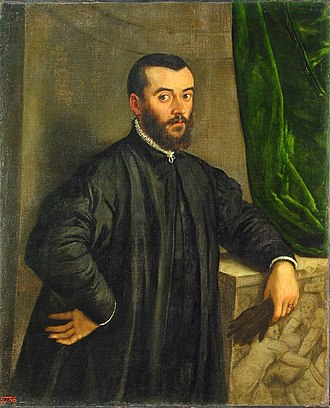
ACHIEVEMENTS: Founder of modern anatomy
DATE AND PLACE OF BIRTH:
31 December 1514, Brussels, Flanders
DATE AND PLACE OF DEATH AND AGE AT DEATH:
15 October 1564, Zakinthos, Greece. Aged 50
DISCIPLINE: Physician
FIELD: Anatomy
LANGUAGE:
Flemish/Italian
EDUCATION:
School, Brussels
University of Louvain
University of Paris
University of Padua
MAJOR WORK:
"On the structure of the human body" (1543)
LIFE AND TIMES:
Vesalius’ father was apothecary to the Holy Roman Emperor Charles V. During his early medical studies at Louvain and Paris he did anatomical research and he introduced dissection at Louvain, where he graduated in medicine in 1537. In the same year he received his doctorate at Padua University in Italy and took a job there as lecturer in surgery and anatomy.
Vesalius began lecturing, but unusually, performed his own dissections during lectures instead of following the usual practice of hiring a surgical assistant to do it for him. He also drew up four large anatomical charts for his students, illustrating the blood supply and the nervous system, and incorporating his own findings. They were unusually large and detailed, and obviously the students found them exceptionally useful because one was stolen.
After this, Vesalius took the precaution of publishing the three remaining charts together with drawings of the skeleton by a student working in the studio of the artist Titian*.
In 1538 he also published a dissection manual. In a further treatise on bloodletting, he stated that blood should be let from a location near the source of the patient's illness rather than a location distant from it, as had been the custom for hundreds of years. He proposed that the choice of location should be based on finding an accurate venous pathway in the patient. He also suggested that dissection be used to test speculative theories about the workings of the body.
Only two years after his appointment at Padua, Vesalius was confirmed in his post with an increased salary and an acknowledgement of the importance of his new ideas and the admiration of his students for his teaching.
The admiration of a judge in the criminal courts resulted in the bodies of executed criminals being made available to Vesalius and for the first time Vesalius had enough material to undertake comparative anatomical dissection. The more he did the more he realised that the classical descriptions of anatomy corresponded to the animal species and not to humans.
In 1540, during anatomical demonstrations at Bologna, Vesalius stated that the only way for physicians to gain an accurate picture of human anatomy was to dissect and observe the human body with their own hands. He used the skeletons of an ape and a human being to illustrate that earlier descriptions of bones was relevant only to that of the ape. Back in Padua, Vesalius began preparing his classic work on human anatomy.
He paid great attention to his illustrations and co-opted the best draftsmen he could find probably from Titian's studio. The trend for making medical drawings more naturalistic came from the artistic world, and in particular from da Vinci*.
Vesalius made sure that his artists' drawings were turned into woodcuts by the finest Venetian craftsman and went to Basel himself to oversee the printing.
The book was published in 1543 with the title "De humani corporis fabrica" (“On the structure of the human body”). It was written partly in order to persuade medical teachers and physicians of the importance of anatomical knowledge and its relevance to clinical treatment. Vesalius thought that medical students should be taught to dissect, and he wrote they were currently being offered little "that could not better be taught by a butcher in his shop."
The book was also written to overthrow the conventional model of anatomy. It followed the humanist and naturalistic ideal of teaching in the way that Vesalius related many structures to everyday objects, such as comparing the trapezius muscle to the cowl of the Benedictine monks and the radius to a weaver's shuttle. (The present-day name for the mitral valve of the heart derives from Vesalius's description of it as comparable to a bishop's mitre).
His illustrations were superior in quantity and in marginal references to anything which had gone before. The most important sections of the work concern osteology, myology and cardiology.
The impact of "De fabrica" was huge and although others such Harvey* and Eustachi* later corrected mistakes made by Vesalius his work remained the most influential source on anatomy for two centuries. Vesalius was fully supported by his university and through his teachings Padua became the European centre of excellence for medical studies.
Nevertheless, he then abandoned his academic career and became physician to the Holy Roman Emperor Charles V*. Although required to give most of his attention to the digestive problems of the Emperor, and to service as a military surgeon during the imperial wars, Vesalius always visited any nearby medical school to do some dissecting.
In the field, he developed surgical techniques in particular a surgically induced drainage for chest abscess, and his reputation was so high that in 1559 he was urgently summoned to France (to assist the French surgeon Ambroise Pare) when the king ( Henri II* ) was fatally wounded during a tournament.
In 1555, when Charles V abdicated, Vesalius took a position at the court of the Emperor's son ( Philip II of Spain*) in Madrid.
In 1564 he made a pilgrimage to the Holy Land and when his ship docked at Venice on the way there, took the opportunity to call in at Padua where he accepted the offer of the chair of anatomy. On the way back from the Holy Land he became ill and died on the Greek island of Zakinthos.
ASSESSMENT: Vesalius is the undisputed founder of modern anatomy.
EXTRA CONNECTIONS: His techniques were in use by the surgeons of the Order of St John in Malta
ONELINER: Andreas Vesalius, 16th-century surgery pioneer
BIBLIOGRAPHY:
O'Malley, C.D., Andreas Vesalius of Brussels, 1514-1564, University of California Press, Berkeley and Los Angeles, 1964.
PARENTS:
Father: Andreas Vesalius
Mother: Isabel Crabbe
SIBLINGS:
2 brothers: Nicolas, Francois
1 sister: Anne
SPOUSE:
Anne van Hamme
CHILDREN:
1 daughter: Anne