Global Witness
https://www.globalwitness.org/en/
eg
https://www.globalwitness.org/en/campaigns/corruption-and-money-laundering/assad-henchmens-russian-refuge/
---
[### Ahead of US Election, TikTok and Facebook fail to block ...

Global Witness
https://globalwitness.org › campaigns › digital-threats](https://globalwitness.org/en/campaigns/digital-threats/before-us-election-tiktok-and-facebook-fail-to-block-harmful-disinformation-youtube-succeeds/)
Oct 17, 2024 — Just weeks before the US presidential election, Facebook and TikTok approved ads containing harmful election disinformation.
Ahead of US Election, TikTok and Facebook fail to block disinformation | Global Witness
Just weeks before the US presidential election, Facebook and TikTok approved ads containing harmful election disinformation. This is despite a similar Global Witness investigation published two years earlier that found failures in their moderation systems.
A new Global Witness investigation examined if YouTube, Facebook, and TikTok can detect and remove harmful election disinformation.
Our new investigation found that Facebook and TikTok had improved their moderation systems. But, major issues remain.
- TikTok did the worst. It approved 50% of ads containing false information about the election. This despite its policy explicitly _banning all political ads_.
- Facebook did much better. It approved just one of the eight ads submitted, in an improvement on its previous performance.
- YouTube did the best. Although it approved 50% of the ads submitted, it told Global Witness that it wouldn’t publish any of the ads without more identification (like a passport or driver’s license). However, there may still be room for improvement: YouTube rejected all but one of the ads because they referenced the election, rather than because they referenced the election and contained disinformation.
Ads Testing Scorecard US election 2024
Social media has become the public sphere through which voters gather information, discuss politics and follow election campaigns. It is also the primary means for political campaigns to access new audiences and ‘get out the vote’. Disinformation spreading through social media platforms has been a serious issue in _previous US elections_, and the same is true for this year. As one of the most influential nations in the world, as well as one of the greatest emitters of greenhouse gas, the outcome of the US election will have a major impact in the global fight against climate breakdown.
YouTube and Facebook are by far the most popular social media platforms among US adults – with 83% and 68% of adults reporting use of them, respectively. TikTok’s user base is smaller (only 33% of US adults), but it is the key platform through which to mobilise the youth vote. Both the Harris and Trump campaigns have invested in ads on online platforms.
With election day in the US just three weeks away, all three platforms must ensure their political ad policy enforcement is watertight.
*How did we test if we could get election disinformation onto social media platforms?...
---
https://www.alternet.org/2022/10/meta-tiktok-stop-the-steal/
no lnk twt
Meta and TikTok busted for 'actively pushing' 'Stop the Steal 2.0' on eve of Brazil's presidential election
Brett Wilkins and Common Dreams October 30, 2022
As Brazilians prepare to vote in Sunday's decisive presidential runoff, a report published Saturday revealed that social media giants Meta—Facebook's parent company—and TikTok are driving traffic to content promoting a military coup to overthrow Brazil's democracy.
The report—entitled Stop the Steal 2.0: How Meta and TikTok Are Promoting a Coup—was published by the San Francisco-based activist group SumOfUs and asserts that "on the eve of the second vote in Brazil's most important election in decades, Meta and TikTok continue to put the integrity of the election on the line through their disastrous recommendation systems."
The publication comes ahead of Sunday's second-round contest between far-right incumbent Jair Bolsonaro—who has said he may not accept the outcome of the election if he loses–and former leftist President Luiz Inácio Lula da Silva. Aggregate polling showed the two candidates in a statistical dead heat on Friday.
According to the new report:
Meta claims that Brazil is a priority region and that the company is committed to enforcing policies and practices that uphold the integrity of the vote. But not only does SumOfUs' previous research show that the platforms are awash with conspiracy theories about the election, claims of electoral fraud, and calls for a military coup, this research report sets out how Facebook's recommender systems are actively pushing users towards this content.
:{
}:
Far-right extremists, who are openly agitating for a military coup, are operating freely on Meta's platforms, and Meta is not only allowing them to spread their message and recruit new members, but the platform's algorithms are prioritizing anti-democratic groups, accounts, and posts. The report also looked at the role TikTok is playing in tackling the growing problem of election disinformation on its platform, and found its moderation lacking...
The findings confirm civil society organizations' worst fears, that platforms like Facebook and Instagram are enabling bad actors to organize and recruit new members, just as it did in the U.S. 2020 elections, which ended in violent insurrectionists storming the U.S. Capitol on January 6th.
"At this point, it is safe to say that Meta has become Bolsonaro's official disinformation machine," SumOfUs campaign director Flora Rebello Arduini said in a statement. "This is not Meta's first time wreaking havoc on democracy and Brazilians deserve better from this multi-billion dollar company."
"As this report shows," she added, "TikTok needs to up its game and not follow Meta's lead in fueling the disinformation crisis in Brazil."
On Saturday evening, SumOfUs activists projected an image of Meta co-founder and CEO Mark Zuckerberg setting the Brazilian flag alight with the message "Meta is destroying Brazilian democracy" at Kings Cross tube station in London, just around the corner from Meta's U.K. headquarters.
The new report comes amid warnings and acts of right-wing political violence. While no motive has yet been announced, on Friday local São Paulo-area politician Reginaldo Camilo dos Santos, a prominent supporter of da Silva and the left-wing Workers' Party running for Congress, was assassinated in a drive-by shooting near his home in Jandira.
Agência Pública, an independent Brazilian investigative journalism outlet, reported earlier this month that from August 16 and the end of the first round on October 2, there wereat least 148 cases of electoral violence across the country.
A separate report published last week by the anti-corruption and human rights organization Global Witness revealed that YouTube approved 100% of Brazilian election misinformation ads submitted for approval, while Facebook accepted around half of such submissions.
https://theintercept.com/2019/07/30/criminalization-environmental-activists-global-witness-report/
VICTORIA TAULI-CORPUZ, the United Nations special rapporteur on the rights of Indigenous peoples, was disturbed to learn that her name had been included on a list of “terrorists” allegedly affiliated with the Communist Party of the Philippines and its armed wing, the New People’s Army.
Authoritarian President Rodrigo Duterte had imposed martial law on the island of Mindanao in May 2017, when ISIS sympathizers attacked the predominantly Muslim city Marawi. By October, ISIS had been ousted, but martial law remained in place. Tauli-Corpuz, who is Filipina and a member of the Indigenous Kankanaey Igorot people, saw the emergency suspension of rights transform into a tool to go after the Indigenous Lumad people, who have stood in the way of Duterte’s industrial priorities in the region, including agribusiness, coal extraction, and gold mining. In the two months after the ISIS conflict ended, the military’s harassment and violence reportedly displaced 2,500 Lumad people.
Tauli-Corpuz and Cecilia Jimenez-Damary, the U.N. special rapporteur on the human rights of internally displaced people, released a statement that December demanding that the Philippine government halt all human rights abuses against the Lumad, including killings and violent attacks carried out by members of the armed forces, and bring those responsible to account.
A few months later, the Duterte administration placed Tauli-Corpuz on a list of 600 so-called terrorists as part of a petition filed in court seeking to declare the Communist Party and its armed wing as terrorist organizations. Human Rights Watch declared the petition a “virtual hit list,” citing the “long history in the Philippines of the state security forces and pro-government militias assassinating people labeled as NPA members or supporters.”
Fearing for her safety, Tauli-Corpuz left the country. As she saw it, Duterte was once again using anti-terrorism rhetoric to attack the Lumad people and obtain access to their territory — this time by undermining a key international protector.
Thirty land and environmental defenders were murdered in the Philippines last year — more than in any other country, according to a new report released by the nonprofit Global Witness. But murder only represents the extreme end of the spectrum of abuses faced by those fighting to protect their homes, forests, and rivers against the encroachment of destructive industries. For land defenders across the globe, a simple smear campaign — such as labeling an advocate a terrorist — can end with someone discredited, in prison, or dead. Any of the three results has the same effect: to eliminate a barrier to agribusiness, dam projects, or extractive industries.
For the first time since Global Witness began releasing its annual reports in 2012, the organization has included a section on criminalization, in which governments and private interests create, change, or reinterpret laws to transform once-legal activities into criminal acts.
“Criminalization is done to put fear into the hearts of people so they will stop protesting. For Indigenous people, this is a very serious action because when they criminalize a leader, then the whole community or organization gets paralyzed,” Tauli-Corpuz told The Intercept. “That’s what it’s intended to do — it’s intended to repress freedom of association and the freedom of people to express their own views.”
Many Deaths Go Unrecorded

Image: Courtesy Global Witness
In 2018, Global Witness documented 164 killings worldwide of people fighting to protect their land and ecosystems from destructive industries. Nearly a quarter of those murdered were Indigenous. And more than a quarter of the killings were associated with opposition to mining and extractives industries.
Colombia, India, and Brazil were also among the deadliest places for land defenders last year. And Guatemala, the origin country of a quarter of the migrants apprehended at the U.S.-Mexico border in 2018, had the highest rate per capita of land defenders murdered. According to Global Witness’s count, the number of murders there rose from three in 2017 to 16 in 2018. As The Intercept previously reported, the victims were fighting to protect their territories from a range of industries, from agribusiness to hydropower to mining. The uptick in violence has been linked to a sharp turn away from democracy in the country and President Jimmy Morales’s abandonment of internationally lauded efforts to combat impunity and corruption.
In its report, Global Witness makes clear that its tally of land defenders murdered is almost certainly an undercount. Researchers rely heavily on in-country human rights organizations and journalists to record such attacks. In countries where press freedom is stymied or other conflicts complicate the ability of such groups to track violent incidents, land and environmental defender deaths go unrecorded.
Tauli-Corpuz’s experience underlines the risks undertaken by those who simply document violence and intimidation. In Guatemala, too, the leaders of the nonprofit Unit for the Protection of Human Rights Defenders, who meticulously track murders, arrests, and smear campaigns against people fighting destructive industries, have themselves faced some of the same threats as those for whom they advocate.
Alice Harrison, a spokesperson for Global Witness, said that a focus strictly on murders obscures the wider range of violence and persecution land defenders face. For example, last year was the first since 2012 that Brazil did not have the highest number of deaths on the organization’s tally. But advocates for land defenders in Brazil, Harrison said, “have seen an uptick in really violent physical attacks, a lot of them just shy of murder.” It’s expected to get worse, she said. President Jair Bolsonaro has pledged to open up the Amazon and Indigenous territories to industry; budget and staffing have been slashed at Brazil’s environmental monitoring agency as well as the agency responsible for monitoring the rights of Indigenous people in areas with violent land conflicts.
And across Latin America, killings often occur only after individuals have been framed as criminals through the legal system. The Honduran environmental activist Berta Cáceres, for example, faced years of legal pressure before being assassinated by hit men hired by the dam she opposed.
“When you start looking at defenders through criminalization, you start to draw dots between global south and global north,” said Harrison. In countries like the U.S. and the U.K., murders of land defenders are rare, but arrests, lawsuits, and disproportionate penalties for crimes like trespassing are common. In countries across the globe, new laws have been passed that criminalize dissent under the guise of national security.
In 2018, according to Global Witness, Bangladesh, Egypt, Indonesia, Nicaragua, and Vietnam passed laws that could be used to stifle political dissent or prosecute environmental activists.
The U.S. has also seen a spate of anti-protest laws passed. Since Donald Trump was elected, at least 17 states have introduced bills increasing penalties for anyone who interferes with “critical infrastructure,” including controversial oil and gas pipelines. The laws have passed in eight states. This past June, the Trump administration proposed federal legislation that would prescribe up to 20 years in prison for disrupting or conspiring to disrupt an oil or gas pipeline.
With supporters of unfettered development like Duterte, Trump, and Bolsonaro in positions of power across the globe, the risks for environmental defenders are only expected to increase, even as the accelerating climate and biodiversity crises enhance the urgency of their work.
Harrison would like to see a stronger regulatory environment for land defenders. As an example, she points to the Lacey Act in the U.S., which requires wood importers to assure that their suppliers are not sourcing logs using illegal practices. Nothing equivalent exists in the U.S. for industries like agribusiness.
Tauli-Corpuz says organizing against laws that criminalize protest is essential. In the Philippines, a court ordered that her name be removed from the terrorist list following sustained pressure from local and international organizations. Eventually, the list was thrown out entirely.
But martial law is still in place in Mindanao, and the label of “terrorist” or “Communist” is still used across the Philippines as an excuse to criminalize and attack the Lumad and other Indigenous land defenders.
“We cannot just take these kinds of actions quietly. We have to protest and get the support of the international community and other people who are concerned about this kind of fascism,” Tauli-Corpuz said. “It’s really important to wage a campaign any time such criminalization happens — that is one way of protecting people.”
==
https://www.globalwitness.org/en/campaigns/forests/money-to-burn-how-iconic-banks-and-investors-fund-the-destruction-of-the-worlds-largest-rainforests/
no lnx many
Forest burning - Reuters
Article / Sept. 23, 2019
MONEY TO BURN
More than 300 banks and investors back six of the world’s most harmful agribusinesses to the tune of $44bn
Barclays, HSBC and Santander among high street names behind companies implicated in rainforest destruction.
Iconic investment banks such as Goldman Sachs, JPMorgan, Bank of America and Morgan Stanley also among key financiers.
The burning of the Brazilian Amazon this summer illustrated in the most graphic way possible humanity’s war on the planet.
But such scenes play out every year in rainforests all around the world to make way for big agribusiness, away from the horrified stare of global television audiences. These forests are earth’s front-line defence against climate breakdown. One famous study published in 2017 estimated that forests and other ecosystems could make up more than a third of the total carbon mitigation by 2030 needed to limit global heating to a 2° Celsius rise.
Yet between 2001 and 2015, over 300 million hectares of tree cover was destroyed: nearly the size of India. About a quarter of this loss was driven by the production of commodities such as beef and palm oil, according to a recent study. It also found that in south-east Asia alone, deforestation for growing commodities such as palm oil is responsible for as much as 78% of tree cover loss. This is madness.
That being the case, it is unsurprising many banks and investors proudly trumpet policies on ethical dealing, promising not to pump money into companies that fell and burn precious rainforests. There is only one problem: the same financial institutions often break their own policies at will, making them barely worth the paper they are printed on. A Global Witness investigation now exposes the sheer size and scale of these financial flows – and reveals how a veritable A to Z of global finance is enabling the destruction of the world’s biggest rainforests.
The companies razing forests to produce palm oil, beef, and rubber are currently able to secure financing for new projects at commercially attractive rates from banking hubs in the US, Europe and Asia. Global Witness investigated the financing of six huge agribusinesses: three operating in the Amazon, two in the Congo Basin, and one in New Guinea.
Global Witness has discovered that between 2013 and 2019, they were backed to the tune of $44 billion by over 300 investment firms, banks, and pension funds headquartered across the globe. The household name institutions our exposé highlights will be familiar to anyone who has looked at the skyline of Wall Street or Canary Wharf, read a quality newspaper or opened a current account.
While some of these institutions have developed their own deforestation policies, there is no penalty if they ignore them – and they often do. Governments’ failure to regulate the financing of deforestation has left the foxes in charge of the hen-house. Members of the public may be shocked to learn the institutions they bank with enable the sort of apocalyptic destruction witnessed in the Brazilian Amazon this summer.
Ordinary people’s pension funds and investments are channelled into companies revving up the climate crisis, stripping indigenous peoples of their ancestral lands and destroying the forests home to untold numbers of species.
Over the last decade, many financial institutions have committed to tackling deforestation, so often associated with human rights abuses or corruption. One group of 56 investors To inspect full datasets see bottom of page.jpgmanaging approximately $7.9 trillion in assets has urged the palm oil sector to commit to no-deforestation policies. Some 12 banks adopted the Soft Commodities Compact, aiming to achieve net zero deforestation by 2020 in the soy, palm oil, beef and pulp/paper supply chains of around 400 companies with combined sales of 3.5 trillion euros.
But there remains little transparency and accountability over how banks put commitments into practice, and signatories now admit they will miss the 2020 target. Meanwhile, the world’s largest financial institutions continue to sink vast sums into companies either levelling forests themselves or via other companies, often in blatant violation of their own deforestation policies and public commitments.
The NGO Global Canopyassessed 150 financial institutions and found nearly two-thirds had no policy covering four key forest-risk commodities, beef, soy, palm oil and timber. Yet as our investigation shows, even existing policies are widely ignored.
[
One of the most biodiverse regions in the world is being cleared, mostly to make room for a single species: cattle. Image credit: Getty Images
Global Witness can now reveal some of the largest names in global finance – Barclays, Deutsche Bank, HSBC, Santander and Standard Chartered among them—provided tens of billions of dollars in financing between 2013 and 2019 to companies either directly or indirectly deforesting the largest rainforests in the world. Leading investment banks including JPMorgan Chase, Goldman Sachs, Bank of America, and Morgan Stanley are also implicated. And what you are about to read only scratches the surface of a global systems failure.
WHAT WE DID
Global Witness commissioned research from Dutch not-for-profit analysts Profundo into backers of six of the major agribusinesses most implicated in destruction of climate-critical rainforests. They used databases of loans, investments and other types of financing kept by Bloomberg, Thomson Reuters Eikon, Orbis and others, along with company reports and websites to build up a picture of how these companies finance their operations. It was impossible to determine which specific ground-level activities this money financed - but such funding is critical to agribusinesses’ expansion.
This sprawling piece of data journalism reveals with new starkness the golden sinews that link London, Berlin and New York City to the dwindling rainforests of the Amazon, the Congo Basin and the island of New Guinea. These are the three largest uninterrupted rainforest regions in the world.
GettyImages-1164446728.jpg
Still standing: the Amazon remains the biggest rainforest in the world, and a vital check on climate change. Image credit: Getty Images
THE BRAZILIAN AMAZON
A few years ago, deforestation in the Amazon was declining, partly thanks to government action. But that progress is being undone under the rule of far-right President Jair Bolsonaro, with cattle ranching the biggest culprit, according to numerous industry studies.
The three largest beef companies in the Brazilian Amazon, JBS S.A., Marfrig Global, and Minerva Foods, account for more than 45% of the region’s cattle-slaughtering capacity. All three have committed to measures that should help protect the forest. Yet their supply chain is tainted by deforestation – and famous names in finance help keep them afloat.
JBS, the world’s biggest meatpacker, has a history of buying animals from deforested areas. A decade ago, responding to pressure from Greenpeace, JBS signed an agreement not to buy cattle from suppliers that had deforested land after October 2009. They also vowed not to source cattle from suppliers that used slave labor or infringed on indigenous communities’ lands.
Finally, JBS committed never to purchase cattle from suppliers embargoed by the Brazilian Institute of the Environment and Renewable Natural Resources (Ibama) for illegal deforestation, nor from suppliers that raised, reared, or fattened cattle on land overlapping with protected areas. In 2009, JBS became a party to a similar agreement with the Federal Prosecutor’s Office in the Amazonian state of Pará. Since then, however, the company has made a mockery of these commitments:
In 2015, JBS was accused by the Brazilian Federal Police of having bought hundreds of cattle from the mother of an alleged land-grabber described by the police as the “largest deforester of the Amazon”. The suspected land-grabber has been tried and is awaiting verdict. JBS said it has blocked the sourcing of cattle from the land-grabber’s mother and claimed that auditing had shown the company was over 99% compliant with its Greenpeace commitment.
In 2017, Ibama discovered two JBS slaughterhouses had bought 49,468 cattle from embargoed areas, for which the company was fined 24.7 million reais, almost $8 million at a 2017 conversion rate. Global Witness estimates these cattle purchases may have required up to 38,000 hectares of deforestation. JBS denied the purchasing claims, saying it does not buy animals from farms involved in deforestation of native forests or areas embargoed by Ibama.
Last year, the Amazonian state of Pará published an audit of JBS that found breaches of its commitments covering almost 20% of its 2016 cattle purchases. Global Witness estimates the cattle JBS bought that year from ranchers responsible for deforestation may have required an area the size of 65,000 football pitches. JBS said they had been hindered by the lack of detail on the criteria for analysis and by discrepancies in the databases of public sector institutions. It said it had selected an auditor with a "conservative" view in the cases where there were doubts about the information.
An investigation carried out by Repórter Brasil, the Guardian and the Bureau of Investigative Journalism in July alleged the company was still purchasing cattle from embargoed areas. JBS denied this claim.
JBS told Global Witness the issues raised about the company’s environmental policies make “no sense” because it had “implemented rigorous systems and controls” and “does not purchase from farms involved in deforestation”.
Given these transgressions, it might be surprising JBS can attract mainstream financing at all. In fact, it enjoys support from some of the world’s wealthiest banks and investment managers. After a family-owned holding company that is the largest shareholder, its second-largest investor is BNDES, the biggest development bank in the Americas. BNDES held over $2.7 billion of JBS stock as of April 2019.
It is perhaps unsurprising Brazil’s development bank would aid the expansion of the country’s biggest companies. (BNDES did not respond to Global Witness’s inquiries.)
GettyImages-1083137734 2.jpg
Remaining silent: BlackRock was one of numerous banks and investors that did not respond to Global Witness’s questions. Image credit: Bloomberg
But where else does JBS receive financial succour? Step forward the US and Germany.
For JBS’s next largest investor is the American Capital Group, which claims to manage over $1.7 trillion in equity and fixed income assets for millions of investors. According to our research, it held shares in JBS worth over $800 million as of March 2019. Then comes BlackRock. Headquartered in New York with offices in 30 countries, this is another of the richest and most powerful financial institutions in the world, managing more than $6 trillion in assets. As of May 2019, these investments included over $218 million of JBS stock. Global Witness could find no deforestation policy on either fund’s website. Capital Group declined to comment on Global Witness’s findings, and BlackRock did not respond to our enquiries.
Since 2017, Deutsche Bank’s environmental policy has stated it will not knowingly finance projects or activities involving the clearance of primary moist tropical forests. As of April 2019, however, it held over $11 million in JBS shares. In addition, albeit pre-dating the policy, in 2013 it loaned the company $56.7 million.
This is not the first time Deutsche Bank has been accused of irresponsible investments.In 2013, Global Witness revealed how two Vietnamese companies, bankrolled by Deutsche Bank, leased vast tracts of land for rubber plantations in Laos and Cambodia - with disastrous consequences for local communities and the environment.
A Deutsche Bank spokesman said they were unable to comment on client relationships, but added: “We can reaffirm that we take our responsibilities for the environment and society very seriously. We apply our environmental and social risk management policies and procedures in the assessment of any new or existing client relationship. The information you provided is much appreciated and will be considered in any potential decision we have to take.”
How to finance a rogue agribusiness
Company financing can be broadly divided into two categories: debt and equity. An equity investment involves institutions or individuals subscribing for new shares in a company. This allows companies to raise money for new projects. The most common type of debt is loans, typically from financial institutions. This may be in the form of a revolving credit facility, which operates like an overdraft. The company may also issue bonds, which are a form of tradable debt. Banks may be involved as underwriters, where they agree to buy any bonds not acquired by other investors.
Companies sometimes list shares on one of the many global stock markets to attract new shareholders or increase investment from existing ones. Financial institutions may underwrite the offer, advise on this process or act as broker to help find investors.
Industrial scale rubber, palm oil and cattle rearing all require major capital outlay. If banks and investors adopted appropriate due diligence measures, it might no longer be possible for the banking majors to fund new and destructive operations on commercially attractive rates.
But there are also major red flags that JBS’s competitors acquire cattle from deforested land.
Marfrig Global Foods claims to be one of the world’s leading beef producers. Its beef division boasts 28 operating units that can slaughter 21,500 cattle per day in total. In 2009, it signed the same Greenpeace pledge as JBS. But research by Brazilian NGO Imazon, published in 2017, found Marfrig’s Amazon slaughterhouses could be buying cattle from deforestation-risk areas covering over 1.3 million hectares, including properties embargoed by Ibama for illegal deforestation and places deforested between 2010 and 2015.
Furthermore, the Imazon report claimed half the company’s cattle purchases come from ‘indirect suppliers’, where animals pass through numerous ranches before slaughter. As part of Marfrig’s Greenpeace pledge, they had agreed not to purchase any cattle from indirect suppliers who had deforested the Amazon. Yet in four successive audits of the company’s Amazon cattle purchases between 2015 and 2018, its auditor DNV-GL concluded: “Indirect suppliers are not systematically verified yet.”
This means Marfrig cannot say its supply chain is deforestation free. (Marfrig insisted to Global Witness that it had a commitment to zero deforestation in the Amazon, with a rigorous and technologically advanced sourcing procedure.)
Moreover, this August, Repórter Brasil disclosed that a cattle rancher carried out illegal deforestation in Pará and laundered cattle from that area through another property to make them appear legal. Ibama investigated and the property was embargoed. Repórter Brasil claimed Marfrig purchased cattle from the property despite Ibama’s embargo, breaching the company’s commitment to not purchase cattle from such areas.
The municipality where this ranch was located, São Félix do Xingu, was among those highlighted after recent Amazon fires led to an international outcry. Marfrig argues the ranch was not on Ibama’s index of embargoed areas when they purchased the cattle. Repórter Brasil disputes this, finding the area was on Ibama’s publically available list prior to the purchase.
Yet these warning signs have not deterred Marfrig’s financiers – despite public commitments to ethical dealing. Global Witness estimates Santander, the largest bank in the Eurozone, underwrote over $1 billion in financing to Marfrig between 2013 and 2018, including more than $300 million in 2018 alone.
Santandercommitted to the Soft Commodities Compact in 2014. However, the bank's soft commodities policy does not explicitly prohibit financing activities that involve deforestation. A Santander spokeswoman said: “As a responsible bank, we share your concern regarding social and environmental impacts linked to our financing activities. In Brazil, we conduct annual reviews of more than 2,000 clients, including large soy producers, soy traders and meatpackers, especially about their supply chain. At the time of our analyses, Marfrig was in compliance with these agreements [with Greenpeace and another with the Brazilian government], which involved third-party audits of ranchers.”
The bank did not address the fact that Marfrig is not in compliance with the Greenpeace pledge in relation to systematically verifying its indirect suppliers, as flagged by successive audits from its auditor DNV-GL. Although Santander’s financing took place before the recent Repórter Brasil allegations against Marfrig, these are of obvious relevance to decisions about whether to do business with the company in future.
Marfrig also enjoys major US investment. Its second-largest shareholder is the San Diego-based Brandes Investment Partners, which held $94.8 million in stock at the time of this research. Shockingly, Brandes’s “Responsible Investment Statement” explicitly states it does not automatically avoid investment in any industry or company based on its ESG (environmental, social and governance) practices. The financier did not respond to numerous requests for comment.
A third major beef company based in Brazil, Minerva Foods, prides itself on being a South American leader in the “production and sale of fresh beef and its byproducts”. From beef to leather to tallow biodiesel, Minerva offers it all. But the NGO Imazon found that, like Marfrig, Minerva’s Amazon slaughterhouses could be buying cattle from almost one million hectares of land at risk of deforestation, areas embargoed by Ibama and areas deforested between 2010 and 2015. Despite also signing the Greenpeace pledge, Minerva too buys cattle from indirect suppliers, which the company claims is challenging to monitor. Thus it too cannot say it complies with the Greenpeace zero-deforestation pledge.
GettyImages-148578093.jpg
The leafy environs of a Bank of America office. Global Witness estimates it underwrote half a billion dollars in credit for the controversial Brazilian beef company Minerva. Image credit: Getty Images
Yet Bank of America seems unconcerned.Global Witness estimates based on Profundo’s research that, as Minerva’s largest US creditor, the bank underwrote nearly half a billion dollars in credit for the company in the period surveyed. (It also provided over $50 million in loans to Marfrig.) This is despite the bank’s current Forest Practices Policy forbidding it from financing deforestation activities in primary tropical moist forests, intact forests, or high-conservation value forests, but only at the level of specific on-the-ground projects. Bank of America did not respond to several Global Witness requests for a comment.
:{
}:
Yet this is not Minerva’s only big name financial backer. In 2013, even the World Bank – which aims to combat poverty worldwide and touts its investments in “sustainable solutions” – gave a ten-year loan to the company via the International Finance Corporation worth 137 million reais (approximately $61 million at 2013 exchange rates). Several years later, the bank embraced a new Forests Action Plan. One of its aims is to not have “interventions in other sectors come at the cost of forest capital”.
A spokesman for the World Bank said Minerva had to adhere to its “Performance Standards”, which included staying in “close contact” with one supervisory visit a year. The spokesman said all Minerva’s direct purchases were from zero deforestation areas, but admitted monitoring indirect suppliers was “extremely challenging,” stating that “further progress” against deforestation depends on government legislation and law enforcement in Brazil.
“As of today, none of the players… are able to trace indirect suppliers,” the spokesman admitted. “This does mean Minerva (and other signatories) does not yet meet Greenpeace’s requirement." "We share your concerns on this important issue,” the spokesman concluded, arguing Minerva was a “high performer” compared to other Brazilian beef companies. For its part, Minerva told Global Witness: “We proudly reinforce our commitment to manage and mitigate… deforestation,” insisting Imazon’s report did not mean its slaughterhouses did in actuality purchase cows from deforested areas.
None of this is good enough for Greenpeace Brasil, which signed the three companies up to its pledges back in 2009. Amazon Campaigner Adriana Charoux told Global Witness: “Despite the three biggest beef traders in Brazil having made commitments to control their indirect suppliers, until now they have done nothing toward that aim. This exposes them to suppliers that still deforest and destroy the Amazon for production.”
CONGO BASIN
Smallholder agriculture is the major driver of deforestation across central Africa’s Congo Basin, but the threat of large-scale industrial agriculture is expected to grow. A rash of concessions since 2003 have already seen an estimated 1.3 million hectares of land allocated to industrial agriculture, including oil palm and rubber.
GettyImages-104575286.jpg
The Congo Basin is another deforestation hotspot. Image credit: Getty Images
In 2016, as part of a merger with theChinese conglomerate Sinochem to create the world’s largest rubber supply chain manager, Singapore’s Halcyon Agri Corp took control of rubber plantations in Cameroon spanning tens of thousands of hectares. These plantations adjoin the Dja Faunal Reserve, a UNESCO World Heritage site home to lowland gorillas and chimpanzees. Breaking up blocks of forest is one of the foremost causes of tropical biodiversity loss.
According to a Greenpeace analysis, the plantations’ local operator Sudcam cleared over 11,600 hectares of forest between 2011 and December 2018. Based on an expert carbon stocks analysis undertaken for Global Witness by the University of Edinburgh’s School of GeoSciences, this emitted the equivalent of over 11 million tonnes of CO2, more than the UK’s entire industrial process emissions in 2017.
Some 2,300 hectares of this forest, an area greater than Geneva, was cleared between April 2017 and April 2018, after Halcyon acquired a controlling stake in Sudcam. The project has also been criticized for its profound impact on communities in the area - including indigenous Baka Forest People groups — who depend on the forests. Many have reportedly been forced from their homes and denied access to their customary lands.
In 2015, major banks including ABN Amro, the third-largest bank in the Netherlands, and Singapore’s DBS Bank, facilitated a three-year, $388 million revolving credit package for Halcyon. This is a form of loan that a company can repeatedly draw down, similar to an overdraft. Although this financing was approved before Halcyon took control of the plantations in Cameroon, these financiers failed to withdraw support when Halcyon became involved in deforestation.
In its 2019 sustainability policy, DBS states it requires new borrowers in the palm oil sector to “demonstrate alignment” with NDPE (no deforestation, no peat, no exploitation) policies. It also prohibits the conversion of HCV and HCS [high conservation value and high carbon stock] forests into palm oil plantations.
ABN Amro said: “We would like to state that ABN Amro Bank has not financed any rubber producers since 2017.” Pushed on whether it did any due diligence on Halcyon, a spokesman added: “As a matter of privacy policy, ABN Amro does not comment on individual client relationships. In general however, our policy as regards to accepting clients in high-risk sectors [or] countries ... is to always perform an ESG assessment.” DBS did not respond to persistent enquiries from Global Witness.
GettyImages-1157638714.jpg
DBS and Standard Chartered (offices of both pictured here in Singapore) both financed destructive agribusinesses. Enabling rainforest destruction is a truly global pursuit. Image credit: Getty Images
Zürich-based giant wealth manager Credit Suisse also helped to facilitate the credit facility, and separately arranged a bond issuance for Halcyon Agri in 2017. A spokesman for the bank told Global Witness the revolving credit facility and bond issuance to Halcyon pre-dated the publication of Greenpeace’s report and proceeds funded Halcyon's rubber activities in south-east Asia, not Cameroon.
The spokesman also stated that based on due diligence before the bond issuance, “which included discussions on environmental and social matters … we perceived issues with Halcyon Agri operations in Cameroon were being adequately addressed at the time”.
In July 2018, Greenpeace labelled Halcyon’s Cameroon operations “the most devastating new forest clearance for industrial agriculture in the Congo basin.” At the end of that year, the company announced an end to deforestation inside the Sudcam concessions. These changes came too late for one of Halcyon’s major investors, the giant Government Pension Fund of Norway. In 2019, it announced it would from Halcyon based on an “unacceptable risk that the company is responsible for serious environmental damage.”
But as of March 2018, the China Development Bank was Halcyon’s largest investor by far, holding over $73 million worth of shares. The bank does not publish a policy related to deforestation, and its 2018 sustainability report does not address it. That is despite China’s President Xi Jinping issuing a joint statement with President Emmanuel Macron of France in March 2019 calling for “reorienting public and private investment toward fighting climate change and protecting biodiversity”. The China Development Bank did not reply to inquiries either.
But Halcyon Agri told Global Witness: “Since Halcyon took over management of Sudcam in late 2016, it has been a priority to address the legacy issues we inherited in Cameroon. There is no ‘overnight’ solution to fixing the issues.” The company insisted it had ceased all felling and clearing in Cameroon and established a community forest.
Majority-owned by the government of Singapore, the Olam Group is an agribusiness that attracted massive funding from famous banks during a period when it was accused of widespread clear-cutting in the world’s second largest rainforest. In a December 2016 report, the NGO Mighty Earth calculated that Olam had cleared approximately 20,000 hectares of forest inside its Gabonese oil palm plantations since March 2012. Olam is still operating on this land.
During that time, the company secured a $2.2 billion revolving loan facility. This arrangement was provided by multiple household names in the banking world, including HSBC and Standard Chartered Bank. They were among the Senior Mandated Lead Arrangers of that loan. Global Witness estimates HSBC provided $1.1 billion in loans and $583 million in underwriting services to the company between 2013 and 2019. Standard Chartered, meanwhile, provided an estimated $187 million in underwriting services and $1.16 billion in loans.
GettyImages-485911444.jpg
In 2017, HSBC proudly released a new policy requiring palm oil producers to consent to the bank disclosing that they are a customer. Pushed on whether a single client had so far been named, HSBC made no comment. Image credit: Getty Images
In 2017, Olam agreed with Mighty Earth to change its practices and suspend deforestation in Gabon for palm oil and rubber plantations, although both parties said there remained “important issues to resolve.” An Olam spokesman told Global Witness the company is committed to no further expansion until all their plantations achieve full certification with the Round Table on Sustainable Palm Oil in 2021. He said Mighty Earth’s report contained factual errors, and that Olam’s palm oil plantations in Gabon were developed on “savannahs, regenerated farmland and degraded logging areas”.
A Standard Chartered spokesman confirmed it had provided financial services to Olam, but said he was unable to share any environmental assessments. All clients were subject to an environmental analysis, he said. The spokesman pointed out that Mighty Earth and Olam released a joint statement in January 2018 stating “significant progress has been made” by Olam.
The Norwegian pension fund dropped Olam from its holdings in 2018 following “assessments of governance and sustainability risks." HSBC, however, said it was “unable to comment on specific companies, even where there may be information in the public domain”. “This confidentiality extends to our own due diligence,” said a spokesman.
Global Witness also questioned the bank on its Agricultural Commodities Policy, and whether it had disclosed the names of any palm oil clients since adopting this in 2017, as per the framework. The policy reads: “New customers are required to consent, before financial services are provided, to HSBC being able to disclose publicly whether the customer is or was a customer of the bank.” The spokesman said: “HSBC’s requirement to be able to disclose publicly whether we bank a specific new (palm) oil customer does not extend to an annual, or other periodic declaration of all new palm oil customers.”
Pressed further on whether the bank had published the name of a single new customer, he made no comment. However, the spokesman said HSBC was one of the first banks to introduce a forests policy, in 2004, and had “long recognized that development in forest areas can have a major impact on the environment.” The bank says it requires all palm oil clients to be certified sustainable. There is an apparent contradiction between HSBC saying it requires all palm oil clients to be certified sustainable and its client Olam aiming to achieve RSPO certification by 2021.
A spokesman for the Singaporean Ministry of Finance said its holding company’s mandate was to deliver “sustainable value over the long term” and added: “Investment decisions are the responsibility of its board and management, and independent of the Government.”
shutterstock_754661812.jpg
From the trading floors of the world’s biggest investment banks to the dwindling redoubts of some of earth’s last wildernesses, money makes the world go round. Image credit: Getty Images
Leading investment banks in the mix
Our analysis reveals that five of the world’s leading investment banks have held or facilitated key investments in forest-risk companies. JPMorgan Chase, Goldman Sachs, Bank of America, Morgan Stanley and Barclays were all financing companies linked to extensive deforestation.
Investment banks play an important role in the financial system, helping companies issue shares or bonds, which they also underwrite. This underwriting provides companies and investors with a crucial guarantee that finance raised will meet a specified target, with the investment banks taking up any excess. Investment banks also provide a wide range of services including managing assets for investment funds, high net worth individuals and pension funds.
Goldman Sachs has held over $4.5 million worth of shares in controversial Brazilian beef producer JBS, as well as a small number of shares in the beef producer Marfrig, between 2018- 2019. JBS has repeatedly bought cattle from deforested land. The bank did not reply to repeated emails from Global Witness.
JPMorgan Chase was the underwriter for a $150 million bond issuance by agri-business giant Olam in September 2016, just three months before Olam was accused of destroying approximately 20,000 hectares of rainforest in Gabon. The bank was seemingly undeterred by these revelations, underwriting another $50 million bond issuance the following year. A spokesman told Global Witness the bank “can’t comment on specific client relationships” but said it was “using our resources and expertise to support the transition to a lower carbon future”.
Bank of America underwrote bond issuances worth an estimated $498 million for the Brazilian beef trader Minerva since 2014, as well as providing over $50 million in loans to Marfrig. It did not respond to repeated queries from Global Witness.
Morgan Stanley underwrote a series of bond issuances worth an estimated $947 million for Brazilian beef trader Marfrig between 2014 and 2017. A spokeswoman conceded it had financed Marfrig, but noted the bank had not done so in 2018 or 2019. She insisted deforestation risks are analyzed carefully.
Barclays, which has a major investment banking division, was a Mandated Lead Arranger of a $2.2 billion revolving loan facility that Olam secured in 2014. In a report released in December 2016, the NGO Mighty Earth calculated Olam had deforested approximately 20,000 hectares of forest inside its Gabonese oil palm plantations since March 2012. A spokesman told Global Witness the bank was unable to share outcomes of its due diligence process “for confidentiality reasons”. He said the bank applied “stringent environmental and social impact assessment policies”.
All these banks have some kind of policy statement acknowledging and mitigating the risk that their financing can fuel deforestation. These focus predominantly on the risk of deforestation posed by the timber industry and in some cases palm oil.
NEW GUINEA
The world’s third-largest rainforest extends across the island of New Guinea, from Indonesian-controlled West Papua into Papua New Guinea. This forest directly supports the livelihoods of rural Papua New Guineans. Although almost all land in Papua New Guinea is legally controlled by indigenous groups, agricultural projects including palm oil have co-opted millions of hectares of land and forests, with grave results for community lives and livelihoods.
GettyImages-1140440871.jpg
Much of Papua New Guinea’s rainforests remain a haven of nature. But for how long? Image credit: Getty Images
The Papua New Guinean government plans to have 1.5 million hectares of plantations by 2030, and a 2016 study commissioned by the World Bank identified the expansion of oil palm as the most significant threat to Papua New Guinea’s forest cover.
The Rimbunan Hijau Group (RHG, ‘Forever Green’ in Malay) is a Malaysian conglomerate with palm oil operations on tens of thousands of hectares in Papua New Guinea. Global Witness has previously documented the controversy surrounding these operations, which includes credible allegations of fraud and forgery perpetrated at the expense of indigenous landowners. Rimbunan Hijau has consistently denied this, claiming local communities support the project and the company has not broken any laws.
Since 2008, RHG has deforested more than 20,000 hectares at its plantations in the province of East New Britain, with the intention of planting an eventual 31,000 hectares of oil palm. The group’s financiers include the office of Sarawak’s State Financial Secretary of Malaysia, which held shares in the group worth over $6 million as of March 2018, and the Malaysian Affin Bank, which provided over $33 million in loans in the time-frame studied. Neither institution has any public deforestation policy nor responded when contacted repeatedly by Global Witness.
The Global Bad Boy of Deforestation
Global Witness’s own research focused on the world’s three largest rainforests. But other NGOs have looked at the financial sector’s activity in Indonesia, a crown jewel of the world’s tropical forests. Combined, its islands have even more rainforest than New Guinea. According to the Convention of Biological Diversity, these biomes hold 10% of all documented mammals, birds, reptiles and fish species. Its forests are in the top three countries for the carbon its forests stock, the World Resources Institute (WRI) found.
But for decades, Indonesia has been a deforestation hotspot. Of the top ten countries estimated by the WRI to have the most extensive canopy cover in 2000, Indonesia lost the highest percentage of its trees up to last year: 16% of the total. The main causes are palm oil plantations and logging, driving almost half of deforestation between 2001 and 2016.
This led Indonesia to become the world’s biggest producer of palm oil - and almost all the financing traced by Rainforest Action Network (RAN) comes from Western and Asian banks. The NGO’s analysis found that over the last eight years, the global financial sector pumped $20.9 billion into companies producing palm oil, pulp and paper, rubber and timber in Indonesia.
HSBC bankrolled companies destroying forests for palm oil there, the Environmental Investigation Agency reported. (The bank claimed in response it only financed companies that sourced certified sustainable palm oil.)
And other household names such as Citigroup, Standard Chartered and the Dutch Rabobank were exposed by RAN financing a company linked to human rights violations in the palm oil sector. All three subsequently cancelled loans to the company involved.
For decades now, the financial sector has greased the wheels of the industries turning Indonesia into the global bad boy of deforestation.
According to the UN Intergovernmental Panel on Climate Change, humanity now has eleven years left to avoid the worst effects of climate change. To stand a chance, we need to keep our forests standing. Tropical deforestation alone is currently responsible for about 8% of the world’s annual greenhouse gas emissions. That is more than the emissions of the entire European Union, and only just behind the United States.
Yet forests do not need to be destroyed for agribusinesses to plant crops and raise cattle. There is no need to choose between protecting forests and producing food. Farming intensification practices have been shown to increase agricultural production in the tropics while avoiding deforestation. Expanding farming onto degraded land, and reducing the third of all food produced that is lost or wasted, are additional ways to put more food on people’s tables while safeguarding forests.
The investing strategies exposed in this report are cynical and short-sighted. Investments driving climate change present material risks to shareholders. For instance, when the agribusiness United Cacao was delisted by the London Stock Exchange over claims of illegal deforestation, its investors lost $42 million in one quarter. As governments begin regulating against products grown on deforested land, and markets increasingly value commodities produced without deforestation, financiers run the risk of ending up with stranded assets.
Meanwhile, the development of niche green finance products and PR lauding green credentials are fig leaves that fail to address the fundamental problems associated with finance’s bankrolling of environmental destruction.
Instead, those in the financial sector must take responsibility for the impact of their financing and investments on forests, people and the climate. They have a responsibility to the planet and its people, their investors, and future generations, to ensure that they are not fueling deforestation or human rights abuses. Financial sector companies must ensure more rigorous due diligence, strengthen their deforestation policies and commitments, and take meaningful measures to ensure that they implement them effectively.
But self-regulation alone is not enough. Policy makers must address the systemic failure of the financial system, and the companies it finances or invests in, to tackle deforestation and human rights abuses by introducing regulatory measures, including mandatory due diligence, and properly enforcing them. Without urgent action and powerful new laws, the global financial system will only pour fuel on the deforestation wildfires.
RECOMMENDATIONS
Key governmental and private sector commitments on deforestation set targets to achieve by 2020, making it a critical year for forests. All actors must seize the opportunity to renew and strengthen their efforts to tackle deforestation by committing to time-bound action plans, which are independently verifiable and publicly reported to ensure accountability for their delivery.
For government:
Governments need to regulate the financial sector to stop the financing of, and investment in, deforestation. Regulation should include, among other possible measures, mandatory due diligence requiring investors and the financial sector to identify, prevent and mitigate environmental, social (including human rights) and governance risks and impacts. It should involve standardised disclosure and transparency through regular public reporting on due diligence policies and practices, proportionate penalties to ensure compliance, and complaint mechanisms for third parties and affected individuals.
Regulatory approaches must also enable forest communities to uphold and defend their rights, and ensure that financial institutions are not profiting from, or handling any proceeds of, forest-related crime and related human rights abuses.
Financiers, investors and others in the financial sector need to:
Commit to a Deforestation and Land Grab free policy for their financing and investment. This should include a commitment to zero deforestation and zero exploitation, including respecting the principle of Free, Prior and Informed Consent of local communities for all activities affecting them and their rights.
Undertake due diligence on investments to identify, prevent and assess environmental, social (human rights) and governance risks and impacts, take action on risks identified, monitor and track responses and remedy harms done. This should be particularly rigorous in sectors associated with deforestation e.g. agricultural commodities sourced from countries with tropical rainforests.
Ensure monitoring, implementation and enforcement of deforestation policies and report in a way that allows independent verification by interested third parties. This should include writing policy compliance into loan contracts with agribusiness customers. A senior corporate representative, such as a board of director at the financial institution should be responsible for the policy’s implementation and financier’s compliance with that policy. This could include engaging with companies to drive positive change, but ultimately being prepared to withhold financing if companies are unable to show that they meet financiers’ policies on deforestation.
Disclose their exposure to palm oil, soy, timber, beef and other soft commodities associated with deforestation. At minimum, this should include investors publishing all their holdings, lenders making public the name of corporate agribusiness clients as is already accessible to the financial sector via corporate databases, publishing social and environmental impact assessments and ensuring local communities are provided information on financial sector actors and their policies.
Advocate for regulation to stop the financing of, and investment in, deforestation, including mandatory due diligence regulation to ensure a level playing field and develop standards for due diligence and disclosure.
Ensure justice for affected communities through meaningful accountability processes.
All financiers of or investors in JBS, Marfrig and Minerva should initiate an immediate investigation into how the sourcing of cattle through indirect suppliers passed their internal due diligence processes.
These data sets are downloadable in Excel form here:
Money to Burn Financier Dataset
METHODOLOGY
Global Witness commissioned the sustainability and supply chain analysis company Profundo to research financial flows to the selected agribusiness companies named in this report, as well as their group level holding companies, group financing vehicles, and their relevant subsidiaries. This research relied primarily on financial databases for the collection of financial data, including Bloomberg and Thomson Reuters Eikon, as well as on company reporting. It also included in-depth analysis of company websites, annual reports, company registers, databases such as EMIS and Orbis, and other industry sources.
The scope of this research for credit activities is January 2013 to March 2019. Bond and shareholdings were analysed at their most recent filing date as of April/May 2019.
Financial databases do not always include details on the levels of individual financial institutions’ contribution to a deal. Individual banks’ contributions to syndicated loans and underwriting were recorded to the largest extent possible where these details were included in the financial databases. In many cases, the total value of a loan or issuance is known, as well as the number of banks that participate in this loan or issuance. However, the amount that each individual bank commits to the loan or issuance has to be estimated. This research uses a two-step method to calculate this amount. The first uses the ratio of an individual institution’s management fee to the management fees received by all institutions. This is calculated as follows:
Participant’s contribution: ((individual participant attributed fee)/(sum of all participants attributed fees )*principal amount)
When the fee is unknown for one or more participants in a deal, the second method is used, called the ‘bookratio’. The bookratio (see formula below) is used to determine the commitment distribution of bookrunners and other managers.
Bookratio: (number of participants – number of bookrunners)/(number of bookrunners)
Table 1 shows the commitment assigned to book runner groups with this estimation method. When the number of total participants in relation to the number of bookrunners increases, the share that is attributed to bookrunners decreases. This prevents very large differences in amounts attributed to book runners and other participants.
Table 1
Commitment assigned to bookrunner groups
Bookratio Loans Issuances
>1/3 75% 75%
>2/3 60% 75%
>1.5 40% 75%
>3.0 <40% <75%*
* In case of deals with a bookratio of more than 3.0, we use a formula which gradually lowers the commitment assigned to the bookrunners as the bookratio increases. The formula used for this:
(1/vbookratio)/1.443375673
The number in the denominator is used to let the formula start at 40% in case of a bookratio of 3.0. As the bookratio increases the formula will go down from 40%. In case of issuances the number in the denominator is 0.769800358.
Forests DONATE
YOU MIGHT ALSO LIKE
Congo ForestForestsReport
TOTAL SYSTEMS FAILURE
We reveal systemic illegal logging by a major European company in the Democratic Republic of Congo, while Norway and France are on the brink of funding expansion of the country’s industrial logging sector..
amazonsmall.jpgForestsPress release
REVEALED: MAJOR BANKS AND INVESTORS INCLUDING BARCLAYS, JPMORGAN CHASE, GOLDMAN SACHS, MORGAN STANLEY, BLACKROCK ARE POURING MONEY INTO GLOBAL FOREST DESTRUCTION
A truly global picture of major financial players driving $44 billion into companies involved in deforestation
deforestation amazonForestsBlog post
GLOBAL FINANCE IS STILL DESTROYING THE WORLD’S BIGGEST RAINFORESTS
Some of the world’s largest banks and investment firms are still sinking serious money into companies which are destroying the world’s forests.
https://www.scientificamerican.com/article/environmental-activists-have-higher-death-rates-than-some-soldiers/
Claudelice Silva dos Santos was shocked but not surprised when her brother and his wife were murdered. For years José Cláudio Ribeiro da Silva and Maria do Espírito Santo da Silva had been on the receiving end of death threats and attacks for their work combatting illegal logging and deforestation in Brazil’s Amazon rain forest, where they lived. “We knew that there was a high risk that it could happen,” Santos says. “But we always believed that it never would happen, that the resistance, the visibility of our fight—all the things we did to prevent the killing—would work out.”
Santos’s relatives were among more than 1,500 people across 50 countries to be murdered in retaliation for protecting land, water, forests and other natural resources between 2002 and 2017. The annual death toll doubled over that 15-year period, and the killings tended to take place in countries with high levels of corruption and weak rule of law, according to study findings published Monday in Nature Sustainability. As the authors report, in that period, murders of environmental defenders outweighed the combined deaths of soldiers from the U.K. and Australia deployed to overseas war zones.
“These cases include everything from award-winning people who were successful in garnering international support to others who were very much operating at the local level,” says Mary Menton, a research fellow in environmental justice at the University of Sussex in England and a co-author of the new study. “Oftentimes it’s individuals killed, but there have also been cases of massacres.”
The study relied on a database of murders of environmental defenders compiled by Global Witness, a nonprofit organization dedicated to exposing corruption and environmental abuse. Global Witness verifies each entry in its database through three separate sources, including media stories, local nongovernmental organization reports and interviews with residents of the affected areas.
The researchers performed a geospatial analysis of 683 deaths that occurred between 2014 and 2017 (in 2018 another 164 environmental defenders lost their lives, according to a report Global Witness published last week). They overlaid the Global Witness data with data pertaining to agricultural harvests, forest cover, mining and dams to see whether the prevalence of these activities correlated with increased murders per capita.
Central and South America are the deadliest regions in which to be an environmental defender, they found. People fighting against mining and big agriculture projects accounted for the greatest share of deaths, and countries with larger agriculture sectors and more hydroelectric dams tended to have higher numbers of murders per capita. Indigenous groups suffered the worst losses, and nonindigenous lawyers, journalists, activists, park rangers and others were killed as well.
The researchers compared murder rates with countries’ rule of law—a ranking calculated by the World Justice Project, a nongovernmental organization, that takes into account corruption, enforcement, justice, fundamental rights, security and order. They also separately compared murder rates to corruption levels, as reported by the nongovernmental organization Transparency International.
Not surprisingly, they found significant correlations between high levels of corruption, weak rule of law and the murder of environmental defenders. “This is an intuitive finding, but sometimes we think we know things, but we don’t have the evidence to back it up,” Menton says. “Now we have an evidence base to say, ‘We see this correlation not just in one country but globally.’”
Only about 10 percent of environmental defenders’ murderers are ever brought to justice, Global Witness says. Criminals may benefit from the involvement of police, government or judiciary personnel in carrying out a crime or ensuring it never gets investigated or prosecuted, Menton says. Alternatively, a country may lack the resources necessary to investigate or prosecute it. Either way, Menton adds, the situation creates an atmosphere of impunity in which “the killers essentially know they’re not going to get caught.”
Such was the case for Santos’s relatives, whose murders were never fully answered for. What she calls the “consortium of death” that claimed her brother and sister-in-law’s lives has three tiers, Santos believes: the people hired to carry out the killings, the people who organized them and the people who financed them. Those allegedly in the latter two tiers—the businesspeople, politicians and large landowners—inevitably get away with their crimes, she says, because they enjoy high-level protection through their connections with authorities (or because they are the authorities). “When justice is not carried out fully, it changes your life,” Santos says. “The only thing we can do is not panic, so we don’t stop our fight.”
According to Philippe Le Billon, a geographer at the University of British Columbia, who was not involved in the new research, the study is “a welcomed contribution to the literature and helps to draw further attention to violence against environmental defenders and the responsibilities of resource-based corporations."
Menton agrees that companies should be pressured to uphold human rights and clean up their supply chains. “If we can show that companies are linked to killings, then they need to be held accountable for their role in that,” she says. “And not just the small, subsidiary companies but the bigger companies upstream.”
Le Billon emphasizes, however, that the data set the authors used is not exhaustive and likely contains “blind spots”—especially with regard to African countries, where Global Witness says murders are likely underreported. Menton agrees that the data do not include every relevant murder. Ones that occur in rural communities may escape notice, and some in authoritarian countries may never be publicly reported. “We’re really only starting to understand the depth of what’s going on,” she says.
Menton and one of her colleagues are now working on a project that focuses on people currently under threat and those left behind after environmentally motivated murders. They aim to better understand the drivers of violence, as well as what factors influence whether communities continue to fight in the face of intimidation, threat and, if applicable, murder. Ultimately, they hope to shed light on how to prevent killings before they happen. Menton also plans to launch an online platform for environmental defenders to safely—and, if necessary, anonymously—share their stories and amplify their voices.
“We want to say to the world, ‘You need to pay attention to this,’” Santos says. “It’s unacceptable for people to be assassinated for defending human rights and for defending a public good, the environment."
==
wiki
Global Witness is an international NGO established in 1993 that works to break the links between natural resource exploitation, conflict, poverty, corruption, and human rights abuses worldwide. The organisation has offices in London and Washington, D.C. Global Witness states that it does not have any political affiliation. Gillian Caldwelljoined the organisation as Executive Director in July 2015 and Mark Stephens (solicitor) was appointed Chair in March 2016.
Investigation by Global Witness in April 2014 revealed there were nearly three times as many environmental defenders killed in 2012 than 10 years previously. Global Witness documented 147 deaths in 2012, compared to 51 in 2002. In Brazil 448 activists defending natural resources were killed between 2002 and 2013, in Honduras 109, Peru 58, Philippines 67 and Thailand 16. Many of those facing threats are ordinary people opposing land grabs, mining operations and the industrial timber trade, often forced from their homes and severely threatened by environmental devastation. Others have been killed for protests over hydroelectric dams, pollution and wildlife conservation.[1]
- :{1:(style="display:table-cell;padding-left:0px;padding-right:0.5em"):}::{Profile:(style="display:table-cell"):}:
- :{2:(style="display:table-cell;padding-left:0px;padding-right:0.5em"):}::{Projects:(style="display:table-cell"):}:
- :{2.1:(style="display:table-cell;padding-left:0px;padding-right:0.5em"):}::{Cambodia:(style="display:table-cell"):}:
- :{2.2:(style="display:table-cell;padding-left:0px;padding-right:0.5em"):}::{Blood diamonds:(style="display:table-cell"):}:
- :{2.3:(style="display:table-cell;padding-left:0px;padding-right:0.5em"):}::{Sierra Leone:(style="display:table-cell"):}:
- :{2.4:(style="display:table-cell;padding-left:0px;padding-right:0.5em"):}::{Oil, gas, and mining:(style="display:table-cell"):}:
- :{2.5:(style="display:table-cell;padding-left:0px;padding-right:0.5em"):}::{Democratic Republic of Congo:(style="display:table-cell"):}:
- :{2.6:(style="display:table-cell;padding-left:0px;padding-right:0.5em"):}::{Forests:(style="display:table-cell"):}:
- :{3:(style="display:table-cell;padding-left:0px;padding-right:0.5em"):}::{Recent:(style="display:table-cell"):}:
- :{3.1:(style="display:table-cell;padding-left:0px;padding-right:0.5em"):}::{Anonymous companies:(style="display:table-cell"):}:
- :{3.2:(style="display:table-cell;padding-left:0px;padding-right:0.5em"):}::{Banks:(style="display:table-cell"):}:
- :{3.3:(style="display:table-cell;padding-left:0px;padding-right:0.5em"):}::{Sudan:(style="display:table-cell"):}:
- :{3.4:(style="display:table-cell;padding-left:0px;padding-right:0.5em"):}::{Zimbabwe diamonds:(style="display:table-cell"):}:
- :{3.5:(style="display:table-cell;padding-left:0px;padding-right:0.5em"):}::{Malaysia:(style="display:table-cell"):}:
- :{4:(style="display:table-cell;padding-left:0px;padding-right:0.5em"):}::{Honors and awards:(style="display:table-cell"):}:
- :{5:(style="display:table-cell;padding-left:0px;padding-right:0.5em"):}::{Income:(style="display:table-cell"):}:
- :{6:(style="display:table-cell;padding-left:0px;padding-right:0.5em"):}::{References:(style="display:table-cell"):}:
- :{7:(style="display:table-cell;padding-left:0px;padding-right:0.5em"):}::{External links:(style="display:table-cell"):}:
Profile
External video| 
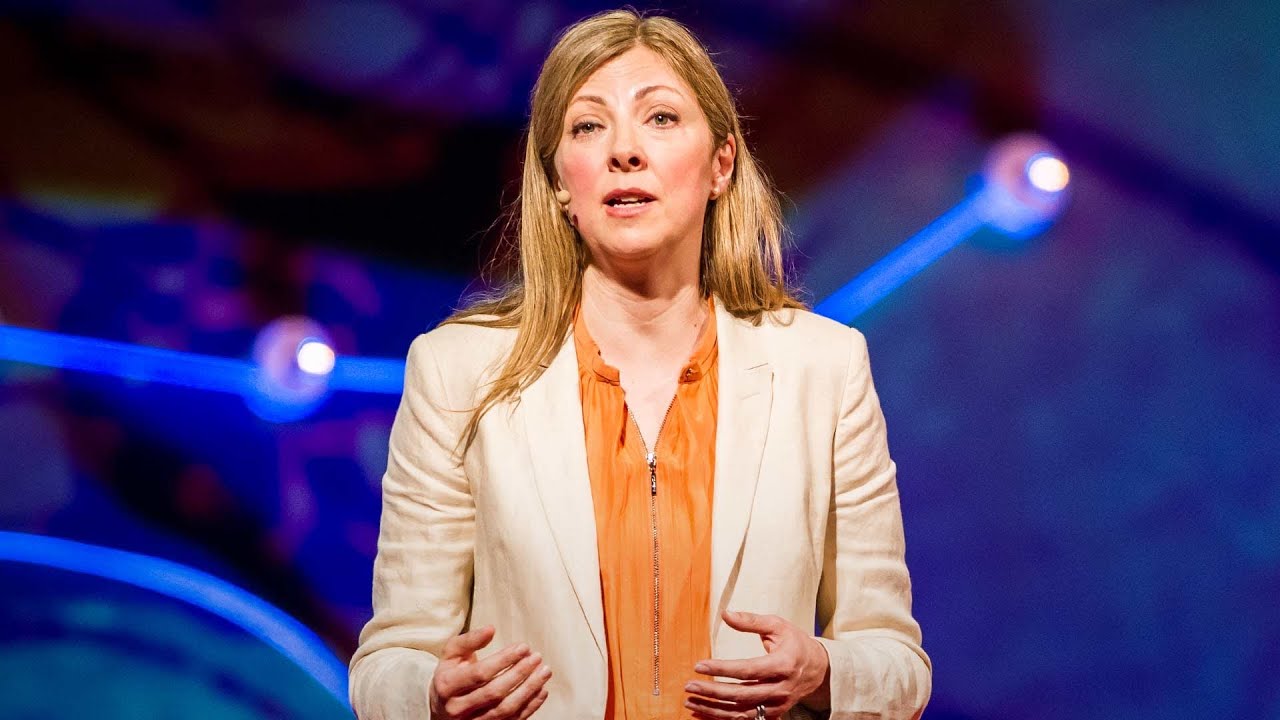 , TED Talks, July 8, 2013 |
Global Witness states that its goals are to expose the corrupt exploitation of natural resources and international trade systems, to drive campaigns that end impunity, resource linked conflict, and human rights and environmental abuses.[2] The organisation explores how diamonds and other natural resources can fund conflict or fuel corruption. It carries out investigations into the involvement of specific individuals and business entities in activities such as illegal and unsustainable forest exploitation, and corruption in oil, gas and mining industries.
Global Witness’ methodology combines investigative research, publishing reports and conducting advocacy campaigns. Reports are disseminated to governments, intergovernmental organizations, civil society and the media. This is intended to shape global policy and change international thinking about the extraction and trading of natural resources and the impacts that corrupt and unsustainableexploitation can have upon development, human rights and geopolitical and economic stability.[3]
Projects
Global Witness has worked on diamonds, oil, timber, cocoa, gas, gold and other minerals. It has undertaken investigations and case studies in Cambodia, Angola, Liberia, DR Congo, Equatorial Guinea, Kazakhstan, Burma, Indonesia, Zimbabwe, Turkmenistan and Ivory Coast. It has also helped to set up international initiatives such as the Extractive Industries Transparency Initiative,[4] the Kimberley Process,[5] and the Publish What You Pay coalition.[6]
The organization's first campaign involved work against the trade of illegal timber between Cambodia and Thailand which was funding the Khmer Rouge guerrillas.[7]
Global Witness argues that natural resources can be, and have been, exploited to fund armies and militias who murder, rape, and commit other human rights abuses against civilians. It says that "natural resources can potentially be used to negotiate and maintain peace"[8] and "could be the key to ending Africa's poverty".[2]
Cambodia
Global Witness’s first campaign was in Cambodia in the 1990s where the Khmer Rouge was smuggling timber into Thailand. The Observer newspaper attributed the cessation to Global Witness's "detailed and accurate reporting".[9]
After a report implicating relatives of Prime Minister Hun Sen and other senior government officials, the prime minister's brother, Hun Neng, who is also a provincial governor, was quoted in a Cambodian newspaper as saying if anyone from Global Witness returned to Cambodia, he would "hit them until their heads are broken."[10] In 2009, Global Witness released Country for Sale,[11] a report on corruption in the allocation of Cambodia's natural resource licenses. In 2010 the report, Shifting Sand, was published. It examined sand dredging for export to Singapore. The report claimed that the trade was "monopolised by two prominent Cambodian senators with close ties to Prime Minister Hun Sen".[12]
Blood diamonds
In 1998 Global Witness released the report, A Rough Trade—The Role of Companies and Governments in the Angolan Conflict,[13] describing the role of the international diamond trade in funding the Angolan Civil War.
Sierra Leone
As part of its campaign against conflict diamonds, Global Witness helped establish the Kimberley Process Certification Scheme (KCPS). The international governmental certification scheme was set up to stop to trade in blood diamonds, requiring governments to certify that shipments of rough diamonds are conflict-free.[14] Like many other Sub-Saharan African (SSA) countries, Sierra Leone is endowed with oil and mineral resources amid social inequality, high prevalence of poverty, and conflict.[15]
Under rebel movements headed by Charles Taylor, who dominated the diamond industry, diamonds were being traded for guns with the Revolutionary United Front (RUF).[16] This rebel group alone earned as much as US$125 m. In 1998, Global Witness stated that diamonds were spurring those conflicts. Backed by investigation done by the UN in 2000, it was then verified that the gems were being smuggled out of eastern Sierra Leone through Liberia, and subsequently into the international market.[citation needed] Sanctions were later imposed by the UN on Liberian diamonds in March 2001.
On July 19, 2000, the World Diamond Congress adopted at Antwerp a resolution to reinforce the diamond industry's ability to block sales of conflict diamonds.[17] Thereafter, with growing international pressure from Global Witness and other NGOs, meetings were hosted with diamond-producing countries over three years, concluding in the establishment of an international diamond certification scheme in January 2003. The certification system on the export and import of diamonds, known as the KCPS, was called by the resolution, imposing legislation in all countries to accept shipment of only officially sealed packages of diamonds accompanied by a KP certificate guaranteeing that they were conflict-free. Anyone found trafficking conflict diamonds will be indicted of criminal charges, while bans were to be imposed on individuals found trading those stones from diamond bourses under the World Federation of Diamond Bourses.
The Kimberley Process (KP) in Sierra Leone was efficient in limiting the flow of conflict diamonds. More importantly, the KP assisted in restoring peace and security in the lives of these people, and, by creating stability in these environments, it spurred their development. It was successful at channelling larger amounts of diamonds into the international market, boosting government revenues, and consequently aiding in tackling development concerns. In 2006, an estimated US$125 m worth of diamonds were legally exported from Sierra Leone, compared to almost none in the 1990s.[14]
Despite its success, nine years later, on 5 December 2011, Global Witness announced that it has left the KP, stating that the scheme's main flaws have not been mended as governments no longer continue to show interest in reform.[18]
Oil, gas, and mining
Global Witness campaigns for greater transparency in the oil, gas, and mining sectors. It is a founding member of the Publish What You Pay (PWYP) coalition, which advocates "the mandatory disclosure of company payments and government revenues from the oil, gas, and mining sector". Over 300 civil society groups worldwide are member of PWYP. Other PWYP founders include CAFOD, Oxfam, Save the Children UK, Transparency International UK, and George Soros, Chairman of the Open Society Institute.
Global Witness helped establish the Extractive Industries Transparency Initiative (EITI), which was announced by then UK Prime Minister Tony Blair at the World Summit on Sustainable Development in Johannesburg in September 2002 and formally endorsed by the World Bank in December 2003. The EITI is a result of the efforts of the PWYP campaigners. It is now supported by a majority of the world's oil, mining and gas companies and institutional investors, in total worth US$8.3 trillion.[19] Global Witness is a member of the EITI International Advisory Group and sits on the EITI board.
Democratic Republic of Congo
Global Witness is active on a range of issues in the Democratic Republic of Congo (DRC). Their website section on DRC reads, "Politicians, military and militia groups have plundered the country's natural wealth and used it to enrich themselves at the detriment of the population."[20] Global Witness has lobbied the UK government and the UN Security Council to stop the trade in minerals fuelling war in eastern Congo.
Global Witness defines conflict resources as "natural resources whose systematic exploitation and trade in a context of conflict contribute to, benefit from or result in the commission of serious violations of human rights, violations of international humanitarian law or violations amounting to crimes under international law."[21]
Forests
Global Witness has done a lot of work on forests. It produced reports on how timber helped to fund the civil war in Liberia and also looked at timber smuggling from Burma into China.[22] Recently, Global Witness launched a court case in France against DLH, a company that they allege bought timber from Liberian companies during the civil war between 2001–2003, thereby providing support to Charles Taylor's regime.[23]
Global Witness describes forests as the "last bastion against climate change", with deforestation accounting for 18 percent of total global carbon dioxide emissions.[24] On UN efforts to broker a deal on "Reducing Emissions from Deforestation and Forest Degradation" (REDD) Global Witness said: "REDD carries considerable risks for forests and local communities and will only succeed if civil society is engaged as an independent watchdog to ensure that the money is used in accordance with national laws and international guidelines."[25]
Global Witness criticizes the World Bank-endorsed approach of encouraging industrial export-based logging as a means to economic growth in developing countries, which, it argues, has been repeatedly shown to fail. Instead, Global Witness advocates management strategies that benefit the communities that are dependent on forests, their home countries, the environment, and treats forests as an "international asset".[24]
Recent
Anonymous companies
Global Witness campaigns against anonymous companies and for registers of beneficial ownership. Anonymous companies are a legal business practice but can be used for purposes such as laundering money from criminal activity, financing terrorism, or evading taxes.[26]
Banks
In 2009 Global Witness launched a campaign on the role of banks in facilitating corruption. Its report, Undue Diligence,[27] names some of the major banks that have done business with corrupt regimes. It argues that "by accepting these customers, banks are assisting those who are using state assets to enrich themselves or brutalise their own people" and that "this corruption denies the world's poorest people the chance to lift themselves out of poverty and leaves them dependent on aid."[27]
Global Witness is on the Coordinating Committee of Taskforce on Financial Integrity and Economic Development, and is a member of BankTrack, and the UNCAC Coalition of Civil Society Organisations. In May 2009, Global Witness employee, Anthea Lawson, testified before the U.S. House Financial Services Committee on "Capital Loss, Corruption and the Role of Western Financial Institutions".[28] In a letter to The Guardian dated 9 February 2010, Ms Lawson accused UK banks of "demonstrated complicity" in corruption.[29]
Sudan
Global Witness has campaigned for transparency in Sudan's oil industry. Global Witness published Fuelling Mistrust in June 2009, a report that detailed discrepancies of up to 26 percent between the production figures published by the Sudanese government and those published by the main oil company operating in the region, CNPC. A peace deal between the north and the south was predicated on an agreement to share the revenues from oil.[30]
Zimbabwe diamonds
In June 2010, Global Witness criticized Zimbabwe for large-scale human rights abuses committed in the Marange diamond fields. It published a report Return of the Blood Diamond which criticised the Kimberley Process Certification Scheme for repeatedly failing to react effectively to the crisis in Zimbabwe.[31] In July 2010 Tendai Midzi, writing in The Zimbabwe Guardian, accused Global Witness and Partnership Africa Canada of being "but a figment of the western governments they represent".[32]
Malaysia
Global Witness exposed corruption in land deals within the administration of Taib Mahmud, the chief minister of the state of Sarawak in Malaysia through the video titled "Inside Malaysia's Shadow State."[33] The video featured footage of conversations with relatives of Taib and their lawyer where Global Witness agents posed as potential investors.[34]
Honors and awards
Global Witness and Partnership Africa Canada were jointly nominated by U.S. House of Representatives and Senate members for the 2003 Nobel Peace Prize for work on links between conflict and diamonds in several African countries.[citation needed]
- Winner of the Gleitsman Foundation prize for international activism (2005)[35]
- Winner of the Center for Global Development/Foreign Policy Magazine Commitment to Development Ideas in Action Award (2007)
- Recipient of the Allard Prize for International Integrity (2013 Honourable Mention)[36]
- Charmian Gooch, one of the three founding Directors of Global Witness, was awarded the Ted Prize in 2014. Her stated Wish was 'for us to know who owns and controls companies, so that they can no longer be used anonymously against the public good. Let's ignite world opinion, change the law, and together launch a new era of openness in business.'[37]
- Winner of the Skoll Award for Social Entrepreneurship 2014[38]
Income
The majority of Global Witness funding comes from grants made by foundations, governments, and charities.[39] One of their main benefactors is the Open Society Institute, which also funds Human Rights Watch.[40]Global Witness also receives money from the Norwegian and British governments, the Adessium Foundation,[41] and Oxfam Novib.
In an interview in xxxThe Guardian in 2007, Patrick Alley, one of the founding directors, rejected the claim that receiving money from governments could bias their campaigns: "Being campaign-led, rather than funding-led, means that our independence is never comprised," he argued. "The Department for Trade and Industry did once ask if we'd like to sign a confidentiality clause. We said we wouldn't take the funding under those conditions. No other government has ever tried to impose any restrictions."[42]
From December 2008 to November 2009 Global Witness's income was £3,831,831. Of this, approximately 61 percent came in the form of grants from private trusts and foundations, 33 percent from governments, three percent from multi-lateral and non governmental organisations, and three percent from bank interest and other sources. Global Witness says it spends 75 percent of its funds on campaigns, seven percent on communication and fundraising, and 18 percent on support and governance.[43]
References
==
https://www.globalwitness.org/en/
OUR CAMPAIGNS
blood diamond 2
CONFLICT DIAMONDS
The Kimberley Process
Zimbabwe
A Rough Trade
An Inside Job
Conflict Minerals gun flip 3
CONFLICT MINERALS
US Conflict Minerals Law
Conflict Minerals in Europe
River of Gold
War in the Treasury of the People: Afghanistan, lapis lazuli and the battle for mineral wealth
GW anon comp test
CORRUPTION AND MONEY-LAUNDERING
Anonymous Company Owners
Mystery on Baker Street
Narco-a-lago: Money Laundering at the Trump Ocean Club Panama
McMafia: on screen fiction, real-life issues
The Real Wolves of Wall Street
rig
OIL, GAS AND MINING
Revenue disclosure laws – Cardin-Lugar and the global transparency standard
Jade: Myanmar's "Big State Secret"
Shell Knew
Uganda: Undermined
Catch Me If You Can: Exxon complicit in corrupt Liberian oil sector
environmental defenders
ENVIRONMENTAL ACTIVISTS
On Dangerous Ground
Honduras: the deadliest country in the world for environmental activism
Defenders of the earth
Defenders Annual Report
forest photo flipped
FORESTS
Blood Timber
Stained Trade
“Buyers in Good Faith”
Total Systems Failure
A MAJOR LIABILITY: Illegal logging in Papua New Guinea threatens China's timber sector and global reputation
land photo 2
LAND DEALS
Rubber Barons
The New Snake Oil?
Tainted Lands: Corruption in Large-Scale Land Deals
COUNTRY CAMPAIGNS
AFGHANISTAN
CAMBODIA
CENTRAL AFRICAN REPUBLIC (CAR)
DEMOCRATIC REPUBLIC OF CONGO
LIBERIA
MYANMAR
SOUTH SUDAN
UGANDA
ZIMBABWE
All countries
What are you looking for?
SEARCH
THE COUNTRIES WE WORK IN
Afghanistan
Angola
Azerbaijan
Cambodia
Cameroon
Central African Republic (CAR)
China
Democratic Republic of Congo
Equatorial Guinea
Ghana
Guyana
Honduras
Kazakhstan
Kyrgyzstan
Laos
Liberia
Libya
Malaysia
Myanmar
Nigeria
Papua New Guinea
Peru
Republic of Congo (Congo-Brazzaville)
South Sudan
Turkmenistan
Uganda
Ukraine
Zimbabwe
VIEW CONTENT AVAILABLE IN
?????? Français Español
SEARCH
COUNTRIES
LANGUAGES
HOME
CAMPAIGNS
BLOG
ABOUT US
DONATE
Ramon in Colombia
ENVIRONMENTAL AND LAND DEFENDERS ANNUAL REPORT
'At What Cost?' looks at irresponsible business and the murder of land and environmental defenders in 2017.
FIND THE FACTSEXPOSE THE STORYCHANGE THE SYSTEM
Top stories
Data handbook - Inata mine Burkina Faso
HANDBOOK FOR USING EXTRACTIVES DATA
Our new handbook "Finding the Missing Millions" shows you how to follow the money and hold governments and companies to account for extractive industry revenues.
??????????????????Forests
A MAJOR LIABILITY: ILLEGAL LOGGING IN PAPUA NEW GUINEA THREATENS CHINA'S TIMBER SECTOR AND GLOBAL REPUTATION
As China continues to import huge volumes of timber from Papua New Guinea, its continued failure to regulate against illegally produced wood is putting its own reputation at risk.
Generic network background
THE COMPANIES WE KEEP
What the UK's open data register actually tells us about company ownership
US department of justice signCorruption & Money Laundering, Oil, Gas & Mining
A BAD YEAR FOR GLENCORE
The US Department of Justice has issued a subpoena to commodities giant Glencore's subsidiary Glencore Limited, relating to US overseas corruption laws. This is the latest storm in what has been a tempestuous year for Glencore. we outline the main stories over the last 12 months that have helped make this Glencore's ‘annus horribilis’
SIGN UP TO OUR NEWSLETTER
Enter your email address
SIGN UP
FOLLOW US
Latest
Blog post / Aug. 16, 2018
Global Witness stands with hundreds of US news organizations in support for press freedom
Blog post / Aug. 10, 2018
Gertler received and distributed millions in bribes in connection to DRC mining deals, court papers allege
Blog post / Aug. 9, 2018
Why the world needs our new data handbook
Press release / Aug. 9, 2018
Global Witness launches Finding The Missing Millions – a new tool for exposing corruption in the extractive industries
Longform Report / Aug. 8, 2018
Finding the Missing Millions
Campaign Hub / Aug. 8, 2018
Handbook for using extractives data
Blog post / Aug. 7, 2018
At What Cost? Two weeks on
Blog post / Aug. 3, 2018
How Trump is damaging the US’ human rights record
Blog post / Aug. 3, 2018
How we mined the world’s first open data register of company control
Press release / Aug. 2, 2018
Global Witness applauds US attorneys general call to end anonymous companies
FIND THE FACTS
EXPOSE THE STORY
CHANGE THE SYSTEM
READ MORE ABOUT US AND OUR WORK
FOLLOW GLOBAL WITNESS
GET OUR NEWSLETTER
At Global Witness, we protect human rights and the environment by fearlessly confronting corruption and challenging the systems that enable it.
When founded in 1993, we were pioneers in seeing the link between natural resources, conflict and corruption. Since our very first campaign to shut down the Khmer Rouge’s illegal logging industry we’ve uncovered the truth about blood diamonds and helped bring trillions of oil, gas and mining revenues into the open.
We’ve shone a spotlight on the brutal killings of those defending their land from forced seizure by corporations and governments alike, campaigned for an end to the use of anonymous companies, and much more.
==