Mandy Gunasekara
---
SEE BAK FOR NEW
SEE PJT 2025 PENDLEY MCNAMEE PENSION BENCH AAF CLINT WOODS AFP
no merri
SNOWBALL see cold BS
KILLED CLEAN COOKSTOVES BIOGAS PUBLIC-PVT hILLARY ~ ENERGY POVERTY bs
SEE ENERGY 45
SEE IWF
SEE LIFE:POWERED TPPF exxon $100K
~ESG
~EJ
fertilizer BS st’d morano rap 12 23
J BOSSERT CLARK?
MERCER
WHEELER WEHRUM
bak capt 12 23
---
poster boy congress testimony?
2022 replaced by shill
2017 oversight claims to support wind and solar
---
E AND E GRNWIRE
Former President Donald Trump says he knows “nothing about” a conservative policy blueprint and has “no idea who is behind it.”
But the authors include Trump’s former Cabinet secretaries, top White House officials and senior aides — including former Trump appointees to EPA, the Interior Department and the Federal Energy Regulatory Commission.
Trump’s efforts to distance himself from Project 2025, a policy blueprint organized by the conservative Heritage Foundation, come as Democrats are seizing on pieces of the framework to attack Trump on policy and as the Biden campaign aims to shift focus away from questions about his age and mental acuity following the presidential debate.
Email blasts from the Biden campaign in recent days have been titled, “Project 2025: Trump’s Extreme and Dangerous BFFs;” “Donald Trump Takes His Project 2025 Abortion-Banning Agenda to Florida;” and “Trump’s Project 2025: Gutting the National Weather Service (Bad!).”
Vice President Kamala Harris on Wednesday slammed the project as she tied it to the former president. “Trump advisers have created a 900-page blueprint of their agenda for the second term. They call it Project 2025,” Harris said. “Let us be clear, this represents an outright attack on our children, our families and our future.”
Stephen Moore, an adviser to the Trump campaign who co-authored the Project 2025 framework, said the policy guide has been misunderstood.
“It’s not meant to be a blueprint for Donald Trump — it’s meant to be a blueprint for a conservative president,” Moore said.
“We wrote this as our dream scenario,” Moore said of the authors, a list that includes former Trump Secretary of Housing and Urban Development Ben Carson and former Trump White House aide Peter Navarro, who’s serving in federal prison after he was convicted of contempt of Congress.
“I assume some of the ideas Trump would reject and some he would adopt,” Moore said.
Three co-authors who laid out visions for overhauling energy and environmental agencies were high-ranking officials under Trump.
Mandy Gunasekara
 Mandy Gunasekara answers questions in Hinds County Circuit Court on March 22, 2023, in Jackson, Mississippi. | Rogelio V. Solis/AP
Gunasekara was chief of staff at Trump’s EPA before she penned the Project 2025 vision for downsizing that agency and overhauling President Joe Biden regulations.
EPA, she wrote, has “long been amenable to being coopted by the Left for political ends against the need to implement the agency’s true function: protecting public health and the environment in cooperation with states.”
She encouraged a realignment of the agency “away from attempts to make it an all-powerful energy and land use policymaker and returned to its congressionally sanctioned role as environmental regulator.”
Among other things, the blueprint recommends eliminating the stand-alone Office of Environmental Justice and External Civil Rights, developing a plan to relocate EPA’s regional offices “so that they are more accessible to the areas they serve,” and resetting science advisory boards.
Gunasekara urges EPA to identify existing regulations to be halted and reproposed, to stop and review grants slated for advocacy groups, and to reduce the number of full-time positions within the agency.
As for Trump’s comments distancing himself from the policy guide, Trump “is right,” Gunasekara said Wednesday.
“The project is the work of Heritage and many other conservative nonprofits,” she said. The policies “are designed for the next conservative administration to consider and provide strategic thought on how to achieve them. What is ultimately pursued is the prerogative of the president.”
William Perry Pendley
 William Perry Pendley. | Francis Chung/POLITICO
Former Trump Interior official Perry Pendley wrote in the Project 2025 blueprint that the next Republican president should slash the footprint of national monuments and move to bar future presidents from wielding executive power to protect federal lands.
He called the Biden Interior Department “at war with the department’s mission” when it comes to fossil fuel extraction and urges a conservative president to pursue the “restoration of the department’s historic role managing the nation’s vast storehouse of hydrocarbons, much of which is yet to be discovered.”
Perry Pendley led the Bureau of Land Management under Trump, although he was never confirmed by the Senate and a judge ruled that he had unlawfully served in that job.
A new administration must “immediately roll back Biden’s orders,” reinstate “the Trump-era Energy Dominance Agenda” and put a series of Trump-era secretarial orders back into place, he wrote in Project 2025.
“We’ll see what happens after the election and what the president chooses to do,” Perry Pendley said Wednesday.
“I think we got some commonsense recommendations in there, certainly consistent with what [Trump] did during his first term,” he said. “Given the comments that [Trump] has made with regard to energy independence and developing our energy resources, I think once the president takes a look at what I prepared for the Interior Department that he’ll embrace it, but we’ll see.”
Bernard McNamee
 Former Federal Energy Regulatory Commission member Bernard McNamee. | Francis Chung/POLITICO
McNamee, a Trump pick for FERC, urged the next administration to repeal Biden’s climate and infrastructure laws and to boost domestic energy production.
“DOE, instead of focusing on core energy and security issues, has been spending billions of taxpayer dollars to subsidize renewable energy developers and investors, thereby making Americans less energy secure and distorting energy markets,” McNamee wrote in the Project 2025 energy section he authored.
McNamee, who also served in the Energy Department during Trump’s presidency, wrote that the next administration should “eliminate political and climate-change interference in DOE approvals of liquefied natural gas (LNG) exports” and “stop using energy policy to advance politicized social agendas.”
The next president should also support the repeal of “massive spending bills,” such as Biden’s signature infrastructure law and the Inflation Reduction Act, and “support the rescinding of all funds not already spent by these programs,” McNamee wrote.
McNamee did not respond to a request to comment for this story.
---
ggl 6 26
AI Overview
The climate and energy recommendations in Project 2025 were co-authored by individuals from conservative free-market groups, most notably the Institute for Energy Research (IER) and The Heartland Institute. These organizations reject the global scientific consensus on climate change and advocate for maximizing fossil fuel production. [1, 2,, 4, 5] VID]
Key authors and contributors to the climate policy chapters include:
- Kenny Stein (IER): The Director of Policy at the Institute for Energy Research. He co-authored the Department of the Interior chapter, which focused on "Restoring American Energy Dominance" and removing barriers to oil and gas leasing on federal lands. [1, 2]
- Daren Bakst: A former Heritage Foundation fellow and policy advisor for the Heartland Institute. He authored the chapters outlining policies for both the U.S. Department of Agriculture (USDA) and wildfire management, rejecting controlled burns in favor of increased timber harvesting. [1, 2, 3]
- Dan Kish (IER): A senior fellow at the Institute for Energy Research who contributed to the natural resources and energy sections. [1]
Proposed Climate/Energy Strategies:
- Energy Policy: The authors advocate for expanding oil, natural gas, and coal development while entirely eliminating federal green energy subsidies and repealing the climate provisions of the Inflation Reduction Act. [1,
 ]
- Scientific Censorship: The blueprint calls for halting federal climate change research, dismantling the National Oceanic and Atmospheric Administration (NOAA), and reshaping the U.S. Global Change Research Program to favor industry-aligned data over mainstream scientific consensus. [1, 2]
- Deregulation: The chapters propose weakening or amending the Clean Air Act and reducing environmental oversight from the Environmental Protection Agency (EPA) to limit challenges to fossil fuel projects. [1, 2]
You can read the full, unabridged policy blueprint directly via the  Heritage Foundation. [1, 2]
---
SET UP ZELDIN DECAPITATION STRIKE?
EAND E THE GOOD ONE
Inside the Project 2025 plan to gut climate regs
By Jean Chemnick | 07/18/2024
The conservative outline for a second Trump presidency offers detailed steps for weakening EPA.
A paint-by-numbers plan to weaken EPA has been prepared for former President Donald Trump by his past advisers. Francis Chung/POLITICO
There’s a playbook for how a second Trump administration could pull back climate regulations.
The EPA chapter of the much-vaunted Project 2025 blueprint is stocked with ideas for how political appointees could use a second Trump term to remake agency org charts, defang enforcement and disperse Washington-based staff to regional offices. But the document — spearheaded by the conservative Heritage Foundation — also catalogs tactics for relaxing regulation in ways that might reverberate beyond the next four years.
Former President Donald Trump has distanced himself from the initiative — a sprawling guide on how executive branch authorities and agencies could serve a conservative agenda. But many of its authors served in the first Trump administration and are likely candidates for a second one.
Dave Banks, a former Trump climate adviser, said the document would serve more as a wishlist for past and future officials than a reflection of the president’s own priorities.
“I think the big question is, are the people who wrote it going to be back in?” he said. “And I think there’s a strong likelihood that a lot of the folks who worked on Project 2025 will end up in a Trump 2.0, if that happens.”
Mandy Gunasekara, the Trump EPA chief of staff who penned the project’s chapter on EPA, left open the possibility that she might return to the William Jefferson Clinton Building that serves as the agency’s headquarters.
“That’s a question for the president to ask, and an answer for me to give with my husband and family,” she said. “And we’re not there yet.”
Most of the regulatory policies included in her 28-page chapter seem cut from the same cloth as those EPA attempted in the first Trump administration. They were rescinded under President Joe Biden or overturned in court.
But some are new, like a proposal to shrink the pool of industries required to report their greenhouse gas emissions each year to EPA.
Just the fact that the policies are being explored in a widely circulated document marks a departure from 2016. The Trump EPA transition team that formed after his surprise victory eight years ago was famously long on infighting and short on planning. Political appointees were slow to arrive and key components of Trump’s deregulatory agenda were thrown out in court.
Project 2025 would revive some of those rules. For example, the EPA chapter advises the agency to “make public and take comment on all scientific studies and analyses that support regulatory decision-making.” That dovetails with a Trump-era “secret science” rule that was vacated in 2021.
Gunasekara said an incoming EPA team could avoid similar outcomes by “applying lessons learned” from the first Trump term.
“It’s very different regulating from the inside versus applying oversight from the outside,” said Gunasekara, one of several Trump EPA officials who came to EPA from congressional committees. Gunasekara was a staffer on the Senate Environment and Public Works Committee under the late Sen. James Inhofe (R-Okla.), as was Trump’s second EPA Administrator, Andrew Wheeler.
Mandy Gunasekara, former EPA chief of staff, left open the possibility of working for Trump if he wins the election. | Rogelio V. Solis/AP.
Gunasekara blamed first term policy failures in part on resistance from career staff — something Project 2025 would take pains to root out through extensive structural and workforce changes. She also acknowledged that the Trump administration sometimes cut corners — something she said wouldn’t be repeated.
“The biggest difference is we have a plan from Day One, we’re going to start implementing it, and we won’t be as susceptible to process problems that really sunk a couple of those final regulatory proposals and actions we took at the tail end of the administration,” said Gunasekara, who spoke by phone with POLITICO’s E&E News as she attended the Republican National Convention in Milwaukee.
Gunasekara said four Trump-era political appointees helped write the chapter: David Harlow, Scott Mason IV, Justin Schwab and Clint Woods. AFP Schwab declined to comment, and the others did not respond to requests for interviews.
The bulk of the chapter is devoted to reshaping EPA — “an agency that has long been amenable to being coopted by the Left for political ends” — into an entity suited to carry out a “conservative vision.”
The sections devoted to regulation ricochet between improbable suggestions and superspecific head-scratchers.
“It does have this kind of spaghetti-against-the-wall approach,” said James Goodwin, policy director at the Center for Progressive Reform. “Literally everything and the kitchen sink is in there.”
For example, the chapter proposes that EPA “update” the 2009 finding that greenhouse gases endanger public health and the environment. That’s the bedrock finding behind all Clean Air Act climate regulations, and has been targeted by some of the conservative groups behind Project 2025 — such as the Heartland Institute — since the finding’s inception.
But reversing it would be a legally tricky — and potentially more complicated after last month’s Supreme Court decision curtailing agency authority.
The Trump administration’s own EPA lawyers rejected a petition by a conservative think tank to reconsider the endangerment finding. They noted in emails obtained by E&E News that it remained consistent with scientific assessments by federal research bodies.
“If they were to revisit the endangerment finding based on the latest science, it is only more dire,” said Rachel Cleetus, climate policy director at the Union of Concerned Scientists.
“If anything, the 2009 endangerment finding is softballing the kind of impacts that are now already clear around us,” she said, referring to the effects of climate change.
But the chapter also provides a menu of wonky-sounding proposals that could narrow the scope of regulations, including for climate pollutants.
“This goes beyond many of the things that they did in the first Trump administration,” said Stan Meiburg, a former EPA acting deputy administrator. “It certainly is a very ambitious document, and incorporates ideas that go all the way back to the Reagan administration.”
Maximizing cost, minimizing benefits
Many of the regulatory proposals target EPA practices around cost-benefit analysis. There’s a reason for that: It’s generally harder for an agency to justify standards if their costs exceed their benefits.
Meiburg said the Reagan-era move to embrace cost-benefit analysis gave cost considerations the upper hand.
“Costs are specific and tend to be more quantifiable, and benefits tend to be more diffuse and less quantifiable, even though, in aggregate, they are larger,” said Meiburg.
Project 2025 proposes that EPA issue a rule to ensure “consistent and transparent consideration of costs.” Gunasekara said this would likely be a “very similar rule” to one introduced by the first Trump EPA, which was later voided by the Biden administration.
The rule promulgated under Wheeler was the first of its kind, and some experts say it could face longer odds now, when courts defer less to agencies on policy.
The EPA chapter also instructs the agency to “use appropriate discount rates, focus on the benefits of reducing the pollutant targeted by Congress, identify ‘co-benefits’ separately, and acknowledge the uncertainties involved in quantifying benefits.”
Discount rates are applied to future benefits that come at a present cost — such as avoided climate risk stemming from near-term emissions reductions.
“Basically, the higher the discount rate, the less argument there is for making investments now, because why would you spend money on this when you could make that money get a higher return doing something else?” said Meiburg.
During the Trump administration, discount rates were high, so the value of avoiding future climate change was low — somewhere between $1 and $7 per ton of carbon dioxide.
Project 2025 urges the agency to “revise guidance documents” for the so-called social cost of carbon, while another chapter proposes ending its use altogether.
Co-benefits — a rule’s health and environmental advantages that aren’t tied directly to reducing a targeted pollutant — have been persona non grata with conservatives for years. But the Trump EPA did count them in its climate rules — which showed minuscule benefits due in part to low social cost values for greenhouse gases.
Jason Schwartz, policy director at the Institute for Policy Integrity, said sidelining benefits could make rules less legally durable.
“I think that the court says have been clear in a number of cases that it would actually be arbitrary for an agency to ignore — or to really treat differently — co-benefits or indirect costs,” he said.
Gunasekara said co-benefits would still be analyzed.
“But it should be very clear, if EPA is going after one pollutant, what are the relative costs and benefit of [reducing] that one pollutant?” she said.
The goal, she said, should be “to ensure that there is increased transparency and understanding to the American public about cost-benefit justifications for the reduction of various pollutants.”
Transparency
Transparency is one of the chapter’s prevailing themes. That’s how the document frames its bid to require the data from all scientific studies underpinning regulation to be made public — effectively barring research that utilizes anonymous datasets.
But critics warn that many of its suggestions would create information gaps that would make it harder for EPA to maintain inventories of the greenhouse gas emissions — and ultimately to regulate them.
“It’s basically like two blades of a scissors,” said Goodwin of the Center for Progressive Reform. “These cost-benefit analysis rules are demanding more information. But the other blade is making it harder for EPA to get that information in the first place. And you can see how they come together.”
EPA currently requires 41 high-emitting sectors to report their greenhouse gas emission each year. About 8,000 facilities within those sectors — chosen because they exceed certain emissions thresholds — is the basis of EPA’s annual greenhouse gas inventory. The data has numerous purposes, including as an input for EPA regulatory decisions.
But Project 2025 would limit reporting to the few sectors currently being regulated for greenhouse gas emissions — such as power plants and oil and gas production. It would exempt major emitters in other sectors, such as municipal landfills, iron, steel and cement manufacturing, and carbon capture and storage.
The chapter said this would eliminate costly requirements borne by small businesses.
“This is either a pointless burden or a sword-of-Damocles threat of future regulation, neither of which is appropriate,” the document states.
But suspending annual greenhouse gas reporting for the four years of a second Trump term could delay regulation of new sectors during a subsequent administration by depriving it of needed data. It would reduce the scope of information available to scientific agencies that track emissions.
It could also make it impossible for the U.S. to fulfill its obligations as a party to the United Nations Framework Convention on Climate Change (UNFCCC), which requires an annual accounting of emissions and carbon sinks. The Senate formally ratified the treaty in 1992 and the U.S. remained a party to it under Trump, even as the administration moved to withdraw from the Paris Agreement.
Gunasekara said she’d urge “the next conservative administration” to withdraw from the UNFCCC as well as Paris, which she said required the U.S. to make painful cuts while giving other countries “a free pass.”
---
---
NOT EVIL
GMU
By Paul Bubbosh, Adjunct Professor
*The views expressed in this article are the author’s own and do not necessarily reflect the views of George Mason University.
Overview
:{:{Heritage Foundation’s Project 2025, specifically its chapter on the Environmental Protection Agency, presents policy recommendations that can best be described as extreme but not altogether unexpected from Heritage. This is kind of their thing. The chapter recycles familiar themes from Heritage acolytes, such as claiming that EPA is waging war on the coal industry and alleging that there are ‘deep state’ activists within the agency hell-bent on a globalist agenda. The core problem with this chapter is, well, it is boring. It is simply the go-to playlist of an organization that desires to appease wealthy funders and powerful politicians supporting the far right.}:
It is not fair to blame Heritage alone for such a tactic, which is all too common among partisan think thanks. They all suffer from the same ‘do-the-opposite-of-the-other-guy’ syndrome which basically means you identify the policies of your opposition, and you recommend the opposite. It does not matter if the policy actually helps your guys. That’s not the point. Heritage and its brethren must stake their reputation, fundraise, and cull favor with political elites to climb the ladder to positions of power—all based on offering a different vision. Otherwise, all the money, notoriety, and power would evaporate. I have great admiration for those think tanks that do not lower themselves to these standards; those who offer genuine and productive policy recommendations. Unfortunately, the Heritages of the world tend to suck all the air out of the room.}:
At the end of the day, Project 2025’s section on EPA is simply useless partisan posturing. In my courses on environmental and energy law and policy, I discuss the historical whipsaw effect across administrations. One administration does it one way and the next reverses these gains and sets a different path. Rinse and repeat. The consequence of whipsaw policies is lack of consistency, great uncertainty, and ultimately, lack of progress. This would all seem futile except for the fact that we are dealing with public health and welfare. This has real consequences for our lives, livelihood, and well-being of our country.
Our country has not always been stuck in the quagmire of environmental whipsaw polices. There was a time of bipartisan support on environmental policies. The rise of extreme and partisan think-tanks with their network of fundraising and lobbying has created a phenomenon by which these elites dictate party belief and orthodoxy. Their influence flows up to its party leaders, who then adopt these extreme policies, and then these extreme policies flow back down to the regular folk. If you stop and ask the regular folks in communities around our country if they really believe in these recommendations (after you peel away the rhetoric) you will be surprised to learn that they disagree with such policies, but alas they are beholden to party affiliation. It’s a vicious cycle and we’re lost in its vortex. The only way to break this cycle is to somehow separate the blowhards from the regular folk. I don’t have the secret sauce for this, but one means might involve slowing things down, paying close attention, questioning everything, and making an effort to listen to people.
Project 2025 Themes on EPA
The Heritage Foundation published Project 2025 as a roadmap for a Republican presidential administration. The chapter on the Environmental Protection Agency (EPA) was written by Mandy M. Gunasekara, who previously served in high-level positions at the EPA during the Trump Administration. The Heritage Foundation’s Project 2025 has garnered news of late due to Donald Trump’s support, and then rejection, of the publication. Apparently, according to reporting, Trump finds some of Project 2025’s recommendations as politically inconvenient.
:{:{The chapter on the EPA follows a familiar playbook from Heritage Foundation’s past policy recommendations. The themes roughly fall into five categories: (1) EPA is engaged in a war on coal and other fossil fuels; (2) EPA’s science must be controlled; (3) EPA career “activists” control the agenda and ignore EPA’s mission; (4) EPA regulations kill jobs; and (5) changes in EPA organizational structure from the last administration must be reversed. }:
Apparently, this all falls under the rubric of “conservative” policies, as Ms. Gunasekara intones throughout her chapter, but there is nothing here that resembles “conservative” in any historical sense. It is most appealing to someone who knows little about environmental policies but knows these recommendations can serve as rhetoric for the masses. Project 2025’s section on EPA fails to advance any meaningful engagement on issues.}:
(1) EPA’s War on Coal, Oil, & Natural Gas:“*This approach is most obvious in the Biden Administration’s assault on the energy sector as the Administration uses its regulatory might to make coal, oil, and natural gas operations very expensive and increasingly inaccessible while forcing the economy to build out and rely on unreliable renewables.”
:{:{Ms. Gunasekara recycles the GOP’s mantra that Democrats are waging a ‘war on coal’ and other fossil fuels. This was a Trump 2016 campaign pitch, which is re-packaged here (I assume) to appeal to Trump. The fact that coal is more expensive than other energy sources, such as natural gas, wind and solar energy, is a consequence of market fundamentals. To blame the economic outcome on EPA is largely misguided. For sure, environmental regulations require expensive pollution control equipment and this increases costs for polluters.}:
The “polluter pays” principle arrived when Congress enacted the Clean Air Act over 50 years ago and delegated authority to EPA to set emission limits. EPA’s delegation compels action when it finds that a pollutant may “cause or contribute to air pollution which may reasonably be anticipated to endanger public health or welfare.” Coal and other fossil fuels emit pollutants which endanger public health and welfare, therefore EPA is legally obligated to do something to protect our health. If Ms. Gunasekara has a problem with this, she should advocate for changes to the law, which requires Congressional action, instead of taking the cudgel to EPA. I have never quiet understood why conservatives expect EPA to shirk its legal duties. Is it simply to delay, litigate, and hope the courts find in your favor? If so, at what cost to our health?}:
The obvious questions to pose to the author are about energy prices, health care costs, and job training and transition. For example, would Ms. Gunasekara rather have people pay more for higher-cost energy, such as coal? Does she prefer that people breathe dirty air, get sick, increase their medical bills, and live a lower quality of life? Why is she not focusing on resources to train and transition workers for new job opportunities? These are all legitimate policy questions to ask Ms. Gunasekara when she claims that EPA is waging a war on fossil fuels. Instead of the old tactic of scaring people into thinking Democrats are waging a war on coal or advocating for ignoring the law, I would recommend that Heritage develop and implement policies to ensure that fossil fuels are cleaner.
The real issue that Ms. Gunasekara has with EPA is its legal obligation to follow the law and this brings us to the second theme, which involves why EPA updates its regulations with more stringent emissions limits.
(2) EPA’s science must be controlled: *“True transparency will be a defining characteristic of a conservative EPA. This will be reflected in all agency work, including the establishment of opensource science, to build not only transparency and awareness among the public, but also trust.”
To understand what this benign-sounding desire for “opensource science” means you need to understand EPA’s mandate from Congress, in laws such as the Clean Air Act. Many federal environmental laws require establishing pollutant limits based on health-based criteria. This is not an EPA requirement—it is a Congressional requirement. This requires understanding how pollutants affect our bodies and setting a safe limit for human health and public welfare. The limits must be reviewed every few years for possible updates to ensure they reflect the latest science. EPA has several scientific advisory committees comprised of experts in specific areas to determine an “adequate margin of safety to protect the public health,” specifying the maximum pollutant quantity that should be permitted in the air.
During the Trump Administration, EPA tried to change these regulations to reflect a more lenient standard—in other words, to allow more pollutants into the air beyond the scientific and medical recommendations. But to survive legal challenges, EPA had to change the underlying science. It is not easy to hide the science, but Trump’s EPA administrators tried their darndest to do so. Their tactics included firing the experts or censoring them, replacing them with partisan allies, slashing their budgets, or (wait for it) simply removing offending information from public records (abracadabra, no longer there)[[1]](https://cesp.gmu.edu/review-of-project-2025s-chapter-on-the-environmental-protection-agency/#_ftn1).
:{:{Ms. Gunasekara’s intent here is to resurrect the Trump Administration’s “Strengthening Transparency in Regulatory Science” rule from 2018. This rule was intended to prevent EPA from relying on studies whose underlying data are not publicly available due to privacy and ethical considerations. This rule was adopted by Trump and rescinded by Biden. Not surprisingly, the rule would give the EPA Administrator discretion over which studies to use. The absurdity of protecting scientific integrity and transparency by handing it over to a political appointee was not lost on the scientific and medical community which ridiculed the rule.[[2]](https://cesp.gmu.edu/review-of-project-2025s-chapter-on-the-environmental-protection-agency/#_ftn2),[3]}:
One possible explanation for this recommendation is that Ms. Gunasekara knows that science does not support more lenient standards, so her policy recommendation is to simply finds ways to bury these studies. Whatever the reason, this policy is simply a round-about way to try to dismantle environmental regulations by cherry-picking science and it is anathema to sound scientific methodology. I would recommend that Heritage consider assigning weighting factors to studies, with higher points for studies that reveal participant data, if this is so desired. This way we are not ignoring relevant data and cherry-picking only favorable reports.}:
Another explanation for this recommendation is the rather bizarre notion that there is a cabal of scientists driven to hoodwink conservatives, and this brings us to our next theme.
(3) Career “activists” control the agenda and ignore EPA’s mission: “Embedded activists have sought to evade legal restraints in pursuit of a global, climate-themed agenda, aiming to achieve that agenda by implementing costly policies that otherwise have failed to gain the requisite political traction in Congress….”*And *“The EPA under the Biden Administration has returned to the same top-down, coercive approach that defined the Obama Administration.”
:{:{To build support for undercutting science, it helps to conjure the trope of ‘deep state’ actors running amok in EPA’s corridors controlling everyone. This one is a bit difficult to follow, but I believe Ms. Gunasekara suggests that there are special interests influencing a globally aligned policy within the EPA, which has distracted the agency from meeting its domestic obligations. What proof does Ms. Gunasekara offer? Back in the Obama Administrations there were two domestic disasters involving EPA employees, the Flint, Michigan water crisis and the Gold King Mine spill, in Colorado.}:
How Ms. Gunasekara ties embedded global activists with these two domestic disasters is not explained. She just says it is so. She conveniently forgets that Trump’s EPA was heavily criticized for its handling of the cleanup at Gold King Mine and its refusal to fully compensate affected communities, particularly the Navajo Nation, for the damage caused by the spill. In fact, in 2019, the EPA re-contaminated the Animas River, the same river affected by the 2015 Gold King Mine spill, when a water treatment plant operated by the agency released untreated mine wastewater, which included heavy metals, into the river.}:
But this kind of misses the point. Ms. Gunasekara suggests that Biden’s EPA is neglecting its core mission. This is a laughable comment coming from a former EPA official who was part of an effort to dismantle environmental regulations (for example, weakening protections for smaller waterways, weakening carbon dioxide emissions from power plants, cars and trucks, as well as mercury emissions from power plants). What I would recommend to Heritage is to drop the hyperbole about ‘deep state’ actors because it does a disservice to the career employees. Ms. Gunasekara should know better—she worked with these career employees during her tenure at EPA and I believe she knows better to disparage their work and intentions.
Let’s address the claim that the Biden administration is engaged in coercion. The single-largest environmental achievement in the Biden Administration is the Inflation Reduction Act (IRA). The IRA is the opposite of coercion. It offers economic incentives (grants, loans, tax benefits) to change behavior. No one is forced to do anything. As much as Ms. Gunasekara wishes this was some draconian command-and-control legislation, the IRA is about motivating people to save money with cleaner and cost-saving energy technology and practices. The other inconvenient fact is that the IRA does offer incentives for fossil-fuel interests to emit less harmful pollutants, such as carbon capture and storage. The Biden Administration has landed on an industrial policy which is in-line with past U.S. efforts to support nascent energy industries. What goads the author the most here is the focus on clean energy technology which is not an ally of hers.
(4) Job Killing Environmental Regulations: “*As a consequence of this approach, we see the return of costly, job-killing regulations that serve to depress the economy and grow the bureaucracy but do little to address, much less resolve, complex environmental problems.”
You must go all the way back to 1980, during Ronald Reagan’s campaign, to hear about the origins of job-killing environmental regulations. His acolytes picked this up and have been running with it ever since. It sounds great on the campaign trail. The only problem is that it has no support. The number of economic studies that have refuted the contention that environmental regulations result in a net loss of jobs is too lengthy to recount here.
Interestingly, Bill Clinton recently emphasized the following fact: Since the end of the Cold War (1989), Democratic Presidents have created more than 50 million new jobs, while Republican Presidents have created 1 million new jobs. During that period, there were 3 Democratic Presidents (Clinton, Obama and Biden) and 3 Republican Presidents (George H.W. Bush, George W. Bush and Trump).[[4]](https://cesp.gmu.edu/review-of-project-2025s-chapter-on-the-environmental-protection-agency/#_ftn4) So much for environmental policies as job killers.
(5) Reverse organizational changes from the previous administration
The remainder of the EPA chapter is an audacious attempt to recommend office-by-office changes and reversals from the Biden administration. Why? Because these changes are from the Biden administration. Why again? Because the “other guys” came up with this so it must be bad. I’m sorry, why again? Because we (Heritage) must recommend the opposite to fundraise and get political appointments in a Republican administration.
- “Returning the environmental justice function to the Administrator Office, eliminating the stand-alone Office of Environmental Justice and External Civil Rights.”*
- :{:{My hunch is that if you eliminate an office devoted to environmental justice, your intention is to probably take away its budget and re-distribute its staff. I am not sure why conservatives have a beef with EJ issues. The historical record is clear on past injustices of placing environmentally harmful facilities and pollution sources near low-income and minority populations. I learned that Ms. Gunasekara is from Mississippi, and interestingly EPA’s Inspector General recently issued a report about how the state of Mississippi ignored elevated lead levels in the drinking water of Jackson, MI for half a year, allowing its residents to drink contaminated water.}:
The state failed to share this information with EPA. EPA had to conduct its own tests, and afterwards issued an emergency order. By the way, EPA’s testing was in 2015 when Trump was President. Apparently, the Mississippi Department of Health had re-directed federal funds that were intended to address Jackson’s water problems. Independent reports have identified failures in communication, financial reporting, and technical capacity, among other issues.[[5]](https://cesp.gmu.edu/review-of-project-2025s-chapter-on-the-environmental-protection-agency/#_ftn5) I believe a strong and independent office devoted to EJ issues may have prevented this environmental and human health crisis from happening.}:
- {“Returning the enforcement and compliance function to the media offices (air, water, land, and emergency management, etc.) and eliminating the stand-alone Office of Enforcement and Compliance Assistance, which has created a mismatch between standard-setting and implementation.”*}:
- :{:{If there is one thing Republicans do not like about EPA it is enforcement actions. The Trump administration was no exception. Enforcement actions, civil cases, fines, and inspections all dropped to a two-decade low during Trump’s presidency.[[6]](https://cesp.gmu.edu/review-of-project-2025s-chapter-on-the-environmental-protection-agency/#_ftn6) The preferred “conservative” means to accomplish enforcement of Federal laws is to defer to the states to get this done, under the guise of “cooperative federalism.” The problem is that in some states there might not be a strong desire to police its industries, and this is where EPA must step in.}:
EPA enforcement is also needed in complex cases involving multi-state violations. Further. Ms. Gunasekara’s recommendation to devolve enforcement to EPA media offices (air, water) is another attempt to weaken EPA’s hand. The saddest part is that there are many good actors who comply with the law. I am all in for regulatory flexibility and working on ways to encourage compliance instead of enforcement, but let’s face the facts—there are bad actors out there. When you essentially announce that once we take over we are backing off on enforcement, this signals those bad actors to violate the law. And what happens when they violate the law without consequences? One, people get sick and die. Two, you punish the good actors who comply with the law and the criminals get away with not spending funds.}:
- “Determine the opportunity to downsize by terminating the newest hires in low-value programs and identify relocation opportunities for Senior Executive Service (SES) positions.” And ”reduce the number of full-time equivalent (FTE) positions.”*
- I do not know what “low-value programs” means, but I would venture to guess that these are Biden administration programs, or the various “hit list” she conjures up in this chapter (offices related to international programs, public engagement and environmental education, children’s health protection, small and disadvantaged businesses, and environmental justice and civil rights). Republicans tend to slash EPA payrolls by not back-filling retirements and freezing all new hires, and when Democrats increase hiring to make up for the losses Ms. Gunasekara and her allies claim, as she does in this report, that “agency costs and staffing have increased significantly”. Yep, that’s what happens when you gut the workforce during your watch.
The remainder of the chapter is both breathtaking and alarming in its yearning to exert maximum control and prevent EPA from doing its job. As stated in the beginning, this is expected from Heritage and the report’s author. I will conclude with one example about how I view the differences between policies in the GOP and Democratic EPA administrations. I believe this example represents what is most wrong about Project 2025’s chapter on EPA.
:{:{During the final days of the Obama Administration, EPA proposed to ban the use of methylene chloride in paint strippers. Dozens of people have died from inhaling the fumes from paint strippers. Trump’s EPA administrator, Scott Pruitt, shelved the rule when he took over. Then, the families of those who died from exposure to methylene chloride met with Mr. Pruitt and pleaded with him to ban the chemical. Their stories were heartbreaking. But Mr. Pruitt just couldn’t go as far as a total ban. He narrowed the restriction of methylene chloride by banning it from consumers who might purchase products at hardware stores, but he allowed commercial operators to continue using the product if they underwent training. The problem with this was that even with training people died.}:
In fact, the mother of one victim explained that her son did receive training and still died. Of course, Biden’s EPA administrator, Michael Regan, banned methylene chloride in paint strippers for all. What I can’t shake from my mind is the reluctance of Mr. Pruitt to do the right thing. I imagine there was a small voice in his head saying “yes, it’s lethal and dangerous, but these industry guys are telling me they will have to fire people, and I don’t want to be seen as harming industry.” I have no idea what was going on in Mr. Pruitt’s head when he made this decision, but I just can’t get over his failure to do what was obviously the right thing to do. And this is how I view Project 2025—the failure to do the right thing.}:
---
[[1]](https://cesp.gmu.edu/review-of-project-2025s-chapter-on-the-environmental-protection-agency/#_ftnref1) Webb RM, Kurtz L. Politics v. science: How President Trump’s war on science impacted public health and environmental regulation. Prog Mol Biol Transl Sci. 2022;188(1):65-80. doi: 10.1016/bs.pmbts.2021.11.006. Epub 2022 Jan 27. PMID: 35168747; PMCID: PMC8793038.
[[2]](https://cesp.gmu.edu/review-of-project-2025s-chapter-on-the-environmental-protection-agency/#_ftnref2) Rose Z, Taylor CL. The politicization of regulatory science: Science transparency at the trump Administration’s EPA. Case Studies in the Environment. 2022;6(1).
[[3]](https://cesp.gmu.edu/review-of-project-2025s-chapter-on-the-environmental-protection-agency/#_ftnref3) Condon, Madison E, Michael A Livermore, and Jeffrey G Shrader. “Assessing the Rationale for the U.S. EPA’s Proposed ‘Strengthening Transparency In Regulatory Science’ Rule.” Review of environmental economics and policy 14.1 (2020): 131–135. Web.
[[4]](https://cesp.gmu.edu/review-of-project-2025s-chapter-on-the-environmental-protection-agency/#_ftnref4) “Bill Clinton and the wide gap in job gains by presidential party,” Philip Bump, Aug 22, 2024, Washington Post.
[[5]](https://cesp.gmu.edu/review-of-project-2025s-chapter-on-the-environmental-protection-agency/#_ftnref5) “Mississippi officials saw the Jackson water crisis coming — and did nothing,” Lylla Younes, Grist, Aug 23, 2024.
[[6]](https://cesp.gmu.edu/review-of-project-2025s-chapter-on-the-environmental-protection-agency/#_ftnref6) “New EPA Enforcement Data Show Continued Downward Trend During Trump Administration.” Environmental Integrity Project, Jan 14, 2021.
---
---
ggl 3 25 news
E&E News by POLITICO
Trump-era EPA official says she was subpoenaed in federal probe
Former Trump administration EPA official Mandy Gunasekara has written a book on the “deep state” in which she also reveals she was recently subpoenaed in a...
.Sep 9, 2024
Former Trump administration EPA official Mandy Gunasekara has written a book on the “deep state” in which she also reveals she was recently subpoenaed in a federal inquiry.
“Y’all Fired: A Southern Belle’s Guide to Restoring Federalism and Draining the Swamp,” is due out Oct. 1, Gunasekara announced recently. Its title is a reference to former President Donald Trump’s “You’re Fired” catchphrase that originated when he appeared on “The Apprentice.”
In the prologue to her book, she writes that in early May, FBI officials and a representative from EPA’s Office of Inspector General showed up at an office in Oxford, Mississippi Gunasekara shares with her husband. She was away at the time.
“The trio informed my husband that they were in town to serve me a subpoena related to an ongoing criminal investigation,” she writes.
Gunasekara said her husband accepted the subpoena on her behalf and was told that “they were in the process of convening a grand jury.”
It’s unclear what specifically the grand jury is investigating. Spokespersons for both the FBI and EPA inspector general did not immediately respond to requests for comment.
Gunasekara says that she is the target of “legal harassment.”
“This strategy is novel in that the Deep State wants to get at its opponents before they even enter into public service,” she writes. “As with Biden’s lawfare against President Trump, the logic here is that, if partisans can sully my reputation with spurious charges, they can sink any potential confirmation vote or make the administration think twice before hiring me to a senior role.”
In on a Mississippi-based talk show last week, she told host Paul Gallo that the subpoena was “asking for information pertaining to work from 2017,” though she insisted, “There’s nothing there.”
Gunasekara previously told POLITICO’s E&E News she was not interested in becoming EPA administrator if Trump returns to the White House. Asked about other potential roles in a Trump administration, she said, “TBD.”
Gunasekara has stayed close to the Trump orbit since his term ended in 2021 and was a lead author of the Project 2025 “Mandate for Leadership,” the policy playbook conservatives wrote for Trump, but which he has tried to distance himself from.
‘It’s not going to be pretty’
In her book, she echoes goals championed by both Trump and his allies: slashing the size and scope of the federal government, eliminating federal agencies and regulations, and firing federal employees en masse.
“President Trump has done a good job exposing what the Deep State is and how they operate. This book provides some additional anecdotal experiences to show the depth of the Deep State, but then it does a historical review of how we got to where we currently are,” Gunasekara told E&E News.
Gunasekara was chief of staff at EPA in 2020 and 2021 under Administrator Andrew Wheeler, and was earlier a top official in the agency’s air pollution office. Skyhorse Publishing, which is known for publishing conservative titles, highlighted a review by Wheeler, saying Gunasekara “wants a clean environment for her children, without harming the economy with senseless red tape.”
She argues that the current problems with the federal government trace their origins to the 16th Amendment to the Constitution, which allowed for a progressive income tax, and the 17th Amendment, which allowed voters to pick senators and made them more directly responsive to political forces.
“It can be fixed, but it’s not going to be pretty,” she said. “There are some steps that can be taken to drastically reduce the size and reach of the federal government and restore balance between the unelected, unaccountable bureaucrat and the individual voter.”
Those steps include reinstating Trump’s Schedule F, which sought to redesignate many career civil service employees in the federal government as political appointees who could be fired and hired by the president, and to audit federal contracting, Gunasekara said.
She ran last year for Mississippi’s Public Service Commission but was disqualified since she had not lived in the state for long enough before election day.
Her book is along a similar vein — though more “radical,” as she puts it — as a book released last year by Trump’s Interior secretary, David Bernhardt, that takes aim at career federal employees.
---
The National Law Review
Madam Policy: Mandy Gunasekara, Author, “Y’all Fired”: Insights from the Former EPA Chief of Staff on Policy & Federalism [Podcast]
Madam Policy welcomes Mandy Gunasekara, former EPA Chief of Staff during the Trump administration and author of Y'all Fired: A Southern Belle's Guide to...
.Nov 7, 2024
Fox Business
Mandy Gunasekara: There are a lot of basic reasons why consumers don't want the EV mandate
Former EPA Chief of Staff Mandy Gunasekara on whether she approves of killing the Biden-Harris EV mandate, arguing consumers are turning away from electric-...
.Sep 23, 2024
POLITICO Pro
E&E News: Trump-era EPA official says she was subpoenaed in federal probe
E&E NEWS PM | Former Trump administration EPA official Mandy Gunasekara has written a book on the “deep state” in which she also reveals she...
.Sep 9, 2024
Fox News
Trump's EPA chief of staff says Harris 'hasn't evolved' on her energy policies: 'Politics at its worst'
Former EPA Chief of Staff Mandy Gunasekara joined 'America's Newsroom' to discuss why she doesn't believe Harris has pivoted on her energy...
.Sep 18, 2024
Substack
Fmr. Trump EPA Chief-of-Staff on Trump-Vance Environmental Agenda
A first-look at my new interview with Mandy Gunasekara - former Trump EPA chief-of-staff and veteran GOP energy staffer.
.Nov 11, 2024
American Oversight
Email Cited in Congressional Hearing Details Project 2025 Recruitment
Records obtained by American Oversight and highlighted in a House Oversight Committee hearing shine a light on apparent proximity between...
.Sep 19, 2024
DeSmog
Climate Deniers Waiting in the Wings as Trump Reclaims Presidency
Meet those aiming to capitalize on Trump's re-election by slashing climate action, from Koch network fixtures to Project 2025 and beyond.
.Nov 8, 2024
Axios
Energy, environment Cabinet names to watch for Trump, Harris
Let's look at some of the people who could get top jobs in the next Kamala Harris or Donald Trump administrations.
.Oct 29, 2024
C-SPAN
FCC Commissioner and Others Testify on Biden Administration Policies
FCC Commissioner Brendan Carr (R) and others testified on Biden administration policies before the House Oversight and Accountability Committee.
.Sep 19, 2024
---
Latest posts from Mandy Gunasekara
💯 from @DailyCaller - While trust in media plummets, and the legacy press continues its liberal bootlicking, it’s important we support good journalists, like @realnickpope … who are unafraid to report the truth and hold the powerful accountable.
dailycaller.com/2025/03…
3+ likes
MississippiMG
X (Twitter) · 2 days ago
🇺🇸 @epaleezeldin is expanding the team. Two extremely qualified noms are up today @EPWGOP: Aaron Szabo & David Fotouhi
Their approach:
⚖️ Follow the Law
👷♂️Balance Policy Considerations
🔬Rely on latest/greatest science
💰Root out waste
🌎 Cont. to clean the enviro…
MississippiMG
X (Twitter) · 2 days ago
Excited to join @FoxBusiness with @JackieDeAngelis and @jasoninthehouse at the top of the hour to discuss @realDonaldTrump energy dominance plan and how it will be a big part of meeting future demand, especially for AI and data centers. Tune in at 7:10 pm et 🇺🇸
8+ likes
MississippiMG
X (Twitter) · 2 days ago
===
7 24 gmail drilled
if you browse the Internet or watch TV you've probably heard of Project 2025, the blueprint for a second Trump presidency, mapped out by a coalition of 100 conservative think tanks, spearheaded (publicly at least) by the Heritage Foundation. Nothing written down in the Project 2025 manifesto is new, per se, nor is it new that they've written it down. Heritage put out a similar "Mandate for Leadership" in 2016, gearing up for the first Trump term. For that matter, they've been putting these things out regularlysince Reagan.
It is updated, though, and it's handy to have it all written out, side by side, a clear window into what lies behind the door on the right.
I know this newsletter has not been publishing as consistently as usual; partly that's because I've been reading this thing (partly it's because I've been working on a story about carbon capture that's making my head explode, which should be out in the next week or so). One thing I think is important to note is that once again we see that those pushing against climate action are not just aligned with those attacking trans rights, racial justice, labor rights and reproductive rights, but are in the same organizations, being funded by the same universe of backers.
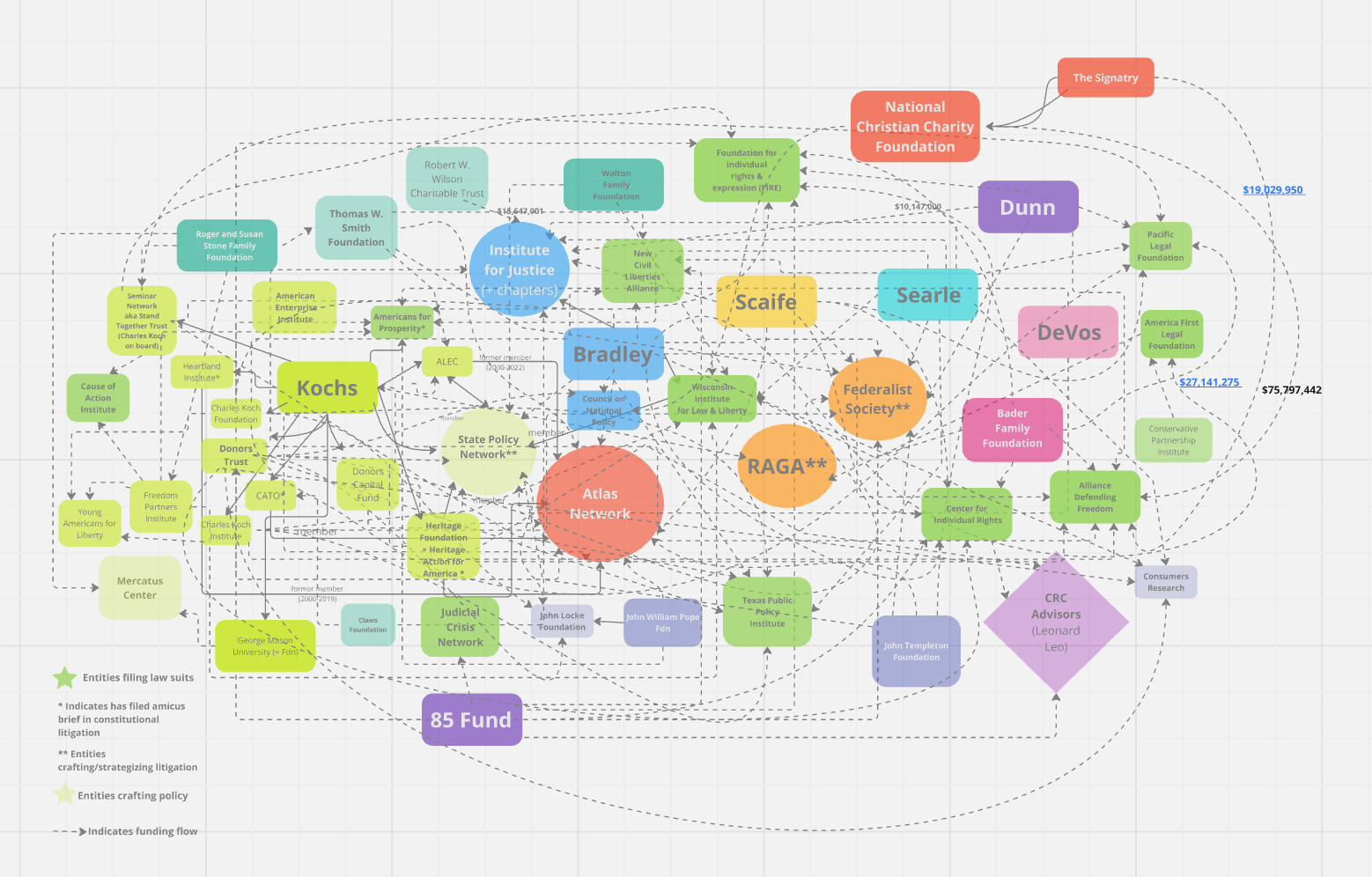
*A not-yet-exhaustive diagram of the money flowing through the Project 2025 universe.
The complete Project 2025 manifesto is 900 pages (?!!), which might explain why it sometimes feels like we're hearing about this thing all the time yet don't know much about it. I haven't quite finished it yet, but I have managed to get to page 500, including Chapter 13, in which the plan for the Environmental Protection Agency is laid out.
The first thing I noticed is the chapter's author: Mandy Gunesakara. Today, Gunesakara is a visiting fellow in the Heritage Foundation’s Center for Energy, Climate, and Environment and senior policy analyst for the Independent Women's Forum, a conservative women's organization funded by the Bradley Foundation, Sarah Scaife Foundation, and the Koch-backed donor-advised fund Donors Trust.
A lawyer by training, Gunesekara has previously been a member of the CO2 Coalition (you might recognize her as the Republican witness during Rep Jamie Raskin's 2019 Subcommittee on Civil Rights and Civil Liberties' hearing on "The Oil Industry's Efforts to Suppress the Truth about Climate Change"), worked for Trump's EPA (first as principal deputy assistant administrator at the EPA’s Office of Air and Radiation and then as chief of staff to EPA Administrator Andrew Wheeler), where she claims to have been "the chief architect of the Paris Accord withdrawal and the repeal of the Clean Power Plan", and was famously the Senator James Inhofe staffer who handed him a snowball during a 2015 hearing in which he claimed the existence of snow meant global warming wasn't a problem.
She was Majority Counsel for Inhofe, and led committee actions and policy development on Clean Air Act and climate change issues.
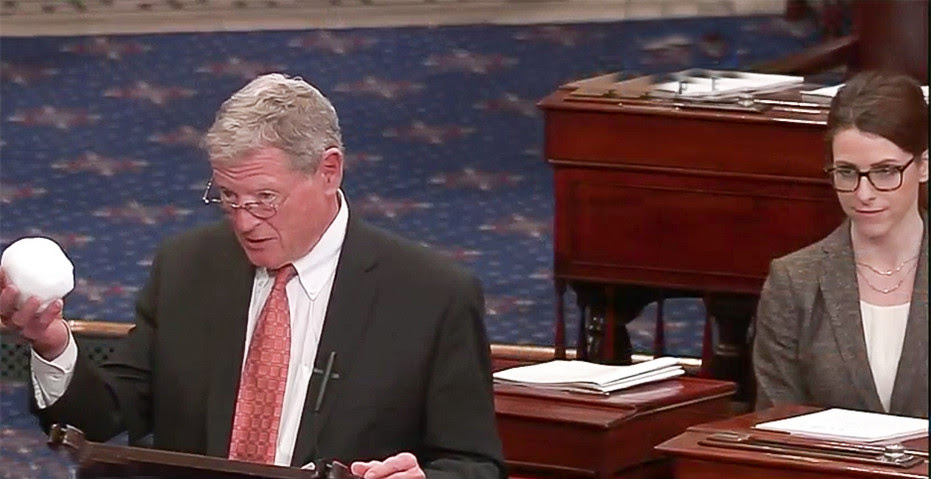
Mandy Gunasekara watches as her then-boss Sen. Jim Inhofe (R-Okla.) holds a snowball in the Senate chamber in 2015.| *C-SPAN
It would not be remotely surprising to see Gunasekara tapped as EPA chief in a Trump administration. Following is a rundown of her key proposals. It's a long read, but not 32-pages long, so...you're welcome?
---
Thanks for reading! Out now on the podcast, another story from our "The Real Free Speech Threat" season, this time about how El Salvador's "cool dictator" Nayib Bukele is going after anti-mining activists to clear a path for lifting the country's mining ban:
---
First, the broad strokes. A Trump EPA would:
- Cut any program focused on climate (including climate czars);
- Limit the agency's ability to regulate under both the Clean Air Act and Clean Water Act;
- "Pause for review" (aka cut) anything that references "environmental justice" (because "reverse racism") and eliminate the stand-alone Office of Environmental Justice and External Civil Rights;
- Push through the "Secret Science" proposal that didn't quite make it last time around, which specifically targets the long-term epidemiological studies that linked air pollution to shorter lives and were used to justify air-quality regulations;
- Politicize the agency, giving all authority to political appointees over scientists;
- Shrink and de-fund the agency;
- Cut EPA funding of university research
- Move away from anything supporting energy transition
- Move away from regulating pesticides and agrichemcials
Now, the details...
---
Climate and Air Pollution Go Hand in Hand
I've written before about Steve Milloy, the tobacco and coal lobbyist, and his longtime war on air pollution regulations. This proposal has his fingerprints all over it. Which makes sense for a few reasons: First, Gunasekara has no scientific background whatsoever, so she'd need someone like Milloy to outline a plan like this.
Milloy got a BA in natural sciences and then a masters in biostastics from Johns Hopkins University. Although he's never actually worked as a scientist, those qualifications still make him uniquely science-y in the climate denier-sphere. Milloy went to Georgetown law school after Johns Hopkins, had a brief stint at the Securities Exchange Commission and then got a job with infamous industry lobbyist Jim Tozzi after he “ran into” him one day. “He had an unusual lobbying practice where he lobbied regulatory agencies, so he hired me to work on risk issues because of my background in biostatistics and law,” Milloy told me.
Gunasekara and Milloy have both been visiting fellows at the Heritage Foundation, and Milloy was on the Trump EPA transition team when Gunasekara was an early appointee for the agency. "I was the only person on the team with a background in EPA science, so I was brought on to write the science part of the transition plan,” Milloy told me in 2020.
That "background in EPA science" came during the 90s, when Milloy was between stints as the science policy director for the National Environmental Policy Institute, a lobbying group funded by Occidental Petroleum and a handful of other oil companies that aimed to roll back EPA Superfund rules, and working as the director of the The Advancement of Sound Science Coalition (TASSC), an organization Tozzi worked with PR firm APCO to create for Philip Morris that aimed to poke holes in the science linking smoking, and particularly secondhand smoke, to cancer.
In between those gigs, “I got a big contract from DOE to study whether EPA science was based on science or politics,” Milloy said. That was the DOE's Regulatory Impact Project, Inc., which had hired Milloy to work on other studies, too. “I got the contract under Bush and finished under Clinton, and when the report was done and I sent it up the line to DOE, which was now all Clinton appointees. They said I couldn’t publish it, because I said regulations were based on politics and not science. So, I decided to cut my contract and publish it on my own. It got picked up in the Wall Street Journal and that’s what sort of launched me into whatever I am today.”
He’s never stopped trying to reshape the EPA the way he initially recommended in that report, back in the mid-1990s. And he's never stopped fighting air pollution regulations either, or warning conservatives and fossil fuel executives that regulating air pollution “is the most important backdoor science scheme for regulating fossil fuel emissions,” as he put it to me. Both of these crusades factor heavily into Gunasekara's Project 2025 EPA chapter.
In it, she proposes that the EPA embrace “true transparency” and “open-source science,” clear nods to Milloy’s “secret science” proposals for anyone who’s ever read them. To accomplish this, Gunasekara says the EPA must:
- “Shift responsibility for evaluating misconduct away from its Office of Scientific Integrity, which has been overseen by environmental activists, and toward an independent body.”
- “Work (including with Congress) to provide incentives similar to those under the False Claims Act for the public to identify scientific flaws and research misconduct, thereby saving taxpayers from having to bear the costs involved in expending unnecessary resources.”
- Avoid proprietary, black box models for key regulations. Nearly all major EPA regulations are based on nontransparent models for which the public lacks access or for which significant costs prevent the public from understanding agency analysis.
She goes after air pollution regulations from multiple angles too (all while proclaiming that a “conservative EPA” will provide cleaner air, water and soil, mind you), proposing reforms for the Office of Air and Radiation—where she once worked, during the Trump administration—as well as changes to National Ambient Air Quality Standards (NAAQS) and the Clean Air Scientific Advisory Committee that helps to set them, and proposing limits to the application of the Clean Air Act.
A Trump EPA Won't Just Not Regulate Greenhouse Gas Emissions, It Will Work to Make it Impossible for Any EPA to Regulate Them
It's not at all surprising that this proposal aims to cut any EPA program focused on dealing with climate change. Nor is it shocking to read lines that sound like they were lifted from an early aughts climate denial blog swimming in Tea Party memes, like this gem: “Mischaracterizing the state of our environment generally and the actual harms reasonably attributable to climate change specifically is a favored tool that the Left uses to scare the American public into accepting their ineffective, liberty-crushing regulations, diminished private property rights, and exorbitant costs."
Where Project 2025 takes things a step further than one might expect is in its proposals to hamstring any future efforts to curb greenhouse gas emissions, too.
Gunasekara wants to "notify Congress that EPA will not conduct any ongoing or planned science activity for which there is not clear and current congressional authorization," for a start, calling to mind the 2022 Supreme Court ruling in West Virginia v EPA, when justices invoked the "major questions doctrine," arguing that unless Congress explicitly moves to regulate greenhouse gases, and gives the power to do so to the EPA, the agency shouldn't even think about it.
She also wants to "eliminate the use of unauthorized regulatory inputs like the social cost of carbon, black box and proprietary models, and unrealistic climate scenarios, including those based on Representative Concentration Pathway (RCP) 8.5."
RCP 8.5 is one of the projected future scenarios mapped out by climate scientists in reports from the Intergovernmental Panel on Climate Change. While those in favor of increasing development of fossil fuels, like Gunasekara, dismiss it as "unrealistic" or a "worst-case scenario," actual scientists debate the details but generally take the projection seriously. Some argue that RCP 8.5 may actually underestimate future concentrations of atmospheric carbon on the business-as-usual path. Others describe RCP 8.5 concentrations as unlikely, yet plausible, on the business-as-usual path and note that RCP 8.5 is consistent with the current pace of global emissions. And still others think the anthropogenic emissions associated with RCP 8.5 are unlikely, but only because they say increased coal energy usage would run counter to current energy transition trends. The IPCC itselfreports that “*Scenarios without additional efforts to constrain emissions (‘baseline scenarios’) lead to pathways ranging between RCP6.0 and RCP8.5.”
An interesting conundrum here: Gunasekara wants to eliminate the idea of a "social cost of carbon," but one of the fossil fuel industry's most promising lifelines at the moment is carbon capture, the financial viability of which hinges on a high cost for carbon. The price per metric tonne that the government has agreed to pay, via the 45Q tax credit increase that Senator Joe Manchin negotiated in the Inflation Reduction Act, is $85, already far higher than the EPA's social cost of carbon, at $51 per metric tonne. Seems like it would be hard to justify the tax credit if there's no social cost of carbon, but cognitive dissonance has never gotten in the way of passing policy.
Elsewhere in the chapter, Gunasekara writes about wanting to "limit EPA’s reliance on Clean Air Act section 30121 general rulemaking authority to ensure that it is not abused to issue regulations for which EPA lacks substantive authority elsewhere in the statute," another clear attempt to block the agency's ability to do anything about greenhouse gas emissions. In other sections she's more explicit, writing that the agency should "remove the Greenhouse Gas Reporting Program (GHGRP) for any source category that is not currently being regulated," calling it a "significant burden" on small businesses. She also suggests the agency "update the 2009 endangerment finding," referring to the agency's finding under Clean Air Act section 202(a) that greenhouse gases in the atmosphere endanger both the public health and the environment for current and future generations. The chapter also recommends repealing some of the regulations on hydrofluorocarbons, and changing course on how transportation emissions are dealt with, proposing a lifecycle analysis of electric vehicles; integrating cost, choice and other non-environmental concerns into the agency's greenhouse gas car standards; and walking back efforts to monitor or regulate air travel and truck emissions.
The EPA Is Too Political! Put Political Appointees In Charge of Everything
For all its squawking about how the EPA has been politicized, P2025 recommends putting political appointees in charge of:
- the Office of Transportation and Air Quality (OTAQ);
- the Office of Air Quality Planning and Standards (OAQPS);
- a newly elevated American Indian Office (AIO), to be headquartered in an oil and gas region (Oklahoma, Texas and Colorado are recommended);
- the Office of Research & Development, where Gunasekara recommends appointing and empowering a Science Adviser reporting directly to the Administrator in addition to a substantial investment (no fewer than six senior political appointees) charged with overseeing and reforming EPA research and science activities. "Qualifications for these positions should emphasize management, oversight, and execution skills (including in leading state environmental agencies) as opposed to personal scientific output." Yes, god forbid we put scientists in charge of the science.
- establishing a political Chief of Staff to oversee the air office in general and requiring regional offices to receive approval from them for enforcement actions;
- pulling the Renewable Fuel Standard out of the OTAQ into its own sub-office, run by a political appointee; (and establish a Memorandum of Understanding with the Department of Agriculture and the Department of Energy to work together to establish RFS programs. Hello, ethanol!)
Also throughout this chapter, Gunasekara suggests cutting the federal EPA budget and giving the states more power, while also mapping out a system in which state and regional EPAs are entirely under the control of political appointees. The section on the EPA's legal counsel, for example, recommends that the agency “establish a policy of legally speaking with one voice,” and notes: “Some EPA offices (for example, the Office of Enforcement and Compliance Assurance and the Offices of Regional Counsel) assert legal positions and interpretations of the law that conflict with an Administration’s interpretation as articulated by the Office of General Counsel with input from program offices." These "inconsistent legal positions"are deemed unacceptable, and it's recommended that all attorneys with authority to represent the EPA be housed at the federal level (under a political appointee) in the Office of General Counsel.
Environmental Justice Is Reverse Racism
If ever there was a crystal-clear example of why it's important for anyone concerned about acting on climate to tune in to and join social justice fights, the intersection between efforts to push against diversity and inclusion and those to block climate policy is it. Over the past year or so, a slew of court cases have argued that initiatives meant to support diversity—in the workplace, at universities, in investments—discriminate against white people. A dozen or so of these cases have been brought by many of the same groups that are on Project 2025's advisory board, organizations like America First Legal Foundation, which is led by former Trump advisor Stephen Miller, and the Alliance Defending Freedom.
Funding for the litigation comes from various other Project 2025 organizations, many of which also fed the original attempt to create a legal basis for “reverse racism” claims in the 90s: the Bradley Foundation, the Koch network, and Pacific Legal Foundation (which is connected to the Atlas Network of libertarian think tanks), now joined by billionaire Barre Seid, who’s former Federalist Society president and longtime conservative legal activist Leonard Leo's new benefactor. Their collective pockets contain more than enough to, as Leo put it last year, “flood the zone with cases.”
Over the past year, the fight against diversity and the fight against climate policy have joined forces in the fight against the most boring of all opponents: investment risk disclosure. Specifically, environmental, social, and governance (ESG) risk disclosure, which spent its first 20 or so years of existence being at worst ignored, and often embraced by companies that used social responsibility reports to boost their brands and unlock capital from do-gooder investors.
The various segments on environmental justice in Project 2025's EPA chapter echo the same arguments in the anti-ESG fight against "woke capital" and the anti-DEI cases crying "reverse racism." It recommends pausing or cutting all environmental justice-focused programs that were established or expanded under Biden and emphasizes the need to make sure they are being based on “neutral constitutional principles.”
It specifically cites cases various Project 2025 organizations have brought or participated in “The next Administration should pause and review all ongoing EJ and Title VI actions to ensure that they are consistent with any forthcoming SCOTUS decision.”
And lest there be any confusion, the summary at the start of the chapter explicitly recommends "eliminating the stand-alone Office of Environmental Justice and External Civil Rights."
Fox Business
Unleashing US oil, gas industry could be 'life-changing': Mandy Gunasekara
EPA Chief of Staff under the Trump administration, Mandy Gunasekara, on the 'extremely damaging' environmental and economic impacts from...
.1 week ago
E&E News by POLITICO
Conservatives gear up for EPA revamp in 2025
Dramatic shifts to EPA's priorities and structure are central to plans for a GOP-led White House drawn up by Trump-era officials and...
.Feb 26, 2024
MSN
Unleashing US oil, gas industry could be 'life-changing': Mandy Gunasekara
EPA Chief of Staff under the Trump administration, Mandy Gunasekara, on the 'extremely damaging' environmental and economic impacts from...
.1 week ago
NPR
A blueprint for the next conservative president would limit the EPA's power.
Mandy Gunasekara, a former EPA official in the Trump administration, says climate change will be "mild and manageable." She wrote a playbook...
.Aug 8, 2023
Mississippi Today
Supreme Court removes Mandy Gunasekara from Public Service Commission race
A majority of justices on Mississippi Supreme Court ruled that Mandy Gunasekara is not a certified candidate for Public Service Commission.
.May 11, 2023
Fox Business
Climate activists thrive off of guilt and fear: Mandy Gunasekara
Former EPA Chief of Staff Mandy Gunasekara on a Washington Post op-ed that claims roses are bad for the environment and Trump's climate...
.Feb 13, 2024
Independent Women's Forum
Mandy Gunasekara: Policy Focus: Saving The American Family Farm
Mandy Gunasekara joins the podcast to discuss this month's policy focus: Saving The American Family Farm. We look at how activist-led...
.Aug 25, 2023
The Heritage Foundation
As Demand for EVs Plummets, Biden's Green Fantasy Is Pummeling U.S. Auto Dealers
Mandy Gunasekara is a Visiting Fellow in The Heritage Foundation's Center for Energy, Climate, and Environment.
.Dec 13, 2023
The Clarion-Ledger
Mississippi Public Service Commission candidate denied SCOTUS appeal
Mandy Gunasekara's request to be put back on the ballot for the Public Service Commission was denied by U.S. Supreme Court. See why.
.Jun 9, 2023
Fox News
Former EPA official reacts to Hertz reducing EV car supply: Consumers do not want these vehicles
Former EPA chief of staff Mandy Gunasekara joins 'Fox & Friends Weekend' to react to Hertz selling thousands of its electric vehicle fleet...
.Jan 13, 2024
- ## Climate change
- Project 2025 would eliminate environmental protections and further delay climate action. In the foreword, Heritage President Kevin Roberts calls environmentalism a “pseudo-religion,” claiming “environmental extremism is decidedly anti-human” because it promotes “population control and economic regression” by “regarding human activity itself as fundamentally a threat to be sacrificed to the god of nature.” Project 2025 is supported by climate change-denying organizations The Heartland Institute and the Institute for Energy Research.
- The Department of Energy chapter in the policy book, written by former Federal Energy Regulatory Commission head Bernard McNamee, calls for “eliminating three agency offices that are crucial for the energy transition” and reducing funding to different agencies related to renewable energy.McNamee also calls for cutting the Office of Energy Efficiency and Renewable Energy, the Office of Clean Energy Demonstrations, and the Loan Programs Office. The Guardian, [7/27/23; Politico, 7/28/23]
- An entire chapter dedicated to the Environmental Protection Agency, written by former Trump EPA chief of staff Mandy Gunasekara, calls for shrinking the agency by firing new hires and eliminating the environmental justice department. The policy book supports reviving Trump-era EPA provisions and investigating grants to ensure money is going to organizations that support the administration’s policy agenda. The Guardian, [7/27/23; E&E News, 2/26/24]
- In a chapter on the U.S. Agency for International Development, Heritage research fellow and Trump’s former chief operating officer of USAID Max Primorac suggests the next administration “rescind all climate policies from its foreign aid programs” and shut down any offices or departments connected to the Paris Climate Agreement. Project 2025 also suggests eliminating or curtailing funding to dozens of federal programs or offices related to climate change. Heatmap News, [2/15/24]
- The policy book recommends reopening the Arctic for oil drilling, expanding other drilling projects, and leasing land in western states for coal mining. Heatmap News, [2/15/24]
AHA DOH both Inhofe staffers, she fever swamp he escalator
TPPF 2022
20K$ --> vogel
JinkoSolar Holding Co., Ltd. (NYSE: JKS) is a solar module manufacturer headquartered in Shanghai, China, and listed on the New York Stock Exchange since 2010. Its subsidiary Jinko Solar Co., Ltd. (SSE: 688223) was listed on the Shanghai Stock Exchange's Science and Technology Innovation Board in 2022.
History
2006 - 2018
In December 2006, JinkoSolar was officially established in December 2006 in Shangrao, Jiangxi, China. In 2007, JinkoSolar began producing silicon ingots. In 2008, JinkoSolar began producing silicon wafers. In 2009, JinkoSolar began producing solar cells and operating a module assembly line.
In May 2010, JinkoSolar was listed on the New York Stock Exchange, becoming the company with the shortest time from establishment to public listing in the solar industry. In 2015, JinkoSolar established manufacturing operations in Malaysia.[2]
2019 - present
In 2019, officially opened the company's first U.S. factory. In 2020, the company became the first to achieve cumulative module shipments exceeding 70 GW.[3][4]
Jinko Solar provided the equipment for, and has a 20% ownership stake in, the 2 GW Al Dhafra Solar project in the United Arab Emirates, which was announced in 2020 and opened in 2023 and was one of the world's largest solar projects.[5][6]
In 2021, the U.S. Customs and Border Protection began blocking the import of JinkoSolar products into the United States due to concerns about the use of forced Uyghur labor.[7]
In 2022, the company established a 7 GW ingot/wafer factory in Vietnam. Also in 2022, JinkoSolar became the first PV company in the world with cumulative module shipments exceeding 100 GW.[8][9]
In May 2023, agents from the United States Department of Homeland Security and Federal Bureau of Investigation raided JinkoSolar's offices in Jacksonville, Florida.[10]
In May 2023, JinkoSolar announced plans to build the world's first “super integrated” solar factory, including silicon ingots, wafers, cells, and modules, with an annual integrated output of 56 GW.[11]
Recognition
JinkoSolar is a member of the Silicon Module Super League. The four other original members of the group are Canadian Solar, Hanwha Q CELLS, JA Solar, and Trina Solar.[12]
---
SEE BAK li 12 23
Independent Women's Forum logo
Senior Policy AnalystSenior Policy Analyst
Independent Women's Forum · Full-timeIndependent Women's Forum · Full-time
Jun 2022 - Present · 1 yr 7 mosJun 2022 - Present · 1 yr 7 mos
Oxford, Mississippi, United StatesOxford, Mississippi, United States
Section VII Strategies, LLC logo
PrincipalPrincipal
Section VII Strategies, LLC · Full-timeSection VII Strategies, LLC · Full-time
Jan 2021 - Present · 3 yrsJan 2021 - Present · 3 yrs
Washington, DC Washington, DC
Section VII Strategies is a boutique energy, environmental, and tax policy consulting firm dedicated to providing curated solutions to meet the business and communications objectives of our clients.
Section VII Strategies is a boutique energy, environmental, and tax policy consulting firm dedicated to providing curated solutions to meet the business and communications objectives of our clients.
US Environmental Protection Agency (EPA) logo
Chief of StaffChief of Staff
US Environmental Protection Agency (EPA) · Full-timeUS Environmental Protection Agency (EPA) · Full-time
Mar 2020 - Jan 2021 · 11 mosMar 2020 - Jan 2021 · 11 mos
Washington, District of Columbia, United StatesWashington, District of Columbia, United States
FounderFounder
Energy 45 FundEnergy 45 Fund
Feb 2019 - Mar 2020 · 1 yr 2 mosFeb 2019 - Mar 2020 · 1 yr 2 mos
Energy45Energy45
The Energy 45 Fund (Energy 45) is a Jackson, Mississippi based 501(c)(4) non-profit educational organization dedicated to informing the public about the environmental and economic gains made under the Trump Administration.The Energy 45 Fund (Energy 45) is a Jackson, Mississippi based 501(c)(4) non-profit educational organization dedicated to informing the public about the environmental and economic gains made under the Trump Administration.
US Environmental Protection Agency (EPA) logo
US Environmental Protection Agency (EPA)US Environmental Protection Agency (EPA)
2 yrs2 yrs
Principal Deputy Assistant AdministratorPrincipal Deputy Assistant Administrator
Nov 2017 - Feb 2019 · 1 yr 4 mosNov 2017 - Feb 2019 · 1 yr 4 mos
Washington, District Of ColumbiaWashington, District Of Columbia
Senior Policy AdvisorSenior Policy Advisor
Mar 2017 - Feb 2019 · 2 yrsMar 2017 - Feb 2019 · 2 yrs
Washington D.C. Metro AreaWashington D.C. Metro Area
United States Senate logo
Majority CounselMajority Counsel
United States SenateUnited States Senate
Jan 2015 - Mar 2017 · 2 yrs 3 mosJan 2015 - Mar 2017 · 2 yrs 3 mos
Washington, District Of ColumbiaWashington, District Of Columbia
Alliance for Chemical Distribution(ACD) logo
Senior Director, Legislative AffairsSenior Director, Legislative Affairs
National Association of Chemical Distributors (NACD)National Association of Chemical Distributors (NACD)
Nov 2014 - Jan 2015 · 3 mosNov 2014 - Jan 2015 · 3 mos
1560 Wilson Blvd. Suite 1100 Arlington, VA 222091560 Wilson Blvd. Suite 1100 Arlington, VA 22209
U.S. House of Representatives logo
Senior Legislative CounselSenior Legislative Counsel
U.S. House of RepresentativesU.S. House of Representatives
Jul 2012 - Oct 2014 · 2 yrs 4 mosJul 2012 - Oct 2014 · 2 yrs 4 mos
Washington D.C. Metro AreaWashington D.C. Metro Area
United States Senate logo
Labor StaffLabor Staff
U.S. Senate Committee on Health, Education, Labor and PensionsU.S. Senate Committee on Health, Education, Labor and Pensions
Jul 2011 - Jul 2012 · 1 yr 1 moJul 2011 - Jul 2012 · 1 yr 1 mo
Washington D.C. Metro AreaWashington D.C. Metro Area
U.S. House of Representatives logo
Office of Mike CoffmanOffice of Mike Coffman
U.S. House of RepresentativesU.S. House of Representatives
Mar 2011 - Jun 2011 · 4 mosMar 2011 - Jun 2011 · 4 mos
Washington D.C. Metro AreaWashington D.C. Metro Area
lululemon logo
Key LeaderKey Leader
lululemon athleticalululemon athletica
May 2010 - Apr 2011 · 1 yrMay 2010 - Apr 2011 · 1 yr
Washington D.C. Metro AreaWashington D.C. Metro Area
U.S. House of Representatives logo
Law ClerkLaw Clerk
U.S. House of RepresentativesU.S. House of Representatives
May 2009 - Aug 2009 · 4 mosMay 2009 - Aug 2009 · 4 mos
Washington D.C. Metro AreaWashington D.C. Metro Area
U.S. House of Representatives logo
Law ClerkLaw Clerk
U.S. House of RepresentativesU.S. House of Representatives
May 2008 - Aug 2008 · 4 mosMay 2008 - Aug 2008 · 4 mos
Washington D.C. Metro AreaWashington D.C. Metro Area
Field DirectorField Director
Mississippi Secretary of State CampaignMississippi Secretary of State Campaign
May 2007 - Aug 2007 · 4 mosMay 2007 - Aug 2007 · 4 mos
Jackson, Mississippi AreaJackson, Mississippi Area
got beat
Hood only Democrat to win statewide race in Miss.

Picayune Item
https://www.picayuneitem.com › 2007/11 › hood-on...](https://www.picayuneitem.com/2007/11/hood-only-democrat-to-win-statewide-race-in-miss/)
Nov 7, 2007 — Republicans were elected to seven statewide offices on Tuesday, from governor to auditor. Hood said he would continue to be a bipartisan player ...
vs hopkins
Senate leadership raises concerns over Gaming Commission Chairman appointment
bush 43
The White House logo
InternIntern
The White HouseThe White House
May 2006 - Jun 2006 · 2 mosMay 2006 - Jun 2006 · 2 mos
Washington D.C. Metro Area
[[===
https://www.democracynow.org/2023/7/28/global_heat_climate_crisis_july_2023
...
DAVID WALLACE-WELLS: Well, I mean, the short answer is, to limit all of these impacts, we need to reduce carbon emissions very rapidly. And while we have had an incredibly impressive renewable rollout over the last couple of years, all of the graphs are pointing way up. The next decade looks much more promising for renewable energy than most advocates even believed was possible just a few years ago. Nevertheless, they’ve barely dented, if they’ve dented at all, the emissions that we’re producing from fossil fuel generation. So we haven’t actually reduced the share of global power production that comes from fossil fuels from this remarkable renewable rollout. We’re just using those renewables to add to our power capacity.
And that’s really, you know, the change that we need to make. We need to be producing so much renewables now that we can actually draw down fossil fuels, and draw them down relatively rapidly, rather than simply using them to supplement our consumption patterns and power production. And unfortunately, we haven’t really seen a sign of that. At best, it looks like we’re going to be looking at sort of a plateau for emissions over the rest of this decade. And we know from all of the scientific warnings that that’s simply inadequate if we have any hope of meeting some of our more ambitious climate targets.
AMY GOODMAN: In a moment, David, I want to ask you about what would be the most effective legislation in the United States to deal with climate change. But, Dharna Noor, I wanted to first go to your piece. If you can explain what Project 2025 is and what you found in your investigation?
DHARNA NOOR: Absolutely. So, Project 2025 is, essentially, a group of dozens of right-wing organizations. We’re talking about think tanks, publications and the like. And it was convened by the Heritage Foundation, which is, I think, in the climate world, very well known for promoting climate denial for decades, and for even longer promoting this sort of anti-regulatory stance. So, these groups came together in an attempt, essentially, to advise whoever the next president is, if that person is a Republican, so any Republican who takes office in next year’s presidential election.
This is the second time that the Heritage Foundation has led the creation of a sort of transition plan aimed at a Republican president. In the early ’80s, we saw the Heritage Foundation create one of these plans, that actually went on to have a huge influence on the Reagan administration and was framed as a sort of way of taking on the out-of-control regulatory state.
And in this particular iteration, there’s a lot of focus in their new transition plan on unmaking environmental regulations. I’m happy to talk more about this, but there’s a number of previous Trump appointees who have written, essentially, proposals to undo the many powers of the federal administration, from the EPA to the Department of the Interior, all in an attempt to sort of lessen the federal authority to regulate fossil fuels and, essentially, to boost those polluting industries.
AMY GOODMAN: You know, it’s interesting. Polls show now that Biden and Trump, even though he was indicted again yesterday, are neck and neck in the polls for president. You talk about the Department of the Interior part of the plan, in this 2025 plan, being written byWilliam Perry Pendley.You note he controversially led the Bureau of Land Management under President Trump and worked to eliminate drilling regulations. Talk more specifically, and name names.
DHARNA NOOR: Absolutely. So, as you mentioned, William Perry Pendley very controversially led the Bureau of Land Management under President Trump, controversially because he was actually never confirmed by the Senate. This was the case for a number of Trump appointees. And he also was known, before he had a role in the Trump administration, for writing this book called Sagebrush Rebel, that was really in praise of Ronald Reagan, of Ronald Reagan’s anti-regulatory sort of agenda. It’s, I think, unsurprising to see his name in a sort of proposal that’s aimed at, you know, ending the ability for federal regulations to have any real impact on the environment.
Previous reporting from E&E News, from Scott Waldman there, found that Mandy Gunasekara had written another chapter focused on remaking theEPA, really focused on shrinking its authority both by laying off staff, by cutting budgets, with an especially big focus on sort of cutting environmental programs, like environmental justice programming and public outreach programming.
Another name that was in the proposal was Bernard McNamee, who wrote a chapter on the Department of Energy, again sort of in an attempt to say we should shrink the authority of the Department of Energy. He previously served as an adviser to Ted Cruz. And before that, he led this far-right organization called the Texas Public Policy Institute — or,Texas Public Policy Foundation, rather, that really aims to undo environmental regulation and fight renewable energy at the state level.
And so, we’re really seeing, I think, a who’s who of the far right in this attempt to, you know, not only sort of be in the next president’s ear if they’re a Republican, but also, you know, sort of recommend personnel and say, “Hey, here’s who you should staff up with.”
AMY GOODMAN: What role does billionaire Charles Koch play in this project, Dharna?
DHARNA NOOR: So, the Heritage Foundation, who, again, are the far-right foundation that sort of convened this group, Project 2025, has historically had ties, financial ties, to the Koch brothers, who are, of course, billionaires who made their fortune in fossil fuels and related industries. The Heritage Foundation is also a member of the State Policy Network, which is a sort of coalition of these extreme right-wing groups that have targeted regulation, especially climate-focused regulation, in states for many years. And I think, you know, I would just say, I guess, it’s no surprise that an organization with ties to people who have made such a great fortune in the industries that must be regulated in order to take on the climate crisis, you know, have historically been tied to a group that is trying to push that agenda to the presidential level.
AMY GOODMAN: As we begin to wrap up, I wanted to ask David Wallace-Wells to respond to what Dharna is describing right now, and also talk about what needs exactly to be done. I mean, we’re speaking today, the day after the Supreme Court has just OK’d, cleared the way for construction of the contested Mountain Valley Pipeline to resume, lifting a halt on a section of the project that had been issued by a lower court earlier this month after a challenge by environmental groups.
...
--
ref
GUK
https://yyytheguardian.com/environment/2023/jul/27/project-2025-dismantle-us-climate-policy-next-republican-president
‘Project 2025’: plan to dismantle US climate policy for next Republican president
Rightwing groups penned a conservative wish list of proposals for the next conservative Dharna Noor
Thu 27 Jul 2023
An alliance of rightwing groups has crafted an extensive presidential proposal to bolster the planet-heating oil and gas industry and hamstring the energy transition, it has emerged.
Against a backdrop of record-breaking heat and floods this year, the $22m endeavor, Project 2025, was convened by the notorious rightwing, climate-denying thinktank the Heritage Foundation, which has ties to fossil fuel billionaire Charles Koch.
[A burned-out car against a background of charred trees and hills
Deadly global heatwaves undeniably result of climate crisis, scientists show
Read more]
Called the Mandate for Leadership: The Conservative Promise, it is meant to guide the first 180 days of presidency for an incoming Republican president. Climate experts and advocates criticized planning that would dismantle US climate policy.
The nearly 1,000-page transition guide was written by more than 350 rightwingers and is full of sweeping recommendations to deconstruct all sectors of the federal government– – including environmental policy.
“Heritage is convening the conservative movement behind the policies to ensure that the next president has the right policy and personnel necessary to dismantle the administrative state and restore self-governance to the American people,” the foundation’s president, Kevin Roberts, said in an April statement.
The guide’s chapter on the US Department of Energy proposes eliminating three agency offices that are crucial for the energy transition, and also calls to slash funding to the agency’s grid deployment office in an effort to stymie renewable energy deployment, E&E News reported this week.
The plan, which would hugely expand gas infrastructure, was authored byBernard McNamee, a former official at the agency. McNamee was also a Trump appointee to the Federal Energy Regulatory Commission. He previously led the far-right Texas Public Policy Foundation, which fights environmental regulation, and served as a senior adviser to the Republican senator Ted Cruz.
Another chapter focuses on gutting the Environmental Protection Agency (EPA) and moving it away from its focus on the climate crisis. It proposes cutting the agency’s environmental justice and public engagement functions, while shrinking it as a whole by terminating new hires in “low-value programs”, E&E News reported. The proposal was written Mandy Gunasekara, who was the former chief of staff at the EPA under Trump.
The guide also features a chapter on the Department of the Interior written by William Perry Pendley, who controversially led the Bureau of Land Management under President Trump and worked to eliminate drilling regulations.
[Republicans in Congress continue to show they will stop at nothing to undermine environmental protections
David Shadburn of the League of Conservation Voters]
Before his time in the Trump administration, Pendley headed the Mountain States Legal Foundation, a conservative law firm where he advocated for selling off public lands. He also authored a book, Sagebrush Rebel, praising Reagan’s anti-regulatory policies.
“He did a bunch of terrible things,” saidKert Davies, director of special investigations at the Center for Climate Integrity, about Pendley’s time at the Department of the Interior. “He worked to dismantle [the Bureau of Land Management] while he was in it.”
The Heritage Foundation has enjoyed a longstanding influence in GOP politics, even helping Ronald Reagan win the presidency, authors Naomi Oreskes and Erik M Conway detail in their 2023 book, The Big Myth. Many of Reagan’s policy proposals were cribbed from the pages of the thinktank’s first Mandate for Leadership, published in 1980, which asserted that the US was in the middle of a “crisis of overregulation”.
“It doesn’t trouble me that any individual or institution would develop advisory plans for politicians. What troubles me is the Heritage Foundation’s long history … of working to undermine environmental protection at the expense of health and wellbeing of the American people, at the expense of life on Earth,” said Oreskes, a history of science professor at Harvard.
[Protesters in October 2021 demanding that the Biden administration to do more to curb climate change and ban fossil fuels.
Meanwhile, House GOP members are also continuing to attack federal climate funding in their spending bill proposals, putting governmental functions at risk.
Earlier this month, the Clean Budget Coalition– – composed of more than 250 advocacy groups – warned that Republican representatives were slipping restrictions on climate spending into the government’s annual spending bills, bills that must be passed before current funding expires on 30 September to avoid a government shutdown. This week, the coalition found that House Republicans had added additional “poison pills” to spending bills, including ones that target environmental funding.
The spending bills are currently in the House appropriations committee, which is chaired by theTexas Republican Kay Granger, who is a top recipient of campaign funding from the oil and gas industry, the Lever reported this week. They will go to a full vote in the House, and then the finalized proposals will move into negotiations with the Senate. If Biden vetoes them, a government shutdown could be on the way.
“Republicans in Congress continue to show they will stop at nothing to undermine environmental protections and attack anything that would help addressing the climate crisis,” said David Shadburn, a senior government affairs advocate at the League of Conservation Voters.
Some of the provisions would hamstring the EPA’s powers, blocking the agency from enforcing new pollution limits on power plants and tailpipe emissions or from implementing controls on mercury and other toxic air pollution, and effectively shuttering a critical program for deploying carbon-free energy.
“House appropriations Republicans are abusing the appropriations process to impose a cycle of environmental injustice,” said Deanna Noël, climate campaigns director for the consumer advocacy nonprofit Public Citizen.
Other “poison pills” would prohibit listing the dunes sagebrush lizard under the Endangered Species Act, remove protections for the greater Yellowstone ecosystem’s population of grizzly bears, and bar the Department of the Interior from creating a working group to help restore bison populations. Still others wouldrequire the energy secretary to sell 1m barrels of refined petroleum from the Strategic Petroleum Reserve, and block the implementation of a rule forcing federal defense contractors to disclose their greenhouse gas emissions and create emission reductions plans.
These disgraceful poison pill riders are nothing short of corporate giveaways to the corrupt fossil fuel industry
Deanna Noël of Public Citizen
Every GOP representative can submit proposals to the House appropriations committee, and since no member is required to sign off on specific proposals, it is not clear who exactly is responsible for each “poison pill”. But as the Lever reported, many Republican representatives who have effectively championed the provisions are recipients of funding from polluting industries.
For instance, a proposal to halt climate-related fisheries research funding was written by a subcommittee led by Representative Hal Rogers of Kentucky, whose top campaign contributors include mining and fossil fuel interests. Another proposal would bar funding for theUN’s Green Climate Fund; it was buried in a bill being overseen by major energy funding recipient Representative Mario Díaz-Balartof Florida, the Lever reported.
“These disgraceful poison pill riders are nothing short of corporate giveaways to the corrupt fossil fuel industry,” said Noël.
The proposals come as waters off the Florida coast reach levels of heat more commonly found in hot tubs, and as much of the nation continues to swelter under triple-digit temperatures.
---
---
OOPS // CONTEXT
no lnx
an 7 23
far right Heritage Foundation created a platform for Trump that plots an authoritarian take-over of the country.
Donald Trump nearly destroyed American democracy in his first term in office. If he is reelected, he plans to try to finish the job. This isn’t a matter of speculation; it’s a virtual certainty.
In campaign speeches, TV interviews, posts on Truth Social, and a head-spinning list of promises posted on his official campaign website, Trump has vowed to pressure Congress to pass legislation imposing the death penalty on drug smugglers and human traffickers; purge “Marxists” from the Department of Education; remove civil service protections for federal employees; and “obliterate the deep state [and] rout the fake news media.” He has also pledged to fire Special Counsel Jack Smith, whom he has labeled “a deranged lunatic, [a] psycho, and a “crackhead,” and appoint “a real special prosecutor” to target President Biden and his family, along with a litany of other real and imagined enemies.
It would be bad enough if such threats were simply the ravings of a wannabe dictator desperate to stay out of jail, but they are much more dangerous than that. Trump’s 2024 election bid and his vows of revenge and retribution are backed by a sophisticated and multi-faceted movement that seeks to expand presidential power to unprecedented heights should he or another like-minded GOP extremist win back the Oval Office.
The intellectual heart of the movement is the Heritage Foundation, the well-known and influential Washington-D.C.-based think tank, founded in 1973, that played an integral role in shaping the policies of President Ronald Reagan. From its early days as a pivotal player in the mainstream of the Republican Party, the Heritage Foundation went full MAGA during Trump’s first term. Last year, it launched a new initiative—dubbed the “2025 Presidential Transition Project,” or “Project 2025” for short—to ensure that the next GOP President’s authority will be unchecked.
The project’s webpage describes its vision in ambitious and unambiguous terms:
The actions of liberal politicians in Washington have created a desperate need and unique opportunity for conservatives to start undoing the damage the Left has wrought and build a better country for all Americans in 2025.
It is not enough for conservatives to win elections. If we are going to rescue the country from the grip of the radical Left, we need both a governing agenda and the right people in place, ready to carry this agenda out on day one of the next conservative administration.
The specific goals of the project are discussed in great detail in the ninth edition of the Heritage Foundation’s Mandate for Leadership. First published in 1981, the Mandate is designed to serve as a guide for conservative governance, and is updated periodically, usually at the outset of each presidential administration. The current version totals some 920 pages.
If you lack the stomach to plow through the entire tome, you can turn to a two-page preface written by Paul Dans, Project 2025’s director who served as the Trump Administration’s Chief of Staff for the Office of Personnel Management.Dans outlines the project’s four basic objectives, which he calls its “four pillars.” These are: the development of a broad “policy agenda” for the next rightwing President to implement; the construction of a “personnel database” to assist the President in making staffing decisions; the creation of a “Presidential Academy” to train the next set of high-level government appointees; and a “Playbook” for the first 180 days of the next administration.
One of the project’s more disturbing aims is to bring all federal agencies under direct presidential control,ending the operational independence not only of the Department of Justice and the FBI, but also the Federal Reserve, which oversees the banking industry and regulates interest rates; the Federal Communications Commission (FCC), which oversees television, radio, and the Internet; and the Federal Trade Commission (FTC), which enforces antitrust and consumer protection laws.
“What we’re trying to do is identify the pockets of independence and seize them,” Russell Vought told The New York Times in an interview for a lengthy article published earlier this month on Trump’s plans for a second term. Vought ran the Office of Management and Budget for the Trump White House, and currently serves as the president of the Center for Renewing America, one of sixty-five ultra-right organizations that have come together to form Project 2025’s advisory board. (Others include the American Family Project, Hillsdale College, Liberty University, Susan B. Anthony Pro-life America, America First Legal, the Claremont Institute, Moms for Liberty, Freedom Works, the James Madison Institute, and ALEC.)
“The President’s plan should be to fundamentally reorient the federal government in a way that hasn’t been done since F.D.R.’s New Deal,” John McEntee, another former Trump White House staffer, also told the Times. “Our current executive branch,” McEntee continued, “was conceived of by liberals for the purpose of promulgating liberal policies. There is no way to make the existing structure function in a conservative manner. It’s not enough to get the personnel right. What’s necessary is a complete system overhaul.” McEntee joined Project 2025 in May as a senior advisor, working on the initiative’s “personnel” pillar.
Dismantling the New Deal-era regulatory framework of the administrative state, as McEntee advocates, has long been a goal of the radical right. The right has also long advocated a bloated view of presidential power known as the “unitary executive theory.” The doctrine was popularized in the early 1980s by Ed Meese, who served as counselor to the President in Reagan’s first term, and as attorney general in his second term, before assuming a full-time post with the Heritage Foundation in 1988. Bill Barr, Trump’s last Senate-confirmed Attorney General, is another prominent proponent of the theory.
In an oft-quoted 2006 essay, professors Karl Manheim and Allan Ides of Loyola Law School in Los Angeles, California, described the theory as inimical to the core tenets of democracy, writing:
[T]he theory of the unitary executive is anything but an innocuous or unremarkable description of the presidency. In its stronger versions, it embraces and promotes a notion of consolidated presidential power that essentially isolates the Executive Branch from any type of Congressional or judicial oversight… Its proponents seek the cover of the Constitution, but in truth their theory wreaks havoc on the most fundamental principles of our constitutional traditions.
In a recent column published online by MSNBC, New York University Professor Ruth Ben-Ghiat, an internationally renowned expert on fascism, compared the programmatic goals of the Trump campaign and Project 2025 to the crippling anti-democratic reforms implemented by Hungarian Prime Minister Viktor Orbán.
The question for the rest of us, who see democracy teetering on the brink, is how to stop Trump and Project 2025. It is possible, but unlikely, that Special Counsel Jack Smith could derail Trump’s campaign through the multiple prosecutions he is pursuing. It is also possible, but by no means certain, that the Supreme Court, currently stacked with three Trump appointees, could overturn or weaken some aspects of a second-term Trump agenda if Smith fails.
The most effective way to stop Trump and the new movement behind him, however, is to defeat him at the polls, making sure that he never accedes to power again. Sadly, that, too, remains decidedly uncertain.
GOP senator blocking 265 military promotions falsely promoted his father’s WWII service: report
Smith Jan. 6 prosecution
FROM YOUR SITE ARTICLES
Why Trump extremists will grow violent as 2024 election approaches: neuroscientist ›
'He can’t deliver': Brutal right-wing editorial burns Donald Trump’s 2024 hopes ›
'Seriously great danger': Ex-DHS official lays out Trump’s 2024 authoritarian threat ›
RELATED ARTICLES AROUND THE WEB
Trump's 2024 rivals predict shift is coming in primary landscape ... ›
Analysis: Trump's main 2024 election goal is now to save himself ... ›
Trump's 2024 media play: Less cable, more Barstool - POLITICO ›
===]]
---
boston herald op ed
https://www.bostonherald.com/2022/09/02/gunasekara-wall-street-buying-virtue-with-your-money/
By MANDY GUNASEKARA |
September 2, 2022
There is a new class of profiteers in the investment world, and you, the typical American, are paying the price for their virtue-filled scheme. Wall Street elites have been pushing the adoption of corporate metrics, referred to as Environmental, Social and Governance, to assess how much good or bad a company is bringing to society. Interestingly, only the far-left socialist causes qualify as “good.”
While advocates of ESG promise a better, healthi ...
---
am acctability BS hit oppo res
Social Justice Warriors Pushing ESG On Wall Street Have Deep Ties To Political Left
A standing rule of any organization is that personnel is policy. A new investigative report released by the American Accountability Foundation shines a light on how Environmental, Social, and Governance (ESG) investing is not a strategy intended to increase returns, but rather is a tool for global elites who wield their enormous financial power—with other people’s money—to achieve their liberal political ends.
Blackrock, Vanguard and State Street collectively represent 80% of all passive investors, which includes 401(k) investments, IRA and brokerage accounts, and pension and institutional funds. These investment houses use your money to achieve controversial environmental and social goals like “anti-racism” training, fossil energy divestment, and instituting race- or gender-based hiring quotas. While these policies have failed to gain traction in Congress and have been struck down in the courts, they are becoming increasingly popular in the Davos jet-set crowd.
As the report suggests, the driving force behind this trend may be the new revolving door between liberal politics and Wall Street. Leaders of these investment houses, including Larry Fink who is the CEO of BlackRock, have denied that ESG is about politics or any particular social or ideological agenda and emphatically stated that ESG “is not woke.” But the mid- to lower-level staff at these investment houses responsible for the day-to-day implementation of ESG investing suggest otherwise. Many of them have earlier careers as partisan staff for liberal politicians and leftist organizations. Given the alignment between ESG goals and the woke agenda heralded by many Democrats, it’s hard to see past the obvious coordination.
[Read the full story at IWF]
mandy g sept
standing rule of any organization is that personnel is policy. A new investigative report released by the American Accountability Foundation shines a light on how Environmental, Social, and Governance (ESG) investing is not a strategy intended to increase returns, but rather is a tool for global elites who wield their enormous financial power—with other people’s money—to achieve their liberal political ends.
Blackrock, Vanguard and State Street collectively represent 80% of all passive investors, which includes 401(k) investments, IRA and brokerage accounts, and pension and institutional funds. These investment houses use your money to achieve controversial environmental and social goals like “anti-racism” training, fossil energy divestment, and instituting race- or gender-based hiring quotas. While these policies have failed to gain traction in Congress and have been struck down in the courts, they are becoming increasingly popular in the Davos jet-set crowd.
As the report suggests, the driving force behind this trend may be the new revolving door between liberal politics and Wall Street. Leaders of these investment houses, including Larry Fink who is the CEO of BlackRock, have denied that ESG is about politics or any particular social or ideological agenda and emphatically stated that ESG “is not woke.” But the mid- to lower-level staff at these investment houses responsible for the day-to-day implementation of ESG investing suggest otherwise. Many of them have earlier careers as partisan staff for liberal politicians and leftist organizations. Given the alignment between ESG goals and the woke agenda heralded by many Democrats, it’s hard to see past the obvious coordination.
The rank and file ESG “stewardship teams” come from the Offices of Sens. Elizabeth Warren, Bernie Sanders and former President Obama as well as the left-wing non-profits like the Center for American Progress. Others are serving on boards for progressive organizations, including Resource Generation, which “offers programming that encourages members to see capitalism not as a market-based equalizer promising upward mobility, but as a damaging system predicated on, ‘stolen land, stolen labor and stolen lives.’”
These are just a few examples of the many that the AAF report extensively covers. The liberal aligned goals and the outcomes lay out a clear indication that ESG is a mechanism for advancing a woke agenda that benefits the political left while producing lower returns for investors. Statements suggesting otherwise should be taken with a grain of salt.
The ESG agenda, just like the woke agenda it perpetuates is causing serious harm like lost value for retirees and broader economic degradation. While ESG acolytes will get paid their high dollar fees, either way, the rest of us will be left with the consequences.
This is why many states like Florida, New Hampshire, Texas and West Virginia are pushing back. Congress should take note as well.
Related Stories
Elected Officials Can Be Bulwarks Against ESG
Gabriella Hoffman | September 1, 2022
Wall Street Is Using Your Money to Buy Virtue; Don’t Let Them
Mandy Gunasekara | August 31, 2022
High ESG Scores Foreshadow Economic Decline
Gabriella Hoffman | August 22, 2022
ESG Is Fueling Inflation Woes
Gabriella Hoffman | August 19, 2022
[Read the full report at AAF]
Biden administration staffers benefit from student loan bailout
Biden transition official resigns from nonprofit group given migrant housing contracts
Here’s How Big Tech Plans To Rig The 2022 Midterms
VISIT OUR RESEARCH WEBSITES:
BidenNoms.com | KalpanaKotagal.com
AAF exists to educate the public on issues related to personnel, policy, and spending in government but we cannot do it alone! Click below to join our efforts to keep government honest and working for you.
---
---
FERTILIZER BS
ANNOTATED ELSEWHERE
https://townhall.com/columnists/mandygunasekara/
Mandy Gunasekara is a senior policy analyst at the Independent Women’s Forum and former Chief of Staff at the U.S. Environmental Protection Agency.TO?
Articles
‘Not All Farmers Have a Future’ Is a Recipe for Famine
By Mandy Gunasekara
Farmers around the globe are feeling unfairly targeted and unfortunately, they are right. From the Netherlands to Ireland to Canada, ...
August 06, 2022
no lnx
The opinions expressed by columnists are their own and do not necessarily represent the views of Townhall.com.
[Trending
Elliot Resnick
The Trump Raid – We’re Missing the Point
Jeff Davidson
Don’t Fly Migrants to Sanctuary Cities, Ship Them In
Kurt Schlichter
They Are Lying to You]
Farmers around the globe are feeling unfairly targeted and unfortunately, they are right. From the Netherlands to Ireland to Canada, nations are increasingly targeting their respective agriculture sectors under the banner of climate change. Going after farmers could not come at a worse time as the war in Ukraine has triggered an international food shortage, which one United Nations official recently stated is “threatening global hunger on an unprecedented scale.”
For example, the Netherlands, while a relatively small country, is the second-largest agricultural exporter in the world, the largest exporter of meat among all EU nations, and the third largest dairy exporter in the world. The Dutch climate proposal up for consideration would close up to 30% of their farms and force farmers to kill off livestock in order to comply with European Union (EU) environmental rules. When the newly created Dutch Minister for Nature and Nitrogen Policy announced the plan, local farmers were given three options—(1) Comply; (2) Relocate; or (3) Shutdown. There was no sleight of hand, the government made it clear “there is not a future for all [Dutch] farmers within [this] approach.”
Dutch farmers are pushing back and have expressed anger at being unfairly targeted compared to other industries in their country. They are also frustrated that the proposal did not include more moderate alternatives to reduce nitrogen without putting farms out of business.
Similar scenarios are playing out elsewhere. After the Irish government made climate standards more stringent, one local farmer explained it “made whole classes of farms unviable.” Canadian farmers are worried Prime Minister Trudeau’s nitrogen reduction proposal will significantly cut yields to canola, corn, and spring wheat that are extremely important to global food supplies.
This is no coincidence and will likely expand. Extreme environmentalists have long agitated to transform the agriculture sector, especially livestock farmers, and the global diet in the process. At the United Nations, this concept is referred to as the Food System Transformation, which will develop “essential steps needed to transition to healthier, more sustainable food systems.” This includes the establishment of an International Panel for Food System Science (IPFSS)—akin to a global food police—which would “provide support in justifying difficult or controversial decisions,” like shutting down livelihoods and exacerbating a food crisis.A future IPFSS would also be charged with reducing “misinformation” online as the quickest way to force acceptance of bad ideas is to quash dissent.& ...A key component of a global food transition is to reduce meat consumption, either by convincing people to become vegan or by purposefully limiting supply to consumers. The fact that livelihoods may be ruined—and some may starve in the process—is just a necessary part of this global transition to stop climate change, so the extremists say.
There are also efforts to create protein or meat alternatives including a push to make eating crickets mainstream. Ontario, Canada, will soon be home to the world’s largest insect farm owned by a company that cites the bugs as “an excellent-value protein at a fraction of the environmental impact.”
The Biden administration is also pushing these disastrous policies. Like a wolf in sheep's clothing, the innocuous-sounding “climate smart ag” hides a much more extreme agenda. Biden administration official Samantha Powers recently commented on ongoing fertilizer shortages, stating coldly that it may “hasten transitions that would have been in the interest of farmers to make eventually anyway” such as “natural solutions like manure and compost.”
[Recommended
Biden DOJ’s Motion to Regain Access to Trump Docs Hits Iceberg in the First Sentence
Matt Vespa]
Sri Lanka embraced this “natural” approach in April 2021, when the government banned the use of chemical fertilizers to “protect the soil and biodiversity.” As a result, crop production fell by an average of 30 to 50 percent, and today the country is in shambles. The Sri Lankan people are starving, the economy is collapsing, and the President and Prime Minister have fled the country after citizens breached the official residences.
Like much of the green agenda, green agriculture as pushed by extreme environmentalists at the UN, the EU, and in the Biden administration is very dangerous. It purports to “solve” environmental problems by shutting entire industries down, rejecting the benefits of modern farming, and dismissing the resulting consequences that largely impact marginalized populations.
There is a better way to improve the environmental impact of agriculture. It will be solved by technology and by working alongside farmers, not shutting them down.
Mandy Gunasekara is a senior policy analyst at the Independent Women’s Forum and former Chief of Staff at the U.S. Environmental Protection Agency.
---
lnx
example, the Netherlands, while a relatively small country, is the https://dutchreview.com/culture/innovation/second-largest-agriculture-exporter/"...meat among all EU nations, and the third largest dairy exporter in the world. The Dutch climate proposal up for consideration would close up to 30% of their farms and force farmers to https://apnews.com/article/netherlands-the-hague-climate-and-environment-fcc706577d9e2e5d221141286f573158" kill off livestock in order to comply with European Union (EU) environmental rules. When the newly created Dutch Minister for Nature and Nitrogen Policy announced the plan, local farmers were given [—(1) Comply; (2) Relocate; or (3) Shutdown. There was no sleight of hand, the government made it](https://www.dairyglobal.net/world-of-dairy/country-focus/the-netherlands-nitrogen-should-be-slashed-70-in-key-areas/
three%20options)clear “there is not a future for all [Dutch] farmers within [this] approach.” pushing back and have expressed anger at being unfairly targeted compared to other industries in their country. They are also frustrated that the proposal did not include more moderate alternatives to reduce nitrogen without putting farms out of business. Similar scenarios are playing out elsewhere. After the Irish government made climate standards more stringent, one local farmer explained it “made whole classes of farms unviable.” Canadian farmers are worried Prime Minister Trudeau’s nitrogen reduction proposal will significantly cut yields to canola, corn, and spring wheat that are extremely important to global food supplies.
This is no coincidence and will likely expand. Extreme environmentalists have long agitated to transform the agriculture sector, especially livestock farmers, and the global diet in the process. At the United Nations, this concept is referred to as the Food System Transformation, which will develop “essential steps needed to transition to healthier, more sustainable food systems.” This includes the establishment of an International Panel for Food System Science (IPFSS)—akin to a global food police—which would “provide support in justifying difficult or controversial decisions,” like shutting down livelihoods and exacerbating a food crisis. A future IPFSS would also be charged with reducing “misinformation” online as the quickest way to force acceptance of bad ideas is to quash dissent.
https://www.eenews.net/articles/hatch-act-probe-closed-for-top-epa-official/
lnx
government watchdog agency has quietly dismissed a complaint brought last year alleging that EPA’s press office violated the Hatch Act in its handling of a top air official’s politically charged resignation letter.
The complaint had been brought by Public Employees for Environmental Responsibility (PEER) last February on the grounds that the letter from Mandy Gunasekara advocated for President Trump’s reelection.
Press aides in EPA’s Office of Public Affairs who then gave the letter to reporters violated the act’s prohibition on using official government time and resources for political activity, PEER said (E&E News PM, Feb. 11, 2019).
but after investigating, the Office of Special Counsel found that press office employees had followed standard practice in giving Gunasekara’s letter to reporters who requested it once she granted permission, according to its response to PEER’s complaint last September.
As a result, "OSC is closing this matter without further action," Ana Galindo-Marrone, chief of the office’s Hatch Act unit, said in the response.
"EPA is pleased with this expected outcome of the investigation," agency spokeswoman Corry Schiermeyer said in an email yesterday when asked for comment.
But PEER Executive Director Tim Whitehouse questioned the logic underlying the decision.
"The OSC seems to be saying that because EPA had Ms. Gunasekara’s permission to write and distribute the letter, it was OK, despite the content," Whitehouse said in a separate message. "That’s nonsensical and allows for a further chipping away" of the act’s requirements, he said.
Because Gunasekara, who was principal deputy assistant administrator in the Office of Air and Radiation, had left EPA by the time the complaint was filed, the Hatch Act’s application to her was moot, PEER had acknowledged.
The group’s complaint "was frivolous from the start," Gunasekara said yesterday.
Gunasekara quit her EPA job to run Energy 45, an advocacy group she created to promote Trump’s energy policies. She is now poised to rejoin the agency as chief of staff after Ryan Jackson stepped down last week, sources have told E&E News (Greenwire, Feb. 14). Gunasekara has declined to comment for the record on the possibility.
The Office of Special Counsel’s decision has not previously been reported. Following standard practice, the agency did not make it public and neither PEER nor the EPA press office drew attention to it at the time. Whitehouse provided a copy of the decision to E&E News last week after a reporter inquired about the complaint’s status in light of Gunasekara’s expected return to the agency.
The Hatch Act generally bars federal workers from engaging in on-the-job partisan political activities; the Office of Special Counsel is an independent agency charged with enforcing it.
"Mr. President, you are truly making America great again," Gunasekara said in last February’s letter, written on EPA letterhead and addressed to Trump (Greenwire, Feb. 7, 2019). "Ensuring eight years of your leadership is of utmost importance."
The letter had first been reported by the online news site Axios, which did not name its source.
---
E&E
The anniversary of the snowball both sides love to troll
By Timothy Cama | 03/13/2020
Sen. Jim Inhofe (R-Okla.) displays and tosses a snowball on the Senate floor in 2015.
"You know what this is?" Sen. Jim Inhofe rhetorically asked Louisiana Republican Sen. Bill Cassidy, who was presiding over the Senate one afternoon five years ago.
"It’s a snowball. It’s just from outside here. So it’s very, very cold out, very unseasonable," Inhofe said. "So, Mr. President, catch this."
With that, the Oklahoma Republican lobbed the snowball — to a Senate page, not to Cassidy — and into history.
The Snowball Speech, as it has come to be known, has since lived in infamy, which is notable for the author of "The Greatest Hoax: How the Global Warming Conspiracy Threatens Your Future."
The five-year anniversary of the speech was last month, but it still serves Inhofe’s opponents as a mocking illustration of the Republican Party’s climate change policy. For his supporters, it’s an epic troll against Democrats.
Inhofe and his staff frequently bring up that the snowball and the speech were not meant to disprove climate science by showing that snow still falls.
Instead, they were meant to mock Democrats’ focus on climate, which then-President Obama had recently told Vox is deadlier than terrorism.
It came at an important moment for climate policy.EPA was working to make final the Clean Power Plan, Obama’s signature climate policy, meant to cut greenhouse gas emissions from power plants.
He was also preparing for the United Nations’ climate summit in Paris later that year, which resulted in the Paris Agreement.
And federal officials had recently concluded that 2014 was most likely the hottest year on record — a conclusion Inhofe mocked with the snowball.
Feb. 26, 2015, was a big day for memes and for the internet. "The dress," a photo of a striped dress that some saw as black and blue and some saw as white and gold, exploded on social media that day, as did a video of two loose llamas being chased in Arizona.
Inhofe made the trifecta. His speech and snowball quickly went viral, with mentions in news outlets around the world.
E&E News spoke with some of the figures involved in the speech and its aftermath. Inhofe’s staff declined multiple requests to make him available.
Mandy Gunasekarahad just started working for Inhofe as majority counsel for the Environment and Public Works Committee.
:{:{}:
}:
"This was actually my first floor speech for the senator that I had written and that I was the designated staffer to escort him to the floor. I had started less than a month before," she recalled recently.
In videos from that 2015 day, Gunasekara is instantly recognizable as the staffer sitting just behind him during the speech, switching out his posters, including a 1974 Time magazine story predicting a coming ice age and a photo of his family building an igloo.
There was still snow on the ground outside the Capitol — pretty standard for February.
"I don’t know who made the snowball. I just know when I went to go brief him, I had the speech, got the poster and was handed the snowball," said Gunasekara, who is now EPA’s incoming chief of staff.
"It was his idea to bring in the snowball, because he was trying to point to the media’s dishonesty in covering weather events versus actual climate," she said.
"Whenever it’s hot in the summer, everyone’s like ‘Oh, my gosh, climate change!’ But if it’s something that doesn’t play into the global warming element, like a snowstorm in February, people don’t say, ‘Oh, my gosh, it’s climate change.’"
When he got to the Senate floor, Inhofe surveyed the pages there at the time to see who could catch the snowball, Gunasekara said. The pages were high school juniors or seniors, nominated by their home-state senators, helping with the day-to-day operations of the chamber.
One page mentioned he played baseball. He happened to be from Oklahoma. Inhofe had found his catcher.
The pages were now all in the loop, but Cassidy apparently wasn’t.
"No, not really. He just kind of pulled it out and threw it," he recalled. The mainly immovable cameras in the upper chamber didn’t show the recipient. Tracked down five years later, he, too, declined to comment for this story.
Another factor Cassidy could see that the C-SPAN viewer couldn’t: the reaction of Elizabeth MacDonough, the Senate’s parliamentarian, to Inhofe’s use of a snowball as a prop during a floor speech. The parliamentarian is a nonpartisan referee who enforces the chamber’s rules, like one against using props.
"The parliamentarian was like, ‘What?! That shouldn’t be on here,’" Cassidy said, miming a frazzled reaction. MacDonough’s office didn’t respond to a request to confirm Cassidy’s recollection.
Later in Inhofe’s speech, he formally asked for retroactive unanimous consent to use his snowball, which Cassidy granted.
Sen. Sheldon Whitehouse (D-R.I.) responded to Inhofe’s speech later that day with one of his own, arguing that authorities including the Navy and NASA disagreed with Inhofe.
"You can believe NASA, and you can believe what their satellites measure on the planet, or you can believe the senator with the snowball," he said.
‘An illusion as to how far it went’
Sen. James Inhofe (R-Okla) and Mandy Gunasekara. Photo credit: C-SPAN[
Inhofe holding a snowball during a session of the Senate in 2015. To his right is aide Mandy Gunasekara, who is about to be EPA’s new chief of staff. | C-SPAN]
Cassidy also remembered seeing it on TV later. With the snowball going off the frame and the scale of the Senate chamber, the toss of a mere few feet looked much bigger.
"There was an illusion as to how far it went," Cassidy said. "Somehow, with the optics of TV, it looked different, as if it was more than it actually was, like Joe Burrow threw a touchdown pass," he said, referring to the Louisiana State University quarterback and 2019 Heisman Trophy winner.
In the coming days and weeks, mockery about the speech spread. Obama mentioned the speech in interviews to make fun of the GOP’s climate positions. Jon Stewart of "The Daily Show" joined in, too.
"You think global warming is a hoax because you — in February — were able to collect one ball’s worth of snow," Stewart said on his show, calling Inhofe a "crazy old fuck."
Gunasekara said she wasn’t on Twitter at the time nor following the news closely, so she didn’t know that day what had happened.
"I was totally oblivious to it. And the next morning, Alex came in, and he said, ‘Sit down. You should know that millions of people saw your face last night.’ And I was like, ‘What? What are you talking about?’" she said, referring to Alex Herrgott, then deputy staff director at the Environment and Public Works Committee.
Herrgott is now executive director of the White House’s Federal Permitting Improvement Steering Council. He’s not the only former Inhofe staffer from that time to land a job at the executive level.
Gunasekara, who starts her new job at EPA next week, is already facing fire from Democrats who question if she can be impartial, given her strong rhetoric against liberals and the secrecy behind the funding of her group (Greenwire, March 11).]
Andrew Wheeler, a former Environment and Public Works staff director under Inhofe, is EPA administrator, and Ryan Jackson, the staff director who hired Gunasekara, was EPA’s chief of staff until recently.
‘Boogeyman’
“Daily Show” host Jon Stewart commenting on Inhofe throwing a snowball. | Comedy Central
The snowball stuck with Obama. He revisited it throughout 2015 as he ramped up his climate agenda and advocated for what became the Paris Agreement.
He called Inhofe’s stunt "disturbing" in a Vice News interview the following month; said it was "stupid, shortsighted, irresponsible" in a comedy bit at the White House Correspondents’ Dinner in April; and mentioned it again while touring a melting glacier in Alaska in September.
:{:{}:
}:
The next year, he said the country wouldn’t find solutions to climate change "if we pretend a snowball in winter means nothing is wrong."
Jesse Lee, the White House’s rapid-response communications leader at the time, said the video of the speech quickly made the rounds among staff members.
To them, the snowball speech served as a symbol of the GOP’s position on climate change. It occurred around the time that "I’m not a scientist" became a frequent refrain for Republicans looking to avoid controversy over climate science.
"We were all very prepared for a real tough, hard-fought debate on climate, since we never had that in the past," Lee said.
"This was the moment when it really crystallized that actually, Republicans really didn’t have anything to show for themselves. Rather than look ridiculous, they would rather ignore it, and that left Inhofe standing there alone as the spokesman for them," he continued.
"It was an indication that we had a clear path to drive agenda. And, if anything, it emboldened us to be aggressive about it."
Gunasekara, for her part, doubts the speech changed any minds.
"People either saw it like, ‘That’s so funny how upset it makes people’ or ‘Oh, my gosh, I can’t believe Republicans think that,’" she said. "It emboldened whatever position somebody already had."
Marc Morano, a former Inhofe communications staffer from his earlier stint atop the Environment panel and climate skeptic who cheers on the mocking of Democrats and climate activists, said the speech was an excellent act of trolling, even if it didn’t change minds.
"He was having fun. It was a lot of fun," said Morano, now an executive at the Committee for a Constructive Tomorrow.
"I don’t think it did anything; I just thought it was fun, and it was a great visual, and I think it really helped him," he said. "It gave the debate a lot of fun. It gave them their boogeyman, and he had fun being their boogeyman."
---
---
omg 2017 maloney oversight:
FELLOW, LIFE: POWERED PROJECT
Ms. Gunasekara. Thank you. Chairman Raskin, Ranking Member
Roy, and members of the committee, thank you for the
opportunity to testify today.
Before I start my testimony, I, like many of my colleagues
here, want to express my condolences to the family, this
committee, and the larger community for the passing of
Congressman Cummings. As a former House staffer, I was inspired
by his passion on issues he cared the most, and saw true
statesmanship in his willingness to reach across the aisle and
engage, not always agree, but respectfully engage with his
colleagues.
Climate change is an important issue, and it's one that I
personally worked on while serving in President Trump's
administration. I was proud to have helped author the first-
ever constitutionally viable greenhouse gas emission standard
for our Nation's existing coal-fired power plants, the
Affordable Clean Energy rule, which replaced the famously
stayed Clean Power Plan.
I was also proud to have drafted the legal and policy case
for exiting the Paris Climate Agreement, which represents the
flawed environmental policies of the last administration that
was quick to sell out American workers to curry favor among
international elites.
I was also very proud to be a part of the efforts to
refocus the agency on its core mission: to protect public
health and the environment by addressing tangible issues with
practical solutions.
Whereas the skewed priorities and mismanagement from the
last administration left EPA with the Flint, Michigan, crisis,
the contamination of the Animas River, and an unprecedented
backlog of submitted state environmental compliance plans,
today's EPA is much more efficient and much more effective.
This hearing, like many we've seen under today's extreme
Democrat leadership, is not premised on facts, it's not in
pursuit of a better understanding surrounding complex issues of
national importance, nor is it meant to produce any meaningful
solutions to any of your environmental challenges.
It is an attempt to revive a completely debunked effort
aimed at bankrupting one of our Nation's largest energy
companies. It is the latest product of a politically motivated
campaign hatched years ago by politicians, activists, and well-
funded foundations that want to demonize an entire industry and
paint them as corrupt institutions that have, in their own
words, pushed humanity toward climate chaos.
This hyperbolic rhetoric is dishonest, the purported
policies are ineffective, and it represents all that is wrong
in the mainstream environmental discussion.
Our energy industry and the men and women who work in it
are to be celebrated, not demonized. This country's ability to
harness our vast energy resources in a responsible and an
efficient manner has changed millions of lives for the better.
It is why life expectancy and economic growth, both important
indicators of human flourishing, have significantly improved.
Advancements in fossil-based energy and the development of
modern economies has provided access to live-saving
technologies, like heat during winter, water treatment,
medicine, and refrigeration.
A stark contrast exists today in countries that do not have
sophisticated energy systems or access to affordable, reliable
electricity. In parts of the developing world, life expectancy
today is 10 to 20 years shorter and children under 5 regularly
succumb to preventable diseases.
The reality is that we could change these outcomes by
sharing our successful energy technologies, not by prohibiting
their use as a result of misaligned environmental policies.
Our successful energy industry is also why we lead the
world in environmental progress. Advancements in natural gas
extraction that led to horizontal drilling have been a key
driver of our world-leading emissions reductions. As the
International Energy Agency recently stated, U.S. overall
reductions represent, quote, ``the largest absolute decline
among all countries since 2000.''
We also lead the world in clean air progress. Today we are
breathing the cleanest air on record, having reduced six
criteria pollutants, including lead and ozone, by 74 percent
since 1970. We are also home to the cleanest drinking water in
the world.
Additionally, the Trump administration has prioritized $4
billion of investments in replacing aging infrastructure and
reinvigorated the Superfund program, which has resulted in the
largest number of once-contaminated lands being cleaned up and
reintroduced into productive use.
Because these regulatory and deregulatory actions carefully
balance the costs and benefits, EPA is advancing environmental
protection without forcing the American people to pay excessive
costs, either directly or indirectly, through inflated energy
costs.
This thoughtful approach is especially important for
vulnerable and socio-economically disadvantaged communities
that spend a significantly higher portion of their monthly
income on energy costs. As such, they are significantly
impacted by high-cost environmental policies, some of which
have been promoted by members of this committee, like the Green
New Deal.
A survey by the National Energy Assistance Directors
Association found that in the face of increased energy costs,
low-income and fixed-income Americans will forego trips to the
doctor, keep their house at unsafe temperatures, reduce
medication, and skip meals. No American should be forced to
make these types of unhealthy decisions, and the good news is
that we don't have to pick.
President Trump has demonstrated how the best environmental
actions are focused on balancing the goals of economic growth
alongside reducing pollution, not pitting these interests
against each other.
Thank you again for the opportunity, and I look forward to
your questions.
Mr. Raskin. And thank you for your testimony, Ms.
Gunasekara.
We are going to now launch into our five-minute-per-member
questioning period.... Mr. Comer. Thank you, Mr. Chairman.
And thank you all for being here today.
My first questions are going to be for Dr. Garvey and Dr.
Hoffert.
You all, at any time while you were working with
ExxonMobil's Research, was their research out of step with the
academic research community at that time?
Mr. Garvey. No, it was not.
Mr. Hoffert. No, it was not. It was not. It was basically
reinforcing academic research all over the world as reflected
in the Intergovernmental Panel on Climate Change, which
summarizes all the peer-reviewed research on climate change all
over the world.
Mr. Comer. Was any of your all's work ever published in
scientific journals?
Mr. Garvey. There was one article published from the tanker
project directly, and then some of the data was published in
other articles by Columbia University.
Mr. Hoffert. Yes. Our work was profusely published, and
it's not easy to do. You have to get two peer reviewers. And
these were quality journals.
All in all, and there are eight papers on Exxon's own list
of 100 papers that they wrote or they contributed to, in
climate change that were produced by our group. And as I said
in my introductory statement, from 1981 to 1987, when I was a
paid consultant, and I continued to cooperate after I was a
paid consultant with my Exxon colleagues, we published five
more papers in peer-reviewed journals.
Mr. Comer. Mr. Chairman, the New York attorney general and
many others leading climate change litigation efforts across
the country would have us believe that the oil and gas industry
hid key science for decades from the American public.
Publishing work that is consistent with academic research in
scientific journals seems like an odd way to go about hiding
anything, and I just wanted to make that point.
Now, Ms. Gunasekara, my question for you. Environmental
activists have acknowledged that one of their goals is to
encourage strategic litigation that would bring internal
company documents into the public domain. These documents would
then be used to develop negative narratives about the oil and
gas companies.
Do you believe these lawsuits are really in the best public
interest?
Ms. Gunasekara. No, I don't. I don't believe they're good
for the American people.
And when it comes to what they purport to do, which is
improve the environment, it has no relative impact, whether
you're talking about these frivolous lawsuits protesting the
Keystone XL pipeline or encouraging divestment. That has no
real impact on the environment and it does nothing to advance
the interests of the American people.
Mr. Comer. Well, then, how does taking money from companies
that are driving innovation and giving it to trial lawyers help
the American people?
Ms. Gunasekara. I don't think it helps them at all. I think
that drivers of innovation are where the solutions to any
current and future challenges will come, and it's in the best
interests of policymakers and the American people to seek out
and support these institutions, not to demonize them in the
ways that we've seen from this relative campaign.
Mr. Comer. Right. I know that you were involved in the
President's decision to withdraw from the Paris climate
agreement. Can you talk about the reasoning behind his decision
to do that?
Ms. Gunasekara. Yes, absolutely. It came down to a number
of factors, but most notably the fact that it was going to ship
American jobs overseas to countries like China and India that
don't use basic pollution control technology our industrial
operators have been using for decades.
So you were going to take economic opportunity and jobs,
ship them overseas, and then exacerbate air quality issues,
some of which are finding their way over here to this country,
and undermine efforts to reduce greenhouse gases.
Mr. Comer. I think that my questions make a solid point
that at the time the industry was doing exactly what we as
Americans wanted and there was no scientific data to diminish
the job that the oil and gas industry was doing with what
Chairman Roy said in providing our standard of living, fueling
our tremendous economy, doing things that help Americans live
longer than people from other countries.
So this is something that we've talked about in the
Environment Subcommittee many times. We've had this climate
change topic with at least three committee hearings in the
Environment Subcommittee.
So I just wanted to make that statement. Demonizing these
countries, fueling trial attorneys to have more frivolous
lawsuits is not going to achieve any objective that we have
today as we move forward to talk about ways to improve the
climate.
So with that, Mr. Chairman, I yield back.
Mr. Raskin. All right. Well, thank you for joining us
today.... Ms. Oreskes. But we can demonstrate that both companies,
both before, and ExxonMobil continued misleading advertisements
after the merger.
Mrs. Miller. I'd like you to prove that.
Moving on, Ms. Gunasekara, can you elaborate how the United
States has been a leader in reducing emissions?
Ms. Gunasekara. Yes, absolutely.
According to the Energy Information Administration here in
the United States, we have reduced our energy-related CO2
emissions by about 14 percent from 2005. Compare that to the
rest of the world that has increased their emissions by 20
percent.
A large driver of this, as I mentioned in my testimony, is
the fact that we have inspired and supported innovations in the
energy industry, fossil-based energy industry, that will
continue to be an important source of reliable and affordable
electricity.
And because we have spurred continued investment in these
types of innovations from extraction to refinement, use, and
then transmission, we have the cleanest, most efficiently
produced energy in the world.
Which is why we spent significantly less, from the Federal
Government perspective, having these types of outcomes, whereas
you look at some places, like Germany and France, that have
embraced these top-down, overarching, expensive approaches,
they spent billions of dollars but don't have equivalent
emission reduction to actually show for it.
Mrs. Miller. Thank you.
How would moving to a full renewable scheme come at the
detriment to the American jobs, the economy, and the
environment?
Ms. Gunasekara. It would be hugely devastating because it
would make the price of energy immediately go up. Wind and
solar have a role in a diverse energy mix, but not a base load
role. And when it comes to ensuring access to affordable and
reliable energy, you have to have a base load power source that
today is provided by primarily natural gas and coal, as well as
nuclear energy.
So a shift to wind and solar, which is primarily what folks
are talking about in this context, we'd have to get used to
rolling blackouts, because when the wind doesn't blow and the
sun doesn't shine those energy sources don't provide the energy
needed to fuel commerce and to get people to where they need to
go.
So it would not only be hugely detrimental to the day-to-
day life standard of living for everyone, but it would undercut
our ability to compete in an increasing global atmosphere where
jobs and economic productivity would no doubt be shipped to
overseas countries that don't ascribe to environmental
protections that are remotely similar to what we do here in
this country.
Mrs. Miller. So it would be detrimental to everyone?
Ms. Gunasekara. Yes.
Mrs. Miller. Thank you.
I yield back my time.
Mr. Raskin. Thank you very much, Mrs. Miller.
I recognize now the gentlelady from the Commonwealth of
Massachusetts, Ms. Pressley.
Ms. Pressley. Thank you, Mr. Chairman.
There's an old adage in my home community that says: When
everyone else catches a cold, Black folks catch pneumonia.
The point is, everyone is sick. The issue is just at
varying degrees of disease, of illness. And that is certainly
true when it comes to the climate crisis. It is felt by all of
us, but the greatest burdens are borne by the most vulnerable
people of color, low-income communities, immigrants, and non-
native English speakers, all communities most at risk of poor
health outcomes and least able to relocate or to rebuild after
a disaster.
And my district, the Massachusetts Seventh, one of the most
vibrant, diverse, and unequal districts in the country, is
certainly not immune.... I now recognize Mr. Massie for five minutes of questions.
Mr. Massie. Thank you very much.
Dr. Hoffert, do you support a CO2 tax?
Mr. Hoffert. You're asking me directly. Yes, I do but--
sorry. I always forget this.
Mr. Massie. Did you say yes, you support a CO2 tax?
Mr. Hoffert. Yes, but it's not--I don't think the question
is properly formatted.
Mr. Massie. Okay. Well, I get to ask it. I'll ask you
another followup.
Mr. Hoffert. I understand. A carbon tax. Depends on the
details.
Mr. Massie. Reclaiming my time.
Mr. Hoffert. Yes.
Mr. Massie. Reclaiming my time.
Dr. Garvey, do you support a CO2 tax?
Mr. Garvey. I support that the Congress needs to deal with
the problem and decide how best to manage CO2.
Mr. Massie. Do you think it's a good tool to do it?
Mr. Garvey. I'm not a legislature.
Mr. Massie. So you're not qualified to comment on that.
Mr. Garvey. That's correct.
Mr. Massie. Okay. Thank you very much.
Dr. Oreskes, do you support a CO2 tax?
Ms. Oreskes. Well, let me say that I'm not an expert on
taxation policies, but leading economists around the globe,
including my good colleague Nicholas Stern, with whom I have an
op-ed piece in today's New York Times, who wrote the Stern
report, former economist at the World Bank, he and virtually
all of his colleagues do think that carbon pricing is an
effective way to address the issue without damaging the
economy.
Mr. Massie. Okay.
Ms. Eubanks, do you support a CO2 tax?
Ms. Eubanks. Not necessarily.
Mr. Massie. Okay.
Dr. Ali, do you support a CO2 tax?
Mr. Ali. Not if it creates hot spots and hot zones.
Mr. Massie. So there are only two people here that support
a CO2 tax.
Dr. Hoffert, what should the tax be per ton?
Mr. Hoffert. I prefer something called a fee-and-dividend
tax, you're probably familiar with it, because it uses market
mechanisms, and essentially all of the money collected, except
for administrative fees, would be returned to taxpayers. I
think that given the polarization in the United States----
Mr. Massie. Can you tell me what the fee would be?
Mr. Hoffert [continuing]. that would be the most viable way
to----
Mr. Massie. Can you tell me what the fee would be?
Mr. Hoffert. I can't, because I haven't prepared the
specific numbers on that.
Mr. Massie. Okay.
Dr. Oreskes, what would your fee be?
Ms. Oreskes. Well, it wouldn't be my fee. I think that's a
very unfair way of posing the question. I think this whole line
of questioning is a bit weird for this committee. But since you
asked----
Mr. Massie. It's not weird because the presumption--let me
get to my point here, which you all are doing a great job of
making.
The presumption of this hearing being held in the Civil
Rights and Civil Liberties Committee is that somehow raising
the price of energy would help the economically challenged in
our society.
Ms. Oreskes. Okay.
Mr. Massie. Ms. Gunasekara, can you talk about the impact
of the price of energy on----
Ms. Oreskes. Well, could I answer that?
Mr. Massie. No, I'm asking--you had a chance.
Ms. Gunasekara, could you talk about the impact of the
rising price of energy if there were a CO2 tax on vulnerable
populations?
Ms. Gunasekara. Yes. And let me say for the record, I do
not support a tax on CO2, primarily because it would increase
the price of energy and electricity. We know the impacts
because you've seen this happen in Germany where energy and
electricity is now a luxury commodity.
So a significant number of studies were done during the
last administration assessing the impact of cost increases
affiliated with their Clean Power Plan.
One of the studies that stood out to me was from the Black
Chamber of Commerce that found that it would result in hundreds
of thousands of less jobs in the Hispanic and Black
communities, as well as communities where people are living on
fixed-income or low-income budgets.
It would force them to make decisions where they forego
meals, they keep their house at unsafe temperatures, they stop
going to the doctor, and they don't seek out preventive
healthcare because of the costs that they're trying to save in
order to afford expensive electricity.
Mr. Massie. Thank you very much.
Dr. Ali, you stated that most of the refineries are located
in minority communities. Is that true?
Mr. Ali. I said disproportionately located.
Mr. Massie. Disproportionately located. Can you give us an
example of one that's not?
Mr. Ali. That's not located in a community of color?
Mr. Massie. Yes.
Mr. Ali. No, I can't, not at this----
Mr. Massie. Let me give you an example. There's one in my
district, and it provides jobs. It's actually one of the best
things that's ever happened to our district because we have a
problem with brain drain in eastern Kentucky. People grow up,
they want to get an education and get a career in STEM. And the
one opportunity we have is at that refinery.
I worked there three summers while I was a college student.
The only opportunity that I had to get a job in science,
technology, engineering, and math, was at that refinery.
If you could wave a wand and make those refineries go away
from the communities of color, would you do that?
Mr. Ali. I always honor the work that has happened in the
past when we didn't have other opportunities for different
types of energy sources. I would.
Mr. Massie. Would your community be better--would those
communities be better off or worse off without those jobs in
those refineries?
Mr. Ali. That's why we talk about a just transition. That's
why we talk about getting advanced manufacturing opportunities.
That's why we talk about solar, wind, thermal.
Mr. Massie. Would you answer my question? Are you better
off or worse off with that refinery in those communities?
Mr. Ali. You're worse off because of the health impacts,
and you can get other types of industries in those areas.
Mr. Massie. Well, if they leave those communities, please
send another one to my congressional district, because it has
been a godsend to our congressional district, particularly for
the people who need jobs....
Mr. Roy. Ms. Gunasekara, do you support nuclear power?
Ms. Gunasekara. Yes.
Mr. Roy. Why? Quickly, you may.
Ms. Gunasekara. Well, it's the largest source of reliable
base load energy that is zero emission. It's one of the safest
forms----
Mr. Roy. Right.
Ms. Gunasekara [continuing]. of electricity and will
continue to be a part of our diverse energy----
Mr. Roy. I'm always amazed at those who believe that the
sky is falling within 10 years that will refuse to say that we
should adopt nuclear power. Because if you want abundant energy
to power the United States of America, to get these buildings
lit up, to have electricity flow around the world in order to
make people, lift them out of poverty, the billion people that
we blithely ignore while we go around talking about things that
sound good in Davos and go in the cocktail circuits talking
about climate change, ignoring the 1 billion people that have
been lifted out of poverty, we could solve these problems with
nuclear power.
Yet the left comes in here and says: We don't want to adopt
nuclear power in most respects. I'll give some credit to
Secretary Kerry, who in this very room said, yes, we should
adopt nuclear power, and to Dr. Hoffert for saying so and Dr.
Garvey.
Here's a point that I'd like to make in concluding. My
grandfather-in-law, my wife's grandfather, Alan Key, moved to
the panhandle of Texas in the 1930's after growing up in a
very, very poor household in Arkansas. He lived by himself in a
cabin, dirt floors, worked himself up working for Phillips
Petroleum. For 55 years, he worked for Phillips Petroleum
working in a plant in Phillips just outside of Borger, Texas,
his whole life. He passed away at 94 years, 94-years-old.
His work, working for those companies, allowed my wife, her
brother, to go to Texas A&M University, the children of a
single mom, because he worked his whole life there helping
produce the very lifeblood of our economy.
And forgive me for getting a little aggravated when, yes,
Texas is being attacked directly. I'll put aside all the
highfalutin stuff about what energy does for the rest of the
world. You want to talk about minority impact? Go look at
Africa and sub-Saharan Africa. How do we get power to Africa?
Lifting people out of poverty around the world because of
clean abundant energy that we can make available to the world,
that's what should be our motives, that's what should be our
goals. This is what should be motivating us instead of talking
about what theoretical impacts might be existing here as
opposed to the direct, calculable impacts on people's lives by
clean abundant energy available to them every single day.
Thank you, Mr. Chairman.
Mr. Raskin. All right. Mr. Roy, I just want to say, at
least on behalf of myself, I assume I speak for a lot of people
on the panel, none of you have ever--or at least I've never
been to Davos, and I'm not on the cocktail circuit. I'm pretty
much a prohibitionist and pretty abstemious myself. So I'm not
quite sure who that reference was directed at.
I will say that the witnesses have been very kind in
responding to a series of questions they were not invited to
come here to testify about. What we're looking at is the oil
industry's awareness and knowledge of the impact of their
business on climate change, and what they did and what they
didn't do historically, and how that informs what we're going
to do going forward.
So this has nothing to do with nuclear power. I'm sorry
that some of the witnesses apparently disappointed you in
taking a position for nuclear power. There was no litmus test
on nuclear power or any other issue. We have brought in the
people who we found most expert on the question before us.
All right. With that, I'm going to call on Ms. Wasserman
Schultz, who's recognized for her five minutes of questioning.
Ms. Wasserman Schultz. Thank you so much, Mr. Chairman.
As my colleagues I know mentioned, ExxonMobil has a long,
treacherous history of hiding what it knew about climate
science. But there is no question that multinational mega-
corporation has gotten more slippery with regards to its stance
and actions on climate change. The company now claims to
support the Paris agreement even as Trump is trying to pull us
out of it.
You'll see on the slide here, in a January 2018 blog post,
Exxon public affair's director explained, quote, ``We believe
the risk of climate change is real and we are committed to
being part of the solution.'' However, ExxonMobil's corporate
website recently stated, and I quote, ``Current scientific
understanding provides limited guidance on the likelihood,
magnitude, or timeframe.''
This seems like a double-down on their old-fashioned
playbook of denial and obfuscation to me.
So Dr. Hoffert, do you agree with ExxonMobil's statement
highlighted on the screen, the one that I just read, where they
say that----
Mr. Hoffert. Please read it.
Ms. Wasserman Schultz. ``Current scientific understanding
provides limited guidance on the likelihood, magnitude, or
timeframe.''
Mr. Hoffert. Could you please say when that statement was
made?
Mr. Raskin. 2018.
Ms. Wasserman Schultz. Last year.
Mr. Hoffert. Okay. Of course, that's absolutely incorrect.
As far as something like 90--over 95 percent-- of scientists
who publish in peer-reviewed journals--and that's very
important to us because it means it's been vetted and
critically reviewed--agree that humans are having an effect, a
noticeable effect on climate.
And it's more quantitative than that. As I mentioned
before, we call this era, the era of the Anthropocene, meaning
that humans are now the dominant effect on the environment of
the Earth, for better or worse.
Of course, the evidence--and I've been working on this for
30 years--has increasingly shown that the prediction of climate
change from CO2 emissions, mainly from fossil fuels, has
increased--has eventually caused climate change.
Starting from back in the 1980's, when the Earth was
actually cooling, I remember I was working at the Goddard
Institute for Space Studies, we made an estimate that the
climate change would start----
Ms. Wasserman Schultz. My time is shrinking.
Mr. Hoffert. Sorry about that. It's an interesting story.
Ms. Wasserman Schultz. It is, I'm confident. And you're a
former Exxon consultant, correct?
Mr. Hoffert. I'm a former Exxon consultant, yes.
Ms. Wasserman Schultz. Okay. Thank you so much.
Dr. Garvey, how would you respond to the claim that science
provides limited guidance about the risks posed by climate
change?
Mr. Garvey. Let me just start by saying that I've not
studied climate change for the last 30 years. I was a
researcher at Exxon for 5. But I would say that there's a lot
of information in the literature that provides strong and clear
guidance as to what the planet is likely to be subject to.
Ms. Wasserman Schultz. And do you believe that ExxonMobil
is committed to being part of the solution?
Mr. Garvey. I don't feel comfortable commenting on that. I
really don't know.
Ms. Wasserman Schultz. You don't know. Okay.
Dr. Oreskes, what do you think ExxonMobil is doing--is
trying to do here with scientifically inaccurate statements
like this?
Ms. Oreskes. I think they're trying to do the same thing
that we know they've done for 30 years, which is to confuse
people, to make people think that the issue is not sufficiently
certain as to provide a basis for moving forward.
And if I could just answer the question you put to Mr.
Garvey.
Ms. Wasserman Schultz. Yes.
Ms. Oreskes. We know that ExxonMobil is not really
committed to action on climate change because of their
expiration profile.
I'm a geologist by training. I started my career as an
expiration geologist. When you explore for new oil and gas
reserves, you are committing to developing and using those
reserves 20, 30, 40, 50, even 100 years into the future, and
that belies their claim to be committed to this issue.
Ms. Wasserman Schultz. Yes. And when they bury a statement
that clearly is the opposite of what their public affairs
director said, that they are essentially trying to speak out of
both sides of their proverbial mouth.
Ms. Oreskes. Exactly.
Ms. Wasserman Schultz. Dr. Ali, how would you describe the
seriousness with which the company has responded to warnings
that climate change will have disproportionate impacts on
communities of color?
Mr. Ali. I don't think they're serious at all.
Ms. Wasserman Schultz. What gives you that feeling?
Mr. Ali. Because they know, one, the impacts that they've
had for decades now on our most vulnerable communities. They
know also that they are going to drive more storms, more
significant climatic events that are going to
disproportionately hurt those communities. So I say that I
don't think they're that serious about the concerns of our most
vulnerable----
Ms. Wasserman Schultz. Have you noticed that they've taken
any significant steps toward addressing the impact of climate
change and their effect on climate change in communities of
color?
Mr. Ali. I think the best way to answer that is that I've
worked in over 500 communities, I have constant conversations
with the leaders in those communities, and it's never once been
relayed to me that they feel that they are doing anything of
significance to better protect their lives....
===

oreskes wr test:


...====


**IV. Third Party Allies Continue to Make Inaccurate Claims, Offer Partial Truths, and**

**Promote Misleading Narratives**


The role of third-party allies was on full display in last week’s house hearings, where Republican

members invited as their sole witness the founder and President of Energy45, a group whose

purpose, in their own words, is to “support the Trump energy agenda.”


**Energy45 is part of a group known as the CO2 Coalition**. This illustrates a strategy that I call

**“zombie denialism,” in which old players and arguments reappear in new forms.**


Throughout the 1990s and early 2000s, a leader in climate change disinformation was the George C.

Marshall Institute. Its director, William O’Keefe, was the long-time Executive Vice President and

CEO of the American Petroleum Institute (1974-1999). **The Marshall Institute closed in 2015, only**

**to remerge a few years later as the CO2 Coalition.**


**The representative of Energy45 was Mandy Gunasekera, a political operative who formerly worked**

**in Trump administration and as counsel to Oklahoma Senator James Inhofe.** (She was, evidently,

the staffer who passed the Senator his**infamous snowball** on the Senate floor.) Under questioning,

she acknowledged that her organization is funded by the **Mercer Family, who are well known for**

**supporting groups that deny the scientific consensus on climate change, and by Koch Industries**.

16


**Although we were all under oath—promising to tell the whole truth—Ms. Gunasekera testified to**

**several half-truths and made misleading claims. Some of her claims were demonstrably untrue.**

**These included:**


1) The misleading claim that climate change will be “mild and manageable.” There is no scientific

evidence to support this claim. On the contrary, literally hundreds of scientific reports over

the past few decades, including the U.S. National Climate Impact Assessments, have

affirmed that the impacts of warming above 2o C will lead to serious, perhaps catastrophic,

effects on “health, livelihoods, food security, water supply, human security, and economic

growth.”17 The IPCC has recently noted that avoiding the worst impacts of climate change

will “require rapid and far-reaching transitions in energy, … infrastructure...and industrial

systems…These systems transitions … imply deep emissions reductions in all sectors, a wide

portfolio of mitigation options and a significant upscaling of investments in those options.”18

One could argue that, as projections, these statements cannot be proven, but recent events

surrounding Hurricanes Sandy, Michael, Harvey and Maria, as well as the devastating

wildfires at Paradise California, have shown that the impacts of climate change are already

becoming unmanageable. Moreover, a just-issued report from the Army War College states

5

that “the Department of Defense (DoD) is precariously unprepared for the national security

implications of climate change-induced global security challenges.”19 If the Pentagon is not

prepared to manage climate change, it is hard to imagine who is.


**2) A misleading narrative about global prosperity being driven by fossil fuels**. No one denies that fossil

fuels drove the Industrial Revolution, and in doing so contributed substantively to the rise in

living standards of hundreds of millions of people in Europe, North America, and parts of

Asia. But this is at best a half-truth, because what is at stake here is not the past but the

present and the future, because disruptive climate change threatens both the prosperity that

we have already achieved and future economic growth. **As Nicholas Stern, the former Chief**

**Economist of the World Bank and one of the world’s foremost experts on the economics of**

**change, has said: “high carbon growth self-destructs.**”20


**3) A misleading and arguably false narrative about “cheap energy**.” Fossil fuels are not cheap. When

their external costs are considered, they are in fact very expensive. The International

Monetary Fund estimates the costs to consumers—above and beyond what we pay at the

pump or in our electricity bills—at over $5 trillion dollars per year. Trillion. This is in effect

a massive subsidy to the oil and gas industry. Among other things, these subsidies “damage

the environment, caus[e]…premature deaths through local air pollution, [and] exacerbat[e]

congestion and other adverse side effects of vehicle use…” 21


4) A misleading narrative about “**energy poverty.”** This narrative, which has been heavily promoted

by ExxonMobil, insists that fossil fuels are the solution to the energy needs of the world’s

poor.

22 The idea that ExxonMobil is suddenly concerned about the plight of the global poor

is prima facie—and I might add literally—incredible, for if they were concerned, they would

not be downplaying the threat of climate change.


As Pope Francis, Mary Robinson, Ban KiMoon and others advocates for poverty reduction and global justice have repeatedly

emphasized—and as we heard in last week’s House hearings—climate change will hurt the

poor above all. A fossil fuel company that cared about the poor would not be pursuing a

business model that commits to further oil and gas exploration and development, and

through it, to further disruptive climate change.23 The cynicism behind this argument is

simply astonishing.

Moreover, while it is true that people need affordable energy, it is not true that they need

fossil fuels.24 More than a billion people world-wide lack access or reliable access to electricity,

but many of these also lack access to an electricity grid. Fossil fuels are of little use for them.

For communities without access to an electricity grid, distributed solar and wind are the only

solutions that can be rapidly and affordably implemented. They also do not rely on

government officials who may be corrupt, corruption that is often linked to oil and gas

development. 25


**5) Misleading assertions about the cost of renewable energy.** The cheap fossil fuel narrative is coupled to

misleading assertions about the allegedly high cost of renewable energy. According to

Bloomberg News, in two-thirds of the world, solar is the cheapest form of newly installed

electricity generation. It is cheaper than nuclear, cheaper than gas, and cheaper than coal.26

Improvements in energy storage are needed to maximize renewable penetration, particularly

in developed countries, but improvements are happening quickly. Between 2010 and 2017,

6


The price of battery storage decreased 79%, and most experts believe that with the right

incentives, appropriate regulatory reform, and continued support of R & D in industry

government, and academia, the storage problem can and will be solved.


:{6) The false claim that the U.S. under President Trump has cut greenhouse gas emissions:(style="background-color:#ff9900;"):}::{. Both Ms.:(style="background-color:#ffffff;"):}:

Gunasekara and Republican members repeatedly claimed not only that emissions had fallen,

but that the United States under President Trump had done more to reduce emissions than

any other country.**This is untrue. One environmental reporter, who has described herself**

**as “accustomed to hearing a lot of misinformation” about climate change, characterized this**

**statement as “brazenly false.”27** :{In fact, U.S. greenhouse gas emissions spiked in 2018, seeing:(style="background-color:#ff9900;"):}:

:{a 3.1% increase over 2017.  :(style="background-color:#ff9900;"):}::{28:(style="background-color:#ffffff;"):}:


7) **The claim that carbon pricing increases the cost of energy.** This is also false. Carbon pricing increases

the cost of carbon-based energy, and deliberately so. The purpose is to make the price we pay

reflect the true cost, and therefore correct a market failure. Moreover, to the extent that a

carbon pricing system stimulates investment and innovation in the renewable sector, in

efficiency, and in storage, it is like to reduce the cost of energy in the long run, as indeed

emissions trading did in the case of acid rain.29


In our 2010 book, Merchants of Doubt, Erik M. Conway and I showed that the strategies and tactics

used by the fossil fuel industry to deny the harms of fossil fuel use were in many cases the same as

those used by the tobacco industry to deny the harms of tobacco use. We further showed that this

was no coincidence, because many of the same individuals, PR firms, advertising agencies, and

institutions were involved in both (Appendix 18).


The tobacco industry was prosecuted by the U.S. Department of Justice under the RICO statutes in

part because of the ways in which individual companies coordinated with each other, and with third

party allies, to present false information to consumers. Through Congressional hearings and legal

discovery, it was made clear that the industry had funded a wide range of activities intended to

mislead the American people. I believe that something similar has occurred with respect to the

harms of fossil fuels.

...

ALI:
And we do not have to choose between the environment and
jobs. That is a 20th century paradigm that no longer can be in
place, because the IPCC report, the National Climate Assessment
report, they are very clear. These scientists are not biased.
They are telling us what's about to happen.
And if we are not willing to do what's right, then we are
responsible for our children's lives and our children's
children's lives who are going to have to deal with these
impacts.
Mr. Raskin. All right. The gentlelady's time has expired.
Thank you for that answer.
And we go finally to the Ranking Member, Mr. Roy, for his
final five-minute questioning.
Mr. Roy. I thank the chairman.
I thank my colleagues, Ms. Ocasio-Cortez. And thanks for us
having additional time.
Ms. Gunasekara, let me ask you a question. Do you know what
the most deadly hurricane has been in North American history to
the best of or at least of our knowledge?
Ms. Gunasekara. I think it was over 100 years ago.
Mr. Roy. Yes. It was in Galveston, Texas. We know well the
damage there.
Do you know what the impact was to minority communities
there.
Ms. Gunasekara. I don't know specifically.
Mr. Roy. Yes, I don't know either, because I don't know
what the racial makeup was in 1900. What I know is, is that
Galveston got crushed and 6,000 to 12,000 people died in 1900.
Let me ask you this question. We've heard a lot about,
again here, the impact on lives, on those who are--whether
they're minority communities or poor, those that we're talking
about in kind of the context of the Civil Rights and Civil
Liberties Subcommittee here.
And my colleague here has raised this question, and I've
raised this question, but I wanted you to explore it a little
bit more, about the direct impact on the lives of the
disadvantaged in the United States of America and/or around the
world if we are to pursue an agenda of ending, for example,
fracking, as at least one leading Democratic Presidential
candidate has suggested.
Ms. Gunasekara. Well, you'd not only put billions--sorry--
millions--up to millions--a couple hundred thousand and up to a
million people out of work in this country alone, you'd be
ascribing the families and the communities that depend on them
as a source of income to a life of potential poverty.
Around the world the implications are even graver. Fossil-
based energy enables the modern economy, and with the modern
economy you have access to life-saving healthcare,
refrigeration for food, all sorts of technologies that are
built on fossil-based energy systems.
And you can change people's lives. There are a billion
people today that don't have access to electricity, and if we
were to give them a reliable source of electricity through the
most efficient technologies that we use here today, with some
of these countries overseas, you'd not only be lifting up the
standard of living in areas where they're living in extreme
poverty, but you'd also be extending their life expectancy, and
they'd be enjoying the benefits of a modern economy that we,
frankly, take for granted in this country.
Mr. Roy. Can I ask you a question? Do you oppose solar
power?
Ms. Gunasekara. No, not at all.
Mr. Roy Wind power?
Ms. Gunasekara. No.
Mr. Roy. Which state is one of the leading states in solar
power--or wind power, I'm sorry, as a percentage of its grid?
Ms. Gunasekara. I believe you said earlier it was Texas. I
was listening.
Mr. Roy. Texas is, if not the leading, one of the leading
sources, you know, of use of solar power--I'm sorry, wind
power--to produce energy for its grid.
This summer, however, because we have been taking down some
of the base load coal-fired plants, we've had some situations
where we were concerned about bumping up against and having to
potentially have rolling blackouts. Why? Because we have
difficulty in getting some of that wind power to places
distributed around the state and to be able to rely on it as a
core element of our grid, empowering our grid.
And I earlier referenced the 84 percent of our overall
power that comes--64 percent for fossil fuels, 20 percent from
nuclear. And my question for you is, when we look backward
here, as this hearing is supposed to be doing with respect to
certain companies about our use of fossil fuels, what would
have been possible in 1980 or 2000 at some point in terms of
powering our grid in the United States of America, for the
lifeblood of people's lives, with solar and/or wind power?
Ms. Gunasekara. You certainly would not have seen the
economic growth we've seen today with the continued use of
coal-fired power plants and the exponential growth that has
occurred alongside of the natural gas boom. You certainly
wouldn't see the historic economic growth we've seen today
under President Trump, where we have 6 million new jobs, the
lowest unemployment rates across the board when it comes to
women, minorities, and other previously disadvantaged
communities that were held captive in poverty.
Mr. Roy. And if I might add, the robust economic growth
that has been led by the state of Texas, significantly, and
that is in significant part because of natural gas and the
ability to export liquefied natural gas. And how important is
the exportation of liquefied natural gas to those countries
around the world for those people who are predominantly
concerned about CO2?
Ms. Gunasekara. It's significantly important from
geopolitical stability, No. 1, and No. 2, there are significant
environmental benefits. There's a recent report from the
National Energy Technology Lab, that did an assessment of
lifecycle emissions affiliated with U.S. LNG sent to European
and Asian markets compared to gas from Russia, and U.S. LNG
shipped to European markets has 41 percent less emissions,
lifecycle emissions, than if those same countries were to
receive natural gas from another predominant producer like
Russia.
So significant implications in terms of reducing overall
emissions but providing energy to the allies who need it abroad
to, again, enable the modern economies that make life so much
better.
Mr. Roy. Thank you, ma'am.
Mr. Raskin. All right. And thank you, Mr. Roy.
Before I close, for the record I want to introduce four
Exxon internal memoranda, dated June 6, 1978, October 16, 1979,
August 3, 1998, and October 13, 1997, as well as the April 3,
1998, American Petroleum Institute Action Plan. Without
objection, those will be admitted into the record.
wapo
no lnx
Democracy Dies in Darkness
Get the Energy 202 Newsletter
PowerPost
The Energy 202: This former EPA appointee wants to make climate change a winning issue for Trump
By Dino Grandoni
June 19
THE LIGHTBULB
Mandy Gunasekara.
Democratic contenders for president are trying to make climate change a top electoral issue. But one Trump appointee who recently left the Environmental Protection Agency wants to make sure it is a winning issue for her former boss instead.
Since leaving [why? why then?] the EPA in February, Mandy Gunasekara formed what she calls a “pro-Trump nonprofit” called Energy 45 to help promote Trump’s energy agenda. She's been busy writing op-eds for newspapers such as USA Today and appearing on television networks such as Fox News to be a counterweight to the chorus of critics bemoaning Trump administration efforts to dismantle its predecessor’s climate agenda.
“I think what Republicans are starting to understand is, we need to be better about communicating the good work that we're doing,” Gunasekara, the former deputy assistant administrator of the EPA's air office, said in an interview Tuesday.
:{
}:
“I always say, we're right on the policy, we're right on the facts,” she added. “But what we're not great at is conveying that.”
As Trump formally launched his reelection bid last night, he himself leaned into his energy record and touted the country's position as the world's No. 1 petroleum and natural gas producer during a rally in Orlando.
"We've ended the last administration's cruel, and heartless war on American energy," he told the crowd of supporters. "What they were doing to our energy should never be forgotten."
Gunasekara is hardly the first Trump figure to leverage her time in government into media appearances. But few have been talking specifically about energy and environmental policy.
Now she and other Trump fans are gearing up to defend what is perhaps the EPA’s biggest new policy change yet: an overhaul of the Obama administration’s signature climate regulation for coal-fired power plants.
:{
}:
Gunasekara’s former boss, EPA chief Andrew Wheeler, is expected to finalize on Wednesday a rule empowering states to establish their own emission standards for electric generation.
The plan is projected to cut CO2 emissions roughly 34 percent below 2005 levels over the next decade-and-a-half, a pace that is likely slower than what the industry is already doing in the absence of any federal regulation.
But Gunasekara already has her talking points ready: She cites data from the International Energy Agency that indicates the United States has seen some of the largest decreases in overall greenhouse gas emissions, driven in large part by cheaper natural gas replacing coal in power generation rather than regulations.
The Obama administration, she said, “co-opted important agency missions as a means to expand the federal government.”
Still, the United States is still reducing emissions too slowly to help stave off some of the worst effects of climate change as described in a recent landmark United Nations report.
And Gunasekara is, unsurprisingly, also no fan for climate plans put forward by former vice president Joe Biden and other Democratic White House hopefuls, which she calls “different iterations of the Green New Deal.”
“The Green New Deal is premised more on socialism than anything you would find historically within the governing approach of America,” she said.
Gunasekara, who was also a former senior adviser to then-EPA chief Scott Pruitt and helped run the air and radiation office, was one of the architects of Trump’s decision to withdraw from the 2015 Paris climate agreement,under which nearly every nation agreed to voluntarily cut heat-trapping emissions.
But she is perhaps best known for handing a snowball to another former boss, Sen. James M. Inhofe (R-Okla.), to prove that climate change had not ended winters. At the time, in 2015, she was working as counsel on the Senate Environment and Public Works Committee.
For the moment, she is the boss of her own “one-woman show,” she said, splitting her time between Washington and Mississippi. Energy 45 is organized as a501(c) (4), which is not required to disclose its donors.
“It’s not atypical to have a very small operation for this type of organization,” said Anna Massoglia, a researcher at the Center for Responsive Politics, which tracks the movement of “dark money.”
Gunasekara declined to specify the contributors. “I would just define my support is coming from folks who align with the mission of the agency,” she said.
Her anonymous funding sources give critics fodder to attack her message.
“There are any number of polluter-backed groups in D.C. already trying to prop up Trump's anti-public health agenda, so it's hard to imagine what Pruitt's associates add to the conversation other than a desperate desire to benefit themselves no matter who gets hurt,” said Adam Beitman, a spokesman for the Sierra Club.
You are reading The Energy 202, our must-read tipsheet on energy and the environment.]
President Trump speaks following a tour of an ethanol plant in Council Bluffs, Iowa. (Mandel Ngan / AFP)]
— Corn wars: The Trump administration is weighing whether to make more changes to federalethanolrules, such as limiting waivers for small oil refiners to get an exemption from fuel blending requirements, the Wall Street Journal reports. Although people familiar with the matter say no decisions have been made, the move to consider further changes follows the president’s latest trip to Iowa, the nation’s largest ethanol-producing state. The president’s move to end the summer ethanol ban “has failed to fully satisfy farmers in Iowa and elsewhere who are hoping to sell more corn for ethanol to make up for sales lost to China amid the administration’s continued trade standoff,” the WSJ reports.
==
environmental and energy policy is poised to be a hotly contested issue in the leadup to the 2020 election.
One new group that stands to play a key part in that conversation is Energy 45 Fund, a 501(c)(4) nonprofit organization founded by outgoing senior Trump administration adviser Mandy Gunasekara “to promote the Trump energy agenda” following her resignation from the Environmental Protection Agency (EPA).
The source of money fueling the group may remain a mystery. Gunasekara told the Center for Responsive Politics that the group’s funders will be allowed to remain anonymous.
“I will respect their preferences,” Gunasekara said.
Moreover, the “dark money” group’s website was purchased weeks before Gunasekara left the Trump administration, while she was seemingly still on EPA payroll.
In a resignation letter to the White House dated and effective Feb. 7 — the same day House and Senate Democrats floated their “Green New Deal” — Gunasekara formally resigned from her position as principal deputy assistant administrator at the EPA’s Office of Air and Radiation then announced plans to launch the group.
Incorporation records confirm that the group was incorporated as a 501(c)(4) nonprofit organization the day after Gunasekara’s resignation with the stated purpose being “to inform the public about the environmental and economic gains made under the Trump Administration” by “educating policy makers and the general public regarding legislation and other matters of importance to the people and economy of the United States.”
Domain registration records reviewed by CRP reveal that the group’s website was quietly registered to Surya Gunasekara — Mandy Gunasekara’s lobbyist husband, who showed up in lobbying disclosures with the EPA as one of the agencies lobbied shortly after his wife joined the agency — on Jan. 20, weeks before his wife’s resignation.
Mandy Gunasekara told CRP that her husband has no official role in the organization and that his name is listed due to their use of a shared GoDaddy account.
Surya Gunasekara joined Capitol Hill Consulting Group in November 2017 and began lobbying for an energy company called Ameresco during the final quarter of the year.
During the first quarter of 2018 and the final quarter of 2017, he and two other lobbyists at the firm are listed as lobbying the EPA. Issues listed on the firm’s Lobbying Disclosure Act (LDA) filings include “Energy Savings Performance Contracting; FY19 Appropriations for federal energy programs; Renewable Fuels.”
An initial Q2 lobbying disclosure for 2018 also lists the EPA but an amended Q2 filing for 2018 does not mention the agency.
Mandy Gunasekara has been the Trump administration’s top air and climate adviser at the EPA for the past two years but has her own history in the revolving door, working as Senior Director Legislative Affairs at the National Association of Chemical Distributors before she was hired by the Senate Environment and Public Works Committee in 2015.
Under then-Chairman James Inhofe (R-Okla.), she became the committee’s Clean Aire Act and Climate Change counsel. Gunasekara is perhaps best known in D.C. circles for her connection to Inhofe’s highly publicized snowball stunt on the floor of the Senate.
“Continued environmental progress will be borne out of innovation, not oppressive regulations, government take-overs or green new deals,” a page touting “America First Environmentalism” on the website reads, in an apparent jab at House Democrats’ Green New Deal spearheaded by Alexandria Ocasio-Cortez (D-N.Y.) and released the same day Mandy Gunasekara resigned from the EPA.
On another page titled “Exposing Liberal Energy Fantasies”, the Energy 45 website continues pushing back on the Democrats’ new environmental proposals. “Led by self-avowed socialists, the Democrats have made a leftward lurch so dramatic that it would make Stalin blush. Their policies to combat climate change are nothing but a proxy for draconian government control that prohibits car ownership, kills domestic energy production, and harms low-income communities the most,” the website reads.
Building on her resignation letter’s condemnation that the Paris Climate Accord is one of “many bad deals,” the group’s website touts Gunasekara as the “chief architect” of the Trump administration’s withdrawal from the agreement who “worked to repeal the disastrous Clean Power Plan” and create “opportunities for beautiful clean American coal.”
PUBLISHED 08/19/19
As President Donald Trump’s communication strategy begins to take shape for the 2020 election, his favorite network has been repeatedly booking a former Environmental Protection Agency official to gaslight for the president’s destructive anti-climate and anti-science agenda.
Since February, Mandy Gunasekara has appeared at least 17 times on both Fox News and Fox Businessto talk about her past work with the Trump administration, promote his energy agenda, and criticize the Democratic presidential candidates. She has made numerous appearances on other right-wing outlets as well, including The Daily Caller and Bill Mitchell’s radio program. Gunasekara’s history of working with climate change deniers makes her the perfect right-wing pundit for Trump’s so-called “energy dominance” agenda.
Gunasekara worked at Scott Pruitt’s EPA after cutting her teeth working for infamous climate denier Sen. Jim Inhofe (R-OK)
From March 2017 through February of this year, Gunasekara was a top cli**mate**and air quality adviser at the EPA, where she played a key role in helping the Trump administration undo major environmental regulations. Her organization, Energy45,lists her as “chief architect of the withdrawal from the Paris Climate Accord” and an orchestrator of the Clean Power Plan repeal. At a 2017 conference, she reportedly told coal company representatives that she was in a position at the EPA to “make a big difference and do things to help out and tear back the problems that stemmed from decisions of the last administration.”
Before joining the EPA, Gunasekara worked on Capitol Hill, where she served as counsel for Sen. Jim Inhofe (R-OK), “the grandfather of climate denial,”handing him the snowball during his infamous climate denial speech in 2015.
Gunasekara currently runs a pro-Trump energy PAC
Gunasekara resigned from the EPA in February to start Energy45, also known as the Energy 45 Fund, adark money PACthat is “dedicated to informing the public about the environmental and economic gains made under the Trump Administration.” The organization’s issues include “Defending the Trump Energy Agenda,” promoting “America First Environmentalism,” and “Exposing Liberal Energy Fantasies.” The description of the last of those issues calls policies to combat climate change “nothing but a proxy for draconian government control” that “would make Stalin blush.”
In addition to her role with the Energy 45 Fund, Gunasekara is also a senior fellow with Life:Powered, a project of the Koch-backed Texas Public Policy Foundation, which generally rejects climate science and has close connections to the Trump administration.
In a June interview with The Washington Post, Gunasekara explained her new role in promoting Trump’s energy agenda:
“I think what Republicans are starting to understand is, weneed to be better about communicating the good work that we're doing,” Gunasekara, the former deputy assistant administrator of the EPA's air office, said in an interview Tuesday.
“I always say, we're right on the policy, we're right on the facts,” she added. “But what we're not great at is conveying that.”
Apparently for Gunasekara, that meanslyingabout energy and climate issues.
Gunasekara has appeared at least two dozen times in right-wing outlets since February
Since starting the Energy45 PAC, Gunasekara has appeared nine times on Fox News and eight times on Fox Business, splitting her time on Fox News betweenTrump’s favorite show, Fox & Friends, and America’s Newsroom, while all of her Fox Business appearances have come on Varney & Co.
She also penned an op-ed for FoxNews.com on February 20 which bashed the Green New Deal as “Karl Marx’s Christmas list” and chastised Democrats for moving “so far to the extreme that eating meat is murder, but killing a baby moments after birth is a choice.” Most recently, she appeared on Fox Nation’s Deep Dive on August 14 to discuss the Green New Deal andTrump’s “energy dominance” agenda.
Gunasekara has also
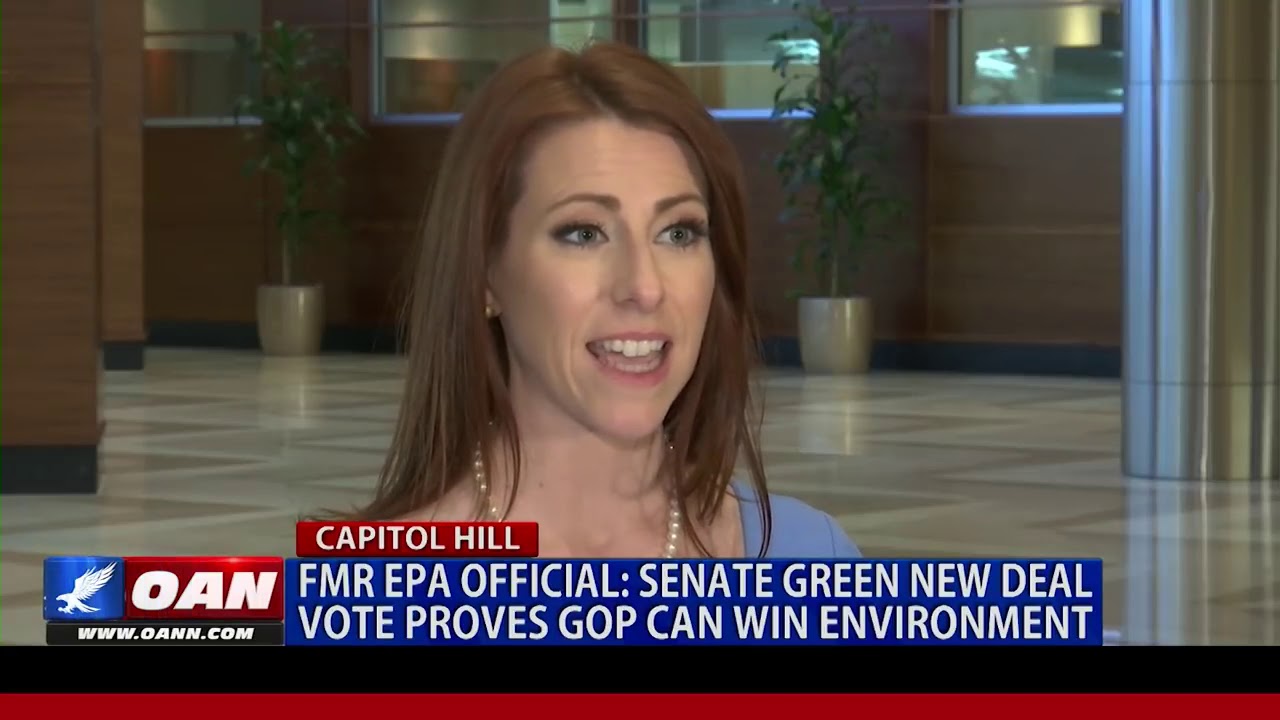 on
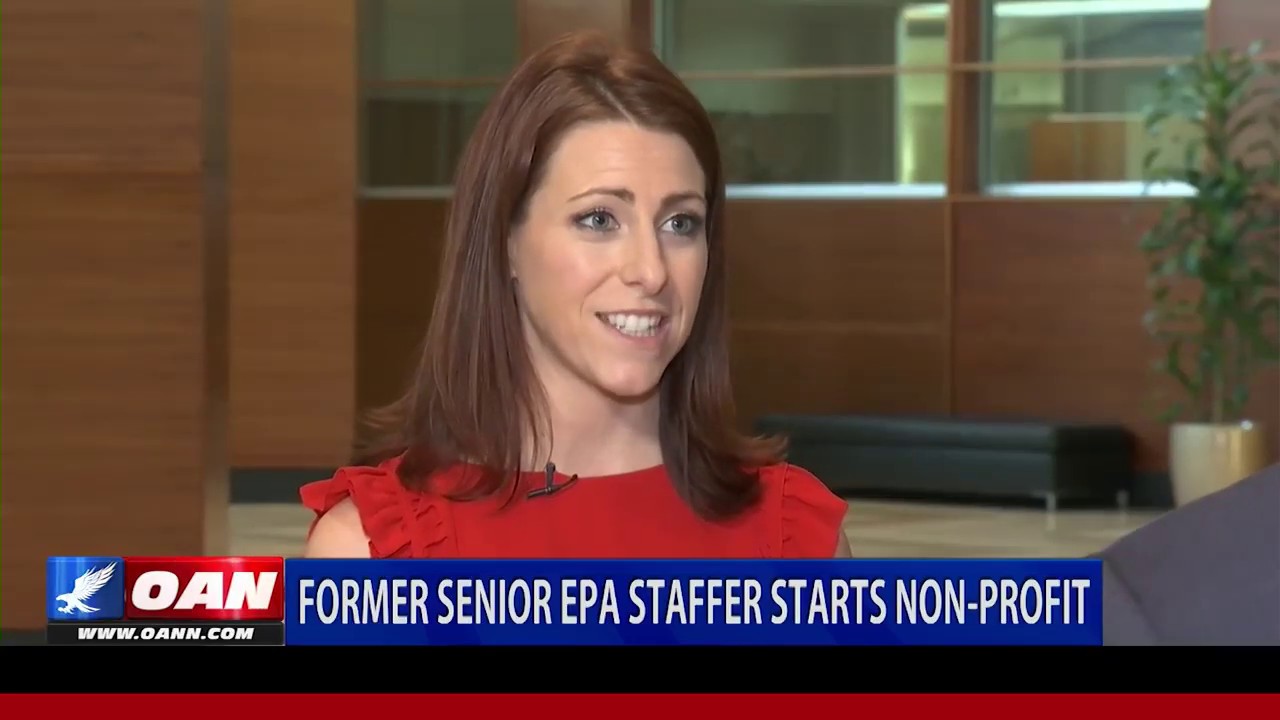 ,a right-wing outlet that has received plaudits from Trump;twice on The Daily Caller platform, on its
 and in a video criticizing the Green New Deal; and twice on the radio show of Bill Mitchell, an extreme pro-Trump pundit and ridiculous climate denier who has amplified the QAnon conspiracy theory. She’s also appeared on a conservative Minnesota radio show and has written for Y’all Politics, a conservative news outlet focused on Mississippi politics.
In contrast, she has appeared sparingly in mainstream outlets, including and
 . In June, she penned an op-ed for USA Today criticizing Joe Biden’s climate plan. That op-ed was then amplified by the official Twitter account of Trump’s election campaign.
Gunasekara has also appeared on Real News Insights, a streaming Facebook show produced by the Trump reelection campaign and hosted by the president’s campaign adviser and daughter-in-law Lara Trump.
She regularly spouts climate denial
Gunasekara has repeatedly questioned the scientific consensus on climate change. In her July 10 appearance on Fox & Friends First, she stated falsely that “there is serious lack of consensus on the issue” and claimed that “climate change is not a crisis”: vid]
That same day on America’s Newsroom, Gunasekaraaccused Rep. Alexandria Ocasio-Cortez (D-NY) and Sen. Bernie Sanders (I-VT) of using climate change to “manufacture crises” and “divert the American people’s attention away from all the successes of the President Trump administration.” She also stated that climate change is “not a national emergency, it’s not an existential threat -- it’s something that’s always been occurring.”
Appearing in a Real News Insights video posted to Facebook on July 9, she said that Democrats like Ocasio-Cortez “are trying to scare the American people by citing frivolous science in terms of climate change” in order “to make their socialist agenda seem reasonable.”
In her March 29 appearance on The Daily Caller podcast, Gunasekara that the climate is changing but that the important question is “what role are humans actually having.” (Hint: Humans are having an outsized role and are by far the dominant cause of climate change.) In this same interview, she also accused “activist scientists” of writing the Intergovernmental Panel on Climate Change report’s Summary for Policymakers and referred to United Nations climate conferences as “somewhat of a religion or somewhat cultish."
In a July interview with Bloomberg Environment, she offered a more nuanced opinion on climate:[PHASE 4 DELAYISM]
“I embrace the consensus that the climate is changing and support continuing to enhance our understanding of humans’ role,” she said. “What I reject are intrusive policies that masquerade as some ‘solution’ to our changing climate where they will have little meaningful impact on the environment, but massive costs to the economy.”
Her views on climate line up well with those of others in the Trump administration, which is rife with climate denial and staffed by fossil fuel industry insiders and shills. It’s no surprise that right-wing media book her to parrot these views to Trump’s supporters.
She repeatedly makes false claims about Trump’s environmental progress
Gunasekara often uses her appearances on the president’s favorite network to boast about the environmental progress made under the Trump administration. Examples include:
- : In her first appearance on America’s Newsroom, Gunasekara attacked the Green New Deal proposal and said the Trump administration had worked instead on “practical solutions to improve the environment.” The same day on Varney & Co., she praised the“extensive environmental progress” of the Trump administration.
- February 20: In a FoxNews.com op-ed, she stated that the “U.S. is already the leader on environmental issues in spite of oft-criticized actions like withdrawing from the Paris Climate Accord.”
- : She referenced “significant environmental gains” made in the U.S. on an America's Newsroom appearance.
- : Appearing on Fox & Friends First, Gunasekara stated that the “president is setting us up for perpetual success thanks to his economic agenda and environmental dominance that goes alongside a very healthy future when it comes to environmental progress.”
-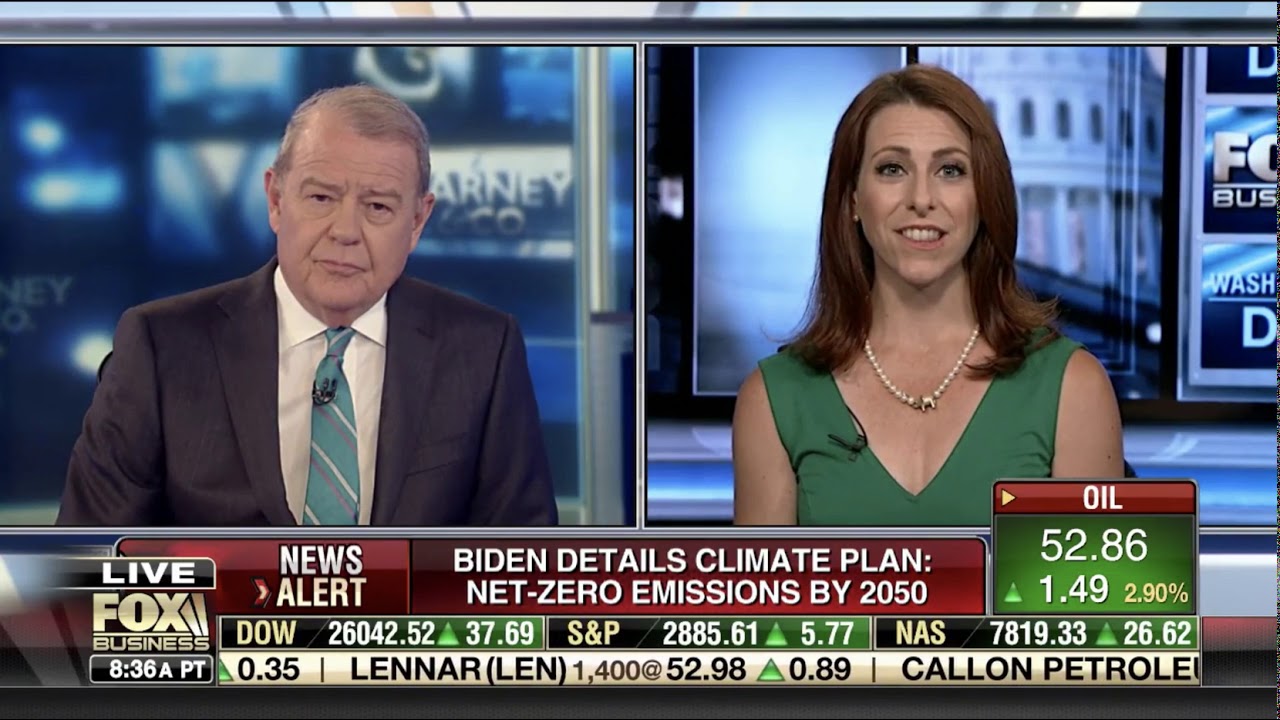 : Appearing on Varney & Co., she stated that “we are making the economy and the planet much better and it's under president Trump's balanced policies.”
This is extreme gaslighting --Trump’s environmental record is shameful. His administration has rolled back 83 federal regulations aimed at protecting the environment, which will cause great harm to the general public and may put “thousands of lives” at risk. The replacement for the Obama-era Clean Power Plan, the Affordable Clean Energy rule, is estimated to cause up to an additional 1,400 annual premature deaths by 2030, and it may cause polluting coal plants to stay open longer while not doing anything to reverse fortunes for the declining coal industry. Ditto for the administration's vehicle emissions rollback plan, which will likely increase traffic fatalities and lead to more auto pollution.
She makes false claims about clean air records under Trump
Gunasekara also likes to state that the U.S. has the cleanest air on record. Examples include:
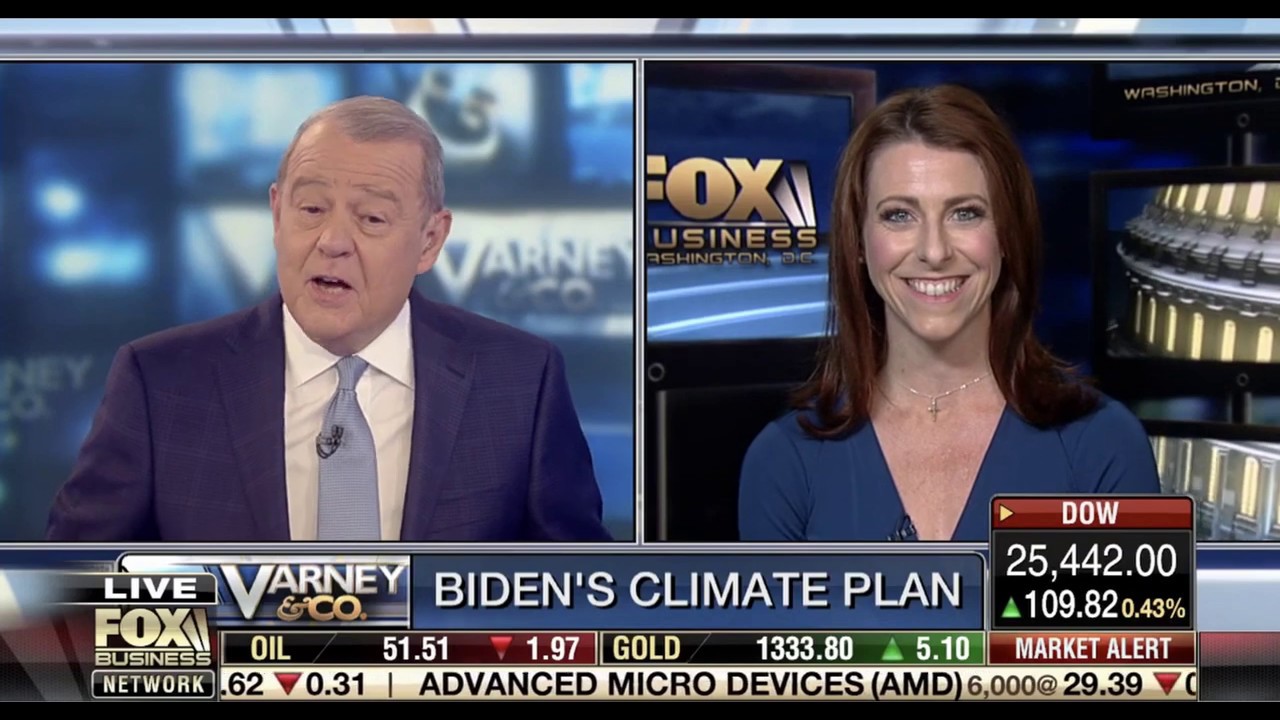 : Appearing on Varney & Co., she stated, “Under President Trump we've not only continued to decrease our greenhouse gas emissions more than any other country, but we have the cleanest air on record.” Later in the interview, she referenced the EPA’s success in reducing criteria pollutants since the 1970s, doubling down on her claim that “we undoubtedly have the cleanest air on record.”}:
-: In another Varney & Co. appearance, she said, “We are already leading the world in terms of clean air, clean water, and reducing greenhouse gas emissions.”
- August 2: Appearing on America’s Newsroom, Gunasekara claimed that Trump “has put in place balanced regulations that continue the trajectory of having the cleanest air on record.”
We currently do not have the cleanest air on record; in fact, air quality has worsened since 2016. There has been a 15% increase in the number of high air pollution days since President Barack Obama’s second term. At least one report shows that the U.S. ranks 123rd out of 195 nations for ozone pollution levels. Additionally, at least three toxic “criteria” pollutants are more prevalent in the air now than in 2016, and the number of unhealthy air days in the U.S. has been increasing since Trump took office.
She’s made numerous other inaccurate remarks about environmental issues
In a July 2 Daily Caller video, Gunsekara stated that “some could say we are leading the world in fighting climate change.” This is blatantly false -- the U.S. is actually disproportionately causing climate change, as it is one of the largest carbon emitters in the world on a per capita basis. The emissions reductions that Gunasekara often hypes were largely just a continuation of Obama-era policies. In fact, the Trump administration’s efforts to dismantle environmental regulations mean that we may never see very deep cuts in emissions again. Additionally, U.S. emissions shot up in 2018, and the U.S. is nowhere close to being on track to prevent the worst effects of climate change by 2050.
In an America’s Newsroom appearance on March 18, Gunasekara her support for pulling out of the Paris Climate Accord, and accused France of “not even achieving environmental progress.” This accusation is completely baseless, as French emissions actually declined in 2018, unlike in the U.S. France also has a much cleaner energy sector than the U.S.
In her February 20 FoxNews.com op-ed, Gunasekara said the Green New Deal “reads like Karl Marx’s Christmas list,” and she’s attacked the proposal a number of other times as well. On February 8, the day after the Green New Deal was released, she claimed on Varney & Co. that it could cost anywhere from $5 trillion to $7 trillion. These numbers are some of many that have been floating around for the Green New Deal, and they are bogus; in reality, no one knows how much it would cost.
After the Senate vote on the Green New Deal in March, she on Fox & Friends First that “it’s a total embarrassment” that Democrats voted “present” rather than no. What she didn’t mention was that entire vote was really a political stunt orchestrated by Republicans. On this same episode, she said that the Green New Deal is “trying to propose issues that are not popular and wouldn’t work.” The Green New Deal is actually quite popular, and it gets support from environmentalists, labor unions, and even coal miners.
Speaking with Lara Trump on July 2, Gunasekara said Trump ended the Clean Power Plan and the “war on coal,” which she claimed “was a war on communities.” Speaking about former Vice President Joe Biden’s 2020 presidential campaign one month later on America’s Newsroom, she declared that “the Obama-Biden legacy was the war on coal.” Republicans have long pushed a mythical war on coal, but in reality, the cheap cost of renewable energy sources and the explosive growth of natural gas production are the causes of the reduced market for coal. Gunasekara also failed to mention the number of coal plant closures under Trump, or the fact that more coal plants were shut down in Trump’s first two years in office than in all of Obama’s first term.
Her proposed climate solutions bash renewables and promote more fossil fuel usage
Gunasekara has often claimed that the U.S is doing a great job in reducing emissions in its fossil energy use, but she changes her tune when it comes to things that will further reduce emissions and make a meaningful impact in the fight against climate change. One example came in a February 18 Varney & Co. segment about local opposition to a solar project in rural Virginia, in which Gunasekara downplayed the environmental benefits of solar power and criticized the project as a case of “political preferences overtaking and ignoring the needs of the community”: [vid]
In reality, the only polling on the project shows overwhelming local support, and research from the Energy & Policy Institute showed that this specific solar project had been infiltrated by climate skeptics and fossil fuel interests who played a role in influencing much of the opposition to the project. Gunasekara also left out the fact that solar power is clearly more environmentally friendly than fossil fuels.
On the March 11 edition of Varney & Co., Gunasekara praised Trump’s decision to cut the budget of the Office of Energy Efficiency and Renewable Energy (EERE) by 70%, calling its programs “inefficient” and stating that “a lot of this money goes to propping up investment from left-wing donors”:[vid?]
Trump administration’s massive proposed cuts to this office were too much even for congressional Republicans.And contrary to Gunasekara’s claims, the office’s programs are not inefficient; one assessment showed that “an EERE taxpayer investment of $12 billion already has yielded an estimated net economic benefit of more than $230 billion.”
In an America’s Newsroom segment on July 10, Gunasekara praised the EPA’s deregulatory agenda under Trump and propped up the Affordable Clean Energy (ACE) rule as an example of the EPA helping to curb greenhouse gas emissions:
the ACE rule is really just a lifeline to the coal companies that EPA Administrator Andrew Wheeler used to support directly as a lobbyist. The rule will also lead to more CO2 emissions, which directly contradicts Gunasekara’s statement.
Gunasekara is nothing more than a propaganda mouthpiece for Trump
Trump knows he has an abysmal record on environmental issues. A recent Washington Post/ABC News poll found that only 29% of Americans approve of Trump’s position on climate change, while 62% disapprove.Additionally, Trump’s own internal polling says that his awful record on environmental issues is a huge obstacle to his reelection.
Who better to gaslight for him than Gunasekara, who’s spent much of her career supporting climate deniers and boosting the fossil fuel industry? In her resignation letter from the EPA, she was clear that she would fight to tell the public about his environmental successes. And she doesn’t plan to stick to just right-wing media; in her recent interview with Bloomberg Environment, she said she plans to “branch out and try connecting with Democratic voters on outlets like MSNBC.” Media outlets must take her claims with a grain of salt and push back vigorously against her attempts to whitewash the Trump administration’s environmental record.
==
Top EPA advisor leaves to head group lauding Paris exit, panning ...
ThinkProgress-Feb 8, 2019
Gunasekara's new venture, Energy 45 Fund, is based in her home state ... her as orchestrating the Obama-era repeal of the Clean Power Plan (CPP). ... around $20,000 relating to chemical and manufacturing lobbying. ... Acting EPA Administrator Andrew Wheeler previously served as a coal lobbyist, and ...
==
https://thinkprogress.org/top-epa-advisor-leaves-to-start-pro-trump-energy-advocacy-group-19f4686fd493/
An advisor with the Environmental Protection Agency (EPA) who has played a key role in President Donald Trump’s regulation rollbacks is leaving the agency to start an advocacy group to advance the president’s energy agenda.
In a letter sent to the White House Thursday, Mandy Gunasekara formally resigned her current position as principal deputy assistant administrator at the EPA’s Office of Air and Radiation. That office is headed by Bill Wehrum, a former lobbyist who advocated for rolling back environmental protections prior to his appointment.
Without giving many details, Gunasekara said she would be forming a 501(c)(4) non-profit intended to defend “you [Trump] and the many energy, regulatory and economic successes of your bold and pragmatic agenda.”Her resignation is effective immediately.
Gunasekara’s new venture, Energy 45 Fund, is based in her home state and is headquartered out of Jackson, Mississippi. Listed as the founder and president,Gunasekara’s biography on the organization’s website touts her as the “chief architect” of the Trump administration’s withdrawal from the Paris climate agreement. It also credits her as orchestrating the Obama-era repeal of the Clean Power Plan (CPP),
President Trump’s bold domestic energy dominance agenda has brought both economic prosperity and cleaner air and water,” the website proclaims. “Energy 45 supports and promotes these policies as well as a broader push towards cooperative federalism.”
Pages on the website include “Defending the Trump Energy Agenda,” “Exposing Liberal Energy Fantasies,” “Promoting Positive Environmental Gains,” “Withdrawal from the Paris Climate Accord,” and “America First Environmentalism.” Each section includes small paragraphs praising Trump’s energy policies, with some taking aim at Democrats and Obama-era environmental efforts.
Promoting Trump’s “America First” approach to energy innovation, Energy 45 also takes aim at the Green New Deal touted by progressive groups like the Sunrise Movement. It comes at the same time as the release of a resolution on a Green New Deal by Rep. Alexandria Ocasio-Cortez (D-NY) and Sen. Ed Markey (D-MA) on Thursday aimed at rapidly decarbonizing the U.S. economy and creating at least hundreds of thousands of jobs in the process.
As the Energy 45 website reads: “America’s environmental achievements have been achieved in large part through private sector innovation leading to technological breakthroughs in energy extraction, development and use.”
“Continued environmental progress will be borne out of innovation, not oppressive regulations, government take-overs or ‘green new deals,'” it adds.
CREDIT: ENERGY45 FUND
CREDIT: ENERGY45 FUND
Prior to working for Wehrum and the EPA, Gunasekara served as counsel for Sen. Jim Inhofe (R-OK), a conservative who has helped to shape the Trump administration’s energy policy. Inhofe is notably a close personal friend of former EPA Administrator Scott Pruitt, also from Oklahoma, and has long questioned the established science on global warming.
Under Inhofe, Gunasekara, who holds aJ.D. from the University of Mississippi School of Law,worked on climate and environmental issues extensively. She previously worked as Senior Legislative Counsel for Rep. Bob Latta (R-OH),where she similarly worked on environmental and energy efforts. According to the Center for Responsive Politics, Gunasekara’s individual lobbying profile shows around$20,000 relating to chemical and manufacturing lobbying.From 2014 to 2015, she worked for the National Association of Chemical Distributors and was paid to represent the industry.
During her time at the EPA, Gunasekara made headlines after expressing support to coal industry executives. During a meeting in May 2017, the then-EPA staffer told coal company representatives at the Eastern Fuel Buyers Conference that they had the support of the agency meant to oversee environmental protections.
“I’m here to talk to you to make sure what we’re doing in D.C. is beneficial for you,” Gunasekara said.
EPA staffer tells coal industry she’s here for them
In addition to critiquing environmental groups like the Sierra Club at the time, Gunasekara also praised environmental rollbacks orchestrated by the Trump administration. The president has pledged he will revive the dying coal industry and restore jobs, something that has not been reflected in the more than two years since he took office. Coal plants continue to close, even as the EPA works to loosen regulations on the coal industry meant to protect the environment and public health.
“Now I’m at the EPA, I’m in a position where I can make a big difference and do things to help out and tear back the problems that stemmed from decisions of the last administration,” Gunasekara said during the 2017 conference.
Gunasekara is part of a long trend of Trump administration officials moving between the government and the industries agencies like the EPA are meant to regulate. Acting EPA Administrator Andrew Wheeler previously served as a coal lobbyist, and while he is arguably the most prominent former lobbyist in the administration, he is far from alone.
Downey Magallanes, the former deputy chief of staff to former Interior Secretary Ryan Zinke, left the department in August 2018 to work for the oil giant BP. Vincent DeVito, an energy advisor to Zinke, similarly left to join an oil and gas firm working in the Gulf of Mexico.
Numerous figures connected to the conservative Texas Public Policy Foundation (TPPF) also dot the administration. That Koch-backed think tank is linked to policies undermining climate science and environmental regulations.
Pruitt, meanwhile, has reportedly been working to set up a coal consulting firm.
Climate science deniers fear the building momentum behind the Green New Deal will force Republicans to introduce their own version of climate action, a so-called “Green New Deal-lite.”
Speaking at a policy forum Wednesday hosted by the Congressional Western Caucus and chaired by Rep. Paul Gosar (R-AZ), longtime climate science deniers and opponents of the ambitious climate resolution expressed concerns that calls for climate action will push all politicians to the left.
One of the “dangers” of the Green New Deal, said Myron Ebell, director of global warming and international environmental policy at the Competitive Enterprise Institute, is that “by expanding the political spectrum of what’s in the debate, it’s moving the debate left and it’s creating a very large space for a certain class of people, many of them in the Republican Party, to start talking about how we need to have moderate solutions, or reasonable solutions.”
The Green New Deal resolution was introduced earlier this month by Rep. Alexandria Ocasio-Cortez (D-NY) and Sen. Ed Markey (D-MA). The plan mandates rapid and widespread decarbonization of the U.S. economy. Calls for climate action have grown since the November midterm elections, but Ocasio-Cortez’s Green New Deal — which has strong support from youth activists — has now forced lawmakers to grapple with climate change as a top political issue.
[vid]
The featured panelists at Wednesday’s forum came from organizations with long histories of spreading misinformation about climate change and working to roll back environmental protections. This included speakers from CEI, the Heritage Foundation, the Committee for a Constructive Tomorrow (CFACT), and the American Energy Alliance. All of these organizations have opaque funding networks; donations in the past have come from the fossil fuel industry as well as Koch-funded foundations.
Marc Morano, CFACT’s director of communications, echoed Ebell’s concerns about the effect the Green New Deal might have on the broader landscape of climate politics, saying the resolution has become a “litmus test” for each Democratic presidential hopeful.
Indeed, at least six Democratic presidential hopefuls have voiced support for the proposal, which draws on decades of scientific findings. In particular, the resolution cites a 2018 report by the U.N. Intergovernmental Panel on Climate Change that warns of catastrophic consequences — from mass migrations and deadly heat stress to economic losses — if global temperatures rise past 2ºC above pre-industrial temperatures.
Morano, on the other hand, believes that the increased focus on the Green New Deal “has shifted the Democratic Party into serious, unscientific, nutty territory.”
As a result, he continued, “The greatest danger we face right now with the Green New Deal… is very simply the Republican Party coming up with the Green New Deal-lite.”
“We need to oppose it and oppose it firmly,” Morano said. “We don’t need to come up with the lite version of the plan.”
Disgraced lobbyist joins anti-Green New Deal effort as opposition to resolution takes shape
Among the potential policies panelists mentioned conservatives might propose as alternatives to the Green New Deal: a carbon tax and cap-and-trade policies.
“The only thing the Green New Deal could possible hope to achieve is to lull policy makers into accepting less draconian, but certainly damaging policies, like a carbon tax or a cap-and-trade program as quote, ‘reasonable alternatives,'” said Thomas Pyle, president of the American Energy Alliance and a former Koch lobbyist.
Another speaker on the panel was former EPA deputy assistant administrator Mandy Gunasekara. Gunasekararesigned from the EPA just weeks ago to set up the Energy 45 Fund, which aims to promote “America First” policy approaches and educate the public and policymakers on the environmental successes of the Trump administration.
Top EPA advisor leaves to head group lauding Paris exit, panning Green New Deal:
Repeating a popular line of attack from opponents of the Green New Deal, Gunasekara described the resolution as “Karl Marx’s Christmas list.” She then went on to argue that what’s “routinely overlooked is that the entire premise of the the Green New Deal ignores the United States’ current standing and leadership on environmental issues today.”
“Not only are we taking proactive steps to protect the environment and lower emissions,” she said, “we are doing it better than anyone else in the world.”
Gunasekara’s biography on the Energy 45 website, however, touts her as the “chief architect” of the Trump administration’s withdrawal from the Paris climate agreement. It also credits her with orchestrating the repeal of the Obama-era Clean Power Plan. Prior to joining the Trump administration, Gunasekara famously handed a snowball to well-known climate science denier Sen. Jim Inhofe (R-OK) on the Senate floor in 2015 in an effort to disprove the existence of climate change.
==
E&E
june 2018
bogardis
Recently disclosed records shed more light on EPA's review of agency grants, which number in the billions of dollars.
Internal EPA emails, released to theNatural Resources Defense Councilunder theFreedom of Information Act, offer more details on a grants review managed by John Konkus, a deputy public affairs chief and one of President Trump's political appointees. The documents show the review involved several appointees at times and often flagged EPA funds that were flowing to the Obama administration's allies and priorities, like combating climate change.
Career officials at EPA also pushed back on decisions to pull funding from certain organizations. They also tried to make the case that agency money could be worked into the agenda of President Trump and Administrator Scott Pruitt.
Steven Fine, acting chief information officer at EPA, even used one ofPruitt's buzzwords — "cooperative federalism" — when defending one grant that happened to mention the Clean Power Plan, the Obama-era rule to curb power plants' carbon emissions that Pruitt has sought to roll back.
"The proposed work connects multiple types of information that are not related to CPP but are relevant to the interest of EPA and states," Fine said in one email.
"The work unrelated to CPP is the vast majority of the proposed work and would support Agency and Administration goals related to clean air, clean water reliable energy production, and Cooperative Federalism," Fine added.
Konkus was not convinced by Fine's argument.
"This is not going to be funded and we would kindly ask you to alert the organization in the morning that the award will not be granted," he replied.
But Konkus was later informed that the grant recipient in question had sent in a revised cover letter to better address its work. That sparked a softer response from him.
"FYI this is how most grant discussions end up, the program and grantee work on a solution together to make the grant work better reflect the priorities of the Administration," he said in an email.
Memo now rescinded
The grants review attracted scrutiny after E&E News reported last August that Konkus, a political appointee, was overseeing the process, which had been typically managed by career officials (*Greenwire*, Aug. 17, 2017).An EPA spokesman told E&E News that the Trump administration wanted to be "good stewards" of taxpayer money.
"EPA awards about $4 billion in grants annually, and the Trump EPA is committed to being good stewards of the taxpayers' huge investment in our agency by reviewing every grant award and solicitation," said the spokesman.
EPA issued a memo on Aug. 8 last year directing its Office of Public Affairs to review and approve all grant solicitations.
EPA's grants process, however, has changed again.
The agency shared with E&E News an email sent last month, which rescinded the Aug. 8 memo. Instead, regional administrators and assistant administrators at EPA now have to approve "solicitation issuance" for grants.
"Now that all of our Regional Administrators and most of our program AAs are in place, we have shifted the responsibility to these leaders to review and manage the grants that flow through their respective offices," said the EPA spokesman.
Konkus' grants review may have begun even before the memo was issued last August. In an email toEPA Chief of Staff Ryan Jackson, the public affairs aide described marking a grant from earlier in the year.
"This response is from July when I first flagged this grant," Konkus said.
Several of the EPA emails show Konkus inquiring for more information about grants. In one, he asked if the agency had "a position on human testing."
"See this proposed grant," Konkus said.
In other messages, he prodded EPA to release funds to those who needed it most.
"There are a lot of Puerto Rico grants in these files. I would love to get that money out to them!" Konkus said in one email sent last September after Hurricane Maria had devastated the U.S. island territory.
Other Trump political appointees were asked to help with the grants review at EPA. Jackson said in an email, "I could use your help with grant solicitations," with several appointees copied on the message.
"These need to be reviewed by OPA (John Konkus) before they go live," Jackson said.
In replying to Jackson, Konkus noted that EPA program offices were using guidance that included "a reliance on the 2014-2018 strategic plan which was implemented by the past administration."
Konkus sought other appointees' advice, as well.
"These seem fine to me," Nancy Beck, the deputy assistant administrator in EPA's chemicals office, said in an email to Konkus, who also asked her to review a pesticide cooperative agreement.
"No concerns from my end," said Mandy Gunasekara, a senior EPA adviser on air issues, when asked about certain grants in another email to Konkus.
'No to this please'
Konkus flagged several grants that included climate change in their descriptions or linked to environmental organizations. He even recommended some to be pulled back.
In one list, he noted a grant obligated toNRDCto perform energy efficiency work, saying he and Gunasekara would "need a briefing on this one." The green group has been a staunch critic of the Trump administration.
Konkus also said, "No to this please," on a grant for climate change research.
Other grants for an integrated assessment of greenhouse gasesas well as a study on air pollution meteorology andparticulate matter also received a "No to this one please" message from Konkus.
It's not clear from the email if their EPA funding was withdrawn in the end. At least one group has confirmed that its agency grant was rescinded.
The Global Alliance forClean Cookstoves, a public-private partnership launched in 2010 by then-Secretary of State Hillary Clinton, aims to reduce indoor air pollution. Its EPA grant would have been spent on a project intended in part to develop "an integrated and robust communications and outreach program," accompanied by biogas promotion activities, according to an EPA summary.
"This grant should NOT move forward. Thank you," Konkus said in one email about the project.
The actual amount of the rescinded grant is not clear. Kip Patrick, an Alliance spokesman, referred questions this morning to a statement issued last August by the organization expressing surprise at EPA's decision to rescind the money.
"EPA's previous support of clean cooking has provided a model of how the U.S. can lead on innovative solutions to global issues in ways that have bipartisan support, that benefit Americans directly, and that help drive increased investment from the private sector and other partners," the statement said.
In recent years, the Alliance, hosted by the U.N. Foundation, had received a total of $1.4 million in EPA money, along with more than $70 million in funding from other governments and the private sector, according to the statement.
Winrock International, based in Little Rock, Ark., takes its name from the late Winthrop Rockefeller, a Republican who served as Arkansas' governor from 1967 to 1971. The nonprofit group's EPA grant was also geared to reducing indoor air pollution, according to the agency.
"This grant should not move forward," Konkus said in an email about the funds.
A Winrock spokesman did not immediately reply to emailed queries this morning to confirm the actual dollar amount of the grant and whether the funding was in fact withdrawn.
When EPA funding was pulled from a group's grant, Konkus recommended that "a courtesy email or call" be made to them.
"It does not have to be complicated, just a courtesy so that they hear from us first," he said in an email.
Konkus did not respond this morning to a message left on his cellphone by E&E News seeking more information on his reasons for flagging the grants.
Twitter: @KevinBogardus Email: kbogardus@eenews.net
==
The Trump administration has recruited officials to fill its top energy and environmental staff positions from fossil fuel lobbying groups, Koch brothers-funded think tanks, and climate-denying lawmakers’ offices, according to a new database from the Center for American Progress Action Fund.
Launched Monday, the project tracks political appointments to energy and environment positions and their past affiliations. Of the more than 100 political staff working on energy and environmental issues, close to one-third have ties to the fossil fuel industry and petrochemical billionaires Charles and David Koch, according to the tracker.
Their industry ties often put them at odds with the stated missions of their agencies, especially for appointees working to address air and water pollution and protect federal lands, raising questions about the policy goals of their bosses?—?Energy Secretary Rick Perry, Interior Secretary Ryan Zinke, and Environmental Protection Agency Administrator Scott Pruitt.
Influx of anti-regulation political appointees turns EPA’s mission on its head
Trump’s EPA viewed as most anti-environment in a generation.
“These staffers are tasked with making decisions about the air we breathe and water we drink, yet many of them have worked for industries and organizations that have been fighting for years to undo environmental protections and prolong the life of dirty energy,” Erin Auel, research associate for the Center for American Progress Action Fund, said in a statement. ThinkProgress is an editorially independent news site housed within the Center for American Progress Action Fund.
The website, DirtyDeputies.org, will maintain a running list of political appointees for energy and environment and their previous employers. It will allow users to sort the political appointees by their special interest affiliations. The public is invited to submit tips on any of the appointees or new staff who have been hired.
“It’s not surprising that the Trump administration is the next stop on the career paths of old hands in the big oil, Koch, and climate denial networks,” Kevin Connor, director of the Public Accountability Initiative, a nonprofit group that researches business and government corruption, said in an email to ThinkProgress. “This kind of capture of the federal regulatory apparatus is something they’ve been preparing for, and something that will have real consequences for public health and the environment, as we’ve seen play out on the state level.”
“This kind of capture of the federal regulatory apparatus… will have real consequences.”
Given the backgrounds of the officials filling these high-level positions, “we should be prepared for them to be particularly extreme in their abdication of responsibility to the public, in favor of their masters in polluting industries,” Connor warned.
David Bernhardt, one of political appointees listed in the Dirty Deputies tracker, is awaiting confirmation by the full Senate to become the second-highest ranking official at the Department of the Interior. Bernhardt, who runs the natural resources department at lobbying and law firm Brownstein Hyatt Farber Schreck, has spent the last several years working on behalf of oil and gas companies and large agribusiness to weaken environmental protections.
“A vote for Bernhardt is a vote for the Koch brothers and big industry and a vote against public lands, people and health,” Randi Spivak, public lands program director for the Center for Biological Diversity, said in a statement.
Doug Matheney now works as a top assistant to Perry after previously serving as the state coordinator for the Count on Coal initiative. He also worked as a coordinator for the Koch-funded Americans for Prosperity.
The database also lists Mandy Gunasekara, who joined Pruitt’s staff at the EPA in March as a top adviser. Gunasekara worked as the National Association of Chemical Distributors’ senior director of legislative affairs where she lobbied for reforming the Toxic Substances Control Act. She also previously worked as a staffer for Sen. James Inhofe (R-OK),a position in which she handed a snowball to Inhofe on the Senate floor.The Republican senator argued the existence of the snowball in winter disproved global warming.
Matt Kasper, research director at the Energy & Policy Institute, emphasized that the Trump administration’s appointed staffers now represent the mainstream of Republican ideology. “The Republican Party has adopted positions that deny the science behind climate change, wants to gut the EPA in order to prevent it from carrying out its mission, and prevent further air and water safeguards,” Kasper told ThinkProgress.
According to the Center for American Progress Action Fund, the tracker will help increase transparency of the political appointees who are “pulling the strings on Trump’s dirty energy agenda.”
desmog
Life:Powered
Background
Life:Powered (LifePowered.org) is a project of the Texas Public Policy Foundation (TPPF) designed to “ensure that Americans continue to benefit from abundant, reliable, safe, and clean energy” and to “reframe the discussion about energy sources” including fossil fuels. [1]
In February 2018, TPPF brought onBernard McNamee to lead the Life:Powered project and also to head TPPF’s Center for Tenth Amendment Action. According to its 2017 annual report, Life:Powered was originally TPPF’s “Fueling Freedom” project, which launched in 2015 “to combat the Obama-era Clean Power Plan.” [2], [3]
McNamee most recently worked as deputy general counsel for energy policy under Secretary Rick Perry at the Department of Energy and has also advised Texas senator Ted Cruz. [2]
“In 2018, we’ll be taking the project to a new level, expanding it to cover every aspect of the policies that promote abundant, reliable, and affordable energy to power modern life,” the report’s message from the President and the Chair noted. [3]
TPPF’sKathleen Hartnett-White was director of the Fueling Freedom project and co-authored the same-titled book with Heritage Foundationeconomist Stephen Moore. White is a senior fellow of the Life:Powered project. [4]
Stance on Climate Change
May 4, 2018
Life:Powered promotes articles critical of a carbon tax as a solution to climate change, generally linking to research done by TPPF. One example is an article by Vance Ginn that links to research by**John Cristy**to suggest “there’s little conclusive evidence to prove that carbon dioxide emissions cause environmental harm.” [5]
The Life:Powered article concludes: [5]
“Finally, perhaps most importantly, there is little to no evidence that there is a need to reduce carbon emissions in this country. For all of these reasons, and many more, the proposed carbon tax should be whole-heartedly rejected.”
2018
“Human flourishing depends on energy use, often in invisible and unnoticed ways. A reliable energy supply can feed the hungry, take care of the sick, and ensure a prosperous economic future for society. It promotes freedom and independence around the world and right here at home,” the Life:Powered websitereads. [6]
The Texas Public Policy Foundation features a“Life:Powered”playlist in its YouTube channel that promotes “The Moral Case For Fossil Fuels” by Alex Epstein, as well as a panel presentation by the :{CO2:(style="box-sizing:border-box"):}: Coalition promoting the supposed benefits of boosting atmospheric carbon dioxide concentrations. View the playlist below:..[vid] docs]
no lnx
The following funding values are for the Texas Public Policy Foundation, the parent organization of Life:Powered.
View the attached spreadsheet for more details on the Texas Public Policy Foundation’s funding by year (.xlsx). [7]
Donor and Year Total
Pew Charitable Trusts $5,488,454
Donors Capital Fund $3,530,848
DonorsTrust $1,369,616
Charles G. Koch Charitable Foundation $1,137,624
Albert and Ethel Herzstein Charitable Foundation $980,000
Searle Freedom Trust $645,000
Claude R. Lambe Charitable Foundation $548,500
Jaquelin Hume Foundation $490,001
State Policy Network $378,900
The Lynde and Harry Bradley Foundation $315,000
The Roe Foundation $287,000
The Gordon and Mary Cain Foundation $275,000
Armstrong Foundation $160,000
Castle RockFoundation $125,000
William H. Donner Foundation $110,000
JM Foundation $105,000
Cato Institute $100,000
Exxon Mobil $100,000
Heartland Institute $100,000
Friedman Foundation For Educational Choice $62,000
Charles Koch Institute $47,623
The Robertson-Finley Foundation $42,500
PhRMA $35,000
National Christian Charitable Foundation $27,500
Walton FamilyFoundation $25,000
Americans for Tax Reform Foundation $25,000
The Vernon K. Krieble Foundation $11,000
Atlas Economic Research Foundation $9,500
Grand Total $16,531,066
990 Forms]
key People
- Michael Nasi — Reportedly heading the Life-Powered effort, as of August 2018.[8]
Michael Nasiis General Counsel of Balanced Energy for Texas, a “coalition of energy consumers, producers, and providers” that includes major coal and energy companies, related advocacy groups, and groups supplying the energy industry such as the American Coalition for Clean Coal Electricity (:{ACCCE:(style="box-sizing:border-box"):}:), American Electric Power, Arch Coal, Peabody Energy, andUnion Pacific Railroad. [9]
When President Donald Trump issued an executive order to revise or rescind the Clean Power Plan, Nasi described itas “a crucial win for Texas and the nation.” He is also a partner of the law firm Jackson Walker LLP where he founded the firm’s “Climate Change and Carbon Management group.” [10], [11]
Former State Representative for Hays and Blanco counties in the Texas Hill Country. According to SourceWatch, Isaac received $2,000 fromKochPACto his Jason Isaac Campaign in 2018.[20]
- Bernard McNamee — Initially listed as project lead until moving to a position at DOE. [2]
Bernard L. McNamee was initially listed as project lead for the Life:Powered project in February 2018, however according to his LinkedIn he left that position in May 2018 to become Executive Director at the Office of Policy for the Department of Energy (DOE). McNamee worked for the DOE as Deputy General Counsel for Energy Policy since May 2017, and as Senior Counsel to the law firm McGuireWoods LLP before that. [12]
Kathleen Hartnett-White is the distinguished senior fellow-in-residence and director of the Armstrong Center for Energy & the Environment at the Texas Public Policy Foundation (:{TPPF:(style="box-sizing:border-box"):}:). Hartnett White previously worked as Chairman and Commissioner of the Texas Commission on Environmental Quality (TCEQ). Prior to 2001, she served as then-Governor George W. Bush’s appointee to the Texas Water Development Board, where she sat until appointed to TCEQ. [13]
Hartnett-White was nominated by President Donald Trump in 2017to lead the White House Council on Environmental Quality (:{CEQ:(style="box-sizing:border-box"):}:), and also served on Trump’s “economic advisory team” in 2016. White’s nomination was withdrawn after it was sent back to the White House at the end of 2017. [14], [15], [16]
- Jacki Pick — Senior Fellow, Life:Powered
Jacki Pickformerly served as the executive vice president and CEO of theNational Center for Policy Analysis (:{NCPA:(style="box-sizing:border-box"):}:), a corporate-funded group that has promoted supposed uncertainties around climate science. She also hosts The Jacki Daily Show at TheBlaze.com.[17]
- Mandy Gunasekara — Senior Fellow, Life:Powered [28]
Gunasekara is a Republican “climate and energy strategist” and the founder of the “pro-Trump nonprofit” Energy 45 Fund. As of February 2020, Gunasekara was reportedly set to return as the EPA‘s chief of staff accordig to The Washington Post. [24], [25]
She is a a memberof the :{CO2:(style="box-sizing:border-box"):}: Coalition, a group directed by climate change denier William Happer that portrays carbon dioxide as “a nutrient vital for life” and advocates for more of it in the atmosphere. Her :{CO2:(style="box-sizing:border-box"):}: Coalition profile describes Gunasekara as “the chief architect of the Paris Accord withdrawal and the repeal of the Clean Power Plan” while working for Trump at the EPA as principal deputy assistant administrator for the Office of Air and Radiation. [26], [27]
Other People
As of August 2018, TPPF was actively hiring for positions including “Project Coordinator” and “Policy Analyst” for the Life:Powered project. [18]
Actions
April 6, 2020
Life:Powered, represented by Jason Isaac, was signatory to an American Energy Alliance letter to President Donald Trump supporting the Safer Affordable Fuel-Efficient (SAFE) Vehicles Rule which would scrap federal fuel economy mandates under the Corporate Average Fuel Economy (CAFE) program. [31]
Describing CAFE, the letter contends: “Those families and individuals who prefer or need trucks, SUVs, and crossovers pay more to subsidize those who buy smaller vehicles or electric vehicles under the existing mandate. This significant, needless, and unjust cost is a very real regressive tax on American families that has made our country worse off.” [31]
March 23, 2020
As reported at :{DeSmog:(style="box-sizing:border-box"):}:, Life:Powered sent a letter to Congresscritical of the COVID-19 stimulus package for including “tax incentives and spending for unreliable ‘green’ energy
The letter concludes:
“This is no time for political games. Climate change is not an immediate threat to humanity. Climate-related deaths have declined 98.9% in the last century, and humanity is growing more and more resilient thanks to the availability of affordable, reliable energy. On behalf of all Americans, we urge you to oppose any stimulus proposals that carve out special treatment for or bail out any energy companies and focus instead on stopping COVID-19.” [30]
Signatories included: [30]
no lnx
Name Title Organization STINKTANKS
Jason Isaac Senior Manager & Distinguished Fellow Life:Powered/Texas Public Policy Foundation
Myron Ebell Director, Center for Energy and Environment Competitive Enterprise Institute
Bette Grande CEO Roughrider Policy Center
Ellen Weaver President & CEO Palmetto Promise Institute
Isaac Orr Policy Fellow Center of the American Experiment
Bethany Marcum Executive Director Alaska Policy Forum
David T. Stevenson Director, Center for Energy and Environment Caesar Rodney Institute
Donald van der Vaart Senior Fellow John Locke Foundation
Jason Hayes Director of Environmental Policy Mackinac Center for Public Policy
John Droz, Jr. Founder Alliance for Wise Energy Decisions
George K. Rasley, Jr. Managing Editor ConservativeHQ.com
Becky Norton Dunlop Former Secretary of Natural Resources Commonwealth of Virginia
James L. Martin Founder/Chairman 60 Plus Association
Saulius “Saul” Anuzis President 60 Plus Association
Ken Blackwell Senior Fellow Family Research Council
Eunie Smith President Eagle Forum
Jenny Beth Martin Honorary Chairman Tea Party Patriots Action
Jon Caldara President Independence Institute
L. Brent Bozell, III Founder and President Media Research Center
Jason Pye Vice President of Legislative Affairs FreedomWorks
Jameson Taylor Vice President for Policy Mississippi Center for Public Policy
Carol Platt Liebau President Yankee Institute
Mike Stenhouse CEO Rhode Island Center for Freedom & Prosperity
Daniel Erspamer CEO Pelican Institute for Public Policy
Christian N. Braunlich President Thomas Jefferson Institute for Public Policy
Todd Myers Environmental Director Washington Policy Center
june 14, 2019
Speaking to the :{American-Statesman:(style="box-sizing:border-box"):}:, senior manager Jason Isaac said that the mission of Life:Powered was to “raise America’s energy IQ,” adding: [22]
“We’re making the connection between prosperity we enjoy here in the United States and access to energy in all forms, all abundant, affordable reliable, all forms and all of the above.” [22]
A 2018 TPPF video promoting the continued operation of a coal-fired power plant on the Arizona Navajo reservation has been rebranded with the Life:Powered name. The video showed images of smokestacks with a voiceover by a young Navajo girl saying, “Papa says it’s the heart of the land. I can hear it beating.” [22]
The video’s closing text reads:
“Extreme environmentalist politics will eliminate jobs, destroy families, and spike electric bills in the Navajo Nation and across America. The Navajo don’t need to be told what to do. They’ve been protecting the environment for centuries.” [22 [vid]
Local environmental groups responded with claims that the plant’s consumption of billions of gallons of groundwater has led to contamination and depletion of the reservation’s water supply. The executive director of a Navajo non-profit organization told the Statesman: [22]
“The pro-coal supporters have made it all about jobs. There’s more to it than that. What’s happening on Black Mesashows that jobs and revenues is not all that it’s made out to be. When you lose your own potable water source, that’s life or death right there.” [22]
Peabody Energy, a TPPF donor, operates the Navajo Generating Station, which will be shuttered at the end of 2019. [22]
Another TPPF:{ } :{ on the topic of }::{“Energy Poverty” featured Caleb Rossiter of the :{CO2:(style="box-sizing:border-box"):}: Foundation }::{promoting wider adoption of fossil fuel-generated electricity in the developing world. }:[22]
Life:Powered plans to target future messaging in New Mexico, the Pacific Northwest, the Midwest, and Alaska in opposition to renewable energy and carbon reduction initiatives. [22]
February 8, 2019
Life:Powered posted a critique of the Green New Dealon its website, written by TheHonorable Jason Isaac, describing it as a “massive new tax” and claiming the threats to the planet of continued fossil fuel use have “no scientific evidence to back it up.” [21]
“… if U.S. emissions were completely eliminated by 2020, global temperatures would only be 0.077°C lower in 2050. That doesn’t exactly do much to prevent the End of Days in the next 12 years,” the article claims. “Here is something a little closer to scientific certainty: we are not going to figure out how to generate all the power we need and use in America from wind and solar in the next decade. We’re not even going to get close.” [21]
In conclusion: “Rep. Ocasio-Cortez predicts catastrophe in 12 years if we do nothing to fight climate change. The real catastrophe would be enacting her plan to do that.” [21]
August 7, 2018
:{S&P:(style="box-sizing:border-box"):}: Global reportedthat Life:Powered screened two videos at the American Coal Council’s Coal Market Strategies conference in New Mexico that would be part of an upcoming campaign. [8]
Michael Nasi, who is reportedly leading the effort, said the videos “aim to educate an ‘extremely under-informed’ public on fossil fuels.” [8]
“We have failed as both a coal industry, a power industry and obviously other fossil industries and the nuclear industry because we have failed to get together to message together,” said Nasi. [8]
Also speaking at the conference, Luke Popovich, former spokesman for the National Mining Association, discussed industry tactics with regards to climate change: [8]
“It’s too late for denial when your customers, the ratepayers, the banks, and regulators already believe climate change is real,” Popovich said. “Accepting that climate change is real merely opens the discussion with the public.”
Rather, a message on how fossil fuels could be a “humanitarian tool”— so-called “energy poverty” has long been a talking point of industry — would be a primary focus of the Life:Powered videos. [8]
“Over 1 billion people do not have any electricity,” retired Penn State University Professor Frank Clemente said in one of the videos. “That’s only the tip of the iceberg. About 2.5 billion people only have limited access to electric power. You’re closing on almost half of the population of the world are living in energy poverty and that’s why I say it is the leading problem facing mankind today.” [8] Clemente has regularly consulted for the energy industry, and has said he has “written, spoken and testified quite a bit on coal’s importance to the quality of life around the world.”
Related Organizations
- Texas Public Policy Foundation (TPPF) — Life:Powered describes itself as a project of TPPF. [1]
- Fueling Freedom — According to :{TPPF:(style="box-sizing:border-box"):}:’s 2017 annual report, Life:Powered was formerly the Fueling Freedom project. [3]
Contact & Address
The Life:Powered project shares the Texas Public Policy Foundation’s address. As per the project’s Privacy Policy Page: [19]
https://www.texaspolicy.com/
901 Congress Avenue
Austin, Texas 78701
United States
comms@texaspolicy.com
512) 472-2700
Social Media
- TPPF promotes Life Powered by the #lifepowered hash tag on Twitter.
- Life Powered links to TPPF’s Facebook page @TexasPolicy.
Resources
duck 1 22
Life:Powered - DeSmog
Mandy Gunasekara — Senior Fellow, Life:Powered Gunasekara is a Republican " climate and energy strategist " and the founder of the "pro-Trump nonprofit" Energy 45 Fund. As of February 2020, Gunasekara was reportedly set to return as the EPA 's chief of staff accordig to The Washington Post .
:{PDF:(style="margin:-0.2em 0px 0px;padding:1px 0.35em 0px;border:0px;font-variant:inherit;font-weight:600;font-stretch:inherit;vertical-align:middle;border-radius:var(--default-border-radius);display:inline-block;position:relative;user-select:none;top:-1px;background-color:#d0d0d0;"):}: Mandy Gunasekara - desmog.com
Mandy Gunasekara Majority Counsel, US Senate Committee on Environment and Public Works United States Senate Committee on Environment and Public Works • University of Mississippi School of Law Washington, District Of Columbia • 500+ Send InMail Connect / S " * & O # I / & " " / B.
'The Empowerment Alliance' and Other New Dark ... - DeSmog
Gunasekara, who was the aide that handed a snowball to Sen. James Inhofe during his infamous climate science denial speech on the Senate floor, claimed that climate proposals like the Green New Deal or carbon pricing are "premised on making energy more expensive."
Congressional Energy and Climate Committees Are ... - DeSmog
Gunasekara's co-counsel for the committee, ... Steve Horn is a former Research Fellow and writer for DeSmog and a freelance investigative journalist based in San Diego, CA. He currently works as a climate reporter and producer for The Real News Network. Related Posts.
CO2 Coalition - DeSmog
CO2 Coalition Background The CO2 Coalition was established in 2015 from the remains of the now-defunct George C. Marshall Institute (GMI) and registered as a 501(c)(3) organization for the purpose of "educating thought leaders, policy makers, and the public about the important contribution made by carbon dioxide and fossil fuels to our lives and the economy." [1], [2] The GMI shut down […]
'The empowerment alliance' and other new dark money groups ...
SOURCE Desmog Blog. Share on Facebook. ... Gunasekara, who was the aide that handed a snowball to Sen. James Inhofe during his infamous climate science denial speech on the Senate floor, claimed that climate proposals like the Green New Deal or carbon pricing are "premised on making energy more expensive."
As New York Takes Exxon to Court, Big Oil's ... - DeSmog
By Dan Zegart. Last week, in a historic first, the former CEO of a major oil company took the witness stand in a New York City courtroom and spent four hours defending his company against charges that it misled investors about the potential impact of global warming on its viability as a business.. Rex Tillerson, who led ExxonMobil from 2006 until the end of 2016 when he became U.S. secretary ...
Independent Women's Forum - DeSmog
Independent Women's Forum (IWF)Background. The Independent Women's Forum (IWF) is a 501(c)(3) think tank that has described itself as a "research and education institute."While IWF has identified itself as non partisan and neutral group, both IWF and its 501(c)(4) "sister organization" the Independent Women's Voice (IWV) have been identified as "anything but" according to ...
James Inhofe - DeSmog
James M. Inhofe Credentials BA, Economics, University of Tulsa, 1973. [1], [2] Background Senator James (Jim) Inhofe is the senior senator from Oklahoma and a member of the Republican Party. He is a ranking majority member and former Chairman of the Senate Committee on Environment and Public Works. [63], [3] According to OpenSecrets.org, Inhofe has received almost $2 […]