mtabak
---
no merri
11 23 natl endorse
---
RECOVER BLOG
Santa Clara County Move to Amend | End Corporate Rule. Legalize Democracy. 2014
IRATE
MTA_IRATE_Doc_Version_02_04_13
legal comm docs
Corporate Constitutional Rights Resources - Move to Amend
10 24
Move to Amend’s Law & Research Committee has over the past several years published articles, fact sheets, comparison charts and a “White Paper” detailing how never-intended corporate constitutional rights have hijacked our democracy and caused widespread individual, community and environmental harms. Popularly and inaccurately referred to as “corporate personhood,” corporate constitutional rights are rights the Supreme Court invented for corporations under constitutional amendments originally intended solely for human beings.
The research has particularly focused on how corporate constitutional rights include more than the First Amendment free speech rights which have produced a tsunami of corporate political spending. They also include fictional corporate constitutional rights under the Fourth, Fifth and Fourteenth Amendments as well as non money as speech rights under the First Amendment and other parts of the constitution.
Below is a listing of our most recent publications addressing corporate constitutional rights – all of which have been used to educate, advocate and organize.
Introduction to Corporate Constitutional Rights
Researching Corporate Rule / Corporate Constitutional Rights - an introduction to our work
+++
THE CASE AGAINST CORPORATE CONSTITUTIONAL RIGHTS: How Corporate Constitutional Rights Harm You, Your Family, Your Community, Your Environment, and Your Democracy
Part III: How Corporate Rule Fueled the Climate Crisis
Corporate "Hijack" series
[Corporate Hijacking of the 1st Amendment - [political “free speech”]](https://assets.nationbuilder.com/movetoamend/pages/752/attachments/original/1585063316/Corporate_Hijacking_of_the_1st_Amendment_-_political_speech_.pdf?1585063316)
[Corporate Hijacking of the 1st Amendment - [excluding political free speech]](https://assets.nationbuilder.com/movetoamend/pages/752/attachments/original/1591974224/Corporate_Hijacking_of_the_1st_Amendment_-_excluding_political_speech_.pdf?1591974224)
Corporate Hijacking of the 4th Amendment
Corporate Hijacking of the 5th Amendment
Corporate Hijacking of the 14th Amendment
Corporate Hijacking of the Contracts Clause
Corporate Hijacking of the Commerce Clause
The We the People Amendment: The Constitutional Amendment to Counter Political Corruption and the Corporate Hijacking of the Constitution - "white paper" provided to elected officials and organizational leaders when asking for co-sponsorship or endorsement - updated April 2023
Myths of Harmful Unintended Consequences of Abolishing Corporate Personhood
We the People Amendment comparison series - 118th Session of Congress
We the People Amendment comparison series - 117th Session of Congress
Comparing the For the People Act (HR1) to the We the People Amendment (HJR 48)
We the People Amendment comparison series - 116th Session of Congress
Do We Need a Constitutional Amendment Now that the Green New Deal Has Been Introduced?
+++
OTHER RESOURCES
Josh Hawley's Bill Masks the Real Sources of Corporate Rule (Nov 5, 2023 Common Dreams article by Greg Coleridge)
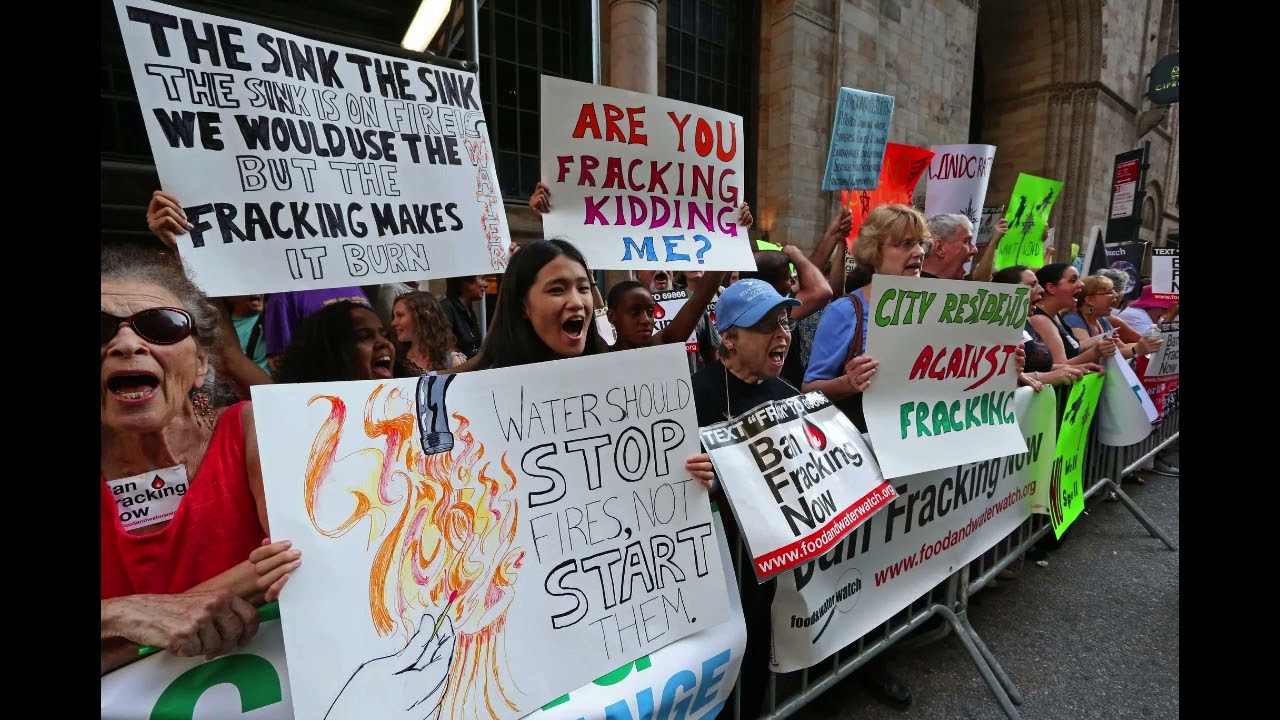 (4 1/2 min video)
The Corporate Weaponization of Government (Feb 15, 2023 Common Dreams article by Greg Coleridge)
The Progenitor of Inequalities—Corporate Personhood vs. Human Beings - Ralph Nader (02/05/2023)
Independence Day and the Imperial CEO (July 5, 2021 column by Daniel JH Greenwood, professor of law at Hofstra University)
[For the People Act [H.R.1]](https://d3n8a8pro7vhmx.cloudfront.net/movetoamend/pages/752/attachments/original/1623159487/For_the_People_Act_.pdf?1623159487)
Why Non Profit Corporations Do Not Need (or Have) Constitutional Rights
Big Tech Shouldn’t Be the Arbiter of Our Free Speech Rights: Corporations mustn’t be designated gatekeepers with the power to decide who gets to communicate and who doesn’t (February 26, 2021 Truthout article by Greg Coleridge)
PRESS RELEASE-Oct 21, 2020:Corporate Constitutional Rights Should Be Focus of Last Presidential Debate
PRESS RELEASE- Sept 30, 2020: Climate Crisis-Related Fires Fueled by Corporate Constitutional Rights
Corporate Constitutional Rights are Cancerous to Democracy (July 27, 2020 Common Dreams article by Judy Young and Kaitlin Sopoci-Belknap)
VIDEO:
Corporate Rule Transcends Citizens United - report published to mark the 10th Anniversary of Citizens United Supreme Court decision -- containing many of the above pieces
Move to Amend's Model Corporate Code Working Group
9 24
Move to Amend is excited to share that Rep. Bennie G. Thompson from MS-2 and Rep. Mike Levin from CA-49 have joined our growing list of Congressional cosponsors for H.J.R. 54, the We the People Amendment. This brings our total to 87 cosponsors!
SAMPLE LETTERS
Overturning Citizens United isn’t enough
Dear Editor,
The January 21, 2010 Citizens Uniteddecision has unquestionably reduced democracy in our country.
Total election spending was $14.4 billion in 2020, up from $5.3 billion in 2008, according to Open Secrets.The super rich and corporations were major sources of this flood of increased election spending, drowning out the political voices of the public majority unable to politically contribute.
It’s a mistake, however, to believe that:
- The constitutional doctrine that political money spent in elections equals “free speech” began with Citizens United. “Money is speech” goes back to the 1976 Buckley v. Valeo Supreme Court ruling.
- The corporate “right” to spend money in elections began with Citizens United. That originated with the 1978 Supreme Court First National Bank of Boston v. Bellotti case.
- “Corporate personhood” began with Citizens United. That started in the 1880’s and currently includes the Supreme Court declaring First, Fourth, Fifth and Fourteenth Amendment corporate constitutional rights that were intended solely for human persons.
Citizens United is simply the latest in a long line of anti-democratic Supreme Court decisions that have empowered the super rich and corporations to trump the ability of We the People to make decisions protecting our lives, communities and the natural world. Needed is not simply a constitutional amendment to overturn Citizens United, but rather the We the People Amendment (HJR54) that would abolish the “money equals speech” and “a corporation is a person” bizarre constitutional doctrines.
END WITH ONE OR THE OTHER SENTENCE
Representative firstname lastname is a HJR54 legislative co-sponsor and should be congratulated.
Representative firstname lastname should be urged to legislatively co-sponsor HJR54.
word count - 249 / 247 (depending on version)
---
Dear Editor,
The anniversary of the Citizens United vs. FEC Supreme Court decision is coming up on January 21. It will be fourteen years since that damaging ruling was made.
Since that time, campaign spending has vastly increased and we are assaulted by superficial messages on our televisions, radios, newspapers, phones, computers, newspapers and billboards every election season. It has become distressingly difficult to find out what the actual issues are or hear any meaningful discussion of the issues facing our nation, states and communities.
Over more than 100 years, Supreme Court rulings have given human rights to legally chartered companies and organizations and expanded the definition of free speech to include unlimited spending on political speech i.e. campaigning.
What’s a voter to do? We need to put the people back in We the People! The We the People Amendment (House Joint Resolution 54) has been introduced in Congress. Please encourage your Representative to co-sponsor it.
word count-156
OR please thank your Representative for being a co-sponsor.
word count-156
---
Dear Editor,
January 21 will be the fourteenth anniversary of the unpopular Citizens United Supreme Court decision. Many people think that decision was when the money floodgates for campaign spending opened, but in fact there is a much longer history to the problem.
Over more than a hundred years, Supreme Court rulings have expanded the definition of “person” to include fictional legal “persons” like corporations and organizations. This has resulted in large corporations and organizations using their much greater resources than the average voter to influence legislation to the point where We the People have less and less to say about our own governance.
The We the People Amendment, correcting this undemocratic situation, has been introduced in Congress. My Representative __ __ is a cosponsor of the Amendment (House Joint Resolution 54) and I thank _(him/her/them)_for taking a stand. I hope you will too.
word count-*144
OR My Representative __ __ is not yet a co-sponsor of the Amendment (House Joint Resolution 54). I am asking (her/him/them)_ to sign on as a co-sponsor and I hope you will too.
A few more than 144 words
---
Examples of 2 letters published in a small local weekly asking people to come to a City Council meeting about a resolution supporting an amendment.
The Problem with Money
Dear Editor,
Huge concentrations of wealth are wrecking economic and social infrastructure worldwide. Greed, the shadow side of money, is working its influence behind the scenes in politics. Recently, the rising monied aristocracy has been emboldened, no longer needing to deal with regulators in order to pocket politicians, This aristocracy can now step out into the open, because Campaign contributions can now be unlimited and elections can be even more easily bought. The Supreme Court has made this legal, moving against the common man by voting to give corporations the same rights as people and money the rights of free speech.
I believe this example of misrule to be so egregious that all citizens, regardless of party allegiance, should be galvanized against it. Our local community should speak out with a resounding “no”! What do we do? We should think globally and act locally, re-imagining money and creating our own, as many communities are beginning to do both here and abroad. More importantly, for the moment, we need to turn back this recent Supreme Court ruling by supporting an amendment to the U.S. Constitution which would abolish corporate personhood and overturn the absurd ruling that political spending is the equivalent of free speech. Visit www.MoveToAmend.org. We in Willits can join the other governing bodies in the county that have passed a resolution calling for the return of our democracy and our elections back to us, the people, and reclaiming our sovereign right to self-governance.
Please join us Wednesday, May 14, at 6:30 pm at Willits City Hall. We need a crowd.
word count- 266
---
Dear Editor,
On May 14th the Willits City Council will be considering a resolution to join the nationwide movement to amend the US Constitution to end corporate personhood in accordance with Advisory Measure F passed by voters in Mendocino County in 2012 by a margin of 75%. The measure advised all governmental bodies in the county to pass a corresponding resolution to demand of our state and federal legislators that they initiate and pass the constitutional amendment. All other city and county governmental bodies in Mendocino County have already passed such resolutions except Willits.
Why is this a local issue and why is it important, you might ask.
The US Constitution does not mention corporations nor their status with respect to personal constitutional rights. However, through a series of court decisions beginning in 1886, legal precedent has been established to allow corporations to claim all of the constitutional rights – e.g. as defined in the Bill of Rights – including right to privacy, equal opportunity and free speech. This precedent was finalized by the more recent Supreme Court ruling in the case known as Citizens United v. FEC, which not only explicitly confirmed corporate personhood but also equated monetary spending with free speech, thus overturning all campaign finance limitations that had been or could be democratically established by our elected officials. This outrageous ruling has effectively undermined any ability WE THE PEOPLE might have in determining our own lives. It has opened up the floodgates of corporate bribery and allowed the super wealthy to essentially turn our democracy into an oligarchy (AKA corporatocracy).
Among other things these misguided court determinations overrule any local (or even state and federal level) democratic decision-making when it comes to preventing some undesirable corporate behavior, i.e. limiting their ability to run roughshod over us. They can and, in fact, have claimed that such decisions are an infringement on their “constitutional rights” to privacy, equal opportunity, and/or free speech and are thus null and void. Consequently local communities have been repeatedly rebuked when they have – with a majority vote – successfully passed a resolution denying corporations a permit to establish operations in their regions or even limiting their activities.
The movement to amend the constitution is now well on its way and endorsed by voters with wide margins everywhere it has been put on a ballot. Hundreds of local communities and several states have already passed resolutions in support of the amendment. It is time for Willits to get on board. The groundswell to reclaim our democracy must continue and the Willits voters have already told their council we want to be part of it. The amendment will only become a reality if WE THE PEOPLE stand together to fend off the power the corporations currently wield over us.
Come to the council meeting on May 14th and show your support for a constitutional amendment to end corporate rule through the phony guise of “personhood”. This is without doubt the most critical issue of our times.
word count-495
---
SAMPLE OP-ED
What Hath Citizens’ UnitedWrought? The View After 14 Years
By John Fioretta, Esq. and ___
On January 21, 2010 the Supreme Court decided the Citizens United v. Federal Election Commission case, which gave corporations and labor unions a First Amendment right to make unlimited independent contributions to support or oppose candidates for elected office. Subsequent cases further eroded the federal Bipartisan Campaign Reform Act so individuals may now do so as well. The result has been a flood of money into our political system fundamentally corrupting our democracy.
- In the 2010 midterm election, the first after Citizens United, total spending on all federal elections was over $4.9 billion. It rose to more than $8.9 billion in 2022, a 181 percent increase.
- For the 20 years preceding Citizens United, non-party independent groups spent $750,000,000. In the 10 years afterwards they spent $4.5 billion, a six-fold increase.
- During the decade before Citizens United,dark money groups—non-profits not required to disclose their donors—contributed $129,000,000. In the decade following they gave $963,000,000, over seven times more.
The Supreme Court’s majority opinion in Citizens’ United authored by Justice Kennedy stated that “[w]ith the advent of the Internet, prompt disclosure of expenditures can provide shareholders and citizens with the information needed to hold corporations and elected officials accountable…This transparency enables the electorate to make informed decisions and give proper weight to different speakers and messages.” Citizens’ United v. FEC, 558 U.S. 310 (2010). This statement didn’t reflect reality at the time and is even less accurate now. By 2015 even Justice Kennedy said that the disclosure system was"not working the way it should" and criticized federal agencies for not requiring more disclosure.
What else hath Citizens’ Unite wrought? Even more harmful impacts on the states.
- In a study of six states published in 2016 the Brennan Center found that gray money increased from 15 percent in 2006 to 59 percent in 2014 of all outside spending. Gray money is “spending by state super PACs that reported other PACs as donors, making it impossible to identify original donors without sifting through multiple layers of PAC disclosures.”
- In the six states examined, full transparency of spending plunged from 76 percent in 2006 to 29 percent in 2014.
- From 2006-2014 Dark Money increased on average in these states by 38 times.
- Though legally required to disclose their donors, state super PACs often receive donations from Dark Money PACs which need not disclose theirs. During the same time period such donations multiplied 49 times from under $190,000 to more than $9.2 million.
- Perhaps the worse impact of secret money at the state level is that when it can be tracked it is “traced back to such sources as a mining company targeting a state legislator who held a key role opposing quicker mining permits, payday lenders supporting an attorney general who promised to shield them from regulation, and food companies battling a ballot measure to add labeling requirements.” In other words, when brought to light it can be shown to very directly affect policy-making.
- Compared to federal elections, it doesn’t take as much money to have influence at the state level. Therefore these large increases in Gray Money are particularly problematic.
Let’s let lobbyist and former Republican majority whip in the Arizona House of Representatives, Chris Herstam, sum it up: “In my 33 years in Arizona politics and government, dark money is the most corrupting influence I have seen.”
When one watches election ads on TV or social media postings regarding political campaigns it’s not difficult to imagine how all this new cash is used, negatively and often without the consumer knowing whose dollars are behind it. So it isn’t surprising that in an October 2023 poll 72 percent of Americans said “there should be limits on the amount of money individuals and organizations can spend on political campaigns.” Contrary to the Citizens’ United ruling merely 11 percent of those polled said persons and organizations should be able to spend unlimited amounts.
What can we do to stem this rising tide of Big, Dark and Gray Money to our elected officials, campaigns for public office, and elections? Because Citizens’ United was decided by the Supreme Court and granted constitutional rights, the Court must reverse itself or we must enact a constitutional amendment overturning it. Given the composition of the Supreme Court a constitutional amendment is the only realistic option.
The We the People Act, House Joint Resolution 54 in the present Congress, would overturn Citizens’ United and put the authority to regulate campaign finance back where it belongs, with the People’s representatives in Congress, as well as rein in corporate power (more at www.movetoamend.org). Urge your federal representatives to co-sponsor this urgently needed anti-corruption measure.
Word count- 772
---
---
Talking Points on Corporate Constitutional Rights
- Democracy is founded on the premise that the People are the source of all power.
- We the People’ created corporations as tools to serve us, not themselves. As sovereigns we can regulate and restrict corporations as we see fit. The Supreme Court’s invention of constitutional rights for corporations has turned this fundamental principle on its head.
- For the first 100 plus years of our history, corporations were strictly controlled and had no constitutional rights. Corporations could not even exist unless state legislation—called charters—created them.
- Statutes created corporations to give them the powers needed to conduct business for the peoples’ benefit. Logic dictates that corporations have only those rights granted them by statute. Statutes cannot create constitutional rights.
- Corporations do not need constitutional rights to conduct business. Logically, an entity created to serve people should not have the same constitutional rights as those people it is supposed to serve.
- Corporations are not mentioned in the Constitution. So the framers did not think they should have constitutional rights (CRs.) But, starting with the 1819 Dartmouth case, SCOTUS inserted corporations into the Constitution and progressively invented CRs for corporations, giving corporations most of the same constitutional rights as natural persons like you and me.
- The corporate constitutional rights doctrine created by SCOTUS is not supported by logic, history or law. SCOTUS has never explained why artificial entities like corporations should have the same constitutional rights as natural persons when corporations do not need CRs to do business and have special advantages that individual persons do not have, e.g. perpetual life and limited liability.
- The Supreme Court's CCR jurisprudence has used ever shifting rhetorical devices and rationales for reaching the desired result in any given case. This incoherent and undemocratic body of law exists in defiance of the purpose and plain meaning of the constitutional text. For example SCOTUS “found" CCRs under the 14th Amendment, created to ensure the rights of former slaves, the text of which applies only to “All persons born or naturalized in the United States” which corporations cannot be.
- The SCOTUS-created CCR doctrine fueled corporate power to the point that the modern multinational corporation is the most dominant institution on earth, dwarfing many countries in wealth, power and influence.
- This court-made CCR doctrine has allowed corporations to abuse and harm the human beings they are supposed to serve. In addition to using their so-called free speech rights under the First Amendment to buy politicians, corporations have used other CCRs such as the Fourth, Fifth and Fourteenth Amendments to undemocratically impose pollution, water contamination, environmental destruction, harm to workers and other assaults on unwilling local communities and individuals in derogation of local control, the police power, and democracy itself.
- A series of Supreme Court decisions created the same political free speech rights for corporations under the First Amendment as originally belonged only to natural persons. This allows corporations to spend enormous amounts of corporate money to influence politics, policy and who gets elected to public office. This tsunami of unregulated, undisclosed money drowns out the people’s voice which is neither heard nor heeded.*
- “A majority of people want reforms such as lower drug prices, greater\affordable health care, climate change reduction, and infrastructure repair.” But what the people want rarely gets enacted because Congress relies on large donor and corporate campaign contributions which makes Congress beholden to their wealthy donors instead of the people they should represent. And, even if these reforms were enacted, they could be toppled if SCOTUS found they violated some corporation’s constitutional rights.
- SCOTUS has used two contradictory analogies to give free speech rights to corporations.
One, the association or partnership analogy imagines that the corporation is a mere aggregation of its shareholder members and merely speaks for them. But shareholders do not own the corporation, they own stock in it. Also, many shareholders are corporations themselves. This theory is flawed on several grounds. Because corporate law imposes a fiduciary duty on corporate officers to maximize profits, its officials cannot make decisions that represent the values of any human being. Human shareholders have values and interests other than maximizing the corporation’s profits. Also, the corporation’s wealth derives from many other stakeholders, e.g., its employees and consumers, with divergent interests of their own. The corporation misappropriates the wealth contributed by these stakeholders when it spends corporate money to influence politics and policy. The association theory is also inconsistent with limited liability.
The other, entity theory, is that the corporation is an independent entity, separate from its human members. As such, it is an independent speaker with its own views and that denying or restricting its voice violates the First Amendment because the public is denied the ability to hear what the corporation has to say. (Note: it turns out that the human public only gets to hear what the corporations want them to hear while, because of the right not to speak, the public does not get to hear what they want to hear—e.g, what’s in the products we use. This theory is also flawed because corporations cannot exist without being created by a government which lacks the power to create CRs.
SCOTUS has used both of these contradictory theories in the same case—e.g., CU.
*Cite https://scholar.princeton.edu/sites/default/files/mgilens/files/gilens_and_page_2014_-testing_theories_of_american_politics.doc.pdf See also, professors Joshua Kalla and Ethan Porter,“Politicians Don’t Actually Care What Voters Want.” A two year survey revealed that “an overwhelming majority of legislators were uninterested in learning about their constituents views” and that “for most politicians, voters’ views seemed almost irrelevant.https://osf.io/c2sp6/ . For a brief description of this study, see “Politicians Don’t Care What youThink”, N.Y. Times, OP-ED, A-23, July 11, 2019.
---
mta nat’l 1 24
today marks the 14th Anniversary of the Citizens United v. Federal Election CommissionSupreme Court decision. The ruling permitted corporations and labor unions to make unlimited “independent” political contributions (i.e. spending for or against candidates that are not made in consultation or cooperation with them, their campaigns or any political party).
The super rich could also shield their political “donations” (more like political “investments”) in “dark money” organizations, nonprofits not required to disclose their donors.
- In the 2010 midterm election, the first after Citizens United, total spending on all federal elections was over $4.9 billion. It rose to more than $8.9 billion in 2022, a 181 percent increase.
- For the 20 years preceding Citizens United, non-party independent groups spent $750,000,000. In the 10 years afterwards they spent $4.5 billion, a six-fold increase.
- During the decade before Citizens United,dark money groups contributed $129,000,000. In the decade following they gave $963,000,000, over seven times more.
The political voices of the super rich and corporate entities were further heard and heeded following Citizens United, while the political voices of those without money who didn’t or couldn’t afford to make political contributions were further drowned out. Citizens United further corrupted our “democracy.”
Further is the key word.
The “corruption of democracy” goes way beyond Citizens United and political elections.
Citizens United needs to be reversed, no doubt about it.
But it’s a constitutional myth to believe that the following originated with Citizens United:
- The constitutional doctrine that “political money equals speech.” That began with the 1976 Buckley v. Valeo Supreme Court ruling.
- The corporate “right” to spend money in elections. That started with the 1978 First National Bank of Boston v. Bellotti Supreme Court case.
- ”Corporate personhood.” That began in the 1880s with the Santa Clara County v. Southern Pacific Railroad Company and Minneapolis & St. Louis Railroad Co. v. BeckwithSupreme Court decisions establishing corporate due process and equal protection “rights.” Corporate constitutional rights now includes the First Amendment “right” not to speak, Fourth Amendment search and seizure “rights,” Fifth Amendment takings “rights,” among others. These hijacked corporate constitutional rights have resulted in massive and forever-increasing harms to people, communities and the natural world.
If nine of us for a day became Supreme Court Justices and (following the return from various junkets around the world) were able to simply reverse Citizens United, _none of the above would change. _
If we don’t correctly understand the problem, we’ll never correctly solve it.
Ask yourself as you think back to 2009 before Citizens United. Did you feel your voices were politically heard? That the political influence of the super rich was the same as yours? That major corporations were unable to steer laws, regulations, tax breaks, bailouts, etc in their favor?
The day Citizens United was decided was the day Move to Amend was launched. For the past 14 years, we have been educating, advocating and organizing to correct the myth that Citizens United birthed “money is speech” and “corporate personhood.”
Spend a few minutes reviewing any of the items on our Corporate Constitutional Rights Resources webpage to learn how corporate entities have hijacked existing Constitutional Amendments, using them as both shields from democratic accountability and swords to overturn democratically passed laws protecting the health, safety and welfare of people, communities and the natural world.
There is no question that “simply” reversing Citizens United, as some national groups promote, is much easier than enacting the We the People Amendment (HJR54) that calls for the abolition of money as speech and all forms of corporate constitutional rights. Who doesn’t want to take an easier path?
But we must be honest and accurate with ourselves and others. It’s fine to rail against Citizens United for its role in the “corruption of democracy” as far as it goes. The anti-democratic train of the corruption of big money in elections and corporate rule, however, left the station decades and a century ago, respectfully. If we don’t derail it and all we do is “End Citizens United,” we’ll still be democratically crushed.
We must end all forms of corporate constitutional rights and money as free speech, as the We the People Amendment demands.
Thank you for being part of this challenging, but essential ride to take on the growing multiple crises we face and can overcome.
Onwards for the democracy and world we all deserve,
---
5 min
more than 75 percent say
more than 95%
richest 1percent own 30
wht 14x blk money = sp blk silence by pluto
end CCR corp not ppl money not speech not artif entities
just stevens no conscience, not we the ppl
greg c bk
https://createrealdemocracy.wordpress.com/2022/02/03/the-depth-of-change/
8 22
It is time to “Pull the Curtain” on the US Constitution and dispel the make believe, uncover the deceptions, learn the truth and take actions toward Justice for ALL.
In the powerful 2007 article, “_{The U.S. Constitution: }__{Pull the Curtain}_”, Greg Coleridge and Virginia Rasmussen reveal the many examples within the constitution which blow up our beliefs that this sacred document represents “We the People”.
For more information and excerpts from the article visit the NCRN WEBSITE post.
Please read this article and send us your thoughts and questions to enrich the discussion on August 25th.
musical
https://www.youtube.com/watch?v=BtxZqYGEemQ
CORPORATION IS NOT A PERSON! MONEY IS NOT SPEECH! CONSTITUTIONAL RIGHTS ARE FOR REAL PEOPLE, NOT LEGAL FICTIONS! "We The People Move To Amend" (The New MTA Song) performed by the DREAM Freedom Revival, Syracuse, NY, April 25, 2013. http://dreamfreedomrevival.org/2013/0...:{ A rousing and informative musical revue produced by Move To Amend of Syracuse and Central New York. (Note: Opening titles are silent. Sound begins at }
8 22
Baldwin, Tammy 2018
Booker, Cory NJ 2020
Brown, Sherrod OH 2018
Duckworth, Tammy IL 2016
Durbin, Dick IL 2020
Feinstein, Diane CA 2024 91
Harris, Kamala CA 2020
Heinrich, Martin NM 2018
Hirono, Mazie HI 2018
Klobuchar, Amy MN 2018
Murray, Patty WA 2022 6th term
Rosen, Jacky NV 2018
Sanders, Bernie VT 2018
Schatz, Brian HI 2016
Smith, Tina MN 2020
Tester, Jon MT 2018
Warren, Elizabeth MA 2018
Whitehouse, Sheldon RI 2018
Wyden, Ron OR 2016
Markey, Ed MA 2020
Merkley, Jeff OR 2020
js shows up in ggl srch top
https://movetoamend.org/ca-san-jose
Jessica Munger (she/her) is Co-Director of Move to Amend, the coalition working to dismantle corporate power through grassroots movement-building in support of the 28th amendment. She is also an organizer and facilitator for the project “Toward A People’s Constitution” in an effort to nurture the potential for democratic constitutional renewal. She is a member of many communities but is currently living in unceded Southern Paiute and Chemehuevi land called Las Vegas, NV where she practices mutual aid and feeds people her home-baked sourdough bread.
6 22 conf
guest spkr:
Ajamu Baraka is a geopolitical analyst, organizer, writer, and internationally recognized human rights defender with over 50 years of movement work in the U.S. and internationally. Ajamu is currently the National Organizer for the Black Alliance for Peace (BAP). He also serves on the Executive Committee of the U.S. Peace Council; the leadership body of the United National Anti-War coalition (UNAC) and the steering committee of the Black is Back Coalition. Baraka is a member of the editorial board of the Black Agenda Report and a contributing columnist.
His recent awards include the US Peace Memorial 2019 Peace Prize and the Serena Shirm award for uncompromised integrity in journalism. In 2016 Barakawas the Green Party’s Vice-Presidential candidate with Jill Stein in the 2016 U.S. presidential election.
https://www.peoplesparity.org/
Molly Coleman is a co-founder of :{People's Parity Project:(style="box-sizing:border-box"):}: and the organization’s first Executive Director. She is a graduate of Harvard Law School, where she served as Editor-in-Chief of the Harvard Civil Rights-Civil Liberties Law Review in addition to working for a number of legal organizations committed to advancing justice for the most marginalized. Prior to law school, Molly spent three years with City Year New York, working to close the opportunity gap for students in Harlem and the Bronx and to empower young people to become civically engaged leaders.:{
}::{
}:Molly’s work with PPP is regularly featured in national outlets, including the New York Times, the Washington Post, New York Magazine, Business Insider, and elsewhere. Her writing has appeared in The American Prospect, Bloomberg Law, Teen Vogue, the Minnesota Reformer, among other outlets.:{
}::{
}:Molly is a graduate of the University of Wisconsin – Madison, and lives in Saint Paul, Minnesota.
People’s Parity Project is made up of law students and attorneys organizing nationwide to end how the legal profession—and the law itself—enables injustice.
We are committed to demystifying and dismantling the coercive legal tools that allow the powerful to get away with violating workers’ rights, ripping off consumers, and shielding corporations and the courts from accountability.
Frontline Strategies for Housing Justice
"You only get what you're organized to take!"
Crystal Sanchez
Crystal is Western Regional Director for the National Union of the Homeless, President of the Sacramento Homeless Union, and President of Sac SOUP 501c3, as well as serving on many boards and commissions locally and Nationally. As a community organizer, she knows and understands another world is possible and it is our mission to create it.
Savina June Martin
Social Justice Housing Activist, Artist, Minister, Writer
Savina, native of Roxbury, Massachusetts serves as a member of the National Union of the Homeless Clergy Council and is one of two National Senior Advisors. She is a US Army Veteran and worked in Southern California as an unhoused advocate to combat homeless veterans in Point Loma CA., 2014. Over the decades she has worked in, organized with and mobilized on both local, statewide and national levels on systemic issues and policies governing Poverty, Racism, Ecological Devastation/Denial of Healthcare and Religious Nationalism. She currently serves as statewide tri-chair with theMassachusetts Poor People’s Campaign. She holds a Master’s Degree in Human Services, in 2015 a Doctorate in Humane Letters 2019 and in Fall, 2022 will join the School of Theological Studies at Boston University.
Shanti Singh [Photo Coming]
Shanti is with Tenants Together California and San Francisco Community Land Trust.
Shelly Williams(Moderator)
Shelly is a National Co-Director of Move to Amend, a local Sacramento community organizer doing homeless street outreach, advocacy, sweep defense, and a proud member of Sacramento Tenants Union. She holds a Bachelors in Social Work from Indiana University, and is a parent to an amazing 6-year-old kiddo.
https://www.sjsu.edu/people/william.armaline/
Preferred: william.armaline@sjsu.edu
Dr. William Armaline is the founding Director of the Human Rights Program and an Associate Professor in the Department of Sociology and Interdisciplinary Social Sciences [SISS] at San José State University. His formal training spans sociology, education, and human rights. As an interdisciplinary scholar and public intellectual, Dr. Armaline’s interests, applied work, and scholarly publications address social problems as they relate to political economy, environmental sustainability, racism and anti-racist action, critical pedagogy and transformative education, inequality and youth, mass incarceration, and drug policy reform.
https://www.sjsu.edu/hri/research/index.php
4 22
Letters: Snowpack measure | Water supply | Share burden | Wrong message | Better methods | History of leadership | Ukraine-Russia context
But the corrupting and disproportionate influence of corporate money in politics is not limited to those with foreign ownership. Since the Supreme Court’s Citizens United decision, there are no limits on corporate political spending. Our elections are now open for bidding at the national, state and local levels. Concerns about possible lawsuits challenging campaign finance reforms are, therefore, justified. Citizens United must be overturned and a constitutional amendment will be required.
House Joint Resolution 48 would accomplish that and state clearly that constitutional rights belong to human beings and not artificial entities. It is pending in the House with 90 congressional sponsors and deserves our strongest support.
Brian Carr
San Jose
1/22
I'm Marlene Hurd, from Oakland Ca. I'll be joining the Oakland MTA meeting is tomorrow. I'm concern about the social dilemma. I'm a mother, and grandmother. I'm a Student Advocate working with Laney College Student Government and Region III Delegate with the Student Senate of California Community. Colleges. I want to get this out to our students and Oakland community
am promise
January 27: Your writing can be featured on the American Promise Medium channel, in our monthly newsletter, shared with thousands of followers on social media channels, and distributed in thousands of newspapers publishing Letters to the Editor. If you love to write and are passionate about getting money out of politics, this is the team for you. Learn more here.
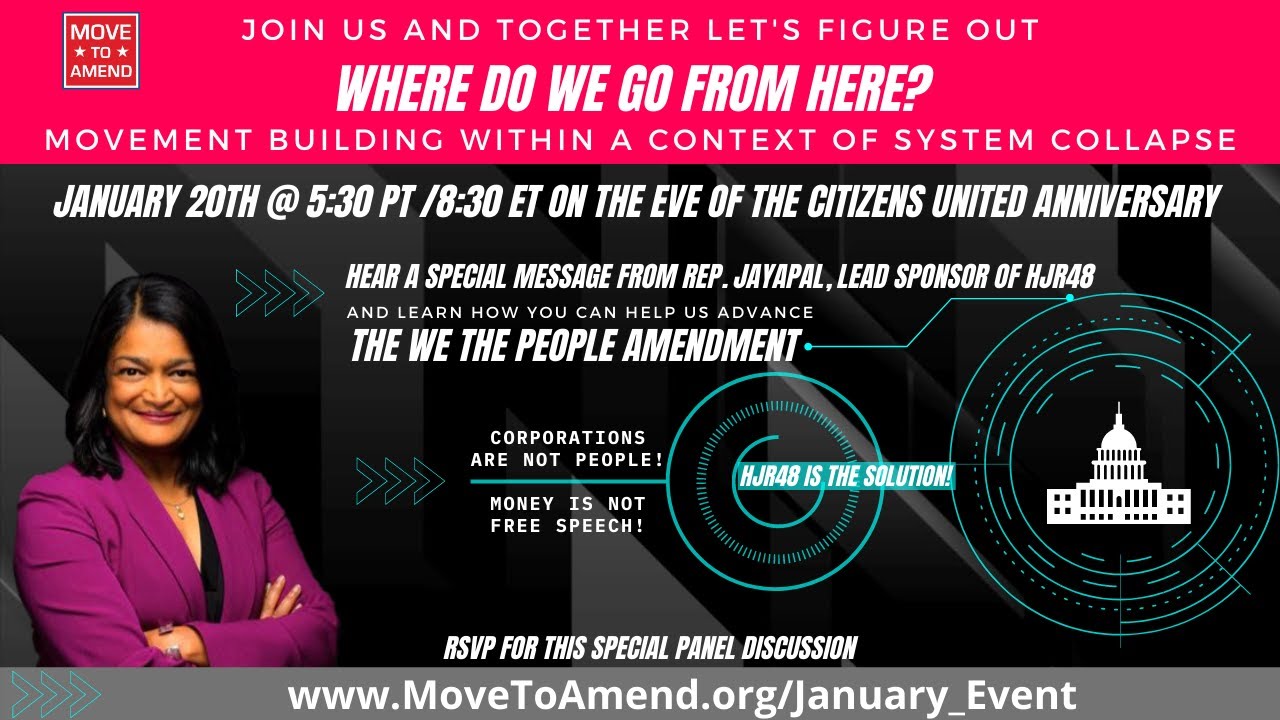
1 22 cit united panel system collapse
- philena Farley- National Media Co-Chair & Black Caucus Officer - Green Party of the United States (fdr MTA?) ohio david cobb
- Chad Nicholson - Community Organizer - Community Environmental Legal Defense Fund (CELDF)
- Lawrence Abbott- Labor Organizer and California Move to Amend Affiliate Coordinator
prop 22 uber 204m vs union 16m$
- Jessica Munger- Move to Amend Programs Director, Toward a People's Constitution Organizer
- Dr. Daniel Lee- James Lawson Institute Project Manager, Mayor of Culver City, CA https://jameslawsoninstitute.org/about/
- sued for hero pay for rx workers? reparations?
Dr. Daniel Lee, MSW, Project Manager, alumnus of the 2014 James Lawson Institute (JLI), now serves as Project Manager for the new JLI. Daniel earned his Doctorate from USC in 2021, his MSW from UCLA in 2015 and his B. A. in Cinema from USC in 2001. He is a veteran of the United States Air Force and Air National Guard. Daniel has served on the board of directors for Move to Amend, the Backbone Campaign, Mockingbird Incubator and the Clean Power Alliance. He has worked as the Southern California organizer for Americans for Democratic Action, earth day to may day organizer for the Liberty Tree Foundation, and campaign lead for Los Angeles County Federation of Labor. He completed an Environmental Justice fellowship with the Liberty Hill Foundation in 2014, regularly volunteers with the Sierra Club, and has worked with organizations such as Community Coalition, Common Cause and Youth Justice Coalition in the Los Angeles area. He currently serves as Vice Mayor in Culver City, CA.
- Keyan Bliss- Advocacy Manager of Participatory Budgeting Project, Move to Amend Board member, MC
519 PLEDGE
| Alabama | Alaska | Arizona | Arkansas | California |
|---|---|---|---|---|
| Colorado | Connecticut | Delaware | Florida | Georgia |
| Hawaii | Idaho | Illinois | Indiana | Iowa |
| Kansas | Kentucky | Louisiana | Maine | Maryland |
| Massachusetts | Michigan | Minnesota | Mississippi | Missouri |
| Montana | Nebraska | Nevada | New Hampshire | New Jersey |
| New Mexico | New York | North Carolina | North Dakota | Ohio |
| Oklahoma | Oregon | Pennsylvania | Rhode Island | South Carolina |
| South Dakota | Tennessee | Texas | Utah | Vermont |
| Virginia | Washington | West Virginia | Wisconsin | Wyoming |
ARIZONA
Federal
- Ann Kirkpatrick, U.S. House of Representatives, District 2 (2018)
- **Raul Grijalva, U.S. House of Representatives, District 3 (2014, 2018)
State
- Pamela Powers Hannley, State House, District 9 (2016)
Past Supporters:
- Matt Kopec, State House, District 9 (2016)
CALIFORNIA
Federal
- **Jared Huffman, U.S. House of Representatives, District 2 (2014)
- Mike Thompson, U.S.House of Representatives, District 5 (2014)
- Ami Bera, U.S.House of Representatives, District 7 (2014, 2016)
- **Jackie Speier, U.S.House of Representatives, District 14 (2017)
- Anna Eshoo, U.S. House of Representatives, District 18 (2018)
- **Salud Carbajal, U.S. House of Representatives, District 24 (2018)
- **Judy Chu, U.S. House of Representatives, District 27 (2016)
- Pete Aguilar, U.S. House of Representatives, District 31 (2014)
- **Mark Takano, U.S. House of Representatives, District 41 (2014)
- **Nanette Barragan, U.S. House of Representatives, District 44 (2016)
- Katie Porter, U.S. House of Representatives, District 45 (2018)
State
- Mike McGuire, State Senate, District 2 (2014)
- Bill Dodd, State Senate, District 3 (2014)
- Nancy Skinner, State Senate, District 9 (2014, 2016)
- Jim Beall Jr., State Senate, District 15 (2017)
- Jim Wood, State Assembly, District 2 (2014)
- Cecilia Aguiar-Curry, State Assembly, District 4 (2016)
- David Chiu, State Assembly, District 17 (2014)
- Kansen Chu, State Assembly, District 25 (2014, 2016)
- Ash Kalra, State Assembly, District 27 (2017)
Municipal
- David Glass, Petaluma City Council (Mayor) (2014)
- Nick Pilch, Albany City Council (2014, 2016)
- Gus Wolter, Cloverdale City Council (2014)
- Rebecca Kaplan, Oakland City Council (2014, 2016)
- Dave King, Petaluma City Council (2014)
- Una Glass, Sebastopol City Council (2014)
- Madge Strong, Willits City Council (2014, 2016)
- Kate Harrison, Berkeley City Council (2018)
- Austin Allison, Eureka City Council (2018)
- Dianne Martinez, Emeryville City Council (2018)
- Abel Guillen, Oakland City Council (2018)
- Shanthi Gonzales, Oakland School Board (2018)
Past Supporters:
- Das Williams, State Assembly, District 37 (2014, 2016)
- Jesse Arreguin, Berkeley City Council (2014, 2015)
- Kriss Worthington, Berkeley City Council (2014)
- Noni Session, Oakland City Council (2014, 2016)
- Deb Heatherstone, Point Arena City Council (2014)
- Severo Lara, Ojai City Council (2016)
- Amy Martenson, Napa Valley College School Board (2018)
COLORADO
Federal
Past Supporters:
- **Jared Polis, U.S. House of Representatives, District 2 (2016)
CONNECTICUT
Federal
- Joe Courtney, U.S. House of Representatives, District 2 (2014)
- Jim Himes, U.S. House of Representatives, District 4 (2014, 2016)
Past Supporters:
- **Elizabeth Esty, U.S. House of Representatives, District 5 (2014)
FLORIDA
Federal
- Stephanie Murphy, U.S. House of Representatives, District 7 (2016)
Past Supporters:
- Myra Koutzen, Palm Beach Shores City Council (2014, 2016)
- Kim O'Connor, Hillsborough County Soil and Water Conservation District Supervisor (2016)
HAWAII
Federal
- Mazie Hirono, U.S. Senate (2018)
Past Supporters:
- Colleen Hanabusa, U.S. House of Representatives, District 1 (2016)
IDAHO
Federal
- Jake D. Ellis, U.S. House of Representatives, District 15B (2018)
ILLINOIS
Federal
- Tammy Duckworth, U.S. Senate (2014)
- Daniel Lipinski, U.S. House of Representatives, District 3 (2014)
- **Jesus Garcia, U.S. House of Representatives, District 4 (2018)
- **Danny Davis, U.S. House of Representatives, District 7 (2014)
- **Jan Schakowsky, U.S. House of Representatives, District 9 (2014, 2016)
- Brad Schneider, U.S. House of Representatives, District 10 (2016)
State
- Kimberly Lightford, State Senate, District 4 (2014, 2016)
- Don Harmon, State Senate, District 39 (2014)
- La Shawn Ford, State House, District 8 (2014, 2016)
- Camille Lilly, State House, District 78 (2014, 2015)
Municipal
- Deborah Allan, Kane County Board of Supervisors, District 17 (2014)
- Steve Alesch, Warrenville Park District Board Commissioner (2014)
Past Supporters:
- Michael Noland, State Senate, District 22 (2014, 2016)
KANSAS
Past Supporters:
- William Fast, Jefferson County Precinctperson (2017)
MARYLAND
Federal
- C.A. Dutch Ruppersberger, U.S. House of Representatives, District 2 (2014, 2016, 2018)
- John Sarbanes, U.S. House of Representatives, District 3 (2014)
MASSACHUSETTS
Federal
- **James McGovern, U.S. House of Representatives, District 2 (2014)
- **Seth Moulton, U.S. House of Representatives, District 6 (2014, 2016)
Past Supporters:
- **Mike Capuano, U.S. House of Representatives, District 7 (2014)
MICHIGAN
Federal
- Debbie Dingell, U.S. House of Representatives, District 12 (2014, 2016)
- Rashida Tlaib, U.S. House of Representatives, District 13 (2018)
Past Supporters:
- Korie Blyveis, Newburg Township Clerk (2014, 2016)
MINNESOTA
Federal
- Angie Craig, U.S. House of Representatives, District 2 (2018)
- Dean Phillips, U.S. House of Representatives, District 3 (2018)
State
- Ann Rest, State Senator, District 46 (2014, 2016, 2018)
- Steve Cwodzinski, State Senator, District 48 (2016, 2018)
- John Marty, State Senator, District 66 (2016, 2018)
- Foung Hawj, State Senator, District 67 (2014, 2016, 2018)
- Jennifer Schultz, State House, District 7A (2014, 2016, 2018)
- Erik Simonson, State House, District 7B (2014, 2016, 2018)
- Liz Olson, State House, District 7B (2018)
- Mary Kunesh-Podein, State House, District 41B (2016, 2018)
- Tina Liebling, State House, District 26A (2014, 2018)
- Jack Considine, State House, District 19B (2014, 2016, 2018)
- Kelly Moller, State House District 42A (2018)
- Jamie Becker-Finn, State House, District 42B (2016, 2018)
- Ginny Klevorn, State House District 44A (2018)
- Lyndon Carlson, State House, District 45A (2018)
- Steve Elkins, State House District 49B (2018)
- Andrew Carlson, State House, District 50B (2016, 2018)
- John Huot, State House District 57B (2018)
- Alice Mann, State House District 56B (2018)
- Raymond Dehn, State House, District 59B (2014, 2016, 2018)
- Frank Hornstein, State House, District 61A (2014, 2018)
- Jamie Long, State House District 61B (2018)
- Jean Wagenius, State House, District 63B (2018)
- Dave Pinto, State House, District 64B (2014, 2016, 2018)
- Rena Moran, State House, District 65A (2018)
- Alice Hausman, State House, District 66A (2018)
- John Lesch, State House, District 66B (2014, 2018)
- DOES NOT SUPPORT: Jeremy Munson, State House, District 23B (2018)
Municipal
- Mary Vanderwert, Saint Paul Board of Education (2015, 2018)
- Deborah Goettel, Hennepin County Commissioner (2016, 2018)
- Dai Thao, Saint Paul City Council, Ward 1 (2017, 2018)
- Deborah Calvert, Minnetonka City Council (2017, 2018)
- Jeremy Schroeder, Minneapolis City Council, Ward 11 (2017, 2018)
- Lisa Goodman, Minneapolis City Council, Ward 7 (2017, 2018)
- Tom Bennett, Bloomington School Board, District 271 (2017, 2018)
Past Supporters:
- **Keith Ellison, U.S. House of Representatives, District 5 (2014)
- **Rick Nolan, U.S. House of Representatives, District 8 (2014, 2016)
- Kevin Dahle, State Senator, District 20 (2016)
- Clark Johnson, State House, District 19A (2014, 2016)
- Linda Slocum, State House, District 50A (2014, 2016)
- Joe Atkins, State House, District 52B (2014)
MONTANA
State
- Bryce Bennett, State Senate District 50 (2018)
:{BACK TO TOP OF PAGE:(style="font-weight:700"):}:
NEVADA
Federal
- Jacky Rosen, U.S. Senate (2018)
:{BACK TO TOP OF PAGE:(style="font-weight:700"):}:
NEW HAMPSHIRE
Past Supporters:
- Carol Shea-Porter, U.S. House of Representatives, District 1 (2014, 2016)
:{BACK TO TOP OF PAGE:(style="font-weight:700"):}:
NEW JERSEY
Federal
- Bonnie Watson Coleman, U.S. House of Representatives, District 12 (2014, 2016)
NEW MEXICO
Federal
- Martin Heinrich, U.S. Senate, (2018)
Past Supporters:
- Michelle Lujan Grisham, U.S. House of Representatives, District 1 (2016)
:{BACK TO TOP OF PAGE:(style="font-weight:700"):}:
NEW YORK
Federal
- Thomas Suozzi, U.S. House of Representatives, District 3 (2016)
- **Yvette Clarke, U.S. House of Representatives, District 9 (2018)
- **Paul Tonko, U.S. House of Representatives, District 20 (2014, 2016)
- Brian Higgins, U.S. House of Representatives, District 26 (2014, 2016, 2018)
NORTH CAROLINA
Federal
- David Price, U.S. House of Representatives, District 4 (2016)
State
- Terry Van Duyn, State Senate, District 49 (2014)
- Marvin Lucas, Jr., State House, District 42 (2014)
- Verla Insko, State House, District 56 (2014)
- Susan Fisher, State House, District 114 (2014)
- Joe Sam Queen, State House, District 119 (2014)
Municipal
- Larken Egleston, Charlotte City Council (2017)
Past Supporters:
- Brian McMahan, Jackson County Board of Commissioners (2014)
- Boyce Deitz, Jackson County Board of Commissioners (2014)
OHIO
Federal
- Joyce Beatty, U.S. House of Representatives, District 3 (2018)
State
- Michael J. Skindell, State Senate, District 23 (2018)
- Heather Bishoff, State House, District 20 (2014)
- David Leland, State House, District 22 (2014)
Municipal
- Carol Ann Roe, Cleveland Heights (Mayor) (2018)
- Trevor Elkins, Newburgh Heights (Mayor) (2018)
- Annette Blackwell, Maple Heights (Mayor) (2018)
- Tristan Rader, Lakewood City Council (2019)
- Mary Nichols-Rhodes, Cuyahoga Falls City Council, Ward 4 (2013)
- Michael Carano, Tallmadge City Council (2017)
- Nick Komives, Toledo City Council (2017)
- Sara Continenza, South Euclid City Council (2018)
- Cheryl Stephens, Cleveland Heights City Council (2018)
- Melissa Yasinow, Cleveland Heights City Council (2018)
Past Supporters:
- Kurt Young,Toledo City Council (2017)
OREGON
Federal
- **Peter DeFazio, U.S. House of Representatives, District 4 (2014)
- Kurt Schrader, U.S. House of Representatives, District 5 (2014)
PENNSYLVANIA
Federal
- **Matt Cartwright, U.S. House of Representatives, District 17 (2014)
Municipal
- Patrick Robinson, Wayne County District Attorney (2019)
- Mark Pinsley, Commissioner, South Whitehall District (2018)
Past Supporters:
- Robert Brady, U.S. House of Representatives, District 1 (2014)
RHODE ISLAND
Federal
- Sheldon Whitehouse, U.S. Senate, (2018)
- James Langevin, U.S. House of Representatives, District 2 (2018)
TEXAS
Past Supporters:
- **Beto O'Rourke, U.S. House of Representatives, District 16 (2014)
- Gene Green, U.S. House of Representatives, District 29 (2016)
WASHINGTON
Federal
- **Derek Kilmer, U.S. House of Representatives, District 6 (2014)
- **Pramila Jayapal, U.S. House of Representatives, District 7 (2016)
- Dr. Kim Schrier, U.S. House of Representatives, District 8 (2018)
State
- Mark Mullet, State Senator, District 5 (2014)
- Marko Liias, State Senator, District 21 (2014)
- Strom Peterson, State House, District 21, Position 1 (2014)
- Kevin Van de Wege, State House, District 24, Position 1 (2014)
- Steve Tharinger, State House, District 24, Position 2 (2014)
- Roger Goodman, State House, District 45, Position 1 (2014)
Past Supporters:
- Kathleen Kler, Jefferson County Board of Commissioners (2014)
WISCONSIN
Federal
- **Mark Pocan, U.S. House of Representatives, District 2 (2014)
State
- Eric Genrich, State Assembly, District 90 (2014)
- After Downing Street
- Alliance for Democracy*
- American Friends Service Committee
- American Friends Service Committee - NE Ohio*
- Backbone Campaign
- Black Agenda Report*
- BuzzFlash
- Center for Corporate Policy
- Center for Media and Democracy*
- Center for Story Based Strategy
- Code Pink
- Coffee Party USA
- Democracy Unlimited*
- Detroit Women of Color
- Family Farm Defenders
- Fix Democracy First
- Friends of the Earth
- Global Exchange
- Independent Progressive Politics Network*
- Liberty Tree Foundation*
- National Lawyers Guild*
- North Carolina AFL-CIO
- Organic Consumers Association
- Peace Action
- Peace and Freedom Party of California
- Peaceful Uprising
- People-Centered Development Forum
- Portland Jobs with Justice
- Program on Corporations Law and Democracy*
- Progressive Democrats of America*
- Reclaim Democracy*
- Ruckus Society
- Sebastopol Grange
- Shays 2
- Sierra Club
- The Pachamama Alliance
- Ultimate Civics*
- Unitarian Universalists for a Just Economic Community
- Velvet Revolution
- Vermont for Single Payer
- Veterans For Peace
- Women's International League for Peace and Freedom*
Move to Amend launched publicly on January 21, 2010 upon the Supreme Court's ruling in Citizens United. The individuals listed below signed the original "Motion to Amend":
We, the People of the United States of America, reject the U.S. Supreme Court's ruling in Citizens United, and move to amend our Constitution to:
• Firmly establish that money is not speech, and that human beings, not corporations, are persons entitled to constitutional rights.
• Guarantee the right to vote and to participate, and to have our vote and participation count.
• Protect local communities, their economies, and democracies against illegitimate "preemption" actions by global, national, and state governments.
Initial Signatories:
Adrienne Maree Brown, Ruckus Society
Alec Loorz, Kids vs Global Warming
Andrew Kimbrell, International Center for Technology Assessment
Andy Gussert, National Trade Activist
Anne Feeney, musician
Baldemar Velasquez, President, Farm Labor Organizing Committee
Ben Manski, attorney, Exec. Director, Liberty Tree
Benno Friedman, photographer
Benson Scotch, former Staff Counsel to Sen. Leahy, U.S. Senate Judiciary Committee
Bill Fletcher, Exec. Editor, BlackCommentator.com
Bill McKibben, founder, 350.org
Bill Moyer, Backbone Campaign
Brad Friedman, Publisher, The BRAD BLOG
Bill Scheurer, Editor of PeaceMajority Report
Brad Thacker, Be The Change USA
Brett Bursey, Exec. Director, South Carolina Progressive Network
Brett Kimberlin, Director, Justice Through Music
Brian McLaren, Christian activist & author
Bruce Gagnon, Global Network Against Weapons and Nuclear Power in Space
Carl Davidson, Progressive America Rising
Carolyn Oppenheim, Shays 2
Carolyn Raffensberger, Exec. Director, Science & Environmental Health Network
Charlie Cray, Center for Corporate Policy
Chris Kromm, Executive Director, Institute for Southern Studies
Dal LaMagna, founder, Tweezerman, Inc.
Dave Wells, formerly Board of Directors, Sierra Club
David Cobb, initiator of 2004 Ohio Recount
David Gespass, president, National Lawyers Guild
David Korten, author of When Corporations Rule the World
David Rovics, musician
David Swanson, AfterDowningStreet.org
David Wells, Jr., Nashville Urban Harvest
Dean Myerson, Executive Director, Green Institute
Deborah Mokma, Publisher of Sentient Times
Diane Wittner & Margaret Flowers, Chesapeake Citizens
Dr. Jill Stein, candidate for Governor of Massachusetts
Ed Garvey, attorney at law, editor, FightingBob.com
Emily Levy, Velvet Revolution
Fran Korten, Editor, YES! Magazine
Frank Arundel, activist
Gary Zuckett, WV Citizen Action
George Friday, National Coordinator, IPPN
George Martin, United for Peace & Justice
Georgia Kelly, Praxis Peace Institute
Glen Ford, Executive Editor, BlackAgendaReport.com
Greg Coleridge, NE OH American Friends Service Committee
Howard Zinn, historian
Jackie Cabasso, Executive Director, Western States Legal Foundation
James Gustave Speth, Distinguished Senior Fellow, Demos
Jan Edwards, writer
Jane Anne Morris, author, Gaveling Down The Rabble
Jeff Cohen, founder, FAIR
Jeff Milchen, founder, ReclaimDemocracy.org
Jeffrey Short, Ph.D., Pacific Science Director, OCEANA
Jerome Scott, League of Revolutionaries for a New America
James M. Cullen, editor of The Progressive Populist
Jill Bussiere & Sanda Everette, Co-Chairs, Green Party of the U.S.
Jim Hightower, author, columnist, and radio commentator
Joan Russow, PhD Global Compliance Research Project
Joel Bleifuss, Editor & Publisher, In These Times
John E. Peck, Executive Director, Family Farm Defenders
John Nichols, Washington Correspondent, The Nation
John Rensenbrink, President, Green Horizon Foundation
John Stauber, author, Weapons of Mass Deception
Jonathan Frieman, Co-founder, Center for Corporate Policy
Jonathan Tasini, candidate, U.S. Senate, NY
Josh Healey, Youth Speaks Josh Lerner, The New School for Social Research
Josh Silver, Executive Director, Free Press
Judith Pedersen-Benn, Unitarian Universalists for a Just Economic Community
Kai Huschke, Envision Spokane
Kaitlin Sopoci-Belknap, Democracy Unlimited of Humboldt County
Karen Dolan, Cities for Progress
Katherine Forrest, MD; Co-Founder, Commonweal Institute
Ken Reiner, inventor and founder, Kaynar Corp.
Kevin Danaher, Executive Co-Producer, Green Festivals
Kevin Zeese, Executive Director, TrueVote.US
Leah Bolger, CDR, USN (Ret), Bring the Guard Home! It's the Law.
Lewis Pitts, Lawyer, Legal Aid of NC
Lisa Graves, Executive Director, Center for Media and Democracy
Lori Price, Managing Editor, Citizens for Legitimate Government
Luis A. Cuevas, National Director, Progressive Push
Makani Themba-Nixon, Executive Director, The Praxis Project
Margo Baldwin, Publisher, Chelsea Green
Mark Crispin Miller, author, Fooled Again
Mary Zepernick, Program on Corporations Law and Democracy
Marybeth Gardam, Women's International League for Peace and Freedom
Matt Nelson, Just Cause
Matt Rothschild, Editor, The Progressive
Maya Schenwar & Matt Renner, Truthout
Medea Benjamin, co-founder, Code Pink
Michael Albert, Z Communications
Michael Bonnano, OpEdNews
Michael Marx, Corporate Ethics International
Michael Shuman, attorney, economic, author of "The Small-Mart Revolution"
Mike Ferner, President, Veterans for Peace
Mike McCabe, Executive Director, Wisconsin Democracy Campaign
Mimi Kennedy, actress, activist
Miriam Simos, Starhawk, activist and writer
Nancy Price, co-chair, Alliance for Democracy
Nick Pavloff, Jr., Gulf of Alaska Aleut from Kodiak Island
Norman Solomon, author, co-chair, Healthcare Not Warfare campaign
Patrick Reinsborough, SmartMeme
Paul Saginaw, founder, Zingerman's, Inc.
Prof. Peter Gabel, School of Law, New College of California
Prof. Victor Wallis, Managing Editor, Socialism & Democracy
Rabbi Arthur Waskow
Rabbi Michael Lerner
Rep. Michael Fisher, House of Representatives, Vermont
Rev. Edward Pinkney, Black Autonomy Network Community Organization
Rev. Lennox Yearwood, President, Hip Hop Caucus
Richard Mazess, Prof. Medical Physics, UW-Madison, CEO of Lunar Corp & Bone Care Intl.
Riki Ott, Executive Director, Ultimate Civics
Robert McChesney, professor, co-author, The Death and Life of American Journalism
Ronnie Cummins, founder, Grassroots Netroots Alliance
Sally Castleman, Election Defense Alliance
Sam Smith, Editor, Progressive Review
Sarah Manski, CEO, PosiPair.com
Shahid Buttar, Rule of Law Institute
Ted Glick, climate change activist
Ted Nace, author, Gangs of America: The Rise of Corporate Power
Theo Yang Copey, activist
Thom Hartmann, nation's #1 nationally syndicated progressive talk show host
Tia Oros & Christopher Peters, Seventh Generation Fund for Indian Development
Tiffiniy Cheng, Executive Director, A New Way Forward
Tim Carpenter, Executive Director, Progressive Democrats of America
Tom Hayden, activist
Ward Morehouse, chair, National Lawyers Guild's Committee on Corporations
* organizations listed for identification purposes only