Am prospect
Check Robert's book: https://jpzengerbooks.com/2026/03/07/...
TO RESTORE SOCIAL CONTRACT WILL TAKE BIGGER NEW DEAL
NEW DEAL PROP 13 tp How Democrats Embraced Neoliberalism | Robert Kuttner | TMR
July 16, 2026. Robert Kuttner, co-Founder and co-editor of The American Prospect and author of Notes for Next Time: Surviving Tyranny, Redeeming America, joins Sam for a pre-taped interview about his memoir and how the Democratic party came to embrace neoliberalism.
...
try to explore via my own life odyssey is how could we
5:47
have had such a good deal for most working people and then how did we lose
5:53
it? What what did the Democratic Party do wrong? Beginning with um Carter and
6:00
Clinton and then Obama and the influence of the corporate Democrats, the Wall Street Democrats, Robert Rubin, and
6:07
really screwing it up and getting in bed with with Wall Street
6:12
um to the point where [clears throat] working families no longer saw the Democratic Party as their champion. And
6:19
that began the road to Trump. Uh what happened? How do we get that back? And
6:25
that's a lot of what I talk about and I'll I'll get to Senator Proxmire and the banking committee in a moment if you like.
---
AM PROS
FOur and a half years ago, Department of Government Efficiency co-czar Brad Smith stumbled on a counterintuitive revelation: The most effective way to slash federal health care spending involved drastically raising Medicare and Medicaid reimbursement rates for hospital care.
:{At the time, Smith was running something called the Center for Medicare and Medicaid Innovation, an obscure off-the-books laboratory created by the Affordable Care Act for experimenting with “alternative payment models”—neoliberal for “larger sums with less accountability.” In its ten years of operation, CMMI had spent more than $10 billion testing various methods of tweaking reimbursement standards in (theoretical) hopes of improving health care outcomes for lower costs:{. They had worked with UnitedHealth, Aetna, Molina,}: and other insurers in 13 states to reward primary care physicians who administered more preventative care and collected more specific data on their patients.
They’d worked with more than 100 hospitals and mega-practices to bundle payments for complex patients, in hopes of lowering the ultimate cost of treating chronic illnesses. CMMI had spent some $10 billion testing out dozens more schemes, nearly all of which subscribed to an ideology called “value-based care,” in which the central flaw of American health care is “volume-based” fee-for-service compensation schemes that incentivize “overutilization” of the health care system, and so the natural “solution” involves the government paying health care providers and various intermediaries to take steps designed to decrease said “utilization.”}:
Value-based care grew especially important during the Obama years, because the ACA mandated that insurance companies spend a minimum of 85 percent of patients’ premium dollars on “care,” wiping out profit drivers like the mandatory insurance policies UnitedHealth sold to college students that often boasted medical loss ratios as low as 10 percent. Insurers in turn began to focus their energies around their highest-revenue patients: seniors with a lot of complex health issues who were enrolled in the private Medicare offerings known as Medicare Advantage. They would soon buy up the medical practices, home health agencies, and surgery centers that treated these patients, in a move that enabled them to at once “align incentives” (i.e., control more of the medical decisions they were paying for), park the excess profit margins they weren’t allowed to report on their insurance sides, and find more Medicare patients to convert to MA plans.
Brad Smith was a value-based guy. He’d gotten in on the ground floor of the craze during the first term of the Obama administration, while helming the education reform foundation of former Senate Majority Leader Bill Frist (R-TN), whose billionaire brother Tom Frist founded the hospital behemoth HCA, whose long history of unnecessary overtreatment of Medicare patients perhaps ironically gave birth to the value-based revolution. Together, the two had built a home health care business with more than 650 employees that they had just sold for $440 million to health insurer Anthem.
Smith had been working as the chief operating officer of Anthem’s value-based business when he’d been tapped for the CMMI gig by one Adam Boehler, another value-based evangelist who often talked about how he wanted to “blow up” the “volume-based” ancien régime. Still, doctors, especially the types of doctors who complained about Obamacare and voted for Trump, hated value-based care, because it required spending way too much money on software and far more hours doing paperwork than the incentive payments could justify. Smith’s boss, Centers for Medicare & Medicaid Services (CMS) head Seema Verma, was value-based skeptical, and wanted to know whether CMMI’s programs were actually working as “intended.” So Smith ordered his staff to conduct a financial analysis of all 54 programs CMMI had bankrolled to test out the new approach to health care.
Smith and a 24-year-old deputy from his Nashville VC firm are said to be building the vision of what will replace everything that DOGE has eradicated.
The verdict was unambiguous: Value-based care was a bust. For two of its biggest programs, CMMI had spent $7 billion more than it had saved, just from compensating all the various intermediaries that had administered the trials. The reasons for this were twofold, say two individuals who worked on value-based care policy for the Obama administration: One, CMMI and CMS invariably outsourced the management of the trials to “venture capital or private equity firms or nonprofits where the CEO is making millions of dollars” that typically alienated and underpaid the clinicians they were ostensibly seeking to incentivize; and two, most of the policymakers involved were too preoccupied with “how they were going to monetize their expertise” to design programs that might actually save CMS money.
Lending credibility to that analysis, the shining star of the small agency’s roster of reform measures was the “Maryland All-Payer Model,” a state-operated system originally devised in the early 1970s by which an independent commission fixed flat hospital prices for the state that every payer—from Blue Cross to Medicaid—is expected to pay. The Maryland Model, which was modified in 2014 and discarded in favor of a more complex, almost European-style “global budgeting” system in 2018, is a rabbit hole with its own unique advantages and disadvantages, but it is decisively notvalue-based care, and sources familiar with CMMI said its affiliation with the initiative was something of a fluke, especially given that Medicare conclusively pays far higher rates for medical care in Maryland than anywhere else (though yearly per capita expenditures are higher in Florida). And yet the Maryland system saved CMS $1 billion over just five years tracked by CMMI, likely in large part by lacking the administrative middlemen and arbitrageurs in the system and the waste and fraud that tend to accompany them.
This analysis might have made for an embarrassing news cycle for CMMI and all the affiliated grifters who had cashed in on the value-based boom, like Smith’s predecessor Boehler, a college roommate of Jared Kushner’s who would soon sell his home health agency for $3.5 billion to UnitedHealth, or CMMI founding director Patrick Conway, who’d left the agency a few years earlier to become the richly remunerated CEO of Blue Cross in North Carolina, where he had rolled out a mandatory value-based care regime in conjunction with the CMMI-friendly healthtech Aledade, and recently been charged with driving under the influence after crashing his car with his two elementary school–aged daughters inside.
Instead, they were all saved by the pandemic, during which Smith was detailed to the Trump inner circle for assistance with various pandemic response efforts, and ended up becoming close to Kushner himself, according to The New York Times. By the time he returned to CMMI to write up the results of his staff’s analysis in The New England Journal of Medicine, CMS had rained down hundreds of billions of bailout dollars on the health care system, and no one even bothered making hay of the news that the agency had wasted $10 billion testing out cost-cutting ideas that didn’t pan out.
In one of his last acts at the agency, Smith introduced a new program called the Geographic Direct Contracting Model, or “Geo,” by which all remaining traditional Medicare beneficiaries were slated to be automatically assigned on the basis of their residence to a value-based care organization to which CMS would pay a flat annual fee to assume their health care “risk.” Geo contractors would be virtually unregulated, though they would be held to a medical loss ratio minimum requiring them to spend at least 60 percent of their revenues on care. The Biden administration scrapped Geo in early 2021, but kept a slightly less radical Smith plan with a similar goal of stealth total privatization after renaming it ACO REACH, for “Accountable Care Organization Realizing Equity, Access, and Community Health.”
Smith moved back to Nashville and took the helm at two new value-based care upstarts, a Medicaid home health intermediary called CareBridge and a rural Medicare Advantage play called Main Street Health. In late October, he sold the former to Elevance, the new name of the insurer to whom he’d sold his first home health company, Aspire. This time, the head count was lower—fewer than 500 employees—but the price tag was much, much bigger, at $2.7 billion.
A putative class action lawsuit filed last month in Florida by a “clinical assessor” for CareBridge alleges that she and other low-level employees were required to work 45 hours a week for only 40 hours’ pay, and dozens of negative reviews on job sites suggest assessors work as many as 20 extra hours without pay. Worse, employees say the job mostly consists of “managers … demanding that you drastically cut caregiver hours for people who desperately need someone in their home.”
“This is a greed-driven company that is preying on our nation’s most vulnerable and poorest people. If you can sleep at night and live with yourself while harming the poor and disabled during the day, this job is for you,” reads one review on Glassdoor. “If CareBridge is the future of healthcare then we heading to a sad state of affairs,” reads another.
Just months after the CareBridge deal, Smith was reported to be hanging around Mar-a-Lago with Steve Davis, the longtime Elon Musk loyalist who ran the hostile takeover of Twitter. Underneath Musk and Vivek Ramaswamy, who would soon depart, Smith and Davis are said to be the real operating leaders of DOGE, with the latter playing the bad cop masterminding the scorched-earth shutdowns and cuts, while Smith and a 24-year-old deputy from his Nashville VC firm are said to be building the vision of what will replace everything that DOGE has eradicated, according to a source familiar with his recruiting efforts. CMMI, a highly unusual agency with a ten-year, self-renewing budget outside the appropriations process and an extraordinary ability to grant waivers from the statutes governing CMS, including fraud and kickback statutes, is said to be a model for how Musk wants DOGE to reimagine the federal government.
As further evidence of that, Smith’s predecessor as CMMI director, Boehler, whose brand-new venture capital firm Rubicon Founders last spring raised more than a billion dollars for its latest fund and also groomed Trump’s newest CMMI director, 33 year-old Abe Sutton, is currently working as Trump’s special presidential envoy for hostage affairs. Boehler got his start in the health care business as a medical debt collector, first at a firm called MedeFinance and then with a shadowy empire called Accretive, which was banned from the state of Minnesota in 2012 after an employee left a laptop in a taxi that revealed the company had essentially seized the operations of a Minneapolis nonprofit hospital system and was using confidential health records, collected under the guise of value-based care modeling, to manipulate patients into coughing up large cash payments for hospital services to “embedded” collection agents, sometimes while under the influence of powerful anesthesia.
The obscure agency Boehler launched after leaving CMMI, the U.S. International Development Finance Corporation—best known for its failures to do much of anything with its nine-figure budget for bolstering supply chains during the pandemic after an ill-fated $765 million loan it made to Eastman Kodak was shelved after revelations of insider trading—was reported on Wednesday to be DOGE’s designated “replacement” for the U.S. Agency for International Development, under the leadership of venture capitalist Joe Lonsdale and Ben Black. The latter is the son of disgraced billionaire Leon Black, an accused sexual predator who was forced to leave the private equity juggernaut after revelations that he had wired nearly $200 million to Jeffrey Epstein, whom he considered his best friend, in the years before Epstein’s death. A January Substack post by Lonsdale and Black on their plans for “disrupting” the $43 billion USAID budget is light on specifics but advocates defunding nongovernmental organizations to pursue an “investment-driven model focused on strategic project finance initiatives.”
Foreign aid, of course, is a rounding error compared to the multitrillion-dollar health care budget, in which the *Prospect estimates a team of forensic accountants might easily find as much as a half-trillion dollars in waste annually, roughly $100 billion of that in Medicare Advantage overpayments alone. (Obama had the chance to clamp down on the obvious MA grift, but abruptly reversed course in 2014.) In a 2021 Zoom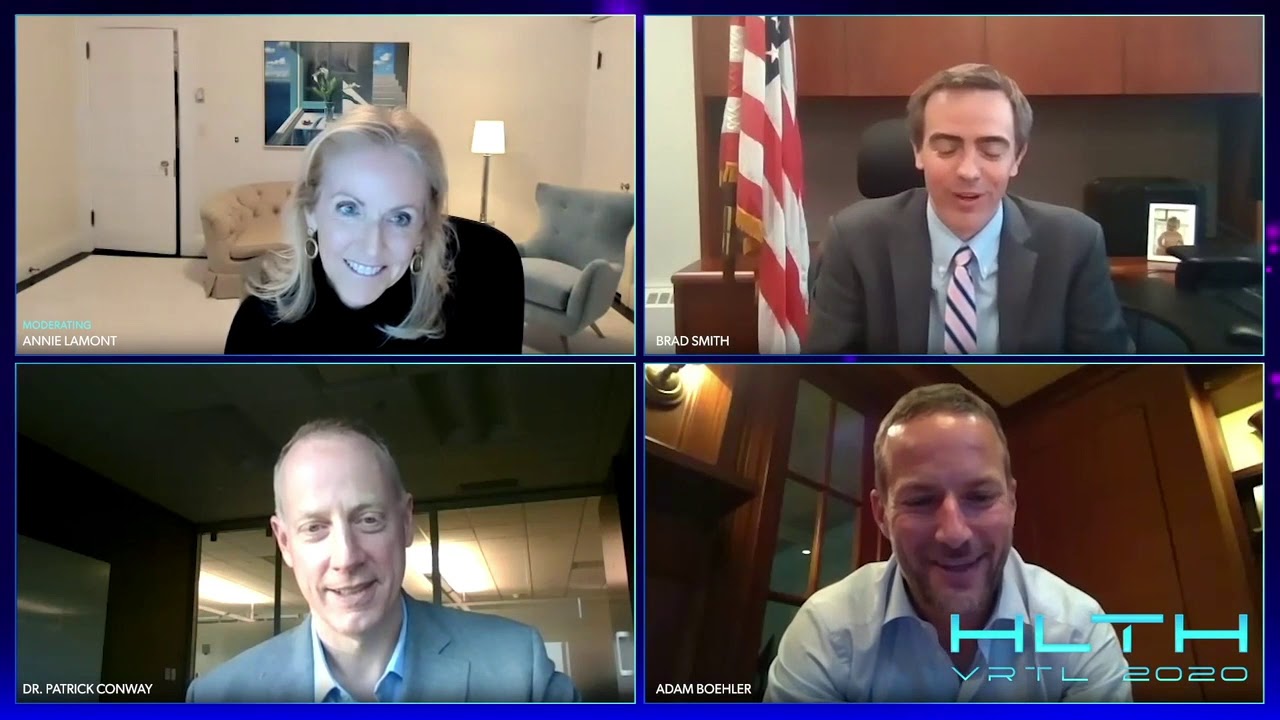 on the tenth anniversary of the agency and the future of “value-based care” moderated by ubiquitous value-based care venture capitalist Ann Lamont, Smith, Boehler, and CMMI founder Conway, now the CEO of UnitedHealth’s OptumRx division, held forth almost giddily on the rosy “future of value-based care,” with Boehler jokingly describing Conway as the agency’s “Adam Neumann,” the self-aggrandizing WeWork founder who burned some $20 billion in venture capital funding. At one point, Smith brought up his analysis, commending the agency for making “value-based care” such an inescapable industry buzzword but acknowledging that only five of the group’s 54 experiments had delivered any cost savings whatsoever. Lamont quickly changed the subject. “Imagine in a few years, we receive 90 percent of payments in value-based commitments. How do we get there?”
This probably wasn’t how any of them imagined it going down, but with Smith running the rogue operation that is apparently running the country, it seems likely we’ll get there.
Tags
Health & Social Policy CMS Medicare health insurance Affordable Care Act Obama Administration privatization federal government DOGE Elon Musk Donald Trump Trump transition
Maureen Tkacik is investigations editor at the Prospect and a senior fellow at the American Economic Liberties Project.
---
AM PROSPECT
6 24
On Tuesday, Wisconsin became the fifth state to file criminal charges stemming from the plot by Republicans to overturn the 2020 election by submitting forged electoral certificates falsely claiming that Donald Trump had won the vote.
Wisconsin Attorney General Josh Kaul announced a felony indictment on June 4 against two attorneys, Kenneth Chesebro and Jim Troupis, and campaign aide Mike Roman, all of whom helped orchestrate the scheme to submit false paperwork claiming to represent that state’s electoral votes. The group was charged with conspiracy to commit forgery.
The indictments are another small step toward establishing the official record of the stunning and destabilizing events of the 2020 election, even in the face of a continuing barrage of disinformation from the Republican Party, and despite the plodding pace and laxity of law enforcement in one of the most important criminal cases in the country’s history.
A former adviser and assistant to then-President Trump, Peter Navarro, recently reported to prison to serve a sentence for contempt of Congress, after defying a subpoena to testify about the plot. Rudy Giuliani, another former adviser and Trump lawyer, was served with an indictment for his participation in the scheme in Arizona, after disclosing his location at a birthday party in a social media post that mocked law enforcement officials for being unable to locate him. And Trump himself was convicted last week for falsifying records in an effort to cheat in theprevious presidential election, in 2016. And that’s just since March.
Meanwhile, Republicans remain uniformly unbothered by the unprecedented, multipronged assaults on our democracy, and by Trump’s personal role. And they’ve continued to push false narratives about the former president being politically targeted, along with a need to protect against allegedly widespread voter fraud.
Still, the verdicts thus far, the plea deals, pending prosecutions, and indictments, as well as the public evidence, tell a different story. Taken together, they make it clear that there was an illegal scheme, involving the core of the Republican leadership, to overturn a legitimate election by fraud and by force—and that those efforts to disenfranchise voters were targeted against Black and Latino people specifically.
The broader scheme that resulted in the recent charges in Wisconsin, for example, didn’t question ballots across the state. It sought to disqualify votes only in Milwaukee and Dane Counties, where a supermajority of nonwhite Wisconsinites live. (Milwaukee County includes the city of Milwaukee, and Dane includes college town and liberal bastion Madison.)
That observation wasn’t lost on a Wisconsin Supreme Court justice, who told Troupis in 2020 that Trump’s lawsuit asking the courts to scrap hundreds of thousands of absentee ballots solely in those counties “smacks of racism.”
The same goes for just about every other county and city whose voters were portrayed by Trump and his allies as potential criminals and somehow “illegitimate,” like Maricopa County, Arizona, which includes Phoenix; Clark County, Nevada, which includes Las Vegas; and Atlanta, Philadelphia, and Detroit.
If you’ll recall, the dog whistles being used at that time were often pitched at the tone of an emergency siren; the underlying racism was fairly obvious to many other observers.
Bob Bauer, then a senior legal adviser to President Joe Biden’s campaign, told NPR in November 2020 that there was nothing subtle about Trump’s “targeting of the African American community.”
“It’s quite remarkable how brazen it is,” Bauer said. “This is straight out, discriminatory behavior.”
The illegal plot to overturn the election is overwhelmingly a racist plot to return Black voters and other voters of color to second-class citizenship, stripped of their voting rights.
And here’s how Nevada’s attorney general, Aaron Ford, put it when I interviewed him that same month: “I can say, as succinctly as possible: These are Jim Crow-era efforts to disenfranchise voters.”
The “fake elector” scheme was a central component of Trump and his allies’ scattershot strategy to subvert the election result, according to the separate indictments and ongoing prosecutions brought by the Justice Department against the many co-conspirators.
The latest indictments in Wisconsin are the first in the state, which was where the plot actually originated before being attempted elsewhere.
The charging documents lay out the three defendants’ role in promoting the theory behind the unlawful scheme, and how they coordinated to transmit forged electoral certificates to a as their bagman, ultimately delivering the fraudulent paperwork to Chesebro in Washington, D.C. The young woman received a selfie from Chesebro so that she could identify him, and later text-messaged the co-conspirators saying, “5 mins until I make the drop,” adding, “I feel like a drug dealer.”
The forged documents were delivered to a staffer for an unnamed Pennsylvania congressman; and the plan was supposed to culminate with then-Vice President Pence simply rejecting his legal duty to open the envelopes containing the electoral vote certificates, or reading out the results from the fake certificates instead, according to the indictments.
At this point, the Wisconsin case seems pretty airtight. Ten people who actually stood in as “alternate” (i.e., fake) electors have accepted a settlement in a different, civil lawsuit brought by two (real) Wisconsin electors and a voter. The Wisconsin fake electors even formally repudiated their false claims as part of the settlement, including admitting that they “were not the duly elected presidential electors,” and that their actions were “part of an attempt to improperly overturn the 2020 presidential elections.” One of the false electors, who is also a former chairman of the Wisconsin Republican Party, has said they were “tricked by the Trump campaign” into signing a document claiming Trump won the state.
Chesebro and Roman have also been charged along with Trump in a racketeering indictment in Georgia; Chesebro has pleaded guilty in that case and agreed to provide evidence. (The case was temporarily put on hold Wednesday while the court reviews a conflict-of-interest allegation against the prosecutor, which likely pushes out that trial beyond the presidential election.)
The indictments in other states also shore up the allegations about the conspiracy, and they show the involvement of Republican Party leadership around the country.
State authorities in Georgia, Nevada, Michigan, and Arizona have also brought charges stemming from the plot. The former chairs of the Michigan Republican Party and the Georgia Republican Party have been charged for helping submit electoral certificates. And the indictments against Chesebro and others implicate the Republican National Committee as well.
The latest charging documents point out that “Trump, Michael Pence, and the Trump campaign filed lawsuits in Dane County Circuit Court and Milwaukee County Circuit Court, ‘seeking to invalidate a sufficient number of Wisconsin ballots to change Wisconsin’s certified election results.’”
The two cities are Wisconsin’s most diverse. The city of Milwaukee, for example, is majority-minority, with Black and Latino people accounting for about 59 percent of its population.
Those patterns hold in virtually all of the places targeted by the Trump campaign and Republican Party’s efforts. Both Maricopa County and Clark County, for example, are about 32 percent Latino, and Atlanta, Philadelphia, and Detroit are all plurality- or majority-Black.
Of course, the specter of massive voter fraud in those counties and cities was and is a myth, based on nothing more than racist tropes, and barely hidden by racially coded language.
Trump and his allies routinely invoke race, almost always to marginalize and degrade nonwhite people, but often without actually using explicitly racist or racial language. The illegal plot to overturn the election, in other words, is overwhelmingly a racist plot to return Black voters and other voters of color to second-class citizenship, stripped of their voting rights.
As part of the scheme, Trump and other defendants spread knowingly false claims of election fraud, including lies about two specific, Black Atlanta election workers, Ruby Freeman and her daughter Shaye Moss—facts that are a part of the federal and Georgia indictments.
Trump, for example, falsely claimed that Freeman, a temp worker in her sixties, was actually a “professional vote scammer” and “hustler.” He mentioned Freeman by name 18 different times in his now-infamous call in which he pressured and at times threatened Georgia officials to alter the election results.
While trying to overturn the election in 2020, Trump baldly asserted that Detroit and Philadelphia are “two of the most corrupt political places anywhere in our country, easily.” He has previously singled out Oakland and Baltimore, saying living in those cities is “like living in hell.” And the former president has also described Atlanta as “crime-infested” and a “Murder and Violent Crime War Zone.”
Trump’s lawyer, Giuliani, falsely claimed that there was video footage of Freeman and Moss acting suspiciously during the voting process, and compared them to drug dealers “passing out dope.”
Freeman and Moss have since faced horrific, racist death threats, as they explained during emotional congressional testimony in June 2022. Because of this, they sued Giuliani and were awarded $148 million in damages for defamation.
Giuliani also held a press conference in the midst of the unfolding scheme, where he claimed that people are still using the names of dead Black Philadelphians—mentioning Joe Frazier and Will Smith’s late father, specifically—to vote long after they are deceased.
Legal scholars Catherine Powell and Camille Gear Rich explained in a 2020 paper how Trump’s language in the Georgia phone call effectively remobilized the old racist trope of a political trickster known as the “welfare queen,” transforming her from a welfare-and-benefits fraudster into a voter fraudster, “still Brown, female, and poor, but now out to steal American democracy.”
Despite all the evidence—including public admissions of the conspiracy, if not all the details—we are still quite far from official legal accountability and consequences for what was a serious, internal attack on our democratic institutions. Still, the public record is clear enough, even today, as a matter of history, and the enforcement actions by officials in Wisconsin and elsewhere will continue to flesh out the details of the crimes.
POLITICS REPUBLICANS DONALD TRUMP ELECTION 2020 RACE & ETHNICITY ELECTORAL COLLEGE VOTING RIGHTS DEMOCRACY WISCONSIN GEORGIA
===
https://prospect.org/mapping-corruption-interactive
READ THE ARTICLE: https://prospect.org/power/mapping-corruption-donald-trump-executive-branch/
Mapping Corruption: Donald Trump’s Executive Branch
by Jim Lardner
Mapping Corruption:
The Interactive Exhibit
The Trump administration has brought its brand of corruption and self-dealing to every agency in the federal government, and it’s hard for anyone to keep on top of it all. We’ve mapped it out for you. Click on any agency building below, and unlock an extensive dossier of the activities happening inside.
no lnx
3/20?
the DEFENSE GOT ONE THING RIGHT at Donald Trump’s Senate trial. The case against him was thin, his team kept saying; and so it was, compared to the enormity of this administration’s other offenses.
Set aside the hate-mongering and the stream of conspiracy theories and demagogic bombast. Trump has sowed corruption of a breadth and brazenness unseen in the far-from-innocent annals of our nation’s history. In three years as president, he has transformed the executive branch into a giant favor factory, populated with the agents or willing partners of virtually every special interest. Add up all the routine, daily outrages—the quasi-bribery and quasi-extortion, the private raids on public funds, the handouts to the undeserving, the massive flow of cash, jobs, and freebies back in return—and Trump’s attempt to squeeze a little re-election help out of the fragile government of a desperate Eastern European country does not loom particularly large in the reckoning.
Review the Dossiers! Browse the Map of Corruption
Adding it all up is a challenge, though. It’s hard to fathom the depths of the kleptocracy when there’s so much happening on the surface to divert us. The corruption most directly in our faces involves the looting and skimming and self-dealing of the president and his family.Our first hotel-owning president has inspired a parade of foreign diplomats and domestic lobbyists to pay tribute with overnight stays that are functionally indistinguishable from bribes. The Secret Service has blown over half a million dollars on golf carts protecting a leader who has spent nearly one out of every three days of his first term at one of his resort properties, which get free advertising on top of the revenue from lodging his guards and retinue. Ivanka Trump snags a valuable set of Chinese trademarks on the same day she dines with Xi Jinping. Kellyanne Conway hawks Ivanka’s products in TV interviews.
But the personal corruption of the Trumps themselves perversely masks the sliminess perpetrated by literally thousands of presidential appointees, from Cabinet officials to obscure functionaries. Amid all the distractions, it’s hard to focus on the more consequential crookedness and follow out the plotlines of all the sordid stories, and grasp the brutal consequences visited upon countless people. We lunge from scandal to scandal without ever filling in the bigger picture, or taking proper account of all the knaves, thieves, and corporate stooges and their handiwork.
Mapping Corruption: HUD
Hard, but worth doing—an undertaking commenced here and continued and expanded online at https://prospect.org/mappingcorruption, with an interactive, agency-by-agency exhibit of the major offenses thus far committed. Only by traveling to the far corners of this swamp, looking through the muck, and drawing up a map of the territory—the stories both known and unknown—can we begin to understand our times.
CONSIDER THE ISSUE of immigration. At its mention, some Americans conjure up images of dark-skinned interlopers threatening to steal our jobs or live idly off our public services, while others are more likely to think of children cruelly separated from parents and desperate asylum seekers stuck in Orwellian turnaround. Either way, we tend to overlook a big central fact of today’s immigration policy: the huge sums of money drawn from the U.S. Treasury in the name of guarding our borders, and deposited into the coffers of abooming private-prison industry.
The two giants in that field, GEO Group and CoreCivic, run a combined 41 facilities housing more than half the detainees held in custody by the Department of Homeland Security’s Immigration and Customs Enforcement unit, known as ICE; as of mid-2019, GEO and CoreCivic had collected an estimated $2.9 billion for their services—a huge haul reflecting a remarkable reversal of their fortunes, directly traceable to Trump and his homeland security team.
A cloud had descended over their line of business before the 2016 election. After a succession of scandals involving substandard medical care, deaths, suicides, sexual abuse, and exploitative labor practices, the Obama Justice Department had announced a phaseout of the private sector’s role in the federal prison system. While the Department of Homeland Security pointedly excused itself from the new policy, it nevertheless posed a serious threat to the industry’s future. And the industry responded: Just a day later, a GEO subsidiary gave $100,000 to a pro-Trump super PAC. GEO-associated executives and entities went on to contribute another $350,000 for transmittal to Trump and other Republican campaigns, plus $225,000 to help finance the Trump inaugural festivities. When Jeff Sessions got tapped for attorney general, GEO Group hired two former Sessions Senate aides, David Stewart and Ryan Robichaux, to lobby on its behalf. A month after Inauguration Day, Sessions revoked the Obama-era guidance, by which time GEO’s stock market value had doubled, and CoreCivic’s was up 140 percent. “Thanks to President Donald Trump,” CNN observed, “America’s private prisons appear to be entering a golden age.” And thank President Trump they did, in the form of roughly $1 million in contributions to his election and re-election campaigns, at last count.
The payday lending industry made a parallel comeback, courtesy of the Trump administration’s decision to cancel an Obama-era plan to protect borrowers from being sucked into long-term debt at triple-digit interest. An estimated $2.2 million donated by payday groups to the Trump campaign and inaugural committees during the 2016 election cycle spurred this shift, and payday lenders weren’t shy about their intent. The Washington Post caught Mike Hodges, CEO of the mega-chain lender Advance Financial, telling industry peers that money put into the Trump cause would mean access to top administration officials. “I’ve gone to [Republican National Committee chair] Ronna McDaniel and said, ‘Ronna, I need help on something,’” Hodges said on an industry webinar. “She’s been able to call over to the White House and say, ‘Hey, we have one of our large givers. They need an audience.’”
The turning point for payday loan executives came when Richard Cordray, the Obama-era head of the Consumer Financial Protection Bureau, stepped down, and Trump’s top budget official and noted CFPB-phobe Mick Mulvaney stepped in to replace him.The validity of Mulvaney’s appointment was contested, since it went against the fairly explicit succession provisions of the legislation creating the bureau. The White House took care of that problem by having its Office of Legal Counsel provide a supportive memo. Its author, Steven Engel, had been the lead attorney for a payday lender in a dispute over charges that the CFPB would eventually drop—after Mulvaney took charge.
LIKE CON MEN everywhere, our president relies on misdirection, using words to distract from deeds. Every bit of airtime or mental space claimed by one of his performances is attention deflected from his government and the actions of his appointees—the former coal lobbyist charged with protecting our air and water, the pharma executive guiding health care policy, the oil lobbyist at the Department of the Interior, the Raytheon lobbyist at the Department of Defense, the telecom lawyer chairing the Federal Communications Commission, the ex–Goldman Sachs lawyer (married to an ex–Goldman Sachs executive) heading up the Securities and Exchange Commission, the ex–Goldman Sachs partner directing the Treasury Department, the shipping heiress running the Transportation Department, the private equity tycoon holding down the Commerce Department, and the auto industry lobbyist over at Energy. That’s a partial list.
“One of the overarching narratives of the Trump administration is the total handover of the levers of government to corporations, and particularly the empowering of corporate representatives to oversee the very companies they worked for,” says Robert Weissman, the president of Public Citizen,the venerable and still-toothy ethics watchdog. “That is the defining story of this administration, and it’s been badly underreported and underappreciated due to the whole Trump circus. It’s more extreme than anything we’ve seen. It’s all-pervasive. It includes a lot of examples that look like parodies.”
Review the Dossiers! Browse the Map of Corruption
Personnel is policy, the saying goes, and it has never been so horribly true. Holding the post of secretary of commerce, for example, is Wilbur Ross, whose private equity firm paid a $2.3 million fine in 2016 over undisclosed fees charged to investment partners, and who went on to be described by Forbes magazine as “among the biggest grifters in American history” for siphoning an estimated $120 million from unhappy former associates. Ross made his name and fortune by seizing control of financially shaky companies, clearing their debts for pennies on the dollar, and unloading the remaining assets for a quick buck, sometimes after walking away from worker health and pension obligations. For nearly a year after his confirmation, Ross retained his ownership in a shipping company named Navigator Holdings, tied to Russian oligarchs and members of Vladimir Putin’s family. The Commerce Department is deeply involved in commercial shipping matters; the department logo features an actual ship. Just the same, before selling his stake in Navigator, which happens to own “the world’s largest fleet of natural gas carriers,” Ross personally negotiated a deal to facilitate the export of American-produced liquefied natural gas to China. The ethics officer who signed off on Ross’s continued investment got a promotion.
Betsy DeVoscame to the administration’s notice through her work as a leading Republican donor and bundler, drawing on the fortune made by her father-in-law, Richard M. DeVos, from the multilevel-marketing giant Amway. At the Education Department, she gave a bunch of top jobs to people formerly employed by the likes of Career Education, Bridgepoint, and DeVry—for-profit college companies that had paid fines or made settlements over charges of deceptive marketing and inflated job-placement statistics. She and her team have treated that industry with remarkable solicitude, insisting that the defrauded former students of Corinthian and ITT go on making loan payments and maintaining the flow of federal funds to some of the smarmiest for-profit schools still on the scene.
Everest Institute is a now-defunct for-profit college. For-profit college executives are littered throughout Betsy DeVos’s Education Department.
Meanwhile, DeVos’s policies have left tens of thousands of teachers, nurses, police officers, and others unable to realize any practical benefit from a congressionally mandated program of public-service loan forgiveness. DeVos would appear to wield more than a typical Cabinet officer’s clout in this administration, to judge, anyway, by the fate of a presidential demand for measures to ease the impact of $1.5 trillion in ballooning student debt on millions of recent college attendees and the state of the economy. DeVos, whose department would have to implement this directive, has essentially ignored it; and Trump, whose re-election prospects depend on her money and Michigan campaign ties, has done nothing to force the issue. So the president of the United States is blocked from his desired goal by a functionary whose wealth confers political protection.
DeVos has achieved a certain cartoon-style celebrity through her hapless confirmation testimony and evident scorn for the public schools. By contrast, the pervasive corruption of the Interior Department under David Bernhardt has received comparatively little notice. Bernhardt was a longtime partner with the Denver law and lobbying firm of Brownstein Hyatt Farber Schreck, collecting at least $4.5 million from a roster of mining, oil, and gas clients. He replaced one of the administration’s penny-ante grifters, Ryan Zinke, who had become too much of an embarrassment by trying to spend $139,000 on six new office doors in addition to using government resources for travel with his wife. Bernhardt would soon disclose 20 separate declared conflicts of interest, deciding in what he must have imagined as an expression of transparency to carry the list around with him on an index card. It is far from clear, however, that his list had much effect on his conduct.
Under his leadership, Interior has moved to grant a long-term water supply contract to the Fresno-based Westlands Water District, a big former client of Bernhardt’s and a supplier of water to large almond growers and other agribusinesses in Northern California, potentially at the expense of San Francisco residents who depend on the same source of supply. As deputy secretary in 2017, Bernhardt pushed to weaken protections for fish in order to justify giving more water to Westlands—an issue on which he had recently lobbied. Documents released by Friends of the Earth show Bernhardt taking part in multiple meetings on the issue, even when the rules said he shouldn’t.
In all, Bernhardt’s department has opened a million acres of California land to fracking and oil drilling, while taking friendly action on a total of 25 measures sought or supported by former clients, according to the Center for Western Priorities. In addition to this stream of services to those he once represented, Bernhardt’s tenure has been a windfall for his former (and possibly future) firm. Brownstein Hyatt Farber Schreck has quadrupled its revenues during his time as a Cabinet secretary. No one should be concerned about any of this, Bernhardt assured The New York Times, because “Everything I do, I go to our ethics officers first.”
The personal corruption of the Trumps themselves perversely masks the sliminess perpetrated by literally thousands of presidential appointees.
Elaine Chao arrived with a shorter list of conflicts, but with a remarkably easygoing posture toward ethics. She would be leading the department that regulates international shipping while her father and other family members ran a huge international shipping business that builds ships in Chinese-government-run facilities and has received hundreds of millions of dollars in loans from a bank tied to China’s authoritarian regime. At the same time, she would be overseeing the distribution of federal transportation funds to states and localities across the country while her husband, Mitch McConnell, served as Senate majority leader. To make matters even messier, the financial fortunes of the couple rested on the shipping business: In 2008, McConnell and Chao had received a gift from Elaine’s father valued at between $5 million and $25 million, according to federal disclosures.
Critics of the Chao nomination spoke of the danger of her participation in decisions benefiting either the family business or her husband’s political career. In office, she has abundantly justified both concerns. A New York Times investigation last year identified numerous actions taken by Chao or her department that could be advantageous to the family business; they included public appearances with her father and a planned joint trip to China to meet with government officials there. Under the secretary’s leadership, the department has moved to cut subsidies for cargo shippers that compete with her family’s business. Until June 2019, moreover, she had failed to sell her holdings in Vulcan, a manufacturer of road construction materials—a line of business profoundly affected by Department of Transportation policies. She took action to divest only after The Wall Street Journal revealed her continued stake.
Review the Dossiers! Browse the Map of Corruption
Meanwhile, Chao set up a special pipeline for Kentucky transportation projects, overseen by a top deputy, Todd Inman, who had previously worked for McConnell. At last report, DOT had authorized grants in Kentucky totaling at least $78 million during the run-up to her husband’s 2020 re-election campaign. One highway improvement project went to a McConnell political stronghold, Paducah, that had been twice rejected for previous grant applications. Chao was not bashful about her role: “I try not to come empty-handed,” she quipped at a Lexington, Kentucky, event where she announced a $2.3 million grant to the local transit authority.
Steven Mnuchin, Trump’s loyal finance director in the 2016 campaign, got personally rich while working for Goldman Sachs as a specialist in the kind of private-label mortgage securities that nearly wrecked the global economy. He got even richer by capitalizing on the carnage to buy a failing, scandal-stained bank on the cheap and carry out 36,000 foreclosures (many involving high-risk reverse mortgages marketed to elderly homeowners) while collecting federal subsidies intended to help keep people in their homes. In his first six months as Treasury Secretary, Mnuchin spent $1 million flying government jets; he would have used one for his honeymoon if lawyers hadn’t advised against it. More crucially, as head of the Financial Stability Oversight Council and leader of the agency overseeing the IRS, Mnuchin became the administration’s point man in efforts to weaken bank regulations, obscure scrutiny of financial activities, and provide favorable tax rulings for wealthy individuals and businesses—an expanse of territory filled with opportunities for him to bestow favors on his industry cronies. In 2017, Mnuchin’s office released recommendations for tax regulations that were almost entirely lifted from a memo put out by the U.S. Chamber of Commerce.
A Trump Cabinet meeting. Personnel is policy, as the saying goes, and it has never been so horribly true.
The list goes on and on. Health and Human Services Secretary Alex Azar has refused to commit to making a hypothetical vaccine for coronavirus affordable;Azar is a former executive with pharmaceutical giant Eli Lilly, whose drug prices shot up during his time there. Agriculture Secretary Sonny Perdue was a founder or part-owner in more than a dozen agribusiness companies; he personally collected $278,000 in farm subsidies from 1996 to 2004. While in Wisconsin for a gathering of uneasy dairy farmers at a time of widespread distress and a surge in suicides in their ranks, Perdue implied that they should just get used to it, telling reporters, “In America, the big get bigger and the small go out.”
Housing and Urban Development Secretary Ben Carson ordered a $31,000 dining set for his office. Scott Pruitt, the now-departed EPA administrator, spent $43,000 on a soundproof phone booth and dispatched aides to purchase him an old mattress from the Trump Hotel. Seema Verma, the administrator of the Centers for Medicare and Medicaid Services and proud crusader against “waste, fraud and abuse” in the Medicaid program, apparently had no problem with devoting $2 million of her agency’s budget to a personal PR campaign aimed at, among other things, getting designated one of the country’s top “Power Women” and gaining coverage in places like Glamour magazine.
To an extent uncontemplated by even the most business-friendly administrations of the past, Trump and company have filled decision-making posts at the subcabinet level with industry alums and apologists. Scott Angelle came to his Interior Department job overseeing safety and environmental enforcement after earning roughly $1.5 million on the board of an oil and gas pipeline company. Before that, he fought the BP-spill-triggered moratorium on Gulf Coast drilling while serving as Louisiana’s secretary of natural resources, a job from which he resigned when a brine company he was in charge of regulating created a giant sinkhole. Addressing an oil industry audience in 2017, Angelle gave out his cellphone number and advised his corporate listeners to communicate with him by phone in order to avoid leaving a paper trail.
One of Angelle’s colleagues at Interior, Assistant Secretary Doug Domenech, is a former oil and gas lobbyist who ran an industry-financed foundation dedicated to making the “forgotten moral case for fossil fuels.” The Justice Department’s first female associate attorney general, Rachel Brand, had been a lawyer or lobbyist for Google, T-Mobile, and the United States Chamber of Commerce, besides filing a friend-of-the-court brief that helped Citigroup dodge an admission of wrongdoing for its role in the sale and promotion of toxic mortgage bonds. (In February 2018, Brand left the administration to become a top executive at Walmart.) At the Department of Agriculture, Deputy Secretary Steve Censky had spent 21 years as CEO of the American Soybean Association, which lobbied against disclosure rules for products containing genetically modified organisms, or GMOs. Brooke Appleton, Censky’s chief of staff, had been a lobbyist for the National Corn Growers Association, to which she returned in February 2019. Kailee Tkacz, tapped to serve on a nutritional policy advisory panel, had been a lobbyist for the Corn Refiners Association, the National Grocers Association, and the Snack Food Association, battling against federal efforts to discourage excessive sugar and salt consumption.
In October 2019, ProPublica reporters attempted to count up the former lobbyists recruited into the Trump administration. They arrived at a working total of 281—one lobbyist for every 14 non-civil-service job openings, and four times more than Obama had hired during his first six years in office.
Review the Dossiers! Browse the Map of Corruption
Nowhere has industry capture been more extreme than at the Environmental Protection Agency, where the résumés of key staffers glitter with the names of such past employers as Exxon, Hess, BP, DowDuPont, Dynegy, Bechtel, Duke Energy, and (in multiple instances) the American Petroleum Institute and the American Chemistry Council. Even at EPA, however, it would be hard to find a more appalling case than Nancy Beck, named to head its office of chemical safety after holding a top job at an industry lobbying group, on whose behalf she had battled against an EPA proposal to halt the sale of a trio of chemicals linked to birth defects, nerve damage, and a disturbing number of deaths. Within weeks of her arrival, Beck was leading the charge against that proposal, based on the same arguments she had developed as a lobbyist, and over the protests of agency professionals who had been working on the issue. Was there a conflict of interest in there somewhere? Lest anyone think so, the EPA had its legal counsel compose a pair of “impartiality determination” memos citing Beck’s “unique expertise, knowledge and past experience” and the need to consider “all perspectives.” If the Senate goes along with President Trump’s wishes, Beck will soon be running the Consumer Product Safety Commission.
EPA is one of a number of agencies where public-interest advocates find themselves regularly dealing with officials who, in past lives, were working “directly to undermine the agencies they are now serving as managers,” says Andrew Rosenberg of the Union of Concerned Scientists. Agencies are increasingly making policy decisions without “the professionals even being in the room,” and putting out rules or guidance documents with no analysis or supporting evidence, he adds; instead, “It’ll just be ‘We’ve decided to do this.’”
Though Trump ran on ‘draining the swamp,’ anti-corruption sentiment boosted Democrats in 2018.
THE TRUMP administration’s sky-high turnover rate reflects, among other factors, its open hostility to dissent or indeed to an interest in facts. “You get the sense that … this is not a place for you to be exploring things that don’t agree with someone’s political views,” Lewis Ziska told Politico, after the conclusion of two decades’ work as a plant physiologist at the Department of Agriculture. His resignation had been spurred, he said, by the experience of seeing his superiors blow off a study of climate change’s impact on the future of rice-growing and the 600 million people who depend on it.
One thing you can’t get in trouble for in this administration is the use of official powers to see to the needs or whims of the president. That has proved to be a sound survival strategy. Trump’s original attorney general, Jeff Sessions, lost his job for recusing himself from the Russia inquiry; his successor, William Barr, has made himself indispensable by ordering investigations of Trump enemies and squelching probes of Trump himself. Mnuchin, for his part, has worked with IRS officials to keep the Trump tax returns on lockdown, reportedly overruling lawyers who argued that the agency had no choice but to turn them over in response to a House subpoena.
One thing you can’t get in trouble for in this administration is the use of official powers to see to the whims of the president.
The Treasury Secretary also had a hand in tweaking the rules of the Opportunity Zone tax creditso that it might be more readily available to rich real-estate wheeler-dealers. The beneficiaries we know about include Jared Kushner, former Governor Chris Christie of New Jersey, New York real-estate magnate and longtime Trump associate Richard LeFrak, former White House aide Anthony Scaramucci, and Mnuchin’s longtime friend, the convicted securities crook Michael Milken, who later secured a presidential pardon with Mnuchin’s further assistance.
By looking out for Trump, you gain a license to look out for yourself—that is the credo of this administration. Wilbur Ross accepted the task of cooking up a phony legal pretext for the White House’s effort to discourage Latino voting through the insertion of a citizenship question into the 2020 census, a plan stymied by the Supreme Court. In return for his dutiful service, Ross has been permitted to play a leading role in U.S.-China trade and natural gas export matters, despite his joint investment in the Navigator shipping company (along with a Chinese state fund) and natural gas concerns. In addition, he has conferred with leaders of state-controlled funds in Qatar, Japan, and Singapore, which had previously placed money with his private equity firm. He has also held official meetings with the CEOs of Chevron and Boeing while his wife owned shares in those companies valued at $400,000 and $2 million, respectively.
Officials of the Department of Homeland Security, including current acting Secretary Chad Wolf, have been steady cheerleaders for Trump’s cherished border wall, participating in promotional events that effectively double as re-election commercials. Meanwhile, a stream of DHS people have moved on to lucrative positions in businesses that rely on Homeland Security contracts. One of them, Scott Sutterfield, now an executive at LaSalle Corrections, previously ran ICE’s field office in New Orleans. During his time there, ICE began using eight new for-profit detention centers in Louisiana and Mississippi. Sutterfield then went to work for LaSalle, the company operating six of the new jails. Although he claimed to have recused himself from the contracting process, a colleague didn’t sound so sure. “Not extremely a lot,” said LaSalle Director of Operations Kevin Sumrall when asked if Sutterfield had been involved in decisions affecting LaSalle.
[
Mapping Corruption: Treasury
SINCE THE BEGINNING of his presidency, Donald Trump has managed to fend off two long official inquiries, one going as far as impeachment. Now that the goal is to win an election, some investigation-weary Democrats are counseling their party to go easy on the attacks and the whole subject of corruption, to concentrate on kitchen-table concerns and accentuate the positive in order to appeal to a small but theoretically crucial bloc of Trump-susceptible swing voters in swing states.
That way lies political disaster. “You don’t bring a knife to a gunfight, Donald Trump taught us that,” says Richard Cordray, who has watched the Consumer Financial Protection Bureau, which he led for six years, get dismembered by Mick Mulvaney and other Trump hirelings. Cordray, who ran unsuccessfully statewide in Ohio twice (once for attorney general and once for governor), scoffs at the notion of the Midwest as a zone of comparative indifference to Trump political thievery. Voters everywhere react very badly to public officials “who steal from our pockets and stuff their own,” Cordray says.
There is plenty of evidence to support him. Since the financial crisis of 2008, polls show corruption climbing the ladder of voter concerns to a place near the top. Unfortunately, voters all too often set their corruption outrage aside out of a weary sense that things will be pretty bad regardless of which way they go. That perception was one of Trump’s triumphs in the 2016 campaign; it was achieved through a combination of his “drain the swamp” chants and his endless attacks on a Democratic nominee who had made herself conveniently vulnerable. He will no doubt deploy the same techniques again if Joe Biden is the nominee, pounding away at Hunter Biden’s high-paid corporate board gigs (emblematic, if truth be told, of small-time, bipartisan corruption that masks the much worse stuff), and ginning up whatever other scandals or pseudo-scandals come to mind. His assignment could be tougher if the Democrats end up making a different choice.
:{
}:
When corruption gets rampant and brazen, however, and when it is heavily concentrated in one political party, it makes for wave elections like those of 1974, 2006, and, indeed, 2018. Voters went to the polls in the most recent midterms with their heads full of tawdriness involving the likes of Michael Cohen and Paul Manafort, and proceeded to oust a record number of House incumbents from office. Many of those legislators lost to Democratic challengers running on strong clean-government platforms and rejecting corporate PAC dollars.
Afterward, Nancy Pelosi was one of a number of observers pointing to corruption outrage as the biggest driver of the outcome. This was so, they concluded, even though party leaders had been timid about the issue beforehand, pumping out advice and talking points with an almost obsessive emphasis on health care.
This time around, Democrats enter the 2020 campaign with the advantage of an agreed-on corruption-fighting platform (the already-passed House legislation symbolically dubbed H.R. 1), and with the chance to put the crimes of Trump & Co. front and center. They can do so not only on the campaign trail, but, thanks to their 2018 success, in House oversight hearings, following up on the work of media and watchdog organizations. More digging, with this administration, is bound to unearth more dirt.
They can, above all, follow the lead of Elizabeth Warren (in a valuable legacy of her unsuccessful campaign) by drawing the connection again and again between issue areas where obvious and widely supported policies keep going nowhere, and the industries CORPS whose corrupt influence guarantees that. Corruption, in addition to being a powerful issue in its own right, can help the party transcend debates over potentially divisive policy specifics: Progressives and moderates may disagree about Medicare for All and a public option, but they can unite behind the foundational need to rein in the self-interest of the drug, insurance, and hospital industries. Trump’s industry-laden Health and Human Services Department exemplifies this kind of influence, and should be held up as a model—one of a great many to be found in the executive branch of government under this president.
Democrats must summon the courage, most importantly, to make the leap from denouncing Trump’s over-the-top personal corruption to acknowledging and challenging the more generic and abiding money corruption that, with or without Trump, gives billionaires and rapacious corporations and financial interests way too much clout, at incalculable cost to the rest of us and the idea of democracy.
As messy as things look right now, a referendum on corruption and clean government is the kind of election that gives the country, as well as the Democratic ticket, the best shot at a decisive victory. “Corruption is not a peripheral concern,” says Jamie Raskin, the Maryland congressman and constitutional law scholar. “It’s the very heart of what ails us … We have to elevate the anti-corruption agenda to the top of our political program.”
7 26
Crypto super PAC Fairshake reports $141 million war chest

https://www.cnbc.com › 2025/07/15 › crypto-super-pac...
Jul 15, 2025 — Coinbase contributed $25 million to Fairshake in the first half of 2025, part of $52 million raised so far this year.
Missing: STAFF GENIUS SCHUMER
Deep-pocketed crypto super PAC eyes New York House ...

https://www.cityandstateny.com › politics › 2026/03
Mar 18, 2026 — Fairshake has nearly $200 million on hand, and that's just one way the cryptocurrency industry could play in Empire State elections.
Missing: GENIUS LOBBY SCHUMER
Crypto cash is flooding the 2024 election. Here's who's ...

https://www.washingtonpost.com › business › interactive
Oct 18, 2024 — A new political network funded by the cryptocurrency industry has spent more than $134 million trying to elect dozens of allies to Congress.Read more
Missing: STAFF GENIUS LOBBY SCHUMER
Big crypto spent big money to reshape the political landscape

There is bipartisan agreement that something must be done to plug regulatory gaps + prevent confusion in a market that already exists.
Missing: STAFF GENIUS ACT LOBBY SCHUMER
The Staying Power of Crypto's Political Machine

https://prospect.org › Politics
Apr 3, 2024 — The final word in Sam Bankman-Fried's criminal fraud case came down last week, with the disgraced crypto king receiving a 25-year prison ...Read more
Missing: GENIUS | Show results with: GENIUS