ZINKE 2 4%
==
tag znk 818 capt, evil pending
no merri
SEE SCI SUPPRESS
BAILLED 3 26
note spec ops
see older
tool somewhere below
bak 12 22
===
2023 Score 6%
Lifetime Score 4%
note 2 yes vote blocking
2023703Blocking the EPA Cleaner Cars and Trucks StandardsClean Air, Transportation, Climate Change
2023642Preventing Climate Emissions ReportingAppropriations, Climate Change, Public Right to Know, Other
2023597Anti-Environment Spending PackageAppropriations, Climate Change, Clean Energy, Clean Air, Clean Water, Environmental Justice, Other
2023595Limiting Federal Agencies’ Response to the Climate CrisisClimate Change, Appropriations
2023594Blocking Funding for Environmental JusticeEnvironmental Justice, Appropriations, Justice & Democracy
2023592Blocking Funding for National Monuments DesignationsPublic Lands & Oceans, Appropriations
2023587Zeroing Out the Clean School Bus ProgramClean Air, Environmental Justice, Transportation, Appropriations
2023582Blocking Limits on Soot PollutionClean Air, Environmental Justice, Appropriations
2023581Blocking Funding for ConservationPublic Lands & Oceans, Appropriations
2023580Reversing Protections for the Greater Chaco Canyon RegionPublic Lands & Oceans, Dirty Energy, Appropriations
2023575Attacking Endangered SpeciesWildlife, Appropriations
2023572Blocking Efforts to Advance Equity and Accuracy in Geographic NamesPublic Lands & Oceans, Appropriations, Justice & Democracy, Other
2023569Eliminating Funding for the Council on Environmental QualityAppropriations, Environmental Justice, Public Lands & Oceans
2023558Attacking Clean Energy and Water ProgramsClean Energy, Clean Water, Appropriations
2023550Barring Funding for the American Climate CorpsAppropriations, Climate Change
2023505Funding the Border Wall and Defunding Immigrants’ Civil RightsAppropriations, Wildlife, Public Lands & Oceans, Justice & Democracy
2023500Undermining International Action on ClimateClimate Change, Environmental Justice, Appropriations
2023408Slashing Funding for the Office of Civil RightsJustice & Democracy, Appropriations
2023391Blocking States from Setting Cleaner Cars StandardsClean Air, Transportation, Climate Change
2023382Halting Protections for the Northern Long-Eared BatWildfire
2023381Rescinding Protections for the Lesser Prairie-ChickenWildlife
2023322Undercutting Protections for Threatened and Endangered SpeciesWildlife
2023309Blocking Race Awareness Education and TrainingJustice & Democracy, Appropriations
2023271Undermining Federal Agency AuthorityClean Air, Clean Water, Climate Change, Justice & Democracy, Other
2023265Blocking Critical SafeguardsClean Air, Clean Water, Climate Change, Environmental Justice, Other
2023232Blocking Limits on Pollution From TrucksClean Air, Transportation, Climate Change
2023209Promoting Anti-Immigrant Policies & Border Wall FundingPublic Lands & Oceans, Justice & Democracy, Other
2023199Default on America ActClimate Change, Clean Energy, Clean Air, Dirty Energy, Public Lands & Oceans, Other
2023182H.R. 1, the Polluters Over People ActDirty Energy, Toxics, Environmental Justice
2023180Delaying Offshore Wind With MisinformationClean Energy
---
---
---
DING DONG PENSION? NOT AFFECTED BY SURGERY RECOVERY?
GOTTA BE LOBBYIST?
Before Monday, 51 US House members and nine senators had announced they were not seeking reelection this year, 35 of whom are Republicans. As of Monday, there is now a thirty-sixth retiring Republican, President Donald Trump’s own former interior secretary.
"I have made the decision to leave office at the end of my fourth term and not seek re-election," announced Rep. Ryan Zinke (R-MT) in a public statement. "I do not take this decision lightly and have informed President Trump, the Governor and senior leadership of this difficult but necessary decision."
Citing his time as a Navy SEAL, Zinke claimed that he could not seek another term because of his health.
"While my belief in term limits for elected office is a consideration, I have quietly undergone multiple surgeries since I returned to Congress and unfortunately face several more immediately after leaving office," Zinke explained. "The injuries sustained from a career in Special Operations are not immediately life threatening, but the repair cannot be deferred any longer and recovery will require considerable time with my wife Lola and my family."
Zinke’s imminent departure speaks to a growing pattern of Republicans retiring at unprecedented levels during Trump’s second terms. According to columnist Ed Kilgore from the Intelligencer, Trump himself can be blamed for this, even if Republicans are too afraid to admit it publicly.
“Even in safe seats, you have to beware a primary opponent, particularly if you are a Republican who has somehow forgotten to bow down to Donald Trump once after breakfast and twice before supper,” Kilgore explained.
Zinke himself has occasionally parted ways with his own president. Speaking to Fox Business in October, the Montana Republican expressed alarm over the declining economy, hinting that Trump may suffer political damage from the persistent troubles.
“Our economy is not great,” Zinke explained, saying “there’s a lot of strain” and adding that the then-government shutdown “injects another degree of uncertainty, distraction, in the economy, and it’s going to affect, and we’re gonna see WIC go away. We’re gonna see benefits of people that really need help. They won’t be able to get it.”
In addition to continuing a pattern of Republican elected officials leaving the party under Trump’s leadership, Zinke’s departure could also put the House further into play during the upcoming midterm elections.
“His retirement could make Montana’s 1st District more competitive for Democrats in November. House Democrats had been targeting the district prior to Zinke’s announcement,” reported Politico.
Before serving as a Montana congressman, Zinke was also Trump’s first interior secretary. During Trump’s first term, Zinke pushed for allowing business to have greater access to natural resources over conservation goals, prompting consternation from environmental groups.
“Unfortunately, unprecedented attempts to silence scientists such as this directive are no longer shocking,” Shaughnessy Naughton, founder of the nonprofit pro-science advocacy group 314 Action, told Salon about Zinke in 2018. “Once again, Secretary Zinke is blatantly placing politics and special interest money over science and the environment. This grant approval process is another attempt by the Trump Administration to stifle much-needed Federally funded research —and the voices of scientific researchers — that might contradict the Secretary’s agenda.”
---
AN 11 25 FOR AFFAIRS COMM BOG BLK HAT
uCMJ SAYS KILL SEDIT
TRUMP HAS NEVER GIVEN UNLAW ORDER
VID 
Rep. Ryan Zinke (R-Mont.) complained about a video featuring former military members and intelligence staff reminding service members they do not have to carry out illegal orders.
The video urged service members not to "give up the ship," explaining that their oath is to the U.S. Constitution and the law and not to President Donald Trump or other commanders under him.
Zinke argued that the Uniform Code of Military Justice instructs members to follow their command. As the Washington Post explains, the UCMJ doesn't define "manifest unlawfulness." It says only that service members must follow “any lawful general order or regulation,” or they could be “punished as a court-martial may direct.”
The Court Martial Manual reads the command to follow orders "does not apply to a patently illegal order, such as one that directs the commission of a crime."
Over and over, Zinke falsely claimed that the video was telling the military not to follow "lawful orders," prompting CNN's Pamela Brown to fact-check him, noting that they said "unlawful orders."
At one point, Zinke even claimed that the ad called Trump "unconstitutional." She asked the control room to play the full video, revealing that it was never said.
"When you look at it, what they're doing is they're advocating troops, not [obeying] orders for the president," Zinke claimed.
"Unlawful. Unlawful orders," Brown cut in.
"Unlawful orders," agreed Zinke. "But they also said this president is unconstitutional. Show me where the president is unconstitutional. Show me where the execution of a lawful order is unconstitutional. That's the definition of sedition. Now, both sides, and this is a larger view we need as Americans, to stop, is that we need to get the anger out of the equation."
He called the "anger" a distraction, but dodged questions about whether it was appropriate for the president to claim Democrats were committing treason or sedition and that the punishment was "death."
Trump then spent Thursday re-posting comments from his followers saying, "hang them" and alleging the Democrats in the video were "traitors" and "domestic terrorists."
Zinke tried to "both sides" the argument.
"When both sides [are] now coming out of a government shutdown and then going into this — look, everyone needs to relax," he claimed.
"Should they be making videos, you know, advocating that our troops don't follow lawful orders?" Zinke asked.
Brown cut in again, correcting, "unlawful orders."
She also noted it wasn't a "typical back and forth," where Democrats and Republicans disagree on policy or debate something Trump said. Instead, it was a case in which Democrats made a video reminding people not to break the law, and Trump called it "sedition" and said it was "punishable by death."
Zinke repeated that the UCMJ says "it is punishable by death, sedition. But if you, if you're advocating for troops to disobey lawful orders, that's the definition of sedition."
Again, Brown cut in to correct him. "But they didn't do that. It was unlawful orders."
:{---
VA PIX
The Real Story Behind the VJ Day Times Square Kiss Photo—80 Years Ago | Woman's World
---
huh?
an 6 25
Benji Backer, author of The Conservative Environmentalist, slammed Sen. Mike Lee (R-Utah) on social media, accusing him of “secretly trying to sell” America’s public land for development, and called Lee's proposal made a “loser issue.”
A land sale plan introduced by Lee as part of President Donald Trump's “One Big Beautiful Bill" has sparked widespread concerns, The Hill reported Wednesday.
This provision in the current Republican budget proposal could put more than two million acres of public land across 11 western states on the auction block. But it has drawn backlash from environmental groups, hunters, regional leaders, and even some conservatives, the report noted. Even Rep. Ryan Zinke (R-Mont.) has railed against the idea, promising he would be a "no forever" on selling public land.
READ MORE:Trump's opponents are overlooking the worst part of Trump’s megabill — here’s why
This proposal from Lee, who chairs the Senate Energy and Natural Resources Committee, is a longstanding push among many Western conservatives to transfer federally managed land to state or private hands.
Lee argues the measure would promote domestic energy production, generate new income, and ease housing shortages. States in the crosshairs of this proposal include Utah, Alaska, Arizona, California, Colorado, Idaho, Nevada, New Mexico, Oregon, Washington, and Wyoming.
In a video released by his office, the Utah Republican stressed that national parks, monuments, and designated wilderness areas wouldn’t be included in the sales. Instead, the focus would be on “isolated parcels” suitable for development or infrastructure projects.
“Washington has proven time and again it can’t manage this land. This bill puts it in better hands,” Lee said last Thursday, in comments highlighted by The Hill.
READ MORE:'What is going on?' Trump appears to confuse the Revolutionary War with the Civil War
Despite his defense of the plan, Lee has faced opposition even within his party. The report noted that Rep. Ryan Zinke (R-Mont.) led an effort to strip the land sales clause from the House version of the bill. Calling himself a “hard no” on the issue, Zinke succeeded in having Montana excluded from the scope of the legislation, per the report.
---
---
AN 3 25
Back in 1962, when John F. Kennedy was president, an elite group of military outfits known as the U.S. Navy Sea, Air, and Land (SEAL) Teams was established. The roots of the Navy SEALs can be traced back to World War 2, but they were formally established under JFK's watch. And along the way, SEALs became known for taking on difficult, challenging operations.
On May 1, 2011, for example, Navy SEALs on orders from then-President Barack Obama successfully infiltrated an al-Qaeda compound in Pakistan and killed terrorist leader Osama bin Laden.
In 2025, former U.S. Navy SEALs have an increased presence on Capitol Hill — where, according to Politico's Ian Ward, they are serving as President Donald Trump's political "shock troops."
READ MORE: ‘A bullhorn to destroy people’: Accused fire back at Nancy Mace
Ward, in an article published on March 10, explains, "Since their founding in the early 1960s, the Navy SEALs have made their presence felt in every corner of the globe, executing some of the most dangerous and celebrated missions in U.S. military history. But now…. the elite unit has infiltrated a different kind of hostile territory: Congress. When the 119th Congress was gaveled into session in January, (Rep. Ryan) Zinke counted six former SEALs as his colleagues, the most ever: Reps. Eli Crane of Arizona, Morgan Luttrell and Dan Crenshaw of Texas, Derrick Van Orden of Wisconsin, John McGuire of Virginia and freshman Sen. Tim Sheehy of Montana."
Ward adds, "All are Republicans who have aligned themselves, in varying fashions, with Donald Trump and the MAGA movement."
According to Ward, the influence of these former Navy SEALs who now serve in Congress has been "quiet but significant" — and their approach is much different from GOP military veterans of the past.
"In the second half of the 20th Century," Ward notes, "the generation of Republican lawmakers who entered politics after serving in World War 2, Korea and Vietnam helped define a style of consensus-based conservatism that flourished until the Republican Revolution of the 1990s. By contrast, the current generation of ex-SEALs, who mostly came of fighting age during the Gulf War and the war on terror, have eagerly embraced a more combative style of politics — one that favors partisan warfare, legislative brinksmanship, and an open embrace of Trump."
READ MORE:'Hail Mary mode': Industries brace for 'consequences' of Trump tariffs
Ward continues, "This style takes its cues in part from the MAGA movement more broadly, but it draws on the combativeness at the heart of what several of the members called the SEALs' 'warrior mentality': the sense the SEALs will do whatever it takes — short of opposing Trump outright — to achieve their objective, even if it means bucking Republican leadership or breaking congressional norms. This background, several of the former SEALs told me, has made them particularly effective proponents of the new style of Republican politics ushered in by the Trump revolution. As the MAGA revolution has remade Washington in its own image, the former Navy SEALs have dutifully served as its shock troops on Capitol Hill."
:{READ MORE:'A blank check to Elon Musk': New Republican spending bill slammed by critics
---
---
an 2 25
Rep. Ryan Zinke (R-Mont.) dodged questions on CNN Wednesday about possible cuts to Medicare, Medicaid and Social Security that are part of a budget blueprint House Republicans passed Tuesday, claiming that these cuts do not exist. The tax cut legislation does not explicitly mention these programs, but it includes cuts to mandatory federal spending, which includes funding for them.
More than 100 protesters visited Zinke’s offices in Missoula and Boseman, Mont., recently, saying he prioritizes President Donald Trump and Elon Musk over his constituents.
“I enjoy the shake up. The first thing is to expose fraud abuse. I think [Musk has] done that. The second thing is, confirm it,” Zinke told CNN’s John Berman.
READ MORE:'Deep displeasure' explodes as 'resistance to Trump' begins 'to wake up'
“You were part of the group that passed the Republican budget blueprint last night, barely. How much would you like to see cut from Medicaid?” Berman asked.
“Well, there is zero mention of cutting Medicaid. There is no mention of cutting Social Security, because you can't,” Zinke said.
“But of course,” Berman said, “you know that this blueprint did call on the Energy Committee, which oversees Medicare and Medicaid, that they have to cut at least $880 billion, and plenty of people look at that and say, you can't get there without cutting Medicaid. So again, my direct question, which you didn't really address is, how much would you be willing to cut from Medicaid?”
“It's a balance… it's a ledger sheet,” Zinke said,
READ MORE:'Cowardice': DC insider says Republican 'submission' to Trump 'not the worst of it'
“So some?” Berman asked. “You’d be willing to cut some?”
“You have to make sure it's balanced,” Zinke said. “What we're going to do is not going debt. Now, $850 billion is a goal over a ten-year cycle. Do you think there's fraud in there at that scale? Likely there's pretty close. But there's also things we can do, like work requirements, like efficiency. Government is the last resort. It's not the first. So when you look at Medicare, Medicaid, Social Security, Social Security is off because of reconciliation, but it doesn't mean you can't make improvements on it.”
“All I’m asking is if you’re going to tell your constituents — again, waste, fraud… so you’re willing to… look for some cuts in Medicaid, yes?”
“I will look at getting rid of the waste, fraud in abuse and again, Elon Musk has said there is going to be a trillion dollars, with a “T,” a trillion dollars in waste, fraud and abuse. But again, that's what he says. We have to confirm, that's what it is. And if it is confirmed, then you can have the savings of it. So we're not going to cut benefits. What we're going to do is make it more efficiently. And if there's fraud, waste and abuse, I think America, I know America doesn't want fraud, waste and abuse. We see the abuse in USAID. We see it in programs. We see it in the spending Medicare, Medicaid, Social Security. It's no different. If there's fraud, waste and abuse, we have an obligation to go after it,” Zinke said.
READ MORE: Revealed: Musk attacked Trump with a profane rant behind his back in the White House
Watch the video below or at this link:
DC REPORT
Zinke’s Parting Insult Would Let Agencies Ignore ‘Unreasonably Burdensome’ FOIA Requests*
Ryan Zinke is out as secretary of the Interior, but in his last days in office he tried to suppress what we can learn about the destruction Trump is doing to our nation’s public lands.
Attorney Daniel Jorjani, who previously worked at the Koch-funded Freedom Partners, drafted a proposed rule that would slash the public’s ability to get public records from the 10 agencies in the Interior Department.
The Freedom of Information Act, a federal law signed by former President Lyndon Johnson in 1966, allows people to ask for previously unreleased documents. The law was passed after thousands of federal employees accused of being communists were fired during the McCarthy era, and the Eisenhower administration wouldn’t release records from the dismissals.
“I signed this measure with a deep sense of pride that the United States is an open society in which the people’s right to know is cherished and guarded,” Johnson said after he signed the law.
ACTION BOX/What You Can Do About It
 Danie Jorjani
Comment online or by mailing comments to Executive Secretariat-FOIA regulations, Department of the Interior, 1849 C Street NW, Washington, DC 20240. Please use Docket No. DOI-2018-0017 in your message. Comments must be submitted by Jan. 28.
Tell Daniel Jorjani your thoughts on public records by calling the solicitor’s office at 202-208-4423, writing him at U.S. Department of the Interior, 1849 C Street NW, Washington, DC 20240, or emailing him at Daniel_Jorjani@ios.doi.gov.
The Wilderness Society can be reached at 1-800-THE-WILD.
Notable uses of the law include environmentalists learning that the EPA knew in the 1980s that paper mills were discharging toxic dioxin into rivers.
Jorjani’s proposal would allow the Interior Department to reject requests that the Trump administration decides are “unreasonably burdensome.” Currently, agencies must fulfill records requests despite how much time and effort is required to search for records.
“The bureau will not honor a request that requires an unreasonably burdensome search or requires the bureau to locate, review, redact, or arrange for inspection of a vast quantity of material,” he wrote.
The proposal would also allow the Interior Department to impose a monthly limit for processing records.
“We’re deeply concerned about these proposed changes,” said Nada Culver, senior counsel for The Wilderness Society.
Jorjani, the principal deputy solicitor, was on the transition team in the Interior Department after Trump took office and has run the department’s legal office. The nominee for the job, Ryan Nelson, withdrew and was nominated to fill an appellate court vacancy.
Jorjani wrote that the Interior Department wants to make the changes because of increases in records requests since Trump took office. FOIA requests have increased 30% from fiscal 2016 to fiscal 2018 as environmentalists and others have sought information to oppose Zinke’s rollbacks of public lands protections.
Alex Thompson, a spokeswoman for The Wilderness Society, said publishing the proposed regulation wasn’t allowed during the government shutdown when only necessary or emergency notices are to be published.
People have until Jan. 28 to comment on the proposed changes.
Zinke also tried to get permission to destroy some records about what animals are protected under the Endangered Species Act. A recent memo at the U.S. Fish and Wildlife Department, part of the Interior Department, directs staffers to withhold or delay releasing some public documents about how the Endangered Species Act is carried out.
Zinke put Jorjani in charge of overseeing records requests, a role normally reserved for career staffers, on the Tuesday before Thanksgiving.
2024 campaign
padilla wildlife corridors
Public Access to Public Lands
Ryan Zinke knows that Montana’s economy and heritage is tied to our love of our land, and that public access and multiple use of our public lands is key to protecting that heritage. Monica Tranel on the other hand is a radical environmental lawyer who would rather give away access and control of our public lands to her radical environmentalist clients than allow traditional multiple use of the land.
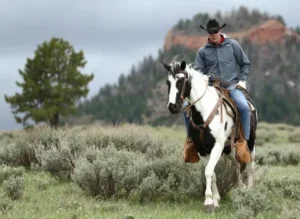
During his first term back in Congress, he introduced the Public Lands in Public Hand Act, banning the sale or transfer of federal lands, and the Fill the Lake Act requiring federal water managers keep Flathead Lake at full pool all summer. He also introduced two bipartisan bills to promote public-private-partnerships to protect migration corridors of Montana’s iconic big game species like elk, mule deer and antelope – benefitting wildlife and sportsmen alike. These bills built off his work as Secretary where he created the first federal program for migration corridors, expanded hunting and fishing opportunities on more than two million acres of federal lands and waters, and introduced legislation that made historic investments to rebuild our National Parks and Forests infrastructure.
Zinke has also focused his first term on ensuring traditional multiple use of the land is maintained to support Montana’s rural communities. Stopping frivolous lawsuits from radical environmental organizations is key to that. The House passed Zinke’s legislation creating a litigation strike force team to go against serial litigants and his legislation to delist the grizzly bear. Zinke also worked as secretary to reform the Endangered Species Act so that it can no longer be weaponized by the radical left and instead focus on species in the most need of recovery efforts.
Ryan Zinke for U.S. Congress | RyanZinke.com
---
wildlife corridorsGREENWIRE | Joel Pedersen, the former president and CEO of the Mule Deer Foundation, is set to take the helm of the Theodore Roosevelt Conservation Partnership, the group announced Monday.
Pedersen, who also served in leadership roles during more than two decades at the National Wild Turkey Federation, will start in his new role Sept. 1, the TRCP board said. He left the Mule Deer Foundation in February after three years as its leader.
“Joel is a coalition builder and an inspiring leader who made a lasting impression on the board with his deep knowledge of conservation policy, passion for the American model of conservation, and well-earned respect within the conservation community,” Alston Watt, chair of the TRCP board of directors, said in a statement.
Pedersen will take the reins of the group from Becky Humphries, former CEO of the National Wild Turkey Federation and a TRCP board member.
Humphries stepped in as TRCP’s interim president and CEO and board member since December, when the group’s longtime leader Whit Fosburgh resigned, citing “personal reasons.”
...
gREENWIRE | The Theodore Roosevelt Conservation Partnership announced the election of a new board chair this week, days after the group's longtime president and CEO resigned.
Alston Watt, the executive director of the Williams Family Foundation of Georgia, was elected Thursday for a two-year term starting Jan. 1. She replaces James Baker, whose term as board chair expires Dec. 31, the organization’s spokesperson Dan Morgan said Friday in an email.
The announcement came after the group’s former President and CEO Whit Fosburgh stepped down earlier this week after 13 years on the job.
Fosburgh left for “personal reasons,” he said in an interview earlier this week. An email sent to TRCP’s staff and partners Monday also said Fosburgh was stepping down to “focus on personal family matters.”
Becky Humphries, who serves on TRCP’s board of directors and is the former CEO of the National Wild Turkey Federation, is serving as TRCP’s interim CEO.
...
June 24, 2024
Padilla, Zinke, Beyer Announce Bipartisan Bill to Strengthen Habitat Connectivity and Migration Corridors
WASHINGTON, D.C. — Today, U.S. Senator Alex Padilla (D-Calif.), Chair of the Senate Environment and Public Works (EPW) Subcommittee on Fisheries, Water, and Wildlife, announced bipartisan legislation to support state, tribal, and local efforts to strengthen wildlife habitat connectivity and migration corridors. Representatives Ryan Zinke (R-Mont.-01) and Don Beyer (D-Va.-08) are leading companion legislation in the House of Representatives.
Wildlife migrate both daily and seasonally to survive, but the habitats animals rely on are increasingly fragmented by housing, roads, fences, energy facilities, and other human-made barriers. Ecosystem changes, invasive species, climate change, and extreme weather also fragment home ranges and migration routes, resulting in population declines and biodiversity loss.
To help address these challenges, the Wildlife Movement Through Partnerships Act would establish and support several programs to support the movement and migration of wildlife.
Many Californians became familiar with the dangers of wildlife barriers after the heartbreaking passing of P-22, the iconic mountain lion of Griffith Park known for wandering around the Hollywood Hills. His passing has spurred a movement that led to the construction of the historic Wallis Annenberg Wildlife Crossing in Agoura Hills, California. A mountain lion was recently killed on the 101 Freeway not far from where the wildlife crossing is being built. This legislation would build on that momentum to further connect and protect landscapes that wildlife need to move freely across federal, state, tribal, and private lands to survive.
“Wildlife across the country face additional barriers to their migration, threatening the vibrant biodiversity of our nation and putting human lives at risk,” said Senator Padilla. “From the sprawling urban wilderness of Griffith Park to the Greater Yellowstone Ecosystem to the Atlantic Flyway, protecting wildlife corridors is a crucial bipartisan priority, and I am glad to work across the aisle to better conserve, restore, and enhance habitat connectivity and migration routes across the nation.”
“Wildlife follow the path that has been bred and programmed into them over generations with no understanding of the distinctions between private and public or federal and state land. That’s why collaboration and partnerships are so important when managing migratory species such as Pronghorn, big horn, and Mule Deer,” said Representative Zinke. “It has been five years since I signed S.O. 3362 and a lot of quality conservation work has been done to promote big game habitat in that time, and now is the time to solidify the intent and purpose of the program to promote public-private partnerships in conservation and focus on migratory big game. I thank Representative Beyer and Senator Padilla for joining me in this critical effort.”
“With one in five migratory species facing the threat of extinction, recognizing connectivity corridors can help us understand biodiversity loss and better protect the migration patterns of iconic American species, like the Pronghorn,” said Representative Beyer. “Our Wildlife Movement Through Partnerships Act would provide the necessary grants and technical assistance to enhance wildlife connectivity and enable the collection and analysis of data on wildlife movement areas. Additionally, this bill would support the U.S. Geological Service mapping efforts that track wildlife movement to accurately identify active corridors and migration patterns. I thank my colleagues and conservation leaders who worked with us to craft this important bill and urge my colleagues to support it as we seek to protect our wildlife diversity by ensuring that species can move freely across landscapes and access vital resources.”
“Wildlife corridors and connectivity projects are critical for California’s incredible biodiversity and for wildlife across West. They’re also great for people and public safety,” said California Department of Fish and Wildlife Director Charlton H. Bonham. “It’s an effort that everyone can get behind and support. We are so appreciative of the senator’s leadership and the partnerships across the aisle to get meaningful outcomes.”
“Successful migration conservation requires collaboration between local, state, Tribal and federal governments, private landowners, and the NGO community,” said Becky Humphries, President and CEO of the Theodore Roosevelt Conservation Partnership. “This bill would authorize existing federal programs that support locally driven, collaborative conservation projects to restore and conserve the most important areas wildlife need to migrate and move to fulfill their lifecycle needs. TRCP thanks Senator Padilla and Representatives Zinke and Beyer for introducing this critically important, bipartisan and bicameral legislation.”
Specifically, the Wildlife Movement Through Partnerships Act would protect wildlife movement and habitat connectivity through actions including:
- Establishing the “Wildlife Movement and Migration Corridor Program” at the Department of the Interior and administered by the National Fish and Wildlife Foundation to conserve, restore, or enhance habitat, migration routes, and connectivity, with a 50 percent set-aside for big game movement areas;
- Establishing the State and Tribal Migration Research Program to provide funds directly to state fish and wildlife agencies and tribes to advance applied research that addresses data gaps and improves understanding of terrestrial connectivity, wildlife movement routes, and migration routes;
- Allowing for funds from the Fish and Wildlife Service’s existing “Partners for Fish and Wildlife Program” to be used to support terrestrial connectivity, wildlife movement, and migration route conservation; and
- Directing the U.S. Geological Survey corridor mapping team to provide technical assistance to states and tribes and collaborate with federal and state agencies and tribes to build on existing efforts to map movement areas, with a 50 percent set-aside for big game areas.
The bill is endorsed by more than 50 organizations, including the Theodore Roosevelt Conservation Partnership, the National Wildlife Federation, the Wildlands Conservancy, Boone & Crockett Club, Congressional Sportsmen’s Foundation, National Parks Conservation Association, Mule Deer Foundation, Rocky Mountain Elk Foundation, and the Wild Sheep Foundation.
A full list of endorsing organizations is available here and a list of supporter quotes is available here.
Last year, Padilla convened a hearing entitled “Challenges and Opportunities to Facilitate Wildlife Movement and Improve Migration Corridors,” to hear from experts on how to facilitate wildlife migration across public, tribal, and private lands. During the hearing, Padilla supporting voluntary conservation efforts throughout the country, including increased federal funding for state and local research and data gathering, or on-the-ground projects that restore wildlife corridors. Padilla also supported an unprecedented $350 million investment to the Department of Transportation from the Bipartisan Infrastructure Law to implement a first-of-its-kind pilot program to make roads safer, prevent wildlife-vehicle collisions, and improve habitat connectivity.
A one-pager on the bill is available here.
===
8 24 not all
| HCRes13 | Supporting the Local Radio Freedom Act. | CONCURRENT RESOLUTION Supporting the Local Radio Freedom Act. | In Committee |
|---|---|---|---|
| HCRes60 | Calling for the immediate release of Marc Fogel, a United States citizen and teacher, who was given an unjust and disproportionate criminal sentence by the Government of the Russian Federation in June 2022. | CONCURRENT RESOLUTION Calling for the immediate release of Marc Fogel, a United States citizen and teacher, who was given an unjust and disproportionate criminal sentence by the Government of the Russian Federation in June 2022. | In Committee |
|HCRes86|Expressing the sense of Congress that a carbon tax would be detrimental to the United States economy.|Expressing the sense of Congress that a carbon tax would be detrimental to the United States economy.|Crossed Over|
| HJRes7 | Relating to a national emergency declared by the President on March 13, 2020. | Joint Resolution Relating to a national emergency declared by the President on March 13, 2020. | Signed/Enacted/Adopted |
|---|---|---|---|
| HJRes11 | Proposing an amendment to the Constitution of the United States to limit the number of terms that a Member of Congress may serve. | JOINT RESOLUTION Proposing an amendment to the Constitution of the United States to limit the number of terms that a Member of Congress may serve. | In Committee |
| HJRes12 | Proposing a balanced budget amendment to the Constitution of the United States. | JOINT RESOLUTION Proposing a balanced budget amendment to the Constitution of the United States. | In Committee |
|HJRes19|Proposing a balanced budget amendment to the Constitution requiring that each agency and department's funding is justified.|JOINT RESOLUTION Proposing a balanced budget amendment to the Constitution requiring that each agency and department’s funding is justified.|In Committee|
| HJRes26 | Disapproving the action of the District of Columbia Council in approving the Revised Criminal Code Act of 2022. | Joint Resolution Disapproving the action of the District of Columbia Council in approving the Revised Criminal Code Act of 2022. | Signed/Enacted/Adopted |
|HJRes27|Providing for congressional disapproval under chapter 8 of title 5, United States Code, of the rule submitted by the Department of the Army, Corps of Engineers, Department of Defense and the Environmental Protection Agency relating to "Revised Definition of 'Waters of the United States'".|Joint Resolution Providing for congressional disapproval under chapter 8 of title 5, United States Code, of the rule submitted by the Department of the Army, Corps of Engineers, Department of Defense and the Environmental Protection Agency relating to ‘‘Revised Definition of ‘Waters of the United States’ ’’.|Vetoed|
|HJRes30|Providing for congressional disapproval under chapter 8 of title 5, United States Code, of the rule submitted by the Department of Labor relating to "Prudence and Loyalty in Selecting Plan Investments and Exercising Shareholder Rights".|Joint Resolution Providing for congressional disapproval under chapter 8 of title 5, United States Code, of the rule submitted by the Department of Labor relating to ‘‘Prudence and Loyalty in Selecting Plan Investments and Exercising Shareholder Rights’’.|Vetoed|
| HJRes33 | To acknowledge the courage and sacrifice of veterans of the Vietnam War and formally apologize for the treatment they received upon returning home. | JOINT RESOLUTION To acknowledge the courage and sacrifice of veterans of the Vietnam War and formally apologize for the treatment they received upon returning home. | In Committee |
| HJRes44 | Providing for congressional disapproval under chapter 8 of title 5, United States Code, of the rule submitted by the Bureau of Alcohol, Tobacco, Firearms, and Explosives relating to "Factoring Criteria for Firearms with Attached 'Stabilizing Braces'". | JOINT RESOLUTION Providing for congressional disapproval under chapter 8 of title 5, United States Code, of the rule submitted by the Bureau of Alcohol, Tobacco, Firearms, and Explosives relating to ‘‘Factoring Criteria for Firearms with Attached ‘Stabilizing Braces’ ’’. | Crossed Over |
| HJRes46 | Providing for congressional disapproval under chapter 8 of title 5, United States Code, of the rule submitted by the National Marine Fisheries Service relating to "Endangered and Threatened Wildlife and Plants; Regulations for Listing Endangered and Threatened Species and Designating Critical Habitat". | JOINT RESOLUTION Providing for congressional disapproval under chapter 8 of title 5, United States Code, of the rule submitted by the National Marine Fisheries Service relating to ‘‘Endangered and Threatened Wildlife and Plants; Regulations for Listing Endangered and Threatened Species and Designating Critical Habitat’’. | In Committee |
|HJRes49|Providing for congressional disapproval under chapter 8 of title 5, United States Code, of the rule submitted by the United States Fish and Wildlife Service relating to "Endangered and Threatened Wildlife and Plants; Endangered Species Status for Northern Long-Eared Bat".|JOINT RESOLUTION Providing for congressional disapproval under chapter 8 of title 5, United States Code, of the rule submitted by the United States Fish and Wildlife Service relating to ‘‘Endangered and Threatened Wildlife and Plants; Endangered Species Status for Northern Long-Eared Bat’’.|In Committee|
| HJRes73 | Proposing an amendment to the Constitution of the United States giving Congress power to prohibit the physical desecration of the flag of the United States. | JOINT RESOLUTION Proposing an amendment to the Constitution of the United States giving Congress power to prohibit the physical desecration of the flag of the United States. | In Committee |
| HJRes83 | Providing for congressional disapproval under chapter 8 of title 5, United States Code, of the rule submitted by U.S. Citizenship and Immigration Services and the Executive Officer for Immigration Review relating to "Circumvention of Lawful Pathways". | JOINT RESOLUTION Providing for congressional disapproval under chapter 8 of title 5, United States Code, of the rule submitted by U.S. Citizenship and Immigration Services and the Executive Officer for Immigration Review relating to ‘‘Circumvention of Lawful Pathways’’. | In Committee |
| HJRes136 | Providing for congressional disapproval under chapter 8 of title 5, United States Code, of the rule submitted by the Environmental Protection Agency relating to "Multi-Pollutant Emissions Standards for Model Years 2027 and Later Light-Duty and Medium-Duty Vehicles". | Providing for congressional disapproval under chapter 8 of title 5, United States Code, of the rule submitted by the Environmental Protection Agency relating to "Multi-Pollutant Emissions Standards for Model Years 2027 and Later Light-Duty and Medium-Duty Vehicles". | In Committee |
| HJRes139 | Providing for congressional disapproval under chapter 8 of title 5, United States Code, of the rule submitted by the Centers for Medicare & Medicaid Services relating to "Medicare and Medicaid Programs: Minimum Staffing Standards for Long-Term Care Facilities and Medicaid Institutional Payment Transparency Reporting". | Providing for congressional disapproval under chapter 8 of title 5, United States Code, of the rule submitted by the Centers for Medicare & Medicaid Services relating to "Medicare and Medicaid Programs: Minimum Staffing Standards for Long-Term Care Facilities and Medicaid Institutional Payment Transparency Reporting". | In Committee |
|HJRes144|Providing for congressional disapproval under chapter 8 of title 5, United States Code, of the rule submitted by the Bureau of Alcohol, Tobacco, Firearms, and Explosives, Department of Justice, relating to "Definition of 'Engaged in the Business' as a Dealer in Firearms".|Providing for congressional disapproval under chapter 8 of title 5, United States Code, of the rule submitted by the Bureau of Alcohol, Tobacco, Firearms, and Explosives, Department of Justice, relating to "Definition of 'Engaged in the Business' as a Dealer in Firearms".|In Committee|
| HJRes150 | Providing for congressional disapproval under chapter 8 of title 5, United States Code, of the rule submitted by the Environmental Protection Agency relating to "National Emission Standards for Hazardous Air Pollutants: Coal- and Oil-Fired Electric Utility Steam Generating Units Review of the Residual Risk and Technology Review". | Providing for congressional disapproval under chapter 8 of title 5, United States Code, of the rule submitted by the Environmental Protection Agency relating to "National Emission Standards for Hazardous Air Pollutants: Coal- and Oil-Fired Electric Utility Steam Generating Units Review of the Residual Risk and Technology Review". | In Committee |
| HJRes154 | Providing for congressional disapproval under chapter 8 of title 5, United States Code, of the rule submitted by the Bureau of Land Management relating to "Fluid Mineral Leases and Leasing Process". | Providing for congressional disapproval under chapter 8 of title 5, United States Code, of the rule submitted by the Bureau of Land Management relating to "Fluid Mineral Leases and Leasing Process". | In Committee |
| HJRes157 | Providing for congressional disapproval under chapter 8 of title 5, United States Code, of the rule submitted by the National Marine Fisheries Service relating to "Endangered and Threatened Wildlife and Plants; Listing Endangered and Threatened Species and Designating Critical Habitat". | Providing for congressional disapproval under chapter 8 of title 5, United States Code, of the rule submitted by the National Marine Fisheries Service relating to "Endangered and Threatened Wildlife and Plants; Listing Endangered and Threatened Species and Designating Critical Habitat". | In Committee |
| HJRes158 | Providing for congressional disapproval under chapter 8 of title 5, United States Code, of the rule submitted by the United States Fish and Wildlife Service relating to "Endangered and Threatened Wildlife and Plants; Listing Endangered and Threatened Species and Designating Critical Habitat". | Providing for congressional disapproval under chapter 8 of title 5, United States Code, of the rule submitted by the United States Fish and Wildlife Service relating to "Endangered and Threatened Wildlife and Plants; Listing Endangered and Threatened Species and Designating Critical Habitat". | In Committee |
| HJRes159 | Providing for congressional disapproval under chapter 8 of title 5, United States Code, of the rule submitted by the United States Fish and Wildlife Service relating to "Endangered and Threatened Wildlife and Plants; Regulations Pertaining to Endangered and Threatened Wildlife and Plants". | Providing for congressional disapproval under chapter 8 of title 5, United States Code, of the rule submitted by the United States Fish and Wildlife Service relating to "Endangered and Threatened Wildlife and Plants; Regulations Pertaining to Endangered and Threatened Wildlife and Plants". | In Committee |
| HJRes163 | Providing for congressional disapproval under chapter 8 of title 5, United States Code, of the rule submitted by the Environmental Protection Agency relating to "New Source Performance Standards for Greenhouse Gas Emissions From New, Modified, and Reconstructed Fossil Fuel-Fired Electric Generating Units; Emission Guidelines for Greenhouse Gas Emissions From Existing Fossil Fuel-Fired Electric Generating Units; and Repeal of the Affordable Clean Energy Rule". | Providing for congressional disapproval under chapter 8 of title 5, United States Code, of the rule submitted by the Environmental Protection Agency relating to "New Source Performance Standards for Greenhouse Gas Emissions From New, Modified, and Reconstructed Fossil Fuel-Fired Electric Generating Units; Emission Guidelines for Greenhouse Gas Emissions From Existing Fossil Fuel-Fired Electric Generating Units; and Repeal of the Affordable Clean Energy Rule". | In Committee |
| HJRes188 | Providing for congressional disapproval under chapter 8 of title 5, United States Code, of the rule submitted by the Department of the Interior relating to "Conservation and Landscape Health". | Providing for congressional disapproval under chapter 8 of title 5, United States Code, of the rule submitted by the Department of the Interior relating to "Conservation and Landscape Health". | In Committee |
| HJRes199 | Providing for congressional disapproval under chapter 8 of title 5, United States Code, of the rule submitted by the National Highway Traffic Safety Administration relating to "Corporate Average Fuel Economy Standards for Passenger Cars and Light Trucks for Model Years 2027 and Beyond and Fuel Efficiency Standards for Heavy-Duty Pickup Trucks and Vans for Model Years 2030 and Beyond". | Providing for congressional disapproval under chapter 8 of title 5, United States Code, of the rule submitted by the National Highway Traffic Safety Administration relating to "Corporate Average Fuel Economy Standards for Passenger Cars and Light Trucks for Model Years 2027 and Beyond and Fuel Efficiency Standards for Heavy-Duty Pickup Trucks and Vans for Model Years 2030 and Beyond". | In Committee |
| HR1 | Lower Energy Costs Act TAPP American Resources Act Water Quality Certification and Energy Project Improvement Act of 2023 Transparency, Accountability, Permitting, and Production of American Resources Act | AN ACT To lower energy costs by increasing American energy production, exports, infrastructure, and critical minerals processing, by promoting transparency, accountability, permitting, and production of American resources, and by improving water quality certification and energy projects, and for other purposes. | In Committee |
| HR2 | Secure the Border Act of 2023 | AN ACT To secure the borders of the United States, and for other purposes. | Crossed Over |
| HR5 | Parents Bill of Rights Act | AN ACT To ensure the rights of parents are honored and protected in the Nation’s public schools. | Crossed Over |
| HR7 | No Taxpayer Funding for Abortion and Abortion Insurance Full Disclosure Act of 2023 | A BILL To prohibit taxpayer funded abortions. | In Committee |
| HR22 | Protecting America’s Strategic Petroleum Reserve from China Act | AN ACT To prohibit the Secretary of Energy from sending petroleum products from the Strategic Petroleum Reserve to China, and for other purposes. | Crossed Over |
| HR29 | Border Safety and Security Act of 2023 | A BILL To authorize the Secretary of Homeland Security to suspend the entry of aliens, and for other purposes. | In Committee |
|HR38|Concealed Carry Reciprocity Act|A BILL To amend title 18, United States Code, to provide a means by which nonresidents of a State whose residents may carry concealed firearms may also do so in the State.|In Committee|
| HR82 | Social Security Fairness Act of 2023 | A BILL To amend title II of the Social Security Act to repeal the Government pension offset and windfall elimination provisions. | In Committee |
| HR209 | Permitting for Mining Needs Act of 2023 | A BILL To improve the permitting process for mining on Federal land, and for other purposes. | In Committee |
|---|---|---|---|
| HR277 | Regulations from the Executive in Need of Scrutiny Act of 2023 | AN ACT To amend chapter 8 of title 5, United States Code, to provide that major rules of the executive branch shall have no force or effect unless a joint resolution of approval is enacted into law. | Crossed Over |
|HR297|To direct the Secretary concerned to reinstate a member involuntarily separated from the Armed Forces solely on the basis of the refusal of such member to receive a vaccination against COVID-19.|A BILL To direct the Secretary concerned to reinstate a member involuntarily separated from the Armed Forces solely on the basis of the refusal of such member to receive a vaccination against COVID-19.|In Committee|
| HR335 | STOP Fentanyl Act Standardizing Thresholds Of Penalties for Fentanyl Act | A BILL To reduce the threshold for mandatory minimum penalties for fentanyl-related offenses under the Controlled Substances Act and the Controlled Substances Import and Export Act, and for other purposes. | In Committee |
| HR336 | Finish the Wall Act | A BILL To immediately resume construction of the border wall system along the international border between the United States and Mexico to secure the border, enforce the rule of law, and expend appropriated funds as mandated by Congress, and for other purposes. | In Committee |
| HR513 | FARM Act Foreign Adversary Risk Management Act | A BILL To amend the Defense Production Act of 1950 to prevent harm and disruption to the United States agriculture industry by protecting against foreign influence over agriculture production and supply chains, and for other purposes. | In Committee |
| HR537 | Forgotten Heroes of the Holocaust Congressional Gold Medal Act | AN ACT To award a Congressional Gold Medal to 60 diplomats, in recognition of their bravery and heroism during the Holocaust. | Crossed Over |
| HR553 | Workplace Choice and Flexibility for Individuals with Disabilities Act | A BILL To amend the Rehabilitation Act of 1973 to clarify the definition of competitive integrated employment. | In Committee |
| HR567 | SALVAGE Act Salvaging American Lumber Via Action with Greater Efficiency Act | A BILL To expedite certain activities related to salvage operations and reforestation activities on National Forest System lands or public lands in response to catastrophic events, and for other purposes. | In Committee |
| HR582 | Credit Union Board Modernization Act | AN ACT To amend the Federal Credit Union Act to modify the frequency of board of directors meetings, and for other purposes. | Crossed Over |
| HR615 | Protecting Access for Hunters and Anglers Act of 2023 | AN ACT To prohibit the Secretary of the Interior and the Secretary of Agriculture from prohibiting the use of lead ammunition or tackle on certain Federal land or water under the jurisdiction of the Secretary of the Interior and the Secretary of Agriculture, and for other purposes. | Crossed Over |
| HR674 | Root and Stem Project Authorization Act of 2023 | A BILL To codify the authority of the Secretary of Agriculture and the Secretary of the Interior to conduct certain landscape-scale forest restoration projects, and for other purposes. | In Committee |
| HR700 | Supply Chain Disruptions Relief Act | A BILL To treat certain liquidations of new motor vehicle inventory as qualified liquidations of LIFO inventory for purposes of the Internal Revenue Code of 1986. | In Committee |
| HR705 | Veterans 2nd Amendment Protection Act | A BILL To amend title 38, United States Code, to prohibit the Secretary of Veterans Affairs from transmitting certain information to the Department of Justice for use by the national instant criminal background check system. | In Committee |
| HR764 | Trust the Science Act | AN ACT To require the Secretary of the Interior to reissue regulations removing the gray wolf from the list of endangered and threatened wildlife under the Endangered Species Act of 1973. | Crossed Over |
| HR775 | FTO Passport Revocation Act of 2022 | A BILL To authorize the revocation or denial of passports to individuals affiliated with foreign terrorist organizations, and for other purposes. | In Committee |
| HR776 | Build up Illegal Line Defenses with Assets Lawfully Lifted Act of 2023 | A BILL To amend section 524(c) of title 18, United States Code, to use lawfully forfeited drug seizures to increase border security. | In Committee |
| HR777 | Visa Overstay Enforcement Act of 2023 | A BILL To amend the Immigration and Nationality Act to penalize aliens who overstay their visas, and for other purposes. | In Committee |
| HR778 | Terrorist Deportation Act of 2023 | A BILL To amend the Immigration and Nationality Act to facilitate the removal of aliens identified in the terrorist screening database, and for other purposes. | In Committee |
| HR779 | No Social Security for Illegal Aliens Act of 2023 | A BILL To amend title II of the Social Security Act to exclude from creditable wages and self-employment income wages earned for services by aliens illegally performed in the United States and self-employment income derived from a trade or business illegally conducted in the United States. | In Committee |
|HR780|Mobilizing Against Sanctuary Cities Act|A BILL To prohibit the receipt of Federal financial assistance by sanctuary cities, and for other purposes.|In Committee|
| HR809 | Prohibition of Agricultural Land for the People’s Republic of China Act | A BILL To prohibit certain persons from purchasing agricultural real estate in the United States, and for other purposes. | In Committee |
|HR812|Inflation Reduction Act of 2023|A BILL To repeal the Inflation Reduction Act of 2022.|In Committee|
|HR923|POWER Act of 2023 Protecting Our Wealth of Energy Resources Act of 2023|A BILL To prohibit the President from issuing moratoria on leasing and permitting energy and minerals on certain Federal land.|In Committee|
| HR925 | Protect Camp Lejeune VETS Act Protect Camp Lejeune Victims Ensnared by Trial-lawyer’s Scams Act | A BILL To amend the Camp Lejeune Justice Act of 2022 to appropriately limit attorney’s fees. | In Committee |
| HR940 | Information Security Investment Act of 2023 | A BILL To require each Member of Congress and the President and Vice President to complete a program of training in handling and safeguarding classified information, and for other purposes. | In Committee |
| HR987 | Prime Minister Golda Meir Commemorative Coin Act | A BILL To require the Secretary of the Treasury to mint coins in recognition of the late Prime Minister Golda Meir and the 75th anniversary of the United States-Israel relationship. | In Committee |
|---|---|---|---|
| HR1015 | Dustoff Crews of the Vietnam War Congressional Gold Medal Act | A BILL To award a Congressional Gold Medal to the United States Army Dustoff crews of the Vietnam War, collectively, in recognition of their extraordinary heroism and lifesaving actions in Vietnam. | In Committee |
| HR1088 | Shirley Chisholm Congressional Gold Medal Act | A BILL To posthumously award a Congressional Gold Medal to Shirley Chisholm. | In Committee |
| HR1096 | 250th Anniversary of the United States Marine Corps Commemorative Coin Act | AN ACT To require the Secretary of the Treasury to mint coins in commemoration of the 250th Anniversary of the United States Marine Corps, and to support programs at the Marine Corps Heritage Center. | Signed/Enacted/Adopted |
| HR1097 | Everett Alvarez, Jr. Congressional Gold Medal Act of 2023 | AN ACT To award a Congressional Gold Medal to Everett Alvarez, Jr., in recognition of his service to the Nation. | Crossed Over |
| HR1112 | Ensuring Military Readiness Act of 2023 | A BILL To provide requirements related to the eligibility of individuals who identify as transgender from serving in the Armed Forces. | In Committee |
|HR1154|Stop Forced Organ Harvesting Act of 2023|AN ACT To combat forced organ harvesting and trafficking in persons for purposes of the removal of organs, and for other purposes.|Crossed Over|
| HR1222 | Buffalo Soldiers Congressional Gold Medal Act of 2023 | A BILL To award a Congressional Gold Medal collectively to the Buffalo Soldier regiments, authorized by Congress in 1866 to serve in the United States Armed Forces, in recognition of their superior, dedicated, and vital service to our Nation. | In Committee |
| HR1245 | Grizzly Bear State Management Act of 2023 | A BILL To direct the Secretary of the Interior to reissue a final rule relating to removing the Greater Yellowstone Ecosystem population of grizzly bears from the Federal list of endangered and threatened wildlife, and for other purposes. | In Committee |
| HR1282 | Major Richard Star Act | A BILL To amend title 10, United States Code, to expand eligibility to certain military retirees for concurrent receipt of veterans’ disability compensation and retired pay or combatrelated special compensation, and for other purposes. | In Committee |
| HR1388 | Sultana Steamboat Disaster Commemorative Coin Act of 2023 | A BILL To require the Secretary of the Treasury to mint coins to honor and memorialize the tragedy of the Sultana steamboat explosion of 1865. | In Committee |
|HR1419|Comprehensive Grizzly Bear Management Act of 2023|A BILL To direct the Secretary of the Interior to issue a new rule removing the Northern Continental Divide Ecosystem population of grizzly bears from the Federal list of endangered and threatened wildlife.|....
===
an 8 24
:{The cost of living remains a major issue for American voters heading into the November election. And one Democrat hoping to unseat an incumbent Republican may have hit a nerve with her latest campaign ad.
In a new 30-second ad posted to her official X (formerly Twitter) account, Monica Tranel — a plaintiffs' attorney and former Olympic athlete — booked the Airbnb owned by Rep. Ryan Zinke (R-Montana), who she is hoping to unseat this fall. She showcased the average-sized home and its mediocre fixtures as an example of Zinke "buying up properties across Montana and jacking up the rent."
"$16,000 a month for this place," Tranel said, before showing a clip of her yelping when the rental's Murphy bed fell out of its wall compartment.
READ MORE:['The company is bleeding cash': GOP Senate candidate's failing business becomes a liability
"Housing profiteers like Ryan Zinke are the reason it's so expensive to live here," she added.
In the ad, Tranel showed an Airbnb listing entitled "Our Montana Retreat at Bay Point on Whitefish Lake," which is a two-bedroom, two-bathroom home listed by a host named "Lolita" (Lolita Hand is Zinke's wife). In the ad, the cost breakdown shows an "accommodation" cost of $16,800, a cleaning fee of $200 and an Airbnb service fee of $1,537 for a month-long stay, with a "monthly stay discount" of $2,520 for a total pre-tax cost of $16,017 for one month.
When attempting to book the rental for the month between March 5 and April 5, 2025, AlterNet found an accommodation cost of $18,600, a $200 cleaning fee and a $732 service fee. However, the "monthly stay discount" now shows $11,904 for those dates, suggesting Zinke or his wife may have adjusted the listing since Tranel released her ad.
"This retreat comfortably sleeps 8, featuring two Murphy beds for added flexibility," the listing reads. "Complete with a fully equipped kitchen, with luxurious furnishings throughout. Welcome to your perfect Whitefish getaway!"
READ MORE:[Busted: GOP Senate candidate running on rural roots grew up 'three miles from a Trader Joe's'
The median home price in Montana is much larger than the national average, with Realtor.com pegging that figure at $624,950 — well above the U.S. median home price of $420,000. And that price can fluctuate depending on which city in the Big Sky State a potential homebuyer is hoping to land. The median home price in Billings is $439,000, while the median climbs to as high as $889,000 in Bozeman. Median monthly rents in those cities are at $1,350 and $2,300, respectively.
According to a January article in the Great Falls Tribune, home prices in Montana have grown by 105% since 2017. The Montana Department of Commerce wrote in a study that homeownership for the state's low-income and middle-class residents is a "near impossibility" given the explosion in housing costs.
Watch Tranel's ad below, or by clicking this link.
READ MORE:[GOP Senate candidate running on 'bootstrap' narrative got 6-figure investment from his parents
===
aha note just mirror of std left charge: tucker boost on weaponization revived deep state, along w/ fbi raid on trump
note he like trump is a victim
https://www.alternet.org/ryan-zinke-accuses-deep-state/
United States Congressman Ryan Zinke (R-Montana) delivered a speech on the floor of the House of Representatives on Tuesday in which he proclaimed that a "deep state" along with "liberals" are engaged in a sinister agenda targeting himself and other conservatives.
Prior to his election to Congress in the November 2022 midterms, Zinke served as secretary of the interior under former President Donald Trump. He resigned in December 2018 amid a flurry of ethics scandals and suspicions of corruption.
Nonetheless, on Tuesday, Zinke declared himself a victim of a vast conspiracy and endorsed House Speaker Kevin McCarthy's (R-California) proposal to create a subcommittee tasked with investigating various federal agencies that have open inquiries into Trump.
READ MORE: Paul Krugman: House Republicans’ economics are as 'divorced from reality' as their election lies
"Mister Speaker, I rise today in support of a select committee to investigate the weaponization of the federal government, something I have a lot of experience firsthand. I proudly served as the fifty-second secretary of interior, and despite the deep state's repeatedly attempts to stop me, I stand before you as a duly elected member of the United States Congress andtell you that a deep state exists and it is perhaps the strongest covert weapon the left has against the American people," Zinke said.
"There is no doubt the federal government deep state coordinates with liberal activists and uses politicians and willing media to carry their water. The deep state runs secret messaging campaigns with one goal in mind – to increase its power to censor and persuade the American people. Dark money groups, funded by liberal billionaires and foreign investors, funnel money to shell organizations and repeatedly attempt to destroy the American West. They want to wipe out the American cowboy completely,remove public access to our lands, and turn Montana into a national park. They want to control our land and our lifestyle," Zinke alleged before claiming that he amassed so-called evidence from a right-wing non-profit.
"Mister Speaker," Zinke added, "I'd like to submit a five-part series of investigative articles by the Capitol Research Center entitled, Arabella's Long War Keep It in the Ground into the congressional record."
Watch below or at this link.
crc bs report
arabella’s Long War Against Trump’s Department of the Interior (full series)
“Keep It in the Ground” | Web of “Pop-Up” Groups
Anatomy of an Arabella Campaign | Harried Until the End
===
===
wtf?! lied to IG
https://montanafreepress.org/2022/11/10/zinke-wins-race-for-montanas-western-u-s-house-district/
no lnx gfx
2022 ELECTIONS
Zinke wins race for Montana’s western U.S. House district
The Republican beat Democrat Monica Tranel by four points to conclude the state’s highest-profile race of the 2022 election cycle.
by Arren Kimbel-Sannit
11.10.2022
Ryan Zinke, Republican candidate for Montana's western U.S. House district, attends a police ride-along in Browning on Oct. 14 Credit: Arren Kimbel-Sannit / Montana Free Press
Republican Ryan Zinke has won the race to represent Montana’s newly created western U.S. House district.
With all precincts reported, Zinke received 120,285 votes. Energy attorney Monica Tranel, a Missoula Democrat, received 112,271 votes, four points behind Zinke. John Lamb, a Norris farmer running on the Libertarian ticket, came in third with9,304 votes. Zinke declared victory Wednesday night, and the Associated Press called the race for him Thursday morning.
“I’m incredibly grateful to the people of Western Montana for once again placing their trust in me to fight for them in Washington, D.C.,” Zinke said in a statement Wednesday night. “The voters saw through the vicious lies and deceit of my opponents and radical political groups. Truth matters, and now it’s time to fight for freedom and protect our way of life in Montana.”
Montana's Western Congressional District (MT-01)
Based on the 2022 general election results available at 8:41 a.m. 11/10/22.
RYAN K ZINKE leading by 8,014 votes of 241,861 counted (+3%).
Votes in county-level victory margin
[map]
Ryan Zinke (R)
Monica Tranel (D)
Libertarian John Lamb was also on the ballot.
In a tearful Thursday morning speech in front of the Maureen and Mike Mansfield Library in Missoula, Tranel, bundled in a heavy coat as snow fell, conceded, thanking her supporters and pledging to continue fighting for the state.
“I shall do so not in the 118th U.S. Congress, but I will serve the people of Montana as I have done my entire career, as your advocate, as your neighbor, as a forever champion of the Montana that I know, I love and I believe in still,” Tranel said.
Zinke will soon be the first person to represent the western U.S. House district. The state had two districts until the 1990 U.S. census, when it was relegated to a single at-large district. Montana regained its second congressional district following the 2020 census count.
What else you need to know:
Secretary of State appeals rulings that struck down new election laws
11.23.2022
Forest Service turns back Holland Lake proposal, for now
11.23.2022
The resignation that wasn’t
11.23.2022
The western district, as drawn by the state Districting and Apportionment Commission, includes 16 counties and two Native American reservations. Republican former President Donald Trump would have carried the district by 7 points in 2020. Tranel outperformed Democratic President Joe Biden in the district, but ultimately could not drive enough votes her way to upset Zinke, who has been considered the favorite since declaring his candidacy in the primary.
RELATED
The Zinke, Tranel (and Lamb) show
Ryan Zinke and Monica Tranel are the two main contenders for Montana’s new western U.S. House district. The presence of Libertarian John Lamb and Zinke’s long, variable record in government could make things complicated.
by Arren Kimbel-Sannit
10.26.2022]
It was arguably the state’s highest profile race this year, as Montana Democrats looked to improve on a dismal showing in 2020 and send one of their own to Congress for the first time since longtime representative Pat Williams retired in 1997.
Zinke raised more than $6 million, more than double the $2.8 million Tranel brought in.Lamb did not file campaign finance paperwork, saying he did not raise or spend enough to cross federal reporting thresholds.
“The voters saw through the vicious lies and deceit of my opponents and radicalpolitical groups. Truth matters, and now it’s time tofight for freedom and protect our way of life in Montana.”
U.S. REP. RYAN ZINKE
:{
}:
Zinke, a former Navy SEAL from Whitefish, began his political career as a state legislator in 2009. He was elected to Montana’s at-large House district in 2014, and then again in 2016. Shortly after being elected to his second term, Zinke joined the cabinet of President Donald Trump as Interior Secretary, a tumultuous period that generated 18 federal investigations into Zinke’s ethics and decision making before his resignation in 2018. Trump endorsed Zinke’s run this cycle.
The former congressman’s time in the Trump administration has colored much of his campaign, both in terms of policy and his contempt for the “deep state” that he says stood in his way during his tenure as Interior Secretary.
He has trumpeted his record as a booster of domestic energy protection — which he achieved in part by expanding oil and gas leasing on public lands — and has said the first piece of legislation he will introduce is the so-called FEAR Act, a proposal to make it easier to fire federal employees.If Republicans take the U.S. House — which, despite a few outstanding races, seems likely — Zinke has said the party needs to use its appropriations power to hamstring the Biden administration and cut federal spending.
“We’re just gonna take the money away so they can’t buy a piece of paper, let alone hiring the Department of Environmental Justice in the EPA,” he said at an October campaign event in Ravalli County.
Tranel, a former Olympic rower, entered electoral politics with a Republican run for the Public Service Commission in 2004, but has since switched parties, running as a Democrat for the commission in 2020 and then for Congress this year. Citing her legal work serving the office of Montana Consumer Counsel, challenging NorthWestern Energy before the PSC and representing renewable energy projects, Tranel has presented herself as an anti-corporatist litigator and a foil to Zinke, who took consulting work in the oil and gas sector after leaving federal office.
Monica Tranel
Democrat Monica Tranel conceded the race for Montana’s western U.S. House district to Ryan Zinke on Thursday, Nov. 10, in Missoula. Credit: Screenshot for Tranel Instagram feed]
Much of her campaign focused on attacking Zinke’s record at Interior, which included a recent finding by a Trump-appointed inspector general that he misled investigators about a Whitefish land deal connected to a Halliburton executive, and his general coziness with the fossil fuel industry against the backdrop of climate change.
Even in admitting defeat, Tranel still had her sights set on her opponent.
“The fact of the election does not erase the corruption of Ryan Zinke,” she said Thursday.
Lamb, the Libertarian, unsuccessfully ran for state Senate in 2020. He first found a public platform as a supporter of the Bundy family during the series of federal trials arising from the 2016 Malheur standoff. A father of 12 raised in an Amish-Mennonite community in Indiana, Lamb made reducing the role of the federal government in just about every aspect of American life a core tenet of his campaign.
Even with his connections to the far-right Bundys and his avowedly hard-line anti-abortion views, he found a welcoming campaign companion in Tranel, generating concern among Republicans that he could play a spoiler to Zinke by peeling off Republican votes. The two attended numerous candidate forums together, and the Montana Democratic Party lauded Lamb’s campaign, writing in an October release that Lamb was “connecting with voters across the district, sharing his story as a father of 12 and a small business owner.”
Outside PACs presumably interested in boosting Tranel’s chances also presented Lamb as a more principled conservative alternative to Zinke, who began his career in the Legislature as a relative moderate.
Zinke will return to Congress alongside fellow Republican Matt Rosendale, who handily won his race in the state’s eastern district. Zinke will now travel to Washington for new member orientation and to receive committee assignments, his team said.
===
===
NEW
https://www.americanprogress.org/article/the-favor-factory/
12/3/22, 1:53 PM The Favor Factory - Center for American Progress
https://www.americanprogress.org/article/the-favor-factory/ 1/24
REPORT AUG 27, 2018
TheFavorFactory
PresidentTrump’s Interior DepartmentIsBenefitingPast
Political Donors andLobbying Clients
A culture of corruption in President Donald Trump’s Interior Department may be resulting in
lucrative rewards for the political patrons and past clients of Secretary Ryan Zinke, Deputy
Secretary David Bernhardt, and other senior Trump administration officials.
Introduction and summary
On August 3, 2017, Secretary of the Interior Ryan Zinke spent his afternoon and evening
with David Lesar, the chairman of oil services giant Halliburton. The two men met in
Marc Rehmann
Interior Secretary Ryan Zinke swears in David Bernhardt as the deputy secretary of the Department of the Interior, August 1, 2017. (U.S. Department of the Interior)
12/3/22, 1:53 PM The Favor Factory - Center for American Progress
https://www.americanprogress.org/article/the-favor-factory/ 2/24
Zinke’s lavish Interior Department offices, toured the Lincoln Memorial together, and
then had dinner at a popular Washington, D.C., beer garden.
The details of Zinke and Lesar’s conversations are not yet known, but according to a
participant in the day’s meetings, the main topic was not energy policy or oil production
but instead areal estate deal in Whitefish, Montana, that would reportedly deliver
private financial benefits to both men.The real estate deal; Zinke’s alleged use of
public office for personal financial gain; and the question of whether Halliburton has
improperly benefited from Lesar’s financial ties to Zinke have rightly attracted the
scrutiny of watchdog groups, congressional investigators, and Interior’s inspector
general.
Both Zinke and Lesar have acknowledged the real estate deal and meeting in the
secretary’s office, and they have dismissed any wrongdoings. However, the emerging
scandal may be part of a string of questionable decisions rather than an isolated
incident. The Center for American Progress reviewed financial and lobbying disclosure
forms of Trump administration officials, as well as Interior Department decisions,
media reports, and other government records. The findings indicate that President
Donald Trump’s Interior Department may be establishing a standard of behavior that
hands out favorable decisions—which may carry substantial financial benefits—to
political patrons and past clients of senior political appointees in the Department of the
Interior (DOI). In some cases, by doing so, the department has dismissed ethical
norms. This pattern of behavior mirrors the culture of corruption that has taken root in
President Trump’s White House, at former Administrator Scott Pruitt’s Environmental
Protection Agency, and in other Trump administration cabinet agencies.
Zinke’s own behaviors and actions—from his real estate deal with Lesar to his mixing of
political, personal, and government business on taxpayer-funded trips—create an
ethically questionable culture within the Department of the Interior’s leadership. Yet it
is Zinke’s deputy secretary, David Bernhardt—previously a lobbyist on issues he now
oversees—who appears to be a central figure in a carefully constructed clientelistic
system for dispensing political favors. The authors of this report characterize this
system as the Interior Department’s “favor factory.”
Bernhardt, who led then-President-elect Trump’s transition team for the Department of
the Interior, first served in the Interior Department as a political appointee in the
administration of former President George W. Bush. He served as senior aide to then
Interior Secretary Gale Norton before being promoted to serve as the Interior
Department’s top lawyer. As solicitor, Bernhardt authored several controversial legal
opinions, including ones that made it more difficult to designate endangered species.
After leaving the department in 2009, Bernhardt rejoined the Washington, D.C., office
of Brownstein Hyatt Farber Schreck, where he lobbied for mining companies, oil and
gas companies, powerful water users in the West, and other groups that have a financial
interest in decisions that are made by the Department of the Interior. In August 2017, he
was sworn in as Interior’s deputy secretary.
This report will explore three notable features of the favor factory at the Interior
Department. First, it will examine how Trump administration political appointees at the
Interior Department can exploit weakened federal ethics guidelines to work in positions
where they can deliver favorable decisions to past clients and mask their portfolio of
responsibilities from public inspection. Second, it will analyze recent Interior
Department decisions that are favorable to past clients of former lobbyists and litigants
who are working in Trump’s Department of the Interior. Finally, the report will examine
some of the operational characteristics of the Interior Department’s favor factory that
mask it from public view.
12/3/22, 1:53 PM The Favor Factory - Center for American Progress
https://www.americanprogress.org/article/the-favor-factory/ 3/24
This report does not make any claims that Trump administration officials at the Interior
Department have violated any federal laws or regulations; rather, it describes the
contours of what is currently known and not known about the Trump administration’s
practices at the Department of the Interior. For example, the report lists four past
clients of Deputy Secretary Bernhardt who have received or stand to receive financial
benefits from specific decisions by the Trump administration’s Interior Department.
These decisions merit scrutiny by congressional investigators in order to determine
whether they were made in accordance with federal ethics and conflict of interest
statutes and regulations. In addition, the report includes a “watch list,” which details
other past clients of Bernhardt who have significant policy and business interests before
the Interior Department. Congressional oversight committees should carefully monitor
the deputy secretary’s engagement on these matters in order to ensure compliance with
his recusals and ethics agreement.
The importance of strong congressional oversight of the Trump administration’s
Interior Department cannot be overstated. The DOI Office of the Inspector General
(OIG) and the U.S. Office of Special Counsel have already opened 11 investigations of
Secretary Zinke’s actions, yet the 115th Congress has failed to hold a single hearing on
possible ethical lapses by political appointees in Trump’s Interior Department. This
failure by the Republican-led Congress to hold the executive branch accountable raises
the risk that the Interior Department will once again endure the kind of scandal,
scientific misconduct, and ethical violations that consumed the department during the
George W. Bush administration. To avoid this outcome, congressional oversight
committees should immediately begin to gather additional information, to request
records, and to conduct interviews that can illuminate the operation of Interior’s favor
factory.
In addition to conducting its oversight responsibilities, Congress should take legislative
action to tighten ethics standards and to strengthen enforcement of conflict of interest
laws. In particular, CAP recommends that Congress:
Enacting these standards and conducting rigorous independent oversight will
strengthen the public’s trust in the Department of the Interior, safeguard the country’s
public lands from special interests, and ensure that the agency’s decisions are made in a
manner that serves the public interest.
TheTrumpadministration’s weakenedethics
policies
Upon taking office in 2009, then-President Barack Obama issued sweeping ethics and
revolving door restrictions to be imposed on officials seeking to serve in his
administration. His executive order was largely inspired by ethical lapses that defined
the Bush administration’s Department of the Interior, including allegations of financial
self-dealing, meddling with scientific findings, and the aftermath of the Jack Abramoff
scandal.
[x]
Strengthen formal ethics standards for individuals working in the executive
branch.
Strengthen the Lobbying Disclosure Act by amending it to require lobbyists to
provide more detailed information when filling out disclosure forms.
Increase funding for Interior’s Office of the Inspector General in order to ensure
proper oversight of the department.
Require better records retention policies within the Interior Department and
modernize the Freedom of Information Act (FOIA).
12/3/22, 1:53 PM The Favor Factory - Center for American Progress
https://www.americanprogress.org/article/the-favor-factory/ 4/24
On January 28, 2017, President Donald Trump signed his own executive order on ethics.
At first glance, it appears that the order is complementary to Obama’s ambitions to curb
conflicts of interests within the administration. Both executive orders include
“reverse revolving door” restrictions on those entering an administration: All
appointees must pledge to recuse themselves from official actions that would directly
and substantially affect their former employers or clients of the last two years.
However, Trump’s executive order removed a critical provision: banning individuals
from seeking or accepting employment with any executive agency that they lobbied
within the previous two years. David Bernhardt—who, until 2017, worked as a lobbyist
and chairman for Brownstein Hyatt Farber Schreck’s natural resources department—
was among the individuals who benefited from Trump’s elimination of the two-year
lobbying ban. Bernhardt now serves as deputy secretary of the Interior. The removal of
the Obama-era provision allows people like Bernhardt, who have years of experience in
the private and public sectors, to be able to oversee policies at the Department of the
Interior that could benefit former clients.
President Trump’s order also differs from Obama’s in two other important ways. First,
it fails to clearly state who is charged with overseeing that mandated recusals take
place. Unlike the Obama administration, Trump has failed to appoint an “ethics czar” or
to implement a procedure ensuring all potential conflicts of interests are understood by
newly appointed officials. Secondly, while both orders include exception waivers for
some individuals, Trump’s removes a transparency provision that allows the public to
know who has received such waivers.
The favor factory delivers for former clients
and political donors
Secretary Zinke’s eagerness to take actions that benefit political patrons and personal
friends sets a negative example for other senior Interior Department officials, who may
in turn follow his lead. Zinke’s subordinates, for example, might interpret the Interior
Secretary’s questionable business interactions with the chairman of Halliburton as a
sign that it is permissible to blur the line between official business and one’s personal
financial gain. Likewise, Zinke’s decision to take a private chartered flight after giving a
speech to the Vegas Golden Knights hockey team—which is owned by a political donor
to Zinke’s past congressional campaign—might suggest to Interior Department officials
that government resources can be used to reward political campaign supporters. In fact,
many political pundits consider unethical behavior at top to be contagious. The
Interior Department’s inspector general found that the trip, which cost taxpayers
upwards of $12,000 and did not relate to the department’s business, “could have been
avoided.” Furthermore, although the Trump administration’s Interior Department has
made numerous decisions that financially benefit the hunting and gun industries,
Secretary Zinke’s failed to disclose that he was a shareholder in a firearms company,
12/3/22, 1:53 PM The Favor Factory - Center for American Progress
https://www.americanprogress.org/article/the-favor-factory/ 5/24
PROOF Research Inc., conveying a lack of respect for federal financial disclosure
requirements.
Indeed, the Department of the Interior’s culture now reflects Zinke’s poor example, and
senior political appointees appear to be permitted to work on policy matters that could
benefit former clients and employers. These close personal and professional
connections to senior Interior Department officials may allow former employers to
have direct access to decision-makers that the average citizen does not have. For
example:
The Interior Department’s recent handling of American Indian gaming decisions is also
illuminating. In 2017, the department signaled that it would approve, through its normal
process, an application by two tribal nations in Connecticut—the Mashantucket Pequot
and Mohegan tribes—to build a new casino. MGM Resorts, however, which is building
its own casino nearby in Massachusetts, opposes the tribes’ plans. In early September
2017, lobbyists for MGM Resorts and one of its lobbying firms, Ballard Partners, joined
Secretary Zinke for drinks on his balcony. Two weeks later, the Interior Department
said that it would not approve the tribes’ casino proposal. Records also show that
Deputy Secretary Bernhardt and Associate Deputy Secretary James Cason had
numerous meetings with MGM’s lobbyists, including former Interior Secretary Gale
Norton. Though Bernhardt has brushed off the meeting with Norton as merely a
“social visit,” his former lobbying firm also represents MGM, and per his ethics
agreement, he is barred from participating in particular matters with which he was
involved while working for his previous employer. When asked by reporters, both
Cason and Interior Department spokespersons declined to comment on the informal
meetings with MGM. After media reports emerged about Zinke, Bernhardt, and
Cason’s apparent intervention on behalf of MGM Resorts, the Interior
Department allowed the gaming proposal from the Mohegan tribe to move forward—
?
The department’s senior deputy director for intergovernmental and external
affairs, Benjamin Cassidy, is a former National Rifle Association (NRA) lobbyist
and has since participated in a number of positive decisions for his former
employer of seven years. In one example, according to Secretary Zinke’s public
calendar, Cassidy participated in a “Monument After Action Meeting” in December
2017, about two weeks after the Trump administration eliminated huge portions of
the Bears Ears and Grand Staircase-Escalante national monuments. Earlier that
year as an NRA lobbyist, Cassidy lobbied on a bill that would have prevented
presidents from designating national monuments without approval from Congress
and state legislatures. Cassidy has not responded to media requests about these
reports.
Doug Domenech, assistant secretary of the interior for insular areas, met with his
former employer, the Koch-linked Texas Public Policy Foundation (TPPF), while
the company was involved in legal action against the department. Six months after
their meeting, TPPF announced that it had settled its lawsuit with the Interior
Department, calling it a “major win.” The Interior Department insists that the
meetings were “primarily social in nature”; however, public scheduling calendars
show they concerned policy. Domenech reported the meetings to ethics officials,
and the department is addressing the matter internally, according to an Interior
Department spokesperson.
Zinke’s senior adviser for Alaska Affairs, Steve Wackowski, was formerly employed
by two Alaska companies now tied to a group that is seeking DOI approval to
conduct seismic studies for oil and gas drilling in the Arctic National Wildlife
Refuge. Wackowski has not commented on media reports on this topic.
12/3/22, 1:53 PM The Favor Factory - Center for American Progress
https://www.americanprogress.org/article/the-favor-factory/ 6/24
MUCH MORE...
...
===
===
no lnx many
Documents Raise More Ethics Issues For Ex-NRA Lobbyist Working For Ryan Zinke
Ben Cassidy was a point person for members of a new hunting advisory council, including a former colleague.
By
Chris D'Angelo
Jul 16, 2018,
|
Updated Jul 18, 2018
Secretary of the Interior Ryan Zinke, with his wife, Lolita Zinke, addresses an NRA forum in Atlanta, April 28, 2017. Ethics officials say Benjamin Cassidy, a former NRA lobbyist appointed to the Interior Department last year, likely violated ethics rules.
Ben Cassidy, who left a high-paying lobbying gig at the National Rifle Association last year for a powerful post at the Interior Department, appears to have played a sizable role in getting the agency’s wildlife conservation board off the ground, even though one of his former colleagues is a member of the advisory council.
The Interior Department hosted a pair of private receptions for members of the International Wildlife Conservation Council before its first public meeting in March. Not only did Cassidy attend those events, but he also served as members’ primary contact during their two-day visit to Washington, according to newly released public records.
Interior Secretary Ryan Zinke created the council last year and stacked it with gun and trophy hunting advocates, including Erica Rhoad, the director of hunting policy at the NRA, and retired Oklahoma congressman and former NRA board member Bill Brewster. The 16-member board is tasked with advising the agency chief about “the benefits that international recreational hunting has on foreign wildlife and habitat conservation, anti-poaching and illegal wildlife trafficking programs.”
HuffPost reported this month on Cassidy’s apparent violations of President Donald Trump’s ethics pledge, which for two years bars former lobbyists in the executive branch from participating in matters on which they lobbied. The pledge also prohibits appointees from participating “in any particular matter involving specific parties that is directly and substantially related to my former employer or former clients.”
Cassidy was appointed as Interior’s senior deputy director for intergovernmental and external affairs in October, after nearly seven years as an NRA lobbyist. In 2017 alone, he lobbied Congress on a slew of legislative proposals that would have directly affected the agency he now works for, including bills dealing with trophy imports, revising the Endangered Species Act and international conservation grants for elephants, tigers, apes and other threatened animals, according to lobbying disclosure reports.
In early February, a little more than a month before the council’s first meeting, Cassidy and several other Interior officials joined agency chief Ryan Zinke in his office for a briefing on international conservation — a discussion that almost certainly focused on hunting and trophy imports. It’s one of two meetings that have drawn scrutiny from ethics officials.
That Cassidy appears to have acted as a liaison for the International Wildlife Conservation Council is another potential conflict of interest, said Virginia Canter, the chief ethics counsel at Citizens for Responsibility and Ethics in Washington, a government watchdog group based in the capital.
“It does raise red flags,” she said.
The documents, released this month in response to a public records request from environmental nonprofit Sierra Club, show that Cassidy was a primary contact for a two-hour afternoon reception with Zinke on March 15, as well as a coffee event the following morning with Interior Deputy Secretary David Bernhardt. Both private events were held at the agency’s headquarters.
Cassidy and Greg Sheehan, the principal deputy director of the Fish and Wildlife Service,joined advisory council members for dinner at a restaurant on March 15, internal emails show. That gathering was not sponsored by the Interior Department, according to an event schedule.
Those gatherings preceded the council’s first official meeting on March 16.
It’s unclear if council members discussed policy issues during the private events or if Cassidy received an ethics waiver or other special authorization to participate.
Cassidy and the Interior Department did not respond to HuffPost’s requests for comment,including questions about whether Cassidy played a role in selecting council members. In a post to Instagram in May, however, celebrity archer and trophy hunter Cameron Hanes thanked Zinke and Cassidy for believing in him and giving him a seat on the council.
A post shared by Cameron Hanes (@cameronrhanes) on May 9, 2018 at 10:30pm PDT
Hanes has called Cassidy (who is seen in the video below) his “best @usinterior buddy” and “on [sic] of the best guys you’ll meet.”
A post shared by Cameron Hanes (@cameronrhanes) on Mar 17, 2018 at 5:51pm PDT
Last year the Interior Department lifted Obama-era bans on importing elephant and lion trophies from Zimbabwe and Zambia. The decision was first made public by Safari Club International, a trophy hunting advocacy group with close ties to Zinke. Along with the NRA, SCI sued to block the 2014 ban on elephant trophies from Zimbabwe.
:{
}:
Facing widespread public backlash, Trump swiftly suspended his administration’s decision. In a post to Twitter, he condemned big-game trophy hunting as a “horror show” and said he’s unlikely to allow such imports. Despite his pledge, the Fish and Wildlife Service issued a formal memo in March that it would consider issuing permits to import elephant and lion trophies from certain African nations on a case-by-case basis.
SCI President Paul Babaz and several other people currently or previously affiliated with SCI were also appointed to the wildlife council.
Cassidy is one of several top officials at the Interior Department with apparent conflicts of interest.
RELATED
NATIONAL RIFLE ASSOCIATION
RYAN ZINKE
UNITED STATES DEPARTMENT OF THE INTERIOR
TROPHY HUNTING
BEN CASSIDY
===
===
2022
https://www.eenews.net/articles/trump-launches-presidential-run-with-climate-fallacies/
e&e
former President Donald Trump is returning to the campaign trail with his energy and environmental legacy in tatters.
Trump’s policies to boost fossil fuel production, roll back environmental standards and stymie international climate action largely have not survived, less than two years after the Republican left the White House. Some were unwound by President Joe Biden, others tossed by the courts and a few nixed by Congress.
But in announcing his third run for president Tuesday, Trump returned to his familiar rhetoric on climate.Namely: ridiculing efforts to reduce planet-warming emissions from oil and gas production, which scientists say is necessary to avoid the worst impacts of climate change. “The Green New Deal and the environment, which they say may affect us in 300 years, is all that is talked about,” Trump said, inaccurately describing the timeline for climate impacts, which are already occurring. “They say the ocean will rise one-eighth of an inch over the next 200 to 300 years, but don’t worry about nuclear weapons that can take out entire countries.”
Trump accused Biden of ignoring the threat of nuclear war with Russia, predicted gasoline prices would rise and argued that the country would be better off if his own energy policies were still in place. By focusing on climate policies, Biden “has intentionally surrendered our energy independence,” Trump said.
Trump’s rhetoric dismissing the value of any climate action matches how his administration governed, according to experts. He sought to undermine U.S. climate action in general — and unwind the policies of President Barack Obama, who many Republican voters blamed for killing coal jobs.
“For the Trump administration, their regulatory agenda was overwhelmingly negative. And that really was a departure [from past Republican presidents],” said Philip Wallach, a senior fellow at the American Enterprise Institute.
The administration of former President George W. Bush, for instance, wanted to implement market-based systems to achieve some environmental protections, he said.
“They had an agenda,” he said. By contrast, “the Trump agenda really was overwhelmingly: Roll back Obama regs.”
Trump enters the 2024 campaign as the favorite for the GOP nomination. He’s not a lock, and some Republicans are already turning to Florida Gov. Ron DeSantis.
But some observers think that’s a distinction without a difference. Trump’s influence over the Republican Party is evident in how his challengers have sought to frame themselves: Trumpism without Trump.
“Would it be terribly different under DeSantis? Not necessarily,” said Michael Gerrard, director of Columbia University’s Sabin Center for Climate Change Law. “The two have different styles, but substantively they don’t seem that far apart.”
Trump’s influence over climate policy isn’t totally gone. His appointees continue to constrain Biden’s actions. The Supreme Court is the most dramatic example, where Trump appointed three of the six justices who voted in West Virginia v. EPA to limit the federal government’s authority to regulate carbon pollution from power plants.
With 234 confirmed judges, Trump reshaped the entire federal judiciary to be more hostile to climate action. That’s already had implications for Biden’s policies. It was a Trump appointee — Judge Terry Doughty of the Western District of Louisiana — who first ordered Biden to resume leasing federal lands and waters for fossil fuel development (*_{Energywire}_*, June 16, 2021).
Trump appointees still matter outside the judiciary, too. The Federal Energy Regulatory Commission may soon lose its chair — and Democratic majority — leaving Trump’s two Republican appointees in a deadlock with the commission’s remaining two Democrats. Chair Richard Glick, a Democrat, is set to leave by the end of the year after Sen. Joe Manchin (D-W.Va.) blocked his reconfirmation over climate disputes. That could hamstring Biden’s renewable energy agenda (:{_{Energywire}_:(style="box-sizing:border-box"):}:, Nov. 11).
But few of Trump’s climate policies remain intact.
Biden tightened Trump’s lax vehicle pollution standards, one of the most consequential U.S. climate regulations. He rejoined the Paris climate agreement. And he’s made it more difficult for new fossil fuel development on federal lands.
Bipartisan majorities in both the House and Senate voted to strike down Trump’s loosening of methane pollution rules under the Congressional Review Act. And a week after Trump left office, a judge struck down EPA’s “secret science” rule — one of several conservative attempts to constrain federal rulemaking itself.
That rule would have constrained regulators from considering studies that haven’t published their raw data. The Trump administration also sought to exclude some benefits of air regulation from consideration (:{_{Greenwire}_:(style="box-sizing:border-box"):}:, June 9, 2021). Critics also saw Trump’s move of the Bureau of Land Management headquarters to Grand Junction, Colo., as an effort to cull federal workers.
Republicans likely will continue to focus their ire on the federal workforce. Former Interior Secretary Ryan Zinke, newly elected as a Republican representative for Montana, has already signaled that he wants to rein in federal workers.
That’s a prominent focus for Republicans, said Wallach of AEI, because theysee the secret to making agencies more GOP-friendly is “somehow getting a handle on the deep state.”
“That’s definitely going to be of big interest in another Trump administration,” he said, “but probably in a DeSantis administration — or whoever — as well.”
===
===
mojo 2014
Hill’s angels
Rumor: Hillary is a tool of the Dark Lord Lucifer sent to oppose Jesus Christ in the Last Days.
Rumormonger: Montana Republican congressional candidate Ryan Zinke, who called Clinton the “anti-Christ” at a January campaign event.
===
rubber stamp sgamma WEA: 13 of 15 asks (donor to his campaign)
wvp 2017
Secretary of the Interior Ryan Zinke released his review of the greater sage-grouse conservation plan. The original conservation plan was implemented two years ago after extensive work and collaboration by a bipartisan group of Western stakeholders, including federal, state and local governments, as well as ranchers, farmers, sports groups, conservationists and industry representatives.
This order is another reckless decision made by special interests and Washington politicians behind closed doors – it is a clear giveaway to industry that undermines years of work by Western governors, communities and stakeholders,” said Chris Saeger, Executive Director of the Western Values Project. “These irresponsible changes will not only put this species at risk, but will jeopardize access to public lands and the outdoor economy that Western communities rely on. Secretary Zinke’s careless plan ignores bipartisan, science based results, and could well fast-track the greater sage-grouse’s listing as an endangered species.”
Background:
After years of work and cooperation by federal agencies, Western states and diverse stakeholders, a plan was released in 2015 to conserve habitat for the greater sage-grouse to avoid listing the bird under the Endangered Species Act. The Fish and Wildlife Service specifically cited habitat preservation as the reason for removing the bird from consideration.
This year, Republican Governor of Wyoming Matt Mead and Democratic Governor of Colorado John Hickenlooper sent two letters to Secretary Zinke opposing changes to the plan. Neither letter has received a public response from the Secretary.
Western Governors met with Secretary Zinke behind closed doors at their annual Western Governors Association meeting about the imperiled bird. Again, urging the Secretary not to make wholesale changes to the plans. Those requests where ignored.
Listing the bird under the Endangered Species Act would result in numerous lawsuits from both sides of the issue, and prohibit development across a wide swath of public land.
===
===
renta tom crypto:
reuters
...As part of the campaign, API has partnered with a number of black and Hispanic business groups, including the Virginia, Florida and North Carolina Hispanic Chambers of Commerce and the Florida Black Chamber of Commerce and South Carolina African American Chamber of Commerce.
:{
}:
A Pew Research poll published in January showed that 56 percent of Hispanics and 54 percent of blacks opposed offshore drilling, compared to 48 percent of white people.
The Interior Department in January announced a proposal to open up nearly all U.S. offshore waters to drilling, triggering a backlash from coastal states that rely on tourism.
Interior Secretary Ryan Zinke told a Senate panel in April that he is likely to scale back the proposal following meetings with coastal governors. Shortly after he unveiled his offshore drilling proposal, Zinke offered an exemption for Florida after he held a private meeting with Republican Governor Rick Scott.
The oil and gas industry is keen to pursue seismic testing in areas they believe hold the largest reserves along the southern Atlantic coast and to Florida’s eastern Gulf shorelines.
:{
}:
The API campaign published op-eds in local newspapers this week, including one by Stephen Gilchrist, chair of South Carolina’s African American Chamber of Commerce. In it he touts API’s major talking point that oil and gas exploration jobs offer locals an average salary of $116,000 without requiring a college degree....
===
===
2 more Zinke appointees head for the exit
:{
By Michael Doyle in Greenwire Thursday, August 29, 2019
Several impending Interior Department departures will mark the continued thinning out of the political appointees who arrived under former Interior Secretary Ryan Zinke.
}:
===
damage persists
https://www.alternet.org/2019/04/federal-judge-slaps-down-trumps-giveaway-to-the-coal-industry/
Thank God for Team Trump’s hard-right incompetence, because it’s difficult to imagine how much damage they could do if they weren’t stumblebums. A federal judge has ruled thatex-Interior Secretary Ryan Zinke’s order to lift a moratorium on coal leases on public lands needs to go through the environmental review process required by longstanding federal law, even if Zinke and his replacement(s) really, really didn’t feel like bothering with it.
===
no lnx kos
it ’s rare when the findings on an environmental problem are this definitive. With shifting climate conditions and all the other aspects of human activity and how it impacts the biosphere, sharp population declines can take animals and plants to the brink of extinction and still leave scientists scratching their heads over what went wrong. That’s what makes the Interior Department analysis of the pesticides malathion and chlorpyrifos such a victory—and what happened next such a horror show.
The New York Times reports that the two pesticides were found to be such a threat that they “jeopardized the continued existence” of not just a few species, but over 1,200 species, ranging from tiny fish to colorful birds to kit foxes. The pesticides are a potent cocktail for disaster, and the Fish and Wildlife Service spent years putting together an airtight case that the two had to be banned to avoid massive ecological disaster.
The findings were set to become public at the end of 2017. But then … they didn’t. Instead, Donald Trump inserted industry lobbyist David Bernhardt as deputy secretary of the interior. Bernhardt blocked the release of the information, announced new rules narrowing the means by which Fish and Wildlife could evaluate the data, and sent the whole study back to square one—not just wiping out years of work, but putting hundreds of species and whole ecosystems at risk of collapse.
For his work in assisting the pesticide industry, Bernhardt is now on track for a promotion. He is Trump’s new nominee to be the next secretary of the interior, and his confirmation hearing is coming up on Thursday. Bernhardt would replace Ryan Zinke, who abruptly left his position after a series of scandals. It may not seem possible, but Bernhardt is worse. As the Natural Resources Defense Council explains, this isn’t Bernhardt’s first go-round in Washington. He’s a top predator in the lobbyist swamp, having spent more than 20 years on every aspect of ruining public lands from opening the Arctic National Wildlife Refugee to oil drilling, to putting snowmobiles in Yellowstone National Park.
And it will come as absolutely no surprise that Dow, the company behind chlorpyrifos, donated $1 million to Trump’s shady inaugural committee.
Since Trump’s crew took over, Dow has been a regular visitor at both the EPA and the Interior Department. The changes in the way pesticides are being treated that Bernhardt put in place didn’t originate with Bernhardt. They are exactly what Dow requested.
Dow and other pesticide manufacturers were aware of the study when Trump came into office. They followed up their fat contributions with letters to Zinke at Interior, Scott Pruitt at EPA, and Wilbur Ross at Commerce, asking all of them to “set aside” the findings. Zinke was still interior secretary when the regulations were turned back, but it was Bernhardt who put his name to the policy changes and tossed a study that would have dealt with a massive ecological threat that will now continue for years.
Since taking office, Trump has made hundreds of vague and unsupported statements about how America’s water was “cleaner than ever” and how the country had “moved to the top of the charts” on the environment. Trump continues to produce these nonsensical statements, pulled from the so-so-clean streams of his nether regions, even as he lifts bans on pollution from fracking, allows mines to fill streams and rivers with waste, and leaves a rapidly ticking time bomb of pesticides in place.
===
==
Combs, Trump’s nominee to be assistant secretary of the Interior, is just one of the grifters in the Trump administration.
Commerce Secretary Wilbur Ross spent much of his first year in office as a business partner with the Chinese government even as he negotiated U.S.-China trade relations.Former Interior Secretary Ryan Zinke started a foundation that helped a developer backed by the chairman of Halliburton, the oil -services firm that could benefit from Interior decisions.
==
dingdong
mofo, evil pending
===
lots of out of state $?
https://www.politico.com/news/magazine/2021/10/08/ryan-zinke-congress-montana-santa-barbara-2022-514780
no lnx many pix
wHITEFISH, Mont. — Ryan Zinke likes to tout his fifth-generation Montana roots. On his first day as Donald Trump’s Interior secretary, in 2017, the tall, boot-clad ex-Navy Seal famously galloped to work on horseback in blue jeans and a black cowboy hat. This past June, when Zinke kicked off a new congressional campaign, he cruised on the back of a Harley Davidson through some of the state’s most picturesque backdrops, from Glacier National Park to Billings, Montana’s largest city. His wife, Lolita, documented the tour on Instagram with the hashtag #Montanalife.
“I grew up in Montana, where if someone’s barn is on fire, you don’t ask whether he’s Republican or Democrat,” Zinke told a local TV station after filing his campaign paperwork in April. “What I care about is: Do you love your country, and do we want to improve our conditions for others around us in Montana?”
Zinke, 59, right now appears to be the leading candidate to represent Montana’s newly designated 2nd congressional district. He has Trump’s endorsement and strong name recognition. But his opponents have seized on a weak point for a politician running as a son of Montana.
Photos published on Lolita Zinke’s Instagram account capture scenes from the Zinkes’ life in Montana — at the Snowfrog Inn in Whitefish, the Great Northern Veterans Peace Park in Whitefish and Glacier National Park. | Lolita Zinke/Instagram
“We really haven’t seen him in Montana,” said Cora Neumann, a Democrat from Bozeman who is one of four candidates running against Zinke so far.
As a candidate, Zinke already has his share of questions to answer: It’s been almost three years since he resigned from the Interior Department amid a series of ethics scandals and federal investigations, some of which were referred to the Department of Justice. But in Montana, perhaps the most acute question now is about exactly where he lives.
It’s long been known that Zinke splits his time between Whitefish and Santa Barbara, California, where his wife owns property and a yacht — a point critics have seized on in his previous congressional races, in 2014 and 2016. And over the past several months, Zinke has conspicuously traveled across Montana, frequently posting photos on his new Instagram account, @zinkeformontana. But when I visited the state over the summer, a half-dozen residents of Whitefish and the closest city, Kalispell, told me that, until Zinke launched his most recent campaign, they hadn’t seen him around much since he left Washington in late 2018.The most recently available FEC data shows Zinke has received campaign donations — about $181,000, as of July — largely from non-Montanans, as well.
Ryan Zinke rides a horse in Utah
Then-Interior Secretary Ryan Zinke rides a horse in the Bears Ears National Monument near Blanding, Utah, in 2017. | Scott G Winterton/The Deseret News via AP
Zinke’s political opponents are clearly trying to emphasize the point — “I think it’s pretty obvious when you show up in March with a really killer tan that you haven’t been here for a long time,” said Jennifer Fielder, a Republican former state senator who supports Zinke’s GOP primary challenger — and his wife’s social media has only added fuel to their critique. From late 2018 until spring of this year, when Zinke’s campaign launched, Lolita Zinke’s Instagram feed has featured considerably more photos of her and her husband in Santa Barbara than in Montana. Perhaps more telling is when the photos were posted: Her account documents the Zinkes spending holidays in Santa Barbara and quarantining there during the early days of the pandemic. They appear in Montana mostly during the summer months.
“I don’t think Ryan has been a true Montanan for a very long time,” said Fielder, now a member of the Montana Public Service Commission, a state regulatory agency.
When I contacted Zinke’s campaign to ask about his residence, I was told he still lives in his hometown of Whitefish, at the address given on his April FEC campaign filing. In July, I flew to Montana and drove to that address, a handsome, two-story, chalet-style home within walking distance of downtown. In 2013, Zinke petitioned the city of Whitefish to let him convert the home he and his wife had built into a bed-and-breakfast; that didn’t happen, but a sign outside still advertises the building as The Snowfrog Inn.
On a 98-degree day over the summer, there were several cars and trucks parked in the driveway of the building. Exiting the property, Nikita Packard identified herself as Zinke’s son’s 22-year-old girlfriend and told a POLITICO photographer that she lived in the house, but that Zinke did not. Packard did not say where the former secretary resides permanently, and she did not respond to later attempts to confirm details. A former tenant of Zinke’s, who until 2019 lived at a rental property of his next door and who asked not to be named for privacy reasons, described interacting with the Zinkes but said they did not appear to live in the Snowfrog building full-time.
On his April FEC campaign filing, Zinke lists his address as the site of the Snowfrog Inn in Whitefish, a handsome, two-story, chalet-style home within walking distance of downtown. | Kristine Paulsen for Politico Magazine
In addition to the Snowfrog Inn, property and business records show that Zinke owns at least three other parcels in Whitefish through LLCs. According to information Zinke disclosed during his first congressional race, at least two Whitefish properties have been used as rentals; another property is open land. Public records also list a lakeside property in nearby Marion, Montana, in Ryan Zinke’s name, but Zinke’s campaign did not cite the plot as his residence and did not respond when asked about the address.
Speaking on behalf of the campaign, a consultant said the idea that Zinke does not live in Montana is “absurd.” “It’s flat out wrong. All the Pinocchios,” Heather Swift wrote through a Twitter direct message. “He travelled a lot for work and pleasure but he still lived in Montana. It’s not a hard concept.” Swift said Zinke’s permanent residence for years has been the site of the Snowfrog Inn. The former Zinke tenant told me the Snowfrog had been used as a multiunit rental property, and two other Montana sources said they had heard the same. But in comments to POLITICO, the Zinke campaign said one portion of the property had been rented only “briefly” when Zinke was at Interior and that Packard “does not and never has lived at the Zinkes’ home” and was likely visiting Zinke’s son. The campaign did not respond when asked whether Zinke lives at the Snowfrog full-time.
“Obviously, he travels for some of his business endeavors, as we all do,” said Don “K” Kaltschmidt, a Kalispell resident who chairs the Montana Republican Party and is a friend of the Zinkes. “He’s a Montana resident. … It’s not unusual for Montanans to have, you know, residences outside of the state.”
Instagram photos of the Zinkes in Santa Barbara
Photos from Lolita Zinke’s Instagram account capture scenes of the couple in Santa Barbara, California, where Lolita owns property, in 2020 and 2021. | Lolita Zinke/Instagram
Already, Zinke’s candidacy rests on the hope that Montana voters are willing to overlook some controversy. Although he denies any wrongdoing at Interior, the DOJ has not officially completed its work. And there is a chance Zinke still could benefit from the business deal at the center of one investigation: A sale is pending on the plot of land around which the deal was focused, and a planned development could raise Zinke’s property values in the vicinity.
As Zinke wades back into national politics and tries to get back to Washington, the question is how much — or whether — his scandals will matter in the congressional race. The state’s political leanings are working in Zinke’s favor. Republicans swept every statewide race last year, and Trump won by 16 percentage points. That was a smaller margin of victory than in 2016, though. Montana also is a state with a strong independent streak, a sense of pride and a growing skepticism toward the outsiders who have flocked here in recent years, or who only parachute in for the summer months — a category some locals say includes Ryan Zinke.
“That thing of getting on the horse and riding into the Interior Department — give me a break. What is this, Gene Autry and Roy Rogers, for God’s sake?” said Carol Williams, the former state Democratic majority leader who served with Zinke in the legislature. “Montanans don’t do that.”
When I visited Whitefish in July, the towering Mission Mountains, famous for surrounding the Flathead Valley with their snowy peaks and as the gateway to Glacier National Park, were invisible through the screen of brown, ashy air blown in from the wildfires raging in Idaho and Oregon. It’s the type of weather Zinke seized on as Interior secretary to explain how the lack of logging in mismanaged national forests fuels fires.
But Zinke wasn’t in town. His campaign consultant had not responded to requests to make him available for an interview in his home state. I eventually learned from his wife’s Instagram account that the Zinkes were on a beach vacation in Bodrum, Turkey. (Lolita has family ties to Turkey, and the Zinkes travel there often, including at least three separate trips documented on Lolita’s Instagram account in 2019.)
Zinke grew up a Montanan and is well-known in his hometown of Whitefish, where his father was a plumber. He was voted senior class president and most likely to succeed at Whitefish High School, and played quarterback on the football team, ultimately getting recruited by the University of Oregon. After he served as a Navy Seal commander, he returned to Montana. According to Zinke’s campaign, he built the Snowfrog on land that had belonged to his grandmother and that Zinke purchased from his mother. Zinke served two terms in the state Senate before he was elected to Congress, where he held office from 2015 to 2017. After two years in that job, he became the first Montanan ever to serve in a presidential Cabinet.
Ryan Zinke at a White House event in 2018
Then-Interior Secretary Ryan Zinke arrives for an event in the East Room of the White House in 2018. | Evan Vucci/AP Photo
When Zinke left Washington in 2018, he went to work for a Nevada-based gold mining company and later became the first of Trump’s Cabinet secretaries to join a lobbying firm, though the enterprise was short-lived. Since then, several locals I spoke with said he has not been a noticeable presence in Whitefish.
Lolita Zinke’s photos on Instagram show that in recent years she and her family have bought Christmas trees, celebrated Easter, worked on backyard renovations and gone horseback riding in and around the beachside enclave of Santa Barbara, which is two hours north of Los Angeles and home to celebrities including Ellen DeGeneres and Meghan Markle. The Zinkes also appear to have quarantined together in Santa Barbara, with Lolita posting a photo of a shirtless Zinke on Memorial Day 2020, alongside a caption referring to him as “my quarenteammate” and the hashtags #godblessamerica #workoutmotivation and, puzzlingly, #bengazi. (The Instagram account is private, but Lolita accepted my request to follow her from an account where I identify myself as a journalist.)
Lolita was born and raised in Santa Barbara. Property records show she owns two parcels on more than 10 acres in a community locals call The Mesa because of the table-like formation the hill makes as it juts out over the Pacific Ocean. The land has been in Zinke’s wife’s family for decades, according to records, and sits on a street named Las Manos, an apparent reference to her maiden name, Hand. The family’s main house is perched atop a bluff with panoramic views of the white walls and terracotta roofs that dot the landscape in a city sometimes referred to as the “American Riviera.”
Instagram photos of the Zinkes in Santa Barbara
Photos from Lolita Zinke’s Instagram account capture the family spending time in and around Santa Barbara in 2019 and 2020, doing a gardening project, horseback-riding, at the airport and by the harbor. | Lolita Zinke/Instagram
Documents provided by the City of Santa Barbara show Lolita also owns a 41-foot yacht that’s docked in the Santa Barbara harbor — a boat named Freyja’s Dance, after the Norse goddess. According to Lolita’s frequent Instagram posts, she is a member of the local yacht club, which looks up at the towering Santa Ynez Mountains.
Other sources have placed Zinke in Santa Barbara, as well. In 2019, months after Zinke had resigned from the Interior Department, the Zinkes hosted former Turkish Prime Minister Binali Yildirim for brunch at their home in Santa Barbara, before Yildirim traveled to New York to attend the annual United Nations General Assembly, according to the Montecito Journal. Shortly before his official campaign launch this summer, Zinke also spoke to a group at a rooftop venue in Santa Barbara overlooking the Pacific Ocean, where he referred to D.C. as a “cesspool,” according to an Instagram post from David Spady, a California-based conservative media consultant who served as an adviser to Zinke in Washington.
Zinke’s campaign did not answer questions about the amount of time the candidate has spent in California compared with Montana. Legally, congressional candidates only need to be inhabitants of the state where they’re running at the time of the election. And some Montanans I spoke to for this story shrugged their shoulders at the time Zinke has spent out of state. One former Republican elected official called the residency questions “a canard.” “He still has a family home. After he was hounded out of the administration, he had significant legal bills to pay, so he had to do some work to get that covered,” said the former official, who asked to remain anonymous to speak openly.
“They’ve been saying that about Zinke since he first ran for office here, and that didn’t stick then,” added Chris Shipp, former executive director of the Montana GOP and Trump’s state director in 2016. “Just because someone has family in another state that they go and spend time with does not negate the fact that they are a Montanan.”
“Ryan didn’t show up until there was an announcement for an open seat.”
Al Olszewski, a former Montana state senator and Zinke’s sole Republican challenger
For Zinke’s opponents, the residency matter is fuel for their argument that he cares more about his own interests than Montanans’. They hope to stoke a growing cultural tension: There’s a sharp distinction here between the hardened locals who can withstand the winters and the summer part-timers, many of them from the West Coast, who have bought up homes here and helped drive Montana toward the worst housing crisis in its history. Locals have taken to calling Bozeman, where the price of homes is up 25 percent from the previous year, “Boz Angeles.”
But there’s more than cultural animus to the argument that Zinke has become, effectively, an outsider to his own state. Based on his most recent fundraising totals, nearly half of his campaign donations have come from donors in Texas. His largest single donation came from an oil company CEO in Dallas.
“Maybe if he had come back after he resigned as Interior secretary and moved back to Whitefish and came back to the community, that would be something. But Ryan didn’t show up until there was an announcement for an open seat,” said Al Olszewski, a former Montana state senator who is Zinke’s sole declared Republican challenger.
As he runs for Congress, Zinke is well aware of the Trump-era scandals that trail him, and he has painted a picture of himself as a man who was maligned from the get-go, by both the agency he ran and the media who covered him.
“When you’re a department … you have people who are protesting you, complaining. I went through 18 investigations from my socks to doors, because these people wanted to stop us from day one,” Zinke said in an Aug. 26 interview on a conservative podcast. “This is what these information oligarchs and the media has become. … We’ve seen manipulation, we’ve seen dishonesty, we’ve seen bias. The Department of Justice, the IGs themselves became weaponized.”
Ryan Zinke with other members of President Trump’s Cabinet
Then-Interior Secretary Ryan Zinke (center), Secretary of State Mike Pompeo, President Donald Trump and other officials listen during a Cabinet meeting in 2018. | Jabin Botsford/The Washington Post via Getty Images
All told, Zinke faced nearly 20 federal probes. Zinke asserted on the podcast that he had done no wrong. “All of them ran their course,” he said of the investigations. “No wrongdoing in the end, and there was no wrongdoing at the beginning.” The Zinke campaign told POLITICO in a statement that “every investigation ran its course and came out with no violations of ethics laws or rules.”
In fact, the Interior Department inspector general and the U.S. Office of Special Counsel did fault Zinke for ethics violations; evidence related to one ethics probe was presented to a grand jury. Nor has every inquiry officially closed: At least two DOJ investigations are on pause, according to a former official in the Interior Department’s inspector general’s office and a congressional source who was involved in the issue early on. The former official in the IG’s office said the Interior inspector general is waiting to release his own report once the DOJ’s work is completed. The IG’s office declined to comment. The DOJ did not respond to a request for comment on the status of the investigations.
“You really can’t pressure DOJ,” said the former official in the IG’s office, who was not authorized to speak publicly. “The hairs go up on their back no matter who you are or who they are.”
One of the investigations examines whether Zinke violated federal conflict of interest rules by engaging in business negotiations with the owner of a large property being developed just across the street from the Snowfrog Inn in Whitefish, at 95 Karrow Ave. It’s an ongoing project Zinke could still benefit from, even as he launches his run for Congress.
In the project’s early stages, POLITICO reported, Zinke’s wife agreed to let the developers use parts of an adjacent property she operates as a nonprofit park honoring veterans in order to build a parking lot for future businesses at 95 Karrow. The project’s proposal included plans for a microbrewery — a business idea Ryan Zinke had proposed years earlier and spent years pushing the city of Whitefish to allow. Congressional investigators later found through an email that Zinke had hosted developers for the project — including David Lesar, chairman of oil services giant Halliburton, whose energy interests Zinke regulated as Interior Secretary, and Casey Malmquist, the developer of 95 Karrow — at his office in Washington. POLITICO reported at the time that the men had discussed the real estate project over dinner that night.
Property located at 95 Karrow Ave. in Whitefish, Mont
A sale of the property at 95 Karrow Ave. in Whitefish is currently pending, and a future development could raise the value of neighboring properties the Zinkes own. | Kristine Paulsen for Politico Magazine
Now, the developers appear to be selling the 14 acres at 95 Karrow Ave., and are touting the potential brewery and the parking lot as features of the property. In January, the site was listed for $10 million. The land remains undeveloped — a plot of overgrown weeds, potholes and gravel. But the listing advertises the space as a “developer’s dream,” and incorporates recently approved plans for a multiuse development, including a 4,240 sq. ft. microbrewery and the use of 137 parking spots on the adjacent Great Northern Veterans Peace Park. Online records show a sale of 95 Karrow is currently pending.
It’s not clear who the buyer is or who will manage the brewery, if constructed, but the development could raise the value of neighboring properties the Zinkes own. And while the nonprofit that has offered its space for parking is led by Lolita — Zinke stepped down from running it prior to becoming Interior Secretary — he appears to continue to support its efforts: He donated $11,594 in leftover campaign funds to the nonprofit in December 2020, according to FEC filings.
Malmquist, the developer, told me the Zinkes are not involved in the brewery or financially tied to the broader development. He described the project’s use of the veterans park as a “shared parking agreement” that was established in late 2017 and said the developers would cover the costs of converting the land into parking. He said he has only interacted with Lolita over the parking issue. Asked about the meeting he had with Zinke in his Interior Department office and a subsequent private tour Zinke gave him and Lesar of the Lincoln Memorial, Malmquist characterized the interactions as a D.C. welcome for fellow Montanans and said he had not discussed the 95 Karrow development with Zinke on the trip.
The Zinke campaign did not respond to questions about the deal. Lesar could not be reached for comment. The real estate agent for 95 Karrow did not respond to requests for comment.
“I think the general impression was that Trump was hounded from day one, and everybody appointed was hounded from day one, so I don’t think it will have any impact to Zinke’s race.”
a former Republican elected official in Montana
Some Montanans I spoke with argue Zinke has become part of Washington’s great revolving door, more invested in getting back to D.C. and back to the relationships it has offered him than he is in serving the state. But Zinke’s supporters say his business dealings and history in Washington won’t detract from his campaign. “I think the general impression was that Trump was hounded from day one, and everybody appointed was hounded from day one, so I don’t think it will have any impact to Zinke’s race,” said the former Republican Montana elected official who asked not to be named. “None of those charges stuck, to my knowledge.”
“If you didn’t know anything about Montana and Montana voters, all you need to do is remember that Greg Gianforte” — then a House candidate, now governor — “body-slammed a reporter a few days before his [congressional] election and probably picked up 5 points,” added Sen. Kevin Cramer (R-N.D.), the first member of Congress to endorse Zinke in the current campaign. “So, there’s that Western independent cowboy spirit.”
A sense of uncertainty surrounds the race for Montana’s 2nd district for reasons beyond Zinke’s residency or business dealings. For one thing, the district’s lines won’t officially be drawn until early next year — and there’s a possibility Zinke could end up in the uncomfortable position of running against Montana’s current congressman, Republican Matt Rosendale, who lives in the eastern part of the state.
The GOP favors keeping the East-West divide that existed the last time Montana had two House representatives, in the 1990s, which Republicans say better reflects local identity. That configuration would likely give Montana two GOP victories, and in turn could give national Republicans another seat in the House. But Democrats in Montana are pushing to carve out Flathead County, home to Whitefish and the deep-red city of Kalispell, to make it part of the Eastern district. That would push Zinke into Rosendale’s district and give the Democratic candidates — Cora Neumann, state Rep. Laurie Bishop and lawyer Monica Tranel — a better shot at winning the Western district.
Bob Brown, a Whitefish-based former Republican president of the Montana Senate who helped Zinke get his start in state politics, says Zinke is a “pretty strong frontrunner” for the new 2nd district if it includes Flathead County. But, Brown pointed out, “Zinke barely beat Rosendale in his first congressional primary.” Swift, Zinke’s campaign consultant, said Zinke plans to run in the district where he lives and doesn’t plan to primary Rosendale.
There is not good polling yet for the race, but Zinke is facing competition on both the left and the right. His Democratic opponents are hoping the state can embrace its more purple past. Montana had a Democratic governor until recently and still has one Democratic U.S. senator, plus it has one of the highest rates of ticket-splitting of any state. Neumann recently reported raising $469,000 in the third quarter of the year; Tranel reported $244,000; and Bishop reported $117,000.
Dr. Al Olszewski addresses supporters and family members at a fundraising meet and greet at his house in Kalispell, Mont., Thursday, July 15, 2021. "We're going to fight that we find a way to reduce the bureaucracy. We want a small and limited government that can say yes to us, not no," he says, referring to wildland firefighting in Montana. Olszewski is running against Ryan Zinke, former Secretary of the Interior in the Trump Administration, for Montana's newly opened second Montana seat in the U.S. House of Representatives. Bottom right: Montana Rep. John Fuller holds donation information to hand out to supporters of Dr. Al Olszewski during a meet and greet at Olszewski's home in Kalispell, Mont.
Dr. Al Olszewski is Zinke’s only Republican challenger so far in the race to represent Montana’s newly designated 2nd congressional district. Olszewski, a former orthopedic surgeon and Air Force veteran who served in the state legislature for six years, held a fundraiser, Thursday, July 15, at his hill-top home in Kalispell. | Kristine Paulsen for Politico Magazine
Of course, Republicans’ widespread success in the state last year gives Zinke a major advantage. But he also faces a primary opponent who has sought to tar him as too moderate and is trying to rally Montana’s militia-friendly, gun-rights community against him. Over the past year, a housing shortage, gun control and masks ignited cultural clashes across the state. Without Democratic veto power in the governor’s seat for the first time in 16 years, the Republican-majority legislature enacted a flurry of laws.
Olszewski, Zinke’s Republican challenger, is trying to seize on that momentum. Known locally as Dr. Al, the former orthopedic surgeon and Air Force veteran served in the state legislature for six years. He has long championed anti-abortion legislation and is well-liked among grassroots voters in Kalispell, where he lives. Olszewski’s campaign spokesperson said the candidate is not yet releasing his third-quarter fundraising totals but that, “the campaign reached its quarterly goal and is proud of the strong support from Montanans and not out-of-state special interests.” Zinke’s campaign did not respond when asked about its own third-quarter totals.
His Trump endorsement notwithstanding, Zinke has a relatively moderate history in Montana, a point Olszewski emphasizes as a knock against him. When he started in politics as a state senator, Zinke voted in favor of gun control and was a strong land conservation supporter. Carol Williams, the former Democratic majority leader, said she bestowed on Zinke the honorary title of “most likely to vote with Democrats.” “I liked him. We had a great relationship. He voted with Democrats a lot, he really did,” Williams told me in Missoula.
Yet, Olszewski has his own controversies. He officially announced his campaign at the headquarters of the Flathead Liberty Coalition, an organization that recently has advocated against mask and vaccine mandates and in favor of Second Amendment rights, and last year he was photographed with reported members of the Yellowstone Militia, an armed anti-government group, while protesting Covid-19 stay-at-home orders. (Flathead County has a history of anti-government, far-right organizing.)
Interior Secretary Ryan Zinke speaks during a news conference at the newly restored Iwo Jima U.S. Marine Corps War Memorial, on November 21, 2017 in Arlington, Virginia.
As Zinke wades back into national politics, the question now is how much — or whether — his scandals will matter in the congressional race, and whether Montanans still see him as authentically one of their own. | Mark Wilson/Getty Images
Whatever the race holds for Ryan Zinke, the election could solidify how Montanans see their identity going forward — as a purple or a deeper red state, as a community of 1 million locals or increasingly a destination for outsiders. Pat Williams, a Democrat who represented the state’s Western congressional district until it was eliminated in 1993 (and who is married to Carol Williams), recalls a time when Republicans would gladly vote for him. But politics here has shifted, to Zinke’s likely advantage. “That’s not happened in my lifetime,” Williams said of last year’s Republican sweep in Montana. “I didn’t see it coming. I don’t think Republicans saw it coming, frankly.”
Members of both parties told me they hope whoever is their new representative stays in the seat for the long haul, allowing one of Montana’s few representatives in Washington to gain the additional power that comes with seniority in Congress; Zinke got pushback from locals when he resigned from the House after one term to serve in Trump’s Cabinet. Pat Williams views that with concern: “How long will he be congressman before he moves around again?”
FILED UNDER: MONTANA, THE FRIDAY COVER, RYAN ZINKE, LOLA ZINKE
===
duck 3 22
Zinke, Rosendale surpass $1M in campaign funds raised ...
Search domain missoulacurrent.comhttps://missoulacurrent.com › government › 2022 › 02 › zinke-rosendale-funds
Both Ryan Zinke, running in the western district, and incumbent Rep. Matt Rosendale, running in the eastern district, have raised more than $1 million for their 2022 campaigns so far, according to reports filed at the close of January.
Zinke and Rosendale each surpass $1M in campaign funds raised
Search domain krtv.comhttps://www.krtv.com › news › montana-politics › zinke-rosendale-surpass-1m-in-campaign-funds-raised
Zinke - a former U.S. Interior secretary, Montana's U.S. Representative, and one of four Republicans in the race for District 1 - leads all candidates with nearly $1.4 million raised since entering...
Daines, Rosendale: Zinke Confirmed as Interior Secretary ...
Search domain csimt.govhttps://csimt.gov › news › daines-rosendale-zinke-confirmed-as-interior-secretary
Following Zinke's confirmation Daines spoke on the Senate floor to congratulate the first Montanan to serve in a President's cabinet. Click HERE to download. Matt Rosendale, Montana State Auditor: "Big congratulations to Ryan Zinke on being confirmed as our new Secretary of Interior. It's great to have a fellow Montanan serving in the ...
Ryan Zinke is Running for Office Again in Montana. On ...
Search domain politico.comhttps://www.politico.com › news › magazine › 2021 › 10 › 08 › ryan-zinke-congress-montana-santa-barbara-2022-514780
Oct 8, 2021Zinke grew up a Montanan and is well-known in his hometown of Whitefish, where his father was a plumber. He was voted senior class president and most likely to succeed at Whitefish High School, and...
US House candidate Zinke files financial disclosure report ...
Search domain apnews.comhttps://apnews.com › article › fish-montana-matt-rosendale-ryan-zinke-279fbf9b0677c6dc77b248e463232a86
Republican U.S. Rep. Matt Rosendale is also seeking reelection to his seat, which would cover much of eastern Montana starting in 2023. Zinke was elected as Montana's lone U.S. House member in 2014 and reelected in 2016, but resigned in March 2017 to become U.S. Interior secretary under then-President Donald Trump. ADVERTISEMENT
Letter to the editor: Why does Zinke hate eagles ...
Search domain missoulian.comhttps://missoulian.com › opinion › letters › letter-to-the-editor-why-does-zinke-hate-eagles › article_b95f39a2-a407-5000-8250-310b325ecb1e.html
As interior secretary of the U.S., Zinke oversaw conserving fish and wildlife. His first action in that capacity was to remove the ban on lead bullets even though 10-20 million animals are killed...
Letter to the editor: Don't believe Zinke on energy ...
Search domain missoulian.comhttps://missoulian.com › opinion › letters › letter-to-the-editor-dont-believe-zinke-on-energy › article_95dbcda7-a63a-547c-9724-7071603190d1.html
While Zinke and Trump were recklessly unleashing energy production on public lands, Western dependence on Russian oil and gas grew. ... Matt Rosendale humiliated our state again by being one of ...
Zinke, Neumann lead primary fundraising in western Montana ...
Search domain dailymontanan.comhttps://dailymontanan.com › 2022 › 02 › 01 › zinke-neumann-lead-primary-fundraising-in-western-montana-u-s-house-district
Zinke has netted around $50,000 from Californians and $112,000 from Texans, while Rosendale has seen around $98,000 from donors in Florida, among other states. Political candidates often make bones of their ability to bring in small-dollar donations, though only Winter and Todd have yet to receive a donation larger than $200.
Montana congressional candidates raising big money from ...
Search domain kpax.comhttps://www.kpax.com › news › montana-politics › montana-congressional-candidates-getting-big-money-from-out-of-state-or-not
Montana congressional candidates raising big money from out-of-state Zinke, Rosendale have lots of non-Montana donors For the top fundraisers in Montana's two 2022 congressional races, culling...
===
https://www.alternet.org/2019/01/trumps-interior-department-wants-to-shut-down-your-access-to-information/
Zinke is out as secretary of the Interior, but in his last days in office he tried to suppress what we can learn about the destruction Trump is doing to our nation’s public lands.
Attorney Daniel Jorjani, who previously worked at the Koch-funded Freedom Partners, drafted a proposed rule that would slash the public’s ability to get public records from the 10 agencies in the Interior Department.
The Freedom of Information Act, a federal law signed by former President Lyndon Johnson in 1966, allows people to ask for previously unreleased documents. The law was passed after thousands of federal employees accused of being communists were fired during the McCarthy era, and the Eisenhower administration wouldn’t release records from the dismissals.
“I signed this measure with a deep sense of pride that the United States is an open society in which the people’s right to know is cherished and guarded,” Johnson said after he signed the law.
Notable uses of the law include environmentalists learning that the EPA knew in the 1980s that paper mills were discharging toxic dioxin into rivers.
Jorjani’s proposal would allow the Interior Department to reject requests that the Trump administration decides are “unreasonably burdensome.” Currently, agencies must fulfill records requests despite how much time and effort is required to search for records.
“The bureau will not honor a request that requires an unreasonably burdensome search or requires the bureau to locate, review, redact, or arrange for inspection of a vast quantity of material,” he wrote.
The proposal would also allow the Interior Department to impose a monthly limit for processing records.
“We’re deeply concerned about these proposed changes,” said Nada Culver, senior counsel for The Wilderness Society.
Jorjani, the principal deputy solicitor, was on the transition team in the Interior Department after Trump took office and has run the department’s legal office. The nominee for the job, Ryan Nelson, withdrew and was nominated to fill an appellate court vacancy.
Jorjani wrote that the Interior Department wants to make the changes because of increases in records requests since Trump took office. FOIA requests have increased 30% from fiscal 2016 to fiscal 2018 as environmentalists and others have sought information to oppose Zinke’s rollbacks of public lands protections.
Alex Thompson, a spokeswoman for The Wilderness Society, said publishing the proposed regulation wasn’t allowed during the government shutdown when only necessary or emergency notices are to be published.
People have until Jan. 28 to comment on the proposed changes.
Zinke also tried to get permission to destroy some records about what animals are protected under the Endangered Species Act. A recent memo at the U.S. Fish and Wildlife Department, part of the Interior Department, directs staffers to withhold or delay releasing some public documents about how the Endangered Species Act is carried out.
Zinke put Jorjani in charge of overseeing records requests, a role normally reserved for career staffers, on the Tuesday before Thanksgiving.
ACTION BOX/What You Can Do About It
Comment online or by mailing comments to Executive Secretariat-FOIA regulations, Department of the Interior, 1849 C Street NW, Washington, DC 20240. Please use Docket No. DOI-2018-0017 in your message. Comments must be submitted by Jan. 28.
Tell Daniel Jorjani your thoughts on public records by calling the solicitor’s office at 202-208-4423, writing him at U.S. Department of the Interior, 1849 C Street NW, Washington, DC 20240, or emailing him at Daniel_Jorjani@ios.doi.gov.
The Wilderness Society can be reached at 1-800-THE-WILD.
==
Departed Interior Sec. Zinke Under Investigation by DOJ
The Justice Department is looking into whether former Interior Secretary Ryan Zinke lied to investigators at the Department of Interior, The Washington Post reports. Anonymous sources tell the Post that investigators at the Interior's inspector general's office raised the issue with the DOJ after suspecting Zinke may have lied during questioning over hisreal estate deals in Montana and his review of a Native American casino project in Connecticut.
Keep reading...
==
https://www.thedailybeast.com/democratic-rep-grijalva-calls-on-sec-ryan-zinke-to-resign-zinke-calls-him-a-drunk
no lnx
democratic Rep. Grijalva Calls on Sec. Ryan Zinke to Resign. Zinke Calls Him a Drunk.
Starting next year, Grijalva may have top oversight over Zinke’s agency. But that didn’t stop the interior secretary from publicly calling him a drunk.
Pilar Melendez
11.30.18 2:00 PM ET
Hours after Rep. Raul Grijalva (D-AZ) penned an op-ed calling for Ryan Zinke’s resignation, the interior secretary hit back by calling the top Democrat a “drunk.”
:{
}:
“It’s hard for him to think straight from the bottom of the bottle,” Zinke tweeted on Friday. “This is coming from a man who used nearly $50,000 in tax dollars as hush money to cover up his drunken and hostile behavior.”
:{
}:
The Trump cabinet official continued: “He should resign and pay back the taxpayer for the hush money and the tens of thousands of dollars he forced my department to spend investigating unfounded allegations.”
Secretary Ryan Zinke
?
@SecretaryZinke
My thoughts on Rep. Grijalva’s opinion piece. #TuneInnForMore
2,962
9:02 AM - Nov 30, 2018
4,690 people are talking about this
The Arizona congressman, who will likely chair the House Natural Resources Committee, which oversees Zinke’s agency, said in a USA Today op-ed on Friday morning that Zinke should step down because of his multiple “ethical and managerial failings.”
“While the secretary continues to project confidence, questions have grown since the election about his future plans, and the White House reportedly fears that he would be unable to withstand scrutiny on Capitol Hill,” Grijalva wrote. “Those fears are justified. Mr. Zinke has never even tried to offer an explanation for the sheer scope of his well-documented scandals.”
Zinke’s allegations mirror a report by the Washington Times claiming that in 2015 the Arizona congressman pushed a severance package on a former employee who complained of Grijalva’s alleged frequent drunkenness and hostile work environment—allegations the lawmaker vehemently denies.
“Last week, the Washington Times contacted me seeking comment on what it described as a sexual harassment claim that, in fact, had never been made,” Grijalva said in a statement regarding the employee’s legal threats. “Once the paper realized its original story was provably false, staff regrouped over the holidays and decided to run a misleading article trying to link me to sexual harassment complaints made against other people.”
==
https://www.thedailybeast.com/ryan-zinke-out-as-donald-trumps-interior-secretary-leaving-at-end-of-the-year
Embattled Interior Secretary Ryan Zinke is resigning from his position in the wake of legal issues, Bloomberg reported Saturday morning. According to Bloomberg, “concern about legal costs and scrutiny of his travel, political activity and potential conflicts of interest were factors in Zinke’s decision.” Zinke has notified President Trump that he is stepping down. Shortly after Jacobs broke the news, Trump tweeted, “Secretary of the Interior @RyanZinke will be leaving the Administration at the end of the year after having served for a period of almost two years. Ryan has accomplished much during his tenure and I want to thank him for his service to our Nation.......” Potential candidates that have surfaced include Nevada Sen. Dean Heller, Nevada Attorney General Adam Laxalt, Wisconsin Gov. Scott Walker, Ohio Gov. Butch Otter and Utah Attorney General Scott Reyes are among the contenders, Jacobs noted. Zinke’s decision comes several months after an internal report found that he had violated regulationsby letting his family ride alongside him in government vehicles, and a subsequent Department of Justice Investigation.
==
// pruitt ding dong gulp!
https://earther.gizmodo.com/ryan-zinkes-replacement-is-a-fresh-nightmare-for-public-1831147375
Noted oil and gas lover Ryan Zinke is on his way out the door at the Department of Interior. And like fellow grifter Scott Pruitt who also left us too soon, Zinke’s temporary (for now) replacement is much less scandal-plagued and much more laser-focused on gutting the agency.
David Bernhardt is currently the Department of Interior’s second in command, but he’ll ascend to acting secretary once Zinke leaves at the end of the year (and could remain there since he’s already been confirmed by the Senate and the administration has recently struggled finding qualified people to fill key roles). Like Andrew Wheeler who took over for Pruitt at the Environmental Protection Agency, Bernhardt worked as a lobbyist for the exact industries that will now try to curry favor with him as acting secretary. He’s been called a “walking conflict of interest,” and if his past record is any indication, he’ll be more than happy to let the industries whose bidding he’s done get their way to the detriment of public lands.
Bernhardt worked for the George W. Bush administration, then became a lobbyist for companies with business before the department, and then came back to Interior last year. During his stint with Interior under Bush, Bernhardt rose to solicitor general. Along the way, he helped push for drilling in the Arctic National Wildlife Refuge (ANWR) while ignoring scientific guidance suggesting that might not be a good idea. But it’s his most recent efforts lobbying are the biggest red flags because they bring with them a host of entanglements.
After the Bush administration, Bernhardt joined Brownstein, Hyatt, Farber, and Schreck as a lawyer and lobbyist for all the bigs: Big Oil, Big Gas, Big Mining and Big Agriculture. His work for these groups has left him with a laundry list on his ethics forms of recusals whenever they have an issue come before the Department of the Interior. Halliburton, the U.S. Oil and Gas Association, Rosemont Copper Company, and Statoil are on that list. All have business on Department of Interior lands or proposals before the agency.
Along the way, he filed suits against the Department of Interior for a number of these groups. Among his greatest hits are suing on behalf of the Westland Water District—home to some of California’s biggest farmers—over a $375 million drainage dispute, or the state of Alaska to get oil exploration rights within ANWR. As a lobbyist, Bernhardt also pushed bills that would make offshore drilling easier. The Trump administration has pursued these issues with gusto and reports indicatethat Bernhardt has been a driving force, showing that even though he has recused himself from dealing with firms he’s represented, he’s still helped create policies that benefit them. Not all those policies have been successful or even remotely close to popular, but the business-friendly turn of the department has been one of the Trump administration’s hallmarks.
“Bernhardt was behind most of that work already and will continue to ignore science and the input of career professionals to try to jam through his objectives,” Joel Clement, a former Department of Interior whistleblower and fellow at Harvard’s Belfer Center, told Earther. “The difference now is that the courts are no longer the only institutions in his way. The House will finally hold him and his team accountable so it’s unlikely they can play as fast and loose with rules and norms as they did the previous two years.”
With Democrats taking over the house next month, oversight promises to become more stringent. Before leaving, Zinke was set to enter what would likely have been a world of pain. He had at least 17 ethics investigations inside the department and more scrutiny was almost surely on the way, particularly after he personally attacked Representative Raul Grijalva, the likely incoming chair of the House Natural Resources Committee that oversees the department. Bernhardt doesn’t come with the personal baggage of Zinke, but his convoluted past is already on Grijalva’s radar.
“His years of lobbying on behalf of clients who stand to profit from Interior policy decisions are cause for serious concern,” the Arizona Democrat said in a statement to Earther. “We intend to continue conducting vigorous oversight of how Interior political appointees arrive at major policy decisions, who they consult, who they ignore, and who stands to benefit financially. Deputy Secretary Bernhardt should be prepared to answer those questions early in the new Congress, and so should Secretary Zinke’s successor.”
===
12/18 predictably
https://www.ecowatch.com/greater-sage-grouse-2622600663.html
no lnx
Feds Move to Slash Sage Grouse Protections For More Oil & Gas Development
The Interior Department's Bureau of Land Management published proposals on Thursday designed to roll back critical measures that protect the imperiled greater sage grouse on public lands in order to boost fossil fuel development and mining in the American West.
:{
}:
The spectacular bird once numbered 16 million and roamed across 13 Western U.S. states and three Canadian provinces. But rampant oil and gas development and other factors have cut its habitat in half. Its population has significantly plunged to an estimated 200,000 to 500,000 individuals across 11 western states and southern Alberta.
:{
}:
In 2015, the charismatic bird saw a glimmer of hope with the Greater Sage Grouse Conservation Plan, which then-Interior Secretary Sally Jewell called a "truly historic moment—one that represents extraordinary collaboration across the American West." A remarkable coalition of scientists, ranchers, environmental groups, extractive industries, federal agencies and state and local governments worked together to create a management plan for the keystone species.
:{
}:
As the New York Times explained, that Obama-era effort to protect the sage grouse set out to ban or sharply reduce drilling in 10.7 million acres of its habitat.
But the Trump administration's plan would effectively limit the grouse's protected habitat to a mere 1.8 million acres, "essentially opening up nine million acres of land to drilling, mining and other development," the paper said.
Interior Secretary Ryan Zinke started the process last year when he signed a secretarial order to overhaul the Obama administration plan.
Deputy Interior Secretary David Bernhardt defended Thursday's move. "I completely believe that these plans are leaning forward on the conservation of sage grouse," Bernhardt told The Associated Press.
"Do they do it in exactly the same way? No. We made some change in the plans and got rid of some things that are simply not necessary," he added.
Conservation groups blasted the Trump administration's proposal. The Audubon Society pointed out that more than 40 thousand Americans have urged Secretary Zinke to honor the 2015 Greater Sage-Grouse conservation agreement.
"Out West we know a deal is a deal. To have plans that took years of work, backed by good science and strong public support, brought into question is disheartening, a waste of tax-payers money and will threaten our public lands," Brian Rutledge, director of Audubon's Sagebrush Ecosystem Initiative, said in a press release.
The Center for Biological Diversity said it's not just the sage grouse at risk, but also hundreds of other sagebrush-dependent wildlife species.
"These plans show that Zinke will stop at nothing to make it easier for polluting industries to mine and frack every last acre of the West," Michael Saul, a senior attorney at the Center for Biological Diversity, said in a press release emailed to EcoWatch. "This is a huge step backward for greater sage grouse and for hundreds of other species that depend on unspoiled public land."
Bobby McEnaney, senior director for the Western Renewable Energy Project at the Natural Resources Defense Council had similar sentiments.
"It's hard to pretend at this point that Zinke is a steward of America's public lands: he acts more like a pillager," McEnaney said in an online statement. "This rolls back a conservation plan that was carefully crafted by states, ranchers, conservationists and public officials to protect this iconic western bird and the unique sagebrush landscape it inhabits. Zinke's move to unravel it is his single largest land use decision to date. It has no basis in science—it's a bald-faced giveaway to the oil and gas industry."
RELATED ARTICLES AROUND THE WEB
Sage Grouse Initiative - Wildlife Conservation Through Sustainable ... ›
The Sage Grouse: an awkward bird symbolizes the fight over ... ›
Massive Fracking Plan Near Yellowstone National Park Threatens ... ›
Proposed Rule Change Would Be 'Death Sentence' for Nearly 300 ... ›
==
==
Report: Zinke Plans to Resign, Explores Fox News, Energy Company Boards
:{
From taxpayer-funded trips with his wife to shrinking national monuments for fossil fuel interests, Interior Secretary Ryan Zinke is one of President Trump's most scandal-ridden cabinet members.
Now, the embattled official, who is facing several federal investigations of alleged misconduct, could be on his way out.
POLITICO's sources said that the cabinet official plans to resign as Interior Secretary by the end of the year. They claimed that Zinke reached out to the conservative channel Fox News about potential employment, and also sought positions on energy company boards of directors or private equity firms, according to POLITICO.
The Interior's press secretary denied the report about Zinke seeking a job with Fox News, calling the rumor "laughably false and belongs in The Onion," in reference to the satirical news publication. A network spokeswoman also told The Hill that "no one at Fox News has spoken to Zinke about a contributor role."
On Friday, Trump said that he has no plans to fire his DOI secretary but was "going to look into any complaints," The Hill reported.
Even if Zinke's future as a Fox News pundit is uncertain, many would be happy to see him out of his government job. Zinke has faced numerous calls for resignation from environmental groups and fellow lawmakers for his anti-environmental policies.
The former Montana congressman spent much of his time at the Interior opening public lands to oil and gas drilling, and was recently linked to a development project with David Lesar, the chairman of the oil giant Halliburton. Since taking office, Zinke has racked up 17 federal investigations into his behavior, according to the Citizens for Responsibility and Ethics in Washington (CREW).
Several of the investigations have closed but he is currently thesubject of six open investigationsby federal agencies and Congress, CREW said. After spending nearly the last two years being forced to watch Ryan Zinke sell-out our public lands and break ethical norms and possibly laws, we needed a good laugh," Sierra Club Our Wild America director Lena Moffitt said in a press release in reaction to POLITCO's report. "But as a former representative himself, Zinke shouldn't forget that the House's power of subpoena extends all the way to cable television."
Democratic New Jersey Rep. Frank Pallone—who will likely be the new chairman of the Energy and Commerce Committee after the Democrats took control over the House after the midterm elections— promised to "conduct vigorous oversight of the Trump Administration so Washington works again for the people not the special interests."
RELATED ARTICLES AROUND THE WEB
- Interior Department Watchdog: Zinke Family Travel Violated ... ›
- Zinke's heir apparent ready to step in - POLITICO ›
- Secretary Zinke, it's time to call it quits (opinion) - CNN ›
- Ryan Zinke's Neighbor Lands $300 Million Contract to Rebuild ... ›
- Overnight Energy: Dem House means new headache for Zinke ... ›
}:
==
https://www.ecowatch.com/ryan-zinke-investigation-doj-2616779372.html
...These are the three investigations that might get Zinke in criminal trouble:
- Grand Staircase Escalante: When Zinke redrew the boundaries of Grand Staircase Escalante National Monument, he drew them around a piece of land belonging to a state lawmaker, prompting concerns that he was trading public lands for political favors.
- Halliburton Deal: Zinke has met with Halliburton Chair David Lesar while in office and discussed a Montana real estate development owned by Lesar's son that might include a brewery that the Zinke's would run and could increase the value of land nearby owned by the Zinke's foundation. The DOI is involved with regulating Halliburton.
- Connecticut Casino Controversy: Connecticut lawmakers asked for an investigation into Zinke's handling of a potential Native American casino project. He met with lobbyists opposed to the project, but refused to meet with proponents and may have given false information to the tribes involved.
- ...
==
https://www.ecowatch.com/trump-endangered-species-decisions-2613623876.html
Leaked Trump Administration Memo: Keep Public in Dark About How Endangered Species Decisions Are Made
In a Trump administration memorandum leaked to the Center for Biological Diversity, the U.S. Fish and Wildlife Service is directing its staff to withhold, or delay releasing, certain public records about how the Endangered Species Act is carried out. That includes records where the advice of career wildlife scientists may be overridden by political appointees in the Trump administration.
"This is a clear attempt to stifle science and boost Trump's anti-wildlife agenda," said Meg Townsend, the Center for Biological Diversity's open government attorney. "The public has every right to know how our government makes decisions about the fate of our most endangered species. This memo keeps the public in the dark and creates the perfect environment for political meddling."
The memo recommends that the U.S. Fish and Wildlife Service limit the information released to the public for decisions regarding species protected under the Endangered Species Act. It provides a list of types of records for agency staff to withhold, including drafts of policies and rules, briefing documents and decision meeting notes and summaries.
The agency has already implemented aspects of this guidance in actions like the Keystone XL pipeline construction lawsuit, and in the U.S. Fish and Wildlife Service's decision last year to prematurely remove endangered species protection from Yellowstone grizzly bears, as the memo confirms.
"Directing the agency to hide science violates every notion of the scientific process, which is supposed to be open and reviewable," said Townsend. "If the Service covers up dissenting views, it can get away with all kinds of bad decisions that could do enormous damage to some of America's most imperiled plants and animals."
As this memo recommends that agency staff take a less transparent approach, Trump's anti-wildlife agenda is being pushed at all levels of government.Removing the public's ability to know what its government is doing—which is contrary to the spirit of the Freedom of Information Act—means that it will be more difficult to legally challenge agency actions that harm imperiled wildlife.
"This Trump memo would send all future Fish and Wildlife Service decisions into a black hole and result in more animals going extinct," Townsend said. "If the Trump administration would simply let the Fish and Wildlife Service follow the law and support decisions with science, it wouldn't need the memo or have anything to hide."
==
==
https://www.ecowatch.com/trump-military-bases-coal-export-2612777989.html
Trump administration is considering using military bases to export coal and natural gas as a way to override state opposition to building private export terminals, Interior Sec. Ryan Zinke told the AP.
The AP reports that Washington and Oregon authorities have rejected six terminal proposals due to safety and public health concerns, and Zinke's home state of Montana is part of a lawsuit with five other states and a coal company suing Washington for denying permits to one project.
"I respect the state of Washington and Oregon and California," Zinke told the AP. "But also, it's in our interest for national security and our allies to make sure that they have access to affordable energy commodities."
For a deeper dive: AP
For more*climate change*and*clean energy*news, you can follow Climate Nexus on*Twitter*and*Facebook*, and sign up for daily*Hot News*.
RELATED ARTICLES AROUND THE WEB
===
Zinke Increases Hunting and Fishing Areas in 30 Wildlife Refuges
===
http://documentedinvestigations.org/2018/03/19/zinke-nma-board-meeting/
nterior Secretary Ryan Zinke and Arizona Governor Doug Ducey will speak to a room full of coal executives in Phoenix, Arizona at the National Mining Association (“NMA”) Spring Board of Directors meeting, according to a tweet from the keynote speaker of the event, Jim Carroll.
This morning, I’ll do a keynote for the CEO’s of most of the world’s major mining companies at the National Mining Association Spring Board of Directors meeting. I’ll have about a $1/2 trillion of revenue in the room.
I’ll blog about it later, but here’s a sneak peak. pic.twitter.com/zj5sCwvfnA
— Futurist Jim Carroll (@jimcarroll) March 19, 2018
“I’m down in Phoenix Arizona, I’m about to go on stage to be the opening keynote speaker for the National Mining Association Spring Board of Directors meeting,” Carroll stated in a video he posted on Monday morning outside of the event. “This is a pretty hardcore meeting. I’ve got the CEO’s of most of the major world’s mining companies in the room. I’ve got Ryan Zinke, the Minister of the Interior for the U.S. government. I’ve got the Governor of Arizona in the room.”
The Associated Pressfirst revealed Zinke was scheduled to meet with NMA in Arizona on Monday, but not did specify any further details.
This is not the first time NMA has hosted key officials in the Trump Administration. EPA Administrator Scott Pruitt attended the NMA Spring board meeting last year in Naples, Florida, according to Pruitt’s schedule released by the New York Times. Commerce Secretary Wilbur Ross, Energy Secretary Rick Perry, and Labor Secretary Alexander Acosta spoke at the NMA 2017 fall board meeting, according to a report by the Washington Post . That event took place at the Trump International Hotel in Washington, D.C.. According to The Intercept, Zinke was initially scheduled to address the event at the Trump International but could not attend due to travel–Interior Deputy Secretary David Bernhardt attended in his place.
The Trump administration has delivered numerous wins for the coal industry since taking office. The Environmental Protection Agency is replacing two major rules from the Obama Administration that would significantly impact the coal industry: the Clean Power Plan, and Waters of the United States (“WOTUS”). Secretary Zinke’s Interior Department has repealed the Obama-era ban on coal-leasing on federal lands, and reversed the closing of a loophole that would have led to higher royalty payments being paid by coal companies extracting on public lands.
According to the Center for Responsive Politics, NMA spent more than $1.9 million lobbying expenditures in 2017.
==
Trump Lets Fracking Companies Release More Climate-Warming Methane
As expected, the U.S. Department of the Interior on Tuesday released a final rule that reverses Obama-era restrictions on methane emissions from oil and gas operations.
President Obama's 2016 methane waste rule, which never went into effect, required fossil fuel companies on tribal and public lands to reduce emissions of methane, a potent greenhouse gas that's about 86 times more powerful than carbon dioxide. It called on drilling operators to capture leaking and vented methane and to update their leak-detection equipment.
Keep reading...
==
==
Thursday, Politico reported that Brock Long, President Donald Trump's administrator of the Federal Emergency Management Agency (FEMA), is under investigation by the Department of Homeland Security Office of the Inspector General for potential improper use of government property.
Specifically, Long is accused of using government cars for personal weekend travel to his hometown of Hickory, North Carolina — which has drawn scrutiny from DHS Secretary Kirstjen Nielsen as well as the inspector general. Some sources say Nielsen even suggested Long resign, although others dispute this account.
Numerous Trump administration officials have been accused of improperly using taxpayer money and government resources for personal benefit. Former Health and Human Services Secretary Tom Price resigned in disgrace amid reports he billed the government for personal travel aboard private and military planes, as did former EPA administrator Scott Pruitt after reports he used taxpayer resources to fly first class and chartered jets, hunt for rental properties, go to Disneyland and the Rose Bowl, vacation in Italy, and even try to get his wife a Chick-Fil-A franchise.
Also under scrutiny, but still in office, are Housing and Urban Development Secretary Ben Carson, who tried to purchase a $31,000 dining room set on a government account and lied about it, and Interior Secretary Ryan Zinke, who spent $139,000 upgrading doors in his office.
==
caine
There was a time when Ryan Zinke’s claim to be a Teddy Roosevelt Republican would have elicited laughter heard from Don Pedro Dam to Mount Rushmore. Teddy Roosevelt was one of the first and strongest ever defenders of public lands and wildlife; Donald Trump’s Secretary of the Interior might go down in history as the worst-ever enemy of those same public lands and wildlife.
:{
}:
Consider this: Ryan Zinke has already presided over the removal of some two million acres of public land from protection, mostly in the Bears Ears and Grand Staircase National Monuments. Yvon Chouinard, founder of Patagonia,called it, “the largest elimination of public land in American history.”
And while the nation’s been distracted by Donald Trump’s daily rolling dumpster fire, Ryan Zinke and friends have managed to gut one of the most venerated of all of America’s great conservation measures—the Migratory Bird Treaty Act.
One-hundred years old this year, the Migratory Bird Treaty Act (MBTA) is honored by nations including Canada, Mexico, and Japan. It protects migratory birds from robins and cranes to Peregrine Falcons. Ironically, the Audubon Society named 2018 the, “Year of the Bird,” to honor the hundred-year anniversary of one of our most enduring commitments to the values of Teddy Roosevelt.
None of this got mentioned during Ryan Zinke’s whirlwind tour through California Congressional District 10 last week. Zinke was visiting as the guest of Congressman Jeff Denham, who is putting on his biennial campaign extravaganza, featuring promises to remedy all the problems he’s neglected ever since he won office in 2010.
Zinke’s ludicrous claim about adhering to Teddy Roosevelt’s land ethic came in a district that features the protected wintering grounds of well over a hundred thousand migratory waterfowl, including the formerly endangered Aleutian Canada Goose, as well as ducks, cranes, and swans. The San Joaquin River National Wildlife Refuge is the result of a partnership between the U.S. Fish and Wildlife Service, the National Audubon Society, prominent local families, and a host of other organizations and individuals.
Only a few miles west of Modesto, the refuge isn’t just a living monument to local pride in our special natural history, it represents the love of nature Teddy Roosevelt personified in his commitment to public lands—exactly opposite Ryan Zinke’s “plunder for profits” campaign.
And even though Jeff Denham has been telling his constituents he’s against the tunnels, he joined Nunes and Valadao in voting for legislation that not only prevents lawsuits against the tunnels, it would prevent lawsuits against water projects in general.Ostensibly here to help Jeff Denham stop the state’s “water grab,” Ryan Zinke’s commitment is actually to the likes of Devin Nunes and David Valadao, Denham’s Republican colleagues in the southern San Joaquin Valley. That’s where Big Ag dominates politics and water issues and where Nunes and Valadao are pushing hard for twin tunnels in the Delta.
Think Jeff Denham and Ryan Zinke are interested in protecting the interests of Valley citizens? Just follow the money. Jeff Denham receives money from coal and oil barons like the Koch Brothers, who want to continue exploiting public lands for dirty energy and dirtier money. Ryan Zinke’s happy to help.
Closer to home, Stewart Resnick and Boswell Farms want our water to keep flowing south;Jeff Denham’s happy to help. After all, he made the top ten of Resnick’s donation list, just a few thousand dollars behind his buddy David Valadao.
Jeff Denham and Ryan Zinke are about as much like Teddy Roosevelt as Donald Trump is like Abraham Lincoln. Americans who value their history should shower him with boos and catcalls any time Ryan Zinke so deceitfully invokes the name, “Roosevelt.”
===
===
https://www.motherjones.com/environment/2018/08/zinke-blamed-environmental-terrorists-for-wildfires-heres-the-crazy-backstory-that-led-to-that/
grist
From California to British Columbia, the West is burning up. While fire experts are clear that climate change is a major factor in making wildfires more frequent and more intense, Interior Secretary Ryan Zinke can’t seem to make up his mind about its role. Instead, he has blamed an unusual boogeyman for the fires: environmental terrorists.
“We have been held hostage by these environmental terrorist groups that have not allowed public access—that refuse to allow [the] harvest of timber,” he told Breitbart earlier this month. The underlying cause of catastrophic blazes, he said, is the “fuel load” of dead and dying timber in our forests. Whoa there, Zinke!
Fire experts do say that there’s more fuel in Western forests than there used to be, thanks to decades of aggressive fire suppression—and, well, because the warmer weather has been drying everything up.
Understanding Zinke’s bizarre claim about environmental terrorists requires a short history lesson. The concept came from one of the environmental movement’s biggest foes: libertarian activist Ron Arnold, who once told the*New York Times* that he wanted to “destroy environmentalists.”
Arnold coined the term “ecoterrorism” in 1983 article and later published the book Eco-terror: The Violent Agenda to Save Nature, which attempted to link the environmental movement with theUnabomber. Arnold used “ecoterrorism” to refer to groups like Earth Liberation Front, Animal Liberation Front, and Earth First! that sometimes engaged in property crimes, like vandalism and tree spiking, to combat environmental degradation and animal rights abuses.
Experts who have studied the phenomenon say “ecoterrorism” is not an appropriate term.
“In my research, I found that 90 to 95 percent of all direct actions, or crimes if you will, perpetrated by these groups do not fall anywhere close to the term ‘terrorism,'” says Donald Liddick, author of *Eco-Terrorism: Radical Environmental and Animal Liberation Movements*.
A 2013 study that surveyed the acceptance of “ecoterrorism” found that “there is no documented evidence of harm coming to humans as a result of actions by radical environmentalists.” The authors suggest that terms like “obstruction,” “vandalism,” and “sabotage” more accurately described actions labeled as “ecoterrorism.”
Tree spiking, the widely feared practice of boobytrapping trees with metal rods, resulted in only one serious injury. Tree-spiking groups gave ample warning of their actions—they didn’t want the trees to be cut down, after all.
Liddick points out that Arnold had political motivations when he coined the phrase. Arnold is a policy advisor to the climate-denying think tank The Heartland Institute and the executive vice president of the Center for the Defense of Free Enterprise, which has received hundreds of thousands of dollars in funding from ExxonMobil and the ultra-conservative Mercer Family Foundation.
The term “ecoterrorism” picked up steam through the ’80s and ’90s, and began to appear in the prosecution of environmental and animal activists. Things took a turn for the weird in 2004: The FBI’s top official in charge of domestic terrorism, John Lewis, named ecoterrorism and the animal rights movement “the No. 1 domestic terrorism threat,” over far-right extremism, the KKK, and anti-abortion groups. (Arnold, it turns out, had asked the FBI to take a closer look at “ecoterrorists” in 2002.) At the time of the FBI’s declaration, no one had been killed in any attacks by these groups, according to CNN.
While accusations of “ecoterrorism” have fallen in recent years, the label has been used against activists at Standing Rock, the valve turners, and other pipeline opponents. Zinke’s use of the term didn’t surprise Seymour.“To call something terrorism when it doesn’t actually entail a loss of human life is problematic, to say the least,” says Nicole Seymour, assistant professor of English at California State University, Fullerton.
“It’s kind of those boogeymen that the Trump administration and similar folks have been trying to implant in our imagination—these concepts made up to create public panic,” Seymour says.
Seymour sees Zinke’s use of “environmental terrorism” as a sound bite that casts blame off of climate change and onto environmentalists.
Liddick has a different perspective. “Knowing politics as I know politics, I think it’s about lumbering the Sierra,” he says. “Some of the corporate interests want to get the Sierra Nevada softwood and hardwood.”
On Thursday, the day after I spoke with Liddick, the Trump administration announced plans to fight wildfires with more logging and controlled burns on federal land. The timber industry has long used fire prevention as an excuse to clear forests.
So Zinke’s comments didn’t come out of nowhere. But how is all this connected to ecoterrorists? It all goes back to our old libertarian pal Ron Arnold. In addition to coining “ecoterrorism,” he was also the leading force behind the “Wise Use” movement—an anti-environmentalist approach to managing federal lands that emphasizes extraction. Its agenda, spelled out by Arnold in 1988, includes drilling for oil in the Arctic National Wildlife Refuge, opening all public lands to mining and oil exploration, and clear-cutting old growth in national forests — partly for wildfire prevention, of course. In other words, this tenuous link between ecoterrorism and logging is 20 years old.
==
predictably, no tree left behond, healthy forest redux?
https://www.ecowatch.com/zinke-wildfires-logging-2596682044.html
Zinke Announces Plan to Fight Wildfires With More Logging
The Trump administration announced a new plan Thursday to fight ongoing wildfires with more logging, and with no mention of additional funding or climate change.
Interior Secretary Ryan Zinke stated in a that the fires are so intense because the forests have "been held hostage by environmental groups" to prevent proper management via logging, and that climate change is "irrelevant."
But when asked later by Weijia Jang of CBS, Zinke said "of course" climate change is part of the science explaining the wildfires. Then, at a cabinet meeting Thursday afternoon, President Trump asked Zinke to repeat his assertion that "it's not a global warming thing."
"Zinke, like Trump, continues to deny the obvious," Kirin Kennedy, associate legislative director for lands and wildlife for the Sierra Club, said in an email, Bloomberg reported. "It is climate change that is exacerbating wildfire season in the West."
As reported by The Sacramento Bee:
The plan, which emphasizes state and local collaboration, was short on details, however. It does not address politically sensitive issues like climate change, which Democrats and scientists argue is at the root of the problem, or the role of environmental reviews for logging projects, which conservatives want to sidestep. And it did not address the possibility of additional funding, suggesting the burden to pay for the new efforts could fall to the states.
==
huffpo plamer';s dtr coi
Trump’s proclamation removed large sections of the plateau from the monument. Extractive industries have targeted the area for development in the past. In the 1990s, Andalex Resources, Inc. proposed the :{Smoky Hollow Mine}: — a giant operation that sought to remove some :{72 million tons of coal worth an estimated $1.4 billion}: over a 30-year period.
Palmer — who spent 37 years in the coal industry, 14 years of them as the senior vice president of government relations at Peabody — said he doubts that the presence of coal influenced the agency’s decision on Grand Staircase-Escalante.
“Hell man, there’s coal everywhere. That’s why we use it,” he said. “That Grand Staircase coal, I’ve never looked at those reserves. And I’ve never heard anybody talking about developing the reserves.”
The monument rollbacks were about maintaining public land for a variety of uses, including but not limited to mining, Palmer said. He noted that there is also grazing ground and uranium on the land.
“This was not some deep secret coal deal,” he said of Trump’s monument decision. “It’s a multiple-use issue.”
Others, however, see it as yet another giveaway to energy interests from an administration stacked with industry lobbyists and climate change skeptics, and which is working feverishly to boost fossil fuel production in an effort to achieve what it calls “energy dominance.”
:{Land Tawney:(style="box-sizing:inherit"):}:, president and chief executive of the Montana-based nonprofit :{Backcountry Hunters and Anglers}:, told Politico this month that the administration’s decision on Grand Staircase-Escalante was particularly “troubling.” He called it a “:{carve-out for the coal industry}:” that threatens important habitat for bighorn sheep.
Public lands advocates say Magallanes’ ties to the coal industry should raise questions about her involvement in the monuments review and Zinke’s recommendations to Trump.
Greg Zimmerman, deputy director of the Center for Western Priorities, a Colorado-based conservation and advocacy group, told HuffPost that like many Interior officials under Zinke or in his inner circle, Magallanes “seems happily committed to carrying out a far-right agenda for public lands: increasing access for private corporations, while cutting out the public from our lands.”
“The national monument review is Exhibit A,” he said.
As part of the review, Magallanes also met extensively with members of Utah’s Republican congressional delegation and their staffers, as well as several other state and local officials opposed to the monuments, her :{schedule}: shows. She participated in calls with numerous Republican lawmakers in other states with monuments impacted by the review. And she met with several industry representatives, including the vice president of operations at Energy Fuels Resources, a uranium company that :{lobbied Trump to carve up Bears Ears}: so that it could access the area’s uranium deposits, as The Washington Post :{first reported}:.[whls up bears ears]
And when Trump and Zinke traveled to Salt Lake City earlier this month to announce their decision on Bears Ears and Grand Staircase-Escalante, Magallanes joined them aboard Air Force One, her father told HuffPost.
In addition to reducing the Utah sites, Zinke has recommended that Trump shrink the boundaries of two land monuments, Nevada’s Gold Butte and Cascade-Siskiyou in Oregon and California, as well as consider reducing the size of a pair of marine national monuments ― Pacific Remote Islands and Rose Atoll. His report also calls for sweeping changes in how these protected sites are managed, including allowing for drilling, mining, grazing, logging and commercial fishing.
Trump has described the monument designations of his predecessors, specifically President Barack Obama, as an “egregious abuse of federal power” that locks up federal land and threatens local economies. But many conservationists see the Trump administration’s:{**review of monument designations**}:as an illegal attack on the unilateral powers the Antiquities Act of 1906 grants to presidents. Sixteen presidents, both Republicans and Democrats, have used the law to :{designate 157 monuments}:. And there is :{no legal precedent that establishes the president’s authority}: to abolish, shrink or otherwise weaken national monuments.
Zinke — who at Trump’s proclamation signing this month said “no one loves public land more than I” — has swung back at accusations that the administration is rolling back public lands protections on behalf of the fossil fuel industry. And he has :{attacked}: Patagonia, an outspoken critic of the monuments review, dismissing the outdoor retail company as a “:{special interest}:” that makes its products in China.
“:{Not one square inch of land has been transferred or sold}:,” Zinke told reporters a day after Trump’s announcement in Utah, as The Oregonian reported. “This is not about energy. There is no oil and gas assets.”
But in his :{final report}: to the White House, Zinke acknowledged the potential for mining coal in Grand Staircase-Escalante.
“Areas encompassed within [Grand Staircase-Escalante National Monument] contain an estimatedseveral billion tons of coal,” the report reads.
Since assuming the helm at Interior, Zinke has repeatedly stressed that he and Trump :{don’t pick winners and losers}:, but rather favor “an all-of-the-above energy strategy.” But he’s met privately with :{a slew of oil and gas executives}:, :{spoken at industry conferences}: and a trade group’s :{board meeting}:, and prioritizes energy development over conservation. He’s done all of this while virtually turning a cold shoulder to solar, wind and other renewables.
In early April, just over a month into Zinke’s tenure, the Interior Department came under fire when it temporarily changed the banner image on the Bureau of Land Management’s website from a picture of two boys enjoying nature to a towering coal seam at Peabody’s :{North Antelope Rochelle Mine}: in Wyoming.
==
our hizzy 2x one day
Trump Moves to Open 1.6 Million Acres of California Public Lands to Fracking
The Trump administration took the first steps on Wednesday towards opening up 1.6 million acres of public land in California to fracking and oil drilling, The Sacramento Bee reported.
In a notice of intent published on the Federal Register Wednesday, the Bureau of Land Management (BLM) said it would prepare an environmental impact statement on the use of fracking on 400,000 acres of public land and 1.2 million acres of mineral estate overseen by BLM in California counties including Fresno, San Luis Obispo and Santa Barbara, The Hill reported.
Concerned citizens have 30 days from Wednesday to comment on the proposal.
The move would lift a five-year moratorium on leasing federal land in California to oil companies, The Center for Biological Diversity (CBD) said in a statement.
It also comes less than a week after the Trump administration proposed revoking California's waiver to set its own vehicle emissions standards under the Clean Air Act and just days after Trump blamed the state's environmental policies for the record-breaking wildfires it is currently battling.
"It's a coordinated attack on California by the Trump administration," CBD senior attorney Clare Lakewood told The Hill.
No federal lands in the state have been leased to oil companies since 2013, when a federal judge found that the BLM had leased land in Monterey County without fully considering the environmental impact of fracking.
Environmentalists are concerned that fracking can increase the risk of earthquakes and contaminate groundwater, The Sacramento Bee reported.
The later risk is increased in California, a 2015 report from the California Council on Science and Technology found, because fracking in the state happens in areas with shallow depths close to groundwater and uses an especially high amount of toxic chemicals, The CBD reported.
Residents of San Luis Obispo are even considering a ballot measure this November that would ban new fracking operations and oil wells in parts of the county that are unincorporated, though it would have no impact on what happens on federal land,The Sacramento Bee reported.
One of the key movers behind that initiative, Charles Varni of the Coalition to Protect San Luis Obispo County, told The Sacramento Bee that he was angered by the BLM's decision.
"We don't want to see any expansion of oil and gas extraction in San Luis Obispo County," he said. "We want to protect our groundwater resources for higher uses."
Earthjustice attorney Greg Loarie said that, while he was glad that the BLM was investigating the impacts of fracking, he thought such an investigation was a little beside the point.
"[A]nalyzing the impacts of fracking is like analyzing the impacts of smoking cigarettes: there's really no question that more fracking would be terrible for California," he said in the CBD statement.
RELATED ARTICLES AROUND THE WEB
- Newly Elected President of Mexico to Ban Fracking ›
- Second Controversial Fracked Gas Pipeline Runs Into Legal Trouble ›
- Trump officials open door to fracking in California ›
==
==
https://www.ecowatch.com/trump-admin-takes-advantage-of-california-fires-2594248442.html
Trump Admin. Takes Advantage of California Fires to Funnel More Water From Endangered Fish to Agriculture, Critics Say
The Commerce Department seemed to take its direction from President Donald Trump's Twitter account on Wednesday when it issued a directive to the National Marine Fisheries Service (NMFS) to prioritize fighting wildfires over protecting endangered species when allocating California's water resources, The Huffington Post reported.
The directive comes days after Trump tweeted blaming California's raging wildfires on "bad environmental laws which aren't allowing massive amount of readily available water to be properly utilized."
Firefighters disagreed with Trump's assessment.
"We have plenty of water to fight these wildfires," Deputy Chief of the California Department of Forestry and Fire Protection Scott McLean told The Huffington Post on Monday. "It is our changing climate that is leading to more severe and destructive fires."
But that didn't stop Commerce Secretary Wilbur Ross from using an emergency provision of the Endangered Species Act to direct water towards the fires.
"Today, I direct NOAA's National Marine Fisheries Service to make clear to all its Federal agency partners that the protection of life and property takes precedence over any current agreements regarding the use of water in the areas of California affected by wildfires," Ross wrote.
Environmentalists are concerned this move isn't about the fires at all, but rather an attempt to use the disaster to intervene in a longstanding disagreement between agriculture, the fishing industry and environmentalists over whether more water should be used to irrigate crops or should be left in rivers to preserve fish species like delta smelt and Chinook salmon.
Ross's directive comes one month after the California Water Resources Control Board proposed diverting less water towards cities and farms in an attempt to save the two endangered species.
"Secretary Ross's directive is nothing more than a smokescreen designed to weaken these protections that NMFS's scientists determined are necessary to keep these native fish from going extinct. It's almost like the extinction of these creatures is their real goal, so that they no longer have to leave any water in rivers, but can divert it all to corporate agribusiness. The people of California won't stand for Trump destroying our precious resources to line the pockets of his corporate buddies," senior director of the water division for the Natural Resources Defense Council Kate Poole said in a statement reported by ABC News.
Around 80 percent of all water in California currently goes to agriculture, according to The Huffington Post, but, for Trump allies in the state like Republican CongressmanDevin Nunes, that is not enough.
Nunes even went so far as to blame the drought that devastated California from 2011 to 2017 on a misallocation of water resources.
"There was plenty of water," he told The New York Times in 2014, according to The Huffington Post. "This has nothing to do with drought. They can blame global warming all they want, but this is about mathematics and engineering."
Meanwhile, another department head also seemed to take his cue on the wildfires from a different argument in the same Trump tweet, in which the president said the state "must also tree clear to stop fire from spreading!"
On Wednesday, Interior Secretary Ryan Zinke wrote an opinion piece for USA Today in which he blamed the fires in part on a buildup of fuels in forests.
He called for more active forest management through logging, controlled burns and "mechanical thinning" and blamed environmentalists for preventing this kind of action.
"Yet, when action comes, and we try to thin forests of dead and dying timber, or we try to sustainably harvest timber from dense and fire-prone areas, we are attacked with frivolous litigation from radical environmentalists who would rather see forests and communities burn than see a logger in the woods," he wrote.
However, his OpEd doesn't appear to signal any imminent policy change, ABC News reported.
Zinke issued a directive last year calling on land managers to be more "aggressive" in clearing dead trees or brush, but Interior Department spokesperson Heather Swift told ABC News that there were no changes in the works this year.
==
===
omfg
https://www.ecowatch.com/bee-killing-pesticides-in-national-wildlife-refuges-2593236939.html
trump Admin Reverses Ban on 'Bee-Killing' Pesticides in National Wildlife Refuges
The Trump administration has lifted an Obama-era ban on the use of genetically modified crops and pesticides linked to bee decline in certain national wildlife refuges where farming is allowed, :{Reuters reported}::{ Saturday}:.
In a memo signed Aug. 2, U.S. Fish and Wildlife Service Principal Deputy Director Gregory J. Sheehan said the move was necessary to provide adequate food for waterfowl.
"There may be situations, however, where use of GMO crop seeds is essential to best fulfill the purposes of the refuge and the needs of birds and other wildlife," Sheehan wrote.
Boosting waterfowl populations dovetails with the interests of sportspeople whohunt ducks and other birds, and Interior Secretary Ryan Zinke has made expanding hunting on national lands a priority, Reuters reported.
But environmental groups argue the decision comes at the expense of other species.
"Industrial agriculture has no place on public lands dedicated to conservation of biological diversity and the protection of our most vulnerable species, including pollinators like bumble bees and monarch butterflies. The Trump administration's approval to use toxic pesticides and genetically modified crops is an insult to our national wildlife refuges and the wildlife that rely on them," President and CEO ofDefenders of WildlifeJamie Rappaport Clark said in a statement.
The pesticides in question, neonicotinoids, have been banned in the EU after research linked them to the decline in the populations of bees and other pollinators.
Jim Kurth, head of the refuge system under Obama, announced the ban in 2014, arguing that the use of neonicotinoids led to plants whose tissues harmed "non-target" species. Moreover, he said that "refuges throughout the country successfully meet wildlife management objectives without" genetically modified crops or the pesticides they are engineered to withstand, Reuters reported.
Defenders of Wildlife further noted that the populations of game birds like geese and ducks are currently doing fine without the help of genetically modified crops.
Sheehan, however, has reversed the blanket ban and said that the use of genetically modified crops and neonicotinoids would be considered in the more than 50 farming-friendly refuges on a case-by-case basis.
The move came aday after California's Department of Pesticide Regulation released a risk assessment finding that the use of four neonicotinoids on certain crops, including the corn and sorghum often grown in refuges, could cause more harm to pollinators than previously thought, The Center for Biological Diversity reported.
"Agricultural pesticides, especially bee-killing neonics, have no place on our national wildlife refuges," senior C**enter for Biological Diversity** attorney Hannah Connor said. "This huge backward step will harm bees and other pollinators already in steep decline simply to appease pesticide-makers and promote mono-culture farming techniques that trigger increased pesticide use. It's senseless and shameful."
===
==
omfg2
https://www.ecowatch.com/trump-quietly-awards-dozens-of-lion-trophy-permits-2590084960.html
Trump Admin. Quietly Awards Dozens of Lion Trophy Permits to Hunters, GOP Donors
The U.S. Fish and Wildlife Service has issued more than three dozen permits for hunters to bring back liontrophy parts from Zimbabwe and Zambia between 2016-2018, according to copies of the permits obtained by a Freedom of Information Act (FOIA) request.
The documents were obtained by Friends of Animals and reported by Huffington Post on Thursday. Thirty-three hunters received a total of 38 lion trophy permits, according to the animal advocacy nonprofit.
More than half of those hunters donated to Republican lawmakers or have ties to hunting advocacy group Safari Club International, Friends of Animals said.
"The permits show that the current administration, not only has loosened restrictions on lion hunting, but is rewarding supporters," the nonprofit said in a press release. The report follows the Trump administration's move in March to allow elephant and lion trophy imports from Zimbabwe and Zambia on a case by case basis, a reversal from President Trump's previous statements that his administration would keep the Obama-era ban on imports of the animals.
Last year, Secretary of the Interior Ryan Zinke created an advisory committee called the International Wildlife Conservation Council that is mainly comprised of trophy hunters and members of Safari Club International.
Fish and Wildlife Service did not respond to HuffPost's request for comment.
Among the hunters who received a permit was Steven Chancellor, a wealthy Indiana businessman and major GOP donor who raised more than $1 million for Republican candidates at a fundraiser at his home headlined by Donald Trump in 2016, Friends of Animals said. Chancellor—an avid hunter who has registered 482 confirmed kills, including 18 lions, between 1980 and 2008, the Courier & Press reported—is an appointee on Sec. Zinke's International Wildlife Conservation Council. He was allowed to import lion parts from a July 2016 hunt in Zimbabwe, according to the FOIA request.
Another hunter who received permits was Virginia resident Kent Greenawalt, who has donated more than $100,000 to Republican candidates and committees and $5,400 to Trump. He was allowed to bring back lion trophies after a hunt in Zambia in 2017 and another hunt in Zimbabwe in 2016, Friends of Animals revealed.
Big game hunters say their sport provides a service through game management and the trophy hunting fees provide revenue that directly funds conservation and contributes to African economies.
However, opponents say that killing the animals is wrong and endangers vulnerable populations.
"If African wildlife is to survive the next few decades in their homelands, these elephants, lions and other animals—coveted by hunters for their strength and beauty—must be worth more alive than dead," said Friends of Animals President Priscilla Feral in the press release. "That means safeguarding habitat along with photographic safaris and ecotourism must outpace blood-drenched trophy hunting expeditions. Trophy hunting must expire and collapse from its own dead weight. Let's press for an administration that stops catering to an industry that has actually been in decline with a dwindling number of hunters."
The New York Times reported that Fish and Wildlife Service previously made determinations about trophies publicly available, but under new rules, interested parties must file a FOIA request to see details of the permits.
===
ref
...
- Mail or hand-carry nominations to Joshua Winchell, U.S. Fish and Wildlife Service, National Wildlife Refuge System, 5275 Leesburg Pike, Falls Church, VA 22041-3803; or
- Email nominations to: joshua_winchell@fws.gov
FOR FURTHER INFORMATION CONTACT:
Joshua Winchell, Council Designated Federal Officer, by U.S. mail at the U.S. Fish and Wildlife Service, National Wildlife Refuge System, 5275 Leesburg Pike, Falls Church, VA 22041-3803; by telephone at (703) 358-2639; or by email at joshua_winchell@fws.gov.
SUPPLEMENTARY INFORMATION:
The Council is established under the authority of the Secretary and regulated by the Federal Advisory Committee Act (FACA), as amended (5 U.S.C. Appendix 2). The duties of the Council are solely advisory and include, but are not limited to: Developing a plan for public engagement and education on the benefits of international hunting;Start Printed Page 51858reviewing and making recommendations for changes, when needed, on all Federal programs, and/or regulations, to ensure support of hunting as: (a) An enhancement to foreign wildlife conservation and survival, and (b) an effective tool to combat illegal trafficking and poaching; recommending strategies to benefit the U.S. Fish and Wildlife Service's permit office in receiving timely country data and information so as to remove barriers that impact consulting with range states; recommending removal of barriers to the importation into the United States of legally hunted wildlife; ongoing review of import suspension/bans and providing recommendations that seek to resume the legal trade of those items, where appropriate; reviewing seizure and forfeiture actions/practices, and providing recommendations for regulations that will lead to a reduction of unwarranted actions; reviewing the Endangered Species Act's foreign listed species and interaction with the Convention on International Trade in Endangered Species of Wild Flora and Fauna, with the goal of eliminating regulatory duplications; and recommending methods for streamlining/expediting the process of import permits.
The Council will meet approximately two times per year. The Secretary will appoint members and their alternates to the Council to serve up to a 3-year term. The Council will not exceed 18 discretionary members and 4 ex officio members.
Ex officio members will include:
- Secretary of the Interior or designated DOI representatives; and
- Secretary of State or designated Department of State representatives.
The remaining members will be selected from among, but not limited to, the entities listed below. These members must be senior-level representatives of their organizations and/or have the ability to represent their designated constituency.
- Wildlife and habitat conservation/management organizations;
- U.S. hunters actively engaged in international and/or domestic hunting conservation;
- The firearms or ammunition manufacturing industry;
- Archery and/or hunting sports industry; and
- Tourism, outfitter, and/or guide industries related to international hunting.
Nominations should include a resume providing an adequate description of the nominee's qualifications, including information that would enable DOI to make an informed decision regarding meeting the membership requirements of the Council and to permit DOI to contact a potential member.
==
legis ltr ~
https://www.ad-international.org/admin/downloads/adi_2ed76b5714dbdd5602c4ecdb810d79b7.16
==
https://www.democracynow.org/2018/7/25/trumps_war_on_the_environment_from
While climate change denier Scott Pruitt has been ousted as administrator of the Environmental Protection Agency over a slew of corruption scandals and his close ties to industry lobbyists, the Trump administration’s war on the environment and environmental regulations continues unabated. For more on the government’s attacks on public land protections and key regulations like California’s fuel emissions standards, we speak with Kierán Suckling, executive director and a founder of the Center for Biological Diversity.
...
GONZÁLEZ: Well, you mentioned greenhouse gas emissions, but the Trump administration is also seeking to revoke California’s authority to set its own tougher automobile emissions standards. On Tuesday, acting EPA Administrator Andrew Wheeler said the U.S. needs a single standard for fuel efficiency for cars and trucks.
KIERÁN SUCKLING: Yeah, this is really outrageous, because the way our Clean Air Act works is it allows states to set standards if they’re higher than the federal government. And so, for 48 years running now, California has had a higher standard. It’s had that through administrations Democratic and Republican, conservative and liberal. No one’s had a problem with it, until Trump. And so, partly, this is his effect—efforts to reduce any attempt to control global warming, but it’s also clearly a personal agenda to attack California, which he believes is just generally a hostile element to him personally, and so, consequently, we have this incredibly irrational act, especially when, for example, you’ve got Barrasso talking about state’s rights: “Let’s empower the states.” Well, these Republicans only want to empower the states when the states have a lower protective standard. The second a state has a higher standard, all of a sudden all concerns about state rights go out the window, and we have to go to a federal single authority that’s going to reduce environmental protection.
AMY GOODMAN: Kierán, what about the record of the interior secretary, Ryan Zinke? You have ThinkProgress saying documents released by the Department of Interior, then retracted a day later, revealed the agency officials dismissed evidence that public lands provide numerous benefits in favor of prioritizing fossil fuel interests, along with ranching and logging, and then CNN reporting Zinke is meeting with people that are not on the public record. For example, met with Congressman Chris Collins, a New York Republican, who was the first in Congress to endorse Trump’s presidential candidacy. That was according to the official calendar. But Zinke’s calendar didn’t show who else was in the room: three representatives of a company that do business with the National Park Service—one of about of a dozen instances uncovered by CNN of Zinke’s calendar omitting who he’s actually meeting with.
KIERÁN SUCKLING: Yeah. Zinke, I think, is going to go down as one of the worst interior secretaries in history. And his actions are very, very similar to what Scott Pruitt was doing over at EPA before he was forced to resign. And that is that he’s aggressively trying to avoid all environmental laws. He’s meeting with industry groups constantly and then hiding that, rather than simply admitting to what he’s doing in public. And the agenda is always the same: You know, what can he do to allow public lands to be destroyed? What can he do to allow more oil and gas drilling, even if it’s polluting local communities, poisoning children? It’s really a disaster.
He has turned this agency, which is supposed to be in charge of America’s land, air, water and species, into a handout program for industry, and then going so far as to just erase all this from his calendar, from his meeting notes, to take decisions from lower officials who are trying to do their job, and erase all references to issues which harms their agenda. And in particular what you’ll see is that protecting public lands, especially on national monuments, is really good for local economies, but instead they’ll erase all that information and say, “Oh, this is hurting local economies.” And it’s not just immoral, it’s illegal. And it’s the reason why this agency gets sued so much.
JUAN GONZÁLEZ: And staying on the Interior Department and Zinke, the department has also commissioned an expedited environmental review of the impact of leasing part of the Arctic National Wildlife Refuge. Now, this is a decades-long battle that the industry, the oil and gas industry, has not been able to win. What is happening here? And what could be the potential impact of this new expedited review?
KIERÁN SUCKLING: Yeah, this is very concerning. The Arctic National Wildlife Refuge, off the coast of Alaska, has been sought after by the oil industry for many, many decades now and has always been stopped, because it’s such a crown jewel of environmental protection, and there are so many other areas available for drilling. So, Zinke now has expedited efforts to review proposed drilling up there, brought on millions of dollars of new money, which apparently don’t exist to do anything else in government, more staff, and he wants to push through, at a very rapid clip, a decision to open this up to more drilling. And he’s throwing all the environmental standards, review processes out the window. And I think it’s partly becausehe knows time is limited up there for him, and he wants this to become his legacy, the guy who opened up America’s biggest, most important wildlife refuge to oil drilling.
AMY GOODMAN: Kierán Suckling, we are speaking to you in Portland, Oregon. In Yosemite right now, the national park, thousands of people are being evacuated because of terrible wildfires. I want to ask you about something else that happened in Oregon. Earlier this month, Donald Trump pardoned Dwight Hammond and his son Steven Hammond, two Oregon cattle ranchers who were convicted in 2012 of committing arson on federal lands. Prosecutors say the Hammonds set the fires to cover up their illegal deer poaching. Their conviction sparked armed right-wing militiamen, led by Ammon Bundy, to take over the Malheur National Wildlife Refuge in Oregon, provoking a 41-day armed standoff in 2016. Can you comment on this and what message President Trump was sending with this, these pardons?
KIERÁN SUCKLING: This is very disturbing, because the Hammonds not only were arsonists who set fire to our public lands, threatening firefighters who were out there, but have a long history of threatening to kill federal officials. And when the Bundy militia group came up to support them when they were prosecuted, they came up there with the message of not just let’s help the Hammonds, but let’s give all of America’s public lands away to industry and state groups.
And so, when Trump is pardoning these people, he’s really signaling—sending a signal to this right-wing base to say, “Hey, anti-government extremism, threats of violence against those you don’t like, against the government, are acceptable.” They’re encouraged. And, in fact, earlier, when he pardoned Joe Arpaio, another very controversial action, well, it turns out Joe Arpaio, Sheriff Joe, was also a supporter of this Bundy group and this radical, violent agenda. And I think it goes along with Trump gearing up this violent undercurrent in America to support him and to drive fear into others.
JUAN GONZÁLEZ: Last week, Supreme Court nominee Brett Kavanaugh submitted to the Senate his responses to a lengthy questionnaire as part of the confirmation process. Responding to a question about the 10 most significant cases over which he sat, Kavanaugh cited his dissenting opinion in White Stallion Energy Center v. EPA, in which he argued that the EPA must consider financial costs when deciding whether to regulate emissions from power plants. Kavanaugh wrote in the questionnaire, quote, “In my view, it was unreasonable—and therefore unlawful under the Administrative Procedure Act—for EPA not to consider the costs imposed by regulations in determining whether such regulations were 'appropriate and necessary.'” I’m wondering your thoughts on, if Judge Kavanaugh is confirmed for the Supreme Court, what the impact of this would be on environmental laws in the future.
KIERÁN SUCKLING: Well, it would be extraordinary. I mean, Trump has already had one appointee on the Supreme Court. If he gets the second, he will likely be able to control the whole judicial agenda for environmental protection in this country. And that’s incredibly important, because right now the strongest, most powerful force of resistance against Trump is our legal system. And that’s because virtually everything he wants to do is illegal. The people he’s put in place, like Zinke and Pruitt, to carry out his agenda have such disdain for governance. They don’t even know how to do governmental process properly, so they’re continually sued, they’re continually found guilty. And that’s keeping America on track, this independent judiciary. So, if Trump captures the Supreme Court, we’re going to find he’s got an open agenda to do whatever he wants. And so, it’s very, very dangerous and disheartening.
AMY GOODMAN: We just have a few seconds, but, Kierán Suckling, your organization, the Center for Biological Diversity, has sued the Trump administration 81 times in this last year and a half? Have you had any success?
KIERÁN SUCKLING: Yeah, we’ve actually won most of those cases. It’s been about one a week. And of those that have completed, we’ve won most of those cases. And it just shows you the power of our independent legal system and our independent judiciary to address excesses of power, even by the president of the United State
==
==
The Well Control Rule, finalized in 2016, requires real-time oversight of risky drilling operations and precautionary failsafe measures to stop a spill when things go wrong. Last year the Trump administration began rewriting the rule, which the fossil fuel industry regards as a “burden.”
With the Trump administration’s ongoing push for more drilling in the Gulf of Mexico and its proposal to open virtually every mile of coastline to new oil and gas rigs, now is not the time to tinker with offshore safety and environmental standards.
https://earthjustice.org/news/press/2018/interior-moves-to-erode-key-protection-standard-on-offshore-oil-and-gas-drilling?_ga=2.47805924.253773879.1532379284-1627324521.1532379284
aPRIL 27, 2018
Washington, D.C. —
Only a week after the anniversary of the worst oil spill in U.S. history, the Department of the Interior today announced its intended rollback of protection standards enacted to prevent another Deepwater Horizon tragedy. The well control rule, finalized under President Obama in 2016, requires real-time oversight of risky drilling operations and precautionary failsafe measures to stop a spill when things go wrong. Interior officials began re-writing the rule after President Trump issued an executive order last year calling for offshore drilling controls — regarded as a “burden” by the fossil fuel industry — to be rolled back.
On a stakeholder call today, officials from the Bureau of Safety and Environmental Enforcement emphasized the number of provisions affected, not the substance of the protections they provide. While details will be clear once the proposal is issued, this rule change is clearly designed to take regulators out of the process rather than increase any oversight.
The following is a statement from Steve Mashuda, Managing Attorney for Oceans at Earthjustice:
“History has already taught us the lesson that when the oil industry drills, it spills. The administration’s attempt to erode commonsense safety and environmental protections designed to prevent another tragedy on the scale of Deepwater Horizon is deeply troubling. With Interior’s ongoing push for more drilling in the Gulf of Mexico and its proposal to open virtually every mile of coastline to new oil and gas rigs, now is not the time to tinker with safety and environmental standards. Americans deserve better than this dangerous and unnecessary race to expose our coastal communities and treasured marine environments to the risk of devastating oil spills. Our energy future lies in clean renewable energy, not at the bottom of the ocean — and not at the bottom of the regulatory barrel.”
The draft rule will now be sent to the Federal Register to be published next week, and agency officials will accept public comment on the proposal for 60 days.
==
https://www.ecowatch.com/deepwater-horizon-investigation-trump-2561729233.html
Deepwater Horizon Anniversary: Trump Administration Ignores Advice on Preventing Explosions, Injuries, Blowouts
The Trump administration is ignoring advice from the bipartisan commission that investigated the BP Deepwater Horizon disaster as officials move to repeal offshore drilling safety regulations adopted in its aftermath.
Friday is the eighth anniversary of the explosion that killed 11 oil workers and caused more than 210 million gallons of oil to flow uncontrolled into the Gulf of Mexico for more than three months, killing thousands of marine mammals and birds.
"Deepwater Horizon was a deadly reminder that offshore drilling is dangerous. Refusing to learn from this disaster threatens workers, wildlife and coastal communities," said Miyoko Sakashita, oceans program director at the Center for Biological Diversity. "Trump's plans to get rid of safety rules dishonor the dead and ramp up the risk of another catastrophe."
==
OMG ESA
https://www.alternet.org/animal-rights/trump-administration-erodes-protections-endangered-animals-developers-new-attack
kitty bock HSUSA
...Now, a new action by the U.S. Fish and Wildlife Agency puts at further peril endangered and threatened animals in the United States.
The FWS has issued a memorandum prohibiting agency staff from even telling developers when they are required to file for a permit before they begin development projects on properties that could degrade the habitats of endangered and threatened species. According to the Huffington Post, the memo, issued last month by the agency's principal deputy director Greg Sheehan, says it's "not appropriate" for staff to tell developers when they need to obtain such a permit—even though it may be required by law in many circumstances.
The situation is pretty simple to understand: the survival of wildlife depends on biologically healthy and intact ecosystems and habitats, and our government should be giving the benefit of the doubt to imperiled species, not to commercial interests. Notification of the requirement to secure a permit is not onerous red tape; it’s a sign of a functional and effective government.
I have written before about Sheehan, who is closely associated with Safari Club International, a membership club for American trophy hunters. In March, Sheehan greenlighted the lifting of existing bans on the import of elephant and lion trophies from certain African countries and signaled that FWS will approve such imports on a case-by-case basis—a decision that the Humane Society of the United States is challenging in federal court.
Last year the FWS prematurely and unlawfully removed ESA protections for grizzly bears in the Greater Yellowstone Ecosystem, leading states in the region to move to open up a trophy hunting season for these great bears.
Pandering to commercial interests and reducing transparency has become an alarming tendency for this administration, especially at the Department of the Interior. These furtive and reckless actions put at risk the beautiful wildlife that we all, as Americans, enjoy, cherish and wish to protect. We’ve got to stand up for wildlife, by standing strong against misguided moves by federal agencies charged with the protection of wild animal species.The FWS has also established an "advisory board" stocked with trophy hunters, giving them a platform to destroy any and all barriers to international trophy hunting and the import of trophy heads and parts by U.S. citizens.
==
==
https://www.huffingtonpost.com/entry/interior-warns-staffers-to-keep-mum-about-mandatory-endangered-species-protections_us_5aecee82e4b0ab5c3d65b4f7
New guidelines issued by the U.S. Department of the Interior now prohibit staff members from informing private interests when they must obtain a permit before they can develop properties where activities may affect habitats of endangered species.
A memorandum issued last month by the Fish and Wildlife Service principal deputy director, Greg Sheehan, declared that it’s “not appropriate” for staff to tell developers when they need to obtain such a permit — even though it may be required by law in many circumstances.
Under a section of the 1973 Endangered Species Act, businesses and individuals must request what’s called an “incidental take permit” if they believe their developments could interfere with the habitats of endangered species.
Sheehan insists in his memo that it’s the “decision of the applicant” whether or not to apply for such a permit. Staff members should not use “mandatory language (e.g., a permit is ‘required’),” the memo warns.
“The biological, legal, and economic risk assessment regarding whether to seek a permit belongs with the private party determining how to proceed,” Sheehan said.
Staffers will still be able to provide “critical technical assistance” when it’s requested, according to the memo.
The memo also appears to sharply limit situations where such permits may be required. That includes only cases “where a non-federal project islikely to result in a ‘take’ of a listed species of fish or wildlife ... habitat modification, in and of itself, does not necessarily constitute take,” according to the memo. That would seem to imply such a decision would rely on the judgment of a private interest with a commercial business at stake.
Sheehan was the official who announced to trophy hunting lobby group Safari Club Internationalin Tanzania last year that the Trump administration was lifting an Obama-era ban on elephant trophies from two African nations, Zimbabwe and Zambia. Donald Trump later held off on the action, but the ban was officially lifted again on a “case-by-case basis” in March.
He’s considered among the Interior officials “behind the curtain who are really, really changing our public lands and setting a future direction that may or may not be consistent with what the law requires,” Jim Lyons, a research scholar at the Yale School of Forestry and Environmental Studies, told The Revelator.
Environmental advocates have criticized Sheehan’s newest edict as a way to weaken regulations with the kind of single-handed action that has been a hallmark of the Trump administration. Noah Greenwald of the environmental nonprofit Center for Biological Diversity told The Hill that he believes it will be harder to enforce requirements protecting habitats of endangered species because there will no longer be a record of permit recommendations.
The memo is the latest erosion of wildlife protections by the Trump administration.
The administration is also battling blanket safeguards when a species is declared threatened. Under the Endangered Species Act, once a species is listed as threatened, a series of protections automatically go into effect. Under a proposed new rule, specific protections would be decided on a case by case basis.
An endangered species is at risk of extinction, while a threatened species is likely to become endangered in the foreseeable future. Threatened species include such animals as manatees, sea otters, the Guadalupe fur seal, wood bison, the gray wolf, the grizzly, the polar bear and the northern spotted owl. There are more than 300 threatened animal and plant species in the U.S. More than 500 animal species are endangered in the U.S.
Last month, Interior Secretary Ryan Zinke tapped Susan Combs— a rancher and fierce opponent of the Endangered Species Act with strong ties to the oil industry — to serve as acting secretary for fish, wildlife and parks.
==
==
ref
https://www.washingtonpost.com/news/energy-environment/wp/2018/04/04/a-fierce-opponent-of-the-endangered-species-act-is-picked-to-oversee-interiors-wildlife-policy
no lnx
Energy and Environment
A fierce opponent of the Endangered Species Act is picked to oversee Interior’s wildlife policy
By Darryl Fears
April 4
Susan Combs leaves a meeting with then President-elect Donald Trump on Dec. 30, 2016, at the Mar-a-Lago Club in Palm Beach, Fla. (Ricky Carioti/The Washington Post)
Correction: An earlier version of this story incorrectly said the Republican chairman of the Senate Energy and Natural Resources Committee, Sen. Lisa Murkowski (Alaska), played a role in delaying Susan Combs’ nomination to become assistant secretary for policy, management and budget for the Interior Department. This report has been updated.
Susan Combs, a former Texas state official who compared proposed endangered species listings to “incoming Scud missiles” and continued to fight the Endangered Species Act after she left government, now has a role in overseeing federal wildlife policy.
Combs was selected by Interior Department Secretary Ryan Zinke as acting secretary for fish, wildlife and parks. Zinke made the move after his bid to make her an assistant secretary for policy, management and budget stalled in the Senate. The nomination has been on hold since July because of opposition from Republicans and Democrats for various reasons.
At first, the Senate Energy and Natural Resources Committee said, too many committee members weren’t available. Later, Sen. Bill Nelson (D-Fla.) held up the nomination over concerns about the administration’s bid to drill for oil off Atlantic and Pacific coast states including Florida, even after Zinke’s assurance to the state’s governor that drilling would not happen there.
Nelson vowed to keep the holds in place until Zinke rescinds the …five-year drilling plan… and “replaces it with a new draft plan that preserves the current moratorium in the eastern Gulf of Mexico beyond 2022 and fully protects all of Florida’s coasts from the threat of both offshore drilling and seismic testing,” according to a statement sent by his office.
Seemingly in retaliation, Zinke made the new appointment,first reported by the Austin American-Statesman last week.
Interior Secretary Ryan Zinke speaking last month at the Heritage Foundation in Washington. (Andrew Harnik/AP)
“Of course we would rather have Susan Combs confirmed and in her intended position as assistant secretary for policy, management and budge?t,” Interior spokeswoman Heather Swift said in an emailed statement Tuesday.
“Until then, she will serve in an acting capacity,” Swift said. She described Combs as “highly qualified” and said Interior officials “are more than confident that she will be an effective manager at Fish and Wildlife and Parks while she patiently awaits her Senate confirmation.”
Zinke has teamed with lawmakers in the House in a bid to strip the Endangered Species Act of much of its power. Several bills would remove the act’s provisions to save species from extinction regardless of the economic impact, rely on peer-reviewed scientific data andreward conservation organizations that successfully sue to protect animals by paying their court costs.
Combs is a rancher and former Texas comptroller with strong ties to the oil industry whose politics align with efforts to weaken the law. As comptroller, she fought the U.S. Fish and Wildlife Service repeatedly over its attempts to enforce the Endangered Species Act in the state. In a 2015 report, the Austin American-Statesman showed how Combs worked to remove endangered protections for a native state songbird, the golden-cheeked warbler, claiming that its listing hurt military readiness.
Following a successful bid to keep a tiny lizard off the endangered list in 2012, Combs hailed the decision as a victory for state jobs and the national energy economy.
A year later, in an appearance before the legislature, Combs made the “incoming Scud missiles” remark, the newspaper reported. It uncovered records showing that she disagreed with “nearly every listing proposal from Washington,” questioning the science, estimates of their economic impact and the amount of resident input.
==
EW
Report: Trump Admin. Suppressing Media Access of Government Scientists
A new Trump administration protocol requires U.S. Geological Survey (USGS) scientists to run interview requests with the Department of the Interior, its parent agency, before speaking to journalists, the Los Angeles Times reported.
The move is a departure from past media practices that allowed government scientists to quickly respond to journalists' inquiries, according to unnamed USGS employees interviewed by the Times.
The scientists fear the new rule would give taxpayers less exposure to USGS expertise, as journalists would seek scientific comments elsewhere.
"In the 44 years I was with the agency, I was never required to go through anyone for authorization to speak with a reporter," William Ellsworth, a former USGS scientist who is now at Stanford University told the Times. "The USGS is a nonpolitical science agency ... These new roadblocks will not help them fulfill their mission."
Scientists with USGS study the country's landscape, its natural resources and its natural hazards. The department also measures and analyzes natural and man-made factors that contribute to climate change—an issue that has become increasingly partisan since Donald Trump became president.
The LA Times cited a April 25 email from Interior press secretary Heather Swift stating that it is standard procedure for scientists to first obtain approval for interviews with media outlets when the topics are considered "very controversial or ... likely to become a national story."
The new policy also allows Interior's communications office to turn down interview requests on certain topics, the Times reported.
Faith Vander Voort told the newspaper in an email that "the characterization that there is any new policy or that it for some reason targets scientists is completely false," and that Interior had only asked the USGS public affairs office to follow guidelines established in 2012 under President Obama.
However, the guidelines do not say that scientists must get approval before speaking with reporters.
In fact, a 2015 USGS manual on news release and media relations policy states: "The USGS supports and encourages employees to speak on behalf of the USGS to news media representatives about their official work and freely and openly discuss scientific, scholarly, technical information, findings and conclusions based on their official, published work or area of expertise."
A number of senior employees have left the Interior department headed by former Montana congressman Ryan Zinke. Earlier this year, nearly all members of the National Park Service advisory panel abruptly quit in protest of the Trump administration's policies, which they say have neglected science, climate change and environmental protections.
"We resigned because we were deeply disappointed with the department and we were concerned," the former head of the panel, Tony Knowles, told the New York Times. "[Zinke] appears to have no interest in continuing the agenda of science, the effect of climate change, pursuing the protection of the ecosystem.
- Scientists Under Scrutiny in Newly Revealed Interior Department ... ›
- 2018 Federal Scientists Survey FAQ | Union of Concerned Scientists ›
- Government Scientists at U.S. Climate Conference Terrified to ... ›
- Defying Trump, Twitter feeds for U.S. government scientists go rogue ... ›
---
===
Trump administration hands over the Arctic Refuge andBeaufort Sea to oil giants
===
https://www.ecowatch.com/arctic-refuge-drilling-trump-2561725554.html
Interior Department has launched the process of holding lease sales for oil and gas drilling in the 1.6-million-acre coastal plain of the Arctic National Wildlife Refuge (ANWR).
Despite decades of fierce resistance from Democrats and conservation groups, pro-drilling Republicans were able to realize their goal of opening the refuge after quietly including the measure in last year's Tax Cuts and Jobs Act.
A notice published Friday in the Federal Register starts the 60-day public scoping period to assist in the preparation of an environmental impact statement for the leasing program.
The sale targets the 1002 area on the Prudhoe Bay in Northern Alaska, which has an estimated 12 billion barrels of recoverable crude. The area is described by the Sierra Club as "the biological heart" of the Arctic Refuge—home to polar bears, caribou, migratory birds and other species—as well as vital lands and wildlife for the subsistence way of life of the Gwich'in Nation.
...
==
==
https://insideclimatenews.org/news/24072017/senators-call-investigation-zinke-interior-department-federal-scientists-reassigned
Eight U.S. senators called for an investigation today after a federal climate scientist filed a whistleblower complaint alleging that he had been arbitrarily reassigned by the Trump administration in what he believed was retaliation for speaking out publicly about the dangers climate change poses to Alaska Native communities.
The scientist, Joel Clement, had been working on climate adaptation in Alaska for the Department of Interior when he was moved to an obscure accounting position that deals with fossil fuel royalty payments.
The senators, all members of the Senate Energy and Natural Resources Committee, asked the deputy inspector general in the Department of Interior to look into allegations that as many as 50 Senior Executive Service employees at the department have been arbitrarily reassigned.
"We believe that any reassignment of highly trained, highly competent senior executives within the department from the positions in which they may best use their training and competence to accomplish the department's mission and best serve the public interest to sinecures where their talents are wasted would constitute a serious act of mismanagement, a gross waste of public funds, and an abuse of authority," the senators wrote.
The Senior Executive Service was created to provide continuity in the management of public programs, with career experts in their subject areas serving under the political appointees. Under the law, agency heads can reassign senior executives, provided the changes are made "to best accomplish the agency's mission."
"Any suggestion that the department is reassigning SES employees to force them to resign, to silence their voices, or to punish them for the conscientious performance of their public duties is extremely troubling and calls for the closest examination," the senators wrote. No Republicans signed the letter.
The letter came just days after Clement, formerly the director of the Office of Policy Analysis in the Interior Department, filed a formal complaint about his reassignment and published an op-ed in the Washington Post describing his experience.
In an interview with InsideClimate News, Clement said he thought it was "fishy" when he was reassigned, and that those suspicions were quickly confirmed. "When [Interior Secretary Ryan] Zinke testified the next week that they were going to use reassignments to trim the workforce, then you could really smell a rat," Clement said.
The day after Clement spoke out, Sen. Maria Cantwell (D-Wash.) raised concerns about the reassignments at a Congressional hearing. "It's a lot of confusion and, in my sense, a lot of undermining science," she said. Republican Sen. Lisa Murkowski of Alaska also told E&E News that she planned to speak with Zinke about Clement's case.
Cantwell was joined in the request for an investigation by seven colleagues on the Senate Energy and Natural Resources Committee: Sens. Ron Wyden (D-Ore.), Bernie Sanders (I-Vt.), Debbie Stabenow (D-Mich.), Al Franken (D-Minn.), Martin Heinrich (D-N.M.), Mazie Hirono (D-Hawaii), and Tammy Duckworth (D-Ill.). They asked Interior Department Deputy Inspector General Mary Kendall to report back to them, as well as to Secretary Zinke and the appropriate committees in Congress.
==
https://insideclimatenews.org/news/11042018/zinke-interior-department-staff-reassignments-inspector-general-report-whistleblower-joel-clement-doi-scientist
Interior Department's Office of Inspector General concluded an investigation into the reassignment of 27 top career employees last year without being able to determine the reasons behind the moves or their legality, because, it said, the agency failed to document its decision-making process, despite federal guidance.
In a report issued Monday, the agency's watchdog examined the reassignment of the employees between June 15, 2017, and October 29, 2017.
Among those moved was Joel Clement, formerly the director of the Office of Policy Analysis. In a July 2017 op-ed, Clement accused the department under Secretary Ryan Zinke of transferring him to an obscure accounting post as retaliation for speaking out about the threats manmade climate change poses to Alaskan villages. Zinke has expanded greater fossil fuel development on federal lands and played down or erased consideration of climate impacts across the agency.
Clement said last year that his reassignment was part of a pattern within Interior under the new administration. After he filed a federalwhistleblowercomplaint against the agency, eight senators asked the Inspector General's Office to undertake an inquiry.
The investigators found that Interior's Executive Resources Board (ERB)—made up of six voting members who were all political appointees at the time and who made the personnel decisions—"did not document its plan for selecting senior executives for reassignment, nor did it consistently apply the reasons it stated it used to select senior executives for reassignment. We also found that the ERB did not gather the information needed to make informed decisions about the reassignments, nor did it effectively communicate" with those re-assigned.
The report continued: "As a result, many of the affected senior executives questioned whether these reassignments were political or punitive, based on a prior conflict with DOI leadership, or on the senior executive's nearness to retirement. Many executives speculated that multiple reasons applied or believed their reassignment may have been related to their prior work assignments, including climate change, energy, or conservation."
The Interior Department had 227 top career staff, designated as Senior Executive Service, at the time. The department has broad authority to reassign them, provided it follows certain rules. One is that the employee is reassigned to a position "for which the appointee is qualified," something Clement, a scientist and policy expert, took issue with when he was reassigned to an office that specializes in auditing and dispersing fossil fuel royalty income.
The report noted that all but two of the reassignment notices were sent on June 15, and that the first reassignment started on July 2. It also noted that reassignments aren't allowed until 120 days after an agency head is appointed; July 2 would have been 123 days after Zinke's confirmation.
"Because the ERB had no documents related to its decisions, we relied on interviews with ERB members for the rationale behind the ERB's decisions," the investigators wrote. ERB members "told us that instead of consulting with the senior executives or with the senior executives' supervisors about performance and qualifications, the ERB used short biographies submitted by the senior executives in February 2017." Those biographies had been requested as "a way for the new political leadership to get to know the career" staff, they wrote. They also reported that, in most cases, the staff members' supervisors were not informed until hours before the notices were sent.
Interior Deputy Secretary David L. Bernhard said in a written response to the report that the decisions the agency made were "lawful."
Clement, who resigned in October 2017, four months after he invoked the federal whistleblower protections, said in an emailed statement that he was "stunned by the level of incompetence that this report describes."
"There were so few records kept that the Inspector General can't even make a determination of the legality of the reassignment actions," he wrote. "It's remarkable that the political staff at Interior would be so blithe, thoughtless, and careless during a time of intense scrutiny. It begs the question, what did they have to hide?"
PUBLISHED UNDER:
==
Proposed Rule Change Would Be 'Death Sentence' for Nearly 300 Species, Activists Warn 3/18 see Wildlife.
==
Zinke's New Outdoor Recreation Panel Dominated by Industry Execs
Interior Secretary Ryan Zinke has assembled a new outdoor recreation advisory panel dominated by top executives from the industry.
The 15-member "Made in America" Outdoor Recreation Advisory Committee will advise Sec. Zinke on issues surrounding public lands. They include officials that represent fishing, shooting sports, motorized vehicles and hospitality as well as national park concessionaires.
"The Made in America Outdoor Recreation Advisory Committee is made up of the private sector's best and brightest to tackle some of our biggest public lands infrastructure and access challenges," Zinke announced Monday.
"The committee's collective experience as entrepreneurs and business leaders provide (sic) unique insight that is often lost in the federal government."
The Washington Post reported that Zinke did not appoint committee nominees offered by the Outdoor Industry Association, which advocates for activities such as mountain climbing, hiking and kayaking. The association has criticized President Trump's decision last year to shrink the Bears Ears and Grand Staircase-Escalante national monuments in Utah.
The only member who does not come from the outdoor recreation industry is Linda Craighead, the assistant secretary of parks and tourism at the Kansas Department of Wildlife, Parks and Tourism. But as the Post observed, her LinkedIn profile indicates she is pro-business; in her current job she has "implemented key business strategies to transition the state park system from dependence on state funding to a self-sufficient business model while enhancing the natural, cultural, recreational and educational aspects of the parks."
The panel includes three people whom department officials flagged as potentially having a conflict of interest on the matter, according to documents obtained by the Post.
The Post reported:
During the recent selection process for the Made in America panel, Interior staffers color-coded [Derrick Crandall, president of the American Recreation Coalition and counselor for the National Park Hospitality Association], along with those of Bruce Fears, president of Aramark Leisure, and Jeremy Jacobs Jr., co-chief executive of Delaware North, for having potential conflicts of interest. The document places Crandall in the category of "individuals who advocate for and represent the interests of NPS concessioners" and Fears and Jacobs as "current concessioners with the NPS."
Both Aramark and Delaware North rank among the Park Service's biggest concessionaires: Aramark has a $2 billion contract to operate concessions at Yosemite National Park, while Delaware North runs concessions at Shenandoah, Sequoia and Kings Canyon national parks.
This is not the first time Zinke has created an advisory panel filled with business representatives. Most members of the Royalty Policy Committee come from the oil, gas and mining industries. The new International Wildlife Conservation Council is mainly comprised of trophy hunters and individuals with ties to President Trump's oldest son, who is an avid hunter.
RELATED ARTICLES AROUND THE WEB
- Conflicts of Interest Swamp the Department of Interior | NRDC ›
- Interior Department's ethics controversy now extends to Lola Zinke ... ›
- Interior Secretary Ryan Zinke Held Onto Undisclosed Shares In Gun ... ›
https://www.huffingtonpost.com/entry/zinke-proof-research-shares_us_5a60e1fae4b0b3f7fa12c397
Secretary Ryan Zinke is a shareholder in a private Montana company that manufactures and sells firearms and advanced weapons materials, a financial interest he did not disclose when nominated last year.
In response to inquiries from HuffPost, both Zinke and the company, PROOF Research Inc., confirmed the secretary’s holdings, though the dollar value placed on them varied. This previously undisclosed holding comes to light after numerous decisions in his first year in office that benefited the hunting and gun industries.
PROOF Research Inc. was first established in 2011 in Zinke’s hometown of Whitefish, Montana, under the name Extreme Precision Armaments Inc., according to state of Montana :{business records}:. The company specializes in the production of lightweight rifles with high-precision carbon fiber barrels for hunting and military applications and was born as a :{merger of four}: smaller firearms and gun parts companies. It later changed its name to PROOF Research Inc. and moved to the nearby town of Columbia Falls.
According to the :{company’s website}:, its facility in Columbia Falls produces “the world’s finest composite barrels, stocks, and complete rifles.” A second facility in Dayton, Ohio, makes specialized high-temperature composite materials for the aerospace and defense industries, including components for the F-35 Joint Strike Fighter and B-2 stealth bomber.
Zinke provided consulting services for the company in 2012, according to local Montana news :{reports}: and a :{disclosure}: he filed as a candidate for the U.S. House of Representatives two years later listing $16,975 in compensation. After winning a House seat in November 2014, Zinke :{told}: a local newspaper that he planned to retain a small stake in PROOF Research “because it’s a great company.”
Both Michael Goguen, the main investor in PROOF Research, and Larry Murphy, the company’s CEO, confirmed to HuffPost that Zinke still owns a small percentage of the company’s stock ― 1,000 shares out of nearly 57 million.
...
==
https://insideclimatenews.org/news/01032018/spending-bill-riders-environment-climate-dark-money-campaign-finance-political-donations
Congressional Republicans are planning a two-fisted assault on climate and other environmental policies as they push a must-pass spending package for the current fiscal year, which is already half over.
In a perennial ritual on Capitol Hill, they have laden the legislation with anti-environment riders.At the same time, they are pushing provisions this year that could turn on the spigots for a new flow of dark money into elections, according to a coalitionof public interest groups and Democratic lawmakers.
The campaign finance measures are just as troubling to advocates of climate change policies as are the special-interest riders. Both tools are favored by the fossil fuel industry and its allies. Opponents of action on global warming, like the billionaire petrochemical magnate Koch brothers, have funneled money and influence into the political process through an ever-changing network of advocacy groups, such as Freedom Partners and Americans for Prosperity.
The package of riders, if approved, "would be the most fundamental change in the money and politics landscape since the horrible 2010 Citizens Uniteddecision," said Robert Weissman, president of the watchdog group Public Citizen. The Supreme Court decision in Citizens United spawned the creation of super PACs—political action committees that can receive unlimited campaign contributions from corporations, unions and individuals, as long as those donations are disclosed and the super PAC's political activities are not coordinated with those of candidates.
2 Ways Bills Would Influence Money in Politics
The Senate version of the massive "omnibus" appropriations legislation that Congress must pass by March 23 to avoid a government shutdown includes a measure that would relax the limits on how much money national parties may spend in coordination with presidential campaigns. This would make it easier for mega-donors to get around the current limits on direct donations to candidates.
The House version of the bill includes language to open the door to campaign spending by churches. President Donald Trump called for Congress to take such action last year when he signed a "religious liberty" executive order.
During a failed attempt to attach the provision to the GOP tax overhaul billlast year, lawmakers expanded it to allow political activity not only by churches but all public charities, including private family foundations like those favored by the Koch brothers and other wealthy donors, and public interest advocates fear that could happen again. The at the time estimated such a measure could result in$1 billionbeing diverted into churches and charities for political giving—since such contributions would be tax-deductible, unlike giving to political organizations.
More Than 80 Anti-Environment Riders
Last year, Democrats were successful in stripping 160 riders out of an earlier stopgap spending bill before its passage.
More than 80 anti-environmental-policy riders are included in either the House-passed version of the new appropriations bill or in the Senate drafts this year, said Trip Van Noppen, president of Earthjustice. They include 12 riders to block enforcement of the Endangered Species Act, including protection of the Sage Grouse, whose numbers are dwindling across 11 western states, where habitat protection interferes with mining and oil and gas activities.
one rider...f the Environmental Protection Agency's stringent ozone standard—a rule that EPA Administrator Scott Pruitt has repeatedly sought to delay.
Congressional Republicans are also seeking to include provisions that would make it more difficult in the future to tighten air quality standards for ozone, more commonly known as smog. Ozone, a product of fossil fuel pollution, is one of the most thoroughly studied pollutants; the Obama administration's assessment of the science cited 2,300 studies that establish the threat it poses to health.
"What the Congressional Republicans are trying to do is give the cover of law to Pruitt's attempt to undermine the Clean Air Act, the Clean Water Act and other laws we already have in place," said Michael Brune, executive director of the Sierra Club.
Another rider would block implementation of the Interior Department's rule prohibiting gas flaring and methane venting on federal land—an Obama-era regulation that only last week was upheld by a federal judge.Interior Secretary Ryan Zinke has begun the formal process of rewriting the rule, after courts have blocked at least four efforts at a short-cut repeal. Van Noppen called the rider "a Congressional end-run."
The riders also cover a wide array of hot-button issues that likely will command more political attention than either campaign finance or climate. They include funding for Trump's Mexico border wall, blocking CDC funding for studying gun violence, and an amendment to limit the scope and duration of special counsel Robert Mueller's investigation of Russian meddling in the 2016 election.
==
===
https://www.ecowatch.com/coal-mining-jobs-us-2532209397.html
West's Largest Coal-Fired Power Plant Confirms Shutdown Plan, Miners Fight to Save Jobs
Coal miners and supporters, many of them members of the Navajo and Hopi tribes, rallied in Phoenix Tuesday to protest the impending shutdown of the West's largest coal-fired power plant.
While Interior Sec. Ryan Zinke expressed his continued support for keeping the Navajo Generating Station open in a brief statement Tuesday, owners of the plant say they still are planning to take it offline in 2019 due to price pressures from natural gas.
The future of the plant, which provides more than 800 jobs to primarily Navajo and Hopi workers as well as tribal royalties, has proved a flash point for national and regional energy policy and raised larger questions on how Native communities will handle ties to fossil fuel industries as the economy changes. "I understand, we understand, you understand the challenges," Navajo Nation Council Speaker LoRenzo Bates said in a speech at the rally. "There's your jobs, the revenue, the economy, the water, but it goes beyond that. If NGS does shut down ... those jobs are going to be very hard to replace."
...
===
https://insideclimatenews.org/news/18012018/science-climate-change-advisory-board-epa-interior-trump-administration
==
==
1/18 update
https://www.alternet.org/environment/national-parks-epa-trump-administration-stiff-arms-science-advisers
=
https://www.alternet.org/news-amp-politics/majority-national-park-service-advisory-panel-resigns-trump-administration
NEWS & POLITICS
Majority of National Park Service Advisory Panel Resigns from Trump Administration
The move came after Interior Secretary Ryan Zinke consistently refused to meet with them.
By Elizabeth Preza / Raw Story January 16, 2018, 11:23 PM GMT
Nine out of 12 members of the National Park System Advisory Board on Tuesday quit out of “frustration” after Interior Secretary Ryan Zinke refused to meet with them, the Washington Post reports.
In a letter to Zinke, former Alaska governor Tony Knowles said the board members “have stood by waiting for the chance to meet and continue the partnership,” slamming the interior secretary for ignoring their “requests to engage.”
“We understand the complexity of transition but our requests to engage have been ignored and the matters on which we wanted to brief the new Department team are clearly not part of its agenda,” Knowles wrote. “I wish the National Park System and Service well and will always be dedicated to their success.”
Knowles told the Washington Post the board members “were frozen out” of recent Interior Department decisions to raise entrance fees and reverse a decision to ban plastic water bottles from the national park system.
==
powder river ICN:
...n investigation by Reuters estimated that industry used the loophole created by captive transactions to pay at least $40 million less in royalties in 2011 alone. Even the Wyoming state auditor recommended stricter federal control over captive transactions among affiliates of a single mining corporation because it had determined that such sales "are highly susceptible to manipulation."
Luke Popovich, spokesman for the National Mining Association, did not answer questions about criticisms of the federal leasing programs, calling the queries "tendentious." He said that coal corporations paid fees "actually above market rates," and that Obama's Interior secretary "concluded no major reform" of the federal coal leasing program was warranted.
In fact, after years of reports critical of federal coal leasing, including by the Interior Department's Inspector General, the Obama administration undertook a sweeping review of the program. In January 2016, the Interior Department under Secretary Sally Jewell paused the sale of new coal leases during this review. In mid-2016, the administration reformed the royalty rule to close the captive transaction loophole, requiring that royalties be assessed on the first sale to an unaffiliated entity.
Just before Trump took office in January 2017,Jewell released the results of the coal leasing review. "Based on the thoughtful input we received through this extensive review, there is a need to modernize the federal coal program," she stated. "We have a responsibility to ensure the public...get a fair return from the sale of America's coal, operate the program efficiently and in a way that meets the needs of our neighbors in coal communities, and minimize the impact coal production has on the planet that our children and grandchildren will inherit."
Ryan Zinke
Jewell's successor, Ryan Zinke, reversed those steps: The results from the review of coal leasing were discarded, the moratorium lifted and the proposed royalty rule rescinded, tilting the system back once more to industry.
Heather Swift, an Interior Department spokeswoman, declined to answer questions about why Zinke overturned Obama-era steps to reform coal leasing. She pointed out that in making its decision the Interior had revived the dormant Royalty Policy Committee to advise Zinke. Nearly all the committee members are from fossil fuel extraction states and industries. There are no local environmentalists, consumer advocates or tax specialists among the representatives.
Cleaning Up After Fossil Fuels
Fossil fuel extraction tears up the land, even when there are no spills or accidents. Forests and prairie get peeled away for mines, well pads, roads and more. Once corporations are finished, they are supposed to restore what they disrupted to a semblance of its previous state. And they are required to post bonds with state and federal authorities, as a form of insurance to pay for restoration—even if they go bankrupt.
The country's largest coal companies often use the option of self-bonding, which allows them to operate without posting any actual cash or collateral, essentially offering their promise that they will pay fully to restore an area once the mine has closed.
Self-bonding restson the assumption that the corporations are too big and stable to go bankrupt. Yet by 2016, $2.4 billion of the $3.86 billion in outstanding self-bonding obligations nationwide were held by companies that had filed for bankruptcy in recent years, including Alpha Natural Resources, Arch Coal and Peabody. Critics are concerned that taxpayers could be on the hook for reclaiming their old mines if coal sales continue to decline.
===
https://www.ecowatch.com/public-lands-fracking-2516878619.html
Trump, Zinke to Auction Away 700,000 Acres of Western Public Lands for Fracking
President Trump and Interior Sec. Ryan Zinke are continuing their onslaught against American public lands this holiday month and moving forward with plans to auction off 700,000 acres for fracking, endangering clean air and water, the climate and sacred lands.
"First it's our cherished national monuments, now Trump and Zinke are set to give away even more public lands to the fossil fuel industry," said Becca Fischer, climate guardian for WildEarth Guardians. "Rather than giving back this holiday season, this administration is proving that it will stop at nothing to put our public lands in the hands of dirty energy executives and sell off our rights to clean energy and a healthy environment."
In total in 2017, the U.S. Department of the Interior's Bureau of Land Management (BLM) has auctioned and is proposing to auction off more than a million acres of public lands for fracking in Colorado, Montana, Nevada, New Mexico, Utah and Wyoming. Of that 1 million, the BLM will sell 700,000 acres in the December sales.
● On Dec. 7, the BLM sold 22,000 acres in northwestern Colorado and 2,100 acres in southeastern New Mexico.
● On Dec. 12, 99,000 acres in Montana, 388,000 acres in Nevada and 94,000 acres in Utah are slated to be auctioned off for fracking.
● On Dec. 14, 72,000 acres in Wyoming are slated to be auctioned off.
The pace of public lands giveaways is set to increase in 2018. The BLM's lease sales for the first half of the yearalready total almost 1 million acres.
...
==
https://www.ecowatch.com/trump-utah-national-monuments-2514084239.html
==
Previous Employers United States Navy- Montana State Senate
- Save The World Air Inc.
- Special Operations for America super PAC
- Continental Divide International
- Double Tap
- On Point Montana
- United States Congress
Additional Background on Employers of Note:
Ryan Zinke served 23 years as a Navy SEAL.
Ryan Zinke served 23 years as a Navy SEAL, but “left the SEALs under unclear circumstances.” Zinke had “‘transgressions'” in the Navy that hurt his military career, including “inappropriately using Navy travel funds for personal travel” and lying about it, claiming he was attempting “to set up SEAL training in Montana.” This resulted in Zinke being investigated for misusing government funds and being ordered to pay the government back. Despite this investigation, in his confirmation hearing for Secretary of the Interior, Zinke told the Senate Committee on Energy and Natural Resources that he had never “been investigated …by any federal…law enforcement authority for the violation of any federal…law, regulation, or ordinance.”
“[Home,” Ryan Zinke, accessed 07/09/17, Molly Redden, “GOP Congressional Candidate Using Campaign Money Scheme Pioneered by…Stephen Colbert,” Mother Jones, 11/01/13, John S. Adams, “Former Navy officer stands by statements against Zinke,” Great Falls Tribune, 10/22/14, Charles S. Johnson, “Zinke touts leadership experience in U.S. House race,” Missoulian, 09/28/14, and Ryan Zinke, “Statement by Completion for Presidential Nominees,” Senate Committee on Energy and Natural Resources, 01/09/17]
Ryan Zinke, from December 2012 through January 1, 2015, served on the Board of Directors for Save the World Air, Inc. (STWA), and, beginning in 2013, served as a “State Government Liaison” with STWA.
Ryan Zinke, from December 2012 through January 1, 2015, served on the Board of Directors for Save the World Air, Inc. (STWA), and, beginning in 2013, served as a “State Government Liaison” with STWA. STWA, which developed and commercialized “pipeline flow assurance technologies that improve the economics, safety, and efficiencies of crude oil extraction and transportation systems,” had serious financial problems, including state and federal tax liens. STWA also had a financial interest in the Keystone Pipeline; in 2013 STWA entered “an equipment lease/option to purchase deal with TransCanada Keystone Pipeline, L.P. by its agent TC Oil Pipeline Operations, Inc.” In 2015, shortly after he joined Congress, Ryan Zinke became an original cosponsor of legislation to build the Keystone XL Pipeline.
Save the World Air, [Press Release, 12/14/12, “Independent Contractor Agreement,” Securities and Exchange Commission, 2013, Save the World Air, Press Release, 11/25/13, Data from Nexis-Lexis, “Canada: STWA Inks Inked Equipment Lease/option to Purchase Deal with TransCanada Keystone Pipeline, L.P,” Highbeam Research, 08/06/13, and “H.R. 3,” United States House of Representatives, 114th Congress]
Ryan Zinke “created the Special Operations for America (SOFA) super PAC to back Mitt Romney’s 2012 presidential campaign.”
Ryan Zinke “created the Special Operations for America (SOFA) super PAC to back Mitt Romney’s 2012 presidential campaign,” and in 2013, SOFA PAC transitioned to supporting congressional campaigns.Zinke resigned from the super PAC on September 30, 2013, and in October 2013 the super PAC made Zinke their “first candidate.” After the super PAC had spent $250,000 in support of Zinke’s congressional campaign, Zinke made the treasurer of the super PAC his congressional chief of staff. Although Zinke denied “taking a paycheck from SOFA,” from July 2012 to March 2013 the super-PAC paid Zinke’s company, Continental Divide International, $26,317.11 for “‘fundraising consulting’ and ‘strategy consulting.'” He also received complaints “alleging illegal coordination” between his campaign and SOFA PAC.
Matt Volz, “[GOP’s Zinke reaps benefit of PAC he founded, but is it legal?,” Associated Press, 02/16/14, Charles Johnson, “Democrats blast Zinke’s pick of former super PAC treasurer as chief of staff,” Billings Gazette, 01/07/15, Molly Redden, “GOP Congressional Candidate Using Campaign Money Scheme Pioneered by…Stephen Colbert,” Mother Jones, 11/01/13, and Troy Carter, “Zinke denies super PAC coordination,” Bozeman Daily Chronicle, 07/31/14]
Ryan Zinke, from, 2008 to 2014, was “the CEO of Continental Divide International, a business development consulting company.”
Ryan Zinke, from, 2008 to 2014, was “the CEO of Continental Divide International, a business development consulting company.”Continental Divide International was, in accordance with an ordinance passed in 2010, required to have a Home Occupation Business License but did not apply with the City of Whitefish for a Home Occupation Business License until December 17, 2013. As such, it was operating for years without a license from the city.
Buck Traxler, “[Conrad punches ticket for Livingstone-Zinke stop,” Independent-Observer, 07/20/13, “Business Licensing Provisions,” City of Whitefish, accessed 07/09/17, and Home Occupation Business License Application for Continental Divide International, LLC, 12/17/13]
Jamie and Ryan Zinke, in 2011, created Double Tap LLC.
Jamie and Ryan Zinke, in 2011, created Double Tap LLC. Ryan Zinke has been the managing member of Double Tap LLC since 2011. Double Tap LLC, in 2013, was involuntarily dissolved by the State of Montana due to failure to file “legally required Annual Reports and fees.” Double Tap LLC last filed an annual report in 2012.
[Articles of Organization for Double Tap LLC, 06/06/11, Involuntary Dissolution Notice for Double Tap LLC, 2013, Double Tap, LLC Annual Reports, and Ryan Zinke’s OGE Form 278e, 12/18/16]
Ryan Zinke was the president of On Point Montana, LLC.
Ryan Zinke was the president of On Point Montana, LLC, “a security consulting firm,” from January 2012 to December 2014. In 2013, On Point Montana, LLC was involuntarily dissolved by the State of Montana for failure to file legally required annual reports and fees. It last filed an annual report with the State of Montana in 2012.
Political Connections
Oil & Gas Ties
Ryan Zinke has taken in more than $355,000 in political contributions from the oil and gas industry.
Ryan Zinke has taken in more than $355,000 in political contributions from the oil and gas industry. Some of the top donors to Zinke’s congressional campaigns include Oasis Petroleum, Haliburton, and the Red Apple Group.
Search for [Ryan Zinke, Center for Responsive Politics, accessed 07/07/17, and “Donors,” Center for Responsive Politics, accessed 07/12/17]
Coal Ties
Ryan Zinke, since becoming a member of Congress, has accepted over $31,000 from the coal industry.
Ryan Zinke, since becoming a member of Congress, has accepted over $31,000 from the coal industry. Some of his largest contributors are Alpha Natural Resources PAC, Arch Coal PAC, and Peabody Energy Corporation PAC. He has also accepted contributions from Cloud Peak Energy Resources PAC, Hecla Mining PAC, and the National Mining Association PAC.
Political Moneyline Search for Ryan Zinke, CQ, accessed 07/07/17 and National Institute on Money in State Politics Search for [Ryan Zinke, accessed 07/12/17]
White Supremacist Ties
In 2014, “Earl Holt, the leader of the Council of Conservative Citizens, made a $500 donation to [Ryan] Zinke’s election campaign.” The Council of Conservative Citizens is described as “a white supremacist group cited by Charleston” convicted church murderer Dylann Roof. A manifesto “purportedly written by Roof says he learned about ‘brutal black on white murders’ from the Council of Conservative Citizens website.” Zinke’s spokesperson said he would donate the money “to a fund set up for the families of the victims of the Charleston shooting.”
“[Zinke to donate funds from White Supremacist,” Associated Press, 06/22/15]
Ryan Zinke, in 2014, also received a $500 donation “from Richard Spencer, director of the National Policy Institute now based in Whitefish that bills itself as a think-tank dedicated to the ‘heritage, identity, and future of European people.'” Zinke’s spokesperson said he would also donate this $500.
“[Zinke to donate funds from White Supremacist,” Associated Press, 06/22/15]
Relevant Voting
Ryan Zinke, in 2015, introduced an amendment that would have blocked the Obama administration from implementing a rule to close a loophole that allows coal companies “to sell coal to their own subsidiary companies at intentionally depressed prices to avoid royalty payments,” thereby “shortchanging Western states on revenue that could be used for schools, roads, and other priorities.” Zinke’s proposal to keep the loophole open was referred to as a “shameless break” for big oil companies.
Cloud Peak Energy
Cloud Peak Energy, whose PAC gave Zinke’s campaign fund $4,500 in the five months before he introduced the amendment and $6,000 in the two months after he introduced the amendment, appeared to be the “biggest benefactor” and “most staunch defender” of the loophole. Zinke also wrote a letter to the Interior Department asking that they take into account a peer review “completed by Energy Ventures Analysis, Inc.”(EVA) in their consideration of whether or not to close the loophole. The EVA report was completed “at the request of Cloud Peak Energy.”
Nicole Gentile, “[Congressman Tries To Quietly Preserve Coal Loophole,” Think Progress, 06/30/15, and Editorial, “Gazette opinion: Zinke pushes quietly to take money away from taxpayers,” Billings Gazette, 07/06/15, Matt Le and Nidhi Thakar, “Massive Coal Company Fights To Preserve Loopholes, Ability To Rip Off Taxpayers,” ThinkProgress, 08/11/15, and Ryan Zinke to Sally Jewell, 09/28/15]
Alpha Natural Resources and Peabody Energy
Alpha Natural Resources and Peabody Energy, which have contributed thousands of dollars to Ryan Zinke’s campaign committee, also appear to benefit from this loophole as both companies have numerous domestic and foreign subsidiaries.
Political Moneyline Search for Ryan Zinke, CQ, accessed 07/07/17, and Matt Lee-Ashley and Nidhi Thakar, “[King Coal is Merrily Fiddling the Taxpayer,” Newsweek, 01/12/15]
Ryan Zinke, in 2015, was a cosponsor and voted in committee for H.R. 1644.
Ryan Zinke, in 2015, was a cosponsor and voted in committee for H.R. 1644, legislation to block Interior’s Office of Surface Mining (OSM) from publishing new rules on mountaintop removal mining until OSM “conduct[ed] an ‘industry impact’ study.” The rule that the legislation aimed to block would “update standards for buffer zones around streams where mining activities and waste are prohibited.”
The Vice President of Alpha Natural Resources, one of the coal companies that donated to Zinke’s campaign, testified before the House Natural Resources Subcommittee on Energy and Mineral Resources that OSM’s proposal to update standards for buffer zones around streams was “unnecessary, unjustified, and dangerous and certainly [did] not meet any cost-benefit standard.” Cloud Peak Energy, another Zinke donor, also lobbied Congress in support of H.R. 1644.
John Paul Jones, “[‘Preventing Government Waste and Protecting Coal Mining Jobs in America Act’ (H.R. 2824),” House Committee on Natural Resources, 08/02/13, “H.R. 1644,” House Natural Resources Committee Vote, 09/10/15, H.R. 1644, United States House of Representatives, 114th Congress, Alex Guillen, “Interior proposes boosting stream protections from coal mining,” Politico, 07/16/15, Devin Henry, “GOP bill blocking Obama coal rule set to hit House floor,” The Hill, 01/06/16, and “Cloud Peak Energy Resources 2015 Third Quarter Report,” United States Senate Lobbying Disclosure Act Database, accessed 07/09/17]
Ryan Zinke was “a vocal proponent of the ill-fated Gateway Pacific Terminal.”
Ryan Zinke was “a vocal proponent of the ill-fated Gateway Pacific Terminal,” which “was supposed to be the largest coal exporting facility on the West Coast.” Zinke called the project “‘a must-build project.'” The permit for the project was denied by the U.S. Army Corps of Engineers (USACE), which said that “the project would infringe on” tribal fishing rights.
Zinke campaign donor Cloud Peak Energy had significant financial interest in the Gateway Pacific Terminal, and Zinke co-sponsored “a controversial amendment” that would “guarantee the completion of [the] National Environmental Policy Act review” for the Gateway Pacific Terminal. The amendment was “controversial” because the Lummi Nation said that the Gateway Pacific Terminal project “would violate treaty-protected fishing rights and, therefore, the Army Corps of Engineers [had] no business reviewing permit applications.” Peabody Energy, another one of Zinke’s donors, was also “a major supporter and potential customer of the proposed Gateway Pacific Terminal.”
Peter Wagner, “[Zinke, a proponent of GPT terminal, tapped for interior secretary,” KGMI News, 12/15/16, accessed via archive.org, Nives Dolšak, Aseem Prakash, & Maggie Allen, “The big fight over the Dakota Access Pipeline, explained,” Washington Post, 09/20/08, Steve Daines, Press Release, 07/29/15, Cloud Peak Energy, Press Release, 08/13/15, Grace Toohey, “Northwest tribes fear corporate interests trump treaty rights,” McClatchy, 12/03/15, Manuel Quiñones, “Tribes to lobby against pro-export amendment,” Energy & Environment, 12/02/15, and Samantha Wohlfeil, “Potential Cherry Point coal terminal customer files for bankruptcy,” Bellingham Herald, 04/13/16]
Ryan Zinke, in 2015, introduced H.R. 1522.
Ryan Zinke, in 2015, introduced H.R. 1522, which was a bill “to make the Indian Coal Production Tax Credit (ICPTC) permanent.” The tax break when this bill was introduced applied “only to mines put into service before 2009,” but Zinke’s bill included “language to lift the date restriction so that Cloud Peak’s proposed Big Metal Mine.” This mine, on the Crow Indian Reservation, would qualify for the tax break. Cloud Peak Energy also lobbied Congress on H.R. 1522.
Ryan Zinke, [Press Release, 03/16/15, accessed via archive.org, Matthew Brown, “Montana delegation seeks to make coal tax break permanent,” Associated Press, 03/12/15, and “Cloud Peak Energy Resources 2015 First Quarter Report,” United States Senate Lobbying Disclosure Act Database, accessed 07/09/17]
Ryan Zinke, in 2016, introduced H.R. 5259.
Ryan Zinke, in 2016, introduced H.R. 5259, a bill to “overturn a temporary federal ban on coal leases.” Cloud Peak Energy “‘strongly'” supported this bill.
Ryan Zinke, [Press Release, 05/17/16, accessed via archive.org, and Tom Lutey, “Zinke pushes to end coal lease suspension, empower communities,” Montana Standard, 06/14/16]
Ryan Zinke and 14 other members of Congress, on February 10, 2015, sent a letter to Interior Secretary Sally Jewell asking that the Interior Department “provide a 60-day extension of the comment period” for a rule which had to with “reconsidering whether Americans are receiving a ‘fair return’ on sales of coal, oil and natural gas taken from public lands.”
A spokesman for Senator Steve Daines, whose office circulated the letter, said that Daines’ office “‘worked closely'” with Cloud Peak Energy when “‘developing the language'” of the letter. Cloud Peak Energy’s Communications Director said that the proposed rule was part of the Obama administration’s “‘onslaught on the coal industry.'”
Tom Lutey, “[Carbon copies: Elected officials pass coal industry letter off as their own,” Billings Gazette, 07/15/15 and Steve Daines et. al to Sally Jewell, 02/10/15]
Ryan Zinke, on January 3, 2017, voted to “make it easier for…Congress to cede federal control of public lands” by changing “the way Congress calculates the cost of transferring federal lands to the states.”
[H Res 5, House of Representatives Vote, 01/03/17, “H. Res. 5,” United States House of Representatives, 115th Congress, Juliet Eilperin, “House GOP rules change will make it easier to sell off federal land,” Washington Post, 01/03/17, and Emily Yehle and Jennifer Yachnin, “Zinke scares greens by backing rule to ease land transfers,” Greenwire, accessed 01/05/17]
Ryan Zinke, on September 10, 2015, voted in the House Natural Resources Committee for H.R. 538.
Ryan Zinke, on September 10, 2015, voted in the House Natural Resources Committee for H.R. 538, the Native American Energy Act, which was legislation to “exempt tribal lands from any regulations on hydraulic fracturing” and allow “environmental assessments required by the National Environmental Policy Act” to be “avoided.”
“[H.R. 538,” House Natural Resources Committee Vote, 09/10/15, Charles McConnell, “House OKs bill giving tribes more control over mineral resources,” Arizona Daily Sun, 10/09/15, and Rebecca Moss, “Tribal leaders, U.S. lawmakers discuss energy development, drawing protest,” Santa Fe New Mexican, 10/04/16]
Ryan Zinke, on July 8, 2015, voted for an “amendment from Rep. Steve Pearce” to “prohibit any increase in the royalty rates paid for oil and gas.”
[Roll Call 408, House of Representatives Vote, 07/08/15, and Heather Taylor-Miesle, “Friends of Polluters Rack Up More Dirty Votes,” Huffington Post, 08/11/15]
Ryan Zinke, on June 4, 2015, voted against the Lois Capps amendment to H.R. 2577.
Ryan Zinke, on June 4, 2015, voted against the Lois Capps amendment to H.R. 2577. This was an amendment to raise “fees on oil companies to increase funding for the Pipeline and Hazardous Materials Safety Administration, which regulates oil pipelines,” to provide funding to finalize and implement pipeline safety and spill mitigation rules.
[Roll Call 305, House of Representatives Vote, 06/04/15, and Sean McMinn, “With clock ticking on Capps’s time in Washington, she’s looking for some ‘progress,'” Scripps Howard Foundation Wire, 06/16/15]
Ryan Zinke, on June 11, 2015, voted in committee for H.R. 2295.
Ryan Zinke, on June 11, 2015, voted in committee for H.R. 2295, legislation that would allow the Interior Secretary to issue rights-of-way for pipelines on National Park Service lands and would require the Interior Secretary to designate “at least 10 National Energy Security Corridors on federal lands… within two years.” The legislation would also “allow the Interior secretary to designate corridors without first completing the type of review required under the National Environmental Policy Act.”
“[H.R. 2295,” House Natural Resources Committee Vote, 06/11/15, and Jasmin Melvin, “House panel moves pipeline rights-of-way bill ahead,” Platts Gas Daily, 06/12/15]
Ryan Zinke, in 2015, was an original cosponsor of H.R. 3946.
Ryan Zinke, in 2015, was an original cosponsor of H.R. 3946, “Protecting Local Communities from Executive Overreach Act,” a bill to “limit presidential monuments to 5,000 acres or less,” ban them in parts of the West, and prohibit a president from designating or expanding a national monument without local approval. Opponents said the bill would “require an unattainable level of public input and local approval conditions for the establishment of new national monuments.”
[H.R. 3946, United States House of Representatives, 114th Congress, Jenny Rowland, “The Rise to Power of the Congressional Anti-parks Caucus,” Center for American Progress, 04/11/16, and Shaun McKinnon, “What’s rocking Sedona? A red rock monument, Obama, and a fistfight,” Arizona Republic, 12/09/15]
Ryan Zinke, in 2015, sponsored a bill to “make mining and drilling easier on Indian reservations.”
Tom Lutey, “[Zinke a key lawmaker in removing U.S. crude export ban,” Billings Gazette, 10/07/15]
Ryan Zinke, in 2016, co-signed a letter urging a change to “allow states to manage preservation efforts of the Mexican Gray Wolf without interference from the federal government,” because the Interior Department’s Fish and Wildlife Service has “proven to be incapable” in this area.
[Paul Gosar et. al. to Ken Calvert and Betty McCollum, 03/22/16]
Current Activity
Since beginning his tenure as Interior Secretary, Secretary Zinke has used of thousands of dollars of taxpayer money on chartered flights. His office has claimed that the chartered flights were “booked only when feasible commercial flights were unavailable.” Secretary Zinke is currently under investigation for his use of chartered flights.
In June 2017, Secretary Zinke “chartered a flight from Las Vegas to near his home in Montana… aboard a plane owned by oil-and-gas executives,” a flight that “cost taxpayers $12,375.”
A few months earlier, in March 2017, “Zinke and his official entourage also boarded private flights between the Caribbean islands of St. Thomas and St. Croix during a three-day trip to the Virgin Islands.” The trip included “an official snorkeling tour.”
Secretary Zinke’s spokesperson, Heather Swift, has said his “charter flights were authorized by ethics officials and booked only when feasible commercial flights were unavailable.”
Drew Harwell and Lisa Rein, “[Zinke took $12,000 charter flight home in oil executive’s plane, documents show,” Washington Post, 09/28/17]
The Interior Department’s office of inspector general is currently investigating Secretary Zinke’s use of chartered planes.
Jacqueline Thomsen, “[Interior watchdog investigating Zinke’s use of chartered jets,” The Hill, 10/02/17]
Although Secretary Zinke’s office has denied having any connection with Whitefish Energy, the power company that got a contract to restore electricity in Puerto Rico, when he was a Congressman members of his staff met with Whitefish Energy about “using the C-FAC superfund site in Columbia Falls as a transformer manufacturing plant.” Zinke also “reached out” to the Columbia Falls City Manager about building a transformer manufacturing plant.
Whitefish Energy, a “Whitefish-based power company… secured a $300 million contract to restore electricity to Puerto Rico in the wake of Hurricane Maria.” The contract has spurred “questions from government agencies and Congress about why the 2-year-old operation from Montana was selected over larger, more experienced providers.” The company has also “come under fire because of alleged ties to Interior Secretary Ryan Zinke, whose hometown is Whitefish.”
Heather Swift, Secretary Zinke’s spokesperson, has defended Secretary Zinke’s relationship with Whitefish Energy CEO Andy Techmanski. According to Swift, “‘The Zinkes and the Techmanskis know each other because they both live in a small town (population 6,000) where everyone knows everyone, and his son joined a friend who worked a summer job at one of their construction sites.'”
[Mackenzie Reiss, “Questions Arise About Whitefish Company’s Puerto Rico Contract,” Daily Inter Lake, 10/24/17]
However, when he was a Congressman, Zinke’s then-district director for the Flathead Valley, John Fuller, “represent[ed] Zinke’s office during negotiations with Whitefish Energy and one of its investors, Brazilian-based Comtrafo. Comtrafo and Flathead Energy’s Andy Techmanski were proposing using the C-FAC superfund site in Columbia Falls as a transformer manufacturing plant.”
David Winter, “[Zinke connection to Whitefish Energy,” KULR, 10/30/17]
Also as a Congressman, Ryan Zinke reached out to Columbia Falls City Manager Susan Nicosia “about the project” to build a “transformer manufacturing plant at the former Columbia Falls Aluminum Co. site,” that Whitefish Energy wanted to build. Zinke also wrote a letter to Governor Steve Bullock about the site.
Seaborn Larson, “[Energy Company Considering Flathead for New Plant,” Daily Inter Lake, 12/16/16, and Ryan Zinke to Steve Bullock, 03/04/15]
Other Information
In 2012, Ryan Zinke ran for lieutenant governor.
In 2012, Ryan Zinke ran for lieutenant governor of Montana on a ticket with gubernatorial candidate Neil Livingstone, who claims he “partied with pirates, been stalked by Nazis, and tried (unsuccessfully) to spring Moammar Qaddafi from Libya.” Ryan Zinke said that “Livingstone is just the kind of leader” that Montana needed.
Tim Murphy, “[The Most Interesting Gubernatorial Candidate in the World,” Mother Jones, 03/27/12, and Charles Johnson, “Republican Livingstone announces campaign for governor, names running mate,” Missoulian, 07/11/11]
In 2016, Ryan Zinke endorsed Taylor Rose.
In 2016, Ryan Zinke endorsed Taylor Rose, who was “deeply active in white nationalism” and who had “ties with a number of extremist political parties” in Europe, in Rose’s race for Montana’s 3rd House District.
Tristan Scott, “[Young and Unorthodox, Flathead GOP Candidates Mount Challenges on Dems,” Flathead Beacon, 10/05/16, and Keegan Hankes, “Meet the New Wave of Extremists Gearing Up for the 2016 Elections,” Southern Poverty Law Center, 10/19/15]
Ryan Zinke has been all over the map on climate change.
Ryan Zinke has been all over the map on climate change. He signed a letter to President Obama “urging climate change legislation,” but he also said climate change is “‘not proven science'” and that as a geologist “he has seen no scientific evidence…that climate change is changing the weather.” Zinke “doesn’t even think that climate change is manmade.”
Troy Carter, “[U.S. House race: Zinke presents energy plan,” Bozeman Daily Chronicle, 07/30/14, Troy Carter, “Zinke: Lewis wrong on energy,” Bozeman Daily Chronicle, 06/18/14, Charles Johnson, “Lewis, Zinke debate federal budget, health care, global warming,” Billings Gazette, 10/04/14, and “Shields and Brooks on Sen. Joni Ernst’s response to the 2015 State of the Union,” PBS Newshour, 01/20/15]
Ryan Zinke favors reforming the Antiquities Act, which he thinks has been abused.
Ryan Zinke, [ ,” YouTube, 04/20/16, (85:00)]
Although Ryan Zinke has said he “‘will not tolerate selling our public lands,'” he has flip-flopped between being for and against transferring federal land to states.
“[Public Lands,” Congressman Ryan Zinke, accessed via archive.org, Eric Whitney, “Rep. Zinke, GOP Delegate Share Disagreement With Party Platform,” Montana Public Radio, 07/18/16, “Neil Livingstone is the first Montana candidate to sign the Montana Constitutional Governance Pledge,” PolyMontana, accessed via archive.org, and John S. Adams, “Lewis’ ad takes aim at Zinke’s public land record,” Great Falls Tribune, 10/06/14]
Ryan Zinke has said he is “‘concerned about the federal government’s role in the conservation process.'”
Ryan Zinke has said he is “‘concerned about the federal government’s role in the conservation process.'” He thinks the Bureau of Land Management’s plan for Sage Grouse management undermines “‘the authority of sovereign states to manage [their] own land'” and withdraws too much “‘land that has the potential for natural resource development.'”
Ryan Zinke, [Press Release, 09/22/15, accessed via archive.org, and Ryan Zinke, Press Release, 05/28/15, accessed via archive.org]
Ryan Zinke said he wants “to speed up oil and gas drilling on lands managed by the federal Bureau of Land Management and the U.S. Forest Service.”
Ryan Zinke, in 2014, said he wants “to speed up oil and gas drilling on lands managed by the federal Bureau of Land Management and the U.S. Forest Service.” In 2015, he signed a letter to the Department of Interior complaining that oil and gas lease sales were not being approved fast enough.
Matthew Brown and Lisa Baumann, “[Montana’s U.S. House candidates’ energy plans reveal contrasts,” Missoulian, 08/03/14, and House Committee on Natural Resources, Press Release, 12/16/15]
Ryan Zinke opposed the Department of Interior’s 2015 fracking rules.
Ryan Zinke opposed the Department of Interior’s 2015 fracking rules, which increased safety standards for hydraulic fracturing on public lands. The regulations included “new standards for the construction of wells and the disposal of waste water in fracking conducted on federal land.”
“[Obama administration puts new rules on fracking,” CNN, 03/20/15]
Ryan Zinke believes that “fracking is safe.”
Ryan Zinke believes that “fracking is safe.” He said, “he has seen no scientific evidence that fracking is environmentally dangerous” and that “it is bunk that fracking is environmentally unsound.”
Tweet by [Ryan Zinke, accessed 07/07/17, Troy Carter, “Zinke: Lewis wrong on energy,” Bozeman Daily Chronicle, 06/18/14, and Ryan Zinke,  ,” YouTube, 09/10/13, (47:00)]
Ryan Zinke, in 2015, opposed an EPA Superfund listing for the Columbia Falls Aluminum Company site.
Ryan Zinke, in 2015, opposed an EPA Superfund listing for the Columbia Falls Aluminum Company site, where there was “environmental contamination” near the Flathead River, “a fishery that includes the federally designated threatened bull trout and the federally sensitive westslope cutthroat trout.”
Tests of the area “detected contaminants like cyanide, fluoride, and metals, such as arsenic, chromium, lead, and selenium.” Zinke was “vocal in his opposition” to the Superfund listing and preferred “‘a plan founded on private enterprise.'” In a letter to Governor Steve Bullock, Zinke said that he opposed the Columbia Falls Aluminum Company site being placed on the Superfund National Priority List because “being listed will significantly delay…economic development.”
==
https://www.ecowatch.com/elephants-lions-trump-2511386998.html
Lawsuit Challenges Trump Administration Over New Elephant and Lion Trophy Policies, Still in Effect Despite Trump's Tweets
The Center for Biological Diversity and Natural Resources Defense Council sued the Trump administration Monday for allowing U.S. hunters to import elephant and lion trophies from Zimbabwe. The lawsuit aims to protect animals and resolve confusion created by the administration's contradictory announcements in recent days.
The suit comes days after the U.S. Fish and Wildlife Service abruptly reversed an Obama-era ban on elephant trophy imports based on catastrophic elephant population declines. Fish and Wildlife also recently greenlighted lion trophy imports from Zimbabwe, despite the controversial killing of Cecil the Lion in Zimbabwe in 2015.
After massive public outcry, including from established Republican politicians and pundits, President Trump and Interior Sec. Ryan Zinke announced a "hold" on issuing elephant trophy import permits late Friday night. President Trump suggested on Twitter that a new big-game trophy decision would be forthcoming. Unfortunately, the new federal policies allowing imports of elephant and lion trophies—referred to as "positive enhancement findings" under the U.S. Endangered Species Act—remain in effect.
"The Trump administration must clearly and permanently halt imports of lion and elephant trophies to protect these amazing animals from extinction," said Tanya Sanerib, a senior attorney with the Center for Biological Diversity. "Trump's abrupt backpedaling after public outcry, while appreciated, shows how arbitrary this deplorable decision was. These incredibly imperiled creatures need a lot more than vague promises."...
===
==
Scott Angelle
Head of Bureau of Safety and Environmental Enforcement, DOI
Formerly: member of the Louisiana Public Service Commission who served on the board of directors of oil pipeline operator Sunoco Logistics
==
---
==
==
Interior Solicitor
If confirmed, Ryan Nelson will serve as the Solicitor for the Department of the Interior. “As Solicitor, Nelson will be the chief attorney for the United States Department of the Interior, principal legal adviser to the Secretary of the Interior, and will oversee 400 employees, including 300 attorneys. He will be assisted by several Deputy Solicitors, Associate Solicitors, and eight Regional Solicitors.”
A native of Idaho Falls, Idaho and a Brigham Young University Law School graduate, Ryan Nelson is a George W. Bush administration veteran and has worked most recently for Idaho billionaire Frank VanderSloot. Nelson began his legal career working as an associate at Sidley Austin LLP, and from there he went to serve in the Bush administration as deputy assistant attorney general in the Justice Department’s Environment and Natural Resources Division, where he argued “against environmental or citizens’ groups… seeking to block government actions.” Nelson also served in the Bush administration as deputy general counsel for the White House Office of Management and Budget. For a few months in 2009, Nelson worked on the Senate Judiciary Committee where he was part of the “Republicans’ core nominations team” working on the Supreme Court nomination of Sonia Sotomayor. For the past eight years, Nelson has worked as general counsel to “controversial” “health care products company” Melaleuca. In addition to representing the company in corporate litigation cases, Nelson represented CEO Frank VanderSloot, working to “bully and silence” those who have pointed out that VanderSloot funds a “‘number of anti-gay causes'” and those who have criticized Melaleuca’s “‘shady business model.'”
Sources: Department of the Interior, [Press Release, 08/01/17, Chase Peterson-Withorn, “How Frank VanderSloot, Wellness Billionaire And GOP Kingmaker, Became Idaho’s Richest Person,” Forbes, 06/21/17, Michael Doyle, “‘Aggressive’ solicitor pick brings broad legal experience,” Greenwire, 08/01/17, Legistorm Profile for Ryan D. Nelson, accessed 08/02/17, “Senate Judiciary Republicans Staffing up for Sotomayor,“Legal Times, 06/05/09, Bryan Clark, “Melaleuca attorney tapped for DOI solicitor,” Idaho Falls Post Register, 08/01/17, Glen Greenwald, “Billionaire Romney donor uses threats to silence critics,” Salon, 02/17/12, Kimberlee Kruesi, “VanderSloot’s Mother Jones suit tossed: Judge dismisses conservative Idaho activist’s lawsuit against liberal magazine,” Lewiston Morning Tribune, 10/08/15, and Bryan Clark, “Melaleuca attorney tapped for DOI solicitor,” Idaho Falls Post Register, 08/01/17]
Background Information
Previous Employers
Environmental and Natural Resources Division, United States Department of Justice
Additional Background on Employers of Note:
Ryan Nelson, as deputy assistant attorney general for the Bush administration, argued “against environmental or citizens’ groups… seeking to block government actions.”
As deputy assistant attorney general in the Justice Department’s Environment and Natural Resources Division, Ryan Nelson “was listed as an attorney in two appellate cases in the 9th Circuit during his time in the Bush administration, in each case arguing against environmental or citizens’ groups who were seeking to block government actions.”
Bryan Clark, “[Melaleuca attorney tapped for DOI solicitor,” Idaho Falls Post Register, 08/01/17]
Ryan Nelson called the DOJ’s $2 million civil settlement with the Jupiter Aluminum Corporation that spared the aluminum manufacturer “nearly $50 million” in pollution fines for “exceeding limits” of air pollution of “potential human carcinogens and other toxic chemicals” an “‘example of… good'” government cooperation.
As deputy assistant attorney general, Ryan Nelson announced the Department of Justice settled with the Jupiter Aluminum Corporation for “exceeding limits on air releases of potential human carcinogens and other toxic chemicals.” Jupiter Aluminum, which agreed to “pay a civil penalty of $2 million” and “take steps to ensure future compliance with certain provisions of the federal Clean Air Act (CAA),” was spared “nearly $50 million in fines.” Nelson called it “‘an example of the good that can come from the cooperation of federal, state and local government.'”
U.S. Department of Justice, [Press Release, 08/13/07, Steve Zabrowski, “Jupiter Aluminum plant in Hammond to settle in Clean Air Act complaint,” Times of Northwest Indiana, 08/11/07, and Steve Zabrowski, “Hammond’s Jupiter Aluminum agrees to $2 million civil penalty,” Times of Northwest Indiana, 08/15/07]
Ryan Nelson, as deputy assistant attorney general, represented the Bush administration against a citizens’ group who sued to stop an Alaskan mine from filling “in wetlands with mine tailings,” claiming “less destructive alternatives hadn’t been explored.”
As deputy assistant attorney general, Ryan Nelson represented the Bush administration in a 9thCircuit Court case, “arguing against” a citizens’ group “seeking to block” the Army Corps of Engineers for permitting the Rock Creek Mining Project, near Nome, Alaska. After the Army Corp of Engineers permitted the mine to fill in wetlands with mine tailings, the citizens group claimed “less destructive alternatives hadn’t been explored.”
Bryan Clark, “[Melaleuca attorney tapped for DOI solicitor,” Idaho Falls Post Register, 08/01/17]
Ryan Nelson, as deputy assistant attorney general, represented the Bush administration against an environmental group that “argued that yellowfin tuna caught by South and Central American fisherman using seine nets shouldn’t be permitted to use a ‘dolphin-safe’ label.” The court ruled against Nelson, and found the labeling was inappropriate.
The court ultimately blocked the Department of Commerce’s finding that such labeling was appropriate.”
Bryan Clark, “[Melaleuca attorney tapped for DOI solicitor,” Idaho Falls Post Register, 08/01/17]
Ryan Nelson has worked as general counsel for “controversial” “health care products company” Melaleuca.
Melaleuca is a “‘controversial billion-dollar-a-year company'” that has been described as a “‘pyramid selling organization, built along the lines of Herbalife and Amway.'” Melaleuca’s “get-rich pitches” have gotten the company into hot water with state regulators, and additionally the Food and Drug Administration has “accused Melaleuca of deceiving consumers about some of its supplements.”
Michael Doyle, “[‘Aggressive’ solicitor pick brings broad legal experience,” Greenwire, 08/01/17, Kimberlee Kruesi, “VanderSloot’s Mother Jones suit tossed: Judge dismisses conservative Idaho activist’s lawsuit against liberal magazine,” Lewiston Morning Tribune, 10/08/15, and Glen Greenwald, “Billionaire Romney donor uses threats to silence critics,” Salon, 02/17/12]
Someone who identifies themselves as a 16-year Melaleuca Inc. employee left a comment on the Federal Trade Commission’s website that Melaleuca was “one of the most obvious Pyramid Schemes on the planet” and that “the evidence of coruption [sic] and/ or scheming should be abundantly clear to all regulators seeking consumer protection.”
“[Comment,” Federal Trade Commission, 11/05/15]
Frank VanderSloot has used “his team of subservient lawyers” to “bully and silence” journalists. Ryan Nelson has sent threatening emails to journalists who have criticized Melaleuca’s business model and have accused VanderSloot and Melaleuca of being “‘Not-So-Gay-Friendly.'”
Critics have observed that “Frank VanderSloot and his team of subservient lawyers… are abusing the law and their own resources to threaten, bully and silence vulnerable people from engaging in perfectly legitimate political speech.”
Glen Greenwald, “[Billionaire Romney donor uses threats to silence critics,” Salon, 02/17/12]
In February 2012, Ryan Nelson sent a stern email to Elliot Suthers of Forbesmagazine after Suthers had written a piece in which he referenced Melaleuca’s “‘somewhat shady business model,’ and also referenced the ‘number of anti-gay causes’ which VanderSloot ha[d] funded.'” Nelson accused Suthers “of making ‘defamatory statements'” and told Suthers: “‘We expect immediate action here and no more stonewalling from you.'”
Glen Greenwald, “[Billionaire Romney donor uses threats to silence critics,” Salon, 02/17/12]
Also in February 2012, a website called the Idaho Agenda that “cover[ed] issues of interest to the state’s LGBT community” published a piece called that accused Melaleuca of being a “‘Not-So-Gay-Friendly'” company. The author of the piece “received an accusatory letter from a Melaleuca lawyer, Associate Counsel Michael LaClare…. [and] spoke to friends to decide what to do, but before he could respond, he received a follow-up missive by email from a different company lawyer, General Counsel Ryan Nelson, demanding compliance.” The author of the article emailed back to say that “he was working on a response” but Nelson threatened him, saying, “‘We really need to address this issue today or else we will have to consider escalating this issue to a much more serious level.'”
Glen Greenwald, “[Billionaire Romney donor uses threats to silence critics,” Salon, 02/17/12]
Ryan Nelson also represented Frank VanderSloot when VanderSloot sued Mother Jones magazine for defamation after Mother Jones wrote an article accusing VanderSloot of outing a reporter as gay; the case was dismissed.
In 2005, “when the Idaho Falls Post Register published a series of articles detailing pedophilia at a local Boy Scout camp… Melaleuca took out ads in the paper criticizing the article and repeating speculation that, among other issues, its homosexual author may have had ‘a personal axe to grind’ due to the Scouts’ then-policy of not allowing gay scout leaders.”
Chase Peterson-Withorn, “[How Frank VanderSloot, Wellness Billionaire And GOP Kingmaker, Became Idaho’s Richest Person,” Forbes, 06/21/17, and Stephanie Mencimer, “Pyramid-Like Company Ponies Up $1 Million for Mitt Romney,” Mother Jones, 02/06/12]
In 2012, Mother Jones published an article claiming that CEO of Melaleuca Frank VanderSloot, “in his letters to the local paper, publicly outed a reporter as gay. VanderSloot sued for defamation in Idaho court. The judge, while criticizing Mother Jones’ reporting, dismissed the claims as protected speech and threw out the case in October 2015.”
Chase Peterson-Withorn, “[How Frank VanderSloot, Wellness Billionaire And GOP Kingmaker, Became Idaho’s Richest Person,” Forbes, 06/21/17]
Ryan Nelson represented VanderSloot in the suit. Mother Jones’ attorney described Nelson as being “‘on the aggressive end of the spectrum.'”
Michael Doyle, “[‘Aggressive’ solicitor pick brings broad legal experience,” Greenwire, 08/01/17, and Bryan Clark, “Melaleuca attorney tapped for DOI solicitor,” Idaho Falls Post Register, 08/01/17]
In September 2016, Donald Trump Jr. had a “closed-door meeting at Melaleuca Global Headquarters” where he visited with Frank VanderSloot and the company’s management team.
Nate Eaton, “[Trump Jr. Visits Idaho Falls for Private Meeting at Melaleuca,” East Idaho News, 09/21/16]
==