2025 pjt 2 dans
---
2 24 current
see THREE kevin robert 2 2025
SEE MAIN PJT 2025 for older
see voodoo tax cut
see MMA many artls
see facism press suppression
see mcentee
see vought xian nat
Project 2025 is supported by climate change-denying organizations The Heartland Institute and the Institute for Energy Research.
---
tool of ppl: Project 2025
===
TOOL
Material Contributors - What Does Project 2025 Say?
GUK 6 26
...In a notice, the National Science Foundation (NSF) announced that it had “initiated descoping of the Ocean Observatories Initiative” (OOI), a vast ocean observation network comprising more than 900 instruments that collect data on ocean health, including current patterns, climate variability and marine biodiversity.
The notice, issued on 21 May, came just days after Trump fired all members of the independent board that oversees the NSF.
---
ggl 6 26
AI Overview
The climate and energy recommendations in Project 2025 were co-authored by individuals from conservative free-market groups, most notably the Institute for Energy Research (IER) and The Heartland Institute. These organizations reject the global scientific consensus on climate change and advocate for maximizing fossil fuel production. [1, 2,, 4, 5] VID]
Key authors and contributors to the climate policy chapters include:
- Kenny Stein (IER): The Director of Policy at the Institute for Energy Research. He co-authored the Department of the Interior chapter, which focused on "Restoring American Energy Dominance" and removing barriers to oil and gas leasing on federal lands. [1, 2]
- Daren Bakst: A former Heritage Foundation fellow and policy advisor for the Heartland Institute. He authored the chapters outlining policies for both the U.S. Department of Agriculture (USDA) and wildfire management, rejecting controlled burns in favor of increased timber harvesting. [1, 2, 3]
- Dan Kish (IER): A senior fellow at the Institute for Energy Research who contributed to the natural resources and energy sections. [1]
Proposed Climate/Energy Strategies:
- Energy Policy: The authors advocate for expanding oil, natural gas, and coal development while entirely eliminating federal green energy subsidies and repealing the climate provisions of the Inflation Reduction Act. [1,
 ]
- Scientific Censorship: The blueprint calls for halting federal climate change research, dismantling the National Oceanic and Atmospheric Administration (NOAA), and reshaping the U.S. Global Change Research Program to favor industry-aligned data over mainstream scientific consensus. [1, 2]
- Deregulation: The chapters propose weakening or amending the Clean Air Act and reducing environmental oversight from the Environmental Protection Agency (EPA) to limit challenges to fossil fuel projects. [1, 2]
You can read the full, unabridged policy blueprint directly via the  Heritage Foundation. [1, 2]
---
---
Trump dismantles critical ocean-floor observation network
The Trump administration is dismantling a $370 million ocean-floor observatory network installed a decade ago to collect critical climate data on coastal environments, marine ecosystems, and powerful global ocean currents.
The National Science Foundation (NSF) announced it will begin removing more than 900 deep-sea instruments this June. The decommissioning will pull monitoring hardware from the waters of Oregon, Washington State, Alaska, North Carolina, and a critical region between Greenland and Iceland known as the Irminger Sea.
The Ocean Observatories Initiative (OOI) began full operations in 2016. The monitoring system was engineered to provide continuous, real-time climate data to global researchers for 25 years.
Jim Edson, a marine meteorologist who led the initiative, described the network as “the world’s most advanced continuously operating ocean observing systems.”
The closure of this climate data network follows policy laid out by conservative strategist the Heritage Foundation. The shutdown was recommended in their Project 2025 “Mandate for Leadership” document – a 900-page document designed specifically to act as a blueprint for the Trump presidency.
In 2024, Project 2025’s authors explicitly targeted the network, claiming the OOI was “the source of much of NOAA’s climate alarmism” and advising that “the preponderance of its climate-change research should be disbanded.”
Since taking office, Trump’s administration has consistently targeted the network’s budget, and proposed 80% funding cuts in both 2025 and 2026. While Congress successfully pushed back on both occasions to restore the necessary money, the NSF moved ahead with decommissioning, despite managers previously attempting to save the network by limiting data collection to cut costs....
---
---
nspm 7
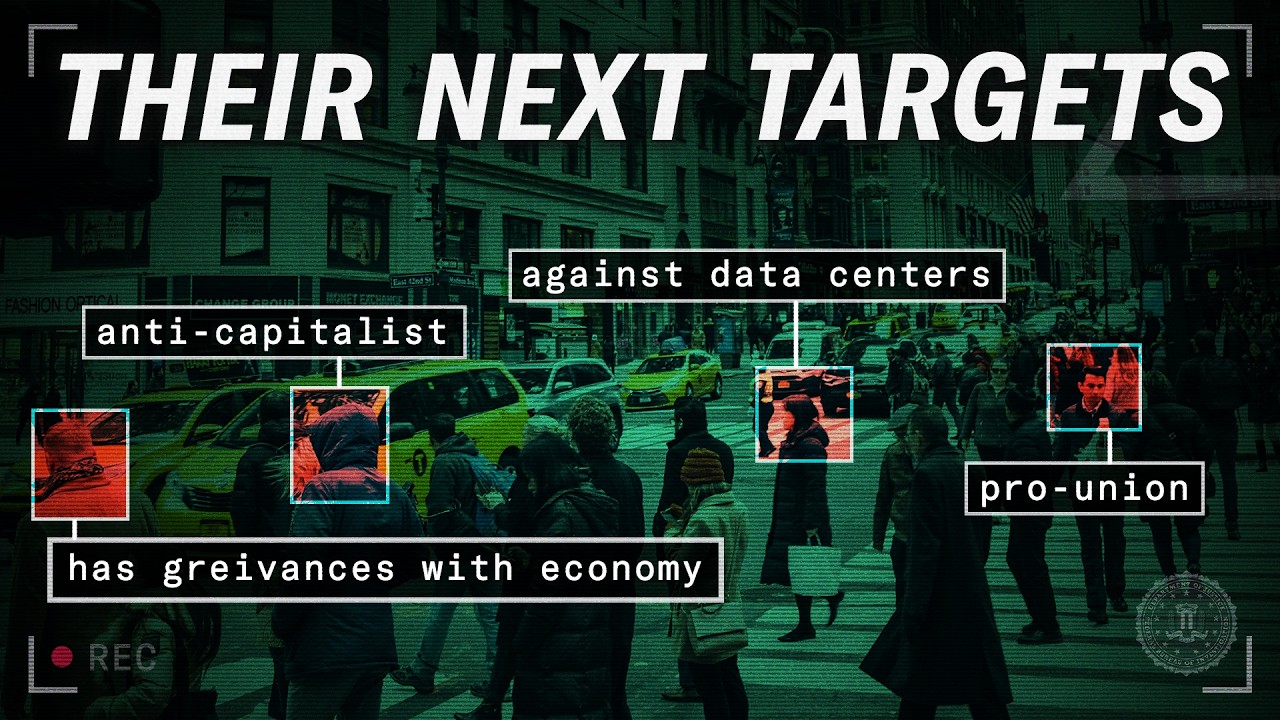
Jun 25, 2026 MPU
We Uncovered A New Government Watchlist. Are You Their Next Target?
---
‘Project 2025’ Would Be Disastrous for Our Nation and Our Climate - Union of Concerned Scientists
The Heritage Foundation’s “Project 2025” is a dangerous and detailed guide to undermining our democracy and a broadside attack on our health and well-being, not to mention our economic prosperity. Among other things, it takes specific aim at the federal government’s ability to address the climate crisis and instead doubles down on actions to worsen it. Anyone sobered by the relentless rise in global average temperatures and the spate of devastating and costly extreme weather and climate disasters we’ve been experiencing, anyone who thinks policies to benefit the public should be informed by robust, independent science, should take this threat very, very seriously.
Project 2025 has four pillars: a policy agenda, a Presidential Personnel Database, a Presidential Administration Academy, and a (yet to be released) playbook for the first 180 days of the next Administration. For the purposes of this blogpost, I will focus on the policy agenda.
So, what’s in this 920-page monstrosity of a document?
The first thing that strikes one as one reads the policy agenda document is that it is rooted in opposition to many hard-fought social gains, especially advances in civil rights, and instead panders to the interests of the rich and powerful. The document is littered with harmful mischaracterizations and attacks against the rights of Black, Brown and Indigenous people, women, LGBTQ+ people, people forced to migrate, and more. While claiming to uphold the interests of ordinary people, the document seeks to eviscerate protections crucial to guarding against money and power being the ultimate arbiters of policy decisions.
Another strong undercurrent is the attack on multilateral organizations and our nation’s interest in, and responsibility for, helping to solve global challenges through diplomacy and fair, joint agreements. Instead, an insular and militaristic approach emerges from the document—one that would take us back to a nasty, brutish world order, completely out of step with what this moment in time calls for. In a deeply interconnected world with complex global challenges—including the threat of autocratic governments and the dangerous proliferation of misinformation and disinformation—rising above short-sighted self-interest and working together with other nations is essential to our shared well-being.
Quite simply, the recommendations, which are listed agency-by-agency, are designed to undermine the institutions and governance structures our democracy relies upon to protect the public interest. If implemented, “Project 2025” would make addressing issues like climate change—which touches practically every aspect of our lives and is an urgent, collective global challenge—practically impossible.
Cliched phrases like “woke agenda” and “climate fanaticism” are used liberally throughout the document, demonstrating the unseriousness of the proposals and the intended targets of this destructive agenda.
Below are a few specific examples that highlight the harms, using direct quotes from the document (*Fair warning: these quotes contain highly misleading or downright false information!):
- Attacks on the process of advancing climate science to inform policymaking
In a blatant effort to politicize climate science, Project 2025 states that ‘The President should also issue an executive order to reshape the U.S. Global Change Research Program (USGCRP) and related climate change research programs… The next President should critically analyze and, if required, refuse to accept any USGCRP assessment prepared under the Biden Administration. Downsize the Office of Oceanic and Atmospheric Research…’And then it goes on to spread disinformation:‘OAR is, however, the source of much of NOAA’s climate alarmism. The preponderance of its climate-change research should be disbanded.’*
Here are the facts: The USGCRP is tasked by Congress (under the 1990 Global Change Research Act, passed under the Bush administration) to produce regular updates on the state of climate science via the National Climate Assessment (NCA), with the Fifth NCA being released last year. As my colleague Rachel Licker and former UCS-er Andrew Rosenberg point out in this blogpost, the NCA provides exactly the kind of information policymakers need, without being policy-prescriptive. The NCA is produced through the work of hundreds of scientists, relying on research done by thousands more. It is not a political document. Suggesting that a new President “critically analyze” the work of scientists or reject their work just because it was done under a different administration is a blatant attempt to politicize science and would leave us all worse off.
NOAA scientists are doing essential work to keep us safe, including generating the science we need to understand and prepare for the rapidly worsening impacts of climate change. Good governance and leadership require facing hard facts—like the reality of climate change—head-on and taking decisive action to address problems rather than pretending they don’t exist.
- A polluting fossil-fueled energy agenda
Unsurprisingly, Project 2025 also pushes for more fossil fuels, with statements like ‘Affirm an “all of the above” energy policy…’ and ‘Support repeal of massive spending bills like the Infrastructure Investment and Jobs Act (IIJA) and Inflation Reduction Act (IRA).’ And in an appalling twist on reality, it includes a call to ‘Stop the war on oil and natural gas’*—when in fact, it is big oil and gas corporations that are waging a war on our climate and health.
The facts are clear that fossil fuels—coal, oil and gas—are the leading cause of climate change and also cause air, water, and soil pollution that imposes an enormous public health and environmental burden. Yet the authors of this policy document are intent on promoting fossil fuels and protecting the massive profits of the fossil fuel industry at any cost. Rolling back the IIJA and the IRA—which are already delivering tremendous benefits to working people around the country while boosting clean, affordable energy, in red states and blue— is just plain perverse. A transition to a clean energy economy is not just good for the climate, it’s good for our economic prosperity and well-being, as our research shows.
- Attacks on the National Environmental Policy Act (NEPA)
Project 2025also launches a broadside attack on our nation’s bedrock environmental law, NEPA: ‘*The President should instruct the CEQ to rewrite its regulations implementing NEPA along the lines of the historic 2020 effort and restoring its key provisions such as banning the use of cumulative impact analysis.’
The National Environmental Policy Act (NEPA) was originally signed into law by President Nixon in 1970 and is considered the Magna Carta of federal environmental laws, as my colleague David Watkins writes. And consideration of cumulative impacts has been part of it dating back to at least 1997. This must remain the case. Public health science and the lived experience of overburdened communities shows that the combined effect of pollution from multiple sources accumulating over time and concentrated in communities is much more harmful to health and the environment than any single pollutant or source measure would indicate. Cumulative impacts analyses and policies better reflect reality—and they can be more efficient in capturing the impacts of multiple sources and pollutants than addressing them one by one.
The 2020 actions to gut NEPA, including by removing mention of cumulative impact analysis, were far from being historic and might more accurately be called infamous. They were also completely at odds with long-standing bipartisan support of this bedrock protective law. The CEQ has recently restored those provisions and updated NEPA in line with requirements of the bipartisan permitting reform rule passed last year. Reversing these changes would once again set back progress on protecting people’s health and the environment and would quite simply be a massive giveaway to polluting companies and a waste of taxpayer resources.
- Attacks on international climate finance aligned with climate and development goals
On the global dimensions of the climate crisis, Project 2025 completely distorts the facts and cynically pits the imperative to alleviate poverty against the twin imperative to limit the disproportionate impacts of the climate crisis on those who have the fewest resources: ‘*The Biden Administration’s extreme climate policies have worsened global food insecurity and hunger. Its anti–fossil fuel agenda has led to a sharp spike in global energy prices.’
Global energy prices have little to do with climate policies and instead price spikes and volatility are driven by global supply and demand factors, weather, and geopolitics (e.g., in the recent past, events like Russia’s unjust war on Ukraine and the macroeconomic impacts of COVID-19). Meanwhile, devastating climate impacts—including multi-year drought, extreme heat and flooding—have had significant impacts on people’s health, livelihoods, and food and water availability around the world, including for people in Africa (which the document repeatedly references). The latest IPCC report shows that these impacts are likely to worsen as climate change accelerates.
Addressing poverty and climate change together, instead of pitting these goals against each other, is vital. Setting up this false dichotomy exposes how little the authors truly care about or understand what’s needed to protect the well-being of people who are at risk of being driven further into poverty by the ravages of climate change, as research from the World Bank and the International Monetary Fund show. According to the World Bank’s estimates, *“Climate change could drive 68 million to 135 million into poverty by 2030. Climate change is a particularly grave threat for countries of Sub-Saharan Africa and South Asia — the regions where most of the global poor are concentrated.”
As the largest historical contributor to global heat-trapping emissions, and a relatively rich country, the U.S. bears responsibility for providing climate finance to help lower income nations cope with climate impacts and transition away from fossil fuels. Addressing these issues domestically, too, in a fair way is critical. Within the U.S., it is the relatively rich who are most responsible for carbon emissions and have benefitted the most from the fossil fuel-dependent economy. They should help ensure a just and equitable transition to clean energy that protects the well-being of fossil fuel-dependent workers and communities and frontline communities overburdened by pollution from fossil fuels.
- Eliminating the Use of the Social Cost of Carbon (SCC)
In yet another blatant attempt to prop up the fossil fuel industry and pretend away the reality of climate change, Project 2025 says that ‘*The President should eliminate the Interagency Working Group on the Social Cost of Carbon (SCC), which is cochaired by the OSTP, OMB, and CEA, and by executive order should end the use of SCC analysis.’
Climate change is costly, there’s no question about that. Right now, those costs are borne by all of us, not the fossil fuel industry that’s profiting from its climate-destroying products and its decades of deception that have delayed the transition to clean energy. The social cost of carbon is a widely accepted economic metric that puts a dollar value on the damage caused per ton of carbon, allowing us to set policies that take those costs into account. In economist-speak, this is just a commonsense way to correct a market failure and internalize the externality costs of fossil fuels. The National Academies of Sciences has advocated for updates to the social cost of carbon, and the Environmental Protection Agency has recently undertaken an update to the SCC based on the latest science and economics. The EPA’s update has undergone rigorous independent external peer review.
Trashing all this careful work and ending the use of the SCC does not change the fact that climate change is expensive. Just ask anyone who’s lost their home to an extreme wildfire or to coastal flooding exacerbated by sea level rise—risks that are set to accelerate with fossil-fueled climate change. Or think about the millions of dollars at risk in lost wages or health costs for outdoor workers on extreme heat days. Burying the facts doesn’t change them but it can adversely affect policies we must enact to cut the heat-trapping emissions driving climate change. Again, we lose, and the fossil fuel industry wins if the SCC is eliminated.
- Prohibitions on Treasury and SEC actions to account for the financial risks of climate change
Project 2025 is more interested in promoting fossil fuels and protecting the profits of the fossil fuel industry and its allies, rather than protecting the financial stability of our economy, as these excerpts show:
‘The next Administration should use Treasury’s tools and authority to promote investment in domestic energy, including oil and gas. It should reverse support for international public- (and private-) based efforts promoting Environmental, Social, and Governance and Principles for Responsible Investment, both of which have badly damaged U.S. energy security.’ And: ‘Congress should: Prohibit the SEC from requiring issuer disclosure of social, ideological, political, or “human capital” information that is not material to investors’ financial, economic, or pecuniary risks or returns.’.}:
Once more, the intent could not be clearer: rather that ensure that fossil fuel companies disclose the material risks their products pose to our climate and economy, and investors’ exposure to those risks, the report’s authors prefer to protect short-term corporate profits over the stability of the financial system. As my colleague Laura Peterson writes, opposition to ESG mandates is ‘largely whipped up by dark money groups connected to the fossil fuel industry.’
:{SEC-mandated climate disclosure for public companies was long overdue, and the final rule fell short of what is needed. Yet opponents including the US Chamber of Commerce sued to block the rule, and the SEC has recently paused enforcement. A group of legislators is nevertheless urging the SEC to move forward in as robust and expeditious a way as possible, noting that ‘*Investors need access to climate risk disclosures that are reliable, standardized, and easily accessible to properly assess the risks associated with their investments. Climate change is transforming the economy, increasing mitigation and resilience costs and risks from weather and supply chain disruptions for all businesses.
There is so much more that is egregious in the Project 2025 policy agenda, it’s quite honestly stomach-churning to contemplate. Let’s hope it never gets beyond a theoretical exercise in how to destroy our country and leave our children’s futures dark and uncertain. Fortunately, science, democracy and justice provide a much better path forward.
Posted in: Climate Change, Science and Democracy
Tags:climate change, Climate risk disclosure, cumulative impacts, disinformation, Fossil Fuels, NEPA, Project 2025, social cost of carbon
Rachel Cleetus is the policy director with the Climate and Energy program at the Union of Concerned Scientists. She leads the program’s efforts in designing effective and equitable policies to address climate change, and advocating for their implementation.
---
AP
June 2, 2026
SEATTLE (AP) — A portion of one of the most ambitious ocean monitoring networks ever built will go dark this month when scientists board a research vessel and motor off the Oregon coast to pull a research buoy from deep out of the Pacific.
The buoy 80 meters (260 feet) below the water’s surface will be removed June 16 from the Ocean Observatories Initiative — a network of more than 900 ocean sensors built at a cost of $386 million that has continuously collected real-time data for more than a decade. But last month, the National Science Foundation announced it would dismantle most of the system, pulling instruments from waters off Oregon, Washington, Alaska, North Carolina and Greenland by 2027.
Funded by the foundation, the observatories have tracked everything from ocean circulation and marine ecosystems to climate change and extreme weather. Its data has been freely available and has informed more than 500 scientific publications. The project was slated to run for another 15 to 20 years.
In an emailed statement, the foundation said the decision is not a cancellation, but a “descoping” aligned with a “wider strategy of a nimbler approach to prioritize support for evolving scientific priorities and emerging technologies, as well as smart lifecycle management within its research infrastructure portfolio.” The foundation added that its decision drew in part on a 2025 National Academies report on the future of ocean science.
Related Stories
EU invests in ocean monitoring as US cuts funding
Climate change is outpacing evolution. Scientists are using DNA to catch up
Think it’s hot now? The next five years will smash records, UN says
But for the scientists who built and operated the system — and the researchers, educators and students who rely on its data — the timing feels particularly punishing.
An El Nino event, which disrupts weather patterns and supercharges marine heat waves, is predicted to arrive along the Pacific coast this summer. One marine heat wave is already pushing unusually warm water off California.
Without the Oregon and Washington moorings and the network of underwater gliders the Ocean Observatories Initiative operated in the region, researchers say they’ll lose much of their ability to measure what’s happening below the surface, which is precisely where the most significant oceanographic signals are.
“It’s a crippling loss of information,” Ed Dever, a professor at Oregon State University who helped lead the initiative’s Pacific Northwest operations, told The Associated Press Tuesday. Scientists can get some data from the surface, such as temperature and the distribution of chlorophyll, which drives photosynthesis in plants, but information below cannot be gathered from satellites alone, including low oxygen zones.

In this 2021 image provided by Woods Hole Oceanographic Institution, workers walk near buoys used to gather data at Pioneer New England shelf off the coast of Martha’s Vineyard, Mass. (Véronique LaCapra/Woods Hole Oceanographic Institution via AP)
The initiative launched in 2015 after more than a decade of community planning and construction. It was designed as a 25 to 30-year project, built in part around the oceanographic consensus that detecting meaningful climate signals requires at least three decades of continuous data. “We’ve just got to the 10 year record,” Dever said, “which will give you some hints, but it won’t continue on.”
One significant piece will remain: a seafloor cable network managed by the University of Washington off the Pacific Northwest coast, which will continue providing data on volcanic and seismic activity in the region.
Scientists had seen warning signs as the administration’s proposed 2026 budget included a 55% cut to the science foundation. Official word to begin shutting down arrived in early May.
The initiative was coordinated by the Woods Hole Oceanographic Institution in collaboration with the University of Washington and Oregon State University, as well as past partners including Rutgers University and Scripps Institution of Oceanography.
The initiative operated on roughly $48 million a year, not including the cost of research vessels, which adds substantially to the overall price. Prior to budget cuts, which began in 2025, around 60 to 70 people worked directly on the project across its partner institutions, Dever said.
“What’s happening with the Ocean Observatories Initiative is not unique,” he said. “This is just one of a number of science facilities that is being dismantled at the present time. It seems to really mark the end of a federal commitment to basic scientific research — a commitment that has served this nation very well for the last 70 years.”
Alexa St. John contributed to this report from Detroit.
Follow Annika Hammerschlag on Instagram: @ahammergram.
The Associated Press receives support from the Walton Family Foundation for coverage of water and environmental policy. The AP is solely responsible for all content. For all of AP’s environmental coverage, visit https://apnews.com/hub/climate-and-environment
Hammerschlag is a text and visual journalist covering the intersection of oceans and climate change globally for The Associated Press. She is based in Seattle.
---
short bios 11 pp
Project-2025-Authors-and-Contributors
...
Daren Bakst is Deputy Director, Center for Energy and Environment, and Senior Fellow at the Competitive Enterprise Institute (CEI). Before joining CEI, Daren was a Senior Research Fellow at The Heritage Foundation, where he played a leading role in the launch of the organization’s new energy and environmental center. For a decade, he led Heritage’s food and agricultural policy work, and he edited and co-authored Heritage’s book Farms and Free Enterprise. He has testified numerous times before Congress, has appeared frequently on media outlets, and has played leadership roles in such organizations such as the Federalist Society, American Agricultural Law Association, and Food and Drug Law Institute (serving on the Food and Drug Law Journal’s editorial advisory board).
...
Mandy M. Gunasekara of Oxford, Mississippi, is a principal at Section VII Strategies, a Senior Policy Analyst at the Independent Women’s Forum, and Visiting Fellow in the Center for Energy, Climate, and Environment at The Heritage Foundation. During the Trump Administration, Mandy served as the Chief of Staff at the U.S. Environmental Protection Agency as well as Principal Deputy Assistant Administrator for the Office of Air and Radiation. She previously served in numerous roles at the U.S. House of Representatives and U.S. Senate, including as Majority Counsel for the Senate Environment and Public Works Committee under Chairman Jim Inhofe. She received her BA from Mississippi College and her JD from the University of Mississippi School of Law.
...
Stephen Moore is a conservative economist and author. He is currently a senior economist at FreedomWorks, a Distinguished Fellow at The Heritage Foundation, and a Fox News analyst. From 2005 to 2014, Moore served as the senior economics writer for The Wall Street Journal editorial page and as a member of the Journal’s editorial board. He still contributes regularly to the Journal’s editorial page. He is a frequent lecturer to business investment and university audiences around the world on the U.S. economic and political outlook in Washington, DC
...
Peter Navarro holds a PhD in economics from Harvard and was one of only three senior White House officials to serve with Donald Trump from the 2016 campaign to the end of the President’s first term. He was the West Wing’s chief China hawk and trade czar and served as Director of the Office of Trade and Manufacturing Policy and Defense Production Act Policy Coordinator. His books include The Coming China Wars (2006); Death by China (2011); Crouching Tiger (2015); and his White House memoirs In Trump Time (2021) and Taking Back Trump’s America (2022). His top-rated Taking Back Trump’s America podcast appears on Apple Podcasts and Google Podcasts.
William Perry Pendley was born in Cheyenne, Wyoming. He earned a BA and an MA from George Washington University, was a U.S. Marine Corps captain, and earned his JD from the University of Wyoming College of Law. He was an attorney on Capitol Hill, a senior official for President Ronald Reagan, and leader of the Bureau of Land Management for President Donald Trump. For 30 years, he was president of Mountain States Legal Foundation where he argued and won cases before the Supreme Court of the United States. He authored five books, including Sagebrush Rebel: Reagan’s Battle with Environmental Extremists and Why It Matters Today.
Max Primorac is Director of the Douglas and Sarah Allison Center for Foreign Policy Studies at The Heritage Foundation. He was acting Chief Operating Officer and Assistant to the Administrator, Bureau for Humanitarian Assistance, at the U.S. Agency for International Development. Previously he was deputy director of Iraq’s reconstruction program at the U.S. Department of State and a senior adviser in the Office of the Secretary. Max was educated at Franklin and Marshall College and the University of Chicago.
Roger Severino is Vice President of Domestic Policy at The Heritage Foundation. As director of the Office for Civil Rights at the U.S. Department of Health and Human Services (HHS) from 2017 to 2021, he led a team of more than 250 staff enforcing civil rights, conscience, and health information privacy laws. Roger subsequently founded the HHS Accountability Project at the Ethics & Public Policy Center. He holds a JD from Harvard Law School, an MA in public policy from Carnegie Mellon University, and a BA from the University of Southern California
...
---
fulcrum legit aug 2024
Project 2025: Department of Interior
Becvar is co-publisher ofThe Fulcrumand executive director of theBridge Alliance Education Fund, the parent organization of The Fulcrum.*
As the political landscape heats up, a critical document known as Project 2025 has surfaced, outlining sweeping proposals for the Department of the Interior, among many other government departments and agencies. Spearheaded by former Trump administration officials and conservative leaders, this comprehensive plan calls for a radical restructuring of the department’s mission and operations.
The document's vision constitutes a significant departure from current policies, emphasizing energy dominance and deregulation, raising questions about the future of public lands and environmental protections.
Former President Donald Trump’s remarks about being a “ dictator on the first day only ” of a potential second term have sparked considerable debate. Despite his claims of unfamiliarity with Project 2025 and the Heritage Foundation’s announcement that it was ending that work, the goals articulated in the document align closely with his stated priorities. Trump’s promise to “close the border and drill, drill, drill” mirrors Project 2025’s objectives, suggesting a coordinated effort to reshape the DOI from day one of a new conservative administration.
The chapter on the Department of the Interior, authored primarily by William Perry Pendley, former acting director of the Bureau of Land Management, sets a combative tone. Pendley’s tenure at BLM was marked by aggressive moves to reduce protections for public lands and wildlife, leading to a demoralized agency described by insiders as a “ghost ship.” His role in Project 2025 signals a continuation of these policies, aiming to dismantle what he and his colleagues view as an overreaching administrative state.
Departmental overhaul
The Department of the Interior encompasses nine bureaus, each with distinct missions ranging from managing national parks to overseeing energy resources. Project 2025 proposes several administrative and structural changes. One of the first major proposals is to relocate BLM headquarters back to the American West from Washington, D.C. This move, combined with the implementation of Trump's Schedule F proposal aimed at increasing accountability in hiring and firing federal employees, suggests a significant shift in the DOI's operational dynamics.
Furthermore, placing all BLM law enforcement officers in an exclusively law enforcement chain of command signals a more rigid approach to land management enforcement.
Energy production and resource extraction
The energy section of the chapter was written by Kathleen Sgamma of the Western Energy Alliance, an oil and gas industry group; Dan Kish of the Institute for Energy Research, a think tank long skeptical of human-caused climate change; and Katie Tubb of the Heritage Foundation. The authors set the tone of the section, titled “Restoring American Energy Dominance,” with this passage:
“Given the dire adverse national impact of Biden’s war on fossil fuels, no other initiative is as important for the DOI under a conservative President than the restoration of the department’s historic role managing the nation’s vast storehouse of hydrocarbons, much of which is yet to be discovered.”
The energy section calls for rolling back Biden-era executive orders and reinstating Trump-era policies that favor oil and gas development. Specific proposals include expanding onshore and offshore oil and gas lease sales, restarting the federal coal leasing program, and reversing protections for areas like the White River National Forest in Colorado.
This aggressive push toward fossil fuel development raises environmental and economic concerns. Critics argue that such policies could undermine efforts to combat climate change and protect public lands from overexploitation.
Regulatory and policy reforms
Project 2025 also targets regulatory frameworks like the National Environmental Policy Act, seeking to streamline environmental reviews and permitting processes while eliminating climate reviews for federally funded projects. The document proposes reinstating Trump-era limitations on the Endangered Species Act and the Migratory Bird Treaty Act, which could lead to reduced protections for vulnerable species.
Further, the project aims to revoke President Joe Biden’s 30-by-30 plan, which aims to conserve 30 percent of U.S. lands and waters by 2030, and seeks the repeal of the Antiquities Act of 1906, potentially opening up national monuments to commercial activities.
Implications for Indigenous lands
The document outlines plans to facilitate fossil fuel and mineral development on Indian lands and overhaul the Bureau of Indian Education. These proposals, combined with securing the nation's borders to protect tribal lands, suggest a significant shift in how the federal government interacts with Native American tribes.
A critical examination
Project 2025 presents a vision for the Department of the Interior that aligns closely with the priorities of the Trump administration. While Project 2025 presents a bold vision for the department, its potential impacts on public lands, environmental protections and Indigenous rights demand critical scrutiny. Proponents argue that these changes are necessary for economic growth and national security, but the emphasis on deregulation and resource extraction raises concerns about long-term sustainability and the balance between economic development and conservation. As voters and policymakers consider these proposals, it is essential to weigh the long-term consequences for America's natural heritage and the principles of conservation that have guided the DOI for over a century.
The sweeping changes proposed in Project 2025 underscore a broader ideological battle over the role of government in managing natural resources and protecting the environment. As these plans come under public and political scrutiny, the stakes for America's public lands and natural heritage could not be higher. The next administration's approach to these issues will shape the nation's environmental and energy policies for years to come.
More articles aboutProject 2025
- A cross-partisan approach
- An Introduction
- Rumors of Project 2025’s Demise are Greatly Exaggerated
- Department of Education
- Managing the bureaucracy
- Department of Defense
- Department of Energy
- The Environmental Protection Agency
- Education Savings Accounts
- Department of Veterans Affairs
- The Department of Homeland Security
- U.S. Agency for International Development
- Affirmative action
- A federal Parents' Bill of Rights
- Department of Labor
- Intelligence community
- Department of State
- Department of the Interior
- Federal Communications Commission
- A perspective from Europe
- Department of Health and Human Services
- Voting Rights Act
- Another look at the Federal Communications Commission
---
---
EAND E THE GOOD ONE
Inside the Project 2025 plan to gut climate regs
By Jean Chemnick | 07/18/2024
The conservative outline for a second Trump presidency offers detailed steps for weakening EPA.
A paint-by-numbers plan to weaken EPA has been prepared for former President Donald Trump by his past advisers. Francis Chung/POLITICO
There’s a playbook for how a second Trump administration could pull back climate regulations.
The EPA chapter of the much-vaunted Project 2025 blueprint is stocked with ideas for how political appointees could use a second Trump term to remake agency org charts, defang enforcement and disperse Washington-based staff to regional offices. But the document — spearheaded by the conservative Heritage Foundation — also catalogs tactics for relaxing regulation in ways that might reverberate beyond the next four years.
Former President Donald Trump has distanced himself from the initiative — a sprawling guide on how executive branch authorities and agencies could serve a conservative agenda. But many of its authors served in the first Trump administration and are likely candidates for a second one.
Dave Banks, a former Trump climate adviser, said the document would serve more as a wishlist for past and future officials than a reflection of the president’s own priorities.
“I think the big question is, are the people who wrote it going to be back in?” he said. “And I think there’s a strong likelihood that a lot of the folks who worked on Project 2025 will end up in a Trump 2.0, if that happens.”
Mandy Gunasekara, the Trump EPA chief of staff who penned the project’s chapter on EPA, left open the possibility that she might return to the William Jefferson Clinton Building that serves as the agency’s headquarters.
“That’s a question for the president to ask, and an answer for me to give with my husband and family,” she said. “And we’re not there yet.”
Most of the regulatory policies included in her 28-page chapter seem cut from the same cloth as those EPA attempted in the first Trump administration. They were rescinded under President Joe Biden or overturned in court.
But some are new, like a proposal to shrink the pool of industries required to report their greenhouse gas emissions each year to EPA.
Just the fact that the policies are being explored in a widely circulated document marks a departure from 2016. The Trump EPA transition team that formed after his surprise victory eight years ago was famously long on infighting and short on planning. Political appointees were slow to arrive and key components of Trump’s deregulatory agenda were thrown out in court.
Project 2025 would revive some of those rules. For example, the EPA chapter advises the agency to “make public and take comment on all scientific studies and analyses that support regulatory decision-making.” That dovetails with a Trump-era “secret science” rule that was vacated in 2021.
Gunasekara said an incoming EPA team could avoid similar outcomes by “applying lessons learned” from the first Trump term.
“It’s very different regulating from the inside versus applying oversight from the outside,” said Gunasekara, one of several Trump EPA officials who came to EPA from congressional committees. Gunasekara was a staffer on the Senate Environment and Public Works Committee under the late Sen. James Inhofe (R-Okla.), as was Trump’s second EPA Administrator, Andrew Wheeler.
Mandy Gunasekara, former EPA chief of staff, left open the possibility of working for Trump if he wins the election. | Rogelio V. Solis/AP.
Gunasekara blamed first term policy failures in part on resistance from career staff — something Project 2025 would take pains to root out through extensive structural and workforce changes. She also acknowledged that the Trump administration sometimes cut corners — something she said wouldn’t be repeated.
“The biggest difference is we have a plan from Day One, we’re going to start implementing it, and we won’t be as susceptible to process problems that really sunk a couple of those final regulatory proposals and actions we took at the tail end of the administration,” said Gunasekara, who spoke by phone with POLITICO’s E&E News as she attended the Republican National Convention in Milwaukee.
Gunasekara said four Trump-era political appointees helped write the chapter: David Harlow, Scott Mason IV, Justin Schwab and Clint Woods. Schwab declined to comment, and the others did not respond to requests for interviews.
The bulk of the chapter is devoted to reshaping EPA — “an agency that has long been amenable to being coopted by the Left for political ends” — into an entity suited to carry out a “conservative vision.”
The sections devoted to regulation ricochet between improbable suggestions and superspecific head-scratchers.
“It does have this kind of spaghetti-against-the-wall approach,” said James Goodwin, policy director at the Center for Progressive Reform. “Literally everything and the kitchen sink is in there.”
For example, the chapter proposes that EPA “update” the 2009 finding that greenhouse gases endanger public health and the environment. That’s the bedrock finding behind all Clean Air Act climate regulations, and has been targeted by some of the conservative groups behind Project 2025 — such as the Heartland Institute — since the finding’s inception.
But reversing it would be a legally tricky — and potentially more complicated after last month’s Supreme Court decision curtailing agency authority.
The Trump administration’s own EPA lawyers rejected a petition by a conservative think tank to reconsider the endangerment finding. They noted in emails obtained by E&E News that it remained consistent with scientific assessments by federal research bodies.
“If they were to revisit the endangerment finding based on the latest science, it is only more dire,” said Rachel Cleetus, climate policy director at the Union of Concerned Scientists.
“If anything, the 2009 endangerment finding is softballing the kind of impacts that are now already clear around us,” she said, referring to the effects of climate change.
But the chapter also provides a menu of wonky-sounding proposals that could narrow the scope of regulations, including for climate pollutants.
“This goes beyond many of the things that they did in the first Trump administration,” said Stan Meiburg, a former EPA acting deputy administrator. “It certainly is a very ambitious document, and incorporates ideas that go all the way back to the Reagan administration.”
Maximizing cost, minimizing benefits
Many of the regulatory proposals target EPA practices around cost-benefit analysis. There’s a reason for that: It’s generally harder for an agency to justify standards if their costs exceed their benefits.
Meiburg said the Reagan-era move to embrace cost-benefit analysis gave cost considerations the upper hand.
“Costs are specific and tend to be more quantifiable, and benefits tend to be more diffuse and less quantifiable, even though, in aggregate, they are larger,” said Meiburg.
Project 2025 proposes that EPA issue a rule to ensure “consistent and transparent consideration of costs.” Gunasekara said this would likely be a “very similar rule” to one introduced by the first Trump EPA, which was later voided by the Biden administration.
The rule promulgated under Wheeler was the first of its kind, and some experts say it could face longer odds now, when courts defer less to agencies on policy.
The EPA chapter also instructs the agency to “use appropriate discount rates, focus on the benefits of reducing the pollutant targeted by Congress, identify ‘co-benefits’ separately, and acknowledge the uncertainties involved in quantifying benefits.”
Discount rates are applied to future benefits that come at a present cost — such as avoided climate risk stemming from near-term emissions reductions.
“Basically, the higher the discount rate, the less argument there is for making investments now, because why would you spend money on this when you could make that money get a higher return doing something else?” said Meiburg.
During the Trump administration, discount rates were high, so the value of avoiding future climate change was low — somewhere between $1 and $7 per ton of carbon dioxide.
Project 2025 urges the agency to “revise guidance documents” for the so-called social cost of carbon, while another chapter proposes ending its use altogether.
Co-benefits — a rule’s health and environmental advantages that aren’t tied directly to reducing a targeted pollutant — have been persona non grata with conservatives for years. But the Trump EPA did count them in its climate rules — which showed minuscule benefits due in part to low social cost values for greenhouse gases.
Jason Schwartz, policy director at the Institute for Policy Integrity, said sidelining benefits could make rules less legally durable.
“I think that the court says have been clear in a number of cases that it would actually be arbitrary for an agency to ignore — or to really treat differently — co-benefits or indirect costs,” he said.
Gunasekara said co-benefits would still be analyzed.
“But it should be very clear, if EPA is going after one pollutant, what are the relative costs and benefit of [reducing] that one pollutant?” she said.
The goal, she said, should be “to ensure that there is increased transparency and understanding to the American public about cost-benefit justifications for the reduction of various pollutants.”
Transparency
Transparency is one of the chapter’s prevailing themes. That’s how the document frames its bid to require the data from all scientific studies underpinning regulation to be made public — effectively barring research that utilizes anonymous datasets.
But critics warn that many of its suggestions would create information gaps that would make it harder for EPA to maintain inventories of the greenhouse gas emissions — and ultimately to regulate them.
“It’s basically like two blades of a scissors,” said Goodwin of the Center for Progressive Reform. “These cost-benefit analysis rules are demanding more information. But the other blade is making it harder for EPA to get that information in the first place. And you can see how they come together.”
EPA currently requires 41 high-emitting sectors to report their greenhouse gas emission each year. About 8,000 facilities within those sectors — chosen because they exceed certain emissions thresholds — is the basis of EPA’s annual greenhouse gas inventory. The data has numerous purposes, including as an input for EPA regulatory decisions.
But Project 2025 would limit reporting to the few sectors currently being regulated for greenhouse gas emissions — such as power plants and oil and gas production. It would exempt major emitters in other sectors, such as municipal landfills, iron, steel and cement manufacturing, and carbon capture and storage.
The chapter said this would eliminate costly requirements borne by small businesses.
“This is either a pointless burden or a sword-of-Damocles threat of future regulation, neither of which is appropriate,” the document states.
But suspending annual greenhouse gas reporting for the four years of a second Trump term could delay regulation of new sectors during a subsequent administration by depriving it of needed data. It would reduce the scope of information available to scientific agencies that track emissions.
It could also make it impossible for the U.S. to fulfill its obligations as a party to the United Nations Framework Convention on Climate Change (UNFCCC), which requires an annual accounting of emissions and carbon sinks. The Senate formally ratified the treaty in 1992 and the U.S. remained a party to it under Trump, even as the administration moved to withdraw from the Paris Agreement.
Gunasekara said she’d urge “the next conservative administration” to withdraw from the UNFCCC as well as Paris, which she said required the U.S. to make painful cuts while giving other countries “a free pass.”
---
---
ttw
Wednesday, July 30, 2025
Project 2025 Architect Mounting Primary Challenge to Sen. Graham
Here is more from the New York Times:
The Republican architect of Project 2025 — the right-wing blueprint that Democrats made a rallying cry in the presidential election last year — is mounting a primary challenge to Senator Lindsey Graham of South Carolina, saying he isn’t sufficiently devoted to President Trump’s political movement.*
As he begins his challenge, Paul Dans, who is not originally from South Carolina, starts out as a distinct underdog. Mr. Graham, who has the support of Mr. Trump, has won past primaries handily despite appearing vulnerable, and he is likely to have a significant financial edge.
But Mr. Dans plans to run highlighting the work of Project 2025, from which Mr. Trump distanced himself during his campaign before enacting significant portions of it into his government.
Mr. Dans joined the Heritage Foundation in 2022 and started Project 2025, although he later had a falling out with the think tank that led to his departure.
---
an 10 24
Earlier this year, Project 2025 director Paul Dans was forced out — after months of former President Donald Trump playing defense about the controversial far-right policy document. Now, Dans is speaking out against his former employer.
The Washington Post reported Wednesday that Dans is condemning Heritage Foundation president Kevin Roberts, who has led the organization since 2021, specifically over his increasingly hostile tone as the election approaches. It marks a visible rift in the far-right think tank, which is one of the most well-funded and influential conservative policy shops in Washington, D.C.
"If we’re going to ask the left to tone it down, we have to do our part as well," Dans told the Post. "There’s no place for this sort of violent rhetoric and bellicose taunting, especially in light of the fact that President Trump has now been subject to not one but two assassination attempts."
READ MORE:Former Project 2025 chief hopes Trump will put RFK Jr. in charge of one of these 3 agencies
Roberts made headlines earlier this year after an interview in which he bragged that he was at the vanguard of a "second American revolution." He then said that this revolution would be "bloodless, if the left allows it to be," suggesting that his side was not ruling out political violence as a means of achieving its ends. Dans told the paper that his former boss' caustic words were negatively impacting the stature of Heritage as a vaunted conservative institution.
"There’s really no place for this level of rhetoric, let alone from the head of an august think tank,” Dans said. “And by doing that, he’s essentially besmirched the professional reputations of everyone involved in Project 2025.”
According to a report by People magazine earlier this year, Project 2025 is a "far-right, Christian nationalist vision for America that would corrode the separation of church and state, replace nonpartisan government employees with Trump loyalists and bolster the president's authority over independent agencies." Democrats equated Trump's "Agenda 47" policy platform with Project 2025, and Trump's campaign was reportedly the driving force behind Dans being forced out in July.
“Project 2025 is radioactive to the Trump-Vance transition,” said billionaire Howard Lutnick, who is co-chair of Trump's transition team. “Zero. Total ban. Radioactive. Any of those words, feel free to pick them.”
READ MORE:'He is on our side': Org behind Project 2025 boasts repeatedly about close ties to Trump
After the former president publicly distanced himself from Project 2025 on the campaign trail and called it "extreme," Dans told the Post that he wished Trump's team expressed their frustrations privately. But he noted that Roberts seemed to become even louder despite Trump's signals.
"We took the instruction, as we had before, to lay low,” Dans said. “But in the case of Kevin, he didn’t.”
Despite Trump's public shows of coldness to Project 2025, his administration was virtually tied at the hip with Heritage from the time he entered the White House in 2017. The group's website and fundraising documents have repeatedly boasted about their close ties to Trump, and noted that during his first year in office, he implemented roughly two-thirds of their policy recommendations. And Sen. JD Vance (R-Ohio) even wrote the foreword to Roberts' forthcoming book.
Click here to read the Post's report in full (subscription required).
READ MORE:Trump again denies Project 2025 — despite Vance writing foreword for chief architect's book
---
---
an 9 24
In an interview earlier this week with the right-wing Real America's Voice network, Heritage Foundation President Kevin Roberts praised the Supreme Court's Monday immunity ruling in favor of Donald Trump, and appeared to threaten violence against Democrats should the former president lose his reelection bid in November.
"In spite of all this nonsense from the left, we are going to win," Roberts said. "We're in the process of taking this country back. We are in the process of the second American Revolution, which will remain bloodless, if the left allows it to be."
Earlier this year, legal analyst and New York University professor Ruth Ben-Ghiat told MSNBC's Ali Velshi that the far-right organization's Project 2025 "would effectively transform American government from a meritocratic democracy to a regime resembling Vladimir Putin's Russia."
READ MORE:Project 2025 architect says quiet part out loud with ominous threat of political violence
Months later, a former Republican leader is warning that the GOP's plan also resembles former Nazi Party Adolf Hitler's manifesto, Mein Kampf.
Speaking with MSNBC's Katie Phang on Wednesday, former New Jersey Governor Christine Todd Whitman (R) said, "If you look at Project 2025, and compare it to the Nazis' manifesto, it's very, very scary. There's so many parallels there of what can be done, of what they're promising in 2025 to do. Do away with the justice system, basically. Get rid of all public servants, do away with actually every department and agency that provides any kind of stability for this country. It's really frightening. The people who say 'Oh, well, he'll never do that.' Why would you say that? If you believe he's gonna cut taxes, and you believe he's gonna do away with regulation, why don't you believe the rest of it? You can't have it both ways. Our democracy is teetering the brink right now."
---
RT tenet media
...with podcaster Tim Pool on Tenet Media called, "The Media is Lying About Project 2025." Dans, who was director of Project 2025 at the time, alleged "a very sophisticated group" was working to undermine the effort to set a policy agenda for the next Trump administration.}:
Project 2025 is a sweeping policy blueprint that the Heritage Foundation spearheaded that envisions increased presidential power. At least 31 of 38 authors are tied to former President Donald Trump. Democrats, including their House campaign arm and Vice President Kamala Harris, have criticized its policies and sought to tie it to Trump.
The Department of Justice did not name Tenet Media in its indictment released Wednesday, but the company's business filings with the Tennessee secretary of state, and its public messages, align with what is described in the indictment.
===
August 21, 2024, edition of *Timcast IR
PAUL DANS: I can't tell you how many MAGA people that I work with, really the hardcore, the most based, who are huge RFK Jr. fans. And they kind of were always kind of talking about it. But, remember, RFK Jr. went and interviewed for a job in 2016 at Trump Tower. So, you know, their relationship goes back years. Obviously there's a lot that doesn't -- some of his positions aren't square with America First, traditional America First. But certainly, there's no one better, I think, in the entire country to take on the administrative state, particularly HHS.
So you see in our movement so many medical freedom people -- count me right in with that group -- and just the excitement to have somebody either of his caliber at HHS, or CDC, FDA, are of course going to really clear house at the agency.
===
---
Project 2025's Kevin Roberts to speak at NY Times’ Climate Week NYC event
Roberts has referred to environmentalism as a “pseudo-religion” and called for unleashing our “vast reserves of oil and natural gas”
Special ProgramsClimate & Energy
Written by Allison Fisher
:{:{Published 09/06/24 mma}:
The New York Times announced the speakers for its September 25 “Climate Week NYC” discussion, an annual event coinciding with the United Nations General Assembly session in New York City that promises to “bring together some of the world’s most engaged climate voices as part of a community focused on change.” The event’s lineup notably includes Kevin Roberts, the president of right-wing think tank The Heritage Foundation who has led the Project 2025 initiative — the controversial conservative transition plan of policy and staffing proposals for a potential second Trump presidency.
As detailed in its nearly 900-page policy book, titled Mandate for Leadership: The Conservative Promise, Project 2025 rejects climate science and dismisses efforts to reduce planet-warming pollution and transition to a clean energy economy in favor of serving the interests of the fossil fuel industry. Overseen by Roberts, who wrote the book’s foreword, the Heritage plan for a future GOP administration seeks to gut or hamstring federal agencies working on renewable energy deployment, climate science, and environmental safeguards while opening up state and federal public lands for oil and gas extraction.
In Project 2025’s policy book, Roberts attacked environmentalists, the U.N., and the Environmental Protection Agency, calling for the unfettered use of oil and gas
In the foreword of Project 2025’s Mandate for Leadership policy book, Roberts sets the tone for the plan's hostility toward climate action and wholesale endorsement of fully extracting our oil and gas reserves, a path scientists have warned would be catastrophic.
- Roberts calls environmentalism a “pseudo-religion meant to baptize liberals’ ruthless pursuit of absolute power in the holy water of environmental virtue.” He claims that those who suffer most from environmental policies are the “aged, poor, and vulnerable.” Roberts continues, “At its very heart, environmental extremism is decidedly anti-human” because it promotes “population control and economic regression” by “regarding human activity itself as fundamentally a threat to be sacrificed to the god of nature.” Project 2025, *Mandate for Leadership*, [2023]
- Roberts attacks global elites and calls for abandoning international organizations like the United Nations. Claiming that “global elites” and organizations like the United Nations are making decisions on climate change that are insulated “from the sovereignty of national electorates,” Roberts argues, “International organizations and agreements that erode our Constitution, rule of law, or popular sovereignty should not be reformed: They should be abandoned.” Additionally, Project 2025 demands that “the next conservative Administration should withdraw the U.S. from the U.N. Framework Convention on Climate Change and the Paris Agreement.” Project 2025, *Mandate for Leadership*, [2023]
- Roberts claims the EPA “quietly strangles domestic energy production,” later adding, “The next conservative President should go beyond merely defending America’s energy interests but go on offense, asserting them around the world.” Roberts goes on to claim that “America’s vast reserves of oil and natural gas are not an environmental problem; they are the lifeblood of economic growth. American dominance of the global energy market would be a good thing: for the world, and, more importantly, for ‘we the people.’” Under Roberts’ leadership, Project 2025’s section on energy production was reportedly written by the oil and gas industry and provides a blueprint for how the next president can turn “drill, baby, drill” into federal policy. Notably, the industry is already producing record amounts of oil and gas under the Biden-Harris administration, all while holding thousands of unused drilling permits. Project 2025, *Mandate for Leadership*, [2023; Media Matters, 8/8/24; Vox, 3/13/24; PolitiFact, 3/29/22]
:{*:{Update (9/9/24):The Times replied to this piece with the following statement: “Climate Forward is a live journalism event that has a history of bringing together newsmakers who seek to influence climate and political policy for a day of rigorous, challenging interviews. We anticipate the same for this year's event.”}:
---
MMA
THE head of Project 2025 has resigned, but the policy suggestions aren’t going anywhere
The MAGA effort is still poised to provide staffing to a second Trump administration
Written by Sophie Lawton & John Knefel
Published 07/30/24
Architect and leader of The Heritage Foundation’s Project 2025 Paul Dans has announced his resignation from his position at Heritage, but there is no evidence to suggest Project 2025’s policy and staffing efforts will be impeded.
As Media Matters has previously documented, both Donald Trump and JD Vance have extensive ties to Project 2025. And as reporters have noted, the Trump campaign would have to rely on Project 2025 should Trump win the election given how little transition work has been done.
Dans' resignation comes following the Trump campaign's attempts to distance itself from the project. Dans wrote in a statement that Project 2025 has “completed what we set out to do” and “our work is presently winding down.”
A statement from Trump campaign officials Chris LaCivita and Susie Wiles claimed, “Reports of Project 2025’s demise would be greatly welcomed and should serve as notice to anyone or any group trying to misrepresent their influence with President Trump and his campaign — it will not end well for you.”
It is exceptionally unlikely the project will actually wind down. Heritage President Kevin Roberts even wrote in a statement released on Twitter that the “policy drafting” work by Project 2025 was meant to conclude after the two party conventions but that the group “will continue our efforts to build a personnel apparatus for policymakers of all levels.”
The Washington Post reported that Project 2025 always planned to “hand off recommendations to the official presidential transition,” but the Trump campaign has yet to stand up an official transition team.
Project 2025 is a Heritage-backed coalition of right-wing individuals and organizations working to recruit conservatives to work for the next GOP presidential administration and proposing radical right-wing policy changes in essentially every department controlled by the White House. Many of the policy suggestions made in Project 2025’s Mandate for Leadership were written by former Trump White House officials or advisers.
Despite Trump’s efforts to disavow Project 2025, the Trump campaign and Project 2025 have many overlapping policy ideas, including both calling for the Department of Education to be dissolved. The most widely embraced policy suggestion between the two camps is calling for the reinstatement of Schedule F policies in order to dismantle the civil service and staff the next administration with loyal conservatives. Project 2025’s recruiting programs still seem to be an essential part of this Trump 2024 campaign promise.
Media Matters president Angelo Carusone added more context to Dans’ ouster.
Dans’ departure now leaves Heritage President Kevin Roberts as the de facto head of Project 2025. As Media Matters has repeatedly noted, Roberts has frequently bragged about the close connections between Trump and Project 2025.
- On July 9, Roberts told former Trump adviser Sebastian Gorka: “Never before has the conservative movement been this unified around a governing agenda,” adding, “This project is in service” to Trump.
- Then on July 10, Roberts said that “the overlap is tremendous” between Trump's campaign platform and Project 2025, adding that “quibbles and differences of opinion” between Project 2025 and the GOP platform would be figured out once a new Trump “administration declares what their priorities are.”
- One day later, Roberts doubled down: “Our respective staffs have been in conversation throughout the campaign,” he said, adding: “I suspect very soon the president and his staff and I will sit down and talk through all of this.”
- Roberts kept going the next day, telling conservative The Daily Signal Podcast that Project 2025 and Trump campaign policy overlap on “all of the priority issues.”
The connections between the Trump campaign and Heritage don’t stop there.
- Trump recently said in a Fox News interview that he “agree[s]” with elements of Project 2025, though he didn’t specify which ones.
- Trump’s vice presidential pick, Sen. JD Vance (R-OH), said in January that Heritage’s Roberts is “somebody I rely on a lot who has very good advice.”
- Additionally, Vance has appeared at events and on several right-wing podcasts associated with Project 2025 partner organizations, praising their leaders and promoting their work.
Roberts hasn’t been shy about his grand ambitions for Project 2025 either.
- On June 24, Roberts told Steve Bannon that Project 2025 was a plan built for the “next century.”
- “Project 2025 is something that's going to transcend the next 4 years, the next 10 years,” he said on MSNBC in June. “It really is for the first time in the history of the conservative movement the apparatus for policy and personnel.”
- Also in June, The Washington Post quoted Roberts saying that Project 2025 is “building a governing agenda, not just for next January but long into the future.”
- In July, he boasted that “never before has the American conservative movement been this unified around a set of possible policy prescriptions.”
The lovefest between Trump and Heritage was firmly established less than halfway through Trump’s first term.
- Media Matters recently unearthed Heritage promotional material from March 2018 that bragged: “President Trump has already embraced 64% of our recommendations.”
- The next month, Trump returned the favor and repeated the figure during a tax reform event in Las Vegas. “The Heritage Foundation just came out recently, and they said that we've already implemented 64 percent of our top agenda items. And that's ahead of anybody, including Ronald Reagan,” Trump said. “So we've done a lot of work in a very short period of time. And you know, the bottom line is: America is open for business.”
Now, Dans is gone and the future of Project 2025 is at least partially unsettled, likely due in part to its increasing unpopularity. For now, the tensions between Trump and Heritage appear to revolve more around the former president’s ego and less around policy differences — which are mostly negligible between the two camps.
On July 2, Roberts went viral for comments he made on Steve Bannon’s War Room podcast, long a champion of Project 2025. “We are in the process of the second American Revolution, which will remain bloodless if the left allows it to be,” Roberts said. Less than a month later, it seems that his revolution is devouring its own.
===
an raw 7 24
former President Donald Trump's allies are working to reshape American law into a weapon to be used against their political enemies, wrote Jesse Wegman in a scathing editorial for The New York Times.
Trump's pick of Sen. J.D. Vance (R-OH) underscores this, he wrote, because Vance embodies the far-right's commitment to a key goal of the controversial Project 2025 plan to transform the government into an authoritarian loyalty cult to the GOP.
Vance, wrote Wegman, "predicted ... that the former president, who had been recently disgraced by his insurrectionary attempt to overturn the 2020 election, would nevertheless run again in 2024. Should Mr. Trump win, Mr. Vance said, he had some advice: 'Fire every single midlevel bureaucrat, every civil servant in the administrative state, replace them with our people.' And if the courts ruled against him? No problem, Mr. Vance said: Just blow them off."
This is already happening, wrote Wegman — and another of Trump's appointees, District Judge Aileen Cannon, is showing how it will work in her move to dismiss the Mar-a-Lago classified documents case, which special counsel Jack Smith is already moving to appeal.
In her decision, Cannon concluded Smith, "Was not validly appointed to his post because no federal law authorizes the appointment of someone from outside the Justice Department to perform that task," wrote Wegman, noting she based this entirely on a non-majority concurrence from Justice Clarence Thomas in the case granting Trump a presumption of immunity in a separate case.
ALSO READ:'Keep lying': Late night Trump rant about Harris quickly turns against him
"As a matter of law and fact, this is not merely wrong, it is flagrantly, embarrassingly wrong ... It is not a close or complicated legal question" — indeed, the Supreme Court ruled the law allows this in 1974, and Cannon pretends they didn't.
These sorts of machinations by Vance and Cannon are exactly what to expect the whole government to become should Trump get his way, Wegman concluded ominously.
"This is what a second Trump term would look like," he wrote. "Ambitious judges who may not have been Trump loyalists at first will watch what’s been happening in recent days and get the message about what it takes to advance their careers. In this way, Judge Cannon embodies the future that Mr. Vance described in 2021. She is part of a legal elite raised on Trumpism that will use their perches in the judiciary and legal world to enforce a one-sided version of law that is about power and outcomes over any liberal principle."
In other words, he said, this is a reality where "the rule of law is for suckers or, worse, only for specific people. Our people."
---
---
trashes by fetterman on fox?
===
an ah 7 24
Whether Democrats stick with President Joe Biden as their 2024 presidential nominee or look for someone else, one of their key arguments against presumptive GOP nominee Donald Trump is that his MAGA movement is pushing an authoritarian agenda. Democrats have been slamming Project 2025 — the Heritage Foundation's detailed, in-depth blueprint for a second Trump Administration — as a recipe for autocracy.
Yet Trump, in some interviews, downplays the more extreme ideas he has promoted.
In a blistering editorial published on July 7, the Washington Post's editorial board slams the Trump campaign's "strategic ambiguity" as a "cynical" effort to obscure just how extreme and "unpopular" some of his proposals have been.
"Abortion is the issue Mr. Trump's team most fears," the Post's editorial board argues. "The GOP's 2016 platform endorsed a 20-week national ban on the procedure…. There are other thorny issues."
The board continues, "The 2016 platform said Congress and states should be allowed to ban same-sex marriage and supported the rights of parents to force their gay children into conversion therapy…. Sidestepping divisive questions might be politically expedient, limiting attention on the party's increasingly out-of-step agenda."
The post board, stresses, however, that voters need to know what Trump's "far-right administration-in-waiting wants to impose on the nation" — from abortion to Project 2025.
"(Trump) and his allies are floating ideas that would be disastrous for America, including 10 percent across-the-board tariffs, deporting millions of undocumented immigrants and politicizing the civil service," the Post's editorial board warns. "He has said that he's running to exact 'revenge' and 'retribution' against his critics while promising not to be a dictator 'other than Day One.'"
READ MORE:'Myth of institutionalism': John Roberts lays out blueprint for dictatorship
The Post editorial writers add, "He gets away with such talk in part because he does not let himself get pinned down on specifics. Voters should demand better than such cynical strategic ambiguity."
READ MORE:[Beware: Trump is Project 2025 — and he cannot escape it]
*Read The Washington Post's full editorial at this link (subscription required).
===
---
thom 7 24 an
alternet- no lnx see bak for anno
Home | Behind the GOP's radical agenda to penalize 'sinners'
Thom HartmannJuly 06, 2024
Donald Trump, the Republican Party, and Project 2025 have some very specific plans for nationally resetting the legal status of half the American population, and they’re using religion and “sin” to justify their bizarre imposition of 18th century values.
They explicitly want to reverse the status of women’s legal, workplace, marital, and social equality and return to a time when biblical law dictated that men ran everything from the household to business to governance and law.
One key to women being able to play leadership and workplace roles has been their ability to regulate their own fertility, from access to birth control, the morning-after pill, and abortion.
By enforcing the Comstock Act — which is still on the books, as Clarence Thomas, Sam Alito, and numerous other Republicans keep reminding us — they will be able to ban the shipment of anything, from drugs to surgical devices, that can be used to produce an abortion. This could even end most hospital-based abortions by essentially outlawing the equipment needed to perform them.
As Project 2025 proclaims on p. 594 of their Mandate for Leadership for the next Republican administration:
“Announcing a Campaign to Enforce Criminal Prohibitions in 18 U.S. Code §§ 1461 and 1462 [the Comstock Act] Against Providers and Distributors of Abortion Pills That Use the Mail. Federal law [the Comstock Act] prohibits mailing ‘[e]very article, instrument, substance, drug, medicine, or thing which is advertised or described in a manner calculated to lead another to use or apply it for producing abortion.’ Following the Supreme Court’s decision in Dobbs, there is now no federal prohibition on the enforcement of this statute. The Department of Justice in the next conservative Administration should therefore announce its intent to enforce federal law….”
The second key is to give men the power to challenge women who want a divorce. As Senator JD Vance said in 2021:
“One of the great tricks that I think the sexual revolution pulled on the American populace” is the idea that “these marriages were fundamentally, you know, they were maybe even violent, but certainly they were unhappy, and so getting rid of them and making it easier for people to shift spouses like they change their underwear, that’s going to make people happier in the long term”.
Republican legislators in Louisiana, Oklahoma, Nebraska, and Texas have already proposed eliminating no-fault divorce in those states, and the trend is picking up steam among GOP politicians nationwide.
Multiple Project 2025 partners, including the powerful and influential American Legislative Exchange Council (ALEC), which has helped introduce thousands of pieces of state and federal legislation, are explicit about this goal, as Media Matters for America noted:
“The American Legislative Exchange Council proposed a piece of legislation dubbed the “Marriage Contract Act,” which would have eliminated no-fault divorce. [Center for Media and Democracy, ALEC Exposed, 2/13/17]”
The consequences could be dramatic and deadly for women, as The Guardian recently explained:
“Between 1976 and 1985, states that passed the [no-fault divorce] laws saw their domestic violence rates against men and women fall by about 30%; the number of women murdered by an intimate partner declined by 10%; and female suicide rates declined by 8 to 16%.”
Republicans nationwide are calling for a reversal of the women’s rights movement dating all the way back to Abagail Adams’ imploring her husband John to “remember the ladies” at the Constitutional Convention of 1787 through today, and are not shy about it.
For example, Federal District Judge Michael Kacsmaryk, 46, was appointed to the federal bench by Donald Trump. A Republican activist and religious fundamentalist, he’s said that “so-called marriage equality” has put America “on a road to potential tyranny” and reflects a “complete abuse of rule of law principles.”
As The Washington Post noted, Kacsmaryk has argued that:
“The sexual revolution ushered in a world where an individual is ‘an autonomous blob of Silly Putty unconstrained by nature or biology’ and where ‘marriage, sexuality, gender identity and even the unborn child must yield to the erotic desires of liberated adults.’”
Kacsmaryk, the judge who tried to outlaw mifepristone nationally (which the Supreme Court will almost certainly decide on next year) is part of a substantial movement within the GOP to use religion to roll back the rights and status of women.
Because their “beliefs” are grounded in their religion and they believe that women who get abortions or use some types of birth control (IUDs, morning-after pills, etc.) are committing the ultimate sin, murder, they want to see these sinning women suffer for their “crimes.”
Like people who love the death penalty (and in two states now state legislators have called for the death penalty for women who get abortions), they want to be able to torture them and watch them suffer; they want them to experience humiliation, and feel mortification for their sin of rejecting a pregnancy initiated by a man who was ordained by their god to be their master and the head of their household.
Torturing women for religious reasons is nothing new for American theological zealots.
Louise and I used to live just a short drive from Dover, New Hampshire, the fourth-largest city in the state, near the Maine border and the Atlantic seacoast. Generations ago, rightwing politicians and preachers were enforcing social control, much like the GOP’s forced birthers are trying to do today.
John Greenleaf Whittier’s poem “How the Women Went from Dover” tells the tale of three young women who dared to challenge that day’s most powerful religious men, that early generation of the people driving the most extreme parts of what today has morphed into the forced birth movement.
Whittier’s poem begins:
The tossing spray of Cocheco’s fall
Hardened to ice on its rocky wall,
As through Dover town in the chill, gray dawn,
Three women passed, at the cart-tail drawn!
The three women were Anne Coleman, Mary Tomkins, and Alice Ambrose, and their crime was adhering to and promoting female-tolerant Quaker beliefs in a rabidly rightwing town.
This so enraged the minister of Dover’s Congregational church, John Reyner, that he and church elder Reverend Hatevil Nutter (yes, that was his real name) lobbied the crown magistrate, Captain Richard Walderne, to have them punished for their challenge to Reyner’s and Nutter’s authority.
It was a bitter New England winter when Walderne complied, ordering the three women stripped naked and tied to the back of a horse-drawn cart by their wrists, then dragged through town while receiving ten lashes each.
As Whittier wrote:
Bared to the waist, for the north wind’s grip
And keener sting of the constable’s whip,
The blood that followed each hissing blow
Froze as it sprinkled the winter snow.
A local man, George Bishop, wrote at the time what he witnessed:
“Deputy Waldron caused these women to be stripped naked from the middle upwards, and tied to a cart, and after a while cruelly whipped them, whilst the priest stood and looked and laughed at it.”
It was a start, from Reverend Reyner’s point of view, but hardly enough to scare the women of the entire region from which he drew his congregation. So, he got the young women’s punishment extended to 11 nearby towns over 80 miles of snow-covered roads, all following the same routine.
So into the forest they held their way,
By winding river and frost-rimmed bay,
Over wind-swept hills that felt the beat
Of the winter sea at their icy feet.
The next town was Hampton, where the constable decided that just baring them above the waist wasn’t enough. As Sewall’s History of the Quakers records:
“So he stripped them, and then stood trembling whip in hand, and so he did the execution. Then he carried them to Salisbury through the dirt and the snow half the leg deep; and here they were whipped again.”
As Whittier wrote in his poem:
Once more the torturing whip was swung,
Once more keen lashes the bare flesh stung.
“Oh, spare! they are bleeding!” a little maid cried,
And covered her face the sight to hide.
Whipping, beating, stoning, hanging, nailing, being pilloried (publicly clamped to a post through neck and wrist holes, often naked and sometimes for days at a time), dragging, burning, branding, and dozens of other techniques were employed by religious and government authorities in the early American colonies to enforce religious thought and behavior, particularly against women.
As Whittier wrote:
If her cry from the whipping-post and jail
Pierced sharp as the Kenite’s driven nail,
O woman, at ease in these happier days,
Forbear to judge of thy sister’s ways!
For the entirety of “civilized” human history — in country after country, culture after culture, religion after religion — crusaders for Zeus, Ra, Thor, Odin, Aphrodite, Venus, JHWH, Shiva, Rama, Krishna, Jesus, Quetzalcoatl, Mohamed, Ceridwen, Xpiacoc, Ishtar, and Amen (among hundreds of others) have, at various times, punished, tortured, and even killed women who refused to acknowledge their male gods and the rules of their patriarchal religious and political systems.
— Adherents to radical Islam from Saudi Arabia to Afghanistan to The Philippines today require women to cover most all of their bodies, and delight in publicly whipping and even beheading females who won’t comply.
— Fundamentalist Hindus in India today burn women to death if they’ve defied religious authorities or the patriarchs of their families.
— For over 1000 years, Christian fundamentalists have — as Whittier documents — tortured, hung, impaled, and burned to death women who defied their male ministers’ religious mandates.
What we’re seeing today in these attempts to regulate women’s behavior by the GOP is a simple extension of religious fundamentalism and patriarchy that goes back as far as ancient Samaria.
This lust for domination is really about wielding political power under the guise of religion.
Again, this is nothing new. It’s an ancient story that keeps echoing through history and Trump, the GOP, and Project 2025 are committed to reviving.
Here in America today, it’s part of a larger war on “uppity women,” non-whites, non-fundamentalist-Christian people, and gender minorities.
Which is why it’s so clear that bringing back enforcement of the Comstock Act via Project 2025 is not about the safety of women. It’s not even about reducing the number of abortions.
It’s about control, power, and their assertion that an angry Christian god has told them they are uniquely suited to interpret his scripture in a political context. They, and they alone, can choose to embrace the punitive parts of Christianity and ignore the empathetic and loving parts of it.
Those sadists want to shame women who’ve rejected their religious beliefs and gone on to get abortions, seek divorces, or participate in the workplace or government. Who have defied their religiously-justified patriarchal political authority.
They want to publicly humiliate women, harass them, and teach them a lesson about who’s really in charge.
And, if the adjudicated rapist Donald Trump takes the White House this fall, they’ll be able to gleefully do it — like Reverend Nutter — under the sanction and protection of the law.
NOW READ: How to end all Trump prosecutions
---
---
badash an 7 24
Political strategists and journalists are responding to Donald Trump’s sudden, strident, and illogical denial that he has any knowledge of Project 2025, the far-right Heritage Foundation’s 920-page action plan to entirely remake the executive branch of the federal government, creating an all-powerful president in charge of a Christian nationalist authoritarian America. A Trump campaign official reportedly said the criminally convicted ex-president’s denial Friday was “a direct response” to “the Biden campaign running ads on Project 2025.”
Heritage Foundation president Kevin Roberts, a self-avowed Christian nationalist who’s been described as a “cowboy Catholic” and a culture warrior, has been making the cable news rounds recently, promoting Project 2025. Late last month he gave a lengthy interview to MSNBC’s Symone Sanders-Townsend, declaring Heritage’s goal is to institutionalize “Trumpism” as a new version of conservatism.
On Tuesday, Roberts went all-in on celebrating the U.S. Supreme Court’s declaration that presidents have “absolute” immunity for “official” acts.
READ MORE: In First Post-Debate Interview Biden Calls Trump a ‘Felon’ and Strongly Defends His Record
He then issued remarks some have called “threatening violence“: “we are in the process of the second American Revolution, which will remain bloodless if the left allows it to be.”
Roberts’ comments made headlines, apparently so much so that Trump late Friday morning moved to wholly distance himself from the multimillion dollar far right wing project that is authored in part by, according to an NCRM review, at least 18 former Trump officials, and, as of February, had 100 right-wing partners.
Insisting he both knows “nothing” about Project 2025 and has “nothing” to do with it, while insisting he “disagrees” with some of it but wishes them luck, Trump declared: “I know nothing about Project 2025. I have no idea who is behind it. I disagree with some of the things they’re saying and some of the things they’re saying are absolutely ridiculous and abysmal. Anything they do, I wish them luck, but I have nothing to do with them.”
HuffPost’s Jennifer Bendery notes, “All three of the guys behind Project 2025 worked in the White House for Trump when he was president.”
READ MORE: ‘Total Collapse’: Trump Campaign Mocks ‘Every Democrat’ Calling on Biden to Quit
CNN’s Alayna Treene reports: “A senior Trump adviser noted [Trump’s] post is a direct response the Biden campaign running ads on Project 2025 & tying it to the Trump campaign.”
“Project 2025’s agenda would radically reshape the federal government & includes many objectives Trump himself has floated,” she adds.
Democratic strategist Josh Schwerin responded, “Trump is lying because he knows his agenda is toxic with voters.”
Another Democratic strategist, Max Burns, calls Trump’s denial a “great sign that Democrats should be doubling down on highlighting the extreme far-right plans contained in Project 2025. The @GOP is obviously seeing some internal polling showing how unpopular it is. Now is the time to make sure every single American knows Project 2025.”
Attorney and MeidasTouch.com editor in chief Ron Filipowski observes, “Trump’s move today claiming to disavow Project 2025 is just like how he bragged about overturning Roe then tried to distance himself from extreme laws implemented by many states after he saw the polling. Same drill. Wasn’t me!”
The Biden campaign blasted Trump:
“FACT CHECK:
—His Super PAC is running ads promoting Project 2025, calling it “Trump’s Project 2025”
—His top aide and former bag boy John McEntee is the guy behind Project 2025
—His press secretary is starring in recruitment ads for Project 2025
—Trump himself said he “needs” the Heritage Foundation, the organization behind Project 2025, to enact his MAGA agenda”
Wonkette managing editor Evan Hurst added, “Trump and his campaign are terrified that people are learning about #Project2025.”
READ MORE: ‘Crowned Trump King’: SCOTUS Immunity Decision ‘Death Knell for Democracy’ Experts Warn
===
---
an 7 24
A controversial campaign tactic is backfiring on former President Donald Trump as powerful celebrities warn of an imminent authoritarian regime that could put an end to "recreational sex" as part of a "fascistic game plan," according to a new political analysis.
Actors Taraji P. Henson and Mark Ruffalo, and Last Week Tonight host John Oliver have managed a novel political feat this summer with warnings about Trump's potential return to the
White House: they've made millions of Americans care about campaign platforms, Salon reported Friday.
"Swing voters and people who aren't sure yet if they're going to vote are starting to hear about this 'Project 2025' — and they do not like it," writes columnist Amanda Marcotte.
"Trump's campaign likely went with scary-sounding names on purpose, both to thrill their sadistic foot soldiers and to cause liberals to react fearfully. But those monikers also make them memorable enough to break into the consciousness of people who aren't paying close attention."
Project 2025— a platform crafted by the Heritage Foundation whose president this week delivered veiled threats of bloody revolution — is described by Marcotte as "a laundry list of the far-right's most politically toxic ideas" that includes a nationwide abortion ban, mass federal firings and the dismantling of the Education department.
It was unusual for Trump's campaign to come forward with so blatant a policy shift, but not that surprising, writes Marcotte. She likens MAGA to a man who pinches a woman's butt at a bar then calls her hysterical when she reacts.
"Authoritarian thought leader Christopher Rufo is the most prominent example," says Marcotte. "He frequently speaks loudly of his machinations, such as boldly announcing on Twitter that the right is trying to take away birth control, claiming women should not have 'recreational sex.'"
The benefit, Marcotte argues, is that it fires up Trump's base while making his nay-sayers sound deranged — and she points as proof to one of the former president's favorite phrases: "Trump derangement syndrome."
There's just one problem, argues, Marcotte: It only works if Americans don't pay close attention.
"However, there are promising signs that people who aren't political junkies are starting to hear about Project 2025," writes Marcotte. "Even better, those folks aren't immediately dismissing it as progressive theatrics but may be genuinely alarmed."
Marcotte credits Henson and her viral speech at the BET Awards last weekend for the sudden focus on Trump's policy promises.
"The Project 2025 plan is not a game," Henson told viewers. "Look it up!"
Ruffalo shared Henson's speech on X and added, "Project 2025 is not a game, it’s white Christian nationalism. It is the Sharia Law of the “Christian” crazy people who aren’t Christian at all but want to control every aspect of your life."
The fact-checking team Snopes reports it has received a "flood" on inquiries about Project 2025 — which has begun to surge on Google Trends.
"One of the most telling signs that this is beginning to backfire on Trump, however, is the way the MAGA forces on social media are starting to freak out," Marcotte writes. "As Democratic activist and researcher Will Stancill pointed out, the MAGA people who pretend to be leftists to sow confusion online are busy at work trying to pretend Project 2025 is, uh, a Biden thing."
The freak out stems from the fear that Project 2025 could prove fatal to Trump's campaign, Marcotte concludes.
"Trump cannot win without a large percentage of voters backing him under the false belief he's 'not so bad,'" she writes. "The more they find out about what he intends to do in office, the more will have second thoughts about risking another Trump term."
===
mma 6 24
Former Trump adviser Steve Bannon and others in MAGA media have recently praised disgraced Sen. Joe McCarthy and his blacklists, a tactic that Project 2025 partner organization the American Accountability Foundation is attempting to bring to the White House should Donald Trump win in November.
According to The Associated Press, AAF is planning to create and publicly post a list of “100 names of government workers to a website this summer to show a potential new administration who might be … ripe for scrutiny, reclassifications, reassignments or firings,” with a focus on “those in senior executive positions who could put up roadblocks to Trump’s plans for tighter borders and more deportations.”
The plan is reportedly underwritten by a $100,000 grant from conservative think tank The Heritage Foundation as part of Project 2025, its far-reaching and extreme effort to provide policy and personnel recommendations for a potential second Trump administration. One of Project 2025’s top priorities is the implementation of “Schedule F,” a scheme to remove job protections from federal workers by reclassifying career staffers as political appointees — a direct attack on federal unions that could be used to fire civil servants deemed insufficiently pro-Trump.
AAF is one of more than 100 conservative organizations on Project 2025’s advisory board, and its initiative — synergistically dubbed Project Sovereignty 2025 — is the latest broadside against the 2.2 million people who work for the federal government. The AP article notes that the group’s list of what Heritage referred to as “anti-American bad actors” echoes the blacklist era of McCarthy, the disgraced anti-communist crusader whose name became synonymous with one of the most repressive periods in U.S. history.
Notably, MAGA media have been attempting to rehabilitate McCarthy’s illiberal tactics and goals using rhetoric that often dovetails with justifications for AAF’s project.
- In October, Bannon said that McCarthy “was dead spot on and quite frankly didn't go far enough.”
In a December ,
vid]
- British outlet The Telegraph asked Heritage Foundation President Kevin Roberts: “Was McCarthy right?” Roberts responded: “On the whole, yeah,” adding, “Especially in hindsight, I think he was spot on."
- A month later, Roberts doubled down on defending McCarthy, explaining to The New York Times: “I was referring to his motivation, and his motivation was, as you know, that real Communists, like capital-C Communists, had infiltrated the federal government, which we learned in hindsight he was right about. Obviously, at least some of his tactics were terrible, but what he got right was the motivation.”
- In March, right-wing media figure and neo-Nazi collaborator Jack Posobiec promoted his anti-communist book on his Thoughtcrime show with Turning Point USA’s Charlie Kirk, praising McCarthy — as well as Spanish dictator Francisco Franco — as figures “who have fought Marxists … over the years and actually done something about it.” (Franco’s regime is believed to have killed between 160,000 and 200,000 people during a period known as the White Terror.)
- A week later, Trump ally and self-identified Islamophobe Laura Loomer repeatedly referred to mainstream reporters as “communists,” adding: “It honestly makes me think that Joseph McCarthy was right, honestly. Really. Honestly. Maybe there was something to it, about rounding up all these communists.” She then repeated, “Maybe Joseph McCarthy was right."
- Bannon returned to the subject in May, telling his audience, “Sen. McCarthy did a fantastic job.” He’d earlier said, “The reason they hated Nixon, because Nixon, even more than McCarthy, really went after the communists.”
- Later that month, Posobiec appeared on former Trump adviser Roger Stone’s show to promote his book and again praised McCarthy. “We do talk about the man whose name is to not be spoken anywhere in American politics,” Posobiec said. “Yes, of course, I'm talking about one of my favorite Catholic senators of all time — Joseph McCarthy. There’s a fantastic section in there about how Joseph McCarthy tried to warn us, and we didn't listen.”
Project 2025’s Schedule F and AAF’s proposed blacklist are clear, direct descendants of the literal McCarthyism that MAGA media figures are so quick to praise. The McCarthy era saw massive purges of left-wing federal employees as part of the Cold War’s rightward shift in national politics, halting the potential for American social democracy and helping to plant the seeds for the neoliberal turn of the 1970s and the ensuing rise in inequality that accompanied it.
McCarthy and fellow anti-communists like FBI Director J. Edgar Hoover also directed their oppressive tactics toward gay people — and those suspected or accused of being gay — who worked for the federal government during a period known as the Lavender Scare. McCarthy “directly linked homosexuality and Communism,” depicting gay people working in government as a national security threat. Historians estimate that between 5,000 and 10,000 federal workers were forced to resign during this period, often behind closed doors for fear of their gay identity — real or perceived — becoming public.
McCarthyist attacks on workers extended far beyond federal government employees. The broader Red Scare was disastrous for unions and the working class, hollowing out organized labor’s power and setting the stage for the wage stagnation and exploding wealth inequality that have defined the United States since the early 1980s. As leading historian of McCarthyism Ellen Schrecker writes, “labor's declining percentage of the workforce” had its “roots in that grim moment."
MAGA media’s celebration of that “grim moment” for workers further highlights the superficial rhetoric of right-wing populism.
Now, Project 2025 has taken up the mantle of targeting the federal workforce — and the working class at large— with effects that could be just as long lasting. As Roberts told Bannon in June, “What we're doing here is building not just for 2025, Steve, but for the next century in the United States."
===
MMA 6 24
06/25/24 10:55 AM EDT
06/25/24 10:49 AM EDT
06/25/24 9:12 AM EDT
- ### Fox News' Jeanine Pirro says all undocumented immigrants should be presumed to be violent criminals
06/24/24 7:33 PM EDT
06/24/24 6:01 PM EDT
06/24/24 5:49 PM EDT
06/24/24 4:29 PM EDT
06/24/24 3:59 PM EDT
06/24/24 3:47 PM EDT
06/24/24 3:31 PM EDT
06/24/24 3:21 PM EDT
06/24/24 3:00 PM EDT
Project 2025 director defends fake electors scheme
06/18/24 2:11 PM EDT
Project 2025 leader The Heritage Foundation calls for Social Security cuts
06/18/24 12:54 PM EDT
Newsmax's Greg Kelly compares Donald Trump to Emmett Till
06/18/24 11:43 AM EDT
Far-right commentator with history of antisemitic remarks voted as a delegate on Idaho GOP’s party platform
06/18/24 11:04 AM EDT
Charlie Kirk’s Turning Point connects far-right extremists with the Republican National Committee and the Trump campaign
06/18/24 10:24 AM EDT
Steve Bannon touts Project 2025: We're going to have “teams” that will “to go after the criminals and the traitors in the deep state”
06/18/24 mma
---
mma 6 24
project 2025 partners use right-wing media to sow distrust in American elections
Several Project 2025 partners were involved in attempts to overturn Biden’s 2020 victory and have already cast doubt on the 2024 election
WRITTEN BY AUDREY MCCABE
PUBLISHED 06/04/24
As Project 2025 maps out its conservative agenda for the next GOP presidential administration, several of its partner organizations have employed figures involved in efforts to overturn former President Donald Trump’s 2020 loss — and others have already begun sowing distrust in American elections ahead of the 2024 presidential election.
Led by the Heritage Foundation, Project 2025 lays out staffing and policy priorities for Trump’s potential return to the White House. The project has over 100 partners, ranging from extreme anti-LGBTQ groups to prominent conservative think tanks, many of which have employed individuals directly involved in attempts to overturn the 2020 election, including figures who served as Trump’s “fake electors”; urged then-Vice President Mike Pence to delay the certification of the electoral count; and pushed disputed legal theories to keep Trump in power. Right-wing media have platformed these individuals, championing their schemes and validating their election lies.
Other partners have turned their sights to the 2024 election, spreading doubts about its legitimacy months before it occurs under the guise of concerns about “election integrity.” Despite lacking evidence of systematic issues across American elections, some of these Project 2025 partner organizations baselessly suggest to their supporters that the 2024 election is being “rigged” as part of “a concerted effort by Democrats,” setting the stage for Trump and his media allies to once again contest the legitimacy of November’s results.
- ## Right-wing media have platformed Project 2025 partner employees who attempted to overturn the 2020 election
- American Family Association
- The American Family Association hosts a daily radio show with Jenna Ellis, a former Trump lawyer who pleaded guilty to a felony charge over her involvement in efforts to overturn the 2020 election. Ellis “amplified former President Donald J. Trump’s baseless claims of election fraud as part of what she called a legal ‘elite strike force team’” and wrote legal memos for Trump and his counsel containing “widely disputed legal theories” in an attempt to keep him in power. American Family Association, [1/2/23; The New York Times, 10/24/23; Politico, 12/10/21]
Center for Renewing America
- Center for Renewing America’s senior fellow Jeffrey Clark attempted to capitalize on his position in 2020 as a senior Justice Department official to “use federal law enforcement power to undo then-President Donald Trump’s defeat.” Trump’s federal indictment for conspiring to overturn the 2020 election results appears to identify Clark as an unindicted co-conspirator, portraying him as a “linchpin of plans to bypass the acting attorney general and use the imprimatur of the Justice Department to spread ‘knowingly false claims of election fraud’ and deceitfully substitute legitimate electors with sham alternates supporting Trump.” The Washington Post, [7/3/23]
- During his tenure at Fox News, prime-time star Tucker Carlson defended Clark after his home was searched as part of the January 6 probe, claiming, “There’s no suggestion he committed any crime of anything, that he did anything wrong.”Bannon has also shown his support for Clark by suggesting that he serve as Trump’s next attorney general and invited him on the show to advocate for deploying the military against protesters. (According to The Washington Post, Clark “is leading the work on the Insurrection Act under Project 2025.”) Media Matters, [7/1/22, 11/9/23; The Washington Post, 11/5/23]
The Claremont Institute
- The Claremont Institute has emerged as “a driving force in the conservative movement’s crusade to use bogus fraud claims about the 2020 election to rewrite voting laws and remake the election system in time for the 2022 midterms and 2024 presidential election.” Claremont has also promoted stolen election narratives, with its online magazine claiming in a November 5, 2020, editorial titled “The Fight is Now” that Democrats “have all but declared themselves the winners of the 2020 election before the votes are counted,” concluding that “the President and his supporters must publicly rally and protest what any reasonable person would judge looks illegitimate.” Rolling Stone, [1/12/22; The American Mind, 11/5/20]
- Claremont Institute board member John Eastman was one of the chief architects of Trump’s legal efforts to overturn his 2020 election loss.While working as one of Trump’s election lawyers, Eastman attempted “to solicit GOP state legislatures to send ‘alternate’ electors to Congress” and pressured then-Vice President Mike Pence to delay certifying the election, drafting a memo for Trump’s legal team that has been described as “a blueprint for a coup.” Politico, [3/27/24; The New York Times, 10/2/21]
- Right-wing media championed Eastman’s fake elector scheme as it unfolded and frequently welcomed him as a guest on shows. Various figures and outlets defended Eastman’s actions again in 2023 and called for retaliation after a California judge “recommended in March that Eastman be disbarred for his election subversion efforts.” Media Matters, [9/21/21, 6/27/23, 3/29/24; CNN, 5/2/24]
Conservative Partnership Institute
- In 2021, CPI hired Cleta Mitchell, “a Trump adviser and election attorney” who “played a central role in the effort to stop the certification of the election in Georgia and beyond.”The Intercept wrote that Mitchell “was one of the principal players on the infamous call in which Trump implored Georgia Secretary of State Brad Raffensperger to find the 11,780 votes he needed to claim victory.” She later “helped the former president covertly send $1 million to finance the farcical Arizona audit in 2021.” The Intercept, [9/13/23]
- Fox Business host Maria Bartiromo gave Mitchell a platform to push election misinformation on her show in the days after the 2020 election.Mitchell questioned the integrity of Dominion Voting Systems’ software and claimed that “we cannot have a situation where people don’t have confidence in the outcome and the tabulation of the votes.” Dominion later won a record $787.5 million settlement from Fox over the network airing “spurious claims of fraud in the 2020 presidential race.” Fox Business, Mornings with Maria Martiromo, [11/10/20; NPR, 4/18/23]
- In April, Bannon hosted Mitchell on War Room to defend against a New York Times report on her efforts targeting voter rolls across the country. Mitchell claimed, “We want a lawful election. If we have a lawful election, we have a chance to win. They want to cheat. We have to stop them.” Bannon replied, “If we have a lawful election, Trump wins in a landslide. They have to steal it, they know that.” Media Matters, [3/5/24]
- CPI also employs former Trump chief of staff Mark Meadows, who galvanized the effort to overturn the results in 2020 using “outlandish election conspiracy theories.”Meadows, now a senior partner at CPI, spent Trump’s final weeks in the White House asking the Justice Department “to examine debunked claims of election fraud in New Mexico and an array of baseless conspiracies that held that Mr. Trump had been the actual victor,” including “a fantastical theory that people in Italy had used military technology and satellites to remotely tamper with voting machines in the United States.” Citizens for Responsibility and Ethics in Washington reported that “filling its ranks with people who undermined democracy has been a financial boon to the group. In each of the two years since, it has brought in at least twice as much money as it did in its first four years of its existence combined.” The New York Times, [6/5/21; CREW, 11/17/23]
- In April 2022, unearthed text messages revealed that Meadows was working with several Fox hosts, who were “integral to Trump’s plot to illegally hold onto power after losing the election.” Notably, Bartiromo provided Meadows the questions she’d be asking in advance of an interview with Trump, telling the White House chief of staff that “the public wants to know he will fight this” and people “want to hear a path to victory.” Media Matters, [4/29/22]
Hillsdale College
- Robert E. Norton II, general counsel for conservative Christian Hillsdale College, reportedly hosted a meeting in November 2020 with lawyer Ian Northon and several other individuals involved in Trump’s attempts to overturn the election.The New York Times wrote that “the pre-Thanksgiving gathering at Norton’s house presaged broader efforts to thwart the will of Michigan voters, as well as the entanglement of Hillsdale’s administration in the events leading up to Jan. 6.” Norton and Northon, “a Hillsdale alumnus and private lawyer who did work for the college,” later became “involved in a plan to deploy fake Trump electors in Michigan.” The New York Times, [1/8/24]
- In December 2020, Northon appeared on Fox Business’ Lou Dobbs Tonight to push a debunked legal theory and claim that state legislatures should appoint their own slate of pro-Trump electors. Northon claimed that state legislatures “need to send a second slate of electors to make sure that there’s accuracy and integrity in the election.” Fox Business, *Lou Dobbs Tonight*, [12/23/20]
Tea Party Patriots
- Tea Party Patriots co-founder Jenny Beth Martin “worked extensively on the legal and political effort to reverse Trump’s defeat” and was in communication with Trump’s White House chief of staff Mark Meadows.As noted by Talking Points Memo, “Martin attended and spoke at Stop The Steal events in the leadup to Jan. 6. She was also billed as a speaker for ‘Stop The Steal’ activist Ali Alexander’s ‘Wild Protest,’ which was set to take place at the Capitol on Jan. 6,” but “that event was cut short amid the chaos.” Additionally, Martin’s “work in the ‘Stop The Steal’ movement helped connect the political, legal, and activist elements of the push to keep Trump in power.” Talking Points Memo, [5/9/24; NBC News, 5/8/24]
- In January, Turning Point USA founder Charlie Kirk hosted Martin on his show to brag about training election-denying activists to “monitor elections.”She appeared on Steve Bannon’s War Roomthe next day and claimed: “When it comes to securing the election, we’re in a much better position right now in 2020 — I mean in 2024 than we were in 2020, way better. In 2022, we trained 20,000 people who went on to be part of the 80,000 people that the RNC placed as poll watchers. That is massive.” Media Matters, [1/30/24]
Turning Point USA
- Two men with “deep ties” to right-wing activist group Turning Point USA were among the 11 indicted in Arizona for their role as “fake electors” in Trump’s attempts to overturn the 2020 election. One of the fake electors, Tyler Bowyer, previously worked as the national field director and chief operating officer of TPUSA and remains the COO of Turning Point Action, the organization’s 501(c)(4) branch. The other fake elector is state Sen. Jake Hoffman, a TPUSA affiliate and contractor. MSNBC, [4/26/24]
- Turning Point founder Charlie Kirk criticized the indictment on X, writing, “Democrats and their media flacks are attempting to criminalize a concept they themselves invented and have utilized with impunity.” On his show, Kirk also called the indictment “the death of the rule of law” and suggested that the Arizona attorney general’s office targeted Bowyer with a “legal Tomahawk missile” to interfere with the 2024 election. Twitter/X, [4/25/24; Real America’s Voice, The Charlie Kirk Show, 4/25/24]
- ## Other Project 2025 partners have used their own media platforms to cast doubt on the 2024 election
- AMAC Action
- AMAC Action represents the Association of Mature American Citizens, a group that labels itself “the conservative alternative to the AARP” and publishes articles priming members to believe that the 2024 election will be stolen.The group published an article in March titled “Will The Election Be Rigged?” which claims, “Citizens have reason to be concerned given the significant changes to election practices, including universal mail-in voting, widespread ballot harvesting, and a concerted effort by Democrats to allow illegal aliens to vote in the upcoming election.” Another article titled “Election Fraud Is Real And Needs To Be Fixed Before 2024” claims, “Cheating should not determine the outcome in the highly consequential 2024 national election.” PolitiFact, [12/2/12; AMAC Action, 3/29/24, 11/7/23]
The Heartland Institute
- The Heartland Institute, a conservative think tank that has published election fraud surveys described as “mind-bogglingly ridiculous” by The Washington Post, claimed that one of its most recent polls shows that “nearly 45 million ballots may be fraudulently cast if they are not prevented.” According to Heartland, “28% of all voters say they would engage in at least one kind of illegal voting practice in order to help their preferred candidate–either President Joe Biden or former President Donald Trump—win the 2024 election.” The Washington Post, [12/12/23; The Heartland Institute, 4/16/24]
The Heritage Foundation
- The Heritage Foundation has planted seeds of doubt about the reliability of the upcoming election.The Project 2025 leader has published articles in the last year titled “Will Elections Finally Be Secure and Honest in 2024?” and “One Illegal Vote Can Change the Outcome of an Election.” The Heritage Foundation, [1/5/24, 7/13/23]
- Despite a lack of evidence of widespread voter fraud, Heritage Foundation President Kevin D. Roberts refuses to acknowledge that Biden won the 2020 election.In an interview published this January, Roberts told The New York Times, “Can I say definitively that he won? No.” The New York Times, [1/21/24]
---
mma
:{:{06/12/24}:
06/12/24 9:03 AM EDT
06/12/24 9:02 AM EDT
06/11/24 7:43 PM EDT
06/11/24 7:42 PM EDT
06/11/24 2:56 PM EDT
06/11/24 2:42 PM EDT
06/11/24 1:03 PM EDT
06/11/24 12:11 PM EDT
06/11/24 11:43 AM EDT
06/11/24 11:36 AM EDT
06/11/24
---
---
an 6 24
If he wins the election in November, former President Donald Trump's rumored top pick for his White House chief of staff would likely help him fast-track his plans to consolidate executive power and circumvent traditional checks and balances.
The Washington Post recently did a deep dive on Russ Vought — an avowed Christian nationalist who leads the far-right Center for Renewing America (CRA) — and his openly stated plans to help Trump fundamentally restructure the federal government. The Post cited anonymous sources familiar with Trump's thinking to report that Vought is under consideration to be selected as the former president's top deputy, should he defeat President Joe Biden this fall.
Under Vought's leadership, the CRA has become "a hub of Trump loyalists" according to the Post. The organization is staffed by people like former Trump DOJ official Jeffrey Clark, who was indicted by Fulton County District Attorney Fani Willis in her Georgia election interference case. Another key CRA staffer is former Trump Homeland Security official Ken Cuccinelli, whose appointment was eventually ruled illegal by a federal judge. Both men could also have high-profile roles in a potential second Trump White House.
READ MORE:'Essence of authoritarianism': Expert warns Project 2025 would create Trump 'autocracy'
In September of 2022, Vought argued that Americans "are living in a post-Constitutional time," and called for a philosophy he referred to as "radical Constitutionalism" in order to crush the "deep state" and radically expand executive power. Vought's school of thought involves unorthodox ways of interpreting the Constitution in order to accomplish far-right political goals. This includes things like declaring the influx of undocumented immigrants to be an "invasion," then using wartime powers to handle immigration in ways that may be considered illegal.
"We showed that millions of illegal aliens coming across, and Mexican cartels holding operational control of the border, constitute an invasion,” Vought wrote in the essay. “This is where we need to be radical in discarding or rethinking the legal paradigms that have confined our ability to return to the original Constitution.”
Vought and the CRA are also closely tired to the far-right Project 2025 initiative championed by the Heritage Foundation. At the heart of Project 2025 is its 920-page blueprint for a radical restructuring of the federal government, which is entitled "Mandate for Leadership: The Conservative Promise." Vought authored the section on "the executive office of the President of the United States." He's also reportedly working on his own playbook for the first 180 days of a second Trump administration, which he has so far not publicly released. However, his past writings suggest his first six months as a possible White House chief of staff would be helping Trump gut the federal civil service and replace experienced career professionals with political loyalists and toadies.
According to the Post, Vought helped write Trump's "Schedule F" executive order, which would have stripped the civil service of numerous employment protection and greatly expanded the number of presidential appointees from around 5,000 to more than 54,000. President Joe Biden notably rescinded that order shortly after taking office.
Republican strategist Tim Chapman told the Post that the relationship between Vought and the 45th president was "a marriage of convenience."
“Russ has been pursuing an ideological agenda for a long time and views Trump’s second term as the best way to achieve it, while Trump needs people in his second term who are loyal and committed and adept at using the tools of the federal government," Chapman said.
One project Trump will likely trust Vought with is his stated goal of prosecuting his political enemies. Vought has argued against the DOJ being an independent agency, and insists that it ultimately be run at the direction of the sitting president. He told far-right activist Charlie Kirk on a podcast that he would be in favor of turning the DOJ against law enforcement officials who prosecuted Trump, and insisted the administration's response to efforts to hold Trump criminally accountable "can't just be hearings."
"It has to be investigations, an army of investigators that lead to firm convictions," he said.
READ MORE:'MAGA imperial presidency': Analysis reveals the radical 'theocracy' central to Project 2025
Click here to read the Post's report in full (subscription required).
---
Project 2025 plans to dismantle the federal agency that tracks hurricanes
Right-wing media have attacked NOAA and climate science for decades
Special PROGRAMS
CLIMATE & ENERGY
WRITTEN BY ALLISON FISHER
PUBLISHED 05/31/24 MMA
The National Oceanic and Atmospheric Administration, the federal agency that predicts changes in climate, weather, oceans, and coastlines and provides data that informs lifesaving forecasts such as tracking hurricanes, is in the crosshairs of Project 2025, the conservative battle plan for a potential second Trump presidency which describes NOAA as a “colossal operation that has become one of the main drivers of the climate change alarm industry.” But researchers have pushed back on these charges and defended NOAA’s climate data and meteorological work — while forecasters are predicting an “extremely active” Atlantic hurricane season and experts say this summer could rival last year’s record heat.
Project 2025’s call to dismantle NOAA by eliminating or privatizing key functions of the agency is the endgame of years of attempts by conservatives and right-wing media to attack the credibility of the agency and the veracity of the data it produces. It also illustrates that the conservative plan is not just to dismantle U.S. climate policy, but also to scrub the climate data that underpins it.
Project 2025 calls to end NOAA’s “climate alarmism” and “fully commercialize its forecasting operations”
Project 2025, a comprehensive transition plan to guide the next GOP presidential administration organized by right-wing think tank the Heritage Foundation, is the conservative movement’s most robust policy and staffing proposal for a potential second Trump White House.
Project 2025’s chapter attacking NOAA was penned by Thomas Gilman, a former Trump Commerce Department official who recommends that the agency “should be dismantled and many of its functions eliminated, sent to other agencies, privatized, or placed under the control of states and territories.” Among other recommendations for how NOAA “should be broken up and downsized,” Gilman’s chapter for Project 2025 calls for the National Weather Service to “fully commercialize its forecasting operations”; demands that research from the National Hurricane Center and the National Environmental Satellite Service be reviewed to ensure it is “presented neutrally, without adjustments intended to support any one side in the climate debate”; and suggests the Office of Oceanic and Atmospheric Research “should be disbanded” as “the source of much of NOAA’s climate alarmism.” [Project 2025, Mandate for Leadership, 2023]
Experts say Project 2025’s cuts to NOAA could have devastating impacts on climate research and weather forecasting. E&E News notes: “The National Hurricane Center’s mission is centered on informing and warning the public about potentially deadly storms, and as part of that work, it has connected the effects of climate change to hurricane intensity. The brushback it gets in the Project 2025 playbook speaks to past insinuations from Republicans that government agencies are manipulating data to make climate change appear worse.” Speaking to The Guardian, former NOAA official Andrew Rosenberg said the agency “basically reports the science as the scientific evidence accumulates and has been quite cautious about reporting climate effects,” adding, “It’s not pushing some agenda.” And meteorologist Chris Gloninger said Project 2025’s recommendations are “a sign that the far right has ‘no interest in climate truth.’” [E&E News, 4/10/24; The Guardian, 4/26/24]
Right-wing media’s long war on climate and temperature data
For decades, climate deniers working in right-wing media, government, and fossil fuel-funded think tanks have cast doubts on climate research and falsely suggested that NOAA’s temperature data has been altered to push climate change.
In 2010, right-wing media boosted the false claim that NASA and NOAA “cherry-picked” the locations of weather observation stations in order to bias their temperature records in favor of warmer temperatures. The claim was made by meteorologist Joseph D'Aleo, a longtime climate denier who at one time received funding from the Heartland Institute, and computer programmer Michael Smith. Climate experts pushed back that Smith and D'Aleo's claims were flawed and based on “misunderstanding or misrepresentation” of how global temperature data is calculated and compiled, explaining that there is “certainly no evidence of deliberate manipulation.” [Media Matters, 1/27/10; Desmog.com, accessed 5/30/24]
During a record 2011 heat wave, Rush Limbaugh suggested that the heat index was a government conspiracy. “They are playing games with us on this heat wave,” Limbaugh said. “The heat index manufactured by the government, they tell you what it feels like when you add the humidity in there — 116. When was the last time the heat index was reported as an actual temperature? It hasn’t been, but it looks like they’re trying to get away with doing that now.” [Premiere Radio Networks, The Rush Limbaugh Show, 7/20/11]
Citing a 2017 blog post from a former agency scientist, right-wing media and congressional Republicans insisted that NOAA “‘played fast and loose’ with temperature data to disprove the theory of a global warming ‘pause’" ahead of the 2015 Paris climate accord, though the claim of data manipulation was meritless. “Climate skeptics have called that proof of massive fraud among federal climate researchers and said it allowed world leaders to be ‘duped’ into signing the Paris climate agreement to reduce carbon emissions from fossil fuel use,” E&E News wrote, but the former NOAA scientist behind the claims later said “he was actually calling out a former colleague for not properly following agency standards for research” and denied the idea that there was any data fraud. [Media Matters, 9/25/17; E&E News, 2/7/17]
In June 2023, Fox’s The Ingraham Angle hosted the Heartland Institute’s Anthony Watts, a former television weatherman and climate skeptic, who pushed the false claim that NOAA is manipulating temperature data. Watts claimed that “96% of the weather stations in the United States used to measure climate by the National Oceanic Atmospheric Administration are compromised.” Watts has been making this claim since at least 2009, when Heartland published his first study on the subject, although his conclusions have been widely debunked. [YouTube, 7/10/23; Wattsupwiththat.com, accessed 5/22/24; PolitiFact, 8/19/22]
As multiple countries suffered dangerous and ongoing heat waves in July 2023, right-wing media influencer James Lindsay downplayed the severity of extreme heat and promoted a purposeful misinterpretation of “wet-bulb” temperature to his followers. A chorus of social media users also echoed his sentiment, with some even suggesting that wet-bulb temperatures — a way to measure the stress that heat puts on the body relative to humidity — are a hoax fabricated by the government to frighten people. [Media Matters, 7/21/23]
When media outlets reported on the announcement that 2023 was the hottest year on record, Fox host Jesse Watters repeated the bogus claim, based on the debunked Heartland Institute study, that NOAA’s placement of thermometers on urban concrete skewed temperature data. “Concrete and asphalt attract heat and retain heat a lot more than the countryside,” Watters said. “No wonder we think the earth’s warming. We’re literally cooking the books.” [Media Matters, 2/1/24]
Right-wing media undermine and attack the science that links hurricanes to warming temperatures
Right-wing media have long attacked data that links increasing ocean temperatures — fueled by climate change — to increasingly intense hurricanes, suggesting those reporting the connection are politicizing or weaponizing the weather.
After Hurricane Irma devastated parts of the U.S. in 2017, Fox News hosted climate denier scientist Roy Spencer to undermine the science that links more intense storms to a warming planet. Spencer, known as Rush Limbaugh's “official climatologist,” claimed: “As you go through time, there has been no increase in the number of major land-falling hurricanes in Florida, and there's been no increase in their intensity.” While climate scientists predict that “storm frequency will either decrease or remain unchanged” due to climate change and studies consistently show “no discernible trend in the global number of tropical cyclones,” data has confirmed that warmer temperatures have increased their intensity — including stronger wind speeds and greater precipitation. [Media Matters, 9/13/17; Yale Climate Communications, 7/8/19]
On Fox’s Hannity, climate-denying meteorologist Joe Bastardi said that those who make the connection to climate change are “weaponizing weather” and claimed that hurricane activity was decreasing. Bastardi said: “The amount of hurricanes [in] the last 50 years, from Florida to New England, is 37% of what it was the previous 50 years, so if there’s climate change going on, it's actually decreasing the amount of major hits.” Discussing the frequency of hurricanes making landfall in the U.S. to disprove the impact of climate change on storms is a red herring that is frequently used by bad actors as climate scientists discuss the impacts of warming temperatures on the intensity of storms, not how often they occur. [Fox News, Hannity, 9/14/18; Media Matters, 8/17/11; PolitiFact, 9/9/21]
While discussing Hurricane Dorian on The Story with Martha MacCallum, Spencer downplayed climate change’s impact by stating that there is “no long term trend in either their intensity or in the number of major hurricanes … that have hit Florida.” [Fox News, The Story with Martha MacCallum, 9/2/19]
In the days after Hurricane Ida’s remnants ravaged the Northeast in September 2021, Fox News and Fox Business together aired at least a dozen segments that claimed Democrats were using the storm as a pretext to implement a massive climate agenda. On Tucker Carlson Tonight, guest host Brian Kilmeade claimed that President Joe Biden is “using these disasters for political purposes … to pass his infrastructure bill to stop climate change,” while Bastardi claimed that the frequency of bad storms from the past disproves this connection between climate change and the intensification of hurricanes. [Media Matters, 9/10/21; Fox News, Tucker Carlson Tonight, 9/8/21]
In 2022, Fox News relentlessly attacked climate science as Hurricane Ian approached and made landfall in Florida. After citing a NOAA research overview highlighting that hurricanes are predicted to become more intense, then-Fox host Tucker Carlson insisted that “the claim is never proven” and that “there’s no science behind these claims.” Carlson later added: “They’re called natural disasters. … They’re products of nature, God is in charge.” [Media Matters, 9/30/22]
During Donald Trump’s presidency, he attempted to remake NOAA and took several steps to roll back climate action and undermine the science that underpins it — all while being cheered on and supported by right-wing media
On Trump’s Inauguration Day in 2017, “climate” was scrubbed from the White House website. Six months later he withdrew the United States from the Paris climate accord – a move that drew cheers from the right-wing media, and over the course of his presidency he systematically rolled back more than 100 climate and environmental policies. [The Atlantic, 12/4/23; Media Matters, 6/1/17; The Washington Post, 10/30/20]
In 2018, Trump attempted to bury a landmark scientific report produced by the federal government’s own scientists including those working for NOAA. In the aftermath of the release, climate deniers and right-wing media figures fanned out on TV news networks to spread falsehoods and ridiculous claims about the report — including suggestions that climate scientists who contributed to the report are driven by money. [The New York Times, 11/25/18; Media Matters, 12/4/18]
In one bizarre example of Trump undermining weather forecasting in 2019, also know as Sharpiegate, the former president baselessly claimed that Hurricane Dorian would hit Alabama despite assurances from the National Weather Service that the state was not in its path. NOAA then rebuked the NWS scientists in support of the former president. The New York Times reported that NOAA knew the hurricane would not hit Alabama when it chastised the scientists, noting that the emails proving that “shed new light on how the weather can turn political in an administration that demands loyalty to Mr. Trump even when his positions are at odds with scientific facts.” [The Guardian, 9/4/19; The Washington Post, 9/6/19; The New York Times, 11/7/19]
In 2020, while in California visiting the site of a destructive wildfire, Trump claimed that the Earth was actually cooling and blamed forest management for the fires. While national cable and broadcast coverage pushed back against Trump’s comments, Fox News ran cover for Trump by keeping up a steady drumbeat of climate denial and misinformation. [Media Matters, 9/24/20, 9/17/20]
---
---
mma
Clay Travis: “We’re in a real war. Legal warfare is afoot and it’s time to return fire.”
05/31/24 9:05 PM EDT
05/31/24 7:45 PM EDT
05/31/24 6:10 PM EDT
05/31/24 4:09 PM EDT
05/31/24 3:17 PM EDT
05/31/24 3:07 PM EDT
05/31/24 2:21 PM EDT
- ### CNN and MSNBC fact-checked Trump's complaints about his guilty verdicts. Fox News repeated them.
05/31/24 1:01 PM EDT
05/31/24 12:42 PM EDT
05/31/24
---
---
mma 5 24
as the Republican National Committee quietly fights over how to approach abortion in its 2024 platform before the November election, Tony Perkins, president of the extreme anti-LGBTQ organization Family Research Council, is telling Republicans to embrace a rigid anti-abortion position.
According to a May 23 NBC report, the Trump campaign and its allies at the RNC are trying to prevent anti-abortion extremists from being elected as state delegates for the party’s platform committee, so as to not push the party too far right on contentious issues before the general election.
Perkins is a delegate to the GOP platform committee, a position he’s held twice in the past, and has indicated his intention to insist upon extreme anti-abortion policies. The Family Research Council is a partner of Project 2025, a right-wing extremist policy and staffing agenda for the next Republican administration, giving the group significant influence over a potential second Trump administration.
In a May 21 speech to the Muskegon County, Michigan, GOP[vid?
to Perkins’ YouTube page, the FRC president warned that Republicans are choosing to “retreat” from abortion and instructed them to instead commit to an “inflexible” anti-choice stance for 2024.
Video
CitationFrom the 2024 Muskegon County GOP Lincoln Day Dinner
He also published an open letter on May 22 to FRC’s blog, The Washington Stand, adapted from his speech. He again described “rumors and reports of an organized campaign to weaken” the GOP’s abortion stance — a campaign which, from the NBC story, appears to be led by Trump allies.
On the May 28 edition of Perkins’ podcast, Washington Watch, FRC’s Quena Gonzalez built upon the speech, calling on the audience to contact their state GOP chair and ask them to select anti-abortion delegates who will “protect life in the Republican national party platform.”
In April, Perkins suggested that the 2022 Supreme Court decision Dobbs v. Jackson Women's Health Organization overturning Roe v. Wade did not go far enough, declaring: “This is not simply a state’s issue, this is for every level of government to protect the unborn.”
Additionally, Project 2025 partners Russ Vought, president of the Christian nationalist organization Center for Renewing America, and Ed Martin, president of the Eagle Forum Education and Legal Defense Fund, have both been announced recently as platform committee leaders.
Vought, the committee’s policy director, promotes Christian nationalism and has called to staff the next Republican administration with an “army” of conservatives who have a “biblical worldview.” Martin previously led the Republican National Coalition for Life, which denounces “fake pro-lifers” and commits to holding “Republican lawmakers accountable to the pro-life principles in our platform.”
Project 2025 and its partners are strongly anti-choice and their stances go past restricting abortion and criminalizing abortion medication, seeking to crack down on reproductive health care more broadly — including striking any mention of abortion from government laws, policies, and regulations.
Related
05/24/24 10:44 AM EDT
05/21/24 11:22 AM EDT
05/14/24
===
RSS key Project 2025 figure Russ Vought was appointed to the RNC's platform committee. Mainstream coverage of the move was minimal.](
https://www.mediamatters.org/project-2025/key-project-2025-figure-russ-vought-was-appointed-rncs-platform-committee-mainstream)
05/21/24
===
ymail pfaw 5 24
Welcome to our weekly “Trumptastrophe” email series that serves to remind us of the destructive policies, decisions, and actions we encountered during the Trump presidency and the threats that he and others in the MAGA movement still pose – and to keep those moments clear in our memory as we fight to defeat Republican extremists during the upcoming elections.
This week’s Trumptastrophe focuses on former President Trump’s rocky relationship with social media. Indeed, although social media was one of the very tools responsible for his rise to prominence within the Republican Party, Trump and right-wing conservatives often attack social media companies when their content is removed or flagged for violating each platform’s policies regarding what they consider to be acceptable content. This stormy relationship has led to conservatives calling for the weaponization of the Federal Communications Commission if Trump were to be reelected so they can penalize companies unwilling to allow their lies and misinformation to be broadcast to their users:
On May 27, 2020, Trump threatened to “strongly regulate” social media companies or “close them down.” Trump was angry about Twitter putting fact-checking notes on two “potentially misleading” tweets in which he made unsubstantiated claims about mail-in ballots and voter fraud.
Just one day after his threat, Trump signed an executive order that Human Rights Watch called “a profound attack on online freedom of expression globally” by targeting “companies that displease government.” The order included typically Trumpian whining about his tweets having been flagged as inaccurate. At a press event announcing the order, he complained even more, calling fact-checks a form of “political activism.”
The day after Trump issued his executive order, he used his Twitter account to warn that he would deploy the military against people protesting George Floyd’s killing by a police officer, and threatening, “when the looting starts, the shooting starts.” Twitter labeled it with a notice saying it violated the platform’s rules against glorifying violence.
Four years later, Trump and his advisers are vowing that if he gets back into power, he will “come after” big tech companies and media outlets whose moderation policies and political coverage he doesn’t like.
Trump complained in 2020 that social media companies were silencing conservative voices, a frequent complaint from right-wing figures. There was never much substance to the claim, and it is particularly ridiculous now that X/Twitter under the leadership of Trump fan Elon Musk has proudly re-platformed the disinformation-spewing former president, along with far-right figures who promote white nationalism, antisemitism, and other forms of extremism.
Trump’s 2024 campaign team is in fact deploying a “troll army” to attack his enemies on social media. Right Wing Watch noted earlier this year that Trump’s trolls are led by an “overtly racist, unapologetically misogynistic, and gleefully amoral” online activist called Brenden Dilley.
Trump’s 2020 executive order charged the Commerce Secretary with asking the Federal Communications Commission to define standards for evaluating whether social media companies were applying “good faith” in moderating content, and threatened companies with legal action. It sought to ban federal agencies from advertising on platforms deemed to be biased against conservatives. In response, one FCC commissioner said Trump wanted to turn the commission into “the president’s speech police.”
The White House told reporters that some of the ideas in Trump’s order grew out of a “social media summit” Trump held the previous summer with a clown car of far-right online personalities. At that event, Trump gave what The New York Times called “his own unique interpretation of the First Amendment,” saying it’s “not free speech” if “you see something good and then you purposedly write bad.” Afterward, he told supporters that tech companies were, like “the FAKE NEWS media,” an “enemy of the people.”
You don’t have to be part of the MAGA movement to have concerns about the power wielded by huge tech firms and the influence of their platforms and algorithms. Protecting free speech and preventing harm and harassment are a complicated balancing act. Last year, the Supreme Court ruled that tech companies could not be sued by family members of a victim of an ISIS terror attack for having failed to keep ISIS content off their platforms. There have been bipartisan calls in Congress to revisit regulation of tech platforms.
In response to current congressional efforts to do away with provisions contained in Section 230 of the Communications Decency Act, which protect tech companies from liability for what others publish on their platforms and protect them against legal action for moderating content, the Center for Democracy and Technology wrote this month that “Section 230 is about free expression” and warned that repealing the section without a clear alternative in place would “threaten user’s free expression rights and exacerbate the very problems some in Congress seek to solve.” New America has suggested alternatives for addressing online harms.
Trump and his advisers don’t seem that interested in policy nuance. Trump adviser and far-right ideological warrior Steve Bannon has called the people who run tech companies “evil” and “sociopaths.” Attacking “big tech” and the media are reliable ways to get applause at MAGA gatherings.
Trump’s allies at Project 2025 vow that under a likeminded president, they will seize control of any sources of independence in the executive branch that might slow the imposition of the president’s will. Project 2025’s policy agenda says its top priority for the FCC will be “reining in Big Tech,” which they accuse of trying to “drive diverse political viewpoints from the town square.” And, in a show of Trumpian contempt for checks and balances, Project 2025 calls on the FCC to issue an order interpreting Section 230 differently than courts have.
As Bruce Maiman noted in a HuffPost column, “Control of all federal branches would mean control of the Federal Communications Commission, which makes and enforces rules for television, radio and internet companies. You can imagine an effort to neutralize the power of a media that routinely has exposed Trump’s well-documented lies and improprieties.” Indeed, it doesn’t take much imagination when you have Trump advisers threatening to “come after” the media, and Trump himself vowing to “come down hard” on MSNBC and “make them pay for their illegal political activity.”
---
---
AN 5 24
with Project 2025, former President Donald Trump's allies in the Heritage Foundation lay out a game plan for radically overhauling the United States' federal government if he defeats President Joe Biden in November and returns to the White House in January.
The idea behind Project 2025 is to fill the federal government with Trump loyalists who are fully committed to the MAGA agenda, including Christian nationalism. According to CNN, Heritage's Project 2025 and the America First Policy Institute — another group promoting ideas for a second Trump term — are looking to far-right Hungarian Prime Minister Viktor Orbán as an authoritarian role model.
During an early May segment, MSNBC's Ali Velshi discussed Project 2025's goals with two Trump critics: conservative Republican Olivia Troye (a former aide to ex-Vice President Mike Pence) and liberal Vanity Fair journalist Molly Jong-Fast.
READ MORE:Trump allies rake in lucrative contracts with right-wing non-profit they founded: report
Velshi told viewers, "The threat that Project 2025 poses to our democracy cannot be overstated…. Probably the most troubling aspect of Project 2025 is its plan to grant Donald Trump unchecked power over the executive branch…. Project 2025 is ultimately a blueprint for a soft coup, one that replaces our age-old system of checks and balances with cronyism."
Jong-Fast shares Velshi's views on Project 2025, warning that much of the Republican Party has embraced "authoritarian Trumpism."
The Vanity Fair writer told Velshi and Troye, "One of the things that I think is the top line here is that every single government agency will be politicized. So, that means that from the FDA to the DOJ to the EPA, every single part of the federal government will be serving Trump and his Republican Party. And if you think about that, that's actually really terrifying…. Now, imagine an entire federal government that serves as a campaign arm to Donald Trump."
Velshi noted that the Heritage Foundation, historically, has been a "fairly mainstream conservative think tank" that "was once associated with Reaganism" — and the conservative Troye agreed with Velshi that Project 2025 is a "radical plan by the far right."
READ MORE:Critics warn RNC 'bloodbath' a preview of what Project 2025 would do if Trump is reelected
Troye told Velshi, "This is not a conservative plan. It is the more extreme arms of conservatism that you are seeing reflected in here. And I think it goes to show the complete transformation of the Heritage Foundation — a group that actually, for a long time, has been long-respected."
READ MORE:[Trump’s plan to 'aggressively' reshape government would create 'army of suck-ups': report]
*Watch the full video below or at this link.
aha pension plan for the cancelled?!
trump hires from TV fox audition, loyal // fascist mafia grifters
mma 5 24
eric and Donald Trump Jr. are assuming the position of “loyalty czars” within the Trump campaign, Axios reported on April 24, with the two eldest Trump sons aiming to “focus on vetting potential officials and staffers for ideology and loyalty” and to “take a lead in making sure government jobs are filled by Republicans aligned with Trump's vision for the party.”
Reporter Alex Thompson writes:
Don Jr.’s goal “is to keep the John Boltons of the world outside a second Trump administration,” a person close to him told Axios, referring to Donald Trump's hawkish former national security adviser who wrote a bestselling book lambasting the former president.
The New York Post similarly reported in March: “Should his father retake the Oval Office, Trump Jr. said he plans to take a ‘very active’ role in the the 2024 presidential transition team.”
“Mostly just to make sure we stop some of the D.C. swamp rats and the swamp creatures from getting in there and doing their thing,” he told the paper. “There are so many great people to choose from now with the first four years of the administration you have a good understanding of who would be great and loyal and implement the America First policies.”
On his Rumble podcast, Triggered, Trump Jr. has frequently taken recommendations from his audience and made his own suggestions of far-right extremists, conspiracy theorists, and MAGA loyalists who would fit into his vision for a second Trump administration:
- ## Laura Loomer
- Laura Loomer is a self-described “proud Islamophobe” who has said she is “pro-white nationalism,” celebrated the death of thousands of migrants, and dismissed the massacre of Muslims in Christchurch, New Zealand. Angry White Men, [3/7/21; Right Wing Watch, 11/1/17; Twitter/X, 7/24/17; Huffington Post, 8/20/22]
- Trump Jr. said that he wanted Loomer as his father’s next White House press secretary.On his podcast, Trump Jr. said he’d “love to see her as press secretary just to watch D.C. just explode.” Loomer responded on her own show, saying she would “gladly” serve as press secretary. Media Matters, [11/10/23; Rumble,Loomer Unleashed, 11/10/23]
- ## Mike Davis
- Mike Davis is a pro-Trump sycophant who has promised to wage a “reign of terror” against political enemies he would fire, indict, deport, or imprison under a second Trump administration.He has garnered attention in right-wing media for his excuse of Trump’s crimes, authoritarian leanings, and role in founding the Article III Project, which he described to The New York Times in 2019 as an effort for the right to “take off the gloves, put on the brass knuckles and fight back” on judicial issues. Media Matters, [11/10/23]
- Trump Jr. said that “you almost have to” nominate Davis as attorney general. “Just put them in as interim even just to send that shot across the bow of the swamp, you know? Like — you want to play?” Rumble, *Triggered*, [11/9/23]
- ## Tucker Carlson
- Tucker Carlson is the disgraced former Fox News prime-time host whose nativist commentary normalized white supremacist talking points in conservative rhetoric.Carlson also has a history of claiming January 6 was a “false flag,” praising authoritarian leaders such as Russian President Vladimir Putin, and elevating bizarre pseudoscientific ideas to address an alleged crisis of masculinity. Media Matters [10/28/18, 12/19/22]
- Trump Jr. said that Carlson would be his “first, second, third, fourth, and fifth choice for VP if I could decide right now.”He added, “He’d be great on a lot of issues and it would also drive the other side insane.” Rumble, *Triggered*, [11/9/23]
- Trump Jr. reiterated that Carlson is his pick for vice president but indicated he would also “be great” for press secretary. The former Fox host “actually understands the issues, unlike most of these clowns in the media,” who are “not smart enough, most of them, to actually understand the details … so he would run circles around them,” he said. Trump Jr. added: “I had higher hopes for Tucker than press secretary, obviously, but, man, he’d be great in the role.” Rumble, *Triggered*, [12/28/23]
- ## Dan Bongino
- Dan Bongino is a Trump loyalist who amassed a right-wing following by attacking the Mueller probe, appearing on Alex Jones’ Infowars conspiracy theory outlet, and promising that “my entire life right now is about owning the libs.”Bongino is currently a Rumble-exclusive contributor and was previously a Secret Service agent, NYPD officer, thrice-failed congressional candidate, NRATV host, and Fox News personality. Media Matters, [5/21/21, 4/11/23]
- Answering audience questions live on-air, Trump Jr. said Bongino “would be great” for vice president or another position “to just end nonsense … put him in charge of the FBI and getting rid of the crap down below there.”While reading other audience suggestions for his father’s potential future Cabinet, Trump Jr. previously said Bongino “would be a good one, that’d be fire on day one.” Rumble, *Triggered*, [1/18/24, 12/28/23]
- ## Vivek Ramaswamy
- Vivek Ramaswamy is an “anti-woke” entrepreneur and author who frequently appeared on Fox News and gained attention from his failed GOP primary campaign as part of the 2024 presidential race, though he remained a Trump loyalist.During his campaign, Ramaswamy attempted to appeal to the far right by endorsing the “great replacement” conspiracy theory and suggesting that January 6 was an “inside job.” The New York Times, [2/21/23; The Associated Press, 1/16/24; New York Magazine, 1/3/24]
- Trump Jr. said that he liked the idea of Ramaswamy for vice president but that he also saw support for making him the “blow-shit-up czar, basically, like just get in there and, you know, take down these institutions.”“By the way, both of which [are] important and interesting,” he added. Rumble, *Triggered*, [1/18/24]
- ## Alex Jones
- Infowars host Alex Jones is a 9/11 truther and conspiracy theorist who has been found liable for his false claim that the 2012 Sandy Hook mass shooting was a hoax; he has also platformed Holocaust deniers. Media Matters, [12/1/16, 11/3/23; NPR, 12/2/22; The Associated Press, 10/12/22, 11/27/23]
- Trump Jr. floated Jones as part of a “day-one troll team” for high-level positions in the Trump White House. He went on to threaten that as “punishment” for “every time they just totally disregard the Constitution” or “start another sham impeachment,” Jones would be given an official position “for a month.” Rumble, *Triggered*, [12/28/23]
- While reading audience suggestions, Trump Jr. said Jones would be a “fair” choice for press secretary in a second Trump administration. Rumble, *Triggered*, [12/28/23]
- ## Owen Shroyer
- Owen Shroyer is a convicted Capitol rioter and Infowars host who federal prosecutors said “helped create January 6.” The Washington Post noted that Shroyer had spread “2020 election conspiracy theories with calls for violence to a large internet following,” and during the January 6 insurrection, the Infowars host “trespassed on restricted Capitol grounds in violation of a prior court stayaway order for disruptive conduct.” The Washington Post, [9/12/23]
- Listing Shroyer among audience suggestions for future Cabinet picks, Trump Jr. complained that the Infowars host “just did some jail time for nonsense” and said he would like to see Shroyer on an “FU tour in Washington, D.C.” Rumble, *Triggered*, [12/28/23]
- ## Jack Posobiec
- Jack Posobiec is a right-wing troll and pro-Trump conspiracy theorist with white supremacist ties.Posobiec promoted the debunked “Pizzagate” conspiracy theory accusing members of Hillary Clinton’s 2016 presidential campaign of being part of a pedophilia ring that operated out of a D.C. pizza parlor. Media Matters, [8/15/17; Southern Poverty Law Center, accessed 4/26/24]
- Trump Jr. said that Posobiec “would be a good one” to include in his father’s Cabinet. Posobiec has also appeared on Trump Jr.’s livestream to praise “the great men of means” such as those who founded conservative-leaning platforms like Truth Social and Rumble, encouraging “everyone at lower levels” to “be supporting those guys at all times, period, full stop." Rumble, *Triggered*, [12/28/23, 4/1/24]
- ## James O’Keefe
- James O’Keefe is the disgraced founder and former leader of the right-wing media organization Project Veritas, a group that targeted progressive figures and organizations by covertly filming them and publishing deceptively edited videos to spread misinformation.O’Keefe’s previous plots included trying to push false stories of sexual abuse to The Washington Post, trying to undermine the 2020 election, and targeting Planned Parenthood. NPR, [2/21/23; Media Matters, 11/28/17, 1/4/21; The New York Times, 7/27/11]
- Trump Jr. said O’Keefe would be “a good one” for a Cabinet position, adding, “That would drive some people crazy.” Rumble, Triggered, [12/28/23]
- ## Victor Davis Hanson
- Victor Davis Hanson is a senior fellow at the Hoover Institution and frequent Fox News guest who has written the book The Case for Trump and has invoked “great replacement” theory rhetoric. The New York Times, [3/5/19; Media Matters, 6/30/22, 5/9/23, 9/22/23]
- Trump Jr. responded “that would be an awesome one” after one of his audience members suggested Hanson could be in charge of the Department of Education, saying, “That would drive them crazy but I’d love to see them argue with his academic credentials.”Rumble, *Triggered*, [12/28/23]
- ## Kari Lake
- Kari Lake is a failed Arizona gubernatorial candidate and current senate candidate who has a history of election denial and courting extremist endorsements. Lake has embraced extremists such as Loomer and Posobiec and antisemites such as Jarrin Jackson and Stew Peters. AZ Central, [1/25/23; Media Matters, 10/24/23, 10/12/22]
- Trump Jr. agreed that Lake would “drive a lot of people crazy” as a vice presidential nominee. Rumble, *Triggered*, [12/28/23]
===
---
4 24 chris hayes mckay coppin, plus another big study? atl?
rww 5 24
Project 2025, a scheme led by the Heritage Foundation to “take the reins of government” after former President Donald Trump or another MAGA Republican becomes president, is backed by more than 100 right-wing organizations. The project’s harmful agenda and destructive operational plans have generated significant critical media coverage, to which Heritage has responded with snarky commentary that confirms the organization’s identity as a propaganda arm for the MAGA movement.
Project 2025 is a detailed policy agenda and action plan meant to advance two different long-term goals. One is a libertarian-leaning effort to gut federal agencies from within and limit their ability to regulate corporate behavior and protect the climate. The other is an openly authoritarian plan to empower the president to dismantle checks and balances, impose his will on the executive branch, use federal agencies to punish his critics and enemies, and deploy the power of the government to enforce the religious right’s “traditional” views on abortion, family, sexuality, and gender.
The scope and intent of Project 2025 is alarming, and journalists and progressive activists have been sounding the alarm about its consequences for democracy, people and the planet.
In response, Heritage has critical news coverage and published an electronic pamphlet titled “5 Reasons Leftists HATE Project 2025,” which declares, “Radical leftists are terrified…and they should be.”
The Heritage flyer is less of a substantive engagement with Project 2025 critics and more of a Trumpish exercise in name-calling and inflammatory MAGA-movement rhetoric meant to demonize opponents.
For example, a section promising that Project 2025 will “restore the American family” begins with these claims: “The radical left hates families, because when people have strong families, they don’t worship big government and succumb to leftist ideologies like gender ideology. The Left wants to eliminate the family and replace it with the state.” Among the policies Heritage says will somehow restore families: imposing work requirements for food stamps, censoring teaching about race and gender, promoting privatization of public education, outlawing pornography, and banning abortion.
Another section of the pamphlet boasts that Project 2025 will “dismantle the deep state”—code for purging professional civil servants, weakening regulation of corporate behavior, and eliminating institutional checks on the president’s power. Heritage says Project 2025 will eliminate “woke propaganda at every level of government” and shut “wasteful and corrupt bureaus and offices.” If you get past the “wasteful bureaucracy” rhetoric and wade into Project 2025’s detailed agenda, you find out that means defunding, dismantling, and redirecting agencies that provide vital services and protect Americans and their communities, like the Environmental Protection Agency.
When it comes to immigration, the Heritage pamphlet equates the Biden administration with “the radical left,” which Heritage claims “rejects the idea of borders and national sovereignty.” While that claim shouldn’t be taken seriously, Project 2025’s plans for aggressive detentions and massive deportations should be.
Heritage also brags that Project 2025 will “reject climate hysteria.” Its pamphlet contains no recognition of the well-documented harms already caused by climate change and its potentially catastrophic future effects. Heritage dismisses the very idea of a “climate crisis” as simply “a tool for scaring Americans into giving up their freedom.” Like Trump’s “drill, drill, drill” ideology, Project 2025 focuses on maximizing fossil fuel production, abandoning sustainable development goals, and otherwise undermining or reversing federal government actions to protect the climate and regulate pollution.
The fifth reason Heritage says that “leftists” hate Project 2025 is that it promises to “stop socialism in its tracks.” For MAGA movement leaders, the actual meaning of words or the truth of statements doesn’t seem as important as their potential propaganda value. Just as Heritage Foundation’s MAGA-minded president Kevin Roberts and Trump aides like Stephen Miller smear opponents as “communists,” Project 2025 lumps progressives together with both communists and fascists: “Leftists today are driven by the same rotten socialist ideas that nearly destroyed much of the world during the 20th century. The promise of socialism—Communism, Marxism, progressivism, Fascism, whatever name it chooses—is simple: Government control of the economy can ensure equal outcomes for all people.”
Given what we know about Trump’s admiration for authoritarian strongmen, his equating brutality with strength, and his willingness to undermine the Constitution for his own benefit, the Heritage Foundation’s hopes for Project 2025 read as a clear threat: “The next conservative president will enter office with a simple choice: greatness or failure,” declares the Heritage Foundation, adding that “Project 2025 will ensure the next president has the tools needed to succeed at this daunting task.”
---
AN 4 24 COMMON DREAms
as House Republicans prepare for Donald Trump's possible White House return by plotting to expand the billionaire and corporate tax cuts that were the cornerstone of the former president's first administration, congressional Democrats and advocates for working Americans warned Thursday that a second Trump term would bring more of the same inequality-exacerbating policies.
The GOP-controlled House Ways and Means Committee held a hearing Thursday on "expanding the success" of the 2017 Tax Cuts and Jobs Act (TCJA)—widely derided by opponents as the "GOP Tax Scam." Republican committee members couched a policy that the Center for Popular Democracy said "delivered big benefits to the rich and corporations but nearly none for working families" as "relief to help hardworking American families."
Rep. Richard Neal (D-Mass.), the committee's ranking member, pushed back during Thursday's hearing, noting that "in the last three decades, Republicans have skyrocketed the deficit with trillions in tax cuts for billionaires and big corporations, always with the same result: the top 1% benefits while nothing trickles down for workers."
Neal continued:
In 2017, Ways and Means Democrats saw the GOP corporate tax giveaway for what it was: a scam. We knew that their Tax Scam would disproportionately benefit the wealthy and well-connected. We knew that it wouldn't pay for itself. We knew that big corporations, not their workers, would feel the most benefit. Six years since the GOP Tax Scam was signed into law, we've been proven right on every count. It didn't pay for itself, it didn't increase revenue, and it didn't increase wages.
A recent study whose authors included [Joint Committee on Taxation] economists—let that sink in—found that ALL of the corporate gains from TCJA went to shareholders and high-paid executives, with absolutely nothing flowing to workers. Fifty-six percent of the tax cuts enriched shareholders, and the remaining 44% lined the pockets of execs. Zero percent went to workers. ZERO!
"There are 20 years of data showing trickle-down economics doesn't work, yet today will still be a whole lot of revisionist history and wishful thinking on the singular largest failure of fiscal policy in recent memory," Neal added. "If workers and the middle class are actually your priorities, putting them ahead of big corporations and billionaires is the only way."
Rep. Don Beyer (D-Va.)—who also sits on the committee—agreed, asserting on social media that "the Trump tax cuts were a huge 'success' if you were a billionaire or an executive at a large corporation. They made out like bandits, with a huge amount of the benefits from the GOP tax law going to the wealthiest. Now Republicans want to give the superrich even more tax cuts."
Trump is open about this. At an exclusive fundraiser at his Mar-a-Lago resort in Florida last week, he shouted out his "rich as hell" supporters, telling them, "We're gonna give you tax cuts, we're gonna pay off our debt."
That's the same debt that soared by around $8 trillion during Trump's term—largely as a result of his tax cuts. Meanwhile, U.S. billionaires have collectively gotten $2.2 trillion richer since the GOP tax cuts took effect.
With many provisions of the TCJA set to expire at the end of 2025, progressives are underscoring what's at stake in this November's elections.
"Today the American people got a preview of what's in store for them next year if the Trump Tax Scam expires under conservative leadership," Groundwork Collaborative executive director Lindsay Owens said following the House hearing. "The conservative playbook for the 2025 tax fight is coming into focus, and we can be sure it includes more giveaways for the wealthy and corporations."
samples mma
3rd term RSS
RSS az abort
ivf https://www.mediamatters.org/heritage-foundation/heritage-foundation-quietly-released-draconian-new-ivf-policy-recommendations
===
AN 4 24
Recently, you may have noticed that the hot weather is getting ever hotter. Every year the United States swelters under warmer temperatures and longer periods of sustained heat. In fact, each of the last nine months — May 2023 through February 2024 — set a world record for heat. As I’m writing this, March still has a couple of days to go, but likely as not, it, too, will set a record.
*This story originally appeared on TomDispatch.
Such heat poses increasing health hazards for many groups: the old, the very young, those of us who don’t have access to air conditioning. One group, however, is at particular risk: people whose jobs require lengthy exposure to heat. Numbers from the Bureau of Labor Statistics show that about 40 workers died of heat exposure between 2011 and 2021, although, as CNN reports, that’s probably a significant undercount.
In February 2024, responding to this growing threat, a coalition of 10 state attorneys general petitioned the federal Occupational Safety and Health Administration (OSHA) to implement “a nationwide extreme heat emergency standard” to protect workers from the kinds of dangers that last year killed, among others, construction workers, farm workers, factory workers, and at least one employee who was laboring in an unairconditioned area of a warehouse in Memphis, Tennessee.
Facing the threat of overweening government interference from OSHA or state regulators, two brave Republican-run state governments have stepped in to protect employers from just such dangerous oversight. Florida and Texas have both passed laws prohibiting localities from mandating protections like rest breaks for, or even having to provide drinking water to, workers in extreme heat situations. Seriously, Florida and Texas have made it illegal for local cities to protect their workers from the direct effects of climate change. Apparently, being “woke” includes an absurd desire not to see workers die of heat exhaustion.
And those state laws are very much in keeping with the plans that the national right-wing has for workers, should the wholly-owned Trump subsidiary that is today’s Republican Party take control of the federal government this November.
We’ve Got a Plan for That!
It’s not exactly news that conservatives, who present themselves as the friends of working people, often support policies that threaten not only workers’ livelihoods, but their very lives. This fall, as we face the most consequential elections of my lifetime (all 71 years of it), rights that working people once upon a time fought and died for — the eight-hour day, a legal minimum wage, protections against child labor — are, in effect, back on the ballot.
The people preparing for a second Trump presidency aren’t hiding their intentions either. Anyone can discover them, for instance, in the Heritage Foundation’s well-publicized Project 2025 Mandate for Leadership, a “presidential transition” plan that any future Trump administration is expected to put into operation.
As I’ve written before, the New York Times’s Carlos Lozada did us a favor by working his way through all 887 pages of that tome of future planning. Lacking his stamina, I opted for a deep dive into a single chapter of it focused on the “Department of Labor and Related Agencies.” Its modest 35 pages offer a plan to thoroughly dismantle more than a century of workers’ achievements in the struggle for both dignity and simple on-the-job survival.
First Up: Stop Discriminating Against Discriminators
I’m sure you won’t be shocked to learn that the opening salvo of that chapter is an attack on federal measures to reduce employment discrimination based on race or sex.
Its author, Jonathan Berry of the Federalist Society, served in Donald Trump’s Department of Labor (DOL). He begins his list of “needed reforms” with a call to “Reverse the DEI Revolution in Labor Policy.” “Under the Obama and Biden Administrations,” Berry explains, “labor policy was yet another target of the Diversity, Equity, and Inclusion (DEI) revolution” under which “every aspect of labor policy became a vehicle with which to advance race, sex, and other classifications and discriminate against conservative and religious viewpoints on these subjects and others, including pro-life views.”
You may wonder what it means to advance “classifications” or why that’s even a problem. Berry addresses this question in his second “necessary” reform, a call to “Eliminate Racial Classifications and Critical Race Theory Trainings.” Those two targets for elimination would seem to carry very different weight. After all, “Critical Race Theory,” or CRT, is right-wing code for the view that structural barriers exist preventing African Americans and other people of color from enjoying the full rights of citizens or residents. It’s unclear that such “trainings” even occur at the Labor Department, under CRT or any other label, so their “elimination” would, in fact, have little impact on workers.
On the other hand, the elimination of “racial classifications” would be consequential for many working people, as Berry makes clear. “The Biden Administration,” he complains, “has pushed ‘racial equity’ in every area of our national life, including in employment, and has condoned the use of racial classifications and racial preferences under the guise of DEI and critical race theory, which categorizes individuals as oppressors and victims based on race.” Pushing racial equity in employment? The horror!
Berry’s characterization of CRT is, in fact, the opposite of what critical race theory seeks to achieve. This theoretical approach to the problem of racism does not categorize individuals at all, but instead describes structures — like corporate hiring practices based on friendship networks — that can disadvantage groups of people of a particular race. In fact, CRT describes self-sustaining systems that do not need individual oppressors to continue (mal)functioning.
The solution to the problem of discrimination in employment in Project 2025’s view is to deny the existence of race (or sex, or sexual orientation) as a factor in the lives of people in this country. It’s simple enough: if there’s no race, then there’s no racial discrimination. Problem solved.
And to ensure that it remains solved, Project 2025 would prohibit the Equal Economic Opportunity Commission, or EEOC, from collecting employment data based on race. The mere existence of such “data can then be used to support a charge of discrimination under a disparate impact theory. This could lead to racial quotas to remedy alleged race discrimination.” In other words, if you can’t demonstrate racial discrimination in employment (because you’re enjoined from collecting data on the subject), then there’s no racial discrimination to remedy. Case closed, right?
By outlawing such data collection, a Republican administration guided by Project 2025 would make it almost impossible to demonstrate the existence of racial disparity in the hiring, retention, promotion, or termination of employees.
:{Right-wingers in my state of California tried something similar in 2003 with Ballot Proposition 54, known as the Racial Privacy Initiative. In addition to employment data, Prop. 54 would have outlawed collecting racial data about public education and, no less crucially, about policing. As a result, Prop. 54 would have made it almost impossible for civil rights organizations to address the danger of “driving while Black” — the disproportionate likelihood that Black people will be the subject of traffic stops with the attendant risk of police violence or even death. Voters soundly defeated Prop. 54 by a vote of 64% to 36% and, yes, racial discrimination still exists in California, but at least we have access to the data to prove it.}:
There is, however, one group of people Project 2025 would emphatically protect from discrimination: employers who, because of their “conservative and religious viewpoints… including pro-life views,” want the right to discriminate against women and LGBTQ people. “The President,” writes Berry, “should make clear via executive order that religious employers are free to run their businesses according to their religious beliefs, general nondiscrimination laws notwithstanding.” Of course, Congress already made it clear that, under Title VII of the Religious Freedom Restoration Act of 1993, “religious” employers are free to ignore anti-discrimination laws when it suits them.
But Wait, There’s More
Not content with gutting anti-discrimination protections, Project 2025 would also seek to rescind rights secured under the Fair Labor Standards Act, or FLSA, which workers have enjoyed for many decades. Originally passed in 1938, the FLSA “establishes minimum wage, overtime pay, recordkeeping, and child labor standards affecting full-time and part-time workers in the private sector and in Federal, State, and local governments,” according to the Department of Labor.
Perhaps because the federal minimum hourly wage has remained stuck at $7.25 for a decade and a half, Project 2025 doesn’t launch the typical conservative attack on the very concept of such a wage. It does, however, go after overtime pay (generally time-and-a-half for more than 40 hours of work a week), by proposing that employers be allowed to average time worked over a longer period. This would supposedly be a boon for workers, granting them the “flexibility” to labor fewer than 40 hours one week and more than 40 the next, without an employer having to pay overtime compensation for that second week. What such a change would actually do, of course, is give an employer the power to require overtime work during a crunch period while reducing hours at other times, thereby avoiding paying overtime often or at all.
Another supposedly family-friendly proposal would allow workers to choose to take their overtime compensation as paid time off, rather than in dollars and cents. Certainly, any change that would reduce workloads sounds enticing. But as the Pew Research Center reports, more than 40% of workers can’t afford to, and don’t, take all their paid time off now, so this measure could function as yet one more way to reduce the overtime costs of employers.
In contrast to the Heritage Foundation’s scheme, Senator Bernie Sanders has proposed a genuinely family-friendly workload reduction plan: a gradual diminution of the standard work week from 40 to 32 hours at the same pay. Such proposals have been around (and ridiculed) for decades, but this one is finally receiving serious consideration in places like the New York Times.
In deference to the supposedly fierce spirit of “worker independence,” Project 2025 would also like to see many more workers classified not as employees at all but as independent contractors. And what would such workers gain from that “independence”? Well, as a start, freedom from those pesky minimum wage and overtime compensation regulations, not to speak of the loss of protections like disability insurance. And they’d be “free” to pay the whole tab (15.3% of their income) for their Social Security and Medicare taxes, unlike genuine employees, whose employers pick up half the cost.
Young people, too, would acquire more “independence” thanks to Project 2025 — at least if what they want to do is work in more dangerous jobs where they are presently banned. As Berry explains:
“Some young adults show an interest in inherently dangerous jobs. Current rules forbid many young people, even if their family is running the business, from working in such jobs. This results in worker shortages in dangerous fields and often discourages otherwise interested young workers from trying the more dangerous job.”
The operative word here is “adults.” In fact, no laws presently exclude adults from hazardous work based on age. What Berry is talking about is allowing adolescents to perform such labor. Duvan Tomás Pérez, for instance, was a 16-year-old who showed just such an “interest” in an inherently dangerous job: working at a poultry plant in Mississippi, where he died in an industrial accident. The middle schooler, a Guatemalan immigrant who had lived in the United States for six years, was employed illegally by the Mar-Jac Poultry company. If there are “worker shortages in dangerous fields,” it’s because adults don’t want to take the risks. The solution is to make the work less dangerous for everyone, not to hire children to do it.
We’re Gonna Roll the Union Over
Mind you, much to the displeasure of Project 2025 types, this country is experiencing a renaissance of union organizing. Companies that long thought they could avoid unionization, from Amazon to Starbucks, are now the subject of such drives. In my own world of higher education, new unions are popping up and established ones are demonstrating renewed vigor in both private and public universities. As the bumper-sticker puts it, unions are “the folks who brought you the weekend.” They’re the reason we have laws on wages and hours, not to speak of on-the-job protections. So, it should be no surprise that Project 2025 wants to reduce the power of unions in a number of ways, including:
- Amending the National Labor Relations Act to allow “Employee Involvement Organizations” to supplant unions. Such “worker-management councils” are presently forbidden for good reason. They replace real unions that have the power to bargain for wages and working conditions with toothless pseudo-unions.
- Ending the use of “card-checks” and requiring elections to certify union representation. At the moment, the law still permits a union to present signed union-support cards from employees to the National Labor Relations Board and the employer. If both entities agree, the union wins legal recognition. The proposed change would make it significantly harder for unions to get certified, especially because cards can be collected without the employer’s knowledge, whereas a public election with a long lead time gives the employer ample scope for anti-union organizing activities, both legal and otherwise.
- Allowing individual states to opt out of labor protections granted under the Fair Labor Standards Act and the National Labor Relations Act.
The measures covered here are, believe it or not, just the highlights of that labor chapter of Project 2025. If put into practice, they would be an historically unprecedented dream come true for employers, and a genuine nightmare for working people.
Meanwhile, at the Trumpified and right-wing-dominated Supreme Court, there are signs that some justices are interested in entertaining a case brought by Elon Musk’s SpaceX that could abolish the National Labor Relations Board (NLRB), the federal entity that adjudicates most labor disputes involving federal law. Without the NLRB, legal protections for workers, especially organizing or organized workers, would lose most of their bite. Despite the court’s claim to pay no attention to public opinion, its justices would certainly take note of a resounding defeat of Donald Trump, the Republicans, and Project 2025 at the polls.
A New “Contract on America?”
The last time the right wing was this organized was probably back in 1994, when Newt Gingrich published his “Contract with America.” Some of us were so appalled by its contents that we referred to it as a plan for a gangster hit, a “Contract onAmerica.”
This year, they’re back with a vengeance. All of which is to say that if you work for a living, or if you know and love people who do, there’s a lot on the line in this year’s election. We can’t sit this one out.
REBECCA GORDON
===
AN 4 24
Recently, you may have noticed that the hot weather is getting ever hotter. Every year the United States swelters under warmer temperatures and longer periods of sustained heat. In fact, each of the last nine months — May 2023 through February 2024 — set a world record for heat. As I’m writing this, March still has a couple of days to go, but likely as not, it, too, will set a record.
*This story originally appeared on TomDispatch.
Such heat poses increasing health hazards for many groups: the old, the very young, those of us who don’t have access to air conditioning. One group, however, is at particular risk: people whose jobs require lengthy exposure to heat. Numbers from the Bureau of Labor Statistics show that about 40 workers died of heat exposure between 2011 and 2021, although, as CNN reports, that’s probably a significant undercount.
In February 2024, responding to this growing threat, a coalition of 10 state attorneys general petitioned the federal Occupational Safety and Health Administration (OSHA) to implement “a nationwide extreme heat emergency standard” to protect workers from the kinds of dangers that last year killed, among others, construction workers, farm workers, factory workers, and at least one employee who was laboring in an unairconditioned area of a warehouse in Memphis, Tennessee.
Facing the threat of overweening government interference from OSHA or state regulators, two brave Republican-run state governments have stepped in to protect employers from just such dangerous oversight. Florida and Texas have both passed laws prohibiting localities from mandating protections like rest breaks for, or even having to provide drinking water to, workers in extreme heat situations. Seriously, Florida and Texas have made it illegal for local cities to protect their workers from the direct effects of climate change. Apparently, being “woke” includes an absurd desire not to see workers die of heat exhaustion.
And those state laws are very much in keeping with the plans that the national right-wing has for workers, should the wholly-owned Trump subsidiary that is today’s Republican Party take control of the federal government this November.
We’ve Got a Plan for That!
It’s not exactly news that conservatives, who present themselves as the friends of working people, often support policies that threaten not only workers’ livelihoods, but their very lives. This fall, as we face the most consequential elections of my lifetime (all 71 years of it), rights that working people once upon a time fought and died for — the eight-hour day, a legal minimum wage, protections against child labor — are, in effect, back on the ballot.
The people preparing for a second Trump presidency aren’t hiding their intentions either. Anyone can discover them, for instance, in the Heritage Foundation’s well-publicized Project 2025 Mandate for Leadership, a “presidential transition” plan that any future Trump administration is expected to put into operation.
As I’ve written before, the New York Times’s Carlos Lozada did us a favor by working his way through all 887 pages of that tome of future planning. Lacking his stamina, I opted for a deep dive into a single chapter of it focused on the “Department of Labor and Related Agencies.” Its modest 35 pages offer a plan to thoroughly dismantle more than a century of workers’ achievements in the struggle for both dignity and simple on-the-job survival.
First Up: Stop Discriminating Against Discriminators
I’m sure you won’t be shocked to learn that the opening salvo of that chapter is an attack on federal measures to reduce employment discrimination based on race or sex.
Its author, Jonathan Berry of the Federalist Society, served in Donald Trump’s Department of Labor (DOL). He begins his list of “needed reforms” with a call to “Reverse the DEI Revolution in Labor Policy.” “Under the Obama and Biden Administrations,” Berry explains, “labor policy was yet another target of the Diversity, Equity, and Inclusion (DEI) revolution” under which “every aspect of labor policy became a vehicle with which to advance race, sex, and other classifications and discriminate against conservative and religious viewpoints on these subjects and others, including pro-life views.”
You may wonder what it means to advance “classifications” or why that’s even a problem. Berry addresses this question in his second “necessary” reform, a call to “Eliminate Racial Classifications and Critical Race Theory Trainings.” Those two targets for elimination would seem to carry very different weight. After all, “Critical Race Theory,” or CRT, is right-wing code for the view that structural barriers exist preventing African Americans and other people of color from enjoying the full rights of citizens or residents. It’s unclear that such “trainings” even occur at the Labor Department, under CRT or any other label, so their “elimination” would, in fact, have little impact on workers.
On the other hand, the elimination of “racial classifications” would be consequential for many working people, as Berry makes clear. “The Biden Administration,” he complains, “has pushed ‘racial equity’ in every area of our national life, including in employment, and has condoned the use of racial classifications and racial preferences under the guise of DEI and critical race theory, which categorizes individuals as oppressors and victims based on race.” Pushing racial equity in employment? The horror!
Berry’s characterization of CRT is, in fact, the opposite of what critical race theory seeks to achieve. This theoretical approach to the problem of racism does not categorize individuals at all, but instead describes structures — like corporate hiring practices based on friendship networks — that can disadvantage groups of people of a particular race. In fact, CRT describes self-sustaining systems that do not need individual oppressors to continue (mal)functioning.
The solution to the problem of discrimination in employment in Project 2025’s view is to deny the existence of race (or sex, or sexual orientation) as a factor in the lives of people in this country. It’s simple enough: if there’s no race, then there’s no racial discrimination. Problem solved.
And to ensure that it remains solved, Project 2025 would prohibit the Equal Economic Opportunity Commission, or EEOC, from collecting employment data based on race. The mere existence of such “data can then be used to support a charge of discrimination under a disparate impact theory. This could lead to racial quotas to remedy alleged race discrimination.” In other words, if you can’t demonstrate racial discrimination in employment (because you’re enjoined from collecting data on the subject), then there’s no racial discrimination to remedy. Case closed, right?
By outlawing such data collection, a Republican administration guided by Project 2025 would make it almost impossible to demonstrate the existence of racial disparity in the hiring, retention, promotion, or termination of employees.
:{Right-wingers in my state of California tried something similar in 2003 with Ballot Proposition 54, known as the Racial Privacy Initiative. In addition to employment data, Prop. 54 would have outlawed collecting racial data about public education and, no less crucially, about policing. As a result, Prop. 54 would have made it almost impossible for civil rights organizations to address the danger of “driving while Black” — the disproportionate likelihood that Black people will be the subject of traffic stops with the attendant risk of police violence or even death. Voters soundly defeated Prop. 54 by a vote of 64% to 36% and, yes, racial discrimination still exists in California, but at least we have access to the data to prove it.}:
There is, however, one group of people Project 2025 would emphatically protect from discrimination: employers who, because of their “conservative and religious viewpoints… including pro-life views,” want the right to discriminate against women and LGBTQ people. “The President,” writes Berry, “should make clear via executive order that religious employers are free to run their businesses according to their religious beliefs, general nondiscrimination laws notwithstanding.” Of course, Congress already made it clear that, under Title VII of the Religious Freedom Restoration Act of 1993, “religious” employers are free to ignore anti-discrimination laws when it suits them.
But Wait, There’s More
Not content with gutting anti-discrimination protections, Project 2025 would also seek to rescind rights secured under the Fair Labor Standards Act, or FLSA, which workers have enjoyed for many decades. Originally passed in 1938, the FLSA “establishes minimum wage, overtime pay, recordkeeping, and child labor standards affecting full-time and part-time workers in the private sector and in Federal, State, and local governments,” according to the Department of Labor.
Perhaps because the federal minimum hourly wage has remained stuck at $7.25 for a decade and a half, Project 2025 doesn’t launch the typical conservative attack on the very concept of such a wage. It does, however, go after overtime pay (generally time-and-a-half for more than 40 hours of work a week), by proposing that employers be allowed to average time worked over a longer period. This would supposedly be a boon for workers, granting them the “flexibility” to labor fewer than 40 hours one week and more than 40 the next, without an employer having to pay overtime compensation for that second week. What such a change would actually do, of course, is give an employer the power to require overtime work during a crunch period while reducing hours at other times, thereby avoiding paying overtime often or at all.
Another supposedly family-friendly proposal would allow workers to choose to take their overtime compensation as paid time off, rather than in dollars and cents. Certainly, any change that would reduce workloads sounds enticing. But as the Pew Research Center reports, more than 40% of workers can’t afford to, and don’t, take all their paid time off now, so this measure could function as yet one more way to reduce the overtime costs of employers.
In contrast to the Heritage Foundation’s scheme, Senator Bernie Sanders has proposed a genuinely family-friendly workload reduction plan: a gradual diminution of the standard work week from 40 to 32 hours at the same pay. Such proposals have been around (and ridiculed) for decades, but this one is finally receiving serious consideration in places like the New York Times.
In deference to the supposedly fierce spirit of “worker independence,” Project 2025 would also like to see many more workers classified not as employees at all but as independent contractors. And what would such workers gain from that “independence”? Well, as a start, freedom from those pesky minimum wage and overtime compensation regulations, not to speak of the loss of protections like disability insurance. And they’d be “free” to pay the whole tab (15.3% of their income) for their Social Security and Medicare taxes, unlike genuine employees, whose employers pick up half the cost.
Young people, too, would acquire more “independence” thanks to Project 2025 — at least if what they want to do is work in more dangerous jobs where they are presently banned. As Berry explains:
“Some young adults show an interest in inherently dangerous jobs. Current rules forbid many young people, even if their family is running the business, from working in such jobs. This results in worker shortages in dangerous fields and often discourages otherwise interested young workers from trying the more dangerous job.”
The operative word here is “adults.” In fact, no laws presently exclude adults from hazardous work based on age. What Berry is talking about is allowing adolescents to perform such labor. Duvan Tomás Pérez, for instance, was a 16-year-old who showed just such an “interest” in an inherently dangerous job: working at a poultry plant in Mississippi, where he died in an industrial accident. The middle schooler, a Guatemalan immigrant who had lived in the United States for six years, was employed illegally by the Mar-Jac Poultry company. If there are “worker shortages in dangerous fields,” it’s because adults don’t want to take the risks. The solution is to make the work less dangerous for everyone, not to hire children to do it.
We’re Gonna Roll the Union Over
Mind you, much to the displeasure of Project 2025 types, this country is experiencing a renaissance of union organizing. Companies that long thought they could avoid unionization, from Amazon to Starbucks, are now the subject of such drives. In my own world of higher education, new unions are popping up and established ones are demonstrating renewed vigor in both private and public universities. As the bumper-sticker puts it, unions are “the folks who brought you the weekend.” They’re the reason we have laws on wages and hours, not to speak of on-the-job protections. So, it should be no surprise that Project 2025 wants to reduce the power of unions in a number of ways, including:
- Amending the National Labor Relations Act to allow “Employee Involvement Organizations” to supplant unions. Such “worker-management councils” are presently forbidden for good reason. They replace real unions that have the power to bargain for wages and working conditions with toothless pseudo-unions.
- Ending the use of “card-checks” and requiring elections to certify union representation. At the moment, the law still permits a union to present signed union-support cards from employees to the National Labor Relations Board and the employer. If both entities agree, the union wins legal recognition. The proposed change would make it significantly harder for unions to get certified, especially because cards can be collected without the employer’s knowledge, whereas a public election with a long lead time gives the employer ample scope for anti-union organizing activities, both legal and otherwise.
- Allowing individual states to opt out of labor protections granted under the Fair Labor Standards Act and the National Labor Relations Act.
The measures covered here are, believe it or not, just the highlights of that labor chapter of Project 2025. If put into practice, they would be an historically unprecedented dream come true for employers, and a genuine nightmare for working people.
Meanwhile, at the Trumpified and right-wing-dominated Supreme Court, there are signs that some justices are interested in entertaining a case brought by Elon Musk’s SpaceX that could abolish the National Labor Relations Board (NLRB), the federal entity that adjudicates most labor disputes involving federal law. Without the NLRB, legal protections for workers, especially organizing or organized workers, would lose most of their bite. Despite the court’s claim to pay no attention to public opinion, its justices would certainly take note of a resounding defeat of Donald Trump, the Republicans, and Project 2025 at the polls.
A New “Contract on America?”
The last time the right wing was this organized was probably back in 1994, when Newt Gingrich published his “Contract with America.” Some of us were so appalled by its contents that we referred to it as a plan for a gangster hit, a “Contract onAmerica.”
This year, they’re back with a vengeance. All of which is to say that if you work for a living, or if you know and love people who do, there’s a lot on the line in this year’s election. We can’t sit this one out.
REBECCA ?
---
no lnx bad code semafor
---
mma sum see bak for all 3 24
...
- Project 2025 calls for the next secretary of Health and Human Services to “immediately put an end to the department’s foray into woke transgender activism,” which includes removing terms related to gender and sexual identity from “every federal rule, agency regulation, contract, grant, regulation, and piece of legislation that exists.” The Trump administration proposed a similar idea in 2018 that would have resulted in trans people losing protections under anti-discrimination laws. Project 2025, *Mandate for Leadership*, [2023; The New Republic, 2/8/24]
- Similarly, the policy book calls for HHS to stop all research related to gender identity unless the purpose is conformity to one's sex assigned at birth. The New Republic explains: “That is, research on gender-nonconforming children and teenagers should be funded by the government, but only for the purpose of studying what will make them conform, such as denying them gender-affirming care and instead trying to change their identities through ‘counseling,’ which is a form of conversion therapy.” The New Republic, [2/8/24]
- The policy book’s foreword by Kevin Roberts describes “the omnipresent propagation of transgender ideology and sexualization of children” as “pornography” that “should be outlawed,” adding, “The people who produce and distribute it should be imprisoned.” Roberts also says that “educators and public librarians who purvey it should be classed as registered sex offenders. And telecommunications and technology firms that facilitate its spread should be shuttered.” Project 2025, *Mandate for Leadership*, [2023]
- Roberts’ foreword states that “allowing parents or physicians to ‘reassign’ the sex of a minor is child abuse and must end.”Echoing ongoing right-wing attacks on trans athletes, Roberts also claims, “Bureaucrats at the Department of Justice force school districts to undermine girls’ sports and parents’ rights to satisfy transgender extremists.” Project 2025, *Mandate for Leadership*, [2023; TIME magazine, 5/16/22]
- Dame Magazine reports that Project 2025 plans to use the Department of Justice to crack down on states that “do not charge LGBTQ people and their allies with crimes under the pretense that they are breaking federal and state laws against exposing minors to pornography.”Dame Magazine, [8/14/23]
- Project 2025 also calls for the Centers for Medicare & Medicaid Services to repeat “its 2016 decision that CMS could not issue a National Coverage Determination (NCD) regarding ‘gender reassignment surgery’ for Medicare beneficiaries.”The policy book’s HHS chapter continues: “In doing so, CMS should acknowledge the growing body of evidence that such interventions are dangerous and acknowledge that there is insufficient scientific evidence to support such coverage in state plans.” Project 2025, *Mandate for Leadership*, [2023]
- Going further, Project 2025 also demands that the next GOP administration “reverse policies that allow transgender individuals to serve in the military.”The policy book’s chapter on the Defense Department claims: “Gender dysphoria is incompatible with the demands of military service, and the use of public monies for transgender surgeries … for servicemembers should be ended.” Project 2025, *Mandate for Leadership*, [2023]
- ## Climate change
- Project 2025 would eliminate environmental protections and further delay climate action. In the foreword, Heritage President Kevin Roberts calls environmentalism a “pseudo-religion,” claiming “environmental extremism is decidedly anti-human” because it promotes “population control and economic regression” by “regarding human activity itself as fundamentally a threat to be sacrificed to the god of nature.” Project 2025 is supported by climate change-denying organizations The Heartland Institute and the Institute for Energy Research.
- The Department of Energy chapter in the policy book, written by former Federal Energy Regulatory Commission head Bernard McNamee, calls for “eliminating three agency offices that are crucial for the energy transition” and reducing funding to different agencies related to renewable energy.McNamee also calls for cutting the Office of Energy Efficiency and Renewable Energy, the Office of Clean Energy Demonstrations, and the Loan Programs Office. The Guardian, [7/27/23; Politico, 7/28/23]
- An entire chapter dedicated to the Environmental Protection Agency, written by former Trump EPA chief of staff Mandy Gunasekara, calls for shrinking the agency by firing new hires and eliminating the environmental justice department. The policy book supports reviving Trump-era EPA provisions and investigating grants to ensure money is going to organizations that support the administration’s policy agenda. The Guardian, [7/27/23; E&E News, 2/26/24]
- In a chapter on the U.S. Agency for International Development, Heritage research fellow and Trump’s former chief operating officer of USAID Max Primorac suggests the next administration “rescind all climate policies from its foreign aid programs” and shut down any offices or departments connected to the Paris Climate Agreement. Project 2025 also suggests eliminating or curtailing funding to dozens of federal programs or offices related to climate change. Heatmap News, [2/15/24]
- The policy book recommends reopening the Arctic for oil drilling, expanding other drilling projects, and leasing land in western states for coal mining. Heatmap News, [2/15/24]
- ## Immigration
- Project 2025 proposes to severely roll back both legal and unauthorized immigration through a number of untested, novel approaches that extend far beyond the policies of Trump’s first term. The plan would potentially make hundreds of thousands of people vulnerable to deportation through the loss of temporary protected status, and could ensnare their families, those they live with, and other members of their communities. Extreme anti-immigration organization the Center for Immigration Studies has partnered with Project 2025 in supporting these radical immigration policy ideas.
- Project 2025 aims to severely restrict legal immigration to the United States by dismantling the DREAM Act and restricting the DACA program, limiting temporary work visas from countries not on the current eligibility list, and increasing processing and application fees for migrants. Niskanen Center, [2/20/24]
- The policy book also suggests restricting T visas, which are temporary visas for certain victims of human trafficking, and U visas, which are given to victims of crimes that occur in the U.S. Niskanen Center, [2/20/24]
- Project 2025 suggests adding a citizenship question to the national census, something that the Trump administration attempted in 2019 but which was blocked by the Supreme Court.As NPR noted, “The plan also calls for aligning the mission of the government agency in charge of the next tally of the country's residents with ‘conservative principles.’” NPR, [10/28/23]
- Project 2025 calls on the DOJ to “pursue appropriate steps to assist the Department of Homeland Security in obtaining information about criminal aliens in jurisdictions across the United States, particularly those inside ‘sanctuary’ jurisdictions.”Project 2025, *Mandate for Leadership*, [2023]
- Project 2025 calls for a massive increase in the authority of Immigration and Customs Enforcement, including ICE’s Enforcement and Removal Operations.ICE deportation officers should prioritize “the civil arrest, detention, and removal of immigration violators anywhere in the United States, without warrant where appropriate, subject only to the civil warrant requirements of the INA [Immigration and Nationality Act] where appropriate.” Project 2025, *Mandate for Leadership*, [2023]
- Even people who are simply adjacent to unauthorized immigrants could be punished. Project 2025 would “bar U.S. citizens from qualifying for federal housing subsidies if they live with anyone who is not a U.S. citizen or legal permanent resident.” Niskanen Center, [2/20/24]
- Under Project 2025, “The next Republican administration … would also strip hundreds of thousands of individuals, many of whom have been in the U.S. for decades, of their legal protections by repealing all Temporary Protected Status (TPS) designations.” The Niskanen Center writes, “Nearly 700,000 individuals would lose legal protections and work authorization by repealing all active TPS designations.” Niskanen Center, [2/20/24]
- ## Education
- Project 2025’s proposal for America’s education system would be one of the most extreme plans yet, calling for eliminating the Department of Education, getting rid of all teachers unions, and tearing down regulations on education spending. Far-right “parental rights” organization Moms for Liberty and the anti-union Institute for Education Reform have partnered with Project 2025 to create these proposals.
- The first sentence of Project 2025’s chapter on the Department of Education simply states: “Federal education policy should be limited and, ultimately, the federal Department of Education should be eliminated.” Project 2025,*Mandate for Leadership*, [2023]
- Citing “the path outlined by Milton Friedman in 1955,” Heritage’s Lindsey Burke advocates for American education through school vouchers, claiming, “Ultimately, every parent should have the option to direct his or her child’s share of education funding through an education savings account (ESA), funded overwhelmingly by state and local taxpayers, which would empower parents to choose a set of education options that meet their child's unique needs.” Project 2025, *Mandate for Leadership*, [2023]
- Project 2025 seeks to eliminate the National Education Association’s congressional charter, which allows for the existence of teachers unions, calling it “a demonstrably radical special interest group that overwhelmingly supports left-of-center policies and policymakers.” Project 2025, *Mandate for Leadership*, [2023]
- The plan also wants to remove federal oversight for funds under Title 1, “which provides support for low-income districts,” instead handling them as “no-strings-attached” state grants “with no regulation or oversight.”Federal education funding for students with special needs would “also be converted to unregulated block grants.” Bucks County Beacon, [11/20/23]
- The proposal also aims at eliminating any policies implemented under the Obama administration that support diversity, equity, and inclusion initiatives or so-called “critical race theory,” arguing that CRT specifically disrupts “the values that hold communities together such as equality under the law and colorblindness.”Bucks County Beacon, [11/20/23; Project 2025, Mandate for Leadership, 2023]
---
---
an 12 23
// bak
the Washington Post and the New York Times have been providing in-depth, detailed reporting on Project 2025, Donald Trump and his allies' game plan for giving the United States' federal government a total MAGA makeover if he wins the 2024 GOP presidential primary and defeats President Joe Biden in the general election.
Project 2025, according to reporting in the Post and the Times, is designed to undermine the country's system of checks and balances and make sure anyone working in the federal government is an unquestioning Trump loyalist. And critics of Project 2025, from liberals and progressives to right-wing Never Trump conservatives, have been attacking it as a recipe for full-fledged authoritarianism.
In an opinion column published on December 13, MSNBC's Sarah Posner zeros in one of the troubling elements of Trump's Project 2025 agenda for a possible second term: an emphasis on "Christian nationalism."
Posner has had a lot to say about Trump's alliance with far-right white evangelicals; she's the author of the 2021 book "Unholy: How White Christian Nationalists Powered the Trump Presidency, and the Devastating Legacy They Left Behind."
"Whatever Republicans like Sen. Kevin Cramer of North Dakota may claim," Posner warns, "Donald Trump was not 'being funny' about governing as a dictator. …. We know he meant it because we saw what he did in his first term, including after his 2020 loss. We also know he's not joking because he has an army of right-wing activists who are bent on carrying out their own authoritarian agenda for the Christianization of the federal government, especially at the Department of Health and Human Services."
Project 2025's "Christian Right agenda," Posner notes, is outlined in the Heritage Foundation's "Mandate for Leadership 2025: The Conservative Promise" — a document she describes as "the blueprint for a possible Trump second term." Some of its proposals for the U.S. Department of Health and Human Services (HHS) come from Trump ally Roger Severino.
"In the Heritage document," Posner explains, "Severino makes clear that punishing blue states remains a key goal. He proposes cutting off Medicaid funding to states like California that require coverage for abortion services in health insurance. Severino also promotes the right-wing trope that protection of LGBTQ rights is a malevolent ideology deployed by soulless bureaucrats to crush the freedom of religious Americans."
READ MORE:Texas judge fighting for 'right' to not marry gay couples cites 'the scriptures'
*Sarah Posner's full MSNBC column is available at this link.
---
---
Bannon’s “War Room” is the media home of Project 2025 and Trump’s retribution plans
Bannon’s show is a staging ground for Trump’s plans to gut the civil service and normalize deploying the military against civilians
WRITTEN BY JOHN KNEFEL
RESEARCH CONTRIBUTIONS FROM JACINA HOLLINS-BORGES
PUBLISHED 11/09/23
The podcast hosted by former Trump adviser Steve Bannon is the media home of a sprawling right-wing effort, known as Project 2025, that’s designed to prepare policy papers and staffing assignments should a Republican win the presidency in next year’s election.
Bannon’s show, War Room, is a hub of election denialism, anti-immigrant bigotry, and promises to carry out retribution against insufficiently loyal Republicans — all hallmarks of former President Donald Trump’s first term in office and his campaign to retake the White House. Although Bannon has at times found himself isolated from Trump, he is once again “one of Trump’s most important advisers,” according to ABC News’ Jonathan Karl.
As a leading advocate for the MAGA wing of the conservative movement, Bannon has been a champion of Project 2025, organized by the increasingly far-right think tank The Heritage Foundation. The initiative has brought together more than 80 groups to provide hard-right personnel and white paper proposals for Trump — or another Republican administration — should he win next November.
According to The Washington Post, Trump and his allies at Project 2025 “have begun mapping out specific plans for using the federal government to punish critics and opponents should he win a second term, with the former president naming individuals he wants to investigate or prosecute and his associates drafting plans to potentially invoke the Insurrection Act on his first day in office to allow him to deploy the military against civil demonstrations.”
From his perch at War Room, Bannon has sought to normalize all of those ideas: deploying the military against protesters, weaponizing the Department of Justice against critics, and replacing the federal civil service with loyalist reactionaries.
Jeffrey Clark, who Trump attempted to install as acting attorney general in January 2021, has been on War Room several times this year and is also reportedly “leading the work on the Insurrection Act under Project 2025,” according to the Post. A Heritage spokesperson told the Post that “there are no plans within Project 2025 related to the Insurrection Act or targeting political enemies.”
Heritage’s denial notwithstanding, Clark — who is widely believed to be an unindicted co-conspirator in special counsel Jack Smith’s indictment against Trump for attempting to overturn the 2020 election — has a record of supporting the use of the military to quash dissent. In July, Clark appeared on War Room to explain how he had advocated for Trump to invoke the Insurrection Act in response to the racial justice protests in the summer of 2020.
:{:{Video}:
CitationFrom the July 3, 2023, edition of Real America's Voice's War Room
“I was actually summoned up to a meeting, you know, to discuss how to proceed in terms of that — what I would call an insurrection, because it was happening night after night,” Clark recalled to Bannon.
“Remember that [former Attorney General William] Barr is the one who had participated, when he was attorney general, in using the Insurrection Act against the L.A. riots, after the Rodney King case,” Clark said. “Why wasn’t that same aggressiveness used against the riots that were all across the country in the summer of 2020?”
Referring to a memo he’d written to Barr that included “some very creative ideas about how to enforce the law against those rioters,” Clark added, “If you want to see the legal advice I gave, it’s all blacked out,” strongly suggesting he’d supported deploying the military against civilian protesters.
The next month, Smith indicted Trump for his actions to overturn the results of the 2020 election. Clark was reportedly referred to in the indictment as “unindicted co-conspirator 4,” and is alleged to have suggested Trump use the military against civilians. On January 3, 2021, White House Council Patrick Philbin told Clark — who had just accepted the job of acting attorney general — that if the Trump-Clark coup plans went forward, “there would be riots in every major city in the United States."
“Well … that’s why there’s an Insurrection Act,” Clark responded.
In the Bannon interview from July, Clark also rejected the conventional wisdom that the Department of Justice is — or should be — independent from political pressure from the White House. In Clark’s telling, the DOJ shouldn’t be walled off, as it has been by most presidents following Richard Nixon’s targeting of his enemies during the Watergate scandal of the early 1970s.
:{:{Video}:
CitationFrom the July 3, 2023, edition of Real America's Voice's War Room
Past administrations put in “post-Watergate ‘norms’ that say the president actually can’t make decisions about law enforcement,” Clark said. “It’s ridiculous, it’s unconstitutional, and the reason why they’re having a meltdown, Steve, is that the queen position in the administrative state is the Justice Department.”
“To say that the Justice Department is not independent is sort of the ultimate heresy,” Clark added. “This is all just post-Watergate ‘norms.’ Who cares about post-Watergate norms?”
Clark is a fellow at the Center for Renewing America, a MAGA-aligned think tank run by Christian nationalist Russ Vought — another major player in Project 2025 and frequent War Room guest. Vought wrote the second chapter of Project 2025’s “Mandate for Leadership,” a combination manifesto and outline detailing how the coalition would approach the next Republican administration. In his chapter, Vought levies a broad critique of career staffers at executive branch departments and agencies, writing that “many agencies are not only too big and powerful, but also increasingly weaponized against the public and a President who is elected by the people and empowered by the Constitution to govern.”
Vought’s argument flows directly from Bannon’s long-running goal of a “deconstruction of the administrative state.” In an interview on War Room, Vought advocated for a change to budgeting rules that would allow Congress to target individual government workers, potentially canceling their funding, slashing their salary, or even firing them. He’s also a proponent of using so-called “Schedule F” to reclassify federal employees as at-will workers, an open attack on public unions and career staffers.”
Vought is especially interested in remaking the DOJ into a more explicitly reactionary institution, and his think tank has been clear that its goal is to unleash the FBI against its political enemies. As he told the Post: “You need an attorney general and a White House Counsel’s Office that don’t view themselves as trying to protect the department from the president.”
On November 6, Bannon floated a name for attorney general who would fit the bill: “Jeff Clark, you're on the short list of being attorney general for Trump, and I mean the very short list.” Bannon pitched Clark for the role at least once earlier this year and has suggested disgraced former national security advisor and QAnon adherent Michael Flynn serve as secretary of defense.
Bannon isn’t just engaging in a fantasy football-style draft though — he has interviewed Paul Dans, the director of Project 2025, several times this year. Although that’s a long way from installing Flynn as secretary of defense, it’s a sign that Bannon’s personnel preferences shouldn’t be dismissed simply as the rantings of a crank.
:{:{Video}:
CitationFrom the June 16, 2023, edition of Real America's Voice's War Room
“Let me just say to the [War Room] posse: The posse has landed at Heritage, and, you know, I really respect what your program does,” Dans gushed during an appearance in June. “I’ve been a devotee since 2020.”
Dans added, with a hat tip to Heritage Foundation President Kevin Roberts: “He brought me in in April. I started playing the War Room in May. We learned the word ‘based,’ and it's been spreading around the building. But we’re really taking over and infusing America First throughout the whole movement.”
Dans was back on the show in September with a promise to decimate the federal civil service by firing thousands of workers. “With 2025, we’re going to flood the zone,” Dans said, “It’s going to be more than 3,000 people.”
“Schedule F is one of our tools, but really the proposition of Schedule F is just saying: Look, when you come into the office, federal worker, each morning, and you’re in charge of policy, you’re not guaranteed your job when you walk out that afternoon,” Dans continued, “You have to perform. You’re going to become an at-will employee like the rest of us in real life, you know? Let’s make it look a lot more like America."
“Amen,” Bannon repeated as Dans spoke.
According to the Post, one of the top goals of another Trump administration and Project 2025 is investigating “onetime officials and allies who have become critical of his time in office, including his former chief of staff, John F. Kelly, and former Attorney General William P. Barr.” War Room frequently indulges in these impulses.
On June 12, Bannon baselessly argued that FBI director Christopher Wray and former Attorney General Bill Barr had suppressed evidence that proved Joe Biden and his family had committed financial crimes, thereby installing him in the presidency as the result of an illegitimate election.
“You are freaking guilty of treason,” Bannon said, addressing an imaginary Barr.
Back in January, former Trump advisor and right-wing pundit Sebastian Gorka went after Kelly on War Room. “You are an insult to Quantico,” Gorka said, referring to the Marine base. “You were never a Marine.”
“Go to hell, John Kelly,” he concluded.
“Wow,” Bannon responded.
---
---
SEMAFOR
---
GUK ref to 7 23
THE NEWS
Think tanks often act as an administration-in-waiting for presidents — a place to stash future appointees, generate policy plans, and flag promising young staffers. This year their role on the right is taking on outsized importance, however, as the 2024 Republican field has made overhauling the bureaucracy with more reliable allies one of their top stated goals.
That’s where the Heritage Foundation, alongside 50-plus conservative organizations in partner roles, hopes to come in. In April, the conservative nonprofit unveiled the start of a new $22 million project intended to staff the next Republican presidential administration from day one — a “private LinkedIn for conservatives,” as Paul Dans, the lead of “Project 2025,” described it.
Their work dovetails with the goals expressed in Donald Trump’s calls to “destroy the deep state,” for example, and his plans to fire and replace federal workers en masse. Rivals like Ron DeSantis and Vivek Ramaswamy have already accused Trump of not going far enough as president in rooting out ineffective or disloyal appointees and civil servants.
“What fundamentally unites our coalition is deconstructing the administrative state,” Dans told Semafor.
“The overall principle of this project is, you know, we've got to reassert political control over the government, reassert presidential control over the executive branch,” the project’s associate director, Spencer Chretien, later added.
besides the database the group is continuing to compile, the conservative think-tank’s ambitious effort is comprised of three additional pillars: A policy book for the next administration, an organized training effort dubbed the “Presidential Administration Academy,” and eventually a “180-day game plan of regulations and executive orders that a president could sign on day one,” Dans explained.
They’ve even recently begun taking the show on the road — some of the project’s top members have already visited Hillsdale College and Florida International University — to try and attract more promising young conservatives to Washington. (There’s also an upcoming visit to Denver for the Western Conservative Summit planned). Eventually, they hope to begin hosting roundtables and debates featuring some of the experts involved in the project’s policy book, and are even considering setting up posts along the campaign trail in key early primary states like Iowa and New Hampshire.
Title iconSHELBY'S VIEW
“Project 2025” is, at its core, a response to Trump’s win back in 2016. In an interview, Dans said how his upset victory “took Conservative, Inc., by surprise” and thus the movement was unprepared to properly help him as he took office. Trump, who was superstitious about preparing a transition before winning, struggled to fill in the gaps himself.
“They certainly hadn't done a lot of homework to support them,” Dans said, later adding: “I think we acknowledge, if nothing else, Biden was prepared to go in there.”
Heritage’s efforts also tie into ongoing conservative allegations of “weaponization” of government officials against their priorities (which are fiercely disputed by Democrats.) This is perhaps the most organized effort thus far to respond by trying to pack the executive branch with staff of their choosing.
Prior to this, the most aggressive attempt came from Trump, who issued an executive order dubbed “Schedule F” late in his term, with guidance from former Heritage staffers. The proposal — reversed by President Biden — sought to allow the White House to get rid of huge numbers of civil servants, who are typically protected against the whims of a new president. It’s now a key part of his plans for a second term.
“I think any candidate is going to have to, at a minimum, embrace a Schedule F sort of major reform,” Dans told Semafor. “We're embarking on the 100 year reform period here in the United States.”
Heritage is also distributing its dense 887-page policy booklet, which covers topics ranging from, as Dans put it, “ending the woke military” to establishing “full spectrum energy dominance,” to 2024 presidential hopefuls plus some notable politicians. They’ve passed it on to Virginia Gov. Glenn Youngkin — who closed a door on launching a presidential run this year but has left open a crack that he may still enter as a last minute candidate — as well as Democratic presidential candidate Robert F. Kennedy, Jr., a critic of COVID-19 policies and a prominent spreader of anti-government conspiracy theories, and former Democratic Congresswoman Tulsi Gabbard.
Title iconTHE VIEW FROM DEMOCRATS
Democrats and many critics on the left see Trump’s “Schedule F” proposals as an attempt to undermine the basic functionings of government and consolidate power.
“This is a classic case of what Republicans love to do — to tell people that government doesn’t work for them and then work to dismantle and break the government on purpose,” a national Democratic operative said of the latest effort.
Title iconROOM FOR DISAGREEMENT
Trump’s fiery denunciations of appointees and staff who have defied his orders — including those who testified about his behavior as part of impeachment trials and federal investigations — have some observers worried his plans would be a step toward silencing his critics (or a Trump-like president’s) and enabling corruption.
“The last thing we need is for a president to fire dedicated and experienced public servants and replace them with sycophants and grifters without the skills to carry out the functions of government within the rule of law,” Sen. Ben Cardin, D-Md. said last year after introducing legislation with other Democrats to try and prevent any sort of “Schedule F” executive orders from going into effect in the future.
Title iconNOTABLE
In an op-ed published by The Hill, Donald F. Kettl recently argued that the Heritage Foundation’s efforts amount to “reaching back to the government of the past instead of forward to the government of the future.” Kettl adds that, instead of “reorganiz[ing] our way out of important problems,” the next administration should be focusing on “bridgebuilders” who can help solve some of government’s biggest problems.
---
---
SEMAFOR<...Think tanks often act as an administration-in-waiting for presidents — a place to stash future appointees, generate policy plans, and flag promising young staffers. This year their role on the right is taking on outsized importance, however, as the 2024 Republican field has made overhauling the bureaucracy with more reliable allies one of their top stated goals.
That’s where the Heritage Foundation, alongside 50-plus conservative organizations in partner roles, hopes to come in. In April, the conservative nonprofit unveiled the start of a new $22 million project intended to staff the next Republican presidential administration from day one — a “private LinkedIn for conservatives,” as Paul Dans, the lead of “Project 2025,” described it.
Their work dovetails with the goals expressed in Donald Trump’s calls to for example, and his plans to fire and replace federal workers en masse. Rivals like Ron DeSantis and Vivek Ramaswamy have already accused Trump of not going far enough as president in rooting out ineffective or disloyal appointees and civil servants.
“What fundamentally unites our coalition is deconstructing the administrative state,” Dans told Semafor. ">“The overall principle of this project is, you know, we've got to reassert political control over the government, reassert presidential control over the executive branch,” the project’s associate director, Spencer Chretien, later added.
besides the database the group is continuing to compile, the conservative think-tank’s ambitious effort is comprised of three additional pillars: A policy book for the next administration, an organized training effort dubbed the “Presidential Administration Academy,” and eventually a “180-day game plan of regulations and executive orders that a president could sign on day one,” Dans explained.
They’ve even recently begun taking the show on the road — some of the project’s top members have already visited Hillsdale College and Florida International University — to try and attract more promising young conservatives to Washington. (There’s also an upcoming visit to Denver for the Western Conservative Summit planned). Eventually, they hope to begin hosting roundtables and debates featuring some of the experts involved in the project’s policy book, and are even considering setting up posts along the campaign trail in key early primary states like Iowa and New Hampshirebad code] >“Project 2025” is, at its core, a response to Trump’s win back in 2016. In an interview, Dans said how his upset victory “took Conservative, Inc., by surprise” and thus the movement was unprepared to properly help him as he took office. Trump, who was superstitious about preparing a transition before winning, struggled to fill in the gaps himself.
“They certainly hadn't done a lot of homework to support them,” Dans said, later adding: “I think we acknowledge, if nothing else, Biden was prepared to go in there.”
Heritage’s efforts also tie into ongoing conservative allegations of “weaponization” of government officials against their priorities (which are fiercely disputed by Democrats.) This is perhaps the most organized effort thus far to respond by trying to pack the executive branch with staff of their choosing.,,,Prior to this, the most aggressive attempt came from Trump, who issued an executive order dubbed “Schedule F” late in his term, with guidance from former Heritage staffers. The proposal —reversed by President Biden — sought to allow the White House to get rid of huge numbers of civil servants, who are typically protected against the whims of a new president. It’s now a key part of his...>“I think any candidate is going to have to, at a minimum, embrace a Schedule F sort of major reform,” Dans told Semafor. “We're embarking on the 100 year reform period here in the United States.”
Heritage is also distributing its dense 887-page policy booklet, which covers topics ranging from, as Dans put it, “ending the woke military” to establishing “full spectrum energy dominance,” to 2024 presidential hopefuls plus some notable politicians. They’ve passed it on to Virginia Gov. Glenn Youngkin — who closed a door on launching a presidential run this year but has left open a crack that he may still enter as a last minute candidate — as well as Democratic presidential candidate Robert F. Kennedy, Jr., a critic of COVID-19 policies and a prominent spreader of anti-government conspiracy theories, and former Democratic Congresswoman Tulsi Gabbard.

THE VIEW FROM DEMOCRATS
Democrats and many critics on the left see Trump’s “Schedule F” proposals as an attempt to undermine the basic functionings of government and consolidate power.
“This is a classic case of what Republicans love to do — to tell people that government doesn’t work for them and then work to dismantle and break the government on purpose,” a national Democratic operative said of the latest effort.

ROOM FOR DISAGREEMENT
Trump’sfiery denunciations of appointees and staff who have defied his orders — including those who testified about his behavior as part of impeachment trials and federal investigations — have some observers worried his plans would be a step toward silencing his critics (or a Trump-like president’s) and enabling corruption.
“The last thing we need is for a president to fire dedicated and experienced public servants and replace them with sycophants and grifters without the skills to carry out the functions of government within the rule of law,” Sen. Ben Cardin, D-Md.said last year after introducing legislation with other Democrats to try and prevent any sort of “Schedule F” executive orders from going into effect in the future.

NOTABLE
In an op-ed published by The Hill, Donald F. Kettl recently argued that the Heritage Foundation’s efforts amount to “reaching back to the government of the past instead of forward to the government of the future.” Kettl adds that, instead of “reorganiz[ing] our way out of important problems,” the next administration should be focusing on “bridgebuilders” who can help solve some of government’s biggest problems.
---
---
no lnx $
https://www.nytimes.com/2023/07/17/us/politics/trump-plans-2025.html
Donald J. Trump intends to bring independent regulatory agencies under direct presidential control.
Trump and Allies Forge Plans to Increase Presidential Power in 2025
The former president and his backers aim to strengthen the power of the White House and limit the independence of federal agencies.
Jonathan SwanCharlie Savage Maggie Haberman
By Jonathan Swan, Charlie Savage and Maggie Haberman
Published July 17, 2023
Updated July 18, 2023
Donald J. Trump and his allies are planning a sweeping expansion of presidential power over the machinery of government if voters return him to the White House in 2025, reshaping the structure of the executive branch to concentrate far greater authority directly in his hands.
Their plans to centralize more power in the Oval Office stretch far beyond the former president’s recent remarks that he would order a criminal investigation into his political rival, President Biden, signaling his intent to end the post-Watergate norm of Justice Department independence from White House political control.
Mr. Trump and his associates have a broader goal: to alter the balance of power by increasing the president’s authority over every part of the federal government that now operates, by either law or tradition, with any measure of independence from political interference by the White House, according to a review of his campaign policy proposals and interviews with people close to him.
Mr. Trump intends to bring independent agencies — like the Federal Communications Commission, which makes and enforces rules for television and internet companies, and the Federal Trade Commission, which enforces various antitrust and other consumer protection rules against businesses — under direct presidential control.
He wants to revive the practice of “impounding” funds, refusing to spend money Congress has appropriated for programs a president doesn’t like — a tactic that lawmakers banned under President Richard Nixon.
He intends to strip employment protections from tens of thousands of career civil servants, making it easier to replace them if they are deemed obstacles to his agenda. And he plans to scour the intelligence agencies, the State Department and the defense bureaucracies to remove officials he has vilified as “the sick political class that hates our country.”
“The president’s plan should be to fundamentally reorient the federal government in a way that hasn’t been done since F.D.R.’s New Deal,” said John McEntee, a former White House personnel chief who began Mr. Trump’s systematic attempt to sweep out officials deemed to be disloyal in 2020 and who is now involved in mapping out the new approach.
“Our current executive branch,” Mr. McEntee added, “was conceived of by liberals for the purpose of promulgating liberal policies. There is no way to make the existing structure function in a conservative manner. It’s not enough to get the personnel right. What’s necessary is a complete system overhaul.”
Mr. Trump and his advisers are making no secret of their intentions — proclaiming them in rallies and on his campaign website, describing them in white papers and openly discussing them.
“What we’re trying to do is identify the pockets of independence and seize them,” said Russell T. Vought, who ran the Office of Management and Budget in the Trump White House and now runs a policy organization, the Center for Renewing America.
The strategy in talking openly about such “paradigm-shifting ideas” before the election, Mr. Vought said, is to “plant a flag” — both to shift the debate and to later be able to claim a mandate. He said he was delighted to see few of Mr. Trump’s Republican primary rivals defend the norm of Justice Department independence after the former president openly attacked it.
A Divided Congress
[Under Scrutiny: A licensing agreement between Ford Motor and a major Chinese battery maker is facing questions by Republican lawmakers, who say the deal could make Ford reliant on a company with links to forced labor.
Air Travel: The House overwhelmingly passed bipartisan legislation to reauthorize the Federal Aviation Administration for the next half-decade, moving at a time of growing dysfunction and disruption in the system to make a number of changes that affect passengers.
Supreme Court Ethics Bill: The Senate Judiciary Committee approved legislation that would impose strict new ethics rules on the Supreme Court, moving over Republican objections to address revelations about justices receiving financial benefits from wealthy benefactors.
U.C. Berkeley: A House select committee is requesting more information about a partnership between the university and several Chinese entities that it said could help China gain access to cutting-edge research.]
Steven Cheung, a spokesman for Mr. Trump’s campaign, said in a statement that the former president has “laid out a bold and transparent agenda for his second term, something no other candidate has done.” He added, “Voters will know exactly how President Trump will supercharge the economy, bring down inflation, secure the border, protect communities and eradicate the deep state that works against Americans once and for all.”
The two driving forces of this effort to reshape the executive branch are Mr. Trump’s own campaign policy shop and a well-funded network of conservative groups, many of which are populated by former senior Trump administration officials who would most likely play key roles in any second term.
Mr. Vought and Mr. McEntee are involved in Project 2025, a $22 million presidential transition operation that is preparing policies, personnel lists and transition plans to recommend to any Republican who may win the 2024 election. The transition project, the scale of which is unprecedented in conservative politics, is led by the Heritage Foundation, a think tank that has shaped the personnel and policies of Republican administrations since the Reagan presidency.
That work at Heritage dovetails with plans on the Trump campaign website to expand presidential power that were drafted primarily by two of Mr. Trump’s advisers, Vincent Haley and Ross Worthington, with input from other advisers, including Stephen Miller, the architect of the former president’s hard-line immigration agenda.
Some elements of the plans had been floated when Mr. Trump was in office but were impeded by internal concerns that they would be unworkable and could lead to setbacks. And for some veterans of Mr. Trump’s turbulent White House who came to question his fitness for leadership, the prospect of removing guardrails and centralizing even greater power over government directly in his hands sounded like a recipe for mayhem.
“It would be chaotic,” said John F. Kelly, Mr. Trump’s second White House chief of staff. “It just simply would be chaotic, because he’d continually be trying to exceed his authority but the sycophants would go along with it. It would be a nonstop gunfight with the Congress and the courts.”
The agenda being pursued has deep roots in the decades-long effort by conservative legal thinkers to undercut what has become known as the administrative state — agencies that enact regulations aimed at keeping the air and water clean and food, drugs and consumer products safe, but that cut into business profits.
Its legal underpinning is a maximalist version of the so-called unitary executive theory.
The legal theory rejects the idea that the government is composed of three separate branches with overlapping powers to check and balance each other. Instead, the theory’s adherents argue that Article 2 of the Constitution gives the president complete control of the executive branch, so Congress cannot empower agency heads to make decisions or restrict the president’s ability to fire them. Reagan administration lawyers developed the theory as they sought to advance a deregulatory agenda.
“The notion of independent federal agencies or federal employees who don’t answer to the president violates the very foundation of our democratic republic,” said Kevin D. Roberts, the president of the Heritage Foundation, adding that the contributors to Project 2025 are committed to “dismantling this rogue administrative state.”
Personal power has always been a driving force for Mr. Trump. He often gestures toward it in a more simplistic manner, such as in 2019, when he declared to a cheering crowd, “I have an Article 2, where I have the right todo whatever I wantas president.”
Mr. Trump made the remark in reference to his claimed ability to directly fire Robert S. Mueller III, the special counsel in the Russia inquiry, which primed his hostility toward law enforcement and intelligence agencies. He also tried to get a subordinate to have Mr. Mueller ousted, but was defied.
Early in Mr. Trump’s presidency, his chief strategist, Stephen K. Bannon, promised a “deconstruction of the administrative state.”But Mr. Trump installed people in other key roles who ended up telling him that more radical ideas were unworkable or illegal. In the final year of his presidency, he told aides he was fed up with being constrained by subordinates.
Now, Mr. Trump is laying out a far more expansive vision of power in any second term. And, in contrast with his disorganized transition after his surprise 2016 victory, he now benefits from a well-funded policymaking infrastructure, led by former officials who did not break with him after his attempts to overturn the 2020 election and the Jan. 6, 2021, attack on the Capitol.
One idea the people around Mr. Trump have developed centers on bringing independent agencies under his thumb.
Congress created these specialized technocratic agencies inside the executive branch and delegated to them some of its power to make rules for society. But it did so on the condition that it was not simply handing off that power to presidents to wield like kings — putting commissioners atop them whom presidents appoint but generally cannot fire before their terms end, while using its control of their budgets to keep them partly accountable to lawmakers as well. (Agency actions are also subject to court review.)
Presidents of both parties have chafed at the agencies’ independence. President Franklin D. Roosevelt, whose New Deal created many of them, endorsed a proposal in 1937 to fold them all into cabinet departments under his control, but Congress did not enact it.
Later presidents sought to impose greater control over nonindependent agencies Congress created, like the Environmental Protection Agency, which is run by an administrator whom a president can remove at will. For example, President Ronald Reagan issued executive orders requiring nonindependent agencies to submit proposed regulations to the White House for review. But overall, presidents have largely left the independent agencies alone.
Mr. Trump’s allies are preparing to change that, drafting an executive order requiring independent agencies to submit actions to the White House for review.Mr. Trump endorsed the idea on his campaign website, vowing to bring them “under presidential authority.”
Such an order was drafted in Mr. Trump’s first term — and blessed by the Justice Department — but never issued amid internal concerns. Some of the concerns were over how to carry out reviews for agencies that are headed by multiple commissioners and subject to administrative procedures and open-meetings laws, as well as over how the market would react if the order chipped away at the Federal Reserve’s independence, people familiar with the matter said.
The former president views the civil service as a den of “deep staters” who were trying to thwart him at every turn in the White House.Credit...John Tully for The New York Times
The Federal Reserve was ultimately exempted in the draft executive order, but Mr. Trump did not sign it before his presidency ended. If Mr. Trump and his allies get another shot at power, the independence of the Federal Reserve — an institution Mr. Trump publicly railed at as president — could be up for debate. Notably, the Trump campaign website’s discussion of bringing independent agencies under presidential control is silent on whether that includes the Fed.
Asked whether presidents should be able to order interest rates lowered before elections, even if experts think that would hurt the long-term health of the economy, Mr. Vought said that would have to be worked out with Congress. But “at the bare minimum,” he said, the Federal Reserve’s regulatory functions should be subject to White House review.
“It’s very hard to square the Fed’s independence with the Constitution,” Mr. Vought said.
Other former Trump administration officials involved in the planning said there would also probably be a legal challenge to the limits on a president’s power to fire heads of independent agencies. Mr. Trump could remove an agency head, teeing up the question for the Supreme Court.
The Supreme Court in 1935 and 1988 upheld the power of Congress to shield some executive branch officials from being fired without cause. But after justices appointed by Republicans since Reagan took control, it has started to erode those precedents.
Peter L. Strauss, professor emeritus of law at Columbia University and a critic of the strong version of the unitary executive theory, argued that it is constitutional and desirable for Congress, in creating and empowering an agency to perform some task, to also include some checks on the president’s control over officials “because we don’t want autocracy” and to prevent abuses.
“The regrettable fact is that the judiciary at the moment seems inclined to recognize that the president does have this kind of authority,” he said. “They are clawing away agency independence in ways that I find quite unfortunate and disrespectful of congressional choice.”
Mr. Trump has also vowed to impound funds, or refuse to spend money appropriated by Congress. After Nixon used the practice to aggressively block agency spending he was opposed to, on water pollution control, housing construction and other issues, Congress banned the tactic.
On his campaign website, Mr. Trump declared that presidents have a constitutional right to impound funds and said he would restore the practice — though he acknowledged it could result in a legal battle.
Mr. Trump and his allies also want to transform the civil service — government employees who are supposed to be nonpartisan professionals and experts with protections against being fired for political reasons.
The former president views the civil service as a den of “deep staters” who were trying to thwart him at every turn, including by raising legal or pragmatic objections to his immigration policies, among many other examples. Toward the end of his term, his aides drafted an executive order, “CreatingSchedule F in the Excepted Service,” that removed employment protections from career officials whose jobs were deemed linked to policymaking.
Mr. Trump signed the order, which became known as Schedule F, near the end of his presidency, but President Biden rescinded it. Mr. Trump has vowed to immediately reinstitute it in a second term.
Critics say he could use it for a partisan purge. But James Sherk, a former Trump administration official who came up with the idea and now works at the America First Policy Institute — a think tank stocked heavily with former Trump officials — argued it would only be used against poor performers and people who actively impeded the elected president’s agenda.
“Schedule F expressly forbids hiring or firing based on political loyalty,” Mr. Sherk said. “Schedule F employees would keep their jobs if they served effectively and impartially.”
Mr. Trump himself has characterized his intentions rather differently — promising on his campaign website to “find and remove the radicals who have infiltrated the federal Department of Education” and listing a litany of targets at a rally last month.
“We will demolish the deep state,” Mr. Trump said at the rally in Michigan. “We will expel the warmongers from our government. We will drive outthe globalists. We will cast out the communists, Marxists and fascists. And we will throw off thesick political class that hates our country.”
[Jonathan Swan is a political reporter who focuses on campaigns and Congress. As a reporter for Axios, he won an Emmy Award for his 2020 interview of then-President Donald J. Trump, and the White House Correspondents’ Association’s Aldo Beckman Award for “overall excellence in White House coverage” in 2022. More about Jonathan Swan
Charlie Savage is a Washington-based national security and legal policy correspondent. A recipient of the Pulitzer Prize, he previously worked at The Boston Globe and The Miami Herald. His most recent book is “Power Wars: The Relentless Rise of Presidential Authority and Secrecy.” More about Charlie Savage
Maggie Haberman is a senior political correspondent and the author of “Confidence Man: The Making of Donald Trump and the Breaking of America.” She was part of a team that won a Pulitzer Prize in 2018 for reporting on President Trump’s advisers and their connections to Russia. More about Maggie Haberman
A version of this article appears in print on July 17, 2023, Section A, Page 1 of the New York edition with the headline: Trump and Allies Seeking Vast Increase of His Power. Order Reprints | Today’s Paper | Subscribe
---
e and 3 legit
the Heritage Foundation for more than a year has been drafting a policy playbook in preparation for a Republican administration to take over the federal government in 2025. The hope is that this time around conservatives won’t be caught flat-footed like they were in 2016.
The conservative think tank has produced a transition project ever since Ronald Reagan’s victory in 1980. But Heritage says this effort stands out in terms of level of involvement and vigor.
“We’re really starting ahead of time,” Paul Dans, director of Project 2025: Presidential Transition Project, said in an interview late last year. “We’re looking to bring new blood to Washington."
the effort has been something of a pet project for Heritage Foundation President Kevin Roberts, who took over in fall 2021 after five years leading the Texas Public Policy Foundation, a nonprofit backed by GOP donors and oil money.
“I would describe it as an obsession,” said a former Heritage employee who was granted anonymity to speak freely about his former workplace. “It is one of the main priorities of senior leadership.”
The revved-up effort from Heritage comes as the venerable think tank, which celebrated its 50th anniversary last week, has struggled in recent years through leadership changes and staff turmoil.
Roberts came on after complaints from conservatives like Fox News’ Tucker Carlson over the leadership of Kay Coles James, who stepped down amid the criticism. And in the post-Trump era, several new organizations are now competing on policy turf once dominated by Heritage.
The transition project also seems to be a way to regain stature for Heritage and distinguish itself from those competitors, some outside observers interviewed for this story said.
The project has three pillars. One involves creating something of a “conservative LinkedIn” to ensure hundreds of political appointees are primed to immediately descend on federal agencies should a Republican prevail in 2024. The second involves training videos for those appointees about how to serve in an administration.
And the third part creates a policy playbook with input from more than 400 outside conservative contributors and nearly 50 member organizations that meet monthly — if not more often in an informal setting. The idea is to hammer out ideological differences, including about whether or not to support Ukraine aid.
Conservatives say they learned a lesson from President Joe Biden, who managed to staff up nearly a thousand political posts within hours of his inauguration. Many of those picks came from the Obama alumni network.
In contrast, in 2017, Republicans had trouble filling positions in the new Trump administration. Trump wound up bringing in few people with real government experience.
Dans, a former top official at Trump’s Office of Personnel Management, likened the early approach to “preseason scrimmaging.”
He said the group plans to release their policy playbook this spring. “This is not the end-all, but we are getting enough people in the room to say this is the majority” opinion on certain policies, Dans said.
Heritage said it is still finalizing policies it would recommend to an incoming GOP president, but a spokesperson pointed to a 2020 white paper from the group that is something of a free-market wish list.
Its recommendations includeending all energy-related tax credits and subsidies, eliminating all loan guarantees, ending the renewable fuel standard, spinning off environmental reviews to the states, expanding leasing on federal lands, repealing new source review, and ending the social cost of carbon.
Competition on the right
Nearly a dozen conservative policy experts and advocates interviewed for this story, who were all granted anonymity to speak candidly, alluded to the growing influence of Heritage Action.
It is the separate lobbying arm of the organization that churns out newsletters describing critical race theory and the investing strategy known as environmental, social and governance as “woke left attacks.”
Heritage has also been highly critical of big technology companies and has called for big cuts to defense spending, echoing calls on the far right.
Last week, Heritage announced that Carlson, who has dabbled in white nationalist theories, will be the keynote speaker for its 50th anniversary gala in April.
Roberts praised him as a “fearless American who is unafraid to challenge the Washington regime.”
Heritage’s lurch toward populism has been raising eyebrows among some.
“Heritage will have to decide whether it wants to stick with its conservative principles or evolve to more nationalist-type of policies,” one conservative policy advocate said.
Divisions at Heritage are illustrative of larger tensions within the Republican Party, observers noted.
One hypothesized that the transition project was in part a way for Heritage to regain some stature. Others noted it is not entirely unusual for think tanks to be at odds with their lobbying arms.
When asked about the influence of Heritage Action, Rob Bluey, vice president of communications, said the partnership between Heritage and its campaign arm is “even stronger today under Jessica Anderson’s leadership.”
“Heritage Action advocates for the American people in Washington, D.C., and state capitals based on the principles espoused by The Heritage Foundation,” he said.
A second conservative policy advocate thought it was unusual how far in advance Heritage launched the 2025 project, which has already been underway for more than a year.
“That’s something you don’t usually see in Washington, D.C.,” the advocate said.
He thought that could sideline the organization’s efforts to conduct rigorous oversight of the Biden administration for the next two years.
“It’s just interesting that Heritage is willing to take on a project that won’t have any impact until 2025,” the person said.
The conservative landscape changed in the Trump era, and in recent years a number of conservative policy shops popped up, like the Center for Renewing America led by Russ Vought, the former White House budget director. The Center for Renewing America sits on the project’s advisory board.
In recent years, several dozen staffers left the 275-person foundation, news which was first reported in September by the conservative-leaning Dispatch.
A Heritage spokesperson did not refute turnover but said the organization also brought on 90 new hires in all of 2022 — the year after Roberts took over.
“His optimistic vision and always-on-offense approach to policymaking are helping us build an exceptional team,” said Bluey. “As a result, Heritage experienced tremendous growth in 2022, proudly welcoming many talented policy experts and outstanding conservative leaders to the organization.”
‘Brainwashing our kids’
One of those new hires is Diana Furchtgott-Roth, a longtime economist who joined last August as the director of the Center for Energy, Climate and Environment. She worked at both the Transportation and Treasury departments under the Trump administration. Before that she spent nine years as a director at the Manhattan Institute, a think tank.
At a January forum held at Heritage, Furchtgott-Roth complained to Rep. Kevin Hern, the chair of the Republican Study Committee from oil-and-gas rich Oklahoma, about how decarbonization efforts from the Biden administration were, as she put it, “completely changing the American way of life.” She wondered how Republicans planned to “fight back an area that they are brainwashing our kids about.”
Replied Hern: “Well, I’m from Oklahoma, next question.” The crowd laughed.
In a recent interview, Furchtgott-Roth espoused familiar GOP energy views promoting all-of-the-above energy sources.
But another observer noticed more “red-meat critiquing” from her shop. A recent article she wrote suggested Biden favored clean energy merely to boost Chinese markets after reports surfaced that the Penn Biden Center received Chinese donations.
Similarly, one of her first events at the organization featured authorsJerome Corsi and Marc Morano— both reject mainstream climate science — to speak on a panel about “The Politics of Climate Change.”
“This is not as much an economics question but a political question, and that’s why we are so glad to have these two authors with us today,” Furchtgott-Roth said in opening remarks.
Corsi suggested climate advocates adopted the term “climate change” “because they know global warming cannot be true.” He rejected the idea carbon dioxide contributes to extreme weather like hurricanes. “It’s completely a lie,” he said.
---
no lnx
Paul Dans directs Heritage’s 2025 Presidential Transition Project, organizing policy and personnel recommendations and training for appointees in the next presidential administration.
Prior to joining Heritage, Dans served in the Trump Administration as chief of staff at the U.S. Office of Personnel Management where he managed the federal agency in charge of human resources policy for the more than 2 million federal workers. He also served as OPM’s White House liaison and worked integrally with the White House Office of Presidential Personnel to staff the approximately 4000 presidential appointees across the federal government. In January 2021, President Trump appointed Dans to serve as Chairman of the National Capital Planning Commission.
Before his time at OPM, Dans was a senior advisor in the Office of Community Planning and Development at the U.S. Department of Housing and Urban Development. An attorney,he has extensive experience in high-stakes commercial litigation. His 20 years of practice include work at several large international law firms in New York City from 1997-2012, prior to founding his own law firm.
Dans is a graduate of the University of Virginia School of Law, and received his graduate and undergraduate degrees from the Massachusetts Institute of Technology.
Links
Colleagues
View in org chart
Manager
Kevin Roberts
President
Peers
Paul Dans
Director, 2025 Presidential Transition Project
Kristine Bramsen's profile picture
Kristine Bramsen
Director, Center for Leadership Development
Robert B. Bluey's profile picture
Robert B.Bluey
VP, Communications & Executive Editor
Andrew McIndoe's profile picture
Andrew McIndoe
VP, Development
Eric Korsvall's profile picture
Eric Korsvall
Chief Operating Officer
John Malcolm's profile picture
John Malcolm
VP, Institute for Constitutional Government, Director of the Meese Center for Legal & Judicial Studies and Senior Legal Fellow
Chris Byrnes' profile picture
Chris Byrnes
General Counsel & Secretary
Derrick Morgan's profile picture
Derrick Morgan
EVP
Andrew Olivastro's profile picture
Andrew Olivastro
VP, Outreach
John P. Backiel's profile picture
John P. Backiel
VP, Finance, Accounting & Treasurer
Wes Dyck's profile picture
Wes Dyck
VP, Personnel
Wesley Coopersmith's profile picture
Wesley Coopersmith
Chief of Staff to the President
CB
Clint Brown
VP, Government Relations
Chad Barefoot's profile picture
Chad Barefoot
Director, Donor Relations
TJ
Tony Johnson
Director, Membership
Kelly Adams' profile picture
Kelly Adams
Director, People Operations
Lindsey M. Burke's profile picture
Lindsey M. Burke
Director, Center for Education Policy
Danielle Doane's profile picture
Danielle Doane
Director, Congressional Relations
Lauren Evans' profile picture
Lauren Evans
Director, Digital Productions
Elizabeth Fender's profile picture
Elizabeth Fender
Director, Marketing
NG
Nile Gardiner
Director, Margaret Thatcher Center for Freedom & Bernard
Phillip N. Truluck's profile picture
Phillip N. Truluck
Director, Phillip N. Truluck Center for Leadership Development
Kara Frederick's profile picture
Kara Frederick
Director, Tech Policy Center
Diana Furchtgott-Roth's profile picture
Diana Furchtgott-Roth
Director, Center for Energy, Climate, & Environ
---
meet the Man Behind Project 2025’s Most Radical Plans
As Donald Trump tried to disavow the project, its director stepped down. But the plans that he prepared remain.
By Alec MacGillis , ProPublicaPublishedAugust 2, 2024
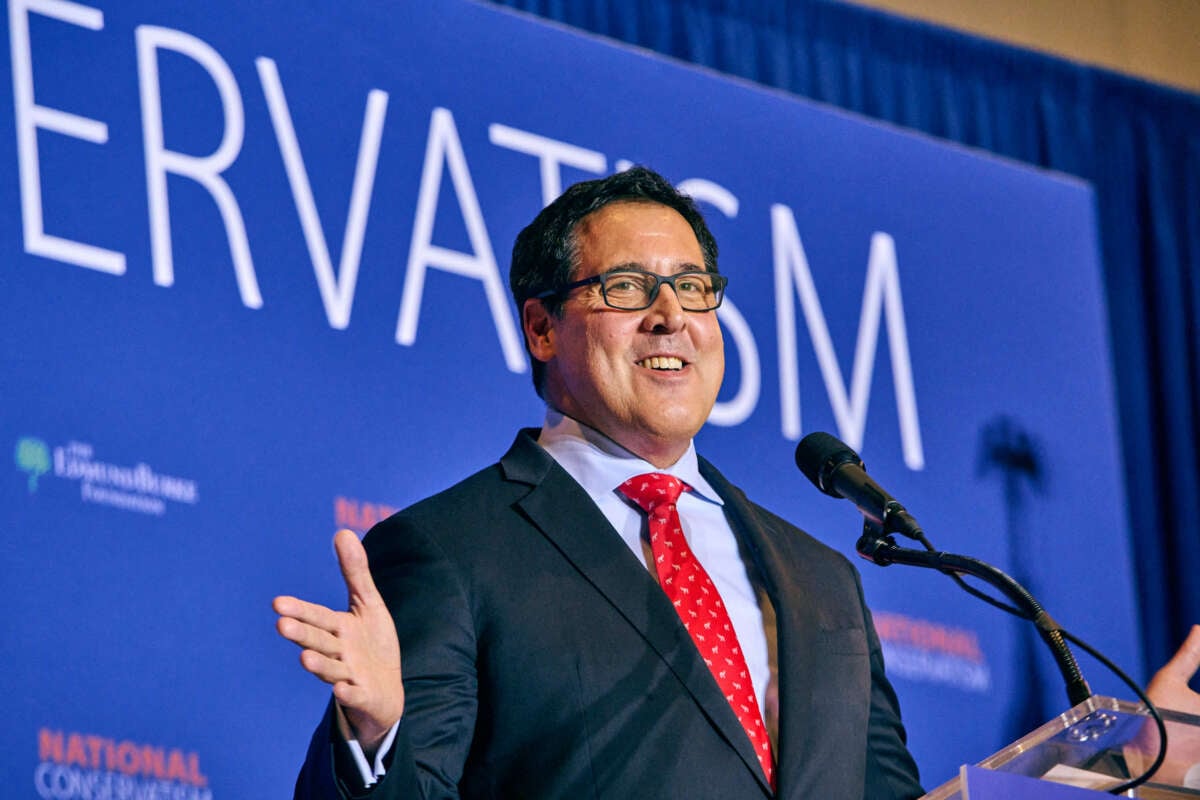 Paul Dans, director of The Heritage Foundation's Project 2025, speaks at the National Conservative Conference in Washington, D.C., on July 10, 2024.Dominic Gwinn / Middle East Images / AFP via Getty Images
This story was originally published byProPublica.ProPublica*is a Pulitzer Prize-winning investigative newsroom.
In January 2023, a group of about 15 people gathered for three days at the Heritage Foundation, the conservative Washington think tank a few blocks from the Capitol. Their aim was ambitious and farsighted: to start building the next Republican administration, two years before a Republican president might again take office.
The group’s leaders originally cast the initiative as candidate-agnostic, intended to assist the 2024 Republican nominee, whoever that might be. But there was no real doubt who the envisioned beneficiary was. The team included several former members of the Trump administration, and the whole effort was geared to address a perceived shortcoming of that White House: its failure to fill enough key government positions with Trump loyalists. So few had expected Trump to win in 2016 that hiring had been left mostly to GOP veterans, who brought in establishment figures and never managed to fill some slots at all, leaving the president exposed to the bureaucratic resistance that his acolytes believe undermined him at every step: the dreaded “deep state.”
They were determined not to let this happen again. This time, Trump would take office with a fully staffed, carefully selected administration ready to roll. Thus the name of this new effort at Heritage, Project 2025. It would consist of four “pillars”: an 887-page policy plan, a database of conservatives willing to serve in the administration, training seminars for potential new appointees on the functions of government and a battle plan for each agency.
In recent months, Project 2025 has gotten attention for some of the more radical proposals in its policy plan — such as reinstating more stringent rules for the use of the abortion pill mifepristone and abolishing some federal agencies. On the campaign trail, President Joe Biden and Vice President Kamala Harris made the project the centerpiece of their case against a Trump restoration. Their attacks were so effective that Trump has publicly disavowed the effort (while selecting a running mate, Ohio Sen. J.D. Vance, who is closely allied with Heritage).
This week, as Project 2025 faced denunciations from the Trump campaign, the project’s director, Paul Dans, stepped down from his role. Trump’s campaign co-managers, Susie Wiles and Chris LaCivita, said in a statement that “reports of Project 2025’s demise would be greatly welcomed, and should serve as notice to anyone or any group trying to misrepresent their influence with President Trump and his campaign — it will not end well for you.” For Dans, it was a sudden end — or at least a pause — in a remarkable ascent from obscurity.
Related Story

|
Far Right Project 2025 Is Ending Its Public Push — But It’s by No Means Dead
The Trump campaign has tried to distance itself from Project 2025, despite deep connections to the far right manifesto.
By Chris Walker , TruthoutJuly 31, 2024
But then again, his resignation was at least partly symbolic: The work of Project 2025 is largely done. Under Dans, the project has assembled a database of more than 10,000 names — job candidates vetted for loyalty to Trump’s cause — who will be ready to deploy into federal agencies should he win the 2024 election. Project 2025 has delivered a toolkit, ready for use, to create a second Trump administration that would be decidedly more MAGA than the first.
The most important pillar of Project 2025 has always been about personnel, not policy. Or rather, the whole effort is animated by the Reagan-era maxim that personnel is policy, that power flows from having the right people in the right jobs. To that end, the plan’s most pertinent proposal is reinstating Schedule F — a provision unveiled near the very end of Trump’s term, then repealed by the Biden administration — which would shift as many as 50,000 career employees in policy-shaping positions into a new job category that would make them much easier to fire.
This was the mission that brought people together at Heritage for those three days, with the task of designing the personnel database that would populate the next administration, all under the supervision of Dans, a tall, broad-shouldered guy with a slow, jut-chinned way of speaking and traces of a Baltimore accent.
Not long ago, Dans, 55, would have seemed an unlikely person for the role. The son of a liberal Johns Hopkins University professor, Dans was a New York lawyer who before Trump’s election had never served in government. For years following that election, he had tried and failed to find a place in the administration, seemingly in spite of a celebrity connection: His wife was a fitness coach for Karlie Kloss, the supermodel sister-in-law of Jared Kushner. Finally, in 2019, Dans got in the door, at the Department of Housing and Urban Development.
Some four years later, here he was, hoping to build the next administration. Dans envisioned the personnel database that he wanted to create as a “conservative LinkedIn.” To help explain it, he displayed sketches he had made. They depicted the online file for a sample applicant — “Betsy Ross.” One page would show her occupation, which of the conservative organizations supporting Project 2025 had suggested her and which agencies she was being considered for. Another would show the findings of an internal review of her application, her progress on the training sessions (one of which Dans called “Deep State 101”) and any “red flags.” Yet another would show additional vetting: a “webcrawl” report; her performance on the Project 2025 questionnaire, which would ask detailed questions about ideological and policy beliefs; and more. The database would allow administration officials to search for candidates of a certain profile to fit a certain role.
This was what Dans wanted the Heritage staffers gathered in the room and the tech engineers they’d contracted from Oracle to build: the engine of Trump 2.0. It would be a personnel machine not only far beyond what the first Trump administration had at its disposal, but beyond what any other administration had enjoyed, either. According to one person in attendance, the database would take several months to build and would cost upward of $2 million. It would reach outside the usual channels to draw in MAGA believers from across the country. And Dans was at the helm. “There was no one who had a better idea of it than he did,” the person in attendance told me. “He was driving the whole thing.”
As the database development progressed in the months that followed, Dans stressed a detail that made it even more far-reaching. He did not want the positions being filled to be limited to the 4,000 or so slots that are reserved for political appointments. He also wanted it to suggest people for roles that are currently assigned to career employees, in keeping with the plans for Schedule F.
Propelling the project has been a worldview that can be easily overlooked amid Trump’s talk about restoring the halcyon days of his first term. The people preparing for his return to the White House emphatically do not view his first term as a success. Rather, they view it as a missed opportunity to implement the MAGA vision. For Dans, Trump’s first term was an object lesson in how difficult it could be to reach Trump’s goals without a captive bureaucracy.
The former president’s supporters are determined that a second Trump administration would be much more organized than the first, stocked with foot soldiers who are both loyal and capable of moving policy forward. Dans declined to be interviewed for this article or to respond on the record to a detailed list of questions, but he has been laying out his thinking in interviews with conservative media outlets. “We’re going to get this done right on the next go-round,” he told Jenny Beth Martin, a co-founder of the Tea Party Patriots,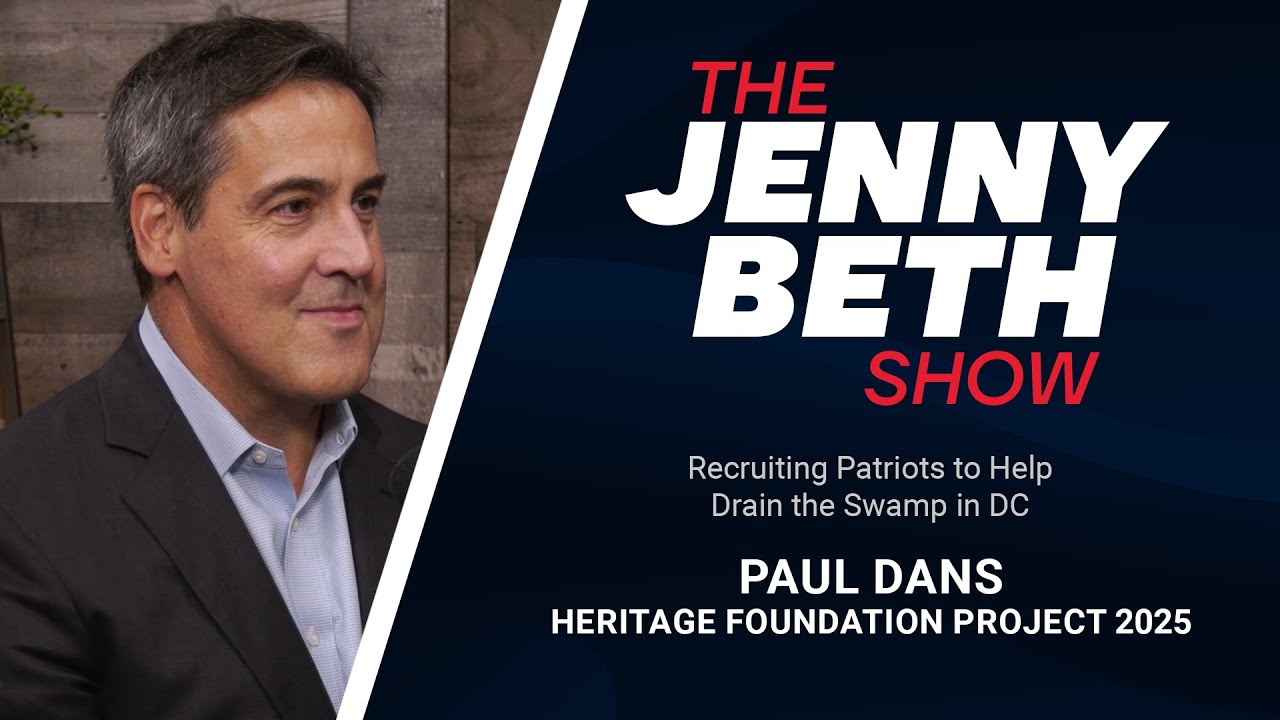 [vid]
last winter. And in essence, that will mean cleaning house, he said. “If a person can’t get in and fire people right away, what good is political management?”
Paul Dans was raised, in the 1970s and ’80s, in a family that embodied liberal idealism. Peter Dans was a professor of medicine who had enlisted in the Public Health Service; started an STD clinic and a migrant health clinic while on faculty at the University of Colorado; and served in the office of Sen. Gaylord Nelson, the Wisconsin Democrat who founded Earth Day. Paul’s mom, Colette Lizotte, was a French teacher who had previously worked as a chemist at the National Institutes of Health.
The family lived in a hilly, verdant stretch north of Baltimore. Paul and his twin brother, Tom, hung out with the other smart kids at Dulaney High School; they played sports and were on the debate team. “Both were very bright kids, very well behaved,” recalled Phil Sporer, who attended school with them from early on. “The Dans boys were everybody’s perfect child.”
The first hints of Dans’ political orientation emerged in college. He went to MIT, where he majored in economics, joined a frat, played on the lacrosse team and, as classmate Juan Latasa told me, stood apart from the “political correctness” that was rising at elite campuses around 1990. “It wasn’t always easy for such students. It was a very liberal place,” Latasa said. “It was tough.”
Dans stayed on at MIT to get his master’s in city planning. His thesis on the redevelopment of industrial parks, like the Brooklyn Navy Yard, showed him still wrestling with competing impulses. There was Reagan-style optimism: “The myriad crises which America must grapple with in coming years pale in magnitude to the nation’s gifted legacy.” But there was also a hint of resigned declinism, with Dans addressing an “age of diminished expectations.”
At the University of Virginia School of Law, which Dans attended next, his transformation became explicit: He joined the campus branch of the Federalist Society, the conservative network founded by law students at Yale and the University of Chicago in the 1980s, and he rose to become chapter president. “I was always attracted with the Federalist Society message about how some daring students stood up at Yale Law School and challenged the hegemony there and really was trying to speak truth to power,” he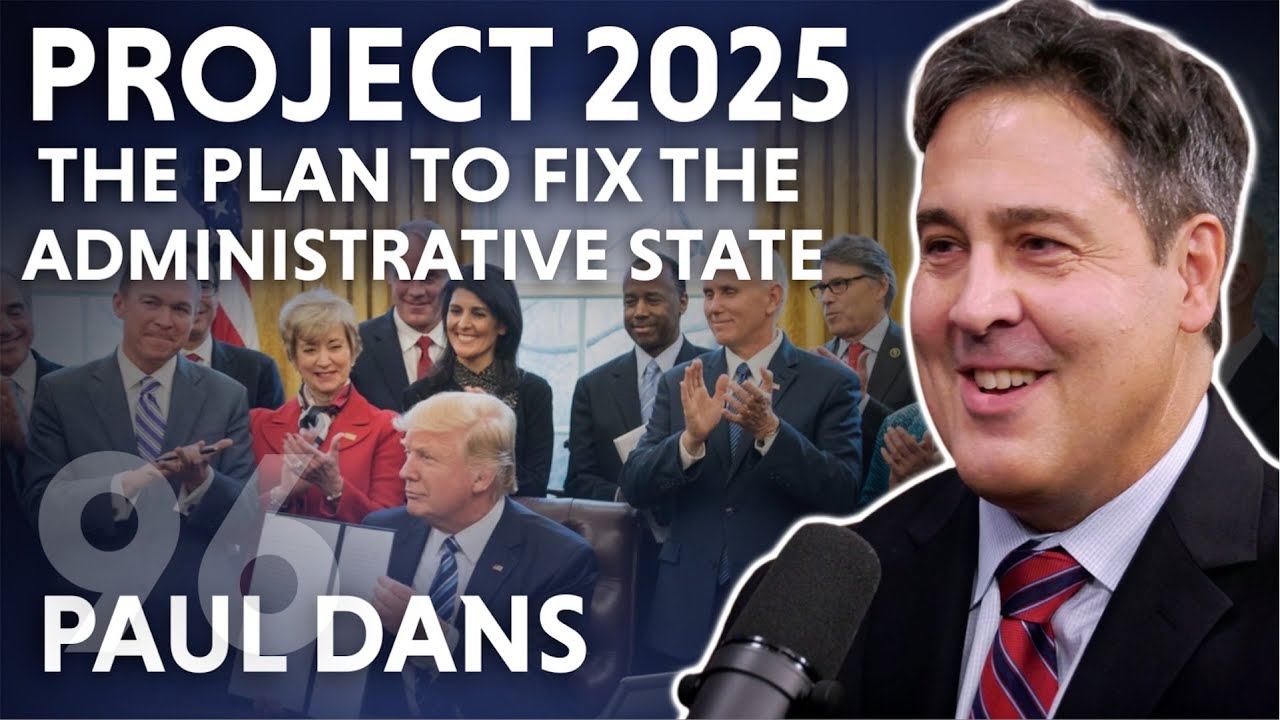 vid]
Saurabh Sharma and Nick Solheim last year on “Moment of Truth,” a podcast produced by American Moment, a conservative organization now aligned with Project 2025.
Still, Dans left little mark on his law school classmates, perhaps partly because he took a year off to study in Paris. I reached out to a couple dozen of his peers, and an email from a lawyer in Dallas was representative: “I wish I could help but I do not remember any details about Paul Dans.”
Dans’ fixation on the federal bureaucracy began at home. The idealism of the 1960s brought his parents to Washington, where they met while working at the National Institutes of Health. “They had basically come up through the JFK, Kennedy-esque, ‘Ask not what your country can do for you, but what you can do for your country’” era, he told Sharma and Solheim.
Dans didn’t seriously consider following his parents into public service — law school debt precluded that option, he said — but he would ultimately become wrapped up in a debate that had first inspired them. They went to Washington during the federal government’s great post-World War II expansion, when the ranks of career employees began swelling and when more job protections started accruing to them, sparking a decadeslong argument that has carried on to this day. To federal employee unions and other defenders of the bureaucracy, such protections were in the spirit of the Pendleton Act, the 1883 law that created the modern federal workforce, along with mechanisms for employment based on merit. But to many conservative critics, and some good-government liberals, the job protections that federal workers gained in the 1960s undermined the “merit based” nature of the civil service by making it difficult to remove ineffectual workers.
After law school, Dans chose a different meritocracy, joining a wave of young attorneys in the New York corporate legal world in the late ’90s. But Dans stood out. He was much more conservative than most of his colleagues. He prided himself on being one of very few in his Upper West Side building to get the New York Post. He admired Donald Trump for bringing a “can-do spirit back … building on the skyline again.”
Some colleagues kept their distance, but not Julio Ramos, a fellow junior associate at the law firm LeBoeuf, Lamb, Greene & MacRae. Dans kidded Ramos about his lefty politics and regaled him with talk of supply-side economics and Reagan. It was all very civil. “Even though he was from the right,” Ramos told me, “he didn’t have any hatred toward the left.”
Dans left after three years to become an associate at another large firm, Debevoise & Plimpton, and after two years there eventually landed at a less prestigious firm, where his cases included a lawsuit between Yves Saint Laurent’s beauty line and Costco over perfume labeling. By 2009, having not made partner anywhere, and two years into his marriage to Mary Helen Bowers, a former New York City Ballet dancer, Dans went into solo practice.
Dans has criticized the legal field for what he perceives to be anti-conservative discrimination. “We are, as a profession, really getting snowed under right now,” he said on the “Moment of Truth” podcast. “Republicans and conservatives have not stood up in the face of, kind of, cancel culture, and [these] Marxist, Saul Alinsky attacks.”
Even the moment he has often framed as his biggest triumph affirmed Dans’ alienation from liberal lawyers. In 2009, he was one of hundreds of attorneys hired to defend Chevron and its employees against a multibillion-dollar lawsuit for oil pollution in Ecuador. According to the journalist Michael Goldhaber, Dans was hired at $100 an hour — less than 5% of the top rate at Gibson, Dunn & Crutcher, which was leading Chevron’s defense.
As Dans later told Goldhaber, he had an epiphany: While watching the documentary film “Crude,” an exposé of Chevron in Ecuador that was done in collaboration with the plaintiffs’ lead lawyer on the case, Steven Donziger, Dans realized that the outtakes from the film should be subpoenaed, to see if the filmmaker captured any legal malfeasance by Donziger. Dans put the suggestion in a memo.
As it turned out, the subpoenaed outtakes did prove to be damning. Chevron sued Donziger in U.S. federal court, ultimately resulting in a ruling that the company did not have to pay the $9.5 billion judgment. Dans took full credit: “I came up with a theory that we could get documentary film outtakes, basically caught them doing their nefarious acts on video,” he told Martin on her podcast.
According to other lawyers on the case, the story is more complicated: Although Dans wrote a memo suggesting the outtakes be targeted, others started the push for subpoenas — and came up with the necessary legal basis for seeking the crucial outtakes — independently of Dans raising the idea.
When the Chevron case was over, Dans was back on his own, handling motley litigation, including a patent fight between two manufacturers of sheet-pile wall systems and a class action against Frito-Lay regarding its claims that some of its products were made with all-natural ingredients. The address for Dans’ solo practice was a mail drop at the New York City Bar Association.
Toward the end of the aughts, as President Barack Obama’s first term wore on, Dans’ conservatism began to take on a new shape. He spent a lot of time online. “I’m one of the people sitting at his kitchen counter, you know, on the bench there, on the stool kind of going, How can that be? That’s crazy,” he told Martin. “You’re clicking … you know, refreshing the Drudge Report like 100 times a day.”
One thing he clicked on was Trump’s conspiracist claims about Obama’s origins: “I had some serious academic questioning about the birthplace of a former president, if you will,” he told Sharma and Solheim. Dans got excited when rumors spread in 2011 that Trump would be going to New Hampshire to announce a run for president. Alas, it didn’t happen.
Early in the 2016 primary season, Dans attended a dinner of the steering committee for the New York City Lawyers Chapter of the Federalist Society. As he later recalled to Sharma and Solheim, someone asked whom people were supporting for president, and around the table it went: “I like Jeb.” “I like Marco.” “I like Jeb.”
Dans watched in bewilderment. Here were all these New York Republicans, and no one had yet mentioned the man who lived a few blocks away, who had decided to run for president this time. Finally, it was Dans’ turn. “Well, I like Trump, and I think he’s going to win,” he later told Sharma and Solheim. “I like him because I’m sick of losing.”
That fall, Dans headed to the Pittsburgh area to volunteer for Trump. He had worked on other campaigns, but none had ever felt like this. “There was no passion,” he told Sharma and Solheim. “We were hungry for a candidate who could really speak to Americans. … Donald Trump delivered.”
Trump’s appeal to Dans verged on the tribal: He came to see himself as “a pure-blooded deplorable mix,” as he told Sharma and Solheim, citing the working-class, ethnic Catholic roots of his ancestors — his paternal grandfather was born to Spanish immigrant parents and had been a merchant mariner, and his mother hailed from French Canadian mill workers in Rhode Island. Never mind that his father was a medical professor who had raised Dans in an affluent suburb.
When Trump won, Dans eagerly sent off his resume. “Next stop, you know, Department of Justice, right?” he said to Martin years later, recalling his confidence. But no. As he also told Sharma and Solheim, the response was “crickets.”
His explanation? He was too MAGA. “There were so many people getting sandbagged because somebody thought that they were too ‘America First’-y or too Trumpist,” he told Martin. He was advised to instead slip in “under the radar” as “just your milquetoast Republican appointee.” Watching his accounts of this disappointment, it’s hard not to feel some sympathy for Dans, whose affect in interviews can come off as both genial and awkward, like the chatty, perhaps too chatty, guy at the airport bar.
Finally, late in 2018, Dans came to Washington for a Federalist Society meeting and connected with James Bacon, a college student who was working as confidential assistant to Housing and Urban Development Secretary Ben Carson. With Bacon’s help, and with the benefit of his master’s in city planning, Dans finally broke in, in July 2019, as a senior adviser in HUD’s Office of Community Planning and Development.
Career staff at HUD didn’t know what to make of Dans. “We tried to figure out what his role was,” one of them told me, speaking on the condition of anonymity for fear of retribution. “He kind of wandered in,” the career employee said. “He was fairly disdainful of the career staff and did not have a lot of respect for why things were the way they were.” For Dans, his arrival was a “real baptism” in how the government actually works. “You don’t realize that the federal government is just an avalanche of money shooting out of various agencies,” he told Sharma and Solheim. “It’s trying to tame this spew of money and direct in the right way, is what you’re doing when you get to an agency.”
As Dans saw it, the career employees were the problem. They were biased against conservatives, and they disregarded changes sought by the duly elected administration. Dans also blamed fellow appointees, too many of whom were clueless about the actual work and thus willing to cede decision-making to career employees. “You came and you went to cocktail parties, and you had your birthday cakes around the office and, you know, maybe a couple of ribbon cuttings, and you got to go on a little international junket,” he told Sharma and Solheim. “And meanwhile, everything else is kind of going at the same level.”
By late 2019, the White House was coming to share Dans’ diagnosis. James Sherk, then a special assistant on the Domestic Policy Council, began compiling purported examples of what they viewed as deep-state obstinacy that Trump should have been able to discipline with dismissals, including anonymous reports about Environmental Protection Agency employees withholding information about legal cases from political appointees and about Department of Justice lawyers refusing to investigate discrimination against Asian Americans at Yale.
The ultimate example of perceived perfidy came in December 2019, when the House used the testimony of federal employees to approve two articles of impeachment against Trump: for using the levers of powers to pressure Ukraine into discrediting Biden and for obstructing Congress. This gave Trump and his remaining White House coterie new resolve to take more control of hiring.
Trump turned the Presidential Personnel Office over to John McEntee, his 29-year-old former personal assistant who had left the White House in 2018 after a background check found that he posed a security risk due to his frequent gambling. (McEntee, now an adviser for Project 2025, has declined to comment about the background check in the past.) McEntee recruited Bacon, the college student, to assist him in overhauling personnel, and, looking for someone to join in the effort, they settled on Paul Dans. The person who had barely made it into the administration had impressed them with his critiques of the status quo.
In February 2020, the White House installed Dans at Office of Personnel Management as “White House liaison and senior adviser to the director” — its eyes and ears there.
Dans, encouraged by McEntee, wasted no time. He quickly ordered the removal of the agency’s chief of staff, Jonathan Blyth, and asserted so much authority across the agency that its director, Dale Cabaniss, who had spent years as a Republican staff member in the Senate, decided to leave as well. Cabaniss was replaced by an interim director, Michael Rigas, but people at the agency told me that Dans was the de facto director for the remainder of the year; late in 2020, he was named chief of staff. (Rigas and Blyth did not respond to requests for comment; Cabaniss declined to comment on the record.) So total was the takeover of the personnel process that Dans’ colleagues took to referring to him, McEntee and their allies as “the coup group.”
One of Dans’ first assertions of authority came at a senior staff meeting after Cabaniss’ departure, amid the onset of the coronavirus pandemic. According to another Trump appointee, some 20 people were present in the conference room at OPM’s headquarters near the National Mall when the agency’s then-chief information officer, Clare Martorana, said that, like most other agencies, it would use Zoom for online meetings.
Dans erupted, declaring that Zoom, which was founded by a Chinese immigrant to the U.S., posed the risk of spying by China. Martorana took in his outburst with “a combination of anger, amusement and just dumbstruck awe,” the Trump appointee recalled. She then tried to explain that Zoom was on the government’s approved list of vendors and that many other agencies were using it. This did not mollify Dans.
As 2020 went on, Dans’ colleagues became accustomed to his insistent demands, which, coupled with his large frame, could make him an intimidating presence. Dans wanted to hire as many appointees as possible in the final year of Trump’s term in office, and he wanted the agency’s processes to move faster. “He would just throw bombs into senior staff meetings,” said the appointee, who spoke on the condition of anonymity for fear of retribution, “and they would say: ‘What are we supposed to do with this? He can’t be serious with this.’”
In October 2020, less than two weeks before the election, Trump signed an executive order creating Schedule F, the new category of career employees in key positions who would now be easier to remove.
Over at OPM, Dans was busy with a related effort, seeking to recategorize positions in the Senior Executive Service — higher-ranking managerial slots across the government that are mostly filled with career employees — into a general category that would allow the president to appoint more of them. He was also engaged in another aspect of the administration’s new emphasis on personnel: making sure that OPM appointees answered long ideological questionnaires and met for interviews with staffers to assess their fitness for staying on in a second Trump term.
Those who dealt with Dans at OPM told me that they tried to respond to his demands as best they could, but that he often grew agitated when told that OPM did not have the ability to do what he wanted. He seemed to take such explanations as a personal affront. “He questioned everything from the point of view that there was a conspiracy against him and the president,” the appointee said.
Colleagues chalked up his outbursts to insecurity born of his not understanding how the government worked and being broadly out of his depth. “He reminded me of some of the people who show up at Republican conventions,” said a second Republican appointee at the agency, who, like the first, spoke on the condition of anonymity for fear of retribution. “Those people usually show up and then go home. They show up and are vocal, but they’re not like, ‘Now I’m going to go do the boring work of the sausage-making of government.’”
Donald Devine, who led OPM during the Reagan administration and whom the Trump administration had brought on as an adviser during this period, scoffs at such critiques. “If you do anything, people aren’t going to like it, and that’s why he’s so different,” Devine told me. “Most of the other people in the executive office of OPM weren’t doing much, so people didn’t care about them. He’s a serious person trying to do a serious job. You don’t see a lot of that, and that’s why I like him so much.”
Dans’ only problem, Devine said, was that he ran out of time. “The major things were going to be done the next term,” he said. “It was too late to do anything before they figured out how to run personnel.”
After the election, Dans stayed hard at work at OPM, even as other appointees started to vanish in the final weeks of the Trump administration. Since then, Dans has criticized prosecutions of those involved in the Jan. 6 attack on the Capitol. “The unfortunate thing is it does send a message to people that you shouldn’t criticize the government,” he said in a *C-SPAN* interview last year.
A year and a half after arriving in Washington, Dans left for his new home in South Carolina, near his wife’s hometown of Charlotte, North Carolina, while she was expecting their fourth child. “I went home kind of in this Cincinnatus sort of spirit: return to the farm. Our farm being in Fort Mill, South Carolina, in a subdivision,” he quipped to Sharma and Solheim.
But then he turned serious: “We’re ‘God, country and family.’ And now is the time to go put a little more emphasis on the God and family part of that. But we’ll be back for the country thing.”
With the 2024 election approaching, with Trump leading Biden and then Harris in most national polls and with Dans’ vision of reshaping the bureaucracy heavily influencing the Trump campaign, it finally seemed like Dans’ moment might actually be arriving. On Tuesday’s episode of the “War Room” podcast — founded by former Trump strategist Steve Bannon, who is now in prison — Dans sometimes sounded triumphant. “In order to take this back, the swamp isn’t going to drain itself,” he said. “We need outsiders coming in committed to doing this. … With Project 2025, we built a pathway to encourage folks to do this.”
But in that same “War Room” episode on Tuesday, Dans decried the “great disinformation campaign” underway against Project 2025, “almost a hoax.” He listed some of the mistruths that Democrats had voiced about the project’s proposals, including a claim by Harris that it would eliminate Social Security. “Just completely fallacious stuff,” he said. “It’s just one big bald-faced lie.”
It was plain that he was taking the attacks very personally, and with good reason. The Democrats’ campaign to turn Project 2025 into an albatross around Trump’s neck was succeeding, to the point where some sort of dramatic break was needed. Just hours after that episode aired came word that Dans would be stepping down. “We are extremely grateful for [Dans’] and everyone’s work on Project 2025 and dedication to saving America,” Heritage President Kevin Roberts said.
In a note to Heritage staff, obtained by *The Wall Street Journal*, Dans himself suggested that his mission was, essentially, complete. “The work of this project was due to wrap up with the nominating conventions of the political parties,” he wrote. “Our work is presently winding down, and I plan later in August to leave Heritage.”
It was face-saving, but it was also largely true. The database was built; the training seminars had been taught. This time, the foot soldiers were ready to go, just waiting to be called on. “From the president’s lips to God’s ears that change is going to happen? It really happens below” the president, Dans said on “War Room.” “That’s the importance of recognizing: Personnel is really the cornerstone of the change.”
Disavowals or not, the logic of Project 2025 is embedded in the DNA of Trump’s plan to overhaul the government. Reinstating Schedule F is still a top-level agenda item. Jacqueline Simon, the public policy director of the American Federation of Government Employees, told me that the agencies could end up defining the new employment category so broadly that it could encompass far more than 50,000 positions. “It will be a purge,” she said.
Donald Moynihan, a public policy professor at Georgetown University, does not expect Trump to fire tens of thousands. Jettisoning just a couple of thousand, to make an example of them, may be enough. “They can fire 1,000 and put their heads on pikes, and then everyone else quickly falls into line,” he told me. “That way you have a terrified bureaucracy that still has institutional knowledge. That’s the more strategic way to use Schedule F, to scare the bejesus out of 49,000 people and force them into line.” Sherk, the author of Schedule F, suggested as much to me. “The notion we’re going to can 50,000 people is just insane,” he said. “Why would you do that? That would kneecap the ability to implement your agenda. You use it to go after bad actors and rank incompetents.”
That would still leave the challenge of finding people to fill the 4,000 slots for appointees and however many hundreds or thousands of openings are created by firings. Many Republicans who served in the first Trump administration are leery of serving in a second. “The last administration was a joke, and they had a real problem recruiting,” a Washington attorney who served in the George W. Bush administration, and who spoke on the condition of anonymity for fear of retribution against his firm, told me. “Who the hell would jump into this clown car driving toward a cliff? Are people going to come forward, quality people? Not a fucking chance.”
This was precisely Dans’ mission with Project 2025: to find a whole new corps of people willing to come to the capital and do the work of implementing the Trump agenda that the usual D.C. fixtures refuse to do. How many will be suited to the task? “We have to recruit the talent to get to Washington,” Dans told Martin. “Ultimately, what Project 2025 is is a call to action for patriots to come serve in Washington.”
Will Dans himself be among that number? As Devine sees it, Dans’ current defenestration is political, and temporary. “Paul is too bright and intelligent not to,” he said. “They’ll pick him up somewhere.” Devine said that he’s spoken with Dans since his decision to resign. “He’s doing well,” Devine said. “He’s ready to go on to fight. The memorandum he sent [to Heritage colleagues] ends with that: ‘Fight! Fight! Fight!’” Dans still sees himself as a field general for a new class of Trump bureaucrats, one that will come to power if Trump wins, whether the effort is called Project 2025 or not.
There is a paradox at the core of this. Dans was never looking for the proverbial farmers with pitchforks, because he is aware of how complex the work of the federal government is. Dans was looking for people who are both angry enough about the state of the country to want to commit four years to serving Donald Trump in Washington to fix it, and yet sufficiently versed in the mechanisms of government to be able to restrain it. “We need many more eyes and ears, many more technicians on the ground,” he told Sharma and Solheim.
It is idealistic, in its way, the conception of an aggrieved, underappreciated elite that is ready to be summoned to Washington. It sounds a lot like, well, Paul Dans. The question is, how many others like him have been out there all along, just waiting for this?
*Doris Burke contributed research.
---