Brulle
blank 7/18
---
see DAFs
often on drilled podcast amy westerman
124 pp GibsonBrulle_KochandClimateObstruction_2024
Koch and Climate Obstruction Climate Social Science Network Institute for Environment & Society at Brown University November 2024
Connor Gibson Independent Research Specialist Denver, CO Email: connor@grassrootbeer.com Robert J. Brulle Visiting Professor of Environment and Society Institute at Brown for Environment & Society Brown University Providence, RI Email: robert_brulle@brown.edu
Abstract Scientific analysis of global climate change began in earnest in the late 1960s. This research has been widely circulated throughout the U.S. in scientific and industry circles since then. Despite clear information on the causes and potential damages of climate change, a wide variety of organizations have engaged in a efforts to obstruct meaningful action to address climate change. One key actor in the effort to obstruct climate action is Koch, Inc., along with a fleet of organizations it has developed, controlled and financed.
This paper provides an interim report of the results of ongoing historical research into the knowledge of climate change held by Koch executives, and the subsequent actions this company took in spite of this knowledge to obstruct climate mitigation efforts. The results show that Koch and its predecessor organizations received extensive knowledge of the nature and impacts of climate change, and that the organizations directed by Koch worked to obstruct climate action by engaging in: 1) monitoring and contesting climate science, 2) shifting the cultural understanding of climate change through public relations campaigns and 3) conducting aggressive lobbying of political elites. Through these activities, Koch and nonprofit organizations controlled by its executives played an important role in obstructing national and international climate mitigation efforts
40 FINK mentions
...
June 2014: Koch Executive Richard Fink Dismisses Climate Concerns at Koch Donor Summit [KOCH STATEMENT] During a gathering of political donors convened by Charles Koch in June 2014, several surreptitious recordings were made from inside the secretive event and published by The Undercurrent’s Lauren Windsor. Among the many revelations from these recordings were comments made by Richard Fink relating to climate change science:359 “The environmental movement. Occupy Wall Street. These kids are searching for meaning. They're protesting the 1 percent. They are the 1 percent, but they're protesting the 1 percent. The environmental movement and climate change. It's not about climate change. “I studied climate change for six years. I can't figure it out, quite frankly. Charles is ahead of me on this. I'm not a climatologist, but I'm not completely stupid. I can tell you I meet with people, particularly in California, that are convinced the world is going to burn up in, you know, a year or two. They don't know the answer -- they don't even know the question, because it's not about climate change. It's about a cause. It gives their life meaning." In-text reference return: Page 30 It is unclear if Fink produced any internal reports related to his purported investigation into climate change for “six years,” and what kinds of interaction he may have had with Charles Koch about that effort.
At this point in time, Fink was still Charles Koch’s top advisor, a longtime Koch Industries lobbyist, and the head of several Koch foundations that financed policy and campaigning organizations, including those that opposed efforts to mitigate climate change.360 Fink was responsible for developing Koch’s strategy for manufacturing policy outcomes, known as the “Structure of Social Change.”361 Fink’s Structure adapted a manufacturing theory written by the late Austrian economist Friedrich von Hayek, one of Charles Koch’s collaborators and major ideological influences.362 In Fink’s adapted Structure, rather than manufacturing physical goods to be sold, he sought to manufacture policy victories. The first step of this process was to support the development of intellectual products at universities. Think tanks were then financed to turn the more abstract academic theories into policy models. Finally, advocacy organizations would be funded to pressure politicians to enact the policies—politicians that often could also be incentivized through campaign finance and lobbying efforts.363 This Structure of Social Change is the reason why the development and financing of ideological university centers has long been a priority for Charles Koch, with hundreds of universities receiving
---
ggl 3 26
Climate Deniers Expected More Resistance to Trump’s Fossil Fuel Blitz - DeSmog
*published in partnership with The Guardian.
As Donald Trump assaults the legal foundation of America’s ability to regulate global warming emissions, climate deniers have been privately celebrating what they claim is the “silent” acquiescence of billionaires, Democrats, climate activists and even reporters to the president’s aggressive pro-fossil fuel agenda.
“In my 26 years of being focused on climate, I’ve never seen anything like this. Trump is gutting everything they ever stood for,” Marc Morano, a long-time climate denier, said in January at the “World Prosperity Forum,” a five-day event in Zurich, Switzerland, billed as a right-wing alternative to the World Economic Forum in Davos.
The event’s sponsor was The Heartland Institute, a conservative think tank that has been at the forefront of spreading climate disinformation for decades, and was also a contributor to Project 2025, the policy blueprint for President Trump’s second administration.
“Billionaires are silent. Democrats in Congress have been silent. Climate activists. There has been no push-back on this,” Morano said — and he may have a point, according to some experts who research the climate denial movement.
“The Trump administration just marched in and destroyed the crown jewel of climate science in the United States,” said Robert Brulle, a professor of environment and society at Brown University, referring to the Trump administration’s dismantling of the country’s premier climate research center, the National Center for Atmospheric Research, in December.
“And nothing happened. There wasn’t even a whimper. I never thought I’d ever say this: Marc Morano is correct.”
Last month, the Trump administration repealed the 2009 “endangerment finding” establishing that greenhouse gas pollution endangers public health. It was a determination that undergirded the federal government’s authority to limit climate-heating pollution from automobiles and power plants.
Elimination of the endangerment finding had long been a core goal of the climate denial movement.
Its repeal is just the latest in a long line of President Trump’s climate-related destruction. Since taking office in January 2025, his administration has significantly curtailed the country’s weather forecasting organizations and climate science research facilities, published reports denying established climate science, and made deep cuts to funding for climate-related energy and community projects.
Under the leadership of Trump appointee Chris Wright, the Department of Energy last year all but banned its key renewable energy department from using terminology like “climate change,” “green,” and “sustainability.”
”Trump overturned Biden’s climate agenda at breakneck speed,” Morano said at the Heartland Institute’s Zurich forum.
Instead of pushing back on this blitz, many Democratic Party representatives have retreated from talking directly about climate change across social media, podcasts, speeches, and in Congress. The party is now embroiled in a debate about whether affordability is a better message than climate action, despite polling suggesting that 63 percent of the American public believes the president and Congress should prioritize clean energy.
This trend hasn’t gone without resistance in the party, however. “Anyone who cares about what fossil fuel pollution is doing to Earth’s natural systems needs to ignore these so-called ‘climate hushers’ — people who think Dems should stop talking about climate,” Sen. Sheldon Whitehouse (D-RI) posted on social media in January.
Genevieve Guenther, a climate communications expert and founding director of the advocacy group End Climate Silence, largely agrees. “The Democrats’ climate hushing is politically foolish,” she said in an email. “It only benefits the Trump regime’s agenda.”
At the Heartland Institute event, Morano expressed delighted “shock” over the “flips on climate” of tech moguls Jeff Bezos and Bill Gates, the founders of Amazon and Microsoft respectively, whose companies have abandoned once-ambitious climate promises as they confront the skyrocketing energy demands of their AI businesses.
Gates, whose foundation has donated millions of dollars to a think tank run by climate crisis denier Bjorn Lomborg, published a controversial memo in October arguing that climate change “will not lead to humanity’s demise” and advocating for ending climate funding in favor of direct humanitarian aid.
Microsoft and Amazon, which have donated large sums to Trump, have both recently embraced fossil-fuel powered AI data centers alongside Trump energy officials and fossil fuel industry players.
In early February, Bezos, who is also the owner of the Washington Post, slashed at least 14 reporters from the venerated paper’s climate desk. Just weeks later, the Post published an editorial board opinion, “EPA is right to reverse Obama overreach,” praising Trump’s repeal of the endangerment finding.
Morano noted that overall, journalists have been reporting less aggressively about Trump’s fossil fuel agenda. “When you have Lee Zeldin, the EPA chief, calling climate a cult, a scam, religion, he doesn’t even get push-back from reporters,” Morano said.
During Trump’s first term, by contrast, environmental officials like Scott Pruitt, who led the Environmental Protection Agency from February 2017 to July 2018, “would have to be very careful on climate,” Morano said. Otherwise “they would be beaten and browed by the media.”
The growing “climate hush” is not limited to the U.S. — a hushed silence about climate change has expanded across the globe.
At Davos in January, world leaders across business and government talked noticeably less about addressing climate change than in previous years.
Why? “In today’s deeply polarizing U.S. political stance, climate discussion has come to feel so radioactive that many leaders would rather avoid it,” Anjali Chaudhry, a business sustainability researcher at Dominican University, wrote about the silence in Forbes.
Even Canadian Prime Minister Mark Carney, who once served as a United Nations Secretary-General Special Envoy on Climate Action and Finance, limited his mentions of climate change at Davos to a quiet reference to the COP climate summit and a simple “Canadians remain committed to sustainability.”
Despite all this quiet, the vast majority of people worldwide, 89 percent, support climate action, even if they underestimate how much others care — a misperception that has added fuel to a “spiral of science.”
What can be done to counteract the trend towards silence? “In this time of ‘climate hushing,’ having conversations about climate change is more important than ever,” Katherine Hayhoe, a climate scientist and climate communications expert, advised in her influential blog.
For environmental sociologist Brulle, addressing the growing hush around climate must go beyond talking.
“I think the climate movement in the United States has failed. It has flat failed, and that means we need to rebuild this movement in a completely different manner,” he said.
Environmentalist Bill McKibben is more optimistic. “I think [the Trump administration] is whistling past the graveyard of their fossil-fueled dreams,” he said in an email. “The real story of the last year is how politicians, movements, entire nations are moving fast towards clean energy. They’re not all doing it in the name of ‘climate,’ but we’re making faster climate progress than we have at any point in the last 40 years.”
McKibben added a caveat: “Fast enough? Of course not. The deniers have delayed change and that continues. But it’s going far faster than they want it to — hence their resort to political gamesmanship.”
---
===
ref
https://www.exxonknews.org/p/exxon-uses-free-speech-argument-to
exxon uses free speech argument to fight climate laws
It’s not the first time the oil giant has tried to ward off accountability using the First Amendment.
Oct 29, 2025
ExxonMobil has sued California over a pair of state laws that force big companies to disclose financial climate risks to shareholders and the full greenhouse gas emissions resulting from their businesses — arguing that the measures violate the company’s free speech. It’s the latest example of Exxon, the biggest U.S. oil company, wielding the First Amendment as both a shield and sword in court.
The California Climate Accountability Package, which passed in 2023, would make companies doing business in California disclose emissions that result from the use of their products — also known as “Scope 3” emissions. That category makes up the vast majority of emissions from the oil and gas industry, but companies including Exxon have fought to avoid making them transparent.
Exxon’s new lawsuit argues that by requiring it to account for the entirety of its emissions, the laws would force it to “espouse California’s preferred framing for issues of immense public concern” and to “describe its emissions and climate-related risks in terms the company fundamentally disagrees with.” The lawsuit asks a U.S. District Court to stop California from enforcing the laws.
The case targets the country’s only existing disclosure laws for greenhouse gas emissions, even as the federal government ends emissions reporting and required climate disclosures at the federal level. But it’s also part of a years-long trend of corporations using First Amendment arguments in an attempt to shield themselves from scrutiny and regulation, experts say.
“This is part of a long history of companies including Exxon trying to use the First Amendment to block regulation that they dislike,” said Amanda Shanor, an associate professor of legal studies and business ethics at the Wharton School of the University of Pennsylvania, who has chronicled some of those high-stakes efforts. “That’s not really how the First Amendment works or is supposed to work.”
The fossil fuel industry, in particular, has leveraged First Amendment arguments to repel criticism over their role in the climate crisis. In recent years, oil companies have claimed that lawsuits across the country accusing them of misleading the public about climate change violate their free speech rights. From Oregon to Massachusetts, the District of Columbia to California, Exxon has brought motions to dismiss states’ and municipalities’ climate deception lawsuits under anti-SLAPP (Strategic Lawsuits Against Public Participation) statutes — laws that were developed to protect the free speech of press and civil society groups.
One of those motions, responding to lawsuits filed by the state of California and eight California municipalities, argues that oil companies “have long exercised their rights to participate in the public debate over which policies best balance the challenges posed by a changing climate and the world’s increasing need for energy,” and that “This lawsuit threatens Defendants’ continued participation in those debates.”
The law firm representing Exxon in that motion, O’Melveny and Myers, is the same as in the latest First Amendment lawsuit against California. The argument seeks to cast Exxon’s public statements on climate change as political speech, which concerns public policy and has stringent First Amendment protections, rather than commercial speech, which does not enjoy the same level of protections.
“We’ve seen this movie before,” said Robert Brulle, an environmental sociologist and professor at Brown University and director of research at the Climate Social Science Network, who has co-authored briefs in support of climate deception lawsuits. “Their fallback defense is freedom of speech — ‘nobody ever said we have to be truthful.’”
Mobil Oil, now part of ExxonMobil, helped pioneer the idea of corporations as citizen-like entities with free speech rights in an effort to revive their reputation back in the 1970s. Exxon and Mobil backed other corporations’ First Amendment lawsuits, arguing that companies should be free to express their views on “matters of public concern,” including climate change. In Supreme Court cases like First National Bank v. Bellotti and Citizens United v. FEC, the idea of corporate free speech was expanded to usher in nearly unlimited corporate money in politics.
Still, none of oil companies’ anti-SLAPP arguments has been validated by judges. Under existing First Amendment law, Shanor explained, Exxon’s lawsuit against California’s disclosure laws should be very unlikely to succeed, too.
“Exxon is grasping at straws,” said Maggie Coulter, a senior attorney for the Climate Law Institute at the Center for Biological Diversity. “Courts have already rejected companies’ weak arguments rebranding their greenwashing and misinformation as free speech.”
Exxon and other corporations could be hoping that the U.S. Supreme Court might eventually use such a case to alter the boundaries between political and commercial speech — or “change what the rules are in a way that will favor them,” Shanor said.
“You just keep throwing the same basic core argument up there, wave the flag of the First Amendment and say, ‘leave us alone.’ Kind of like holding up a cross to a vampire,” said Brulle. “Now they’re playing it out in California to try to build a record in the court.”
‘Disproportionate blame’ on Exxon
According to Exxon’s lawyers, California’s disclosure framework would place “disproportionate blame on large companies like ExxonMobil for being large.”
“ExxonMobil understands the very real risks associated with climate change and supports continued efforts to address those risks,” reads the complaint. Such frameworks “send the counterproductive message that large companies are uniquely responsible for climate change no matter how efficiently they satisfy societal demand for energy, goods, and services.”
Michael Gerrard, director of the Sabin Center for Climate Change Law at Columbia University, said that Exxon should “let the readers decide.”
“If Exxon doesn’t like California’s framing, it’s free to supplement it with its own framing and offer an explanation of why it thinks that one is better,” he said.
The company’s own framing hasn’t gone over well so far, at least with climate experts. Exxon is the top investor-owned carbon emitter in the world, according to the latest Carbon Majors database by researchers at the nonprofit think tank InfluenceMap, and one of the most profitable. But Exxon officials have often blamed the company’s emissions largely on the habits of consumers. In an interviewwith Fortune last year, ExxonMobil CEO Darren Woods said that “the people who are generating the emissions need to be aware of and pay the price … for generating those emissions,” and referred to Scope 3 emissions as “essentially the emissions of our customers.”
Just before that interview, Exxon sued its own shareholders in an effort to block a proposal for the oil giant to limit its Scope 3 emissions. The lawsuit was dismissed, but not before shareholders revoked their proposal.
“What Exxon is asking for in this case is to say that shareholders should have no right to question companies on climate-related issues,” Danielle Fugere, president & chief counsel of shareholder advocacy group As You Sow, told ExxonKnewsat the time.
Both that lawsuit and another last year brought by the U.S. Chamber of Commerce against the California Air Resources Board, which also alleged California’s climate disclosure laws violated the First Amendment, were argued by law firm Gibson Dunn — a favorite of fossil fuel companies. The industry has also used the firm to pursue massive legal damages from their opponents, including this year’s nearly $667 million verdict against Greenpeace for its role in the protests against Energy Transfer’s Dakota Access pipeline.
Earlier this year, after California Attorney General Rob Bonta and a group of nonprofits sued Exxon for a “decades-long campaign of deception” about the efficacy of plastic recycling, Exxon sued them back under defamation laws — a clear example of a SLAPP, legal experts said.
Though climate deception lawsuits face growing attacks from fossil fuel allies and the Trump administration in the United States, they have seen recent successes abroad — a Paris Court just ruled that French oil giant Total’s advertising about “net zero” and leading the energy transition was misleading consumers. And over the last week, two new lawsuits have been brought against major polluters in the UK and Germany by victims of climate disasters. “I think that the evidence is pretty solid that Exxon and Mobil and all sorts of other folks knew all about climate damages and lied about it, and it’s just going to get more solid the more information we get,” said Brulle.
California officials said they would fight to uphold the disclosure laws, which could soon show up in other states, too. “These laws are about transparency,” said Christine Lee, a spokesperson for the California Department of Justice, in a statement.“ExxonMobil might want to continue keeping the public in the dark, but we’re ready to litigate vigorously in court to ensure the public’s access to these important facts.”
---
---
crc attack
wow ~ brulle
In a widely cited study, Drexel University sociologist Robert Brulle claimed to expose a vast network of organizations executing “a deliberate and organized effort to misdirect debate and distort the understanding of climate change.” As a result, Brulle insisted, the public is uncertain about the alarmist claim that man-made carbon dioxide emissions are causing severe climate change, and the government in turn has failed to enact the kind of restrictions on emissions Brulle favors.
By Brulle’s calculations, from 2003-2010 the conspirators enjoyed a combined average annual income of over $900 million.
---
---
https://www.alternet.org/big-oil-outspent-green-groups/ no lnx grfx vid
Big oil spent 27 times more than green groups to keep fossil fuels flowing
Charles Downie , Robert Brulle and The Conversation February 13, 2023
You’ve probably seen ads promoting gas and oil companies as the solutions to climate change. They’re meant to be inspiring and hopeful, with scenes of a green, clean future.
But shiny ads are not all these companies do to protect their commercial interests in the face of a rapidly heating world. Most also provide financial support to industry groups that are spending hundreds of millions of dollars on political activities, often to thwart polices designed to slow climate change.
For example, The New York Times recently reported on the Propane Education and Research Council’s attempts to derail efforts to electrify homes and buildings in New York, in part by committing nearly US$900,000 to the New York Propane Gas Association, which flooded social media with misleading information about energy-efficient heat pumps.
The American Fuel and Petrochemical Manufacturers, which represents oil refiners and petrochemical firms, has spent millions on public relations campaigns, such as promoting a rollback of federal fuel efficiency standards.
These practices have been going on for decades, and evidence shows that industry groups have played key roles in blocking state and federal climate policies. This matters not just because of the enormous sums the groups are spending, but also because they often act as a command center for political campaigns to kill pro-climate policies.
We study the political activities of industry groups. In a recent research paper, we dug through tax filings to follow the money trail of trade associations engaged on climate change issues and track the billions they have spent to shape federal policy.
What we found
After NASA scientist James Hansen sounded the alarm on climate change in 1988, three trade associations – the National Association of Manufacturers, the Edison Electric Institute and the American Petroleum Institute – banded together with a couple of electrical utilities to form the Global Climate Coalition, or GCC.
The GCC systematically opposed any international regulation of climate-warming emissions, and successfully prevented the U.S. from ratifying the Kyoto Protocol, a 1997 international agreement to reduce greenhouse gas emissions.
This was the first example of trade associations working together to stall government action on climate change. Similar efforts continue today.
So, how much do trade associations spend on political activities, such as public relations? As not-for-profit organizations under the Internal Revenue Code, trade associations have to report their revenue and spending.
We found that trade associations historically opposed to climate policies spent $2 billion in the decade from 2008 to 2018 on political activities, such as advertising, lobbying and political contributions. Together, they outspent climate-supporting industry groups 27 to 1.
The oil and gas sector was the largest, spending $1.3 billion. Across the 89 trade associations we examined in nine different sectors of the U.S. economy between 2008 and 2018, no other group of trade associations came close.
No. 1 expense: Advertising and promotion
What came as more of a surprise as we were tallying up the data was how much trade associations are spending on advertising and promotion. This can include everything from mainstream media ads promoting the industry to hiring public relations firms to target particular issues before Congress.
For example, until they parted ways last year, Edelman, the world’s largest public relations firm, received close to $30 million from American Fuel and Petrochemical Manufacturers to promote fossil fuels, reporters at the online news site Heated found.
Our study found that trade associations engaged on climate change issues spent a total of $2.2 billion on advertising and promotion between 2008 and 2018, compared with $729 million on lobbying. As 2022 lobbying data shows, their spending continues. While not all of this spending is directly targeting climate policy, climate change is one of the top political issues for many industries in the energy sector.
Media buys are expensive, but these numbers also reflect the specific role trade associations play in protecting the reputation of the firms they represent.
[Oil: Power Past Impossible
youtu.be]
One reason that groups like the American Petroleum Institute have historically taken the lead running negative public relations campaigns is so that their members, such as BP and Shell, are not tarred [heh] with the same brush, as our interviews with industry insiders confirmed.
However, many firms are now coming under pressure to leave trade associations that oppose climate policies. In one example, the oil giant Total quit API in 2021, citing disagreements over climate positions.
Spending on social media in the weeks ahead of theU.S. midterm elections and during the U.N. Climate Conference in November 2022offers another window into these groups’ operations.
:{:{}:
}:
A review by the advocacy groupClimate Action Against Disinformationfound that 87 fossil-fuel-linked groups spent roughly $3 million to $4 million on more than 3,700 ads through Facebook’s parent company alone in the 12 weeks before and during the conference.
Revealed: Facebook received millions for ads promoting fossil fuel
youtu.be]
The largest share came from a public relations group representing the American Petroleum Institute and focused heavily on advocating for natural gas and oil and discussing energy security. America’s Plastic Makers spent about $1.1 million on climate-related advertising during the two weeks of the U.N. conference.
Funneling money to think tanks and local groups
:{:{}:
}:
Trade associations also spent $394 million on grants to other organizations during the decade we reviewed. For example, they gave money to think tanks, universities, charitable foundations and political organizations like associations of mayors and governors.
While some of these grants may be philanthropic in nature, among the trade associations we spoke to, most have a political purpose in mind. Grants channeled to local community groups, as one example, can help boost an industry’s reputation among key constituent groups, and as a result their social license to operate.
What this means for climate policy
Fossil fuel companies, which reported record profits in 2022, still spend more on political activities than their trade associations do.
But industry groups historically opposed to climate policies are also big spenders, as our research shows. They outspent those that support actions to slow climate change, such as the solar and wind industries, by a whopping $2 billion to $74.5 million over the 10 years we reviewed.
:{:{}:
}:
This likely helps to explain why it took Congress almost 35 years after Hansen first warned representatives about the dangers of climate change to pass a major climate bill, the 2022 Inflation Reduction Act.
---
desmog 12 22
Industry trade associations in the United States that work on climate and energy issues spent more than $3 billion over 10 years on political activities, according to a new study that sheds light on trade associations’ role in influencing policies and obstructing climate action.
The new paper by scholars Robert Brulle of Brown University and Christian Downie of The Australian National University, published Monday in the journal Climatic Change, examined the political spending of nearly 90 U.S. trade associations from 2008 to 2018. The analysis, based on combing through trade associations’ IRS filings, found that these organizations spent $3.4 billion on climate-related political activities. It also found that what they spent the most money on wasn’t lobbying or campaign contributions — as had been previously assumed — it was advertising and promotion.
Out of the $3.4 billion in total political activity spending, almost $2.2 billion of it went towards advertising and public relations. Trade groups in the oil and gas sector were the largest spender in this category, pouring more than $1 billion into it. These findings are consistent with a previous analysis done by the Climate Investigations Center that found that major U.S. fossil fuel trade associations spent $1.4 billion on advertising and PR between 2008 and 2017. The American Petroleum Institute alone accounted for nearly half of that sum.
“Trade associations in the gas and oil sector engage in a high level of public relations spending,” Brulle and Downie wrote in their new study.
It is no secret that companies in carbon-intensive industries engage their trade associations to lobby and advertise on their behalf in order to stave off climate policies. Relying on these organizations to influence policy outcomes and public opinion is a documented tactic of polluting corporations, and yet, according to Brulle and Downie, scholarly research focusing specifically on trade associations in the context of climate change is sparse. Their study aims to fill this gap.
“This is a landmark study, looking at the role of fossil fuel corporate trade associations, which are a big part of the multi billion dollar influence peddling industry in Washington DC and across our country,” Kert Davies, director of the Climate Investigations Center, said via email.
“The climate policy war is among the biggest and most consequential fights of the past three decades” Davies added. “The corporations have largely had the upper hand and won the battles. Trade associations have been a big part of their power. This study shows the billions of dollars fossil fuel interests have spent to improve their image and standing in the policy arena.”
[brulle twt]
according to one expert in climate disinformation and the PR industry, this research further shows how fossil fuel trade associations rely on PR and advertising firms to purchase public trust.
“By supporting trade association clients, some communications firms are playing an overtly political role — both manipulating public understanding of climate solutions and enabling climate policy obstruction on behalf of the oil and gas industry. As the study notes, this is one of the primary reasons that states are failing to limit greenhouse gas emissions. In my view, it’s also the PR and ad industry’s greatest contribution to the climate crisis itself,” Christine Arena, founder of the production company Generous Films and a former vice president at Edelman, told DeSmog.
The hefty spending by trade associations on advertising and promotion in comparison to other activities, like lobbying, was a significant finding of the study,according to one of its authors.
“Many would expect that lobbying would be the leading activity. However, this was not the case,” Downie explained via email. “Total spending on advertising and promotion totaled $2.2 billion, more than three times that spent on lobbying over the same period, which equaled $729 million.”
Trade associations examined by the study include those in sectors identified as generally opposed to climate action, such as oil and gas, utilities, transportation, and coal/steel/rail, as well as the renewable energy sector which is generally supportive of climate action. Sectors generally opposed to climate action spent about $2 billion overall through their trade associations compared to $74.5 million spent by trade associations supportive of climate action, the study found. One limitation of the analysis was that the data did not allow for the researchers to distinguish between different policy issues, meaning the spending totals are not exclusively indicative of spending on climate issues.
However, the results do offer insight into how much money trade associations are pouring into various activities, and given that the industries studied do engage on climate, the analysis offers a sense of how these organizations are influencing climate politics.
“Ultimately, our findings highlight the sum of trade associations’ political activity, and the important role they can play as opponents of climate action,” Brulle and Downie conclude.
And according to Arena, this kind of research is important to demonstrating the problem of corporate influence in climate policy and then taking steps to address it.
“The fossil fuel industry’s answer to increasing public scrutiny is to spend more money on influence and advertising, rather than shifting its business model,” she said. “The spending spree has worked to shield the fossil fuel industry from regulatory intervention and maintain its social license to operate.This is a difficult cycle to break, given the $2.2 billion that trade association clients are putting into their campaigns. Agencies are understandably reluctant to abandon such profitable contracts, which is why empirical evidence illustrating the problems and corresponding interventions from activists and lawmakers are needed in order to break the destructive cycle.”
ref study
Following the money: trade associations, political activity and climate change
Climatic Change volume 175, Article number: 11 (2022) Cite this article
Abstract
The political activities of industries associated with the production and consumption of fossil fuels have thwarted state efforts to advance climate policy. Yet research on the role of trade associations that firms use to coordinate their activities remains sparse. Studies of business political activity are generally focussed on the firm level with trade associations typically considered only as part of wider advocacy coalitions. Scholars are still to examine the full range of political activities of trade associations. Using an original dataset built from trade associations’ IRS filings, we find that trade associations engaged on climate change spent $3.4 billion in 10 years on political activities, with the largest expenditure on advertising and promotion, followed by lobbying, grants and political contributions. Our data challenges the prevailing assumptions about the primary political activities of business actors. To explain the variation in spending, we present the findings from a regression analysis and semi-structured interviews. We argue that scholars have for too long failed to account for the political activities of trade associations, which are also one of the most important opponents of climate policies.
https://link.springer.com/article/10.1007/s10584-022-03466-0
---
---
by the #
Brulle has previously found that more than $2bn was spent lobbying Congress on climate legislation between 2000 and 2016.
Over roughly the last three decades, five major US oil companies have spent a total of at least $3.6bn on advertisements – not counting their investments in public relations programs like sponsored beach clean-ups, or their influence through trade associations, dark money groups and campaign donations.
they have a $600bn annual subsidy that they’re defending, according to the [International Monetary Fund].
2019:The five largest publicly traded oil and gas companies have spent some $1 billion on “narrative capture” and lobbying since the Paris Agreement was struck in 2016, according to a report published this month by Influence Map. That spending includes $195 million on “often misleading branding campaigns.”
In research published in 2018, Brulle found that “environmental organizations and the renewable energy sector lobbying expenditures were dwarfed by a ratio of 10:1 by the spending of the sectors engaged in the supply and use of fossil fuels.”
---
---
https://theintercept.com/**2022/09/**16/fossil-fuel-industry-climate-free-speech/
REPS. JAMIE RASKIN, D-Md., and Katie Porter, D-Calif., probably didn’t plan for their committee hearings to run at the exact same time this week, but the hearings sure were talking to each other.
In her Committee on Natural Resources hearing, Porter highlighted the role PR firms play in blocking climate policy. Rep. Blake Moore, R-Utah, and his selected witness, Amy Cooke, CEO of the conservative John Locke Foundation, expressed concern that preventing companies and their hired PR firms from spreading misinformation about climate change would have a chilling effect on free speech.
Meanwhile, the House Oversight Subcommittee on Civil Rights and Civil Liberties, chaired by Raskin, focused on free speech attacks against environmentalists, digging into the fossil fuel industry’s attempts to curb citizens’ speech rights via strategic litigation and laws that criminalize protest. Taken together, the two are a perfect illustration of the industry’s First Amendment strategy: expand free speech for corporations, curb it for citizens.
raskin’s free speech hearing focused on two key tactics: the increased filing of strategic lawsuits against public participation, or SLAPPs— defamation suits aimed at penalizing citizens or citizen groups for exercising their First Amendment rights — and theproliferation of so-called critical infrastructure bills, which pile on fines and criminal sentences for those caught trespassing or vandalizing near pipelines, power plants, railroads, or other infrastructure. These anti-protest bills were a direct industry backlash to the Standing Rock protests in 2016 and 2017. Starting with a law passed in Oklahoma in 2017, they proliferated with the help of the industry group American Fuel and Petrochemical Manufacturers and the American Legislative Exchange Council, which drafts and disseminates pro-corporate model legislation for adoption by state governments. Seventeen states now have critical infrastructure laws on the books, with several more considering proposals.
####
“SLAPPs and anti-protest bills are really two sides of the same coin,” said Deepa Padmanabha, deputy general counsel for Greenpeace and a witness at Raskin’s hearing. “They’re tactics used by the same corporate actors to quash dissent. They’re pushing legislation to silence us, to criminalize our critiques through anti-protest bills. And they’re also filing SLAPP suits to silence dissent.”
Greenpeace has dealt with both. Greenpeace USA activists were arrested in 2019 under Texas’s felony critical infrastructure law for unfurling banners on a bridge, which temporarily blocked shipping. The goal of the action was to highlight the connection between the oil industry and climate change.
Greenpeace is engaged in active litigation in a couple of SLAPP suits too. In one, Energy Transfer, the company behind the Dakota Access Pipeline, sued the organization for its role in the Standing Rock protests. The suit was initially filed in federal court and invoked the Racketeer Influenced and Corrupt Organizations Act, orRICO, a law designed to prosecute organized crime. “Energy Transfer was alleging that our advocacy work to uplift Indigenous voices at Standing Rock constituted organized crime,” Padmanabha said.
Because RICO allows for damages to be tripled if a defendant is found guilty, Greenpeace faced a $1 billion fine. Losing that suit would have had a truly chilling effect on free speech. A federal judge threw out the case, but Energy Transfer filed again in North Dakota (minus the RICO charge), a state that doesn’t have an anti-SLAPP law on the books.
:{:{}:
“SLAPPs and anti-protest bills are really two sides of the same coin.”
}:
Anti-SLAPP laws allow defendants a quick way to get SLAPP suits dismissed, minimizing the time and money spent on meritless cases. Currently, 31 states and the District of Columbia have adopted anti-SLAPP statutes, which makes it fairly easy for corporate entities to go venue shopping for a court in a state without such a law. To address that gap, Raskin proposed new legislation this week to create federal anti-SLAPP protection. While some players in the fossil fuel industry may oppose Raskin’s bill, others have actually sought to avail themselves of anti-SLAPP protections. Exxon Mobil, for example, in its final attempt to thwart the fraud case against it in Massachusetts, argued that the suit was a SLAPP.
The oil company’s attorney Justin Anderson maintained that Massachusetts Attorney General Maura Healey’s fraud complaint against Exxon was not valid because the company’s public statements on climate policy should be considered political opinion (“petitioning activity,” in legal parlance), not misleading advertising — even when Exxon falsely claimed that climate change wasn’t real and overstated the company’s investments in low-carbon technology.
When one judge asked why Exxon would file an anti-SLAPP complaint rather than make a First Amendment argument in court, Anderson made clear that the point was to avoid discovery, when the corporation would be asked to hand over files and make its executives available for depositions. “The anti-SLAPP statute provides a mechanism to have a case that is brought against someone for petitioning activity dismissed at the outset before burdensome discovery is imposed on the party,” he argued.
The “petitioning activity” argument is one that the industry and its allies have trotted out repeatedly, both in court and in congressional hearings like those held this week. It’s a broad interpretation of free speech rights for corporations, the very sort of protection these same companies are opposed to extending to individuals. In his testimony before Raskin’s subcommittee, Daren Bakst, a senior research fellow on environmental policy and regulation for the Heritage Foundation, said, “The chilling effects are states bringing lawsuits against people for their speech.” It’s hard to tell because he said “people,” but he meant oil companies. Which he made clear by immediately referencing “what municipalities are doing, the government is doing against these fossil fuel companies. And I also see that Massachusetts is doing.”
This view of an oil company as a person who is being silenced for simply sharing their views on climate policy is the basic argument oil companies are making in dozens of cases across the country. These cases, brought by both municipalities and states, hinge either on fraud or nuisance claims and effectively ask that fossil fuel companies pay up for delaying action on climate, which increased both the impacts of the climate crisis and the price of adapting to a warming world. In all of them, the corporate defendants make some version of a free speech argument. They maintain that their public speech about global warming differed from their internal knowledge because their public statements were “petitioning speech,” related to their political views and desires and thus, protected. The industry has been building the foundation for such an argument for about as long as it has known about climate change — since the late 1960s.
:{:{}:
“They will try to defend their misinformation efforts as political speech covered by the First Amendment and not subject to false advertising laws.”
}:
The argument arose out of a situation not unlike the one playing out today, with war driving up prices at the pump and oil companies desperate to control public perception.
According to documents from Mobil’s corporate archive at the University of Texas at Austin, the company’s longtime PR whiz Herbert Schmertz and then-CEO, Rawleigh Warner, came up with an idea to help wrestle back control of the narrative. Using Mobil’s PR and advertising budget, they would create “idea advertising” to push the company’s take on key issues of the day and create the sense of Mobil as a citizen with a distinct personality.
They ran weekly :{advertorial:(style="background-color:#ffff66ff"):}:s in the New York Times as well as regular placements in a wide range of other publications, from the Los Angeles Times and the Wall Street Journal to Time and Fortune. Then Schmertz proposed TV and radio too. Why not?
In the early 1970s, Mobil took their TV and radio advertorials to all the big broadcast stations and only one, NBC, agreed to run them. CBS and ABC said they preferred to have their journalists cover energy issues. For Schmertz and Warner, it was a battle they had to win. What if the newspapers, or PBS, started to rethink playing nice with Mobil? In a media blitz, the two blasted CBS and ABC from every angle, in their NYT spot, on radio and TV programs, at events. Warner went to various business clubs to talk about the importance of protecting corporate free speech. Schmertz testified before Congress in 1978, urging First Amendment protection for Mobil’s ads and arguing that there was no difference between Mobil advertorials and New York Times editorials, because after all the Times was a business too.
Mobil helped rally support and funding for the first big Supreme Court case on the matter, First National Bank of Boston v. Bellotti, the precursor to Citizens United. The court ruled that corporations could spend whatever money they wanted to influence politics, overruling a Massachusetts statute that said otherwise. “If the restricted view of corporate speech taken by the Massachusetts court were accepted,” Justice Lewis A. Powell wrote, “government would have the power to deprive society of the views of corporations.”
Related
How the Media Launders Fossil Fuel Industry Propaganda Through Branded Content
“I don’t think people really appreciate how big of a deal that was in shifting the rules of speech in the public space,” environmental sociologist Robert Brulle said. “Now, suddenly, corporations could use their budgets — which are enormous, you know, much larger than individuals — to advocate their position in the public space. …It allowed for a systematic distortion of the public space that gives corporations basically a loudspeaker to amplify their voice above everybody else’s.”
The 2010 Citizens United ruling, of course, intensified that dynamic. Whereas Bellotti allowed corporations to publicly campaign for particular ballot initiatives or candidates, Citizens United allowed political speech of any sort without disclosure of who was paying, who was actually speaking. Oil companies have been working to broaden corporate free speech rights even more in recent years, as their arguments in climate litigation and before Congress show.
“They will try to defend their misinformation efforts as political speech covered by the First Amendment and not subject to false advertising laws,” said Brulle, who has co-authored briefs in some of these cases.
Robert Kerr, who’s researched Mobil’s role in the corporate free speech movement for years, said to side with the oil companies’ arguments in these cases, the Supreme Court would have to turn its back on about a century’s worth of legal precedent. “It’s really deeply established even by some of the members of the current Supreme Court that the First Amendment will never protect expression that is fraud,” he said. “The worry now is that with this court there seems to be a majority that wants to say yes to almost any question the corporate interests raise.”
It makes sense then, that the industry and its allies would be working hard to rebrand climate denialism as simply a difference of opinion, to put some distance between greenwashing and fraud, to collectively gasp about the “chilling effect” (a phrase that came up so often in minority witness testimony this week that it’s hard to believe someone somewhere wasn’t disseminating talking points) that tackling misinformation might have on free speech. The fact that those efforts are happening alongside coordinated attempts to criminalize protest is more of the same: corporations drowning out the public.
---
---
sw 9 22
news and Controversies
CRC Among Several Conservative Nonprofits Funding Climate Science Disinformation Ads on Facebook
In October 2020, a report found that 51 Facebook ads questioning the credibility of climate science had been viewed over 8 million times in the first six months of 2020, despite the social media website's promise to prohibit ads debunked by third-party fact-checking organizations.[5] Nine right-wing nonprofits, includingCapital Research Center, Clear Energy Alliance, Competitive Enterprise Institute, CO2 Coalition, Mackinac Center for Public Policy, Prager University, Texas Public Policy Foundation, Turning Point USA, and Washington Policy Center, collectively spent $42,000 funding these advertisements.[5]
Criticism of Former Black Lives Matter Fiscal Sponsor Thousand Currents's "Domestic Terrorist" Board Member
In June 2020, a Capital Research Center piece by President Scott Walter criticized charity Thousand Currents for having Susan Rosenberg on its board.[6] Walter shared this criticism on prominent conservative radio and television programs, characterizing Rosenberg as "a convicted domestic terrorist" and discussing the connection between Thousand Currents and Black Lives Matter.[7][8]
Thousand Currents served as the fiscal sponsor of the Black Lives Matter Global Network Project from 2016-2020,[9] when the Tides Foundation assumed the role.[10]
Rosenberg was a member of Thousand Current's board as early as 2014 according to tax filings[11] and was the board's Vice Chairman in 2020 according the charity website's Board of Directors page.[12] The Board of Directors page is no longer available on the charity's website.[13] CRC claims the page was deleted within hours of the publication of Walter's story.[6]
Rosenberg was a member of the May 19th Communist Organization, which was responsible for a "string of violent and spectacular operations from 1979 to 1985: armed robberies that led to the murder of police officers and security guards, audacious prison breakouts and a bombing campaign that in addition to the U.S. Capitol targeted government buildings in Washington and New York."[14] She was arrested in 1984 on several charges, including possession of unregistered explosives and firearms, and sentenced to 58 years in prison.[14][15] Her sentence was commuted by Bill Clinton in 2001.[14][15]
Fact-checker Snopes ruled that Rosenberg was an active member of a revolutionary left-wing organization which engaged in violent illegal activities but disputed her characterization as a "domestic terrorist", saying, "In the absence of a single, universally-agreed definition of 'terrorism', it is a matter of subjective determination as to whether the actions for which Rosenberg was convicted and imprisoned— possession of weapons and hundreds of pounds of explosives— should be described as acts of 'domestic terrorism'".[15]
"Climate Dollars" Section of CRC Website Disputes Robert Brulle Study and Related Media Coverage
Drexel University sociologist Robert J. Brulle studied the 2003-2010 funding of climate change denial groups, finding that 91 organizations had "an annual income of just over $900 million, with an annual average of $64 million in identifiable foundation support."[16] In an interview, Brulle named the Koch Foundation, the Sarah Scaife Foundation, and the Sierra Foundation as leading funders during the studied time period.[17] Brulle's study claims "there is evidence of a trend toward concealing the sources of CCCM [climate change counter-movement] funding through the use of donor directed philanthropies".[16] Brulle said in an interview that climate denial funding from DonorsTrust and Donors Capital Fund "started out very low, 3 percent in 2003, and by 2009, [accounted for] about one-quarter of the funding of the climate countermovement..."[17]
Capital Research Center's "Climate Dollars" study criticizes Brulle's study and related media reporting. CRC used the Guardian article originally entitled, "Conservative groups spend $1bn a year to fight action on climate change"[18] as an example of a news story mischaracterizing the findings of Brulle's study. CRC argues Brulle's study measured income rather than spending and did not determine how much of groups' spending went towards climate change denial in comparison to other political projects.[19] CRC's study additionally compares the funding of climate skeptic groups to that of environmental advocacy groups, claiming that "In 2010, environmentalist groups’ income was $3.7 billion vs. $1.5 billion for skeptical groups. In 2014, environmentalists outpaced skeptical groups by $4.6 billion to $1.7 billion."[20]
CRC Launches Copy of CMD's Sourcewatch
In December 2017, CRC launched Influence Watch, a version of Center for Media and Democracy’s Sourcewatch focused on the political left-wing.[21]
:{:{Influence Watch received $125,000 in support from the Lynde and Harry Bradley Foundation, representing over a quarter of the project's budget. Influence Watch is a "signature project" of CRC's president Scott Walker, who worked for Rick Berman's astroturf attack group Berman & Co:(style="background-color:#ffff66ff"):}:..[21]}:
As described in Bradley's grant proposal, "The website will be constructed in partnership with Berman and Company (where Walter worked briefly as director of development), and CRC is collaborating with the American Legislative Exchange Council and the Heartland Institute to make use of their data as it builds the new website’s profile list."[21]
---
---
Though climate lobbying only accounted for 3.9 percent of the total amount spent on legislative lobbying between 2000 to 2016, its rates fluctuated considerably.Early on, relatively little money—only about $50 million, or 2 percent of all lobbying—was spent trying to sway federal legislators' opinions during the years leading up to and including 2006.
But in the years that followed, climate lobbying expenditures shot up, reaching a high point of $362 million in 2009, which accounted for 9 percent of all lobbying that year alone. The next year, 2010, saw only a slight drop, before climate lobbying efforts plunged, eventually reaching about 3 percent of total lobbying after 2011.
Of course, 2009 marked the year that the House of Representatives narrowly passed the landmark climate legislation, the American Clean Energy and Security Act, also known as the Waxman-Markeybill. However, that effort died on the floor of the Senate just over a year later.
---
Aronczyk, Melissaand Brulle, Robert. 2020. Environmental Countermovements: Organized Opposition to Climate Change Action in the United States. Handbook of Global Sustainability Governance, London: Routledge.
file:///C:/Users/patmc/OneDrive/Documents/MTA/IMAGES/Environmental-Countermovements_FINAL-PROOFS-Ch-17.pdf
1 wise use, 2 neo-lib
3
Robert Brulle and Melissa Aronczyk
222
liberty. Coordinated by peak meetings of funders, such as the annual Koch brothers’ sum-
mits or meetings at the Philanthropy Roundtable, the conservative network of institutions
has become one of the core components of institutionalised opposition to climate action.
Opposition to climate change action has now become the countermovement’s pivotal issue
in battles against environmental regulations.
Expansion of public relations activities into the political sphere
The final component that developed into an institutionalised component of opposition to
climate change action was the refinement of promotional campaigns by industrial interests
in an effort to influence public opinion and thereby combat political control. The develop-
ment of this phenomenon was theorised by Habermas (1962) through his discussion of the
“refeudalization of the public sphere.” If the 17th and 18th centuries saw the expansion of
civil society and a new notion of “publicness” as private persons came together in public
spaces to debate critical issues of the day, this bourgeoning public sphere was circumscribed
in the early 20th century by the twin rise of the market and the state as intervening entities.
As the state expanded in the latter half of the 19th and first half of the 20th century, it took on
responsibilities to manage national economies, linking market organisation and outcomes to
the vagaries of the state. This created an enormous incentive for private interests to attempt
to mould public policy.Rather than the “rational-critical” discussion germane to democratic
exchange in an ideal-typical setting, public discussions entered into compromise on the basis
of negotiations among competing “interests” (Calhoun 1992: 22). And rather than enter into
political debates to ascertain the common public good, institutions could use publicity tech-
niques and intervene in civil society to secure a political and cultural advantage (e.g. Magan
2006: 32).
The goal of these activities is to generate goodwill and prestige for a certain po-
sition, strengthening public support for a given position without ever making the position a
matter of formal public inquiry. The consensus that results is elicited through persuasive ap-
peals through the application of promotional publicity techniques (Sievers 2010: 136; Walker
2014). In this “promotional” public sphere, organisations with sufficient economic, political,
or organisational capacities to generate publicity campaigns maintain a distinct advantage.
By generating support for their positions, these organisations set the terms of the debate
and disadvantage participation by community organisations or those with dissenting views
(Greenberg et al. 2011: 69).
Habermas (1989: 193–194) traces the origins of PR and public opinion management to
the application of publicity techniques by the press agent Ivy Lee before the First World
War. Lee’s most infamous work was for John D. Rockefeller’s Colorado Fuel and Iron
Company, the largest coalmine operator in the region. Lee was called in to manage public
perception of the company and industry following the “Ludlow Massacre,” a labour strike
in 1913 that led to intense violence between company guards, the National Guard, and the
mine workers. Lee saw in the tragedy an opportunity to promote cooperation.
He created a “Colorado Fuel and Iron Company Bulletin,” a newsletter publication advertising
the multiple benefits labourers enjoyed as employees of the company. When, a year later,
Rockefeller established a labour union for his workers, Lee promoted this as a natural
extension of existing employee welfare programs. Lee then brought these innovations to
Standard Oil and Socony-Vacuum Oil (also Rockefeller Properties) as well as the steel
industry, working with Bethlehem Steel to develop an “employee representation plan” for
the company. Following the war, Ivy Lee worked for a variety of clients to improve their
public image (Cutlip 1994; Miller and Dinan 2008...
---
dl: file:///C:/Users/patmc/Downloads/Brulle2020Denialism.pdf
Denialism: organized opposition to climate change action in the United States
- May 2020
- In book: Handbook of Environmental Policy
Authors:
...Denialism: organized opposition to climate change action in the U.S. 333 scientific studies made clear the toxic impacts of lead exposure on humans. To counter this threat to the lead industry, the Lead Industries Association led a campaign to obscure the health dangers associated with lead. This effort included sponsorship of research to demonstrate the safety of lead, challenging of reported incidents of lead poisoning, and intimidation of scien-tists whose research demonstrated the dangers of lead exposure Additionally, commencing in 1918, the lead industry embarked on a 35-year campaign to convince the public of the safety of lead (Markowitz and Rosner 2002: 36–53).
Due to these efforts, the adverse health consequences of lead exposure were minimized for decades. It was not until the 1970s that this effort was overcome by the passage of national legislation to address lead paint exposures.The practice of challenging the science that threatened commercial interests matured in the defense of tobacco. Building on the expertise it developed in defending lead in the 1950s, the advertising firm Hill and Knowlton initiated a several-decades-long defense of tobacco products (Michaels 2008: 45–59). This practice involved attacking scientists and scientific studies that pointed out the links between smoking and cancer, sponsoring research on other factors that cause cancer to deflect from these links, and promulgating this material through scientific front organizations and media outreach efforts (Proctor and Schiebinger 2008; Christensen 2008).
At the same time, the chemical industry initiated many of the same prac-tices. Responding to the publication of Rachel Carson’s book Silent Spring (Carson 1962), the Chemical Manufacturers Association, along with a number of leading chemical manufacturing companies, developed an aggressive campaign to discredit the book’s scientific argument, utilizing select “expert” scientists and attacking the author personally (Aronczyk 2018; Otto 2011) – an effort that gave rise to the label “junk science.” The industry also engaged in media outreach, placing editorials and letters to the editor in major news outlets, as well as publishing an “alternative” to Silent Spring, ‘The Desolate Year’ (Monsanto 1962).These initial PR efforts were united in the practice of product defense (Michaels 2006, 2008; McGariety and Wagner 2008).
The purpose of such efforts is to manage the scientific process and thus “manipulate research in ways that would promote their [industry’s] products, or create doubt about the deleterious health effects of their products and manufacturing pro-cesses – thereby enhancing their credibility and profits, and shielding them against unwanted regulation or legal liability” (White and Bero 2010: 105–106).This process involves (1) shaping the direction of research efforts into non-threatening areas; (2) concealing information about the harmful aspects of a corporate product; (3) attacking scientific findings and the scientists who produce research that threatens corporate interests; (4) packaging their carefully constructed interpretation in high legitimacy efforts; and (5) aggressive efforts at spinning the media to promulgate favorable press (McGarity and Wagner 2008).
This practice has been employed in defending numerous industrial products implicated in causing adverse health and environmental consequences, including asbestos, DDT, vinyl chloride, beryllium, and – in the case of air pollution and climate change – fossil fuels. In the 1950s, for example, the American Petroleum Institute’s Smoke and Fumes Committee sponsored ongoing research into air pollution in the wake of growing public alarm. The American Petroleum Institute (API) drew on industry-friendly findings by the Stanford Research Institute that questioned the link between oil refineries and air pollution (Jenkins 1954). According to Conley (2006: 23), by the mid-1950s “the Smoke and Fumes Committee was sponsoring ten ongoing projects” to study industrial pollutants in order to cast doubt on the connection between air pollution and oil products. Such practices to “institutionaliz[e] delay” (Brulle 2014) – selectively interpreting research or commissioning studies to develop
...
3? Short-Term Activities
The third set of activities focuses on short-term political outcomes such as elections or pending issue legislation. Considerable effort is put into influencing public opinion around climate change. One style of public opinion management is to promote positive perceptions of fossil fuel corporations through the extensive use of advertising campaigns. A second tactic, as mentioned above, involves citizen mobilization and/or the creation of front groups to demon-strate popular support for a political position. A third approach involves lobbying activities, either directly (by corporations or trade associations), or indirectly (through employing public affairs firms to influence legislative outcomes).
Such an effort was notable in the high levels of spending by fossil fuel companies on efforts todefeat the Waxman-Markeyclimate bill in 2009 and 2010 (Brulle 2018).There is also the use of information and influence campaigns, which straddle the medium- and short-term time frames. Manheim (2011: 18) defines them as “systemic, sequential and multifaceted effort[s] to promote information that orients the political decision-making process toward a desired outcome,” either through direct persuasion or persuading other parties to bring pressure on decision makers.
As media outlets have proliferated, the bases of a common public opinion have fragmented. Greenberg et al. (2011: 69) noted: “It can no longer be assumed that there is any unity of reason acting as the point of departure and destination for public discourse. Public discourse is fragmented structurally and culturally as different, incommensurable forms of interest come into competitive play.” In this situation, organizations have powerful incentives to engage in activities to set the terms of the debate to favor their preferred policy outcomes (Cooper and Nownes 2004: 564).
Information and influence campaigns are highly sophisticated and coordinated actions that have now become a routine component of the political process. They are comprehensive, well designed efforts that start with an analysis of the factors that impinge on the decision-making process and then bring pressure to bear to shift that decision in the desired direction. These campaigns involve communication, action and relationship objectives, all designed to manage the outcome to the advantage of the protagonist (client).
COUNTERMOVEMENT IMPACTS
The existing literature has focused on three key impacts of the climate-change countermovement’s institutionalized efforts. The first impact is shaping media coverage and the nature of public discourse on the subject of climate change. A major objective of this effort is to create the impression that climate science is uncertain and in dispute, despite an overwhelming scientific consensus concerning the reality of human-caused global warming, thereby promoting debate and delaying action. Strategies involve amplification of outlier viewpoints (Boykoff, 2011), manipulation of norms and conventions of journalism (Boykoff, 2013) and of culture and politics (Carmichael and Brulle, 2017; Tesler, 2018) to distort public understanding of
338 Handbook of U.S. environmental policy climate change.
To realize this objective, the countermovement organizations focus on ‘influencing the influencers” – the prestige press and opinion leaders. These media efforts serve as a conduit for shaping the nature of climate change coverage, which in turn shapes how the public understands climate change (Brulle et al., 2012; Farrell, 2016a, 2016b).
A second impact of misinformation campaigns can be discerned in public perceptions of climate change, particularly in the U.S.A. but also in several other nations. The most notable effect is that climate change has become one of the most politically polarized issues in the U.S.A., with Republicans and conservatives expressing highly skeptical views because of their receptivity to the misinformation promoted by conservative media and political elites (Bolin and Hamilton 2018). While this polarization is most stark in the U.S.A., it can be discerned in a number of other Western nations where misinformation has been promoted (McCright, Dunlap and Marquart-Pyatt 2016). This politicization of climate change hampers efforts to build public support for climate change policies.
An intimately related third key impact has been the polarization of political elites,with conservative politicians in the U.S.A. and several other nations (most notably Australia, Canada and the UK) endorsing climate change skepticism due to ideological predispositions and funding by fossil fuel interests (Farstad 2018). These elites in turn give off “cues” that signal to lay party members that climate change is a “liberal” issue promoted as a means of increasing governmental regulations (Tesler 2018). The result is that conservative politicians and their followers mutually reinforce one another’s skepticism by endorsing climate change misinformation, forming a major barrier to dealing with climate change.
CONCLUSION
Opposition to climate action in particular, and environmental protection in general, is maintained by a comprehensive set of institutional mechanisms that work integrally to develop, promulgate, and advocate for a series of conservative policies across political and cultural arenas.While there are many avenues for climate action in the United States, the political and cultural arenas are critical components. Without success in these areas, other actions will be partial and limited. After decades of inaction, it is clear that the political barriers to climate action have not been overcome. Further targeted research, as discussed above, can help provide the basis for discussion and development of more efficacious strategies and approaches that can inform both funding priorities by foundations and the actions of engaged organization
---
yikes GCC EBH ~
https://theintercept.com/2022/04/12/ipcc-report-global-climate-coalition/
OF THE PRIMARY reports that the Intergovernmental Panel on Climate Change publishes every four to six years, the mitigation report, focused on what can be done and what’s holding climate action back, only gets more important with every cycle. While the latest mitigationreport states clearly that politics and corporate power are the only real impediments to action — not a lack of scientific evidence, technological or policy options, or even money — IPCC authors declined to engage with this problem both in the press conference for the report and in the report’s summary for policymakers. Now, a week after the report’s release, here comes a paper revealing that the IPCC itself has been the target of U.S. vested interests since its inception.
:{:{}:
}:
In 1988, climate scientist James Hansen gave a stark warning to the U.S. Senate, testifying, “It is time to stop waffling so much and say that the evidence is pretty strong that the greenhouse effect is here.” Later that year, the IPCC was formed to bring the world’s climate scientists together to help inform governments, the media, and the public about climate change. Just one year before all this action on the “greenhouse effect,” global leaders had effectively joined forces to address the hole in the ozone layer, adopting the Montreal Protocol and agreeing to a mandatory phaseout of the chemicals associated with ozone depletion. Greenhouse gas-emitting industries were very concerned that they would be targeted next. Almost immediately, what environmental sociologists call the “climate countermovement” began to form in response.
one key entity in that movement was the Global Climate Coalition,which emerged in 1989 as a project of the National Association of Manufacturers, with founding members from the coal, electric utility, oil and gas, automotive, and rail sectors. Many scholars have noted the influential role the GCC played in obstructing climate policy in the 1990s, but the first peer-reviewed paper on the group, published this week, reveals that the original and lasting intention of the GCC was to push for voluntary efforts only and torpedo international momentum toward setting mandatory limits on greenhouse gas emissions.
Casting doubt on the science was part of that strategy from the beginning — the paper points to a 1994 communications strategy, for example, that suggested industry spokespeople downplay IPCC findings with following talking point: “The IPCC reports no evidence that directly links manmade GHG emissions to changes in global average temperatures.” Also common, though, were the delay tactics we still see today, particularly the economic argument against acting on the climate crisis and the jingoistic argument that America shouldn’t allow the rest of the world to tell it what to do.
“People have been very stuck on this idea that the industry strategy went from climate denial to delay,” said the paper’s author, Brown University environmental sociologist Robert Brulle. “That’s historically inaccurate. It was always about delay, and the PR guys viewed casting doubt on climate science as one of their key talking points, but not the only one and not the central one.”
Leaning on economic and cultural arguments came naturally for the public relations teams working on climate. Those arguments were first developed to help companies like Standard Oil and American Tobacco stave off regulation at the turn of the 20th century and have been deployed consistently, and effectively, ever since.
Brulle points to the GCC’s involvement in the passage of the United Nations Framework Convention on Climate Change, or UNFCCC — the framework underpinning the annual Conference of the Parties meetings of global leaders to discuss international climate commitments — as a prime example of how industries have suggested voluntary action as a way to preempt government regulation. “They supported that because it was toothless. It was all about the need to further study the problem and for corporations and governments to take voluntary action.”
Melissa Aronczyk, a media studies scholar at Rutgers University, also documented the influence that the GCC and its primary PR person, E. Bruce Harrison, had on the UNFCCC process in “A Strategic Nature: Public Relations and the Politics of American Environmentalism,” a new book written with Maria Espinoza. “Harrison was invited as communications counsel to the CEOs who were participating at that Earth Summit in Rio [de Janeiro] in 1992,” Aronczyk explained. That was the summit at which global leaders drafted and adopted the UNFCCC. Notably, the U.N.-appointed organizer of that conference was Maurice Strong, a former oilman who believed that no effective climate treaty could be passed without buy-in from corporate interests....Because business communities had been invited to the conference and because they knew that their buy-in was so important, they planned extensively in the lead-up to the conference to be able to present what they call their own sustainable development charter. It was a nonbinding, nonlegal document that proposed a voluntary, self-regulating approach,” Aronczyk said. “And as you can imagine, this charter did not contain anything that would have really transformed how companies did business. … But it paid a lot of lip service to the idea of going green, and because they got out in front of the actual conference, they were really able to put that document forward and stave off other kinds of more binding legislation.”
The GCC worked to steer the Conference of the Parties and the IPCC in this direction as well. Many of the source documents Brulle cites in his paper, including Harrison’s 1994-1995 communications plan for the GCC, show this strategy explicitly. “The economic consequences of future actions by the COP are likely to attract more attention than statements about scientific uncertainties,” Harrison’s plan reads. “Especially if the economic stakes can be made apparent to ‘people on Main Street.’” It goes on to lay out specific messages that GCC members should emphasize to the press, politicians, and the public, including: “Voluntary programs for reducing [greenhouse gas] emissions are allowing industry to balance economics and environmental performance without impairing competitiveness.”
What’s also painfully obvious in these documents is just how close the international process came to forcing action on climate in the 1990s — the decade in which it would have had the most impact. The 1994-95 GCC communications plan shows that the group and the industries it represented were losing the fight and that momentum was building for a binding international treaty that would mandate emissions reductions. “Dozens of U.N. agencies, international organizations and special interest groups are driving events — regardless of economic costs and remaining scientific uncertainties — toward a conclusion inimical to the interests of the GCC and the U.S. economy,” the plan reads.
A few pages later it notes, “The window for influencing U.S. decisions on future U.N. actions is relatively narrow. During the next 18-24 months there will be a number of critical decision points as the Parties to the FCCC advance toward the COP’s 1997 deadline for elaborating new policies and measures.”
The 1997 Conference of the Parties was, of course, when the Kyoto Protocol was introduced; the international agreement mandated emissions reductions for certain countries, something the Clinton administration had already indicated it supported. It was a make-or-break moment for industries concerned about the impact that mandatory emissions reductions would have on their bottom line, and the GCC redoubled its efforts.
First it targeted key U.S. politicians. Working with Sens. Chuck Hagel and Robert Byrd, Brulle writes, the group rounded up support for an amendment to set strict criteria for any international climate accord. “This effort contributed to the passage of the Byrd-Hagel Amendment in July 1997,” Brulle writes. “This amendment required that any climate accord would have to include [emissions] reductions by developing countries and could not result in serious harm to the U.S. economy. These provisions damaged the credibility of the U.S. because it showed a lack of consensus among the different branches of government about an international climate accord.”
That argument stands in stark contrast to the fossil fuel industry’s narrative today, which holds that out-of-touch climate elitists are trying to force emissions reductions on countries that deserve to use fossil fuels to develop. Passage of the Byrd-Hagel amendment was the GCC’s first big victory after its success in shaping the UNFCCC. In the wake of that victory, GCC members poured $13 million into a PR campaign centered on the argument that the international accord would raise gasoline prices and harm the economy. The tag line of the anti-Kyoto campaign was 
“They get a map of the globe and they start cutting out the countries that don’t have to comply,” Brulle said. “And then they hold up this map with all of these holes in it, and they said, ‘This is unfair. It won’t work and it’s not fair.’ And that’s what they ran on. And guess what? It works! It was very effective. And you still hear that today when folks argue against climate policy by saying, ‘What about China? What about India?’”
The group also commissioned third-party economists and policy analyststo bolster its argument that mandatory emissions cuts would spell death for the American economy. “It was very much, play up the economic impact, play up the threat to the ‘American way of life,’” Brulle said. “When you can attack the science, do that, but always, always play up the economics.”
That’s particularly interesting in the context of recent research in which some of the same economists the GCC hired have admitted that their models were deeply flawed. The paper “Weaponizing Economics,” published last year by Stanford University researcher Ben Franta, shows that the economists working for the GCC and other anti-climate policy groups in the 1990s were using models that inflated the cost of climate policy while ignoring entirely the economic benefit of avoiding climate impacts.
Franta found that the same small group of economists was being routinely commissioned not only by the GCC but also the American Petroleum Institute (a founding GCC member)and various conservative think tanks; every time a policy was proposed that would limit carbon dioxide or other greenhouse gas emissions, this same model would get trotted out, and industry spokespeople and politicians would warn that acting on climate change would put companies out of business and cost the average American family thousands of dollars.
“Eventually their analyses became conventional wisdom,” Franta said. “The scientific merchants of doubt ultimately failed; their power waned. But this, the economics part, their power did not really wane in the same way. And you know, the implications are larger. I mean, it’s a fraudulent economic product. And now we have economists who worked on those models saying, by their own admission, that this analysis that showed it would be too expensive to act on climate is not true. And this has been going on for decades. So now the question is, what do we do about this?”
Brulle’s recent findings make it that much more concerning that the IPCC allowed mentions of obstructionism and vested interests to be scrubbed from its summary for policymakers. “That document was like Star Wars without Darth Vader,” he said. “This research gives us a history of what actually happened. It puts Darth Vader back in the story.”
---
---
https://www.desmog.com/2022/02/03/pr-big-oil-attitudes-aronczyk-bernays/
no lnx ix
How the PR Industry Has Helped Big Oil Transform the Way We Think About the Environment
Powered by fossil fuel funding, PR agents have used astroturfing, “manufactured consent,” and other techniques to furtively shape public perceptions in favor of their polluting clients.
OPINION
ANALYSIS
Stella Levantesi
Feb 3, 2022
Series: GASLIT
Editor’s Note: This is the first article in a new column, Gaslit, which will navigate society’s dysfunctional relationship with fossil fuel disinformation. Have a tip or idea? Get in touch.
Since 2008, the American Petroleum Institute (API), which is the U.S.’s largest oil and gas trade group, has paid the world’s largest PR firm,Edelman, $439.7 million. API isn’t the only group in the oil and gas sector to have paid a PR firm for its services. And Edelman isn’t the only PR firm to have received money from the oil and gas sector.
For decades, fossil fuel companies have been using PR firms to polish, reinvent, and fabricate their image; protect their reputation; and greenwash their activities, in ways that we are still trying to fully understand.
It’s not just that they need to, it’s also that they have the power and money to do so.
“When you make a fortune producing fossil fuels and you don’t wanna give it up, you will spend a lot of money to be able to do that. You’ve got ample funding, so you can afford the best PR firms and huge campaigns,” Oklahoma State University emeritus professor and sociologist Riley Dunlap said. “So, that’s why they do it. To protect their interests and because they can easily afford it.”
And because oil and gas companies and their trade groups know that PR agents will carry out their work in the shadows. PR firms have developed what authors Melissa Aronczyk and Maria I. Espinoza refer to in their bookStrategic Nature as “strategies of silence”: the role of PR agents has been to create and execute strategies for their clients while remaining completely invisible.
In fact, they have done this so well that, to this day, there is very little literature on the role of PR firms in shaping climate policy and discourse.
As DeSmog has reported, a recent study, co-authored by Brown University researchers Robert Brulle and Carter Werthman, has begun “lifting the veil of secrecy that envelops PR firms and their work.” Their study challenges the notion that PR agents are neutral mediators merely working to carry out their clients’ wishes. To the contrary, PR agents are actors involved in the processes of shaping environmental culture, policy, and public discourse, as well as creating corporate-image and marketing strategies.
“The PR agencies themselves are the active developers of these techniques,” Brulle said. “We’re not giving the whole picture if we don’t include them.”
According to the study, the origins of PR in the political context can be found, among others, in the work of Edward Bernays, often referred to as “the father of public relations” (although Ivy Ledbetter Lee, who started his PR firm 25 years before Bernays, might be better suited to hold this title). Developing his ideas in the 1920s, Bernays’ thought built on existing theories about the role of the public and its relationship to PR within the democratic political context.
He was the first to imagine the public as a “strategic resource,” Aronczyk and Espinoza write in Strategic Nature. The public, in other words, was not an end in itself but “a means for other ends.”
Using the public as a “strategic resource” would become a popular strategy for corporate propaganda. PR firms developed a tactic which engaged “third-party mobilization” such as grassroots involvement in order to create the perception of widespread support for an issue, position, campaign, or policy. According to the study by Brulle and Werthman, third-party mobilization is the second-most common PR tactic.
“The idea of a third party spokesperson is that you get somebody else that’s credible to say what you want them to say,” Brulle said. “It creates this idea that there’s grassroot support for [something], when in reality, it’s all a fabrication of the PR agency or the corporation.”
Bernays also transformed the phrase “manufacturing consent,” which writer Walter Lippmann originally intended as a critique of political propaganda. One of Bernays’ publicity ideas was so effective that it became a way of life.
black and white illustration of a woman in 1900 smoking and riding a bicycle
]
Working on behalf of the tobacco industry in 1929, he hired women to march in the Easter Sunday Parade in New York City while smoking their “torches of freedom,” a symbolic phrase used to push women to smoke in public despite social taboos at the time. The “Torches of freedom” campaign was created to target women consumers and exploit their desires for freedom, when freedom was, in fact, considered transgression. Campaigns like this one led to higher rates of smoking among women.
Not only did Bernays make “manufacturing consent” possible, he made it “desirable,” Aronczyk and Espinoza argue. The public was PR’s best resource. Even Bruce Harrison, a pioneer of “corporate environmentalism” — when companies consider environmental themes in their decision-making process — thought that grassroots involvement was crucial for building public support for the oil and gas industry and that without it, the industry would suffer.
But to succeed, fossil fuel companies also needed to be seen as “trustworthy” and “socially responsible,” Brulle said. In other words, they needed legitimacy.
At its core, PR is about legitimacy, and about using “the concepts of truth or facts to persuade others that your view is the best one” as a way to garner support, according to Strategic Nature. Ideas and information, in this context, aren’t absolute categories; they need to be constructed and shaped in order to appeal to different “publics” — or audiences — in different contexts.
This is why PR isn’t only invested in communication. It also creates dimensions where certain ideas and information, such as “clean coal” or “carbon footprints,” can be chosen over others and made to seem legitimate — what Aronczyk and Espinoza call the creation of “contexts of communication.”
Third-party mobilization was especially popular after Barack Obama was elected U.S. President in 2008, when fossil fuel companies funded — and PR firms designed — so-called astroturf campaigns to create the perception of existing grassroots efforts to oppose climate change policies. Astroturfing hit a peak around 2009, when Congress was about to pass climate legislation, which is generally when they “crank up their PR machines,” Brulle said.
But recently, such PR frenzies around legislative efforts have become less common. According to Dunlap, this is because obstruction efforts have become so effective thatastroturf campaigns just aren’t as necessary these days.
“I think one of the reasons we’ve seen some decline in the importance of astroturf groups is that the oil corporations and big conservative philanthropists like the Koch brothers have been so successful in getting the Republican party to buy into their agenda and do their bidding that perhaps there’s no need for these other activities,” Dunlap said.
One of the reasons Big Oil’s disinformation campaign has been, in fact, so effective is that it has succeeded in turning a physical problem — the planet warming — into political propaganda by means of “social technology,” as Brulle calls it. According to Strategic Nature, the environmental problem became “the wrong kind of problem” when PR firms turned it into a problem of politics, of “individual attention,” of information — of anything other than what it actually was: “a problem of existence.”
However, before the environment could become any kind of problem, the notion of “the environment” had to be created in the first place. This wording implies that there is something “the environment” is, in fact, external to, that it is separated from human beings. And not only that the environment is separate, but that it can be legitimately used, exploited, owned.
Separation from “the environment,” encouraged by what is historically defined in Western thought as dualism — basically, nature on one side, humankind on the other — has promoted the illusion that there is an “outside.” (This idea sits in contrast to many Indigenous perceptions of human-nature relationships). British philosopher Timothy Morton says that if you begin to think of the biosphere as a dreaming mind, you will find that everything in that biosphere is a symptom and expression of the biosphere itself. There is no outside. The environment is only perceived as external.
This framing was convenient for PR firms who needed to put space between “the environment” and its degradation and those responsible for it — especially, corporations.
Some PR agents in the early 1970s understood that managing environmental problems wasn’t enough. If they wanted to control the social perception of companies’ responsibility for the environment, and consequent political action for it, they had to anticipate problems, and construct them.
Aronczyk and Espinoza write thatW. Howard Chase, founding member of the Public Relations Society of America, was one of the proponents of this idea of “issue management.”
Chase’s idea for the 1970s Crying Indian ad campaign can be considered a key moment in constructing one of the most flawed cultural narratives around the climate crisis:that just like individuals are singularly responsible for emissions and pollution, it’s individuals — not corporations — who are singularly responsible for solving these problems.
In the ad, a caricature of an American Indian man (played by an Italian-American actor) paddles a canoe into an industrial waterway. Coming upon a littered shoreline, he sheds a single tear when a person tosses trash out of a passing vehicle and it lands at his feet. A narrator proclaims, “People start pollution. People can stop it.”
The oil, gas, and plastics industry was more than happy to deviate attention from production (its sphere) to consumption (the general public’s). And we know today that the myth of individual responsibility, which PR agents developed — by using the public as a resource, nonetheless — has been one of the most successful communications strategies of all time.
PR has played a key — and undeniable — role in both the way we perceive the fossil fuel industry and the way we understand environmentalism and environmental issues today. And it’s done so to the extent that, as Strategic Nature argues, it’s impossible to comprehend the role of the environment in our everyday lives “without understanding how something called ‘the environment’ has been invented and communicated to us throughout our lives” in the first place.
ANALYSIS OPINION SCIENCE DENIAL
---
---
Featuring: Bob Brulle,environmental sociology researcher at Brown University; Christine Arena, former EdelmanPR executive; and clips from Daniel Edelman, founder of Edelman PR.
WWI news clip about Nazi propaganda: These German pictures, destined for certain neutral countries, were intended to spread Nazi propagada, but Dr. Goebbels tripped up badly, very badly…
Amy Westervelt: Just a few months after their meetings with Ivy Ledbetter Lee, the Third Reich’s propaganda machine kicked into high gear. Within a year they were at war, and using techniques they’d learned from Lee and others to cover up atrocities and to sell the German public – not only on the war effort but also the superiority of the Aryan race. In the final months of World War II, that propaganda took a very Ivy Lee-style turn into completely made up news stories about German wins in battles that had never even happened.. In those months, a young Jewish American reporter was charged with analyzing and combatting those claims. That man’s name was Daniel Edelman. Here he is, remembering those days.
Daniel Edelman: Doing the psychological warfare thing was fascinating because we were offsetting the claims made by the Germans. It was all lies…. And we had to disclaim them.
Amy Westervelt: Edelman would ultimately spend four years working in psychological warfare. He became an expert on propaganda, and how to combat it. And he put that expertise to work for American industries, from beauty products and Sarah Lee to cigarettes and Big Oil. He added several new tactics to Big Oil’s propaganda machine, including a unique blend of lobbying and media relations, that he called “marketing public relations, and a fun new thing called “astroturfing” that involves creating fake “grassroots” groups.That’s the story we’re going to get into today. I’m Amy Westervelt and this is Drilled, Season 3: The Mad Men of Climate Denial.
Daniel Edelman was born in 1920 in Brooklyn. He was a diligent student and something of aboy genius, so by 16 he was already at university. He ultimately went to Columbia Journalism School,and spent the first year or so of his professional life as a journalist, mostly covering sports and human interest stories.
When the U.S. joined World War II, Edelman wanted to enlist but his poor eyesight got in the way. Within a year, so many infantrymen had died the military no longer cared about things like eyesight, it needed bodies. Edelman was drafted. But his vision still made him ineligible for combat. And his background in journalism made him a perfect fit for counter-intelligence. He was sent for training, and then on to join the Fifth Mobile Radio Broadcasting Company in London.
WWII mobile radio tape: “This is your American expeditionary station, in the field with the fifth army.
Amy Westervelt: After learning for a time in London, Edelman was tapped by a former Columbia classmate to join him in France, helping to prepare a nightly analysis of German propaganda. Edelman was soon in charge of the entire operation.
Daniel Edelman: He says it’s a good job. You work in a truck and in psychological warfare and I said fine.
Amy Westervelt: When the fighting ended, Edelman was transferred to Berlin to help shut down the German propaganda effort and state-owned media. He actually helped start the popular magazine Der Spiegel which he and a few other Americans ran for a few months before turning over to German ownership. For a while, Edelman thought he might stay in Germany and take a job as a reporter there. Eventually his family dissuaded him and he returned home. And then, Like Ivy Lee before him, and plenty of journalists since, Edelman struggled with whether he wanted to report the news or make the news, live the modest life of a journalist or take advantage of the burgeoning post-war economy in America and get into the business side of communications.
By this point he had worked in psychological warfare for years and he knew that expertise would be valuable in the public relations business. So he went for it, and took a job for his brother-in-law’s music label. Through that job he met the folks behind the Toni hair company, who eventually hired him to run their PR department, which brough Edelman to Chicago.
As the PR guy at Toni, he took the company’s ad campaign – which twin has the Toni? – on the road, with six sets of twins. The campaign featured side-by-side twins, both with perms, and dared customers to guess which had a salon perm and which had the Toni home perm.
Toni ad: Which twin had the Toni? You can’t tell? Nobody can. Not yet, anyway. But wait. Only Toni gives you this twin guarantee.
Amy Westervelt: Media tours had been part of political campaigns forever, but product companies had never bothered with them. Edelman saw that as a missed opportunity to score hundreds of local press hits and move product in communities across the country. And he was right. In addition to getting coverage in local newspapers, radio and TV, at one point during the tour the twins were arrested, in Oklahoma, for “performing salon services without a license.” Edelman turned it into a national news story that made Toni a household name.
It also paved the way for another new approach to P.R., one that included a bit of lobbying on the side.The Oklahoma arrests happened because salon owners were pissed about these home perm kits taking their business. Salon owners in states across the country were mobilizing to push for laws that would ban kits like the TOni kit. So Edelman got busy meeting with state legislators and applying some of those psy-opps moves, mocking the salon owners and their proposals until they were literally laughed out of state building after state building. A couple years later, he started his own firm, calling it Daniel J. Edelman and Associates, with Toni as his first client. But within a few years, he had signed several huge clients, including Mobil Oil, Sarah Lee, Heinz, and several tobacco companies and tobacco trade groups. His hunch was proving correct: What he’d learned about psychological warfare was extremely valuable to American industry.
If that sounds like an exaggeration, you don’t have to take my word for it. Edelman’s son Richard bragged about this history in a tribute to his father on the Edelman website.
Richard Edelman clip: My dad was a real New York City kid. Born in Brooklyn, went on to high school, Columbia College, and Columbia Journalism School. He went on to work in Europe in the U.S. army for four years in psychological warfare, and when he got out, somehow the cumulation of all these experiences led him to become the father marketing P.R.
Amy Westervelt: “Marketing public relations” was the term Edelman came up with to describe his 360-degree approach to PR – it wasn’t just media relations, it was also legislator relations, and true public relations where you were creating a direct relationship between the company and the public. One way to do that was to pretend to be part of the public yourself.
Christine Arena: I’m a 20-year communications industry professional. I’ve worked in corporate PR for a long time, on lots of different kinds of accounts. Including fossil fuel accounts, which I hated.”
Amy Westervelt: That’s Christine Arena. She was an executive vice president at Edelman’s firm, by that time just called Edelman. Arena headed up the firm’s sustainability division right at the same time that it was representing the American Petroleum Institute. She and a few other executives at the Firm made the news when they quit en masse over the companies dealings with fossil fuel clients. She can’t share any specific inside information about her time there, so she’s speaking here generally about the firm’s reputation and about the techniques deployed by the fossil fuel industry.
Christine Arena: That creation of fake, grassroots support which came to be known as astroturfing. Edelman was genius at doing that.
Amy Westervelt: Edelman and his firm worked with multiple tobacco and oil clients, all big fans of “astroturfing.”
Christine Arena: So fossil fuel industry organizations fund these fake front groups and they give these fake front groups, these names that sound there, like perfectly innocuous names like the California Drivers Alliance or the Washington Consumers for Sound Fuel Policy. And these groups there are hundreds of them are usually secretly run by lobbying organizations like those two I just mentioned are actually run by the Western States Petroleum Association, which is a top lobbyist for the oil industry. And that group, the Western States Material Petroleum Association, is in turn funded by members including BP, Shell, Exxon Mobil, Chevron and Occidental, among others. So it’s fake activism, it’s corporate money posing as activism. And and it’s designed to undo all of the progress that real activism makes.
Amy Westervelt: Working for both tobacco and fossil fuel clients,Edelman also invented litigation PR.Basically making his clients’ cases in the media. A key part of this was what Arena calls the “attack the messenger” strategy.
Christine Arena: They are relentless at the attack the messenger strategy. This has been ongoing for like 30 years. So the most effective attack the messenger strategy to me is like the use of labeling. So, for example, if climate scientists refer to facts and data rather than ideology, then they’re labeled liberal elites. If climate scientists or activists are alarmed by the data, then they’re labeled alarmists. If climate scientists apply for grant dollars to fund their research, then they are accused of being in it for the money.
Tom DeLay: The report is made by scientists that get paid to further the politics of global warming.
Rick Santorum: If there was no climate change, we’d have a lot of scientists looking for work. The reality is a lot scientists are driven by the money.
President Donald Trump: All of this with the global warming, and da da da, a lot of it’s a hoax. It’s a hoax. I mean, it’s a money making industry, ok?
Amy Westervelt: Arena says that while tobacco used the same strategy, the fossil fuel guys were just better at it. Big Tobacco would attack the whistleblowers personally, Big Oil – they attacked the whole idea of fossil fuels being any sort of problem. Because they’d spent decades crafting the narrative that fossil fuel is an essential part of American life, it was easy to call anyone who thought otherwise un-American, effectively politicizing the issue.
Of course we know that Big Oil learned new tactics from Big Tobacco, too, namely in the form of science denial. And Daniel Edelman was right there, too. In the 1970s Edelman proposed an aggressive campaign for the RJ Reynolds tobacco company. It contained more than a few echoes of the PR giant’s time in the trenches of psychological warfare.
Salem tobacco ad: Country soft, country fresh, that’s the taste you get wherever you light up a Salem, because Salem genty’ air-softens every puff, for the smoothest, most refreshing taste of any filter cigarette.
Amy Westervelt: The proposal begins by suggesting, for example that, “The non-smoker must be made to feel that the smoker cares about him. It is our sense that the non-smoker is divided into two general groups – those who don’t really care if others smoke; and those who are growing more hostile to anyone who does smoke. We need to woo the former group to our side; we need to soften the opposition of the latter. Step 2 is pure science denial. Edelman recommends “We need to pierce the solidly-assumed notion that no additional research is necessary on the subject of cigarette smoking, Imaginative and creative ways must be found to correct this Impression.” Of course one of those creative ways is to create doubt. Edelman proposes: “We need to counter public impressions based on oversimplification by dramatizing pinpointed areas of study that are mysteries to researchers and scientists on both sides of this issue.”
That proposal won Edelman a contract, and the firm would go on to work for Big Tobacco for more than a decade. If the science approach they recommended for tobacco sounds an awful lot like the climate science denial that starts showing up a few years later, there’s a reason for it. Edelman also worked for several fossil fuel clients, and the American Petroleum Institute. That’s important becauseby the 1980s the API, Ivy Lee’s brainchild, was pushing the industry away from researching climate change and toward denyingit. Former Exxon scientist Richard Werthamer told us that in Season 1.
Richard Werthamer: The key is the American Petroluem Institute. Exxon had a huge influence, rightly so, in the API and I think the API changed its tune, and probably other majors went along with that.
Amy Westervelt: And you can hear exactly the same sort of strategy that Edelman suggested for RJ Reynolds in this speech from then-ExxonMobil CEO and American Petroleum Institute president Lee Raymond in 1996:
Lee Raymond: Proponents of the global warming theory, say that higher levels of greenhouse gases, especially CO2, are causing world temperatures to rise and that burning fossil fuels is the reason. By scientific evidence remains inconclusive as to whether human activities affect the climate.
Amy Westervelt: You heard that right? Raymond said the evidence that humans contribute to climate change is “inconclusive.” But this speech was in 1996, long past the point where Exxon’s own scientists had said climate change would cause catastrophic damage for some percentage of the planet in the not so distant future if emissions weren’t curbed.
In the late 1990s, Daniel Edelman’s son Richard took over as CEO, but Dan remained involved for the rest of his life. In various interviews, and in Edelman’s biography, Richard said he talked to his dad daily about the business. They didn’t always agree, of course. When he took the reins, Richard almost immediately decided to drop tobacco clients, for example. The writing was on the wall about tobacco by that point, and what it cost the firm in tobacco billings it more than made up for in good PR and new clients.
The firm did continue to apply the same strategies for Big Oil for several more years though, including, as Daniel Edelman’s biography puts it, “putting a human face on Big Oil for the American Petroleum Institute.”
American Petroleum Institute ad: Leading the world in oil and gas production. I vote to keep it going. With the right policies we can produce, refine and supply, more oil and natural gas.
Amy Westervelt: Edelman picked up where Ivy Lee had left off, continuing to tie the extraction of oil, coal, and gas to life, liberty and the pursuit of happiness, And again, it’s hard not to see the roots of Edelman’s World War II work in the approach the firm crafted for Big Oil. Suddenly anyone who wasn’t pro-oil was anti-American.
Daniel Edelman died in 2013,but the firm that bares his name continued to apply the same tactics that he’d been using effectively for decades. In 2014, Greenpeace leaked several documents that showed anaggressive campaign that Edelman had come up with for TransCanada to push theKeystone pipeline. It includes all the same tactics we’ve talked about here: aggressive opposition research, fake grassroots groups, attacking the messenger, and a big nationalistic messaging push. In 2015, the firm announced that it would no longer be working with coal companies or any company that denied climate science. By that point, they’d already lost not only executives but also clients, and the reputational risk was just too great. However, that same year, Edelman spun off its internal advertising group, Blue, which continued to work for the API.
American Petroleum Institute ad: More secure American jobs opportunity and economic growth for our children and grandchildren, that’s why this election I’m voting for American energy.
Amy Westervelt: For all the rah rah America stuff the oil industry pushes, these campaigns often work to subvert democracy. In his most recent research, environmental sociologist Bob Brulle found that the biggest indicator of fossil fuel PR spend was the likelihood of any sort of climate legislation passing.
Bob Brulle: When you look at their public relations spending, the more the more Congress starts to have hearings and write bills dealing with climate change, the more they start spending on public relations the next year. In other words, you start having hearings this year. Next year, you’re going to have a public relations onslaught from the oil companies, telling you how good they are, how they’re so responsible and good corporate citizens, and that whatever problem it is that you’re talking about, they’re right on top of it and handling it. And the hidden messages is: so therefore, there’s no need to regulate us at all.
Amy Westervelt: In some cases they move even faster. As the Washington Post just reported, the oil guys just dropped a $1million targeted ad buy the day after a couple of current Democratic candidates said they might ban fracking. And in 2008, when Demcrats won control of all branches of the government heading into the global climate negotiations in Copenhagen, they were spending preemptively. The API alone spent a whopping $75 million with Edelman.
Bob Brulle: I don’t think there’s any other way to call it other than propaganda, which is a one sided message designed to create a certain impression, that’s exactly what it was. And it’s very focused, targeted, extremely well done and apparently pretty effective.
Amy Westervelt: So we went from Ivy Lee working with Standard Oil to World War I propaganda to Lee advising Hitler and Goebbels to Daniel Edelman learning the tools of the trade by studying and countering the Third Reich’s propaganda in World War II, and bringing those tactics right back to Big Oil.
Next time we’ll meet another key architect of the propaganda apparatus, Herb Schmertz, the PR legend who took on Mobil Oil after Edelman. And guess what? Schmertz also started out in military intelligence. He wound up adding so many new bells and whistles to the propaganda machine that we’re gonna spend two episodes delving into his story. See you then.
For more, visit the DrilledNews podcast website here.
---
Brulle RJ, Hall G, Loy L, Schell-Smith K. 2021. “Obstructing action: foundation funding and US climate change counter-movement organizations,” Climatic Change. 2021;166(1):17.
Obstructing action: foundation funding and US climate
change counter-movement organizations
Robert J. Brulle1 & Galen Hall1 & Loredana Loy2 & Kennedy Schell-Smith1
Received: 1 February 2021 / Accepted: 28 April 2021/
In a 2016 congressional hearing on the climate crisis, Senator Sheldon Whitehouse (D-RI) held
up a book entitled Why Scientists Disagree About Climate Change and asked: “Who funded
this phony climate science denial textbook that the Heartland Institute published and mailed to
thousands of schoolteachers around the country? ... We know it costs a lot of money to print
[but] we don’t know who paid for it!” (SDC 2019). The publisher of the “textbook” was the
Heartland Institute, a central organization in the Climate Change Counter-Movement (CCCM).
The CCCM is a complex network of organizations that functions to obstruct climate action
(Brulle 2020). Senator Whitehouse’s question points to the extensive network of anonymous
funders that supports the CCCM. This anonymous funding allows unaccountable, unknown
entities to promote climate misinformation and obstruct climate action. Several analyses have
shown that this deliberate and organized effort to misdirect and distort public discussion of
climate change drives widespread misunderstanding of climate science and legislative gridlock
on the issue (NRC 2011, p. 35).
For these ongoing efforts to continue, it is imperative that CCCM organizations mobilize
sufficient financial resources (Jenkins 1983). Thus, an examination of the funding sources of
the CCCM can provide a deeper understanding of the institutional dimensions of this effort.
The effort to understand the financial support of the CCCM has been the topic of scholarly
concern (Brulle 2014; Farrell 2015, 2016, 2019). The most extensive analysis was that of
Brulle (2014).In his analysis, he found that over the time period 2003 to 2010, the majority of
identifiable CCCM funding came from several conservative philanthropies and, increasingly,
through Donors Trust, a donor-directed philanthropy designed to preserve funders’ anonymity.
In this research, we revisit and update Brulle’s initial analysis. We double the timespan of the
prior study, analyzing data from 2003 to 2018, add an analysis of the amount of unidentifiable
funds supporting the CCCM, and considerably sharpen prior estimates by approximating the
proportion of this funding that directly supports work on climate change.
....[method web scrape]
2 Findings
A small group of foundations constitute the core of financial support for the CCCM. Figure 1
shows the top grant makers and recipients in the CCCM by total grants given or received.The
top 1% of grant makers account for 67% of grants, and the top 10% of grant makers account
for 94% of grants. Similarly, seven CCCM organizations (5%) receive 50% of all grants. The
top three grant recipients—the American Enterprise Institute, the Heritage Foundation, and the
Hoover Institution—have remained unchanged since Brulle’s (2014) analysis,with some shifts
in the order of smaller grant recipients. The top grant makers have changed slightly: the
network remains dominated by the Donors Trust and Donors Capital Fund (DCF) and the
Scaife, Bradley, and Koch family foundations, with the Devos family foundations now among
the top ten as well. Donors Trust and DCF alone account for 13.7% of grants.
Theseorganizations are Donor Advised Funds (DAF), with a central role in coordinating donations
to CCCM and conservative organizations while keeping their core donors anonymous.
Alongside donations through DAFs, 74% of all contributions to CCCM organizations over
the sample period come from completely unidentified sources. Figure 2 shows a sociogram of
the top 1% of grant makers and recipients in the network by total grants given/received, where
each line represents all grants between two actors over the sample period, with contribution
...[graphs]
totals less than $5000 removed for clarity. Unidentified contributions are represented by a
single node to demonstrate their prevalence, although they come from many anonymous
donors. Individual organizations received between 25 and 100% of their contributions from
unidentified sources, with no strong (p < 0.05) correlations with organizational assets,
revenues, or the proportion of documents relevant to climate change.
Overall, the funding of organizations that make up the CCCM grew steadily between 2003
and 2018 in terms of both total contributions and foundation grants. Figure 3a displays yearly
total contributions to the 128 recipient organizations, with grants from the top 100 donors
distinguished by the category of the grant maker. Contributions increased steadily over the
sample period, from $357 million in 2003 to $808 million in 2018, with apeak at $811 million
in 2012. A similar trend holds for foundation grants, which account for 26% (standard
deviation = 4%) of yearly contributions to the CCCM on average. Family foundations
provided the most grants to CCCM organizations.Notably, DAFs, which anonymize their donors,
grew to account for 18% of all grants to the CCCM in 2018.
Based on the LDA modeling of website documents, the funding for climate change or
energy related issues comprises about 8% of the total funding, with an annual variation
between 4 and 9%. The results are shown in Fig. 3b. The analysis sets an estimate of $36
million per year for climate obstruction efforts over the time period, compared to $616 million
per year in total undifferentiated contributions. We also find a markedly different trend in
spending on climate as compared to total contributions to the CCCM: whereas the latter...?
[graphs]
increased steadily over the period,our estimate of climate spending peaks in 2012 at $57
million and then declines, although it remains well above pre-2008 levels.
These results confirm and extend the initial analysis in Brulle (2014). The size and
composition of the CCCM has remained remarkably consistent over the time period studied.
Funding from conservative family foundations and Donors Trust plays a central role in
providing this sort of stability. Beyond simply donating, prior research has shown that family
foundations help to coordinate the conservative movement and by extension the CCCM
(Hertel-Fernandez et al. 2018).
This analysis of funding patterns shows that both the organizations that receive the funding
and the foundations that provide the funds are core institutional
actors in the larger conservative movement, lending further empirical verification to previous
analyses of the CCCM (McCright and Dunlap 2000).
Despite these considerable overlaps, the data on organizational output also demonstrates
differences between the CCCM and the broader conservative movement. First, conservative
movement organizations within the CCCM vary considerably in the extent of their focus on
climate change, both between organizations and over time (Fig. 3c). Second, two distinct
groups within the CCCM provide the bulk of spending on climate and energy issues. The top
quintile of CCCM organizations by total spending contributes about 60% of yearly spending
on climate, specifically (Fig. 3b). This group includes central conservative institutions such as
the Heritage Foundation and the Cato Institute, whose much larger budgets compensate for
their relatively smaller focus on climate change.3
The middle quintile provides the second-most spending on climate change and energy and includes most of the organizations devoted
entirely to these issues, such as the Committee for a Constructive Tomorrow (CFACT) and the
Institute for Energy Research.It is therefore appropriate to see the CCCM as a union of two
distinct groups: large conservative foundations working across many political fields and midsized climate and energy think tanks.
Additionally, our analysis showed that 380 organizations
that we reviewed did not evidence any engagement with climate change. This indicates that the
conservative movement is complex, with large multi-purpose organizations engaging in a
broad range of issues and then a subset of smaller organizations that focus more on specific
issues, such as climate change. Further research is needed to fully understand the segmentation
and focus of organizations in the conservative movement.
Our analysis also supports the finding that funding strategies differ between progressive and
conservative philanthropists.We find a striking stability in funding over the 16-year time
period. The funding strategy of the conservative movement was laid out in the so-called Fat
Memo(Miller 2005), which informed the giving practices of the Olin Foundation, the first
major conservative philanthropy, and subsequent conservative donors. These funding efforts
focus on the development and promulgation of a clear conservative viewpoint. To realize that
effort, conservative philanthropies have funded a range of organizations that act to realize that
goal on a long-term basis. This strategy focused on the creation and maintenance of conservative
think tanks, development of public intellectuals (“thought leaders”), and promulgation
of a consistent ideological message. Additionally, conservative foundations focus on building
institutional capacity in organizations with strong communications capabilities (Covington
1997; Barley 2010).
This consistent and long-term funding strategy has enabled the development of a cohesive
institutional network of conservative organizations that work collectively to promulgate a
consistent message. This strategy stands in marked contrast to the funding strategy of
progressive foundations, which focus on individual research projects and short-term efforts.
Consequently, the progressive activist organizations and think tanks form a very loose and
disconnected network(Barley 2010, p. 792). This differs significantly from the very tight
network of organizations and think tanks that comprise the conservative movement. The
analysis confirms the long-term stable funding that maintains the CCCM.
This analysis still leaves Senator Whitehouse’s question unanswered. The source of over
three-quarters of the funding of the CCCM cannot be identified.While some of this funding
could come from small donations, the existing IRS disclosure rules do not enable any further
investigation in this area. Further research is needed to develop new means to extend our
understanding of the unidentified funders that created and maintain the CCCM.[refs]
---
Robert Brulle, Galen Hall, Loredana Loy, & Kennedy Schell-Smith. Forthcoming. “Obstructing action: Foundation funding and U.S. climate change counter-movement organizations” (under review).
Dunlap, Riley E. and Robert J. Brulle. 2020. “Sources and Amplifiers of Climate Change Denial.” Pp. 49-61 in D. C. Holmes and L. M. Richardson (eds.), The Research Handbook on Communicating Climate Change. Cheltenham, UK: Edgar Elgar. (November2020).
Robert J. Brulle. 2020. “Denialism: Organized Opposition to Climate Change Action in the United States for the Handbook on U.S. Environmental Policy,” Elgar (April 2020).
Robert J. Brulle, Melissa Aronczyk, & Jason Carmichael. 2019. “Corporate promotion and climate change:an analysis of key variables affecting advertising spending by major oil corporations, 1986–2015,” Climatic Change (December 2019).
Robert J. Brulle. 2019. “Networks of opposition: a structural analysis of US climate change countermovement coalitions 1989–2015,” Sociological Inquiry (October 2019).
Robert J. Brulle & Melissa Aronczyk. 2019. “Organized Opposition to Climate Change Action in the United States.” In the Routledge Handbook of Global Sustainability Governance, Routledge (October 2019).
Justin Farrell, Kathryn McConnell, & Robert Brulle. 2019. “Evidence-based strategies to combat scientific misinformation,” Nature Climate Change (January 2019).
Robert J. Brulle.2018. “The Climate Lobby: A Sectoral Analysis of Lobbying Spending on Climate Change in the United States – 2000 to 2016,” Climatic Change (July 2018).
Robert J. Brulle & J. Timmons Roberts. 2017. “Climate Misinformation Campaigns and Public Sociology,” Contexts (March 2017).
Robert J. Brulle.2014. “Institutionalizing delay: foundation funding and the creation of US climate change counter-movement organizations,” Climatic Change (February 2014).
Robert J. Antonio, & Robert J. Brulle. 2011. “The Unbearable Lightness of Politics: Climate Change Denial & Political Polarization,” Sociological Quarterly (April 2011).
---
rulle RJ, Hall G, Loy L, Schell-Smith K. 2021. “Obstructing action: foundation funding and US climate change counter-movement organizations,” Climatic Change. 2021;166(1):17.
Robert Brulle, Galen Hall, Loredana Loy, & Kennedy Schell-Smith. Forthcoming. “Obstructing action: Foundation funding and U.S. climate change counter-movement organizations” (under review).
Dunlap, Riley E. and Robert J. Brulle. 2020. “Sources and Amplifiers of Climate Change Denial.” Pp. 49-61 in D. C. Holmes and L. M. Richardson (eds.),The Research Handbook on Communicating Climate Change.Cheltenham, UK: Edgar Elgar. (November 2020).
Robert J. Brulle. 2020. “Denialism: Organized Opposition to Climate Change Action in the United States for the Handbook on U.S. Environmental Policy,”Elgar (April 2020).
Robert J. Brulle, Melissa Aronczyk, & Jason Carmichael. 2019. “Corporate promotion and climate change: an analysis of key variables affecting advertising spending by major oil corporations, 1986–2015,”Climatic Change (December 2019).
Robert J. Brulle. 2019. “Networks of opposition: a structural analysis of US climate change countermovement coalitions 1989–2015,”Sociological Inquiry (October 2019).
Robert J. Brulle & Melissa Aronczyk. 2019. “Organized Opposition to Climate Change Action in the United States.” In the Routledge Handbook of Global Sustainability Governance,Routledge (October 2019).
Justin Farrell, Kathryn McConnell, & Robert Brulle. 2019. “Evidence-based strategies to combat scientific misinformation,”Nature Climate Change (January 2019).
Robert J. Brulle. 2018. “The Climate Lobby: A Sectoral Analysis of Lobbying Spending on Climate Change in the United States – 2000 to 2016,”Climatic Change (July 2018).
Robert J. Brulle & J. Timmons Roberts. 2017. “Climate Misinformation Campaigns and Public Sociology,”Contexts (March 2017).
Robert J. Brulle. 2014. “Institutionalizing delay: foundation funding and the creation of US climate change counter-movement organizations,”Climatic Change (February 2014).
Robert J. Antonio, & Robert J. Brulle. 2011. “The Unbearable Lightness of Politics: Climate Change Denial & Political Polarization,”Sociological Quarterly (April 2011).
Media Coverage
Robert Brulle and Riley E. Dunlap review the sociological dynamics of climate obstruction, “A Sociological View of the Effort to Obstruct Action on Climate Change,” Brulle RJ, Dunlap RE. Footnotes. July 7, 2021.
Robert Brulle comments on the climate movement’s efforts to block the Keystone XL pipeline, “Keystone Pipeline, Symbol to Oil’s Foes and Friends, Is Now Dead,” Dlouhy JA. Bloomberg Law. June 9, 2021.
“Anonymous Donors Keep the Climate Denial Machine Chugging,” Taft M. Gizmodo. May 18, 2021.
Brulle quoted in article about how the railroad industry’s mixed record on climate change is attracting new scrutiny. “Coal-hauling rail industry arrives at climate crossroad,” E&E News, May 12, 2021.
Robert Brulle comments on the tired talking points used against climate action, “Republicans’ climate credibility hit by make-believe ‘war on burgers’ claim,” Milman O. the Guardian. April 28, 2021.
Robert Brulle quoted on climate obstruction in the IPCC report by Joe Lo. “‘Star Wars Without Darth Vader’ – why the UN climate science story names no villains,” Climate Home News, January 12, 2021.
Robert Brulle’s research on PR firms’ role in greenwashing client’s activities featured by Amy Westervelt. “PR Firms Are Being Shamed For Helping Fossil Fuel Companies ‘Green’ Their Image,” Huffpost, December 10, 2020.
Robert Brulle quoted on public relations’ role in climate denial by Bill McKibben. “When ‘Creatives’ Turn Destructive: Image-Makers and the Climate Crisis,” New York Times, November 21, 2020.
“DonorsTrust supports plutocracy, not democracy,” Robert Brulle, Providence Journal, December 1, 2020.
Robert Brulle quoted by Louise Boyle in “’Everybody’s entitled to their opinion – but not their own facts’: The spread of climate denial on Facebook,” The Independent, July 23, 2020.
Robert Brulle’s research on oil and gas industry advertising discussed by Nicholas Kusnetz. “What Does Net Zero Emissions Mean for Big Oil? Not What You Think,” InsideClimate News, July 16, 2020.
Robert Brulle’s research on climate denial advertising discussed by William F. Lamb. “Guest post: How ‘discourses of delay’ are used to slow climate action,” Carbon Brief, July 6, 2020.
Robert Brulle’s research on the climate change counter movement web discussed by Joan Conrow. “Anti-science groups drive US protests against COVID lockdowns,”Alliance for Science, April 24, 2020.
Robert Brulle’s research on climate lobbying discussed by Isaac Stanley-Becker & Tony Romm. “The anti-quarantine protests seem spontaneous. But behind the scenes, a powerful network is helping,” The Washington Post, April 22, 2020.
Robert Brulle’s research on public relations campaigns by the fossil fuel industry discussed by Nicholas Kusnetz. “Heartland Launches Website of Contrarian Climate Science Amid Struggles With Funding and Controversy,”InsideClimate News, March 13, 2020.
Robert Brulle quoted by Emma Cosgrove in “Union Pacific to tackle emissions reduction with science-based targets,” Supply Chain Dive, March 11, 2020.
Robert Brulle quoted by Paul Armstrong in “Amazon Primed: Amazon Care Launches, Bezos $10 Billion Blunder, Pentagon Documents,” Forbes, February 23, 2020.
Robert Brulle’s research on the climate change countermovement discussed by Louise Matsakis. “With a $10 Billion Fund, Jeff Bezos Can Control the Planet’s Future,” Wired, February 20, 2020.
Robert Brulle’s research on the climate change countermovement discussed by Benjamin Storrow & Scott Waldman. “‘Wildly successful.’ How Bob Murray helped denialism,” E&E News, December 18, 2019.
Robert Brulle’s research on oil company advertising summarized by Brown University. “Climate change legislation, media coverage drives oil companies’ ad spending, study finds,” Phys.org, Dec 17, 2019.
Robert Brulle’s research on the climate change countermovement web discussed by Robinson Meyer. “A Major but Little-Known Supporter of Climate Denial: Freight Railroads,” The Atlantic, December 13, 2019.
Robert Brulle’s research on the climate change countermovement discussed by Élan Young. “Exxon knew — and so did coal,” Gristle, November 29, 2019.
Robert Brulle’s research on the climate change countermovement discussed by Élan Young. “Coal Knew, Too,” Mother Jones, November 25, 2019.
Robert Brulle quoted by Scott Waldman & Adam Aton. “Trump’s conspiracy theories on Ukraine echo climate claims,” E&E News, October 1, 2019.
Robert Brulle quoted by Ryan Mac & Zahra Hirji. “Google Is Promoting Climate Change Denialism On Its Apps and Mobile Homepage,” Buzzfeed News, September 5, 2019.
Robert Brulle quoted by Jillian Mock & John Schwartz in “What if We All Ate a Bit Less Meat?,” The New York Times, August 21, 2019.
Robert Brulle’s research on climate lobbying discussed by Benjamin Ryan. “These Days, It’s Not About the Polar Bears,” The New York Times, May 12, 2019.
Robert Brulle quoted by Umair Irfan in “Climate change polls: Americans are more worried about climate change – but don’t want to pay much to fix it,” Vox, January 28, 2019.
Robert Brulle’s research on climate lobbying discussed by Josh Gabbatiss. “Major polluters spend 10 times as much on climate lobbying as green groups, study finds,” The Independent, July 19, 2018.
Robert Brulle’s research on the climate change countermovement discussed by Robert O’Harrow Jr. “A two-decade crusade by conservative charities fueled Trump’s exit from Paris climate accord,” The Washington Post, September 5, 2017.
==
https://ucsc.primo.exlibrisgroup.com/permalink/01CDL_SCR_INST/ojisf2/cdi_gale_infotrac_628426234
Corporate promotion and climate change: an analysis of key variables affecting advertising spending by major oil corporations, 1986–2015
Climatic Change volume 159, pages87–101 (2020)Cite this article
Abstract
Advertising by fossil fuel companies is a ubiquitous element of modern political life. Promotional campaigns in the service of a corporation’s position toward environmental issues such as climate change are prevalent in the oil and gas sectors, where corporate image is seen as a valuable asset in managing risk, controlling negative media attention, and overcoming resistance by antagonistic civil society groups. This article assesses advertising expenditures by five major oil and gasoline companies for the time period 1986 to 2015. We examine four major factors that may influence spending on advertising by the oil and gas sectors: (1) the overall reputation of the oil and gas sector; (2) congressional attention to climate change; (3) media attention to climate change; and (4) a series of control variables including major oil spills, the publication of major climate change reports, overall public concern about climate change, GDP, and oil prices. We find that the factors that most influence corporate promotional spending are media coverage and congressional attention to the issue of climate change.
This is a preview of subscription content, access via your institution.
Notes
- 1.

- 2.
https://www.youtube.com/watch?v=bReBO55XzZc
- 3.
https://www.ispot.tv/ad/AwKw/shell-a-breath-of-fresh-air-featuring-kiki-sukezane
- 4.
- 5.
Issue advertising is also sometimes referred to as marketplace advocacy, in reference to the idea that unlike product/service advertising and image advertising, issue advertising represents an effort to “protect the company’s market by influencing a legislative outcome or a policy debate” (Gaither and Gaither 2016; Miller and Lellis 2016).
- 6.
1977_Schmertz_Mobil Oil_Speech_PRSA171–5.pdf
- 7.
Data obtained from Kantar Media Ad$pender data base for the time period 1995 to 2015. Data from 1986 to 1994 obtained from the predecessor publication to the Kantar Media database, The Advertising Red Books. Only corporate promotion spending was counted. Figure represents this data, adjusted for inflation in constant 2015 dollars. Totals for corporations include previously separate corporations. See Table S-1 in Supplemental Material for data compilation.
- 8.
See Supplemental Material for full description of the construction of this scale.
- 9.
See Supplemental Material for full description of the construction of this scale.
References...
---
---
https://www.desmog.com/**2021**/11/30/pr-industry-major-overlooked-influence-climate-politics-brulle/
from coining “clean coal” to “carbon footprint,” public relations firms have been instrumental in shaping the public discourse around climate and energy policy, and as a new study underlines, their powerful efforts have flown under the radar for too long.
PR firms have played a key role in obstructing action on climate change over the past 30 years, engaging in PR campaigns on behalf of the fossil fuel industry to not only downplay the seriousness of climate change, but also to position industry-favored solutions as the preferred course of action.
A new peer-reviewed study, published in *Climatic Change* on November 30 by Robert J. Brulle and Carter Werthman of Brown University, analyzes the role that PR firms have played in the climate misinformation ecosystem between 1988 and 2020. The study looked at 214 organizations across five major sectors — coal/steel/rail, oil & gas, utilities, renewable energy, and the environmental movement — and found that electric utilities hired and used PR firms the most out of any other sector analyzed, followed by oil and gas.
At the same time, those organizations used a very small number of big names in the PR world, including Edelman, Glover Park Group, Cerrell, and Ogilvy. Of more than 600 PR firms analyzed, the top 25 accounted for nearly a third of the engagement on climate work with companies and nonprofits.
“The fossil fuel industry’s obstruction of climate action goes beyond misinformation and climate denial. A major part of the effort to obstruct climate action involves enhancing the positive public reputation for the fossil fuel companies and emphasizing the benefits of continued fossil fuel use,” said Robert Brulle, visiting professor at Brown University and co-author on the article. “From the severity of climate impacts to policies to address the problem, PR firms are a big part of the corporate propaganda machinery that guides the way Americans think about the issue.”
The authors wrote that while much has been written about the role of right-wing think tanks, dark money, and corporate power in misleading the public on climate change, very little is understood about how PR firms fit into the story. They are often viewed as passive players in climate obfuscation, rather than active agents, which ignores the influential role they play in “conceptualization, design, and execution of communications and political campaigns,” the study said. PR firms intentionally try to remain invisible.
The study aims to shine a light on some of the most prominent companies, the role of which the authors say is “on par with conservative think tanks or environmental groups” in terms of influence over public climate discussions. The PR firms “remain unexamined, and not held to account for their activities.”
“This study adds a new cast of characters to our understanding of the key actors in climate change politics,” the study states. “Along with ExxonMobil, Koch Enterprises, Greenpeace, the Heartland Institute, and the Competitive Enterprise Institute, we need to add in PR firms such as Edelman, Glover Park, Cerrell, and Ogilvy.”
Edelman stood out with the most PR “engagements,” and also accounted for most of the PR work from the oil and gas industry. The researchers found that Edelman was the only PR firm that worked across all five sectors identified in the study. It is relatively rare for PR companies to do work for both the oil industry and an environmental group, for example. Edelman could not be reached for comment in time for publication.
While most sectors that encompass the fossil fuel industry and its affiliates long-ago eschewed outright climate denial as an overarching strategy to derail climate action, corporate entities have deployed a range of other strategies to slow or block threatening policies. The most common PR tactic is “corporate image promotion,” or greenwashing, while explicit climate denial itself was rarely used, according to the analysis.
This study finds that PR firms are responsible for phrases that have become commonplace, such as “clean coal,” “renewable natural gas,” “coal country,” and “carbon footprint.” These concepts have become “taken-for-granted discourse regarding climate change, and subsequently shaped the public debate about the issue,” the authors note.
Once such phrases catch on, they become a conventional way of framing the topic. For instance, U.S. Presidents from Barack Obama to Donald Trump have all used the phrase “clean coal” when discussing their approaches to energy policy.
[pix]
The tactics used by PR firms include paid media campaigns, earned media placements, so-called grassroots events (or astroturfing), and social media campaigns. DeSmog and others in climate journalism have long been working to expose how corporate interests employ these PR industry techniques to manipulate public opinion on climate and energy, from Edelman’s 2014 work on behalf of a TransCanada tar sands pipeline to FTI Consulting’s recent efforts to sell hydrogen and natural gas as climate solutions.
In particular, the use of PR by the oil and gas industry spiked a few times over the last three decades, the study found, most notably in 1989 and 1996. Those years coincide with two notable events: the Congressional testimony of climate scientist James Hansen in 1989 about the threat of climate change and the mid- to late-1990s push for the Kyoto Protocol, an international agreement aimed at curbing greenhouse gas emissions. However, the authors cautioned that they cannot empirically draw a causal link between those events and the use of PR on climate change.
Brulle and Werthman noted that the study is not comprehensive; they only looked at national PR campaigns, not state or local engagement on climate and energy. The research also does not include in-house PR created by companies themselves, only those done by external PR firms. And, importantly, many relationships between corporate entities and PR firms are private and not publicly disclosed, so this study likely underestimates the role of the PR industry.
The advocacy group Clean Creatives, launched last year, has been pushing for the PR and advertising industries to break ties with fossil fuel companies. Duncan Meisel, director of Clean Creatives, welcomed this study’s efforts to highlight those ties.
“Agencies like Edelman, Ogilvy, and Weber Shandwick named in this report need to recognize that work for fossil fuel companies is doing significant damage to their reputation and legacy. The hard truth is that advertising and public relations agencies are essential to the fossil fuel industry’s propaganda machine, and work for fossil clients has stopped the world from adequately responding to the climate emergency,” Meisel told DeSmog in an email. “The best time to stop working for fossil fuel clients was 20 years ago, when we had much more time to stop the climate emergency, the second best time is now.”
---
https://link.springer.com/article/10.1007/s10584-021-03244-4
published: 30:{ November 2021}:
The role of public relations firms in climate change politics
Climatic Change volume 169, Article number: 8 (2021) Cite this article
Abstract
Climate change policy has long been subject to influence by a wide variety of organizations. Despite their importance, the key role of public relations (PR) firms has long been overlooked in the climate political space. This paper provides an exploratory overview of the extent and nature of involvement of PR firms in climate political action by organizations in five sectors: Coal/Steel/Rail, Oil & Gas, Utilities, Renewable Energy, and the Environmental Movement.
The analysis shows that the engagement of public relations firms by organizations in all of these sectors is widespread. In absolute terms, the Utility and Gas & Oil sectors engage the most PR firms, and the Environmental Movement engages the fewest. Organizations in the Utilities Sector show a statistically significant higher use of PR firms than the other sectors. Within each sector, engagement of PR firms is concentrated in a few firms, and the major oil companies and electrical-supply manufactures are the heaviest employers of such firms. PR firms generally specialize in representing specific sectors, and a few larger PR firms are widely engaged in climate and energy political activity. PR firms developed campaigns that frequently relied on third-party groups to engage with the public, criticize opponents, and serve as the face of an advertising campaign. Our analysis shows that PR firms are a key organizational actor in climate politics.
...The origins of political PR can be traced to the work of the press agent Ivy Lee for John D. Rockefeller and Standard Oil (Cutlip 1994; Miller and Dinan 2008) and the further eforts of Edward Bernays to utilize PR to burnish the image of corporations (Lepore 2012; Walker 2014: 53–55, Potter 1990). The development of the specialized industry of environmental PR would emerge in the 1970s, 10 years after the public outcry following the publication of biologist Rachel Carson’s research on the toxic legacy of chemical pesticides. The chemical industry and its trade association, the Chemical Manufacturers Association (CMA), launched a massive PR campaign to sow doubt about Carson’s methods and fndings (Murphy 2005). Though ultimately unsuccessful in stemming the tide of change in public and political attitudes evoked by Carson’s book Silent Spring, this PR campaign taught industrialists that managing public perception and political decision-making around environmental issues was not only a worthwhile investment, but also a necessary one. Between the early 1970s and the mid-1990s, corporate PR agents and frms built advocacy structures to anticipate and manage environmental policy issues (Aronczyk 2018). In turn, the environmental movement and other NGOs increasingly engaged PR professionals, either through building up their in-house capabilities or by hiring specialized frms.
NGOs hired PR frms to manage their organization’s brand image (Dauvergne and LeBaron 2014: 127, Bob 2005: 45) and to provide other services such as “media monitoring, reputation management and repair, crisis management, media training, strategic communications including positive framing of initiatives, media and government relations, and more recently, social media engagement” (Jansen 2017 152). Given the enormous competitive advantage gained through their use, PR campaigns and other forms of professionalized advocacy are used by powerful organizations and social movements alike (Howard 2006; Karpf 2012; Wolfson 2014, Mix and Waldo 2015:126).
As a result, it has now become common practice for corporations, government, and advocacy organizations to employ PR frms to conduct information and infuence campaigns (IICs), “systemic, sequential and multifaceted efort[s]” to promote information that orients the political decision-making process toward their desired outcomes (Manheim 2011:18). These communications and political campaigns constitute major investments of institutional resources, with expenditures ranging from $10 million to in excess of $100 million a year for a single PR campaign (Brulle et al. 2020). These IIC campaigns have had a major impact on both public and elite understanding opinion of climate change...
[nice graphs]
...4.2 Which PR frms are most frequently involved in climate politics?To answer this question, we frst examined the overall use of PR frms. We compiled data on the number of times each PR frm was engaged by an organization. This data is shown in Table 3. This distribution is highly concentrated with a few frms accounting for the majority of the instances of PR frm engagement. The 25 PR frms with the largest number of organizational engagements represent just 0.8% of the total sample of 627 frms. This fraction accounts for over 30% of all PR engagements over the period of the study. Additionally, the top 25% of PR frms accounts for over 70% of all PR frm engagements. [p 14]
In looking across sectors, there are signifcant differences in engagement of PR frms, both in terms of engagement by diferent sectors and the number of engagements per PR frm. Data on engagement was gathered for the period of the study. This data is provided in Table 4. The vast majority (79.7%) of PR frms work in only one sector. Only one PR frm (Edelman) has worked for organizations in all fve sectors and thirteen PR frms had more than 25 engagements with the organizations in the sample. Thus, the engagement of PR frms is highly skewed.
This trend became evident when the entire network of relationships between PR frm engagement and sectors was examined utilizing UCINET software. Data for the network analysis was drawn from a two-mode dataset that measured the afliations between PR frms and sectors. The cells of the matrix take on the number of engagements of each PR frm by sector.11 Thesociogramshown in Fig. 2 shows PR frm engagement by sector, where the number of engagements for each PR frm in each sector is represented by the width of the connecting line, and the total number of engagements for each PR frm is represented by the area of the circle.
The top 10 PR frms with the largest number of engagements are shown in dark red and identifed. This sociogram shows that the vast majority are engaged in only one sector, and usually have only one or two engagements with any given organization. The number of shared PR frms is especially high between the Utilities and Gas & Oil sectors. There are also a number of PR frms that engage with three to fve sectors. Many of these frms have a high frequency of PR engagements, particularly in the Coal/Steel/Rail, Utilities, and Gas & Oil sectors. The Environmental Movement and the Renewable Energy sectors do share links with these frms, but they are not as extensive as the other sectors’ links. Finally, an analysis of PR frm engagement by sector was conducted. Two dimensions of PR frm engagement were examined for each sector. The frst dimension was the number of PR frms engaged by diferent sectors.12
In the Coal/Steel/Rail Sector, all of the organizations were either corporations or trade associations. The majority of the organizations engaging PR frms are from either the railroad or mining industries. Turning to the Gas & Oil Sector, the top organizations engaging PR frms are the major oil companies or their trade associations. The Utilities Sector is dominated by companies associated with electrical supply equipment (GE and Siemens), and major electrical companies. Finally, the Environmental Movement Sector comprises the large, major environmental organizations.
Collectively, the ten organizations with the highest levels of engagement in each sector represent between a low of 69% in the Environmental Movement Sector to a high of 87% in the Gas & Oil Sector. So while it is clear that the use of PR frms is widespread, a few large corporations or major national trade associations and environmental movement organizations employ the overwhelming majority of PR frms across all of the sectors examined. The second dimension studied was the engagement of PR frms by frms in diferent sectors.13 The extent of PR frm engagement, represented by the top ten PR frms engaged, ranges from a low of 20% by the Utilities Sector to a high of 54% by the Environmental Movement Sector.
The latter is unique in the extent of concentration of hiring from a single PR frm, Caplan Communications. This frm represents over 25% of all PR frm hirings in this sector. Additionally, several frms consistently appear in the top ten PR frms used by the Coal/Steel/Rail, Gas & Oil, and Utilities sectors. Charles Ryan, Weber Shandwick...Cerrell, Hill and Knowlton, and DF King were used by two of these three sectors. Edelman was hired by all three sectors. No PR frms that appear in the top ten frms used by these sectors also appeared in the Environmental Movement Sector, and no PR frms engaged by the Environmental Movement Sector appear in the top ten frms used by the other three sectors. This trend indicates that there is a division of labor among PR frms, with many frms specializing in representing the Coal/Steel/Rail, Gas & Oil, and Utilities sectors and others that specialize in representing the Environmental Movement Sector. To consolidate this information, a network analysis utilizing UCINET software was conducted. For each sector, the ten organizations with the largest number of PR engagements were compiled.14
Data for the network analysis was drawn from a two-mode dataset that measured the afliations between PR frms and organizations for each of the four sectors. The cells of the matrix take on the number of engagements of each PR frm by organization. Based on this analysis, a series of four sociograms was constructed that together illustrate the relationships between the ten organizations and PR frms that had the highest number of in each sector. These data are illustrated in Fig. 3. In these diagrams, the number of PR engagements between each organization and a specifc frm is represented by the width of the line connecting it to that frm. The overall number of PR engagements for each PR frm is shown in the size of the symbol for the PR frm.
The fgure clearly shows the density of each network, in which the Gas & Oil Sector is densest, closely followed by the Utilities Sector. The Coal/Steel/Rail Sector’s network is considerably less dense, and the Environmental Movement Sector’s is relatively sparse. This refects the greater engagement of PR frms by organizations in the Gas & Oil and Utilities sectors. Additionally, the enormous role played by General Electric, Siemens, and the major oil companies in engaging PR frms is evident. Finally, the Environmental Movement’s engagement pattern with PR frms is dominated by Caplan Communications. Additionally, the Alliance for
...
Table5 PR firm engagements by sector, 1989–2020
Oil/Gas Coal/Steel/
Rail
Environmental Movement
Utilities Renewable
Energy
Edelman 40 47% 20 23% 1 1% 23 27% 1 1%
Burson Cohn & Wolfe 37 56% 4 6% 1 1% 24 36% 0 0%
Weber Shandwick 21 32% 0 0% 0 0% 44 67% 0 0%
Cerrell 33 79% 3 7% 0 0% 6 14% 0 0%
Dittus Communications/Story Partners 15 50% 2 6% 0 0% 13 43% 0 0%
FleishmanHillard 10 50% 9 45% 0 0% 1 <1% 0 0%
Hawthorne Group/Bonner & Associates 4 17% 9 39% 0 0% 10 43% 0 0%
Potomac Communications 1 <1% 1 <1% 0 0% 24 92% 0 0%
John Adams & Associates 5 45% 0 0% 3 27% 2 18% 1 10%
HDMK 2 100% 0 0% 0 0% 0 0% 0 0%
Leo Burnett Worldwide 0 0% 0 0% 17 0% 0 0% 0 0%
Oglivy 25 61% 6 15% 0 0% 10 24% 0 0%
Hill & Knowlton 32 64% 9 18% 1 <1% 8 16% 0 0%
Glover Park Group 6 35% 0 0% 11 65% 0 0% 0 0%
Ketchum 16 43% 19 51% 0 0% 2 1% 0 0%
DF King 19 61% 10 32% 0 0% 2 1% 0 0%
DDC Advocacy 7 54% 2 15% 0 0% 4 30% 0 0%
Charles Ryan Associates 8 24% 12 36% 0 0% 13 39% 0 0%
DCI Group 12 60% 8 40% 0 0% 0 0% 0 0%
Caplan 0 0% 0 0% 78 96% 0 0% 3 4%
Table 5 PR frm engagements by sector, 1989–2020
Oil/Gas Coal/Steel/ Rail Environmental Movement Utilities Renewable Energy Edelman 40 47% 20 23% 1 1% 23 27% 1 1% Burson Cohn & Wolfe 37 56% 4 6% 1 1% 24 36% 0 0% Weber Shandwick 21 32% 0 0% 0 0% 44 67% 0 0% Cerrell 33 79% 3 7% 0 0% 6 14% 0 0% Dittus Communications/Story Partners 15 50% 2 6% 0 0% 13 43% 0 0% FleishmanHillard 10 50% 9 45% 0 0% 1 <1% 0 0% Hawthorne Group/Bonner & Associates 4 17% 9 39% 0 0% 10 43% 0 0% Potomac Communications 1 <1% 1 <1% 0 0% 24 92% 0 0% John Adams & Associates 5 45% 0 0% 3 27% 2 18% 1 10% HDMK 2 100% 0 0% 0 0% 0 0% 0 0% Leo Burnett Worldwide 0 0% 0 0% 17 0% 0 0% 0 0% Oglivy 25 61% 6 15% 0 0% 10 24% 0 0% Hill & Knowlton 32 64% 9 18% 1 <1% 8 16% 0 0% Glover Park Group 6 35% 0 0% 11 65% 0 0% 0 0% Ketchum 16 43% 19 51% 0 0% 2 1% 0 0% DF King 19 61% 10 32% 0 0% 2 1% 0 0% DDC Advocacy 7 54% 2 15% 0 0% 4 30% 0 0% Charles Ryan Associates 8 24% 12 36% 0 0% 13 39% 0 0% DCI Group 12 60% 8 40% 0 0% 0 0% 0 0% Caplan 0 0% 0 0% 78 96% 0 0% 3 4%
...We then examined the strategies that the PR frms utilized. We summarized the material in the profiles into the employment of three different strategies. The results of this summary are provided in Table 6. As this table shows, the most common strategy PR firms use is corporate image promotion. Commonly called greenwashing, corporate image promotion eforts are a major component of corporate reputation management (Brulle et al. 2020). These campaigns, which can exceed $100 million in organizational expenditures in a single year, attempt to create the impression that the client organization is a trustworthy and socially responsible actor. The second-most common PR tactic is to engage in third-party mobilization. Finally, the least used PR tactic is delegitimization of the opposition. Although the promulgation of scientifc misinformation has been a signifcant factor in the overall cultural struggle over the issue of climate change, this strategy does not appear to be widespread among the PR frms profled, at least according to evidence in the publicly available information on these frms. Promulgation of scientifc misinformation by conservative think tanks, corporations such as ExxonMobil, and trade associations such as the American Petroleum Institute is well documented (Boycof and Farrell 2020; Dunlap and McCright 2011). Little is known about the relationships between PR frms, think tanks, and trade associations and the extent of their coordination and cooperation in such misinformation campaigns.
The final dimension we examined was the tactics diferent PR frms employ to realize the above strategies. The four main approaches that appear in our PR frm profles involved: (1) paid media campaigns, (2) earned media placements, (3) grassroots rallies/events, and (4) social media campaigns.15
:{:{}:
}:
A summary of the PR tactics identifed in the PR frm profles is also shown in Table 6. All PR firms examined both acquired paid media placements and created social media campaigns. These are core activities of modern day IICs. Additionally, a large majority (75%) of PR frms worked to enable earned-media placements.About 40% of the PR frms appeared to be involved in grassroots rallies or events, commonly known as astroturfng(Walker 2014). Astroturfng involves the creation of organizations that simulate citizen support for a corporate position (Lits 2021: 1665). The use of this strategy in environmental campaigns has been an increasing topic of academic interest (Walker 2014; Lits 2020; Bsumek et al. 2014; Metze and Dodge 2016).It is unclear why this approach is used less than paid or earned media campaigns. It could be because these are more time consuming and costly to arrange and can be delegitimized if the role of the PR frm in their creation is exposed. Further empirical research into this area is needed.
5 Conclusion and discussion
Public relations firms are clearly major organizational actors in climate politics. Their eforts range from running-short lived advertising campaigns to multi-year information and influence campaigns. This analysis shows the engagement of PR frms by organizations in all of these sectors is widespread, with the Utilities Sector showing a greater use of PR frms than the other sectors. Engagement of PR frms by each sector is concentrated in a few frms. PR frms generally specialize in representing specifc sectors, although a few larger PR frms are widely engaged in climate and energy political activity. PR frms have developed IICs that frequently relied on third-party groups to engage...
---
ref guk
https://yyy.theguardian.com/business**/2020/jan**/08/oil-companies-climate-crisis-pr-spending
no lnx nice gfx brulle
How the oil industry has spent billions to control the climate change conversation
‘From my perspective every indication of this evidence is once that closet door gets blown open, the skeletons are going to come tumbling out,’ said Geoffrey Supran.
Activists say Democratic climate proposals won’t be able to pass until lawmakers put a stop to oil companies trying to rebrand themselves
Emily Holden in Washington
Wed 8 Jan 2020
America’s oil companies are trying to rebrand themselves as part of the solution to the climate crisis, launching a campaign to counter top Democrats’ proposals to rapidly cut pollution from the power plants and cars that run on the industry’s petroleum and natural gas.
They say natural gas – a fossil fuel that emits heat-trapping carbon dioxide – is helping to slow climate disruption by providing an alternative to coal.
How vested interests tried to turn the world against climate science
Read more]
“We’re taking our message of energy progress to every corner of the country to show just what’s at stake in Washington and in state capitols around the country,” said Mike Sommers, CEO of the oil trade group the American Petroleum Institute (API), on a press call announcing the plan.
The campaign is part of a strategy in which the oil industry has funneled billions of dollars into its defense, threatening to outpace climate action advocates, say frustrated environmental activists who are increasingly calling on Democrats in Congress to take a tougher line on the sector.
But Sommers depicted a dark future if a presidential candidate who wants to ban fracking for natural gas wins the 2020 election: millions of jobs lost, hundreds of billions of dollars more for household energy costs and a global recession.
However, opponents of the industry say the only path to significant US climate action is through legislation and that lawmakers won’t be able to legislate unless they reveal how the industry has controlled the public dialogue around climate change and put a stop to its misdeeds.
Geoffrey Supran, a research associate who studies global warming politics at Harvard University, is urging House committees to demand more information from oil companies about their influence over public policy.Supran said obtaining corporate documents is “one of the most important actions Congress could take to address the climate crisis”.
“The reality is that as much as we know about fossil fuel interests’ denial and delay, we’ve really found those skeletons in the closet just by looking through a tiny keyhole – everything we know is based on just a few hundred documents scrounged from various sources,” Supran said. “From my perspective every indication of this evidence is once that closet door gets blown open, the skeletons are going to come tumbling out.”
Walking through Washington’s national airport this holiday season, travelers saw a type of advertisement that is becoming more mainstream – it pops up on social media, in commercial breaks for streaming video services, in newspapers and on the radio.A friendly-looking older woman in a hard hat beams at the camera. “Thanks to natural gas, the US is leading the way in reducing emissions,” the sign reads.
The ad campaign, called We’re On It, is sponsored by API – which represents the oil companies that have contributed significantly to the climate crisis.
While it’s true that US climate pollution is declining in large part because of the switch from coal to natural gas, scientists say far more drastic action is needed to slow climate change. And forecasts show natural gas threatening continued progress.
As the American public has become more aware of the climate crisis, oil companies have fought back.
:{:{}:
}:
Over roughly the last three decades, five major US oil companies have spent a total of at least $3.6bn on advertisements – not counting their investments in public relations programs like sponsored beach clean-ups, or their influence through trade associations, dark money groups and campaign donations.
Activists gather with signs outside the American Petroleum Institute during the global climate action week in Washington DC, on 23 September 2019.]
Advertising spending has increased as politicians have paid more attention to climate change and API’s campaign comes as progressive candidates bidding for the White House, such as the US senators Bernie Sanders and Elizabeth Warren, propose to ban fracking – a drilling method that has unlocked huge supplies of natural gas and driven down the cost of the fuel.
Any renewed investigation from Congress could reveal more about how the industry has tried to sway public opinion.
Investigative reporting has already shown that Exxon has known since at least the 1960s that its products were causing global warming. But Exxon has fought back, saying it is the victim of “a coordinated campaign perpetuated by activist groups with the aim of stigmatizing ExxonMobil”.
Exxon touts itself instead as an answer to the climate crisis. The top advertisement on Exxon’s YouTube page touts research on making biofuels from algae in order to cut climate pollution, but the technique is currently prohibitively expensive, and the research represents a tiny portion of Exxon’s budget.
In response to questions from the Guardian, an Exxon spokesman, Casey Norton, said Exxon is “committed to doing our part”.
“The world faces a dual challenge: meeting growing demand for energy while also reducing environmental impacts, including the risks of climate change,” Norton said.
Norton maintains that “all forms of energy are needed”, including natural gas and renewables, although scientists have concluded humans will have to stop using fossil fuels entirely to stem the crisis.
In the call with reporters, API’s CEO took a similar stance. He acknowledged the industry has a responsibility to help slow emissions that are causing rising temperatures, but he said the demand for affordable energy is growing and American fossil fuel companies will meet it.
Pressed to commit to any significant goal to curb emissions, Sommers said API could back some bipartisan legislation to incentivize technology that would capture carbon dioxide so that it cannot enter the atmosphere.[big pilot subsidized clean coal boondoggle just concert to anga]
“That’s legislation that’s supported by far-right Republicans and far-left Democrats, but it’s some place in the middle where we think we can meet and we can work together on this key priority,” Sommers said.
Critics of the oil industry say the Democrat-led House should be aggressive in seeking to counter the industry’s narrative. Some want Democrats to call executives into hearings and subpoena internal records about their influence campaigns – one of the most powerful tools available to Congress.
But that hasn’t happened. Instead of going directly for the oil companies, House committees have instead been holding dozens of hearings and introducing legislation about ways to cut pollution and help people affected by the climate crisis.
“Our oversight staff decided that OK, rather than kind of punching an industry that’s already pretty down in the public image, there are plenty of other things they also needed and wanted to pursue, so subpoenaing big oil just didn’t really rise to the top of the heap,” the staffer said.
Supran, who works with Harvard climate politics expert Naomi Oreskes, says they have a collection of information that could help Democrats determine which questions to ask and which documents to demand.
“Historical record points to a number of individuals, documents, and questions that could help Congress get to the bottom of how the fossil fuel regime misled America,” Supran said.
The other route – which Democrats are already pursuing – is state lawsuits against companies. But those challenges could take much longer and aren’t guaranteed to succeed.
Robert Brulle, a visiting professor of environmental sociology at Brown University who co-authored the research tallying oil spending on ads, said the findings are just the tip of the iceberg. Brulle has previously found that more than $2bn was spent lobbying Congress on climate legislation between 2000 and 2016.
He says lawmakers should investigate the oil industry the way the former congressman Henry Waxman took on tobacco companies in the 1990s.
“I think what we’ll find is that the fossil fuel campaigns are going to dwarf what the tobacco industry did. It’s an order of magnitude larger,” Brulle said.
Some accuse Democrats of fearing a backlash from the oil industry – which still donates to Democratic campaigns. They say moderate Democrats might be trying to stay civil with major companies because it will be easier to pass climate legislation with their support.
But it’s hard to imagine the industry backing substantial action that would limit oil production and use – which scientists say is required to avoid catastrophe.
I think what we’ll find is that the fossil fuel campaigns are going to dwarf what the tobacco industry did
Robert Brulle
So far, congressional efforts have only scratched the surface of the sector’s influence. In October, the oversight committee reviewed evidence of how much Exxon has known about the climate crisis and for how long. The Democrat-only climate committee in the Senate also held a hearing on dark money and climate change. The Rhode Island senator Sheldon Whitehouse urged his colleagues in the House to use their majority to get tougher with oil companies – subpoenaing their records if necessary.
“When we catch the fossil fuel industry spending money in these campaigns, we’re only seeing a sliver of the total operation,” Whitehouse said in a more recent interview with the Guardian. “I think it’s hard to counter their message effectively because remember – they have a $600bn annual subsidy that they’re defending, according to the [International Monetary Fund].
“The idea that some other entity, particularly some struggling charitable organization, is going to be able to go toe-to-toe in spending and outspend them is not really feasible.”
Despite fossil fuel companies massive spending, they have continued to lose public support. Elected officials just haven’t followed the shift.
:{:{}:
}:
A majority – 60% of Americans – want to “dramatically reduce” fossil fuel use in 10 or 20 years, according to Gallup. And between 2013 and 2019, the percentage of people who wanted to emphasize oil production has dropped from 46% to 28%.
“If you take climate change seriously, then you have to think about what your path is to getting a serious climate bill,” Whitehouse said. “And the path to a serious climate bill requires disabling the fossil fuel industry’s obstruction apparatus that has been the thing that has prevented that from happening.”
---
==
https://www.desmogblog.com/2019/11/14/new-paper-reveals-rail-industry-was-leader-climate-denial-efforts
many lnx guk
pix
New Paper Reveals Rail Industry Was Leader in Climate Denial Efforts
By Justin Mikulka • Thursday, November 14, 2019 - 07:58
A recent paper analyzing the major players in the organized efforts to attack climate change science and delay action had a surprising revelation — the biggest contributing industry/sector was not oil and gas but rail/steel/coal with the most active organization in the climate denial movement being the Association of American Railroads (AAR).
In the paper, Networks of Opposition: A Structural Analysis of U.S. Climate Change Countermovement Coalitions 1989-2015, author Robert Brulle, looks at “key political coalitions that worked to oppose climate action. In conjunction with their allied trade associations, these coalitions have served as a central coordination mechanism in efforts opposed to mandatory limits on carbon emissions.”
https://newsblog.drexel.edu/2019/10/22/exposing-the-networks-of-climate-action-opposition-its-not-just-oil/
And the allied trade association that was most active was the AAR. Why would the rail industry care about climate change and be active in promoting denial? Coal.
Coal has historically been the biggest business for U.S. rail, and still generates over 16% of Class 1 rail revenue in 2018, according to the AAR. Without coal the U.S. rail industry has a major revenue problem — which explains the decades of climate denial activity documented in this new paper.
Of course, the U.S. coal industry is in serious decline despite all of the climate denialism funded by the rail and coal industries. Moody’s has estimated that the rail industry is facing a loss of $5 billion in coal revenues (from current levels of approximately $10 billion) by 2030.
That reality hasn’t stopped the AAR from continuing to push coal while not acknowledging climate change. In a May 2019 publication on rail and coal, the AAR fails to mention climate change while also touting debunked ideas like “clean coal” as potential lifelines for the dying coal industry.
AAR and History of Science Denial
In my book, Bomb Trains: How Industry Greed and Regulatory Failure Put the Public at Risk, I document how the AAR has a history of adopting the climate change denial model of attacking known science to delay, deny and repeal safety regulations. This is the model that worked well for the tobacco industry and continues to be an effective method for lobbyists like the AAR to work with members of Congress and regulators to prioritize corporate profits over public safety.
Much like how Exxon knew the science of climate change long before it started spending big money to mislead the public about that reality, the rail industry and the AAR have done the same with safety measures like modern electronically controlled pneumatic (ECP) brakes.
As I have documented for DeSmog, the rail industry and the AAR and regulators at the Federal Railroad Administration all have agreed that, based on the research, ECP brakes are far superior to the current brakes used on oil trains.
Until new regulations were proposed to require those brakes on oil trains in the future. Then the AAR and industry just changed the story and said there was no science supporting the safety benefits of ECP brakes — after years of being on record saying the opposite. In one case lobbyists for the AAR were in Washington, D.C. lobbying against modern brakes while a derailed oil train was still burning in Illinois.
The AAR even ran ads on Google attacking the facts of ECP brakes.
Image: Screen capture of Google ad from American Association of Railroads.]
The industry has taken a similar approach to denying the science of the impacts of sloshing on train derailments and ignoring the risks of trains that are too heavy and too long.
And perhaps the most egregious example is the rail industry working with the American Petroleum Institute to deny the known science of oil that is the reason oil trains are known as bomb trains. The oil industry claims it doesn’t understand the science of oil — one of the great science denial claims of all time — and as with all such claims it is about putting profits over safety. The rail industry learned this lesson well.
Climate Change Will Wreak Havoc With Rail
While the rail industry has worked to protect its financial interests by supporting climate denial efforts, it also is an industry that is facing huge climate related challenges — well beyond just the loss of its coal business.
In March, the journal Transport Policy published the paper Impacts of Climate change on Operation of US Rail Networks that estimated the costs of temperature increases due to climate change could reach $45 to $60 billion by 2100.
Temperatures extremes — both hot and cold — cause big problems for railroads because metal rails don’t react well to extreme temperatures. The industry has known for years about “sun kinks” which is the term for when metal rails buckle in extreme heat which can cause train derailments.
In July, Mashable featured the issue of heat and railroads and the outlook wasn’t good.
“This is not a problem that’s going away,” Paul Chinowsky, a civil engineer at the University of Colorado Boulder and author of the Transport Policy paper, told Mashable. Chinowsky also noted that rail companies are already stopping traffic during the hottest times of the day in places like Virginia and Arizona. And the article notes the many problems for rail caused by the record heat wave in Europe this summer.
Just this week, Alex Hynes, the managing director of Scotland’s railway, admitted the reality of rail and climate change when he stated that, “The railway in this country can no longer cope because of climate change.”
Flooding on the Tracks
==
https://link-springer-com.oca.ucsc.edu/content/pdf/10.1007/s10584-021-03244-4.pdf
https://link.springer.com/article/10.1007/s10584-019-02582-8
Corporate promotion and climate change: an analysis of key variables affecting advertising spending by major oil corporations, 1986–2015
Climatic Change volume 159, pages87–101(2020)Cite this article
Abstract
Advertising by fossil fuel companies is a ubiquitous element of modern political life. Promotional campaigns in the service of a corporation’s position toward environmental issues such as climate change are prevalent in the oil and gas sectors, where corporate image is seen as a valuable asset in managing risk, controlling negative media attention, and overcoming resistance by antagonistic civil society groups. This article assesses advertising expenditures by five major oil and gasoline companies for the time period 1986 to 2015. We examine four major factors that may influence spending on advertising by the oil and gas sectors: (1) the overall reputation of the oil and gas sector; (2) congressional attention to climate change; (3) media attention to climate change; and (4) a series of control variables including major oil spills, the publication of major climate change reports, overall public concern about climate change, GDP, and oil prices. We find that the factors that most influence corporate promotional spending are media coverage and congressional attention to the issue of climate change.
==
2013
https://www.smithsonianmag.com/smart-news/meet-the-money-behind-the-climate-denial-movement-180948204/
==
punked by api
lerner
there IT WAS in black and white — or black, white, and a palette of gentle greens and blues. With a headline predicting that natural gas “will thrive in the age of renewables,” the article made the case that there are limitations on solar and wind power and that — as a subhead spelled out in aquamarine type — natural gas “is part of the solution.” Why was the Washington Post weighing in on the need for continued production of this fossil fuel in the face of climate change?
:{:{}:
}:
Or was it? On closer inspection, the report wasn’t coming from the D.C. paper’s newsroom. Though the link takes you to a page published by WashingtonPost.com, the story is actually a publication of WP BrandStudio, the paper’s branded content platform. In other words, the article is really an advertisement, and the copy was paid for by the American Petroleum Institute. The tagline — “Content from American Petroleum Institute” — is plain to see if you’re looking for it, though easy to miss if you’re not.
It’s not surprising that the trade group representing the oil and gas industry would want to leap to the defense of natural gas now. The notion that the energy source is a “bridge fuel” that will somehow safely deliver us to wind and solar — and past the threat of climate change — has been vaporized by recent science.
The combustion of natural gas does in fact create less carbon dioxide than the burning of coal, as the API “article” notes, pointing out that “new natural gas plants emit 50 to 60 percent less carbon into the atmosphere than new coal facilities.”
But what the piece doesn’t mention is that the drilling, extraction, and transport of natural gas also releases methane. And though carbon dioxide is the best-known greenhouse gas and stays in the atmosphere longer than methane, methane traps at least 86 times more heat than carbon dioxide before it degrades.
Nor does it reference the fact that the amount of methane in the atmosphere has increased sharply in the past few years and, scientists warn, threatens to derail efforts to limit warming. While there are questions as to which of several global sources of methane — including cows, wetlands, and coal mines — is driving the recent spike in emissions, evidence has tied it to the boom of natural gas production. And that in turn has led many scientists to assail the idea that natural gas is a “greener” fuel. In fact, depending on the leakage rate during production, natural gas may be even worse for the climate than coal.
“This idea that natural gas is better than coal is just a distraction,” said Robert Howarth, a biogeochemist at Cornell whose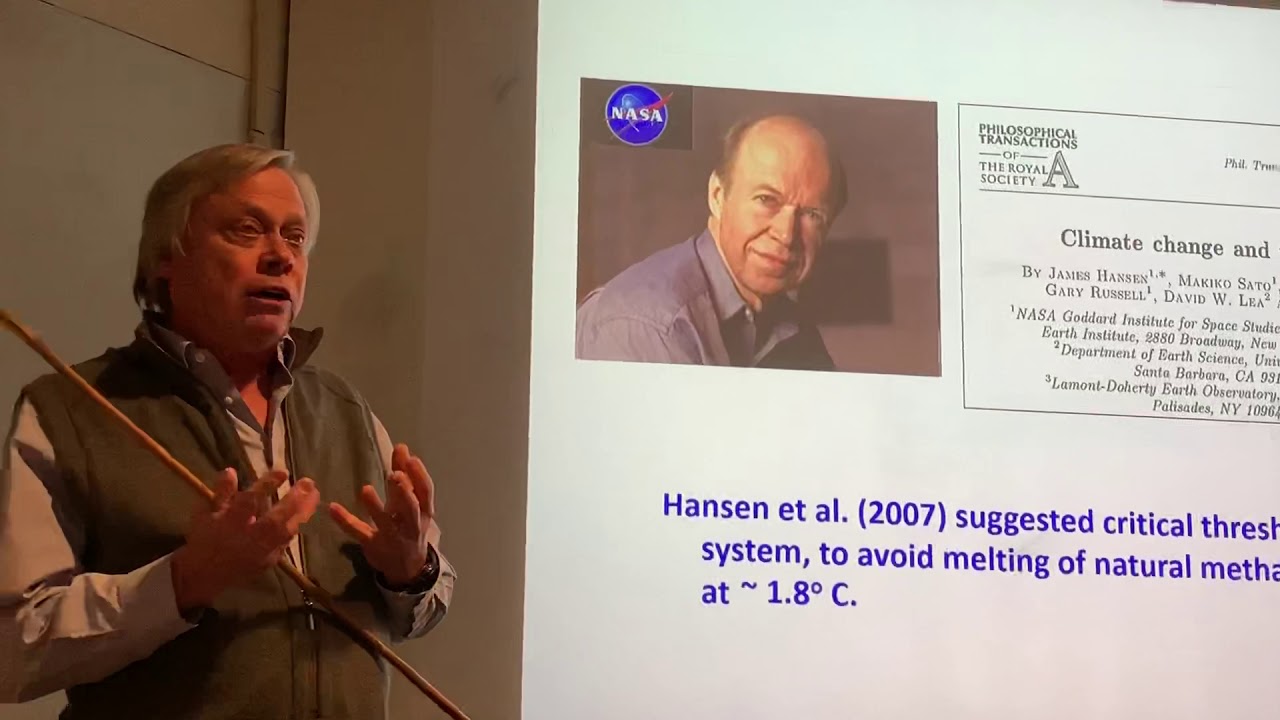 has tied the particular type of methane newly found in the atmosphere to shale gas production. “If you’re serious about keeping the planet below 2 degrees of warming, you can’t do that without cutting down on methane. We need to move away from all fossil fuels as quickly as we can.”
Not surprisingly, the Washington Post piece — or rather, the American Petroleum Institutepiece in the Washington Post — doesn’t include any comments from independent scientists like Howarth. Instead, it quotes Wayne Winegarden, a businessperson affiliated with climate-denying organizations such as the Heartland Institute and the Pacific Research Institute.
Fossil fuel companies aren’t the only ones using stories that appear to be part of a journalistic publication, but are actually paid for by advertisers in attempt to improve an image suffering in the coverage done by actual journalists. Native advertising, as it’s called, has spread misinformation on everything from the “superfood” moringa to Thai seafood slavery, and has raised serious questions about journalistic ethics.
And WP BrandStudio, which has also produced spots for BP and Lockheed Martin, is hardly the only example of a branded content shop associated with a mainstream newspaper helping fossil fuel companies spin their message. T Brand Studio, a brand marketing unit within the New York Times, has produced pieces for Chevron, , and
 .
[pix
sponsored content by the American Petroleum Institute, published on the Washington Post’s website.
Screenshot: The Intercept]
At a time when many publications are struggling to stay afloat — and cover the costs of environmental reporting — native advertising is an increasingly important piece of the financial puzzle. The paid features that mimic actual reporting brought in 20 percent of all advertising income for news media organizations in 2017, according to the World Association of Newspapers and News Publishers and the Native Advertising Institute.
But the issue of fossil fuel companies’ massive spending to greenwash their image is quickly heating up as scientific evidence — and unbiased reporting on it — is pointing to the need to phase out fossil fuels as soon as possible. Industry trade groups spent almost $1.4 billion on PR, advertising and communications contractors over the past decade, according to the Climate Investigations Center, almost half of which came from the American Petroleum Institute.
The five largest publicly traded oil and gas companies have spent some $1 billion on “narrative capture” and lobbying since the Paris Agreement was struck in 2016, according to a report published this month by Influence Map. That spending includes $195 million on “often misleading branding campaigns.”
Even before they kicked into high gear to counter the growing public awareness of climate change, some oil and gas companies were engaged in sly, aggressive, and destructive media efforts to counter their opponents.
In 2014, Chevron launched a publication that appears to exist for the sole purpose of defending its refinery in Richmond, California. The refinery had a long history of chemical leaks, fires, dangerous emissions, and unsafe conditions before a leak led to a massive explosion in 2012. The incident sent a “toxic fireball of smoke” over Richmond and prompted 15,000 residents to seek medical help, as the East Bay Express reported after the federal Chemical Safety and Hazard Investigation Board issued its final report on the incident in 2015.
But the Richmond Standard, a local publication Chevron launched in 2013, didn’t cover the report that way — and doesn’t appear to have covered it at all. The Standard “produces news about what is going on in the surrounding community,” according to Braden Reddall, an external affairs advisor for Chevron. And a recent edition of the site, which included an article on the announcement of a date for the coming Little League parade and a review of the local hot dog joint, bears that out.
Despite appearing to be an unbiased news source, the Standard also includes a section of feel-good news about the refinery that includes no mention of the health and safety issues other publications have reported as linked to the refinery. Chevron’s Reddall pointed out in an email that the section on the refinery is “clearly marked as editorial under the ‘Chevron Speaks’ heading.” His email also noted that “The West Contra Costa County region has embraced the publication.”
But not all locals have a positive view of the Standard.“They created it so they could control the narrative,” said Greg Karras, senior scientist at Communities for a Better Environment, a group that has been calling attention to health impacts of the refinery for decades. “When there’s something they want or don’t want and is really important to the business, they want their story about it to get out, rather than rely on independent reporting.”
Chevron seems to have had an even darker purpose in mind when it created the Amazon Post. The website, which has a “breaking news” column and “most read” section, identifies itself in small type as “Chevron’s Views and Opinions on the Ecuador Lawsuit.” But the Post’s real purpose appears to be the targeting of Steven Donziger — an attorney with whom the company has been engaged in a pitched legal battle over massive pollution in the Amazon rainforest in Ecuador for more than two decades.
Chevron’s Reddall says that the company maintains the Amazon Post “to express the company’s views and opinions on a fraudulent lawsuit against the company in Ecuador” and that “the information about Steven Donziger chronicles his long history of illegal activity.”
For his part, Donziger, who was part of a legal team that won a $9.5 billion judgment in the Ecuadorian courts against Chevron over the pollution, says that the Post is just one of the tools the giant energy company has used to personally and professionally destroy him. While three Ecuadorian courts, including the highest court in the land, upheld the judgment, U.S. District Court Judge Lewis A. Kaplan ruled that it should not be enforced because parts of it were “corruptly ghostwritten” in return for the promise of a bribe.
Chevron, which has employed at least 2,000 lawyers and legal personnel from more than 60 firms to work on litigation around the pollution in Ecuador, also filed a lawsuit against Donziger in 2011 alleging that he won the judgment in Ecuador through fraud and racketeering. Kaplan decided the case in Chevron’s favor in a trial held without a jury. And recently that decision was the basis for Donziger having his legal license suspended without a hearing and his bank account frozen. While Donziger has denied that he committed misconduct and contested his suspension in court, the company has delighted over his suffering in the Amazon Post.
There may soon be more fossil fuel company publications entirely devoted to smearing the reputation of individuals, according to Robert Brulle. “They’re likely going to attack Alexandria Ocasio Cortez personally and demonize her. They’ve already begun that,” said Brulle, a sociologist and visiting professor of environment and society at Brown University. “It’s an old strategy — to delegitimize your opponents.”
Brullealso thinks that there will soon be more native advertising from oil and gas companies, which he classifies as “classic propaganda.” “We’re going to see a lot more from API, Exxon Mobil, and other companies,” said Brulle, who notes that the share of oil and gas industry spending on think tanks, such as Heartland, is about a tenth of its expenditures on communications. “As the threat of possible change to the fossil fuel industry increases, they ramp up their resources.”
And of course, change to our energy system is not just possible — it’s necessary.
“Nations have barely a decade to take ‘unprecedented’ actions and cut their emissions in half by 2030 to prevent the worst consequences of climate change,” as a December article about the climate talks in Poland explained. That article appeared in the Washington Post — the real one.
---
==
https://www.desmogblog.com/2019/01/18/climate-advocates-underestimate-power-fossil-fuel-misinformation-campaign-brulle
Climate Advocates Underestimate Power of Fossil Fueled Misinformation Campaigns, Say Top Researchers
By Graham Readfearn • Friday, January 18, 2019
[Myron Ebell at a Heartland Institute conference
Climate action advocates have underestimated the strength and sophistication of decades-long fossil fuel-funded misinformation campaigns and need a coordinated set of strategies to fight back, say leading academics.
Among those strategies, say the three researchers from Yale and Brown University, are promoting financial transparency,suing misinformers and their funders,and researching the vast networks of think tanks and front groups.
Writing in the journal Nature Climate Change, Yale University's Professor Justin Farrell and Kathryn McConnell, together with Brown University’s ProfessorRobert Brulle, say people working on responses to climate change “cannot afford to underestimate the economic influence, institutional complexity, strategic sophistication, financial motivation, and societal impact of the networks” behind climate misinformation campaigns.
Brulle, who is also an academic at Drexel University, told DeSmog that after conversations with leaders of environment groups and foundations, he had concluded “there is virtually no understanding of the nature or extent of misinformation efforts and organized efforts to stop climate action.”
Misinformation Ignored
He said: “So in my opinion, the efforts to promote climate action are failing to take into account opposition efforts in their strategies. I can assure you that this is not the situation for the organized efforts to stop climate action — which I call the climate countermovement.”
Brulle and Farrell have each produced several major studies in leading academic journals on the funding and influence of the “climate countermovement” and its fossil fuel interests. In 2018, Brulle joined several academics in criticizing the United Nations Intergovernmental Panel on Climate Change (IPCC) for ignoring in a major report swaths of research and evidence on the impact of organized climate science denial.
In this most recent commentary, they lay out the pervasive nature of misinformation campaigns on climate change in the United States and how those campaigns captured Republicans.
Singled out in the paper are groups including the Heartland Institute, companies including oil giant Exxon, individuals like former Trump Environmental Protection Agency (EPA) transition team members Steve Milloy and Myron Ebell, and the vastnetwork of groups funded by billionaire Robert Mercer and the petrochemical businesses controlled by Charles Koch and brother David Koch.
But the bulk of the paper covers a suite of strategies that could be rolled out to combat the misinformation springing from these groups and individuals.
“Any political strategy to combat scientific misinformation must confront the partisan gridlock around climate change that has been institutionalized into the U.S. political process,” the scholars write.
McConnell said: “The spread of climate misinformation is a political tool that is used to influence both the general public and key decision-makers — and it’s clear that these efforts have had major impacts on public opinion and public policy. To this end, climate action advocates would do well to pay close attention to climate denial.”
Three approaches are suggestedand detailed by McConnell, Brulle, and Farrell:
Deploy social science research and public vigilance to show how political processes are manipulated.
Encourage institutions todivest from fossil fuel corporations.
Target areas impacted by climate change where widespread public skepticism exists (such as Florida and Alaska).
Inoculation
In addition, the researchers suggest using an emerging communications technique known as “inoculation” in which the public and policymakers are made aware of key misinformation techniques as myths are being busted.
Denial101x lecture on debunking myths and innoculation theory.[vid?]
They also pointed to the need for continued research into the “networks and mechanisms of scientific misinformation campaigns” that could help scientists defend themselves against “a rise in ad hominem attacks.”
Brulle told DeSmog: “A first step in providing reliable and meaningful information that can aid the climate movement organizations and the foundation funders is to develop a research program on this organized effort to stop climate action.
“Right now, this research effort is based in a number of part-time, unfunded researchers, who all work independently and without an overall guiding research program.
“So the information developed is piecemeal, and sporadic. Developing a coherent and funded research program is a crucial research need.”
Graphic showing fact-myth-fallacy structure to debunking climate change misinformation]
Denial101x lectures adhering to Fact-Myth-Fallacy structure. Denial101x, CC BY-ND
Together with fossil fuel-backed public relations campaigns, research from Brulle has shown that environmental sectors are being massively outspent in lobbying efforts.
In research published in 2018, Brulle found that “environmental organizations and the renewable energy sector lobbying expenditures were dwarfed by a ratio of 10:1 by the spending of the sectors engaged in the supply and use of fossil fuels.”
Brulle added: “I think it is pretty much impossible to determine the extent of delay in action that the climate countermovement has been able to cause. We can certainly say it has not been helpful, and has assisted in blocking action on climate change for over 30 years.
“To move forward in addressing climate action, understanding and addressing the climate countermovement is a critical component.”
==
https://www.ecowatch.com/fossil-fuel-lobbying-2588126755.html
Fossil Fuel Industry Outspent Environmentalists and Renewables by 10:1 on Climate Lobbying, New Study Finds
By Itai Vardi ...published Wednesday in the journal Climatic Change, Drexel University sociologist Robert Brulle shows that between 2000 and 2016, lobbyists spent more than $2 billion trying to influence climate legislation in the U.S. Congress.
Analyzing data from lobbying reports made available on the website OpenSecrets.org, Brulle found thatelectric utilities spent the largest sums during this timeframe followed by the oil, gas and coal industries, and transportation sector,respectively. Overall, lobbying by corporate sectors involved in the production or use of fossil fuels overshadowed that of environmental organizations and the renewable energy sector by a ratio of approximately 10 to 1.
Brulle acknowledges that the leading spenders do not take monolithic approaches and at times lobby in support of climate legislation.
"Different corporations typically push for whatever positions are advantageous to their economic well-being," writes Brulle. He says that further research is required to parse out the effect of such variable lobbying positions on climate legislation.
Though climate lobbying only accounted for 3.9 percent of the total amount spent on legislative lobbying between 2000 to 2016, its rates fluctuated considerably.Early on, relatively little money—only about $50 million, or 2 percent of all lobbying—was spent trying to sway federal legislators' opinions during the years leading up to and including 2006.
But in the years that followed, climate lobbying expenditures shot up, reaching a high point of $362 million in 2009, which accounted for 9 percent of all lobbying that year alone. The next year, 2010, saw only a slight drop, before climate lobbying efforts plunged, eventually reaching about 3 percent of total lobbying after 2011.
Of course, 2009 marked the year that the House of Representatives narrowly passed the landmark climate legislation, the American Clean Energy and Security Act, also known as the Waxman-Markeybill. However, that effort died on the floor of the Senate just over a year later.
To explain these fluctuations, Brulle argues that climate lobbying grows as the potential to enact climate legislation increases. This is especially true when one party, that has campaigned on passing climate legislation, controls government—findings that have troubling implications for American democracy.
"What we have is a group of unelected lobbyists representing special interests negotiating with Congressional Representatives on climate legislation," Brulle told DeSmog via email. "The minimal representation of environmental groups means that arguments for climate action to protect the common interest will be marginal considerations. Instead, special interests dominate the conversation, all working for a particular advantage for their industry. The common good is not represented."
==