Murray Energy
===
SEE MURRAY 2 ROBT FOR NEWER APPLIED FOR BLACK LUNG BENEFITS AFTER TRYING TO GET RID OF THEM
NO MERRI
AYN RAND AWARD
Murray won national attention in 2007 when a cave-in at a Utah mine co-owned by one of his companies killed six miners. In television interviews, Murray defended his company’s safety record and said an earthquake caused the collapse. NTBCW UBB BLANKENSHIP
capt 618
==
sob
---
DESMOG
robert-murray FUNDER GOP $ #
...June 28, 2007
In his testimony before the Senate Environment and Public Works Committee, Murray declared:58
“Carbon dioxide is a combustion product vital to how civilization is powered. It cannot be legislated or regulated away. Without drastic technological breakthroughs, it is not possible to stabilize atmospheric carbon dioxide emissions, even if it were necessary, and meet global energy demands.”
Speaking about Rachel Carson, Murray said:59
“She and her environmental followers killed millions of human beings around the World with the ban on DDT, which has since been found by the World Health Organization to be very safe to humans in controlling global epidemics.”60
April 2007
In a 2007 speech at the New York Coal Trade Associationin New York City, Murray voiced what he thought of Al Gore:61
...
WIKISPOOKS
Chairmen of the Senate Committee on Environment and Public Works, 1977–
- Jennings Randolph (D-WV) 1977–1981
- Robert T. Stafford (R-VT) 1981–1987
- Quentin N. Burdick (D-ND) 1987–1992
- Daniel Patrick Moynihan (D-NY) 1992–1993
- Max Baucus (D-MT) 1993–1995
- John H. Chafee (R-RI) 1995–1999
- Bob Smith (R-NH) 1999–2001
- Harry Reid (D-NV) 2001
- Bob Smith (R-NH) 2001
- James Jeffords (I-VT) 2001–2003
- James Inhofe (R-OK) 2003–2007
- Barbara Boxer (D-CA) 2007–2015
- James Inhofe (R-OK) 2015-2017
- John Barrasso (R-WY) 2017–2021
- Tom Carper (D-DE) 2021–
https://www.ecowatch.com/new-coal-ash-rule-2589214229.html
Green Groups Worry New Coal Ash Rule Could Harm Human Health
Environmental groups expressed concerns over the health impacts of a recent U.S. Environmental Protection Agency (EPA) decision to relax regulations on coal ash, CNN reported Saturday.
Coal ash contains toxic metals like arsenic, lead and mercury and is often left in ponds where it has been known to contaminate groundwater.
The rule change gives states greater authority over regulating one of the nation's biggest sources of industrial waste and allows companies to forgo annual groundwater tests if they can prove their coal ash is not polluting nearby aquifers.
"These rules will allow yet more tons of coal ash, containing toxics like arsenic and mercury, to be dumped into unlined leaking pits sitting in groundwater and next to rivers, lakes and drinking water reservoirs," Southern Environmental Law Center senior attorney Frank Holleman told CNN.
The new rule was signed July 18 and was the first rule signed by new acting EPA head Andrew Wheeler, Reuters reported.
"Our actions mark a significant departure from the one-size-fits-all policies of the past and save tens of millions of dollars in regulatory costs," Wheeler said, according to Reuters.
Revisions to the Obama-era coal ash regulations put in place in 2015 were sought by coalCEO Bob Murray, who Wheeler used to lobby for.
In March 2017, Wheeler helped organize and was present at a meeting between Murray and Energy Sec. Rick Perry in which Murray presented a plan to "assist in the survival of our Country's coal industry" which included giving states more control over coal ash disposal, CNN reported.
"It is now apparently the goal of EPA to save industry money by allowing them to continue to dump toxic waste into leaking pits, which is exactly what the new rule accomplishes," Earthjustice attorney Lisa Evans told CNN.
The obama-era coal ash regulations were written following two coal ash spills.
In 2008, a dam at the Tennessee Valley Authority's Kingston plant broke and released a billion gallons of coal ash into the Clinch River, covering 300 acres with sludge and contaminating fish with arsenic and selenium for months afterword.
In 2014, a pipe at Duke Energy's Dan River steam station leaked 39,000 tons of coal ash into North Carolina waterways, extending 70 miles and leading to mercury levels in fish so high that authorities still recommend against eating them.
But even in the absence of a single disaster, coal ash can have devastating effects on human health.
Tracey Brown Edwards, who grew up next to Duke Energy's Belews Creek Steam Station in Walnut Cove, North Carolina which had a coal ash pond next to a neighborhood lake, told CNN that in the five homes on her block, four had experienced cancer in the family.
"There's been a lot of young people with cancer, certain kinds of cancers, brain cancer, stomach cancers, breast cancer," she said.
Doctors say they cannot confirm if the cancer is caused by coal ash, but they also cannot exclude it as a possibility, CNN reported.
RELATED ARTICLES AROUND THE WEB
- With EPA rule change, worries linger for those near coal ash ponds ... ›
- Coal Ash Contaminates Our Lives | Earthjustice ›
- Earthjustice: Environmental Law: Because the Earth Needs a Good ... ›
==
==
Murray Energy v. Public Citizen (2014)
—A corporation sued a public interest group
that criticized the corporation because it blocked a health and safety rule for defamation,
violation of privacy, and alleged that the corporation suffered mental anguish and emotional
distress.
==
6/18 perry new BS nat security subsidy coal and nuke
https://www.bloomberg.com/news/articles/2018-06-01/trump-said-to-grant-lifeline-to-money-losing-coal-power-plants-jhv94ghl
==
https://www.nytimes.com/2018/01/09/climate/coal-murray-trump-memo.html
no lnx 2x?
==
Trump’s first year in office has been a boon for the coal industry, with the Trump administration rolling back regulations on coal-fired power plants and withdrawing the United States from the Paris climate change agreement.
Environmentalists have expressed alarm at the new direction, and have complained that Mr. Trump was following a blueprint from the coal industry. A confidential memo written by the head of the country’s largest coal mining company suggests they might not be wrong.
The memo was written by Robert E. Murray, a longtime Trump supporter who donated $300,000 to the president’s inauguration. In it, Mr. Murray, the head of Murray Energy, presented Mr. Trump with a wish list of environmental rollbacks just weeks after the inauguration.
Murray Energy’s ‘Action Plan’ for the Trump Administration
Robert E. Murray's wish list of environmental rollbacks reads like a playbook for the Trump administration.
Jan. 9, 2018
Nearly a year later, the White House and federal agencies have completed or are on track to fulfill most of the 16 detailed requests, even with Monday’s decision by federal regulators to reject a proposal by Energy Secretary Rick Perry to subsidize struggling coal and nuclear plants.
The March 1 memo, which was obtained by Senator Sheldon Whitehouse of Rhode Island and shared with The New York Times, is addressed to Vice President Mike Pence. The sweeping wish list of regulatory overhauls includes ending regulations on greenhouse gas emissions and ozone and mine safety, as well as cutting the staff of the Environmental Protection Agency “at least in half” and overhauling the Labor Department’s office of mine safety.
“I give President Trump and his administration credit for being bold, being passionate and being correct in addressing a lot of these issues that were on my list here,” Mr. Murray said in an interview Tuesday.
Photographs of portions of a different memo, dated March 23 and addressed to Rick Perry, the secretary of the Department of Energy, were obtained by the magazine In These Times last year. They were taken during a meeting Mr. Murray held on March 29 with Mr. Perry and others at the Energy Department, according to the magazine.
Mr. Murray on Tuesday described the memos as very similar.
The March 1 “Action Plan for the Administration of President Donald J. Trump” is aimed, Mr. Murray wrote in the memo, at “getting America’s coal miners back to work.” He also asks the federal government to cut funding for carbon capture and sequestration technology — which Mr. Murray called “a pseudonym for ‘no coal’” — and eliminate a 2009 E.P.A. ruling known as the endangerment finding that was the legal justification for much of the Obama administration’s climate change policy.
“This list was to remain private, a list of things that needed to be done for reliable, low-cost electricity in America. That was my number one goal here, was to give guidance to the administration in an area that I have observed over 60 years,” Mr. Murray said.
Critics say Mr. Murray’s list and the apparent ease with which he was able to get it in front of cabinet officials and others illustrates the open-door access the Trump administration has offered energy and other industries as it moves to redirect and weaken federal regulations.
“The astonishing presumption of this list,” Mr. Whitehouse, a Democrat, said. “It’s an extraordinary arrogance of the fossil fuel industry based on the power they wield in Washington, D.C.” He said even though Mr. Murray had bragged about the action plan on a Frontline documentary last year, the Energy Department had declined his requests to immediately release the memo.
“The power of the fossil fuel industry around here is so great I think the industry feels they can count on simply not complying with requests,” Mr. Whitehouse said.
The Energy Department did not respond to a request to discuss the memos from Mr. Murray.
The Trump administration has had an unusually close relationship with Mr. Murray. He and 10 of his miners were invited to watch the president sign an executive order to rollback President Obama’s climate change regulations. He has met with Mr. Perry to discuss the needs of coal producers. His longtime attorney, Andrew Wheeler, is awaiting Senate confirmation to the No. 2 slot at the E.P.A., and David Zatezalo, the nation’s new top mine safety and health regulator and previously the president of a coal mining company, told his hometown paper that Mr. Murray had encouraged him to put his hat in the ring for the job.
Jeffrey Holmstead, a lawyer with the firm Bracewell and a deputy administrator of the E.P.A. in the George W. Bush administration, called Mr. Murray’s action plan “an ambitious list.” While interest groups always try to influence policy in a new administration, Mr. Holmstead said Mr. Murray’s status with the administration set him apart.
“I really don’t think it’s at all unusual that Murray would have this wish list or a set of recommendations. What makes it different is that it’s pretty clear that he has a personal relationship with the president,” Mr. Holmstead said. “It seems like given Mr. Murray’s relationship with the president that he had more of an expectation that these things were going to be accepted or implemented.”
Sept. 19, 2017
One item not on the list yet important to Mr. Murray was an order the Federal Energy Regulatory Commission rejected Monday to subsidize struggling coal and nuclear power plants. Mr. Murray railed against that decision saying it would lead to the decommissioning of coal and nuclear power plants.
Environmental groups have accused Mr. Murray of directly asking Mr. Perry for a proposed rule to reward coal and nuclear power plants for providing “grid resiliency.” The March 1 memo does not mention the grid, though photographs of the cover page of the March 23 document to Mr. Perry obtained by In These Times shows its focus is “a plan for achieving reliable and low cost electricity.”
Soon after Mr. Murray’s meeting at D.O.E., Mr. Perry ordered the agency to prepare a study on the country’s electric grid reliability, a precursor to ordering the federal government to subsidize struggling coal and nuclear plants.
Mr. Murray and a spokesman, Gary Broadbent, said the difference between the two memos was that the one provided to Mr. Perry asked the Energy Department to study the security of the nation’s power grid.
“I suggested that the study be made,” Mr. Murray said. “What they did from there, the administration did. I did not have involvement in it.”
One of the items on the 16-point list was an overhaul of FERC regulators, and the Trump administration accomplished that. But those Trump-appointed commissioners voted against the plan to bail out coal and nuclear.
“Obviously they forgot who appointed them right out of the box,” Mr. Murray said.
Correction: January 15, 2018
An earlier version of this article misstated the number of suggested actions in a memo that Robert E. Murray submitted to the Trump administration. It had 16 suggestions, not 14.
Eric Lipton contributed reporting.
---
---
921 intercept
The KIND OF WASTE coal mined from sites like Humphrey No. 7 and the Barrackville pile have become a cause célèbre for the fossil fuel industry. Industry lobbyists arguethat the burning of waste coal helps to reclaim mines by removing waste piles that can leach toxins into the groundwater. In 2010, while serving as governor, Manchin codified this view by overseeing legislation to designate waste coal as an alternative energy source in the Alternative and Renewable Energy Portfolio Act. This practice not only spews tens of thousands of tons of carbon dioxide and sulfur dioxide into the atmosphere, but the combustion chambers also produce a solid, nonaerosolized byproduct: coal ash. In the case of the Grant Town plant, the ash is trucked back to mines across Marion County, including Barrackville, for disposal.
Some studies suggest that the alkaline nature of some kinds of coal ash neutralizes acid mine drainage, a pollutant formed by the reaction of water and oxygen with both above-ground coal refuse and the exposed metals left exposed in abandoned mines. But coal ash can also contain toxic heavy metals that can poison groundwater, further destabilizing West Virginia’s ecosystem. Avner Vengosh, a professor of environmental quality at Duke University who studies the impact of coal ash on the environment, told Type and The Intercept that without precise monitoring and analysis, there is no guarantee that coal ash actually reduces contamination. It may in fact introduce new contaminants into the environment and groundwater.
“A company needs to demonstrate that this practice is successful and that over the long term, the practice is beneficial rather than harming the environment,” Vengosh said. “It all depends on the relationship, the volume, and mass of the acid mine drainage. It’s really important to examine that relationship long term, because in the beginning often it looks great, but then there can be very quickly a breakthrough where fly ash becomes the primary source of contaminants.”
Manchinhas been one of coal ash’s most vocal supporters in Congress. In 2016, hesponsored and secured legislation to ease states’ abilities to deregulate the toxic coal byproduct. In a 2016 press release heralding the bill’s passage, he wrote, “The overregulation of coal ash by the EPA would threaten vital industries and unnecessarily cost West Virginia and the nation more jobs.” The Grant Town plant could have been one such casualty: Subject to long-standing financial precarity, the plant would likely be unable to maintain its business without the option for cheap and unrestricted ash dumping.
According to West Virginia Public Service Commission documents, between 2001 and 2017 the Grant Town plant disposed of 9,422 tons of coal combustion residue, or CCR, per acre at the Barrackville mine site; 108,922 tons per acre in Idamay, an unincorporated town just south of Farmington; 63,919 tons per acre in Grant Town; 3,154 tons per acre at the Wilson site located between Grant Town and Barrackville; and 37,085 tons per acre at the Ralph Six site in Grant Town.
Public Service Commission of West Virginia documentsalso show that Enersystems operated and maintained refuse sites for American Bituminous Power Partners, or AmBit — the owner of the Grant Town power plant — at Barrackville and Farmington at least up until 2017. Marion County Clerk records further tie Manchin to the sites by showing that Manchin’s company Transcon — later merged into Farmington Resources — leased coal reserves in Barrackville and Farmington to AmBit on a 35-year lease beginning in 1993. (Ambit did not respond to multiple requests to comment for this story.)
In addition to placing what AmBit claims is beneficial coal ash into the Idamay mine site, the company has also been injecting acid mine drainage just outside Farmington. According to documents from a 2021 dispute between the energy company and a neighboring firm, Murray American Energy Inc, AmBit has been pumping coal waste into an underground mine pool complex. From there, it flows beneath the greater Fairmont area....
==
---
https://www.alternet.org/2020/08/epa-chiefs-former-lobbying-clients-are-getting-a-long-list-of-favors-from-agency
At least three former lobbying clients of Environmental Protection Agency chief Andrew Wheeler have received favorable decisions from the EPA under his leadership.
Wheeler spent years as an energy lobbyist at the law firm Faegre Baker Daniels, where he represented companies like the coal giant Murray Energy, whose owner Robert Murray is a major Trump donor. Wheeler signed a pledge in May 2018 to recuse himself from matters related to former clients after he replaced embattled former EPA administrator Scott Pruitt. But the two-year pledge expired earlier this year and he has been repeatedly accused of violating the agreement by approving rules that he lobbied for as a lobbyist for Murray Energy and others.
At least three of Wheeler’s former clients have pushed for rules that the EPA has proposed or implemented under his leadership.
“Andrew Wheeler is overseeing policies that damage the air we breathe and water we drink while his associates benefit,” Chris Saeger, a spokesperson for the progressive watchdog group Accountable.US, told Salon. “This is a clear abuse of his taxpayer-funded position and ethics agreement."
in April, the EPA weakened regulations on the release of mercury and toxic metals from oil and coal-fired power plants, which experts said was aimed at “potentially constraining or handcuffing future efforts by the EPA to regulate air pollution.”
The New York Times described the change as a “particular victory” for Murray, who pressed for the change in a “wish list” of environmental regulation rollbacks he handed to President Trump just weeks after his inauguration. Murray donated $300,000 to Trump’s inaugural committee.
The Trump administration and federal agencies “have completed or are on track to fulfill most of the 16 detailed requests” in Murray’s wish list, the Times reported in 2018. But Murray had “unsuccessfully pressed the administration in 2017” to roll back the mercury emissions rule, E&E News reported, before it was rescinded under Wheeler.
The government watchdog group Citizens for Ethics and Responsibility in Washington filed an ethics complaint against Wheeler last yearover his involvement in the rule change, noting that he “participated in the matter less than a year” after signing the pledge.
“It is becoming more and more clear why coal and energy companies are happy to have their former lobbyist Andrew Wheeler in charge of the EPA,” CREW Executive Director Noah Bookbinder said at the time. “Administrator Wheeler’s apparent failure to abide by ethics obligations and to avoid the reality or appearance of conflicts continues to undermine the EPA’s integrity and weakens public confidence in our government.”
Earlier this year, the EPA also finalized a rule that would extend deadlines to start closing unlined :(style="background-color:#ffffffff"):}::{coal ash ponds. Coal ash from coal plants is dumped into excavated holes in the ground, where it mixes with water to create “coal ash ponds,” which can leak if they are not properly lined. The proposed rule would allow some coal plants five more years before requiring them to close the unlined ash ponds.
One of the major backers of the rule is the Utility Solid Waste Activities Group (USWAG), a secretive trade group whose members include Xcel Energy, a longtime former Wheeler client. Xcel Energy called for the rule change and the USWAG petitioned Pruitt for the rule in 2017. The USWAG praised the EPA for proposing the change under Wheeler last year.
Accountable.US criticized the EPA for rolling back regulations on coal ash at the behest of Wheeler’s former client.
“Administrator Wheeler is part of a corrupt pattern in the Trump administration, putting the interests of his allies above the public he is supposed to serve,” Saeger said last month. “This administration is abusing its power to hand out favors to corporate lobbyists, selling out Americans’ health and the environment in the process.”
In May, the EPA proposed no additional measures to mitigate negative air quality impacts associated with renewable fuel standards as required under the Clean Air Act. The proposed rule has been open for public comment ever since but has only received 16 thus far, including one supporting the rule from Growth Energy. The company has been one of the biggest supporters of the rule.
Growth Energy was one of Wheeler’s clients before he joined the EPA, according to his financial disclosure, which said he provided the company “strategic advice and counseling.” Wheeler had pledged to recuse himself from matters related to Growth Energy until shortly before the proposed rule was published.
The trend has played out in other agencies whose heads were appointed by the president. The Interior Department has made at least 15 policy changes or proposals that benefited Secretary David Bernhardt’s former energy industry clients. Several of acting Homeland Security SecretaryChad Wolf’s former lobbying clients have alsoreceived millions in government contracts while he held senior positions in the department. More than 280 of Trump’s political appointments have been former lobbyists, according to an analysis by ProPublica.
CREW has repeatedly called for the EPA’s inspector general to investigate whether Wheeler violated his ethics pledge in connection to rules that benefited his former clients.
“Administrator Wheeler has repeatedly used his government position at EPA to benefit the former clients that made him rich, and to the detriment of the agency’s critical mission,” CREW Deputy Director Donald Sherman said in a statement to Salon. “Administrator Wheeler’s continued lobbying on behalf of industry from within EPA, is clear evidence that patronage is a feature, not a bug, of the Trump administration.”
---
https://www.alternet.org/culture/coal-baron-mocked-john-oliver-sends-rambling-self-pitying-letter-judge
tices were mocked by John Oliver and a giant squirrel sent a hilarious letter of protest to the judge who dismissed his defamation suit, according to the ACLU of West Virginia.
Bob Murray was labeled “a geriatric Dr. Evil” in an episode of Oliver’s HBO show, which highlighted incidents like a 2007 collapse caused by unauthorized mining practices in Utah which killed six miners, and which Murray claimed at the time was caused by an “earthquake.”
“The jobs of our 6,000 coal miners depend on me and my reputation,” the letter said. “I am a dying old man, but our employees will suffer as a result of your decision.”
Murray also complained of getting mocked by the show’s fans in letters that said things like “consume defecation, Bob” and “congrats on having HBO make you look like a big fat lardass loser in court. Idiot.”
The judge noted that Murray’s letter constituted improper contact with the judge, and the judge warned Murray and his attorneys to not send another lest he face sanctions from the court.
You can watch the hilarious original segment which prompted the dismissed lawsuit below.
...
==
just saw video where he gloats/non-denial denial of infl on trump admin
===
SHAIKH: We’re speaking to David Cay Johnston, author of the new book, It’s Even Worse Than You Think: What the Trump Administration Is Doing to America. Let’s go back to February. This is President Trump speaking a month after he took office.
PRESIDENT DONALD TRUMP: We’re cutting regulations big league. We are really cutting them by massive amounts. The auto industry just left a week ago. They were here in the same room. And they are very happy with what—what we’re doing. And everyone is. I think just about everyone. The financial industry—we’re having a lot of the different industries in. And we’re cutting regulations in just about every industry. In fact, I can’t think of any that we’re not.
NERMEEN SHAIKH: So that’s President Trump speaking in February. So, could you talk about what Trump has done to different agencies? In your book, you talk about several, but let’s start with the EPA.
DAVID CAY JOHNSTON: Well, EPA is run by Scott Pruitt, who hopes to become a U.S. senator in Oklahoma, who has vowed to destroy the agency. So, staff members are not allowed to use certain words. They’re not being allowed to go to scientific conferences. So, once again, the investment the taxpayers have made in expertise and knowledge is being wasted.
In the regulatory environment, they are basically allowing polluters to get away with all sorts of stuff. There was a move by the Obama administration to stop taking the toxic residue, the coal ash, from power plants, turning it into a slurry, with water, and then you put it into a pond next to a river. And as we know, in South Carolina, I think it was, and several other places, some of these old dikes broke and ruined the drinking water, for weeks or months, and killed all the wildlife. The Trump administration basically is saying to polluters, “Go ahead and pollute.”
Well, what is pollution? Not only is it a threat to your health and safety, but it’s a way to jack up profits, by taking costs you should endure to clean up your mess and spewing them onto everybody else. So, of course, profits for companies like that will go up, because they’re being allowed to make you or your children get asthma or have other illnesses because of the pollution. How does that make us better off? That makes us worse off. The problem is, you’re not going to get asthma tomorrow. He’ll be out of office, even if he had two terms, before you get sick and die.
AMY GOODMAN: We had the headline today about the former photographer with the Department of Energy seeking whistleblower protection, saying he was fired for documenting collusion between the Trump administration and a coal company executive. Simon Edelman says he was fired after he leaked photographs of a March 29th meeting between Energy Secretary Rick Perry and coal magnate Robert Murray, showing the two embracing at a meeting. Murray said he played no role in drafting a Department of Energy rule subsidizing coal and nuclear power plants. But a photo clearly shows a letter drafted by Murray and addressed to Energy Secretary Rick Perry touting an “action plan.” And then you have the whole story of FERC, the Trump-appointed panel, that actually ruled against Trump in his subsidizing of coal.
DAVID CAY JOHNSTON: Well, they did, in this particular case. But there is a chapter in my book about how the electricity markets in America, which, by design, raise prices and don’t lower them, are going to continue to worsen. Now, this example that comes from the leaked photographs is very revealing of the fact that truth is a very fungible issue in this administration. And when it comes to electricity prices in this country, I mean, everybody pays for electricity. It’s the one—one of the common things we have, like the weather. This is an administration that is all out for the people who make profits. It isn’t interested in consumers. It isn’t interested in businesses whose profits are diminished if they have to pay excessive electricity prices.
---
oops
https://www.ecowatch.com/clean-power-plan-hearing-2513800344.html
Overwhelming Number Turn Out to Support Clean Power Plan at Coal Country Hearing
The U.S. Environmental Protection Agency's (EPA's) only public hearing on the proposed repeal of the Clean Power Plan (CPP) featured many more people speaking in favor of the Obama-era effort to slash emissions from power plants.
Even though EPA Administrator Scott Pruitt purposely held the meeting in Charleston "in the heart of coal country," West Virginia to allow more coal stakeholders to testify in person, the vast majority of the 250 speakers at the two-day meeting at the West Virginia Capitol Complex actually approve of the CPP, VICE News reported. Only 30 or so speakers voiced their support for the repeal.
Representatives from environmental and social justice groups such as the NAACP naturally spoke in favor of the plan, which would avert dangerous climate change and save billions of dollars due to the public health benefits of cutting polluting emissions.
But perhaps to the surprise of CPP opponents, many residents of West Virginia and even a former coal miner also spoke of how they wanted to save the Obama initiative.
Cynthia Ellis of Putnam County, West Virginia—who said she contracted asthma due to exposure from coal plant emissions—testified about how her 10-year-old extended family member, Emma, "coached me on how to use my inhaler," VICE reported.
Stanley Sturgill, 72, a retired coal miner diagnosed with black lung and chronic obstructive pulmonary disease due to years of working in the field, pleaded to the EPA panel: “We're still dying—we're still literally dying—for you to help us."
"Just how many people must pay the supreme price of death for a few rich, greedy people to bank a few dollars?" Sturgill continued, as quoted by Huffington Post.
The Clean Power Plan, Obama's signature climate strategy, limits carbon emissions from coal-fired plants. But the CPP never took effect due to extensive legislation from states opposed to it. In October, the EPA proposed to repeal the CPP in accord with President Donald Trump's Energy Independence Executive Order.
Sturgill, who lives in Harlan County, Kentucky, drove for three hours to get to the meeting. "Do I really think that this administration cares what this old, worn-out coal miner has to say? Well, I don't know. I really doubt it. But I had to be here," he later told HuffPo, "as long as I can draw breath."
Trump and Administrator Pruitt have called the CPP a "war on coal" and vow to bring back coal jobs. But experts say that coal's return is unlikely as demand has dropped steadily due to cheap natural gas, new wind and solar projects, energy efficiency initiatives and other market forces.
"The majority of the profits go to executives and shareholders out of state" Jim Waggy of Charleston, West Virginia, also said at the hearing. "These are primary reasons why West Virginia remains one of the poorest states in the nation despite the presence of coal."
But will the EPA listen to what these voices have to say? As VICE pointed out, even though they were clearly outnumbered by CPP supporters, coal barons such as Robert Murray and other industry voices were given top billing at the hearing. Their testimonies were heard first and presented at the only room of three at the hearing that was consistently aired online....
---
might be it pbs newshour
https://insideclimatenews.org/news/11102017/climate-denial-coal-industry-global-warming-robert-murray-energy
==
http://archive.sltrib.com/article.php?id=5450022&itype=CMSID
sl trib
no link (many)
What, you might ask, could I possibly have in common with John Oliver?
Well, aside from both of us looking like we could have been hatched from eggs laid by an ostrich impregnated by the Keebler elf, we've both had the pleasure of being targets of coal baron Bob Murray's hair-trigger legal team.
Oliver, the host of HBO's "Last Week Tonight," is being sued for a brilliantly scorching critique of Bully Bob, the owner of the largest private coal company in the country.
The piece featured footage of Murray ranting in TV interviews that President Barack Obama was destroying America, "is an outlaw," and he prays that his "evil agenda will be overcome," before pointing out — correctly — that the decline in mining jobs is due primarily to competition from low-cost natural gas and renewable energy.
Oliver skewers President Donald Trump for promising to bring back mining jobs and the administration's inflated assertions that 50,000 jobs have already come back. The real number is 1,300.
But what really got Murray Energy upset is highlighting Murray's behavior at Utah's Crandall Canyon Mine collapse that killed six miners nearly a decade ago, when Murray insisted repeatedly that an earthquake caused the collapse and when he was banned from family meetings after yelling at distressed family members and reportedly making some young children cry.
The lawsuit is straight out of the Murray playbook.
In the past 15 years, he has sued journalists from the The New York Times, Huffington Post, The Charleston Gazette, the Akron Beacon Journal and the Chagrin Valley Times in Ohio. He's also brought suit against the United Mine Workers, the good-government group Public Citizen, and has threatened the editor of Coal Age and Engineering & Mining Journal, and a former Penn State University professor.
On occasion, the litter of lawsuits has yielded apologies, but the overwhelming majority have been tossed out of court.
When The Salt Lake Tribune was aggressively reporting on the collapse of the Crandall Canyon Mine, we were the first to report that the mining practices helped cause the collapse, that Murray's company knew of the problems and risks at the mine before the collapse, and that the problems were not properly reported to federal authorities.
We were threatened again and again with litigation, but we knew all along we had this right and our editors, to their credit, backed us up.
Murray, to this day, insists an earthquake located some distance away actually caused the collapse and, in his lawsuit, cites a study by University of Utah seismologists to support his assertion.
The facts, however, are not really in dispute by anyone except Murray, who still owns one coal mine in Utah, Lila Canyon in Carbon County, employing 139.
The federal Mine Safety and Health Administration's investigation blamed "grossly deficient" engineering, a failure to report "outbursts" that signal structural problems in the mine in a timely fashion, and recommended nearly $1.9 million in fines — eventually settling for $1.15 million.
A congressional investigation concluded that mine managers concealed information about structural problems, that the accident was preventable and recommended possible criminal charges. In 2012, the company that operated the mine pleaded guilty to two criminal charges.
And the U. study that Murray points to as proof there was an earthquake? Well, it doesn't really say what he says it does. At all.
Tex Kubacki, author of the study, said it's not the first time Murray has misrepresented his work.
What the study did conclude was that the epicenter of the event was inside the mine workings, 750 feet from where mining was taking place, and not seven miles away on Joes Valley Fault as Murray contends in the suit.The mining, he says, caused the collapse, not an earthquake.
None of that changes the fact that it was the risky mining that put profit ahead of safety and led to the death of six miners and, later, three rescue workers.
There is a larger issue at play here than an old man with more lawyers than sense. That is he is just one of a string of millionaires and billionaires who are continually attacking the independent press and the First Amendment to the Constitution.
Brian Knappenberger's documentary "Nobody Speak: Trials of the Free Press" details how internet billionaire Peter Thiel secretly funded retired wrestler Hulk Hogan's lawsuit in a vindictive crusade to put Gawker out of business, and succeeded, and how Las Vegas gambling tycoon Sheldon Adelson bought up the Las Vegas Review-Journal and drove out journalists who were doing their jobs.
And, of course, there's Donald Trump, whose Nixonian disdain for the media and disregard for a free press have taken the assault to the next level.
In the face of these attacks, we need a strong, free press and we need people — like John Oliver — who won't be intimidated and who will keep speaking truth to power.
Otherwise, Murray and his kind will keep treating the First Amendment like one of Murray's played-out coal mines, hacking away at the underpinnings until it, too, inevitably collapses.
gehrke@sltrib.com
==
===
2x? swamp thing wheeler inhofe staff:
http://www.nytimes.com/2007/08/24/us/24murray.html?_r=0
HUNTINGTON, Utah, Aug. 23 — If Robert E. Murray accepts a Senate subcommittee’s invitation to testify next month about what went wrong at the Crandall Canyon Mine, he is likely to be questioned about, among other things, adopting a new and riskier mining plan when his company took over the operation last year.
If Mr. Murray hews to the always impassioned — at times, bombastic — style he has shown in news conferences since the mine’s collapse on Aug. 6, senators can expect his statements to be plain-spoken and provocative.
As recently as Wednesday night, Mr. Murray, chief executive of the Murray Energy Corporation,continued to insist that the collapse had been caused by a 3.9 magnitude earthquake. He shouted down two reporters who tried to remind him that seismic scientists at the University of Utah and elsewhere were just as certain that the opposite occurred— that coal veins already thinned by a risky form of deep mining had buckled, setting off the collapse that sent seismograph needles spiking.
Six men were trapped inside the mine. Three more died 10 days later in the collapse of a rescue tunnel.
It is not the first time that Mr. Murray, 67, has taken a position far afield of the experts. Although most other industry executives have recognized the threat of climate change and the need for energy conservation, he has been among the few to question the concept of global warming and to openly criticize environmental regulations.
In testimony last March at a hearing on clean energy, Mr. Murray told a House subcommittee that federal lands should be preserved, but also “prudently developed” to provide jobs.
In every reference to climate change, he used the term “so-called global warming.” The debate, he said, “has been skewed and totally one-sided,” because the news media, Congress and pundits have been “preoccupied with possible, speculative environmental disasters.”
In 2001, a jury acquitted Mr. Murray of charges that he had assaulted an environmentalist.
That same year, the National Labor Relations Board filed a complaint accusing Mr. Murray of violating federal labor laws at one of his companies, Maple Creek Mining, in Bentleyville, Pa., about 20 miles south of Pittsburgh. The United Mine Workers said Mr. Murray had threatened to replace union workers at the mine after they talked publicly about a labor dispute.
In 2003, a federal court jury in Owensboro, Ky., convicted another of Mr. Murray’s companies, Ken American Resources, and four current or former employees on charges of conspiracy, lying and violating safety laws pertaining to dust levels at a mine in western Kentucky from 1996 to 2000. They faced fines of up to $1.4 million, but the company appealed and paid roughly $300,000.
Mr. Murray has said that none of his miners have ever died in an accident, but federal mine records show otherwise. In April 2001, Thomas M. Ciszewski, a 45-year-old foreman, bled to death in the Powhatan No. 6 mine in Alledonia, Ohio, owned and operated by Mr. Murray’s Ohio Valley Coal Company.
Federal investigators determined that Mr. Ciszewski, a 22-year mining veteran, was on a routine job when a conveyer belt cut off his arm, and was “bleeding profusely from the loss of the limb.”He died, in part, because there was not adequate first aid.
The company was fined a total of $15,000.
A self-made coal baron, Mr. Murray, owns 19 mines in five states, several with safety records far worse that that of Crandall Canyon, which has 33 health and safety violations this year. For instance, his Galatia mine, in Illinois, has accumulated more than 850 federal health and safety violations in 2007, in addition to about $1.46 million in fines.
Murray Energy mines produce more than 30 million tons of coal annually, generating annual sales of at least $800 million and fostering accusations from some miners and their families that Mr. Murray cares more about growing his bottom line than he does about making his mines safer for his workers.
“It’s hurting me very much,” he said this week during a middle-of-the night phone call to a reporter. “What they’re reporting is that I’m greedy. That is just so inflammatory and false and misleading to everyone in America.”
Again and again, he calls himself a champion of miners and an advocate for their well-being and that of their families.
But he is not always perceived that way. This week, relatives of the men trapped in the Crandall Canyon mine were outraged when Mr. Murray said that he planned to seal the mine, entombing their bodies inside, and to continue mining in another part of the vast property.
He reversed himself the next day, saying he had simply been doing what he always does — telling the truth. In all likelihood, he said, the miners had died and it was not safe to continue trying to find them. “I’m no P.R. man,” Mr. Murray readily acknowledged.
But as he rides over mountain roads on the way to candlelight vigils for the miners or funerals for the rescuers, he passes signs that come close to calling him a liar. Lori Prince, a local insurance agent, put up one such sign, which read, “Bob Murray, keep your promises.”
“He did say he was going to get them all out” dead or alive, Ms. Prince said. “Now he’s saying you just have to accept this.”
Mr. Murray says he refused to hire a public relations firm or disaster management team after the Crandall Canyon collapse because he wanted to make it clear that he was one who should take responsibility.
Critics say it was another example of Mr. Murray’s outsized ego and cavalier attitude toward industry standards.
“In terms of him being the face of this, he shouldn’t have been,” said a spokesman for the United Mine Workers of America, Phil Smith, adding that the Miner Act of 2006 requires the Mine Safety and Health Administration, a federal agency, to be at the forefront of dealing with any disaster. “They could have stopped him.”
Agency officials say they allowed Mr. Murray his First Amendment rights to speak out about what happened at the mine.
At Wednesday’s news conference, Mr. Murray once again denied that he changed the mining plan when his company took over Crandall Canyon in 2006. “I just continued doing what the previous owner was doing,” he said in an interview.
But federal mine agency documents contradict his assertion.
Crandall Canyon’s previous owner, Andalex Resources, thought it too risky to mine coal barriers, the pillars that hold up the mountain and protect workers thousands of feet below. The technique is called “retreat mining,” and while common at shallower mines, it is far more problematic at Crandall Canyon’s depth of 1,800 feet and more.
Nevertheless, mine agency documents show, the agency this year approved a plan from a Murray company to perform such mining at Crandall Canyon.
==
A Coal Baron Is Suing John Oliver for “Character Assassination” Over Last Week Tonight’s Talking Squirrel Segment
By Marissa Martinelli
On Sunday, John Oliver predicted that his Last Week Tonight segment on the coal industry would probably result in a lawsuit, and voilà: His Last Week Tonight segment on the coal industry has resulted in a lawsuit. Robert Murray, the CEO of Murray Energy, is suing Oliver and others after Oliver used Murray as an example of “the divide that can exist between a coal company’s interests and those of its workers” during Sunday night’s show.
During the segment, which was critical of the coal industry and Donald Trump’s promises to revive it, Oliver explained that Last Week Tonight had contacted Murray Energy for comment—and received the show’s first ever cease-and-desist letter in reply. In response, Oliver doubled down on criticism of Murray and his company, even seizing on a satirical article in the United Mine Workers of America journal, which attributed Murray’s inspiration to a conversation he held with a squirrel—yes, a squirrel. (Murray Energy denies this.) At the very end of the segment, Oliver brought out a giant talking squirrel of his own. “Hey, Bob! Just wanted to say, if you plan on suing, I do not have a billion dollars,” said the aptly named Mr. Nutterbutter. “But I do have a check for three acorns and 18 cents.” The check was then revealed to be made out to “Eat Shit, Bob!”
Murray Energy is now making good on its threat to sue, filing a defamation lawsuit that stresses Murray’s ill health, calling him “a man who needs a lung transplant, a man who does not expect to live to see the end of this case” and claiming that Oliver’s segment has been detrimental to both his business and his physical condition. While the meat of the lawsuit regards Oliver’s claims about the collapse of the Crandall Canyon Mine in 2007—Murray claims it was the result of an earthquake, Oliver says there’s no evidence to support that claim—fans of general absurdity will be thrilled to learn that this legal document also addresses that very important squirrel incident.
- Instead, Defendants continued their ruthless character assassination and attack on Plaintiffs’ business reputations by describing Mr. Murray as someone who “looks like a geriatric Dr. Evil” and arranging for a staff member to dress up in a squirrel costume and deliver the message “Eat Shit, Bob!” to Mr. Murray.
- If that were not enough, after the live taping, Defendant Oliver exclaimed to the audience that having someone in a squirrel costume tell Mr. Murray to “Eat Shit” was a “dream come true.”
The suit also alleges that Murray Energy’s website was “hacked and inundated with the message incited by Defendants: ‘Eat Shit Bob.’ ”
Murray Energy has a long track record of suing outlets critical of the coal industry. The company is currently suing the New York Times over claims similar to Oliver’s (minus the squirrel part, of course). In addition to naming Oliver, his production company, and Time Warner, Inc., the lawsuit also names a number of fictitious defendants, who are basically participants that the plaintiffs can’t immediately identify. In this case, these could conceivably include the segment’s writers, or even Mr. Nutterbutter himself.
Last Week Tonight ? @LastWeekTonight
Replying to @LastWeekTonight
"Welcome, welcome, welcome to Last Week To-nut, I'm Mr. Nutterbutter. Just time for a quick recap of the week..."
10:39 AM - Jun 19, 2017
177 177 Replies 1,111 1,111 Retweets 5,646 5,646 likes
HBO is standing by the segment, with a representative telling the Daily Beast, which first reported the lawsuit: “While we have not seen the complaint, we have confidence in the staff of Last Week Tonight and do not believe anything in the show this week violated Mr. Murray’s or Murray Energy’s rights.”
==
===
Despite President Trump's promise last week at a Kentucky rally that "a lot of coal miners are going back to work" as a result of his executive order, most experts, analysts and even coal industry executives caution that the administration's moves to roll back the Clean Power Plan may do little to help bring back jobs.
Robert Murray, CEO of Murray Energy, the largest coal company in the country, told The Guardian Monday that Trump should "temper his expectations" with the executive order and that the president "can't bring [coal jobs] back." Bloomberg also pointed out that the executive order's order to lift the moratorium on federal coal leasing may see little demand from coal companies focused on using the reserves they have.
"It's not like companies will suddenly say, 'Oh great, we can lease on more federal land, let's do it and boost production,'" Rob Barnett, an analyst at Bloomberg Intelligence, said. Obama's "policy was all with an eye toward 2040 as opposed to 2018."
In the latest in coal plant retirements, a Kentucky plant announced plans for closure Monday, while a San Antonio utility confirmed that federal moves to roll back the Clean Power Plan did not change its plans to shutter one of its coal plants.
For a deeper dive:
Coal: New York Times, Bloomberg Murray CEO: The Guardian, The Hill
Coal leasing:Bloomberg Plant closures: AP, San Antonio Business Journal
==
pow
http://www.globalpossibilities.org/elon-musk-hits-back-at-coal-baron-who-called-him-a-fraud-over-green-subsidies/
---
...
Read more
“[Musk]’s gotten $2bn from the taxpayer, has not made a penny yet in cashflow,” Murray continued. “Here again: it’s subsidies.”
In response, Musk tweeted that the real fraud going on was “denial of climate science”.
“As for ‘subsidies’, Tesla gets pennies on dollar vs coal. How about we both go to zero?” he said.
Tesla does not, in fact, receive direct government subsidies but does receive money for selling “carbon credits” to other companies whose vehicle fleets don’t meet emissions standards in states such as California.
Buyers of Tesla vehicles also currently receive a $7,500 tax credit from the government, but that is an incentive subsidy to the purchaser, rather than to the company itself.
The last handout from the government that Tesla received was $465m as part of the auto industry bailout in the early days of the Obama administration, which the company paid back in full nine years early, in 2013.
...
The coal industry, by contrast, receives billions of dollars in taxpayer subsidies, as well as preferential treatment from the Internal Revenue Service, according to an investigation by ThinkProgress.
Companies such as the Murray Energy Corporation can also take advantage of loopholes allowing them to cheaply obtain leases on public lands – more than 40% of US coal comes from publicly owned land, according to the Energy Information Administration.
A 2011 study by Management Information Services found that fossil fuels – oil, natural gas and coal – had received 70% of total energy subsidies between 1950 and 2010. Coal power’s total subsidy totaled $104bn, the study found.
A representative for Murray was contacted for comment.
Murray’s political activity has long been controversial. In 2012, he hosted a rally for Mitt Romney at a mine he owned in Beallsville, Ohio, which miners told a local radio station they were forced to attend without pay.
Workers were also coerced into donating to Republican campaign Pacs, according to an FEC complaint filed in 2012.
Even before he became the Republican presidential nominee, Trump made coal-fueled power – including so-called “clean coal” – a central part of his pitch to voters. In Sunday’s presidential debate in St Louis, Missouri, he made the grandiloquent pronouncement that “coal will last for a thousand years in this country”.
In return, the coal industry has been good to Trump. Murray himself told the Virginia Coal and Energy Alliance annual conference in May that Trump “has got his head on right” and was “the horse to ride” in the election, according to SNL Financial. He also personally hosted a fundraiser for Trump in West Virginia in June.
--
On Monday, Robert Murray, President and CEO of coal giant Murray Energy Corporation, called Tesla Motors a “fraud” on CNBC, going on to bash the company for failing to yet turn a profit despite subsidies.
“Tesla is a fraud. [It] has gotten $2 billion from the taxpayer and has not made a penny yet in cash flow. Here again, it’s subsidies,” Murray claimed. Read more.
==
https://theintercept.com/2015/11/27/lamar-smith-murray/
fang
In recent remarks Robert E. Murray, the chief executive officer of Murray Energy, the largest privately held coal mining company in America, enthusiastically praised Rep. Lamar Smith, R-Texas, the chairman of the House Committee on Science, Space and Technology, for leading an investigation into prominent climate scientists and environmental officials.
Murray, speaking at a gathering in Austin last week for global warming deniers organized by the Texas Public Policy Foundation, said he wanted to “congratulate” Smith on his subpoena of Kathryn Sullivan, head of the National Oceanic and Atmospheric Administration.
Murray then declared that the American Meteorology Association and Union of Concerned Scientists, two private nonprofits that serve the scientific community, also “need to be investigated.”
“They’re crony capitalists, they’re making a fortune off of you the taxpayer,” said Murray,who stood up to praise the Texas congressman again on the next day of the conference. After receiving the second round of compliments, Smith thanked the coal executive and took a seat next to him.
Watch Murray’s remarks below:
Smith, who gained notoriety for serving as the chief House sponsor of the Stop Online Piracy Act, a bill widely decried for promoting internet censorship, is now leading the charge in Congress against the scientific community.
Since assuming the chairmanship of the House Science Committee, Smith has led a series of attacks on the scientific consensus around global warming, including hearings at which Smith and other GOP lawmakers berated officials involved in creating climate policy. Smith has also proposed legislation to create political criteria for studies funded by the National Science Foundation and to cut the budgets of scientists involved in climate research.
In recent months, Smith has adopted more aggressive tactics. In June, NOAA scientists published a study in the peer-reviewed journal Science that refutes claims that global warming has “paused” or slowed down, a popular argument among climate change deniers, including Smith. In response, Smith issued subpoenas to the scientists who participated in the study, as well as to NOAA director Kathryn Sullivan.
Smith’s subpoena goes beyond scientific data and asks for all “communications between or among employees.” Rep. Eddie Bernice Johnson, D-Texas, the ranking Democrat on the committee, charged Smith of “furthering a fishing expedition.”
Critics say Smith’s investigations are designed to intimidate scientists whose research may pose a financial threat to the fossil fuel industry, which donates heavily to Republican Party politicians. Slate writer Phil Plait notes that Smith’s subpoenas appear “more like politically motivated strong-arm tactics than an actual attempt at oversight.”
“Scientists should not be subjected to fraud investigations or harassment simply for providing scientific results that some may see as politically controversial,” wrote seven leading scientific societies in a tersely worded letter sent to Smith on November 24.
Murray, the founder of Murray Energy, disputes government data on global warming, claiming that regulators are “not telling hardly any truth.” “The earth has actually cooled over the last 17 years,” Murray told a trade publication last year, explaining a lawsuit he has pending against the Environmental Protection Agency.
After discussing climate science, Murray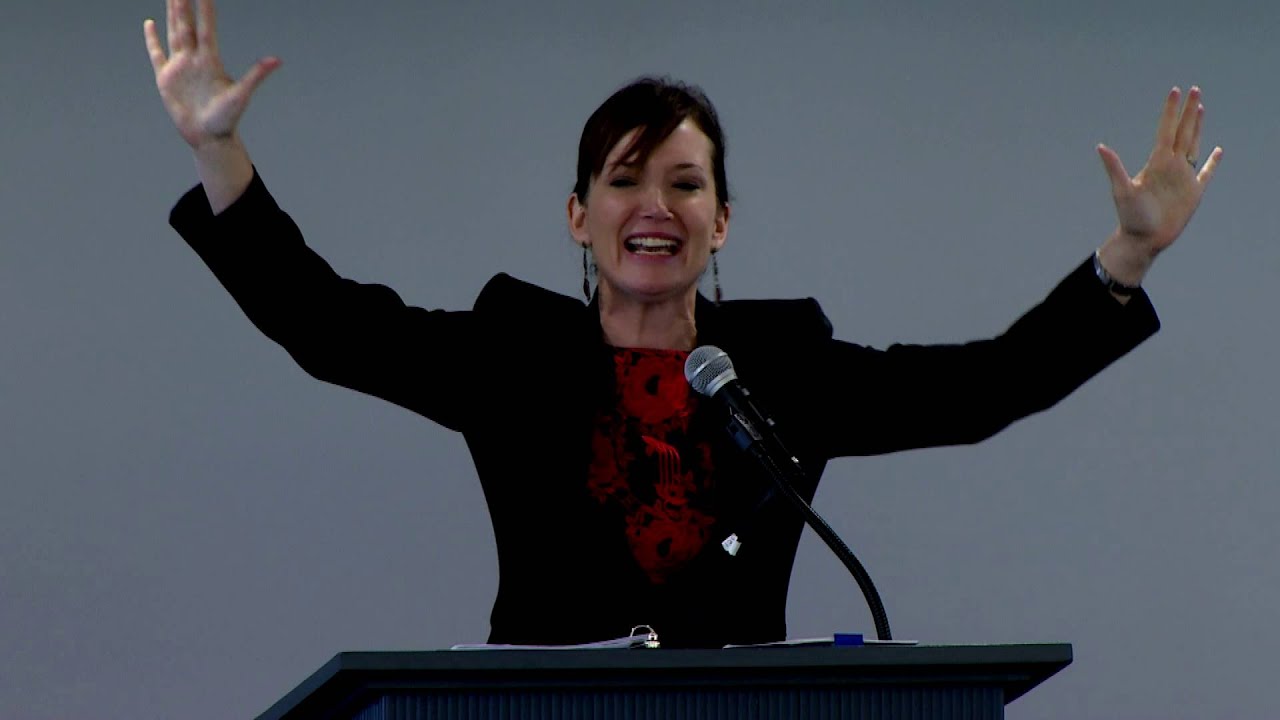 Hillary Clinton’s $30 billion proposal to shore up coal miner pensions and retrain workers who have been impacted by the downturn in the coal industry.
Speaking about “my coal mining families,” Murray said, “30 billion dollars of your money? These people don’t want welfare.” Murray continued to argue that miners “are just people who want to work in honor and dignity” and “will never leave” the coal industry “because economically, they’re forced to never leave.”
This year, Murray Energy announced layoffs of around 1,800 workers, or 21 percent of the company workforce. Murray Energy has reportedly pressured workers to participate in campaign events and to contribute money to Republican politicians. In July, the Labor Department accused the company of intimidating employees who reported safety and fire hazard violations.
The donors to the Texas Public Policy Foundation, the sponsor of the event, were inadvertently disclosed in 2012. In one year alone, Koch Industries donated $159,834 and a Koch-controlled family foundation gave $69,788. Other fossil fuel donors included Crownquest Oil & Gas, AEP Texas, ExxonMobil, VF-Russia, Texas Western Energy Corporation, ConocoPhillips, Devon Energy, Chevron, and Henry Petroleum LP.
Brooke Rollins, the president of the foundation, took a moment during the conference to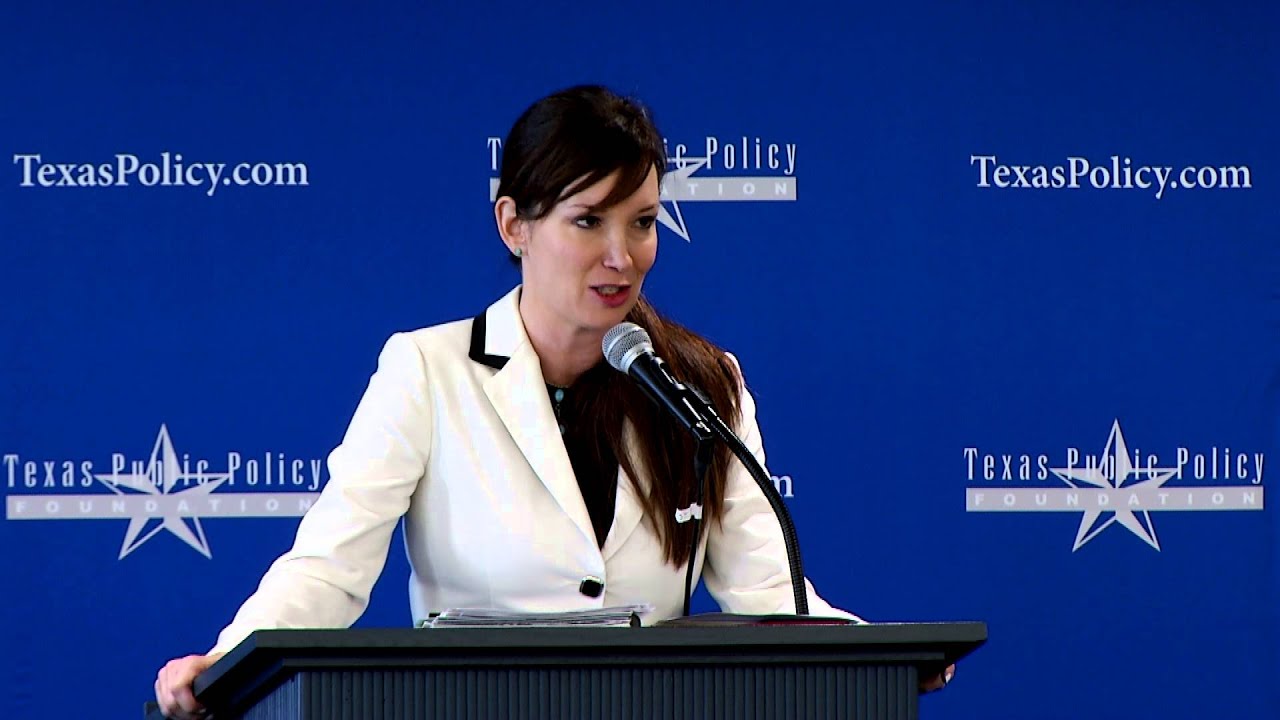 how the event was conceived.
“About a year and a half ago, a supporter of ours that I know well and is a good friend, said ‘Brooke, I think we really need to pull together the best and the brightest who are debunking the myth of climate change and global warming,'” Rollins said. She then revealed the friend in the audience who helped inspire the event: Bud Brigham, a hydraulic fracturing executive.
==
https://www.opensecrets.org/news/2017/02/murray-energy-record-giving-2016/
President Donald Trump wasted little time attending to one of his constituencies: Less than a month after taking office, and surrounded by applauding coal miners and a few friendly members of Congress, he put the knife in an Obama-era regulation barring coal mine waste from being dumped in waterways.
And Trump is said to have more coal-friendlyexecutive orders lined up, including one to relax limits on greenhouse gas emissions from power plants and reverse a temporary ban on federal coal leases.
Indeed, Trump is proving to be a worthwhile investment for an industry that contributed far more to getting him elected than to any other presidential hopeful. Trump’s campaign took in $240,000 from employees or PACs of coal companies. That’s more than double the $104,000 that the second-highest recipient, Texas Sen. Ted Cruz (R), raked in.
If that doesn’t sound like much, here’s some real money: $1.1 million given to the pro-Trump outside spending groups Future45 and Rebuilding America Now.
Some of that coal cash has been controversial, especially as major players in coal production recently have faced large layoffs or declared bankruptcy: Last year Murray Energy’s PAC gave $100,000 to Trump’s joint fundraising committee on June 28, the day before sending 4,400 layoff notices to workers. Most of those particular layoffs didn’t happen in the end, but there have been others: In May 2015, Murray’s workforce stood at 8,400; as of December 2016, it was down to 6,000. More than 400 employees of an Ohio subsidiary, the Ohio Valley Coal Co., lost their jobs or were transferred last November when the Powhatan No. 6 Mine shut down due to lack of reserves.
Nevertheless, using its corporate coffers and its PAC, Murray Energy donated a total of $1.5 million to political candidates, party committees and outside groups in the 2016 cycle, a record high for the company. It gave $250,000 to the Cleveland Host Committee, which helped fund the Republican National Conventionthis year, and $200,000 to pro-Trump super PAC Rebuilding America Now.
And Trump’s campaign received almost $103,000 from Murray Energy employees.
Trump was the largest beneficiary by far of the mining company’s gifts, but there were others: New Day for America, a 527 committee backing Ohio Gov. John Kasich, received $300,000; the pro-Sen. Mark Kirk (R-Ill.) super PAC Independent Voice for Illinois got $129,000; and the conservative Citizen SuperPAC received $110,000, which went toward backing congressional candidates such as Sen. Richard Shelby (R-Ala.) and Sen. Ted Cruz (R-Texas).
The company minced no words explaining its efforts.
“Given that virtually all Democrats support the elimination of coal mining in the United States, and the thousands of jobs the industry provides, and that Hillary Clinton publicly stated that she was ‘gonna put a lot of coal miners and coal companies outta business,’ Murray Energy Corporation had no choice but to support those politicians who have vowed to protect and defend the United States coal industry,” said Gary Broadbent, Murray’s senior corporate counsel, in an email to OpenSecrets Blog.
(Clinton, the Democratic presidential nominee, did make that statement, but in the same speech spoke about revitalizing coal communities and later released a plan to retrain workers.)
Murray set the high mark, but one other coal company — which has its own difficulties — stood out for its efforts.
Alliance Resource Partners, the third-largest producer of coal in the East, announced 275 layoffs in February 2016, partly due to what it said were “overreaching regulations.” The organization’s PAC spent $126,000 this cycle, its most modest showing since 2008.
But Alliance employees contributed $3.4 million in the 2016 cycle, up from 2014. Alliance CEO Joe Craft gave $750,000 to pro-Trump Future45, and, through his personal trust, gave $1 million to anti-Clinton super PAC American Crossroads and $100,000 to the pro-Mitch McConnell group Kentuckians for Strong Leadership, which spent its funds against Clinton this year. (The company has operations in Kentucky, though it is headquartered in Tulsa, Okla.) The latter received more backing from other Alliance employees, with $100,000 from Charles Wesley, the executive vice president, and $10,000 from Thomas Wynne, COO and senior vice president.
Still, if Murray and Alliance led the pack in donations from a declining industry, five other coal mining firms managed to donate thousands through their PACs despite filing for bankruptcy in the past couple of years. Their outlays, though, were substantially smaller than in past cycles.
Peabody Energy PAC gave $78,000, its smallest total since 1998, donating $10,000 to House Majority Leader Kevin McCarthy (R-Calif.), $7,500 to Sen. Lisa Murkowski (R-Alaska) and $6,000 to the Republican National Committee. Frederick Palmer, the senior vice president of government relations of the St. Louis-based company, gave $11,000 to an assortment of Missouri lawmakers and $2,700 to the presidential bid of Ohio Gov. John Kasich (R).
Alpha Natural Resources PAC gave $15,000 each to the NRCC and NRSC, the party committees dedicated to electing Republicans to the House and Senate. The PAC gave out a total of $203,000, the least since 2008. Employees donated a mere $10,000 this year, compared to $169,000 in 2014 and $321,000 in 2012.
Arch Coal’s PAC gave $328,000 in the 2016 campaign; as with Alpha, this was Arch’s smallest total since 2008, doling out $30,000 to the NRCC and $20,000 to the RNC. Employees gave $9,000 in donations (compared to $137,000 in 2012).
And Patriot Coal‘s PAC gave $2,300 to West Virginia reps; employees contributed $59,000, all to Republicans.
Walter Energy PAC gave $4,500 in total to Reps. Barr (R-Ky.) and Jenkins (R-W.V.) — way down from the $62,000 it contributed in 2014. No employees made political contributions this year.
Coal lobbying hits a wall
While Murray Energy gave out more to politicians than ever before, its lobbying spending dipped to about $350,000 — roughly one-third of its 2011 peak of $1 million. The company lobbied to support bills to protect health care benefits and pensions for coal industry workers. The Miners’ Protection Act would move billions of dollars from the Abandoned Mine Reclamation Fund into health care and pension plans for the United Mine Workers of America. Congress temporarily extended retired miners’ plans late last year. The stopgap expires April 18, and congressional Democrats, led by Sen. Joe Manchin (D-W.Va.), threatened to stall approving a waiver for Robert Lighthizer, Trump’s U.S. trade representative nominee, unless lawmakers extend it.
The company again blamed the Obama administration for its declined spending. “Murray Energy Corporation was forced to substantially reduce its lobbying spending in 2016, due to the total destruction of the United States coal industry as caused by the Obama Administration and by the increased utilization of natural gas to generate electricity,” Broadbent said.
But given that it made substantial political contributions using corporate funds, Murray clearly made a choice: That same money could have been used to lobby Congress on the issues it cared most about. Instead, it tried to keep another Democrat from occupying the Oval Office. Murray’s involvement in presidential politics isn’t new: In 2012, miners at a company facility in Ohio said they were forced to attend a rally for GOP candidate Mitt Romney and weren’t paid for their time. The FEC dropped its investigation of the incident in 2015.
The industry as a whole has followed Murray’s pattern of spending less and less on lobbying in recent years. Peak outlays came around 2010 and 2011 as the number of jobs began to tank. Last year marked the lowest spending by the coal industry since 2004. Peabody Energy, which filed for bankruptcy protection last April, logged the highest lobbying spending in the industry at $1.8 million — but that was the smallest amount the company has spent since 2004. The company peaked in 2008 with $8.4 million in spending.
Trump called the reg he struck from the books — the Office of Surface Mining’s Stream Protection Rule — “another terrible job killing rule,” saying he was keeping his campaign promise to save miners’ jobs.
It’s true there are fewer jobs in coal: From 89,500 coal mining jobs at the end of 2011, the figure had sunk to 50,100 as of Jan. 2017, according to the Bureau of Labor Statistics. And while tighter regulations to help protect the environment are definitely a piece of the puzzle, so are cheaper energy alternatives such as natural gas, as well as increased automation of mining jobs.
“That’s all because there has been a rise in citizen advocacy as communities across the country push to move beyond coal to clean energy while competition in the marketplace intensifies,” said Mary Anne Hitt, the Director of Sierra Club’s Beyond Coal Campaign, in an email toOpenSecrets Blog. “That is not going away no matter who is in the Oval Office.”
==
Murray Energy v. Public Citizen (2014)—A corporation sued a public interest group that criticized the corporation because it blocked a health and safety rule for defamation, violation of privacy, and alleged that the corporation suffered mental anguish and emotional distress,
Thursday morning, several of the nation’s top environmental lawyers gathered at the U.S. Court of Appeals in Washington, D.C., for the first round of arguments in a pair of lawsuits challenging the cornerstone of President Barack Obama’s climate plan.
One of the suits was brought by coal company Murray Energy, the other by a group of a dozen states (all with Republican governors, and all either large producers or consumers of coal); they both contend that the Environmental Protection Agency doesn’t have the authority to set tough new standards for carbon dioxide emissions from existing power plants. The rules, first proposed last summer, are designed to cut the nation’s carbon footprint 30 percent by 2030 compared to 2005 levels. The question before the court today was whether the lawsuits can go forward.
We probably won’t know the judges’ decision for a month or more. As my colleague Kevin Drum pointed out, it’s conceivable they could rule against the EPA. All three judges on the panel were appointed by Republican presidents (two by George W. Bush, and one by his dad), and at least two of them have a history of anti-environmental rulings. One of the judges, Brett Kavanaugh, filed a dissent on a separate case in 2012 arguing that greenhouse gases shouldn’t be regulated as air pollutants.
Still, many experts believe that it’s unlikely the judges will decide to hear the case — at least not yet. That’s because the climate rules won’t actually be finalized until later this year. According to Reuters, one of the W-appointed judges, Thomas Griffith, said in court this morning that he and his colleagues “could guess what the final rule looks like, but we’re not usually in the business of guessing.”
For as long as the Clean Air Act has been on the books (half a century and counting), there have been attempts by polluting industries to tear it apart. Every time the Obama administration puts forward new regulations based on it (for mercury emissions, for example, and carbon emissions from new power plants), lawsuits start to pile up as soon as the draft language is out of the gate. But courts have never, not once, taken up a challenge to any EPA rule before it was made final.
If they did, “It would create enormous mischief,” said Richard Revesz, a leading environmental law scholar who has testified to Congress in support of the proposed to rule and was in the courtroom this morning. “It would double the amount of litigation on every proposed rule.”
That’s because the final rule is almost certain to look quite different from what’s on the table now. The EPA is currently sifting through more than 4 million public comments on the rule, submitted by everyone from corporations and governors to environmentalists and your Grandpa Joe, and trying to amend the final rule accordingly. Once that rule is made public, it is inevitably going to face another round of legal challenges from the very same cast of characters. So it really doesn’t make sense for the court to listen to arguments about regulatory language that’s virtually guaranteed to change.
Once lawsuits on the final rule doget taken up, there are likely to be some really interesting debates. The meaning of some of the key Clean Air Act language being employed by the EPA is hotly contested, thanks in part to an apparent clerical error that led to potentially competing versions of the same passage both being signed into law. And there are constitutional issues at stake as well, such as whether the federal government has the right to tell states how to manage their energy supply (if past is any precedent, Revesz has repeatedly said, they do; that’s kind of the whole point of the Clean Air Act).
But for now, there’s a pretty good chance today’s hearing was just a warm-up round for a much more serious fight yet to come. At this point, says Sierra Club chief counsel Joanne Spalding, the EPA’s opponents “are trying to derail a train that’s still in the station.”
==
The newest innovation of the climate denying machine, it turns out, is the lawsuit.
Despite the fact that President Barack Obama’s emissions rule remains a proposal for at least a year, the mere idea of a limit on carbon has incensed an Ohio coal executive to the point of threatened litigation. Robert E. Murray, founder of Murray Energy Corp., said he would sue the U.S. Environmental Protection Agency for spreading what he believes to be misinformation and attempting to enforce legislation based on it—violations of the federal Data Quality Act in Murray’s view.
Coal executive Robert E. Murray wants to sue the EPA. Video screenshot: The Charleston Gazette/YouTube
“Under the act, they are obligated to tell the truth, and they are not telling the truth about global warming,” Murray said of the EPA in an interview with West Virginia Executive. “They are not telling hardly any truth about the science.
“The earth has actually cooled over the last 17 years, so under the Data Quality Act, they’ve actually been lying about so-called global warming,” he continued. “This lawsuit will force them to not just take data from the environmentalists and publish it, as they have been doing, but to review that data and make sure it’s accurate.”...
==
Last August, a large coal company called Murray Energy filed a baseless lawsuit against us after we ran radio ads pointing out its opposition to new worker safety and clean air protections.
But in December, a local court in Ohio — in the small town where Murray Energy is headquartered — denied our motion to dismiss the suit.
We’ve asked a federal court to reconsider the denial because the judge committed errors of law and failed to address key arguments.
Meanwhile, Murray Energy is trying to send the case back to state court. 2.15
==
Last time we heard from Murray was when he sent a prayer to his local West Virginia paper lamenting how the reelection of Barack Obama meant he had to fire a bunch of his staff. (Was it the staff that he:{docked a day’s pay to appear in a Romney ad? Was it the staff he forced to contribute to his political action fund? We may never know.) So, wiping away big fucking crocodile tears, Murray wrote these powerful words:}:
The American people have made their choice. They have decided that America must change its course, away from the principals of our Founders. And, away from the idea of individual freedom and individual responsibility. Away from capitalism, economic responsibility, and personal acceptance. …
Lord, please forgive me and anyone with me in Murray Energy Corp. for the decisions that we are now forced to make to preserve the very existence of any of the enterprises that you have helped us build.
Then: boom, pink slips, because Obama is killing coal and hates white people, probably. Boo-fucking-hoo, Robert Murray is so sad.
http://www.tnr.com/blog/plank/112149/obamas-coal-country-nemesis-hiring-again#
In the middle of last summer, as the presidential race was heading into its home stretch, there was a flurry of news about layoffs at Ohio coal mines owned by Murray Energy, whose more than 3,000 employees make it the largest privately-headed coal-mining concern in the country. Murray announced that it was going to shut down one mine entirely in September or October -- the Red Bird West mine, a surface-mining operation in Brilliant, Ohio that employed 56 people under the subsidiary name OhioAmerican Energy. Many of those employees were soon handed pink slips, though the company said it would try to relocate 32 of those employees to other Murray facilities in the area.
Domestic demand for coal has been declining as a result of the boom in cheap natural gas, but the company, led by its outspoken founder and CEO Robert Murray, left no doubt as to whom it blamed for the closure: Barack Obama. From the local newspaper's report on the closure:
"Both Mr. Obama and Vice President Joe Biden stated that there would be 'no coal in America' prior to their elections. They are making good on their intentions while they destroy so many lives and family livelihoods in this area for no benefit whatsoever," said Stanley T. Piasecki, general manager and superintendent for OhioAmerican.
"The mine was intended to last for at least 10 years. Now, we have been forced by our own country's president and his followers and supporters to permanently close the operation," Piasecki added of the mine that opened in May 2007.
"There will be additional layoffs, not only at Murray Energy, but also throughout the United States coal industry due to Mr. Obama's 'War on Coal' and the destruction that it has caused to so many jobs and families in the Ohio Valley area and elsewhere," said Ryan M. Murray, vice president of operations for Murray Energy.
Murray's case against Obama got more headlines in the weeks that followed. The firm hosted a huge rally for Mitt Romney at its mine in Beallsville, Ohio, whichRomney turned into footage for a attacking Obama for setting out to destroy the coal industry. This was followed by reports in the local media that miners had been required to attend the rally without pay. Soon afterward, I reported on another intersection of politics in the workplace: The pressure felt by salaried employees to give to the company's PAC and to Republican candidates Murray favored, efforts that had made Murray Energy one of the country's most formidable fundraisers for GOP campaigns.
Murray made headlines once again just after Election Day in November, when he announced that Obama's reelection was forcing him to lay off another 150 or so workers at mines in Utah and Illinois, a decision for which he offered a lengthy prayer of forgiveness.
All of which helps explain why I was surprised when I got reports from Ohio this week suggesting that operations at the Red Bird West mine, the one whose shutdown was announced with such fanfare last summer, are now picking up again. "It's opened back up...they're hiring people,"said Gary Parsons, a former superintendent at the mine who worked there for five years before being laid off with the announcement of the shutdown last summer. Parsons himself has not been called back, and is planning simply to retire early, but he said he had talked to several locals who were taking steps to get hired back on. He said he did not understand why, after the big headline-making closure last year, things were perking up at the mine. "I don't know what's going on," he said. "They said they was going to close the mine down."
Another former Murray employee confirmed that operations were picking back up at Red Bird West. "They've called back some hourly folks. They're definitely starting it back up," the former employee said. What explained the reversal? This former employee conjectured that presidential campaign politics may have played a role. After all, announcing the shutdown of the mine a few months before Election Day was not helpful to Obama, who dearly needed to win Ohio. "In my opinion, it was all for politics," the former Murray employee said. "It was just a show of politics to try to scare people, to get votes for [Murray's] candidate...I felt they were playing politics from day one, and they certainly didn't waste any time starting back up again."
When I reached them on the phone, Murray officials disputed that they were restarting operations at Red Bird West. The only work going on at the mine, they said, was "reclamation" required as part of any shutdown. "We're required to put things back together. We're picking up some remnants of coal, some coal that was left over, as we clean up the place," said Gary Broadbent, a senior attorney for the company. He said that there were 42 or 43 people at the mine doing this work, and while the work could go on for a few years, there would be no expansion at the mine, which at its peak employed more than 200 people. "It’s not going to be anything near what it used to be," he said. The head count "is going to stay low...We’re drawing down rather than building up...We were at 239 at our peak and now we’re down to skin and bones."
Still, the company's current account would appear to be at variance with the announcement last summer, when Broadbent said that the mine would "gradually be closed through late September or early October," with no mention of a possibly years-long reclamation project. After all, if the head count was really dropping from only 56 to 43, odds are the move would not have made the headlines it did.
Regardless of just what's behind the activity at Red Bird Mine, it is welcome news in Brilliant, a small town on the banks of the Ohio River. Jason Canestraro, service manager at Southern Equipment, another employer in town, lives just adjacent to the mine and had noticed more trucks going in and out of late. "If it's jobs, it's great," he said.
Addendum, January 24: A former Murray employee in Utah informs me that people are being hired back at the Murray operations there, too, just a couple months after the big post-election layoffs. The former employee said about 25 had recently been hired back on. Murray officials demurred when asked about any uptick in activity at the Utah or Illinois mines where the post-election layoffs occurred. "I'm not intimately involved with the hiring or firing of employees," said Broadbent.
Addendum, January 25: Broadbent tells me that he looked into Murray Energy's Utah operations further and that there has been no new hiring there, but rather transfers of personnel from one Murray mine where the company is decreasing production, Lila Canyon, to another where it is trying to maintain production, West Ridge.
---
Robert Murray is head of Ohio coal company Murray Energy. We bring him up in these pages every now and again in part because he is the archetype of a fossil-fuel boss: surly, furious, exploitative. Also in part because he’s forcefully crammed himself into the news this election cycle. Murray, you may remember, is the guy who made his employees attend a Mitt Romney rally, losing a day’s pay in the process.
There is a bright side to Robert Murray, though: His efforts to pick employees’ pockets to benefit Romney are collar-color independent. From a great profile of Murray at *The New Republic*:
In May, [Murray] hosted a $1.7 million fund-raiser for Romney. Employees have given the nominee more than $120,000. …
The accounts of two sources who have worked in managerial positions at the firm, and a review of letters and memos to Murray employees, suggest that coercion may also explain Murray staffers’ financial support for Romney. Murray, it turns out, has for years pressured salaried employees to give to the Murray Energy political action committee (PAC) and to Republican candidates chosen by the company. Internal documents show that company officials track who is and is not giving. The sources say that those who do not give are at risk of being demoted or missing out on bonuses, claims Murray denies.
The magazine explains how the system works.
The pressure to give begins as soon as employees enter the company, the Murray sources say. At the time of hiring, supervisors tell employees that they are expected to contribute to the company PAC by automatic payroll deduction–typically 1 percent of their salary, a level confirmed by a 2008 letter to employees from the PAC’s treasurer. (That letter also assures employees that they would not be “disadvantaged” by not giving.) Employees are given a form to sign, explaining that the giving is voluntary. “In the interview … I was told that I would be expected to make political contributions — that [Murray] just expected that,” says the first source. “But I was told not to worry about it, because my bonuses would more than make up what I would be asked to contribute.”
Murray is known to be punitive.He recentlyfiled a lawsuit against a reporter who criticized him. It’s no wonder, then, that employees are skittish about revealing his donation practices.
The Murray sources, who requested anonymity for fear of retribution, came forward separately. But they painted similar pictures of the fund-raising operation. “There’s a lot of coercion,” says one of them. “I just wanted to work, but you feel this constant pressure that, if you don’t contribute, your job’s at stake. You’re compelled to do this whether you want to or not.” Says the second: “They will give you a call if you’re not giving. … It’s expected you give Mr. Murray what he asks for.”
At the now-infamous rally, Romney told the unpaid miners, “You’ve got a great boss, he runs a great operation here.” No doubt Romney thinks so, for a variety of reasons.
Source
- Coal Miner’s Donor, The New Republic
Philip Bump writes about the news for Gristmill.
---
press suppression:
A coal operator is suing a West Virginia newspaper and reporter for libel.
Murray Energy Corporationfiled suit against environment reporter Ken Ward Jr. and the Charleston Gazettelast month, andthe casewas recently transferred to federal district court. The complaint is on behalf of Murray Energy, its subsidiaries, and owner Bob Murray.
According to the complaint, an article Ward posted on his popular “Coal Tattoo” blog was libelous. Murray claims the blog post—called “Mitt Romney, Murray Energy and Coal :{Criminals:(style="background-color:#ffff66ff"):}:”—has damaged his reputation and business and thus put the jobs Murray Energy provides in Belmont County, Ohio in jeopardy.
In the post, Ward mentions a fundraiser Murray held for Mitt Romney. He also mentions the Crandall Canyon Mine disaster in Utah. Crandall Canyon was operated by a Murray Energy subsidiary, and the company pleaded guilty to criminal mine safety violations for the accident that killed six miners and three rescue workers in August 2007. Ward also cites an Associated Press articlethat reports another Murray subsidiary in Ohio pleaded guilty to criminal violations of the Clean Water Act last month.
The complaint says the “false and defamatory manner” of the post is “affirmatively stating and clearly implying” that Murray, Murray Energy and the company’s subsidiaries are criminals.
“This statement intended to convey, and did convey, to the average reader that Plaintiff Murray is a criminal, dishonest and scurrilous executive. In reality, Plaintiff Murray has a reputation for integrity and honesty, is not a criminal, has never killed anyone, and has diligently worked to preserve the environment.”
(It’s also probably worth a note that the coal miners attending Mitt Romney’s campaign event in Beallsville, Ohio also work for Murray Energy. News has emerged in the past few daysthat suggest the event was mandatory for the miners, but they weren’t paid for their attendance.)
The Citizen Media Law Project says Ohio defamation law treats cases differently whether the plaintiff is a private or public figure. Private figures only have to prove that the charges are false, and that the defendant didn’t take reasonable steps to discover the truth. Public figures have to prove the defendant acted with actual malice.
In the complaint, Murray says he’s not a public figure because he “has neither voluntarily sought public nor media attention.”
The Citizen Media Law Project says someone can also be a “limited-purpose public figure” which is:
someone who injects himself or herself into a particular public controversy. The determination of whether a particular individual qualifies as a limited-purpose public figure depends on the (1) plaintiff's access to the media; and (2) the extent to which the plaintiff, by virtue of his or her position in the community or involvement in a matter of public concern, can be said to invite public comment or attention. Examples of individuals and organizations deemed limited-purpose public figures by Ohio courts include:
- the owner of a private art school (for purposes of discussing its administration);
- a retired schoolteacher who worked for the public school system for 30 years, regularly attended and voiced concerns at school board meetings, and had his own talk show entitled "One Man's Opinion" where he discussed matters relating to the board (for purposes of discussing his statements and conduct at a board meeting); and
- a restaurant and its owner (for purposes of review of the restaurant).
So, if you comment on a coal company's actions and the legal repercussions, does that make the owner a limited-purpose public figure?
Murray is seeking more than $150,000 in damages from the Gazette. A pretrial conference is scheduled for September 26. Attorneys for the Gazette didn't return calls for comment. To view the complaint, click here.
Tags:
http://wfpl.org/post/murray-energy-sues-wv-newspaper-reporter-libel
---
2011-2012
Here is the ranking of the top coal mining company contributors in the 2011-2012 campaign cycle, as of July 2011:[2]
- Alpha Natural Resources $127,451
- Murray Energy- $111,796
- Mepco - $72,700
- CONSOL Energy - $59,400
- Arch Coal - $58,860 - (plus an additional $13,700 through merger with International Coal Group, for $72,560 total)
- Peabody Coal - $57,000
- Patriot Coal - $49,200
The coal industry made a total of $8 million in campaign donations from January to June 2011, according to the Wall Street Journal.[3]
http://www.sourcewatch.org/index.php?title=Coal_money_in_politics
==
The Murray Energy Corporation is a coal mining company producing produces approximately 30 million tons of high quality bituminous coal per year. It has operations in southern Ohio, in southwestern Pennsylvania, the Illinois Basin (Western Kentucky and Southern Illinois), and central Utah.[1]
Salt Lake City-based coal miner UtahAmerican Energy is a subsidiary of Murray Energy Corporation. UtahAmerican is a company with approximately $65.1 million in annual sales in 2008, and was started in 1996.[2]
Coal slurry spills
In October 2010, water contaminated with coal dust "spilled" for the fourth time since 2000 into a Belmont County creek that is home to an endangered salamander, Ohio state agencies reported. The coal slurry - water used to wash newly mined coal and filled with potentially toxic heavy metals - came from a pipeline that runs from Murray Energy's Century Mine across Captina Creek to the company's Ohio Valley coal waste slurry impoundment, said Mike Shelton, a spokesman for the Ohio Department of Natural Resources. The break occurred in a joint in the pipeline about 250 feet north of the creek in a hayfield, Shelton said, spilling slurry into the field and the creek.[3]
The Ohio Environmental Council (OEC) estimates the spill at about one quarter of a million gallons. According to the OEC, 7 leaks were found in Murray Energy's impoundment pond and two were in the pipeline, one in 2005 and then this 2010 spill. The 2005 pipeline spill cost Murray Energy $50,000 dollars in fines for killing thousands of fish and polluting a half mile of the same creek. In this spill, the Ohio Department of Natural Resources Wildlife Division Spokesman Mike Shelton said, "so far 3500 fish and 850 other salamander, crayfish and frogs died in the creek."[4]
Murray Energy was denied a permit to build a new slurry pond in 2008 by the Ohio EPA, but have applied again for another permit to build a pond.[4]
Ohio's environmental agencies are seeking $91,000 in damages from Murray's American Energy for the Oct. 1 coal slurry spill.[5]
Crandall Canyon Mine Disaster
Crandall Canyon Mine was an underground, bituminous coal mine in northwestern Emery County, Utah, owned by UtahAmerican Energy, a subsidiary of Murray Energy, and was located about 15 miles (24 km) west north-west of Huntington, Utah. On August 6, 2007, at 2:48 A.M., the mine collapsed, trapping 6 workers inside. The workers were approximately 3.4 miles (5.5 km) from the mine entrance and 1500 feet (457 m) underground. The collapse registered recorded seismic waves in magnitude 3.9 to 4.0, by seismograph stations of the University of Utah.[6]
A Mine Safety and Health Administration (MSHA) report the mine was "destined to fail" because the mining company made critical miscalculations and didn't report early warning signs. MSHA itself was faulted by the Department of Labor, of which MSHA is an agency, for lax oversight before the collapse, and for mismanaging the failed rescue attempt.[7]
The largest mining fine until the 2010 Upper Big Branch Mine Disaster was levied against Murray Energy for the Crandall collapse: $1.85 million for 20 citations, including nine that were "contributory."[8]
CEO Murray, 2010 election donations, and climate denial
In February 2010, Murray Energy’s political committee and executives, including CEO Robert Murray, combined to contribute nearly $25,000 to California GOP Senate candidate Carly Fiorina’s campaign against Barbara Boxer, the incumbent Democrat. (At the same Ohio fundraiser, Fiorina obtained an additional $39,000 from Midwestern companies that sell coal mining equipment and supplies.)[9]
In May 2010, Murray Energy donated $30,000 to California’s Proposition 23, which would suspend the state’s AB 32 anti-global warming measure until the state economy rebounds from the recession. Another donor, the American Coalition for Clean Coal Electricity, a Washington, D.C.-lobbying group, gave $5,000. Prop. 23 is sponsored by the energy industry, and its biggest booster is the Valero Energy from San Antonio, Texas.[9]
It is assumed that the company targeted Boxer and the anti-AB 32 proposition because of CEO Murray, who has dismissed global warming as “hysterical global goofiness." Murray and Boxer went head-to-head over the issue at a 2007 Senate hearing on environment and public works. Former Vice President Al Gore and "Silent Spring" author Rachel Carson were also criticized by Murray, who said: "The hysterical and out-of-control climate change or global warming issue, and the legislation that you have proposed, will lead to the deterioration of the American standard of living and the accelerated exportation of more of our jobs to China and other developing countries, which have repeatedly advised, as recent as last week, that they will not limit their carbon dioxide emissions.... Albert Gore touts that his role model has always been Rachel Carson, with her picture on his wall, who led the environmental movement to ban DDT. She and her environmental followers killed millions of human beings around the world with the ban on DDT, which has since been found by the World Health Organization to be very safe to humans in controlling global epidemics."[9]
Existing Coal Mines
Contact details
Murray Energy Corporation
29325 Chagrin Boulevard
Suite 300
Pepper Pike, Ohio 44122
P: 216.765.1240
Email: info AT coalsource.com
Website: http://www.murrayenergy.net/
Articles and resources
Related SourceWatch articles
References
- ↑ Murray Energy Corporation, "History", Murray Energy Corporation website, accessed June 2009.
- ↑ "Utah American Energy, Inc." ZipperPages.com, November 2009
- ↑ Doug Caruso, "Coal slurry spill threatens Belmont County creek" The Columbus Dispatch, Oct. 1, 2010.
- ↑ ^4.0 ^4.1 Rick Reitzel, "Ohio Coal Company Has A Large Coal Slurry Spill" NBC, Oct. 6, 2010.
- ↑ Casey Junkins, "$91,000 Slurry Spill Fine Appealed" The Intelligencer / Wheeling News-Register, April 21, 2011.
- ↑ "6 miners trapped in Utah coal mine collapse" CNN.com, August 6, 2007
- ↑ "Year after mine collapse, many failures clear", Associated Press, Aug. 6, 2008
- ↑ Kris Maher, "Record Fine Seen in Mining Disaster" Wall Street Journal, Dec. 6, 2011.
- ↑ ^9.0 ^9.1 ^9.2 Lance Williams, "Ohio coal company that backed Fiorina also gave to Prop. 23" CA Watch Blog, July 27, 2010.
External resources
external articles
STUB
http://www.sourcewatch.org/index.php/Murray_Energy_Corporation
===
murray miners req to go to romney (war on coal scam) rally w/o pay http://grist.org/news/romney-coal-miner-ad-provokes-complaint-to-fec/
===
325 citations on utah mine that collapsed in 3 yrs
Robert E. Murray,
---
WASHINGTON --Having left Congress after an embarrassing 2007 arrest, former Sen. Larry Craig (R-Idaho) has quietly reemerged in Washington as a lobbyist working on behalf of the coal industry. According to his federal filings, Craig has registered to wheedle his former Capitol colleagues on the obscure but critical issue of mine safety.
It's an issue that Craig's new client, Murray Energy, knows all too well. The largest privately held coal company in the nation, Murray Energy owned a subsidiary that ran the Crandall Canyon Mine in Utah, the site of a tragic cave-in incident that took the lives of six miners and later three rescuers. The cave-in occurred in August 2007, just weeks after Craig was arrested for allegedly soliciting sex in an airport bathroom.
The addition of a heavyweight like Craig to the coal lobby serves as a reminder of just how difficult it can be to pass mine safety reform in the face of industry influence, even in the aftermath of the worst mining disaster in 40 years. Since 29 miners died in an explosion at the Upper Big Branch mine in West Virginia in April 2010, a bill that would further empower the Mine Safety and Health Administration to shut down dangerous mines and punish unsafe operators has languished in Congress. Now that more than a year and a half has passed, the window of opportunity may have already closed for meaningful reform, industry observers say.
"We knew at the very beginning that the further you get from the [Upper Big Branch] tragedy, the less likely it is to get something passed," says a senior Democratic aide. "The pay-to-play politics eventually comes into play. And that's exactly what happened."
The status quo may well be what Murray Energy and the coal lobby are hoping for. Since the Crandall Canyon disaster, congressional staffers who work closely on mine safety issues have come to know the firm's tough CEO, Robert Murray, simply as "Mr. Murray," and they consider him and other deep-pocketed coal operators a prime obstacle to stronger mining regulations. A big Republican donor, Murray feuded publicly with safety-minded Democrats who called for criminal prosecutions of Crandall Canyon managers after the tragedy. A spokesperson for the U.S. Attorney's Office in Utah says the Crandall Canyon case is "ongoing," although no charges have been filed in more than four years.
Murray Energy has paid Craig's consultancy and lobby shop, New West Strategies, $200,000 this year to work on legislation surrounding mine safety as well as greenhouse gas emissions. When asked for details about the firm's work, Craig's partner and former chief of staff, Michael Ware, said, "I'm not going to talk to you at all." Murray Energy has so far spent nearly $400,000 on lobbying this year, according to the watchdog group Center for Responsive Politics.
Rob Murray, vice president and son to the CEO, declined to talk in detail about Murray Energy's stance on MSHA and mine safety reform. In an email, he said the company was working to "inform lawmakers of practical solutions to improve the working environment in mines," adding that "the overall health and safety of our employees is our number one priority."
At the time of the tragedy, Robert Murray blamed the mine collapse at Crandall Canyon on an earthquake -- an assertion challenged by MSHA, which levied more than $1 million in penalties against the mine. Similarly, officers at Massey Energy, the owner of Upper Big Branch, have attributed that disaster to a natural explosion, contrary to the findings of both an independent investigative panel and a team of MSHA investigators.
Two exhaustive reports produced on Massey have put the blame squarely on a corporate culture that put profits before workers' well-being. Investigators noted that the company routinely hid safety problems from inspectors and intimidated workers who spoke out about dangerous conditions. Managers went so far as to maintain two sets of safety books -- one that included documented dangers at the mine, and a separate sanitized version for inspectors to see. Alpha Natural Resources, Massey's new owner, has entered into a $210 million settlement over Massey's role in the disaster, though officials have left open the possibility of prosecuting individual Massey officers.
Cynical as it may sound, safety advocates note that the wake of a mining disaster is usually the best opportunity to reform mining law and MSHA, since public attention so rarely turns to such issues. Justin Feldman, worker health and safety advocate at Public Citizen, says he's disappointed but not shocked that nothing legislatively has been done. Feldman says he's actually spoken with congressional aides who wrongly believe a bill was passed after Upper Big Branch.
"We don't see any momentum on this issue," says Feldman. "The industry has survived this, in terms of not being subject to new regulations. ... When I talk to Republicans on this, the first they say is, 'Let's wait for the [next] report to come out.'"
Even piecemeal reforms have proven nearly impossible to get through the GOP-led House. For example, Republicans have twice tried to block a new rule aimed at reducing the number of miners who suffer and die from black lung disease. In September House Republicans tried to scuttle the rule, which would lower the amount of allowable coal dust in a mine's atmosphere, in a health-and-labor budget bill. And last week, as lawmakers scrambled to avoid a shutdown, Republicans put a rider in the budget bill that would simply delay implementation of the new rule by eight months, a move that the United Mine Workers of America said could cost lives.
Since Upper Big Branch, MSHA officials have been trying to clear the agency's infamous backlog of safety cases, which hovered around 70,000 as of the end of September. Many mine owners appeal their safety violations simply as a matter of course, allowing them to continue operating as the judicial process drags on. A 2008 congressional report found that Murray Energy, for instance, had enacted a "blanket policy of contesting all MSHA safety violations, regardless of the merits of the contest petition."
Led by Sen. Jay Rockefeller (D-W.Va.) and Reps. George Miller (D-Calif.) and Shelly Moore Capito (R-W.Va.), some lawmakers have sought to expand MSHA's limited subpoena power and boost civil and criminal penalties on operators who break the law. Those reforms have been kept at bay by the coal industry, which has spent at least $13 million on lobbying this year, and industry-friendly Republicans, who seem loath to impose any regulations on Big Coal. Earlier this year, an official with the industry group the National Mining Association (NMA), speaking as a guest of the GOP, went so far as to tell lawmakers at a mine safety hearing that the industry should be allowed to simply police itself.
"We're trying to be open-minded about it," NMA spokesman Luke Popovich tells HuffPost, speaking about MSHA reform. "We don't see the need for additional authority. MSHA has only started to use the authority it has that could improve mine safety."
As Upper Big Branch recedes further, reform advocates say it's doubtful they'll eventually overcome both a powerful lobby and anti-regulatory Republicans. Of course, veterans on the issue aren't exactly surprised to see their efforts fizzle. As Rep. Miller himself said earlier this year, "The sad thing is that nothing will happen until the next major disaster."
---
California: GOP Senate Candidate Carly Fiorina Backed by Coal-Mining Firms
27th July 2010
Lance Williams, California Watch | SF Chronicle | July 27, 2010
*Richard Stickler, head of the Mine Safety and Health Administration (left) and Bob Murray, chief of Murray Energy, speak after a cave-in at one of Murray’s mines in Utah in 2007.
Republican U.S. Senate candidate Carly Fiorina has received about $63,000 in donations this year from Appalachian coal-mining interests, much of the money from an outspoken Ohio mine owner who dismisses global warming as “hysterical global goofiness.”
In a cluster of transactions, most of them dated Feb. 4, 64 donors associated with mining in Ohio, West Virginia and other coal-producing states made contributions to Fiorina, who is challenging incumbent Democrat Barbara Boxer.
Of that, nearly $25,000 came from employees and a political committee of Murray Energy Corp. of Cleveland, the nation’s largest privately owned coal producer. Other donations came from Midwestern companies that sell mining equipment and supplies.
In Ohio earlier this year, Fiorina attended a fundraising event for her campaign that included coal-mining interests, a campaign aide said.
Robert Murray, Murray Energy’s CEO, has clashed repeatedly with environmentalists in Ohio, facing criticism for building mining tunnels beneath an old-growth forest and pushing plans to expand a huge storage lake for water polluted with mining runoff, according to interviews and news reports.
As Congress has debated climate change legislation, Murray emerged as an aggressive critic of proposals to restrict the burning of coal, styling those efforts as a national “economic suicide note.”
A spokesman for Murray declined to comment. But Andrea Saul, spokeswoman for Fiorina, responded:
“Carly thinks we need to have the courage to examine the science of climate change, but knows that us acting alone will only put our companies at a severe competitive disadvantage in the global marketplace with no impact on the issue. First and foremost, Carly believes we need to expand and diversify our nation’s energy portfolio – solar, wind, coal, natural gas – to reduce our dependence on foreign sources of oil.”
Tangling with Boxer
Murray has no known connection to Fiorina, the former Hewlett-Packard CEO. But he has publicly butted heads with Boxer, who has boosted cap-and-trade legislation to limit greenhouse gas emissions in the United States.
In testimony at a 2007 Senate hearing that Boxer attended, Murray dismissed global warming as “global goofiness” and accused congressional Democrats of “attempting to export the draconian so-called ‘global warming’ measures already enacted in California … to the rest of America.”
Boxer then questioned Murray about mining safety, asserting that his company had paid the “biggest fines” of any mine operator in Ohio.
“You are wrong!” Murray retorted, according to a transcript. He added: “You don’t have the foggiest idea what a person does to pack a lunch and go to work or wear a hard hat.”
Since then, Murray has singled out Boxer for criticism on global warming issues.
Last year, when he laid off 91 miners at a mine in eastern Ohio, Murray sought to blame President Obama and congressional Democrats, including Boxer, saying in a press release that the “insanity” of proposed cap-and-trade legislation to fight global warming was reducing the demand for coal.
Change of position
In late 2008, Fiorina advocated cap-and-trade measures for environmental protection when she spoke at the Republican National Convention that nominated Arizona Sen. John McCain.
“John McCain will create a cap-and-trade system that will encourage the development of alternative energy sources,” she said, the environmental news website grist.org reported. But since she began running for the Senate, Fiorina has backed away from the topic. In a TV interview during the GOP primary this year, Fiorina said, “I’m not sure,” when asked whether climate change was occurring.
In a TV commercial, she mocked Boxer for asserting that climate change could pose national security issues for the nation.
“Terrorism kills, and Barbara Boxer is worried about the weather,” Fiorina said.
Mine-owner Murray is “very outspoken in his opposition to climate change legislation,” said Nachy Kanfer, a Sierra Club coal expert based in Columbus, Ohio. “He’s so outspoken, he almost revels in it.”
“Economic suicide”
In a 2009 essay for the West Virginia Gazette newspaper, Murray derided cap-and-trade legislation then pending before Congress as an “economic suicide note,” saying the measure would “destroy the nation’s coal industry,” cost taxpayers “over $2 trillion in just over eight years” and transfer wealth from the Midwest “to the West Coast and New England.”
Murray won national attention in 2007 when a cave-in at a Utah mine co-owned by one of his companies killed six miners. In television interviews, Murray defended his company’s safety record and said an earthquake caused the collapse.
A year later, the federal Mine Safety and Health Administration fined the mine operators $1.34 million for safety violations that directly contributed to the miners’ deaths, records show.
While Midwestern coal interests rarely contribute to California campaigns, Murray Energy also donated $30,000 to the campaign for Proposition 23, a November ballot measure backed by the energy industry that would suspend the state’s landmark global warming law, AB32, until the state’s unemployment rate improves.
California Watch is a project of the Center for Investigative Reporting. E-mail Lance Williams at lwilliams@californiawatch.org.
http://www.sfgate.com/cgi-bin/article.cgi?f=/c/a/2010/07/27/MNUA1EK2FC.DTL
---
huffpo
Utah Mine Owner: Troubling Safety Record, Useful Political Clout
http://www.huffingtonpost.com/2007/08/14/utah-mine-owner-troubling_n_60477.html
HuffingtonPost.com | Max Follmer
In 2003, when safety inspectors ordered the owner of a Utah coal mine where six workers have been trapped for more than a week to shut down one of his Ohio operations because of repeated safety problems, local press reports say he did not hesitate to flex his political muscle to get the inspectors off his back.
West Virginia Public Radio reporter Jeff Young filed a story at the time that said Murray Energy Corp. CEO Bob Murray had a meeting in Morgantown, W. Va. with Tim Thompson, then a district manager for the federal Mine Safety and Health Administration.
Young obtained notes from the meeting which showed Murray threatening to have MSHA employees fired.
"I will have your jobs. They are gone. The clock is ticking," Young quotes Murray as saying at the meeting.
The notes then go on to say Murray dropped the name of a pair of powerful Republicans in order to underscore his own political clout.
"Mitch McConnell calls me one of the five finest men in America, and last time I checked he was sleeping with your boss," Murray told the inspectors, referring to the senior GOP senator from Kentucky. The quote was repeated in an Oct. 2006 Lexington (Ky.) Herald-Leader article on McConnell's political influence.
McConnell - the Republican leader in the Senate - is married to Labor Secretary Elaine Chao, who oversees MSHA. According to the Center for Responsive Politics, McConnell has received $176,800 in campaign donations from mining interests since 2001.
Thompson was later transferred to an office away from Murray's mines, and retired from MSHA in 2006.
The Bush Administration denied that Murray played a role in Thomspon's reassignment.
Murray has personally donated $115,050 to Republican political candidates over the past three election cycles. He has given another $724,500 to the GOP over the past ten years through political action committees connected to his businesses.
"The ironic part is I am a Republican," Thompson told the Herald-Leader's John Cheves in October 2006. "But I don't think you should bring up politics in a meeting like that, involving safety."
A belt foreman at the mine in question - Powhatan No. 6 in Belmont County, Ohio - bled to death in 2001 after a conveyor belt had ripped off his arm.
A judge later ruled that the company had not been negligent in that case.
Murray's safety record has come under fire at several other mines he owns through at least a half dozen mining companies.
Mines owned by Murray's companies produce more than 20 million tons of coal annually, according to a tally by the Cleveland Plain-Dealer. His companies include Ohio Valley Coal Co., Maple Creek Mining, Inc., KenAmerican Resources, Inc., American Coal Co. and PennAmerican Coal.
Robert Gehrke at the Salt Lake Tribune reported over the weekend that Murray's Galatia mine in southern Illinois has racked up 2,787 violations over the past two years. MSHA has proposed more than $2.4 million in fines at Galatia, according to Gehrke's reporting.
Another Murray-owned company - Ken American Resources - and four of its top employees were convicted in a federal court in Kentucky of conspiring to violate federal mine safety rules.
A judge later threw out part of the verdict, but the company was ordered to pay $306,000 in fines, an amount federal prosecutors considered too lenient.
Speaking to The Huffington Post last week, a spokesman for the United Mine Workers of America labor union - which does not represent workers at the Crandall Canyon mine in Utah - called Murray a "volatile" personality who routinely opposed increased safety regulations.
"Anything that will cost Bob Murray any extra money he will find reason to find fault with it," said Phil Smith, the union's communications director.
---
cbs
(AP) The chairman of Murray Energy Corp., the Ohio-based company that owns the Utah coal mine where six workers are trapped, is a strong Republican backer, a professional engineer and private pilot, and an outspoken critic of concerns about global warming.
Robert E. Murray insists his mines are safe.
"This is the first major accident I've ever had in one of my coal mines in 20 years of being in existence, the first major accident," he said Tuesday at a media briefing in Huntington, Utah.
Murray and the government differ over whether an earthquake caused the cave-in and whether the men were engaged in "retreat mining," in which miners pull down the last standing pillars of coal and let the roof fall in.
Rob Moore, vice president and chief financial officer of Murray Energy, said the privately-held company is a 50 percent owner in the Utah mine.
Moore, who responded to an e-mail interview request made to Murray, said he and Murray were too involved in rescue efforts Tuesday to discuss the company or its chairman.
Government mine inspectors have issued 325 citations against the Utah mine since January 2004, according to federal Mine Safety and Health Administration online records. Of those, 116 were what the government considered "significant and substantial," meaning they are likely to cause injury.
The number of safety violations is not unusual, said J. Davitt McAteer, former head of the MSHA and now vice president of Wheeling Jesuit University in West Virginia.
This is not Murray's first time in the spotlight.
Murray is active as a leader in the mining industry, and in 2001, he testified before a House Ways and Means subcommittee, on behalf of the National Mining Association, in support of several proposed tax cuts.
Murray Energy Corp.'s political action committee has been an active contributor to GOP candidates.
The Murray Energy Corp. Political Action Committee has given more than $155,000 to Republican candidates, including $30,000 to the National Republican Senatorial Committee, since 2005, according to Federal Election Commission records.
The committee donated to Republican Senate candidates such as George Allen in Virginia, now presidential candidate Sam Brownback of Kansas and Katherine Harris of Florida. It also gave to Ohio Republican Reps. Deborah Pryce and Patrick Tiberi, and Ohio Republican Sen. George Voinovich. The committee did not give to any Democrats during the same period, FEC records show.
In 2004, Murray gave $15,000 of his own money to the NRSC, and he gave $10,000 in 2006. Among other donations in the last election cycle, he gave $2,000 to Ohio Republican Sen. Mike DeWine's unsuccessful re-election campaign.
Raja V. Ramani, a professor of geo-environmental engineering at Penn State University, said Tuesday he has known Murray for several decades, since before he formed Murray Energy. He described Murray as "a good friend to education and universities in general."
Murray was formerly president and chief executive officer of North American Coal Corp. until 1987. He currently is owner of a number of private coal mining companies that produce about 20 million tons of coal annually and employ about 2,000 people.
His holdings make Murray Energy the nation's 12th largest coal company, according to the National Mining Association.
The companies controlled by Murray Energy include The Ohio Valley Coal Co.'s Powhatan No. 6 mine in Ohio. The Ohio Valley Coal PAC also gave thousands of dollars to Republican causes, including $10,000 for Bush-Cheney election in 2000.
Murray Energy mine holdings in Pennsylvania include Maple Creek Mining Inc.'s Maple Creek Mine.
Some other holdings are KenAmerican Resources Inc., which runs Paradise Mine in western Kentucky; The American Coal Co. (AmCoal), which operates the Galatia Mine in southern Illinois, and PennAmerican Coal, which operates the Burrell Mine in central Pennsylvania.
Projects under development include the Century Mine of American Energy Corp., in Ohio; the Lila Canyon Mine of UtahAmerican Energy Inc., in Utah, and the Spring Church Mine, of Spring Church Coal Co. in Pennsylvania.
CLEVELAND, Aug. 8, 2007
Mine Collapse: Spotlight On Murray Energy
CEO Robert E. Murray Says This Is First Major Accident In 20 Years http://www.cbsnews.com/stories/2007/08/08/business/main3144730.shtml
---
http://www.campaignmoney.com/political/committees/murray-energy-corporation-political-action-committee.asp?cycle=08
Tower Mine contrib to pac
Political Candidates Receiving Contributions/Support in the '08 Election Cycle from
MURRAY ENERGY CORPORATION POLITICAL ACTION COMMITTEE
Candidate Name
Office
Party
State
District
Primary/
General
$ Dollar
Amount
Date
BOEHNER, JOHN A (http://www.campaignmoney.com/political/campaigns/john_a_boehner.asp?cycle=08)
House of Reps
Republican
OH
08
G
$5,000
10/13/2008
BROWNBACK, SAMUEL DALE (http://www.campaignmoney.com/political/campaigns/samuel-dale-brownback.asp?cycle=08)
President
Republican
KS
--
P
$5,000
04/25/2007
CANNON, CHRISTOPHER B HON. (http://www.campaignmoney.com/political/campaigns/christopher_b_cannon.asp?cycle=08)
House of Reps
Republican
UT
03
P
$2,000
03/29/2007
CHAMBLISS, SAXBY (http://www.campaignmoney.com/political/campaigns/saxby_chambliss.asp?cycle=08)
Senate
http://www.campaignmoney.com/political/committees/murray-energy-political-action-committee.asp?cycle=06
http://www.opensecrets.org/pacs/lookup2.php?strID=C00410985