FED SOC 3
ESTB 5 24
MERRI OK
paul dans pjt 2025
mizelle
minority rule GOP
SEE CAMP FIN 3 MAINE SUPERPAK
doh it is a thinktank
===
banality of evil? nazi needed legal termites to undermine rule of law?*
new doj rev dr exxon liar: May 21, 2025 — Robert Levy serves as Executive Counsel at ExxonMobil, where he leads the company's legal strategy on advocacy and civil justice reform.
li post
am looking forward to the Federalist Society’s May 21st Regulatory and Transparency Project program: Energy Emergency: Executive Power and the Future of U.S. Energy where I will give the keynote address. https://lnkd.in/gHuh_5-M
[
Energy Emergency: Executive Power and the Future of U.S. EnergyEnergy Emergency: Executive Power and the Future of U.S. Energy
fedsoc.org
20
-=-=
-=-=
GEOFF SHEPARD WATERGATE BS --> 10 26
YouTube
Open Menu
Past Events
Home
Events
Past Events
Filters
Location
Enter city or zip code
Event Type
Search...
In-Person
Live Stream
Webinar
Geoff Shepard
Search...
Geoff Shepard
Todd Aagaard
Alden Abbott
Wayne Abernathy
J. Christian Adams
Ian Adams
Jeffrey Addicott
Steven Aden
Jonathan Adler
Asheesh Agarwal
J. Joel Alicea
John Allison
Robert Alt
Helen Alvaré
Terry Anderson
Barry Anderson
Stuart Anderson
Ryan Anderson
Kate Anderson
Hadley Arkes
Noel Augustyn
Paul Avelar
Erika Bachiochi
John Baden
John Baker
Daren Bakst
Radley Balko
Aditya Bamzai
Doug Bandow
Ryan Bangert
Stephanie Barclay
Ari Bargil
Randy Barnett
Michael Barone
Bob Barr
Amy Barrett
John F. Bash
William Baude
Shima Baughman
Gregory Baylor
J. Beales III
Marieke Beck-Coon
Francis Beckwith
Mark Behrens
Logan Beirne
Thomas Bell
Charlie Beller
Richard Belzer
Rabea Benhalim
Dana Berliner
Evan Bernick
David Bernstein
Jonathan Berry
Michael Berry
David Beylik
Katie Biber
Anya Bidwell
Michael Bindas
Brad Birzer
Joe Bishop-Henchman
Josh Blackman
Keith Blackwell
Ethan Blevins
Daniel Blomberg
James Blumstein
David Bobb
Anastasia Boden
Babette Boliek
Chris Bonneau
Michael Bopp
Talmage Boston
Braden Boucek
Donald Boudreaux
Matthew Bowman
Jennifer Braceras
Gerard Bradley
Andrew Brasher
Samuel Bray
Jonathan Brightbill
Jerry Brito
Yaron Brook
Megan Brown
Johnny Rex Buckles
Frank Buckley
Benjamin Bull
Scott Bullock
Marcella Burke
James Burling
Trevor Burrus
John Bursch
Michael Buschbacher
Henry Butler
Justin Butterfield
Steven Calabresi
GianCarlo Canaparo
Michael Cannon
Louis Capozzi
James Jay Carafano
James Carafano
Dale Carpenter
Machalagh Carr
Topic
Search...
Administrative Law & Regulation
Affirmative Action
Antitrust
Article I Initiative
Campaign Finance
Civil Rights
Communications & Technology
Constitution
Contracts
Corporations & Securities
Criminal Law & Procedure
Cryptocurrency
Culture
Due Process
Education Policy
Election Law
Environmental & Energy Law
Family Law
Federal Courts
Federalism
Federalism & Separation of Powers
Federalist Society
Financial Services
First Amendment
Foreign Policy
Founding Era & History
Fourteenth Amendment
Fourth Amendment
Free Speech
Healthcare
Immigration
In-House Counsel Network
Intellectual Property
International & National Security Law
International Law & Trade
Jurisprudence
Labor & Employment Law
Law & Economics
Litigation
Originally Speaking
Philosophy
Politics
Professional Responsibility & Legal Education
Property Rights
Regulatory Transparency Project
Religious Liberties
Religious Liberty
School Choice
Second Amendment
Security & Privacy
Separation of Powers
State Constitutions
State Court Docket Watch
State Courts
State Governments
Supreme Court
Taxation
The Practice Groups
Division
Search...
Faculty
Lawyers
Strategic Partnerships
Student
Series
Search...
Annual Faculty Conferences
Annual Western Conferences
Book Club
Challenges to Originalism
Executive Branch Review Conferences
FedSoc Forums
FedSoc Study Break
Feddie Night Fights
Florida Chapters Conference
Kentucky Chapters Conference
Legislative Branch Review Conference
Midwestern Chapters Conference
National Lawyers Convention
National Student Symposia
Ohio Chapters Conference
Pennsylvania Chapters Conference
SOC! Sidebar
Student Leadership Conference
Supreme Court Preview
Supreme Court Round Up
Texas Chapters Conference
Third Circuit Chapters Conference
Wisconsin Chapters Conference
Project
Search...
A Seat at the Sitting
AI and Law Initiative
Armed Services Legal Network
Article I Initiative
Capital Conversations
COVID-19 and the Law
DEI & The Aftermath of Students for Fair Admission
Family & Parental Rights Network
Federal Court Docket Watch
Freedom of Thought
In-House Counsel Network
Regulatory Transparency Project
Structural Constitution Initiative
Taube American Values Initiative
The American History & Tradition Project
Publication
Search...
Armed Services Legal Network
Federalist Society Review
Regulatory Transparency Project
State Court Docket Watch
The American History & Tradition Project
CLE Hours
Events Offering CLE
Events Offering Ethics CLE
Multimedia
---
SEE LIBEL
5 13? 26 good YT dn
claR 180 AFTER BAD PRESS, JOINED BY ---
FEDSOC HERIT CLAREMONSTERS
[
19:33](https://www.youtube.com/watch?v=71ex9pAe248)
Support our work: https://democracynow.org/donate/sm-desc-yt The new book Murder the Truth: Fear, the First Amendment, and a Secret Campaign ...
YouTube · Democracy Now! · Mar 20, 2025
---
doh it is a thinktank
Trump divide among American conservative professors - PMC
...
There are interesting contrasts in clusters of affiliations. The Trumpists tend to cluster around a few think tanks. There are 35 think tanks with 2 or more Trumpists, 19 with 4 or more, and 5 with 8 or more. The clustering tends to occur around ideologically oriented right-wing centers, such as the Claremont Institute (16), the Heritage Foundation (9), the Federalist Society (8), the Heartland Institute (8), the Independent institute (12), the League of the South (5), and the Abbeville Institute (4) (see Table 1) .30
---
---
RE THIEL YALE LAW TALK --> JDV:
Key conservative entities at the school and their associated funders include:
- The Federalist Society: The prominent conservative and libertarian law student organization (founded at Yale) relies on large, national conservative foundations. Its network is heavily bankrolled by groups like the Searle Freedom Trust, the Scaife Foundation, and DonorsTrust, as well as the dark money network overseen by conservative activist Leonard Leo. , [2, 3]
- Institutional Portraits & Specific Initiatives: Major conservative initiatives at the law school have been funded by specific high-profile Republican megadonors. For example, Texas billionaire Harlan Crow provided a $105,000 donation in 2018 to commission and install the official portrait of Justice Clarence Thomas in the law school. [1]
For more than two decades, Yale Law School has also served as a focal point for the broader political ecosystem, helping to foster high-profile conservative leaders and their financiers in Silicon Valley and beyond. [1, 2]
===
---
PRACTICE GROUPS ~ CAMPAIGn FINAnce reform
https://fedsoc.org/practice-groups/free-speech-practice-group
eg omg
Moving Away from ABA Accreditation?
Speakers:
Michael S. McGinniss •Derek T. Muller •Daniel B. Rodriguez •Daniel R. Thies
---
TRUMP DISAPPOINTED IN FEDSOC SLEAZEBALL LEO
6 25
---
AUG 2023 https://www.publicnotice.co/p/jeffrey-clark-eastman-charges-federalist-society
---
OVERVIEW ORIGINS
How the Federalist Society shaped America’s judiciary
The Federalist Society, a conservative organization founded at Yale Law School, built a pipeline between law schools and top judgeships and influenced the selection of the past three Supreme Court justices.
```
By Zoya Haq | , November 3, 2024
Staff Reporter
When former President Donald Trump began the review process for nominating a Supreme Court justice in 2017, Leonard Leo — the former vice president and current co-chairman of the Federalist Society — worked with the Trump administration and Republicans on the Senate Judiciary Committee to propose potential candidates.
Under Leo’s guidance in 2018, Trump nominated Brett Kavanaugh ’87 LAW ’90, who has been connected with the Federalist Society for at least 24 years. In 2017 and 2020, Leo’s creation of a list of potential Supreme Court nominees for Trump helped to advise the appointment of two other Federalist Society affiliates, Justices Neil Gorsuch and Amy Coney Barrett.
By 2024, six of the nine Supreme Court justices considered themselves members or affiliates of the Federalist Society — the culmination of a longstanding pipeline connecting members of Federalist Society chapters at America’s top law schools to high-level judgeships and political offices.
But how exactly does this pipeline work, and how has it shaped conservative thought within the American judiciary?
The Federalist Society, a debating organization that hosts political events and acts as a network for conservative and libertarian students and professionals, was founded at Yale Law School in 1982 by three Yale alumni: Steven Calabresi ’80 LAW ’83, David McIntosh ’80 and Lee Liberman Otis ’79. Today, the Society is represented at all 204 ABA-accredited law schools in the country, has established communities of affiliated lawyers in 60 cities and has over 70,000 members.
The organization is divided into three divisions — students’ division, lawyers’ division and faculty division — allowing for collaboration between law students, practicing lawyers and judges and law school professors.
From humble beginnings to political heights
In April 1982, the Federalist Society held its first event: a referendum entitled “A Symposium on Federalism: Legal and Political Ramifications.” Held over the course of a weekend, it featured a series of speaker events, debates and workshops.
The Federalist Society has since defined itself as a “group of conservatives and libertarians interested in the current state of the legal order,” according to its website. According to its three founders, the Federalist Society’s original goal was to provide a space on law school campuses for debating ideas across the political spectrum.
“It’s fair to say that none of us, when we started it, had any idea how large it would eventually grow to be,” Calabresi said.
With six of the nine current Supreme Court justices serving as members or affiliates of the Federalist Society — Clarence Thomas LAW ’74, Samuel Alito LAW ’75, John Roberts, Kavanaugh, Barrett and Gorsuch — the group’s impact on the national judiciary is notably more significant than its founders anticipated.
Other affiliates include former Supreme Court Justice Antonin Scalia, FBI Director Christopher A. Wray ’89 LAW ’92, former U.S. Attorneys General Edwin Meese ’53 and John Ashcroft ’64 and senator Josh Hawley LAW ’06.
An “affiliate relationship” to the society is defined by membership in one of its divisions, regular attendance at events or speaking at events.
The idea for the Federalist Society originated when Calabresi, McIntosh and Liberman Otis, all Yale College graduates, started their legal studies — Calabresi at Yale Law School and McIntosh and Liberman at the University of Chicago Law School. They felt that libertarian and conservative perspectives on issues were not represented on their campuses.
All former members of the Yale Political Union in 1978 and 1979, they noted the “debate and discussion” that fueled their time in the YPU was not present at their respective law schools.
“The Political Union, at the time we were active in it, … was very different from what it is now,” Calabresi said. “We really believed in the value of debate and discussion that the Yale Political Union fostered and wanted to bring it to our law school campuses.”
The three began reaching out to prominent professors and thinkers on the political right to organize their first event: a “Symposium on Federalism” hosted on Yale’s campus. They managed to secure a speaker lineup that included Robert Bork, a candidate for a Supreme Court nomination during Ronald Reagan’s presidency; Scalia, who was a high-level UChicago Law School professor at the time; and Morton Blackwell, president of the Leadership Institute, an organization committed to “turn[ing] principled conservatives into powerhouse leaders,” according to the organization’s website.
A funding sum of $24,000 from the John M. Olin Foundation and the Institute for Educational Affairs — an organization run by Irving Kristol, a prominent neo-conservative thinker— allowed the Federalist Society to pay for the travel expenses of 60 students and 20 legal scholars to the symposium, which was co-sponsored by the Harvard Journal of Law and Public Policy.
On April 23, 1982, the News published an article announcing the symposium, which was to be held on the last weekend of April. “Several hundred law students are expected to attend a conference on ‘Federalism: Legal and Political Ramifications’ this weekend,” the News wrote. “The symposium, including speeches, debates, and discussions, will provide students and the speakers with a forum for discussing the proper balance of power among federal, state, and local governments.”
Topics covered at the first symposium included originalism — a philosophy of constitutional interpretation that believes in reading the law as it would have been understood at its birth — and best practices for high-level success for right-wing students.
Blackwell shared reflections on how to get “better people” on law school faculties and how to reshape cultures on law school campuses, according to records by the Harvard Journal of Law and Public Policy. Bork spoke about political issues, including abortion and the “gentrification of the Constitution.”
At the symposium, Scalia said that “conservatives had been outgunned at the federal level for half a century.”
On May 2, 1982, the event was featured in The New York Times — an instance of high-profile coverage that foreshadowed the Federalist Society’s subsequent momentum and a new era of conservative thought on law school campuses, one defined by concentrated and organized representation, events and programming.
Within two years of its first referendum, the Federalist Society had officially filed for national nonprofit status and was operating on dozens of new elite law school campuses, including Harvard, Georgetown University, the University of Virginia and Stanford University. It hosted another symposium in 1983 at Harvard Law School and a third in 1984 at the University of Chicago. By the 1990s, the Federalist Society operated a branch at every law school in the country.
A pipeline from law school to the courts
As original members began graduating from their respective law schools and entering the national court system, they maintained their ties to the Federalist Society.
The development of the Lawyers’ Division of the organization in 1986 ensured that graduates could still maintain their intellectual ties to the society through organized speaker events and annual conventions. The creation of a Faculty Division in 1999 allowed law school professors to take an invested stake in “encourag[ing] constructive academic discourse,” according to the Federalist Society’s website.
This led to a high-powered pipeline to the national court system facilitated by the Federalist Society’s vast alumni and affiliate network.
Noah Feldman, a law professor at Harvard, participated in a number of Federalist Society events as an “arguer on the other side” of the society’s stated political affiliations, he said. A self-identified “liberally-inclined” thinker and debater, Feldman authored the audiobook “Takeover: How a Conservative Student Club Captured the Supreme Court” in 2021 alongside co-author Lidia Jean Kott, wherein they unpack the Federalist Society’s “pipeline” to high-level national politics.
Feldman told the News that the Federalist Society’s community of thinkers with similar intellectual, political and legal commitments enables members to support one another over the course of their careers.
“It basically creates a framework in which there can be a clear path to go from smart, first-year law student with conservative leanings to law clerk to a Court of Appeals judge or to the Supreme Court,” Feldman said.
High-powered connections like those between the society and national judiciary politics abounded over the course of the society’s early years. During Ronald Reagan’s presidency, Attorney General Edwin Meese was known to give key positions in the Justice Department to members of the society, helping to ensure that judicial nominees were “compatible with the philosophical and policy orientation of the President,” according to an article published by the Federalist Society Review.
During the presidency of George H.W. Bush ’48, Otis, co-founder of the society, was selected as an associate White House counsel. The role of a White House counsel is to advise the president on all legal issues concerning the president and their administration, including judicial candidates, according to the Federal Register.
“Organizations and institutions, if they’re small enough and have a sense of community, are very good at creating a sense of reputation and of mutual trust,” Feldman said.
Calabresi echoed Feldman’s sentiments.
“The Federalist Society has kind of grown into an extended family, and so it’s a bit of a network of sorts,” Calabresi said.
He explained that he believes that people with right-of-center political views often feel isolated and marginalized at Yale Law School. According to Calabresi, the society allows people to form friendships with “other people who agree with them.” Additionally, he explained that the society puts students in touch with judges who share similar views, whom students can then “go on to clerk for.”
This relationship, according to Calabresi, has reciprocally shaped judges’ vetting processes for potential clerks.
“Judges and thinkers who are right of center often find that they’re in a minority in the courts that they’re on, and they equally draw sustenance from being part of a group that is a national group of people who think the way that most Federalist Society members do,” Calabresi said.
Despite this unforeseen pipeline of power, Calabresi emphasized that the Federalist Society’s day-to-day operations still echo its original goal of fostering debate on college campuses.
He pointed to an event hosted by the Federalist Society at Yale Law School on Sept. 24, 2024, titled “Where Have All the Trials Gone? The Vanishing Jury Trial and What It Means for the Legal Profession and the American System of Justice,” which saw Judge Richard Sullivan LAW ’90 of the U.S. 2nd Circuit Court of Appeals speak on the future of jury trials in America.
“The Federalist Society contributes vitally to the intellectual life of this place,” Sullivan said at the event. “I’d like to thank them for having me today and for supplementing law school students’ educations.”
Calabresi reflected on the Federalist Society’s importance on campuses, one that he sees as more powerful than the society’s operations in the legal world.
“We are, at our core, a society for debating ideas,” Calabresi said. “I just think it’s informational, both for Federalist Society members and for non-Federalist Society members to come and hear what our speakers, like Judge Sullivan, have to say on law school campuses.”
On a larger scale, the high-powered network facilitated by the society continued to manifest on the national stage. Under former President George W. Bush’s ’68 administration, two new justices with Federalist Society ties — Alito and Roberts — were appointed to the nation’s Supreme Court. Joining Thomas, a Reagan appointee, their appointments ensured that one-third of America’s highest court had ties to the Federalist Society.
Building ties to the Supreme Court
Eleven years later, in 2017, President Donald Trump began the review process for a successor for the late Supreme Court Justice Antonin Scalia. During the judiciary vetting process, his administration worked closely with Leonard Leo, former executive vice-president of the Federalist Society and current co-chairman, to evaluate potential candidates.
Leo — a Cornell Law School graduate who founded Cornell’s Federalist Society chapter in 1986 — stepped down from his role as co-president of the society in 2017, when the Trump administration had just begun its review process for potential new Supreme Court justices. During this time, Leo devised a list of potential candidate names for the former president that proved to include the three justices Trump would ultimately appoint during his presidency.
As a confidant to Trump, Leo played a considerable role in the 2017 appointment of Neil Gorsuch. Trump’s later appointments of Brett Kavanaugh and Amy Coney Barrett, also Federalist Society affiliates, were under Leo’s counseling, as well. This aligned with a promise that Trump had made earlier in 2016 during his election campaign: if elected, his judicial nominees would “all [be] picked by the Federalist Society.”
Over the course of the past 40 years, Leo has played a significant role in accelerating the Federalist Society’s rapid growth on the national stage.
After graduating from Cornell, Leo moved to Washington to take on a full-time job with the Federalist Society. He focused on identifying sources of funding for the organization, developing relationships with donors such as the Koch Family Foundation and the Scaife Foundation. As Leo’s personal career developed, he kickstarted The 85 Fund, a group that funds conservative causes nationwide. The 85 Fund donated $5.6 million in funds to the Federalist Society in 2020 and $3.5 million in 2021.
Leo quickly rose within the ranks of the society, becoming vice president of operations in 1990. He took leaves of absence from this position during the judicial review processes for Bush’s Supreme Court nominations in the early 2000s, and he stepped down from his role as operational vice president to become honorary co-chairman of the organization during Trump’s judicial review processes for the Supreme Court.
“When you see that Leonard Leo … took a leave from the Federalist Society to actually go work in the Trump administration on judicial appointments, it just couldn’t be more explicit that there’s a strong tie between the society and our national judiciary,” Feldman said.
Leo, a self-identified conservative who has closely aligned himself with the Christian right, sees his ties with the Federalist Society as a means to realign national politics.
Leo did not respond to multiple requests for comment.
After receiving $1.6 billion in donations from 2020 to 2022 from Barre Seid, who is a Federalist Society affiliate and political donor, Leo has outlined a plan for a conservative takeover of the courts.
“We need to crush liberal dominance where it’s most insidious,” Leo told the Financial Times.
In Feldman’s opinion, Leo’s connections with the White House and national judiciary processes since his start at the Federalist Society are proof of the society’s strong influence on the national stage.
Calabresi clarified that despite this perceived link, the goals of the organization remain focused on hosting debates and holding conversations that feature different viewpoints.
“The Federalist Society plays no role in judicial selection under either Republican or Democratic Administrations,” Calabresi wrote to the News. “We are a 501(c)3 non-profit organization, which holds debates and conferences in which all points of view are presented as much as is possible.”
Feldman, though, described the past 20 years under Leo’s leadership at the Federalist Society as a “conservative constitutional revolution.”
Politicians like Sen. Sheldon Whitehouse ’78, United States senator for Rhode Island since 2007 and chairman of the Senate’s Judiciary Subcommittee on Federal Courts, see Leo’s political influence as setting a dangerous precedent.
In a statement to the News,Whitehouse, who has been outspoken in his criticisms of the Federalist Society pipeline, critiqued Leo’s contributions to national judiciary politics.
“Leonard Leo’s secretive judicial selection and confirmation operation use[s] the Federalist Society’s name as a cover,” Whitehouse wrote to the News.
He described Leo’s influence as an advisor to President Trump as a “covert operation … to control Republican judicial appointments.”
Whitehouse claimed that the Federalist Society is a “pawn” in what he perceives to be Leo’s efforts to expand conservative influence over the national court system. In Whitehouse’s opinion, Leo’s actions do not align with the stated goals or values of the national Federalist Society as it operates today.
Calabresi specified that the role of independent actors like Leo in judicial processes did not reflect the stances or positions of the society at large.
“Contrary to the press reports, the Federalist Society plays no role at all in judicial nominations and never has,” Calabresi wrote to the News.
He said that while individual members of the society’s board of directors have sometimes played a role in judicial decisions, this has been in a strictly private capacity.
What does this mean for the 2024 election?
Noah Feldman drew a connection between the 2024 election and the future influence of the Federalist Society.
Feldman said he believes the Federalist Society perceives conservatism as being an “underdog” in national politics. This perception, he said, is subject to change depending on the outcome of the 2024 election.
Given Trump’s strong connection to the Society, Feldman said that a Trump victory would challenge the society’s position as an “underdog” in national politics, draining energy from the movement in the long-term.
When asked about how the society might operate differently in an election year, Calabresi clarified that the Federalist Society intends to be strictly apolitical.
“The Federalist Society … takes no positions on pending legislation, cases pending before the Supreme Court or any other court, or on judicial nominations,” Calabresi wrote to the News.
Irrespective of the Federalist Society’s intentions, Feldman discussed the organization's wide-ranging — but perhaps, inadvertent — impact on national politics. Feldman said he sees the past five years as the “apex” of the Federalist Society’s influence, with the 2024 election representing an essential turning point.
He pointed to splinterings within the national court system that exemplify this decline.
“Once you’ve gotten your main objectives, it is much harder to hold on to your place of influence,” Feldman said. “Right now, the conservative justices are starting to splinter in terms of their jurisprudential and ideological commitments, and you can see that in the court's opinions.”
In the past, the Federalist Society was committed to the three elements of modern legal conservatism: textualism in statutory interpretation, originalism in constitutional interpretation and judicial restraint. According to Calabresi, while the society is committed to hosting debates featuring multiple perspectives, members “tend to agree on how to interpret the law.”
Feldman echoed this idea. “If there’s any other group that wants to achieve similar influence to the Federalist Society, it similarly has to have cohesion in its ideological commitments and the long time horizon and the patience to get there,” Feldman said.
However, Feldman sees this shared interpretation as being at risk. He cited examples of how justices associated with the society, like Alito and Gorsuch, have begun to deviate from textualism, contrary to the society’s stated goals.
In Feldman’s opinion, this loss of a cohesive legal stance and philosophy, coupled with the rapid growth of conservatism in national judiciary politics in the last 10 years, could foreshadow the Federalist Society’s downfall.
According to Feldman, should Trump win the 2024 election, Trump’s close ties to the Federalist Society’s network would ensure that any judge appointments within the next four years are members of the tight-knit society.
Two judges — Thomas, 72, and Alito, 74 — are approaching the age of retirement, and politicians expect a Supreme Court vacancy to open during the upcoming 60th presidency.
Alongside the presidential election, 305 appellate court seats are on the ballot in 2024, including 69 state supreme court seats this November. 32 of the candidates running for state supreme court positions are affiliated with the Federalist Society.
Feldman’s notion of the society’s “apex” cannot be disentangled from the organization’s long history of judicial impact.
As the 2024 election approaches, the Federalist Society provides a new lens by which to view the growth of conservatism as a concentrated body of thought on the national scale.
This April will mark the 43rd year since the Federalist Society’s founding.
Zoya Haq is the Investigations Editor at the News. She previously tackled big questions about Yale's networks and pipelines of power for the Investigations desk. Originally from Dallas, Texas, she is a junior in Saybrook College majoring in English and American Studies.
---
an 2 26
Back in 1982, the Federalist Society was founded with the goal of pushing U.S. courts to the right. And their efforts have been successful: Although Democrats have won the popular vote in seven of the United States' last nine presidential elections, six of the U.S. Supreme Court's justices are GOP appointees. Three of them — Justices Brett Kavanaugh, Neil Gorsuch and Amy Coney Barrett — were championed by the Federalist Society and appointed by Donald Trump during his first presidency.
Not all of the conservatives who have been active in the Federalist Society over the years, however, are pro-MAGA. Attorney George Conway and retired Judge J. Michael Luttig are on the right but very much in the Never Trump camp.
Meanwhile, the American Constitution Society (ACS), founded at Georgetown University in Washington, DC in 2001, was modeled after the Federalist Society, but with the goal of moving the U.S. courts in a more liberal/progressive direction.
In an op-ed/essay published by the New York Times on February 16, legal expert Jeffrey Toobin stresses that the "new leadership" at ACS has "a new goal: to expand the use of the courts to oppose President Trump's agenda."
New ACS President Phil Brest, Toobin notes, helped former President Joe Biden "nominate and win confirmation of 235 federal judges."
"Those judges — and others appointed by Democratic presidents — have proved that the most effective resistance to Mr. Trump has come not from Democratic politicians, but rather, from federal judges," Toobin explains. "In the last several weeks alone, these judges, many of them Biden appointees, have ordered the release from immigration custody of five-year-old Liam Ramos and his father and their return to their home in Minnesota; blocked the Trump Administration from ending temporary protections from deportation that had been granted to thousands of Ethiopians living in the United States; and directed the Trump Administration to allow members of Congress to make unannounced visits to ICE detention facilities."
Toobin adds, "According to a Times analysis of federal appeals court rulings in 2025, judges nominated by Mr. Biden ruled in support of Mr. Trump’s policies 25 percent of the time, while those appointed by Mr. Trump supported him 92 percent of the time.
Toobin notes that when the Federalist Society was created in 1982, the "liberalism of the Warren Court era still influenced the Supreme Court." Chief Justice Earl Warren was a Republican nominee of President Dwight D. Eisenhower, yet many decisions applauded by liberal and progressives — from New York Times v. Sullivan to Griswold v. Connecticut to Stanley v. Georgia — came from the Warren Court.
In 2026, Toobin argues, Democrats need to understand what worked for the Federalist Society and use their methods to move the federal courts to the left.
"The members of the Federalist Society took the risk that Democratic legal thinkers have so far avoided," Toobin observes. "Though the Federalist Society does not as a group take formal positions on issues, the Federalists gave a platform for their clear agenda and absorbed the criticism that came with it. But when they won elections and thus seats on the Supreme Court, they knew what they wanted to do and why, and they changed the face of American law. Democrats can do the same, but first they have to try."
---
12 25 YT
TRUMP JUDGE ~ TARIFF
MARK JOS STERN
=----
OCT 2024
Welcome to Original Jurisdiction, the latest legal publication by me, David Lat. You can learn more about Original Jurisdiction by reading its About page, and you can email me at davidlat@substack.com. This is a reader-supported publication; you can subscribe by clicking here.*
In June, Eugene Meyer announced that he would be retiring as president and CEO of the Federalist Society for Law and Public Policy Studies—aka the Federalist Society or FedSoc, the nation’s largest organization of conservative and libertarian lawyers and law students. FedSoc retained CarterBaldwin, an executive-search firm, to spearhead the search for Meyer’s successor. And now, according to three sources connected to the Society, that search has been narrowed to five finalists.
I reached out to the Federalist Society for comment, providing them with the list of finalists I had received. Peter Robbio of CRC Advisors, the Society’s longtime public-relations firm, issued the following statement: “Out of respect for the candidates and to ensure integrity and candor, the deliberations of the search committee are confidential, and the Society won’t be commenting until the process is concluded.”
Founded in 1982, the Federalist Society today boasts some 90,000 members, an annual budget exceeding $25 million, and more than 50 employees. But these numbers don’t adequately capture the influence of the organization, which has played a key role in the evolution of the law over the past four decades—including the move of textualism and originalism from the fringes to the core of American jurisprudence, reflected most prominently in the overturning of Roe v. Wade in 2022.
And Gene Meyer, who has led FedSoc for 40 of its 42 years, played a key role in its rise. In the words of Ian Ward of Politico, “Meyer transformed the organization from a small ‘debating society’ for right-leaning law students into a legal and political powerhouse that has been involved in almost every high-profile conservative judicial appointment of recent decades, including those to the Supreme Court.” So the selection of Meyer’s successor is a momentous occasion—not just for the Federalist Society, but for the law and legal profession writ large.
The leadership transition comes at a critical time for the Society, as well as for the conservative legal movement more generally. The overruling of Roe by Dobbs v. Jackson Women’s Health Organizationwas a huge victory for the legal right— but with Roe “consigned to the ash-heap of history, the glue that has historically held the Federalist Society together is slowly becoming unstuck,” in Ward’s words.
Splits within the movement that were previously papered over, in service to the larger goal of pushing back against the excesses of legal liberalism, are now coming to the fore. They include divides between social conservatives and libertarians, supporters of judicial restraint and advocates of judicial engagement, originalists and common-good constitutionalists, and Never Trumpers versus MAGA people.
And these divisions will affect the future of FedSoc, which could go in either of two directions—embodied in its two key leaders, president Gene Meyer and board of directors co-chairman Leonard Leo. “Team Gene” would like to keep the Society focused on its original mission of “sponsor[ing] fair, serious, and open debate” about important legal issues. “Team Leonard,” on the other hand, would like to take FedSoc in a more political direction, turning it into a power player in politics—the path personally taken by Leo, who resigned as the Society’s executive vice president to help Donald Trump pick judges, followed by his current work as a conservative legal activist and D.C. power broker.1
One major unanswered question about the Federalist Society’s future is how much influence it would have—over judicial nominations, Department of Justice appointments, and legal issues more generally—if Trump regains the White House. As reported by Marianne LeVine and Azi Paybarah of The Washington Post, “Trump’s relationship with leaders and allies of the Federalist Society has frayed since he left office,” with the former president complaining “that his first-term Justice Department leaders were too weak, that his Supreme Court picks have tried to come across as too ‘independent,’ and that the court system has broadly been biased against him.” So FedSoc folks in a second Trump administration won’t hold nearly the same sway that they did during the first—i.e., judicial selection won’t be “insourced” to the Society, as former White House counsel Don McGahn memorably put it. But whether FedSoc’s influence will be modestly diminished or completely dissipated remains to be seen.
Let’s now turn to the five finalists:
- Robert Alt. Alt is president and CEO of the Columbus-based Buckeye Institute, which describes itself as “an independent research and educational institution—a think tank—whose mission is to advance free-market public policy in the states.” Before assuming leadership of the Buckeye Institute in 2012, he was a director in The Heritage Foundation’s Center for Legal and Judicial Studies, working with former Attorney General Ed Meese. Alt graduated from the University of Chicago Law School (2002) and clerked for Judge Alice Batchelder (6th Cir.).
- Michael Fragoso. Since August 2021, Fragoso has served as chief counsel to Senate Minority Leader Mitch McConnell (R-Ky.). He previously served as chief counsel for nominations on the Senate Judiciary Committee, working for Senators Chuck Grassley (R-Iowa) and Lindsey Graham (R-S.C.), and as deputy assistant attorney general in the Office of Legal Policy of the U.S. Department of Justice (OLP). He graduated from Notre Dame Law School (2012) and worked at Kirkland & Ellis before entering government.
- Ryan Newman. Newman has served as general counsel to Governor Ron DeSantis (R-Fl.) since October 2021. During the Trump administration, Newman served as counselor to the U.S. attorney general, deputy general counsel at the U.S. Department of Defense, and acting assistant attorney general at OLP. Prior to his service in the executive branch, he worked as chief counsel to Senator Ted Cruz (R-Tex.). Newman graduated from the University of Texas School of Law (2007) and clerked for Judge Richard Leon (D.D.C.), Judge J.L. Edmondson (11th Cir.), and Justice Samuel Alito. Prior to law school, he graduated from West Point and served as an armor officer in the U.S. Army in Iraq.
- Paul Ray. Since April 2022, Ray has served as director of the Roe Institute for Economic Policy Studies at the Heritage Foundation. Before that, he served as the Senate-confirmed administrator of the Office of Information and Regulatory Affairs (OIRA) and as counselor to the U.S. Secretary of Labor. He graduated from Harvard Law School (2011) and clerked for Judge Debra Ann Livingston (2d Cir.) and Justice Samuel Alito.
- Dean Reuter. Reuter has worked at the Federalist Society since 2001 and assumed his current role, senior vice president and general counsel, in June 2021. He previously served in the Offices of the Inspector General for two different federal agencies, as counselor to the inspector general and deputy inspector general. He graduated from the University of Maryland School of Law (1986).
Collectively speaking, they’re all impressively credentialed and solidly conservative. They’re not the most diverse group in terms of race/ethnicity and gender—all straight white males, as far as I know—but remember that this is FedSoc, not the Biden administration picking a SCOTUS justice. [UPDATE (2:46 p.m.):Mike Fragoso is Hispanic. According to one source, “He’s Cuban American and grew up speaking Spanish. This is also why he hates communists….”]
Each candidate has his own selling points. Alt has experience leading a conservative nonprofit. Fragoso is the most politically well-connected and knowledgeable. Newman and Ray have excellent credentials, including Supreme Court clerkships, plus government experience. Reuter has more than two decades at FedSoc, giving him the greatest institutional memory and insight into the organization’s workings.
I don’t have any particular insight into who’s most likely to get the job; if you do, please drop me a line. This is definitely a process worth watching, since it will shed light on the current state and future trajectory not just of the Federalist Society, but of the conservative legal movement in which FedSoc plays such a significant role.
As Ian Ward wrote in Politico, “the Federalist Society has always been—and continues to be—a mélange of competing factions and personalities, where libertarian academics, ambitious law students, white-shoe lawyers, and hard-driving conservative activists subtly jockey for influence and control. The selection of Meyer’s successor will indicate which faction currently has the upper hand, but it’s unlikely to end the race.”
UPDATE (12/4/2024, 9:47 a.m.)**: Per Sarah Isgur of [Advisory Opinions (around the 24:00 mark), it's now down to Dean Reuter and Robert Alt.]
1125 AN
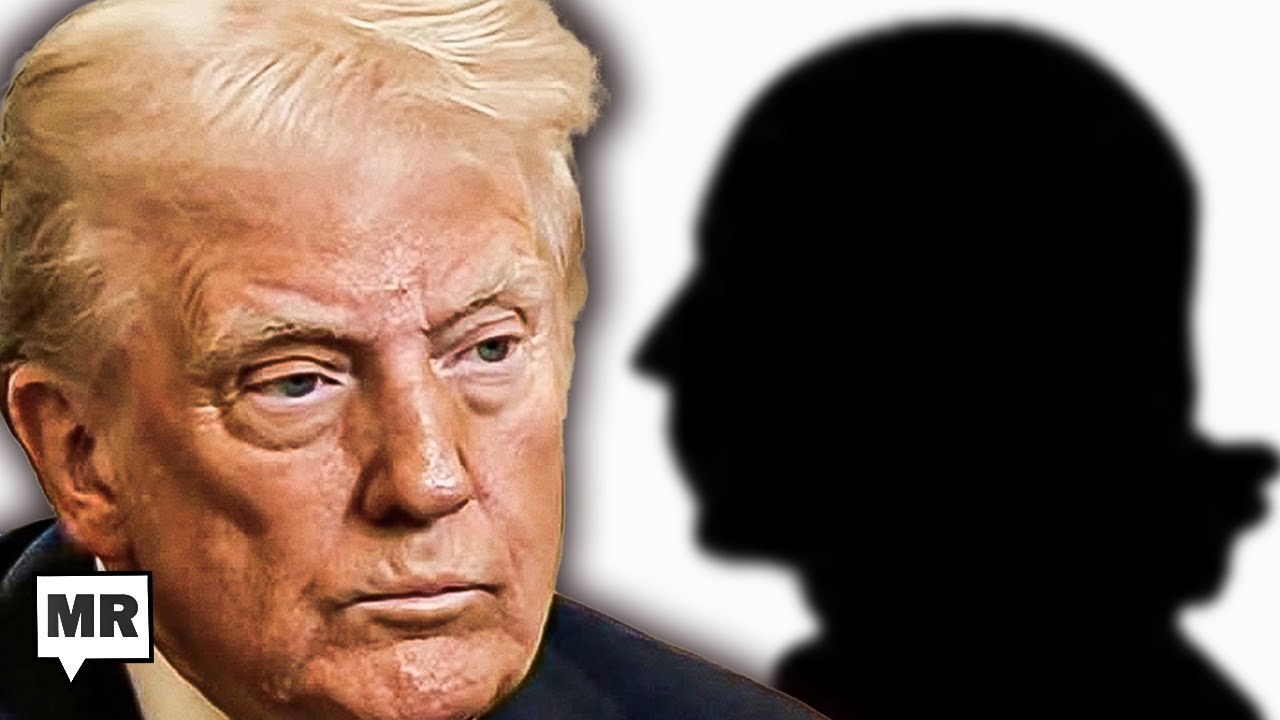
Politico reporter Josh Gerstein writes that former Pam Bondi Chief of Staff and Stephen Miller ally Chad Mizelle wants Congress to declare war on judges who make decisions against President Donald Trump’s policies.
Mizelle, who announced his departure as Department of Justice chief of staff in September, urged congressional Republicans to step up campaigns to impeach federal judges who've blocked Trump policies.
“What’s going to force the Supreme Court to do something is fundamentally political pressure. It’s going to be when Congress starts impeaching judges and saying … ‘You are now encroaching into our territory,’” Mizelle said during at the Federalist Society’s annual lawyers’ meeting in Washington.
“This is a problem of leftist politics,” said Mizelle, arguing that earlier Republican administrations did not face as many decisions blocking their policies. George Bush, he said, had six injunctions against him, while Obama had 12. Trump endured 64 injunctions in his first administration compared to Biden’s 14 — and with 40 issued in the first six months of Trump’s second administration.
“Since 1963 over three quarters of injunctions were issued against Trump,” argued Mizelle, arguing that the Supreme Court has given Trump a “92 percent win rate” for petitions it filed with the Supreme Court, compared to Biden’s win rate of only 50 percent.
But Gerstein reports Mizelle “turned heads” at the conference by calling for Congress to step up efforts to impeach judges who have blocked Trump policies, and his “impeachment battle cry” followed a “cryptic story” he shared that appeared to involve an implicit threat his father once issued to put down a stray cat in the family’s yard.
“What do I think [Trump] should do? He should stand up, and he’s already done this, and say, ‘Judges, I know how to deal with stray cats,’” said Mizelle, who described his father's threat to put down the cat as indicative of having a "father from Mississippi."
---
---
an 6 25
Politico reports the rift between President Donald Trump and the Federalist Society is growing with Trump’s nomination of his personal criminal defense attorney Emil Bove to the U.S. Court of Appeals for the Third Circuit.
Up until recently, the alliance between Trump and the conservative legal community helped the president stock the judiciary with Federalist Society judges who handed him sweeping wins at the Supreme Court, from presidential immunity to abortion and affirmative action.
But Politico reports Trump appeared to declare 'civil war' on the Federalist Society after one of his first-term appointees ruled against him in a major challenge to his tariffs. Trump responded with a public tirade against the former chair of the group, Leonard Leo, who Trump called a “sleazebag” who “probably hates America” before blaming the group for “bad advice they gave me on numerous Judicial Nominations.”
READ MORE: Trump's 'disturbing and unethical' new rule allows discrimination against Dems and single women
Trump is now aggravating the growing fissure with the nomination of Bove, a Trump enforcer at the Justice Department. Foremost members of the conservative legal movement argue Bove would be more loyal to Trump than the rule of law.
“His involvement in the [New York Mayor Eric] Adams prosecution is really troubling, and it suggests someone who’s eager to do the bidding of his political masters before seriously looking at legal constraints and ethics,” said Gregg Nunziata, a Federalist Society member who once served as a senior aide to Senate Republicans on judicial nominations.
Politico reports Bove was responsible for dismissing the criminal case against Adams using arguments that were — according to the presiding judge — “unsupported by any objective evidence,” “pretextual” and “unsubstantiated.” Trump appears to have given Adams a pass in order to ensure the mayor’s support for the administration’s immigration crackdown in New York, or perhaps for petty rivalry against the Biden Justice Department, which brought the corruption charges against Adams.
Trump praises Bove as a MAGA foot soldier, claiming “Emil is SMART, TOUGH, and … will … restore the Rule of Law, and do anything else that is necessary to, MAKE AMERICA GREAT AGAIN.”
READ MORE:The Trump administration just accidentally made the case against the Big Beautiful Bill
In that effort Bove dismissed or transferred DOJ career officials and assembled a hit list of FBI agents who had worked on the prosecution of Jan. 6 rioters.
Politico reporter Ankush Khardori argues that the conservative legal establishment that supported Trump’s ascendance is in a position to hamper Trump’s future political appointees, but he added they may end up learning a lesson that “Trump will use you when it suits him, then toss you aside, and perhaps even run you over, the moment you become an impediment to his objectives.”
“You can go from ally to adversary in the blink of an eye,” said Khardori, a former prosecutor. “You can disavow Trump all you want, but you cannot wipe the historical record or abandon your responsibility for what happened in the meantime — or for what comes in the future as a result of your past support. In the law, we call this'but-for' causation."
He added that the winner of this conflict will likely be determined by whether or not Senate Republicans “fall in line on Bove and confirm him, as they have with virtually every other Trump appointment in his second term.”
READ MORE: OK Republican says folks are 'going crazy' over GOP Medicaid plans — but it's not in a good way
Read the full Politico report at this link.
---
---
AN 6 25
Countless Democrats are vehemently critical of the steep tariffs that President Donald Trump is imposing on the United States' trading partners, warning that a variety of imported goods are going to get a lot more expensive in the months ahead. But criticism is coming from parts of the right as well, including some conservative and libertarian legal scholars.
According to New York Times legal reporter Adam Liptak, a friend-of-the-court brief submitted back in April laid out right-wing concerns about Trump's trade policy.
Those who signed the brief, which was filed in the U.S. Court of International Trade, included, among others, Steven G. Calabresi, who was a founder of the Federalist Society in the early 1980s; former U.S. Attorney General Michael B. Mukasey; and Richard Epstein, a libertarian legal scholar at New York University. The brief, Liptak reports, was prepared by Michael W. McConnell, who now teaches at Stanford Law School in California and is an ex-federal appeals court judge appointed by former President George W. Bush.
READ MORE: 'This is MAGA': Outrage as Joni Ernst turns 'we're all going to die' non-apology into a twofer
Epstein told the Times, "You have to understand that the conservative movement is now, as an intellectual movement, consistently anti-Trump on most issues."
Some liberals and progressives, according to Liptak, signed the brief as well, including Yale University law professor Harold Koh. But much of the participation came from the right.
Ilya Somin, a law professor at George Mason University in Virginia, told the Times, "The brief unites big-name constitutional law scholars across the political spectrum in a way I have rarely seen. I never would have expected to see Richard Epstein, Steve Calabresi and Harold Koh all on the same brief on a major issue. But here they are, together, opposing 'taxation by proclamation.' Donald Trump brought them together."
One of the brief's main criticisms of Trump's trade policy is that he carrying it out by executive order and failing to get Congress' input.
READ MORE:'It has no spine': Reagan official blasts Congress for enabling Trump's abuse of power
The brief read, "The powers to tax, to regulate commerce and to shape the nation's economic course must remain with Congress. They cannot drift silently into the hands of the president through inertia, inattention or creative readings of statutes never meant to grant such authority. That conviction is not partisan. It is constitutional. And it strikes at the heart of this case."
READ MORE:Three lawsuits confirm that Kansas Republicans concocted menacing attacks on civil rights
*Read Adam Liptak's full New York Times article at this link (subscription required).
---
How the Federalist Society came to dominate the Supreme Court — Harvard Gazette
mar 2021
In a new audiobook, Law School professor explores the rise of the Federalist Society and why its sway may be waning
Beginning in the early 1980s, when it was not exactly cool to be a conservative law student, a small group of students started a club, named in honor of The Federalist Papers, where they could safely discuss their right-of-center views. Fast-forward 40 years and six of the nine sitting Supreme Court Justices are current or former members of that club.
In “Takeover: How a Conservative Student Club Captured the Supreme Court” (Pushkin Industries), Harvard Law School professor and “Deep Background” podcast host Noah Feldman explores the rise of the most influential legal organization in U.S. history and how it has managed to shape judicial policy over the last three decades.
Feldman, one of the four legal scholars called upon to testify at the first impeachment hearings on former President Trump, with “Deep Background” co-host Lidia Jean Kott, takes listeners into the offices and chambers of the people who know the organization best.
Listen to the preface and start of Chapter 1, “How to Start a Revolution.”
---
yale
When former President Donald Trump began the review process for nominating a Supreme Court justice in 2017, Leonard Leo — the former vice president and current co-chairman of the Federalist Society — worked with the Trump administration and Republicans on the Senate Judiciary Committee to propose potential candidates.
Under Leo’s guidance in 2018, Trump nominated Brett Kavanaugh ’87 LAW ’90, who has been connected with the Federalist Society for at least 24 years. In 2017 and 2020, Leo’s creation of a list of potential Supreme Court nominees for Trump helped to advise the appointment of two other Federalist Society affiliates, Justices Neil Gorsuch and Amy Coney Barrett.
By 2024, six of the nine Supreme Court justices considered themselves members or affiliates of the Federalist Society — the culmination of a longstanding pipeline connecting members of Federalist Society chapters at America’s top law schools to high-level judgeships and political offices.
But how exactly does this pipeline work, and how has it shaped conservative thought within the American judiciary?
The Federalist Society, a debating organization that hosts political events and acts as a network for conservative and libertarian students and professionals, was founded at Yale Law School in 1982 by three Yale alumni: Steven Calabresi ’80 LAW ’83, David McIntosh ’80 and Lee Liberman Otis ’79. Today, the Society is represented at all 204 ABA-accredited law schools in the country, has established communities of affiliated lawyers in 60 cities and has over 70,000 members.
The organization is divided into three divisions — students’ division, lawyers’ division and faculty division — allowing for collaboration between law students, practicing lawyers and judges and law school professors.
From humble beginnings to political heights
In April 1982, the Federalist Society held its first event: a referendum entitled “A Symposium on Federalism: Legal and Political Ramifications.” Held over the course of a weekend, it featured a series of speaker events, debates and workshops.
The Federalist Society has since defined itself as a “group of conservatives and libertarians interested in the current state of the legal order,” according to its website. According to its three founders, the Federalist Society’s original goal was to provide a space on law school campuses for debating ideas across the political spectrum.
“It’s fair to say that none of us, when we started it, had any idea how large it would eventually grow to be,” Calabresi said.
With six of the nine current Supreme Court justices serving as members or affiliates of the Federalist Society — Clarence Thomas LAW ’74, Samuel Alito LAW ’75, John Roberts, Kavanaugh, Barrett and Gorsuch — the group’s impact on the national judiciary is notably more significant than its founders anticipated.
Other affiliates include former Supreme Court Justice Antonin Scalia, FBI Director Christopher A. Wray ’89 LAW ’92, former U.S. Attorneys General Edwin Meese ’53 and John Ashcroft ’64 and senator Josh Hawley LAW ’06.
An “affiliate relationship” to the society is defined by membership in one of its divisions, regular attendance at events or speaking at events.
The idea for the Federalist Society originated when Calabresi, McIntosh and Liberman Otis, all Yale College graduates, started their legal studies — Calabresi at Yale Law School and McIntosh and Liberman at the University of Chicago Law School. They felt that libertarian and conservative perspectives on issues were not represented on their campuses.
All former members of the Yale Political Union in 1978 and 1979, they noted the “debate and discussion” that fueled their time in the YPU was not present at their respective law schools.
“The Political Union, at the time we were active in it, … was very different from what it is now,” Calabresi said. “We really believed in the value of debate and discussion that the Yale Political Union fostered and wanted to bring it to our law school campuses.”
The three began reaching out to prominent professors and thinkers on the political right to organize their first event: a “Symposium on Federalism” hosted on Yale’s campus. They managed to secure a speaker lineup that included Robert Bork, a candidate for a Supreme Court nomination during Ronald Reagan’s presidency; Scalia, who was a high-level UChicago Law School professor at the time; and Morton Blackwell, president of the Leadership Institute, an organization committed to “turn[ing] principled conservatives into powerhouse leaders,” according to the organization’s website.
A funding sum of $24,000 from the John M. Olin Foundation and the Institute for Educational Affairs — an organization run by Irving Kristol, a prominent neo-conservative thinker— allowed the Federalist Society to pay for the travel expenses of 60 students and 20 legal scholars to the symposium, which was co-sponsored by the Harvard Journal of Law and Public Policy.
On April 23, 1982, the News published an article announcing the symposium, which was to be held on the last weekend of April. “Several hundred law students are expected to attend a conference on ‘Federalism: Legal and Political Ramifications’ this weekend,” the News wrote. “The symposium, including speeches, debates, and discussions, will provide students and the speakers with a forum for discussing the proper balance of power among federal, state, and local governments.”
Topics covered at the first symposium included originalism — a philosophy of constitutional interpretation that believes in reading the law as it would have been understood at its birth — and best practices for high-level success for right-wing students.
Blackwell shared reflections on how to get “better people” on law school faculties and how to reshape cultures on law school campuses, according to records by the Harvard Journal of Law and Public Policy. Bork spoke about political issues, including abortion and the “gentrification of the Constitution.”
At the symposium, Scalia said that “conservatives had been outgunned at the federal level for half a century.”
On May 2, 1982, the event was featured in The New York Times — an instance of high-profile coverage that foreshadowed the Federalist Society’s subsequent momentum and a new era of conservative thought on law school campuses, one defined by concentrated and organized representation, events and programming.
Within two years of its first referendum, the Federalist Society had officially filed for national nonprofit status and was operating on dozens of new elite law school campuses, including Harvard, Georgetown University, the University of Virginia and Stanford University. It hosted another symposium in 1983 at Harvard Law School and a third in 1984 at the University of Chicago. By the 1990s, the Federalist Society operated a branch at every law school in the country.
A pipeline from law school to the courts
As original members began graduating from their respective law schools and entering the national court system, they maintained their ties to the Federalist Society.
The development of the Lawyers’ Division of the organization in 1986 ensured that graduates could still maintain their intellectual ties to the society through organized speaker events and annual conventions. The creation of a Faculty Division in 1999 allowed law school professors to take an invested stake in “encourag[ing] constructive academic discourse,” according to the Federalist Society’s website.
This led to a high-powered pipeline to the national court system facilitated by the Federalist Society’s vast alumni and affiliate network.
Noah Feldman, a law professor at Harvard, participated in a number of Federalist Society events as an “arguer on the other side” of the society’s stated political affiliations, he said. A self-identified “liberally-inclined” thinker and debater, Feldman authored the audiobook “Takeover: How a Conservative Student Club Captured the Supreme Court” in 2021 alongside co-author Lidia Jean Kott, wherein they unpack the Federalist Society’s “pipeline” to high-level national politics.
Feldman told the News that the Federalist Society’s community of thinkers with similar intellectual, political and legal commitments enables members to support one another over the course of their careers.
“It basically creates a framework in which there can be a clear path to go from smart, first-year law student with conservative leanings to law clerk to a Court of Appeals judge or to the Supreme Court,” Feldman said.
High-powered connections like those between the society and national judiciary politics abounded over the course of the society’s early years. During Ronald Reagan’s presidency, Attorney General Edwin Meese was known to give key positions in the Justice Department to members of the society, helping to ensure that judicial nominees were “compatible with the philosophical and policy orientation of the President,” according to an article published by the Federalist Society Review.
During the presidency of George H.W. Bush ’48, Otis, co-founder of the society, was selected as an associate White House counsel. The role of a White House counsel is to advise the president on all legal issues concerning the president and their administration, including judicial candidates, according to the Federal Register.
“Organizations and institutions, if they’re small enough and have a sense of community, are very good at creating a sense of reputation and of mutual trust,” Feldman said.
Calabresi echoed Feldman’s sentiments.
“The Federalist Society has kind of grown into an extended family, and so it’s a bit of a network of sorts,” Calabresi said.
He explained that he believes that people with right-of-center political views often feel isolated and marginalized at Yale Law School. According to Calabresi, the society allows people to form friendships with “other people who agree with them.” Additionally, he explained that the society puts students in touch with judges who share similar views, whom students can then “go on to clerk for.”
This relationship, according to Calabresi, has reciprocally shaped judges’ vetting processes for potential clerks.
“Judges and thinkers who are right of center often find that they’re in a minority in the courts that they’re on, and they equally draw sustenance from being part of a group that is a national group of people who think the way that most Federalist Society members do,” Calabresi said.
Despite this unforeseen pipeline of power, Calabresi emphasized that the Federalist Society’s day-to-day operations still echo its original goal of fostering debate on college campuses.
He pointed to an event hosted by the Federalist Society at Yale Law School on Sept. 24, 2024, titled “Where Have All the Trials Gone? The Vanishing Jury Trial and What It Means for the Legal Profession and the American System of Justice,” which saw Judge Richard Sullivan LAW ’90 of the U.S. 2nd Circuit Court of Appeals speak on the future of jury trials in America.
“The Federalist Society contributes vitally to the intellectual life of this place,” Sullivan said at the event. “I’d like to thank them for having me today and for supplementing law school students’ educations.”
Calabresi reflected on the Federalist Society’s importance on campuses, one that he sees as more powerful than the society’s operations in the legal world.
“We are, at our core, a society for debating ideas,” Calabresi said. “I just think it’s informational, both for Federalist Society members and for non-Federalist Society members to come and hear what our speakers, like Judge Sullivan, have to say on law school campuses.”
On a larger scale, the high-powered network facilitated by the society continued to manifest on the national stage. Under former President George W. Bush’s ’68 administration, two new justices with Federalist Society ties — Alito and Roberts — were appointed to the nation’s Supreme Court. Joining Thomas, a Reagan appointee, their appointments ensured that one-third of America’s highest court had ties to the Federalist Society.
Building ties to the Supreme Court
Eleven years later, in 2017, President Donald Trump began the review process for a successor for the late Supreme Court Justice Antonin Scalia. During the judiciary vetting process, his administration worked closely with Leonard Leo, former executive vice-president of the Federalist Society and current co-chairman, to evaluate potential candidates.
Leo — a Cornell Law School graduate who founded Cornell’s Federalist Society chapter in 1986 — stepped down from his role as co-president of the society in 2017, when the Trump administration had just begun its review process for potential new Supreme Court justices. During this time, Leo devised a list of potential candidate names for the former president that proved to include the three justices Trump would ultimately appoint during his presidency.
As a confidant to Trump, Leo played a considerable role in the 2017 appointment of Neil Gorsuch. Trump’s later appointments of Brett Kavanaugh and Amy Coney Barrett, also Federalist Society affiliates, were under Leo’s counseling, as well. This aligned with a promise that Trump had made earlier in 2016 during his election campaign: if elected, his judicial nominees would “all [be] picked by the Federalist Society.”
Over the course of the past 40 years, Leo has played a significant role in accelerating the Federalist Society’s rapid growth on the national stage.
After graduating from Cornell, Leo moved to Washington to take on a full-time job with the Federalist Society. He focused on identifying sources of funding for the organization, developing relationships with donors such as the Koch Family Foundation and the Scaife Foundation. As Leo’s personal career developed, he kickstarted The 85 Fund, a group that funds conservative causes nationwide. The 85 Fund donated $5.6 million in funds to the Federalist Society in 2020 and $3.5 million in 2021.
Leo quickly rose within the ranks of the society, becoming vice president of operations in 1990. He took leaves of absence from this position during the judicial review processes for Bush’s Supreme Court nominations in the early 2000s, and he stepped down from his role as operational vice president to become honorary co-chairman of the organization during Trump’s judicial review processes for the Supreme Court.
“When you see that Leonard Leo … took a leave from the Federalist Society to actually go work in the Trump administration on judicial appointments, it just couldn’t be more explicit that there’s a strong tie between the society and our national judiciary,” Feldman said.
Leo, a self-identified conservative who has closely aligned himself with the Christian right, sees his ties with the Federalist Society as a means to realign national politics.
Leo did not respond to multiple requests for comment.
After receiving $1.6 billion in donations from 2020 to 2022 from Barre Seid, who is a Federalist Society affiliate and political donor, Leo has outlined a plan for a conservative takeover of the courts.
“We need to crush liberal dominance where it’s most insidious,” Leo told the Financial Times.
In Feldman’s opinion, Leo’s connections with the White House and national judiciary processes since his start at the Federalist Society are proof of the society’s strong influence on the national stage.
Calabresi clarified that despite this perceived link, the goals of the organization remain focused on hosting debates and holding conversations that feature different viewpoints.
“The Federalist Society plays no role in judicial selection under either Republican or Democratic Administrations,” Calabresi wrote to the News. “We are a 501(c)3 non-profit organization, which holds debates and conferences in which all points of view are presented as much as is possible.”
Feldman, though, described the past 20 years under Leo’s leadership at the Federalist Society as a “conservative constitutional revolution.”
Politicians like Sen. Sheldon Whitehouse ’78, United States senator for Rhode Island since 2007 and chairman of the Senate’s Judiciary Subcommittee on Federal Courts, see Leo’s political influence as setting a dangerous precedent.
In a statement to the News,Whitehouse, who has been outspoken in his criticisms of the Federalist Society pipeline, critiqued Leo’s contributions to national judiciary politics.
“Leonard Leo’s secretive judicial selection and confirmation operation use[s] the Federalist Society’s name as a cover,” Whitehouse wrote to the News.
He described Leo’s influence as an advisor to President Trump as a “covert operation … to control Republican judicial appointments.”
Whitehouse claimed that the Federalist Society is a “pawn” in what he perceives to be Leo’s efforts to expand conservative influence over the national court system. In Whitehouse’s opinion, Leo’s actions do not align with the stated goals or values of the national Federalist Society as it operates today.
Calabresi specified that the role of independent actors like Leo in judicial processes did not reflect the stances or positions of the society at large.
“Contrary to the press reports, the Federalist Society plays no role at all in judicial nominations and never has,” Calabresi wrote to the News.
He said that while individual members of the society’s board of directors have sometimes played a role in judicial decisions, this has been in a strictly private capacity.
What does this mean for the 2024 election?
Noah Feldman drew a connection between the 2024 election and the future influence of the Federalist Society.
Feldman said he believes the Federalist Society perceives conservatism as being an “underdog” in national politics. This perception, he said, is subject to change depending on the outcome of the 2024 election.
Given Trump’s strong connection to the Society, Feldman said that a Trump victory would challenge the society’s position as an “underdog” in national politics, draining energy from the movement in the long-term.
When asked about how the society might operate differently in an election year, Calabresi clarified that the Federalist Society intends to be strictly apolitical.
“The Federalist Society … takes no positions on pending legislation, cases pending before the Supreme Court or any other court, or on judicial nominations,” Calabresi wrote to the News.
Irrespective of the Federalist Society’s intentions, Feldman discussed the organization’s wide-ranging — but perhaps, inadvertent — impact on national politics. Feldman said he sees the past five years as the “apex” of the Federalist Society’s influence, with the 2024 election representing an essential turning point.
He pointed to splinterings within the national court system that exemplify this decline.
“Once you’ve gotten your main objectives, it is much harder to hold on to your place of influence,” Feldman said. “Right now, the conservative justices are starting to splinter in terms of their jurisprudential and ideological commitments, and you can see that in the court’s opinions.”
In the past, the Federalist Society was committed to the three elements of modern legal conservatism: textualism in statutory interpretation, originalism in constitutional interpretation and judicial restraint. According to Calabresi, while the society is committed to hosting debates featuring multiple perspectives, members “tend to agree on how to interpret the law.”
Feldman echoed this idea. “If there’s any other group that wants to achieve similar influence to the Federalist Society, it similarly has to have cohesion in its ideological commitments and the long time horizon and the patience to get there,” Feldman said.
However, Feldman sees this shared interpretation as being at risk. He cited examples of how justices associated with the society, like Alito and Gorsuch, have begun to deviate from textualism, contrary to the society’s stated goals.
In Feldman’s opinion, this loss of a cohesive legal stance and philosophy, coupled with the rapid growth of conservatism in national judiciary politics in the last 10 years, could foreshadow the Federalist Society’s downfall.
According to Feldman, should Trump win the 2024 election, Trump’s close ties to the Federalist Society’s network would ensure that any judge appointments within the next four years are members of the tight-knit society.
Two judges — Thomas, 72, and Alito, 74 — are approaching the age of retirement, and politicians expect a Supreme Court vacancy to open during the upcoming 60th presidency.
Alongside the presidential election, 305 appellate court seats are on the ballot in 2024, including 69 state supreme court seats this November. 32 of the candidates running for state supreme court positions are affiliated with the Federalist Society.
Feldman’s notion of the society’s “apex” cannot be disentangled from the organization’s long history of judicial impact.
As the 2024 election approaches, the Federalist Society provides a new lens by which to view the growth of conservatism as a concentrated body of thought on the national scale.
This April will mark the 43rd year since the Federalist Society’s founding.
---
mofo
unfair-swipe-federalist-society
11 23
It looks as if the next presidential election—less than a year away—will feature a rerun between two road-tested candidates: President Joe Biden and former president Donald Trump, who at present seem, with all their evident flaws, to push other candidates aside. Not only does Trump lead in the run-up to the Republican primary, but, contrary to many expectations, he seems to have edged into the lead against Biden for the general election.
:{:{It is no surprise that columns in the New York Times seek to bolster Democratic fortunes. A recent heartfelt op-ed in the Times by three veteran Trump opponents—George Conway, J. Michael Luttig, and Barbara Comstock—seeks to bolster Democratic fortunes. They insist that re-electing the former president could undermine the Constitution, the rule of law, the independence of the courts, and much else besides.}:
They offer no specifics to document these claims, and maintain a conspicuous silence about any activities of the Biden administration that arguably flout these very principles, such as its overgenerous use of executive orders on such matters as student loan forgiveness and the use of fossil fuels, which undermine the separation of powers; as well as the attacks on conservative Supreme Court justices, coupled with dangerous suggestions by Senator Sheldon Whitehouse of Rhode Island, who has denounced a Code of Conduct recently released by the Supreme Court. Whitehouse proposes: “My ethics bill would create a transparent process for complaints and allow a panel of chief judges from the lower courts to investigate and make recommendations based on those complaints.”
But, as the Wall Street Journal noted editorially, this move would inspire an endless array of public complaints, many generated by Whitehouse’s loyalists, to be investigated under uncertain procedures that clearly amount to the politicization of the judiciary and an assault on the independence of the Supreme Court. Just how would those justices operate, knowing that their legal decisions are subject to the review by the judges whose work they are supposed to review? And to whom are these recommendations made, and for what purpose?}:
The most bizarre claim in the Times op-ed is to point an accusing finger at the Federalist Society (with whom I have worked closely since its inception over forty years ago), as derelict in failing to control the asserted dangerous activities of any planned Trump administration. The charge wholly misunderstands the role that the society has played as an incubator of conservative and libertarian lawyers—who, for all their differences on such key long-standing issues as judicial review and the protection of speech and property rights, will never be mistaken for the progressive rivals.
The distinctive role of the Federalist Society is to steer clear of immediate political controversies that are properly the function of other think tanks and institutes on both sides of the political aisle. That neutral position allows the society to be a platform for both liberal and conservative scholars, judges, lawyers, and public servants to debate various issues on the merits, knowing that the society will take no collective position on any issue once the discussion is over. This long-held policy allowed the society to open itself up to a large number of divergent views long before Trump became a fixture on the legal scene—and long after he departs from it.
For the authors to call nameless Republican lawyers part of “a growing crowd of grifters, frauds, and con men willing to subvert the Constitution” is a classic form of group defamation that reflects more on them than on their supposed targets, who have divergent views on both the abstract merits of a Trump presidency and any choice between Biden and Trump. There is, however, one reason for Conway, Luttig, and Comstock to use an attack on the Federal Society as a forum in which to vent their political positions: these three individuals work with and for other institutions that do take these kinds of political positions.
In this connection, it is instructive to look more closely at the recent proceedings of the Federalist Society that took place before a sell-out crowd in mid-November in Washington, DC, which included debate on the timeless question of “Originalism on the Ground,” which covered the way this doctrine has played out in a variety of different areas—corporations, antitrust, intellectual property, and more. The highlight of the event was the impassioned speech, somewhat out of character for the society, that writer and former New York Times columnist Bari Weiss delivered to thunderous approval in support of Israel in its ongoing war with Hamas, which did not meet with pro-Palestinian protest of any kind. During that speech and at other events, Donald Trump was not a topic of discussion.}:
The one exception was a spirited discussion between Professor Will Baude of the University of Chicago and Professor Michael McConnell of Stanford on whether the strength of the current charges that Trump had “engaged in an insurrection” requires that Trump be kept off the ballot in 2024, which Baude supported and McConnell opposed. That division was somewhat ironic because the three authors of the Times op-ed designated Professor McConnell and Judge Thomas Griffith (who delivered the annual Bork Lecture) as exemplar conservative scholars.}:
On the Saturday Rosenkranz lunch, I had a spirited debate with Clark Neily of the Cato Institute on the question of whether “States Can Constitutionally Regulate the Content Moderation Policies of Facebook and Twitter.” One reason this debate held the audience was that it pitted a strong libertarian (who insisted that the government keep its hands off the key media companies on the ground that its intervention will only make matters worse) against the rival position in favor of some regulation—in the form of a nondiscrimination rule—that opens the forum to both sides of any issue while allowing the platforms to keep immoral, vulgar, or slanderous material off their sites. }:}:
As we have learned through long experience, a stronger debate often emerges between individuals who generally have a similar worldview (a presumption against state interference), and thus argue over the circumstances that justify such intervention. I therefore find it deeply ironic that our three authors have called for a return to “fundamental classical liberal tenets of our republican form of government,” which I have long championed.}:
But when one looks at the website of the Society for the Rule of Law, a skeleton organization that lists the members of the board and some links to recent publications, it becomes clear that the organization has a long way to go to bulk up to be a serious player in the national debate, which must develop a program that will be relevant once Trump leaves the political stage. There is no way that this threadbare website could become the basis for a new organization that fosters new scholarship if its mission is “to counteract the new orthodoxy of anti-constitutional and anti-democratic law being churned out by the fever swamps.” Meaning what? No toleration of diverging positions on abortion, guns, affirmative action, or voting rights?
A telling sign of the nature of this anti-Federalist Society movement is their activities elsewhere. As I have already discussed with respect to the claims of insurrection, there are powerful reason to think that the president who is responsible for the appointment of all officers under the Appointments Clause is himself notan officer who is caught under Section 3 of the Fourteenth Amendment, a position that was affirmed by Judge Sarah Wallace in her lengthy opinion that also held that Trump was, when all was said and done, engaged in an insurrection. Thereafter both former judge Luttig and Professor Laurence Tribe—not your standard-issue conservatives—appeared together on MSNBC to explain that Wallace’s ruling was “simply incorrect” without once explaining why.
Michael Luttig, George Conway, and Barbara Comstock did the Federalist Society a favor when they withdrew from participation in its events. Clearly they do not want to join in reasoned deliberation on matters of pressing importance. The level of polarization in American society is unprecedented. Their writing only raises the heat; it sheds no light on the challenges.
===
MASTER PLAN Bonus: The Other Memo
in this exclusive MASTER PLANbonus episode, Lever Timeproducer Arjun Singh and investigative journalist David Daley discuss the rise of the conservative legal movement, including anotherlittle-known memo responsible for the emergence of right-wing groups like the Federalist Society.
Nearly a decade after the Powell memo was published, conservative legal activist Michael Horowitz was commissioned by the right-leaning Scaife Foundation to develop a ground-up strategy for enshrining conservative ideology into law. In his 1980 report, Horowitz recommended recruiting and empowering young conservative minds on law school campuses. By “captur[ing] youthful loyalties,” he argued, conservatives could “redefine what is moral in law.”
Horowitz also pressed for a rebranding of the ideological right, noting “the very decline in power of the American business community over the last decade… is perhaps the best evidence that the skills in the business community are not well correlated with the skills involved in generating idealism and enlisting the intellectual loyalties of bright young men and women.”
These writings would become the foundation of the Federalist Society, which used the strategy laid out in Horowitz’s memo to recruit and advance the next generation of conservative legal minds — including six of nine justices who currently sit on the U.S. Supreme Court.
This episode and transcript are available for paid subscribers only.Click here to upgrade now.
If you’re already a paid subscriber, you can access the materials below. If you don’t see the content, please click here to log in and reload this page.
Bonus Episode Transcript
DAVID SIROTA:Hey MASTER PLAN listeners — first off, thanks for being a paid subscriber. Your support makes this project possible, and funds all of our investigative work at The Lever. Please enjoy this exclusive bonus episode for paying subscribers.
In MASTER PLANEpisode 7, you may remember hearing about the rise of the Federalist Society as the group worked in the early 2000s to expand its network of lawyers and launch a conservative takeover of the federal courts.
As part of our research for MASTER PLAN,we spoke with an expert on the right-wing legal movement’s expansion — David Daley, author of *Antidemocratic: Inside the Far Right's Fifty-Year Plot to Control American Elections.
You’ve learned about the Powell Memo — but what you haven’t heard about is the other secret memo directly responsible for the rise of conservative legal groups like the Federalist Society, the Heritage Foundation, and more. This memo, written by right-wing scholar Michael Horowitz, called for a guerilla-style ideological takeover of law schools across the country and a ‘ground-up’ approach to building support for Big Business.
For the Lever Time podcast last week, Senior podcast producer Arjun Singh sat down with David Daley to discuss the contents of that other memo, the Horowitz memo — here’s the extended version just for MASTER PLAN Premium subscribers
ARJUN SINGH:Awesome. David Daley, it's great to have you here on Lever Time. It's a topic that I'm obsessed about. We at The Lever are always obsessed about it too. But you had written a book previously called Ratfuck. You had written about gerrymandering in the time that you had started writing about gerrymandering, the Shelby court case, which I want to ask you about later.
In writing your new book, which is really about the right-wing efforts to take over the court. How have your perspectives on how American democracy functions changed? Like when you were writing about gerrymandering, did it seem like this effort by the right to really control our elections was something you saw very prevalently, or was that something that changed over time?
DAVID DALEY:I think that it's something that has changed over time. I think that this is, in many ways, the product of the last 15 years, and it's really the product of the combination of the strategy that Chris Jankowski had with red map to gerrymander American state legislatures and congressional delegations, and the strategy that Leonard Leo had to take over the courts, along with the anti-democratic nature of Chief Justice John Roberts’ thoughts on voting rights, and when you mix the three of those together, what you have is a recipe for entrenched, enduring right-wing minority rule.
The gerrymanders have put really staunch conservative election deniers in control of caucuses in crucial swing states that are more than willing to pass election laws that benefit their side and suppress minority voters, the court has liberated them to do all of this with a series of cases from Shelby County on, that has taken on and effectively eviscerated the protection mechanisms in the Voting Rights Act. And when you put the two of those together, it really draws a tight knot around American democracy, and I fear we're headed towards learning just how tight that knot is.
ARJUN SINGH:This fall, you write in the book about something called the Horowitz memo, and we at The Lever, just released a new podcast series called MASTER PLAN, where we focus on the Powell memo, which was written by Lewis Powell, and it was sort of this memo to almost instruct the business community about how to better control and operate in politics. But you talked about also in a great piece in The Atlantic about another memo, the Horowitz memo. Tell me about the Horowitz memo and the role that it plays in the story that you are telling about this effort by the far right to take over our political system.
DAVID DALEY:MASTER PLAN is absolutely brilliant, by the way, so let me start there. Congratulations on it. Thank you. Fantastic piece of work. We completely agree on the importance of the Powell memo. Lewis Powell wrote what was effectively a roadmap for big business to get involved in politics, to counter what the future chief to counter what a future Justice, Lewis Powell, believed to be the insidious nature of left-wing control of American society and campus in the mass media. Sounds a lot like Leonard Leo today — doesn't he? — and he was deeply influential on the Koch brothers, on Richard Mellen scaife, on all of the conservative founders who built so much of the scaffolding of the conservative right.
One of the things that they didn't do, particularly effectively, though, was build legal institutions. What the right did… they built the American Enterprise Institute and the Heritage Foundation and the Koch brothers got underway, but they also built this entire series of conservative public interest law foundations around the country that didn't have the influence that Powell suggested that they would, and donors got a little frustrated with it for about a decade, they spent tens of millions of dollars on this regional system that effectively generated a pile of amicus briefs, but didn't actually gain significant policy victories.
So there was a man named Michael Horowitz who was a real student of what the left had done with regards to public interest law, what the Nader organizations had done, for example, on really building power in Washington and working with the government and the regulatory agencies in order to bring about the environmental gains, and, you know, safer cars. And Horowitz took a look at what the left was doing and said, guys, we're doing this all wrong. On the right, we are invested in this big, sprawling regional network, and the power is in Washington, D.C., and you're trying to do this big, top down thing, when really what you've got to do is go ground up our legal power.
He said, our brain power is appallingly mediocre, and what we have to do is go into law schools. We have to win hearts and minds and convince people that they are doing something important. They're not defending DDT, they're not defending General Motors. They are part of a conservative movement that can actually affect hearts and minds.
And so when the donors are asked around the same time to give money to this new entity called the Federalist Society, all of these big organizations had read and digested the conclusions of the Horowitz report, and when he brought around these young conservatives like Lee Lieberman, Otis and Gene Meyer to the foundations for the grants that would launch the Federalist Society, which is probably the greatest return on investment of any nonprofit in American history, they were primed and ready because of what Michael Horowitz had done. He set out a different direction for the conservative legal movement, a course correction.
ARJUN SINGH:So what was the ideology that they were trying to push? What did they want law students to take away from this, and how did that differ from, I guess, the conventional wisdom of what was being taught in law school at the time?
DAVID DALEY:I think the conventional wisdom of what was being taught in law school at the time, I mean, law school at the time may well have been the kind of more liberal hegemony that some conservatives would like to say is right. When you talk to these conservatives who are at the elite law schools, they felt radically outnumbered. You know, they talk about on the day after election day of 1980 Ronald Reagan is elected, and their law professors asked for a show of hands for who had voted for Ronald Reagan, and maybe two or three hands would go up in a room of 150 people. So they felt beleaguered and outnumbered.
Now, the right often feels beleaguered and outnumbered, even in institutions that they actually really control. So I think it's, you know, I don't think that these Ivy League law schools, by any stretch of the imagination, were turning out young radicals, but they were feeding into sort of the cool culture. And the cool culture was the public interest law firms that groups like Nader and Charlie Halpern were running that were having a real impact in Washington and elsewhere, and yet the country was changing, right?
I mean, Ronald Reagan had been elected president, and when they wanted to try to staff conservative administrations, when they wanted to appoint conservative judges, they didn't have any infrastructure to go to for reliable people. So what they wanted to do really was build that bench. What they intended to do with the Federalist Society is exactly what it has become. They wanted to build a careerist organization that they would get to know young people. They would be able to advance those people into positions of power, and they would be able to trust on their ideologies as they move them along the path.
ARJUN SINGH:And I imagine part of this too, is that if you educate a generation, starting with lawyers, and you know, people within academia, you're also going to eventually spread not just to the court system, but eventually into general politics, Republican politics as well.
But this idea of like a conservative judge, I think, if you think about it now, there is an image I certainly have, which is, you know, a conservative judge is like a Scalia, Amy Coney Barrett, but you know, they would overturn Roe v. Wade. Increasingly, it seems to be they have no limits on presidential authority and power. But when the Reagan era. That early Federalist Society era. What did they mean by a conservative judge? Was it that, like judges were too hard on business? Was it culture kind of stuff? What was kind of the ideal conservative judge to them?
DAVID DALEY:I think much of this was a backlash against the Warren Court and what followed. So the idea that they were opposing was this idea that judges were making up the law and legislating from the bench.
ARJUN SINGH:And this was Chief Justice Earl Warren from California, right?
DAVID DALEY:That's right. So, Chief Justice Warren from the late 1950s into, boy, the late 1960s or so, and this is the great era of rights expansion on the U.S. Supreme Court. You are, you are talking about the apportionment revolution, that the great one person, one vote revolution, but also the expansion of the right to privacy of birth control later that would blossom, not under Warren, but under many of those judges into Roe v Wade.
And this court really was what conservatives and the fledgling Federalist Society grew in order to oppose and they used the birth of originalism. Here you can track originalism's birth all the way back to the days after Brown v. Board of Education and those who were opposed to that decision.
ARJUN SINGH:What is originalism? Again? It's like a strict reading of the Constitution?
DAVID DALEY: The idea that judges are only going to use the original intent of the founders in order to make decisions, which sounds pretty good, right? Oh, we don't want judges who are making up the law. We want judges who are going to support a reading of what's actually in the Constitution.
Except that when you go back and find their memos, as I have and other reporters have, they understood full well that originalism was a fig leaf for getting to conservative results through the judicial process while pretending that you were still sort of wearing the robes of the founders, right?
ARJUN SINGH:I mean, it was, yeah, “this is what the founders wanted you to do.”
DAVID DALEY:Originalism is like founders cosplay and that's what they were up to creating. Because when judges went before Congress, like Robert Bork and others and said, “well, we're going to overturn Roe v. Wade, or we don't believe in the Griswolddecision. They were not confirmed.
So they needed a way to talk about all of this that would get their judges and justices confirmed without scaring America. And so this idea of originalism comes forth as such common sense that Rush Limbaugh could talk about it on the radio, and Americans could say, Yes, I believe that this ought to be the way that we interpret the Constitution. In reality, it was a Trojan horse.
ARJUN SINGH:I feel like, you know, there has been so much attention rightfully put on what happened when Donald Trump tried to overturn the election, but in the years preceding that, there felt like there was quite a bit of anti-democratic effort. You talked about it in one of your books, Ratfucked, which is about gerrymandering –– we were talking about that at the top.
Before we get to the kind of 2016, 2020 Trump era, when you have after, say, the 2000s after Bush v. Gore. What are some of the ways that anti-democratic attempts take place via the court system? And I guess one that I'm thinking about a lot is a Supreme Court case, Shelby v. Holder. I think that John Roberts is, by this point, Supreme Court Chief Justice — he's been appointed by George W. Bush, and that was a big one about voting rights, and it felt like in addition to gerrymandering, there was a big effort to really dismantle voting rights. But can you talk a little bit about that? And were there other kinds of efforts, not necessarily even on Supreme Court level, but on lower court levels, to start to dismantle the voting rights system that we have?
DAVID DALEY:Yeah, dismantling voting rights has really been John Roberts’ life's work. You can go back to his days in the Reagan administration as a young person in Washington in the early 1980s but certainly by the time he is Chief Justice in Shelby County v. Holder, he eviscerates what had been known as preclearance, which was the crucial enforcement mechanism that prevented the states with the worst histories of racial prejudice and voting from enacting any changes to their laws without preapproval of them, and that had worked for 50 years to hold back the worst instincts of these states to keep them in check.
And John Roberts in 2013 insisted that things had changed in the South. Congress thought otherwise, right when Congress reauthorized the Voting Rights Act in 2006 — a Republican Senate, unanimously, 98 to nothing. A Republican House, 390 to 33. A Republican President, George W. Bush, signing it into law, along with a 16,000 page report documenting exactly why preclearance was still necessary in all of these states.
Example after example, canceled elections and moved precincts and just all the same old poison in new bottles. And Roberts, the humble caller of balls and strikes, ignores all of this, just thrusts it aside and says, Well, I think things have changed. He does this in the most dishonest way you can possibly imagine, first, by misreading census data on race that actually says the opposite of what he proclaims it does in his decision. And second, by just making up the law he makes up. Right, again this school of thought that says judges are going to simply interpret the law, not make up the law.
Roberts makes up the idea of equal sovereignty among states, which he takes from the equal footing doctrine, which has nothing to do with voting rights or any other rights, but has to do with the admission of new states. And he takes a couple of sentences from a previous court case on voting rights that mention the idea of equal sovereignty and how it doesn't apply here, and slices the crucial part out with an ellipsis, deletes it as if it was never there, and says, voila, look at my standard of equal sovereignty. And he even calls it a traditional theory. And then says, I'm going to put an end to this. You can't treat Alabama and Texas any differently than you would treat Iowa and Montana and Connecticut.
The trouble with this, and the trouble with the new day of racial kumbaya that Roberts tried to declare in June of 2013, is that if things had actually changed in the South, that very day was the day that Texas enacts its draconian voter ID bill that preclearance had stopped and that 700,000 Latinos — this isn't me saying this, this is the state of Texas admitting that it knew — that 700,000 Latinos citizens lacked the act the specific papers that the law now required to vote. One group that didn't lack those actual papers, gun owners, because they were allowed to use their gun license, but if you had a student ID or a public housing ID, not so much.
And so Shelby County kickstarts — it liberates all of these legislatures across the South to suddenly do their worst. The prison guard has been removed, and all of those evil, dark forces in American politics are free to burst forth again. And so they do. So when Roberts gets rid of Section 5, effectively, of the Voting Rights Act by freezing the formula that was in Section 4, he says, well, we don't really need this, because we still have Section 2 as a protection. And then the court has gone to work over the last decade in scaling back Section 2, and they've since torn that in half and in half and in half again.
And I think the other crucial case here is the partisan gerrymandering case,Common Cause v. Rucho, back in 2019, in which a number of states had gone to the court over time and said, we've been gerrymandered into oblivion. We need help from the neutral federal courts. And the neutral federal courts had devised several nonpartisan standards that all pointed to when the gerrymander had gone too far.
And John Roberts calls all of this sociological gobbledygook. Says, “Gosh, I can't possibly understand this.” Him with his elite private school degree and Harvard Law degree and Harvard degree, and he closes the federal courts to partisan gerrymandering claims and effectively green lights not only the gerrymanders that had been in place, but the maximal ones that we saw in the 2021 cycle.
And of course, those gerrymanders help create more conservative MAGA caucuses that then pass more insane election laws that the court then blesses as perfectly fine under its interpretation of the Voting Rights Act, and how lawmakers ought to be perfectly free to do whatever they want if they think they're fighting voter fraud — voter fraud that they can't actually identify, but as long as they say it's voter fraud, then they're perfectly fine with this court. And all of it works together. So you know, it's all of these decisions at once that have created such an anti democratic cocktail of minority rule.
ARJUN SINGH:I feel like the way that John Roberts calls himself an umpire, which is clearly not true — maybe to be fair, referees in the NBA and in baseball should just start calling themselves John Roberts when it's very obvious they've made horribly bad calls. How does this kind of culminate in, you know, in 2020 we saw Donald Trump's effort to overturn the election, one of his leading supporters — one of his lawyers, John Eastman was a Federalist Society member, ran a federal society study or debate group at one point in time — the Federalist Society is all over this effort.
And I feel that if you tried to make an argument, which I'm sure John Roberts will, which is, you know, look, I've created a very fancy doctrine and document, and I've cited whatever, you know, I made some effort to make it look like this is this makes sense based on my role as the Chief Justice. This effort by Donald Trump totally blew open, you know, any of that, any semblance of that, and yet, you did have these lawyers all over the place supporting it, supporting different candidates for office who were in favor of it. What did, what did you make of the 2020 effort. And I guess I will just leave it at that. What did you make of that entire effort? Having been reporting on this stuff for such a long time?
DAVID DALEY:I thought it was really predictable, right? I mean, there were a lot of us, I think you all as well, who started reporting in March of 2020 This is how they're going to do it. The plan is going to involve gerrymandered state legislature and tweaking the rules and slowing down the process of certification and trying to send alternate slates of electors and creating a constitutional crisis. I mean it these guys. These guys are smart, but they're not so smart that we can't look ahead and see what they're up to. They're up to the same thing right now. We all see it coming. It's the slow motion car crash.
They were not able to get away with it in 2020 for a handful of reasons, the general election, popular vote was too big in too many places. But also the legal work was really shoddy. It's Rudy Giuliani, you know, half in the bag at the, at the Four Seasons landscaping. You know, it's, you know, it's a clown car. And they filed all these cases too late, right? They brought them all after the election. And if you look at what most of these courts said, they said, Why are you bringing us this now?
And so what I think happened in 2020 is not so much that the courts stepped up and saved American democracy, but that conservatives learned, oh, if we want to do this, we have to do this a little bit differently. We have to bring the cases earlier, and we have to have control of these other boards that handle certification in advance. And so this time around, you've got the white shoe, DC, Constable McCarthy firms and others handling these cases. The adults in the room have got it. They will dress them up with the appropriate Federalist Society hothouse theories.
And the cases have been brought. There's already more than 75 cases in 16 states that the RNC is as either broader as an amicus party too, and you have events unfolding like we see in Georgia right now, right where the state election board, filled with MAGA enthusiasts is trying to slow down the process of certification. And those five weeks between Election Day and the Safe Harbor Day effectively — when you know are crucial — and if you can slow those that process down, if you can kick it into the courts, you can create all kinds of constitutional mischief. I mean, there's any number of scenarios you could see in which the U.S. Supreme Court is, is, is brought into play. And I mean, I, and one could say that it's almost as if they wanted it this way, because this election board in Georgia that is causing this whole mess wouldn't be able to do this if preclearance was still in place.
So, you know, obviously things have not changed in the South, but if we still had preclearance, this board would have to send its changes to the Department of Justice, which would say, “yeah, no.” So this entire threat is not something any of us would have to lose any sleep over. It would just, it would just be wiped away instead, because of John Roberts, it exists, and it's a way of getting the election back to the Supreme Court and John Roberts.
And so 180 million of us are going to vote on November 5, and yet, is it still possible that nine of us end up deciding — the six conservative supermajority on the court, five appointed by presidents that lost the popular vote. I mean, it's not crazy to look at this. It's not crazy to look at everything that they've done over the past couple of decades and say, this is where it's pointing to, and we better be careful before it all slides off the rails.
ARJUN SINGH:Yeah. I mean, that's exactly what I have been thinking about. And then you look at some of the previous things that have come up, the elimination of the Chevron doctrine, which you know required them to defer to federal agencies, and you especially the overturning of Roe v. Wade. I mean, just overturning precedent. And now you have the six people who have a total lock on the Supreme Court.
And so, you know what I mean, what is the safeguard against that? Then, because you do have Democrats, some of them trying. But Joe Biden in particular was, you know, really saying, “well, if I get elected, it will be the safeguard of democracy. It will be this.”
But in a lot of ways, it feels like the master plan. The plot worked. They got the 6-3 on the court. They've given presidents full immunity. That was very clearly directed at Donald Trump, and I'm not, you know, a legal scholar. I didn't go to law school, so I guess I'm wondering, how does this story end? Does it just end with the essentially, six people for until they die, telling us how we're going to be able to do and, you know, invalidating our Congress and our political will? Or is there some mechanism that it doesn't rectify it, but it at least pushes back against that?
DAVID DALEY:No matter where your politics lie, I would think that all Americans would be deeply uncomfortable that any nine Americans should hold this much power in a representative democracy. And indeed, I think the polls show that people are… if you look at the polls, on term limits, on a real ethics clause for these justices, it's upwards of 70 to 75 percent of Americans backing this, including upwards of 70 percent of Republicans.
So this is popular, and we are going to have to reform this court or accept that it intends to rule over our lives. I mean, if Vice President Harris is elected, she's going to have to decide between having an agenda that she can enact through Congress or having an agenda that is blocked by this court every step of the way. She's going to have to step up and fight this court that has become a real renegade, runaway, anti-democratic menace to American democracy, and that, if left unchecked, will continue this way for some time.
So this is a moment for us to be thinking about dramatic Supreme Court reform. We have to be thinking about how we strip a jurisdiction on some cases from these judges. We have to be thinking about how we expand and right size this court, we need to be thinking about real ethics responsibilities that stop these justices from being corrupted and paid by those who have interests before them. It is time to think big and immediately and urgently about all of this.
I mean, Lincoln, in his first inaugural, says the candid citizen must confess that if the policy of the government upon the vital questions affecting the whole people is to be irrevocably fixed by the decisions of the Supreme Court. The people will have ceased to be their own rulers, and we're dangerously close to that moment right now.
DAVID SIROTA:That was author and investigative journalist David Daley. If you’re not already following our weekly news podcast,Lever Time, you should. It’s already part of your paid subscription to the Lever! Just email us at support@levernews.com and we’ll get you set up.
There will be plenty more MASTER PLANbonus content throughout the season for premium paying subscribers like you. This episode was produced by Ronnie Riccobene with help from Jared Jacang Maher. Thank you so much for supporting MASTER PLAN. Rock the boat.
omfg
1 25 an
On Tuesday, U.S. District Judge Aileen Cannon issued a ruling temporarily blocking the release of Department of Justice special counsel Jack Smith's final report in the waning days of President Joe Biden's administration.
The three-page order prevents Smith, Attorney General Merrick Garland, the Biden DOJ and "all of their officers, agents, and employees, and all persons acting in active concert or participation with such individuals” from “releasing, sharing, or transmitting the Final Report or any drafts of such Report outside the Department of Justice.” But as Politico's Kyle Cheney reports, Cannon — who then-President Donald Trump appointed to the federal bench in 2020 — may not have the jurisdiction to intervene in the publication of the report, which is required by the federal special counsel statute.
Whether the report sees the light of day will ultimately rest with the 11th Circuit Court of Appeals, which has overturned Cannon's rulings on two previous occasions. Legal nonprofit National Security Counselors posted to Bluesky that the 11th Circuit, which meets next week, is not likely to go agree with Cannon's decision.
READ MORE:Judge Aileen Cannon failed to disclose a right-wing junket
"[T]hey get the final say, and they're not going to play the delay game that Trump really wanted Cannon to play," the organization wrote.
Portland, Oregon-based attorney Patrick De Klotz observed that Cannon's decision was handed down right around the same time the president-elect praised the judge as "brilliant" during a Tuesday press conference at his Mar-a-Lago estate. And civil rights lawyer Subodh Chandra condemned Cannon for "aiding and abetting suppression of the truth," adding: "Shame. Shame. Shame."
Other legal experts speculated that Cannon's move was less about the report itself and more about her jockeying for a position on the Supreme Court. Attorney Jeffrey Evan Gold, who is a legal analyst for CNN, NBC, ABC and others, responded to the news of Cannon blocking the report's release by referring to her as "Justice Cannon." Northeastern Illinois University political science professor William Adler wrote that Americans should "get used to" saying "Supreme Court nominee Aileen Cannon." And Politico magazine contributor Joshua Zeitz opined that it was "pretty easy to see how this goes."
"Alito will retire, Trump will name her to the court, and she’ll easily be confirmed with unanimous GOP support and a handful of older Democratic Senators who think it’s still 1978," Zeitz wrote.
READ MORE:'Terminate all efforts': Trump fighting to keep Jack Smith's final report hidden from public
Click here to read Cheney's full report in Politico, and click here to read the full text of Cannon's order.
===
ref
Federal Judge Aileen M. Cannon, the controversial jurist who tossed out the classified documents criminal case against Donald Trump in July, failed to disclose her attendance at a May 2023 banquet funded by a conservative law school.
Cannon went to an event in Arlington, Va. honoring the late Supreme Court Justice Antonin Scalia, according to documents obtained from the Law and Economics Center at George Mason University. At a lecture and private dinner, she sat among members of Scalia’s family, fellow Federalist Society members and more than 30 conservative federal judges. Organizers billed the event as “an excellent opportunity to connect with judicial colleagues.”
A 2006 rule, intended to shine a light on judges’ attendance at paid seminars that could pose conflicts or influence decisions, requires them to file disclosure forms for such trips within 30 days and make them public on the court’s website.
It’s not the first time she has failed to fully comply with the rule.
In 2021 and 2022, Cannon took weeklong trips to the luxurious Sage Lodge in Pray, Montana, for legal colloquiums sponsored by George Mason, which named its law school for Scalia thanks to $30 million in gifts that conservative judicial kingmaker Leonard Leo helped organize.
Current rates for standard rooms at Sage Lodge can exceed $1,000 per night, depending on the season. With both Montana trips, Cannon’s required seminar disclosures were not posted until NPR reporters asked about the omissions this year as part of a broader national investigation of gaps in judicial disclosures.
Cannon did not respond to repeated requests for comment.
In response to questions from ProPublica, the clerk in the Southern District of Florida wrote in an email that Cannon had filed the Sage Lodge trips with the federal judiciary’s administrative office but had “inadvertently” not taken the second step of posting them on the court’s website. She explained that “Judges often do not realize they must input the information twice.”
The clerk said she had no information about the May 2023 banquet.
“Judges administer the law, and we have a right to expect every judge to comply with the law,” said Virginia Canter, chief ethics counsel for the watchdog group Citizens for Responsibility and Ethics in Washington.
Cannon’s husband, Joshua Lorence, a restaurant executive, accompanied her to the 2021 and 2022 colloquiums, which featured noted conservative jurists, lawyers and professors as well as lengthy “afternoon study breaks,” according to records obtained by ProPublica. Cannon emailed university staff to submit airport parking expenses and inquire about rental car reimbursement.
The rule for paid seminars is among the policies set by the Judicial Conference. Federal judges are also required by law to file annual financial disclosures, listing items such as assets, outside income and gifts.
Cannon’s annual disclosure form for 2023, which was due in May and offers another chance to report gifts and reimbursements from outside parties, has yet to be posted. (Cannon reported the two Montana trips on her annual disclosure forms, but the required 30-day privately funded seminar reports had not been posted. In 2021, Cannon incorrectly listed the school as “George Madison University.”)
The court’s administrative office declined to say if she requested a one-time extension to give her until Aug. 13 to file. A spokesperson would not discuss whether she met the deadline or the status of her disclosure, which must be reviewed internally.
Cannon’s performance during almost four years of a lifetime appointment has drawn criticism from lawyers, former federal judges and courtroom observers who told ProPublica that she doesn’t render timely decisions and has made unpredictable rulings in both civil and criminal matters. On July 15, she threw out the case brought by Special Counsel Jack Smith that alleges Trump mishandled classified documents at his Mar-a-Lago residence; Cannon called Smith’s appointment unconstitutional since he was not nominated by the president and approved by the Senate.
Smith is appealing to the 11th U.S. Circuit Court of Appeals, and Citizens for Responsibility and Ethics in Washington has asked the court to remand her decision and replace her.
By contrast, Trump, who appointed Cannon in 2020 to the Fort Pierce courthouse, has praised her brilliance, and Federalist Society founder Steven Calabresi called her a heroine for throwing out the criminal case against Trump.
For decades, judicial education programs sponsored by George Mason’s Law and Economics Center have drawn in 5,000 state and federal judges and four current Supreme Court justices, according to its website. The school says its programs strive for balance and intellectual rigor. But conference agendas and speaker lists that the university must file with the courts detail lectures and panel discussions built around Federalist Society principles that are associated with conservative legal movements.
Ken Turchi, associate dean for external affairs, said the law school plays no role in judicial disclosures. “Judges’ decisions to submit (or not submit) disclosure forms are theirs alone — it’s a self-reporting process,” he said.
The guest list for the May 2023 Scalia Forum included William H. Pryor Jr., chief judge of the 11th Circuit, which is now hearing Smith’s appeal. Pryor and dinner speaker Kyle Duncan, a 5th Circuit judge, did file their required disclosures for the Scalia dinner.
Pryor’s court has overruled Cannon twice in the Trump case. It sided with the government in September 2022 on a motion for a stay and found that it “had established a substantial likelihood of success on the merits.” In December 2022, it ruled that she erred in naming a special master to examine classified documents seized from Mar-a-Lago. After that decision, Cannon had to dismantle an expensive operation set up by her special master, a senior federal judge in New York.
Gabe Roth, who directs Fix the Court, a nonprofit judicial reform group, said compliance with the privately funded seminar rule has improved in some circuits since his group pressed for compliance with the Administrative Office of the Courts.
“They’re a more effective way for litigants and the public to get a sense of what types of individuals and groups a judge might be hanging out with and learning from,” he said.
Records show that Cannon submitted minor reimbursement requests related to the Scalia Forum trip after she returned, including the 158 miles she drove round trip to the airport. She inquired with George Mason staff about details for an Alaska excursion recommended by a former lawyer in the Trump-era White House Counsel’s Office.
Cannon registered for George Mason’s Hill Country Colloquium at a Texas resort in December 2023 but had to back out for scheduling reasons.
“I hope to join that event, and others, in future years,” she wrote.
If you have information about Judge Aileen M. Cannon, please contact Marilyn W. Thompson at marilyn.thompson@propublica.org.
---
alternet-no lnx
Federalist Society judges are acting badly, again
Leonard Leo of the Federalist Society (Image via Screengrab / CBS News)
Eric Segall May 10, 2024
Editor’s note: The following first appeared in Dorf on Law.
Many of the judges selected by Leonard Leo and Don McGahn during the Trump years have been acting very badly. A little over a year ago, I documented this terrible behavior by discussing many different judges. For example, Justin Walker was only 37 when he was nominated to be a federal trial judge despite absolutely no trial experience. What Walker possessed were ties to conservative groups, including the Federalist Society. Less than one year later, he was confirmed as a judge for the United States Court of Appeals for the District of Columbia Circuit.
In his brief time as a district court judge, Walker issued a decision in a case involving covid restrictions and prayers on Easter Sunday that reads "less like a judicial decision and more like a screed against Democrats published in an outlet like Breitbart." The first seven pages of the opinion rant about Christians and other religious groups suffering major persecution throughout the ages. The last lines of his opinion speak for themselves: "Christ’s sacrifice isn’t about the logic of this world. Nor is their Easter Sunday celebration. The reason they will be there for each other and their Lord is the reason they believe He was and is there for us. For them, for all believers, it isn’t a matter of reason; finally, it’s a matter of love."
In between these odes to religion, Walker decided to name a bunch of prominent Democrats who long ago belonged to the KKK. There is no connection between that list and any issue in the case. Walker's reward for all this religious and political posturing, as mentioned above, was a promotion to the Court of Appeals.
In that post from a year ago, I also discussed Judge James Ho's decision not to hire graduates of Yale Law School as his clerks. His reasons were quite obscure, centering around, I really don't know, maybe Yale is just too liberal a place for him. I summarized that incident as follows:
Ho was under no obligation to hire Yale clerks in the first place, so why make such a public fuss and call for other federal judges to join the "boycott?" One theory is that he is auditioning for the Supreme Court. Another theory is that he just likes publicity. But the theory does not matter. Except to the extent that actual cases before him sometimes call for judgments that are as much political as legal--which is substantially less frequently for a lower court judge than for the Supreme Court--Judge Ho has no business getting involved in culture wars and taking obvious political sides. To do so is inappropriate for a sitting federal judge.
Well, Judge Ho is back at it again. On Monday, he and 12 other Trump/Leo/McGahn Federalist Society judges sent a letter to the president of Columbia University saying they will no longer hire law clerks who attend Columbia either as an undergraduate or a law student. Again, the reasoning of the boycott is quite obscure but has something to do with vague and unsubstantiated charges of viewpoint discrimination (totally undocumented) and other aspects of how Columbia has handled the student protests over Gaza.
As an aside, it's worth noting that the letter makes various factual assertions, some of which are highly contestable and others which are flatly wrong. For example, the letter concludes by citing a supposed precedent, stating that "Justice William Brennan refused to hire law clerks from Harvard Law School because he disliked criticisms of the Supreme Court by some of its faculty."
But that's nonsense, as Judge Ho and his buddies could have discovered by looking at a list of Justice Brennan's clerks. They would have then realized that from 1956 to 1965, Justice Brennan hired clerks only from Harvard; thereafter, he hired from a variety of schools, including from Harvard in most years. The tiny kernel of truth in this mostly false retelling is that for a short period of time Justice Brennan apparently was angry at Harvard over personal matters, but he nevertheless consistently hired Harvard graduates throughout his career. But why let facts get in the way of a good rant?
As for the letter's announcement of the boycott itself, again, these judges do not have to hire any Columbia graduates or any other graduates and probably can choose clerks based on viewpoint discrimination. Therefore, the judges' desire to go public must be for some reason separate from their hiring practices. That being the case, it is obvious that federal judges should not involve themselves in social, cultural and political disputes separate from their case-deciding function. If you want to publicly speak and rant about the pressing and controversial issues of the day, which is all this letter was, do not accept a federal judgeship. It really is that simple.
Additionally, the public airing of this grievance by judges is terrible on its own terms, but you do not have to believe me. That bleeding heart liberal Eugene Volokh said that:
We shouldn't threaten innocent neutrals as a means of influencing the culpable. Columbia students aren't the ones who set Columbia policy. They may disagree with that policy, or they may not know enough about the subject to have a view ... They shouldn't be held responsible for what Columbia does, and they shouldn't be retaliated against as a means of trying to pressure Columbia to change.
Eugene also makes the point that we normally reject guilt by association: "We may refuse to hire people who do various bad things, but we shouldn't refuse to hire people who are friends with those people, or who belong to the same groups as those people."
Imagine blaming a lone undergrad or law student for the policies implemented by university officials the students have absolutely no control over. Such a "guilt by association" tactic would be terrible if implemented by a private firm, much less by federal judges.
But maybe guilt by association is exactly the point that these Federalist Society Judges are trying to make by this and the other political stunts I documented in my blog post a year ago. It appears that many (certainly not all) of the judges appointed during the Trump Administration believe that all things secular and liberal are bad, and these judges want the whole world to know that either because they, like Judge Walker, want promotions or they simply want to "own the libs." Both of those reasons are, of course, unseemly and just plain wrong.
It is terrible that federal judges have life tenure and can only be impeached for committing high crimes and misdemeanors. But at least for most of our history, they stayed out of the political wars occurring outside their judicial jurisdictions. But, and this really is not a surprise, these Federalist Society judges feel license to stir up trouble, make controversial public statements, and most recently get in the middle of the terrifyingly hard issues raised by the campus protests relating to the Middle East crisis.
These thirteen judges are acting like immature and hormonal teenagers believing that the world does and should revolve around them and their daily need to unleash terror on those they dislike. Most teens grow out of that particular mindset, but not so for these and many other Federalist Society federal judges. For them, public outbursts of anger and bitterness towards the left are more than fair game; they lead to rewards and promotions. And that is what happens when the leaders of the Federalist Society get to choose our nation's judges.
Ex-federal prosecutor: Why Cohen’s hush money testimony 'exceeded expectations'
The stunning reason Donald Trump thinks he’s going to win
Jurors 'can absolutely see' Trump 'dozing peacefully' at trial: courtroom reporters
'Hello!' Fox News’ Laura Ingraham scolded in Trump trial courtroom
Judge Cannon may have just given Jack Smith an excuse to replace her: Watergate prosecutor
Mike Johnson skips out on getting must-pass bill through House to praise Trump in Manhattan
FROM YOUR SITE ARTICLES
Former Federalist Society VP tied to campaign to keep Trump on Colorado ballot ›
Right-wing judicial activist Leonard Leo refusing to comply with Senate ethics subpoena ›
Federalist Society leader’s 'lavish' lifestyle under scrutiny after $43 million dark money transfer ›
RELATED ARTICLES AROUND THE WEB
How the Federalist Society Won | The New Yorker ›
We Don't Talk About Leonard: The Man Behind the Right's Supreme ... ›
How the Federalist Society came to dominate the Supreme Court ... ›
May 2, 2024 rww
- Evan Vorpahl @ True North: True North Issues New Research Report Detailing Who Is Targeting State Courts to Limit Freedoms
True North is issuing a new research report shining a light on those men–Leonard Leo, Dick Uihlein, Charles Koch, and Jeff Yass–and right-wing groups targeting state courts and other levers of power to change the rules and limit our freedoms. This new report also documents how Leo used the Federalist Society to target state supreme courts and the judicial selection process in order to advance his agenda, and more.
---
2x?
jul 2022
How the Federalist Society Won | The New Yorker
a few minutes before Roe v. Wade was overturned, Sherif Girgis sat in his office at Notre Dame Law School, desperately clicking refresh on the Supreme Court’s Web site. Girgis had been looking forward to this precise moment for months. He’d been gaming out the arguments for years, really.
Conservatives of an older generation, who suffered a Supreme Court betrayal in 1992—when a trifecta of Republican-appointed judges upheld the constitutional right to an abortion, in Planned Parenthood v. Casey—couldn’t believe that Roe would ever truly fall. But Girgis, who is thirty-six, came up in a different era. “I was in kindergarten when Casey was decided,” he said. Unlike his jaded elders, he believed that the Court would one day follow through on the simple, powerful idea that animates the conservative legal movement: that a judge’s job is not to make value judgments or to speculate about the potential consequences of his or her decisions but, rather, to decide cases by looking solely at how the Constitution was understood at the time it was written. This method of interpretation, called originalism, would inevitably lead to the end of Roe.
{Girgis, a professor who specializes in philosophy and the law, embodies a young, energized, traditionalist wing of the conservative legal movement that will likely be galvanized by Dobbs v. Jackson Women’s Health Organization, the decision that overturned the constitutional right to abortion. Early in his career, Girgis clerked for Samuel Alito, the Justice who wrote the majority decision in Dobbs. He’s a rising star in the Federalist Society, a powerful network of conservatives and libertarians that has a chapter at many major law schools, as well as dozens of professional chapters across the country. }:
The organization prides itself on being a forum for ideas, even those which some conservatives hate, which is part of what drew Girgis to become a member when he was a student at Yale Law School, in 2011. “The Federalist Society is not a ghetto within each law school,” he said. “At its best, it is—or ought to be—a cheerful and willing debating partner.” Girgis is a frequent speaker at chapter events. A longtime member described him to me as a “brilliant, beautiful soul.” One of his mentors, Princeton’s Robert George—a heavyweight in the relatively small world of élite conservative academics—frequently hypes him on Twitter, like a coach cheering on Rocky in the ring.
:{:{In 1982, when the Federalist Society was founded, the conservative legal movement was still finding its footing. Law-school campuses were predominantly liberal, and there was a prevailing sense among students and professors that the conclusions in Roe and other major Supreme Court decisions of the prior thirty years—on issues such as birth control, racial integration, and voting rights—were both morally good and legally correct. But an ideological counter-revolution was beginning.}:
Lee Liberman Otis—one of the Federalist Society’s founders, who was then a law student at the University of Chicago—recalled thinking, It’s funny that there are these ideas about law which Reagan seemed to have run on, in part, and nobody’s talking about them. She helped organize the first Federalist Society conference; its speakers included Antonin Scalia, then a law professor, and Theodore Olson, then an Assistant Attorney General in the Reagan Administration. Otis could tell that the conference was the start of something. Four years later, Scalia would ascend to a seat on the Supreme Court, and Olson would eventually become one of the country’s most accomplished Supreme Court litigators.}:
:{:{“I don’t recall Roe being an issue in any such conversations I had concerning [the] creation of Fed Soc,” Olson wrote to me, in an e-mail. “It was all about creating a forum/venue for debate. Not taking sides on any particular issue.” And yet Roe symbolized something to the Federalist Society’s founding members. “For someone like me, a lawyer, Roe was really not about abortion,” John McGinnis, a conservative law professor at Northwestern University, said. (McGinnis was an early member of Harvard’s Federalist Society chapter, back when it could fit in a “broom closet,” he said.)}:
Roe, he told me, “was the culmination of the Court diverging from the text of the Constitution and essentially—this is not too strong of a word—fabricating the law.” One of the core holdings of the decision, that abortion had to remain legal before the point of fetal viability, seemed to conservatives to be summoned out of thin air. Some prominent left-leaning legal scholars, despite being pleased with the outcome of the decision, said the same: John Hart Ely commented that Roe was “not constitutional law and gives almost no sense of an obligation to try to be.” (The current conservative majority on the Court happily cited this line when overturning Roe.)}:
:{:{During the next four decades, the conservative legal movement set about radically changing the way that the law was talked about. They promoted a mode of legal interpretation that was purportedly value-neutral, based on their understanding of what the Founders wrote. The movement’s most powerful tool was its people: the Federalist Society started functioning as a kind of Rolodex for legal jobs around the country, especially clerkships and judgeships. And yet the process was slow going.}:
In 1987, the U.S. Senate rejected the nomination of Robert Bork, an early Federalist Society figure, to the Supreme Court, based in part on his strong opposition to the Civil Rights Act of 1964. Anthony Kennedy and David Souter—Republican appointees without strong Federalist Society ties—drifted to the left during their time on the bench, siding with their liberal peers in Casey, along with Sandra Day O’Connor, Reagan’s first nominee to the Court. Slowly, though, originalist Justices started taking their seats. Today, all six members of the conservative majority run in Federalist Society circles. All voted to effectively end the federal abortion rights that have been in place for the past fifty years.}:
:{:{The Dobbs case also illustrates the Federalist Society’s broader influence beyond judicial appointments. The conservative movement now has a legal intelligentsia of academics, writers, and national advocacy groups who fundamentally shaped how Roe was overturned.}: The Alliance Defending Freedom (A.D.F.), a conservative Christian legal firm, helped Mississippi legislators draft the fifteen-week abortion ban that eventually made its way to the Supreme Court, which the Justices upheld in Dobbs, and then later served alongside Mississippi’s legal team as it presented its arguments to the Court. A.D.F.’s general counsel, Kristen Waggoner, a Federalist Society member, told me that the firm closely monitored the scholarship on abortion while shaping Mississippi’s litigation strategy—which was led by another Federalist Society regular, Mississippi’s solicitor general, Scott Stewart.
The Court depends on this scholarship, too; the Dobbs decision is heavy with footnotes debating the minutiae of how abortion was historically viewed. To Girgis, whose own scholarship has touched on subjects such as the nature of marriage, religious liberty, and constitutional principles, this is what’s compelling about his job: “The legal academy is not like other academic disciplines, because it is tied to the real world in a very concrete way,” he said. “It’s at least supposed to be serving the bench and bar.” Dobbs is exciting, he added, in part because it shows that “a theory of interpretation can actually lead to real-world results.”}:
While originalism may sound intuitive and straightforward, many in the legal world feel cynical about its true aims. Critics of the conservative legal movement view the approach as a theoretical fig leaf used to justify decisions that line up with conservatives’ policy preferences. When I asked Girgis about this, he said that originalism is supposed to achieve the opposite: it’s a way to make sure the law doesn’t just reflect the preferences of the ruling party. (Or, as Girgis put it, to guarantee that judges “don’t cheat.”) Dobbs was satisfying, in his view, precisely because it was argued according to a set legal theory that has clear rules and little room for personal opinion. To Girgis, it’s not a sign of bad faith that originalist decisions often reach conservative outcomes, because both are philosophical approaches anchored in the past.
Video From The New Yorker
Rea Irvin’s “Eustace Tilley” at One Hundred
Still, other critics believe that originalism, even when applied in good faith, often has unacceptably harmful consequences. The three liberal Justices’ dissent in Dobbs is in part a scathing critique of the originalist approach: the Founders, they wrote, “did not recognize women’s rights. When the majority says that we must read our foundational charter as viewed at the time of ratification . . . it consigns women to second-class citizenship.”
Conservatives don’t always agree on how originalism should be applied. For example, Neil Gorsuch, the originalist all-star who replaced Scalia, wrote the 2020 decision that extended workplace protections to L.G.B.T.Q. employees. In the opinion, joined by Chief Justice John Roberts and the Court’s liberal Justices, Gorsuch made his argument on strictly textualist grounds, but the outcome rankled many conservatives who believed that nineteen-sixties-era anti-discrimination laws were never intended or understood to protect gay and trans people. During the same term, Roberts put the brakes on overturning Roe out of a desire for the Court to practice restraint, despite eagerness from the movement to see that decision in the ash heap of history; he continued to make his uneasiness clear in his concurrence in Dobbs, even as the majority overruled him.
Common wisdom has it that the Federalist Society is roughly divided between libertarians and more traditionalist types—religious conservatives like Girgis, who converted to Catholicism in high school. Some on the traditionalist side have claimed that the occasionally unexpected outcomes of originalism demonstrate the movement’s failures—that the theory doesn’t necessarily lead to moral results in the hardest cases. Girgis’s loose impression is that among law students and Federalist Society members there’s more of an appetite for a style of legal interpretation which would promote conservatives’ vision of a good society, along the lines of Adrian Vermeule’s “common-good constitutionalism.”
And yet Dobbs “was a huge boost for the conservative legal movement as a practical, sociological matter,” Girgis said. The decision proved that the traditionalists inside of the conservative legal movement aren’t just the Charlie Brown to a libertarian Lucy’s football; the long strategy of creating an alternative intellectual milieu in the law actually succeeded.
:{:{Now that conservatives have won, the legal work begins. One effect of Roe and Casey was to make abortion-related policy and scholarship feel somewhat low-stakes. Conservative legislators could introduce any bill they wanted, knowing it would eventually be struck down by the courts. Scholars could make any theoretical argument they wanted, knowing that Roe’s viability standard would ultimately guide abortion jurisprudence. But, in post-Roe America, “the legal nerd in me is intrigued by the very difficult and mostly unsettled legal questions about the kinds of policies that states are likely to pursue,” Girgis said.}:
Can Texas stop its residents from travelling to another state to obtain an abortion? Can Mississippi ban abortion drugs, even when they’re approved by the Food and Drug Administration? Can the federal government limit or expand abortion access without an act of Congress? These questions have taken on “a new practical urgency, and there’s not a ton of law on some of them,” Girgis said. “That combination is exciting for me. Because it means that your expertise is both needed and practically relevant.”}:
:{:{But, although the conservative legal movement was united in its belief that abortion is not a constitutionally protected right, it has always been divided on the question of whether abortion should be illegal. In May, leaders of some of the top pro-life activist groups in the country signed a letter opposing “any measure seeking to criminalize or punish women” for abortions. This came after a Louisiana legislator had introduced a bill allowing prosecutors to charge women who terminated their pregnancies with murder. “The penalties that should be imposed should be on the supply side—essentially those who are profiting from the death of children,” Waggoner, of A.D.F., told me. The Louisiana bill died, but there’s only so much control that legal élites will have on the next phase of abortion policy in America.}:
“Part of the problem is that, on abortion, there aren’t many people in the academy leading the strategy” when it comes to legislation, Mary Ziegler, a professor of law at the University of California, Davis, said. When I asked Girgis whether state legislators actually listen to guys like him when they’re drafting new laws, he laughed. “I suspect that many don’t care,” he said. “But I also suspect that at least some do, if only because they want a good assessment of how likely their law is to be held unconstitutional by courts.” (That being said, he added, “Academics very easily overestimate their own relevance.”)}:
Some people in the conservative legal movement are more philosophical about the consequences of overturning Roe. In their view, the error of the original ruling—a “constitutional deformity,” as one Federalist Society insider put it—has been corrected. Now the democratic process begins. “I do think that things tend to settle out,” Otis, the Federalist Society founder, who now leads the organization’s faculty division, said. “By the time a law gets through, it does usually reflect, when it’s adopted, the views of the people.”
:{:{Girgis is usually cautious not to inject his personal views into his legal analysis. But, a few days after Dobbs came out, he briefly traded the detached voice of a legal academic for that of someone who cares deeply about the pro-life cause. “A year from now, there will be infants going from milk to soft foods because Dobbs triggered laws and shuttered clinics on Friday and not Monday,” he wrote, on the popular legal Web site SCOTUSblog. “Now gestating, they’ll learn to walk, catch fireflies, fall in love, comb gray hair, because of appointments canceled last Friday. Not just by good fortune but—for the first time in generations—by legal right.”}:
The legal world he was writing for still largely misunderstands the moral motivations on the conservative side, he told me: “The moral stakes on both sides of the issue are about to become much more visible and textured for everybody.” Girgis, who has two young kids and another due in September, said that as a parent “you have a more immediate encounter with the nature of human life. But you also have a more immediate encounter with the potential burdens of parenthood, and the ways that they make very serious and life-altering demands on people.” It’s an insight that would never show up in an originalist legal decision—that moments like this have consequences. ♦
More on Abortion and Roe v. Wade
- In the post-Roe era, letting pregnant patients get sicker—by design.
- The study that debunks most anti-abortion arguments.
- Of course the Constitution has nothing to say about abortion.
- How the real Jane Roe shaped the abortion wars.
- Black feminists defined abortion rights as a matter of equality, not just “choice.”
- Recent data suggest that taking abortion pills at home is as safe as going to a clinic.
- When abortion is criminalized, women make desperate choices.
Emma Green is a staff writer at The New Yorker who covers education and academia.
---