Irving, Washington
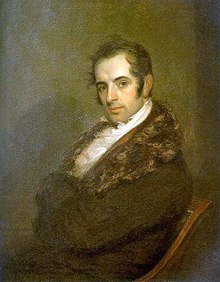
Achievements: Major American writer
Born: April 3, 1783; New York, NY
Died: November 28, 1859; Sunnyside near Tarrytown, NY
Field & Discipline: Literature; Writer
Language: English
Education: Benjamin Romaine school, the Seminary of Josiah Henderson
Major Work: “The Sketchbook of Geoffrey Crayon"
Life & Times:
In 1802 Irving's brother Peter became editor of the Morning Chronicle, a New York daily newspaper. Irving contributed nine "Letters of Jonathan Oldstyle", written in a manner reminiscent of Addison and Steele. The success of these led to contributions being accepted by the Philadelphia Literary Magazine. In 1804 Irving travelled to Europe, where his experiences left a vivid impression on him. In Rome he met the French woman writer [met] de Staël*, the English poet [a pal of] Coleridge*, with whom he became friendly, and the American painter Washington [a pal of] Allston*, whose influence led him to consider staying in Italy to study painting.
Back in New York, he graduated as a lawyer in 1806, helped translate a French travel book, and contributed to the Literary Picture Gallery. He became part of a conversation circle. In 1807, this group produced twenty issues of a satirical periodical, titled "Salmagundi" which became the talk of the town. Irving then began work on what was to be a parody of a guidebook, which turned into a spoof history narrated by a fictitious scholar, Knickerbocker. Presenting itself as a serious work, the book satirized the literary style of the period. It proved popular, the critics reviewed it favourably, and it brought Irving fame and some profit, earning him $2,000.
In 1810, he became a partner in the family hardware business with the job of lobbying in Washington against trade restrictions. For two years from 1813, he was editor of the Analectic Magazine. He decided to return to Europe, where he found the family business in ruins, so he stayed in England to help. Earning his own living was now a necessity and he refused an offer of a minor administrative post back home, choosing instead to act as English literary agent to the American bookseller, Thomas Moses. He also wrote reviews for publications, including Blackwoods. From this, Irving saved enough money for a visit to Scotland, where he met [met] Sir Walter Scott*.
When he returned to London, he began work on "The Sketch Book of Geoffrey Crayon". Published in America in 1819, it became one of his most popular works. The first instalment of The Sketch Book consisted of five tales, including his most famous stories, “The Legend of Sleepy Hollow” and “Rip Van Winkle”. Six further instalments followed over the next eighteen months. Building on this success, he published similar works: “Bracebridge Hall” in 1822, and after another trip to continental Europe: “Tales of a Traveller”, in 1824. The second of these received highly critical reviews. It was also a financially failure, at a time when the Irving family banker also failed, and a Bolivian copper mine in which he had invested heavily went bankrupt.
In 1826, Irving went to work at the American Legation in Madrid, where his job was to translate recently-published documents relating to Columbus. After extensive research, Irving produced a highly skilful biography “The Life and Voyages of Christopher Columbus” in 1828. “Chronicle of the Conquest of Granada”, appeared in 1829. In 1831, he published “The Voyages and Discoveries of the Companions of Columbus”, then in the following year, another Spanish work, “The Alhambra”, which was greatly popular.
Irving was now at the height of his success as a writer. His works had been appeared in twelve languages and fifty editions. After receiving a medal from the Royal Society of Literature, and an honorary doctorate from Oxford, he returned to New York and was nominated as congressman, mayor of New York, and Secretary of the Navy, but declined all offers. The millionaire, John Jacob Astor, then commissioned him to write about the opening of the West and the fur trade. This work appeared under the title: “Astoria”, in 1836. A four month trip in the Southwest, in Pawnee country, resulted in “A Tour on the Prairies,” which described his discovery of the region and its people.
In 1837, Irving settled in Sunnyside, near Tarrytown, NY. He continued his factual writing and produced “Biography and Poetical Remains of the Late Margaret Miller Davidson” (1841), “Oliver Goldsmith: A Biography” (1849), “Mahomet” (1849), and “Mahomet’s Successors” (1850). During this period, in 1842, he accepted the post of Minister Plenipotentiary at the Court of Spain in Madrid, where for a short time he led the life of a diplomat. This was followed by a period in England, where he helped with treaty negotiations over the Northwest Territory.
Irving’s last work: “Life of George Washington” eventually ran to five volumes, appearing between 1855 and 1859. The writing was labored, and Irving's ability was clearly fading. However, thousands of mourners came to his funeral.
Extra Connections: Also met actress Sarah [met] Siddons*, and editor [met] John Murray*.
[inspired] Henry Irving* took his stage name from him.
He met US Ambassador George [met] Bancroft*
Assessment: Washington Irving was the first writer of the United States to achieve international recognition.
Oneliner: Washington Irving, writer of “Rip Van Winkle”
Bibliography:
- Bowden, Mary Weatherspoon , Washington Irving, Twayne Publishers, Boston, 1981.
- Leary, Lewis , Washington Irving, Minneapolis, University of Minnesota Press, 1963.
Father: William
Mother: Sarah
Siblings: 11
Spouse: None
Children: None