Silliman, Benjamin Snr
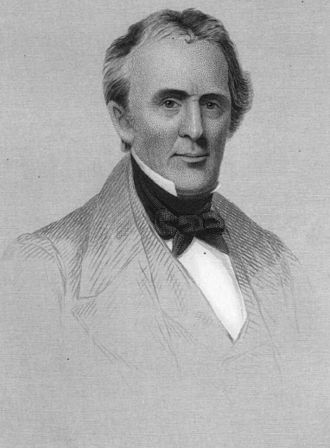
ACHIEVEMENT(S): Made science popular in US
NICKNAME/ALIAS:
DATE/PLACE OF BIRTH: 8th August 1779, North Stratford (now Trumbull), CT.
DATE/PLACE/AGE AT DEATH: 24th November 1864 in New Haven, CT. Aged 85.
DISCIPLINE: Geologist.
FIELD: Education.
LANGUAGE: English.
PARENTS: Gold Selleck Silliman, a general in the Continental Army, and Mary Fish.
SIBLINGS: Selleck
SPOUSE: Harriet Trumbull, married 1809, died 1850. Sarah Isabella Maclean Webb, married 1851.
CHILDREN: Maria, Faith, Benjamin (also a scientist), Harriet, and Julia.
EDUCATION: Private tutor: Rev. Andrew Eliot; Yale University.
MAJOR WORK: Establishment of the American Journal of Science
LIFE AND TIMES: At the time Silliman passed his law examinations at Yale, the college decided to introduce natural science to the curriculum and in September 1802 asked Silliman to be the first professor. Silliman was sent to Philadelphia to increase his knowledge of the subject, ready for the professorship.
In Philadelphia he studied chemistry, botany, anatomy and surgery under Dr James Woodhouse and, for a short time, under <studied under> Rush*. In 1804, Silliman gave the first course of lectures in chemistry at Yale. Silliman was then sent to Europe to buy books and equipment.
In Britain and he met some of the foremost intellects of the day, including <met> Dalton*, <met> Davy*, <met> Wollaston*, <met> William Wilberforce* and <met> West*. He talked at length with <met> Watt* about mineralogy, chemistry, history, antiquities and the fine arts and he was able to attend one of the discussion groups held by <met> Banks*.
In Edinburgh he visited the offices of the "Edinburgh Review", and met <met> Brewster*, later the editor of "Brewster’s Edinburgh Journal of Science", who was a great help to Silliman when he later began his own journal.
He wrote an account of his travels in Europe and the two voyages across the Atlantic. It was widely read and provided Americans with their first up-to-date ideas about Europe.
Silliman’s courses at Yale were popular, and a number of his students became leading scientists in their own right, among them his son <son was> Benjamin Silliman junior* and <taught> Samuel Morse*. Silliman also took a leading role in establishing graduate and professional training in the sciences at Yale.
When the Weston Meteor fell in December of 1807, Silliman and Professor James Kingsley carried out an extensive investigation into the circumstances and their report was printed in the "Connecticut Herald". Following this, Silliman chemically analysed the debris of the meteor and wrote an expanded paper, which was presented to the American Philosophical Society, the Philosophical Society of London and the Academy of Sciences in Paris. This was the first time that a scientific paper had created so much interest among the American public.
In 1808, he began a series of lectures, which were innovative because they were open to the general public of New Haven and New York.
His reputation as a geologist was growing and in May 1810 he was asked to perform his first commercial survey for a lead mine at Southampton, MA.
Silliman also supported the idea of establishing a medical school at Yale and when the school was founded in 1813, he handled most of the detail, securing the charter from the state legislature and gaining the co-operation of local doctors.
In 1818, he founded "The American Journal of Science". Before that time, scientific papers were only published abroad, or by learned societies. Now, publication of original papers, notices and reviews from all over the world meant that almost any current scientific topic could be found somewhere in "The American Journal of Science". The journal became internationally recognised as one of the great scientific publications of the day and Silliman’s vast correspondence through the journal made him a fount of knowledge on the scientific world.
In 1840, he was made the first president of the Association of American Geologists. By 1845, Silliman was ready to retire from Yale, but at the request of the college he stayed on until 1853, when he retired as professor emeritus.
In 1851, he travelled to Europe again on an extensive tour, visiting the Great Exhibition in England and attending meetings of scientific societies in London, before going on to France, Italy, Sicily, Switzerland, Germany and Belgium. Afterwards he wrote a two-volume account of his journey, "A Visit to Europe, 1851".
In 1863, he was made a charter member of the National Academy of Science and he continued to occupy himself with editorial work and correspondence. A highlight in these later years was being able to discuss the biography of George Washington with its author, <met> Washington Irving*.
Although retired from Yale, he continued to promote the interests of the College and, through his efforts, the financier George Peabody was persuaded to donate $100,000 to the scientific school.
On 4th November 1864, the day after attending a meeting of the Sanitary Commission, to hear reports on work being done to help the sick and wounded soldiers of the civil war, Silliman became ill and developed pneumonia from which he died.
ASSESSMENT: A promoter and interpreter of science, Silliman played an important role in establishing science as an academic subject in America.
EXTRA CONNECTIONS: He met chemist <met> Joseph Priestley* during his visit to Yale.
Knew <knew> Jedidiah Morse*, <knew> Turnbull* <knew> Maclure* and <knew> Hawthorne*
His son-in-law as <son-in-law was> Dana*
ONELINER: Benjamin Silliman Snr, first chemistry prof at Yale
BIBLIOGRAPHY:
Brown, Chandos Michael, Benjamin Silliman, A Life in the Young Republic, Princeton University Press, New Jersey, 1989.
Wikipedia (see node 2)