Langevin
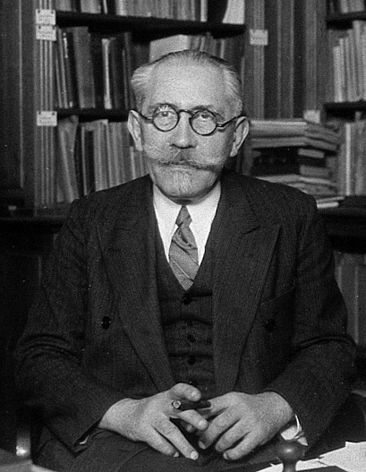
ACHIEVEMENT(S): Sonar.
NICKNAME/ALIAS: None
DATE/PLACE OF BIRTH: 23 January 1872, at Paris, France
DATE/PLACE/AGE AT DEATH: 19 December 1946, in Paris, France. Aged 74
DISCIPLINE: Physicist
FIELD: Mathematical physics
LANGUAGE: French
PARENTS: Victor-Charles Langevin and Marie Adele Pinel
SIBLINGS: One elder brother
SPOUSE: Emma Jeanne Desfosses, married 1898
CHILDREN: Four children: Jean (1899-1990), Andre (b. 1901), Madeleine (b.
1903) and Helene (b. 1909)
EDUCATION: Ecole Lavoisier; Ecole Municipale de Physique et Chimie Industrielles to 1891; University of the Sorbonne, 1891-93; Ecole Normale Superieure, 1894-97; Cavendish Laboratory, University of Cambridge, 1897-98
MAJOR WORK: "Magnetisme et theorie des electrons", 1905
LIFE AND TIMES: In 1897 Langevin won scholarship to the Cavendish Laboratories at Cambridge University where he worked under the physicist J.J. Thomson* on the ionising effects of radiation and the properties of gaseous ions.
He also met several important scientists, including Rutherford* and Wilson*.
Langevin returned to Paris in 1898, to work on the secondary effects of X-rays, while also collaborating with Pierre Curie on research into radioactivity at the Sorbonne. Langevin's early work at the Cavendish Laboratories and at the Sorbonne (1897-1903)
concerned the analysis of secondary emissions of X-rays from metals exposed to radiation, during which he discovered the emission of secondary electrons from irradiated metals.
He also continued his work on the behaviour of ionized gases, in 1902 receiving his Ph.D. for a thesis on this subject, and in 1903 he published a paper on the mobility of positive and negative ions with a theory for their recombination at different pressures.
In 1902 Langevin began teaching physics at the College de France, where he established his own laboratory.
In 1904 he succeeded Pierre Curie as professor of physics at the Ecole Municipale de Physique et Chimie. An exceptionally talented and diligent teacher, from 1906 Langevin taught also at the Ecole Nationale Superieure de Jeunes Filles (Sevres), replacing the recently-widowed Marie Curie*. In 1909 he became professor in physics at the Sorbonne, a post he was to hold for the next three decades.
During these years (1904-14) Langevin worked on relativity theory, in particular the study of Einstein's work on Brownian motion and on space and time, an area in which Langevin developed a number of fundamental concepts independent of Einstein's work. Langevin was a firm supporter of the theory of the equivalence of energy and mass, and Einstein* later acknowledged that in 1905 Langevin had all the tools for the development of the special theory of relativity at his disposal before Einstein proposed it himself, and that it was "a foregone conclusion that he would have developed the Special Theory of Relativity, had that not been done elsewhere."
In 1895, Pierre Curie had demonstrated experimentally that the susceptibility of a paramagnetic substance to an external magnetic field varies inversely with temperature, and in 1905 Langevin developed a model to explain this based on statistical mechanics. In his paper, entitled "Magnetisme et theorie des electrons", Langevin accounted for para-magnetism by assuming that each molecule had a permanent magnetic moment (i.e. a small magnet with north and south poles) due to the circulation of one or more electrons, and then suggested that the alignment of molecular moments in a paramagnetic substance would be random in the absence of an externally applied magnetic field.
However, it would be non-random in its presence ( aligning with and strengthening the applied magnetic field). However, the greater the temperature, the greater the thermal motion of the molecules, and the greater the disturbance to their alignment by the magnetic field (and the decrease in paramagnetism).
He developed a formula relating the paramagnetic movement of a molecule to (among other parameters) the absolute temperature, and from his formula Langevin predicted the phenomenon of paramagnetic saturation, which was observed experimentally by Onnes* in 1914 in gadolinium sulphate.
During the first year of World War I, Langevin contributed to the war efforts by researching ballistics. Then, in 1915, his attention was turned to another phenomenon, the production and use of ultrasonic sound (sound waves a frequency above the range of human hearing), when he received a request from Maurice de (brother of the physicist de Broglie*) and the French government to develop an active method of detecting submerged enemy submarines.
Lord Rayleigh* and O.W. Richardson had in 1912 conceived of the idea of employing ultrasonic waves for underwater detection. In 1917 Langevin turned to the idea of using high-frequency radio circuitry to oscillate piezoelectric crystals and obtain ultrasonic waves at high intensity.
In 1880-82, the brothers Pierre and Paul-Jacques Curie had observed the piezoelectric effect:- that when certain types of crystals (including quartz, tourmaline and Rochelle salt) were compressed along certain axes they would develop a minute electric charge on the surface of the crystal, and that this varied with the pressure applied. Conversely, when an electric field is applied to such a crystal it produces a mechanical deformation or elongation in the crystal. And if a rapidly alternating electric field is applied to such a crystal, it produces alternating mechanical vibrations of the same frequency, converting a high-frequency alternating electric signal to an ultrasonic wave of the same frequency.
Langevin was able to exploit the piezoelectricity* in quartz in 1917, developing a special quartz transmitter which became known as the "Langevin Sandwich" - a four-millimetre layer of quartz crystal sandwiched between two three-centimetre layers of steel.
When an electric charge of the correct frequency was applied to the quartz, it caused the crystal to change shape and eventually to oscillate at its own resonant frequency, which in turn caused the steel plate to vibrate, sending out high-frequency pulses which, if they hit an object, would bounce back and be picked up by a quartz receiver, which in turn would apply the returning vibrations to another quartz plate. The effect of these vibrations would cause the quartz to emit electrical signals that could be processed to show the size and range of the object.
This method of underwater detection, which was proved effective in military trials before the end of World War I and was then taken up and developed by the British and Americans, has become the basis of modern sonar* and is used for scientific as well as military purposes.
Langevin's international prestige and influence increased further during the 1920s, and in 1928 he succeeded Lorentz* as president of the Solvay International Physics Institute, and the same year was elected to the Royal Society of London.
ASSESSMENT: An extremely talented physicist.
EXTRA CONNECTIONS: He taught Zworykin*
He met Valery*
ONELINER: Paul Langevin, inventor of sonar
BIBLIOGRAPHY:
DSB
Biog. Dict of Physicists
Newton, David E., “Paul Langevin", in Notable Twentieth-Century
Scientists, ed. Emily J. McMurray, New York & London: Gale Research, 1995.