Vaucanson, J
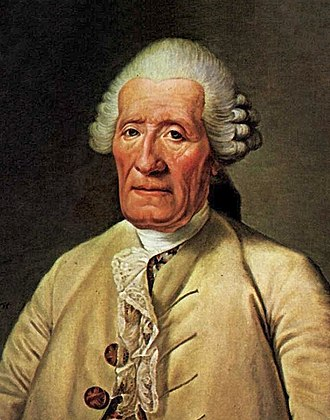
ACHIEVEMENTS: Automated loom
DATE AND PLACE OF BIRTH: February 24, 1709, Grenoble, France.
DATE/PLACE OF DEATH/AGE AT DEATH: November 21, 1782, Paris, France. Aged 73
DISCIPLINE: Inventor
FIELD: Textiles
LANGUAGE: French
EDUCATION: Jesuit College, Grenoble
MAJOR WORK: None
LIFE AND TIMES:
As a boy, Vaucanson showed his talent for building items with moving parts. He built a clock out of wood. And in a small chapel he made for his mother, he created little angels whose wings moved. As a young man, he designed a hydraulic machine that could bring water to the city of Lyons.
In 1738, in Paris, he built a mechanical statue (automaton) of a flute player that replicated all of a flute-player's movements.
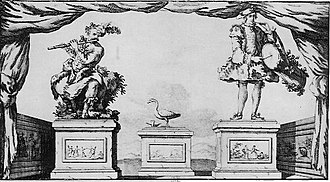
The following year, he made two more automata: "The Tambourine Player" and "The Duck", which not only moved its wings and paddled, but simulated eating, drinking and "digesting".
In 1741, after taking a job as an inspector in a silk-manufacturing establishment, Vaucanson was struck by the inefficiency of the looms and joined the ranks of other inventors who were trying to make systems that could select and lift the warp threads. By 1745, he had come up with a loom that improved those of <improved work of> Bouchon and <improved work of> Falcon
Vaucanson mounted his selecting apparatus above the loom and added a perforated, rotating cylinder. The selecting apparatus acted directly on hooks which were attached to needles holding the warp thread. The hooks were raised when needed by a metal bar. The correct needles for a pattern were selected by passing through (or not) holes in perforated cards which passed round a sliding cylinder mounted on a carriage.
There is no evidence, however, that Vaucanson's innovation was ever used; in fact, it had a very complex cylinder and in the long run was found to be unworkable. But not long afterwards <work improved by> Jacquard* picked up Vaucanson's ideas and adapted them to a loom that was widely used in the weaving industry (the “Jacquard” loom).
Other inventions of Vaucanson included: mechanically guided tools for working on a large scale; a lathe table with a slide rest which could turn work up to one meter long; and a lathe and a drill, each fitted with a tool-holder carriage, that was moved by a threaded screw.
In his later years, Vaucanson began a collection of inventions that became the Conservatory of Arts and Trades in Paris. One item in the collection, Falcon's revised loom, was seen by Jacquard and inspired him to create his own improved loom.
ASSESSMENT: Vaucanson's automata were forerunners to the robot mechanisms used in modern industry
EXTRA CONNECTIONS: None
ONELINER: Jacques de Vaucanson, 18th-century loom-maker
BIBLIOGRAPHY:
Doyon, Andre and Lucien Liaigre, Jacques Vaucanson, Mecanicien de Genie, Presses Universitaires de France, Paris, 1966.
Encyclopedia Britannica
Archives de France
PARENTS: Jacques Vocanson; Dorothee Lacroix
SIBLINGS: Five
SPOUSE: Magdeleine Ray
CHILDREN: Angelique-Victoire
Wikipedia
Jacques de Vaucanson (French: [jak də vocɑ̃sɔ̃]; February 24, 1709 – November 21, 1782)[1] was a French inventor and artist who built the first all-metal lathe which was very important to the Industrial Revolution. The lathe is known as the mother of machine tools, as it was the first machine tool that led to the invention of other machine tools.[2] He was responsible for the creation of impressive and innovative automata. He also was the first person to design an automatic loom.
Early life
De Vaucanson was born in Grenoble, France in 1709 as Jacques Vaucanson (the nobiliary particle "de" was later added to his name by the Académie des Sciences[3][unreliable source?]). The tenth child of a glove-maker, he grew up poor, and in his youth he reportedly aspired to become a clockmaker.[4] He studied under the Jesuits and later joined the Order of the Minims in Lyon. It was his intention at the time to follow a course of religious studies, but he regained his interest in mechanical devices after meeting the surgeon Claude-Nicolas Le Cat, from whom he would learn the details of anatomy. This new knowledge allowed him to develop his first mechanical devices that mimicked biological vital functions such as circulation, respiration, and digestion.[5]
Automaton inventor

All three of Vaucanson's Automata: the Flute Player, the Digesting Duck, and the Tambourine Player.
At just 18 years of age, Vaucanson was given his own workshop in Lyon, and a grant from a nobleman to construct a set of machines. In that same year of 1727, there was a visit from one of the governing heads of Les Minimes. Vaucanson decided to make some androids. The automata would serve dinner and clear the tables for the visiting politicians. However one government official declared that he thought Vaucanson's tendencies "profane", and ordered that his workshop be destroyed.[6]
In 1737, Vaucanson built The Flute Player, a life-size figure of a shepherd that played the tabor and the pipe and had a repertoire of twelve songs. The figure's fingers were not pliable enough to play the flute correctly, so Vaucanson had to glove the creation in skin. The following year, in early 1738, he presented his creation to the Académie des Sciences.[7]
Johann Joachim Quantz, court musician and long-time flute instructor to Frederick II of Prussia, discussed the shortcomings of Vaucanson's mechanical flute player. In particular its inability to sufficiently move the lips resulted in the necessity of increasing the wind pressure for the upper octaves. Quantz discouraged this method as producing a shrill, unpleasant tone.[8]
At the time, mechanical creatures were somewhat a fad in Europe, but most could be classified as toys, and de Vaucanson's creations were recognized as being revolutionary in their mechanical lifelike sophistication.
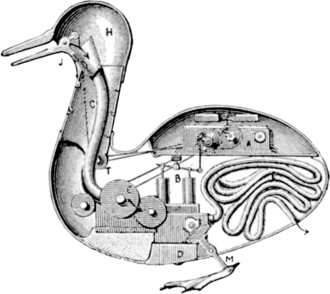
Later that year, he created two additional automata, The Tambourine Player and The Digesting Duck, which is considered his masterpiece. The duck had over 400 moving parts in each wing alone, and could flap its wings, drink water, seemingly digest grain, and seemingly defecate.[7] Although Vaucanson's duck supposedly demonstrated digestion accurately, his duck actually contained a hidden compartment of "digested food", so that what the duck defecated was not the same as what it ate; the duck would eat a mixture of water and seed and excrete a mixture of bread crumbs and green dye that appeared to the onlooker indistinguishable from real excrement.
Although such frauds were sometimes controversial, they were common enough because such scientific demonstrations needed to entertain the wealthy and powerful to attract their patronage. Vaucanson is credited as having invented the world's first flexible rubber tube while in the process of building the duck's intestines. Despite the revolutionary nature of his automata, he is said to have tired quickly of his creations and sold them in 1743.
His inventions brought him to the attention of Frederick II of Prussia, who sought to bring him to his court. Vaucanson refused, however, wishing to serve his own country.[3]
Government service
In 1741 de Vaucanson was appointed by Cardinal Fleury, chief minister of Louis XV, as inspector of the manufacture of silk in France. He was charged with undertaking reforms of the silk manufacturing process. At the time, the French weaving industry had fallen behind that of England and Scotland. During this time, Vaucanson promoted wide-ranging changes for automation of the weaving process. In 1745, he created the world's first completely automated loom,[10] drawing on the work of Basile Bouchon and Jean Falcon. Vaucanson was trying to automate the French textile industry with punch cards - a technology that, as refined by Joseph-Marie Jacquard more than a half-century later, would revolutionize weaving and, in the twentieth century, would be used to input data into computers and store information in binary form. His proposals were not well received by weavers, however, who pelted him with stones in the street[11] and many of his revolutionary ideas were largely ignored.
In 1746, he was made a member of the Académie des Sciences.[12]
Lathe
In 1760 he invented the first industrial metal cutting slide rest lathe.[13] Others place his invention in 1751.[14] The lathe was described in the Encyclopédie and is exhibited at Musée des Arts et Métiers in France. It was designed to produce precision cylindrical rollers for crushing patterns into silk cloth.[15][16] These were of copper rather than steel, so far easier to turn on a lathe, which may account for Vaucanson's omission from such works as Derry & Williams,[17] who place this invention around 1768.
Legacy
Jacques de Vaucanson died in Paris in 1782. Vaucanson left a collection of his work as a bequest to Louis XVI. The collection would become the foundation of the Conservatoire des Arts et Métiers in Paris. His original automata have all been lost. The flute player and the tambourine player were reportedly destroyed in the Revolution.
Some had been sold to a glovemaker called Pierre Dumoulin (d. 1781), who exhibited them throughout Europe with great success.[18] Dumoulin’s shows with Vaucanson’s automata in Saint Petersburg started the fashion of automata in Russia.[19] In 1783, it was reported that the automata once exhibited by Dumoulin were still stored in Russia, but Dumoulin had manipulated them so that they would not work after his death.[18]
Vaucanson’s proposals for the automation of the weaving process, although ignored during his lifetime, were later perfected and implemented by Joseph Marie Jacquard, the creator of the Jacquard loom.
Lycee Vaucanson in Grenoble is named in his honor, and trains students for careers in engineering and technical fields.
See also
Research Notes:
...But Vaucanson’s first and most famous musical invention, the one he triumphantly presented to the Royal Academy of Sciences in Paris in 1738, was a faun that played the flute. Nearly six-and-a-half feet tall, the faun was not a stiff, unmoving machine, but was astonishingly realistic: it had fingers with leather pads that stopped and unstopped the holes of the flute it held in its hands; it had lips and a tongue and a throat through which came a variable breath.
That Vaucanson was able to produce a convincing facsimile of human performance on this most difficult and varied instrument was a testament to the masterful engineering concealed within: three sets of three bellows produced different wind-pressures; a series of levers and pulleys allowed the lips to protrude and to change the size of the windway, controlled the action of the tongue and the movement of the fingers—all these carefully constructed parts, engineered to the minutest tolerances, were governed by a precisely pinned cylinder boasting a diverse repertory.
With this the tour-de-force of mechanics Vaucanson claimed that his figure could produce motions—and music—comparable to “those of a Living Person.” The mechanical flautist had startling implications for human musicians. Writing in 1752, Johann Joachim Quantz, personal flute-master to Frederick the Great, claimed rather defensively that however impressive it might be, the faun’s impeccable technique only highlighted what it lacked–the uniquely human gifts for performing a piece with the “proper fire.” Where human musical utterances were, at their best, stoked with emotion and ignited by imagination, machines were cold and unfeeling.
In 1737, Vaucanson built The Flute Player, a life-size figure of a shepherd that played the tabor and the pipeand had a repertoire of twelve songs. The figure's fingers were not pliable enough to play the flute correctly, so Vaucanson had to glove the creation in skin. The following year, in early 1738, he presented his creation to the Académie des Sciences.[6]