Hunter Wm
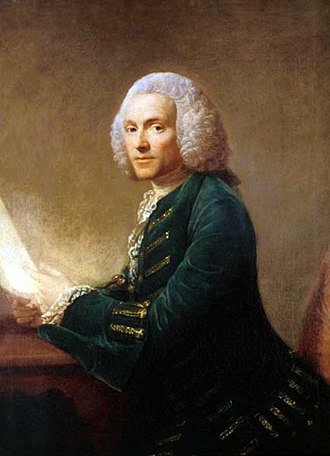
Name: William Hunter
Achievements: The first medical school in London.
Born: May 23, 1718; Long Calderwood, near East Kilbride, Lanarkshire, Scotland.
Died: March 30, 1783; London, England (Aged 64)
Field & Discipline: Medicine; Anatomy; Obstetrics
Language: English
Father: John Hunter
Mother: Agnes Paul
Siblings: John Hunter; James
Spouse: None
Children: None
Education: East Kilbride Grammar School; Glasgow University; Edinburgh University
Major Work:
“The Anatomy of the Human Gravid Uterus” (1774)
Life & Times:
Hunter first studied divinity for five years at Glasgow University (taught by [taught by] Monro*), but then, on the advice of [advised by] Cullen*, began to study medicine at Edinburgh University in 1739 and after a year, moved to London to gain practical experience.
In London, Hunter lodged with William Smellie, an obstetrician, whom he assisted in his practice and who gave Hunter good advice on which lectures he should attend. The opportunities for medical study in London were so great that Hunter decided to stay for training in anatomy at St George’s Hospital.
Hunter went to Paris in 1742 and there he was able to attend anatomy lectures. When he returned to London, he delivered his first paper to the Royal Society: “On the Structure and Diseases of Articulating Cartilages.”
He was invited to lecture to a society of naval surgeons in Covent Garden and, following their invitation, set up a course of lectures on anatomy which began in October 1746. The lectures demonstrated the art of dissecting in the manner he had been taught in Paris and gave provided the opportunity for practical work.
Hunter delivered these lectures at various locations in London throughout the rest of his life. Right from the start, they were successful and became a regular source of income.
Knowledge of anatomy was slow to spread, as well as being unreliable, mainly due to a lack of good or affordable textbooks. To help overcome this problem, Hunter prepared a series of specimens of gross anatomy and anatomical parts, by means of corrosion casts that demonstrated the structures of even the smallest vessels.
A surviving example of his work is a life size plaster cast of a man posed in the position of the Dying Gladiator, in which all the muscles are exposed. Known as Smugglerius, it can be seen at the Royal Academy of Arts in London.
Hunter eventually created a substantial collection of reference samples, demonstrating normal conditions, diseases and accidents. These enabled the study of all aspects of anatomy to be carried out continuously, not just when examples of specific conditions were available.
Hunter became a member of the Company of Surgeons in 1747, and, from 1748, gave up surgery and channelled his energies into building up a successful obstetrics practice, for which, as well as anatomy, he is chiefly remembered.
In 1749, he asked his brother [brother was] John Hunter*, who had come to London to study under him, to oversee his practical courses, the following year he was awarded his Doctorate in medicine by Glasgow University and in 1752, he became a Master of Anatomy at Surgeon’s Hall.
Four years later, Hunter was made a Licentiate of the College of Physicians, for which he had to give up his voting rights at the Company of Surgeons.
Hunter became estranged from his brother around 1760, apparently because he falsely claimed John’s discoveries for himself. A dispute over work relating to the placenta and uterus led to the final break.
During his career Hunter published several papers. In 1762, he caused upset when he published “Medical Commentaries,” a defence of his opinion on the work of a number of his contemporary medics. The controversy caused by this grew when [criticized by] Smollett* published favourable comments in “Critical Review.”
Other papers written by Hunter included “On Aneurysm,” “On Diseases of the Cellular Membrane,” “On Retroverted Uterus” and “On Uncertainty of the Signs of Murder in the case of Bastard Children,” in which he pleaded for the examination of child corpses to carried out with greater care, conclusions of guilt to be less readily arrived at, and clemency where guilt seem likely.
In 1767, he was elected a Fellow of the Royal Society and a year later became the Society’s Professor of Anatomy. In the same year he was appointed by George III as the first Professor of Anatomy at the Royal Academy and effectively adapted his anatomical work to the requirements of art.
He had attended Queen Charlotte during her first pregnancy and was appointed her physician-extraordinary in 1768. This appointment and his close relationship with the royal family led to considerable work for Hunter in court circles.
Hunter had always wanted to set up a school of anatomy, but, in spite of offering to contribute generously towards it, he was never able to raise enough money to obtain a land grant. In the end, he financed the project himself and in 1770 built a big house in Great Windmill Street in the heart of London. The house contained an amphitheatre for lectures, a dissecting room and a large museum and cost Hunter £6,000 to build and a further £3,000 to equip with books.
His collections of pathological and anatomical specimens and models, his library of rare books and his shells, medals, coins, minerals and corals, were all accommodated in the museum. He employed [employed] Hewson*.
In 1772, [a partner was] Cruikshank* became an assistant at Hunter’s school of anatomy and was made a partner two years after that. Cruikshank had studied under Hunter’s former pupil and friend, [a pal of] Dr John Moore*.
In 1774, Hunter published “The Anatomy of the Human Gravid Uterus,” a magnificent series of thirty-four engravings of elephant folio size, most of them drawings by Jan van Rymsdyck.
By now, Hunter’s health was beginning to decline, a situation that was attributed to gout. He worked right up to his final collapse, which occurred during one of his lectures. He was buried at St. James, Piccadilly, where there is a marble tablet in his memory. In his will, Hunter left his museum, the Hunterian, containing books, pictures and his valuable coin collection, to Glasgow University, together with an endowment of £8,000.
Extra Connections: He knew [knew] Adam Smith* and [knew] Gibbon*.
He taught [taught] Rush*
He worked with [worked with] Charles Bell*
Assessment: His is recognised for his achievements in science and the gift of his collections to Glasgow University.
Oneliner: William Hunter, founder of first London medical school
Bibliography:
- Dictionary of National Biography.
- Dictionary of Scientific Biography.
- Samuel F. Simmons and John Hunter, William Hunter 1718-1783: A Memoir, edited by C H Brock, University of Glasgow Press, 1983.
William Hunter | Encyclopedia.com
William Hunter (anatomist) - Wikipedia