Rush, Benjamin
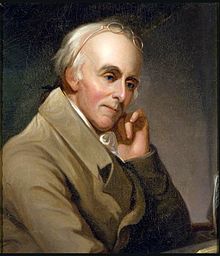
Achievements: 18th-century American physician, teacher, social reformer and politician, who was elected to the Continental Congress and signed the Declaration of Independence.
Born: January 4, 1746 (24 December 1745, Old Style); Bayberry, near Philadelphia, Pennsylvania
Died: April 19, 1813; Philadelphia, Pennsylvania (Aged 67)
Field & Discipline: Medicine; Physician
Language: English
Father: John Rush
Mother: Susanna Hall Harvey
Siblings: None
Spouse: Julia Stockton (m. 1776)
Children: Thirteen children, nine surviving infancy (three daughters and six sons)
Education: Nottingham Academy (1754-59); College of New Jersey (later Princeton University) (1759-60); College of Philadelphia (1761-66); University of Edinburgh (1766-68)
Major Work:
“Medical Inquiries and Observations” (1805, 4 vols)
Life & Times:
In 1766, keen to obtain the best medical education then available, Rush sailed for Scotland, where he continued his studies at the University of Edinburgh. At Edinburgh, keeping to a deal made with John Morgan (who promised to support Rush's future candidacy for the post of professor of chemistry at Philadelphia if he studied chemistry as well as medicine), he attended lectures by the chemist [taught by] Black*and the anatomist [taught by] Monro*, and became the close friend and disciple of the highly respected physician [a pal of] Cullen*, whose ideas were to have a profound effect on the development of Rush's theoretical approach to medicine.
Rush completed his thesis "On the Digestion of Food in the Stomach" in 1768, the results of which were based in part on self-experimentation, and received his medical degree from Edinburgh the same year. He then moved to London, where he spent several months training at St. Thomas's Hospital, attending dissections by [taught by] William Hunter*, and visiting [a pal of] Benjamin Franklin*, who persuaded him to take (and helped finance) a trip to Paris, early in 1769.
Rush returned to Philadelphia in the summer of 1769, was appointed professor of chemistry at the College of Philadelphia, and spent the following year constructing a chemistry course based on the lectures of Joseph Black, and writing the first American textbook on chemistry for his students based on these lectures: “A Syllabus of a Course of Lectures on Chemistry” (1770).
On 20 July 1776 he was elected to the Continental Congress by the constitutional convention of Pennsylvania. On 22 July he took his seat in the Second Continental Congress, and on 2 August signed the Declaration of Independence. In February 1777, following the declaration of war with Britain, Rush lost his seat, but was soon after appointed surgeon-general, and later physician-general, of the Middle Department of the Continental Army. Rush found the system of army hospitals plagued by disorganization and corruption, and after making a series of very public complaints first to his superiors, and then to their superiors and to Congress.
Rush returned to Philadelphia, where he devoted himself to teaching and his medical practice. In 1780, he began lecturing in clinical medicine at the new University of the State of Pennsylvania, and in 1784 he was appointed surgeon to the Pennsylvania Hospital, a post he kept until his death. During the 1780s, Rush's lectures in chemistry and medicine began to attract students from across America, and in 1789 he was appointed professor of theory and practice of medicine at the College of Philadelphia.
Meanwhile he was becoming an increasingly important public figure, helping found and govern Dickinson College in Carlisle (1783) and Franklin and Marshall College in Lancaster, Pennsylvania (1787), and in 1786 establishing the Philadelphia Dispensary to provide medical care for the poor. He also campaigned to make public schools free, to broaden education for women, and to create a school system that included universities.
In 1787 he co-founded the College of Physicians of Philadelphia, and the same year, he was elected to the Pennsylvania ratifying convention for the new Federal Constitution.
During the 1790s he began lecturing on his unitary theory of disease, based on the radical ideas of William Cullen and his student John Brown. Cullen based his medical practice on changes in nervous energy and stimulation of the nervous system, while Brown had modified his master's teachings into a highly simple theory of disease based on the diagnosis of one of two physiological conditions - either excessive or inadequate nervous stimulation. Excess stimulation required therapeutic depletion by purging, vomiting or bloodletting, while inadequate stimulation called for changes to diet, or the taking of brandy. Taking Brown's ideas a step further, Rush then reduced all disease to a single cause, "irregular convulsive or wrong action in the system affected."
In this unitary theory of disease, the "excited" nervous state common to all life had only two forms - healthy and morbid. Morbid excitement was caused by convulsive action in the blood vessels, which caused symptoms ranging from fever to insanity and required a single cause: immediate depletion by bloodletting and purges (the worse the disease, the more extreme the treatment) in order to restore the body's balance.
Meanwhile, Rush's therapeutic theories had already been severely tested during 1793, when Philadelphia saw its worst yellow fever epidemic to date. Between early August and November, tens of people were dying by the day (altogether 4,000-5,000 residents of Philadelphia, about one-tenth of its population), and Rush accordingly began his "depletion" treatments, consisting of heavy doses of purgatives combined with bloodletting. Rush was particularly criticized by the newspaper editor [criticized by] Cobbett*, who later called Rush's practice "one of those great discoveries which have contributed to the depopulation of the earth." He finally resigned from the College of Physicians in protest at the condemnation of his methods in 1797.
However Rush continued as a prominent teacher, writer and social reformer in Philadelphia, who could count such eminent men as [a colleague of]Benjamin Franklin*, [a pal of] Thomas Paine*, [a pal of] Jefferson*, [a pal of] John Quincy Adams*, [a pal of] Noah Webster*, [a pal of] Silliman Snr.* and Patrick Henry among his close friends. He was also prominent as an anti-slavery and anti-capital punishment campaigner, and as an early founder of the American temperance movement. In 1797, by appointment of President Adams, Rush was made treasurer of the U.S. Mint, a post he held until his death.
Extra Connections: He was a colleague of [a colleague of] George Washington*
For his advice during an epidemic, he was awarded a gold medal by Queen [awarded medal by]Maria Louisa of Etruria*
Assessment: A major figure in early American medicine.
Oneliner: Benjamin Rush, early American doctor
Bibliography:
- Binger, Carl Alfred Lanning, Revolutionary Doctor: Benjamin Rush, 1746-1813, 1966.
- D'Elia, Donald J., "Benjamin Rush: Philosopher of the American Revolution,” in Transactions of the American Philosophical Society (September 1974), Vol. 64 (new series), part 5.
- Dictionary of American National Biography.
- Dictionary of Scientific Biography.
- Encyclopedia Britannica.
--
AMERICAN CONNECTIONS
BENJAMIN RUSH (PA) was thirty. And newlywed. And
made enemies by whistle-blowing on the corruption in wartime military
hospitals. After originally qualifying in Scotland, Rush wrote the first
U.S. chemistry textbook, became prof. of medical theory and practice in
Philadelphia, and when the city was hit with the great Yellow Fever
Plague in 1793 saved hundreds (and killed a few, too) with his
enthusiastic bloodletting treatment. His influence on U.S. medicine was
major, not least because he taught over three thousand students.
In 1792 Rush tried and failed to set up a "Peace Office" in an attempt
to demilitarize American society (he wanted the U.S. War Office door to
carry the notice: "An office for butchering the human species"). These
ideas were publicized in the 1793 almanac written by his pal Ben
Banneker, son of a freed slave and amateur astronomer, surveyor, and
mathematician, who corresponded with Thomas Jefferson on the topics of slavery and racial equality Baneker had started sky-gazing at the late age of fifty-one
with a telescope borrowed from his Maryland neighbors and mill owners
the Ellicotts. The Quaker Ellicott brothers helped revolutionize farming in the area by persuading farmers to plant wheat instead of tobacco and also by introducing fertilizer to revitalize depleted soil.[4] ^Charles^ ^Carroll, a signer of the Declaration of Independence, was an early influential convert from tobacco to wheat.[5]^
In 1803, President Jefferson engaged Ellicott as a mentor and teacher for Meriwether Lewis, one of the leaders of the Lewis and Clark Expedition that was to start the following year.
In 1790 Major Andrew Ellicott was nominated by George
Washington to survey a ten-square-mile area of land between Virginia and
Maryland for the new national capital.
In 1791 Major Ellicott took Ben with him to start the work. Ellicott was already an experienced surveyor with various state boundaries measured. In 1813 more of the
same work eventually led to his appointment as professor of math at West
Point, where he managed to put studies on a more academic footing.
That same year the academy intake included B. L. E. de Bonneville. His father was a close friend of friend of Condorcet, Lafayette, and Thomas Paine, the latter paying their passage to America. In 1825 de Bonneville ecorted family friend Lafayette on the great man's triumphal good-bye tour of the Unitd States, then in 1832 took time out
from the army to go fur-trapping with the financial backing of J. J.
Astor. De Bonneville headed off up the Oregon Trail into the Rockies,
where he wandered around for three years. In 1837 his journal of the
trip was rewritten by Washington Irving as The Adventures of Captain
Bonneville. At which point de Bonneville got back in uniform.
There's some speculation that he was given military leave of absence
because the real reason for heading northwest was to spy on what the
Brits were up to in Oregon.
As far as Congress was concerned this was a legitimate matter for
snoopery. The area was under joint U.S.-U.K. supervision and both sides
traded competitively with the Native Americans and Russians. Besides
which, everybody knew that the name of the game for the new Hudson's Bay
Company governor, ex-London sugar broker George Simpson, was to spoil
the day of any American traders on the West Coast. To make this easier,
in 1838 Simpson leased the Alaska Peninsula from St. Petersburg.
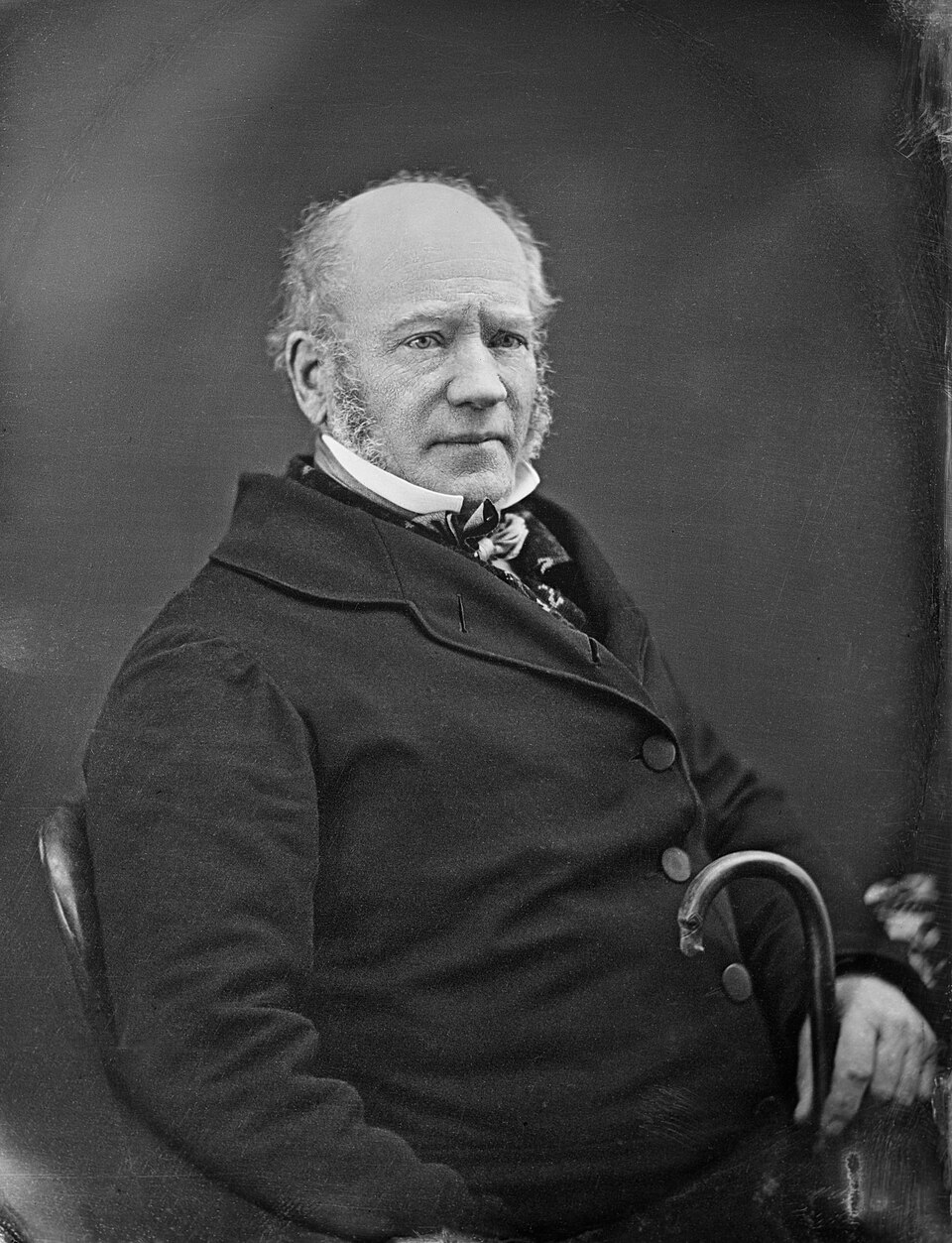
In 1840 Simpson decided to check out company assets and set off on a
round-the-world tour (London, Sitka, Hawaii, Sitka, St. Petersburg,
London). Because of a worsening vision problem Simpson took along a
seeing-eye secretary, Edward Martin Hopkins. The best thing about whom
was his wife, the beautiful and talented Frances Anne Beechey. Her grandfather was a royal portraitist.
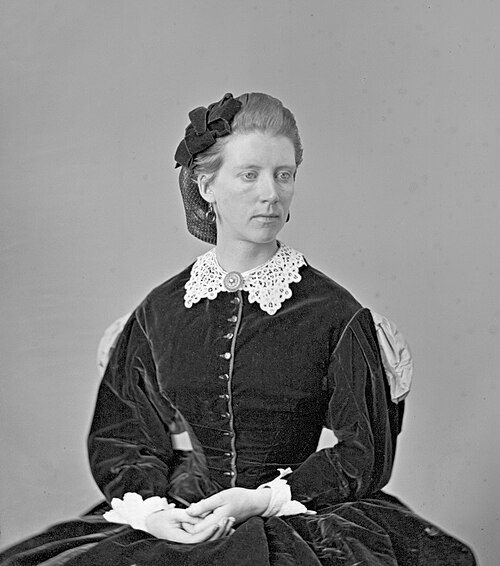
When Mr. Hopkins became head of the Montreal Department of the Hudson's Bay
Company, Frances Anne accompanied him on many inspection trips across
the wilderness, painting as she went. Her work is one of the very few
records of the life of the voyageurs, intrepid canoeists who
manhandled thirty-six-foot freight canoes over white water and through
snowstorms and danger.
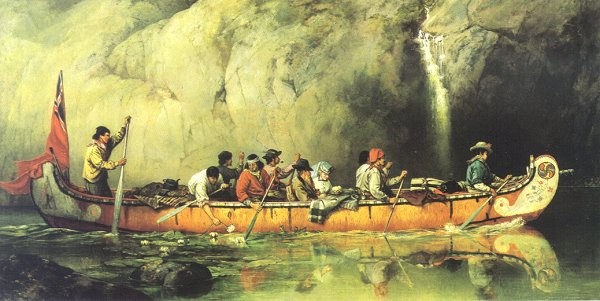
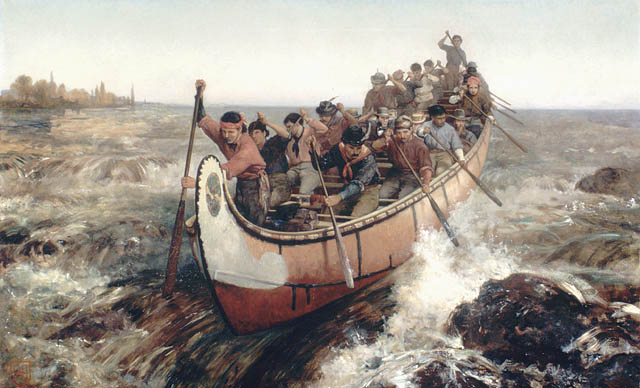
Frances Anne's canvases capture with astonishing
beauty the forests, rivers, and people of a time when the great northern
world was empty and untouched.
Her father had his share of the north, too. Fred Beechey spent time in
the Royal Navy, freezing in the Arctic with major explorers Franklin and
Parry, getting trapped in the ice, and being attacked by walruses. He
also surveyed the North African coast, saw military action in America,
and sailed the Pacific for four years. When the time came to retire, his
great experience in tidal matters made him the navy's choice as delegate
to the 1853 first-ever international meteorological conference in
Brussels. Where the Beaufort Wind Scale was adopted.
Francis Beaufort was a weird type who married his own step-niece. After
he died his encrypted letters were deciphered, and they revealed he had
also had an incestuous relationship with his sister Hester. Royal Navy
hydrographer for twenty-six years, Beaufort turned a small naval office
into one of the world's great sources of oceanic data. And his Wind
Scale standardized how all navigators now describe winds: on a range
from from calm (0) to hurricane (12).
Beaufort also okayed the 1839--43 Ross expedition sent to search for the
South Magnetic Pole. Key science tool for the onboard geeks was the
high-tech dipping compass needle invented by Robert Were Fox. Having
been to the bottom of his family's West-of-England mines and discovered
that it got hotter the deeper you went, Fox theorized this had something
to do with metal-bearing rocks, which had something to do with
electricity and magnetism. Hence his needle. Which hung free to dip more
or less, depending on magnetic intensity (theoretically at a Magnetic
Pole it would dip vertically).
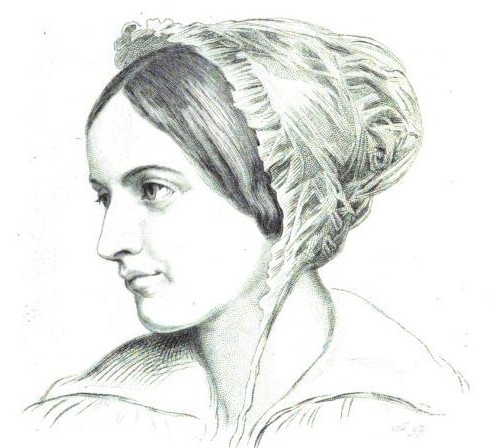
Fox's sister Caroline enjoyed her brother's scientific cronies but made
her own influential friends, including Tennyson, Garibaldi, explorer
David Livingstone, and philosopher John Stuart Mill. And wrote about
them all in her (lifelong) journal. Which was full of little
observations like that on Wordsworth: "evidently an admirer of the
monologue style of conversation." Caroline was a sensible and
intelligent woman until she fell head-over-heels for a married man, poet
John Sterling (nothing came of it).
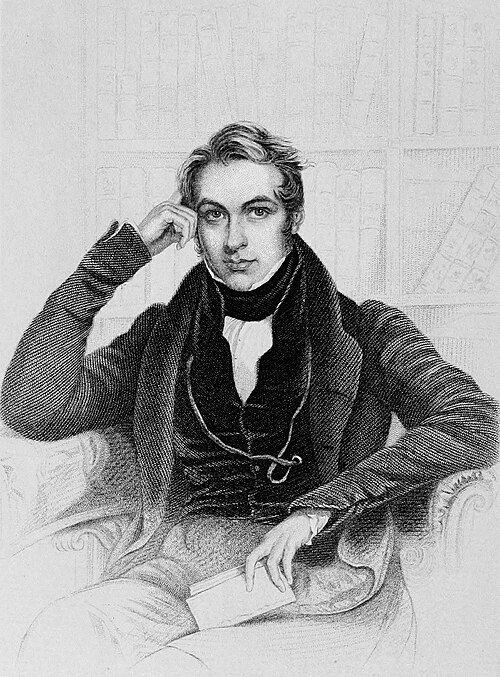
Sterling was an admirer of Coleridge and Wordsworth, went to Germany to
"immerse" himself in the Romantic Movement, married into a Bordeaux wine
company, and was involved in skullduggery for Spanish revolutionary
General Trujillo, providing him and his men with false passports, arms,
and money, and (no fool) being absent when Trujillo's attempted coup
went sour. Sterling's other claim to fame was the Sterling Club, where
diners reputedly indulged in "impious" activity. Alas nothing further is
detailed.
Sterling's prolific output of poems, essays, novels, and general
scribble have, fortunately, long gone from sight but at the time the
stuff impressed people like Caroline Fox. And, in 1843, a visiting,
one-legged American writer on religious matters, Henry James (no, not
that one). By 1847 James was into Free Love and do-your-own-thing
expression and behavior. All this, the subject of sell-out lectures in
New York. In the 1850s James wrote for the New York Tribune
on everything from spiritualism to alcoholism to theology. And any
scandal in the news. In 1874 he created his own little fuss when a
private letter he'd written about marriage, divorce, and sex found its
way into a rag called Wood-hull's and Clafin's Weekly
In 1872 Victoria Woodhull was the first-ever woman candidate for
president. Unfortunately, she was in jail on election day but in any
case got no votes. Victoria had been incarcerated for using the mails to
send obscene material: i.e., her mag containing a report on the
long-running story (she had written earlier that year) about the
holier-than-thou Reverend Henry Ward Beecher, (brother of Uncle Tom's Cabin author Stowe) whose sexual affair with a parishioner's wife Victoria was able to parlay into the greatest brouhaha of nineteenth century America.
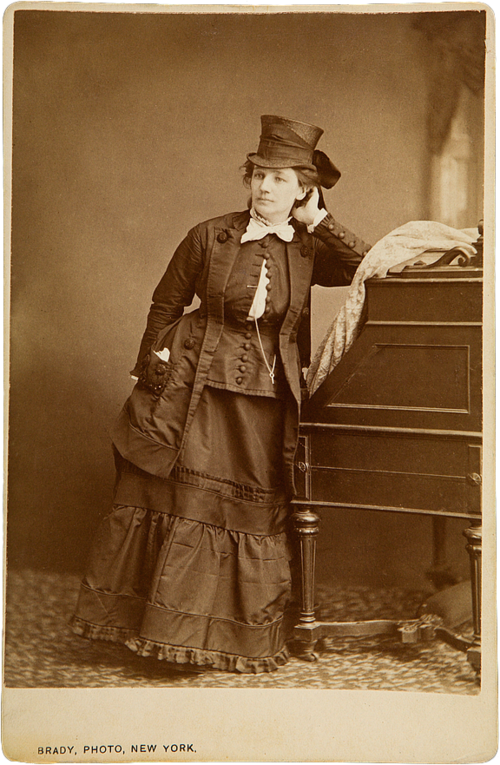
Cabinet card of Woodhull by Mathew Brady, 1866–73
Victoria had originally made her pile as a "medical clairvoyant" and hit
the big time in 1868 after arriving in New York (from the Midwest) and
heading straight for Cornelius Vanderbilt. Who was into table-rapping
and whose prostate was given magnetic healing treatment by Victoria's
lovely sister Tennessee. Vanderbilt pointed the sisters at good
investments and they never looked back. He also took their stock advice and made millions. The sisters used their stock profits to buy a newspaper.
As a railroad baron Vanderbilt just got richer and richer. After he
died, selling his shares in the New York Central Railroad took several
years of the best efforts of his banker, J. P. Morgan. Who exercised
more power in America than any elected official. Morgan singlehandedly
saved the country from the Financial Panic of 1907 because he was able
to manipulate financial institutions and markets.
The root of the problem was America's chaotic banking system, so in 1910 something
secret was done about it on Jekyll Island, Georgia. A group of six major
bankers and one Treasury official met (for what was officially described
as a "duck hunt": only first names were used and no records were kept)
to hammer out the structure of what would become the Federal Reserve (a
Central Bank in all but name). Criticized later as a cartel, the Fed
became the ultimate instrument of American financial stability.
One of the groups represented on Jekyll Island was the European banking
firm Kuhn, Loeb & Company. Their man Paul Warburg was the architect of
the event. In 1919 the board of Kuhn, Loeb was joined by aristo Brit Sir
William Wiseman, who had spent World War I as head of British
intelligence in Washington, D.C. Telling his government he had top
American contacts and telling the Americans he had the U.K. government's
ear, he made both come true and was an effective conduit between the two
powers during and after the war.
Wiseman's sidekick in D.C. was London Times America
correspondent Arthur Willert. Whose son Paul also entered the
intelligence game in 1939. Sent to the British propaganda office in
Paris, he worked for Noel Coward, already a major international star and
writer of Private Lives, Cavalcade, Present Laughter, and
such hits as "Dance Little Lady," "Mad Dogs and Englishmen," and "Poor
Little Rich Girl."
Coward's Paris job was to spread disinformation (he
studiously ignored the fact that back home in London the papers were
full of scurrilous stories about him being outrageous at parties with
female Polish spies).
After the Germans took Paris, Coward spent the
rest of the war in London making such classic movies as In Which We
Serve* and *Brief Encounter.
Had the Germans invaded Britain, Coward was scheduled to be arrested and killed, as he was in The Black Book along with other figures such as Virginia Woolf, Paul Robeson, Bertrand Russell, C. P. Snow and H. G. Wells.
Coward's interior decorator was Marion V. Dorn.
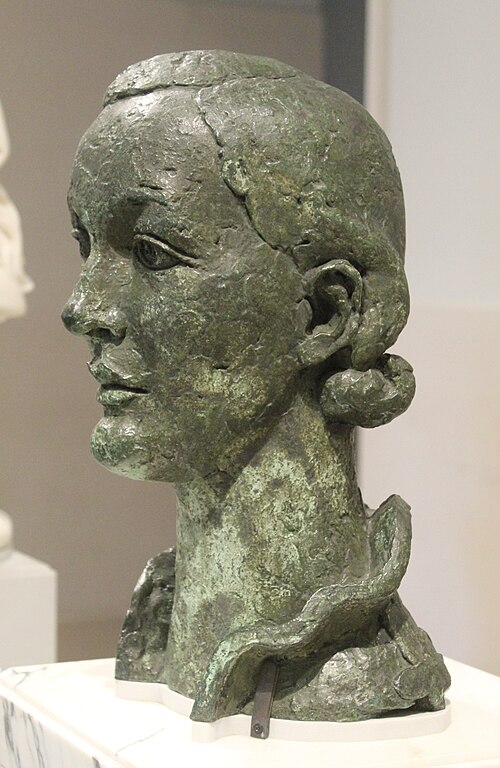
By the 1920s known for her batiks, Dorn lived between New York and London, soon began to concentrate on rug design (becoming known as the "architect of floors"),
and developed a long-term relationship with the Wilton Royal Carpet
Company.
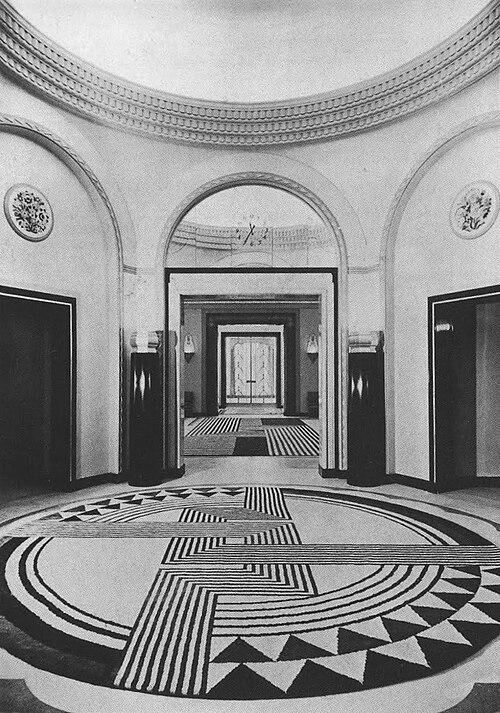
By the 1930s Dorn was setting the fashion with such décor
statements as the "all-white" sitting-room for Somerset Maugham's wife,
Syrie. And with her moquette seating fabric (still in use in 1952) for
the London Underground.
From 1919 to 1923 Dorn was married to her ex-tutor at Stanford,
ceramicist Henry Varnum Poor, best known for his murals at the Justice
and Interior buildings in Washington, D.C., and at Penn State
University.

Self-taught as an architect, Poor designed houses or home renovations for Kurt Weill and Lotte Lenya, John Houseman, Burgess Meredith and Maxwell Anderson.
In 1946 Poor was cofounder of the Skowhegan (Maine) School
of Painting and Sculpture, one of America's foremost artist residency
communities.
In 2005 the School's photo associate was BENJAMIN RUSH.