Le Corbusier
Charles-Édouard Jeanneret-Gris, who was better known as Le Corbusier (French: [lə kɔʁbyzje]; October 6, 1887 – August 27, 1965), was a**Swiss**-**French** architect, designer, painter, **urban planner**, writer, and one of the pioneers of what is now called **modern architecture**. He was born in **Switzerland** and became a **French citizen** in 1930. His career spanned five decades, with his buildings constructed throughout Europe, India, and America.
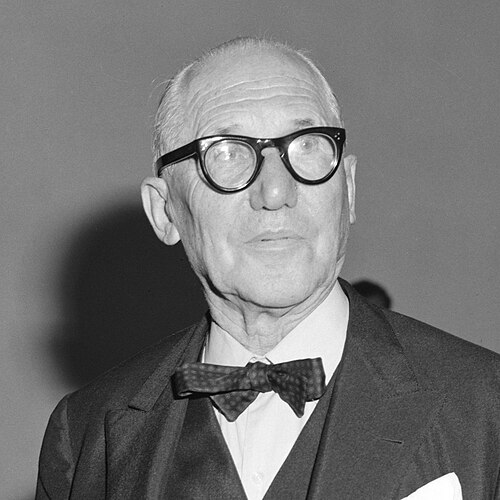
Dedicated to providing better living conditions for the residents of crowded cities, Le Corbusier was influential in **urban planning**, and was a founding member of the **Congrès international d'architecture moderne** (CIAM). Corbusier prepared the master plan for the planned city of**Chandigarh** in **India**, and contributed specific designs for several buildings there.
- Early life (1887–1904)
- Travel and first houses (1905–1914)
- Dom-Ino House and Schwob House (1914–1918)
- Painting, Cubism, Purism and *L'Esprit Nouveau* (1918–1922)
- *Toward an Architecture* (1920–1923)
- L'Esprit Nouveau Pavilion (1925)
- *The Decorative Art of Today* (1925)
- Five Points of Architecture to Villa Savoye (1923–1931)
- League of Nations Competition and Pessac Housing Project (1926–1930)
- Founding of CIAM (1928) and Athens Charter
- Projects (1928–1963)
- Later life and work (1955–1965)
- Estate
- Ideas
- Furniture
- Controversies
- Criticism
- Influence
- Fondation Le Corbusier
- Awards
- World Heritage Site
- Memorials
- Works
- Books by Le Corbusier
- See also
- Notes
- References
- External links
http://en.wikipedia.org/wiki/Le_Corbusier
==