Averroes
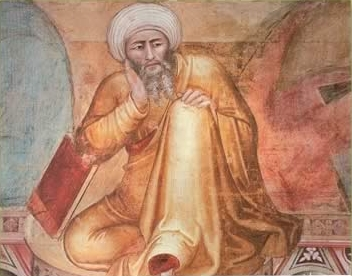
OTHER-NAME: Ibn Rushd
BIRTH: 1126, Cordova, Spain
DEATH: 1198, Marrakesh, Morocco
CATEGORY: Philosophy
DISCIPLINE: Philosophy
ASSESSMENT: Averroes, who revolutionized the interpretation of Aristotle, was one of the most important medieval Arabic philosophers
LANGUAGE: Arabic
EDUCATION: Studied jurisprudence, mathematics, medicine, philosophy, and theology.
ACHIEVEMENT: Averroes re-introduced Aristotle to the West, while bringing an end to four centuries of confict between Islamic theology and philosophy.
MAJOR-WORK: Various commentaries of Aristotle
PARENTS: Father was a prominent religious (Maliki) judge.
SPOUSE:
SIBLINGS:
CHILDREN:
DETAILS: Ibn Rushd, known in the West as Averroes, was born in 1126 to a prominent family of religious (Maliki) judges. Following his family’s legacy, Averroes studied theology, jurisprudence, Arabic, philosophy, and medicine with the best scholars.
Through his philosophy studies Averroes became good friends with Ibn Tufayl, physician to the caliph Abu Ya’qub Yusuf, and met the caliph. This meeting would prove to be extremely fruitful for Averroes.
The caliph wanted some of the works of Aristotle* interpreted. Ibn Tufayl felt he was too old to take on the task, so in 1169 he passed it to Averroes, assigning him the role of Commentator of Aristotelian works.
The caliph’s family was very impressed with Averroes, and as a result he was appointed religious judge of Seville from 1169-1172, chief judge of Cordova in 1172, and in 1182 became physician to the Marrakesh court.
Averroes’ continued to be held in high esteem by the royal family when al-Mansur took his father’s place as caliph in 1184. However, in 1195, Averroes’ fell out of favor with the family when the public pressure from a sect of jurists persuaded the family to turn against philosophy. Averroes’ began to face rumors and charges that would disgrace him.
One charge was that he called the caliph the “king of Berbers,” which could be taken to mean “king of barbarians.” Also, Averroes had referred to Venus as one of the Gods, a description unacceptable to the jurists and the caliph. As a result of all this, Averroes was banished to Lucena and the ban on philosophy was lifted only just before his death.
Many of Averroes’ works were later burned by Islamic authorities. However, Averroes’ contribution to Islam is undeniable. Averroes was a vocal defender of Greek philosophy against Islamic theologians. While Muslim Neo-Platonists had been determined to reconcile the teaching of Plato* with that of Aristotle, Averroes worked hard to bring pure Aristotelianism to light again.
Averroes’ efforts did not go unnoticed by other parts of the world. Many of his writings were translated into Hebrew and Latin, making Averroes a great influence on the Jewish and Christian faiths.
Averroes wrote short, medium, and long commentaries on Aristotle, and each type of commentary found popularity among Hebrew and Latin scholars. Without these commentaries Aristotle’s work might never have been known to the West.
Aristotle presented a philosophical alternative to the theological view of human moral perfection. Averroes’ interpretation provided an intellectually stimulating guide to a way of life other than that held by the theologians.
Averroes found a way to reconcile the theological and philosophical views through his doctrine of “double truth,” which held that religion and philosophy occupied their own separate spheres of truth. He believed religion was for the masses and philosophy for only the select few who understood it. In essence, Averroes held that philosophy superseded religion, but that religion should not be discounted because it represented the only way for a multitude of people to find truth.
The Latin translations of Averroes were read by the Christian scholar Albertus Magnus* (Albert the Great), who wrote during the 13th century, and was the first person to offer interpretations of Aristotle to Western Christians.
Albertus felt that Averroes had corrupted and misinterpreted Aristotle because he had translated most of Aristotle’s works from Syrian and Arabic translations of the original Greek and therefore had not fully understood Aristotle.
Albertus wanted to purify Aristotelianism, and reconcile philosophy and religion in a way that would uphold theology as superior. Averroes had said that all humans shared one universal intellect. For Albertus this removed individual immortality and responsibility from the individual.
Not all Christians reacted in the same way. In the late 13th century Aristotelian Scottish philosopher Duns Scotus* based his thinking on Averroes’ interpretations of Aristotle’s Metaphysics, claiming that the existence of God could be inferred through reason, by a process of abstraction.
The Jewish faith was also heavily influenced one way or the other by Averroes’ Aristotelianism. The 14th century Jewish philosopher Levi Ben Gershom* believed in Averroes’ universal intellect theory. Gershom thought that when Aristotle and the Bible conflicted, one should make accommodations to allow Aristotelianism thought into the Bible.
Other Jewish thinkers were furious with Gershom for believing that the Bible should be at all re-interpreted. The 14th-century Hasdai Crescas* thought that philosophy was an obstacle to the knowledge of God and objected to Averroes’ ideas.
Overall, Averroes brought the once-forgotten Aristotle to life. Christian and Jewish religions shaped the future of their beliefs largely based on this philosophical rebirth.
Although Averroes may have died with few supporters, he left an impressive mark on philosophy and religion.
EXTRA-CONNECTIONS: He critiqued the thought of earlier Arab philosopher Avicenna*
He influenced the thought of St Thomas Aquinas* and the work of Renaissance artist Ghiberti*
His writings were taught by Singer of Brabant*
References to Averroes appear in the popular culture of both the western and Muslim world. The poem The Divine Comedy by the Italian writer Dante Alighieri, completed in 1320, depicts Averroes, "who made the Great Commentary", along with other non-Christian Greek and Muslim thinkers, in the first circle of hell around Saladin.[118][112] The prologue of The Canterbury Tales (1387) by Geoffrey Chaucer lists Averroes among other medical authorities known in Europe at the time.[118] Averroes is depicted in Raphael's 1501 fresco The School of Athens that decorates the Apostolic Palace in the Vatican, which features seminal figures of philosophy. In the painting, Averroes wears a green robe and a turban, and peers out from behind Pythagoras, who is shown writing a book.[119]
Averroes is referenced briefly in Victor Hugo's 'The Hunchback of Notre-Dame' (written 1831, but set in the Paris of 1482). The novel's villain, the Priest Claude Frollo, extols Averroes' talents as an alchemist in his obsessive quest to find the Philosophers Stone.[120]
A 1947 short story by Jorge Luis Borges, "Averroes's Search" (Spanish: La Busca de Averroes), features his attempts to understand Aristotle's *Poetics* within a culture that lacks a tradition of live theatrical performance.
ONELINER: Averroes, medieval Arab philosopher
BIBLIOGRAPHY:
"Averroës." Encyclopedia of World Biography, 2nd ed. 17 Vols. Gale Research, 1998.
Reproduced in Biography Resource Center. Farmington Hills, Mich.: The Gale Group. 2004. 0-galenet.galegroup.com.mill1.sjlibrary.org:80/servlet/BioRC.;
Fakhry, M. (2001). Averroes: his life, works, and influence. Oxford: Oneworld.;
Cross, R. (1999). Duns Scotus. Oxford: Oxford University Press.;
Wolfson, H. (1957). Crescas' critique of Aristotle: problems of Aristotle’s physics in Jewish and Arabic philosophy. Cambridge: Harvard University Press.