Henley WE
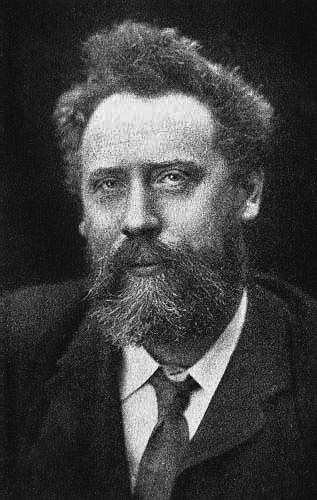
Name: Henley, William Ernest
ACHIEVEMENT(S): British poet, critic, and editor; introduced the early work of many English writers of the 1890s
DATE AND PLACE OF BIRTH: August 23, 1849, Gloucester, England
DATE/PLACE OF DEATH/AGE AT DEATH: July 11, 1903, at Woking, England. Aged 53.
DISCIPLINE: Writer
FIELD: Literature
LANGUAGE: English
PARENTS: William Henley; Emma Morgan
SIBLINGS: Edward John, actor; Nigel; Joseph; Anthony Wharton, landscape painter
SPOUSE: Anna Boyle
CHILDREN: Margaret Emma (died at six years)
EDUCATION: Crypt Grammar School, Gloucester
MAJOR WORK: "Invictus"
LIFE AND TIMES:
Bent on making a living as a writer, Henley went to London. He sent out poems and attempted freelance work, but his health deteriorated and he was a patient for almost a year in St. Bartholomew's Hospital. During this time, his father died, leaving Henley penniless. But he was able to sell his "The Bohemian Ballads" to "The Period", a short-lived weekly review.
For about three years, Henley lived a fairly Bohemian existence. In 1872, tuberculosis spread to Henley's right foot. Seeking a cure, he moved to seaside lodgings in Margate, and then to the Royal Sea-Bathing Infirmary there.
Desperate for treatment, Henley returned to London to seek out a young surgeon he had heard about, Lister*, who used antiseptic treatment during surgery, with considerable success. Through St. Bartholomew's Hospital, Henley was referred to Lister at the Edinburgh Infirmary.
He traveled to Edinburgh by sea. With only 10-and-a-half pence to his name, he was admitted, and after six days was carried to the operating table in a basket. He was aware he might lose the right foot, but Lister, after applying chloroform, operated and the foot was saved.
In the Infirmary for nearly two years, Henley began writing free-verse impressionistic poems about hospital life. And these works established his poetic reputation. They were first published in 1875 as "Hospital Verses" in "The Cornhill Magazine", edited by Leslie Stephen. Earlier, Stephen had visited Henley at the Infirmary, bringing with him Robert Louis Stevenson*. Henley and Stevenson became close friends.
Henley also met his future wife, Anna Boyle, in the infirmary. She was visiting her brother, Captain Boyle, a patient, who introduced Henley to Rudyard Kipling's poetry.
Henley's most popular poem, "Invictus" dates from this period. It concludes with the famous line: "I am the master of my fate, I am the captain of my soul." After his discharge in 1875, Henley stayed in Edinburgh and wrote items for the second edition of the "Encyclopedia Britannica".
In 1877, Henley returned to London, assuming editorship of the weekly paper "London", in which he printed many of his early poems, several of the essays that had already been printed in the collection "Views and Reviews" and Stevenson's "New Arabian Nights". In 1880, at 31, he wrote the melodrama "Deacon Brodie" with Stevenson, and from 1882 to 1886, he was editor of "The Magazine of Art". In this journal, he published critical essays on sculptor Rodin* and other contemporary painters, including Whistler*.
In 1884, at Bournemouth, Henley and Stevenson wrote the plays "Beau Austin" and "Admiral Guinea". Later that year, Henley traveled to Paris, where he made friends with Rodin, who two years later sculpted a bust of Henley.
In 1885, Henley collaborated for the last time with Stevenson, on the light comedy "Macaire". In 1887, Henley was appointed consulting editor of "The Art Journal", and in 1888, his "A Book of Verses" was published, containing the "Hospital Poems".
In December 1888, Henley moved to Edinburgh to become editor of the weekly "Scots Observer."
The journal transferred to London three years later and became the "National Observer." In it Henley published the early work of Thomas Hardy*, Shaw*, H.G. Wells*,Barrie*, and Kipling*. Henley also edited, with T.F. Henderson, the centenary edition of the poems of Burns*.
In 1892, Henley published the "Song of the Sword and Other Verses", including the "London Voluntaries", which contains the most technically difficult of his poems. In 1894, Henley and his wife settled in London. He resigned the editorship of "The National Observer" and became chief editor of "The New Review."
ASSESSMENT: Though not a major poet, Henley was the catalyst and sponsor for many young writers, including Robert Louis Stevenson.
EXTRA CONNECTIONS: A friend of Yeats*.
Sent his work to poet Swinburne*, asking for advice.
Knew Ford Madox Ford*
A fixture in London literary circles, the one-legged Henley might have been the inspiration for Robert Louis Stevenson's character Long John Silver (Treasure Island, 1883), while his young daughter Margaret Henley inspired J. M. Barrie's choice of the name Wendy for the heroine of his play Peter Pan (1904).
"Invictus"was composed during his isolation as a consequence of early, life-threatening battles with tuberculosis. Nelson Mandela recited the poem "Invictus" to other prisoners incarcerated alongside him at Robben Island, some believe because it expressed in its message of self-mastery Mandela's own Victorian ethic.
ONELINER: WE Henley, British Victorian writer and editor
BIBLIOGRAPHY:
EB, DNB
Ratcliffe, Eric, William Ernest Henley (1849-1903): An Introduction, London: Astrapost.
William Ernest Henley - Wikipedia