La Rochefoucauld
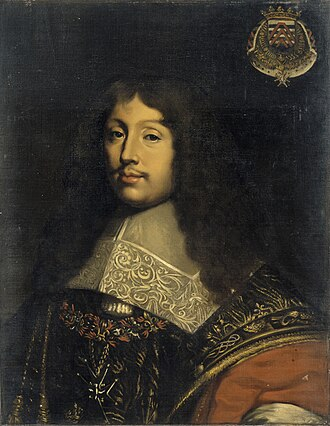
Name: Francois VI, Duke of La Rochefoucauld
Achievements: Great French classical writer
Born: September 15, 1613; Paris, France
Died: March 16 or 17, 1680; Paris, France (Aged 66)
Field & Discipline: Aristocracy; Politics; Literature; Aristocrat; Writer
Language: French
Father: Francois, Count of La Rochefoucauld (later made Duke)
Mother: Gabrielle du Plessis-Liancourt
Siblings: 6 brothers, 7 sisters
Spouse: Andree de Vivonne
Children: 4 sons, 3 daughters
Education: Private tutors
Major Work: "Maximes"
Life & Times:
A member of an ancient French noble family, La Rochefoucauld was brought up on their estates in the west of France. His great-grandfather François III, count de La Rochefoucauld, was killed in the St. Bartholomew's Day massacre, being a Huguenot. At 14, he was married and moved to Paris. Four months later, he was put in command of a unit of light horse, and the following year, was made a colonel of the Auvergne regiment. Though having no military experience, he fought against Spanish forces in Italy in 1629, and in the Netherlands and Picardy in 1635.
In 1635, La Rochefoucauld became romantically involved with the Duchess of Chevreuse, who persuaded him to join a plot to depose the powerful [plotted against] Richelieu*, the country’s first minister. When the plot went awry, La Rochefoucauld was imprisoned for eight days in the Bastille and then exiled for two years to Verteuil.
In 1639, he was back again in the army, serving in Flanders. When Richelieu died in 1642, Rochefoucauld -- as did every other noble who had fallen foul of the Cardinal -- set out for Paris, hoping for reinstatement at Court. But the king was sick and the Queen was not interested in politics.
When the king died in 1643, the Queen (as Regent for the young heir to the throne) turned to an Italian, [promoted by] Mazarin* for advice, and La Rochefoucauld lost all hope for a chance at power.
But La Rochefoucauld remained at court, hoping at least to regain the governorship of Poitou, which had been taken from his father who was suspected of disloyalty. He whiled away his time involving himself in court intrigues and love affairs. He wrote the "Art of Love", giving seduction tips. Finally, in 1646, Cardinal Mazarin, now first minister of Louis XIV's government minority, gave La Rochefoucauld the governorship of Poitou.
In 1648, La Rochefoucauld was drawn into the recently-begun "Wars of the Fronde" by his mistress, Anne de Bourbon, Duchess of [mistress was] Longueville*. The rebellion was over Mazarin's intention to reduce the privileges of parliamentarians, office holders, and the nobility. The duchess was sister to the Prince de Conde, who was the most prominent leader of the rebels. La Rochefoucauld, who, like most of France, hated Mazarin, joined in willingly. During the wars, he fought under Conde, and was wounded three times.
After royal authority was re-established in 1653, La Rochefoucauld obtained permission to return to his estates, but he was now burdened with debts and mortgages. He gradually re-ingratiated himself at Court and was back in Paris by 1656. He avoided politics and spent more time in the cultural salons of Madame de Lafayette and Madame de Sable, considered intellectuals in their own right.
De Sable was a follower of the reforming cleric [influenced by] Jansen* and a friend of the philosopher [knew] Blaise Pascal*. La Rochefoucauld's new friends met to discuss literature and art and listened to the readings of such writers as [knew work of] La Fontaine*, playwright [knew work of] Corneille*, and satirist/critic [knew work of] Boileau*. A favorite pastime of the group was to invent and discuss epigrams, or "maxims": brief, witty sayings that described a general truth about manners and behavior.
The epigrams usually referred to faults or ambiguities in human nature. La Rochefoucauld kept notes and completed a manuscript of maxims, which he published in 1665 as "Reflections or Sentences and Moral Maxims". The volume was so successful, he produced four more between 1665 and 1678.
His writings greatly influenced a number of disciples in later centuries, including German philosopher [influenced] Nietzsche*, English novelist [influenced] Thomas Hardy*, and French writer [influenced] Stendhal*.
Assessment: A brilliant member of the French classical school of writing, is best remembered for his collections of epigrams.
Oneliner: La Rochefoucauld, major 17th century French writer
Bibliography:
- Bishop, Morris, The Life and Adventures of La Rochefoucauld, Cornell University Press, Ithaca, New York, 1951.
François de La Rochefoucauld (writer) - Wikipedia