Franklin, Benjamin
(See Ben 2)
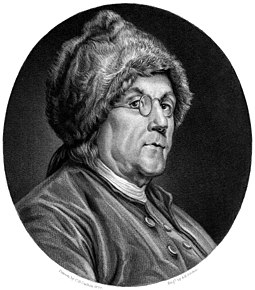
Achievements: The first American to win an international reputation in pure science and the first scientist to become famous for work done wholly in electricity; represented American interests in Europe during the period of the Revolutionary War and helped frame the Declaration of Independence and signed it.
Born: January 17, 1706; Boston, Massachusetts
Died: April 17, 1790; Philadelphia, Pennsylvania (Aged 84)
Field & Discipline: Science; Government & Politics; Journalism; Invention; Scientist; Inventor; Statesman; Journalist
Language: English
Father: Josiah Franklin
Mother: Abiah Folger
Siblings: Eight siblings survived infancy; five half-siblings survived infancy;
Spouse: Deborah Read (common-law wife)
Children: Francis Folger; Sarah; William (illegitimate)
Education: South Grammar School, Boston; George Brownell's English School, Boston
Major Work:
"Experiments and Observations on Electricity"
Life & Times:
At 16, Franklin wrote a series of satirical articles for his father's weekly newspaper, the New England Courant.
In 1723, he moved to Philadelphia, where the governor of Pennsylvania, Sir William Keith, lent him money to set up his own print shop. He also arranged for Franklin to go to England to contact London paper-sellers, but when Franklin arrived, he found his letters of credit and introduction had not arrived. He took a job in a printing shop and over two years became a skilled printer.
In 1726, Franklin returned to the printing business in Philadelphia. His pamphlet "A Modest Enquiry into the Nature and Necessity of a Paper Currency" helped him get the job of printing Pennsylvania's first paper currency.
In 1730, he bought the weekly newspaper "The Pennsylvania Gazette" which became acknowledged as one of the best colonial newspapers. In 1732, he first published "Poor Richard's Almanac," a collection of articles and advice on a vast range of topics, that became immensely popular.
In 1742, Franklin designed the Pennsylvania stove (with under-floor draught), which sold fantastically well.
In 1745, Peter Collinson in London sent a pamphlet describing new German investigations into electricity. Franklin repeated the experiments in the pamphlet, most of them having to do with the Leyden jar (an early capacitor invented in Leyden, Holland, in the mid-1740s).
His research brought him to the view that what was believed to be two kinds of electricity were in fact a single fluid flowing into or out of objects, producing a positive charge (an excess of electricity) or a negative charge (a deficiency of electricity). He concluded that when objects were electrified, nothing new was created or lost, but that the electricity was rearranged (conservation of charge). This view replaced the earlier one of the French experimenter [replaced theory of] Nollet*
In 1750, Franklin proposed the idea of a lightning conductor. He theorized that thunderclouds were like charged bodies, and that pointed conductors could dissipate the charge or carry it safely to earth. In 1751 his letters on electricity were published in London as "Experiments and Observations on Electricity" and translated into French. In 1752, Franklin flew a kite in a thunderstorm and was able to charge up a Leyden jar from sparks produced from the end of the wet hemp string, which he held with a piece of insulating silk.
Franklin abandoned his electrical experiments in late 1747, when French and Spanish privateers attacked ships and settlements on the Delaware River, and the French and the Native Americans attacked Pennsylvania's frontiers.
The Pennsylvania assembly was controlled by Quakers, most of them pacifists, and no one could raise a militia. To rally a retaliatory force, Franklin wrote the pamphlet “Plain Truth; or, Serious Considerations on the Present State of the City of Philadelphia and Province of Pennsylvania,” in which he proposed (and then organized) a militia association. He became a popular local hero, provoking the jealousy of [made an enemy of] Thomas Penn*, Pennsylvania's main property owner.
In 1751, Franklin was elected to the Pennsylvania Assembly, where he remained until 1764. In 1749, he wrote "Proposals Relating to the Education of Youth in Pennsylvania", in which he proposed the founding of an Academy of Philadelphia, which opened in 1751 and from which grew the University of Pennsylvania. In 1756, he was elected to the [member of] Royal Society*, where he met [met] Sir William Jones*.
As Pennsylvania's delegate, Franklin attended the Albany Congress called for the union of the Colonies against the French and Native Americans. In 1757, he was sent to England to present the Philadelphia side in the controversy with the "Pennsylvania Proprietors" (the Penn family). The need for funds to defend the frontier had led the legislature to try to tax the lands of the Penn family, who were the proprietors under the colony's charter. Franklin negotiated a compromise whereby the Penns agreed to pay taxes on improved lands.
In London, Franklin and his son William lodged for 15 years with Margaret Stevenson, whose daughter Mary married the anatomist and physiologist [knew] Hewson*. Franklin made friends with [a pal of] Joseph Priestley*, [a pal of] Price* and [a pal of] Boswell*. In northern England and Scotland, he met [met] Hume* and [met] Adam Smith*.
He was elected chairman (1761-62) of the Committee of Colonies and Trade and of the Royal Society for the Encouragement of the Arts, Manufactures and Commerce, which had been founded by [member of Society founded by] Shipley* in 1754, with the aid of [knew] Sir Joshua Reynolds* and [knew] Dr. Johnson*, and which was the predecessor of the Royal Academy of Arts, founded in 1768.
When the Stamp Act was introduced in the late 1760s, Franklin stayed in London to plead the case for Pennsylvania, Georgia, New Jersey, and Massachusetts. He began to realize that there could be no reconciliation, and that his dream of a British empire of self-governing nations would not come true.
Between 1765 and 1775, he published 126 newspaper articles on current controversies, which towards the end became more and more bitter. In May, 1775, realizing war was imminent, he returned to Philadelphia.
The day after his arrival, Franklin was chosen delegate to the Second Continental Congress, and became deeply involved in the colonial struggle for independence. He advised [advised] Washington*, helped draft the Declaration of Independence, and served on a commission that failed to get Canada as an ally.
In September, 1776, Congress appointed Franklin, [worked with] Deane* and [worked with] Jefferson* to go to Paris to negotiate a military and economic aid treaty with France (Arthur Lee took Jefferson's place). Franklin stayed in Paris for most of the next nine years and enjoyed a hero's status. He became a close friend of [a pal of] Voltaire*. In June, 1781, he joined [was a Declaration of Independence co-signer with] John Adams* and John [worked with] Jay* in negotiating a peace treaty with Great Britain. In November, 1781, he asked Congress to recall him, but he was kept in Paris to work on trade treaties.
Franklin observed the first balloon ascension made by the [observed flight of] Montgolfier* brothers, invented bifocal glasses and served on a committee appointed by [nominated by] Louis XVI* to report on "animal magnetism," or hypnotism, thought by German physician [critiqued] Mesmer* to cure many, if not all, diseases.
He also identified and mapped the North American sector of the Gulf Stream using a new [used thermometer by] Fahrenheit* thermometer.
Franklin finally returned to Philadelphia in September, 1785. His last public act was to sign a memorial to Congress in 1790, calling for the abolition of slavery, as part of a campaign begun in Britain two years earlier by [shared views of] William Wilberforce* and [shared views of] Granville Sharp*.
Extra Connections:
Was friends with [a pal of] Lafayette*
Corresponded with [corresponded with] Pinel*; [corresponded with] Boscovich*; [corresponded with] Hogarth*.
In 1774 he was implicated along with [was a Declaration of Independence co-signer with] Samuel Adams* in the affair over the publication of letters by Massachusetts Governor Thomas Hutchinson to his British superiors.
German philosopher [admired by] Kant* called him the "Prometheus of modern time"
Influenced electrical experimenters [influenced] Sturgeon*, [influenced] Galvani* and lexicographer [influenced] Noah Webster*
Met [met] Jedidiah Morse*, philosopher [met] D’Holbach*, naturalist [met] Johann Forster*, geologist [met] Brongniart*, quack [met] James Graham* and liberal Lord [met] Shelburne*.
[met] Gouverneur Morris* nearly became his secretary in Paris.
Was a critic of US Superintendent of Finance [was a Declaration of Independence co-signer with ] Robert Morris*.
Was influenced by [influenced by] Descartes*, [influenced by] Volta*, and [influenced by] Petrus van Musschenbroek*
Author [biography editor was] Bigelow* edited his autobiography.
[was prefigured by] Kleist* laid the ground for his electrical work.
He was a pal of [ was a Declaration of Independence co-signer with] Rush*
He collaborated with William [collaborated with] Heberden*
He knew [knew] John Paul Jones*
He was a colleague of [a colleague of]Alexander Hamilton*
He signed the Declaration of Independence with [was a Declaration of Independence co-signer with]John Hancock*, [was a Declaration of Independence co-signer with]Josiah Bartlett*, [was a Declaration of Independence co-signer with]William Whipple*, [was a Declaration of Independence co-signer with]Sam Adams*[was a Declaration of Independence co-signer with]Robert Treat Paine*, [was a Declaration of Independence co-signer with]Stephen Hopkins*, [was a Declaration of Independence co-signer with]William Ellery*, [was a Declaration of Independence co-signer with]Roger Sherman*, [was a Declaration of Independence co-signer with]Samuel Huntington*, [was a Declaration of Independence co-signer with]William Williams*, [was a Declaration of Independence co-signer with]William Floyd*, [was a Declaration of Independence co-signer with]Philip Livingston*, [was a Declaration of Independence co-signer with]Francis Lewis*, [was a Declaration of Independence co-signer with]Lewis Morris*, [was a Declaration of Independence co-signer with]Richard Stockton*, [was a Declaration of Independence co-signer with]John Witherspoon*, [was a Declaration of Independence co-signer with]Francis Hopkinson*, [was a Declaration of Independence co-signer with]John Hart*, [was a Declaration of Independence co-signer with]Abraham Clark*, [was a Declaration of Independence co-signer with]Benjamin Franklin*, [was a Declaration of Independence co-signer with]John Morton*, [was a Declaration of Independence co-signer with]George Clymer*, [was a Declaration of Independence co-signer with]James Smith*, [was a Declaration of Independence co-signer with]George Taylor*, [was a Declaration of Independence co-signer with]James Wilson*, [was a Declaration of Independence co-signer with]George Ross*, [was a Declaration of Independence co-signer with]Caesar Rodney*, [was a Declaration of Independence co-signer with]George Read*, [was a Declaration of Independence co-signer with]Samuel Chase*, [was a Declaration of Independence co-signer with]William Paca*, [was a Declaration of Independence co-signer with]Thomas Stone*, [was a Declaration of Independence co-signer with]Charles Carroll*, [was a Declaration of Independence co-signer with]Benjamin Harrison*, [was a Declaration of Independence co-signer with]Thomas Nelson*, [was a Declaration of Independence co-signer with]Francis Lightfoot Lee*, [was a Declaration of Independence co-signer with]Carter Braxton*, [was a Declaration of Independence co-signer with]William Hooper*, [was a Declaration of Independence co-signer with]Joseph Hewes*, [was a Declaration of Independence co-signer with]John Penn*, [was a Declaration of Independence co-signer with]Edward Rutledge*, [was a Declaration of Independence co-signer with]Thomas Heyward*, [was a Declaration of Independence co-signer with]Thomas Lynch Jr.*, [was a Declaration of Independence co-signer with]Arthur Middleton*, [was a Declaration of Independence co-signer with]Button Gwinett*, [was a Declaration of Independence co-signer with]Lyman Hall*, [was a Declaration of Independence co-signer with]George Walton*, [was a Declaration of Independence co-signer with]George Wythe*, [was a Declaration of Independence co-signer with]Elbridge Gerry*, [was a Declaration of Independence co-signer with]Richard Henry Lee*, [was a Declaration of Independence co-signer with]Oliver Wolcott*, [was a Declaration of Independence co-signer with]Matthew Thornton*, [was a Declaration of Independence co-signer with]Thomas McKean*
Franklin invented [invented] bifocals*
[?]Bute*
Assessment: A man of great ability, he was the most famous 18th century American after George Washington
Oneliner: Benjamin Franklin
Bibliography:
- American National Biography.
- Collier's Encyclopedia.
- Dictionary of Scientific Biography.
- Dictionary of Physicists.
- Encyclopedia Britannica.
Wikipedia (see node 2)
timeline http://www.benfranklin300.org/timeline/index.html
Sandbox
American Connections
BEN FRANKLIN (PA) was seventy. And the oldest
signer. In one sense the Declaration was Franklin's failure. From his
first trip to England in 1757 up to the last-chance-saloon meeting with
the Brit High Command on Staten Island in 1776, Franklin had tried for
compromise and reconciliation instead of war and independence.
Apart from these weighty statecraft matters, in his London lodgings at
36 Craven Street Franklin also invented the glass [h]armonica
(Mozart wrote music for it), mapped the Gulf Stream (Franklin had
discovered it), and taught a phonetic alphabet (Franklin invented it) to
his land-lady's daughter Polly. Who came to Philadelphia in Franklin's
old age to look after him.
Once the American Revolution War of Independence was ready-or-not unavoidable, Franklin tried (and failed) to get Canada to join in and was then appointed commissioner to France to drum up support for the cause. Everywhere he went in Paris he was lionized as the homespun American democrat, scientist, statesman, writer, and general flirt who never wore a wig (they made his head itchy). He got more than every penny of the French money Congress was asking for and was then made U.S. minister to France.
In 1779 he was inducted as the second Worshipful Master of the Paris
Freemasons' Lodge of the Nine Sisters (aka Muses). The lodge was only two years old and the aim was enlightenment. All the science and arts biggies were members, including (just before he died) Voltaire.
Lodge founder and first Worshipful was an ugly, egocentric astronomer with a head like an eggplant, Jerome Lalande. Who had just caused the Great French Comet Panic of 1773. Lalande had delivered a paper to the academy about how there was a one-in-a-zillion chance that planetary
perturbation might make a comet change course and hit Earth. The whole of Paris headed for the hills. Lalande said, "Read my lips: one in a
zillion" And was ignored.
Astronomically Lalande was good but no cigar. He crunched numbers and produced star catalogues. He also propositioned women (as director of the Collège de France he admitted them to class for the first
time). And he held his professorship for forty-six bumbling years.
Survived the French Revolution because he kept his head down (and, he said, because they knew he was an atheist). He also bravely hid Samuel DuPont when he was on the run.
Once the French Revolution was in full swing DuPont's previous cozy
relationship with the royal government didn't help his case. DuPont had
been one of Louis XVI's councillors, advising on how to keep the price
of bread down and then saving both the king and Marie Antoinette from the mob in 1792. Du Pont was so highly regarded that before things got dangerous and he was forced to flee the scene and head for the States, even the revolutionaries asked his advice. His response: Don't use paper.
They ignored him. The problem was the public debt, which was close to
fatal. In 1790 the revolutionaries went ahead and issued 400 million
bonds (to be bought, they said, with the cash people had been keeping
under the mattress). As for repayment, the bonds would later be backed
by the eventual sale of church and aristo lands (a quarter of all real
estate in France). Didn't work out that way because the land sales
didn't happen or people didn't trust the system. So the government
changed the name of the bonds to "paper banknotes." Soon more money was needed, so they printed more. Devaluing the earlier paper. Inflation set in. By 1795 the 400 million notes in circulation had become 35 billion, each worth less than one-five-hundredth the original value.
Economically France went phutt. The mess was made messier by the unhelpful activities of the Count de Puisaye, minor aristo nobody with a lost-estates axe to grind. By 1794 Puisaye was in London persuading the Brits to ship him and his six thousand royalist fellow losers over to Brittany for a bring-back-the-monarchy (get-back-our-property) invasion. The whole thing was an eighteenth-century Bay of Pigs total disaster. Puisaye escaped, tried four years of Canada, then lived to a ripe old age in London. His only success (in 1794) was shipping into France a boatload of fake paper money, hastening that financial meltdown.
One of the Brits approached to do the faking claimed later he'd
indignantly spurned the offer (nontheless, there were rumors, because
Thomas Bewick was a well-known genius at designing money for banks and he had already come up with banknote-border designs impossible to forge). Bewick's woodcuts were so fine they looked like engravings (he pitched to Audubon, and Charlotte Bronte(https://app.thebrain.com/brain/f3e16344-7cd9-4fa3-ae1d-59876e128474/9eae149b-9240-508f-9ec8-30556d30388b), Tennyson and Wordsworth were fans). He first found fame in 1790 with an illustrated book on animals that became really popular and ran to fourteen thousand copies. In preparation for the work, Bewick took to visiting menageries like that of Stephen Polito, for whom he later did posters and handbills.
At the time Polito's featured show-stopper was "Monster Alpine People" (they were goiter sufferers). By 1800 the show included kangaroos, rhinoceroses, elephants, tigers, sloths, tapirs, monkeys, and lions in cages with lion-tamers. By 1811 Polito had two menageries traveling Europe at the same time. His London venue was visited by William Wordsworth and Lord Byron, and animals in his collection were painted by Edwin Landseer and Jacques-Laurent Agasse.
After he died his nephew John took over, running twelve caravans-full. And in 1827 in Marseilles John offered to transport George IV's giraffe back to England. The animal, a present from the Pasha of Egypt, lasted a couple of English winters and then died. Whereupon the king had it stuffed by Britain's leading stuffer, John Gould.
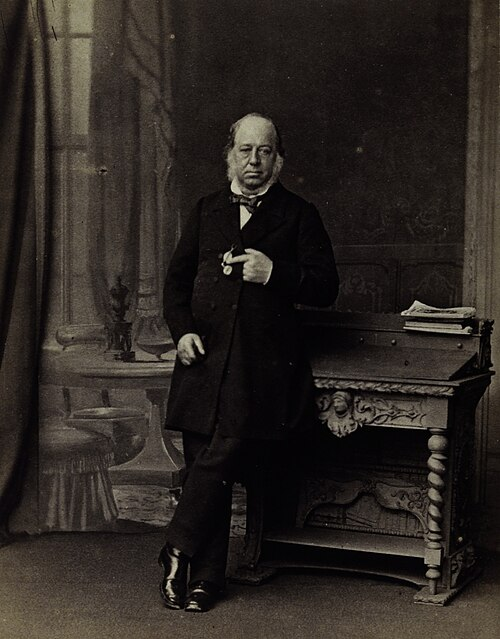
Already taxiderming while at school, Gould opened a stuffing office in London and then was hired as "preserver" at the London Zoo. By 1833 he was also made superintendent of birds, so he started painting them and reproducing the work in beautiful large-format lithographs.
His identification of the birds now nicknamed "Darwin's finches" played a role in the inception of Darwin's theory of evolution by natural selection. Gould's work is referenced in Charles Darwin's book, On the Origin of Species.
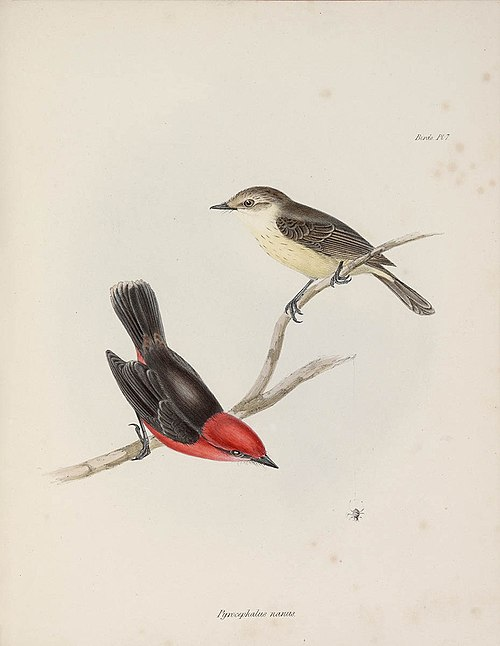
The Zoology of the voyage of H.M.S. Beagle : under the command of Captain Fitzroy, R.N., during the years 1832 to 1836, edited and superintended by Charles Darwin.
In the end: fifty volumes, thirty-five hundred plates, and a rave success thanks to his helpers including a man whose artistic efforts have long since been forgotten.
Edward Lear never made it to big-time art with his illustrated book on
parrots or the ten thousand watercolors he did during a ceaseless life
of to-and-fro painting in the Mediterranean and Middle East. In spite of
having given drawing lessons to Queen Victoria. Today Lear is known,
instead, for the funny poems he wrote in his spare time. His 1861 Book of Nonsense (seventy-two limericks and drawings) went straight
into the best seller list and has never been out of print. In 1867 Lear
wrote the immortal "Owl and the Pussycat."
As a serious artist (he painted seriously, with a lifelong ambition to illustrate Tennyson's poems), however, he thought this was literary tomfoolery and foolishly sold the buyout-rights-no-royalties to publishers Routledge for about five hundred bucks (though Ogden Nash and Edward Gorey were fans; A Beach Full of Shells, the 20th album by musician Al Stewart pays tribute in the song "Mr. Lear", celebrating Foss the cat and many events from Lear's life.).
By this time Routledge was on its way to cheap and popular success with "yellowbacks," the low-price reprints they sold at railroad station
bookstalls. With no copyright agreements in existence to keep them
honest, they helped themselves freely to American work, starting with
Fenimore Cooper and then going on to sell half a million of Harriet Beecher Stowe’s Uncle Tom's Cabin.
Routledge's success owed everything to the business smarts of W. H. Smith, who'd originally created the railroad reading market by selling
newspapers and books to the new traveling public in 1848.
He was elected a Member of Parliament in 1868 and rose to the position of First Lord of the Admiralty less than ten years later. Because of his lack of naval experience, he was perceived as a model for the character Sir Joseph Porter in H.M.S. Pinafore (and consequently nicknamed Pinafore Smith).
By 1851 Smith had the monopoly for all stations on the London North Western Railways and every right-thinking Victorian approved of the way he kept smut off the shelves.
Smith's big break came in 1854 when The Times gave him the
monopoly to sell the paper everywhere outside London. Sales went through the roof that year thanks to the Crimean War. To which the editor sent diplomatic correspondent Thomas Chenery.
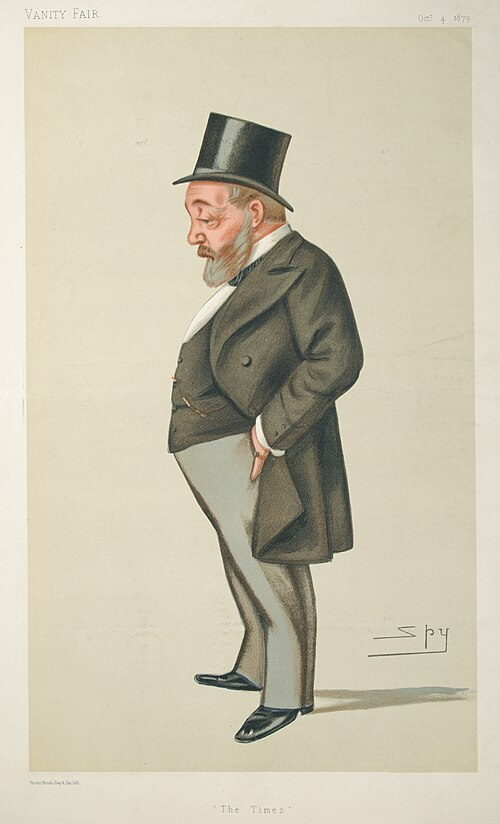
In Istanbul Chenery started stirring things up with reports on the appalling conditions at nearby Scutari military hospital. On October 12 the paper printed his report (no surgeons, no nurses, no supplies, no sanitation). Next day the checks started coming in. On October 14 a Letter to the Editor asked, "Why don't we have nursing help out there?" On October 21 Florence Nightingale was on the way with thirty-eight nurses.
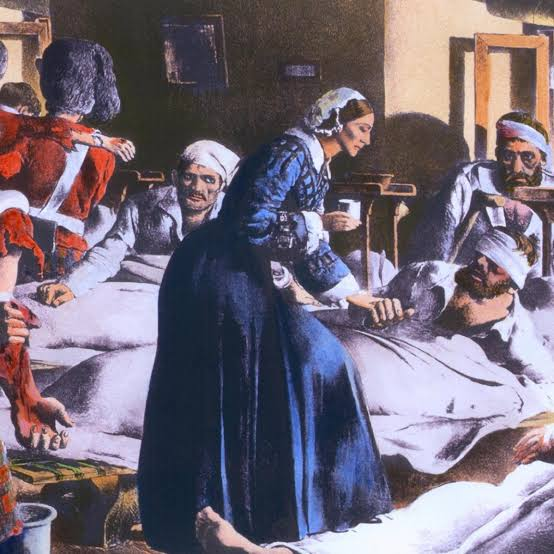
She discovered things were worse than anybody could have imagined: no operating tables, no medication (smoking was treatment of choice), no blankets, no sheets, one chamberpot per thousand men, one surgeon per ninety-five patients, filth and rot everywhere. In 1855 after it was all
over Nightingale's report eviscerated the military medical corps, noting
that of the 94,000 soldiers sent to the Crimea 4,000 had died of wounds
but 19,000 had died from disease.
No surprise, six years later Nightingale was being asked by Washington,
D.C., to advise the Union Sanitary Commission on what it should do about the Civil War. Commission director was master administrator Frederick Law Olmsted, who organized a massive nationwide effort. Volunteers set up twenty thousand soldiers' aid societies. Five million bucks was raised in cash and $15 million in kind.
Olmsted had started out as a landscape architect. On three European
trips during the 1850s he'd visited every public and private garden he
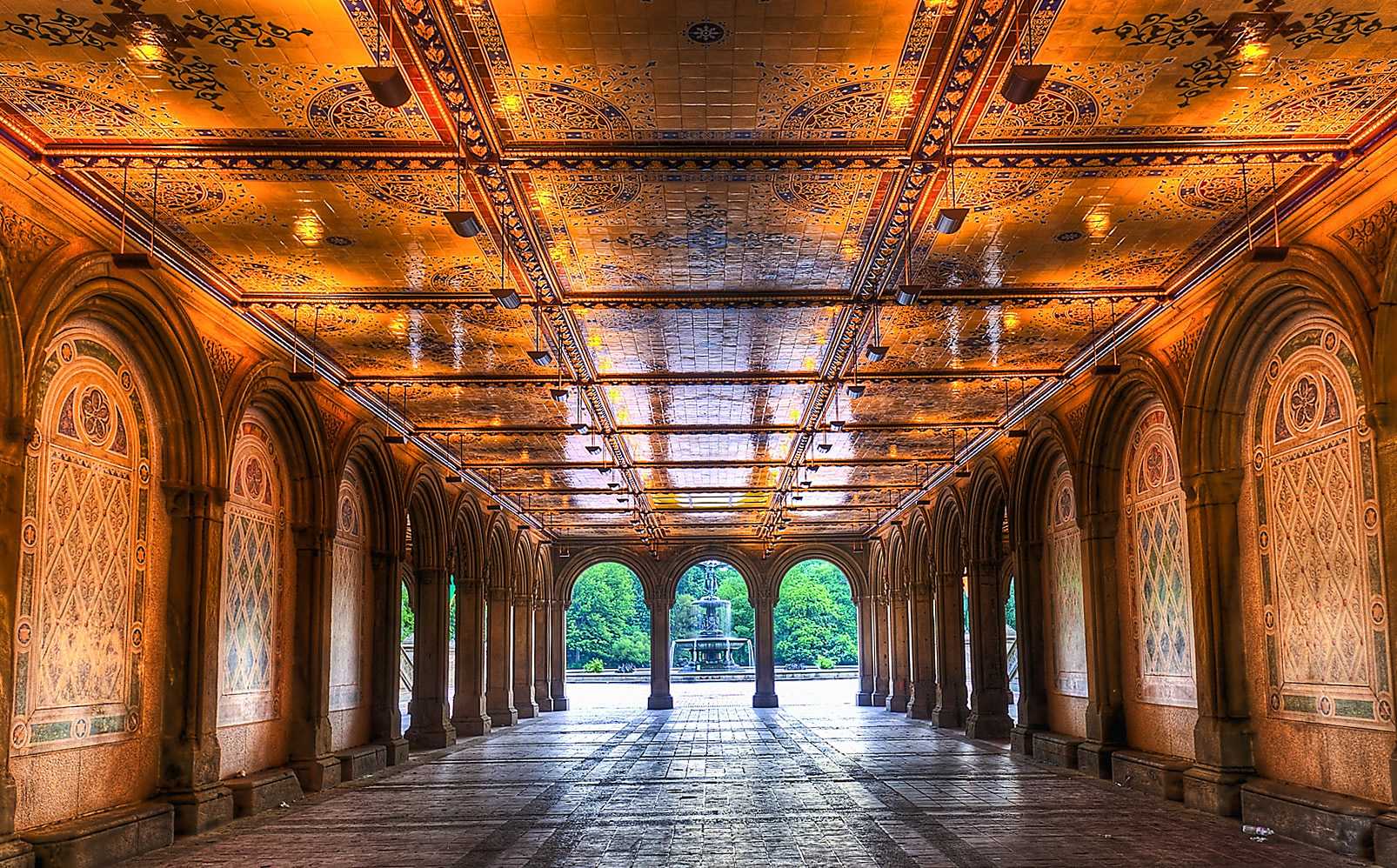
could find and came back to New York to help design the new Central Park with architect Calvert Vaux (a fan of Ruskin and Ralph Waldo Emerson). After the war the two men carried on the good work. Vaux designed and built the thirty-five park bridges, including the Bethesda Terrace with its 15,876 Moorish-design ceramic
tiles made by the Minton Company of Stoke-on-Trent, England.
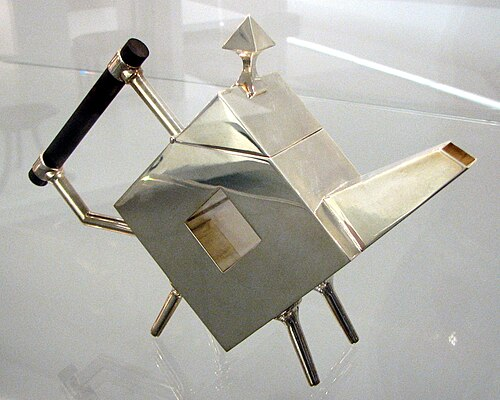
Minton's designer and art advisor at the time was Christopher Dresser, who'd trained at the U.K. Government School of Design, studying art and
botany. Dresser was probably the first industrial designer of
mass-produced consumer goods such as wallpaper, textiles, toast racks,
and kettles.
The 1862 International Exhibition in London displayed a number of everyday objects; the impact of which has been considered 'one of the most influential events in the history of Japanese art in the West', introducing people such as Christopher Dresser to Japanese Art....A number of artists from the Pre-Raphaelite circle such as Dante Gabriel Rossetti,[20] Ford Madox Brown (Rossetti's friend[21]), Edward Burne-Jones[22] and Simeon Solomon also was beginning to use Oriental influences in their works.
In four months in 1876–1877 Dresser travelled about 2000 miles in Japan, recording his impressions in Japan, its Architecture, Art and Art-Manufactures. He was received at court by the Emperor, who ordered Dresser to be treated as a guest of the nation – all doors were open to him.
Another main interest lay in bringing the techniques of
science (and in particular, botany) to art. For which in 1860 Dresser
was awarded a doctorate in botany by the German University of Jena.
Where the head of department was Matthias Schleiden, who lectured to
overflow audiences after his amazing discovery that organisms were made up of cells, the basic unit of all life.
One of Schleiden's early students was Carl Zeiss, whom Schleiden helped to set up an optical-and scientific-instrument company in Jena (Zeiss's mother was related to Christiane Vulpius, the spouse of Johann Wolfgang von Goethe.) and he repaired instruments for him). By the early twentieth century Zeiss was a household name (first geodesic dome). In 1904 the company produced a gizmo called a blink comparator. It allowed you to switch back and forth between two photographic images fast enough (in a blink) to spot smidgen changes in the image.
Just what Clyde Tombaugh (he later taught the neighbor boy to grind lenses, who also built a geodesic dome house; he was virtial reality pioneer Jaron Lanier, advisor to James Burke’s Knowledge Web project) needed in 1930 at Lowell Observatory, Arizona (established by Percival Lowell became one of the major proponents of the existence of Martian Canals, which he believed were evidence of life on Mars).
When Tombaugh was looking for Planet X, each photograph was a field of thousands of stars. One day as he switched between plates one of the
"stars" moved. It turned out to be the planet. In Oxford, England,
eleven-year-old Venetia Burney suggested a name: "Pluto." Her
grandfather's astronomer friend got the idea to Arizona and the Lowell
people agreed. Venetia's grandfather was librarian at Oxford University Bodley's Library, Falconer Madan.
After he died in 1935, the British Bibliographical Society endowed a
library research award in his name. If the work required residence at
Oxford the award holder stayed at Wolfson College. Which was also the
product of an endowment in 1966 by British mail-order billionaire Sir
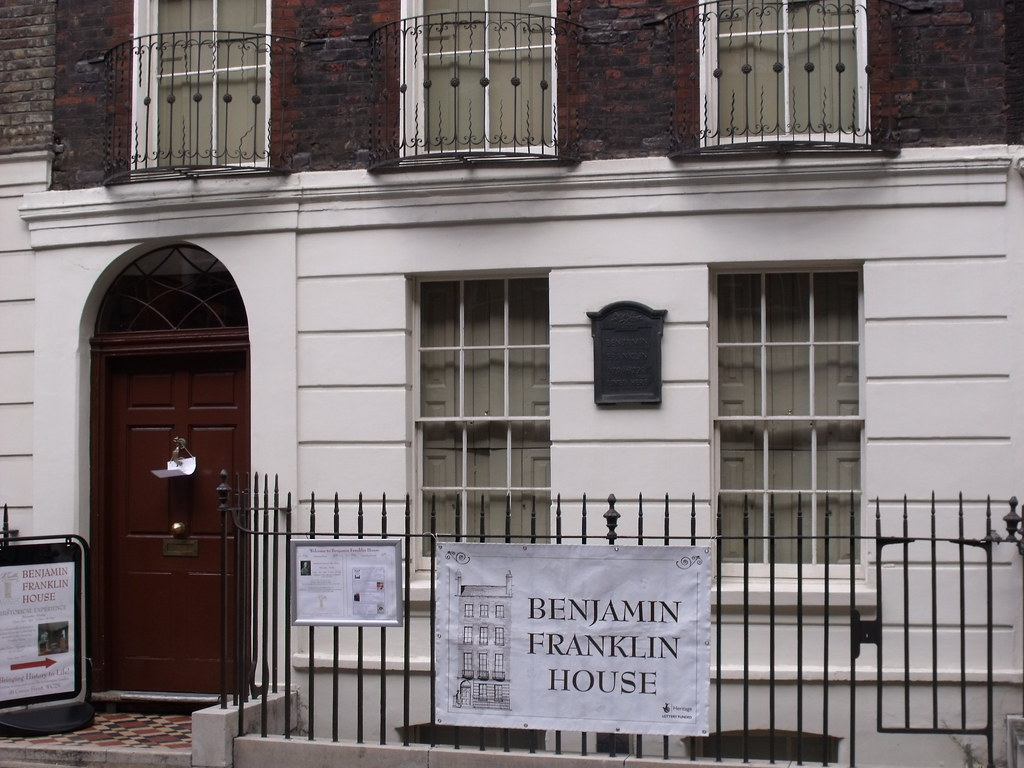
Isaac Wolfson. In 2003 the Wolfson Foundation awarded a grant toward the cost of restoring and refurbishing a house in Craven Street, London. In 2006 it opened to the public. The house was at number 36. The London residence of BEN FRANKLIN. ( The skeletons recently found in the basement were probably from his pal Hewson)