Elgin TB
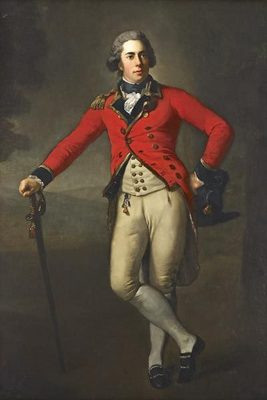
Thomas Bruce Elgin, seventh Earl of Elgin and eleventh Earl of Kincardine
Achievements: Removed the Elgin Marbles from the Parthenon
Born: July 20, 1766
Died: November 14, 1841; Paris, France (Aged 75)
Field & Discipline: Diplomacy; Military; Art; Diplomat; Soldier; Art Collector
Language: English
Father: Father: Charles Bruce, fifth Earl of Elgin
Mother: Unrecorded
Siblings: Brother: William Robert, sixth Earl of Elgin
Spouse: 1. Mary Nisbet; 2. Elizabeth Oswald
Children: by Nisbet: 4; by Oswald: 8
Education: Harrow school; Westminster school; University of St Andrews, Paris
Life & Times:
Elgin went into the army in 1785 and five years later was elected as a Scottish representative peer in the House of Lords. His first speech was so impressive that at the age of twenty-four he was sent as Envoy Extraordinary to represent Britain in Vienna. In 1795 (by which time Elgin was a lieutenant-colonel) King George III suggested to Elgin at a ball they were both attending that he should apply for the newly created post of ambassador to Turkey.
Elgin wrote to the Foreign Secretary requesting the post on the grounds that it would be ideal for his health. While preparing his embassy he was also having a new country house renovated. His architect (Thomas Harrison) told Elgin that the finest classical architecture was in Greece and not at Rome as had been previously thought. Harrison, and others, had only seen Greek antiquities in book illustrations and he suggested that Elgin take plaster casts and bring them home.
Elgin took to the idea with great enthusiasm. He failed to get government money for a team of artists but decided to go ahead and pay them himself. He discussed the project with the president of the Royal Academy, [discussed Marbles with] West*, who recommended several artists. Elgin's terms put off artists of the calibre of [offered job to] JMW Turner*, among the first offered the job.
In 1799 Elgin set sail from Portsmouth in a British warship with a large staff and a number of his wife's dogs. Pianos, carriages, linen, an enormous amount of furniture, a set of gold and silver plate, footmen, grooms and coachmen were packed on to merchant ships.
On the voyage out they stopped off at Palermo where they were entertained by the British ambassador [entertained by] Sir William Hamilton* and met his wife [entertained by] Emma Hamilton* and her lover [met] Admiral Lord Nelson*.
Hamilton, a respected antiquarian collector, encouraged Elgin's plans to record the classical architecture in Athens and recommended an Italian landscape painter (Giovanni Battista Lusieri) to take charge of the project.
The Elgin’s settled in at Constantinople and in 1800, Elgin's team of draughtsmen and modellers began work in Athens, then under Turkish rule. The following year Elgin was given permission from the Turks to erect scaffolding on the Parthenon, to make casts of the figures there and also to take away 'pieces of stone with old inscriptions or figures thereon'. Elgin had not planned to remove any sculptures but he became so anxious about the damage done to them during the earlier Turkish-Greek conflict that he decided to remove them.
His collection, now known as the ‘Elgin Marbles’ and housed in the British Museum in London, was assembled mainly from the Parthenon. Part of the collection was sent off to England in 1803 in the "Mentor" but the ship foundered two days out of Athens and it took three years and a large amount of money before the marbles were recovered by divers. Over the next nine years, the rest of the collection arrived in England.
Elgin left Turkey in 1803. On the last part of his journey home he was caught up in the renewed hostilities between England and France and was held in France as a prisoner of war until 1806. The terms of his release dictated by [released from captivity by] Talleyrand* stated that he must submit to a recall to France at any time. This meant that Elgin was not suitable for further ambassadorial positions and his diplomatic career came to an end.
Although he had been made a colonel in 1802 his health was too poor (he had syphilis) to consider an army career, and in 1807 he lost his seat in the House of Lords. He was in debt and after divorcing his wife had to do without her eventual inheritance of a large fortune.
The group of artists and connoisseurs invited to view the first collection of Elgin marbles, displayed in a shed behind Piccadilly, were overwhelmed by their quality. Everybody wanted to draw the exhibits. Boxing matches were arranged in the shed so that the physique of the fighters could be compared with that of the statues.
The tragic actress Sarah [showed Marbles to] Siddons*, was invited by Elgin to a viewing together with West and the portrait painter [showed Marbles to]Sir Thomas Lawrence*, and she fulfilled expectations by allowing tears to fall from her eyes at the sight of such beauty. In 1812, [was savaged by] Lord George Byron's* poem "Childe Harold" was published. In it Byron attacked Elgin for removing the marbles from Greece.
This started a controversy about the matter which resulted in Elgin being labelled a thief and a barbarian. In the "Curse of Minerva", published sometime later, Byron repeated his attack more savagely.
Elgin was reviled abroad as well as at home. Elgin desperately needed money, and in 1816, at his request, a select committee of the House of Commons was appointed to discuss buying the collection for the nation. The marbles were bought for considerably less than the whole affair had cost Elgin, and displayed in the British Museum, where they remain today.
Elgin lived a retired life in Scotland, financed only by his Foreign Office pension. To escape his creditors, he eventually fled to France where he died .
Extra Connections: He helped get [helped] Jenner’s* vaccination sample to India
Assessment: Elgin is remembered for his controversial removal of marbles from the Parthenon.
Oneliner: Lord Elgin, of Elgin Marbles fame
Bibliography:
- St Clair, William,Lord Elgin and the Marbles, The controversial history of the Parthenon Sculptures, Oxford University Press, Oxford, 1998.
Multimedia:
Connections 3 Eposode 10. "In Touch"