Cuvier
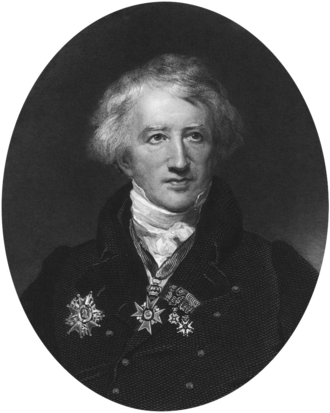
Name:Georges Cuvier
Achievements: Founded paleontology.
Born: August 23, 1769; Montbéliard, Württemburg, Germany.
Died: May 13, 1832; Paris, France (Aged 62)
Field & Discipline: Science; Zoology, Paleontology: History of Science; Paleontologist
Education: Caroline University (Hohen Karlschule), Stuttgart
Major Work: “Regne Animal Distribuée d’après son Organisation” (The Organization of the Animal Kingdom)
Life & Times:
In university, after two years of general studies, Cuvier concentrated on administration, law and economic sciences, which included the study of natural science. While still a student, he discovered two plants previously unrecorded in the region, and was taught dissection by [studied under] Kielmeyer*, a lecturer in zoology. Cuvier read ‘Voyage dans les Alpes’ by [influenced by] Saussure* and was strongly influenced by it. He left university in 1788 and took a job with the French aristocratic d’Héricy family as a tutor. During six years with them, he began to formulate the theories that became the basis of his life’s work.
He disagreed with [disagreed with] Bonnet’s* theory that all things, from crystal formations to mankind, formed one long chain of development, believing instead there was a separate chain for each type. He wrote up his ideas and sent a selection of his unpublished works to a professor at the Muséum d’Histoire Naturelle, [assistant to] Geoffroy Saint-Hilaire*, who invited Cuvier to Paris where, in 1795, he presented a paper on invertebrates, dividing them into three categories, rather than the previously accepted two. His third classification was accepted, won him recognition and increased his reputation as a scientist. Saint-Hilaire took him on as his assistant at the Museum and he was soon made Professor of zoology at the Écoles Centrales.
In 1798, drawing from material discussed in his lectures, he published ‘Tableau Elémentaire de l’Histoire Naturelle des Animaux’ (‘Elementary Table of the Natural History of Animals’) which later formed the basis of his classification of the animal kingdom. In 1800, he took over from [succeeded ] Daubenton* as Professor at the Collège de France, a job that gave him responsibility for organising the Lycees of Bordeaux, Nice and Marseilles. Three years later, he was made permanent secretary of physical sciences.
In 1804, Napoleon assumed the hereditary title of Emperor and four years later made Cuvier his University Counsellor in 1808. One of his first important jobs was in setting up the new University of the Sorbonne. In 1809, he was sent on a four-year tour of Italy, the Netherlands and southern Germany to reorganize their higher education systems. Cuvier researched the fossil remains of mammals and reptiles, plentiful around Paris, and then published one of his most important works, ‘Recherches sur les Ossements Fossils des Quadrupeds’ (‘Researches on the Fossil Bones of Quadrupeds’). Published in four volumes, it laid the foundation for modern paleontology.
Related to this was Cuvier’s extensive research into comparative osteology, the study of bones in living animals compared to those of fossil remains. He claimed that by examining bones it was possible to determine the class, order and genus of species. Cuvier also developed the theory of ‘correlation of parts’ when he discovered that, from the impressions made on bones by muscle fibres, accurate reconstruction of the entire shape of an animal was possible. Using this method, he rebuilt the bodies of quadrupeds from fossils, most notably the mastodon and the paleotherium.
During a period of joint research with [collaborated with] Brongniart* in the Paris, Cuvier discovered, simultaneously with [co-discovered with] William Smith* in England, that some types of fossil flora and fauna were only found in certain strata. In 1812, Cuvier presented his argument against [opposed theory of] Buffon’s* “Great Chain of Being” theory. Cuvier’s view was that, throughout time, recurrent revolutions or catastrophes had wiped out whole populations and species. He also believed that new populations were generated through migration or the creation of new species. Although he couldn’t explain the nature of the catastrophes or how the new species were created, his theories were adopted by the “school of catastrophism.”
His most famous work of all, published in 1817, was ‘Regne Animal Distribuée d’après son Organisation’ (Organization of the Animal Kingdom). This highly successful work laid out the structure of the whole animal kingdom, ran into numerous editions, and was translated into several languages. Cuvier was totally committed to close observation of the facts. His hard line often caused upset among his peers, as on one occasion when, as permanent secretary, he criticised the lack of anatomical evidence for [opposed theory of] Gall’s* theories on phrenology. Only months before his death in 1832 he was made Minister of the Interior. His name is one of the 72 names inscribed on the Eiffel Tower.
Extra Connections:
His work related to that of [work related to] Conybeare*, [work related to] Robert Owen*, [work related to] Blumenbach*, [work related to] Griffith*, [work related to] Spurzheim* [work related to] Camper*, [work related to] Somerville*, [work related to] Fuseli* and [work related to] Audubon*
He met [met] John Playfair*
He knew [knew] Venturi*, and [knew] Candolle*
He was a colleague of [colleague of] Lamarck*
He met the young [met young] Henle
Cuvier is referenced in Edgar Allan Poe's short story The Murders in the Rue Morgue as having written a description of the orangutan. Arthur Conan Doyle also refers to Cuvier in The Five Orange Pips, in which Sherlock Holmes compares Cuvier's methods to his own.
Cuvier observed that Napoleon's expedition to Egypt had retrieved animals mummified thousands of years previously that seemed no different from their modern counterparts.[27] "Certainly", Cuvier wrote, "one cannot detect any greater difference between these creatures and those we see, than between the human mummies and the skeletons of present-day men.
Assessment: Cuvier was possibly the most renowned and respected French scientist of the nineteenth century.
Oneliner: Georges Cuvier, French inventor of paleontology
Language: French
Father: Jean-Georges Cuvier
Mother: Anne-Clémentine Chatel
Siblings: Frédéric, pharmacologist, 1773-1838
Spouse: Mme Duvaucel, née Brack (married 1804)
Children: Four: Clémentine, Georges, and two Unknown
Bibliography:
- Outram, Dorinda, Georges Cuvier: Vocation, Science and Authority in post-Revolutionary France, Manchester University Press, Manchester, 1984.