Lavater
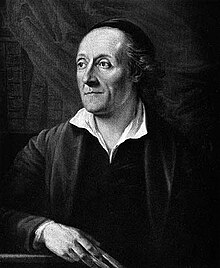
Full Name: Johann Kaspar Lavater
Achievements: Founder of physiognomics
Born: November 11, 1741; Zurich, Switzerland
Died: January 2, 1801; Zurich, Switzerland (Aged 60)
Field & Discipline: Religion, Physiognomy; Clergyman; Writer
Language: German
Education: Local high school, Zurich
Major Works:
"Essays on Physiognomy" (1775-78)
"Aphorisms on Man" (1787)
"Essays on Physiognomy" (1798)
Life & Times:
Lavater was brought up and educated in Zurich, and after taking orders served, for the rest of his life, as rector and dean in Zurich churches, from 1769. In the same year he translated a book on philosophy by the Swiss naturalist [translated] Bonnet*. Bonnet was one of the first to declare the right to observe connections rather than to explain ultimate causes, and may have influenced the practise of observing human nature, which Lavater adopted.
Lavater dedicated his translation to the Jewish philosopher Moses Mendelssohn, the grandfather of the composer [dedicated work to grandfather of] Felix Mendelssohn*. As a young man, together with his close friend the artist [a pal of] Fuseli*, Lavater reported a corrupt law official and succeeded in bringing him to justice. Although not generally politically active, he always spoke up against injustice and he and Fuseli had to flee Zurich for a time after being connected with a political pamphlet to which the authorities objected.
Lavater's piety veered towards the mystical and he became a well-known and admired figure for his mystical writings and his public speaking. He travelled in Germany and was treated with great reverence. In 1774 he and [a pal of] Goethe*, the German poet and philosopher, began a friendship with lasted for some years. Lavater's search for God in man led him to an intense study of his fellow men and their behaviour. This search was the stimulus for his book on physiognomy - the study of external facial characteristics and their relation to human faculties and behaviour. Goethe helped Lavater write his book (which was published 1775-78) but thereafter the friendship between the two cooled.
The book made Lavater famous. It was produced in expensive editions with many engraved illustrations and likenesses of famous people. It was translated into French in the 1780's and reviewed in the English journals. In the English translation the poet and artist [book illustrations by] Blake* produced three plates. The book was very popular and widely read. In 1788, the English feminist Mary [book translated by] Wollstonecraft* translated and abridged the book.
In the nineteenth century, the English naturalist [work related to] Charles Darwin* said that he was nearly rejected for a place on HMS Beagle because the captain was a follower of Lavater and did not think that Darwin's nose indicated enough energy or determination. Physiognomy was studied by the phrenologists [influenced] Gall* and [influenced] Spurzheim* and by the Italian criminologist [influenced] Lombroso*. Numerous eminent visitors called on Lavater at his home in Zurich, including the Austrian emperor Josef II, the Grand Duke of Russia and the Prince of Wales.
In 1792 Lavater visited England where he and Fuseli escorted Wollstonecraft to a masquerade. Wollstonecraft's husband, [influenced] Godwin*, claimed to reject physiognomy but when his daughter Mary (who became [theory applied to] Mary Shelley* on her marriage) was born, Godwin called in a follower of Lavater's to comment on her features. In 1799 Lavater was shot by an impatient grenadier while attempting to mediate between French occupying soldiers and the citizenry. He never recovered and died in 1801 died. He was described in an English obituary as the most famous man in Europe.
Assessment: Lavater was famous in his lifetime for his writings on physiognomy and was revered for his piety. His study of physiognomy was undertaken in a spirit of religious inquiry and although adopted by some social philosophers and criminologists it was mainly popular as a parlour game.
Oneliner: J K Lavater, originator of physiognomy (study of the face)
Bibliography:
- Lavater, J. C. , trans. Will, Peter, Secret Journal of A Self-Observer, Vol. 1, T. Cadell, Jun. and W. Davies, London, 1771.
- Graham, John, Lavater's Essays on Physiognomy, as study in the history of ideas, Peter Lang Publishers Ltd., Berne, 1979.
- Encyclopedia Britannica.
Father: Unknown
Mother: Unknown
Siblings: Unknown
Spouse: Name unknown
Children: Names unknown