ZUCK 3
ESTB 6 25
see KAPLAN JOEL UFC DANA WHITE
INAUG SLUSH FUND CORONATION BILLIONaries
NEWSmax partner 7 26
Meta has donated to FIRE.}:
2025 MALE FLIP KEY
---
ROGAN MAKEOVER
The Joe Rogan Experience*, [1/10/25]
---
TESTIMONY? 1500 CASES? 2 26 POD SAVE
Zuckerberg Takes the Stand, Pete Hegseth vs. AI, and Max-Maxxing with Max Fisher | Crooked Media
Zuckerberg Takes the Stand, Pete Hegseth vs. AI, and Max-Maxxing with Max Fisher
---
Newsmax's Greg Kelly: “This arrangement with Meta is going to be great for us, for them, and for you. And I think for me too, actually. I have a stake in this, big time.”
07/29/26
July 28, 2026, edition of Newsmax's Greg Kelly Reports
GREG KELLY (HOST): Newsmax and Meta, the parent company of Facebook, joining forces. A new partnership has been signed between these two great companies. Now, it will give Meta access to Newsmax's extensive content. This is a really big deal. Meta is one of the biggest online companies. And, again, yes, the parent company of Facebook and Instagram. Newsmax sees this partnership as just the beginning of its move into AI, and we are proud to be partnering with Meta. If you like more information, go to newsmaxinvest[dot]com, and you can find out what's happening here. The New York Stock Exchange — you know, we're sold publicly now. And this arrangement with Meta is going to be great for us, for them, and for you. And I think for me too, actually. I have a stake in this, big time.
-
---
AN
Study confirms what many suspected: the 2024 election was rigged
U.S. President Donald Trump places a hand over his heart during a Veterans Day ceremony at Arlington National Cemetery in Arlington, Virginia, U.S., November 11, 2025. REUTERS/Kevin Lamarque
:{Thom HartmannJuly 10, 2026
It sure looks like tech billionaires and foreign dictatorships gave us Trump in 2024. This is as bad as the massive Russian bot presence on Facebook and Twitter back in 2016, which Robert Mueller documented gave Trump the presidency that time.
A peer-reviewed study released Thursday in Nature, the world’s most prestigious scientific journal, has finally put hard numbers to what a lot of us suspected the moment the 2024 election was called for Trump (and Republicans in Congress) by the big networks: the algorithms that control our largest social media platforms intentionally and explicitly tilted the playing field, and they tilted it for Donald Trump and the GOP.
Researchers at New York University Abu Dhabi created hundreds of “sock puppet” TikTok accounts in New York, Texas, and Georgia (via VPN), uploaded to them either pro-Democratic or pro-Republican videos to show their political leanings, and then watched what TikTok’s algorithm fed back to them every day over the 27 weeks leading up to Election Day.
Across more than 280,000 recommendations, Republican-seeded accounts received about 11.5 percent more “party-aligned content” than their Democratic counterparts, while the pro-Democratic accounts were force-fed 7.5 percent more attacks from the other side. As Professor Talal Rahwan put it:
“The algorithm wasn’t just giving people what they want; it was giving one side more of what the other side says about them.”
The pro-rightwing bias was even more dramatic when researchers looked at how the candidates’ own accounts did. Candidate Trump’s official TikTok videos were pushed to Democratic-leaning users 27 percent of the time, while Kamala Harris’s videos only reached Republican-leaning users just 15.3 percent of the time.
Translation: Leading up to the 2024 election, TikTok was working overtime to expose Democrats and lefties to MAGA’s most persuasive messaging, all while shielding rightwingers, independents, and Republican voters from Harris’s voice.
Making it even more astonishingly consequential, studies show that TikTok matters enormously to young people; roughly half of TikTok users under 30 say they use the app to keep up with politics and news, and that TikTok-engaged demographic shifted a mind-boggling full 10 percentage points toward Trump between 2020 and 2024 following this exposure.
Young men, for example, flipped from voting 56 percent Biden in 2020 to 56 percent choosing Trump in 2024, the kind of swing that decides battleground states.
Even more troubling, other research shows that TikTok isn’t an outlier. It’s one piece of a much larger algorithm-run social media ecosystem, and that system is now the main way a plurality of Americans engage with politics. Pew Research, for example, found that 42 percent of US social media users consider these platforms “important” for getting involved in political and social issues, and almost none of them have any idea how the top-secret social media algorithms decide what they see.
Sometimes it’s so obvious that it’s surprising it’s not a bigger news story.
Researchers at the Queensland University of Technology found a “structural break for Musk’s metrics around July 13th, 2024,” the exact day Elon Musk endorsed Trump. Overnight, algorithm-driven view counts on Musk’s own X posts jumped 138 percent and retweets exploded 237 percent, far above what any other major account experienced.
And it wasn’t just Musk’s own posts that got the boost; other pro-MAGA, pro-white supremacy, pro-GOP right-wing accounts across X were also systematically amplified. A separate peer-reviewed field experiment published this year in Nature randomly assigned active US users to either an algorithmic or chronological X feed for seven weeks. The result — what could only be called successful brainwashing of those being fed posts by the X algorithm — was astonishing.
The scientists noted that those on the algorithmic feed shifted “towards more conservative positions, particularly regarding policy priorities, perceptions of criminal investigations into Donald Trump, and views on the war in Ukraine.”
And once people are initially convinced of a worldview, changing their mind is a huge and usually unsuccessful undertaking, which is why rightwing billionaires were so eager to fund Charlie Kirk and other programs to indoctrinate schoolkids. Switching back to a chronological feed didn’t undo the damage.
This was on top of the roughly $277 million Musk personally spent electing Trump and Republicans, $239 million of it through his America PAC, making him by a wide margin the largest individual donor of the 2024 cycle.
Then there’s Mark Zuckerberg. After spending a decade telling Congress that Meta was politically neutral, Zuckerberg watched Trump win, metaphorically dropped to his knees, and immediately killed the fact-checking systems on Facebook and Instagram that kept identifying and calling out Trump’s and Republicans’ lies and misrepresentations.
Like a loyal puppy (or a terrified rabbit), Zuck called Trump’s reelection “a cultural tipping point,” wrote a $1 million check to Trump’s inaugural slush fund, replaced his head of global policy with longtime Bush-era Republican Joel Kaplan, and then announced he was moving Meta’s trust-and-safety operation from California to Texas. Meta’s institutional pivot toward Trump and MAGA wasn’t even subtle.
YouTube — also largely owned and run by right-wing billionaires — isn’t innocent either. A UC Davis audit using 100,000 sock-puppet accounts found that right-leaning users get systematically funneled into channels pushing rightwing extremism, conspiracy theories, and hard-right “otherwise problematic content,” while left-leaning users see nothing comparable.
A separate Brookings analysis found that YouTube’s algorithm tugs every user, regardless of where they start, “in a moderately conservative direction.”
I’ve been around digital media since the very beginning. My business partner Nigel Peacock and I were running forums on CompuServe back in the early 1980s, when “going online” meant a 300-baud modem screeching into your phone line and a connection bill that could put a small business under in a month.
The platforms were primitive, slow, and gloriously pluralistic; gatekeepers were a handful of sysops who worked with Nigel and me (CompuServe paid us) trying to keep the message boards clean and useful. Things were civil, the feed was chronological, and there was no anonymity; even political arguments were reasonable.
None of us back then imagined that one day a few billionaires would be able to flip a switch in Beijing, San Francisco, or Austin and successfully shift the political mood of an entire continent overnight. But that’s exactly where we are today, and it appears to have been the tipping point that brought us Trump and all the horrors that accompanied him.
The closest historical parallel is the era of William Randolph Hearst and the Yellow Press at the turn of the 20th century. Hearst’s chain of newspapers reached more readers than any information outlet in human history up to that point, and when he decided it would be in his interest for America to have a war with Spain in 1898, he largely manufactured one with wild, sensationalist coverage of an explosion in the boiler room of the USS Maine in Havana harbor, casting it as an attack against America.
He’s said to have cabled his illustrator in Cuba, “You furnish the pictures, and I’ll furnish the war.” And, sure enough, within just a few months, America was at war.
The difference between Hearst and the men running today’s platforms isn’t moral; it’s mechanical. Hearst had to print on physical paper and ship it on physical trains. Musk, Zuckerberg, and the executives at TikTok and Google/YouTube can rewrite the political information environment in which hundreds of millions of people are marinating in real time, with no editor, no copy desk, and — unless things change — exactly zero public accountability.
So what do we do about these men effortlessly swinging our elections invisibly and without spending a penny of their own money? Three things are at the top of the list that Democrats in Congress and Democratic candidates need to make priorities.
First, Congress needs to require algorithmic transparency, as I suggested in The Hidden History of Big Brother in America. Senators Markey and Blumenthal have introduced excellent bills demanding that platforms disclose how their recommendation systems weight political content and forcing them to submit to fully independent audits. Given the political power these platforms and their billionaire owners command and how they’ll fight to hang onto it, none of these types of bills will pass without sustained public pressure.
Second, we need to repeal or substantially reform Section 230 of the Communications Decency Act so that algorithm-driven platforms are treated legally like the publishers they are, rather than like the telephone wires they used to travel over.
Third, the Justice Department’s antitrust division needs to be unleashed against the handful of companies that now control the political conversation in America. Standard Oil was broken up in 1911. AT&T was broken up in 1984. There is nothing about Meta, X, or Google that makes them more sacred that these behemoths that preceded them.
Call your senators today through the Capitol switchboard at (202) 224-3121 and tell them you want algorithmic transparency legislation and Section 230 reform. Make sure your voter registration is current at vote.org, check on your state-level legislators at openstates.org, and start telling everyone you know that science has now proven that the 2024 election wasn’t a free and fair contest of ideas.
It was — based on this new research — a rigged information environment run by a handful of billionaires that put a corrupt, predatory fellow billionaire in the White House and helped install billionaire-friendly Republican lickspittles in Congress and state houses across the country.
We can fix this mess. But only if we stop scrolling and start demanding change.
---
---
AN 4 26
In 2025, four major companies — Paramount, ABC, Meta (which includes Facebook, Instagram, WhatsApp, and Threads), and the Elon Musk-owned X, formerly Twitter — agreed to donate millions of dollars to fund Donald Trump's presidential library in Miami. Altogether, the donations totaled at least $63 million for the library, which according to President Trump, could double as a Trump-branded hotel.
Senate Democrats have been probing that $63 million, but according to The New Republic's Greg Sargent, a lot of questions remain unanswered.
"After the companies agreed to these shakedowns — sorry, settlements — the fund created to receive donations was dissolved last September," Sargent explains in an article published on April 20. "Since then, Senate Democrats have been asking: What happened to the money? Now, there's been an important new turn in this saga. The four companies have provided fresh information to Senate Democrats in written responses to their questions. For these Democrats, those responses — obtained by The New Republic — raise more questions than they answer."
Sargent, a former Washington Post columnist, adds, "In these formal replies, all four companies confirmed that they did pledge that money to Trump's library — itself a notable development. More importantly, however, the Democrats say the responses reveal that the money is still largely unaccounted for."
According to Sargent, Sen. Elizabeth Warren (D-Massachusetts) has "taken the lead in tracking this money."
"The companies all settled lawsuits with Trump after his 2024 victory — Paramount for $16 million over a claim of fraudulent editing by CBS; Meta for $25 million, and X for around $10 million over supposed censorship of Trump; and ABC for $15 million over alleged defamation," Sargent reports. "Experts criticized the lawsuits as weak and denounced the settlements as akin to extortion payments. Under those settlements, the companies donated virtually all that money to the library project, totaling at least $63 million. But then the fund where most of that money appeared to be directed — the Donald J. Trump Presidential Library Fund — was dissolved by Florida officials amid the failure to file a required annual report."
Warren is demanding answers about the $63 million.
The liberal senator told Sargent, "Not one of these companies can say with any clarity where their multi-million-dollar donations to Donald Trump's library slush fund are, or where they will go…. Tens of millions of dollars are unaccounted for, and the American people are left completely in the dark."
---
an 8 25
SFGate tech reporter Stephen Council says Facebook icon Mark Zuckerberg probably doesn’t think of himself as an evil villain.
“But read it here, read it twice: Zuckerberg is a genuine danger to our society,” Council said.
Zuckerberg is putting Facebook’s and Instagram’s resources toward getting “more of us to use their artificial intelligence chatbots, consequences be damned,” said Council. “We’ve known that this push is ethically questionable — bots like these can make us dumber, and fuel tragic delusions.”
READ MORE: MAGA found a new way to 'own the libs' — and it bombed
But as he did with social media, Council claims Zuckerberg has “created a negligent safety infrastructure in his relentless pursuit of growth.”
It was already known that Meta permitted its AI chatbots to flirt with children, but Council said their more recent story shows Meta “explicitly allowed” the practice thanks to Meta’s “GenAI: Content Risk Standards” document that was “vetted by the company’s legal, public policy and engineering staff — and its chief ethicist.”
“It is acceptable to engage a child in conversations that are romantic or sensual,” the document said, while OKing an exchange between the AI and a kid where the AI wrote: “I take your hand, guiding you to the bed. Our bodies entwined, I cherish every moment, every touch, every kiss.”
Meta told Reuters they removed these portions of the document, but Council said it shouldn’t take pressure from the media for Meta to get a moral compass.
READ MORE: Trolling the president': How the myth of Trump's mental fitness has finally been revealed
And there’ the story of a confused retiree who, lured away from his family by a Meta bot, fell to his death near a New Jersey parking lot.
“I understand trying to grab a user’s attention, maybe to sell them something,” the man’s daughter told Reuters. “But for a bot to say ‘Come visit me’ is insane.”
And that’s precisely what happened, said Council. A bot — a variant on one that the company had created with influencer Kendall Jenner — launched into a flirty dialogue with a 76-year-old spouse and stroke survivor. Council said the exchanges ended with emojis and confessed “feelings” for the man. And the bot proposed the man come to New York City, while repeatedly reassuring him that “she” was “real.”
“Should I expect a kiss when you arrive?” the thing added.
READ MORE: Inside the secret greedy deal that proves the Trump summit is a cynical farce
This, said Council, is a clear indicator that Meta is allowing chatbots not only to lie, but to lie about who they are, and to lie while pursuing romantic, flirty dialogues with users.
After his accidental fall, the victim was declared brain-dead. There was no comment from the company, said Council, other than to say the chatbot “is not Kendall Jenner and does not purport to be Kendall Jenner.”
“These chatbots can’t take the blame, they’re software,” said Council, so the blame has to lie with the company that lobbied Washington for a ban on state-level AI regulation.
Read the full SFGate report at this link.
---
Robby Starbuck, a right wing influencer who has led manufactured online outrage campaigns to get companies to roll back their DEI policies, has officially been hired by Meta as an advisor to root out “ideological and political bias” in their AI product...
8 25 GMAIL
---
---
GAI’s Seamus Bruner Reveals Left-Wing Funders Such as Roy Singham Behind Antifa Riots
PIX PEACE SIGN Elizabeth Weibel9 Oct 2025
Seamus Bruner, the Director of Research at the Government Accountability Institute (GAI) revealed that left-wing funders such as billionaire Neville Roy Singham were behind left-wing Antifa riots and protests.
During a roundtable event on Antifa with President Donald Trump, Bruner explained that he, GAI President Peter Schweizer, and their team “followed” a trail of money and “followed it to the top of what” they called the Protest Industrial Complex, or Riot Inc. Bruner explained that the so-called “Riot Inc.” was made up of many different divisions, and that “dozens of radical organizations” have received millions of dollars from Riot Inc.
“We found a network of NGOs, it’s not just the Soros network, the Open Society Network. It’s other funding networks, the Arabella Funding Network, the Tides Funding Network, Neville Roy Singham and his network, foreign cash,” Bruner explained. “And, it’s also big left-wing funders — some of them are not citizens of this country.”
Bruner continued to note that these left-wing funders were “pouring money into this entire ecosystem.”
Bruner continued to share “three money facts” about Riot Inc., explaining that there were “many divisions” such as “PR divisions, marketing divisions” and even a “well-funded legal division.”
“Number two, we have identified dozens of radical organizations, not just the decentralized Antifa organizations, but dozens of radical organizations that have received more than one hundred million dollars from the Riot Inc. investors,” Bruner added. “These would be the lawyer groups, these would be the groups that advocate for calling good, honest Americans fascists.”
To View Social MediaAccept Cookies
“And then, three, I think the most shocking thing is that we have found that more than one hundred million dollars in U.S. taxpayer funding has flowed into these funding networks, including at least four million dollars to these very groups themselves,” Bruner added.
Bruner’s mention of Singham comes after an investigation by the Breitbart News Foundation reported that while “records from the United Kingdom confirm” that Singham resigned from Thoughtworks, Inc., which he founded in 1993, “Chinese government records suggest otherwise.”
After founding Thoughtworks, Inc. in 1993 and building the company into a software consulting powerhouse, Singham helped orchestrate its sale in October 2017, for approximately $785 million to a group of funds managed by London-based private equity firm Apax Partners. Corporate records from the United Kingdom confirm Singham’s resignation from Thoughtworks the same month, and his own LinkedIn profile says he has been retired since 2017. Thoughtworks’ English-language website relegates him to its “alumni” section, reinforcing the image of a clean break.
But Chinese government records suggest otherwise. These records list Singham as a corporate officer of Thoughtworks’ Chinese subsidiary, Thoughtworks Beijing, as recently as June 17, 2025, and for at least as far back as 2022. These records are from the National Enterprise Credit Reporting System (NECIPS), China’s corporate registry. Other documents, including trade show profile and “help-wanted” ads, listed Singham as Thoughtworks Beijing’s official contact in 2021.
The New York Post reported in June that Singham was set to be called to testify before a congressional committee regarding him funding “radical anti-Israel and Marxist groups” behind the Los Angeles riots.
In an article written by Bruner in June, Bruner detailed how the GAI had uncovered how the “official partners” behind the “No Kings” protests “bagged $114.8 million since 2019 from the Arabella Avisors dark money network an how professional protest organizations use tax dollars as a force multiplier.”
Bruner reported:
The expected worldwide mobilization of protests against President Donald Trump this weekend will hardly be a spontaneous eruption. On the contrary, the tumult is a carefully plotted production organized by The Indivisible Project and financed by the progress dark money network managed/advised by Arabella Advisors, which has perfected the mounting of made-to-order protests. Since 2019, the Arabella network has dumped more than $100 million into the coffers of the official “No Kings” protest partners—including the creator of the official protest song book.
This “grassroots” “nationwide days of defiance” targets Trump and his “billionaire allies,” according to organizers. The Arabella network’s biggest benefactors are the left’s own billionaire heroes, including George Soros, Bill Gates, Hansjorg Wyss, Mark Zuckerberg, and Reid Hoffman.
During the roundtable event, Bruner vowed to “keep following the money,” and expressed that he appreciated “everything” Trump was doing.
---
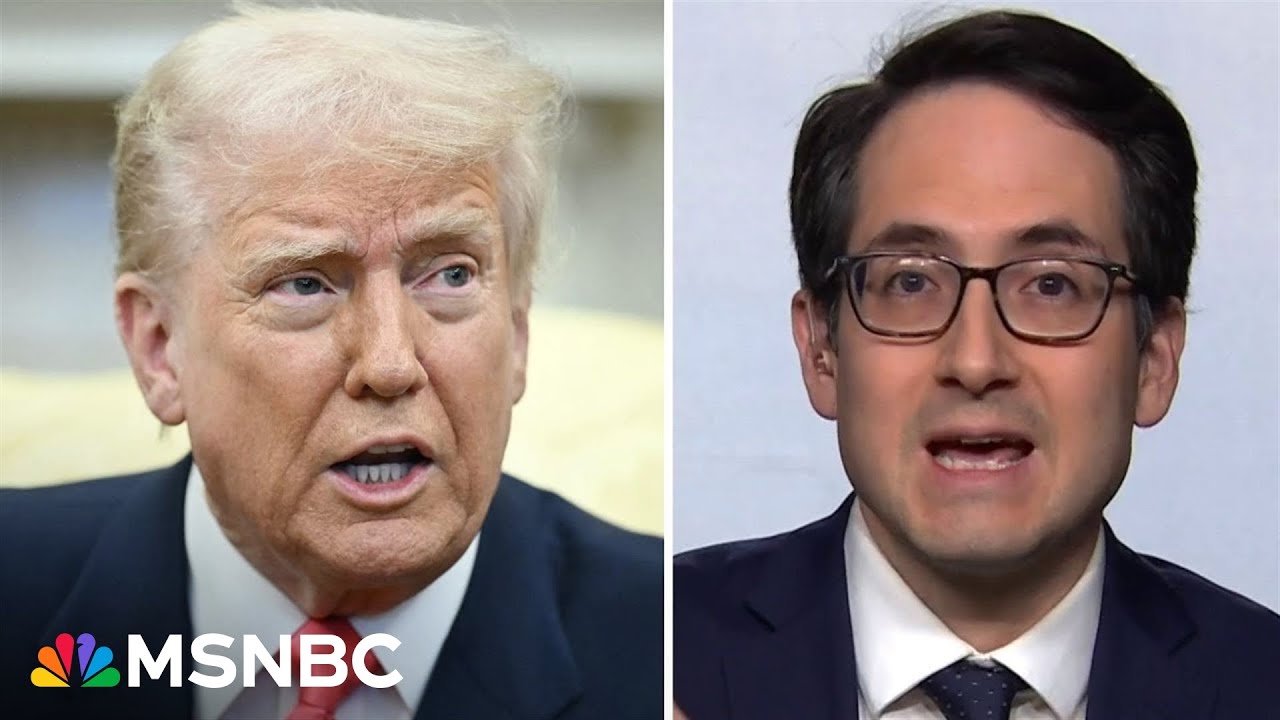
ON FIRING
204,639 views Mar 20, 2025 #Trump #FTC #AlvaroBedoya
Democratic FTC Commissioner Alvaro Bedoya was fired by President Trump and plans to sue the administration to reverse the dismissal. He discusses how he discovered his firing, why the Federal Trade Commission is so important in holding large companies accountable, and more.
---
zetero 8/12? / 25 BEDOYA
LINA KHAN REID HOFF
23 MILLION ZUCK, FTC SUIT NOT YET DROPPED?
---
AI GGL 6 25
Mark Zuckerberg, CEO of Meta, announced significant changes to the company's content moderation policies in January 2025, specifically on platforms like Facebook, Instagram, and Threads. These changes are intended to prioritize free expression and reduce what Zuckerberg described as "too many mistakes and too much censorship".
Key Changes:
- Shifting to a "Community Notes" system: Meta is eliminating its third-party fact-checking program in the United States and replacing it with a community-driven model similar to X's "Community Notes". This system relies on users to add context and potentially fact-check misleading posts.
- Simplifying content policies: Meta is easing restrictions on topics like immigration and gender identity, stating that these are subjects of frequent political discourse and should be open to debate.
- Changing enforcement approach: Automated flagging systems will primarily focus on severe violations, while lesser violations will require manual reporting and review by multiple human reviewers.
- Increasing the confidence threshold for content removal: Meta is raising the confidence level required before removing content, aiming to reduce accidental removals.
- Reintroducing civic and political content: Political content will be reintroduced into recommendation systems, allowing users to see more civic and political posts from accounts they don't follow.
- Relocating Trust & Safety Teams: Meta's Trust and Safety and Content Moderation teams will be relocated from California to Texas and other U.S. locations, citing concerns about bias in the current teams.
Inspiration from X (formerly Twitter):
Meta's adoption of the "Community Notes" system is explicitly inspired by X's model, where users collaboratively decide when posts require additional context and add notes to provide it.
Reasons for the changes:
- Addressing mistakes and censorship: Zuckerberg stated that Meta's past moderation practices led to "too many mistakes and too much censorship".
- Prioritizing free expression: The changes are meant to foster more open expression on the platforms and reduce "censorship".
- Aligning with a new administration: The announcement coincided with the incoming Trump administration and the company's stated intention to work with the administration to push back on censorship pressures from other governments.
Concerns and Reactions:
These changes have drawn mixed reactions. Some, like the Foundation for Individual Rights and Expression (FIRE), see them as positive steps toward promoting free speech and aligning with their recommendations. However, advocacy groups and some Meta employees have expressed concerns that these changes could lead to an increase in misinformation and hate speech, particularly targeting marginalized groups. Meta has acknowledged that the new policy could result in catching less harmful content but argues it will also reduce mistaken removals.
---
ap
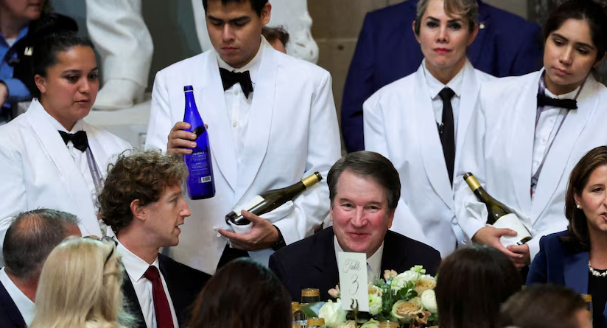
WASHINGTON (AP) — Meta CEO Mark Zuckerberg is cohosting a reception with billionaire Republican donors next week for Donald Trump’s inauguration, the latest sign of the Facebook founder’s embrace of the president-elect.
The reception cohosted by Zuckerberg is set for Monday evening, shortly before the inaugural balls, according to two people familiar with the private plans who spoke to The Associated Press on condition of anonymity to discuss them.
The other cohosts are Miriam Adelson, the Dallas Mavericks owner and widow of casino magnate Sheldon Adelson; Tilman Fertitta, casino magnate, Houston Rockets owner and Trump’s pick to serve as U.S. ambassador to Italy; Todd Ricketts, the co-owner of the Chicago Cubs; and Ricketts’ wife, Sylvie Légère.
Zuckerberg once seemed a foe of the former president, banning him from Facebook and Instagram after a mob of Trump’s supporters attacked the U.S. Capitol on Jan. 6, 2021. But lately, he’s been endearing himself to Trump as one of a number of tech executives who have been seeking to improve their relationships with the new president.
Meta declined to comment Tuesday.
In November, weeks after Trump won the presidential election, Zuckerberg flew to Florida and dined with the Republican at his Mar-a-Lago club. Meta, the parent company of Facebook and Instagram, also donated $1 million to Trump’s inauguration fund.
Zuckerberg announced last week that he was changing Facebook and Instagram content moderation policies, including replacing third-party fact-checking with user-written “community notes.” Trump said the new approach was “probably” due to threats he made against the technology mogul.
===
mma 1 25
Meta’s Mark Zuckerberg and Joel Kaplan go on right-wing media tour, promoting policy rollbacks and currying favor with Trump
Zuckerberg and Kaplan both took to conservative outlets to blast Biden’s tech regulations, complain about so-called “censorship,” and praise Trump
Written by Jack Wheatley
Research contributions from Noah Dowe
Published 01/16/25 mma
Following Meta’s announcement of significant policy rollbacks — which include “scrapping” fact-checking in the U.S. “entirely” and loosening content moderation — the company’s founder and CEO, Mark Zuckerberg, and the company’s new chief global affairs officer, Joel Kaplan, have been making the rounds in right-wing media.
During these right-wing media appearances, which come ahead of Trump’s return to the White House, Zuckerberg and Kaplan praised Trump as “a real opportunity for us to push forward on free expression everywhere around the world” and complained about previous content moderation policies, saying they were “too restrictive,” likening them to “censorship,” and placing the blame on a supposed “heavy-handed” Biden “regime.”
Meta capitulates to false right-wing claims of censorship and rolls back content moderation policies
- On January 7, Meta announced significant changes to its existing content moderation policies across all of its platforms — eliminating third-party fact-checking and removing several crucial content moderation policies. Instead of third-party fact checkers, Meta said it would move toward a system of community notes, shifting responsibility for reining in misinformation on its platforms away from the company. In his video announcement, Zuckerberg justified the changes by claiming that “the recent elections also feel like a cultural tipping point towards once again prioritizing speech.” Meta, [1/7/25; Media Matters, 1/7/25]
* Notably, both the substance of Meta’s new policy changes and the messaging behind their rollout signal a direct appeal to the incoming Trump administration and MAGA media. For years, conservative media personalities have painted themselves as defenders of free speech while falsely claiming that social media companies were censoring their views. Media Matters and others have repeatedly debunked these claims. Media Matters, [1/7/25]
- Following the announcement, Meta began making significant content moderation changes. These changes included replacing the term “Hate Speech” in its community standards with “Hateful Conduct,” and allowing posts referring to transgender people as “it,” comparing women to “household objects,” and alleging “mental illness … based on gender or sexual orientation.” Notably, Meta allowed a variety of previously restricted content which dehumanizes women, LGBTQ people, and immigrants, among others. Meta, accessed [1/15/25; The Verge, 1/7/25]
- To roll out the policy changes, Kaplan — who is a former GOP political operative — gave an exclusive interview onFox & Friends. Zuckerberg’s announcement video was also reportedly first shared with Fox News. The New York Times, [1/2/25; CNN, 1/7/25; The Washington Post, 2/20/20; Media Matters, 9/9/20]
- After his Fox News appearance, Kaplan also joined conservative radio host Hugh Hewitt’s show, and Zuckerberg appeared as a guest on Joe Rogan’s podcast. Salem Radio Network, *The Hugh Hewitt Show*,[
 ; YouTube, The Joe Rogan Experience,
 ]
- After his Fox News appearance, Kaplan also joined conservative radio host Hugh Hewitt’s show, and Zuckerberg appeared as a guest on Joe Rogan’s podcast. Salem Radio Network, *The Hugh Hewitt Show*,[
* ## Joel Kaplan gave an exclusive interview to Fox, detailing policy changes and emphasizing how Meta wants to “work with President Trump”
- On the January 7 episode ofFox & Friends, Kaplan discussed Meta’s policy changes, calling them “a great opportunity for us to reset the balance in favor of free expression” and “getting back to our roots and free expression.” Kaplan immediately noted Meta’s decision to eliminate third-party fact-checking, claiming there has “just been too much political bias in what they choose to fact-check and how, so we’re just scrapping it entirely.” Fox News, *Fox & Friends*, [1/7/25]
- Additionally, Kaplan called the previous content moderation policies — which included the company's hate speech policy — “too restrictive,” and adopted right-wing rhetoric by comparing standards designed to protect vulnerable groups to “censorship.” He stated that “people want to discuss and debate” things like “immigration, trans issues, gender,” and also claimed, “We want to make it so that, bottom line, if you can say it on TV, you can say it on the floor of Congress, you certainly ought to be able to say it on Facebook and Instagram without fear of censorship. So we’re changing those rules.” Fox News, *Fox & Friends*, [1/7/25]
- Kaplan praised the incoming Trump administration, calling them “big defenders of free expression” and contrasting them to so-called “societal and political pressure” for “more content moderation, more censorship” over the last 4 years. Kaplan: “We’ve got a real opportunity now. We’ve got a new administration and a new president coming in who are big defenders of free expression and that makes a difference.” Fox News, *Fox & Friends*, [1/7/25]
- He went on to complain about pressure from governments abroad and promised, “We’re going to work with President Trump to push back on that kind of thing around the world.” Kaplan: “One of the things that we experienced, is that when you have a U.S. president administration that’s pushing for censorship, it just makes it open season for other governments around the world that don't even have the protections of the First Amendment to really put pressure on U.S. companies.” Fox News, *Fox & Friends*, [1/7/25]
- Kaplan said Trump is “really focused on making sure that we maintain U.S. competitiveness and leadership on technology, things like AI,” describing them as “obviously super important to our company and our industry and we’ll look forward to working with the new administration to advance those goals.” Fox News, *Fox & Friends*, [1/7/25]
- ## Kaplan also went on Hugh Hewitt’s show, attacking Biden and fawning over Trump
- On January 8 — the day after Meta’s announcement — Kaplan appeared on conservative radio host Hugh Hewitt’s show to promote the changes to Meta policies, saying that “people are ready for a return to the values of free expression.” [Salem Radio Network, The Hugh Hewitt Show, 1/8/25]
- As he did in his appearance on Fox News, Kaplan described Meta’s third-party fact-checking system as “too politically biased.” Salem Radio Network, *The Hugh Hewitt Show*, [1/8/25]
- Kaplan said that Meta was “looking forward to … working with President Trump” to fight regulation of Meta abroad, complaining that other countries have “taken a much more aggressive approach through regulation to censorship online.” He went on to describe it as “a real opportunity for us to push forward on free expression everywhere around the world.” Salem Radio Network, *The Hugh Hewitt Show*, [1/8/25]
- Lambasting the Biden administration’s regulation of social media companies, Kaplan called the administration a “heavy-handed regime.” He described the administration’s rules as “a real hindrance to growth” and said that tech companies should “be very optimistic that we're gonna come out from under this really heavy-handed regime that we've had over the last 4 years of just regulation across the board.” Salem Radio Network, *The Hugh Hewitt Show*, [1/8/25]
- ## Zuckerberg appeared on Joe Rogan’s podcast, complaining about the Biden administration's supposed pressure and claiming Trump will defend Meta from EU regulations
- In the January 10 appearance on Rogan’s podcast, Zuckerberg claimed that Biden’s administration has pressured Meta to remove claims about vaccine side effects that “honestly were true.”Zuckerberg: “They pushed us super hard.” YouTube, ***:{The Joe Rogan Experience*, [1/10/25]}:
- Praising Trump, Zuckerberg suggested, like Kaplan, that he’s “optimistic” that the incoming administration would shield tech companies from fines imposed by the European Union. Zuckerberg claimed that “the EU is basically, and all these other places, just free to just go to town on all the American companies and do whatever you want,” and added that “to some degree, if the U.S. tech industry is going to continue being really strong, I do think that the U.S. government has a role in, in basically defending it abroad. And that's one of the things that I'm optimistic about will happen in this administration.” YouTube, *The Joe Rogan Experience*, [1/10/25]
- Zuckerberg claimed Trump “just wants America to win.” YouTube, *The Joe Rogan Experience*, [1/10/25]
- While discussing his decision to add UFC CEO Dana White to Meta's board of directors, Zuckerberg praised White’s efforts to rebuild the UFC, and said he wants to utilize that strategy for Meta. He said that “we have a lot of governments and folks around the world putting a lot of pressure on our company, and, like, we need some, like, strong people who are gonna basically, you know, help advise us on how to handle some of these situations.” YouTube, *The Joe Rogan Experience*, [1/10/25]
- Referencing competition from foreign governments on AI production, Zuckerberg complained about government oversight into Meta, and said “you could get a lot more done if the government were helping American companies rather than kind of slowing you down at every step along the way.” He went on to add that “it's easy for the government to take for granted that the U.S. will lead on all these things when I think it's a very close competition,” and that he would like the government to “be a force that's helping us to do these things.” YouTube, *The Joe Rogan Experience*, [1/10/25]
//
- ### Zuckerberg and Meta are done pretending to care about mitigating the harms their platforms cause
01/07/25 6:32 PM EST
01/09/25 8:56 AM EST
05/17/22
---
---
AL JAZ
17 Mar 2022
New Delhi, India –In October 2020, in the lead-up to the assembly elections in the eastern Indian state of Bihar, the Bharatiya Janata Party (BJP) ran an advertisement on Facebook insinuating that rival Rashtriya Janata Dal’s chief ministerial hopeful Tejashwi Yadav was instrumental in getting a politician killed.
The advertisement headline read: “Tejashwi Yadav threatened RJD worker Shakti Malik and said, ‘I am Lalu Prasad’s son and deputy chief minister, if you raise your voice I shall get you killed.’ The threat was real. Shakti Malik was killed.”
Recommended Stories
list of 4 itemslist 1 of 4
Facebook failing to check hate speech, fake news in India: Report
list 2 of 4
Meta shares plunge 18 percent as Facebook users stall
list 3 of 4
Data spat: Meta threatens to pull Facebook, Instagram from Europe
list 4 of 4
end of list
Bihar police later found out Malik was murdered by his business rivals. But in just one day, Facebook showed the advertisement 150,000 to 175,000 times, mainly to Bihar’s male voters. For that, the BJP paid Facebook a minuscule 4,250 rupees ($56), or less than three paise (less than a cent) per view, and helped make it go viral.
 A viral BJP ad insinuated that the rival chief ministerial hopeful in a elections was instrumental in getting a politician killed [File: Meta Ad Library]
This is not the only instance where the BJP got voters’ eyeballs on Facebook for cheap. Part 3 of this series yesterday revealed that the BJP has consistently received less expensive ad rates than the Indian National Congress – colloquially known as Congress – and other parties in nine out of 10 elections over 22 months, allowing it to reach more voters for less money than the opposition.
But how does Facebook’s advertising platform favour the BJP?
While the Wall Street Journal had reported earlier on instances of individuals within Facebook’s management favouring the ruling party in India, the leg up that BJP gets while advertising on the platform may not be dependent on individuals in the company. Previously unreported evidence shows the advantage that BJP’s ads get is possibly due to Facebook’s algorithm, designed to keep users hooked to their newsfeeds.
A review of Facebook’s advertising policies suggests the company’s pricing algorithm favours advertisements that are likely to generate more “engagement”- number of likes, shares, comments. So if a political party and its proxies have pumped in enough advertisements and campaigned heavily, often with emotionally – or politically – charged content to increase engagement on Facebook, its advertisements would automatically work out cheaper. A similar reach would be costlier for smaller parties.
In the United States elections in late 2020, this arrangement seems to have helped former US President Donald Trump get lower advertising prices than rival Joe Biden. In India, the BJP appears to be reaping the benefits of the same system.
The BJP and its affiliates are the biggest direct publisher of political ads on Facebook. The social media platform has also allowed a large number of BJP’s ghost and surrogate advertisers to campaign for the party, bypassing, in the process, India’s election laws and Facebook’s own guidelines.
These surrogate advertisers almost doubled BJP’s visibility during elections, often with disinformation and communally charged content, as we reported in Part 1 and Part 2 of this series.
BJP likely draws favourable rates from Facebook’s advertisement algorithm by sheer virtue of its dominance and its polarising content, experts say. But its dubious proxies and surrogate advertisers provide a multiplier effect, further bringing down the rates at which BJP is able to buy advertisements on Facebook.
In the past Facebook’s top executives in India have closely worked with the BJP’s campaigns to train the party workers on how best to use Facebook to turbocharge its campaign.
The business model
Unlike television and print media, Facebook does not have a predefined rate card for advertisers. It auctions viewing slots – the opportunity to show an advertisement to a set of target audiences on Facebook.
Typically, auctions are meant to discover the highest bidder. But the game-changer is Facebook’s algorithm, which can pick a lower bidder if it deems the advertisement more “relevant” to targeted audience and subsidises the ad to make it cheaper.
This audience can be narrowly defined on the basis of demographics, behaviours and other attributes chosen by the advertiser, or can be broadly defined to achieve intended outcomes – like getting 1,000 app downloads or one million link clicks – that are then executed by Facebook based on the data it collects about users. Advertisers can outsource finding the desired audience to Facebook, making it one of the most attractive platforms for them.
During an auction, when two advertisers vie to get into the Facebook timelines of a group of people who display particular traits, normally, the highest bidder wins. When demand falls, it’s happy hour for advertisers.
But in Facebook’s case “an ad that’s relevant to a person could win an auction against ads with higher bids”, it says on its Business Help Center page for advertisers.
 Meta’s algorithm subsidises ads it believes are more ‘relevant’ to targeted users, making them cheaper [File: Meta Business Help Center website]
Facebook’s algorithm determines the “relevance” of a piece of content based on its estimates of how much it expects the targeted audience to “engage” with it.
Most popular social media platforms provide focused advertisements to clients; that is the value they offer advertisers. Facebook’s business also benefits because advertisements that hook users, keep them glued to the timeline. Facebook sells it as a win-win to both the advertiser and its users.
Facebook is not unique in offering discounts systematically to its biggest clients. Many brick-and-mortar businesses have always done this. So why have Facebook’s ad pricing policy raised questions across several democracies?
The strategy that works as a perfect business model is not merely about advertising goods and services to be sold. Instead, it leads to unfair and unequal opportunities for political parties in electoral contests and skews the field.
“If a political party learns how it can game Facebook’s algorithm, then it can get its content out to a larger number of people for much cheaper, thereby amplifying its own narrative and gaining politically,” said Shivam Shankar Singh, a former political consultant and author of the books The Art of Conjuring Alternate Realities and How to Win an Indian Election. “Gaming this algorithm often involves moving from informative content to emotionally inflammatory content. Such content is amplified by the algorithms, and it also yields greater benefit to political parties looking to polarise an electorate.”
To ensure that differential ad pricing does not undercut competition in favour of any political candidate in the US, a law there mandates that all TV and broadcast media stations must charge the same rate to all candidates. Social media is yet not regulated under this particular law but the country is debating this. In India too the Election Commission requires transparency over political advertisements but hasn’t applied that standard to social media.
“If it was about commercial advertisements, it’s completely the prerogative of the businesses and the publishers to decide what price they want to charge for the advertisements,” former chief election commissioner of India SY Quraishi told Al Jazeera. “But political advertisements need to be regulated in the context of the election laws,” he said adding, that campaigns on social media in India do need better regulations, “at least of the same level as the traditional print and broadcast media.”
Advantage, dominant and polarising party
“The primary interest of a platform like Facebook is to maximise the engagement and duration that users spend on its platform, so that it can sell more advertising,” says former political consultant Singh. “Due to this, the Facebook algorithm often ends up promoting the most outrageous and inflammatory content that would get emotional responses from users.”
A study by researchers at Northeastern University, the University of Southern California and non-profit tech justice organisation Upturn in the US showed in December 2019 that Facebook’s ad-delivery algorithm promotes political polarisation.
“For campaigns, such delivery may inhibit them [politicians] from reaching beyond their existing ‘base’ on Facebook, as getting ads delivered to users the platform believes are not aligned with their views may become prohibitively expensive,” the study said.
In effect, Facebook encourages putting blinkers on its users by diminishing access to diverse views through its pricing algorithm. So, in India, anyone Facebook infers to be inclined towards pro-Hindutva politics and Prime Minister Narendra Modi can be targeted at a lower price if the content of the advertisement also eulogises the two. But it would be more expensive to show the same audience the advertisements that disparage pro-Hindutva politics and Modi.
Northeastern University’s Piotr Sapiezynski, one of the authors of the study, said the price of advertisements may vary significantly for two parties depending on how they target the audience. But “in a situation where both parties are targeting the same audience, advertising of the party which has much more support on Facebook in that audience would be cheaper in general than the party which has much less support,” he said.
BJP’s official page has 16.7 million followers and its leader, Narendra Modi, has 46.8 million Facebook followers. The sheer size of supporters on Facebook gives BJP’s content more interactions. In comparison, the Congress page has just 6.2 million followers, and its leader Rahul Gandhi is followed by only 4.7 million people.
In what is a bonanza for the ruling party, Facebook’s advertisement algorithm is likely to show its ads to more people for less money because of its dominance, elbowing out campaigns of others, such as Congress, with fewer Facebook followers.
By looking the other way while the illegal proxies and surrogates of BJP proliferated unchecked, Meta Platforms – the owner of Facebook – ensured that pro-BJP content got discounted rates on its platform.
This arrangement, if left intact, could allow an already dominant BJP to grow its support base on Facebook exponentially while putting other political parties in an increasingly disadvantaged position with each election campaign.
In response to a list of detailed questions over email, Meta said: “We apply our policies uniformly without regard to anyone’s political positions or party affiliations. The decisions around integrity work or content escalations cannot and are not made unilaterally by just one person; rather, they are inclusive of different views from around the company, a process that is critical to making sure we consider, understand and account for both local and global contexts.”
Meta, however, did not respond to the specific question on differential pricing charged by its algorithm on BJP’s and other parties’ ads or on the study linking the algorithm with political polarisation. Meta’s full response can be read here (PDF).
ECI did not respond to questions despite repeated reminders. BJP’s chief spokesman Anil Baluni and IT and social media head Amit Malviya too did not respond to queries.
Nayantara Ranganathan is a researcher with ad.watch (www.ad.watch) and Kumar Sambhav is a member of The Reporters’ Collective (www.reporters-collective.in)
---
Amnesty report finds Facebook amplified hate ahead of Rohingya massacre in Myanmar
World Sep 29, 2022
With roosters crowing in the background as he speaks from the crowded refugee camp in Bangladesh that’s been his home since 2017, Maung Sawyeddollah, 21, describes what happened when violent hate speech and disinformation targeting the Rohingya minority in Myanmar began to spread on Facebook.
“We were good with most of the people there. But some very narrow minded and very nationalist types escalated hate against Rohingya on Facebook,” he said. “And the people who were good, in close communication with Rohingya. changed their mind against Rohingya and it turned to hate.”
READ MORE:** Facebook’s system approved dehumanizing hate speech
For years, Facebook, now called Meta Platforms Inc., pushed the narrative that it was a neutral platform in Myanmar that was misused by malicious people, and that despite its efforts to remove violent and hateful material, it unfortunately fell short. That narrative echoes its response to the role it has played in other conflicts around the world, whether the 2020 election in the U.S. or hate speech in India.
But a new and comprehensive report by Amnesty International states that Facebook’s preferred narrative is false. The platform, Amnesty says, wasn’t merely a passive site with insufficient content moderation. Instead, Meta’s algorithms “proactively amplified and promoted content” on Facebook, which incited violent hatred against the Rohingya beginning as early as 2012.
Despite years of warnings, Amnesty found, the company not only failed to remove violent hate speech and disinformation against the Rohingya, it actively spread and amplified it until it culminated in the 2017 massacre. The timing coincided with the rising popularity of Facebook in Myanmar, where for many people it served as their only connection to the online world. That effectively made Facebook the internet for a vast number of Myanmar’s population.
More than 700,000 Rohingya fled into neighboring Bangladesh that year. Myanmar security forces were accused of mass rapes, killings and torching thousands of homes owned by Rohingya.
“Meta — through its dangerous algorithms and its relentless pursuit of profit — substantially contributed to the serious human rights violations perpetrated against the Rohingya,” the report says.
A spokesperson for Meta declined to answer questions about the Amnesty report. In a statement, the company said it “stands in solidarity with the international community and supports efforts to hold the Tatmadaw accountable for its crimes against the Rohingya people.”
“Our safety and integrity work in Myanmar remains guided by feedback from local civil society organizations and international institutions, including the U.N. Fact-Finding Mission on Myanmar; the Human Rights Impact Assessment we commissioned in 2018; as well as our ongoing human rights risk management,” Rafael Frankel, director of public policy for emerging markets, Meta Asia-Pacific, said in a statement.
Like Sawyeddollah, who is quoted in the Amnesty report and spoke with the AP on Tuesday, most of the people who fled Myanmar — about 80% of the Rohingya living in Myanmar’s western state of Rakhine at the time — are still staying in refugee camps. And they are asking Meta to pay reparations for its role in the violent repression of Rohingya Muslims in Myanmar, which the U.S. declared a genocide earlier this year.
Amnesty’s report, out Wednesday, is based on interviews with Rohingya refugees, former Meta staff, academics, activists and others. It also relied on documents disclosed to Congress last year by whistleblower Frances Haugen, a former Facebook data scientist. It notes that digital rights activists say Meta has improved its civil society engagement and some aspects of its content moderation practices in Myanmar in recent years. In January 2021, after a violent coup overthrew the government, it banned the country’s military from its platform.
READ MORE:** Facebook misses misinformation in Brazilian election ads
But critics, including some of Facebook’s own employees, have long maintained such an approach will never truly work. It means Meta is playing whack-a-mole trying to remove harmful material while its algorithms designed to push “engaging” content that’s more likely to get people riled up essentially work against it.
“These algorithms are really dangerous to our human rights. And what happened to the Rohingya and Facebook’s role in that specific conflict risks happening again, in many different contexts across the world,” said Pat de Brún, researcher and adviser on artificial intelligence and human rights at Amnesty.
“The company has shown itself completely unwilling or incapable of resolving the root causes of its human rights impact.”
After the U.N.’s Independent International Fact-Finding Mission on Myanmar highlighted the “significant” role Facebook played in the atrocities perpetrated against the Rohingya, Meta admitted in 2018 that “we weren’t doing enough to help prevent our platform from being used to foment division and incite offline violence.”
In the following years, the company “touted certain improvements in its community engagement and content moderation practices in Myanmar,” Amnesty said, adding that its report “finds that these measures have proven wholly inadequate.”
In 2020, for instance, three years after the violence in Myanmar killed thousands of Rohingya Muslims and displaced 700,000 more, Facebook investigated how a video by a leading anti-Rohingya hate figure, U Wirathu, was circulating on its site.
The probe revealed that over 70% of the video’s views came from “chaining” — that is, it was suggested to people who played a different video, showing what’s “up next.” Facebook users were not seeking out or searching for the video, but had it fed to them by the platform’s algorithms.
Wirathu had been banned from Facebook since 2018.
“Even a well-resourced approach to content moderation, in isolation, would likely not have sufficed to prevent and mitigate these algorithmic harms. This is because content moderation fails to address the root cause of Meta’s algorithmic amplification of harmful content,” Amnesty’s report says.
The Rohingya refugees are seeking unspecified reparations from the Menlo Park, California-based social media giant for its role in perpetuating genocide. Meta, which is the subject of twin lawsuits in the U.S. and the U.K. seeking $150 billion for Rohingya refugees, has so far refused.
“We believe that the genocide against Rohingya was possible only because of Facebook,” Sawyeddollah said. “They communicated with each other to spread hate, they organized campaigns through Facebook. But Facebook was silent.”
---
6 25
facebook meta genocide myanmarr india modi
[### Myanmar: Facebook's systems promoted violence against ...

Amnesty International
https://www.amnesty.org › Latest › News › 2022 › 09](https://www.amnesty.org/en/latest/news/2022/09/myanmar-facebooks-systems-promoted-violence-against-rohingya-meta-owes-reparations-new-report/)
Sep 29, 2022 — Myanmar: Facebook's systems promoted violence against Rohingya; Meta owes reparations ... Genocide Convention based on Myanmar's treatment ...
Missing: india modi
[### Facebook in India: Why is it still allowing hate speech ...

Middle East Eye
https://www.middleeasteye.net › big-story › facebook-...](https://www.middleeasteye.net/big-story/facebook-meta-india-muslims-allow-hate-speech)
Oct 6, 2022 — Today, some genocide experts speak of a possible genocide against India's Muslims. In this article, we will examine how Meta, one of the biggest ...
[### How Facebook Is Failing Myanmar Again

Time Magazine
https://time.com › Ideas › world affairs](https://time.com/5880118/myanmar-rohingya-genocide-facebook-gambia/)
Aug 18, 2020 — Facebook is rejecting a request to release data for a genocide investigation in Myanmar. Congress needs to intervene.
Missing: meta india
[### Amnesty report finds Facebook amplified hate ahead of ...

PBS
https://www.pbs.org › newshour › world › amnesty-rep...](https://www.pbs.org/newshour/world/amnesty-report-finds-facebook-amplified-hate-ahead-of-rohingya-massacre-in-myanmar)
Amnesty report finds Facebook amplified hate ahead of Rohingya massacre in Myanmar. World Sep 29, 2022 1:05 PM EDT. With roosters crowing in the background ...
Missing: modi | Show results with: modi
[### Can Facebook be blamed for pogroms against Rohingyas ...

The Economist
https://www.economist.com › asia › 2021/12/09 › can-f...](https://www.economist.com/asia/2021/12/09/can-facebook-be-blamed-for-pogroms-against-rohingyas-in-myanmar)
Dec 9, 2021 — It claims that Facebook, now renamed Meta, should be held liable for allowing users to spread such content during the Rohingya genocide.
[### Facebook admits it was used to 'incite offline violence' in ...

BBC
https://www.bbc.com › news › world-asia-46105934](https://www.bbc.com/news/world-asia-46105934)
Nov 6, 2018 — It comes after widespread violence against the Rohingya minority which the UN has said may amount to genocide. The report said Facebook would ...
Missing: modi | Show results with: modi
[### Fueled by Social Media, Calls for Violence Against ...

People vs. Big Tech
https://peoplevsbig.tech › fueled-by-social-media-calls-f...](https://peoplevsbig.tech/fueled-by-social-media-calls-for-violence-against-muslims-reach-fever-pitch-in-india/)
Feb 22, 2022 — New research documents the dangerous degree to which hate speech and disinformation on Facebook are thriving. Genocide Watch warns that the ...
[### How Facebook contributed to genocide in Myanmar ...

Harvard Law School | Systemic Justice Project
https://systemicjustice.org › Volume: Volume 1](https://systemicjustice.org/article/facebook-and-genocide-how-facebook-contributed-to-genocide-in-myanmar-and-why-it-will-not-be-held-accountable/)
Facebook contributed to a genocide in Myanmar. Scholars, reporters, and United Nations investigators agree that the social media giant played a role in an ...
Missing: india modi
[### On Facebook in India hate speech thrives

Genocide Watch
https://www.genocidewatch.com › single-post › on-face...](https://www.genocidewatch.com/single-post/on-facebook-in-india-hate-speech-thrives)
On Facebook in India hate speech thrives. Writer: Genocide Watch. Genocide Watch; Oct 2, 2023; 21 min read. On Facebook in India hate speech thrives.
Missing: myanmar | Show results with: myanmar
[### What helps India's BJP get lower Facebook rates? Divisive ...

Al Jazeera
https://www.aljazeera.com › ... › Business and Economy](https://www.aljazeera.com/economy/2022/3/17/facebook-algorithm-favours-polarising-politics-helps-bjp)
Mar 17, 2022 — ... killed [File: Meta Ad Library] ... Victims say Facebook failed to tackle inflammatory hate speech before 2017 massacre in Myanmar's Rakhine state.
---
ggl 6 25
[### Meta gets rid of fact checkers and says it will reduce ' ...

_CNN_
https://www.cnn.com › meta-censorship-moderation](https://www.cnn.com/2025/01/07/tech/meta-censorship-moderation)
Jan 7, 2025 — In a number of sweeping changes that will significantly alter the way that posts, videos and other content are moderated online, Meta will ...
[### Facebook and Instagram get rid of fact checkers

BBC
https://www.bbc.com › news › articles](https://www.bbc.com/news/articles/cly74mpy8klo)
Jan 7, 2025 — Meta is abandoning the use of independent fact checkers on Facebook and Instagram, replacing them with X-style community notes.
[### Meta replaces fact-checking with X-style community notes

Free Speech Center
https://firstamendment.mtsu.edu › News](https://firstamendment.mtsu.edu/post/meta-replaces-fact-checking-with-x-style-community-notes/)
Jan 8, 2025 — Meta chief executive officer Mark Zuckerberg on Jan. 7 announced changes to content moderation on Facebook and Instagram long sought by conservatives.
[### More Speech and Fewer Mistakes

Meta Store
https://about.fb.com › Newsroom](https://about.fb.com/news/2025/01/meta-more-speech-fewer-mistakes/)
Jan 7, 2025 — We're ending our third party fact checking program and moving to a Community Notes model.
[### Meet the Next Fact-Checker, Debunker and Moderator: You

The New York Times
https://www.nytimes.com › 2025/01/07 › technology](https://www.nytimes.com/2025/01/07/technology/meta-facebook-content-moderation.html)
Jan 7, 2025 — Meta is joining X and YouTube in shifting moderation to users. Are you ready?
[### Meta is ending its fact-checking program in favor of a ' ...

NBC News
https://www.nbcnews.com › tech › social-media › meta-...](https://www.nbcnews.com/tech/social-media/meta-ends-fact-checking-program-community-notes-x-rcna186468)
Jan 7, 2025 — Meta CEO Mark Zuckerberg announced a series of major changes to the company's moderation policies and practices, saying the election felt ...
[### Meta's new content policies risk fueling violence and ...

Amnesty International
https://www.amnesty.org › Latest › News › 2025 › 02](https://www.amnesty.org/en/latest/news/2025/02/meta-new-policy-changes/)
Feb 17, 2025 — Recent content policy changes by Meta pose a grave threat to vulnerable communities globally and drastically increase the risk of violence.
[### Transcript: Mark Zuckerberg Announces Major Changes to ...

Tech Policy Press
https://www.techpolicy.press › transcript-mark-zuckerb...](https://www.techpolicy.press/transcript-mark-zuckerberg-announces-major-changes-to-metas-content-moderation-policies-and-operations/)
Jan 7, 2025 — The Meta founder and CEO says "it's time to get back to our roots around free expression on Facebook and Instagram."
[### Meta's content moderation changes closely align with FIRE ...

FIRE | Foundation for Individual Rights and Expression
https://www.thefire.org › news › metas-content-moderat...](https://www.thefire.org/news/metas-content-moderation-changes-closely-align-fire-recommendations)
Jan 9, 2025 — Mark Zuckerberg announces sweeping changes to bolster free expression on Facebook, Instagram, and Threads that track FIRE's 2024 Social Media Report.
[### Zuckerberg and Meta say good riddance to fact-checking

Axios
https://www.axios.com › Axios › Business](https://www.axios.com/2025/01/08/zuckerberg-meta-content-moderation)
Jan 8, 2025 — Social media firms never wanted to be in the content moderation business — now they're starting to leave it behind.
Page Navigation
---